Cardan Coupling for Solar Power Generation: The Engineering Backbone of Modern Tracking Systems
How precision universal joints are redefining reliability, efficiency, and longevity in utility-scale solar farms across the United Kingdom and beyond.

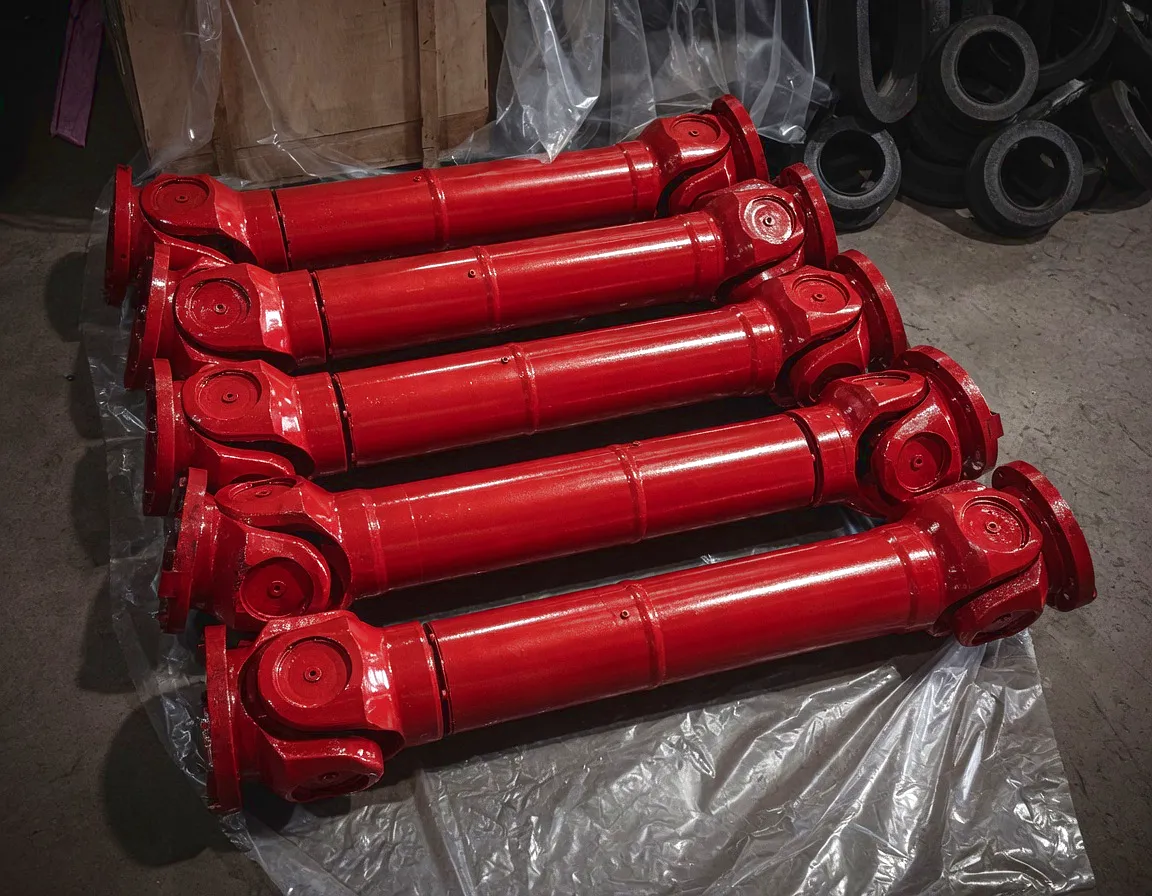
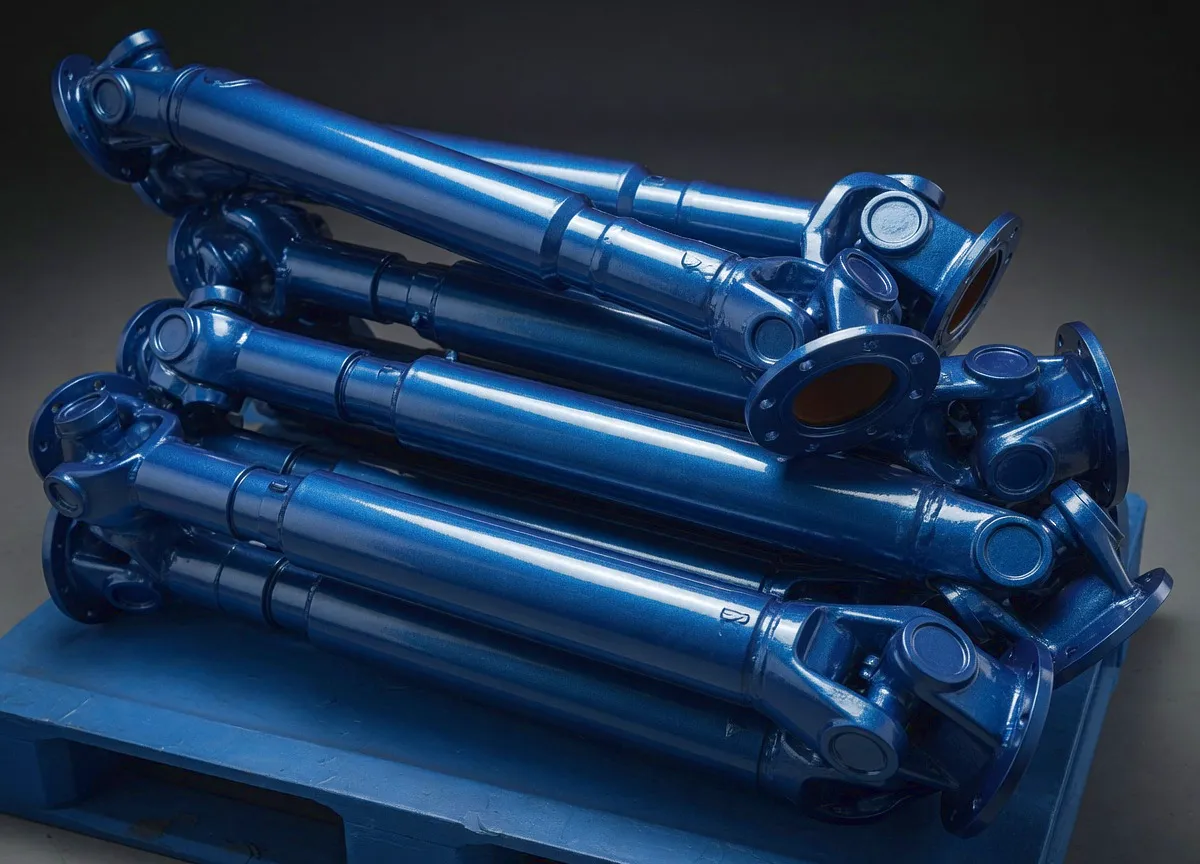
Walk across any large solar farm in the English countryside — from the rolling hills of Yorkshire to the wide open fields of East Anglia — and you’ll notice something that most visitors overlook entirely. While eyes are drawn to the glinting blue panels stretching toward the horizon, the real mechanical story is unfolding just beneath them, inside the steel torque tubes and drive shafts of the single-axis tracking systems. At the heart of every reliable tracker drive is a component that has been quietly doing its job in demanding industrial environments for over a century: the cardan coupling.
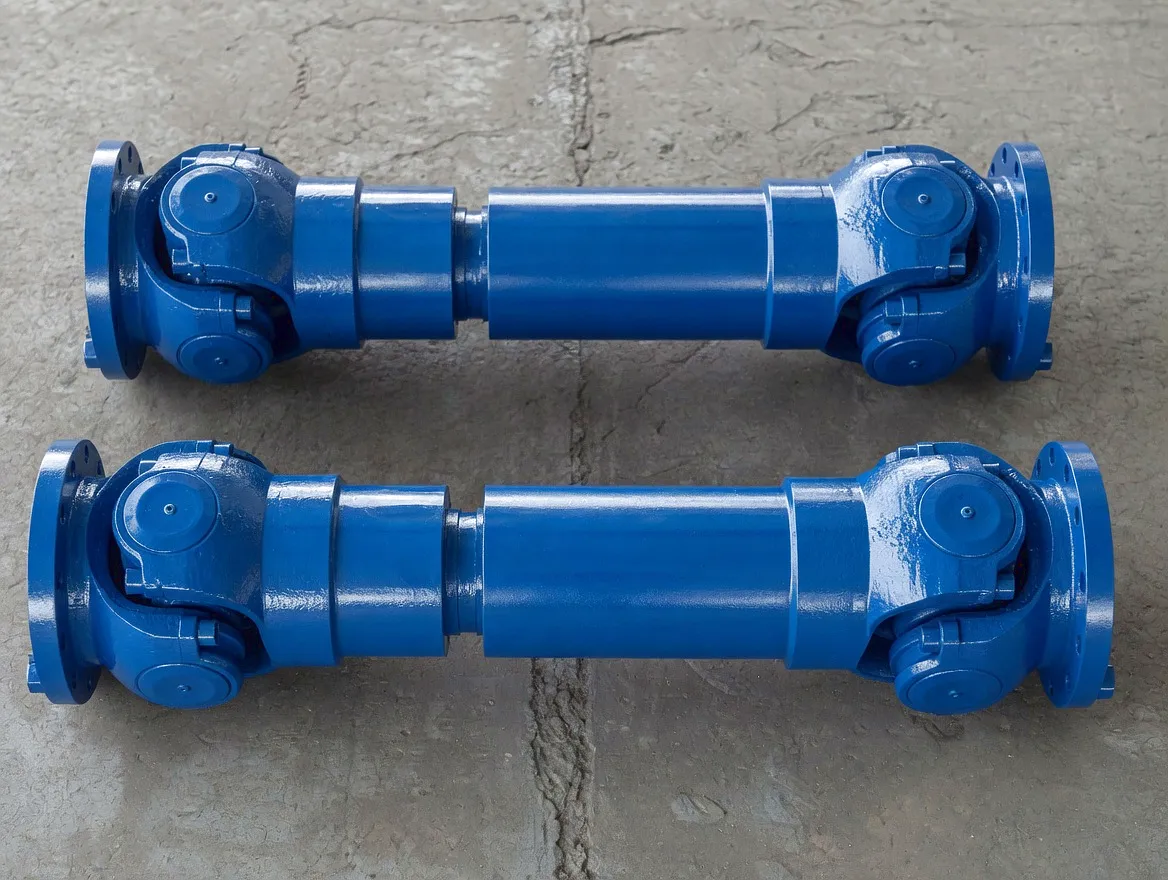
Also known as a universal joint or U-joint, the cardan coupling transmits rotational torque between two shafts that are not perfectly aligned. In solar tracking applications, this misalignment isn’t a flaw — it’s a fundamental design reality. Ground undulation, thermal expansion, installation tolerances, and the sheer scale of multi-megawatt arrays all mean that perfectly co-linear shaft alignment is essentially impossible to maintain in field conditions. A well-engineered cardan coupling absorbs this angular offset and keeps torque flowing smoothly, day after day, through thousands of sun-tracking cycles, across a 25-year project lifetime.
Custom specifications · Fast response · UK solar industry specialists
Why Solar Tracking Systems Demand Precision Cardan Couplings

Single-axis solar trackers can increase energy yield by 20–30% compared to fixed-tilt arrays — a figure that translates into millions of pounds of additional revenue over the life of a utility-scale installation. But achieving this gain depends entirely on the ability to rotate the tracker row accurately and repeatedly. A standard tracker row in a 50 MW UK solar farm might span 80 to 120 metres in length, supporting dozens of panel strings, and must be driven by a single actuator motor through a series of interconnected driveshafts. The mechanical challenge is significant: every ground post is slightly different in elevation, every foundation has settled marginally, every weld has a tiny tolerance deviation. None of this is a problem until you try to thread a rigid shaft through the entire row.
This is where the cardan coupling performs its essential role. By accommodating angular misalignment — typically between 5° and 30° depending on the joint design — without sacrificing torque transmission efficiency, it allows the driveshaft system to follow the real-world geometry of the installation rather than demand an unachievable geometric perfection. In practical terms, the cardan coupling is the component that makes large-scale solar tracking economically viable. Without it, installation costs would rise dramatically, and ongoing maintenance would consume the energy savings the tracker was designed to generate.
Engineering Principle: How a Cardan Coupling Transmits Torque
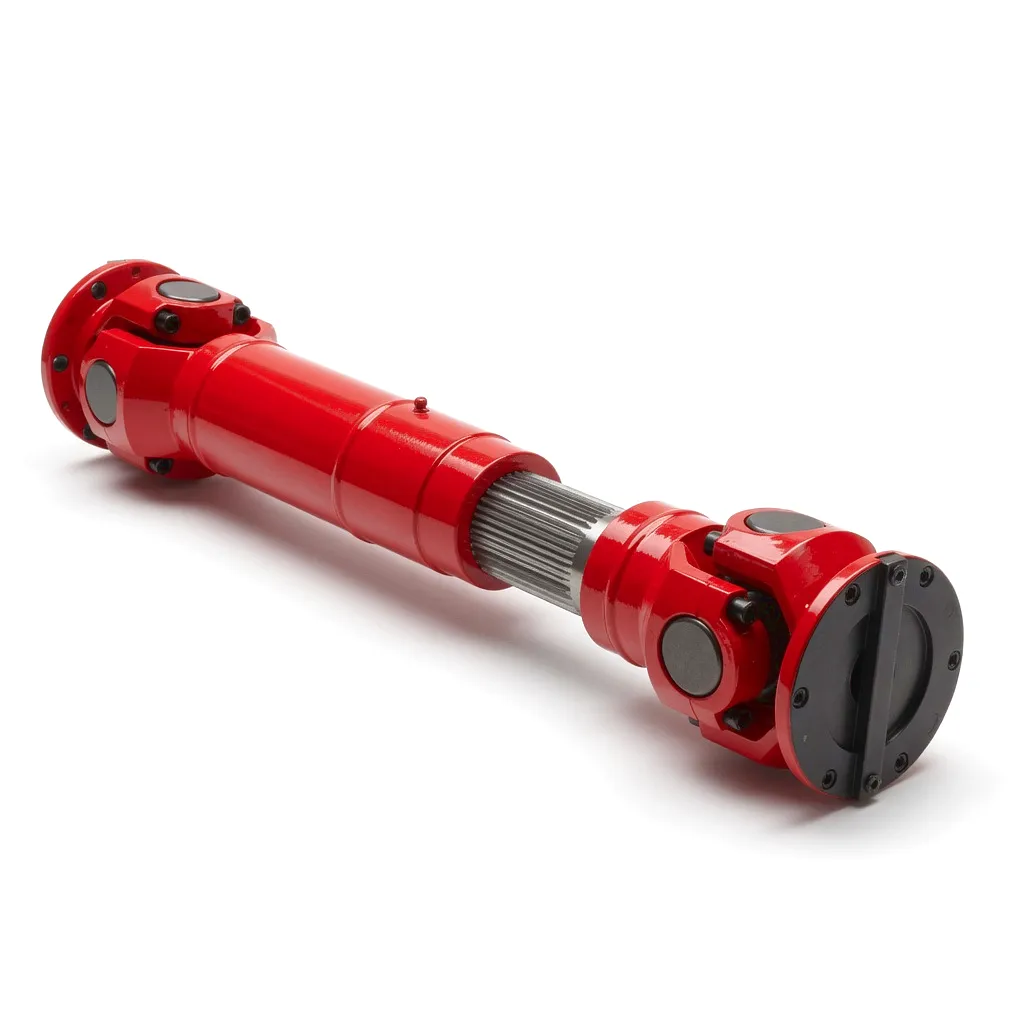 A cardan coupling — named after the Renaissance mathematician Gerolamo Cardano, though it was likely invented by Hooke in its modern form — operates on a beautifully simple mechanical principle. Two yokes are connected by a central cross-shaped body (known as the spider or cross-piece) whose four trunnions sit inside needle roller bearings pressed into the yoke ears. When one yoke rotates, the cross transmits that rotation to the second yoke through the bearings. The genius of the design is that the cross can pivot in two planes simultaneously, allowing the driven shaft to describe an angle relative to the driving shaft without any interruption to torque transmission.
What makes this mechanism particularly valuable in solar tracking applications is its tolerance for continuous angular deflection under load. A solar tracker does not merely tilt once and stay put — it performs a slow, continuous sweep from east to west across the course of every single day, reversing to face east before dawn. Over a 25-year project life with approximately 300 tracking days per year, a single cardan coupling in a UK solar installation will complete in excess of 7,500 complete rotational cycles. The bearing quality, lubrication retention, and seal integrity of the cardan coupling are therefore not marginal concerns but core determinants of the project’s financial performance.
For double cardan joints — used where smoother constant-velocity output is required — two universal joints are phased together with a centring mechanism so that the velocity fluctuations inherent in a single Hooke’s joint cancel each other out. In high-precision tracker systems with stringent pointing accuracy requirements, double cardan configurations are increasingly the standard choice. Ever Power’s engineering team can advise on single versus double configurations based on your tracker row geometry and torque specification.
Material Selection and Surface Treatment for Outdoor Solar Environments
Yoke & Cross Body
20CrMnTi or 40Cr alloy steel, carburised and quenched to achieve surface hardness HRC 58–62 while retaining a tough inner core. This dual-structure prevents brittle fracture under shock loads from wind gusts.
Bearing Needles
GCr15 (52100 equivalent) bearing steel needles with a hardness of HRC 60–65, housed in pressed-steel cups. Needle rollers distribute load uniformly across the trunnion journal, reducing peak contact stress and extending bearing life to 50,000+ operating hours under rated load.
Seals & Surface Protection
Nitrile rubber or HNBR seals rated for -40°C to +150°C retain lubricant and exclude ingress of moisture, dust, and agricultural chemicals common on UK farmland solar sites. Zinc phosphate pretreatment plus two-component epoxy primer and polyurethane topcoat provides corrosion resistance exceeding 1,000 hours in salt spray testing per ISO 9227.
Lubrication
Factory-filled with NLGI Grade 2 lithium complex grease suitable for wide temperature range operation. Sealed-for-life variants are available for maintenance-free installations, while grease nipple fittings are standard on larger bore joints for sites with planned periodic servicing schedules.
Technical Performance Specifications — EP Series Cardan Coupling (Solar Grade)
| Parameter | EP-20S | EP-35S | EP-50S | EP-80S |
|---|---|---|---|---|
| Nominal Torque (Nm) | 200 | 500 | 1,200 | 2,800 |
| Peak Torque (Nm) | 400 | 1,000 | 2,400 | 5,600 |
| Max Working Angle (°) | 15° | 18° | 20° | 25° |
| Bore Diameter Range (mm) | 20–30 | 30–45 | 45–60 | 60–80 |
| Operating Temperature (°C) | -40 to +150 | |||
| Transmission Efficiency (%) | ≥98.5% | |||
| Corrosion Protection | ISO 9227 Salt Spray ≥1,000 hours | |||
| Ingress Protection | IP65 (sealed variants available) | |||
| Design Life | ≥25 years at rated load / 50,000 operating hours | |||
* Custom bore, keyway, flanged ends, and telescoping shaft versions available. Contact [email protected] for project-specific sizing.
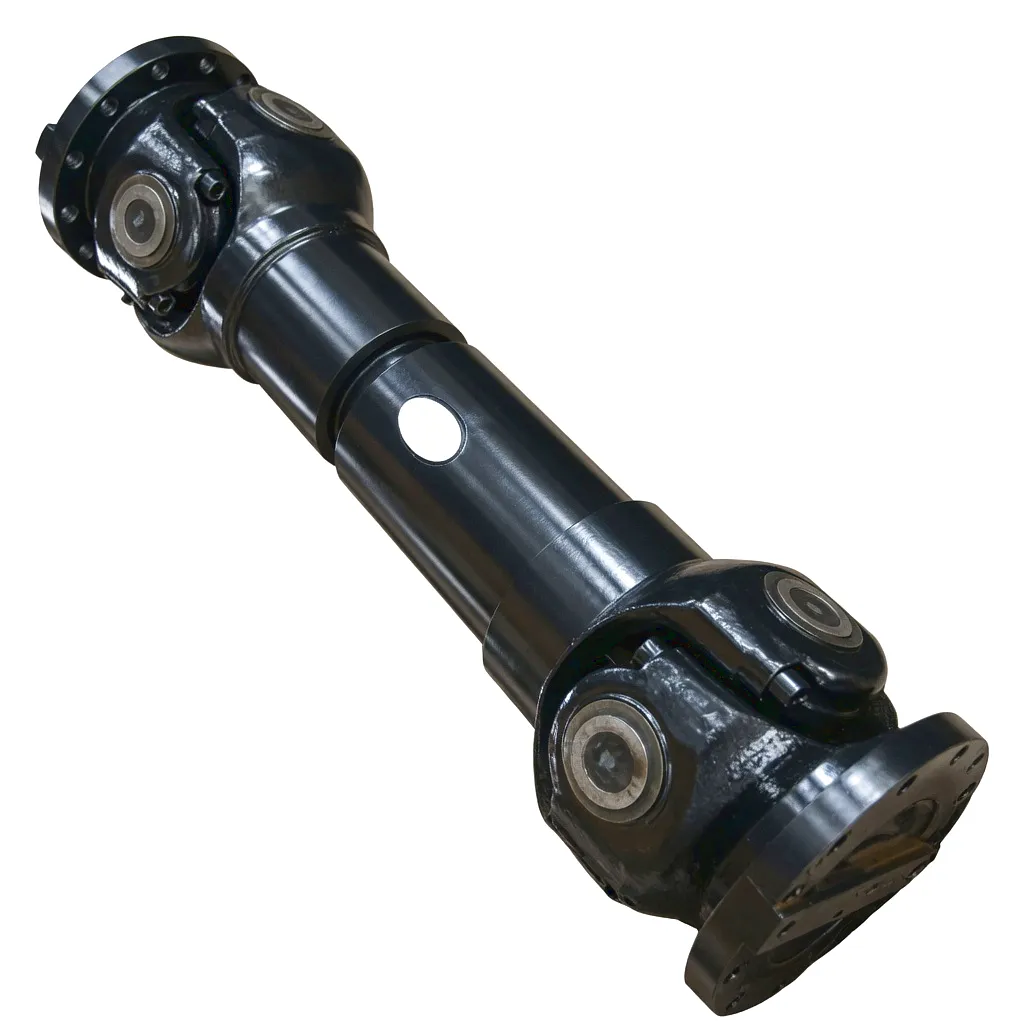
Seven Reasons Engineers Specify EP Series Cardan Couplings for Solar Projects
Wide Angular Accommodation
Operating angles of up to 25° allow the driveshaft system to follow natural ground undulation without applying side-loads on motor gearboxes or bearing blocks. This directly reduces warranty claims and early gearbox failures — a known pain point on large UK solar farms.
High Torque-to-Weight Ratio
Alloy steel construction with precision heat treatment delivers exceptional torque capacity relative to component weight. This matters in solar trackers because every additional kilogram of dead weight on a tracker row increases the torque demand on the actuator and raises the structural loading on foundations.
Corrosion Resistance for UK Climates
The British climate — characterised by persistent moisture, coastal salt air in regions like Cornwall and East Sussex, and agricultural chemical exposure on arable land — is particularly harsh on unprotected metal components. EP Series joints pass 1,000+ hour salt spray testing, protecting against premature corrosion failure.
Transmission Efficiency ≥98.5%
Power losses through the coupling are negligible, which matters when you consider that a 100 MW solar array with hundreds of tracker rows will have thousands of individual cardan joints in its driveshaft network. Cumulative mechanical efficiency translates directly into energy generation and project IRR.
Low Maintenance Requirements
Sealed-for-life variants with pre-loaded grease eliminate the need for routine lubrication servicing. For large solar farms where O&M teams have hundreds of tracker rows to look after, this is a significant operational advantage. Maintenance visits for cardan couplings become exception-based rather than scheduled.
Wind Load Resilience
During storm events, UK solar trackers can experience torque reversal loads several times the nominal rated torque. The peak torque rating of EP Series joints (up to 2× nominal) ensures the coupling does not fail as a weak link when wind stow mode is activated and the tracker must be driven rapidly to a safe horizontal position.
Full Customisation Capability
Every solar tracker manufacturer has a slightly different driveshaft interface geometry. Our engineering team works directly from your CAD drawings or sample joints to produce a drop-in replacement or new-design coupling that matches your bore, keyway, flange pattern, and overall envelope, with no minimum order quantity restrictions for prototype runs.
Application Scenarios: Where Cardan Couplings Work in Solar Power Generation
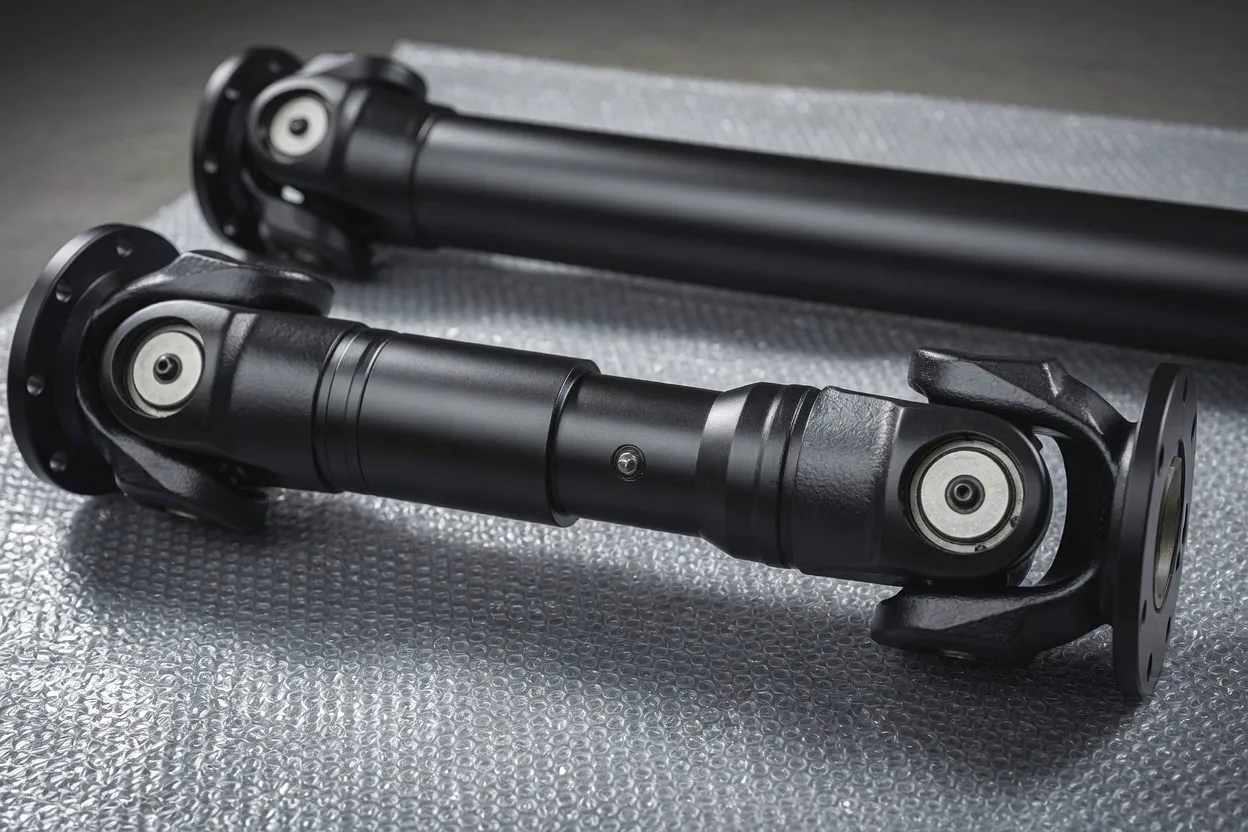
The cardan coupling’s role in a solar power plant is not confined to a single mechanical function. As solar farm designs evolve — incorporating longer tracker rows, steeper terrain, and increasingly sophisticated control systems — the coupling appears in several distinct drive system locations, each with its own engineering requirements.
► Single-Axis Tracker Driveshaft Interconnects
This is the most common and highest-volume application. In a typical single-axis tracker row, multiple driveshaft sections are interconnected by cardan joints spaced along the torque tube. The joints allow each section to articulate independently, accommodating post-to-post elevation differences. The number of joints per row typically ranges from four to ten, depending on row length and ground slope.
► Gearbox Output Coupling
At the driven end of the tracker row, the linear actuator or rotary gearbox connects to the torque tube through a cardan coupling. This joint handles the highest torque in the entire driveline and must also tolerate slight misalignment between the gearbox output shaft and the torque tube centreline. Material quality and heat treatment are especially critical at this location.
► Dual-Axis Tracker Azimuth and Elevation Drives
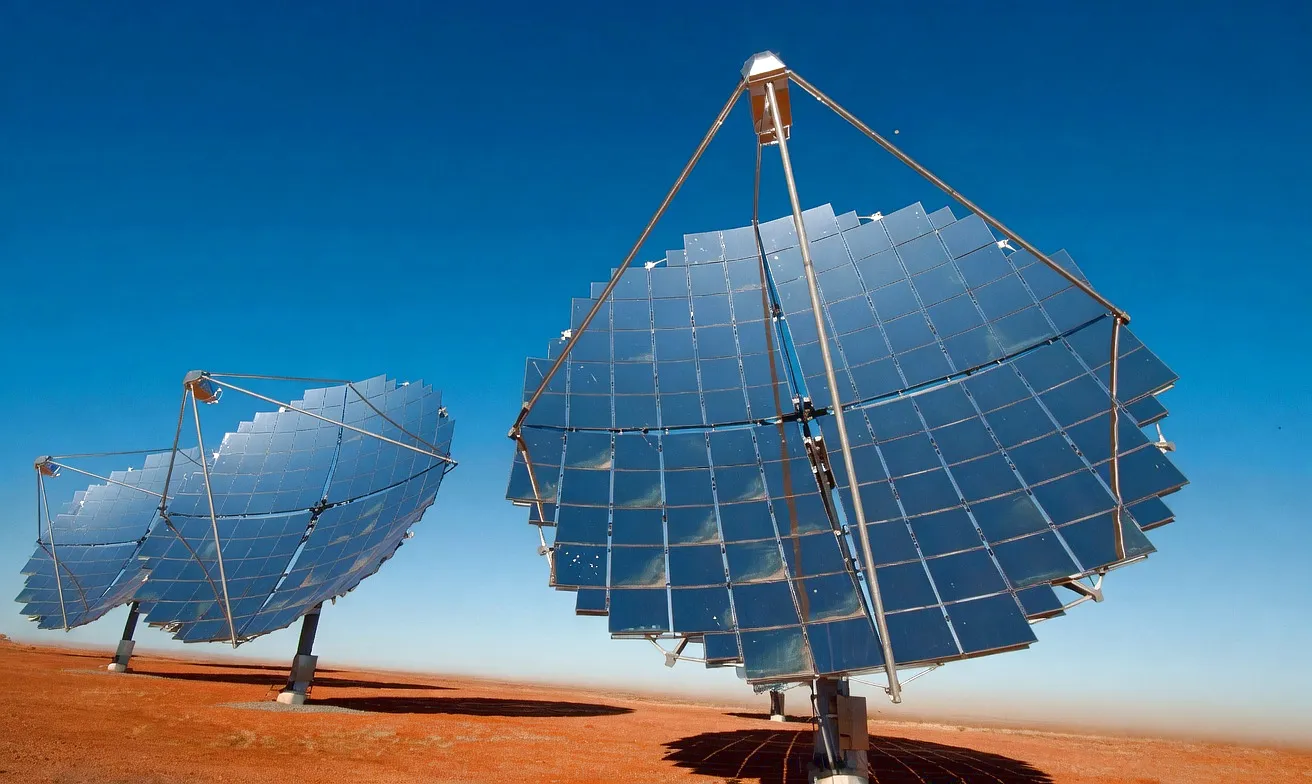
Dual-axis trackers, which follow the sun in both altitude and azimuth, are commonly used in concentrated photovoltaic (CPV) and concentrating solar power (CSP) installations. These systems require cardan joints with the highest angular accommodation — up to 30° — and the most precise tolerances, as pointing accuracy is critical to optical efficiency in concentrating collector designs.
► Solar-Powered Water Pump Drives
Beyond the panels themselves, solar-powered irrigation and water supply systems in rural UK settings often combine PV generation with motor-driven pump assemblies. When the pump and motor are not co-axially aligned — a common reality in on-farm installations where retrofitting into existing pipework infrastructure is required — a cardan coupling provides the flexible drive connection that makes the system viable without expensive structural modifications.
Designing for UK Solar Farm Conditions
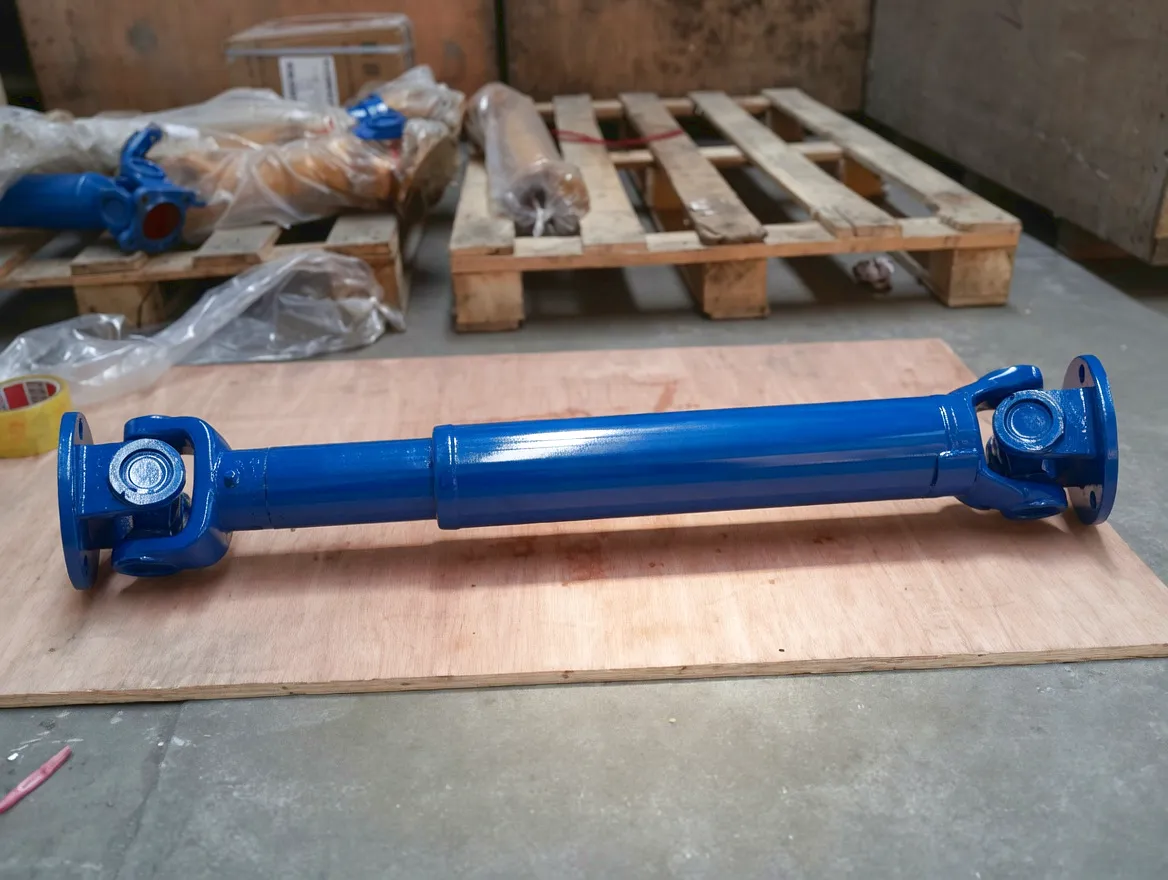 Solar farms in England, Scotland, and Wales face a particularly demanding combination of environmental conditions that shapes component selection criteria. Wind loading in exposed rural sites can be severe — BEIS planning guidance requires tracker systems to demonstrate stow-mode structural integrity to BS EN 1991-1-4 (Eurocode 1) wind standards. The wet, mild British climate accelerates corrosion in a way that continental European or desert-climate installations may not experience to the same degree. And the prevalence of heavy clay soils across much of the Midlands and South West means differential settlement of tracker foundations over the project life, progressively increasing angular misalignment in driveshaft systems.
All of these factors informed the surface treatment, seal specification, and angular range of the EP Series cardan coupling. The result is a product engineered with British field conditions in mind, not merely adapted from a catalogue design intended for drier, calmer environments.
Lincolnshire, United Kingdom — 72 MW Agricultural Solar Farm
The Trent Valley Solar Park, developed by a UK-based renewable energy developer on former agricultural land in Lincolnshire, presented a specific mechanical challenge: the site sits on alluvial silt deposits with a water table close to the surface, meaning the driven pile foundations for the tracker posts were subject to variable frost heave and clay shrinkage across the site’s 280-hectare footprint. The original tracker system’s rigid shaft joints began exhibiting angular misalignment loads within 18 months of commissioning, resulting in several gearbox bearing failures and a pair of torque tube fractures.
The O&M contractor contacted Ever Power, and our application engineering team reviewed the original coupling drawings alongside the tracker manufacturer’s updated alignment tolerance data. We recommended a change from the original rigid-flange connection to the EP-35S cardan coupling, which offered 18° working angle versus the 5° angular offset that the failing joints had been specified for. The retrofit was carried out during a planned maintenance window over two weeks, with Ever Power supplying a complete set of application-specific bore and keyway configurations machined to the existing shaft diameters with zero modification required on the tracker structure.
In the 30 months since the retrofit, the site has recorded zero coupling failures. Gearbox replacement frequency dropped from an average of 3.2 units per month across the site to 0.2 units per month, representing an annualised O&M cost saving in excess of £140,000. The site’s availability factor, which had fallen to 94.2% in its second year, recovered to 99.1% in the following year.
What Our Clients Say
“We’ve specified Ever Power cardan joints across three utility solar projects in the UK totalling over 150 MW. The technical support during the selection phase is genuinely impressive — they reviewed our tracker row geometry drawings and came back with a detailed torque calculation and material recommendation within 48 hours. Zero failures on site in two years of operation.”
“We needed a non-standard bore configuration to retrofit onto an existing tracker model during an O&M upgrade programme across a portfolio of Scottish sites. Ever Power machined bespoke joints to our exact dimension sheet and delivered to site within three weeks. The quality of the sealing and surface treatment is visibly superior to what we’d been using before. Highly recommended for anyone managing solar assets in wet-climate environments.”
“As a procurement specialist for a major solar EPC contractor, I’m always looking for suppliers who can offer competitive pricing alongside genuine engineering depth. Ever Power hits both marks. Their quote turnaround is fast, their datasheets are comprehensive, and when we had a last-minute request for an alternative material spec to meet our client’s environmental purchasing policy, they were able to accommodate it without pushing back the lead time. We’ll be using them again on our next project in Wales.”
Ever Power Manufacturing Capabilities: Fully Customised to Your Solar Project

Our manufacturing plant operates a suite of CNC machining centres, gear hobbing machines, and heat treatment furnaces that together enable us to produce cardan couplings from raw alloy steel bar to finished, tested, and coated assembly entirely in-house. This vertical integration means we control every step of the production process — and we can adapt every step to your specification.
For solar industry clients in the United Kingdom and across Europe, our standard catalogue covers a wide range of bore sizes, torque ratings, and working angles. But the solar sector regularly demands non-standard solutions: proprietary bore profiles to match a specific tracker manufacturer’s shaft, unusual overall lengths to fit within tight structural envelopes, or custom surface treatments to meet the environmental purchasing requirements of specific project financiers or planning conditions. Our engineering team treats these not as exceptions but as routine work.
Cardan Coupling vs Alternative Coupling Types for Solar Tracker Applications
| Feature | Cardan Coupling | Rigid Flange | Flexible Disc | Jaw Coupling |
|---|---|---|---|---|
| Angular misalignment | Up to 25° | <0.5° | 1–3° | 1–4° |
| Torque capacity | Very High | Very High | Medium | Medium |
| Outdoor / corrosion resistance | Excellent | Good | Poor (disc fatigue) | Fair |
| Maintenance requirements | Low (sealed-for-life option) | Very Low | Periodic disc inspection | Spider element wear |
| Design life (solar application) | 25+ years | High stress risk on uneven terrain | 8–15 years | 10–18 years |
| Customisation for solar OEM | Extensive | Limited | Moderate | Moderate |
Frequently Asked Questions
Ready to Specify the Right Cardan Coupling for Your Solar Project?
Our engineering team is available to review your tracker specifications, calculate the correct torque and angular requirements, and provide a fully costed proposal — at no charge and with no obligation. Solar developers, EPC contractors, and O&M operators across the UK rely on us for fast, technically credible support from initial design through to delivery on site.
[email protected] · Custom specifications welcome · UK solar specialists
Ever Power Engineering
Ever Power
edit by gzl