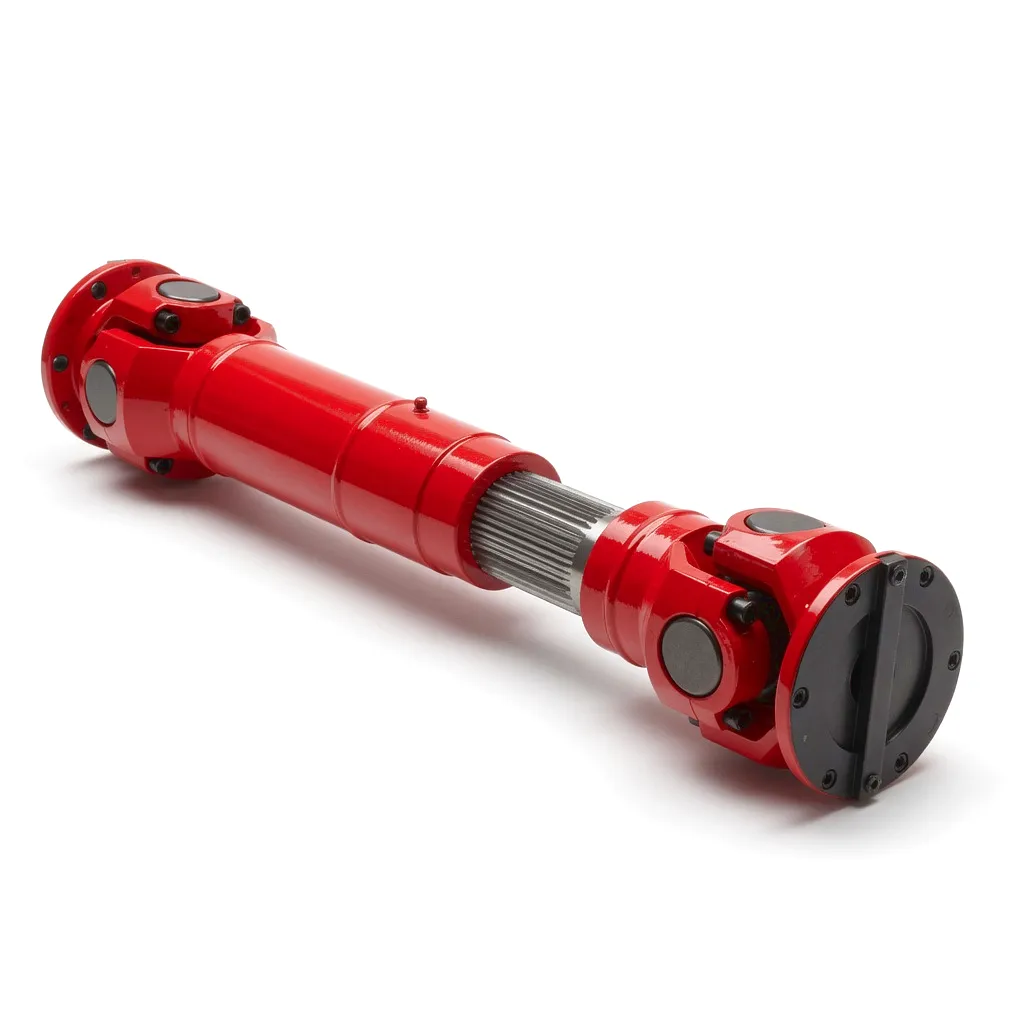
 In heavy industrial environments — from the rolling mills of Sheffield to the marine propulsion yards along the Clyde — the mechanical integrity of a drive system can mean the difference between uninterrupted production and catastrophic, costly downtime. Among the most mechanically demanding components in any rotating machinery train, the Cardan Coupling occupies a uniquely critical position. Capable of transmitting enormous torques across angularly misaligned shafts while maintaining continuous rotational output, these couplings are the unsung backbone of modern drive engineering. Yet beneath their robust exterior lies a sophisticated structural behaviour that demands rigorous stress analysis, a thorough understanding of fatigue mechanisms, careful load distribution design, and precise material science application. Engineers who appreciate these fundamentals are far better equipped to specify, maintain, and troubleshoot cardan drive systems in service.
Need a custom Cardan Coupling for your UK industrial application? Get a detailed technical quotation from Ever Power today.
How a Cardan Coupling Transmits Torque Across Angular Misalignment
The Cross-and-Yoke Mechanism
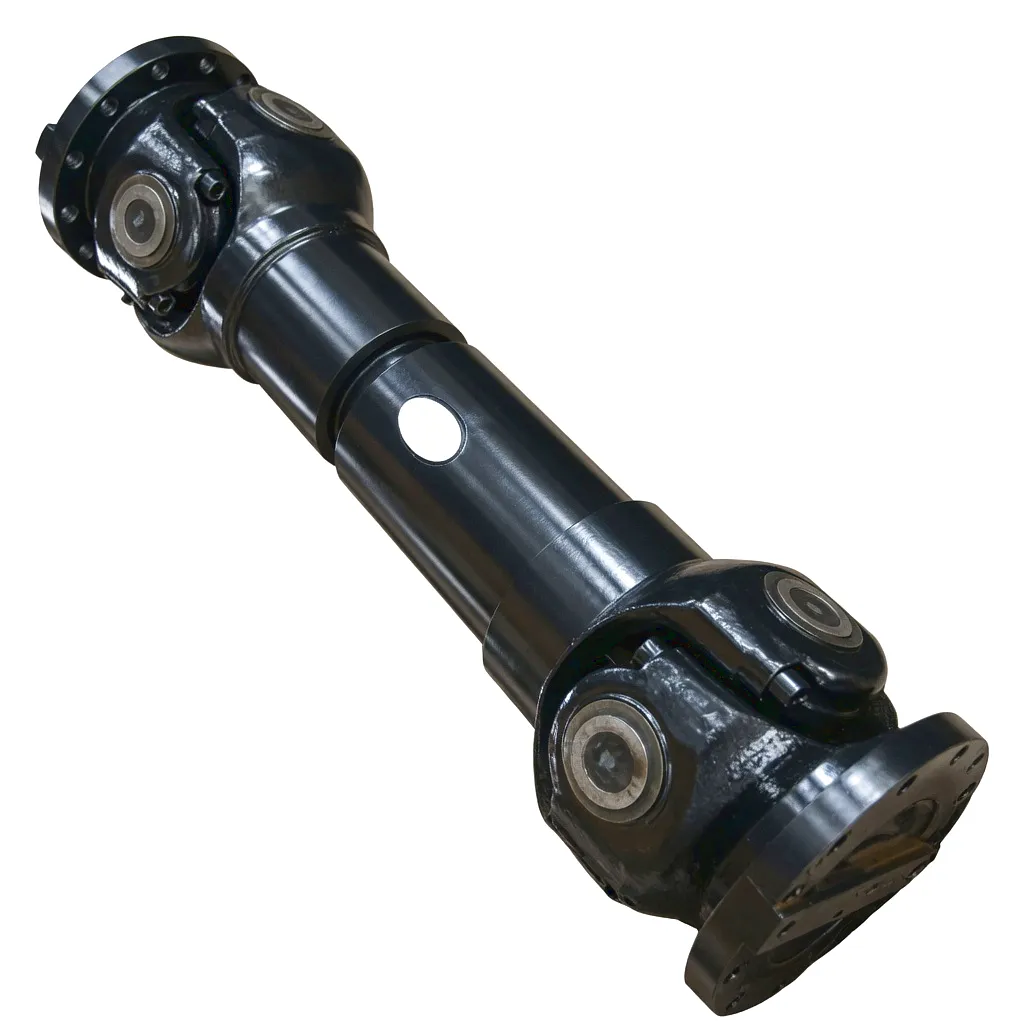
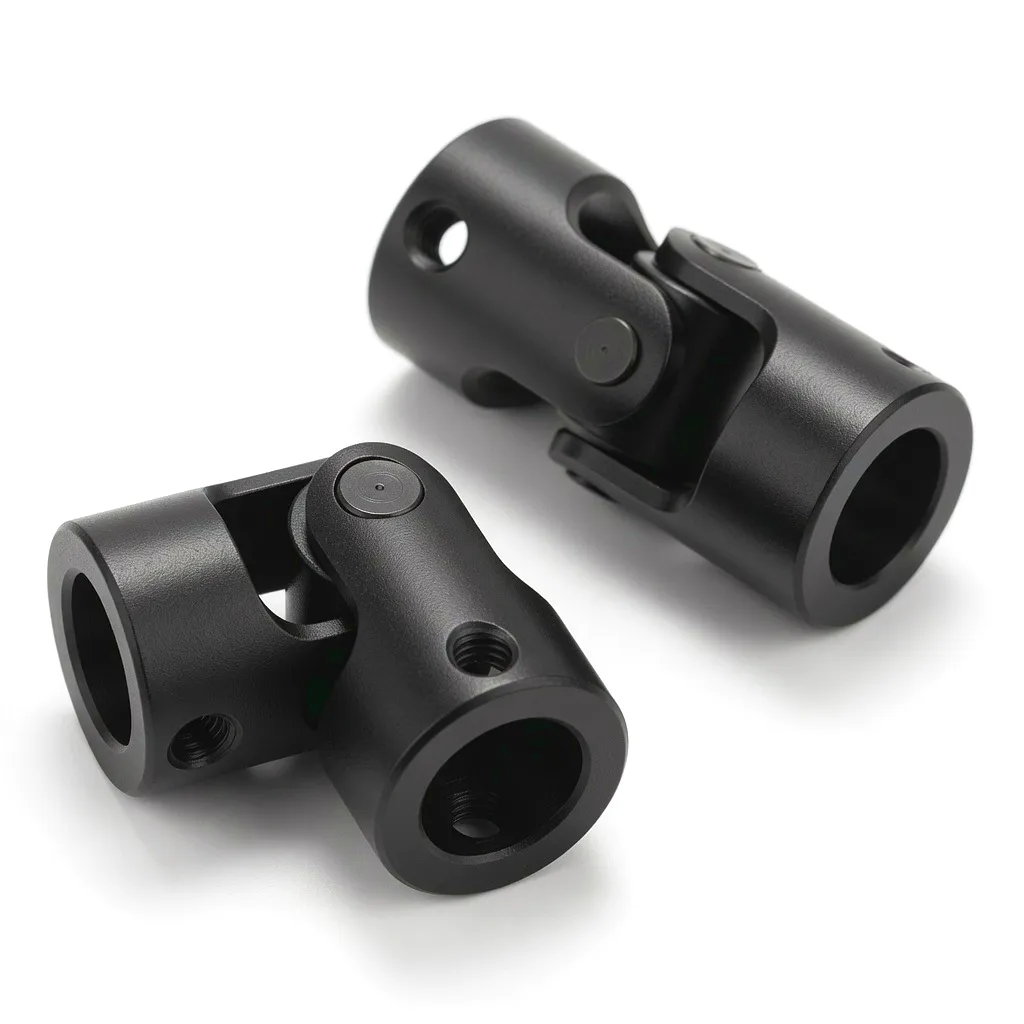
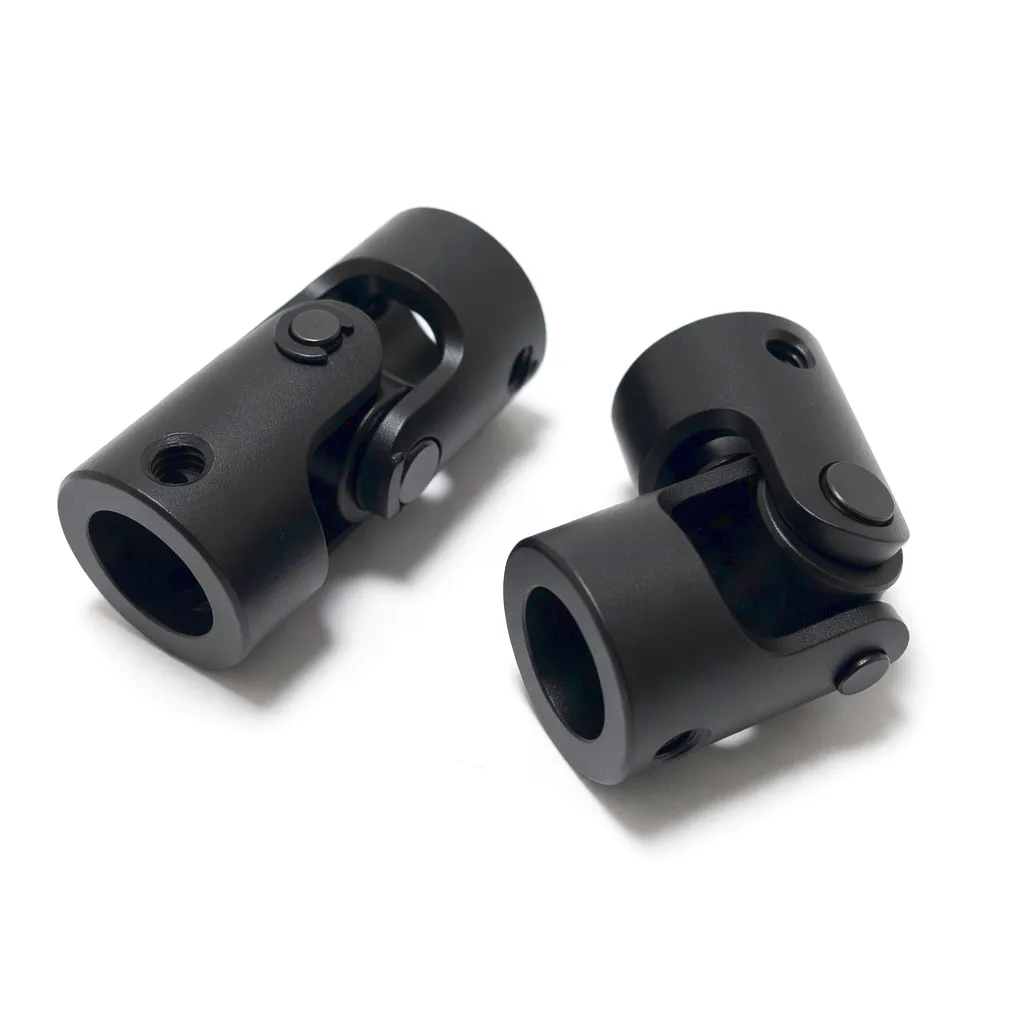
The operating principle of a Cardan Coupling — also referred to as a universal joint or Hooke’s joint — revolves around a cross-shaped journal (the spider) positioned at the intersection of two yoke members. Each yoke connects to a respective shaft end, and the four trunnions of the spider engage with needle roller bearing cups mounted within these yokes. When one shaft rotates, torque transfers through the bearing interface to the spider, then onward to the second yoke and output shaft. This arrangement accommodates continuous angular misalignment typically between 1° and 45°, depending on the coupling series and application geometry, while maintaining reliable, uninterrupted torque delivery across the joint. The elegance of the design is that it achieves this angular flexibility using only compressive and tensile loading in the rolling element bearings — no elastomeric elements, no slip joints required — resulting in exceptional mechanical efficiency and predictable structural behaviour throughout the design life of the assembly.
Velocity Kinematics and the Double-Cardan Solution
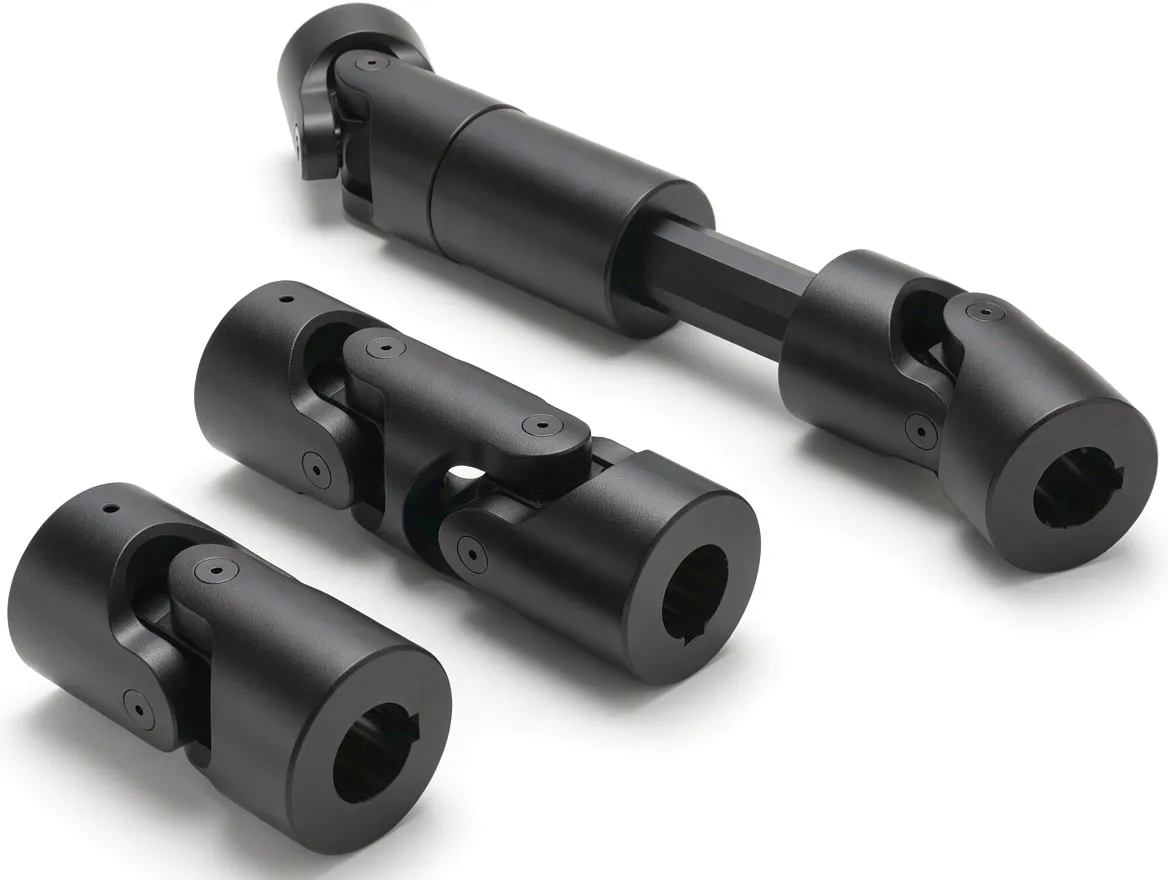
A fundamental kinematic characteristic of a single Cardan Coupling is that it introduces a cyclic velocity variation in the output shaft proportional to the sine of the operating angle. The output angular velocity oscillates twice per revolution, creating secondary inertia forces commonly described as secondary couples. In precision drive systems, this non-uniform velocity output is resolved by deploying a double-Cardan arrangement — two joints phased 180° apart — which cancels the velocity fluctuations and delivers a constant output velocity equal to input speed. This is directly applied in the driveshafts of heavy goods vehicles, CNC milling machine spindle drives, and multi-stand rolling mills across UK manufacturing facilities. Understanding the phasing relationship between joints is therefore not merely theoretical; it directly determines whether a double-Cardan assembly achieves its intended constant-velocity output or inadvertently amplifies the very vibration it was designed to suppress.
Stress Concentrations and Fatigue Initiation Zones
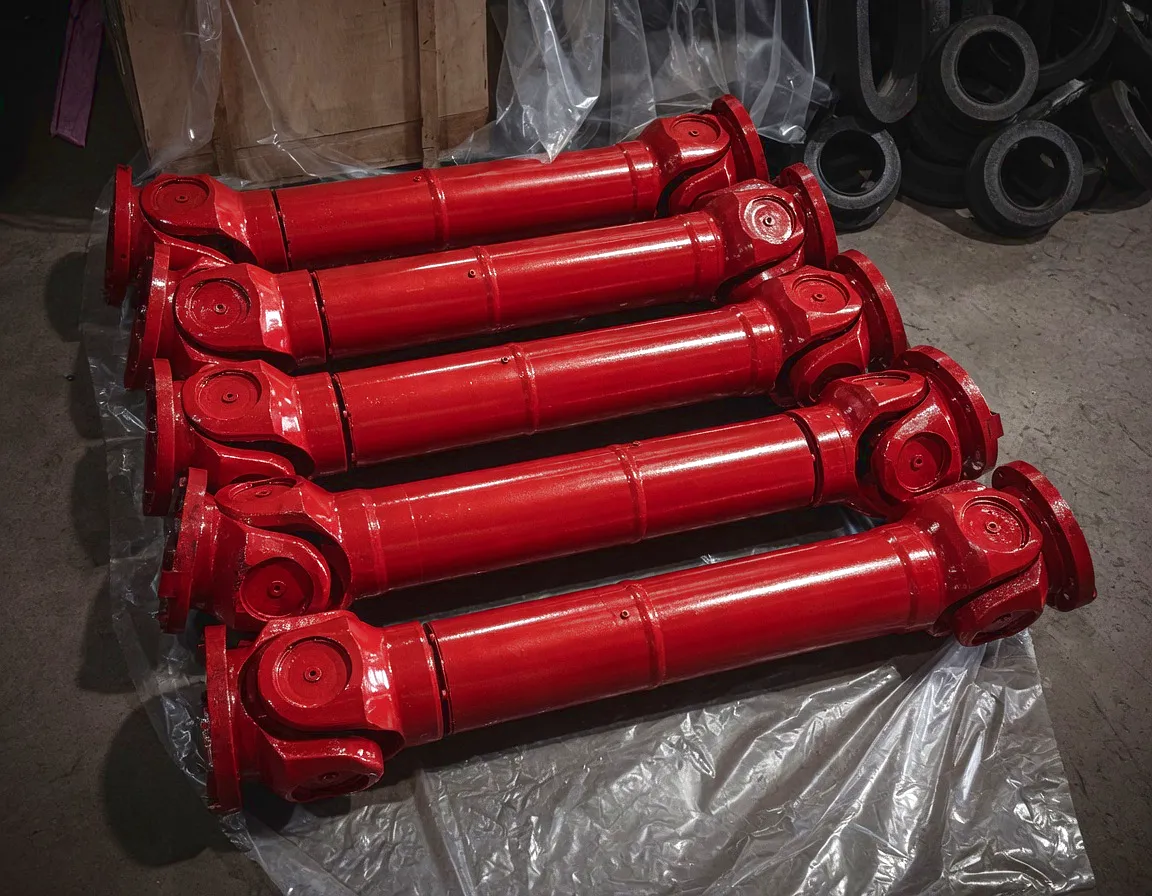
Stress concentrations in a Cardan Coupling arise at several critical interfaces that every design and maintenance engineer should understand. The trunnion root radius — where the spider arm transitions from the central body to the journal diameter — is the primary fatigue initiation site under high-cycle torsional and bending loading. Finite Element Analysis studies consistently identify peak von Mises stresses at this location, particularly under combined loading at large operating angles. Simultaneously, the bearing cup-to-housing interface experiences fretting wear under high radial load and micro-slip conditions, a phenomenon especially prevalent in shock-loaded drives such as those found in steel processing and underground mining applications. The needle roller contact zone on the trunnion journal surface is subject to Hertzian contact stresses that may exceed 2,000 MPa during peak loading events — values that demand the highest standards of surface finish, material hardness, and lubrication film maintenance if the target fatigue life is to be achieved in practice. Appreciating these failure modes transforms coupling maintenance from a reactive activity into a genuinely predictive discipline.
Core Materials and Their Role in Structural Performance
Material selection is not a secondary consideration in Cardan Coupling design — it is the primary determinant of fatigue life, overload resistance, and long-term dimensional stability. The following material profiles reflect engineering practice across the full range of cardan drive applications encountered in the UK industrial supply chain.
Alloy Steel Spiders — 20CrMnTi & 42CrMo4
The spider and yoke components of a high-performance Cardan Coupling are predominantly manufactured from case-hardened alloy steels such as 20CrMnTi or 42CrMo4. These grades offer a compelling combination of high core toughness — resisting sudden shock loads without brittle fracture — alongside a hardened surface layer that resists contact fatigue and wear at the bearing interfaces. After carburising and quenching, surface hardness typically reaches 58–63 HRC, while core hardness remains in the 30–40 HRC range. This deliberately engineered hardness gradient provides the hard, wear-resistant contact surface needed at the trunnion journal whilst retaining the ductile core reservoir that absorbs energy during transient overloads without catastrophic fracture propagation. For the most demanding heavy industrial applications, forged 18CrNiMo7-6 — a high-alloy case-hardening grade — delivers superior case depth uniformity and core strength that ensures consistent fatigue performance across the full spider cross-section.
Needle Roller Bearing Steel — 100Cr6
The rolling elements housed within the trunnion cups of a Cardan Coupling are almost universally needle rollers, selected for their exceptionally high load capacity per unit envelope volume. Manufactured from through-hardened bearing steel — typically 100Cr6 per DIN standards — these needles operate at Hertzian contact stresses that can exceed 2,000 MPa during peak loading conditions. Adequate lubrication is critical: most commonly, high-viscosity lithium-complex grease is injected via nipple fittings to maintain an elastohydrodynamic film at the trunnion and needle contact surface. Sealed-for-life variants incorporating pre-packed grease and dual-lip seal assemblies are increasingly preferred in modern industrial designs to reduce maintenance frequency and improve reliability in difficult-access drive arrangements — an important consideration for offshore and underground mining installations where routine re-greasing access is severely restricted. The bearing cup housing material must also be carefully specified, as differential thermal expansion between the cup and yoke body can degrade the interference fit if dissimilar alloys are employed in high-temperature operating environments.
Yoke Forgings — EN19T (709M40) & Tube Steel
Yoke flanges used in heavy-duty Cardan Coupling assemblies are typically forged from medium-carbon alloy steel such as EN19T (709M40) — a grade with a well-established position in the UK engineering supply chain and widely held in stock by UK steel stockholders. Forging is strongly preferred over machining from bar for yoke production, as the aligned grain flow obtained through forging significantly enhances fatigue crack resistance in the highly stressed bore and arm transition regions. The intermediate driveshaft tube connecting two universal joints in a double-Cardan arrangement is produced from seamless cold-drawn steel tube to BS EN 10305-1, selected for its uniform wall thickness and superior dimensional control — both critical for achieving rotational balance at high shaft speeds. In offshore and marine environments, stainless steel variants in 316L or lean duplex grades are specified to resist chloride-induced stress corrosion cracking, extending coupling service life in conditions where carbon steel would rapidly deteriorate.
Technical Advantages That Drive Industry Adoption
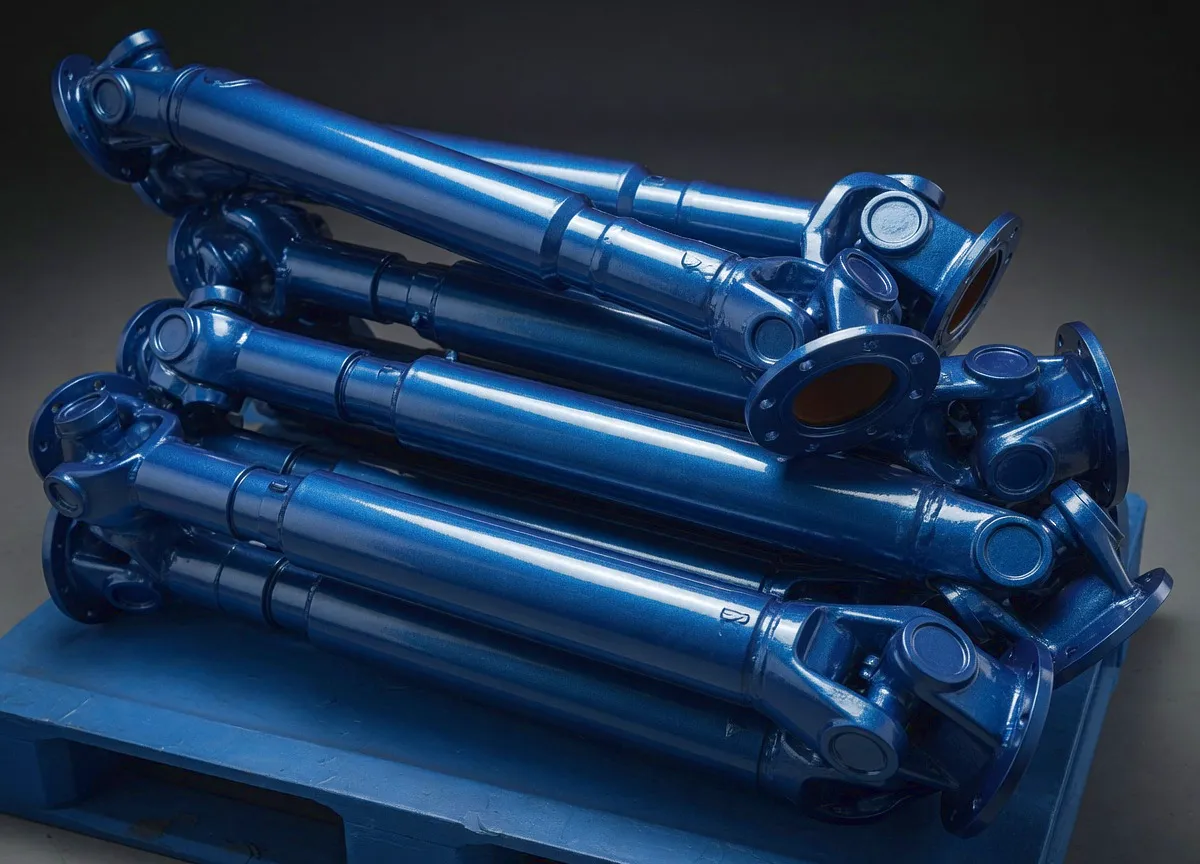
The sustained dominance of the Cardan Coupling across diverse industrial sectors stems from a series of well-documented engineering advantages that competing designs — gear couplings, disc-pack types, or elastomeric variants — cannot replicate across the full performance envelope demanded by heavy drive applications. Understanding these advantages in technical depth empowers procurement and engineering teams to make confident, defensible specification decisions.
Large Angular Misalignment Capacity
A well-designed Cardan Coupling can operate continuously at working angles of 15°–25° and accommodate peak angles approaching 45° in certain specialist series. This capacity far exceeds gear couplings (typically 3°–6°) and disc-pack designs (usually under 1°), making cardan drives indispensable where shaft alignment is inherently imperfect or changes dynamically under load — as in rolling mill roll-gap adjustments, articulated vehicle drivelines, and multi-axis robotic systems operating in UK automotive manufacturing plants.
Exceptional Torque-to-Weight Ratio
Mechanical efficiency of a Cardan Coupling under normal operating conditions typically exceeds 98%, with an outstanding torque-to-weight ratio that suits weight-sensitive applications including CNC precision machining spindle drives and high-speed rolling mill intermediate drives. Forged steel spiders and precision-machined yokes minimise assembly mass while maximising load-bearing cross-sections at the critical stress concentration zones — achieving a structural efficiency that thicker, heavier coupling types cannot match at equivalent rated torque.
Shock and Overload Absorption
The needle roller bearing interface within a cardan drive provides a degree of compliance that absorbs sudden torque spikes without transmitting destructive shock forces upstream to the motor or gearbox. This protective characteristic is particularly valuable in mining conveyor drives, punch press feeds, and hot rolling mill main drives where process conditions regularly generate peak loads many times the nominal design torque. Coupling designs with integrated slip yokes further dampen axial shock events, shielding connected shaft bearings and housing bores from fretting damage that would otherwise accelerate maintenance intervals.
Field Maintainability and Component Availability
Unlike permanently welded or high-interference-fit couplings, a standard Cardan Coupling is specifically designed for field disassembly without specialist tooling. The cross-and-bearing-cup assembly can be replaced in the field using standard socket sets and bearing pullers, reducing planned maintenance windows and minimising unplanned outage costs. This maintainability is a core reason why plant maintenance engineers across the West Midlands’ automotive corridor and South Yorkshire’s steel fabrication facilities continue to specify cardan drives over sealed alternatives despite the higher initial component complexity.
Proven High-Speed Performance
Modern precision-balanced Cardan Coupling assemblies operate reliably at speeds up to 10,000 RPM in light-duty series, while heavy industrial variants handle 1,000–3,000 RPM at torques exceeding 500 kNm. This broad operational range is achieved through meticulous dynamic balancing during manufacture. ISO 1940-1 G2.5 balancing grade is standard practice at reputable suppliers, ensuring residual unbalance stays within limits for smooth running and extended bearing life across the full rated speed range of the drive application.
Wide Operating Temperature Envelope
Steel-bodied cardan drive assemblies can operate reliably across temperature ranges from -40°C to +200°C when specified with appropriate bearing seals and high-temperature grease formulations. This makes them suitable for glass furnace roller drives, aluminium smelting plant auxiliaries, and cold-store conveyor applications — a versatility that contributes to their widespread specification across UK process industries. At cryogenic end, specially selected low-temperature steel grades maintain adequate impact toughness to prevent brittle fracture during cold-start conditions in outdoor or refrigerated environments.
Product Technical & Performance Parameters
The following table covers the principal technical parameters applicable to standard and heavy-duty Cardan Coupling series as manufactured and supplied by Ever Power. Custom configurations extending beyond the ranges listed below are available on request — contact our engineering team with your application details for a tailored assessment and quotation.
| Parameter | Light Duty | Medium Duty | Heavy Duty | Custom / Special |
|---|---|---|---|---|
| Nominal Torque (kNm) | 0.5 – 10 | 10 – 100 | 100 – 1,200 | Up to 3,000+ |
| Peak / Overload Torque (kNm) | Up to 30 | Up to 300 | Up to 3,600 | On request |
| Max Operating Angle (°) | Up to 35° | Up to 25° | Up to 15° | Up to 45° |
| Max Rotational Speed (RPM) | Up to 10,000 | Up to 5,000 | Up to 1,500 | Per design |
| Shaft Bore Diameter (mm) | 10 – 80 | 60 – 200 | 180 – 500 | Custom |
| Spider Material Grade | 20CrMnTi (CH) | 42CrMo4 QT | 18CrNiMo7-6 (forged) | Per specification |
| Surface Hardness (HRC) | 58 – 62 | 58 – 63 | 60 – 64 | As required |
| Operating Temperature (°C) | -20 to +120 | -30 to +150 | -40 to +200 | Extended on request |
| Dynamic Balance Grade (ISO 1940-1) | G6.3 | G2.5 | G2.5 / G1.0 | G1.0 or better |
| End Connection Options | Keyed bore, spline | Flange, spline, keyed | Weld flange, machined flange | All types available |
| Material Cert. Standard | EN 10204 2.2 | EN 10204 3.1 | EN 10204 3.1 | 3.2 / Witness on request |
Industrial Application Scenarios Across the UK and Beyond
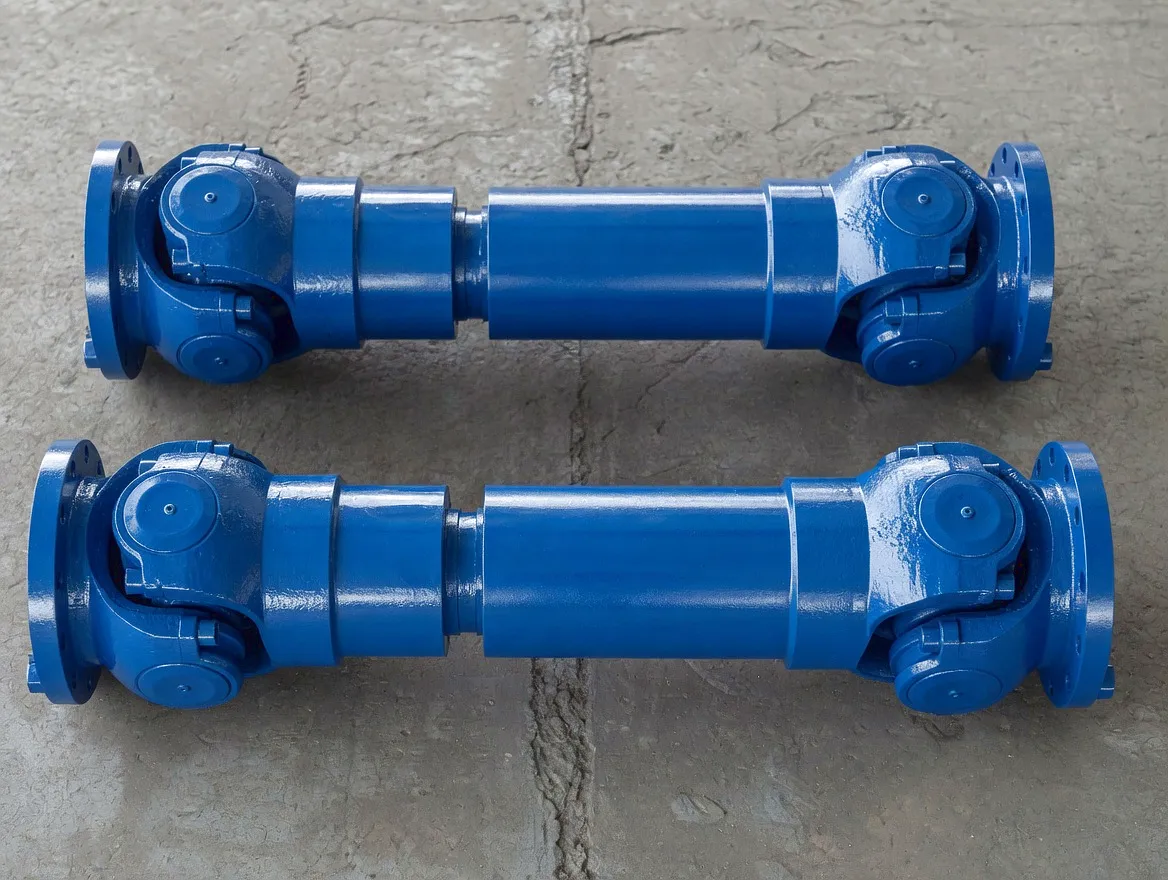
From the Special Steel Zone of Sheffield to the offshore wind installations of the North Sea, Cardan Coupling technology underpins an extraordinary range of industrial processes. The following sector profiles illustrate the depth and diversity of current deployment across UK heavy industry and allied sectors.
🌊 Steel Rolling Mills — Sheffield & Scunthorpe
Rolling mill main drives represent the most mechanically demanding application for any Cardan Coupling. In the hot rolling of structural steel sections and specialty long products — a process fundamental to South Yorkshire and Lincolnshire’s steel industry — the drive coupling must accommodate continuous angular displacements as roll gaps are adjusted between passes, while transmitting torques from multi-megawatt main drives. The sudden engagement of rolls with incoming billets generates torque impulses reaching five to seven times rated full-load torque, making fatigue resistance and overload capacity the defining design criteria. Cardan drives at Sheffield and Scunthorpe facilities typically operate on 90-day planned maintenance intervals with spider and bearing cup replacements scheduled within coordinated mill shutdown windows to avoid production losses.
🚗 Automotive Manufacturing — Birmingham & Coventry
The West Midlands automotive manufacturing corridor — anchored by major facilities in Solihull, Castle Bromwich, and the broader Birmingham component supply network — deploys cardan drive technology extensively in both production machinery and finished vehicles. Transfer press lines, transfer bar handling systems, and robotic welding positioners all utilise Cardan Coupling assemblies to manage the geometric complexity of multi-axis motion on the manufacturing floor. In the vehicle driveline itself, the propshaft connecting gearbox output to rear axle differential is a precision double-Cardan assembly, subject to stringent NVH requirements that demand ISO 1940-1 G1.0 dynamic balancing as standard practice from all approved suppliers to the automotive OEMs operating in this region.
🏆 Wind Energy — North Sea Offshore & Onshore UK
The UK’s growing offshore wind programme — with major projects along the Yorkshire, East Anglian, and Scottish coasts — has created significant demand for highly reliable Cardan Coupling assemblies within turbine pitch and yaw drive systems and geared drivetrain configurations. These applications demand exceptional fatigue life — typically a 20-year design target with inspection intervals aligned to turbine O&M schedules — alongside corrosion resistance appropriate to the North Sea marine environment. Special coatings including zinc-nickel electroplating and Geomet mechanical zinc systems are widely specified for offshore cardan components to resist accelerated corrosion from salt-laden atmosphere and periodic washing during maintenance operations at sea.
📜 Paper & Board Manufacturing — Lancashire & Thames Valley
Section drive systems in continuous papermaking machines — where dozens of individual roll drives must maintain precise speed ratios across a web running at 1,000 m/min or more — require Cardan Coupling assemblies that deliver consistent velocity without the cyclic variation associated with single-joint arrangements. Double-Cardan configurations are therefore standard in these drives, alongside careful geometric layout to maintain the phasing relationship that cancels output velocity fluctuation. The wet and chemically aggressive environment of a paper machine also dictates the use of stainless steel or epoxy-coated components to prevent corrosion-induced structural degradation during wet-cleaning procedures that are standard maintenance practice at UK papermills in Lancashire and the Thames Valley.
⚓ Mining & Quarrying — South Wales & Northern England
In surface mining operations across South Wales slate and aggregate quarries, and in the potash and fluorspar extraction sites of North Yorkshire and Derbyshire, Cardan Coupling assemblies connect gearboxes to bucket wheel drives, crusher feeds, and primary conveyor head drives. These applications are characterised by irregular loading profiles with frequent high-impact events in environments laden with abrasive dust and moisture. Purpose-designed heavy-duty cardan drives for mining applications incorporate strengthened flange designs, larger spider cross-sections to reduce specific bearing load, and enhanced sealing to prevent contaminant ingress into the bearing cups — features that directly address dominant failure modes identified through field data from UK mining sector drive maintenance records.
⚓️ Marine Propulsion — Clyde, Tyne & Humber Shipyards
Marine propulsion shafting systems frequently incorporate Cardan Coupling assemblies to accommodate relative movement between engine, gearbox, and propeller shaft caused by hull flexure under wave loading and engine torque reaction. In patrol vessels, offshore supply ships, and research vessels built at UK yards along the Clyde, Tyne, and Humber, cardan drive technology provides the angular compliance needed to prevent destructive bending moments developing within the propulsion train. Classification society requirements from Lloyd’s Register and the Maritime and Coastguard Agency demand rigorous material certification, fatigue life documentation, and periodic in-service inspection to ensure ongoing structural integrity of marine cardan shafting throughout the vessel’s operational life.
Manufacturing Partner Profile
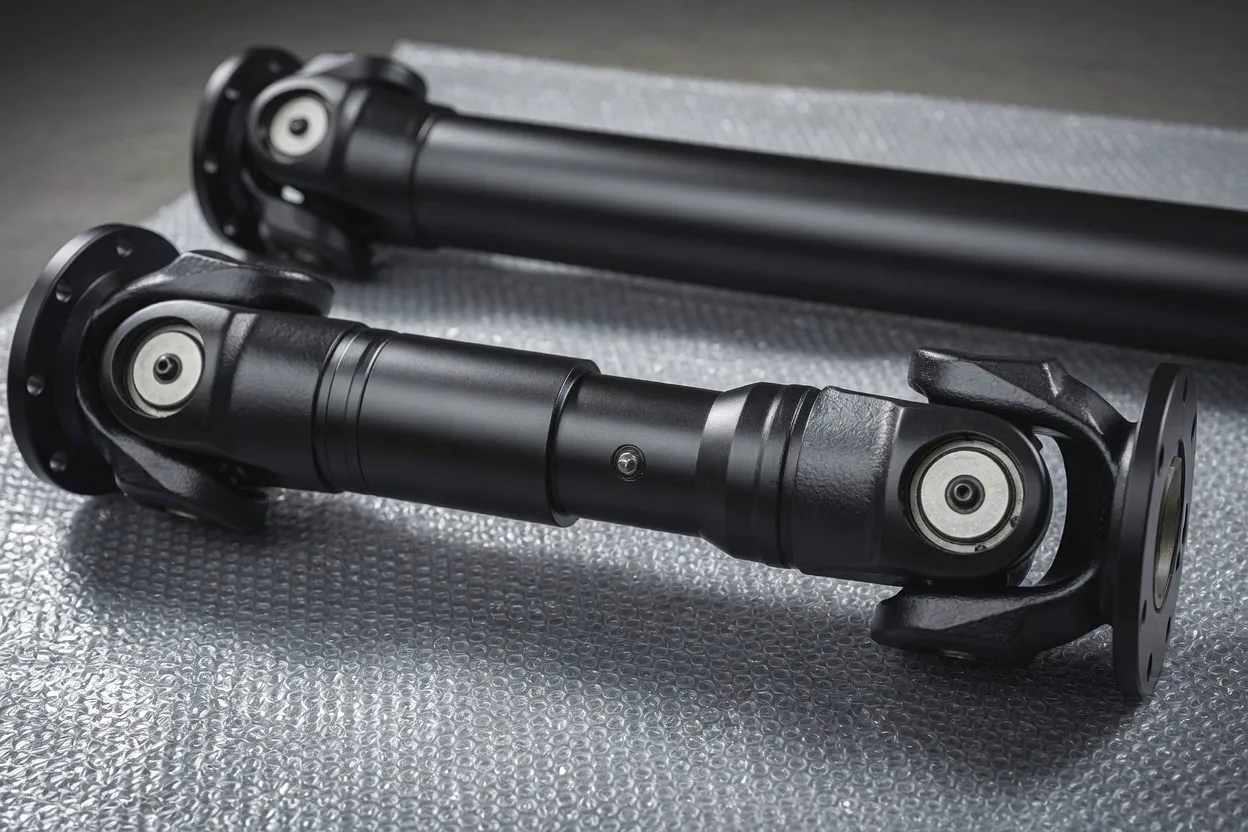
Ever Power — Precision Cardan Coupling Manufacturing & Customisation
Engineered drive solutions manufactured to the precise technical standards demanded by UK heavy industry, offshore energy, and global OEM clients.
🏭 Vertically Integrated Manufacturing
Ever Power operates a vertically integrated manufacturing facility encompassing raw material procurement through to final dynamic balancing and dimensional inspection. Our in-house forging capability — covering spider blanks up to 400 kg and yoke forgings exceeding 800 kg — eliminates dependency on external forging supply and allows direct quality control over the most structurally critical elements of every Cardan Coupling we produce. CNC machining centres with live tooling, multi-axis turning, and jig boring capabilities ensure that critical bore diameters and flange face runout values are routinely held to H7/f7 tolerances or closer, meeting the exacting dimensional requirements of precision drive applications in the UK aerospace, power generation, and heavy manufacturing sectors.
🔬 Customisation Engineering Depth
Ever Power’s engineering team handles the full spectrum of Cardan Coupling customisation requirements — from minor dimensional modifications to fundamentally redesigned assemblies for unique machinery architectures. Our FEA-based design validation process ensures all custom configurations are proven to meet specified fatigue life and overload capacity targets before manufacture begins. This is particularly valuable for UK customers managing equipment retrofits or obsolescence replacements, where exact form-fit-function matching to legacy plant dimensions is essential but original drawings no longer exist. Reverse engineering from physical samples is a routine service within our technical team’s capabilities, supported by full CMM measurement and CAD model generation to document the as-built geometry for future reference.
🚚 UK-Focused Logistics & Supply Chain
Ever Power maintains dedicated logistics partnerships with established freight and customs clearance specialists serving all major UK ports, including Felixstowe, Southampton, and Immingham. Standard lead times for catalogued Cardan Coupling series run to 4–6 weeks ex-works, with expedited production available for genuine urgency situations. All shipments to UK customers include full material test certificates to EN 10204 3.1 standard, dynamic balancing records, and dimensional inspection reports — documentation packages structured specifically to satisfy UK plant registration, PSSR compliance, and quality assurance audit requirements. Our technical sales team provides application consultation and dimensional confirmations prior to order placement at no additional charge.
📋 Quality Assurance & Traceable Certification
Quality at Ever Power is managed under an ISO 9001:2015 certified quality management system, with in-process and final inspection covering material hardness, geometric dimensional accuracy, surface finish, and dynamic balance confirmation for every Cardan Coupling shipped. Our heat treatment furnaces are calibrated and validated to AMS 2750 pyrometry requirements, ensuring consistent, traceable thermal processing results. For demanding sectors including offshore energy and defence supply chains, additional NDT procedures — magnetic particle inspection and ultrasonic examination of forgings — are available, providing the highest confidence level in the structural integrity of every assembly despatched from our facility.
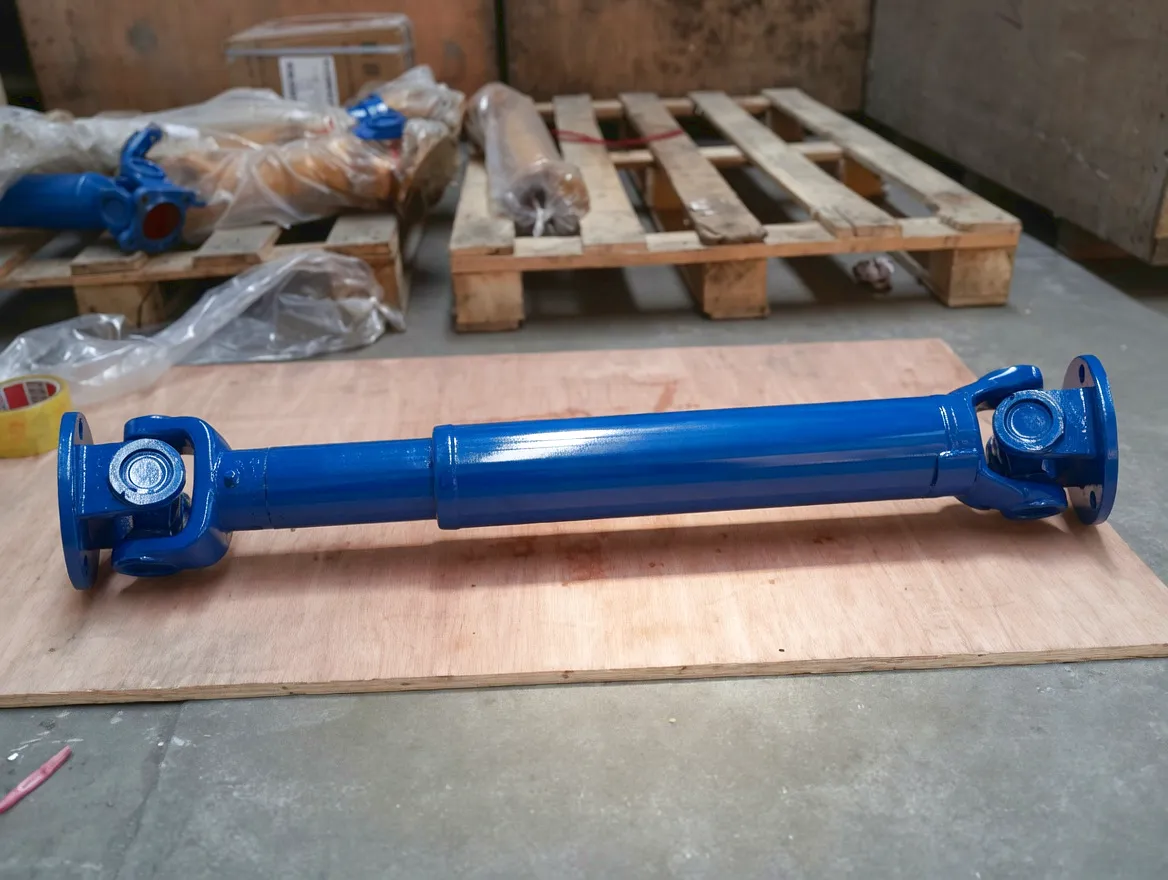
Ready to discuss your specific requirements? Our application engineers are available for technical consultation before any commitment to order.
Customer Success Story: Restoring Drive Reliability at a Sheffield Special Steel Mill
The Challenge
A specialist long products steel mill in Sheffield — operating a Steckel mill configuration producing high-grade tool steel bar products for the UK aerospace and cutting tool supply chains — had experienced recurring premature failure of their intermediate roll drive couplings over an 18-month period. The original cardan joints, sourced from a European supplier who had since discontinued the product line, were failing at the spider trunnion root after approximately four months of service, dramatically short of the 18-month target life. Unplanned stoppages to replace each failed Cardan Coupling assembly were costing the mill an estimated £45,000 per incident in lost production, scrap material, and emergency maintenance labour. Over the course of the year, four failures translated to losses exceeding £180,000 — a figure that demanded an urgent, technically grounded, and lasting solution from a supplier capable of going beyond simply copying the existing failed design.
The Ever Power Solution
The mill’s engineering manager approached Ever Power following a referral from a plant consultancy operating within the Sheffield City Region engineering network. After receiving the original coupling drawings, physical failed samples, and a detailed loading history — including billet dimensions, mill speed data, and pass schedule records — Ever Power’s application engineering team conducted a systematic root cause analysis. FEA of the original spider geometry revealed that the trunnion root radius was undersized for the actual peak torque profile, a consequence of the mill having been upgraded to a more powerful main drive motor during a previous capital programme without a corresponding coupling redesign. The solution involved a completely redesigned cardan assembly: enlarged spider cross-section geometry, optimised trunnion root radius to reduce peak stress concentration factor, upgrade of spider material to forged 18CrNiMo7-6, and improved radial positioning of the bearing cup to maximise load distribution symmetry across all four trunnion arms. Prototypes were manufactured, statically and dynamically tested, and two complete assemblies were delivered to Sheffield within nine weeks of the initial technical enquiry.
The Outcome
The redesigned Cardan Coupling assemblies from Ever Power have now completed 22 continuous months of operation in the Sheffield mill without a single coupling-related production stoppage — an improvement in service life exceeding 500% relative to the previous supplier’s product. The mill’s engineering team subsequently standardised on Ever Power assemblies for all eight drive positions on the Steckel mill and placed a standing annual supply agreement covering both scheduled spare stock and emergency call-off requirements. Ever Power’s ability to hold drawing-controlled spare assemblies in bonded inventory — available for next-working-day despatch to any UK mainland location — was specifically highlighted by the customer as a critical element of the overall supply arrangement, eliminating the residual risk of extended shutdowns awaiting long-lead replacement parts from offshore manufacturers with no UK stock capability.
What UK Customers Say About Ever Power Cardan Couplings
★★★★★
“We’d been through three different coupling suppliers over two years trying to resolve our spider failures on the roughing mill. Ever Power’s engineers actually analysed our loading data and came back with a redesigned Cardan Coupling assembly rather than just copying the existing dimensions. It’s been running for nearly two years now without a single issue — it’s genuinely changed how we approach maintenance planning for that whole drive.”
— R. Hartley, Engineering Manager, Long Products Steel Division, Sheffield
★★★★★
“The documentation package that comes with an Ever Power Cardan Coupling order is genuinely exceptional — full material certs to 3.1, balance records, dimensional inspection reports, everything. For our ISO audit compliance and PSSR requirements, that traceability is non-negotiable. The fact that Ever Power delivers this as standard rather than a paid extra sets them apart from most suppliers we’ve worked with over the years.”
— S. Kowalczyk, Reliability Engineer, Offshore Wind Operations, Aberdeen
★★★★★
“We needed a double-Cardan propshaft with non-standard flange bolt patterns and a specific slip yoke travel to match our vessel’s shaft arrangement. Ever Power turned around a fully dimensioned drawing for approval within 48 hours and had the finished assembly at our Tyneside yard inside six weeks. The fit was exact, balance was certified to G1.0, and it’s been trouble-free through a full North Atlantic charter season — we’ll be coming back for the sister vessel.”
— D. Morrison, Chief Engineer, Marine Operations, Newcastle upon Tyne
Frequently Asked Questions
Technical and commercial questions answered by the Ever Power engineering team
Partner with Ever Power for Your Cardan Coupling Requirements
Whether you need a standard replacement coupling or a fully engineered custom assembly for a critical UK industrial drive, Ever Power’s team has the technical depth and manufacturing capability to deliver exactly what your application demands. Contact us today for a prompt, detailed technical quotation.
📧 Request a Quote — [email protected]
edit by gzl