
Ever Power Engineering Team
18+ Years in Cardan Coupling Design • ISO 9001 Certified Manufacturing • Serving UK & Global Markets
Heavy-Duty Joints
UK Supply
Why Cardan Coupling Technology Matters in Modern Combine Harvesters
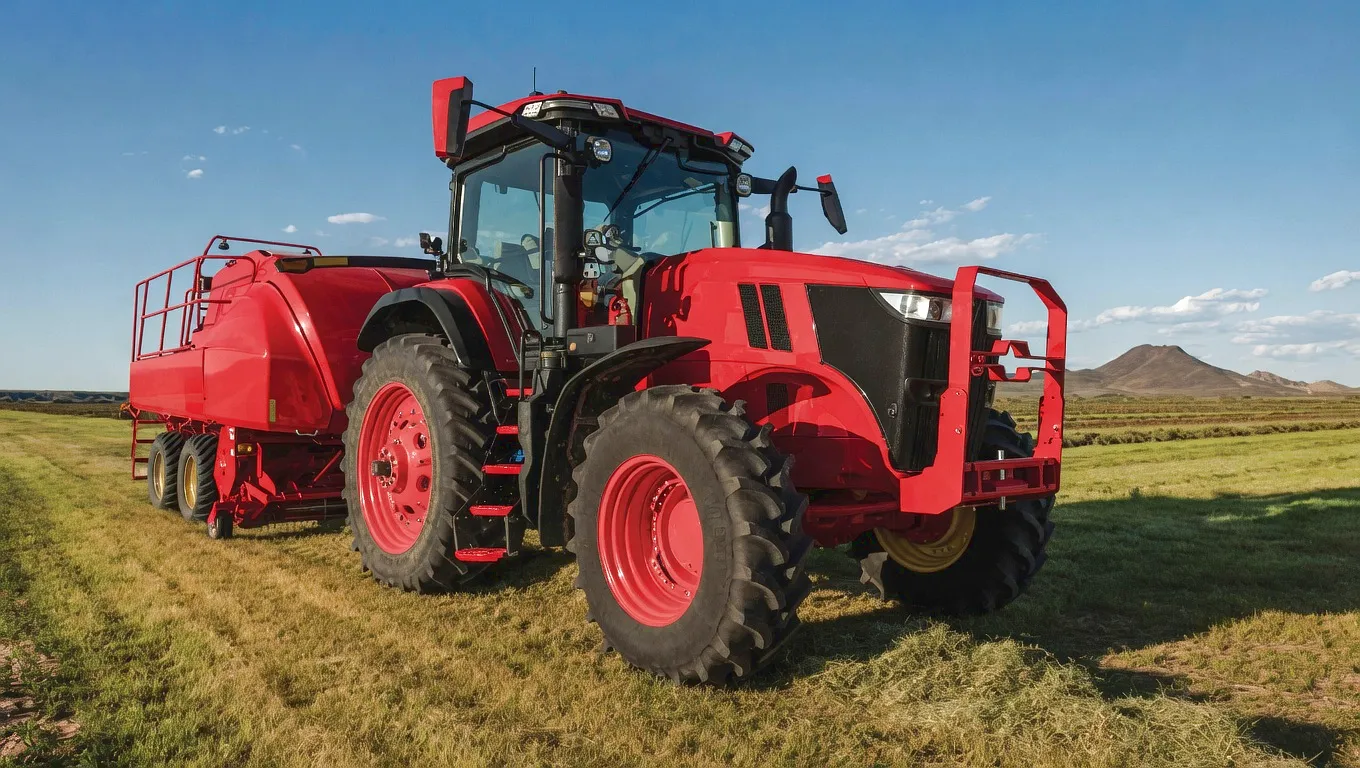
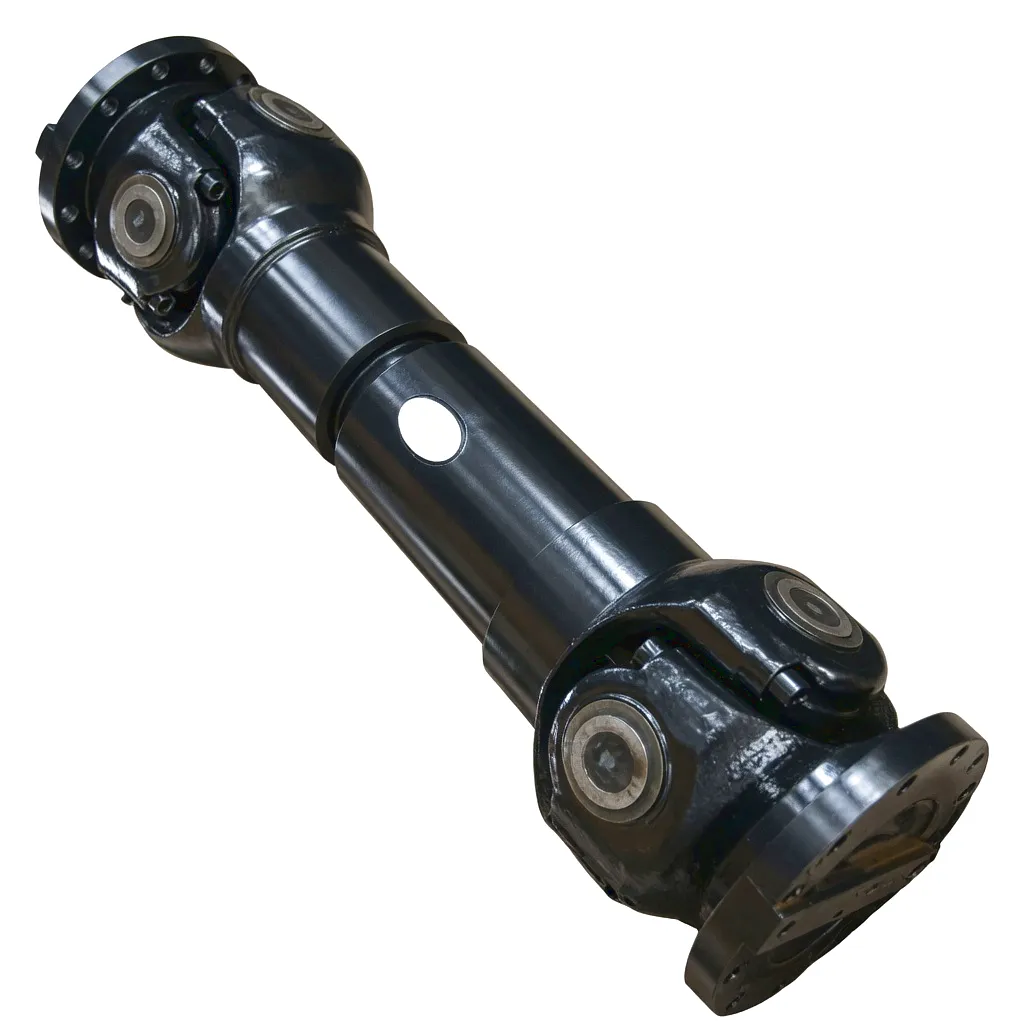 A combine harvester is, at its core, a mobile factory. Within a single machine, grain is cut, gathered, threshed, separated, and cleaned — all while the vehicle itself navigates wildly uneven terrain at variable speeds. The mechanical linkages that connect the diesel engine to each of these subsystems face a punishing combination of angular misalignment, torsional shock, and vibration. Of all the drivetrain components that keep this process seamless, the cardan coupling stands out as the single most mission-critical mechanical interface between the power source and the working elements of the harvester.
Across the cereal-growing regions of the United Kingdom — from the expansive arable fields of East Anglia to the rolling farmlands of the Scottish Borders — combine harvesters operate under tight seasonal windows. A breakdown during harvest means lost grain, lost revenue, and cascading logistical problems. The right cardan coupling, properly specified and maintained, is the difference between a smooth harvest and an expensive catastrophe. This article examines why variable-angle heavy-duty double cardan joints have become the preferred engineering solution for this demanding application, and how UK agricultural operations can select, source, and maintain these components for long-term reliability.
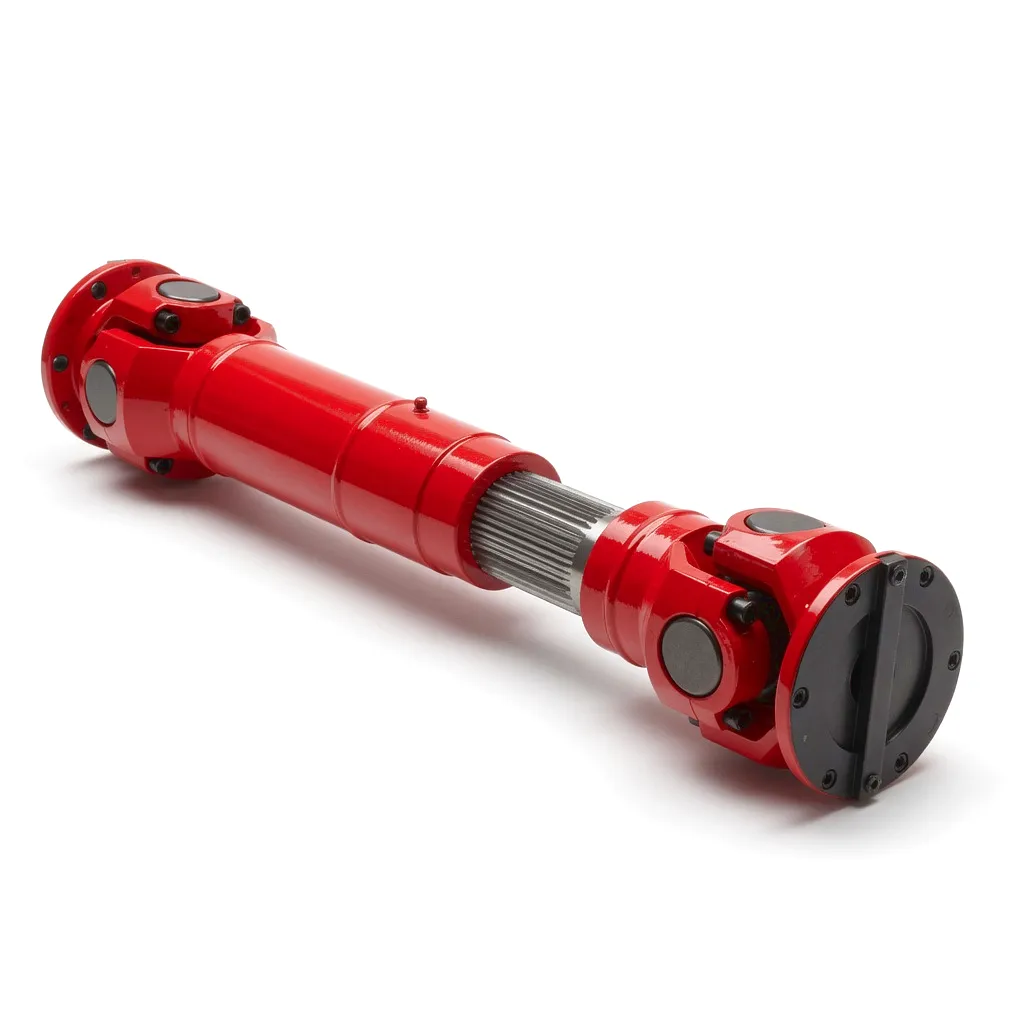
Ever Power manufactures heavy-duty double cardan joints engineered to handle the extreme torque demands of combine harvester drivetrains. Each unit is built to order, with custom flange patterns and spline configurations available for UK-based OEMs and fleet operators.
The Engineering Challenge: Power Transmission Across Moving Axes
When a combine harvester traverses an undulating field, the cutting header at the front constantly adjusts its height and angle relative to the main body. The feederhouse conveyor that channels cut crop into the threshing mechanism pivots as the header rises and falls. Meanwhile, the threshing drum, straw walkers, sieves, and grain augers all draw power from the engine through a network of shafts and joints. Each of these connections must accommodate angular displacement while transmitting high torque without interruption.
A standard single universal joint introduces a well-known problem: non-constant velocity. When the input shaft rotates at a steady speed, the output shaft accelerates and decelerates twice per revolution if there is any angular misalignment. This cyclical speed variation, described by the Cardan joint velocity equation, generates vibration that damages bearings, fatigues shafts, and accelerates wear on every downstream component. In a combine harvester running at 540 or 1000 RPM PTO speeds, these vibrations become destructive in remarkably short order.
The double cardan joint solves this by using two universal joints connected by a centring yoke. When the joint angles are equal and the intermediate shaft is properly phased, the speed fluctuations from the two joints cancel each other out, delivering near-constant velocity to the output. This is the fundamental mechanical principle that makes the heavy-duty double cardan coupling indispensable in combine harvester drivetrains — it maintains smooth, uninterrupted power flow to the cutting header and threshing system regardless of the operating angle.
Working Principle of the Variable-Angle Double Cardan Joint
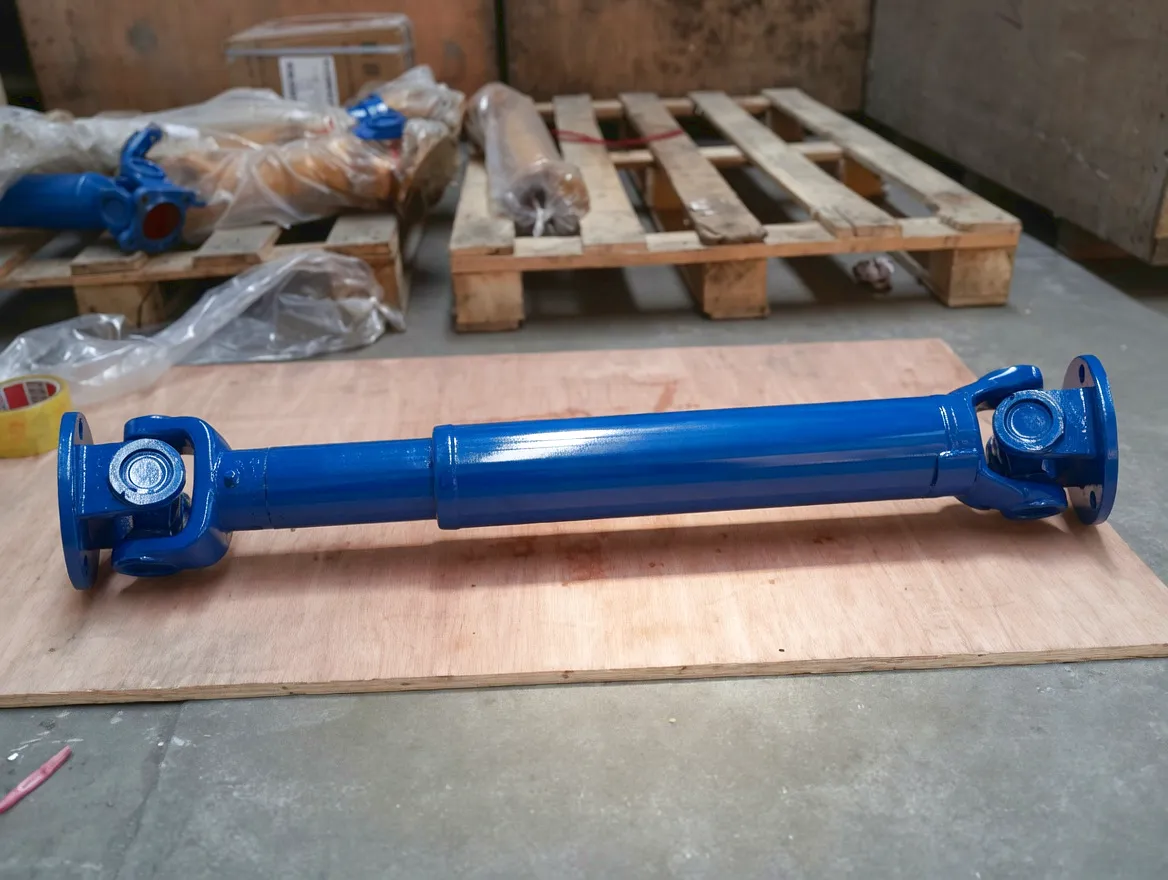
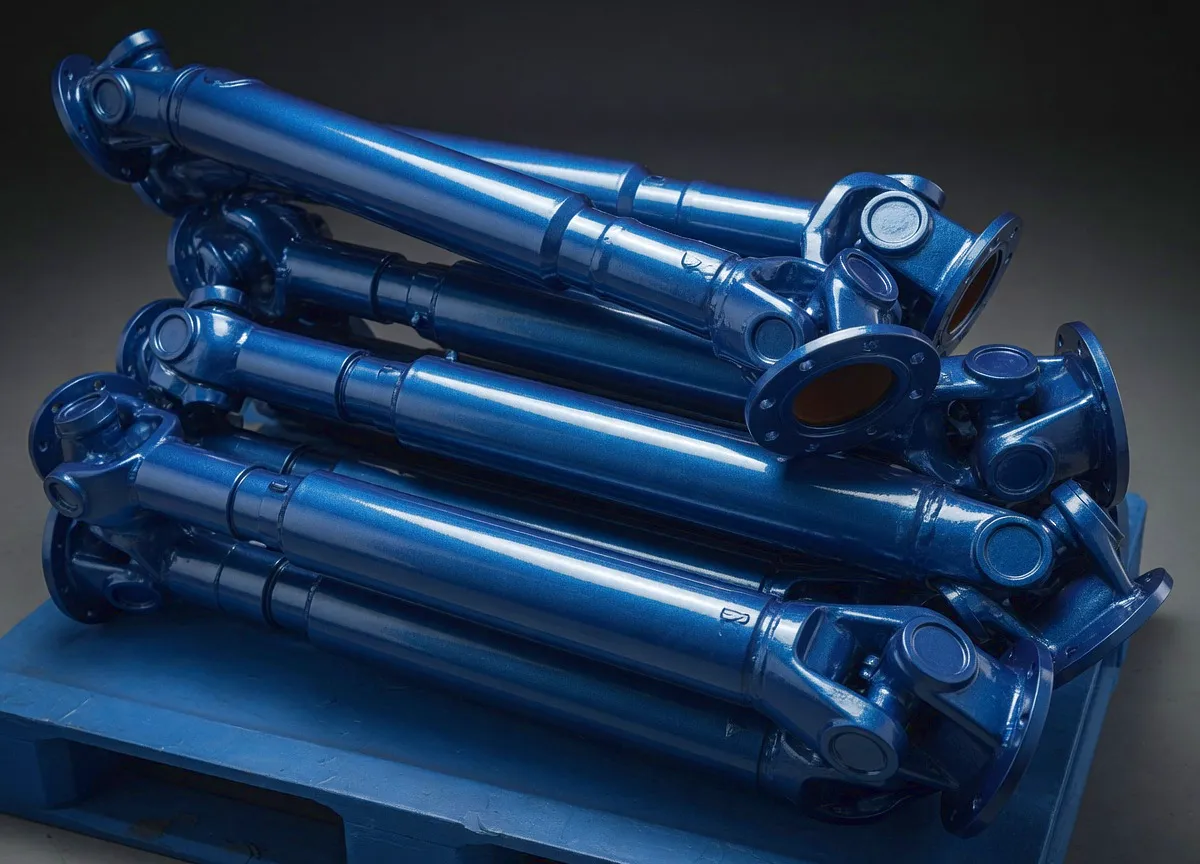
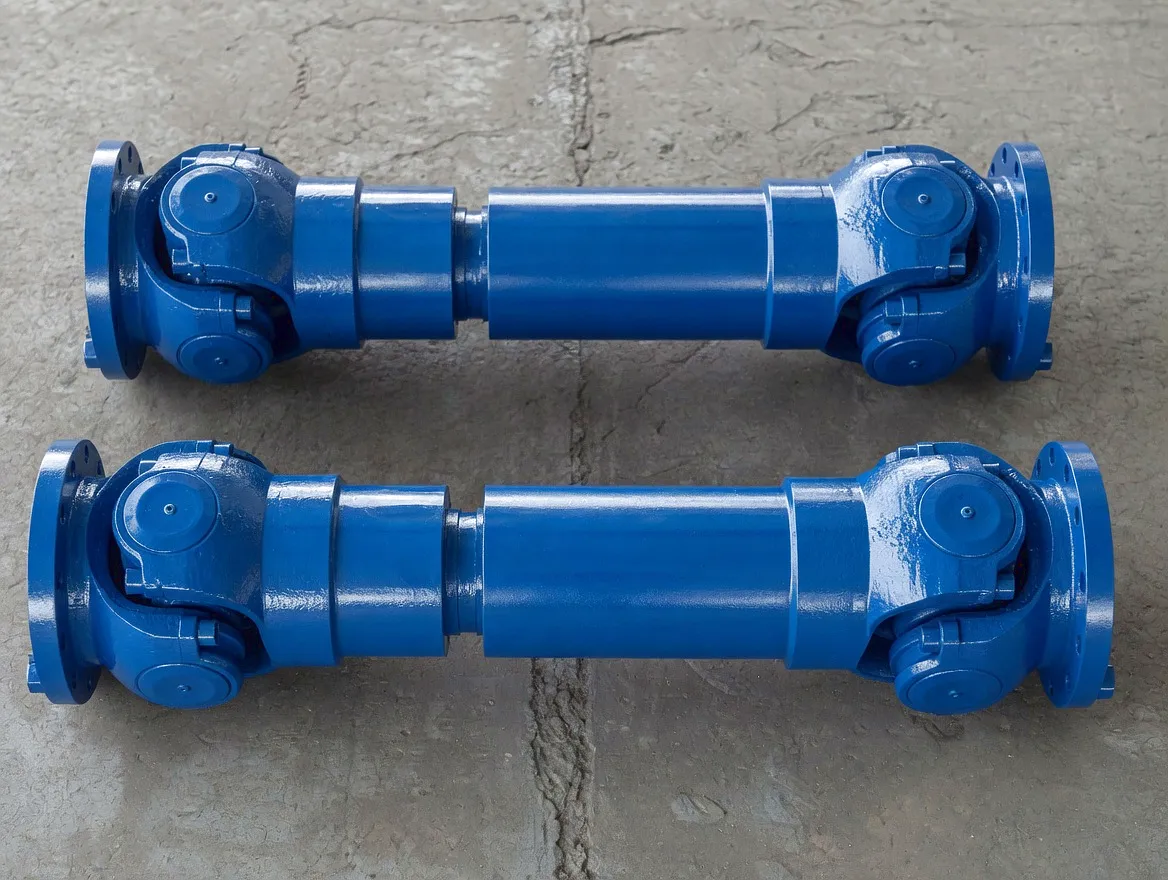 The variable-angle double cardan coupling consists of two Hooke-type universal joints linked through a short intermediate shaft or centring mechanism. Each universal joint comprises a cross-shaped bearing assembly (the spider or cruciform) fitted with needle roller bearings inside bearing cups. The input yoke, connected to the driving shaft, transmits torque through the spider to the centre yoke, which in turn drives the second spider and output yoke. The geometry of this arrangement ensures that the angular velocity variations introduced by the first joint are precisely compensated by the second joint, provided the two joint angles remain equal and the yokes are phased at 90 degrees to each other.
In the context of a combine harvester, this coupling sits between the engine-driven PTO shaft and the header gearbox, or between the feederhouse drive and the threshing system. As the header floats over terrain contours, the coupling angle changes dynamically — sometimes within a range of 0 to 25 degrees or more within a single pass across a field. The double cardan configuration accommodates this angular variation smoothly, without the cyclic torque pulsations that would otherwise propagate through the entire drivetrain and cause premature wear on bearings, gears, and seals.
The bearing assemblies within each joint are packed with high-temperature lithium complex grease rated for sustained operation above 120 degrees Celsius. Labyrinth seals or multi-lip rubber seals prevent contaminant ingress from crop dust, chaff, and moisture — all of which are present in abundance during harvest. The yoke material is typically forged alloy steel (such as 42CrMo4 or equivalent), quenched and tempered to achieve a balance between hardness and toughness that resists both fatigue cracking and impact loading from sudden engagement of heavily loaded cutting mechanisms.
Materials & Construction: Built for Brutal Agricultural Conditions
Material selection for cardan coupling components used in combine harvesters goes well beyond standard industrial specifications. The operating environment combines high ambient dust loading from chaff and soil particles, moisture from dew and occasional rain, temperature swings from early-morning cold starts to sustained high-load operation in summer heat, and continuous exposure to organic acids released by crop material. Every material choice must account for this hostile combination.
The yokes are drop-forged from 42CrMo4 chromium-molybdenum alloy steel. This grade provides excellent fatigue resistance, with a tensile strength in the range of 900 to 1100 MPa after quenching and tempering. The forging process itself aligns the grain structure of the steel along the load path, significantly improving resistance to crack initiation compared to cast or machined-from-bar alternatives. After forging, the yoke ears are precision-bored to accept the bearing cups with interference fits that maintain concentricity under load.
The spider (cross) assemblies use case-hardened bearing journals — typically carburised to a depth of 0.8 to 1.2 mm and hardened to 58-62 HRC surface hardness, while the core remains tough at 30-38 HRC. Needle roller bearings, selected for their high load capacity relative to their compact radial envelope, ride directly on these hardened journals. The bearing cups are press-fitted into the yoke bores and retained with snap rings or staked in place. Seal design is critical: modern agricultural cardan joints use double-lip seals with an integrated dust exclusion lip that actively deflects airborne particles away from the bearing contact zone, dramatically extending service life in dusty harvest conditions prevalent across the grain-growing counties of England.
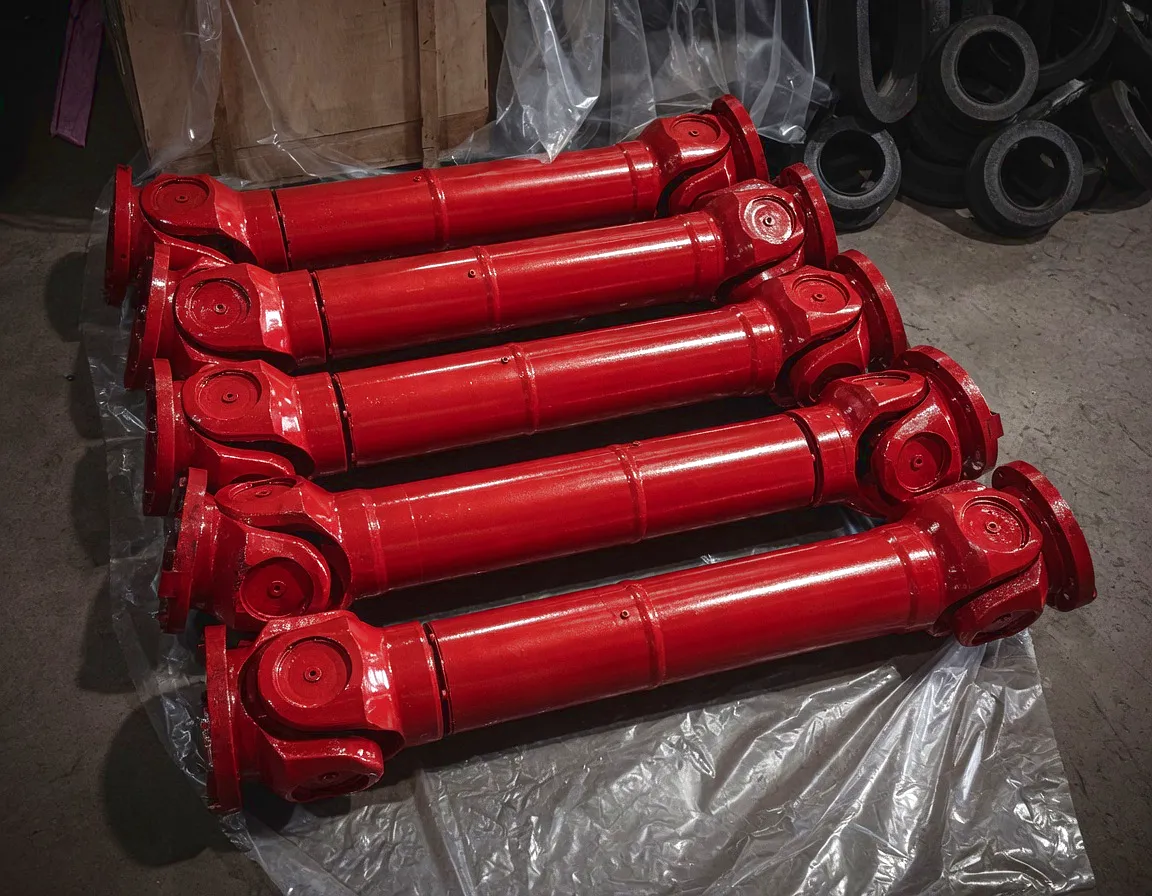
Technical Specifications: Heavy-Duty Double Cardan Coupling for Combine Harvesters
| Parameter | Standard Series | Heavy-Duty Series | Custom Agricultural |
|---|---|---|---|
| Rated Torque (Nm) | 2,500 – 8,000 | 8,000 – 22,000 | Up to 35,000 |
| Peak Torque (Nm) | 5,000 – 16,000 | 16,000 – 45,000 | Up to 70,000 |
| Max Operating Angle | 15° | 25° | Up to 45° |
| Max Speed (RPM) | 1,500 | 1,200 | 800 – 1,000 |
| Yoke Material | C45 Forged Steel | 42CrMo4 Forged | 42CrMo4 / Custom Alloy |
| Spider Hardness | 55–58 HRC | 58–62 HRC | 58–62 HRC |
| Bearing Type | Needle Roller | Needle Roller | Needle Roller + Thrust |
| Seal Type | Single-Lip NBR | Double-Lip FKM | Multi-Lip FKM + Dust Shield |
| Operating Temp Range | -20°C to +80°C | -30°C to +120°C | -40°C to +150°C |
| Lubrication | Grease Nipple | Grease Nipple + Reservoir | Sealed-for-Life Option |
| Flange Options | SAE / DIN Standard | SAE / DIN / Custom | Fully Custom to Drawing |
Key Advantages of Ever Power Cardan Couplings for Agricultural Drivetrains
◆ Near-Constant Velocity Output
The double-joint configuration eliminates the cyclical speed fluctuations inherent in single U-joints. This translates directly to reduced vibration at the cutting header, smoother grain flow through the feederhouse, and measurably lower fatigue loading on downstream gearbox components. Operators report noticeably quieter operation and more consistent cut quality.
◆ High Torque in Compact Envelope
Combine harvester drivetrains are space-constrained. The forged yoke design and high-capacity needle bearings deliver torque ratings up to 35,000 Nm in a package that fits within the limited clearance between the feederhouse throat and the main body of the machine. This compact form factor eliminates the need for complex intermediate gearboxes that add weight, cost, and failure points.
◆ Contamination-Resistant Sealing
Agricultural environments generate extraordinary amounts of fine particulate matter — grain dust, soil, and organic debris. The multi-lip FKM seal system used in Ever Power’s heavy-duty series provides layered protection against ingress. Field data from UK operations shows bearing service life improvements of 40-60% compared to standard single-seal designs when operating in high-dust cereal harvesting conditions.
◆ Wide Angular Operating Range
With continuous operating angles up to 25 degrees and intermittent capability to 45 degrees in custom configurations, the variable-angle cardan coupling accommodates the full range of header movement found on modern hillside and contour-following combine harvesters. This eliminates the angular limitation that often forces compromises in header suspension design.
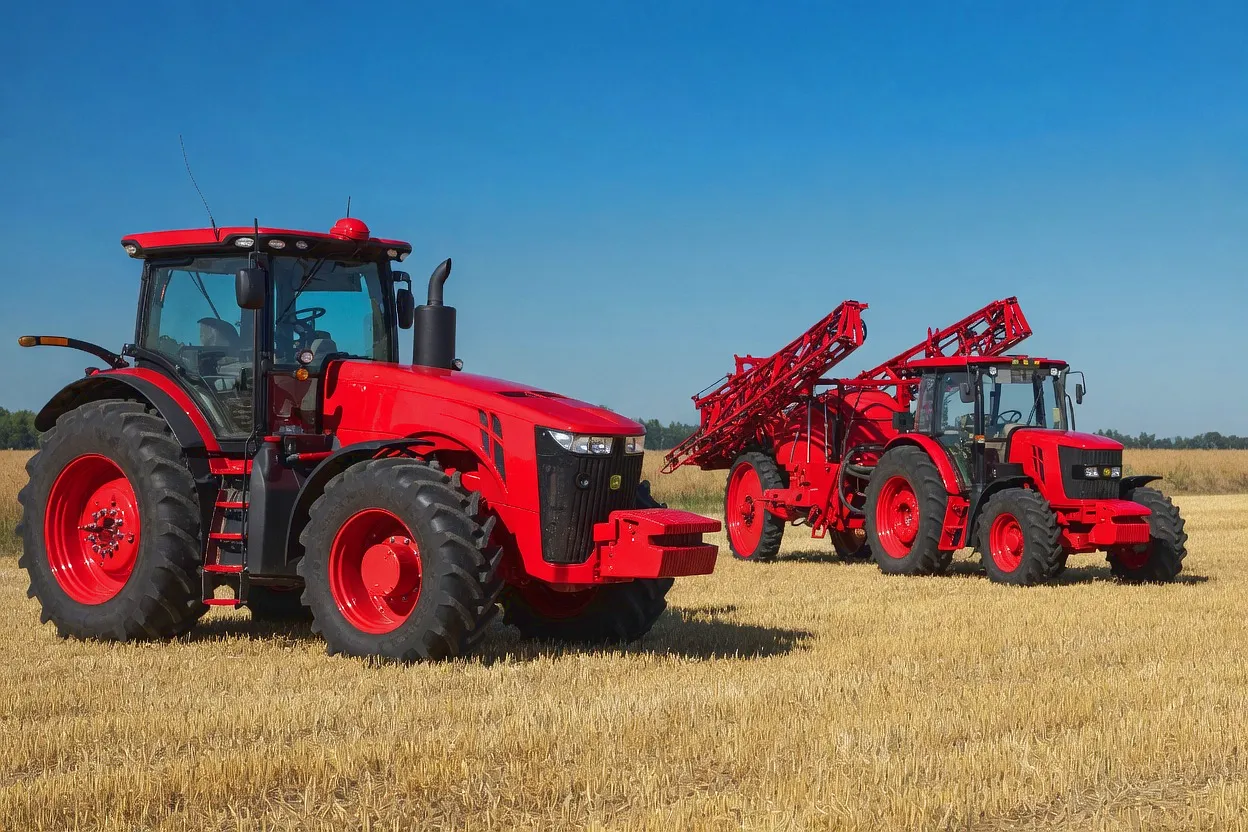
Application Scenarios: Where Cardan Couplings Prove Their Worth on UK Farms
The combine harvester is the flagship application, but the heavy-duty double cardan joint sees service across a surprisingly broad spectrum of agricultural and related machinery used on British farms. Understanding these diverse applications helps illustrate why this coupling type has become the default choice for high-torque, variable-angle power transmission in mechanised agriculture.
Header-to-Feederhouse Drive
The primary application. The cutting header must float independently to follow ground contours, creating continuous angular variation at the drive connection. A heavy-duty double cardan coupling delivers smooth, uninterrupted power to the header knife drive and reel mechanism across operating angles that change with every metre of forward travel. In the undulating terrain typical of farms in Lincolnshire, the Wolds, and the Yorkshire chalk lands, this capability is non-negotiable.
Threshing Drum & Rotor Drive
The threshing system operates at high speed and absorbs large power spikes when the crop flow is uneven or when the machine encounters a particularly dense stand of wheat or barley. Cardan couplings in this position must handle both the continuous rated torque and the transient overloads without transmitting damaging shock loads to the engine clutch or hydrostatic drive. The double cardan design, with its inherent smoothing of velocity fluctuations, protects every component in the chain.
Unloading Auger System
The grain unloading auger swings from its stored position to the active discharge position, creating a large angular offset at its drive connection. A cardan coupling at this junction allows the auger to operate at any swing angle without speed fluctuation, ensuring consistent grain delivery to the trailer. UK contractors running large-capacity combines particularly value this feature during the fast turnaround times demanded by modern logistics-driven harvest schedules.
PTO-Driven Forage & Baler Equipment
Beyond combine harvesters, cardan couplings serve in virtually every PTO-driven implement used in UK agriculture. Large square balers, forage harvesters, mower-conditioners, and grain carts all rely on universal joints to bridge the angular offset between the tractor PTO and the implement input shaft. The same engineering principles that make the double cardan joint essential in combines apply across this entire equipment category, particularly where high-torque, high-speed operation demands smooth power delivery.
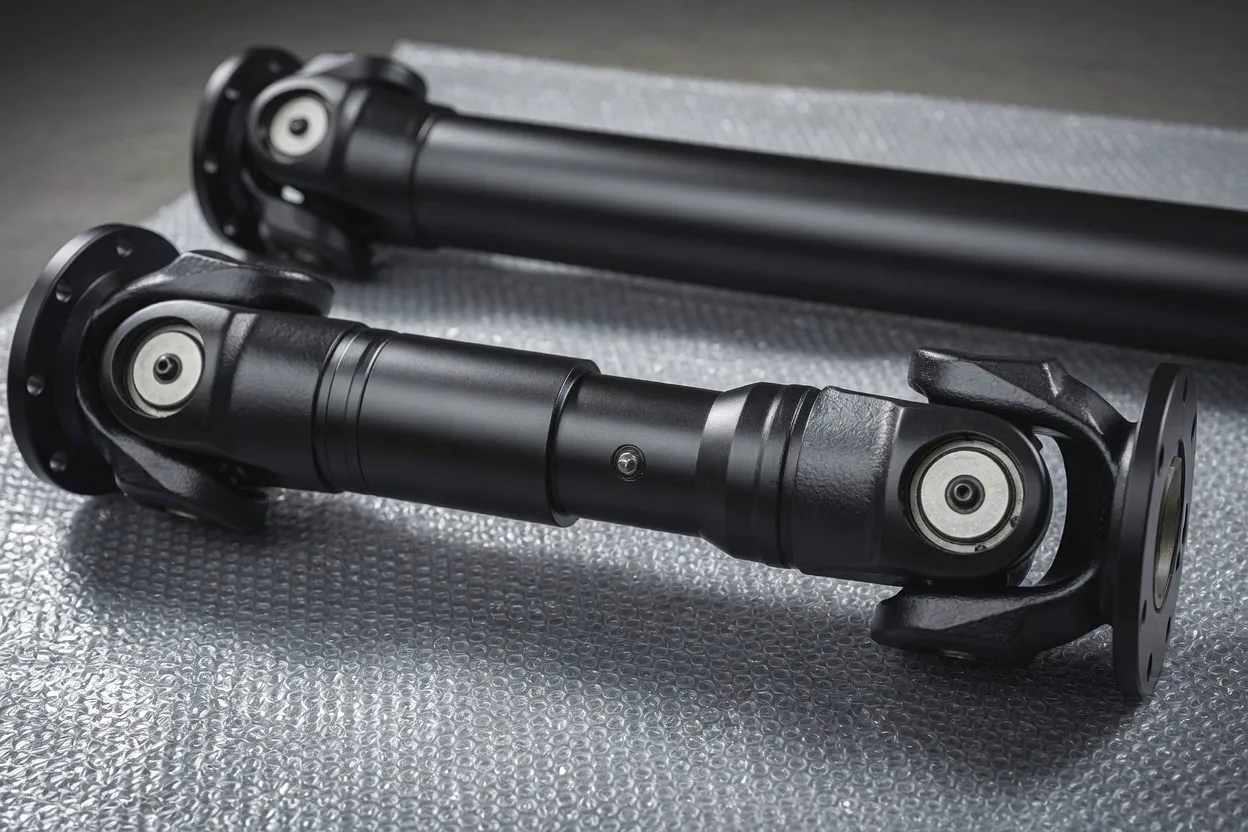
Engineering Considerations for Combine Harvester Cardan Coupling Selection
Selecting the correct cardan coupling for a combine harvester application involves balancing several interrelated engineering parameters. Engine power output, operating speed, maximum angular displacement, installation length constraints, and environmental conditions all feed into the selection matrix. Getting any one of these wrong can result in premature failure, reduced harvesting efficiency, or both.
Torque calculation must account for the peak loading conditions, not merely the steady-state operating torque. When a combine header strikes a heavy windrow of oilseed rape or encounters a patch of laid barley, the instantaneous torque spike can reach three to four times the nominal running torque. The cardan coupling must be rated for this peak torque with an adequate safety factor — typically 1.5 to 2.0 for agricultural applications. Under-specifying the coupling based on average torque is one of the most common causes of field failure and a surprisingly frequent engineering oversight, even among experienced agricultural machinery designers.
Speed considerations interact directly with angular capacity. The permissible operating angle decreases as shaft speed increases, because higher speeds amplify the centripetal forces acting on the bearing assemblies and increase the rate of heat generation within the joint. A coupling rated for 25 degrees at 540 RPM may only be rated for 15 degrees at 1000 RPM. This relationship must be carefully evaluated for each application within the harvester drivetrain.
The challenge of crop residue contamination deserves particular attention. Wheat chaff, barley awns, and oilseed rape stems wrap around rotating shafts and accumulate around seal faces. Over time, this material packs down and creates an abrasive slurry when mixed with grease leakage or moisture. Effective coupling design for this environment includes smooth external surfaces that discourage material accumulation, robust dust shields that deflect debris away from seals, and accessible grease points that allow field lubrication without disassembly. UK operators running extended shifts during the peak August harvest window need couplings that can go at least 100 operating hours between lubrication intervals.
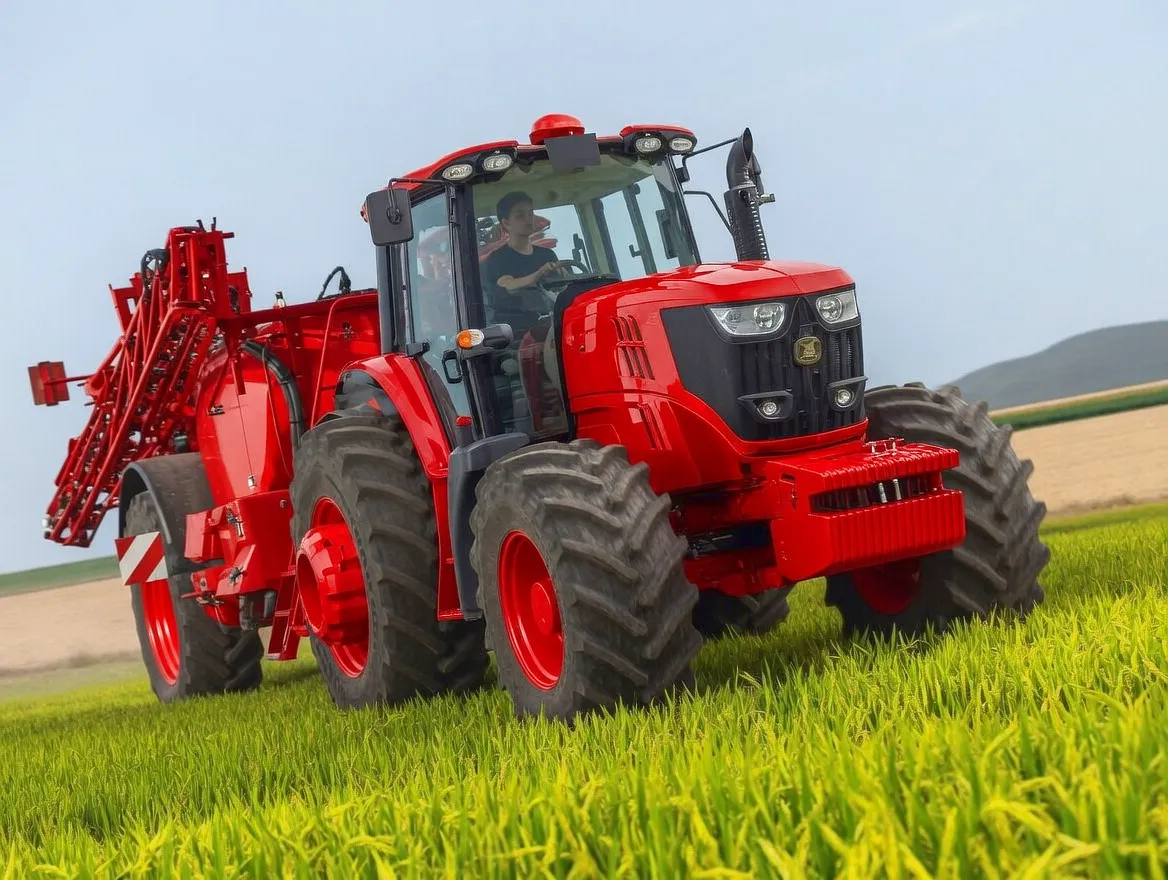
Customer Case Study: Fenland Grain Co-operative, Cambridgeshire
Verified field data from the 2025 harvest season
12
Combine Harvesters
73%
Reduction in Unplanned Downtime
2,400+
Operating Hours Logged
£48K
Estimated Annual Savings
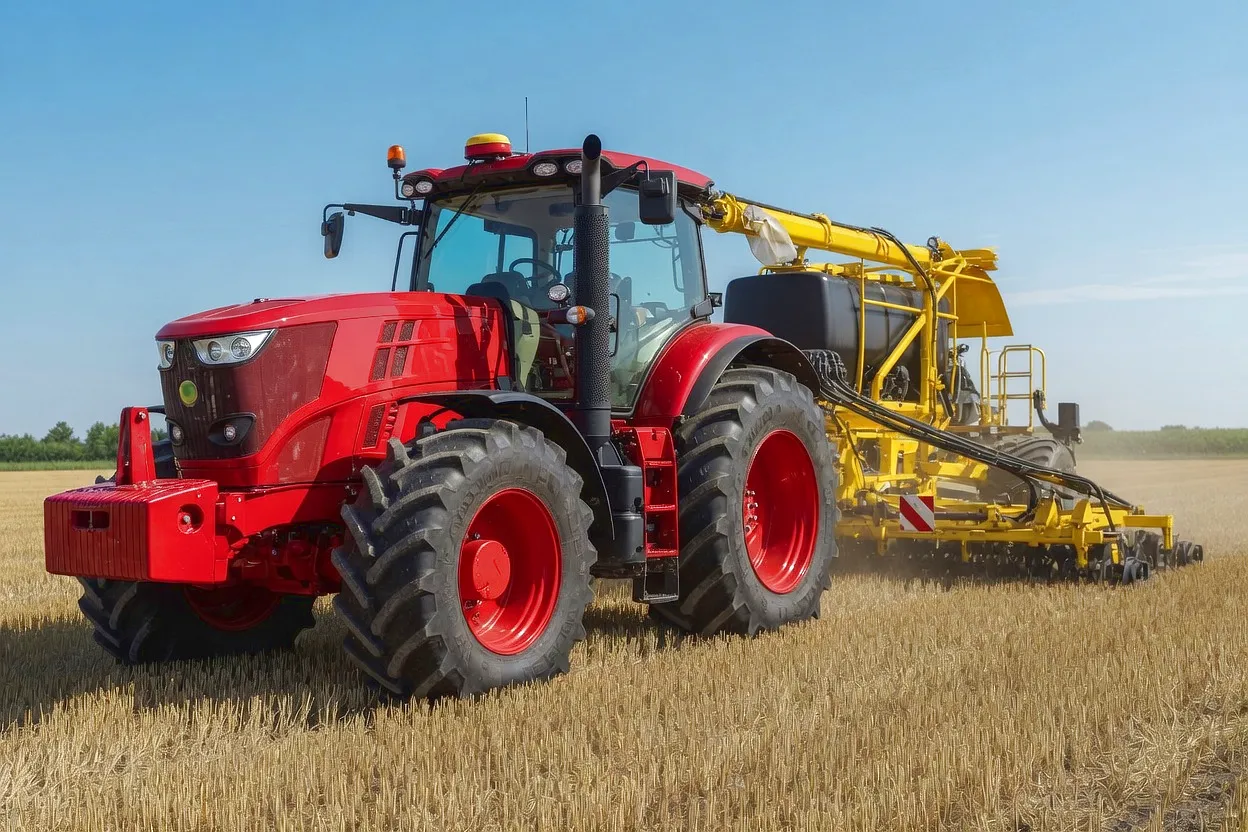
Fenland Grain Co-operative operates a fleet of twelve combine harvesters across approximately 4,800 hectares of arable land in the black-soil fen country east of Cambridge. The flat, peat-based terrain might seem easy on machinery, but the soft ground creates its own challenges: machines sink unevenly, headers tilt, and drivetrain angles change constantly. Prior to switching to Ever Power heavy-duty double cardan couplings, the co-operative experienced an average of 3.2 unplanned drivetrain-related stops per machine during each harvest season, with each stop costing an estimated 4 to 6 hours of downtime including parts sourcing, repair, and re-mobilisation.
In the spring of 2025, the co-operative’s workshop manager, working with Ever Power’s application engineering team, specified custom cardan couplings sized for 18,000 Nm rated torque with extended-life sealed bearing packs and integrated dust shields. The coupling flange patterns were customised to match the existing drivetrain interfaces on their fleet of CLAAS and New Holland machines, eliminating any need for adapter plates or shaft modifications.
The results across the 2025 harvest were striking. The fleet completed the entire wheat, barley, and oilseed rape harvest with fewer than one unplanned drivetrain stop per machine — a 73% reduction from the previous year. Vibration measurements taken at the feederhouse showed a 35% reduction in peak vibration amplitude, which the workshop team attributed directly to the improved velocity characteristics of the double cardan design. The co-operative estimated the combined savings from reduced downtime, lower spare parts consumption, and extended bearing life at approximately £48,000 for the season.
What UK Agricultural Engineers Say
★★★★★
“We ran 14-hour days through a wet August in Norfolk and not a single coupling failure. The sealed bearing packs made a real difference — we didn’t have to stop for greasing during shifts. The custom flange fitment from Ever Power saved us two days of workshop time compared to the OEM replacement parts we’d been using.”
— James T., Fleet Workshop Manager, North Norfolk
★★★★★
“I manage a contracting operation across South Lincolnshire and we were burning through U-joints every season. Switched to the Ever Power double cardan setup for our New Holland CR series and the difference in vibration at the header is night and day. Our combine operators noticed it within the first hour of running.”
— Sarah M., Agricultural Contractor, South Lincolnshire
★★★★☆
“We needed a cardan coupling to fit a modified feederhouse on an older Massey Ferguson combine. Ever Power produced a custom unit to our drawings in under three weeks, delivered to our workshop in Dorset. The quality of the forging and heat treatment was excellent — on par with anything from the OEM, at roughly 60% of the cost.”
— Robert K., Farm Workshop Engineer, Dorset
Maintenance Practices That Extend Cardan Coupling Service Life
Even the best-engineered cardan coupling requires proper maintenance to deliver its full design life in the demanding conditions of UK cereal harvesting. The good news is that maintenance requirements are straightforward and can be integrated into existing pre-season and in-season service routines without adding significant workshop time.
Lubrication is the single most impactful maintenance action. For greaseable couplings, apply a high-quality EP2 lithium complex grease through each grease nipple until fresh grease is visible at the bearing seals. The recommended interval during harvest is every 50 to 100 operating hours, though this should be shortened in extremely dusty conditions or when harvesting oilseed rape, which generates particularly fine and penetrating airborne debris. For sealed-for-life configurations, visual inspection of the seal faces at the same intervals is sufficient — look for signs of seal lip damage, grease leakage, or material accumulation around the joint.
Yoke phasing should be checked at the start of each season and after any disassembly for repair or inspection. The two yokes on the intermediate shaft must be aligned within the same plane (zero-degree phase angle) for the double cardan velocity cancellation effect to function correctly. A phasing error of even a few degrees will reintroduce velocity fluctuation and vibration. This is a common post-repair error that can be prevented by marking the yoke positions before disassembly with a paint pen or punch mark. Bearing play should also be checked by gripping the yokes and attempting to rock them — any perceptible play indicates bearing wear and the spider assembly should be replaced before the next season to prevent cascading damage to the yoke bores.
Ever Power: Custom Cardan Coupling Manufacturing for UK Agricultural OEMs
⚙ Full Custom Design
From initial concept through to production-ready drawing, Ever Power’s engineering team collaborates directly with your design engineers to develop cardan coupling solutions that integrate perfectly with your existing drivetrain architecture. Custom flange patterns, spline profiles, yoke geometries, and bearing configurations are all within scope. Whether you are designing a new combine header interface or retrofitting an existing machine, the process begins with your technical requirements and ends with a coupling that fits without compromise.
⚙ Rapid Prototyping & Small Batch
Not every project needs ten thousand units. Ever Power supports small-batch and prototype orders for UK-based agricultural machinery builders and aftermarket specialists who need custom cardan couplings in quantities from a single unit up to series production volumes. Prototype turnaround times of 15 to 21 working days are standard, with rush options available for time-critical harvest-season breakdowns. Every unit undergoes the same quality inspection process regardless of batch size.
⚙ Quality Assurance & Traceability
ISO 9001 certified manufacturing processes ensure material traceability, dimensional verification, and performance testing for every cardan coupling that leaves the facility. Hardness testing, dimensional inspection, and dynamic balancing are standard operations. For critical agricultural applications, full material certification and batch-specific test reports are provided on request, supporting the traceability requirements of major UK agricultural OEMs and their supply chain audit processes.
Serving Agricultural Operations Across the United Kingdom
Ever Power supplies cardan couplings to combine harvester operators, agricultural contractors, farm workshops, and OEM machinery builders throughout England, Scotland, and Wales. The major arable regions of the UK — East Anglia, Lincolnshire, the East Midlands, Hampshire, the Scottish Borders, and the Vale of York — are home to some of the most intensive combine harvesting operations in Europe. These operations demand reliable, fast-turnaround supply of drivetrain components that meet or exceed OEM specifications.
Delivery to UK addresses is available via express freight, with standard orders reaching workshops in England and Wales within 5 to 7 working days and expedited delivery available for urgent harvest-season requirements. For fleet operators and OEMs, blanket purchase agreements with scheduled delivery programmes help ensure critical cardan coupling spares are on-site before the harvest window opens. Ever Power’s UK-based application engineering support means that technical questions about coupling selection, installation, and maintenance can be resolved quickly without time-zone delays.
Whether your operation is a 200-hectare family farm in the Cotswolds or a 10,000-hectare contracting business spanning multiple counties, the same engineering rigour and supply reliability applies. Every cardan coupling is manufactured to the same standard, inspected to the same tolerances, and backed by the same technical support — because a breakdown during harvest has the same urgency whether you are running one machine or fifty.
Frequently Asked Questions
Where can I find a reliable cardan coupling supplier for combine harvesters in the UK?
Ever Power supplies heavy-duty cardan couplings engineered for combine harvester drivetrains to customers throughout England, Scotland, and Wales. With ISO 9001 certified manufacturing, custom design capabilities, and express delivery to UK addresses, Ever Power serves both individual farm workshops and large agricultural OEMs. You can request a quotation by contacting [email protected].
What is the typical cost of a heavy-duty double cardan joint for an agricultural combine harvester?
Pricing depends on the torque rating, angular capacity, flange configuration, and whether the coupling is a standard catalogue item or a custom-manufactured unit. Heavy-duty double cardan joints for combine harvesters typically range from moderate to premium pricing depending on specifications. Ever Power provides detailed quotations within 24 hours of receiving your technical requirements — contact the sales team with your machine model and application details for an accurate price.
How do I choose the right cardan coupling size for my CLAAS or New Holland combine in East Anglia?
Selection starts with three key parameters: the rated engine power (or PTO power), the maximum operating speed in RPM, and the angular range the coupling needs to accommodate. Your machine’s service manual will specify the torque and speed at the header drive interface. From there, Ever Power’s engineering team can match the correct coupling series, flange pattern, and spline configuration for your specific CLAAS, New Holland, John Deere, Massey Ferguson, or Fendt model.
What causes cardan coupling failure on combine harvesters during harvest season in Lincolnshire?
The most common failure modes are bearing seizure from contamination ingress, yoke fatigue from operating above rated torque, and velocity-induced vibration damage from incorrect phasing after maintenance. Crop residue — particularly from oilseed rape and barley — wraps around shafts and packs against seals, creating abrasive contamination that accelerates bearing wear. Selecting a coupling with high-quality multi-lip seals and maintaining correct lubrication intervals are the two most effective preventive measures.
Can Ever Power manufacture a custom cardan coupling to fit a modified combine harvester feederhouse?
Yes. Ever Power regularly produces custom cardan couplings for modified and non-standard agricultural equipment. Provide a drawing or dimensional sketch of the required flange pattern, shaft diameter, spline profile, and installation length, and the engineering team will confirm feasibility and provide a quotation. Prototype units are typically delivered within 15 to 21 working days, with production quantities following on shorter lead times.
How often should I grease the cardan joints on my combine harvester during wheat harvest?
For greaseable cardan couplings operating in UK cereal harvesting conditions, the recommended lubrication interval is every 50 to 100 operating hours. If you are harvesting oilseed rape or working in particularly dusty conditions, shorten this to every 30 to 50 hours. Use an EP2 lithium complex grease and pump until fresh grease appears at the bearing seals. Sealed-for-life units require visual inspection of the seal faces at the same intervals but no greasing.
What is the delivery time for cardan coupling spare parts to farming operations in Scotland and Northern England?
Standard delivery to addresses in Scotland and Northern England is 5 to 7 working days for catalogue items. Expedited freight options are available for urgent harvest-season requirements, with next-day delivery possible for in-stock items. For fleet operators, Ever Power offers scheduled delivery programmes that ensure critical spare cardan couplings and spider kits are held on-site before the harvest season begins.
Which type of cardan coupling gives the lowest vibration for high-speed combine harvester header drives?
A properly phased double cardan joint (also called a double universal joint or double cardan coupling) produces the lowest vibration output of any mechanical universal joint arrangement. The dual-joint configuration cancels out the inherent velocity fluctuation of single U-joints, delivering near-constant velocity to the header drive. This is the recommended configuration for any combine header operating above 500 RPM or at angles exceeding 8 degrees, which covers virtually all modern harvesting applications.
edit by gzl