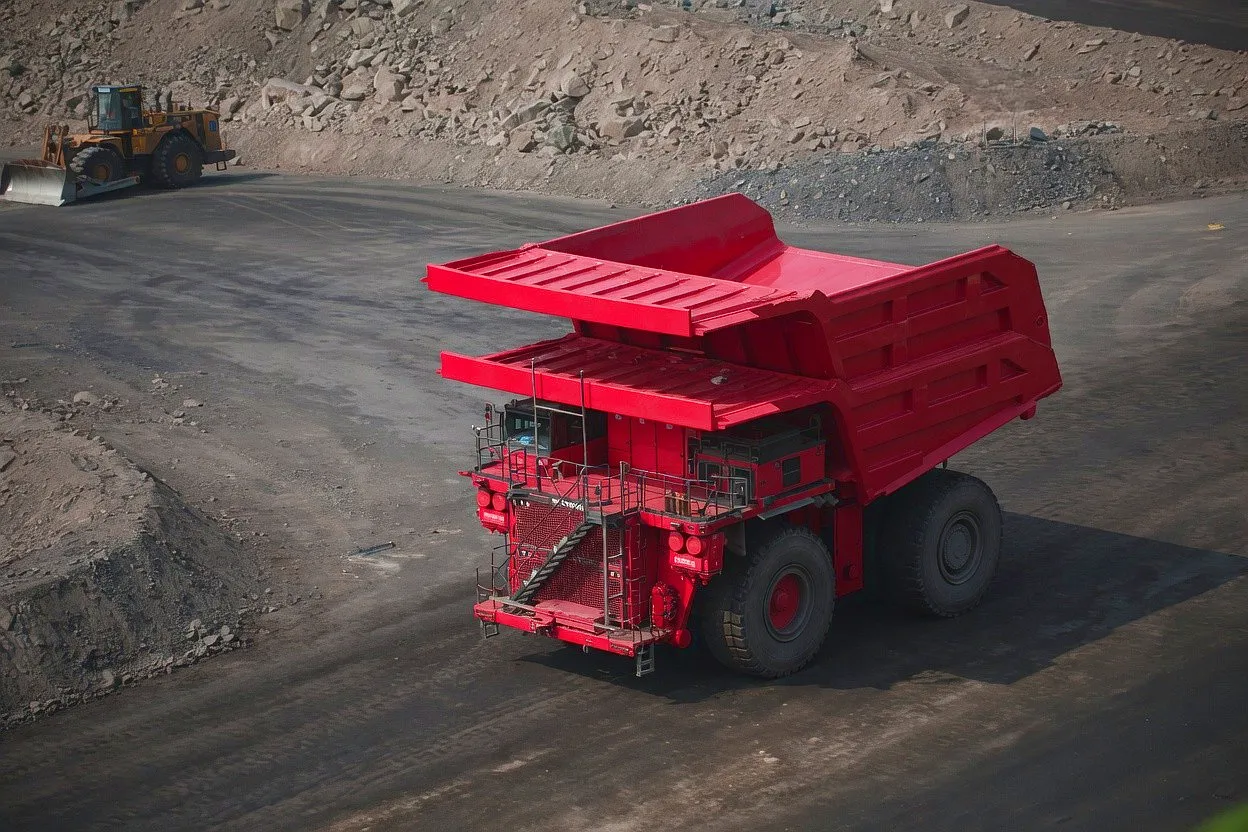
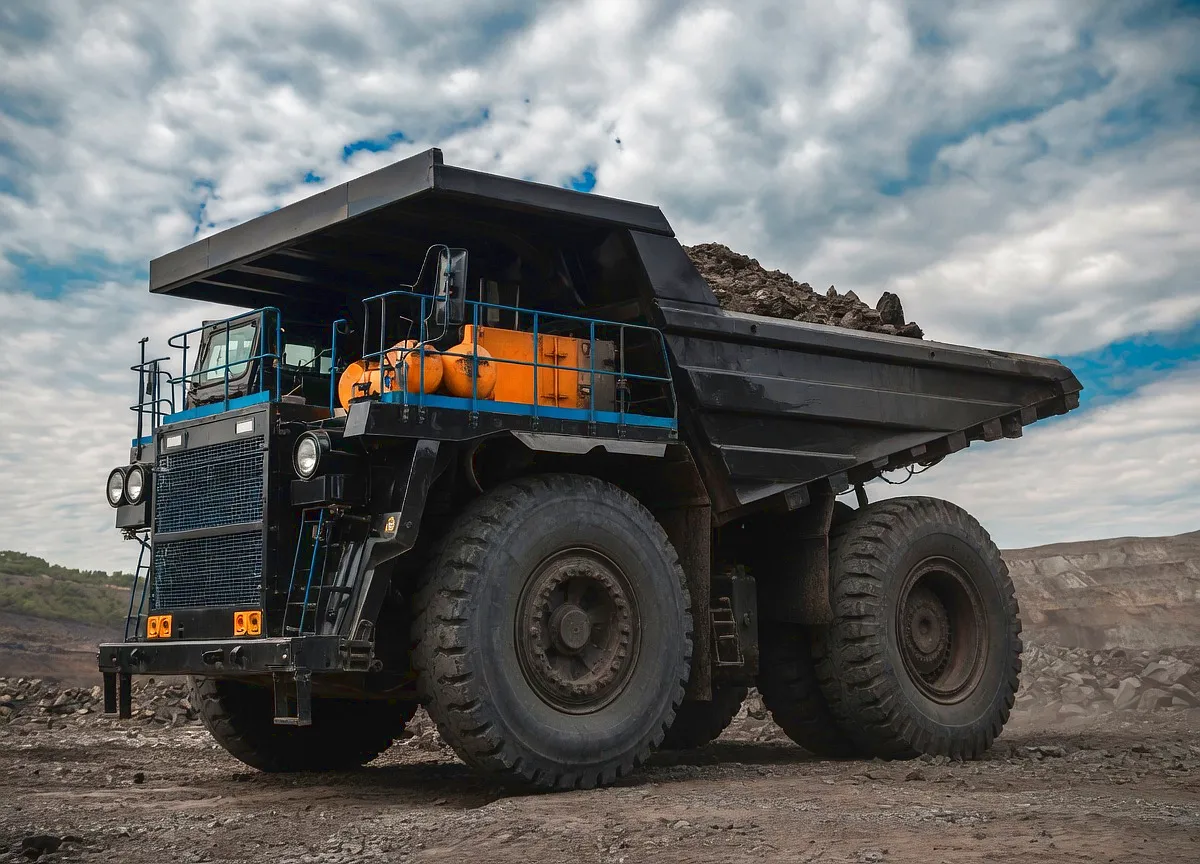
 The rear axle driveshaft of an ultra-large mining truck — think the Caterpillar 797F, Komatsu 980E, or Liebherr T 284 — operates under conditions that would destroy most industrial couplings within hours. Torque outputs routinely exceed 80,000 N·m at the differential input. Angular misalignment between the transmission output and the rear axle housing shifts dynamically every time the truck crosses a berm, dips into a rut, or accelerates under full load on a 10% grade. Add ambient temperatures ranging from −40 °C in Canadian oil sands to +55 °C in Australian iron ore pits, and persistent contamination from abrasive mine dust, and you begin to understand why engineers reach for heavy-duty cardan couplings — and not just any coupling will do.
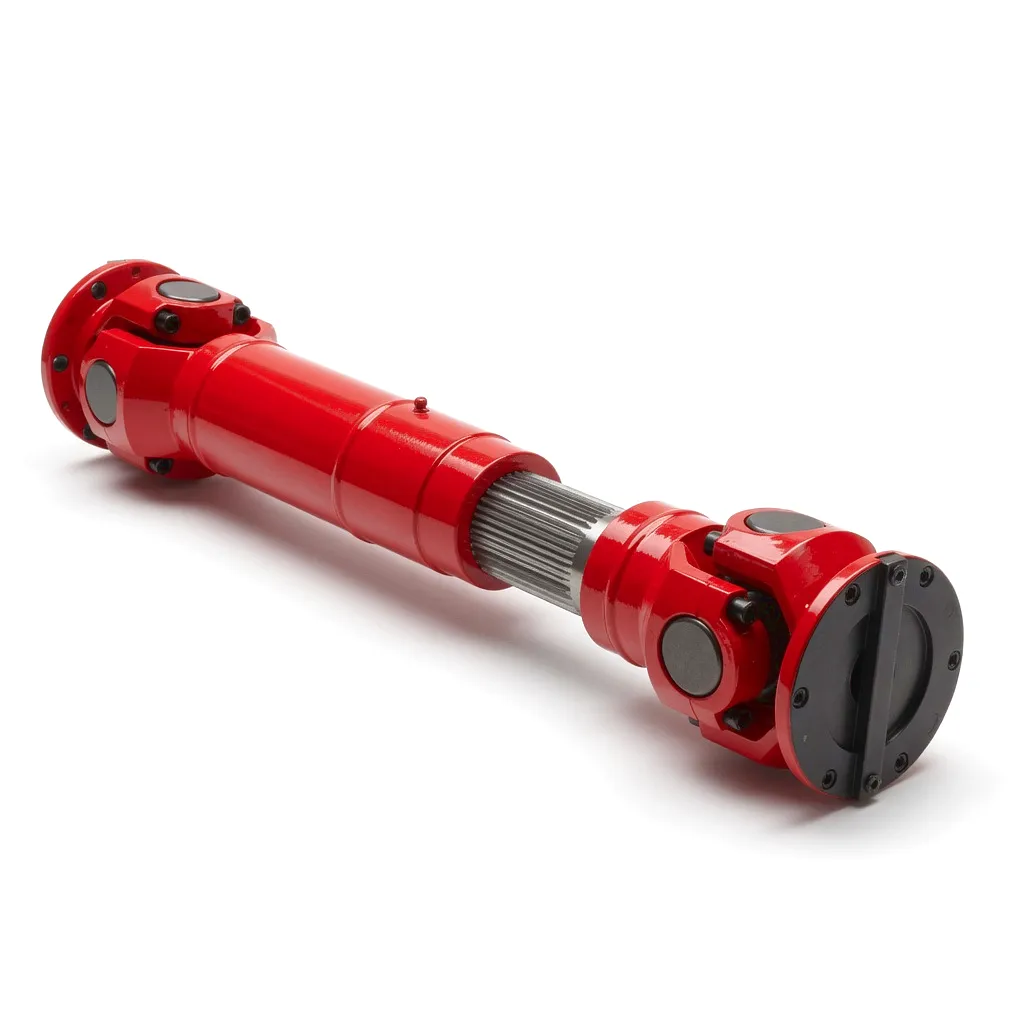
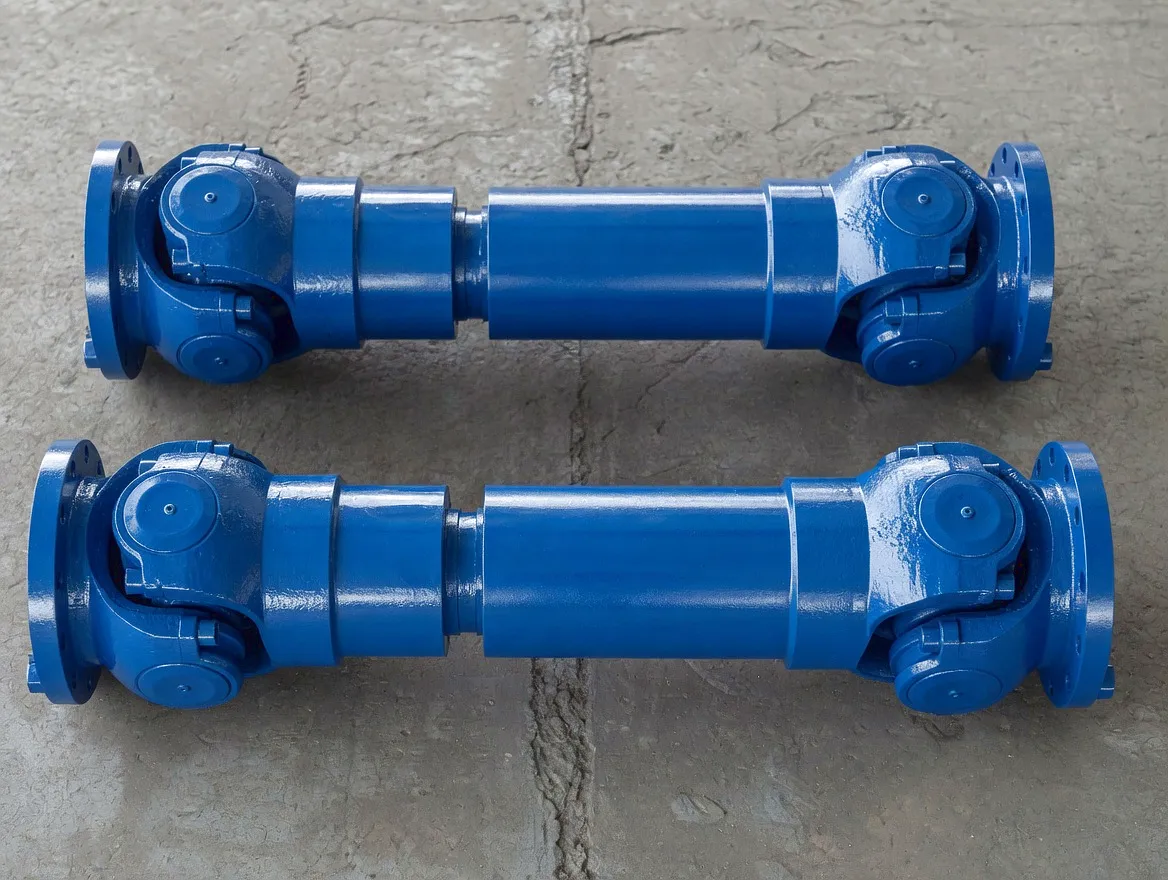
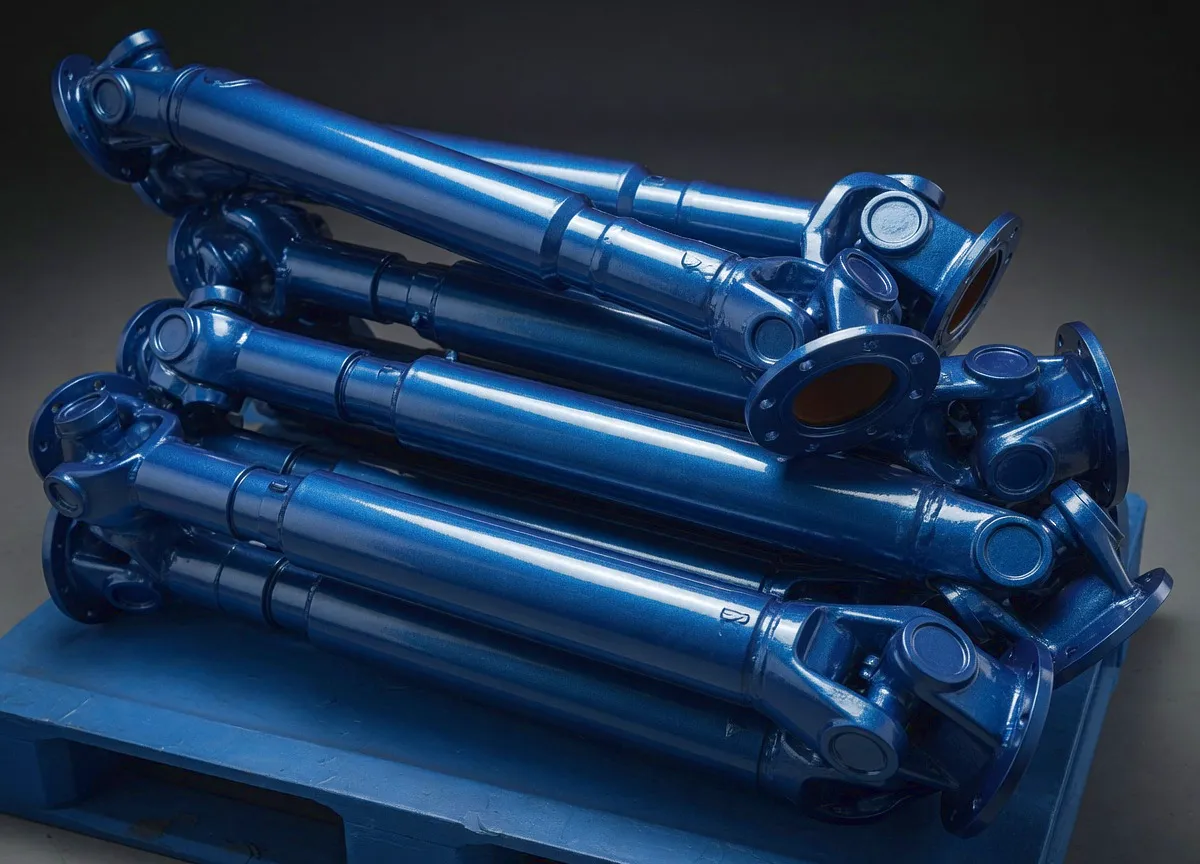
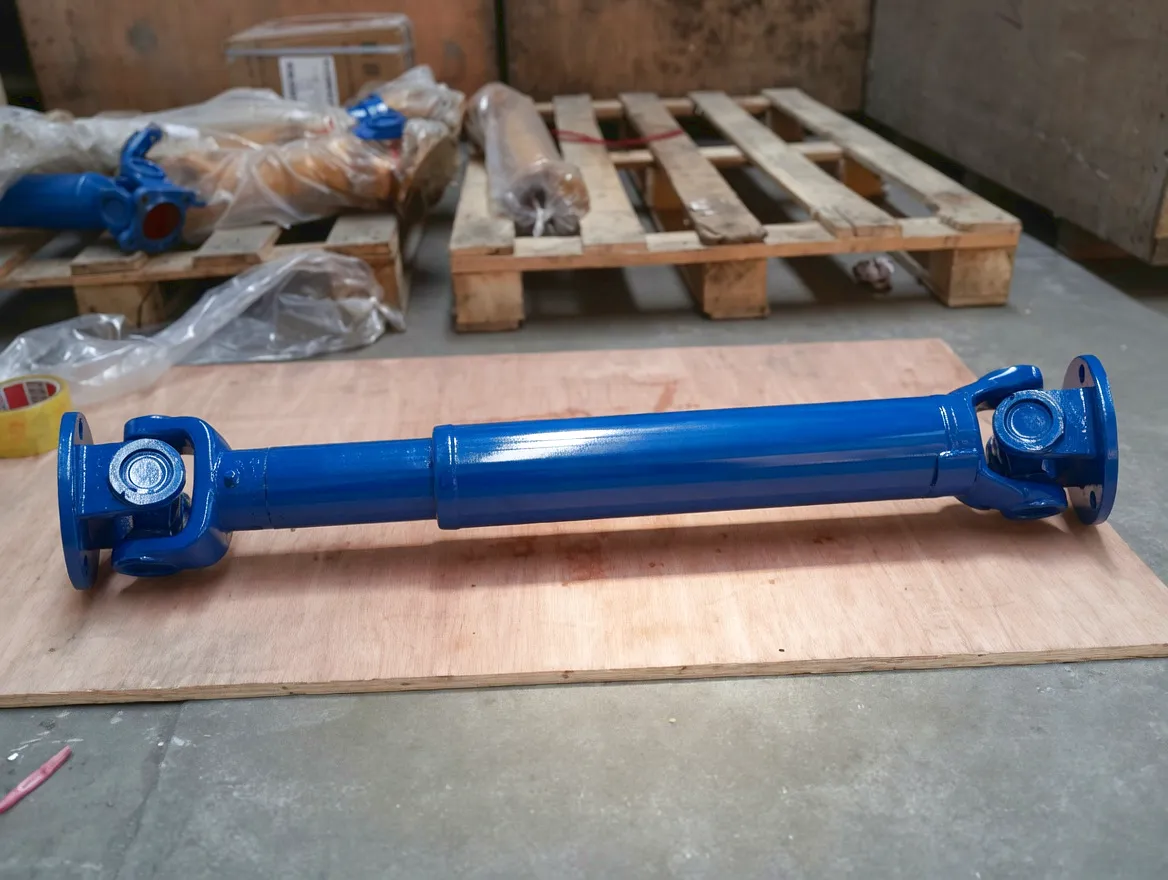
A cardan coupling (also referred to as a universal joint coupling or Hooke’s joint assembly) accommodates both angular and axial displacement between two rotating shafts while transmitting high torque continuously. Unlike flexible disc couplings or elastomeric designs, cardan couplings deliver torque through precision-machined cross-and-yoke assemblies that maintain mechanical contact at all operating angles. This makes them uniquely suited to the rear axle driveshaft application in mining trucks, where misalignment is not an exception — it is the permanent operating condition.
In this guide, we cover the mechanical principles behind cardan coupling selection for haul truck drivetrains, the material and manufacturing standards that separate premium from budget options, real-world performance data from operating mines, and what procurement teams in the UK aggregates, coal, and mineral extraction sectors should demand from a supplier before signing a purchase order.
How a Cardan Coupling Actually Works Under Haul Truck Conditions
The physics that make or break a rear axle drivetrain
At its core, a cardan coupling transmits rotational torque between two shafts that are not perfectly aligned. The cross journal — a precision-machined cruciform piece with four hardened trunnion arms — sits inside two yokes, one on each shaft. Needle roller bearings at each trunnion allow the yokes to pivot freely in two planes, creating up to 35° of continuous angular articulation depending on the design series. In mining truck applications, maximum operating angles typically run between 6° and 12° at the rear axle end, with dynamic fluctuations adding another 2–4° during rough terrain traversal.
One critical characteristic that procurement engineers must understand is the velocity variation inherent in single-joint cardan configurations. A single cardan joint produces a cyclic output speed variation (described by the equation ω₂ = ω₁ · cos β / (1 − sin²β · cos²φ), where β is the working angle and φ is the input shaft rotation angle). For mining truck rear axle driveshafts, this variation is cancelled by pairing two cardan joints in a double-cardan or W-configuration, phased 90° apart. The result is a constant velocity output — critical for preventing vibration fatigue in the differential housing and wheel motor assemblies.
The centre bearing, where fitted in a multi-piece driveshaft assembly, must be matched in radial stiffness to the cardan coupling’s dynamic load profile. A mismatch here is one of the most commonly overlooked causes of premature bearing failure in UK quarry haul trucks operating on broken limestone haul roads. The radial load on the centre bearing during cornering — combined with the torque reaction from the differential — can exceed the static load rating of undersized centre bearing assemblies within 3,000 operating hours, well short of the 10,000-hour target common in modern open-cast operations.
Materials, Metallurgy, and Manufacturing Standards
What separates a 500-hour coupling from a 15,000-hour one
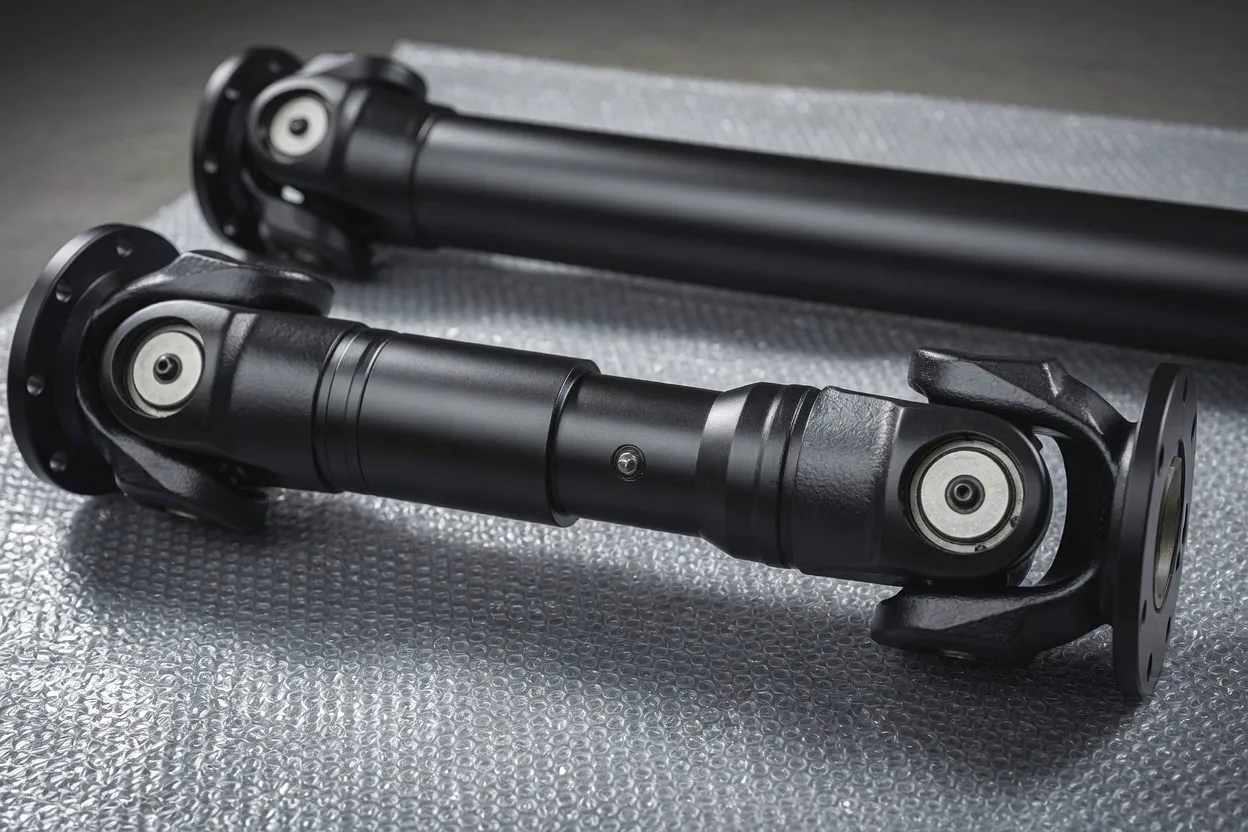
The cross journal in a heavy-duty mining truck cardan coupling is not simply machined from steel — it is a precisely engineered metallurgical product. Premium cross journals use alloy steel grades equivalent to SAE 8620 or DIN 18CrNiMo7-6, carburised to a case depth of 1.0–1.8 mm and hardened to 58–62 HRC at the trunnion surface while retaining a tough, ductile core at 38–42 HRC. This dual-zone hardness profile is what allows the trunnion to resist the point loading from needle rollers under shock torque events — common when a heavily loaded truck drops a wheel into a pothole at 15 km/h — while preventing brittle fracture that would occur with through-hardened steel.
Yoke forgings for ultra-large mining truck couplings are manufactured from medium-carbon alloy steels (typically 42CrMo4 or AISI 4140), hot-forged to achieve a fibrous grain structure that follows the contour of the yoke arm — a critical distinction from castings, which cannot replicate this directional strength. The forged grain flow improves fatigue resistance at the root radius of the yoke arm by 30–45% compared to cast equivalents, according to published fatigue testing data from major drivetrain engineering laboratories. At Ever Power, all yoke forgings undergo magnetic particle inspection (MPI) and ultrasonic testing as standard, not as an optional upgrade.
Needle roller bearings used in mining-grade cardan couplings must comply with ISO 5753 regarding internal clearance, and should be manufactured to ABEC-5 or better tolerances. The grease specification is equally important: NLGI Grade 2 lithium complex or polyurea greases with extreme pressure (EP) additives, rated for continuous service across the full operating temperature range of the deployment region. For UK-based mines and quarries, this means performance from −20 °C through to +80 °C bearing temperature, with adequate oxidation stability for 500-hour greasing intervals where auto-lube systems are not fitted.
Technical Performance Parameters
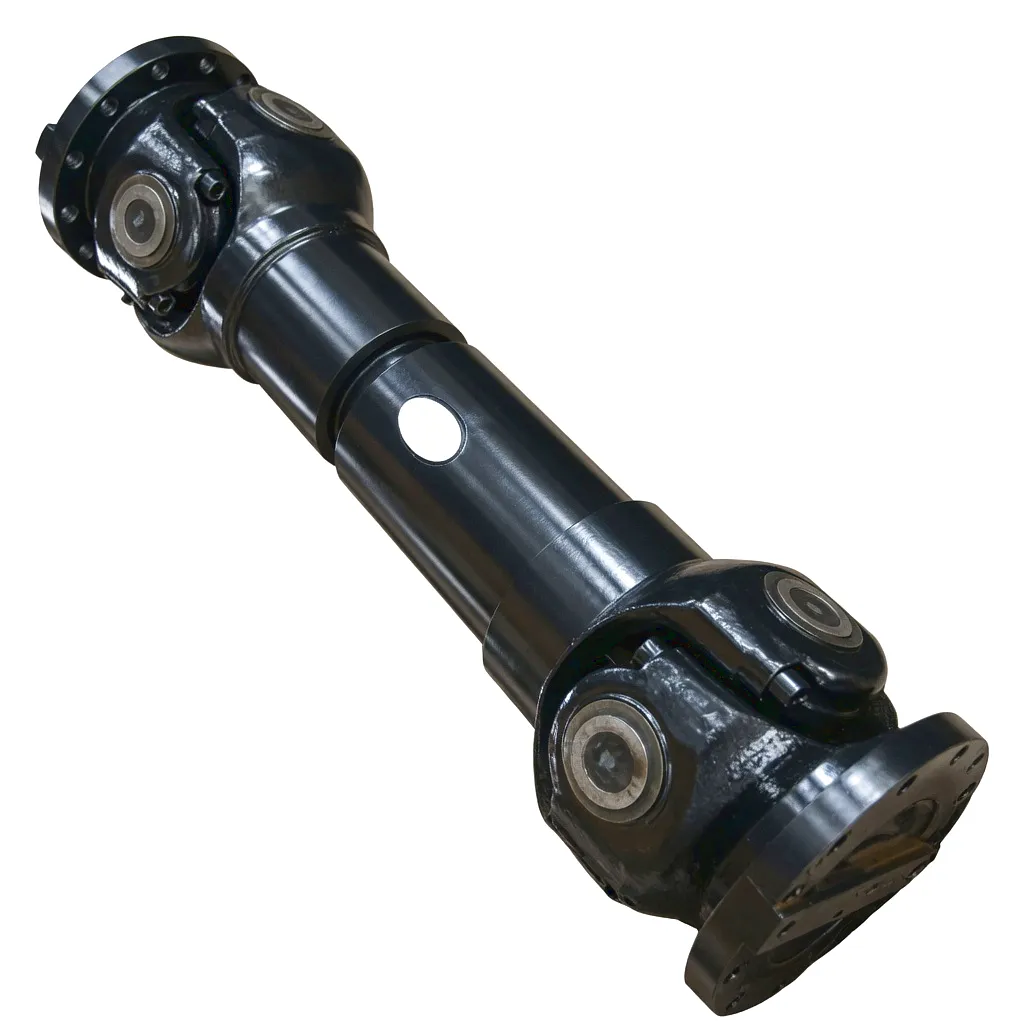
Ever Power heavy-duty mining truck cardan coupling series — key specifications
| Parameter | Series EP-HMD 3200 | Series EP-HMD 5500 | Series EP-HMD 9000 |
|---|---|---|---|
| Nominal torque (N·m) | 32,000 | 55,000 | 90,000 |
| Peak shock torque (N·m) | 80,000 | 140,000 | 225,000 |
| Max operating angle (°) | 15° | 15° | 12° |
| Max speed (RPM) | 1,600 | 1,400 | 1,200 |
| Trunnion surface hardness (HRC) | 58–62 | 58–62 | 60–63 |
| Operating temperature range (°C) | −40 to +120 | −40 to +120 | −40 to +120 |
| Target service life (hours) | 12,000+ | 12,000+ | 10,000+ |
| Yoke material | 42CrMo4 forged | 42CrMo4 forged | 34CrNiMo6 forged |
| Balancing grade | ISO 1940 G2.5 | ISO 1940 G2.5 | ISO 1940 G1.0 |
Where Cardan Couplings Matter Most in Mining Truck Drivetrains
Six specific positions in the rear axle drivetrain where coupling choice is decisive
Transmission-to-Driveshaft Connection
The flange yoke at the transmission output sees the full engine torque multiplication and must accommodate the thermal expansion of the gearbox housing. Cardan couplings here must have a sliding spline to manage the 8–15 mm of axial movement generated by powertrain thermal cycling over a 12-hour shift. Without an adequately lubricated spline, fretting corrosion develops within 2,000 hours, accelerating driveshaft imbalance and fatigue cracking at the tube weld.
Centre Bearing Support Point
In two-piece driveshaft assemblies — standard on trucks with a wheelbase exceeding 5.5 m — the centre bearing and its associated cardan joint operate at a node point where both bending and torsional loads peak simultaneously. The cardan coupling here must be dynamically balanced to ISO 1940 G2.5 or better to avoid resonance with the first critical speed of the driveshaft assembly, which typically lies between 600 and 900 RPM for heavy truck configurations.
Rear Axle Differential Input Flange
The pinion input flange of a mining truck rear axle differential is a highly stressed interface. The cardan coupling at this location experiences the combined effect of full drivetrain torque, axle housing deflection under payload, and the steering geometry moments transmitted back through the drivetrain in articulated trucks. Flange bolt pattern and pilot diameter must match OEM specifications precisely — a 0.1 mm pilot bore error creates sufficient eccentricity to accelerate pinion bearing wear measurably within one service interval.
Electric Wheel Motor Driveline (Diesel-Electric Trucks)
In diesel-electric drive configurations — used on the Komatsu 930E, Liebherr T 284, and similar platforms — the alternator-to-electric motor drive does not use a conventional driveshaft. However, cardan couplings appear at the alternator drive shaft connecting the diesel engine to the generator, where they must handle the thermal growth of the engine block relative to the generator frame across the full operating temperature range, without introducing alignment-induced bearing loads into the generator rotor bearing.
Auxiliary Hydraulic Pump Drives
Mining trucks carry multiple auxiliary hydraulic systems — for steering, hoist, braking, and suspension levelling — each driven from a PTO (power take-off) mounted to the gearbox or directly to the engine. Short cardan shafts connecting the PTO output to hydraulic pump input flanges must accommodate both angular and parallel misalignment introduced by frame flex. Compact, high-angle cardan coupling designs with DN series cross joints are standard here, with torque ratings from 800 to 4,500 N·m depending on the pump displacement.
Retarder and Brake Cooling Systems
Hydraulic retarder units on large haul trucks — which dissipate braking energy as heat rather than mechanical wear — use cardan couplings to connect the retarder impeller shaft to the main driveline. The coupling here must be rated for reverse torque loading during retardation cycles, which can reach 60–80% of forward drive torque on steep descending grades. Bidirectional fatigue life must therefore be certified, not assumed from forward-drive ratings alone.
Why Engineers Choose Ever Power Cardan Couplings
Documented performance advantages in heavy mining drivetrain applications
Customer Success Story
Real-world outcome from a UK quarrying operation
What Our Mining & Aggregates Customers Say
“We’ve been chasing this failure mode for three years. Switching to Ever Power HMD series resolved it at the first replacement. The cross kit dimensional accuracy is noticeably better than what we had — you can feel the difference in how the cup seating loads, and the bearing play spec is exactly right straight out of the box. We won’t be going back.”
“Lead time was the concern going with a non-OEM supplier for the first time. Ever Power had our EP-HMD 9000 cross kits — custom flanged for our Terex platform — shipped from their facility with full documentation in 18 working days. The technical support during the specification phase was also outstanding. They knew the failure mode before we’d finished describing it.”
“The balancing grade on the HMD series is what made the difference for us. We were getting a harmonic at 1,100 RPM that our vibration analyst traced to driveshaft imbalance from our previous cross kit supplier. Ever Power’s G2.5 balanced assemblies eliminated it entirely. No more repeat centre bearing replacements. The cost saving over a 12-month period has been substantial.”
Manufacturing Capability and Custom Engineering Services
Bespoke cardan coupling solutions for non-standard mining truck platforms
Not every haul truck in a UK mining or quarrying fleet follows a standard OEM driveshaft configuration. Older platforms, hybrid drivetrain retrofits, and purpose-engineered articulated dump trucks from specialist manufacturers often require non-catalogue cardan coupling designs. This is where Ever Power’s custom engineering capability becomes the decisive factor in supplier selection.
Our engineering team supports full custom cardan coupling development from customer-supplied drawings or physical samples. Customisable parameters include cross journal size, trunnion PCD, yoke bore and keyway geometry, flange bolt pattern and pilot diameter, tube diameter and wall thickness, sliding spline profile and length, and grease nipple specification and quantity. We routinely manufacture single-piece prototype assemblies with a 15–20 working day lead time, supported by full dimensional inspection reports and dynamic balance certification before despatch.
Supply 2D or 3D drawings and we manufacture to specification. DXF, STEP, IGES, and PDF formats accepted.
Send us a worn-out original and we reverse-engineer it to OEM dimensions, correcting any wear-related dimensional drift.
For fleets running above OEM-rated payloads, we can engineer torque-uprated cross kits with larger trunnion PCD and enhanced seal retention.
Long-term supply agreements with bonded stock options ensure you never face a critical parts shortage mid-season, with priority lead times for contracted UK customers.
Ready to specify a cardan coupling for your mining truck rear axle application? Our engineering team responds to technical enquiries within one business day.
Cardan Coupling Selection Guide for UK Mining Truck Operators
Matching coupling series to truck class and operating environment
| Truck Class | Payload (tonnes) | Rear Axle Torque | Recommended Series | UK Application |
|---|---|---|---|---|
| Medium rigid haul truck | 90–140 t | Up to 38,000 N·m | EP-HMD 3200 | Hard rock quarrying, sand & gravel |
| Large rigid haul truck | 180–220 t | 38,000–60,000 N·m | EP-HMD 5500 | Open-cast coal, limestone, potash |
| Ultra-large rigid haul truck | 290–363 t | 60,000–90,000+ N·m | EP-HMD 9000 | Major iron ore, copper, coal mining |
| Articulated dump truck | 30–60 t | Up to 22,000 N·m | EP-ADT 2200 | Soft ground, civil earthworks, peat |
| Custom / non-standard platform | Any | Engineered to application | EP-Custom Series | Contact engineering team for assessment |
Frequently Asked Questions
Common questions from UK mining equipment procurement and maintenance teams