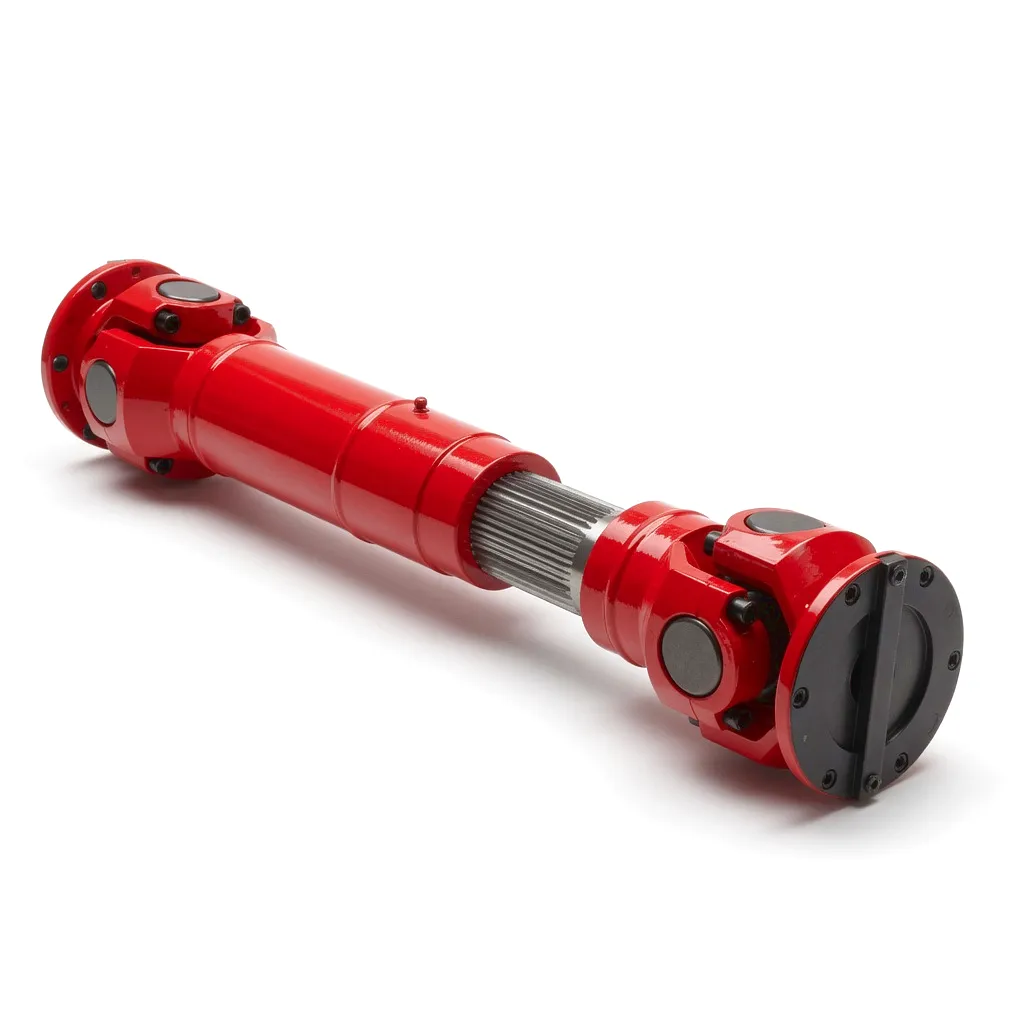
Concentrating solar power is not a niche technology. The UK alone has seen growing interest in hybrid renewable plants, and globally CSP capacity is scaling rapidly in sun-belt regions including Spain, Morocco, South Africa, Chile, and the Middle East. Inside every one of these plants — whether a 100-metre parabolic trough solar collector assembly (SCA) or a 25 kW dish/Stirling unit — a carefully engineered drive train converts motor torque into precise angular motion. The cardan coupling sits at the heart of that drive train.
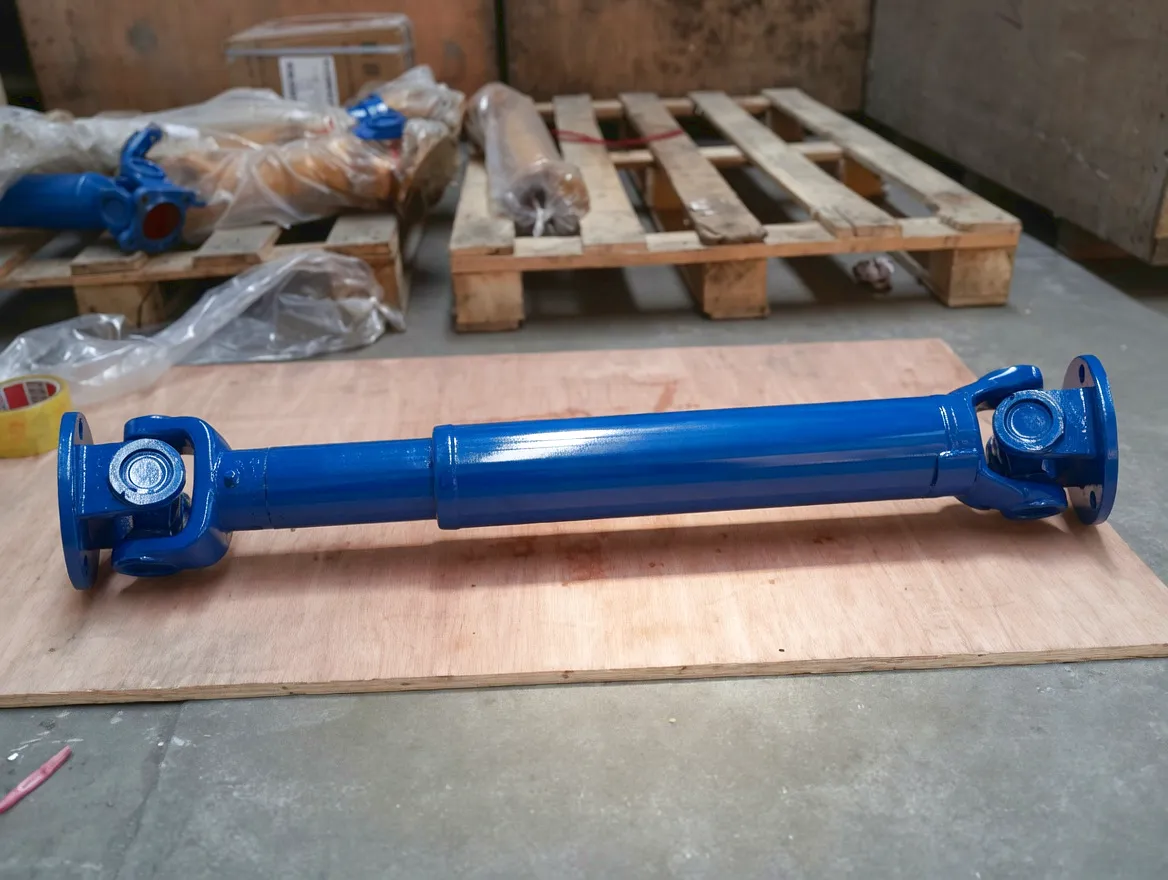
Unlike a rigid shaft, a cardan coupling — formally a Hooke’s joint or universal joint — transmits rotary motion between two shafts whose axes are not perfectly aligned. In CSP applications this misalignment is not accidental; it is designed in. Thermal expansion moves collector sections relative to each other. Foundation settling shifts support pylons. The tracker rotates continuously as the sun arcs across the sky. A cardan coupling handles all of this, hour after hour, day after day, for the 25-year design life of a commercial solar plant.
What follows is a detailed technical and commercial guide to cardan coupling selection, specification, and supply for CSP projects — written for procurement engineers, plant developers, EPC contractors, and mechanical engineers who want to get it right from the first request for quotation.
How CSP Solar Tracking Creates Unique Mechanical Demands
Parabolic Trough (Single-Axis)
A single SCA can be 100–150 m long with a reflective aperture of 5.8 m. Multiple SCAs are linked in a loop. Each rotates around a single horizontal north–south axis, tracking the sun’s daily east–west arc with a precision of less than 0.1°. The drive — typically a hydraulic or electric gearmotor — sits at one end of the loop. Cardan couplings connect adjacent SCAs, transmitting torque while absorbing up to ±30 mm of axial shift and ±0.3° of angular deviation caused by thermal expansion over 100 m of steel structure in ambient temperatures ranging from −15 °C to +55 °C.
Dish/Stirling (Dual-Axis)
A dish/Stirling unit tracks the sun in two axes simultaneously — azimuth (compass bearing) and elevation (altitude angle). The elevation axis sweeps continuously from near 0° at sunrise to 90° at solar noon and back. For the elevation drive, a cardan coupling — often a double-joint design capable of 0°–90° working angle — bridges the fixed gearmotor housing and the rotating elevation shaft without breaking the power transmission path regardless of where the dish is pointing. This is mechanically demanding: the coupling must handle both high working angle and the dynamic loads that arise from wind gusts acting on a large dish surface.
Linear Fresnel (Single-Axis Variant)
Linear Fresnel reflector arrays use multiple flat mirror rows, each rotating independently on a shared structural frame. The drive linkages between rows share the same mechanical challenge as parabolic trough — long runs, thermal differential movement, precision angular demands — and cardan couplings with integrated flexible disc sections are commonly specified to handle the combined misalignment envelope within a compact axial length.
Why a Cardan Coupling — and Not Another Coupling Type?
Engineers sometimes ask why they cannot use a flexible jaw coupling, a tyre coupling, or even a simple rigid sleeve. The answer lies in the combination of working angle, torque capacity, and axial accommodation that CSP tracking demands simultaneously.
A jaw coupling can handle small angular misalignments — typically 1°–3° — and offers good vibration damping, but its elastomeric spider degrades rapidly in outdoor UV environments and cannot sustain the 0°–45° working angle that a dish elevation drive requires. A gear coupling handles high torque beautifully but needs precise alignment at installation; it does not forgive the differential thermal expansion of a 150-metre collector row. A flexible disc coupling comes closest in terms of zero-backlash performance, but multi-disc packs are not rated for large angular misalignment at significant torque simultaneously.
The cardan coupling — particularly in its double-joint (double-Cardan or CV-joint) form — delivers what every other type cannot: constant velocity output, high working angle, high torque density, long service life with simple maintenance, and the axial sliding capability to absorb linear expansion without generating destructive end thrust on motor bearings or gearbox seals.
| Coupling Type | Max Working Angle | Axial Float | UV / Outdoor Rating | Maintenance Interval | CSP Suitability |
|---|---|---|---|---|---|
| Cardan (Double-Joint) | 0° – 90° | Large (sliding yoke) | Excellent (steel/grease) | Annual re-greasing | ✔ Ideal |
| Flexible Jaw | 1° – 3° | Limited | Poor (elastomer UV) | Spider replacement 2–3 yr | ✘ Not Suitable |
| Gear Coupling | 0.5° – 3° | Moderate | Good (sealed) | Annual | ⚠ Limited (low angle only) |
| Flexible Disc | 0.5° – 5° | Limited | Good | 3–5 yr disc pack inspection | ⚠ Trough only (small angle) |
| Tyre Coupling | Up to 6° | Moderate | Poor (rubber UV) | Element replacement | ✘ Not Suitable |
Application Deep-Dive: Parabolic Trough CSP Tracking
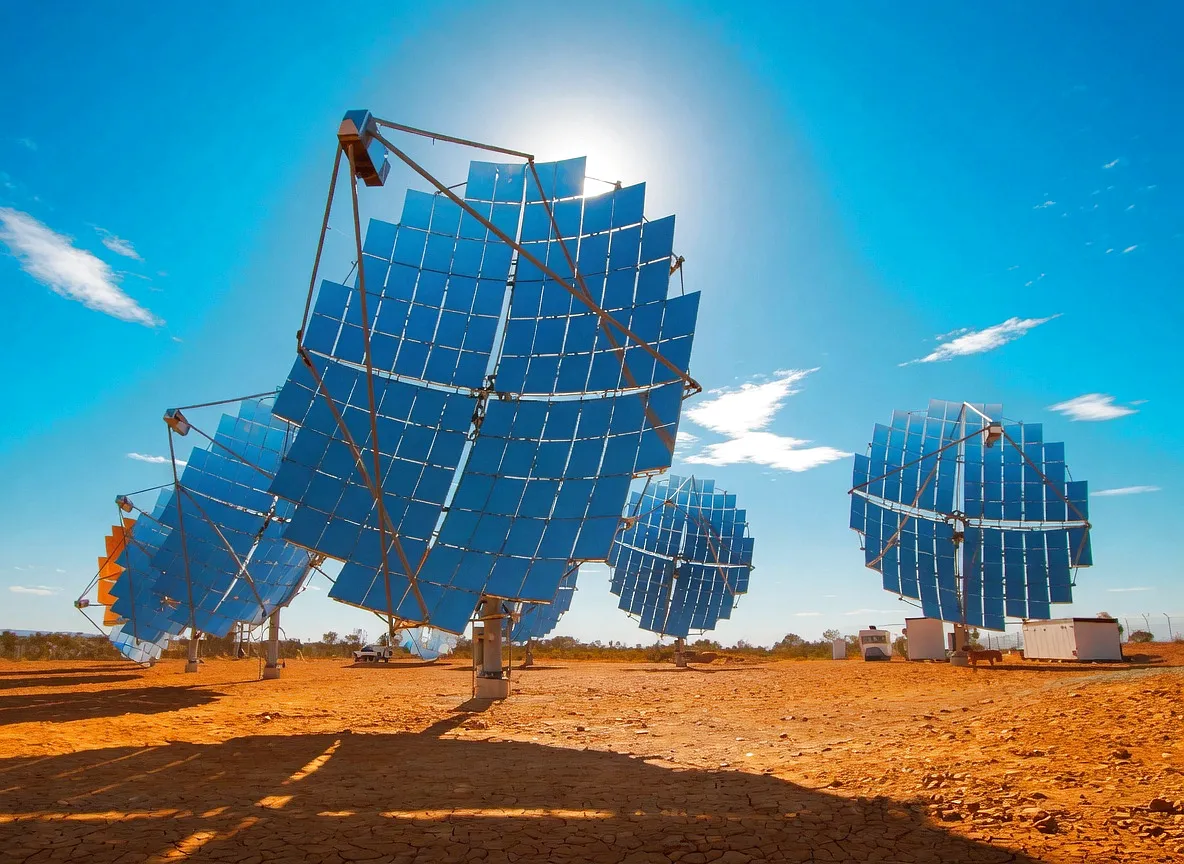 In a parabolic trough plant, a single Solar Collector Assembly (SCA) is roughly 100–150 metres long. Multiple SCAs are connected end-to-end in a loop, and the entire loop must rotate as a single unit to track the sun. A central drive — hydraulic or electromechanical — generates the torque, but it cannot be positioned at the geometric centre of a loop stretching several hundred metres. The torque travels through a series of interconnected shafts and cardan couplings, each junction allowing angular and axial freedom.
Each inter-SCA connection must handle: (1) up to ±0.3° angular misalignment due to foundation differential settlement, (2) up to ±30 mm axial displacement over a 100-metre steel structure at ΔT = 60 °C, and (3) the full drive torque at slow rotational speed — typically 1–4 rpm during normal tracking, with brief high-torque demands during fast repositioning after cloud cover or overnight stow return. The cardan coupling at each junction absorbs all three simultaneously without transmitting destructive reaction loads back to the drive gearmotor.
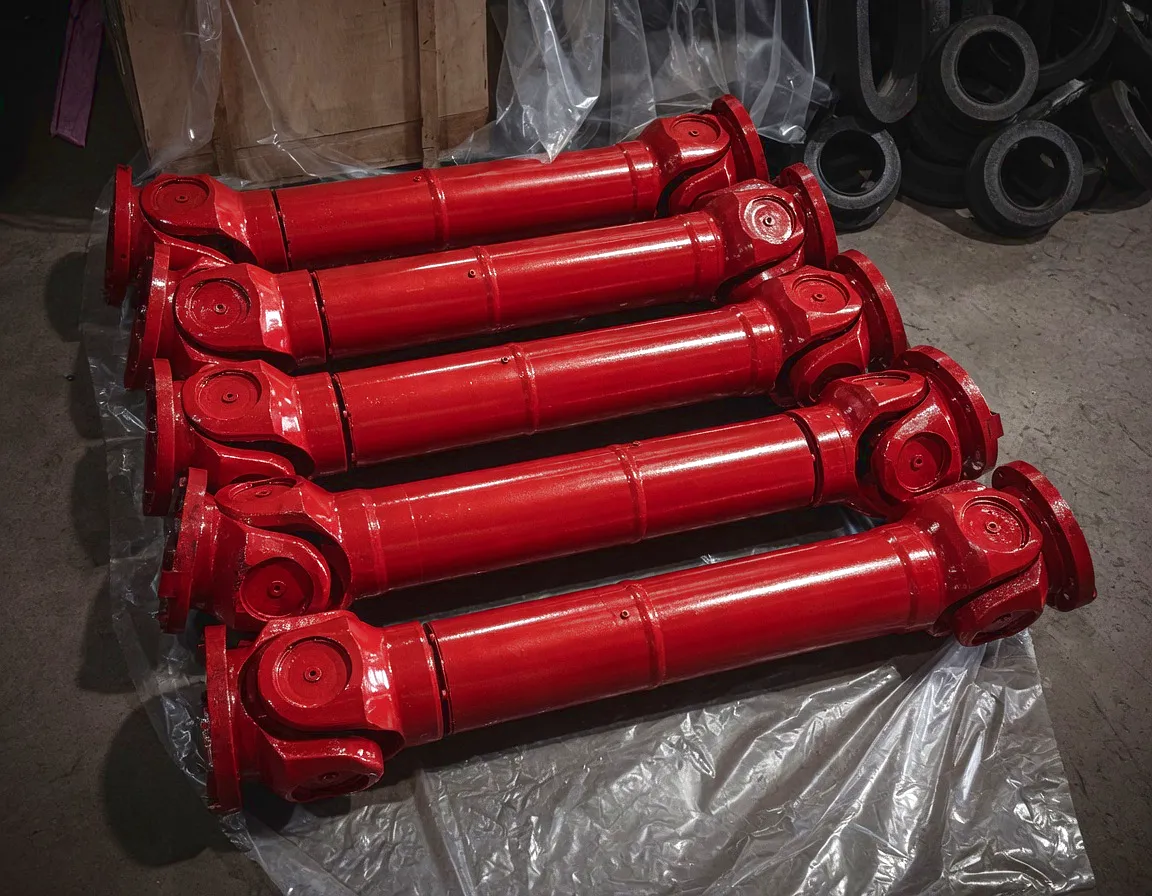
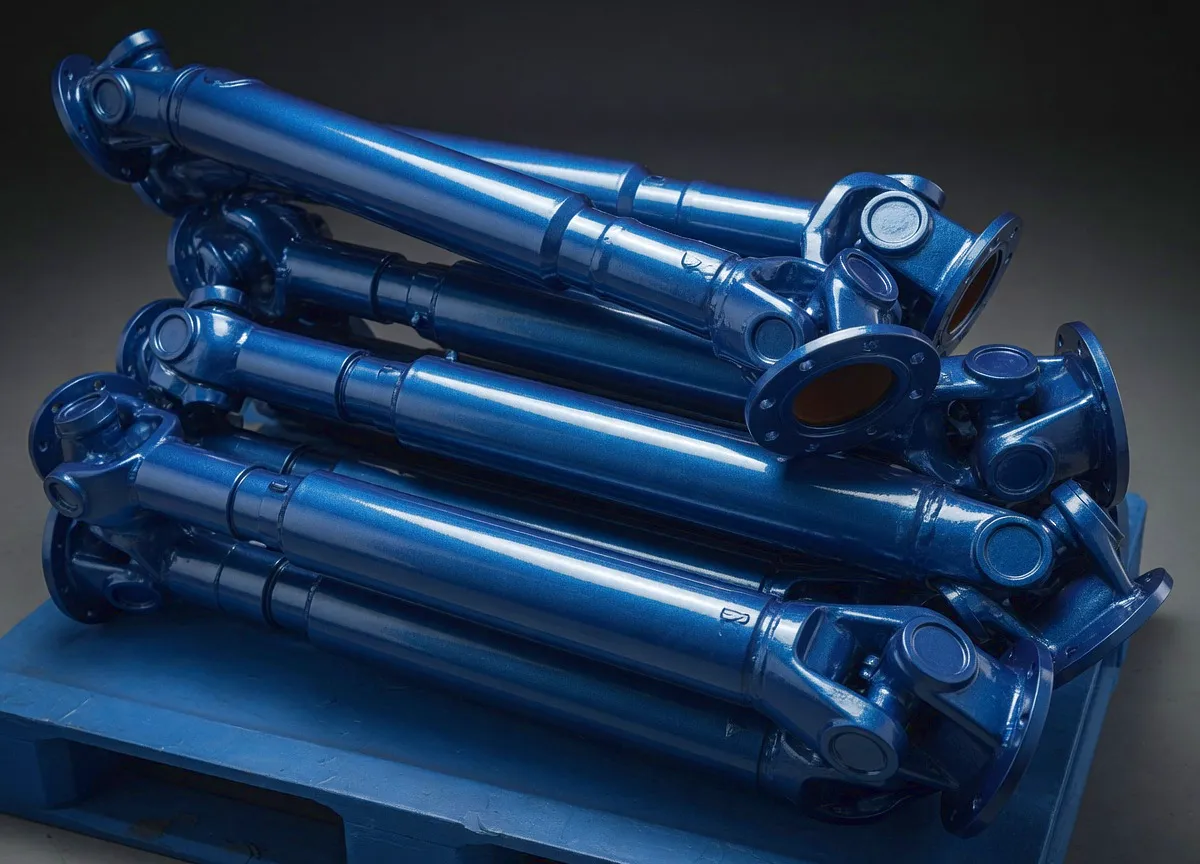
Ever Power supplies heavy-duty SWC and WSD series cardan shafts for parabolic trough applications, with moment capacity from 500 Nm up to 50,000 Nm and sliding flange assemblies that provide up to ±80 mm of axial travel per coupling station.
Application Deep-Dive: Dish/Stirling Dual-Axis Elevation Drive
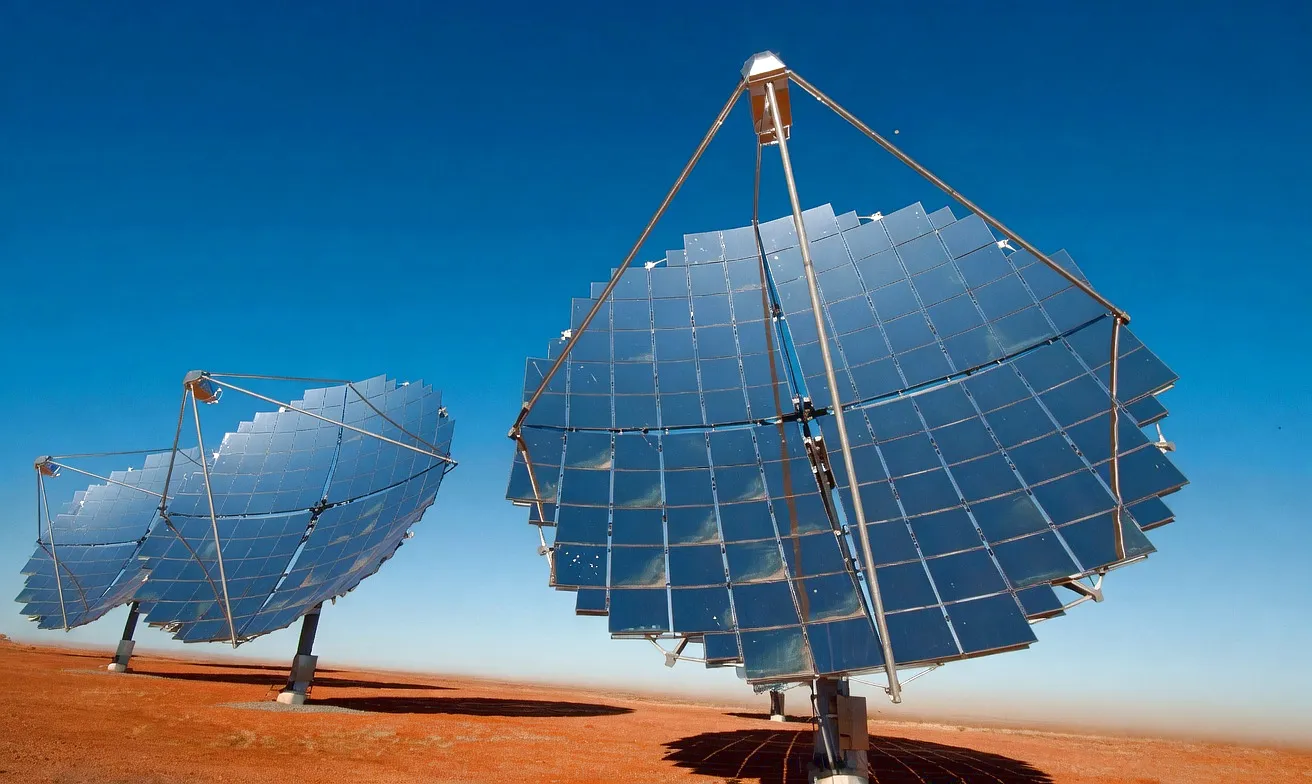
 A dish/Stirling system concentrates sunlight onto a small receiver at the focal point of a large parabolic dish. Because the sun moves across the sky in two planes — daily east–west arc and seasonal north–south altitude change — the dish must follow in both axes continuously. The azimuth drive (rotation about a vertical axis) is relatively straightforward: the whole pedestal rotates. But the elevation drive presents a classic mechanical dilemma.
The elevation axis gearmotor must remain in a fixed position relative to the pedestal, while its output shaft must drive a rotating elevation trunnion. As the dish tilts from stowed (approximately −5° from horizontal) through horizontal (90° from stowed) to zenith-pointing (90° elevation angle), the angle between the motor output shaft and the driven elevation shaft changes continuously through a full 90° arc. A single-joint cardan coupling would introduce velocity pulsation at high working angles; a double-Cardan (constant velocity) configuration eliminates this, ensuring the dish tracks at constant angular velocity even at mid-elevation angles around 45° where the velocity error of a single joint is worst.
Wind loading on a dish surface 10–15 metres in diameter can generate bending moments of several kilonewton-metres at the elevation pivot. Ever Power double-Cardan joints for dish applications are rated with a calculated safety factor of 2.5 minimum against peak dynamic load, using EN 10083 alloy steel yokes and case-hardened cross journal bearings with needle roller assemblies sealed for IP66 outdoor service.
Technical Performance Parameters — Ever Power CSP Cardan Coupling Range
The table below summarises key performance parameters across our standard CSP-rated product series. Custom specifications are available for non-standard bore sizes, flange patterns, surface treatments, and operating temperature ranges. All data is based on testing to ISO 7646 and DIN 808 standards.
| Series | Nominal Torque | Max Working Angle | Axial Travel | Speed (max) | Temp Range | Surface Protection | Primary CSP Use |
|---|---|---|---|---|---|---|---|
| SWC-L | 500 – 5,000 Nm | 35° | ±50 mm | 500 rpm | −30 to +120 °C | Hot-dip galvanised | Parabolic trough inter-SCA |
| SWC-H | 5,000 – 50,000 Nm | 25° | ±80 mm | 200 rpm | −30 to +120 °C | HD galvanised + epoxy | Trough main drive shaft |
| WSD-CV | 500 – 8,000 Nm | 90° (double-joint) | ±30 mm | 300 rpm | −40 to +130 °C | Stainless / zinc-nickel | Dish/Stirling elevation drive |
| WSD-AZ | 1,000 – 12,000 Nm | 15° | ±60 mm | 100 rpm | −40 to +130 °C | Polyurethane coating | Fresnel reflector row drive |
| Custom OEM | To specification | To specification | To specification | To specification | To specification | Customer-defined | All CSP types |
Materials, Engineering Principles, and Why They Matter Outdoors
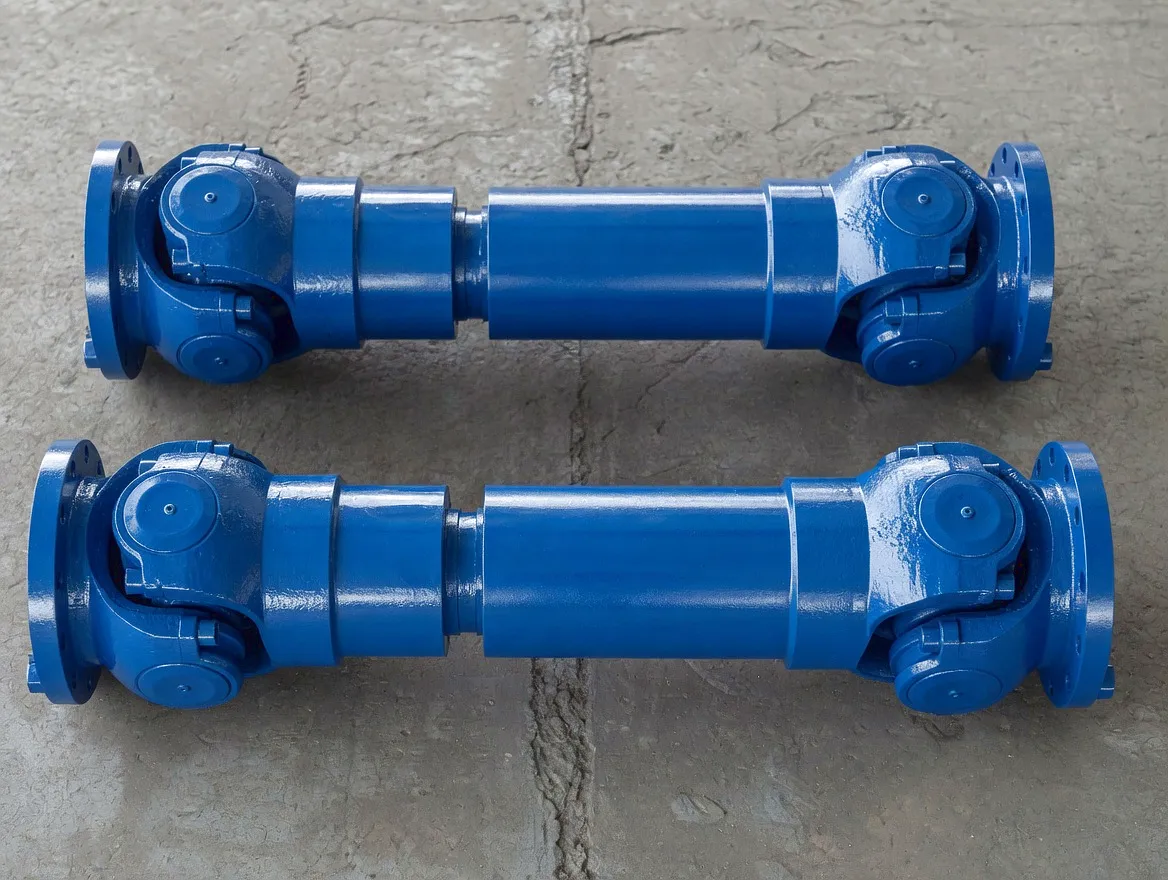
Yoke & Flange
Forged from EN 10083-3 grade 42CrMo4 alloy steel, normalised and tempered to 900–1050 MPa tensile strength. Forgings are 100% ultrasonically tested. The forged grain structure provides superior fatigue resistance compared to cast alternatives — critical where the coupling cycles 365 times per year for 25 years.
Cross Journal (Spider)
Case-hardened 20CrMo4 steel, carburised to 0.8–1.2 mm case depth, HRC 60–64 at surface. The needle roller bearing cups are pressed-fit stainless steel with lithium-complex grease rated NLGI 2, valid from −40 °C to +160 °C. Lip seal geometry is designed to retain grease against centrifugal action even at high working angles.
Sliding Tube & Spline
Involute spline profile to DIN 5480, hardened and ground, with PTFE-coated mating surfaces for low static breakout force. The sliding assembly accommodates axial displacement with a measured push-pull force below 150 N across the full axial travel range — preventing any axial load transmission to motor bearings or gearbox output seals.
Corrosion Protection
Hot-dip galvanising to ISO 1461 (minimum 85 µm zinc layer) is standard for outdoor CSP applications. Epoxy primer + polyurethane topcoat systems are available for coastal and high-humidity sites. Stainless steel (316L) construction is offered for projects in particularly aggressive environments.
The engineering principle behind the cardan coupling — Hooke’s joint kinematics — is well-understood but demands careful application in CSP. A single Hooke’s joint introduces a second-harmonic angular velocity variation at the output shaft equal to (cos β / (1 − sin²β · cos²φ)) times the input speed, where β is the working angle and φ is the input shaft rotation angle. At 30° working angle, this variation reaches approximately 14% peak-to-peak velocity error per revolution. In a 100-metre trough collector, even a 0.5% instantaneous speed difference between the drive motor and the far end of the collector would introduce a 0.5° twist — ten times the allowable tracking error.
The solution is to mount pairs of cardan joints with their yokes phased at 90° — or to use a properly centred double-Cardan joint — cancelling the velocity variation mathematically. This is not a theoretical nicety; it is a fundamental requirement for CSP tracking accuracy. Ever Power’s CSP series cardan couplings are phased and assembled in a jig to ensure the output velocity variation is below 0.02% at any working angle within the rated range.

Seven Reasons CSP Engineers Choose Ever Power Cardan Couplings
Sub-0.1° Tracking Precision
Phase-matched double-joint assembly ensures output velocity variation below 0.02%, sustaining the tracking precision CSP optical efficiency demands across the full operating angle range.
25-Year Design Life
Rated for 150,000 hours minimum bearing life at nominal operating conditions. Forged 42CrMo4 yokes, carburised cross journals, and sealed needle roller bearings are matched to the solar plant design life without bearing replacement under annual re-greasing maintenance.
Zero Axial Load on Drive
PTFE-coated involute spline sliding assembly transmits torque without generating axial thrust — protecting gearmotor output seals and extending motor service intervals. Measured slide force below 150 N across full travel range.
Outdoor Corrosion Resistance
Hot-dip galvanising, epoxy-polyurethane coating, and 316L stainless steel options matched to project corrosivity class C3/C4/C5 per ISO 12944. Suitable for desert, coastal, and temperate UK conditions alike.
High Torque Density
Forged-yoke construction achieves torque-to-weight ratios significantly better than fabricated or cast alternatives. Compact overall length minimises the structural dead zone at each SCA junction, keeping the collector structure stiffness-optimised.
Simple Field Maintenance
All grease nipples are oriented for easy access from below the collector structure. The cross journal kit (spider + needle roller cups) is a standard exchangeable unit replaceable in under 30 minutes per coupling station without special tooling — important in remote sites or large plants with hundreds of junctions.
Full OEM Customisation
Bore size, spline profile, flange pattern, overall length, yoke orientation, surface coating, and labelling can all be tailored to drop directly into existing collector structure designs. 3D CAD files are supplied upon request for integration into plant engineering models.
Ever Power Manufacturing & Custom Engineering Capability
Based in China with an established supply network reaching UK and European project sites, Ever Power operates a dedicated cardan coupling manufacturing facility equipped with CNC turning, hobbing, broaching, heat treatment, and coordinate measuring machine (CMM) inspection lines.
Full Traceability
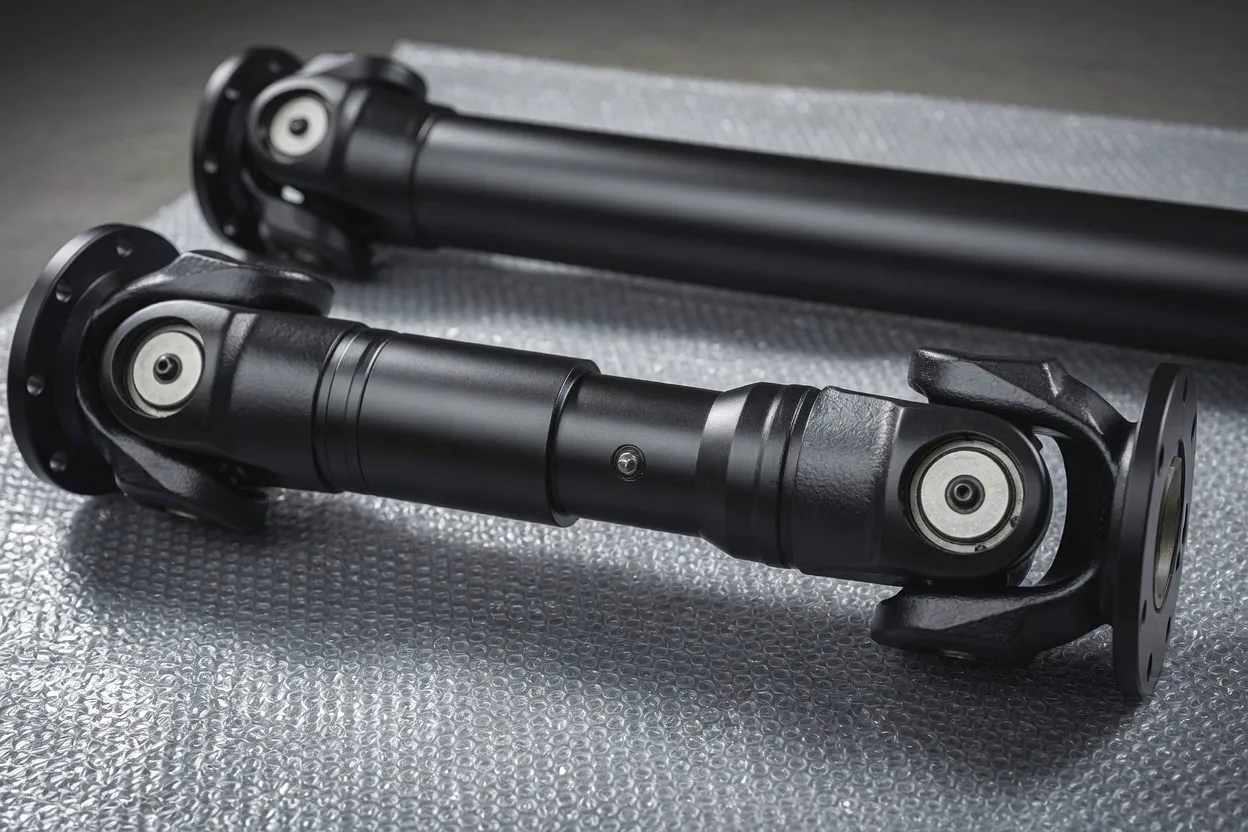
Material test certificates, heat treatment records, dimensional inspection reports, and final test data are provided with every batch. Laser-marked serial numbers enable field tracking throughout 25-year plant life.
Engineering-to-Order
Our applications engineers work from your collector structure drawings, driving torque calculations, and environmental data to size, specify, and validate the correct cardan coupling series before production begins. No standard catalogue forces a compromise.
Project Batch Supply to the UK
We regularly ship project quantities to UK EPC contractors and renewable energy plant developers. All products can be supplied with CE conformity documentation, third-party inspection (SGS / BV), and UK-compatible shipping documentation including packing lists and country-of-origin certificates.
Prototype to Full Production
Development projects can begin with a small prototype batch — as few as 5–10 units — validated on-site before scaling to plant-quantity orders of hundreds or thousands of units. Lead time from approved drawing to prototype dispatch is typically 25–35 working days.
Ready to discuss your CSP project’s coupling requirements? Our applications team will respond within 24 hours.
Client Success: From Spain to the UK
The following case study illustrates a recent project where Ever Power’s engineering-to-order capability made the difference between a coupling that merely fits and one that performs.
EPC Contractor: Renewable Energy Infrastructure Firm, Seville, Spain
Challenge: A 50 MW parabolic trough plant in southern Spain required 1,840 inter-SCA cardan couplings across 46 collector loops. The existing OEM supplier had an 18-week lead time and could not accommodate the dimensional change needed after a structural steel redesign — a 14 mm bore size reduction and a 40 mm shorter overall coupling length.
Solution: Ever Power’s applications team received the revised collector interface drawings on a Monday. By Thursday, a revised coupling drawing with FEA torque analysis was submitted. Prototype samples (20 units) were dispatched from our factory within 28 working days. After dimensional and functional validation at the collector test stand, full production of 1,840 units was completed and shipped in four container loads over 14 weeks — ahead of the plant commissioning schedule.
Outcome: The plant passed solar field commissioning with all SCA synchronisation errors within specification (<0.08° across any loop). Annual O&M inspection at Year 1 confirmed zero coupling failures or re-greasing anomalies. The EPC contractor has specified Ever Power as the preferred cardan coupling supplier for their subsequent 75 MW project in Morocco.
What Our Clients Say
“We’ve worked with several cardan coupling suppliers over the years, but Ever Power is the first that came back to us within 72 hours with a revised drawing and stress calculation. Their responsiveness during the engineering phase saved us at least three weeks on commissioning. The couplings themselves have performed without issue through two annual inspection cycles.”
“Our dish/Stirling prototype used a standard automotive CV joint — it failed after 18 months due to grease degradation at operating temperature. When we moved to Ever Power’s WSD-CV series with high-temperature lithium-complex grease and IP66 sealing, we solved that failure mode completely. The engineering support for the transition was excellent — they even revised the grease nipple access angle to suit our maintenance access position.”
“As a procurement manager working on CSP projects across North Africa and the Middle East, I need suppliers who can supply full documentation — mill certificates, heat treatment records, dimensional inspection reports — as standard, not as a premium extra. Ever Power delivers this as a matter of course. Their hot-dip galvanised SWC-H series has been running in a 100 MW plant in Morocco for three seasons with no maintenance issues beyond annual re-greasing.”
How to Select the Right Cardan Coupling for Your CSP Project
Coupling selection for a CSP tracking drive involves seven key parameters. Getting all seven right at the specification stage prevents costly re-engineering during commissioning. The checklist below is drawn directly from the selection process our applications engineers follow for every project enquiry.
| # | Parameter | What to Determine | Typical CSP Value |
|---|---|---|---|
| 1 | Nominal Torque (Tn) | Drive motor torque × drive train ratio, including dynamic factor (typically 1.5–2.5 for CSP tracking) | 500–50,000 Nm |
| 2 | Max Working Angle (β) | Maximum angle between input and output shaft axes during operation, including thermal movement contribution | 0.3°–90° (type dependent) |
| 3 | Axial Travel (ΔL) | Thermal expansion of drive shaft run × coefficient of thermal expansion × ΔT | ±20–80 mm |
| 4 | Rotational Speed | Maximum tracking speed + stow/fast-return speed. CSP tracking is typically slow (1–10 rpm) | 1–50 rpm |
| 5 | Interface Geometry | Bore size, keyway / spline profile, flange bolt circle diameter, overall length constraint | From collector structure drawing |
| 6 | Environmental Severity | Corrosivity class per ISO 12944: C3 (rural/inland), C4 (industrial/coastal), C5 (severe marine) | C3–C5 depending on site |
| 7 | Service Life Target | Project design life and planned major maintenance interval — determines required bearing L10 life calculation | 25 years / 150,000 hours |
Supplying UK Renewable Energy Projects: Compliance and Delivery
UK-based EPC contractors, plant developers, and procurement engineers working on CSP projects — whether domestically or on UK-funded international projects — have specific requirements that Ever Power is equipped to meet. UKCA marking, CE conformity documentation, material test certification to BS EN standards, and shipping terms compatible with UK import procedures are all part of our standard export package.
The UK government’s Contracts for Difference (CfD) scheme has created renewed interest in CSP hybrid plants, and several UK engineering firms have active CSP project development pipelines targeting North African and Middle Eastern sites. Ever Power has experience supplying into these corridors, with established freight forwarding relationships through the Port of Felixstowe and direct import documentation tailored to UK Customs declarations.
For UK-based O&M contractors who need to carry spare cardan coupling kits (cross journal assemblies, grease, wiper seals) for plant maintenance visits, Ever Power can supply small-quantity spares packages with next-day UK delivery from our European distribution partner. Enquire about our CSP O&M spares programme when you contact our sales team.
Frequently Asked Questions
Answers to questions we receive regularly from CSP engineers and procurement specialists across the UK and internationally.
What type of cardan coupling is best suited for connecting adjacent SCAs in a parabolic trough CSP plant in the UK or internationally?
For inter-SCA connections in parabolic trough systems, a heavy-duty single-joint cardan coupling with an integrated sliding spline (to accommodate axial thermal expansion) and a working angle rating of at least 5°–10° is typically specified. The joint must be constructed from hot-dip galvanised forged alloy steel and sealed to IP65 minimum for outdoor use. For trough loops operating in UK-funded projects in North Africa or the Middle East, a C4 or C5 corrosion protection system should be selected based on site corrosivity class assessment.
How much does it typically cost to supply cardan couplings for a 50 MW parabolic trough project, and can Ever Power provide a competitive price for UK renewable energy contractors?
Cost depends on coupling series, torque rating, bore configuration, surface protection, and quantity. As a very rough guide, a mid-range SWC-L series coupling suitable for inter-SCA service (nominal torque 1,000–3,000 Nm) typically falls in the range of £120–£280 per unit at project quantities (500+ pieces) ex-works, including material test certificates. A complete 50 MW plant might require 800–2,000 units depending on SCA count and loop architecture. For an accurate project quote, please contact our sales team at [email protected] with your coupling duty data and drawing reference.
Which double-Cardan constant velocity joint configuration works best for a dish/Stirling elevation axis where the working angle reaches 90 degrees during normal operation?
A centred double-Cardan (also called a double-joint or CV joint) with a centring socket between the two single joints is the correct configuration. This design ensures perfect constant velocity output across the full 0°–90° working angle range, eliminating the second-harmonic velocity pulsation that a single Hooke’s joint would produce above approximately 15°. The centring socket must be lubricated and sealed separately. Ever Power’s WSD-CV series is purpose-designed for this application, with the intermediate socket bearing rated for the combined radial and axial loads that occur at high working angles.
Where can a UK-based renewable energy EPC contractor find a reliable supplier of custom cardan couplings for CSP solar projects at competitive prices with fast lead times?
Ever Power offers project-specific engineering support, full material traceability documentation, and established freight routes to UK ports. Our engineering team is reachable at [email protected] and typically provides a preliminary coupling specification and indicative price within 48 hours of receiving a project datasheet. Prototype lead times are 25–35 working days, with production batches following in 10–14 weeks depending on order quantity and finish requirements.
How often should cardan couplings in a parabolic trough CSP tracking system be serviced, and what does the maintenance procedure involve?
Under standard CSP operating conditions (slow speed, moderate torque, outdoor environment), annual re-greasing via the Zerk fittings on each cross journal cup is sufficient. This takes approximately 10–15 minutes per coupling station. A full visual inspection — checking for grease leakage, wiper seal condition, axial clearance, and any deformation of the yoke — should be conducted at the same time. A cross journal kit (spider + needle roller cups) replacement is recommended at intervals of 50,000–80,000 operating hours or when bearing noise or increased tracking error is detected. Our spares kits include pre-loaded needle roller cups, new lip seals, and a lithium-complex grease sachet.
Can Ever Power customise the bore size and spline profile of their cardan couplings to match our existing collector structure, and what is the minimum order quantity for a custom specification?
Yes — bore size, spline profile (DIN 5480 involute, square key, or customer-specific), flange bolt pattern, overall length, yoke orientation, and surface treatment are all adjustable. The minimum order quantity for a custom engineering-to-order coupling is typically 20 pieces for the prototype stage; standard production orders from 100 pieces. There is no minimum order quantity surcharge for standard catalogue sizes. Please supply your interface drawing (PDF or DXF) and duty data when enquiring, so our engineering team can confirm feasibility and issue a revision-controlled drawing within 3–5 working days.
What documentation does Ever Power provide to support UK import compliance and project quality records for a CSP cardan coupling supply contract?
Our standard documentation package includes: material test certificates (EN 10204 3.1 or 3.2 on request), heat treatment and hardness records, dimensional inspection reports with CMM data, surface coating thickness test records, packing lists and weight certificates, commercial invoice and proforma for UK Customs, country-of-origin certificate (Form A or EUR.1 on request), and CE conformity declaration where applicable. Third-party inspection (SGS, Bureau Veritas, or INTERTEK) can be arranged at cost, with inspection conducted at our factory before despatch.
Ready to Specify Cardan Couplings for Your CSP Project?
Send your collector structure drawing, torque requirements, and site conditions to our applications team. We respond within 24 hours with a preliminary coupling specification and indicative pricing — no obligation, no waiting weeks for a quote.
Ever Power · [email protected] · Responding to UK and international CSP project enquiries within 24 hours · edit by gzl