
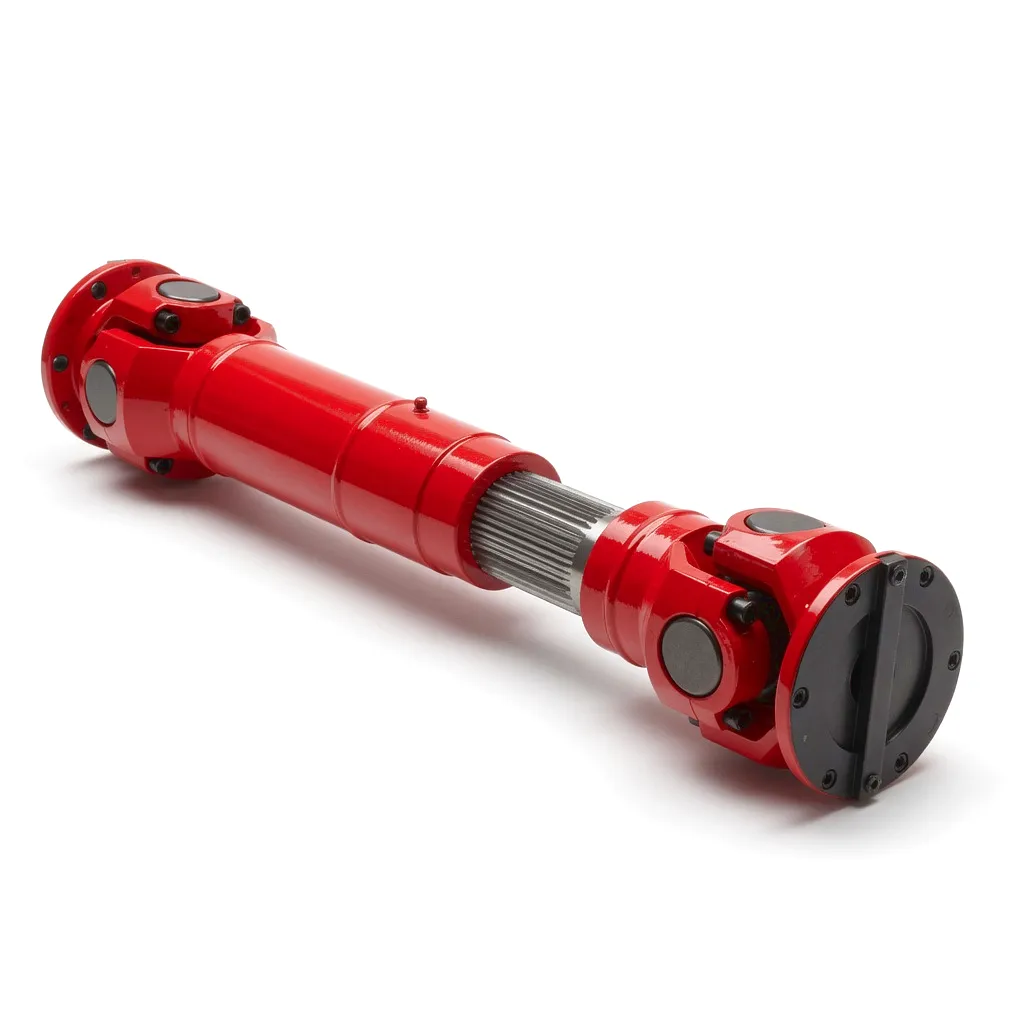
 Walk through any working farm in the East Midlands or East Anglia during spring planting and you will see it at work — the central drive shaft of a precision seeder spinning steadily, translating tractor PTO power into perfectly timed seed metering. What holds this system together under varying load, angular misalignment, and field shock? Increasingly, the answer is a purpose-engineered cardan coupling. Far more than a simple connector, the cardan coupling — also called a universal joint or Cardan shaft — is a specialised mechanical link designed to transmit torque across intersecting or offset axes without sacrificing rotational continuity or efficiency.
For UK arable and vegetable farmers, the seeder central drive shaft is arguably the most mechanically demanding component on the planter. It must handle everything from continuous light-load metering rotation to sudden torque spikes when a seed disc clips a stone. A standard coupling simply cannot cope. The geometry of the cardan coupling, with its cross-and-bearing yoke arrangement, gives it the ability to operate at angles typically ranging from 3° to 25° without binding or vibration — a characteristic that proves invaluable when the tractor articulates mid-turn or when toolbar flex changes the relative angle between the gearbox output and the metering shaft.
“Selecting the wrong coupling on a seeder central drive shaft doesn’t just risk downtime — it risks planting windows. Every hour of delay during the optimal UK spring seeding period can translate directly into yield penalties.”
— Senior Applications Engineer, Ever Power Drive Technology
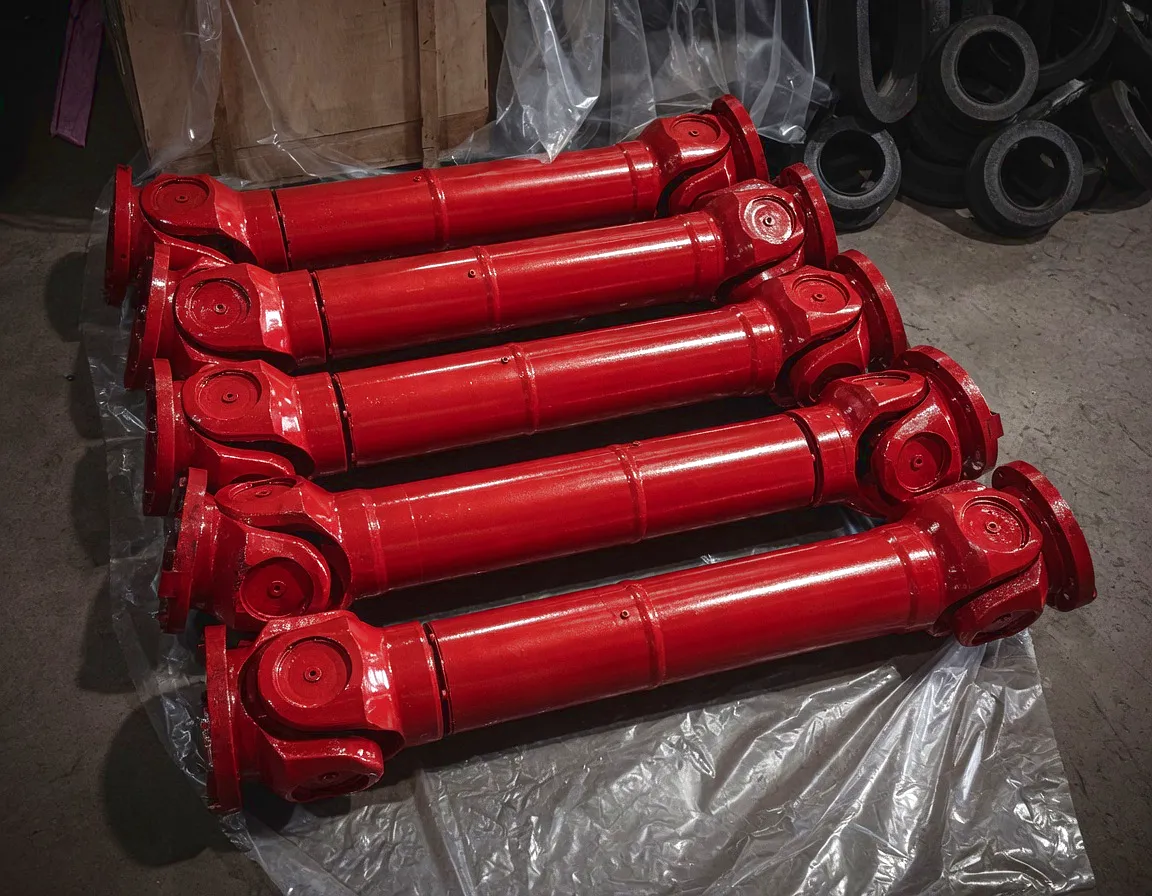
Why Seeders Demand Cardan Couplings — Not Flexible Disc or Jaw Couplings
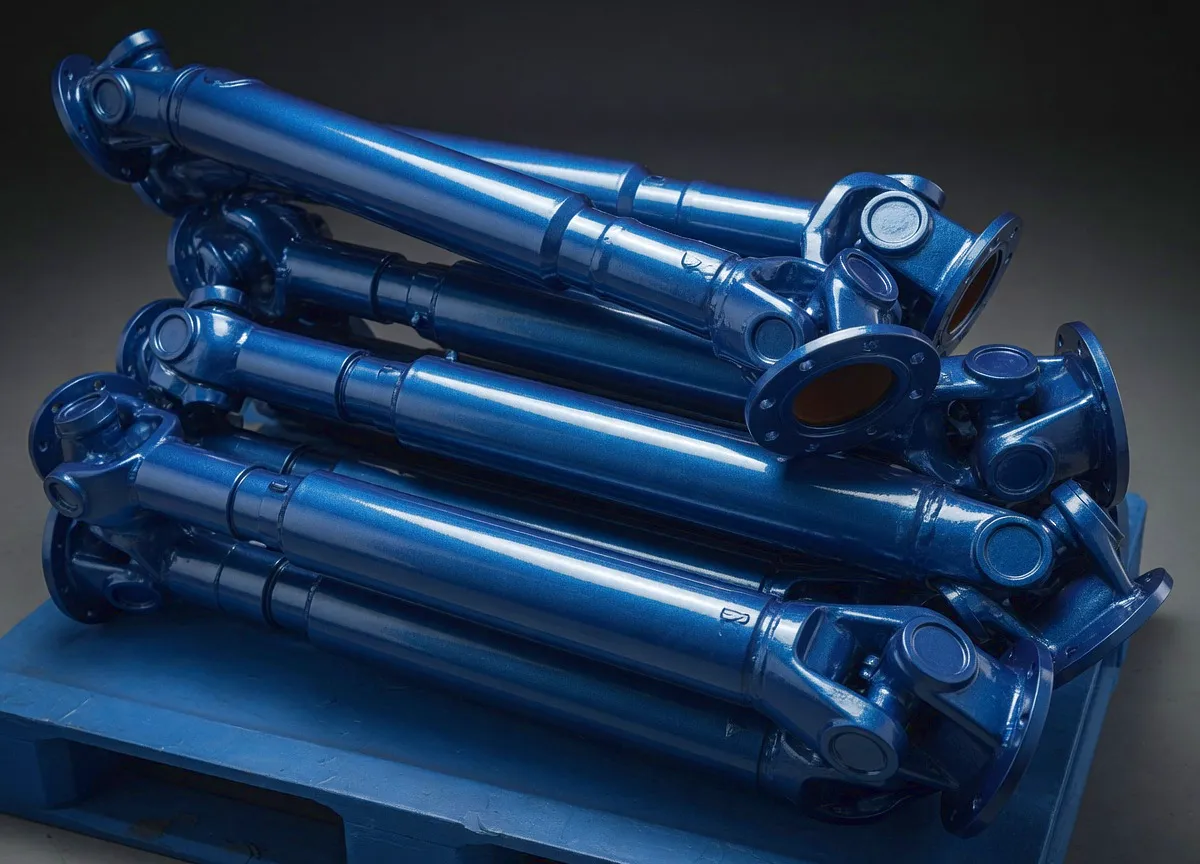 The central drive shaft of a modern precision seeder — whether a 6-metre toolbar coulter drill, an air seeder metering system, or a combination seed-and-fertiliser applicator — operates in conditions that no benchtop coupling designer would deliberately choose. Angular misalignment is not an exception; it is a continuous operating state. As the tractor turns at the headland, the angle between the PTO stub shaft and the seeder gearbox input can shift by 10° or more in a fraction of a second. Flexible disc couplings can handle only a degree or two of angular offset before fatigue accumulates in the disc pack. Jaw couplings transmit velocity unevenly under any angular displacement, creating cyclical speed variation that disrupts seed metering timing — the exact problem that throws plant spacing off-target.
The cardan coupling resolves this through its fundamental geometry. Two yoke assemblies connected by a cross-trunnion bearing allow the driven shaft to continue rotating smoothly even as the angle between input and output changes continuously. When a double-Cardan configuration is used — two single joints phased together at the midpoint — the inherent velocity variation of a single universal joint is cancelled out, delivering a nearly constant output speed regardless of working angle. For a seeder metering shaft driving vacuum or finger mechanisms at precise rotational increments, this constant-velocity characteristic is not a luxury; it is a functional requirement.
⚙
Angular Misalignment Tolerance
Operating angles from 3° to 25° without binding, vibration or torque loss — essential for implement articulation across uneven British fields.
⚡
Shock Load Absorption
Needle-roller cross-trunnion bearings absorb torsional shock when coulters strike buried stones — protecting gearbox and metering units simultaneously.
📈
Constant Velocity Output
Double-Cardan configurations eliminate the 2nd-order velocity ripple of single joints, keeping seed metering frequency precise at all working speeds.
Inside the Seeder Central Drive Shaft: Where the Cardan Coupling Lives
On a typical 8-row precision coulter drill, the central drive shaft originates at the tractor’s 540 rpm or 1,000 rpm PTO output flange and terminates at the seeder’s main gearbox. That gearbox then distributes rotational motion through secondary chains or shafts to each individual row unit’s metering wheel. The cardan coupling sits at the primary interface — the single most stressed point in the entire drivetrain — because it must transmit full PTO torque while accommodating the 3-point linkage movement, the implement’s own yaw during corner turning, and the vertical heave of the machine over ridges or drainage channels.
 In larger air seeders common on the broad arable acres of Lincolnshire and Yorkshire, a second cardan coupling may appear mid-shaft where an intermediate support bearing positions the telescoping shaft tube. The telescoping tube — a splined inner shaft sliding within a matching outer sleeve — gives the assembly the ability to change its effective working length as the implement rises and falls on the three-point linkage or folds for transport. Without this combination of cardan joints and telescoping, the rigid geometry of the drive would fight the machine rather than work with it, and structural damage or unintended soil disturbance would quickly follow.
Technical Specifications: Ever Power Cardan Couplings for Agricultural Drive Shafts
The table below covers the standard range of Ever Power cardan couplings most commonly specified for seeder central drive shaft applications across the UK market. Custom bore sizes, keyway configurations, flange bolt patterns, and surface treatments are available on request — see the custom services section below for details.
| Series | Bore Range (mm) | Max Torque (N·m) | Max Speed (rpm) | Max Operating Angle | Material | Protection |
|---|---|---|---|---|---|---|
| EP-A10 | 12 – 25 | 150 | 1,500 | 20° | C45 Steel | Zinc Phosphate |
| EP-A20 | 20 – 40 | 450 | 1,200 | 25° | 40Cr Alloy | Black Oxide + Grease |
| EP-A35 | 30 – 55 | 1,200 | 1,000 | 25° | 42CrMo4 Alloy | Hot-Dip Galvanised |
| EP-A50 DC | 40 – 70 | 2,800 | 750 | 30° (Double) | 42CrMo4 + 20CrMo Yoke | Electroless Nickel |
| EP-A70 DC | 50 – 90 | 5,500 | 600 | 35° (Double) | 42CrMo4 Forged | Heavy-Duty Epoxy Coat |
DC = Double-Cardan constant-velocity configuration. All ratings at 20°C ambient. Custom configurations available on request.
Materials, Construction and Design Philosophy

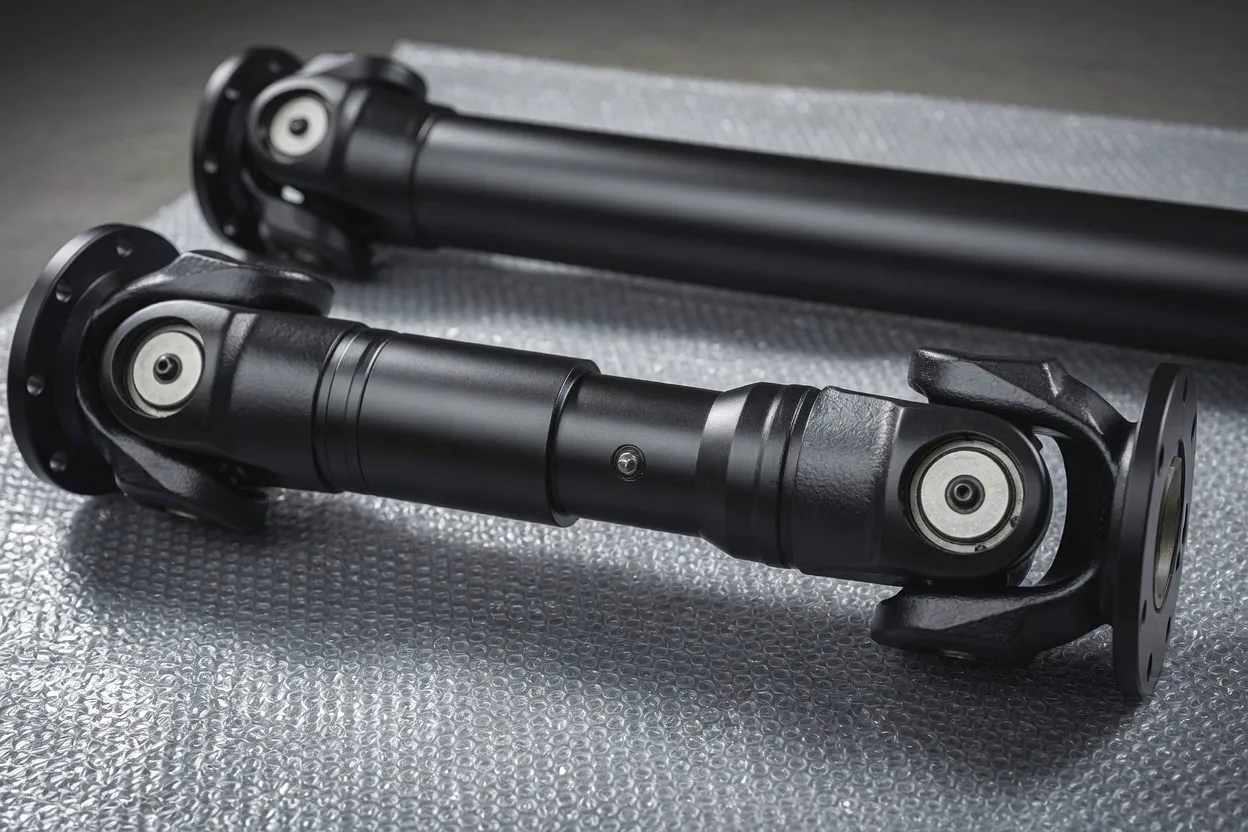
The load-bearing cross-trunnion, the heart of every cardan coupling, is manufactured from 20CrMo case-hardened steel at Ever Power. The case hardening process produces a surface hardness of HRC 58–62 while maintaining a tough, ductile core — a combination that resists the surface pitting and spalling that destroy lesser bearings after a single muddy season. The needle roller bearings that carry the trunnion arms are selected for agricultural-grade contamination resistance, with triple-lip seals standard across the agricultural series to block the ingress of soil particles, fertiliser dust and moisture that characterise field conditions.
The yoke forks are drop-forged from 42CrMo4 or 40Cr alloy steel and machined to tight dimensional tolerances on CNC machining centres. Forging rather than casting is deliberate — the grain structure produced during forging flows around the critical stress concentration at the yoke ear root, the single most common fatigue initiation site in a universal joint. This manufacturing choice extends service life considerably compared to cast-iron or cast-steel alternatives that may appear visually similar but fail at a fraction of the intended cycle life.
Cross Trunnion
20CrMo case-hardened steel · HRC 58–62 surface · tough ductile core · Zn-phosphate treated
Yoke Forks
42CrMo4 / 40Cr drop-forged alloy · CNC-machined · superior fatigue grain flow vs. cast alternatives
Needle Bearings & Seals
Agricultural-grade needle rollers · triple-lip seals standard · blocks soil, fertiliser dust and moisture ingress
Telescoping Tube
Involute-splined C45 tube with HDPE slide bushing · grease nipple · protective PTO guard available
Real-World Application Scenarios Across UK Farming Operations
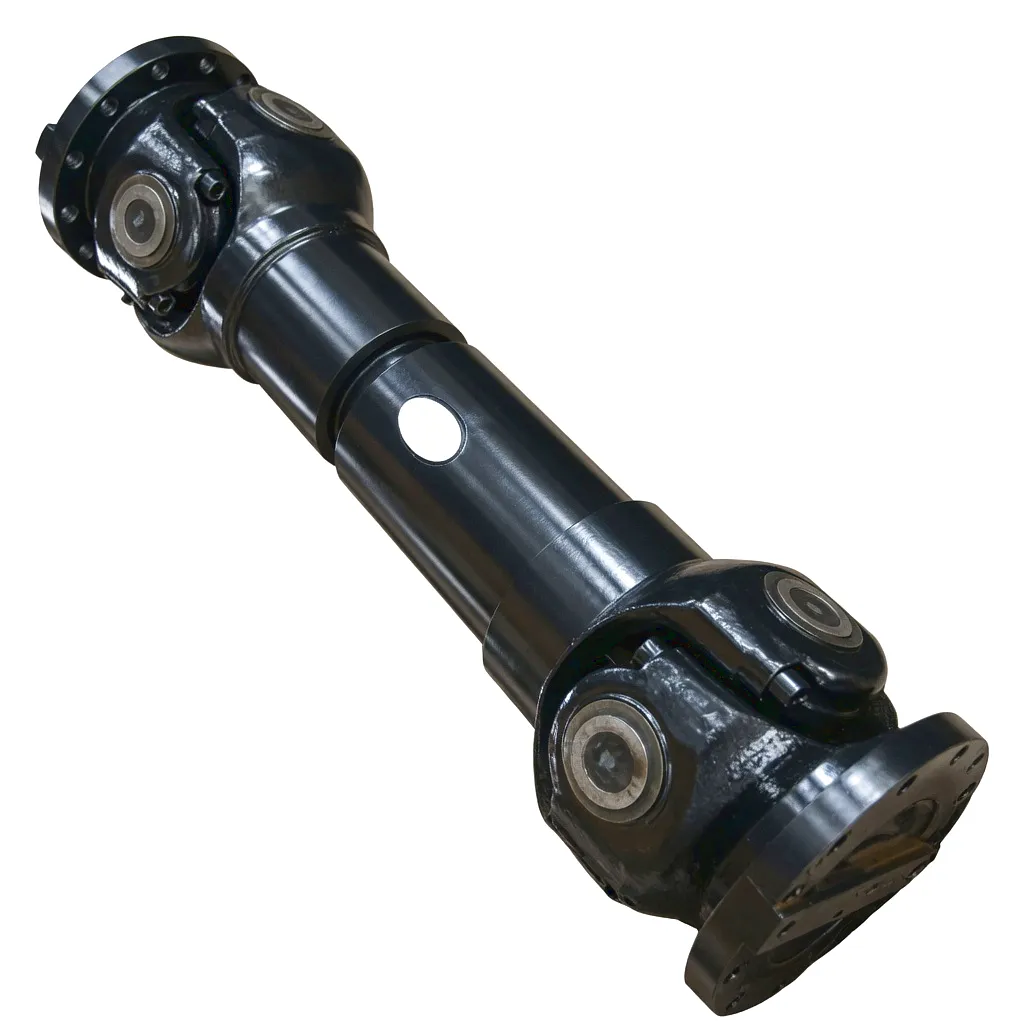 Across the broad cereal-growing regions of East Anglia, the Vale of York, and the Scottish Borders, farmers running precision coulter drills at field speeds of 8–12 km/h rely on the central drive shaft cardan coupling to maintain consistent seed spacing at rates of 120–250 seeds per metre of row. At 10 km/h, the metering shaft is completing thousands of drive cycles per working hour. Any vibration or velocity irregularity introduced by a substandard coupling manifests directly as spacing variation — and spacing variation at establishment is one of the most significant and irreversible yield penalties a farmer can incur.
On vegetable holdings in Lincolnshire and Cambridgeshire, where precision multi-row planters place sugar beet, carrot, and onion seed at single-seed intervals with tolerances of ±5 mm, the constant-velocity requirement of the central drive shaft is non-negotiable. Ever Power’s double-Cardan configurations are specifically selected here, eliminating the second-harmonic velocity ripple that a single universal joint would introduce at the working angles required by these wide-toolbar machines.
🌿
Cereal Coulter Drills
Wheat, barley, oilseed rape. 6–12 m working width, 540/1,000 rpm PTO input. EP-A20 to EP-A35 series.
🍄
Vegetable Precision Planters
Sugar beet, onion, carrot. Single-seed metering. ±5 mm placement accuracy. EP-A35 DC or EP-A50 DC.
🌸
Air Seeder Metering Units
Large-scale pneumatic seeding systems. Wide-span toolbar flex. Telescoping shaft + double-Cardan. EP-A50 DC to EP-A70 DC.
🌱
Combination Seed + Fertiliser
Dual-product applicators with twin metering heads. Heavier torque demand. Forged 42CrMo4 heavy-duty series.

Product Advantages That Translate Directly to Field Performance
The advantages of a correctly specified cardan coupling on a seeder central drive shaft are not abstract engineering claims — they show up as measurable field outcomes. Seed spacing uniformity, which has a direct and well-documented relationship with final crop yield, improves when the drive shaft transmits torque without velocity fluctuation. Gearbox and bearing life on the seeder’s main transmission extends when torsional shock is properly managed at the first coupling in the drivetrain rather than transmitted into the gearbox housing. And the total cost of a season’s downtime for a failed coupling is invariably far greater than the cost difference between a quality unit and a budget alternative.

🔑
Extended Bearing Service Life
Case-hardened cross-trunnions with needle rollers deliver significantly longer L10 bearing life compared to sintered bronze bush alternatives, reducing annual maintenance cost per machine.
📈
Improved Plant Stand Uniformity
Constant-velocity output from double-Cardan units eliminates speed ripple at the metering shaft, directly improving spacing coefficient of variation — measurable at harvest as yield per hectare.
🛠
Easy Field Maintenance
Grease-nipple bearing replenishment, snap-ring cross-kit replacement, and standard bore sizes mean a competent farm mechanic can service or swap the coupling without specialist tools.
🌐
UK Regulatory Compatibility
PTO guard-ready design meets the current UK PUWER 1998 and PSSR 2000 requirements for guarding of rotating agricultural power transmission shafts when fitted with the supplied guard assembly.
Customer Success: Fenland Vegetable Farm, Cambridgeshire, UK
Case Study · Sugar Beet & Carrot Precision Planting · 480 ha
The Challenge
A 480-hectare vegetable operation near March, Cambridgeshire, running a 12-row Monosem NG Plus4 precision planter had been experiencing persistent spacing irregularity in sugar beet stands — expressed as a coefficient of variation above 18% when the target was below 10%. An agronomist traced the root cause to velocity ripple in the central drive shaft, originating from a worn single-joint universal coupling operating at a consistent 14° working angle. The farm had replaced the same coupling three times in two seasons, each time with a low-cost replacement that failed within 200 hectares of use due to inadequate seal design allowing fine peat soil ingress into the bearing cups.
The Solution
Ever Power supplied an EP-A35 DC double-Cardan assembly with triple-lip seals specified for the peat soil conditions of the Fens. The assembly was configured with a 35 mm bore with keyway to match the Monosem gearbox input shaft, and a custom intermediate shaft length to position the two joints at equal and opposite angles — a critical geometric requirement to achieve true constant-velocity output. Installation was completed in approximately 90 minutes by the farm’s own workshop. Pre-season bearing lubrication was carried out with the supplied agricultural-grade EP2 grease compatible with the seal material.
Measured Results After Full Season (480 ha)
8.3%
Spacing CoV achieved (target <10%)
480 ha
Completed with zero coupling failures
£0
Unplanned drive shaft downtime cost
+6.2%
Sugar beet stand establishment vs prior year
What Our UK Agricultural Customers Say
❝
We’ve run the EP-A35 DC on our Fendt-powered Väderstad Tempo coulter drill for two full seasons now. The drive is smoother than anything we’ve used before and we haven’t touched the coupling since installation. The Cambridgeshire clay doesn’t make life easy for any component, but the seals have kept everything out of the bearings.
— R. Hargreaves, Arable Farm Manager · Cambridgeshire
❝
The custom bore specification service was exactly what we needed. Our Kverneland air seeder has a non-standard 38 mm shaft with an unusual keyway, and Ever Power manufactured a matching coupling within three weeks. Lead time was well within our spring planting window. Excellent technical support by email throughout the process.
— D. McNeil, Workshop Supervisor · Borders Farm Machinery · Scotland
❝
Our vegetable operation plants onions at 140 seeds per metre. Any speed variation in the drive shaft is immediately visible as doubles and skips. Since switching to the double-Cardan unit from Ever Power, our singles percentage has gone from 71% to 84%. That’s a direct improvement in saleable yield per hectare. We’ve placed repeat orders ahead of the next season.
— P. Visser, Operations Director · Lincolnshire Vegetable Growers Ltd
Ever Power Manufacturing: Engineering to Your Exact Specification
Ever Power operates a dedicated agricultural coupling manufacturing facility with a team that has focused exclusively on drive shaft technology for agricultural and industrial machinery. The factory runs CNC machining centres for yoke and shaft production, rotary forging capability for cross-trunnion blanks, carburising and hardening furnaces for heat treatment, and CMM (coordinate measuring machine) inspection for dimensional verification of every critical mating surface. This integrated process means that when you specify a non-standard bore, keyway, flange pattern, or shaft length, the change is engineered and manufactured within the same facility — not outsourced to a third party who has never seen your machine.
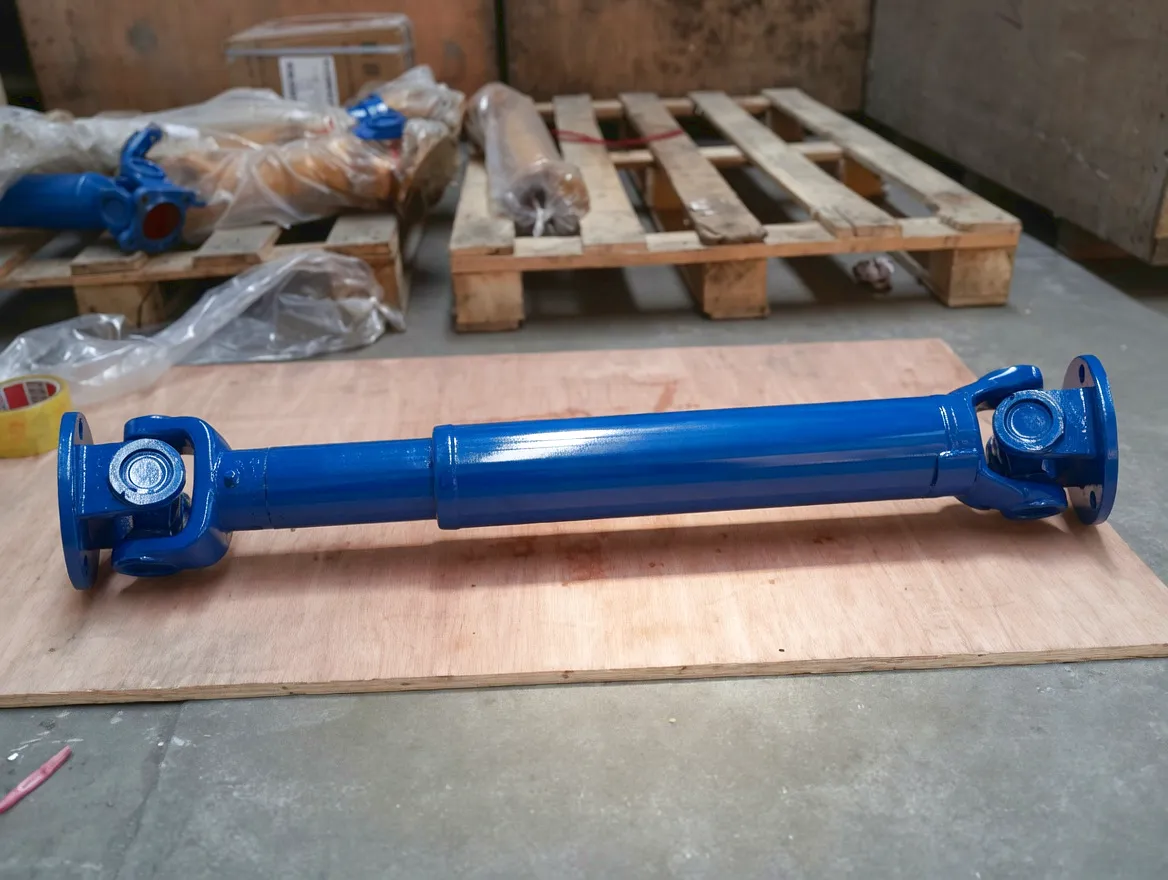
The product customisation service covers bore diameters from 12 mm to 120 mm, keyway profiles to DIN 6885 or customer drawing, flange bolt patterns to ISO or proprietary designs, shaft tube lengths from 200 mm to 2,500 mm for telescoping assemblies, surface coatings including zinc phosphate, hot-dip galvanising, electroless nickel, and heavy epoxy for high-corrosion environments, and twin-guard PTO guard assemblies manufactured to PUWER-compatible designs. Small batch orders are actively welcomed — the minimum order quantity for custom agricultural cardan couplings is a single piece, which suits prototype machinery development as well as one-off replacement applications on heritage or specialist seeding equipment.
Custom Service Capabilities
- Bore: 12 – 120 mm, any keyway profile
- Flange: ISO or bespoke bolt PCD
- Shaft tube length: 200 – 2,500 mm
- MOQ: 1 piece (custom)
- Lead time: typically 10 – 21 days
- Surface: zinc phosphate / galv / nickel / epoxy
- PTO guard assembly available
- CMM-verified dimensional reports on request
Selecting the Right Cardan Coupling for Your Seeder: A Practical Guide
Choosing the correct cardan coupling for a seeder central drive shaft involves three primary engineering parameters and several secondary considerations specific to field operating conditions. Getting this selection right at the outset avoids the cascade of problems — warranty claims, urgent replacements during planting windows, and inconsistent stands — that follow an underspecified or incorrectly rated coupling.
| Selection Parameter | What to Measure / Identify | Typical UK Seeder Range | Recommended Action |
|---|---|---|---|
| Peak Torque (N·m) | Max PTO torque × service factor (1.5–2.5 for agricultural shock) | 150 – 4,000 N·m | Select series with rated torque ≥ peak × service factor |
| Operating Angle (°) | Measure angle at full implement articulation during turning | 8° – 22° typical | Above 12°: specify double-Cardan for CV output |
| Shaft Speed (rpm) | PTO output speed (540 or 1,000 rpm) | 540 or 1,000 rpm | Verify Dn value (bore × speed) within series limit |
| Bore & Keyway | Shaft diameter, keyway width/depth at both ends | 25 – 70 mm bore typical | Supply shaft drawing or sample for custom match |
| Soil / Environment | Soil type, moisture, fertiliser dust exposure | Light sand to heavy clay / peat | Heavy clay / peat: specify triple-lip seal + epoxy coat |
The service factor for agricultural applications is not a bureaucratic safety margin — it reflects the real physics of field operation. A 90 kW tractor at 540 rpm delivers approximately 1,590 N·m of PTO torque at the rated point, but the instantaneous torque during a stone strike or soil bridging event on a disc coulter can exceed three times that value for a fraction of a second. Specifying a coupling rated at bare operating torque without a service factor is specifying a coupling that will eventually fail in exactly the circumstances that most damage agricultural operations — mid-field, mid-season.
Serving UK Arable Regions: From East Anglia to the Scottish Borders
Agricultural machinery engineering is not a one-size-fits-all discipline, and neither is the British landscape. Farming conditions in the Lincolnshire Fens — black peat soils, drainage-channel-divided fields, wide flat expanses suited to large air seeders — demand a different coupling specification to those encountered on the flint-stony chalk soils of the South Downs or the heavy waterlogged clays of the Vale of York. Ever Power’s application engineering team has accumulated specific knowledge of these regional soil and machinery conditions over years of working with UK-based agricultural dealers, farm machinery workshops, and original equipment manufacturers.
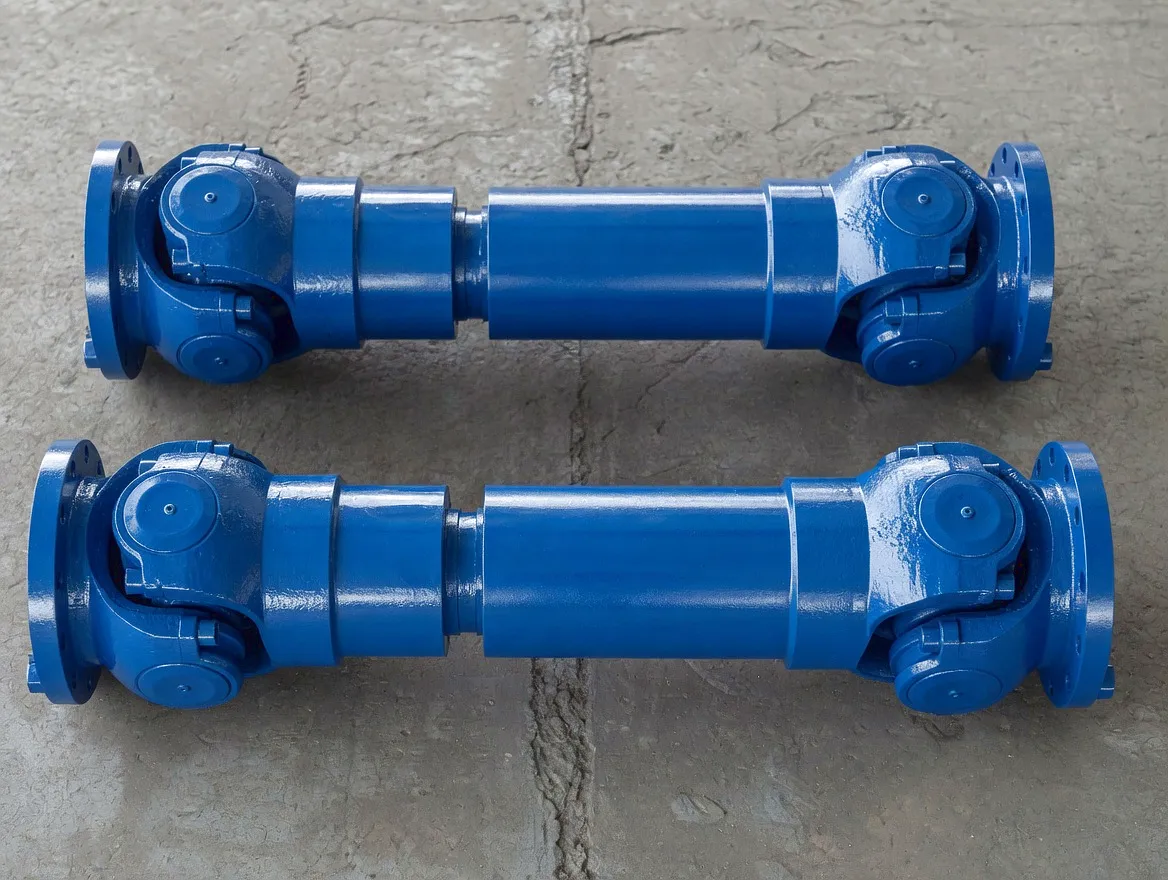
For the stone-heavy soils of the Cotswolds, the Chilterns, and parts of Northumberland, the service factor applied to torque calculations is increased, and higher-grade cross-trunnion materials are recommended to handle the frequency of high-amplitude torque spikes from stone strikes. For the flat, wide-acreage operations in Lincolnshire and Cambridgeshire, long telescoping shafts with double-Cardan joints at optimised geometry are more commonly specified. For Scottish hillside operations where implements operate at higher transverse angles due to terrain contouring, maximum operating angle ratings take priority in the selection matrix. We encourage engineers and machinery buyers across England, Scotland and Wales to contact us with machine-specific requirements rather than treating coupling selection as a generic purchasing decision.
East Anglia
Peat/clay · triple-lip seals · epoxy coating
East Midlands
Mixed soils · standard series · service factor 1.8
Yorkshire / Lincolnshire
Wide fields · air seeder shafts · long telescoping
Scotland / Borders
Hillside terrain · high angle spec · custom yokes
Chalk / Flint South
Stone-heavy · high service factor · forged heavy series
Frequently Asked Questions
Ready to Specify the Right Cardan Coupling for Your Seeder?
Send us your seeder make, model, PTO shaft specifications, working angle, and soil type. Our applications engineering team will confirm the right series, check availability, and return a detailed quote within 24–48 hours.
✉ Get a Quote — [email protected]
Ever Power Drive Technology · Agricultural Cardan Coupling Specialists · Serving the UK · edit by gzl