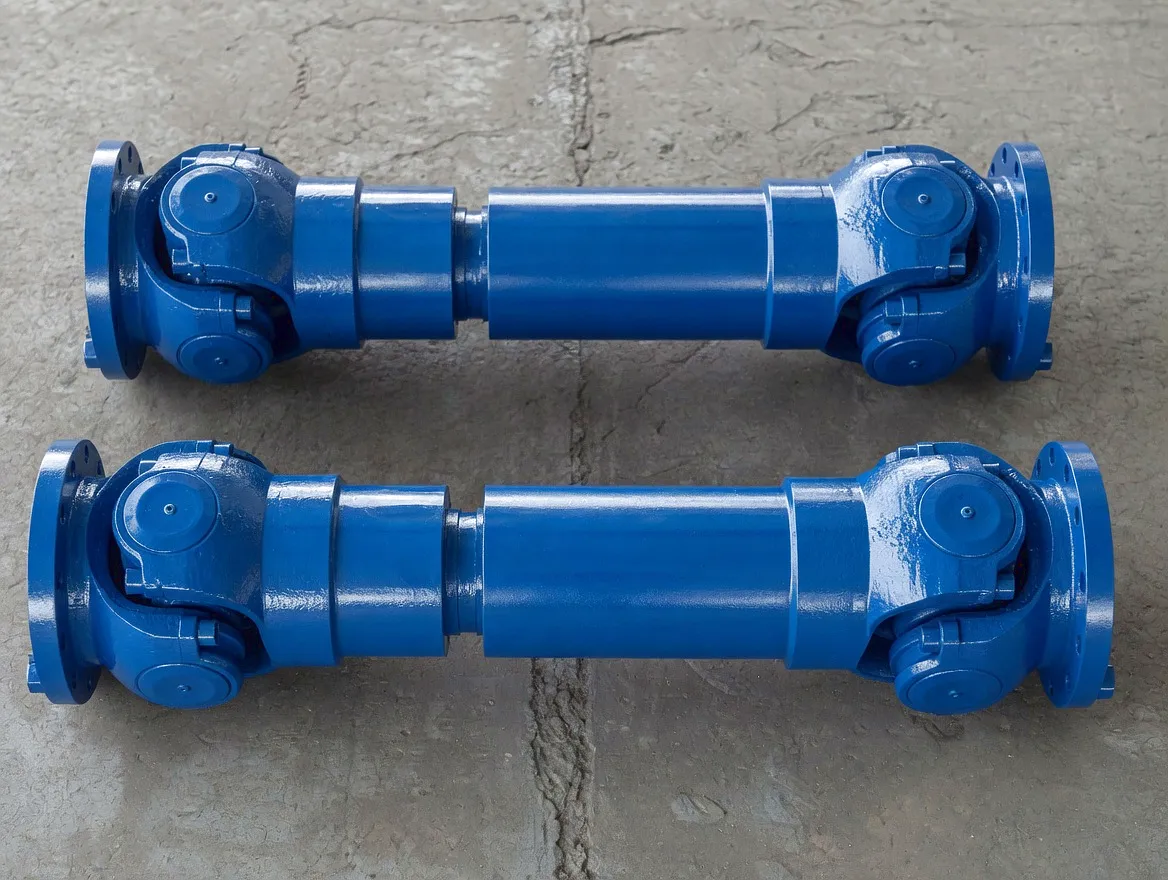
 Walk through any working hay farm in Yorkshire, Lincolnshire, or the Scottish Borders during peak haymaking season and you will almost certainly hear the whine of a rotary rake running at full chat. These machines are remarkable pieces of agricultural engineering — lightweight, high-speed, covering ground at a pace that would have seemed impossible a generation ago. But underneath that swept-tine rotor, invisible to the casual observer, is a mechanical component doing some of the hardest work on the farm: the cardan coupling transmitting power from the tractor’s PTO shaft to the rake’s gearbox at rotational speeds that regularly exceed 540 RPM and can spike well beyond 1,000 RPM on variable-geometry models.
When that coupling fails — and it will fail if the wrong specification is selected or maintenance schedules are ignored — the cost is rarely just the part itself. You’re looking at lost working windows, emergency call-outs, potentially bent shaft ends, and in worst-case scenarios, a flying yoke that becomes a genuine safety hazard. This guide is written from 18 years of specifying, supplying, and troubleshooting universal joint driveshafts across British and European agricultural machinery, and it addresses every technical and commercial question that serious operators and machinery dealers are likely to have about choosing the right cardan coupling for hay rake high-speed transmission duty.
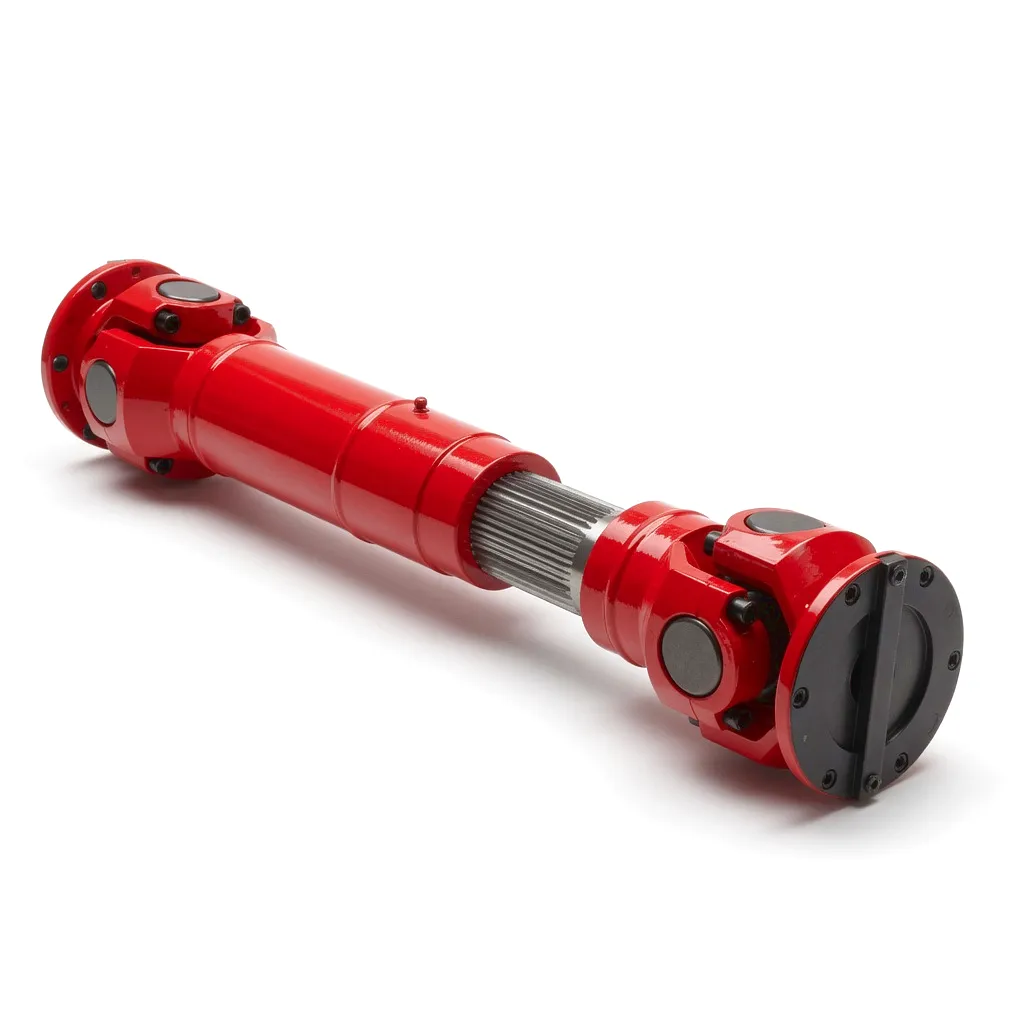
Agricultural Cardan Coupling
Custom-engineered for rotary hay rakes, tedders & PTO machinery operating at 540–1,000 RPM. CE-marked. Full UK stock.
📩 Get a Free Quote
Reply within 24 hours · [email protected]
Why Hay Rakes Are So Destructive on Drivetrain Components
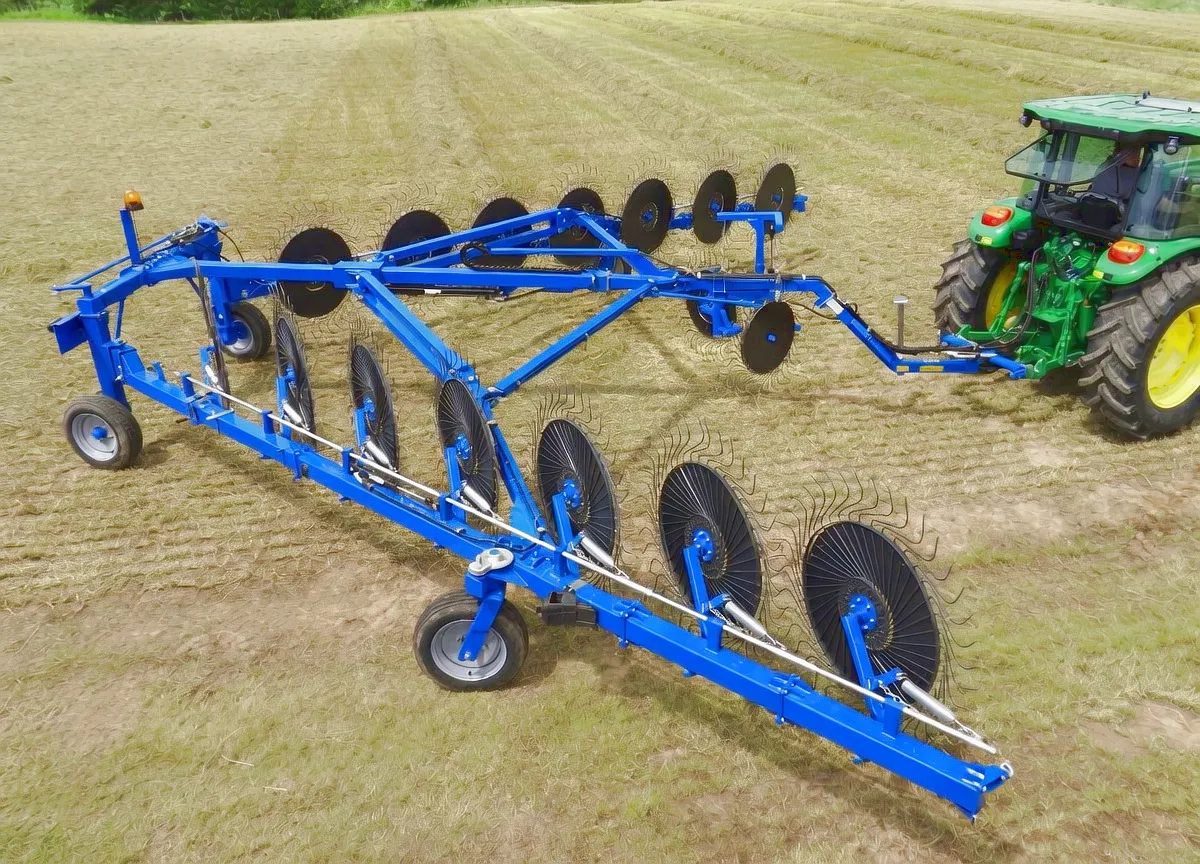
The hay rake sits in a particular category of agricultural machinery that engineers sometimes refer to as “dynamic-load nightmares.” Unlike a mower conditioner, which applies reasonably consistent torque as it works through standing crop, or a baler, where peak loads are at least somewhat predictable, a rotary rake combines very high rotational speed with continuously variable geometric joint angles and instantaneous load changes every time a tine cluster hits a windrow, a stone, or a patch of heavier material. Add to this the fact that the machine’s frame flexes over uneven ground — changing the working angle of the cardan coupling in real time — and you begin to understand why so many standard PTO shafts simply are not built for this environment.
The core mechanical issue is what engineers call the “second-order velocity variation” inherent to any universal joint operating at an angle. At zero degrees, input and output speeds are identical. Introduce an angle — even a modest 5–8 degrees, which is normal during field operation — and the output shaft begins to accelerate and decelerate twice per revolution. At 540 RPM with a 10-degree operating angle, this creates a rotational vibration at 18 Hz. At 1,000 RPM with a 15-degree angle, you’re looking at 50 Hz pulsation, which is precisely in the resonant frequency range of most light agricultural gearbox housings. The consequence is accelerated bearing wear, seal failure, and in severe cases, gearbox housing cracking — all of which get blamed on the gearbox when the actual root cause is a poorly specified or damaged cardan coupling.
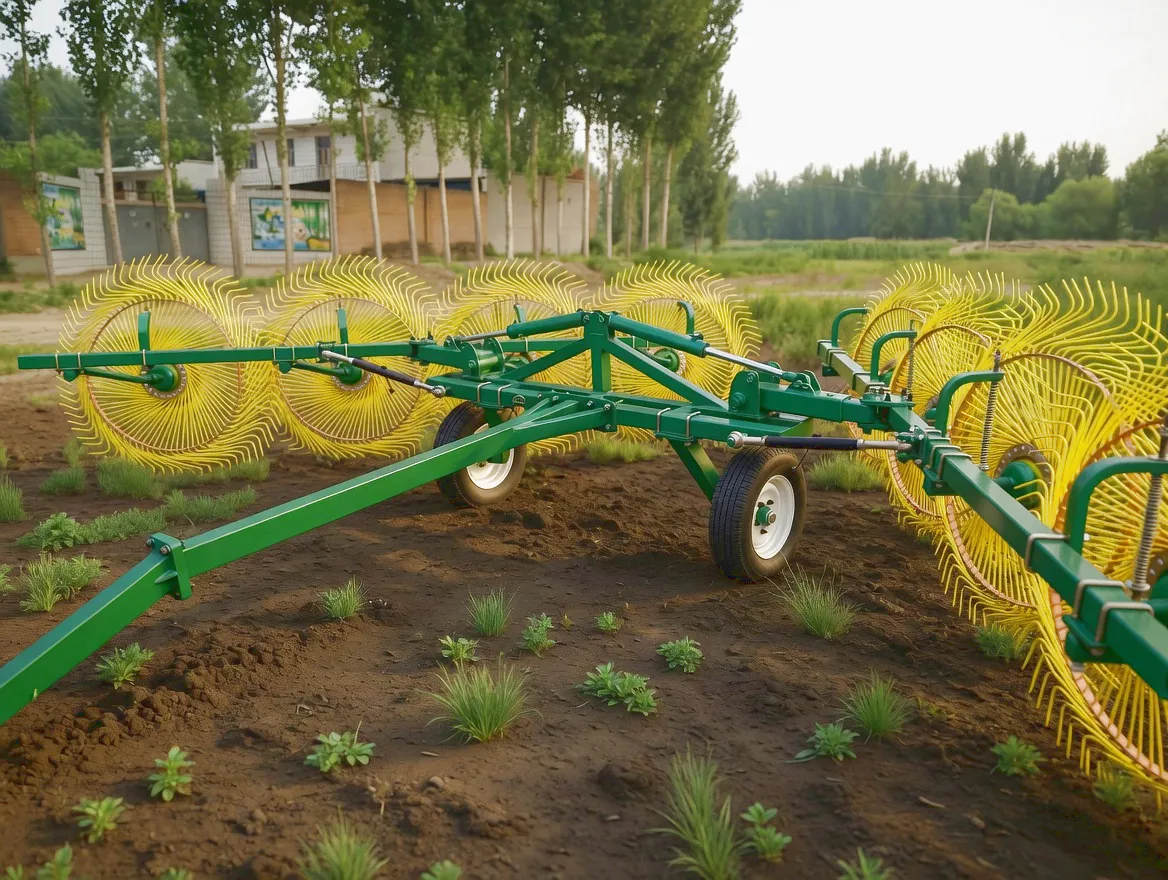
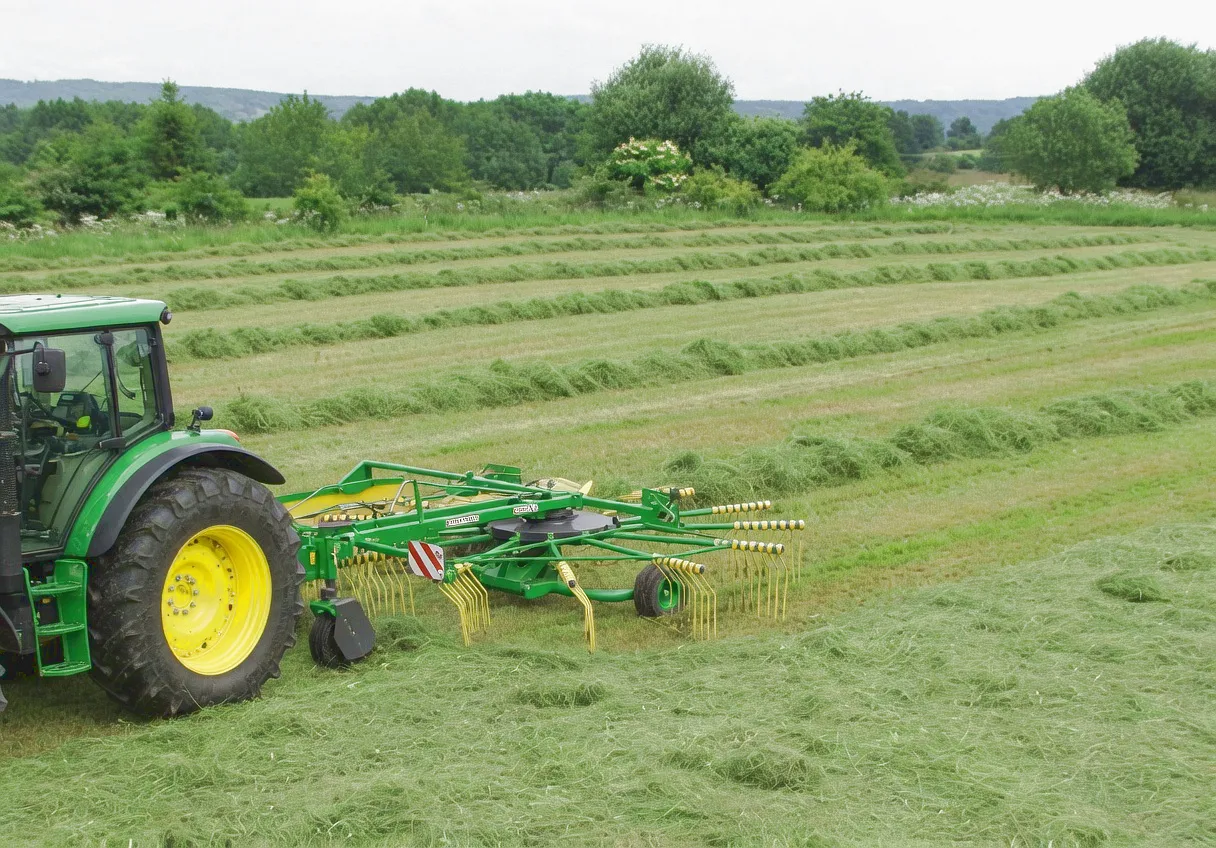
Selecting the Right Cardan Coupling: What the Specifications Actually Mean
Picking a cardan coupling for a hay rake is not the same exercise as selecting one for a gearbox test rig or a steel mill roll neck. Agricultural applications impose a unique combination of demands: the coupling needs to handle high average speed, tolerate significant angular misalignment, absorb shock loads without catastrophic failure, operate reliably in dust, moisture, and mud, and — critically — conform to applicable CE machinery directive requirements under UK PSSR and PUWER regulations. Specifying for just one of these parameters while ignoring the others is exactly how purchasing managers end up with a shaft that looks right but fails in the field within a single season.
The key specification parameters for high-speed hay rake cardan coupling selection are nominal torque rating (Nm), peak permissible torque (Nm), maximum operating RPM, maximum operating angle (degrees), collapsed and extended shaft length (mm), and yoke bore profile (splined, round, or square). For twin-rotor rakes working at PTO speeds of 540 RPM with internal speed-up ratios that take the secondary shaft to 750–1,000 RPM, a minimum torque rating of 1,200 Nm nominal with a 2,400 Nm peak capacity is a sensible baseline, though each machine must be evaluated individually.
| Parameter | Light Rake (2–4 rotor) | Mid Rake (4–6 rotor) | Heavy Twin-Rotor |
|---|---|---|---|
| Nominal Torque (Nm) | 400–800 | 800–1,400 | 1,200–2,500 |
| Peak Torque (Nm) | 1,200–2,000 | 2,000–3,500 | 3,500–6,000 |
| Max RPM | 750 | 1,000 | 1,200 |
| Max Operating Angle (°) | 25° | 20° | 15° |
| Cross Kit Bearing Dia. (mm) | 30.2 | 38.0 | 47.6 |
| Overload Clutch Type | Friction disc | Ratchet / Friction | Cam / Torque limiter |
| PTO Profile (ISO 500) | 6-spline 35mm | 6-spline 35mm | 21-spline 45mm |
| Guard Standard | ISO 4254-7 | ISO 4254-7 | ISO 4254-7 + CE |
* Values are typical engineering ranges. Contact Ever Power for machine-specific sizing calculations.
Materials, Construction, and Why Every Component Matters
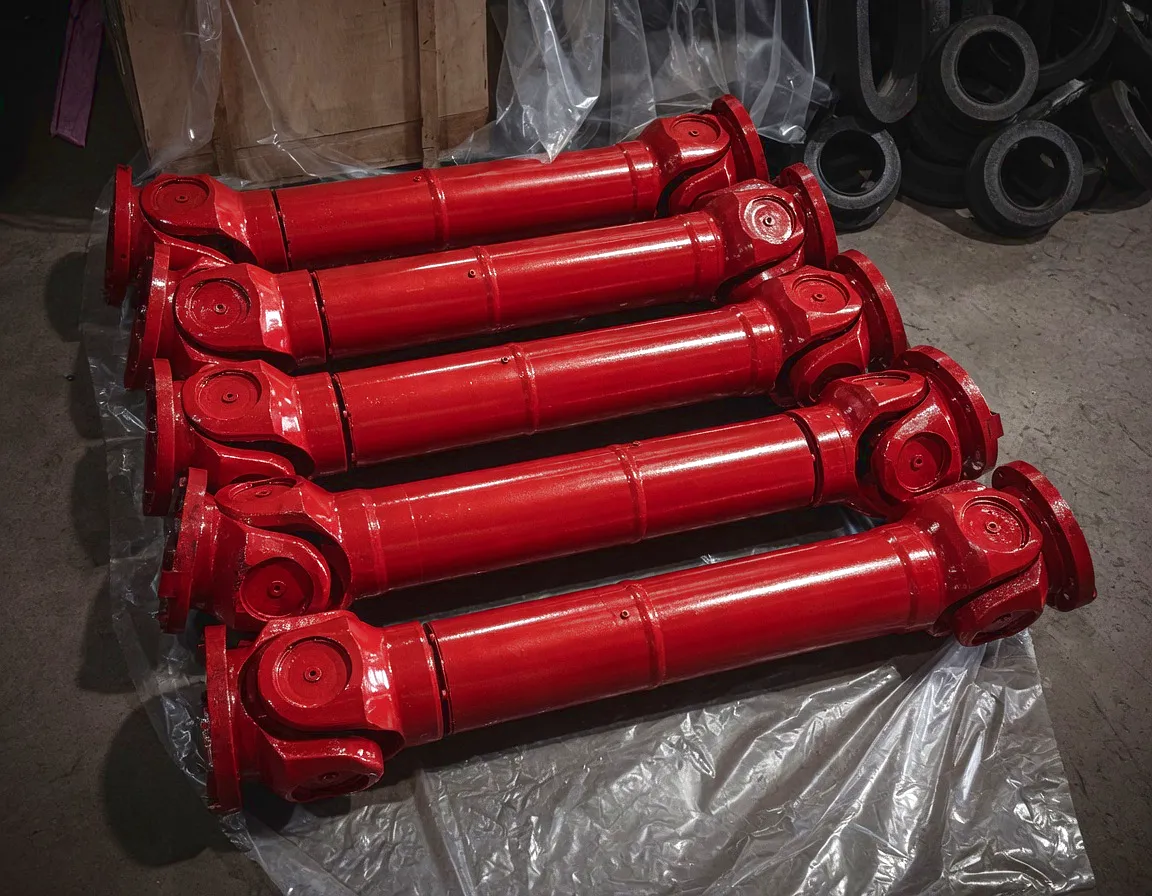
A high-speed agricultural cardan coupling is not a single part — it’s a precision-assembled system, and the integrity of the whole is determined by the weakest element. The cross journal (spider) is almost always manufactured from case-hardened 20CrMnTi or 20MnCr5 alloy steel, case hardened to 58–62 HRC at the bearing contact zones while retaining a tough, ductile core. The reason for this dual-zone hardness profile is straightforward: surface hardness resists wear under the oscillating needle bearing loads, while the core toughness prevents catastrophic brittle fracture under the shock torques that occur when a tine hits an embedded stone at full speed. Manufacturers who cut costs by through-hardening the cross get a component that wears slowly but breaks suddenly — precisely the wrong tradeoff in a field application where a breakage can be dangerous.
The bearing cups that hold the needle rollers require equally careful metallurgy. Through-hardened bearing-quality steel at 62–66 HRC at the cup bore surface, with tight dimensional tolerances on the cup OD to ensure a reliable interference fit into the yoke bores. Sloppy fits at this interface — even fractions of a millimetre — allow the cup to micro-rotate under load, fretting the yoke and accelerating failure. For hay rake duty, where the unit may run for 600–800 hours before a bearing-related inspection would typically be triggered, the quality of this interference fit is not a detail to overlook.
Application Scenarios: Where This Coupling Performs
Across the UK’s diverse agricultural regions, from the flat fenlands of Cambridgeshire to the undulating pastures of Devon, our cardan couplings are working in demanding field environments.
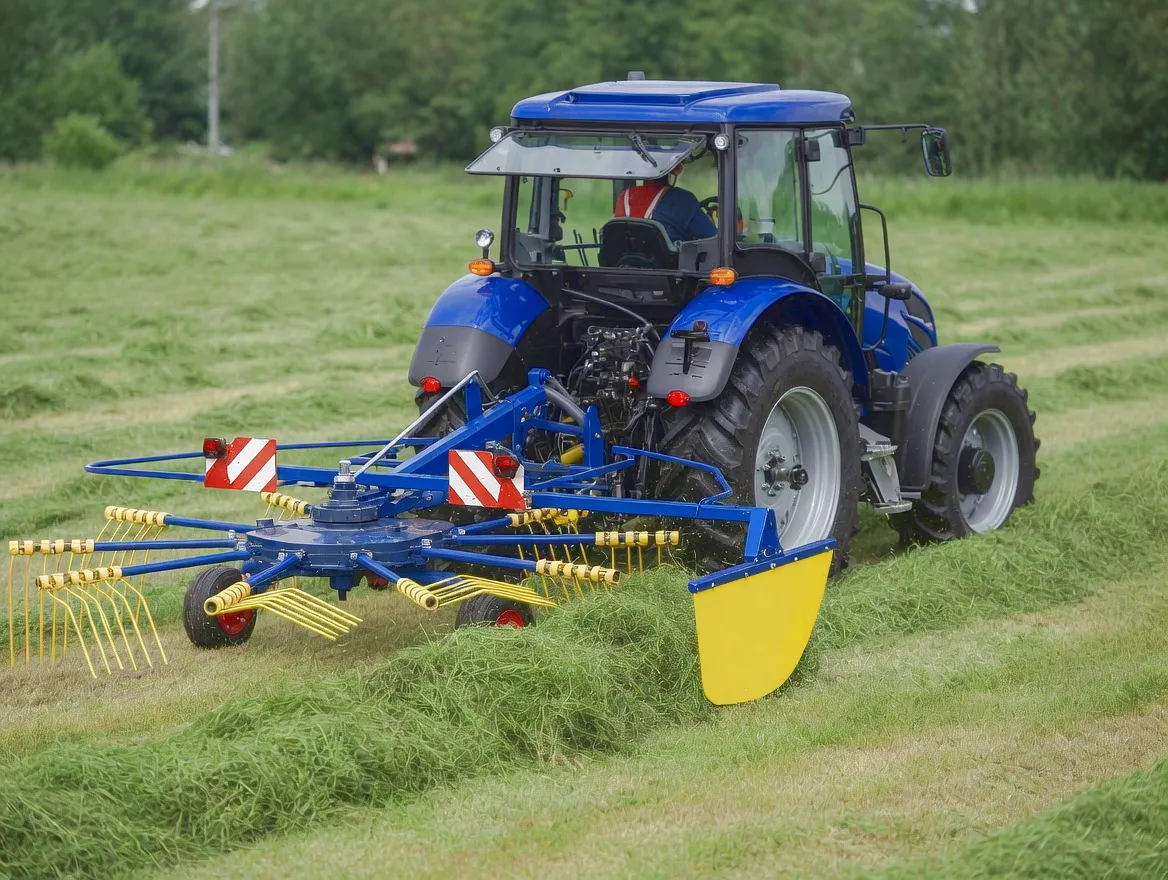
The Real Advantages of Getting This Right
There’s a version of this conversation that gets reduced to a procurement decision — “cheapest shaft that fits the spline” — and there’s a version that understands what’s actually at stake when you’re in the middle of a three-day hay window in July and your rake goes down. The difference between operators who regularly complete their harvest on time and those who don’t is rarely horsepower or field conditions. It’s almost always the small decisions made in the workshop during the previous winter. Fitting a properly rated, correctly guarded, well-lubricated cardan coupling with an appropriate overload clutch is one of those decisions.
The benefits extend well beyond simple uptime. A properly matched cardan coupling operating close to the geometric ideal — with minimal angular mismatch — transmits power with significantly lower vibration than a worn or misspecified unit. Less vibration means less fatigue loading on the rake gearbox, longer tine-arm bearing life, reduced noise, and — often overlooked — less operator fatigue when the tractor cab is not resonating at a frequency that numbs the bones after six hours of raking. The whole-system efficiency improvement is genuinely meaningful: field trials comparing correctly specified versus undersized couplings on equivalent rakes have recorded fuel consumption differences of 4–6% over a full season’s work.
Halving Drivetrain Downtime on a Yorkshire Silage Contractor’s Fleet
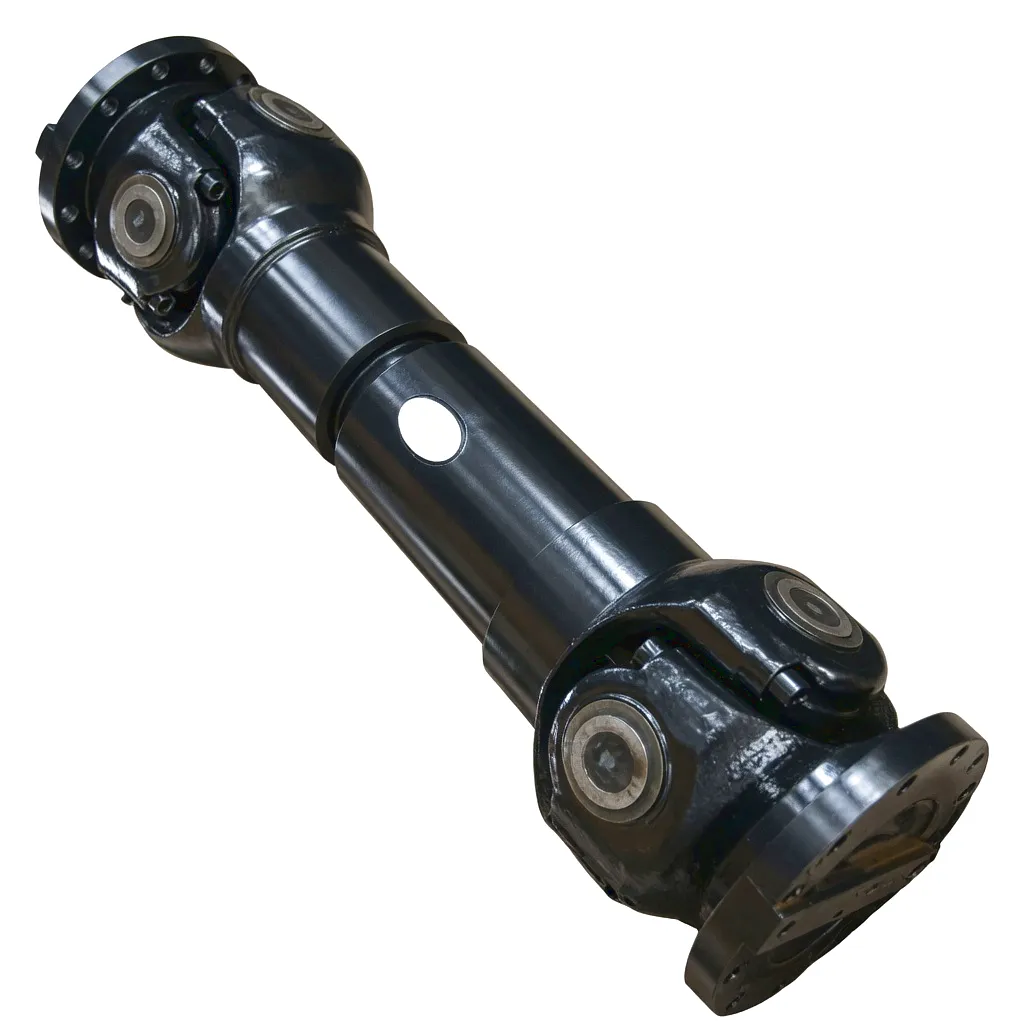 Ridgeway Agricultural Contracting operates from Malton, North Yorkshire, running a fleet of four twin-rotor rakes alongside disc mowers, round balers, and silage wagons across approximately 4,000 hectares of contracted grassland annually. Prior to 2023, the business was experiencing two to three cardan coupling failures per season across the rake fleet — a mix of cross kit failures and splined tube wear — resulting in an average of 1.5 days of lost productive time per incident during the critical May–July cutting period.
The problems were tracing back to a combination of undersized cross journal diameters on the aftermarket shafts previously used (30.2mm caps fitted to machines that the OEM had originally specced at 38mm), and an inadequate overload clutch setting that was allowing repeated shock loads to be transmitted to the gearbox. After switching the entire rake fleet to Ever Power’s Series 6 agricultural cardan coupling — specified with 38mm cross kits, friction torque limiters set to 1,800 Nm, and custom 1,450mm collapsed length to suit their Krone rake hitch geometry — the operation completed the 2023 and 2024 seasons without a single in-field drivetrain failure. The cross kits were inspected at the end of each season and showed wear rates consistent with a three-to-four-season service life before replacement.
The total cost saving across both seasons — accounting for parts, call-out labour, and lost output — was estimated at just over £14,000 against an incremental cost of £1,200 for the upgraded coupling specification. The return on investment closed within the first 40 working days of the 2023 season.
What Our Customers Say
“We’ve been specifying Ever Power shafts on our rake fleet for two seasons now. The cross kits are noticeably more robust than what we had before, and the overload clutch saved us a gearbox on a stone-heavy field in Lincolnshire last summer — that alone paid for the whole year’s supply.”
“Sourcing replacement cardan couplings for non-standard hay rakes has always been difficult through the main dealer network. Ever Power turned around a custom-length shaft in three days with all the correct dimensions. Excellent technical support and the pricing is very fair for the build quality.”
“I manage a mixed livestock farm in Herefordshire and do our own rake maintenance. The technical documentation provided with Ever Power couplings is genuinely useful — actual bearing specifications, torque values, grease intervals — not the generic leaflet you get with cheaper alternatives. Happy to recommend.”
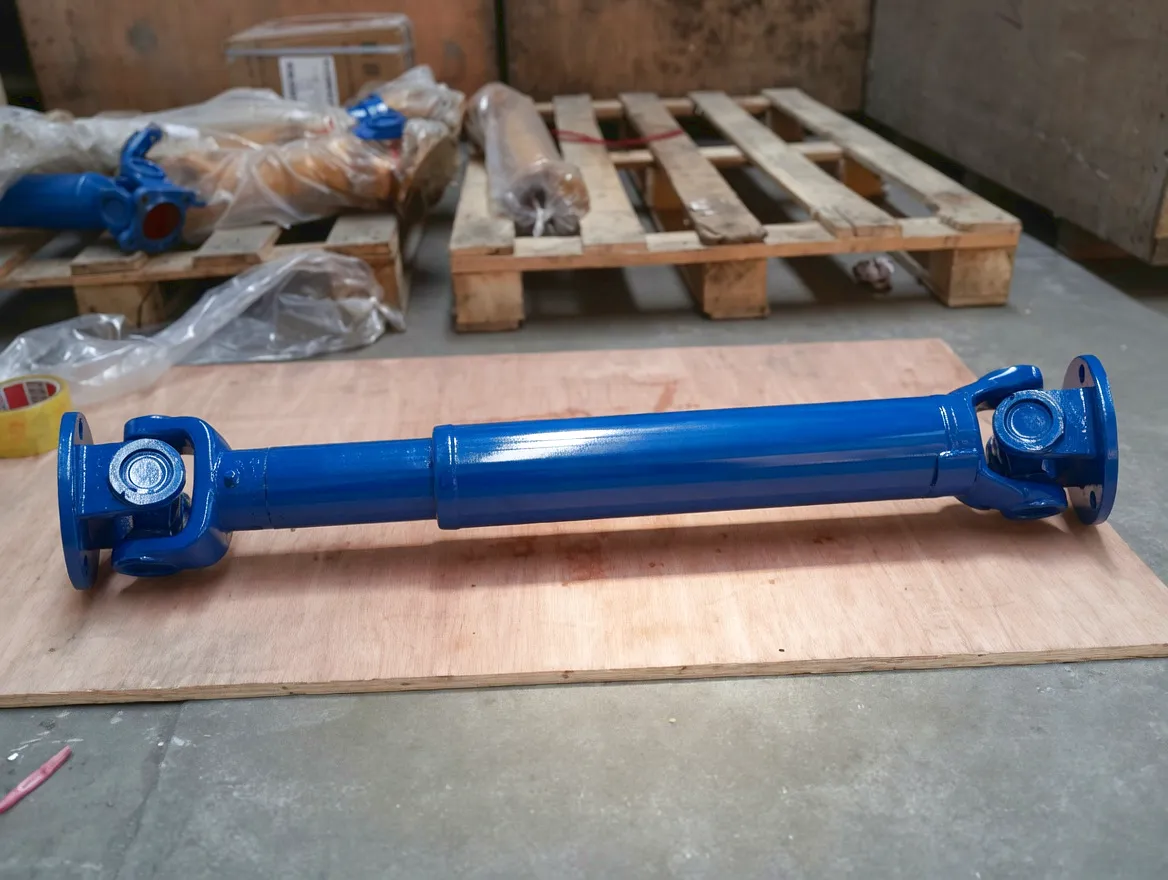
The cardan (Hooke’s joint) principle transmits torque between two shafts at an angle via a four-armed cross journal rotating within two pairs of bearing cups. At zero deflection angle, velocity ratio is 1:1 and perfectly smooth. As angle increases, a characteristic sinusoidal speed variation is introduced — managed in agricultural applications through double-joint (constant velocity) configurations or by keeping operating angles below 8° during peak speed operation. The telescoping sliding tube allows axial length change as the machine articulates over ground, with internal spline profiles transferring torque without slip under design loads.
Custom Engineering: Your Specification, Our Capability
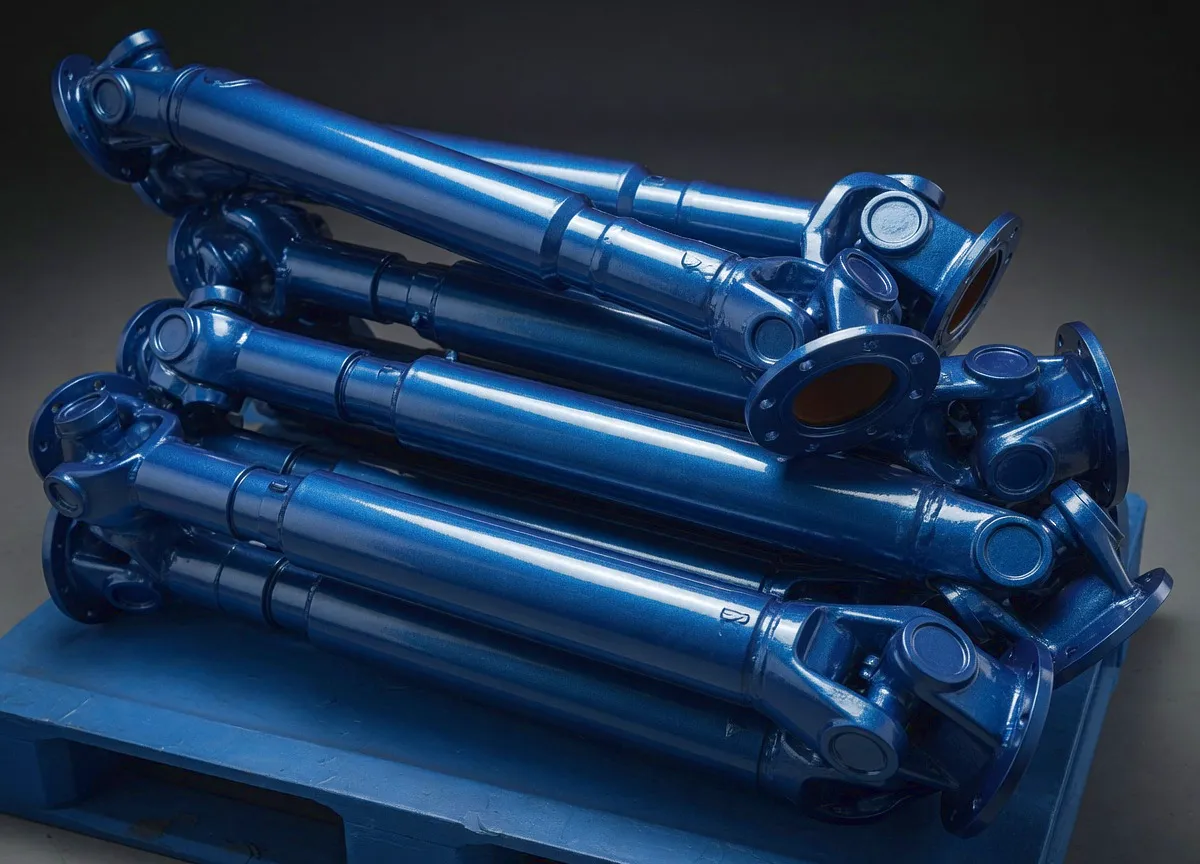
Ever Power’s manufacturing facility holds ISO 9001:2015 certification and operates a dedicated agricultural drivetrain production line with CNC machining centres, in-house heat treatment, and full assembly and testing capabilities. The facility processes over 40,000 cardan coupling units annually for agricultural, industrial, and marine applications globally, with a substantial proportion destined for the UK, Irish, and broader European agricultural markets.
What distinguishes Ever Power from the broader OEM parts market is the depth of the customisation service. Standard catalogue items cover the majority of common rake and tedder applications, but the engineering team handles non-standard requirements on a daily basis: unusual collapsed/extended lengths, non-standard yoke bores, proprietary spline profiles, hybrid clutch types, and branded replacement programs for machinery dealers. Tooling costs are shared transparently, minimum order quantities for bespoke items are reasonable for medium-volume buyers, and lead times from CAD confirmation to first article are typically 15–25 working days, with production lead times of 30–45 days for repeat orders.
Maintenance That Actually Prevents Failures: A Practical Guide
The most common cause of premature cardan coupling failure in agricultural applications is not overloading, not misspecification, and not even stone strikes — it’s inadequate lubrication of the needle bearing assemblies. The cross journal operates with a bearing assembly that has essentially no lubricant reservoir compared to a full rolling element bearing in a sealed housing. Each needle cup typically holds less than 0.5 grams of grease, and at 540 RPM, the individual needle rollers complete thousands of oscillating cycles per minute under a combination of radial and thrust loads. In wet or dusty conditions, contaminated grease causes abrasive wear that accelerates the needle cup from a smooth, polished surface to a scored, pitted failure surface within 50–80 hours. The fix is straightforward: regular regreasing through the zerk fitting on each cross at intervals of no more than 8 operating hours, using a lithium-complex NLGI #2 grease, and never over-greasing (which can blow the lip seals and introduce water ingress paths).
| Maintenance Task | Interval | Specification / Notes |
|---|---|---|
| Cross journal regreasing | Every 8 hr | Lithium-complex NLGI #2; 2–3 pumps per zerk; stop when grease emerges from seal |
| Sliding tube lubrication | Every 20 hr | Molybdenum disulphide grease; extend tube fully, apply evenly, retract before use |
| Cross journal play check | Every 50 hr | Max permissible rotational play at joint: 3° — replace cross kit if exceeded |
| Guard condition inspection | Pre-season + every 100 hr | Check for cracks, missing cones, correct retention chain in place — PUWER 1998 requirement |
| Overload clutch check | Pre-season | Slip torque verification; ratchet clutch — clean and re-spring if slip torque has drifted |
| Full cross kit replacement | As required / 800 hr max | Replace as an assembly; never fit used cups onto a new cross journal |
Beyond greasing, the pre-season inspection should include a careful check of the yoke retaining clips or bolts at each end of the driveshaft — these are the components most often forgotten and most directly responsible for shaft separation events. On shaft configurations using snap rings to retain the bearing cups in the yoke, check that the snap rings are properly seated in their grooves; a ring that has been partially displaced by a shock load can allow a cup to walk out under sustained operation.
Serving the UK Agricultural Sector: From the Borders to the West Country
Ever Power supplies cardan coupling products directly to agricultural contractors, farm machinery dealers, OEM manufacturers, and repair workshops across England, Scotland, Wales, and Northern Ireland. The UK agricultural market presents specific compliance requirements — CE marking under the UK Conformity Assessed (UKCA) transition arrangement, compliance with the PSSR 2000 and PUWER 1998 regulations for guarding and pressure systems, and British Standards alignment for machinery safety — all of which are addressed within the standard product documentation and Declaration of Conformity supplied with each unit.
For contractors operating in the grass-heavy regions of Cumbria, Devon, Somerset, the Welsh Borders, and the Scottish Lowlands — where multiple cuts per season and wet ground conditions make mechanical reliability especially critical — the extended service life of a properly specified cardan coupling translates directly into commercial advantage. A contractor who can reliably promise a client that rake work will proceed without mechanical delays builds a reputation that sustains premium pricing; one who loses three days mid-June to a drivetrain failure at a busy time for every customer does not.
For OEM machinery manufacturers and dealers based in the UK’s agricultural heartland — including the machinery manufacturing clusters around Boston in Lincolnshire, the dealer networks serving the East Anglian grain and grassland belt, and the specialist contractors in the Southwest — Ever Power maintains stock of standard sizes and offers a fast-turnaround service for non-standard dimensions with full technical support from application engineers who understand both the mechanical requirements and the compliance landscape.
Frequently Asked Questions About Cardan Couplings for Hay Rakes
What is the best type of cardan coupling to use on a twin-rotor hay rake running at 540 PTO in the UK?
How much does a replacement cardan coupling for a hay rake typically cost when ordering from a UK agricultural supplier?
Where can I find a reliable cardan coupling supplier for hay rake and tedder PTO shafts serving the Midlands and Yorkshire in England?
How often should I grease the cross joints on a cardan coupling fitted to a hay rake used in wet Scottish or Northern England conditions?
Which cardan coupling series is compatible with Krone, Claas, and Kuhn rotary rakes, and can I get a direct OEM-equivalent replacement with quick delivery in the UK?
What are the signs that the cardan coupling on my hay rake is about to fail and needs immediate replacement?
How do I get a bulk quote for cardan couplings from Ever Power as an agricultural machinery dealer or OEM manufacturer in the UK?
Talk to an Application Engineer Today
Whether you need a direct-fit replacement, a custom-length shaft, or technical help sizing a coupling for a new machine design, Ever Power’s engineering team is ready to help. UK customers receive responses within one working day.
📩 Get a Free Quote Now · [email protected]