
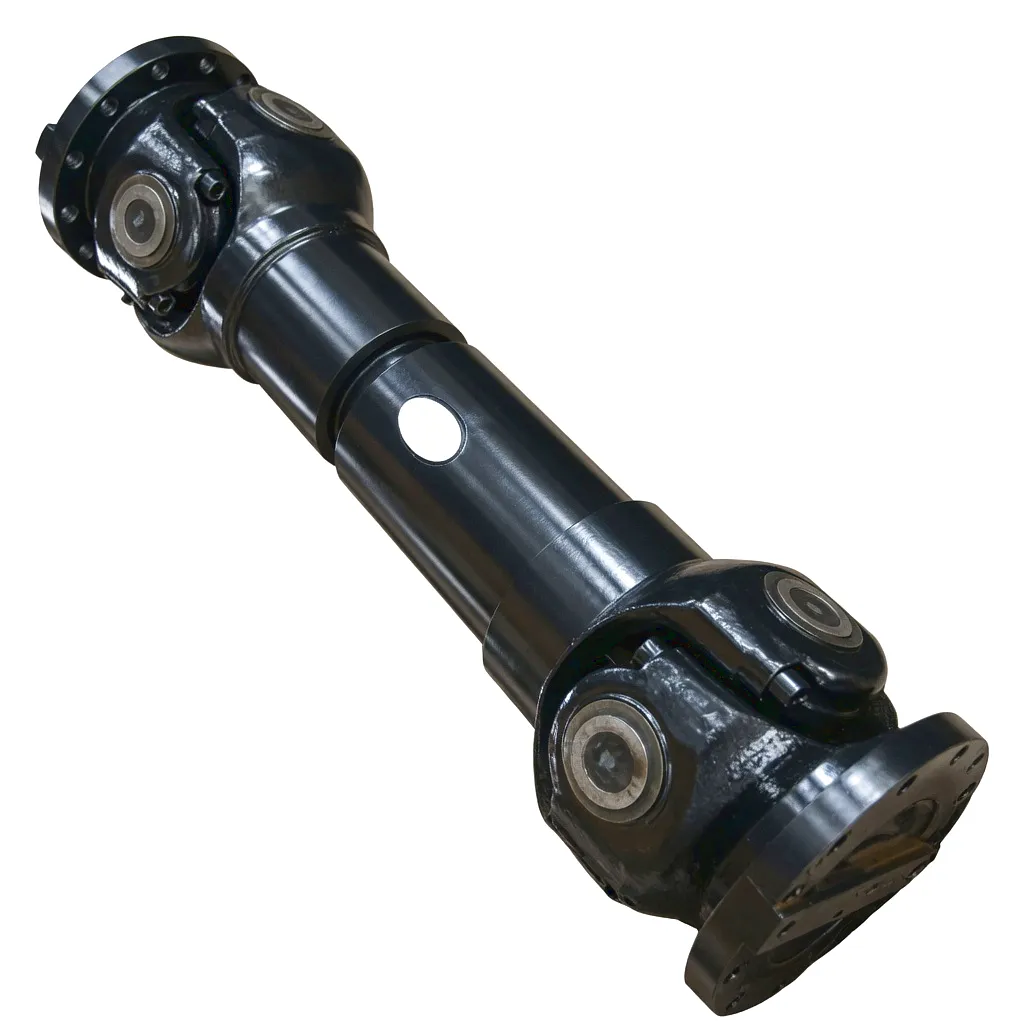
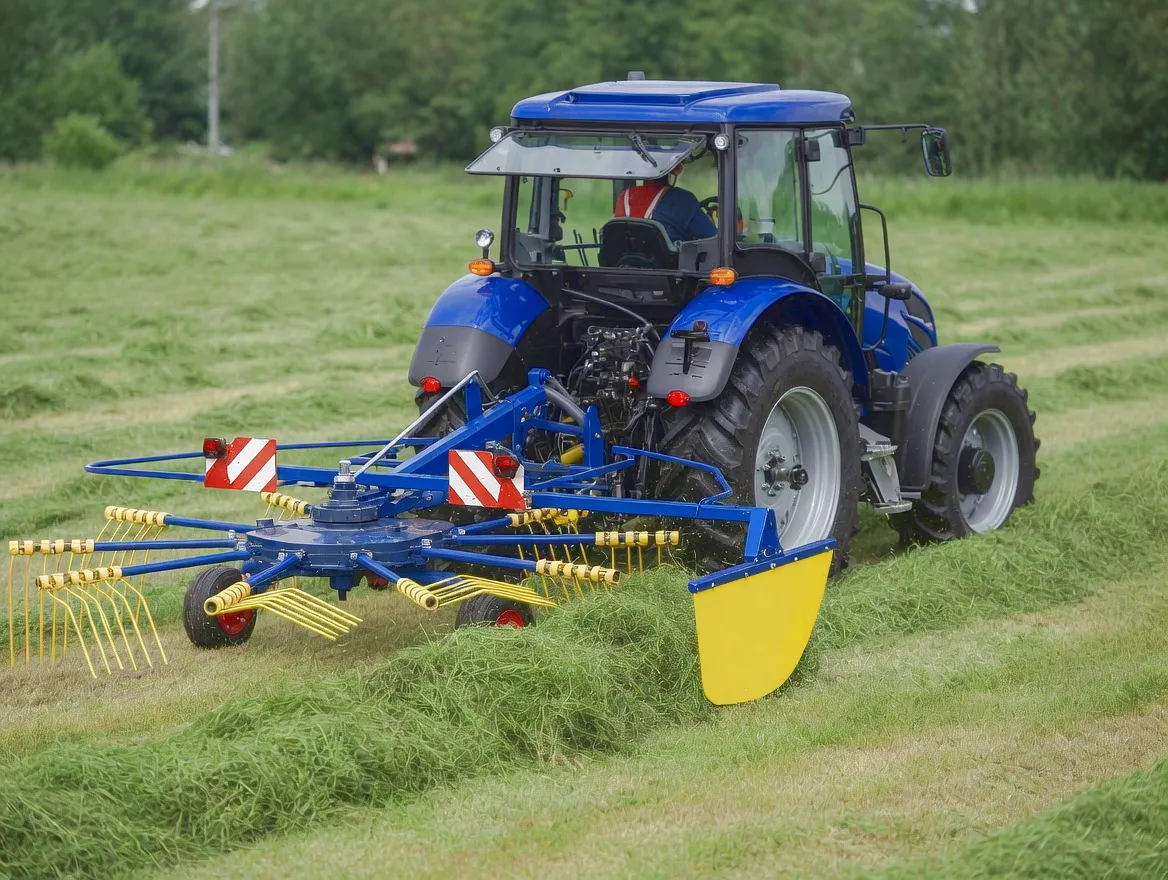
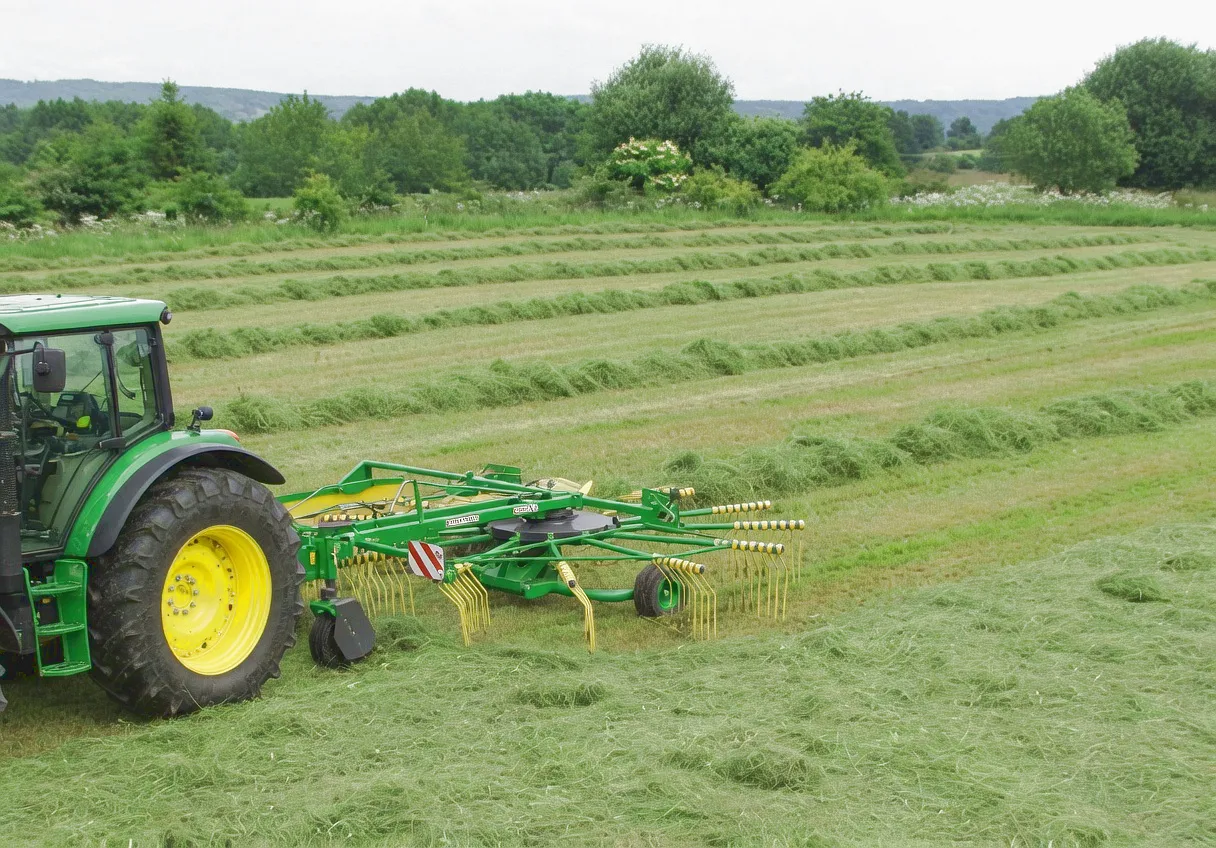
 Walk across any working farm in England during the summer haymaking season and the sight of a tractor pulling a hay rake across a broad meadow is as familiar as the smell of fresh-cut grass. Behind that deceptively simple machine is a precise, hard-working mechanical chain — and at the heart of that chain sits a cardan coupling, more commonly known on the farm as a PTO driveshaft or agricultural universal joint. Without a properly specified cardan coupling, the power from the tractor’s Power Take-Off shaft never reaches the hay rake’s rotor, and the whole operation stops cold.
This article draws on more than 18 years of field engineering experience and direct interaction with British farm machinery dealers, OEM integrators, and contract farming operations across the UK. The goal is straightforward: give you the technical grounding you need to select, specify, and maintain cardan couplings for hay rakes and the broader world of tractor PTO-driven agricultural machinery — without the guesswork.
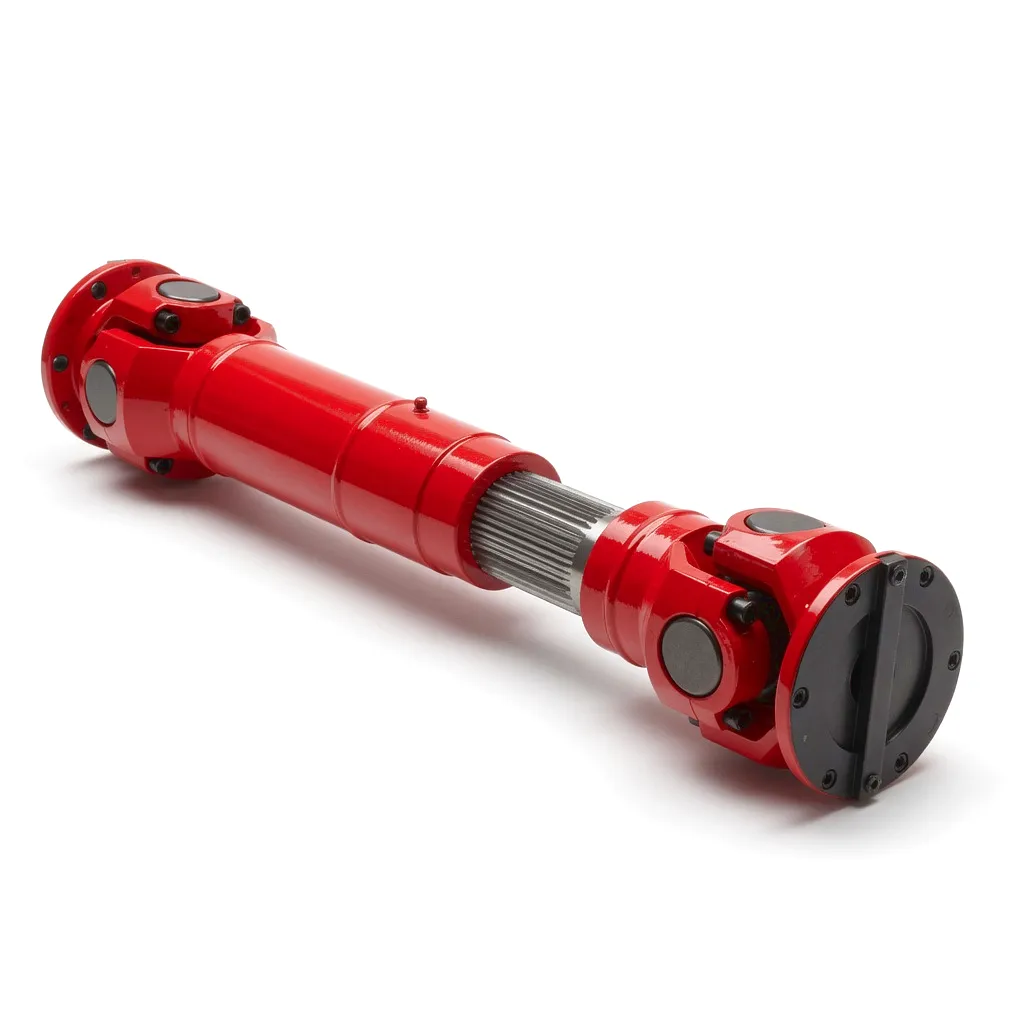
Ever Power Cardan Coupling
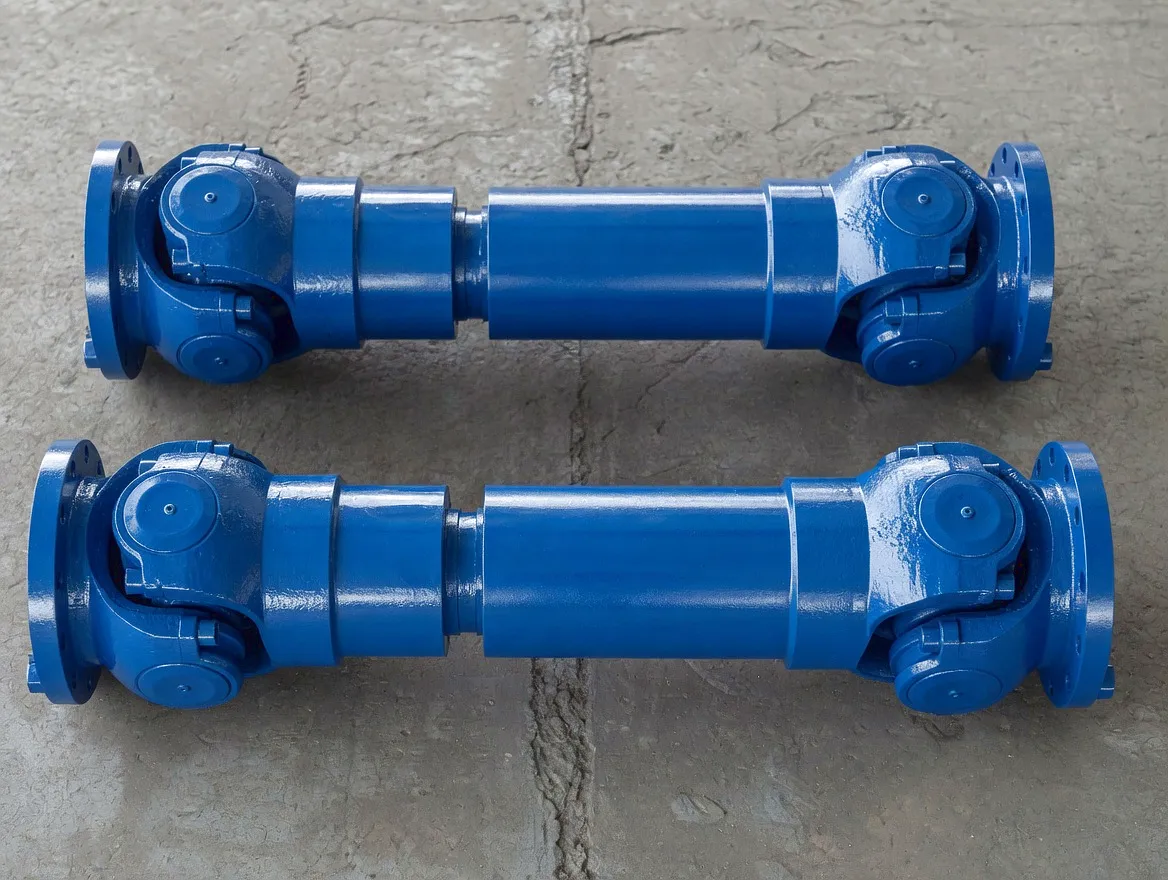
Engineered for demanding agricultural environments, Ever Power’s range of agricultural cardan couplings covers standard 6-spline and 21-spline PTO profiles, wide-angle cross joints for tight headland turns, and overload-protection clutch assemblies specifically designed for the shock loads a hay rake imposes on a drivetrain.
What Exactly Is a Cardan Coupling and Why Does It Matter on a Hay Rake?
A cardan coupling — named after the 16th-century Italian mathematician Gerolamo Cardano — is a mechanical device that transmits rotational torque between two shafts whose axes are not perfectly aligned. In agricultural machinery, this is not a marginal engineering case; it is the everyday reality. A tractor’s PTO stub sits at a fixed height, while the hay rake’s input gearbox may be angled anywhere from a few degrees on flat ground to 30° or more when working on a hillside field in the Yorkshire Dales or the South Downs.
The Cardan joint — also called a universal joint, U-joint, or Hooke’s joint — achieves this angular flexibility through a cruciform (cross-shaped) yoke arrangement. Two yokes, each attached to a shaft, are connected by a cross-piece bearing. As the driving shaft rotates, the cross transmits torque to the driven shaft even when the two shafts are at an angle. In practice, agricultural PTO driveshafts use two such joints in series — a double-cardan arrangement — which cancels out the velocity fluctuation inherent in a single joint and delivers smooth, consistent rotational speed to the implement’s gearbox.
💡 Engineering Note: For hay rakes, the operating angle of the cardan coupling rarely stays constant. As the rake’s tine rotor flexes over undulating ground, the driveshaft angle changes dynamically. This is why proper joint selection — especially the use of wide-angle joints rated to 80° — matters so much in real field conditions.
How a Hay Rake Drivetrain Actually Works — The Engineering Chain
Understanding where the cardan coupling fits in the overall system makes it far easier to specify the right unit. A modern rotary hay rake — whether a twin-rotor tedder-rake or a large multi-rotor merger rake used on dairy farms in Devon or Cheshire — receives its drive power from the tractor’s rear PTO shaft, typically running at either 540 RPM or 1000 RPM depending on the tractor model and implement requirement.
Step 1: PTO Output
Tractor PTO shaft rotates at 540 or 1000 RPM. The splined stub transmits torque to the driveshaft.
Step 2: Cardan Coupling
The driveshaft with two U-joints bridges the angular misalignment between tractor and implement, transmitting full torque.
Step 3: Input Gearbox
The implement’s central gearbox receives rotation and distributes it — often at reduced speed — to the rotor drive shafts.
Step 4: Rotor & Tines
Rotor spins, spring tines sweep the cut grass into windrows ready for baling or further drying.
The cardan coupling in Step 2 is arguably the most mechanically stressed component in that chain. It must handle not only the steady-state torque of spinning a loaded rotor, but also the sudden impact loads that occur when a tine hits an embedded stone, a mole-hill, or a particularly dense patch of wet grass. These shock pulses can reach 3–5 times the nominal torque in an instant, and a coupling that is marginally sized will fail — usually at the worst possible moment, during peak haymaking weather with a contractor deadline looming.
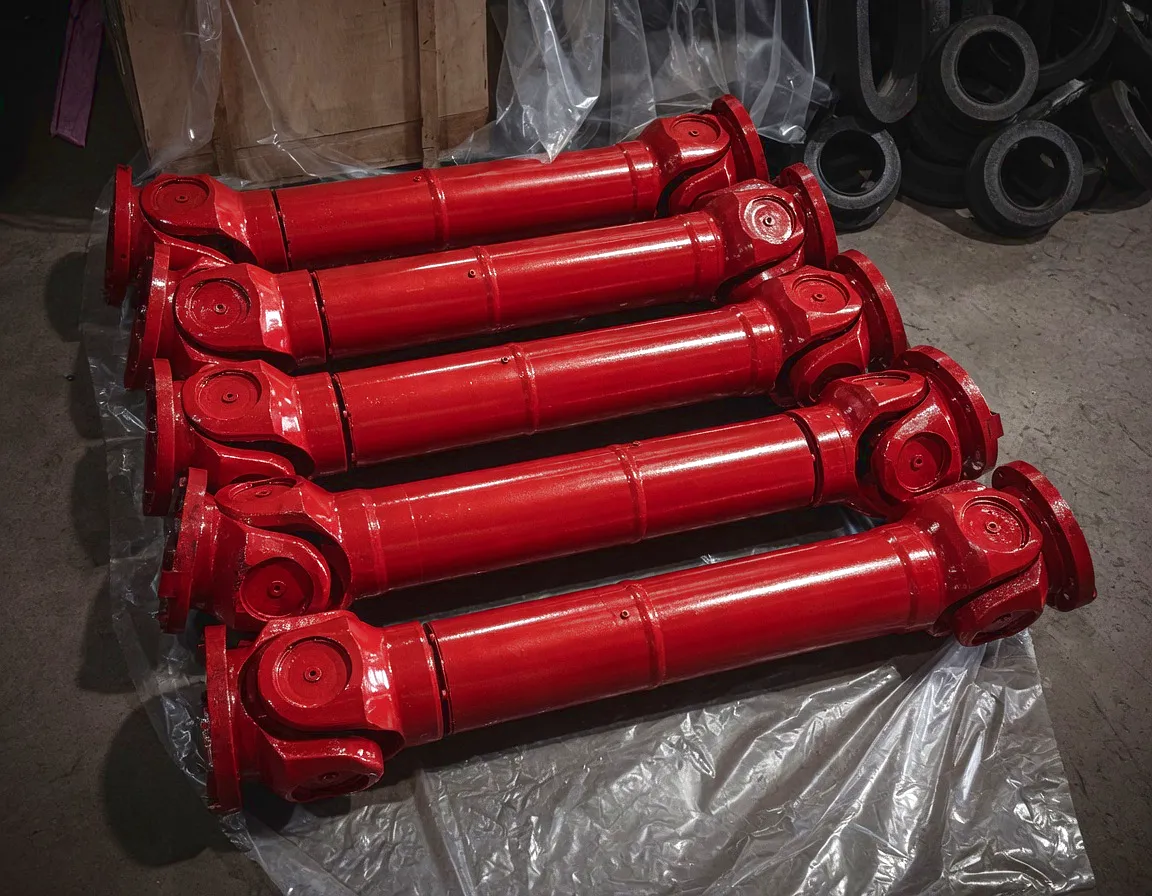
Agricultural Cardan Coupling in Action
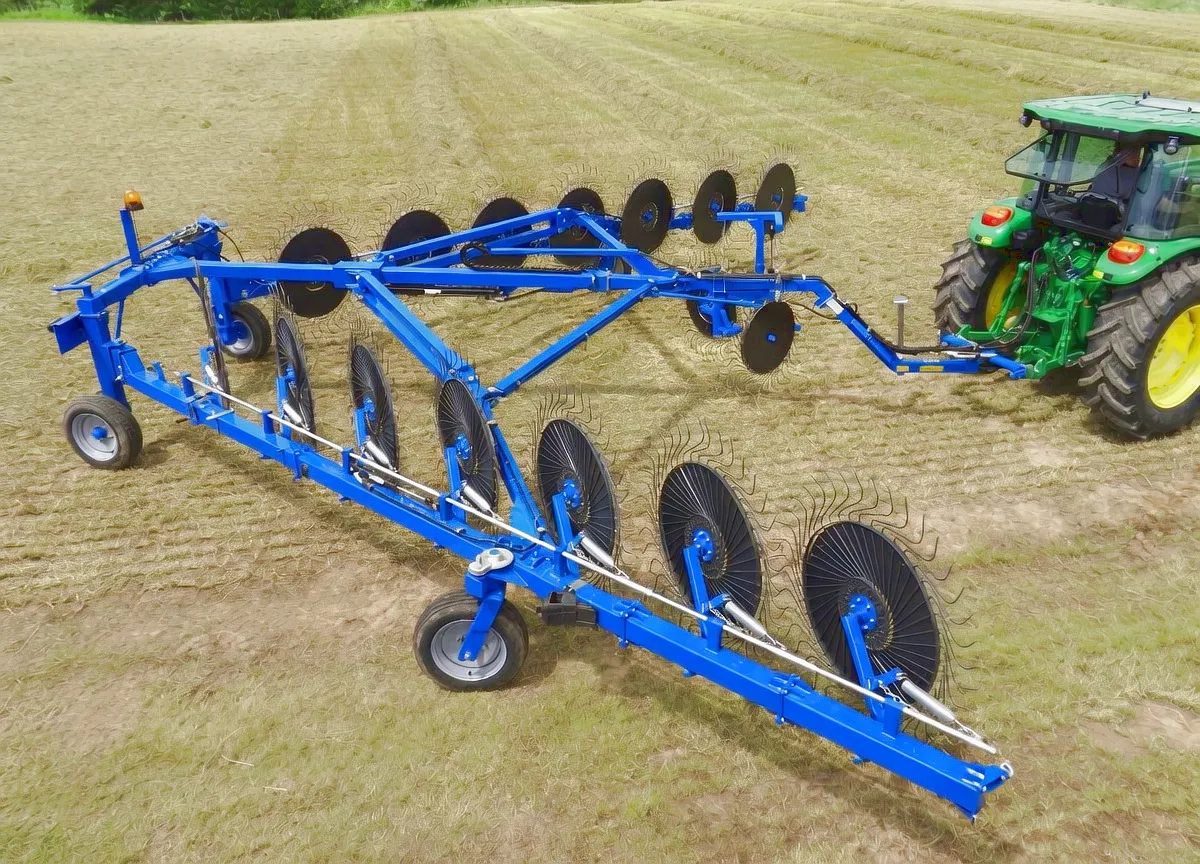
Technical Parameters: Ever Power Agricultural Cardan Coupling
The table below summarises the key specifications of the Ever Power agricultural cardan coupling series most commonly used on hay rakes and similar tractor-driven implements in the UK market. All parameters are verified at our manufacturing facility and comply with ISO 5673 (agricultural machinery — PTO drive shafts) and EN 12965 standards.
* All torque values refer to nominal continuous ratings. Peak/shock torque capacity is typically 3× nominal. Custom lengths, spline profiles, and overload clutch settings available on request.
Materials, Construction & Why They Matter on British Farms
The construction quality of a cardan coupling determines not just how long it lasts, but how safely and efficiently it operates under the wet, muddy, and abrasive conditions found on UK grassland farms. Ever Power uses 42CrMo4 chromium-molybdenum alloy steel for the cross journal (the spider) in all heavy-duty agricultural series. This grade offers a good combination of tensile strength (900–1100 MPa), toughness, and resistance to fatigue cracking — a crucial property when the cross journal is subjected to millions of bending cycles over a season.
The sliding telescopic section — which allows the driveshaft to extend and retract as the tractor pitches relative to the implement — uses case-hardened splined tube sections. In the agricultural environment, this section is constantly exposed to grit, grass juice, and moisture. A cardan coupling without an adequate grease nipple on the telescopic section, combined with a well-fitted plastic guard, will corrode and seize within a single season in the Welsh uplands or the Somerset Levels where rainfall is high.
All Ever Power agricultural PTO driveshafts come supplied with CE-marked plastic safety guards as standard — not optional. This is a legal requirement under UK PUWER regulations (Provision and Use of Work Equipment Regulations 1998) and the Agriculture (Tractor Cabs) Act framework for machinery guarding. The guard profile is designed to prevent entanglement while allowing easy removal for maintenance.
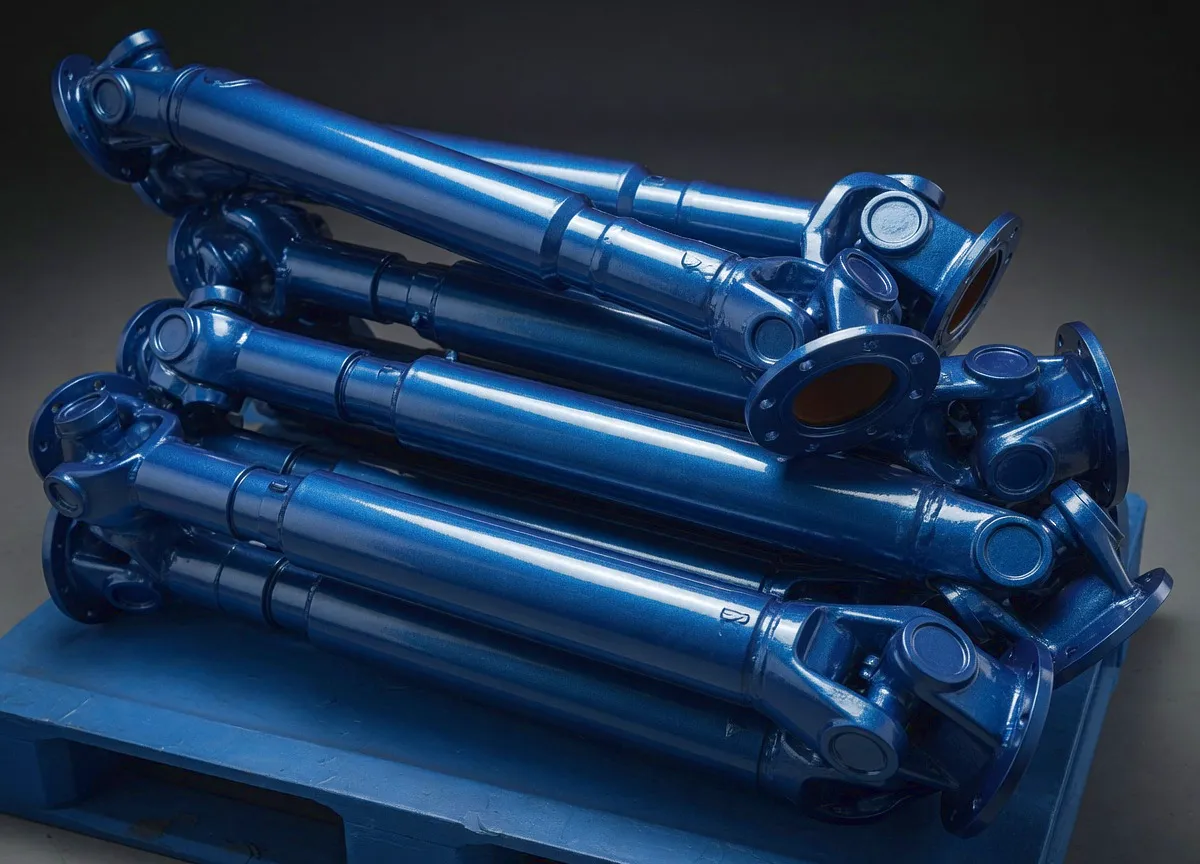
Cross Journal
42CrMo4 alloy steel, induction hardened to HRC 58–62 on bearing journals
Yokes
Drop-forged alloy steel, phosphated and painted for corrosion resistance
Bearing Cups
Needle roller bearings, pre-greased, with integral grease nipple fittings
Guard System
HDPE or PP co-moulded guard, CE-marked, compliant with UK PUWER
Application Scenes: Where British Farmers Use Agricultural Cardan Couplings
The hay rake is the headline application, but the agricultural cardan coupling is a universal component that appears across dozens of farm implement types used throughout England, Scotland, and Wales. Here is a structured overview of the primary application categories.
Hay Rake & Tedder
Rotary hay rakes and tedders are the primary application, operating at 540 RPM with frequent shock loads from tine-ground contact. Wide-angle joints essential for headland work. Common across dairy farms in Cheshire, Shropshire, and Somerset.
Mowers & Disc Mowers
Reciprocating bar mowers and drum/disc mowers require high-torque, vibration-resistant cardan couplings. Shock loads are severe when cutting mature grass or dealing with embedded debris. Both 540 and 1000 RPM profiles used depending on implement size.
Fertiliser Spreaders
Twin-disc and spinner spreaders use PTO driveshafts typically rated at 200–600 Nm. Steady-state operation but sensitive to unbalanced loads. Corrosion resistance is paramount given fertiliser dust exposure, particularly in East Anglian arable operations.
Rotavators & Power Harrows
The most demanding PTO application in arable farming. Rotavators encounter stone strikes and hard pan soil that generate peak torques far exceeding nominal values. Only heavy-duty cardan couplings with friction or shear-bolt overload clutches should be used. Common on farms across the East Midlands and Lincolnshire.
Slurry & Irrigation Pumps
Livestock farms — particularly intensive dairy operations in Yorkshire and Lancashire — use PTO-driven slurry pumps and raingun irrigation sets. These demand cardan couplings with excellent sealing and low backlash, as pump start-up loads can be significant in cold winter conditions.
Bale Wrappers & Balers
Round balers and bale wrappers work directly downstream of the hay rake in the forage chain. They require precision-balanced driveshafts with low vibration at 540 RPM to avoid premature wear on the pickup tine mechanism and bale chamber feed rollers.
Why UK Agricultural Engineers Choose Ever Power Cardan Couplings
Choosing the right supplier for agricultural transmission components is not simply a price exercise — it is a decision that affects machine reliability, operator safety, and the total cost of the farming operation over multiple seasons.
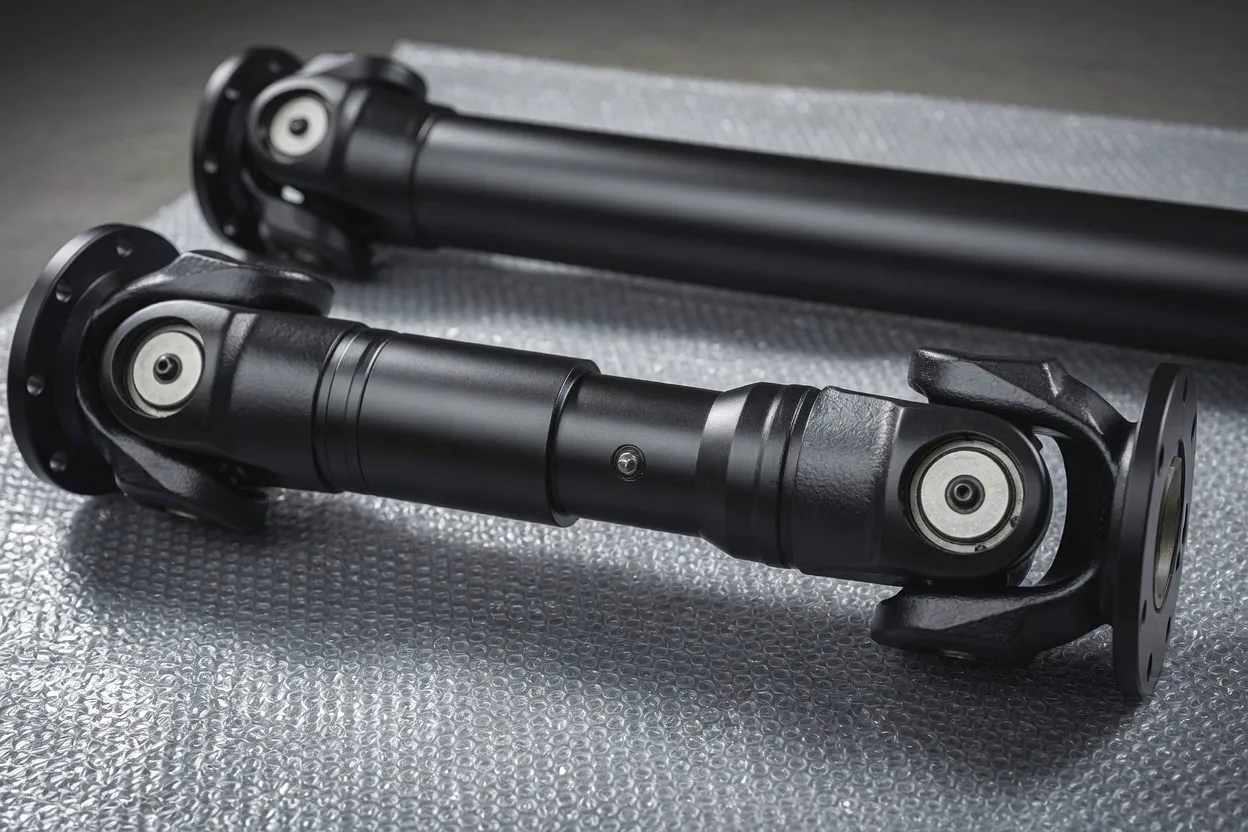
ISO 5673 & EN 12965 Compliance
Every agricultural driveshaft is manufactured and tested against internationally recognised standards. UK buyers can rely on documentation packages suitable for CE compliance and PUWER assessments.
High Shock Load Capacity
EP series couplings are rated for peak torques of 3× nominal, confirmed by in-house fatigue testing. Needle bearing cups with integral seals resist grass juice and fine grit penetration, extending service intervals significantly.
Full Customisation Service
Non-standard shaft lengths, spline profiles, clutch torque settings, guard colours, and special coatings are all available as bespoke orders. Minimum order quantities are flexible for UK dealers and OEM integrators building low volumes.
Direct UK Stock & Fast Despatch
Standard agricultural series are held in stock for rapid fulfilment to UK destinations. During the critical May–July haymaking season, delivery lead times can be kept to 3–5 working days for most standard configurations.
Full Engineering Documentation
Technical data sheets, 3D STEP files, installation guides, and maintenance schedules are provided with every order. Essential for OEM integrators and machinery dealers who need to maintain service records for their farm customers.
Competitive OEM Pricing
Volume pricing structures are available from 50 units per SKU. Long-term supply agreements with annual price stability are offered to UK agricultural machinery manufacturers and regional dealer groups.
Ever Power Manufacturing & Custom Cardan Coupling Solutions
Ever Power operates a dedicated manufacturing facility with over 12,000 m² of production floor space, equipped with CNC turning centres, gear-hobbing machines, induction hardening lines, and precision assembly stations. The company holds ISO 9001 certification and subjects every production batch to hardness testing, dimensional inspection, and dynamic balance verification before despatch.
What genuinely sets Ever Power apart in the agricultural cardan coupling market is the depth of the customisation service. UK dealers and OEM manufacturers who are building or servicing hay rakes, tedders, or other specialist grassland machinery can specify virtually every parameter of a driveshaft assembly:
- Overall extended and collapsed length — to match the exact tractor-to-implement distance for any make and model
- Spline profile on both ends — including non-standard profiles for older European implement gearboxes
- Overload clutch type and torque setting — friction disc, ratchet, or shear bolt, set to the specific implement’s gearbox protection requirement
- Guard colour and profile — including coloured guards to match implement brand colours, a common request from UK OEM manufacturers
- Special coatings — hot-dip galvanising for high-moisture coastal farm environments, or epoxy powder coat for extended corrosion resistance
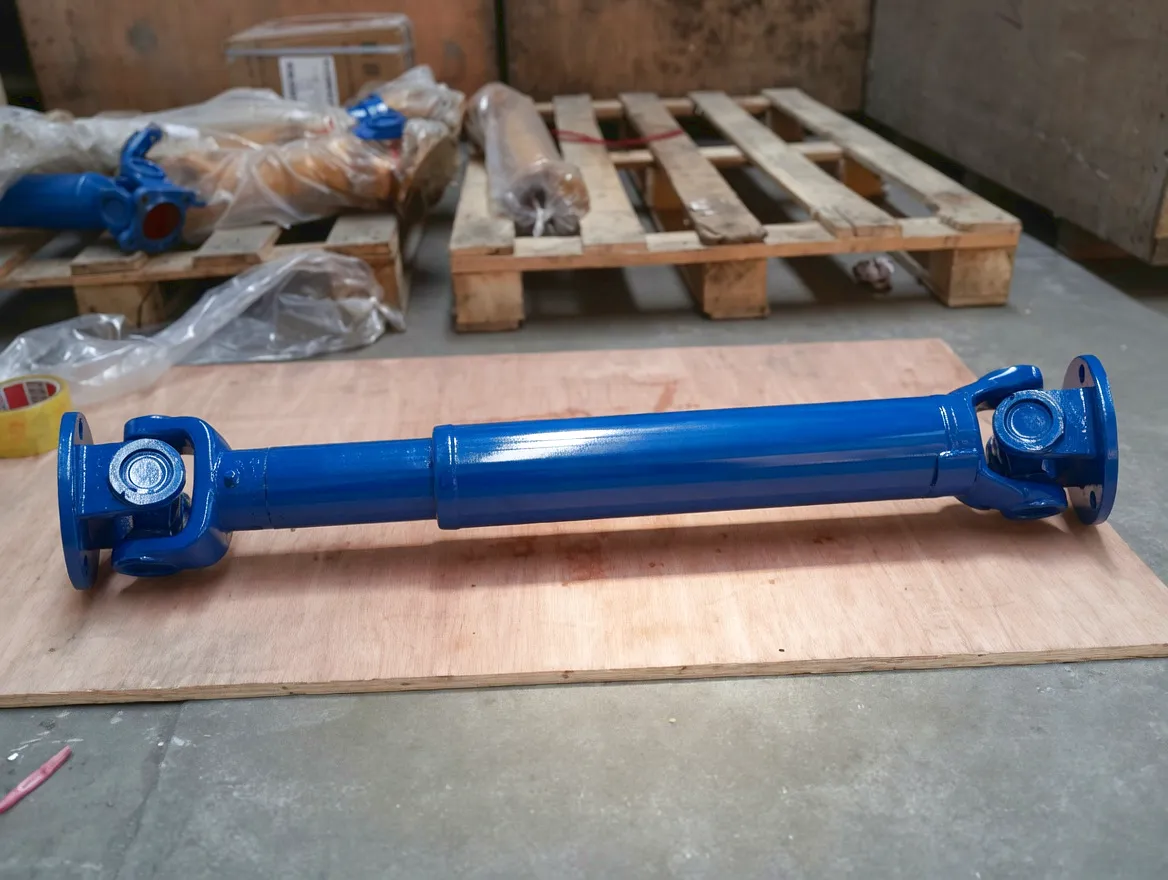
Custom Order Lead Times
3–5 days
7–14 days
15–25 days
20–30 days
Selecting the Right Coupling Length
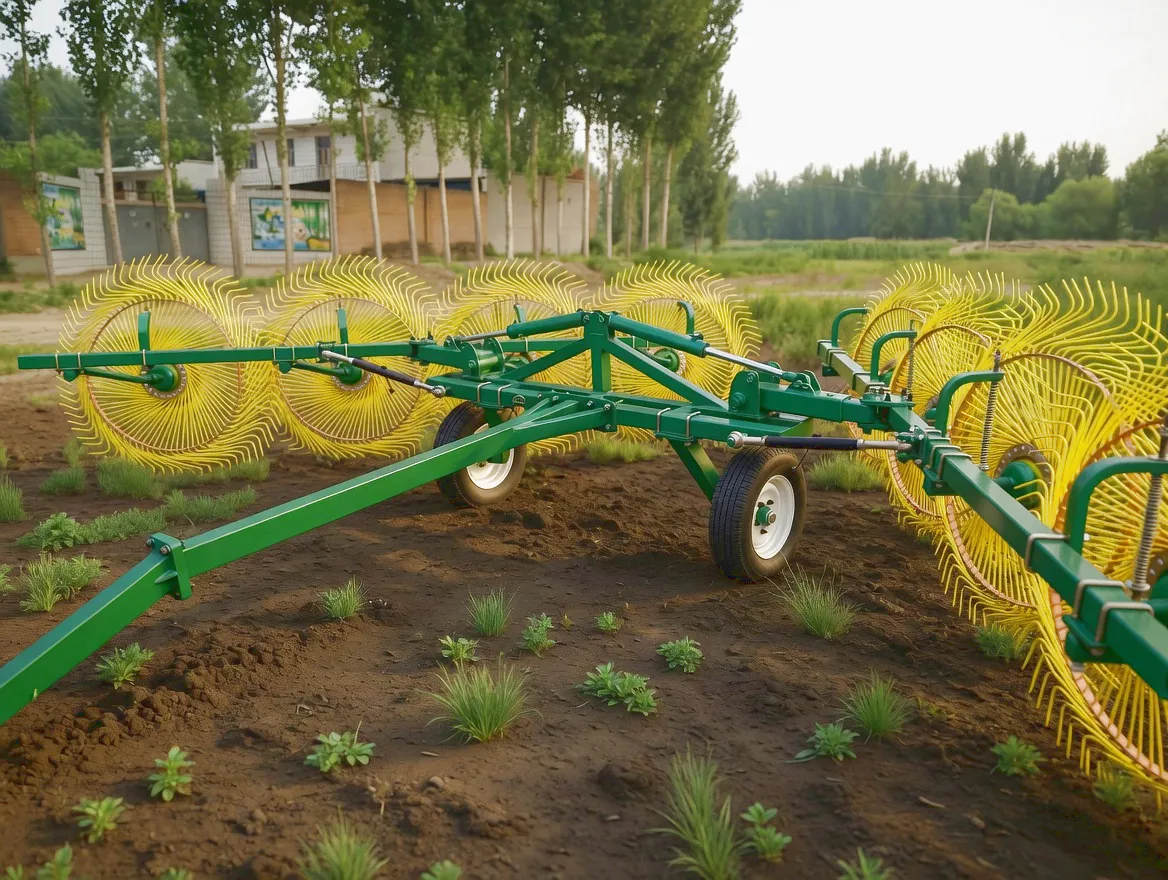 Getting the collapsed and extended length right is one of the most common sources of field failures. A driveshaft that is too short will bottom out on the telescopic section during implement drop, stripping the splines. Too long and the joint will be over-extended, reducing torque capacity and accelerating wear on the bearing cups. The rule of thumb used by experienced agricultural engineers is to measure the distance between the tractor PTO stub and the implement input shaft yoke face with the implement in its lowest working position, then add 50 mm for travel allowance. Ever Power’s applications team can verify this calculation from a simple dimension sheet or photograph.
Customer Success: Midlands Hay Contractor Reduces Seasonal Downtime by 60%
The following case study describes a real-world supply scenario in the East Midlands, UK, demonstrating how a move to a properly specified cardan coupling had a measurable impact on farm operational efficiency.
Nottinghamshire, East Midlands, England
Hargreaves Grassland Contracting operates a fleet of four Krone rotary rakes and two Kuhn twin-rotor tedders, serving approximately 35 farm clients across Nottinghamshire and southern Lincolnshire. The business is seasonal but intensely time-pressured: each year, the window for first-cut haymaking sits between late May and early July, and a single breakdown day during that period can cost hundreds of pounds in lost contracts and weather risk.
In the 2022 and 2023 seasons, the business experienced four separate PTO driveshaft failures — all on the same model of mid-market cardan coupling sourced through a local agricultural dealer. Investigation revealed that the friction clutch torque setting on those units was too low for the heavier grassland conditions of the Trent valley, and the cross journal bearings were not adequately sealed against the fine silty soil of the region.
Following a technical consultation with Ever Power’s UK applications team, the contractor switched to the EP-AG2 series with custom-set friction clutches rated at 280 Nm and upgraded sealed needle bearings. Through the 2024 and 2025 seasons — covering over 1,800 hectares of raking — there were zero driveshaft failures. The total cost saving compared to the previous two seasons (including parts, labour, and contract losses) was estimated at £4,200.
Outcome Summary
4
0
1,800+
£4,200
~60%
Two full seasons. Zero driveshaft failures. Over 1,800 hectares of productive raking.
What UK Agricultural Customers Say
“We put these on three tedders before the 2024 season and ran them hard across 600 hectares of Cheshire grassland. Not one issue. The clutch settings were spot-on — never slipped unnecessarily, but saved the gearbox twice when we hit buried debris. Quality is clearly a step above what we were using before.”
Farm Manager, Cheshire, England
“We source PTO driveshafts for about 40 different implement lines and have tried most of the major brands over the years. Ever Power’s agricultural series offers the best combination of build quality and price point we’ve found. The documentation package they include is excellent for CE compliance — saves our engineering team hours.”
Procurement Manager, Agricultural Machinery OEM, Lincolnshire
“Asked for a custom-length EP-HT with a specific spline profile to match an older German hay rake we still run. Ever Power had engineering drawings back to me within 24 hours and samples in 18 working days. The fit was perfect first time. If you need something non-standard and need it done properly, these are the people to call.”
Agricultural Engineer, Perthshire, Scotland
Maintenance & Inspection: Keeping Your Agricultural Driveshaft in Service
Even the best-quality cardan coupling will fail prematurely if routine maintenance is neglected. The operating environment on a UK farm — damp grass, silty soil, stone strikes, storage in open Dutch barns over winter — is genuinely harsh, and a maintenance schedule that takes no more than 20 minutes per unit at the start and end of the season will protect a significant capital investment.
One point that experienced agricultural engineers emphasise repeatedly: a kardaanikytkentä that rattles or vibrates during use is not a minor nuisance — it is a warning sign. Vibration in a PTO driveshaft typically indicates worn cross journal bearings, a bent telescopic tube (from a ground strike), or an incorrectly assembled guard chain. Left unaddressed, vibration accelerates wear exponentially and will eventually cause the driveshaft to disintegrate at speed — a significant safety hazard. The cost of replacing a worn cross journal kit (typically £15–35) is trivial compared to the cost of a failed gearbox, a broken implement frame, or a personal injury claim under UK agricultural safety legislation.
Need a Cardan Coupling for Your Hay Rake or PTO Application?
Send us your application details — implement type, tractor PTO speed, working angle, and required shaft length — and our engineers will recommend the correct Ever Power series within one working day.
Frequently Asked Questions
Speakable + FAQPage Schema structured content below.
Ever Power | Agricultural Cardan Coupling Specialists
Supplying UK farms, OEM manufacturers, and agricultural dealers | England · Scotland · Wales
edit by gzl