
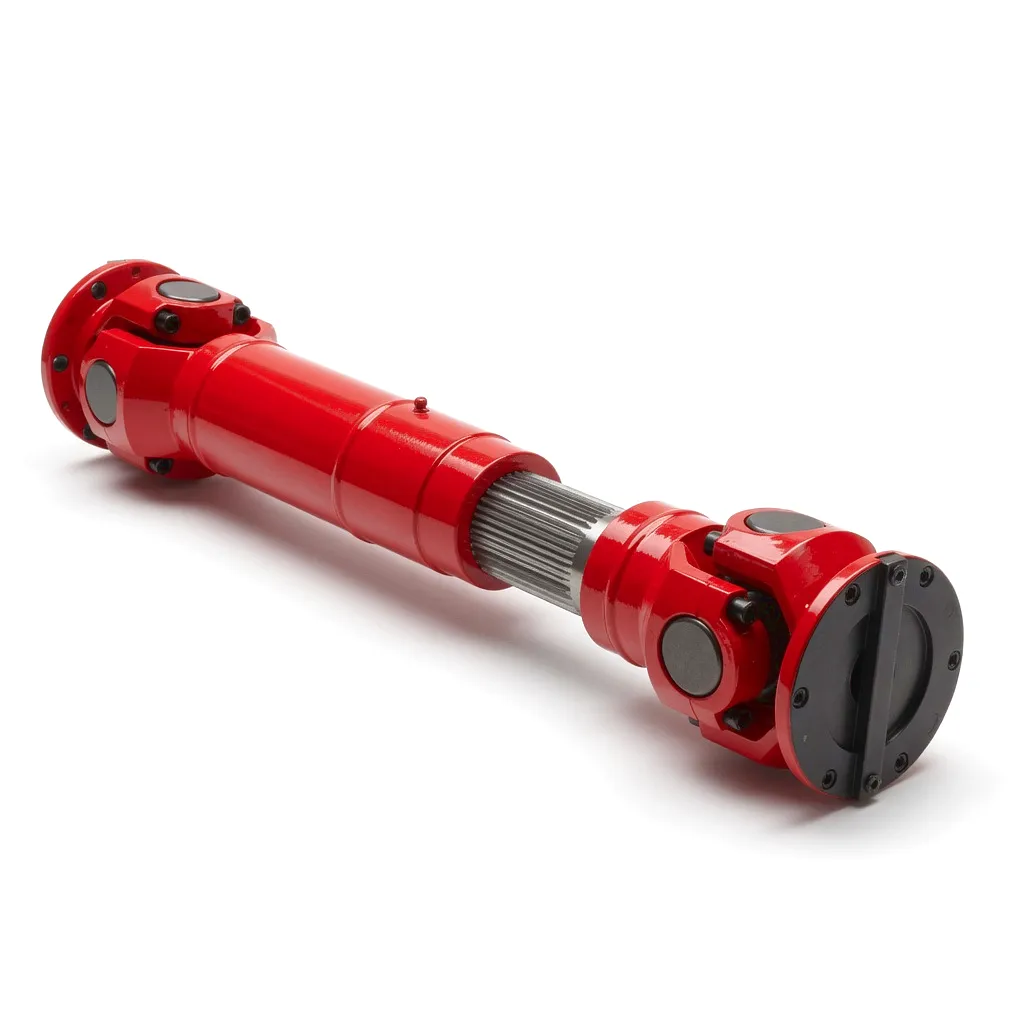
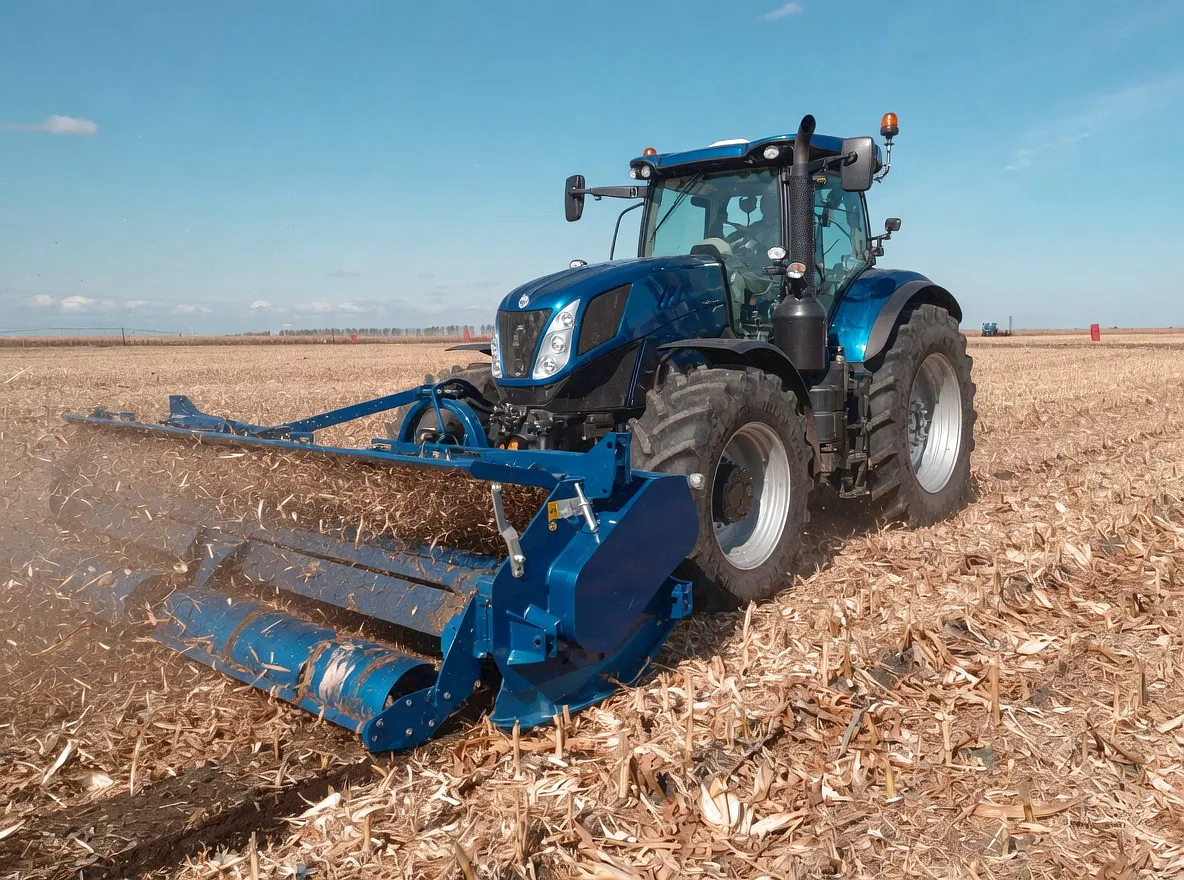
Straw returning — the mechanical process of shredding, chopping, and incorporating crop residue directly back into the soil — sits at an awkward intersection of agronomic benefit and engineering punishment. The practice is endorsed across the UK’s arable farming sector as a way to improve soil organic matter, reduce burning, and comply with environmental directives. Yet the machines that do this work operate in conditions that would embarrass most industrial drivetrains: sudden load spikes when a rotor blade strikes a dense patch, hard debris hidden under the mat, variable ground speeds, and extended shifts that last from harvest through late autumn. The coupling between the tractor PTO and the working shaft is not a minor accessory — it is, in many ways, the most critical single component in the entire driveline.
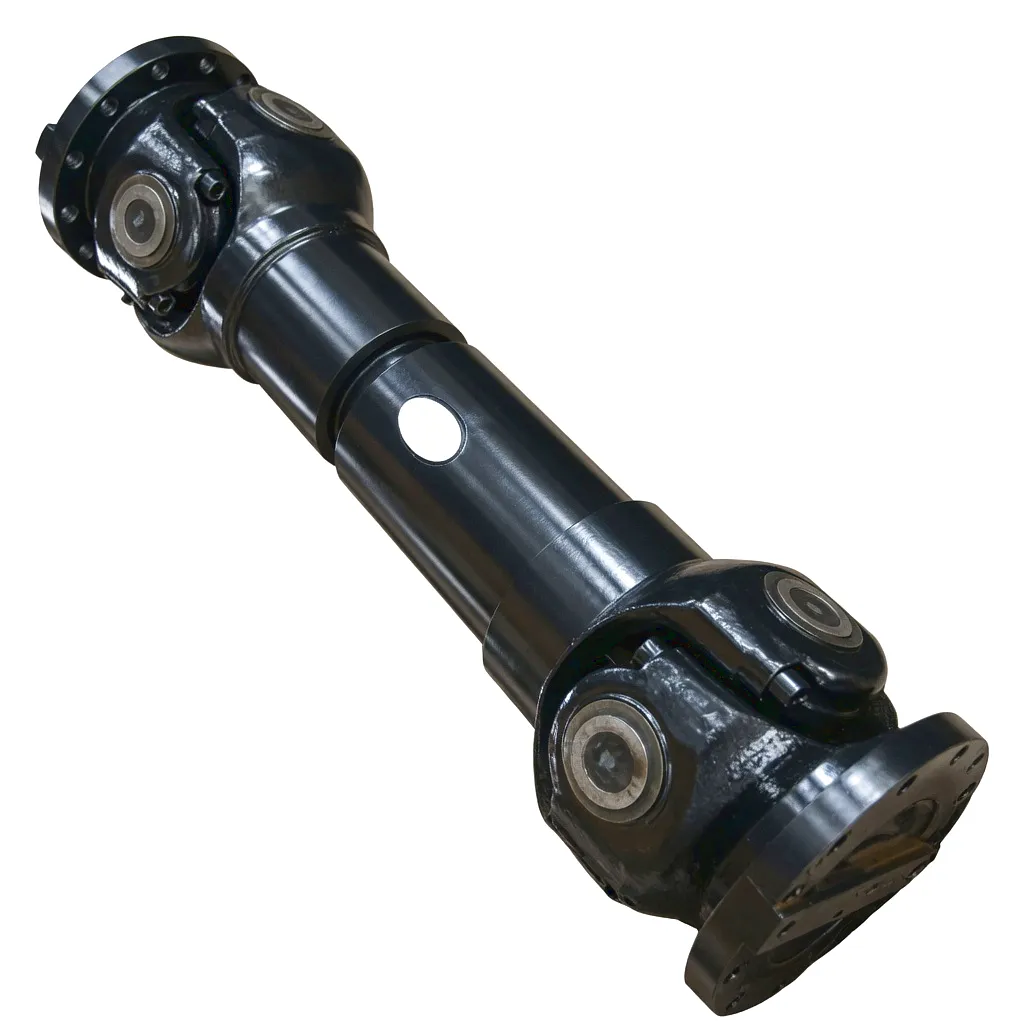
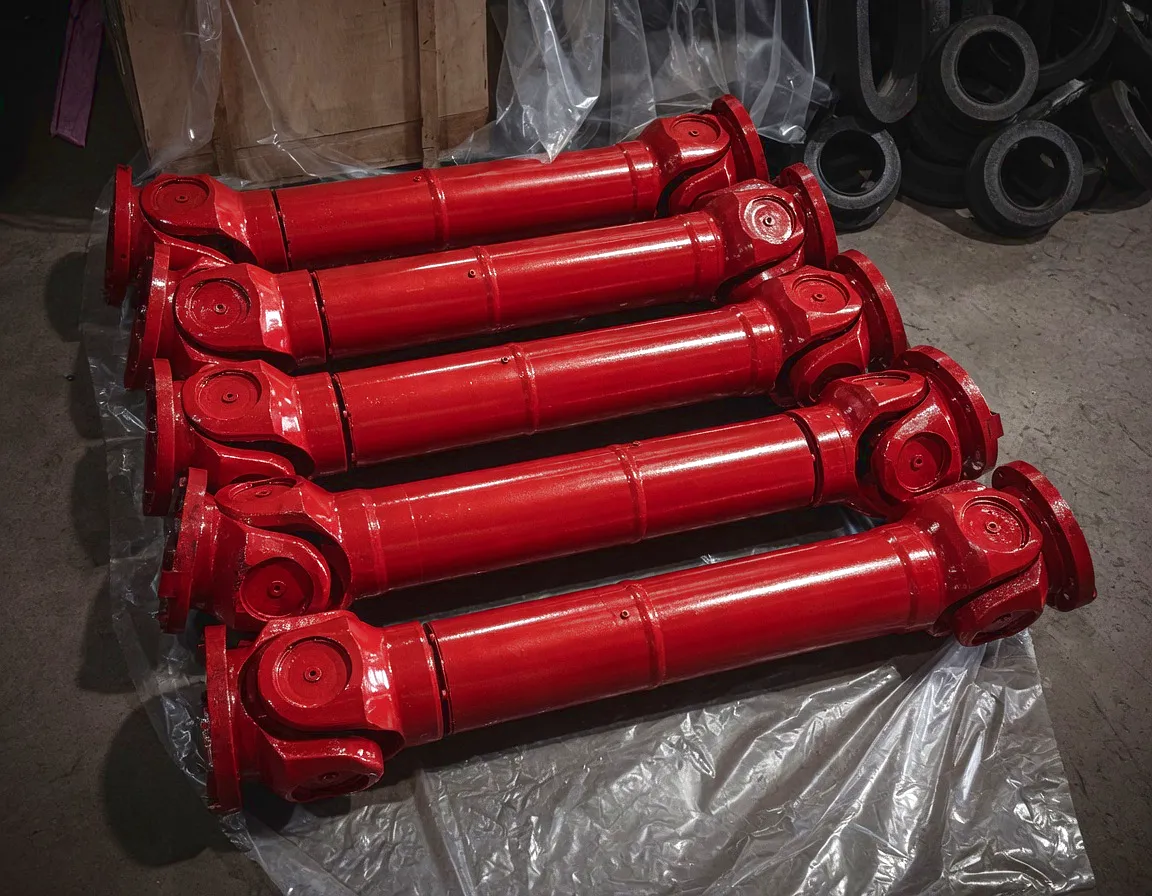 A standard universal joint shaft is often specified on entry-level or repurposed machines, and it typically lasts one to two seasons before fatigue cracks appear in the yoke welds or the cross-journal bearings develop perceptible play. The reason is straightforward: those components are rated for smooth, continuous torque — not for the millisecond-scale torque transients that a straw chopper generates every time its rotor blade meets solid resistance. A properly specified cardan coupling for this application is a fundamentally different product. It incorporates forged steel yokes, needle-roller cross journals rated for shock loads, a telescoping shaft section to accommodate the tractor’s pitch movement, and — critically — an integrated torque-limiting mechanism sized well above the values you might expect from the nameplate power of the tractor.
Why Impact Torque — Not Rated Power — Defines the Engineering Challenge
Peak vs. Continuous Torque
A 100 kW tractor at 540 rpm PTO delivers roughly 1,770 Nm of continuous torque. But when a blade strikes a root ball or a wedge of compacted straw, instantaneous torque can spike to 6× or even 8× that figure within a few milliseconds. No continuous-duty coupling rating protects against this — you need a dynamic shock-load rating and a torque limiter calibrated to fire before the shaft fails.
Angular Misalignment
A three-point linkage machine working in a ploughed field pitches, rolls, and yaws constantly. The operating angle between the tractor PTO axis and the machine input shaft shifts from near-zero on flat headlands to 15° or beyond on steep ground. A cardan coupling handles this gracefully; a rigid or elastomeric coupling would either bind or wear catastrophically within days.
Telescoping Under Load
As the linkage rises and falls, the effective length of the PTO shaft changes. Splined telescoping sections must slide freely even when carrying high torque — and they must do so without backlash that would amplify torsional shock. The internal profile geometry and lubrication design of the sliding section matters enormously and is rarely given the attention it deserves in budget-spec shafts.
Technical Performance Parameters
The figures below represent our standard heavy-duty series for straw returning and crop residue management applications. Custom configurations are available — speak with our engineering team for matched specifications.
| Parameter | Standard Series | Heavy Impact Series | Custom / OEM |
|---|---|---|---|
| Rated Continuous Torque (Nm) | 500 – 2,500 | 2,500 – 8,000 | Up to 20,000+ |
| Peak Shock Torque Capacity (×rated) | 2.5× | 4× – 6× | Per specification |
| Operating Speed Range (rpm) | 200 – 1,000 | 300 – 1,500 | Up to 2,500 |
| Max Operating Angle (°) | 15° | 25° (W-joint) | Per geometry |
| Torque Limiter Type | Friction disc | Ratchet / Shear bolt | Ball detent / Hydraulic |
| Telescoping Stroke (mm) | 100 – 250 | 150 – 400 | Custom |
| Yoke Material | Cast ductile iron | Forged alloy steel | Stainless / Billet |
| Cross Journal Bearing | Standard needle roller | Heavy-duty caged needle | Full-complement / Crowned |
| PTO Interface Standard | ISO 500 (6-spline) | ISO 500 / 1000 series | ASAE / DIN / Custom |
How a Cardan Coupling Works Inside a Straw Returning Machine
The operating principle is elegant in concept but demanding in execution. At its core, a cardan (universal) coupling transmits rotational torque between two shafts whose axes are not aligned — and, crucially, whose misalignment changes dynamically during operation. It does this through a cross-shaped journal piece — the spider — whose four trunnions engage bearing cups mounted in opposing yokes. Each pair of opposite trunnions defines a pivot axis; the two pivot axes are mutually perpendicular. This geometry allows the input yoke to rotate freely relative to the output yoke across a range of angles.
In a straw returning application, the input yoke connects to the tractor’s PTO shaft via a splined sleeve that conforms to the ISO 500 or 1000 series standard — the same standard used on virtually every farm tractor sold in the United Kingdom for the past five decades. The output yoke connects, through the telescoping section, to the machine’s input gearbox. That gearbox typically steps up the speed to drive the chopper rotor at several hundred to over a thousand rpm, depending on the design.
OPERATING PRINCIPLE
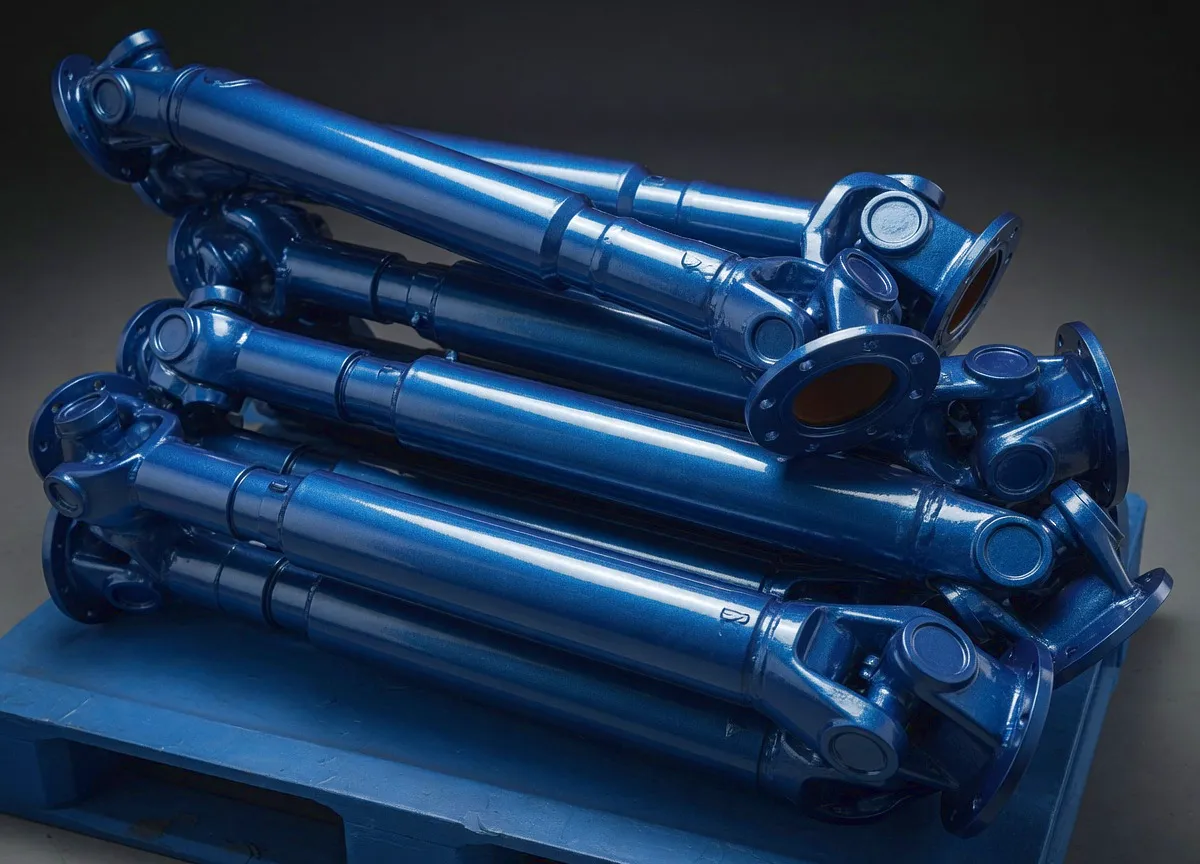
Two universal joints in series, phased correctly, cancel the velocity variation inherent in a single Hooke’s joint — delivering smooth, constant-velocity output regardless of operating angle. This double-joint (W-configuration) design is standard on all our agricultural PTO shafts above 15° working angle.
Application Scenarios Across UK Arable Operations

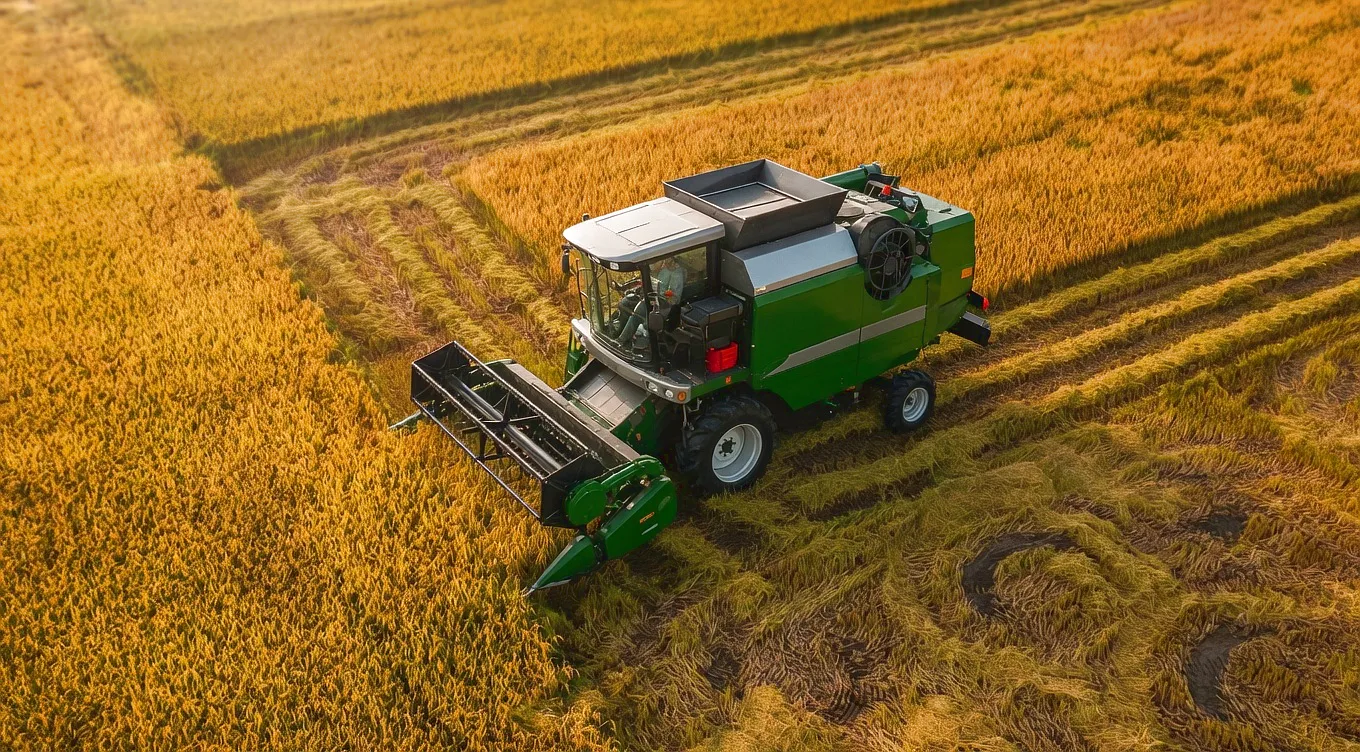
While the primary focus of this article is straw returning machines, the engineering lessons apply across a family of related tasks common on British arable farms. In every case, the defining challenge is the same: the machine must be capable of absorbing severe, unpredictable mechanical shock without damage to itself, the tractor, or the operator’s schedule. A correctly specified cardan coupling is the single most effective way to manage that challenge within the driveline.
Straw Chopping Behind Combine
A combine-mounted straw chopper operates at high rotor speed and must process the full crop width without reducing combine capacity. The cardan coupling must handle output speed variations as the combine throttles during headland turns, while still protecting the rotor assembly from stone strikes common in chalk and flint soils across East Anglia and the Yorkshire Wolds.
Dedicated Straw Returning Units
Three-point linkage or trailed straw returning machines used in second-pass operations face the steepest misalignment angles, because the operator must often lift the machine on headlands and immediately lower it into work — creating rapid changes in PTO angle. The telescoping shaft section must accommodate these changes while still transmitting full working torque without stick-slip or vibration.
Mulching and Vine Residue
Though less common in the UK than in southern Europe, mulching machines for orchards and soft-fruit operations increasingly require cardan couplings because they must operate under tight inter-row clearance constraints — meaning operating angles can exceed 20°. A constant-velocity double-joint configuration is often mandatory here, and the torque limiter must be sized for the very high inertia of the heavy flail rotor.
Cover Crop Termination
As UK farmers respond to Sustainable Farming Incentive (SFI) scheme requirements, cover crop use has expanded dramatically. Mechanical termination — whether by flail mowing or rotary chopping — subjects the PTO drivetrain to dense, wet biomass that builds up unpredictably. The torque limiter on a well-specified cardan coupling prevents the overload events that kill gearbox bearings when wet cover crop boluses jam the rotor.
Seven Reasons UK Machinery Builders Specify Our Cardan Couplings
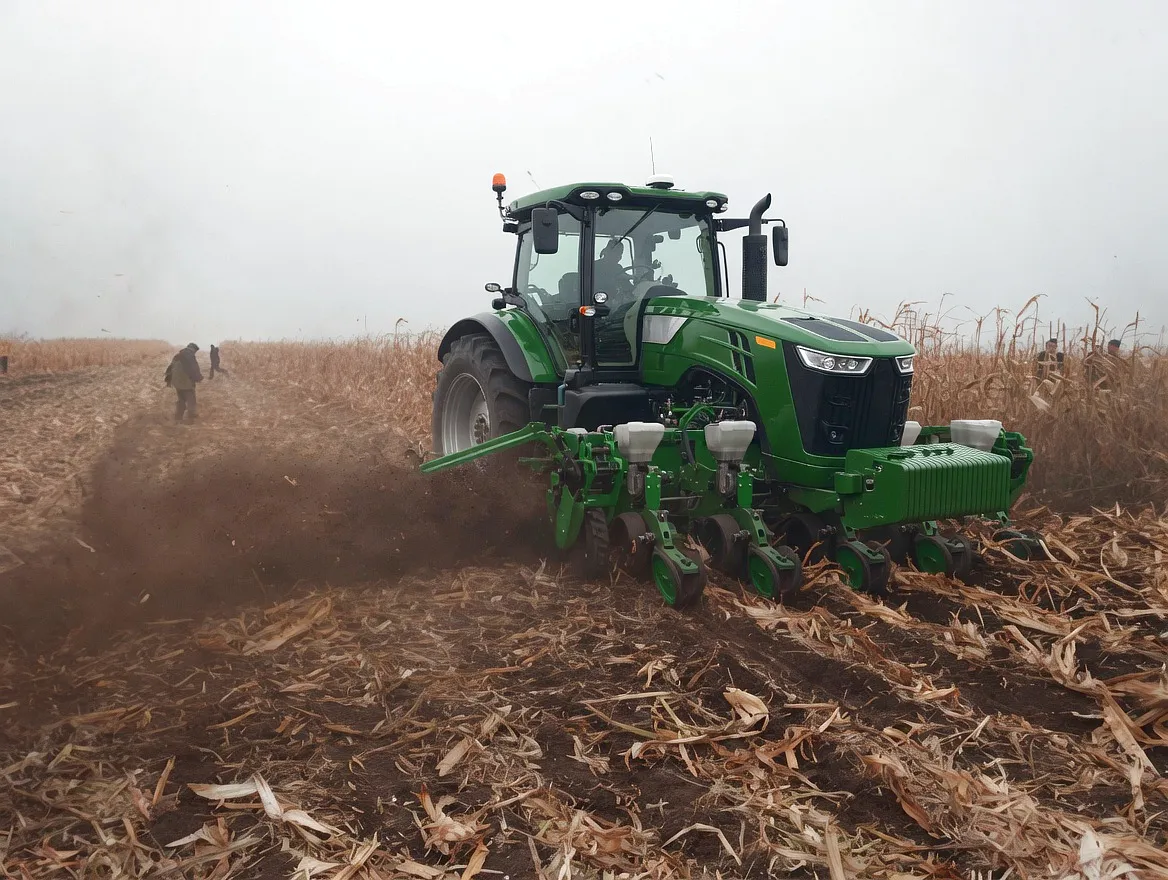
Forged — Not Cast — Yoke Bodies
Every yoke in our heavy-duty series is drop-forged from alloy steel and heat-treated to precise hardness bands. Forging aligns the grain structure of the metal, producing a component that can withstand shock loads a cast equivalent simply cannot. When a straw chopper hits a hidden rock at 1,000 rpm, the difference between forged and cast is not academic.
Oversized Torque Limiter as Standard
Our straw-returning-specific cardan coupling variants ship with a torque limiter rated at a minimum 3× the machine’s continuous torque. This is not the minimum — it is our standard. Competitors often supply limiters set to 1.5× to 2×, which trip on normal working loads and require constant readjustment. Our limiters engage only when there is a genuine overload event.
Sealed-for-Life Cross Journal Bearings
Agricultural environments are brutal for bearing seals — mud, chaff, water, and fertiliser residues attack any gap. Our cross journal assemblies use multi-lip seals with a labyrinth design that excludes contaminants without increasing friction. Internal grease capacity is sized for full-season operation, and the seals are rated to withstand pressure washing.
Polypropylene Safety Guard
All our agricultural cardan couplings ship with a CE-marked, co-rotating polypropylene safety guard that conforms to EN ISO 4254-1. The guard is designed not to create pinch points when the joint operates at angle, and the cone sections are replaceable independently — a small detail that saves considerable cost over a working life of several seasons.
Matched Balancing for High-Speed Versions
Where machine manufacturers specify 1,000 rpm PTO or higher output speeds, our shafts are dynamically balanced to ISO 1940-1 Grade G6.3 as standard, with G2.5 available on request. Unbalanced shafts at high speed introduce bearing loads that dwarf the operating loads — a hidden cause of premature gearbox bearing failure that we take seriously.
Extensive Interchangeable Spline Catalogue
Replacing a worn cardan coupling on a machine should not require a specialist fitter. We stock yoke adaptors for every common tractor PTO profile — 1-3/8″ 6-spline, 1-3/8″ 21-spline, 1-3/4″ 20-spline, and square drive versions — so that OEM and aftermarket fitment is straightforward. Our UK distribution partners hold next-day stock on all standard series.
Full Traceability and Material Certification
Every batch of forged yokes and cross journals is accompanied by material test certificates (EN 10204 Type 3.1) traceable to the melt. Hardness readings, tensile test results, and dimensional inspection reports are available for all OEM and critical-application orders. This level of documentation is increasingly expected by UK machinery manufacturers who face stringent CE marking obligations under PSSR 2000 and the Supply of Machinery (Safety) Regulations 2008.
Customer Success: Lincolnshire Contracting Operation
“We’ve used a lot of cardan shafts over the years, and the quality difference with Ever Power was noticeable straight away. The yokes are noticeably heavier, the guard fits properly, and the torque limiter actually behaves the way it should — it doesn’t rattle around in normal work. The cross journals were still tight after a full season in heavy OSR ground. Ordering was straightforward and delivery was faster than expected from a mainland European supplier.”
James Whitfield
Operations Manager, Greenfield Agricultural Contracting · Boston, Lincolnshire
“We manufacture a mid-size straw returning machine for the UK and Continental markets. The OEM shaft supplier we were using could not meet our torque limiter specification consistently — we kept getting shafts where the trip torque was out of tolerance. Ever Power’s engineering team understood immediately what we needed, configured a ratchet limiter to our exact settings, and provided a full 3.1 material certificate for the yoke forgings. Lead time was competitive and the documentation was impeccable. They are now our primary cardan coupling supplier.”
Richard Barrow
Technical Director, Barrow Farm Machinery Ltd · Driffield, East Yorkshire
“We run a 900-hectare mixed arable and livestock unit in Shropshire, and we do our own straw management with a dedicated returning unit. I’d been through two aftermarket PTO shafts in three seasons when a machinery dealer recommended Ever Power. The price was a bit higher, but I’ve now done 400 hours without touching the cross journals or the limiter. The sealed bearings handle our pressure washing without any issues. For anyone who is genuinely working in demanding conditions, this is money well spent.”
Helen Cartwright
Farm Manager, Cartwright Farms · Shrewsbury, Shropshire
Ever Power Custom Engineering: Beyond the Catalogue
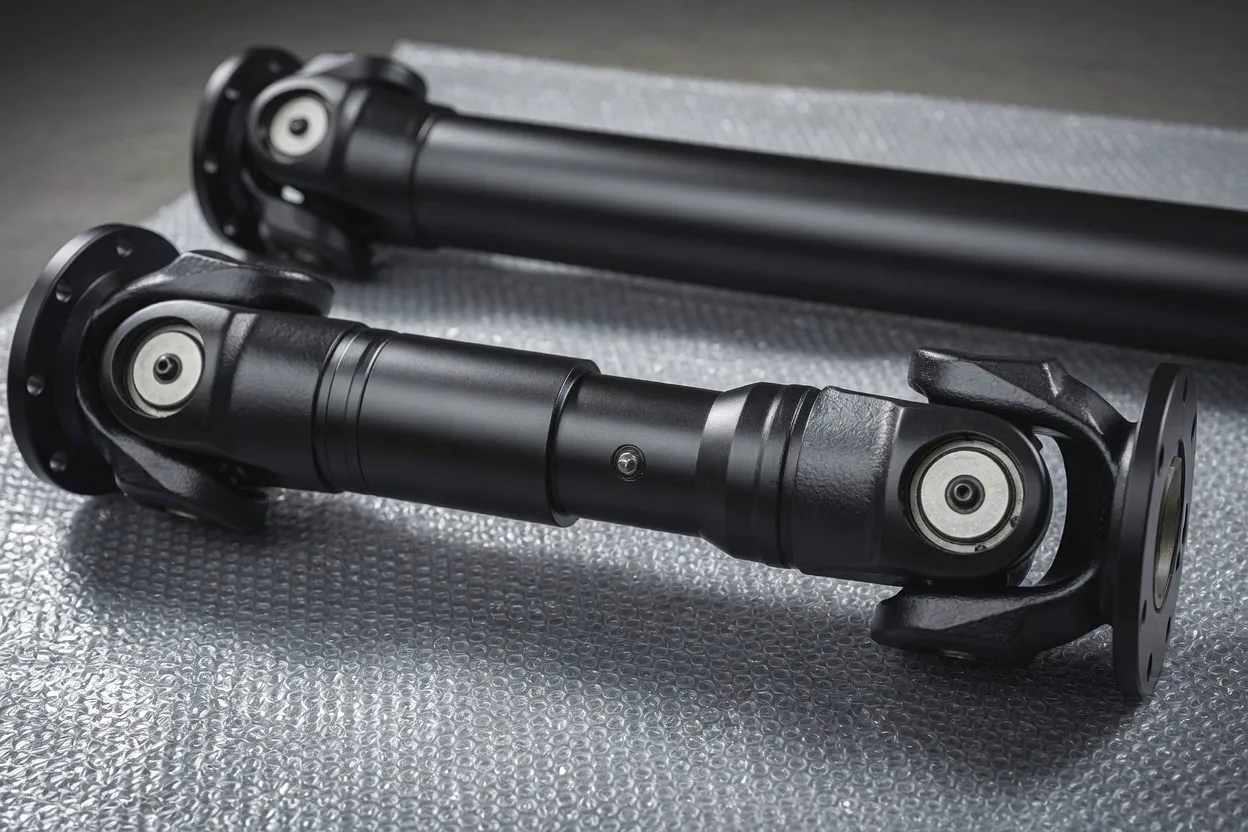
Standard catalogue products solve the majority of agricultural drivetrain requirements. However, straw returning machines are built in enormous variety — from compact 3-metre trailed units powered by 90 kW tractors, through to large-scale self-propelled residue management systems where the power unit is a dedicated diesel engine. No single off-the-shelf cardan coupling suits every application, and a mismatched component is often more dangerous than a cheap one, because it gives a false sense of engineering adequacy.
Our manufacturing facility operates a comprehensive suite of precision machining, heat treatment, and assembly capabilities that allows us to produce fully bespoke cardan coupling assemblies for OEM customers from initial design consultation through to series production. Custom tube diameters, non-standard spline profiles, specific torque limiter trip values, integrated overrunning clutch sections, stainless steel components for high-corrosion environments, and special-length telescoping sections are all within our standard customisation portfolio.
✎ OEM Design Service
Custom shaft geometry, yoke interfaces, and limiter settings matched to your machine’s exact inertia and load profile. FEA reports and 3D models available.
⚙ Rapid Prototype Programme
Prototype cardan coupling assemblies for new machine development available within 4–6 weeks. Includes dimensional inspection report and first-article certification.
📦 UK Distribution & Aftermarket
Standard series stocked in the UK for next-day delivery. Aftermarket cross journal kits, limiter springs, and guard sections available separately to minimise replacement cost.
📋 3.1 Certificationh4>
Full EN 10204 Type 3.1 material certificates traceable to the source melt, available for all OEM and safety-critical application orders. No extra lead time required.
Choosing the Right Torque Limiter Type for Straw Returning
Not every torque limiter type suits every application. Here is a practical comparison of the main options used on cardan couplings in straw returning and residue management drivetrains across UK arable farms.
| Limiter Type | Re-engagement | Trip Accuracy | Best For | Limitation |
|---|---|---|---|---|
| Friction Disc | Automatic | ±20–30% | Light-to-medium applications, frequent overloads expected | Slips under high-cycle shock loads; wears and de-calibrates |
| Ratchet / Pawl ✓ Recommended | Auto after clear | ±5–10% | Straw returning, flail mulching — genuine shock protection | Audible click during reset may surprise operator |
| Shear Bolt | Manual (bolt replacement) | ±10–15% | Absolute overload protection, infrequent events | Downtime for reset; bolt grade must be maintained correctly |
| Ball Detent | Automatic | ±3–8% | Precision applications, consistent trip torque over time | Higher cost; requires clean operating environment |
Materials, Construction, and What Actually Fails First
Understanding which components fail first — and why — is the most useful piece of knowledge a purchasing engineer or farm manager can have. In our experience across hundreds of agricultural cardan coupling field failures, the sequence is predictable. The cross journal bearings are almost always the first item to show wear, followed by the splined telescoping section, and finally the yoke welds or the yoke body itself. This sequence tells you exactly where the engineering investment matters most.
Cross journal failure almost always begins with inadequate sealing allowing moisture and abrasive particles to reach the needle rollers. Once contamination penetrates, the rollers skid rather than roll under shock loads, the bearing races develop flats, and the play that develops amplifies every subsequent shock transient. Our multi-lip labyrinth seal design addresses this directly — the primary lip excludes gross contamination, the secondary lip handles pressure washing ingress, and a grease trap between the two maintains a positive pressure barrier that prevents capillary ingress along the trunnion surface.
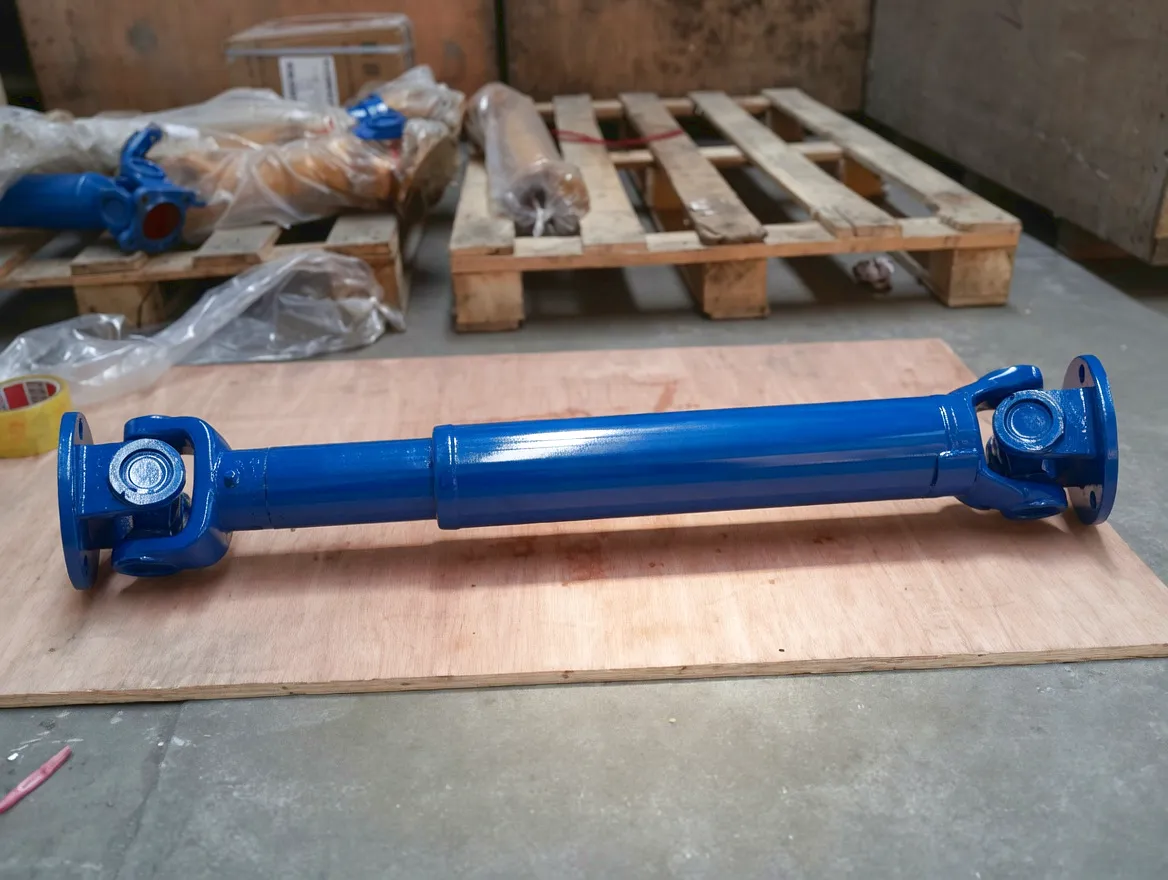
YOKE MATERIAL SPEC
42CrMo4 (EN 1.7225) alloy steel forgings, quenched and tempered to 28–34 HRC. Minimum impact toughness 40 J at -20°C. Surface hardness of trunnion bores: 58–62 HRC by induction hardening. All dimensions machined post heat treatment.
Supplying Agricultural Machinery Builders and Farmers Across the United Kingdom
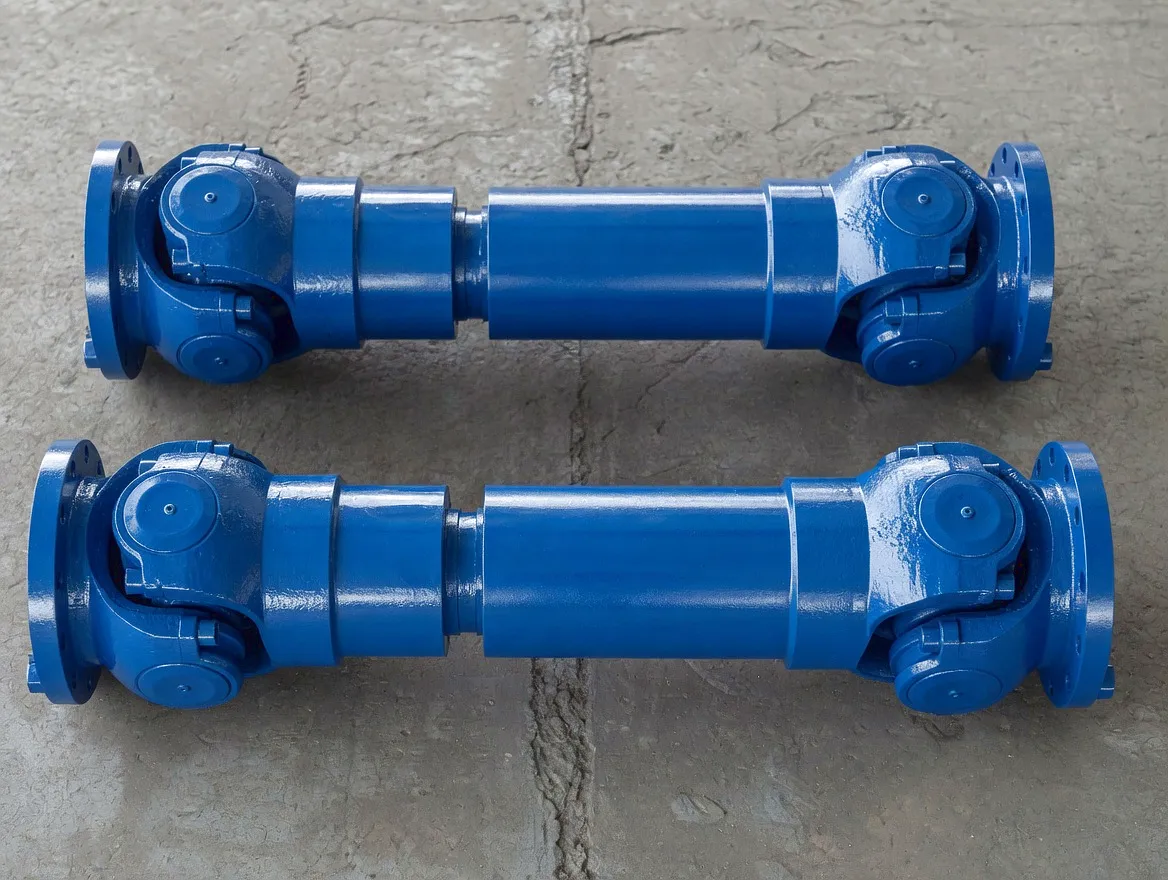 The UK’s arable farming regions each present distinct mechanical challenges for straw returning equipment, and the cardan coupling specification that works well in one region may be suboptimal in another. East Anglian fields — the Fens, the Norfolk and Suffolk clay belt, and the Breckland light soils — generate different working conditions from the heavier soils of the Midlands, the rolling chalk of the South Downs and Wiltshire, or the steep terrain of the Welsh Marches and the Yorkshire Wolds. Flint content, soil structure, typical yield (and therefore straw volume), and the length of the post-harvest working window all influence how hard a straw returning machine’s drivetrain is worked.
We serve machinery dealers, agricultural contractors, farm machinery manufacturers, and direct farm customers throughout England, Scotland, Wales, and Northern Ireland. Our technical team can advise on cardan coupling specification for specific regional conditions — for example, recommending a harder-duty cross journal kit for high-flint-content soils in the Thames Valley, or a larger torque limiter setting for heavy oilseed rape straw volumes common in Lincolnshire and Cambridgeshire. This practical, regionally aware approach to application engineering is something we regard as a genuine differentiator.
East Anglia
Norfolk · Suffolk · Cambs · Essex
Lincolnshire
Fens · Wolds · South Holland
Yorkshire
Wolds · Vale of York · Humber
Midlands
Notts · Leics · Warwicks
Scotland
Angus · Fife · East Lothian