Kardaanikytkentä aurinkovoimalaitoksissa: Luotettavan voimansiirron suunnittelu Ison-Britannian uusiutuvan energian infrastruktuuriin
How precision universal joint shaft couplings are quietly solving one of solar energy’s most persistent mechanical challenges — from tracker drives to inverter systems across British solar farms.
🔩 Drive Shaft Engineering
🇬🇧 UK Solar Industry
📐 Custom Coupling Solutions

Walk across any sizeable solar farm in England, Wales, or Scotland on a windy March morning, and one mechanical reality becomes impossible to ignore: these installations are not static. Tracker-mounted panels pivot continuously, inverter drives spin under load fluctuations, pump systems move cooling fluid under variable thermal conditions, and structural frames flex with thermal expansion. Every single one of these movements demands a torque transmission component that can absorb angular misalignment, handle continuous rotation, and survive decades of outdoor exposure without demanding constant human attention. That component, increasingly, is the cardan coupling.
The UK’s solar capacity surpassed 17 GW by the mid-2020s, with hundreds of utility-scale and commercial rooftop installations scattered from Cornwall to the Highlands. Behind every megawatt of generation sits a complex mechanical ecosystem. Drive shafts, gearboxes, actuators, and motor connections must all work in concert — often in conditions ranging from coastal salt spray to midland ground frost. In this environment, the engineering choice of coupling type is far from trivial. A poor selection leads to premature wear, vibration-induced fatigue, unexpected downtime, and, ultimately, lost generation revenue.
This article examines in depth how cardan couplings — sometimes called universal joint couplings or Hooke’s joint assemblies — are applied across solar power infrastructure, why they outperform alternatives in specific duty cycles, and what UK-based procurement engineers and project developers should consider when specifying them.
The Engineering Principle Behind Cardan Couplings
Understanding how the joint functions — and why it suits solar applications
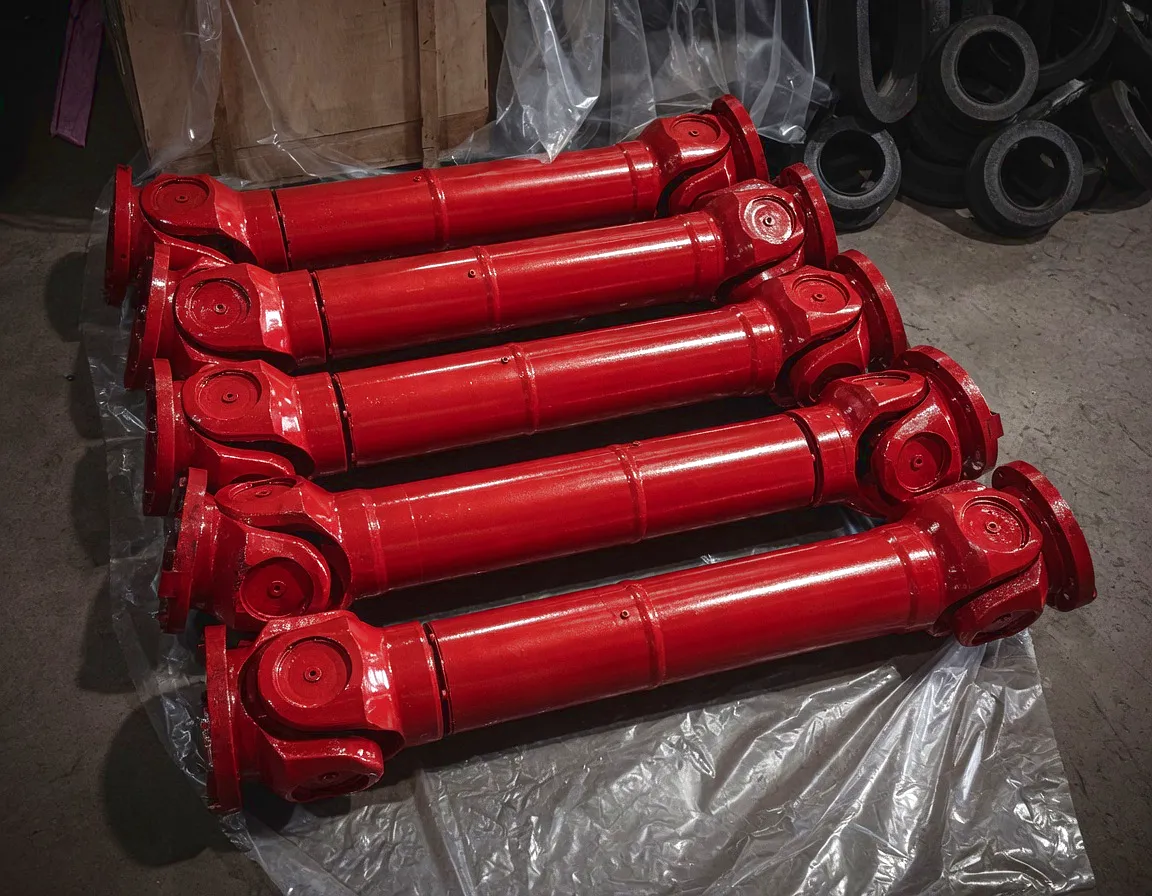
A cardan coupling, at its core, is a mechanical device that transmits rotational motion and torque between two shafts whose centrelines are not aligned — or whose alignment varies during operation. The fundamental mechanism involves a cross-shaped journal (the “spider”) seated in four bearing cups, allowing the connected yokes to pivot freely in two planes simultaneously. Named after the sixteenth-century Italian polymath Gerolamo Cardano, who described its mathematics, the design has remained conceptually unchanged for over four centuries — a testament to its elegance.
In practice, a single-joint cardan coupling introduces a velocity fluctuation when operated at an angle — the output shaft speed oscillates slightly above and below the input speed twice per revolution. This is inherent to the geometry: the angle between the shafts determines the amplitude of this fluctuation. For most solar applications, operating angles are modest (typically under 15°), and the resulting non-uniformity is negligible. Where precision matters — such as in tracking actuator feedback loops — double-joint or constant-velocity variants eliminate this effect entirely by cancelling the fluctuation at the second joint.
The internal bearing cups are press-fitted around the spider trunnions and retained by snap rings or bolted caps depending on torque class. Needle roller bearings — the standard in quality assemblies — distribute load across a large contact area, enabling the joint to carry significant radial and axial forces without excessive stress concentrations. In aggressive outdoor environments, sealed needle bearings with high-temperature grease or, for submerged or wash-down applications, stainless steel variants are preferred. For solar farms in coastal UK locations — think East Anglia’s shoreline installations or exposed hillside sites in Wales — this sealing specification becomes critical to achieving rated service life.
Technical Performance Parameters
Standard cardan coupling specifications for solar power applications
Where Cardan Couplings Work Inside Solar Power Systems
Six distinct application zones across photovoltaic and concentrated solar infrastructure
1. Single-Axis Solar Tracker Drive Shafts
 Single-axis trackers are the workhorses of UK utility-scale solar, tilting panel rows East to West across each day to maximise generation. The drive mechanism typically consists of a central gearbox motor pushing a steel torque tube that runs the entire length of a row — sometimes 50 metres or more. Because the tube is supported on pier-mounted bearings at intervals, cumulative installation tolerances, pier settlement, and seasonal ground movement all create angular offsets between sections.
A cardan coupling inserted at each pier connection accommodates these offsets cleanly, preventing the bending moments that would otherwise be transmitted into the gearbox output shaft and the motor bearing. UK contractors who have specified flanged cardan assemblies between torque tube sections report a measurable reduction in gearbox warranty claims compared with sites using rigid couplings or simple flexible bushings. The energy losses through a well-designed cardan joint operating at 5–8° are essentially negligible — mechanical efficiency exceeds 98% in this range — meaning the tracking accuracy that determines generation output is fully maintained.
2. Dual-Axis Tracker Elevation and Azimuth Drives
High-concentration photovoltaic (HCPV) systems and premium agricultural solar installations in the UK increasingly use dual-axis trackers that follow the sun in both azimuth (compass direction) and elevation (tilt angle). These systems require two independent drive trains intersecting at roughly 90° to each other, typically connected through a turntable or slewing bearing at the base.
Cardan couplings appear in both drive axes, allowing the elevation actuator to remain connected to the panel frame as the azimuth bearing rotates beneath it. Double-joint cardan shafts — essentially two universal joints connected by a telescopic intermediate shaft — are preferred here because they maintain constant angular velocity across compound angle changes. When a UK solar developer needs to mount a heavy panel array on uneven terrain where the pedestal cannot be set precisely vertical, double-joint assemblies absorb the resulting compound misalignment without transmitting bending loads to the slewing ring or gearbox.
3. Solar Thermal and CSP System Mirror Drives
 Concentrated solar power (CSP) installations — parabolic trough and linear Fresnel reflector systems — require the same precision tracking as photovoltaic installations but with significantly higher torque demands, since the reflectors are large, heavy, and must resist wind loading. In a parabolic trough array, each collector module is connected to its neighbours by a drive shaft that runs along the collector row, rotating all reflectors simultaneously.
Heavy-series cardan couplings with 42CrMo steel construction and epoxy-coated surfaces handle the high torque loads while compensating for the thermal expansion differential between the steel receiver tube and the aluminium reflector support structure. For UK CSP pilot installations — several are operating in south-west England — the ability to specify cardan shafts with telescopic sliding splines is particularly valuable: as the receiver tube heats up and elongates, the telescopic section absorbs the linear growth without binding.
4. Inverter Cooling Pump Systems
Large central inverters at utility-scale solar farms generate substantial heat losses and require active liquid cooling to maintain efficiency and service life. The cooling circuit typically includes one or more pump units driven by electric motors, and here the coupling between motor and pump is a frequent maintenance point if not specified correctly.
When a pump is skid-mounted on a separate base from its drive motor — common on UK sites where skid assemblies are shipped pre-built and then set on concrete plinths — alignment between motor and pump shafts is never perfect. Over time, as the plinth settles differentially, alignment worsens. A cardan coupling in this drive train absorbs the angular and parallel offset that inevitably develops, preventing the vibration transmission into pump bearings that causes seal failures and leaks. For inverter cooling systems, even a minor coolant leak can trigger an emergency shutdown, so the coupling selection here has a direct impact on plant availability and revenue.
5. Agrivoltaic and Bifacial Panel Adjustment Systems
Agrivoltaic installations — combining solar generation with active agricultural land use — are growing rapidly across the UK Midlands and East Anglia, where planning authorities increasingly approve dual-use schemes. These sites present unique mechanical challenges: panel support structures must be tall enough for livestock or machinery to pass beneath, meaning longer and more flexible torque tube sections.
The additional span length increases the angular misalignment that cardan couplings must accommodate at each support pier. Furthermore, agrivoltaic sites are sometimes on soft agricultural ground that settles non-uniformly as cattle graze or machinery passes. Project engineers on these sites have found that specifying cardan couplings with higher angular capacity — typically 25° rated units even when nominal operating angles are expected to be 10–12° — provides the headroom needed when ground conditions change seasonally between wet winters and dry summers.
6. Cleaning Robot and Panel Maintenance Systems
 Panel cleaning is increasingly automated on large UK solar farms, with robotic cleaning systems traversing rows on guide rails and deploying rotating brush or water-jet mechanisms. The drive systems within these robots — both for locomotion and for brush rotation — operate in extremely dirty, wet conditions where conventional couplings fail rapidly.
Compact cardan couplings, particularly in stainless steel variants with fully sealed bearings, are used in the brush drive trains of premium cleaning robots. The combination of misalignment tolerance (the robot body flexes as it traverses panel junctions) and resistance to water ingress makes the cardan joint a natural choice. Several UK robotic cleaning equipment manufacturers have standardised on sealed needle-roller cardan joints specifically because the service interval under automatic wash-down conditions can be extended beyond 12 months between inspections — an important operational consideration for remote rural sites.
Why These Couplings Outperform Alternatives in Solar Service
A side-by-side view of where cardan joints deliver measurable advantages
No Rubber Degradation
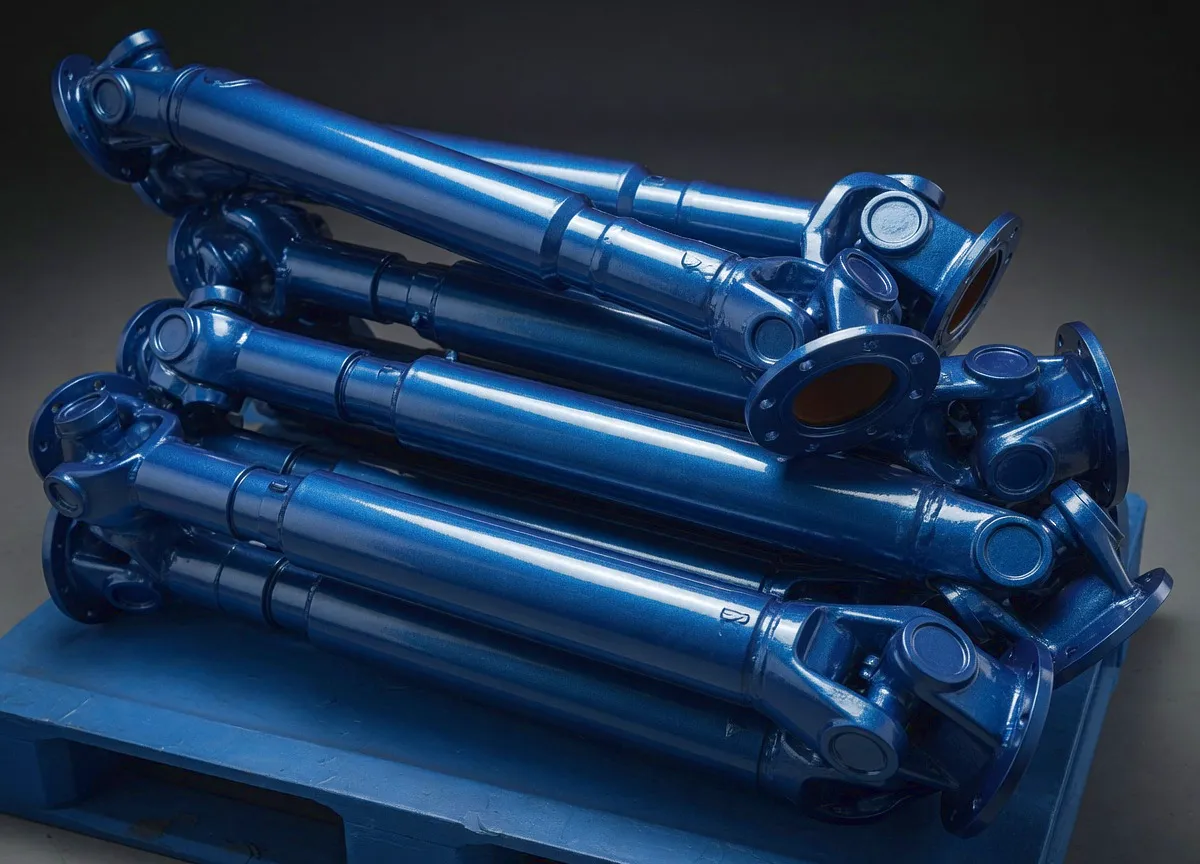
Jaw and tyre couplings rely on elastomeric spiders that harden and crack in UV exposure and freeze-thaw cycles. Steel cardan joints have no elastomeric components — they perform as new even after a decade outdoors.
Greater Angle Capability
Disc pack and bellows couplings typically accommodate only 1–3° angular misalignment. Cardan assemblies handle 15–35° continuously — essential where ground movement or installation imprecision pushes shafts well out of true.
High Torque Density
For a given outer diameter, the needle-roller cardan joint transmits significantly higher torque than a flexible disc or elastomeric coupling — important where space in tracker support columns is constrained.
Repairability
When a bearing cup wears after many years of service, the spider and cups can be replaced individually without scrapping the entire yoke assembly. This replaceability makes total lifecycle cost significantly lower than one-piece flexible couplings.
Telescopic Length Compensation
Cardan shaft assemblies with sliding spline sections accommodate axial movement that arises from thermal expansion, structural deflection, or deliberate adjustable mounting — a feature unavailable in most alternative coupling types.
Broad Temperature Range
From -40°C winter frost in the Scottish Highlands to +120°C CSP receiver area temperatures, steel-on-steel needle roller cardan joints with high-temperature grease maintain rated performance — no elastomeric creep or thermal degradation.
Material Selection and Construction Quality
What sets a twenty-year service life apart from a two-year failure
The yoke bodies in quality cardan couplings are forged from 40Cr or 42CrMo chromium-molybdenum alloy steel, quenched and tempered to hardness levels of 28–32 HRC. This heat treatment process produces a tough core that absorbs shock loads without brittle fracture, while the forged grain structure — rather than cast — provides significantly better fatigue resistance. For the high-cycle loading in tracker drives, where the coupling articulates through its full angle range thousands of times per year, fatigue life of the yoke is a primary design constraint.
The spider (cross-piece) is typically manufactured from 20CrMo or similar case-hardening steel, carburised to a surface hardness of 58–62 HRC on the trunnion journals. This hard surface resists wear from the needle rollers while the soft core maintains toughness. Dimensional tolerances on the trunnion journals are held to h6 or better — within a few micrometres — to ensure the needle bearing fit is correct for the intended load class.
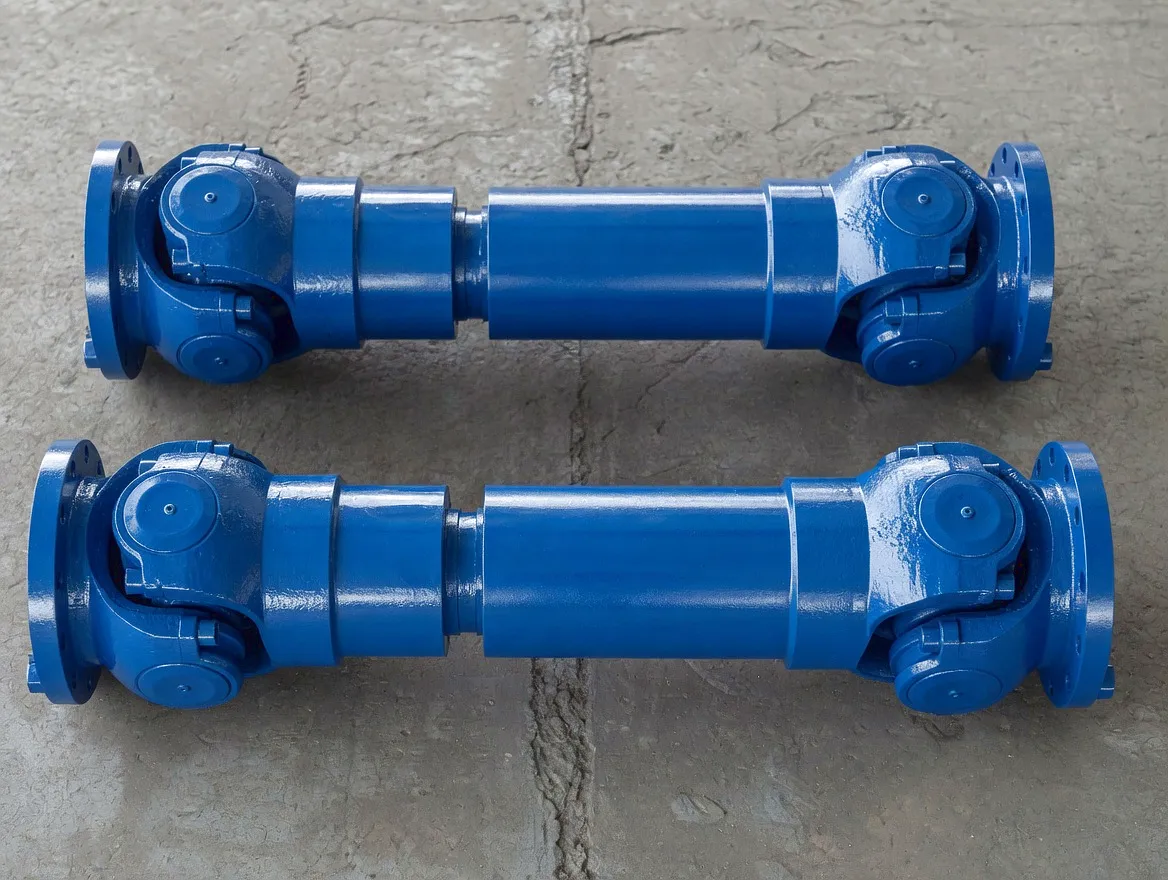
Surface protection is a subject that deserves more attention than it typically receives at the procurement stage. A cardan coupling in a solar tracker will spend its entire working life outdoors, exposed to rain, dew, industrial atmospheric pollutants (particularly in UK sites near motorways or agricultural land where ammonia concentrations are elevated), and occasional bird fouling. Zinc plating offers adequate protection in sheltered or inland environments. For coastal sites within 5 km of the sea — a significant number of UK solar farms in Devon, Cornwall, Norfolk, and the Scottish East Coast fall into this category — hot-dip galvanising or a high-build epoxy primer with polyurethane topcoat is the minimum acceptable standard. Some contractors specify additional wax injection into the sliding spline section to prevent corrosion of the mating surfaces.
Bearing grease specification is often the overlooked detail that determines field performance. Standard lithium complex greases provide adequate performance for most indoor or sheltered applications. Outdoor solar tracker applications benefit from a grease with enhanced water resistance (NLGI Grade 2, EP type, water wash-out resistance per ASTM D1264) and good low-temperature pumpability down to -30°C. Premium assemblies use greases based on calcium sulphonate complex thickeners, which outperform lithium types in wet and salt-spray environments — an increasingly common specification demand from UK EPC contractors who have experienced early bearing failures on coastal sites.
Customer Success: Solar Farm in East Anglia, UK
A real-world outcome from a 45 MW single-axis tracker installation
The Challenge
Greenfield Solar Partners Ltd, an independent power producer operating across East Anglia, commissioned a 45 MW solar park on former arable farmland near Bury St Edmunds. The site presented several engineering complications. The land had been deep-ploughed for many years, meaning pier foundations settled non-uniformly during and after construction — by as much as 12 mm differential between adjacent piers within a single tracker row. The coastal influence from the North Sea (approximately 80 km distant) brought salt-laden easterly winds that were corrosive to standard zinc-plated hardware. Initial tracker commissioning revealed angular offsets of up to 9° between some torque tube sections, well beyond what the originally specified flexible disc couplings could handle. Three gearboxes suffered bearing failures within the first six months of operation — a significant O&M liability.
The Solution
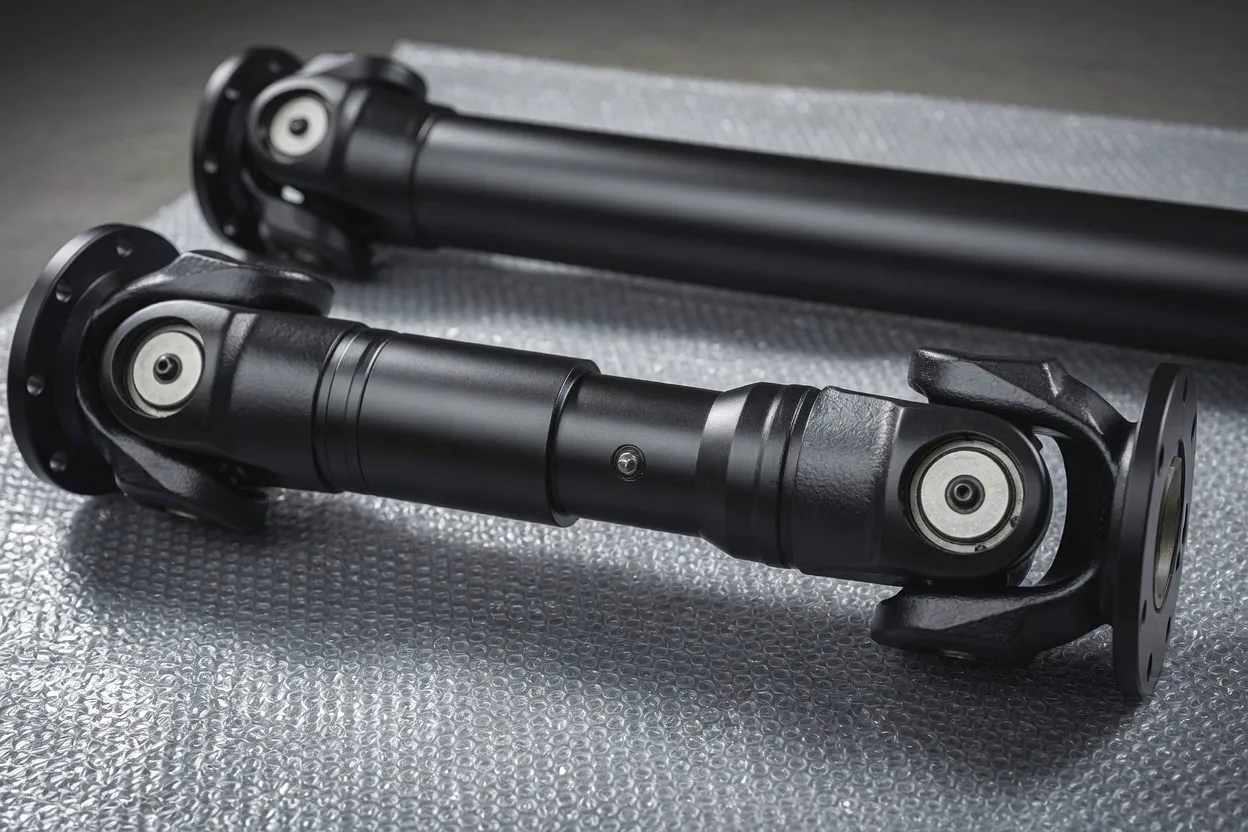
Following consultation with mechanical drive engineers, the EPC contractor replaced the flexible disc couplings across all 840 inter-section joints with SWC-BH Medium Series cardan couplings, hot-dip galvanised and fitted with sealed needle roller bearings pre-packed with calcium sulphonate grease. The angular capacity of 25° provided ample margin above the measured misalignment, and the galvanised finish addressed the corrosion concern. All three failed gearboxes were rebuilt and returned to service after the coupling changeover.
The Outcome
In the 30 months following the coupling upgrade, zero gearbox failures have occurred. Annual inspection of the coupling bearings showed negligible wear on the trunnion journals. The estimated financial benefit — comparing avoided gearbox repair costs and generation downtime against the coupling procurement and installation cost — yielded a payback period of under 14 months. The site now runs with an availability factor above 98.7%, among the highest in the portfolio.
What Our Clients Say
“We’ve run these cardan couplings across two major projects in Suffolk and Lincolnshire. After years of expensive flexible coupling replacements on earlier sites, the difference in maintenance burden is dramatic. The galvanised finish has held up perfectly on both coastal-influenced locations.”
“We procured a custom-shaft-length batch for our agrivoltaic installation in the Welsh Borders. The team accommodated non-standard bore sizes and provided full material certification. Lead time was as quoted — no surprises. Very competitive price point for the quality delivered.”
“As a technical buyer responsible for drive components across multiple contractor relationships, I appreciate suppliers who can produce dimensional drawings quickly and offer certified test data. The cardan shafts we use for inverter cooling pump skids have been faultless over three years of continuous operation.”
Custom Engineering and Manufacturing Capability
Ever Power — delivering tailored drive solutions for solar energy projects worldwide
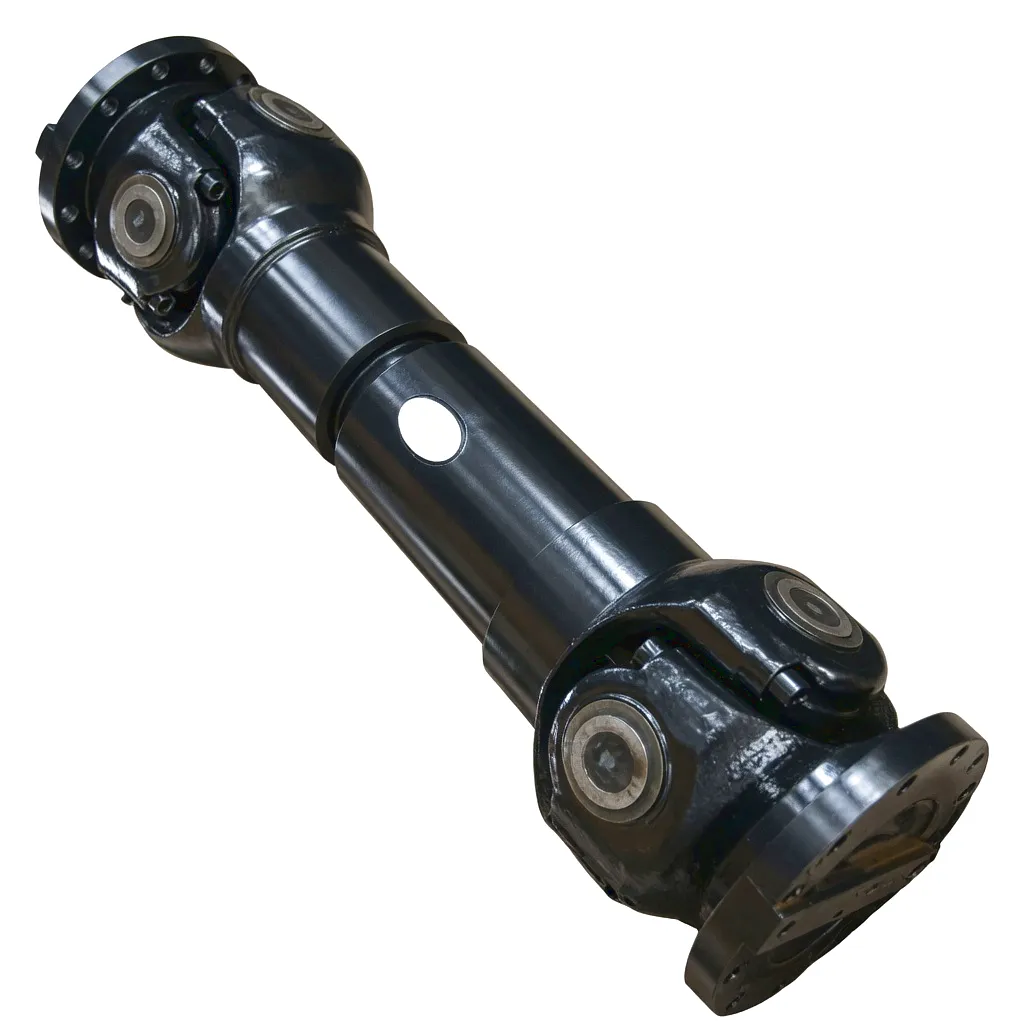 Standard catalogue couplings cover the vast majority of solar tracker and drive system requirements — but solar projects are rarely fully standardised. Custom bore diameters, non-standard shaft lengths, special keyway configurations, unique flange bolt patterns, and project-specific surface treatment specifications are all routine requests. The ability to accommodate these without minimum order quantities of thousands of pieces, and without six-month lead times, is what separates a genuine manufacturing partner from a catalogue distributor.
Our manufacturing facility operates CNC turning and machining centres, CNC gear hobbing machines, and induction hardening equipment under one roof. This vertical integration means engineering changes made at the design stage are reflected in production within days, not weeks. Custom spider-to-yoke matching for unusual torque-angle-speed combinations is handled by in-house engineering calculation and FEA review where required. Material certification to EN 10204 3.1 standard is available as standard on all orders; third-party inspection and witness testing can be arranged for large-volume or safety-critical projects.
Ready to Specify for Your Solar Project?
Share your application details — shaft sizes, torque requirements, operating angle, site environment — and our engineering team will recommend the optimal cardan coupling configuration with a competitive price.
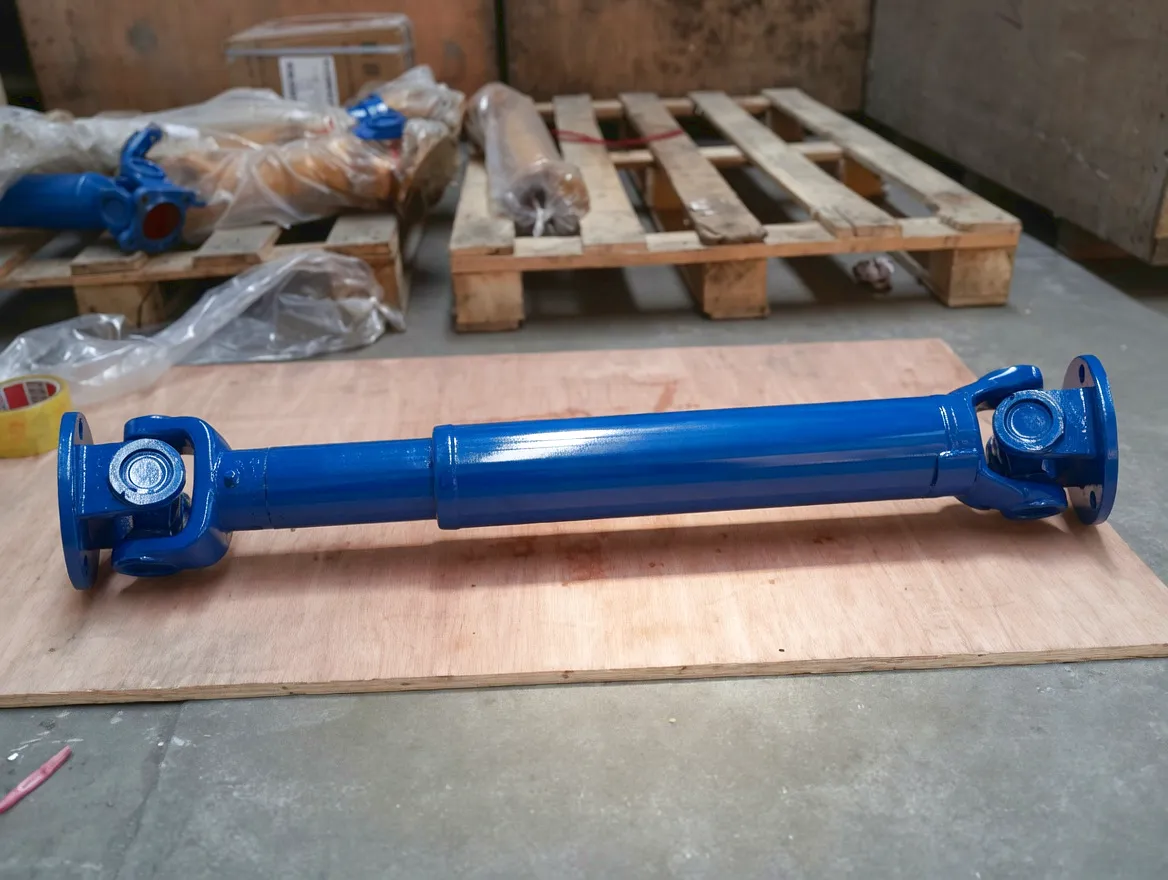
Selecting the Right Cardan Coupling for Your Solar Application
A practical selection matrix for UK solar project engineers
Table is a general guidance framework. Final specification should always be confirmed against actual torque, speed, angle, and environmental data for your project.
Serving the UK Solar Sector — From Scotland to the South West
Why UK solar project developers and EPC contractors choose Ever Power as their coupling supplier
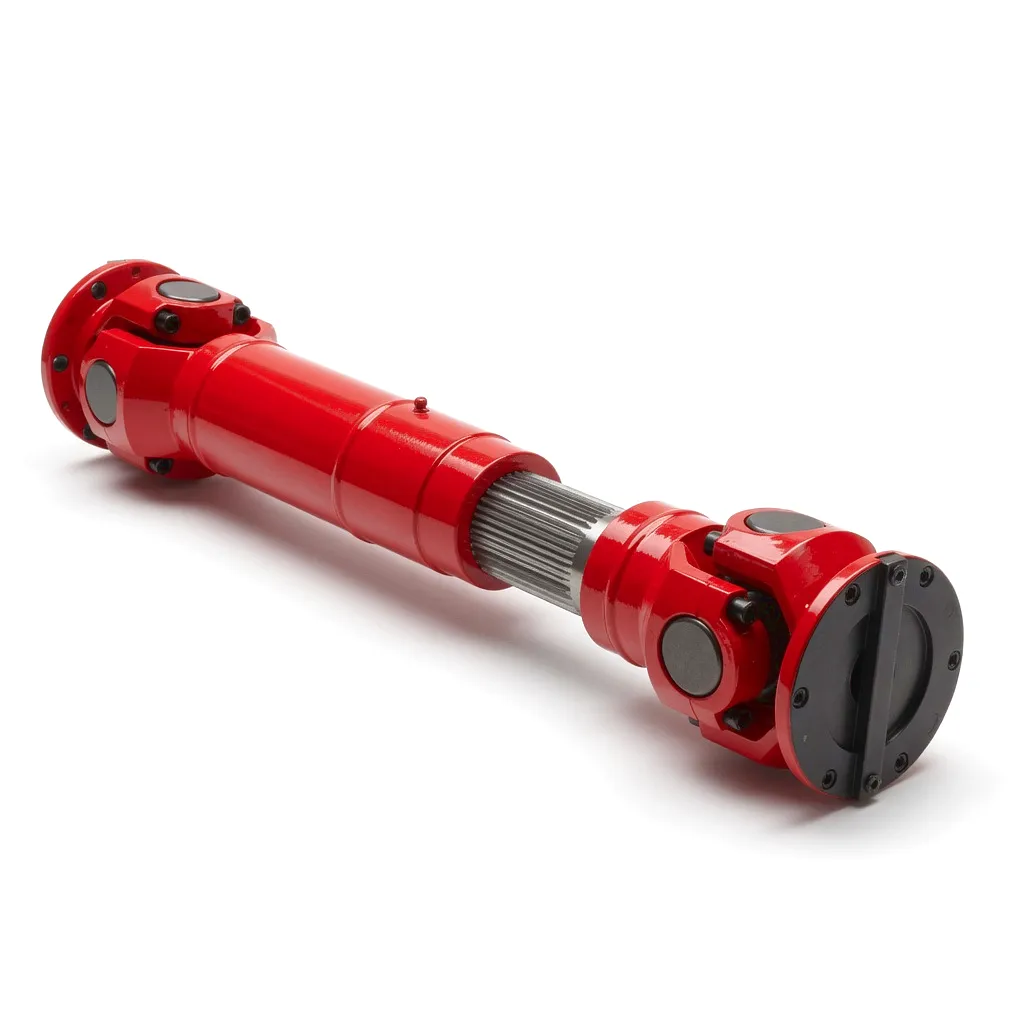
The United Kingdom’s solar energy market is one of the most technically demanding in Europe. Sites span from the exposed, wet, and frost-prone conditions of Northern Scotland and the Pennines to the milder but salt-laden coastal environments of Cornwall, Norfolk, and the Yorkshire coast. Procurement timelines in the UK renewable energy sector are often compressed — financial close triggers rapid mobilisation, and equipment delivery windows are tight. An EPC contractor ordering drive components for a 30 MW site in Lincolnshire needs a supplier that can confirm availability, provide dimensional drawings within 24 hours, and guarantee delivery to a UK port within the project programme.
Our supply chain is structured around exactly these demands. Standard catalogue items are held in warehouse stock for rapid dispatch. Custom orders are processed through a streamlined technical review process, typically returning a confirmed drawing and price within three working days of receiving shaft dimensions and application data. Documentation packages — including material test certificates, dimensional inspection records, and compliance declarations — are prepared as standard and accompany every shipment, facilitating straightforward goods receipt inspection by UK site teams.
We have supplied cardan couplings to solar projects across England, Wales, and Scotland — from large-scale ground-mounted arrays in the East Midlands and East Anglia to commercial rooftop installations in Greater Manchester and industrial hybrid systems in the Thames Valley. Our understanding of the UK solar sector’s specific technical requirements — galvanised finish standards, IP rating expectations, documentation requirements under UK construction contracts — means UK buyers receive products that are specified correctly for their environment from day one, not products re-specified after field failures.
Frequently Asked Questions
Answers to the questions UK solar engineers and procurement teams ask most
Start Your Cardan Coupling Specification Today
Whether you’re developing a new solar farm in Yorkshire, upgrading tracker drives on an existing site in Kent, or engineering an agrivoltaic installation in the Welsh Borders — our team has the product, the technical knowledge, and the documentation to support your project from specification to commissioning.
📩 Get a Quote — [email protected]
edit by gzl