Analyzing Velocity Fluctuations and Phase Angles in Single Cardan Joints
A rigorous technical examination of angular velocity non-uniformity in single universal joints — the underlying kinematics, phase angle mathematics, resonance risks, and engineering strategies deployed across UK industry from Sheffield rolling mills to Aberdeen offshore platforms.
Technical Editorial | Ever Power Engineering | UK & Global Industrial Supply
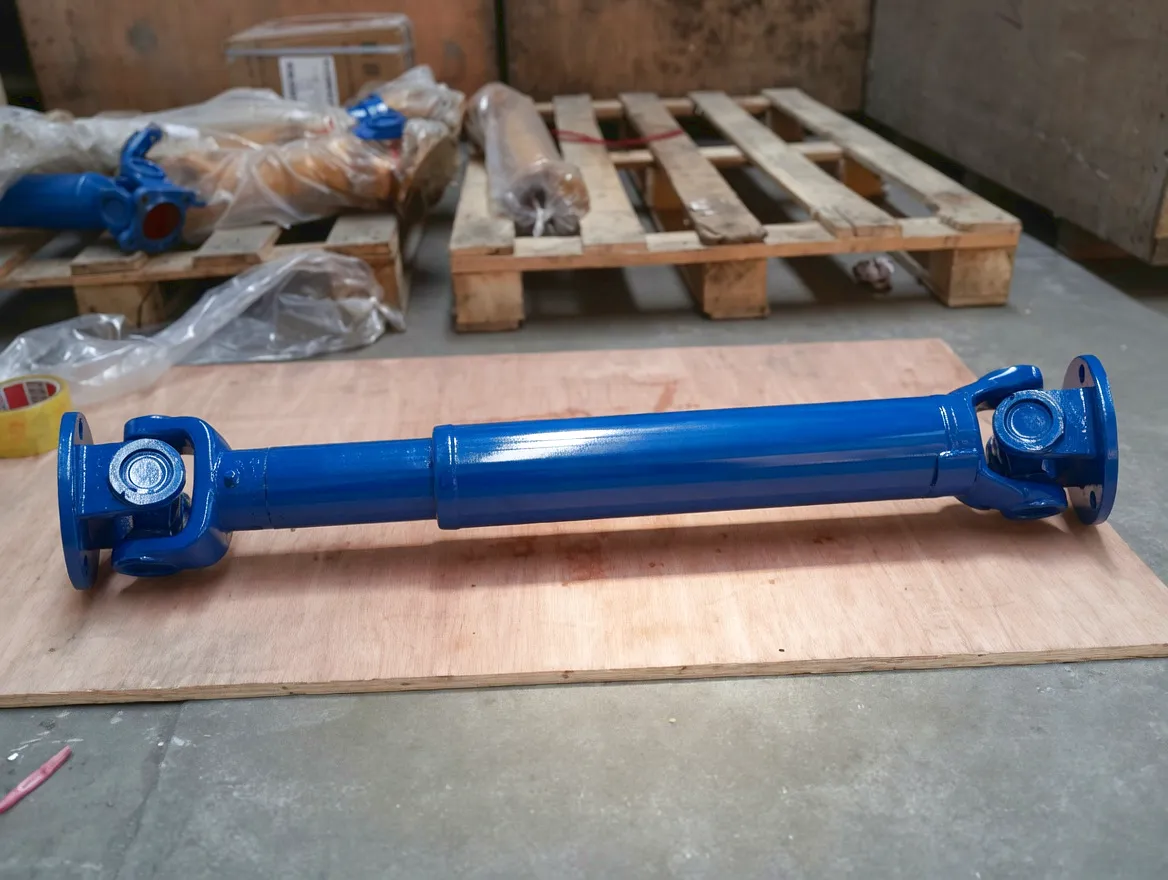 Walk through any heavy engineering facility in Birmingham, Sheffield, or along the industrial corridors of the North West, and you will almost certainly encounter a cardan coupling in action. These deceptively straightforward components — two forged yokes connected by a hardened cross-shaped trunnion spider — are the backbone of countless power transmission systems across virtually every sector of heavy industry. Yet the single Cardan joint harbors a kinematic characteristic that has frustrated engineers and contributed to premature drivetrain failures for generations: angular velocity fluctuation. Grasping this phenomenon in full — and mastering how phase angle management can neutralize it — is not simply an academic exercise. It directly determines equipment longevity, energy efficiency, bearing service life, and operational safety in real-world industrial plant.
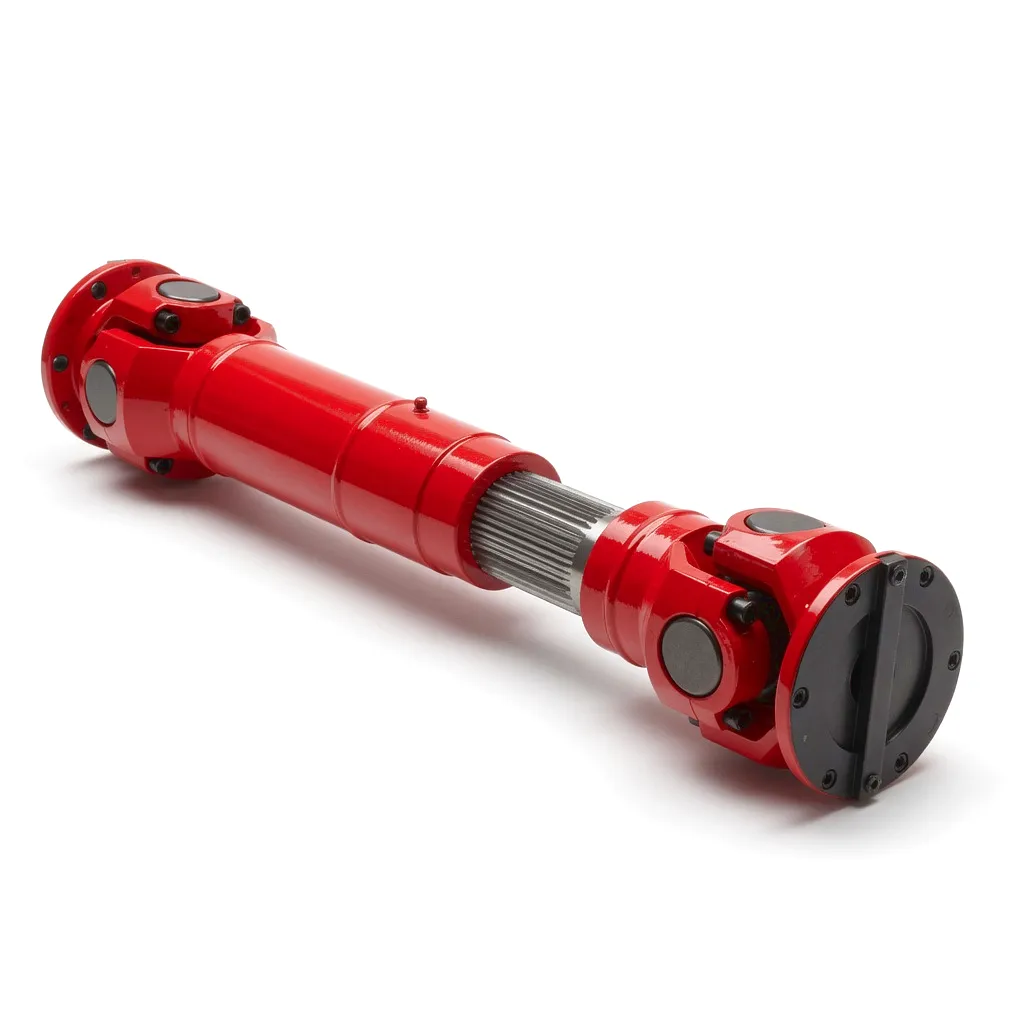
Ever Power Cardan Coupling
Precision-engineered single and double cardan couplings. Full custom manufacturing. UK-ready logistics. Engineering support included.
The cardan coupling — referenced interchangeably as a universal joint, Hooke’s joint, or U-joint — transmits rotary motion between two shafts whose centrelines intersect at an angle. In a single-joint arrangement, however, the output shaft does not rotate at a constant velocity even when the input is driven at perfectly steady speed. This velocity non-uniformity is a mathematical certainty that emerges from the geometry of the joint itself — not from manufacturing imperfection or poor installation. For slow-speed applications or systems tolerant of minor speed variation, it may be entirely inconsequential. In precision machinery, high-speed drivetrains, or systems sensitive to torsional vibration, even modest fluctuation can escalate into serious operational problems: resonance, bearing stress concentration, fatigue cracking, and in extreme cases, catastrophic driveshaft failure.
The Physics Behind Velocity Non-Uniformity
The fundamental source of velocity fluctuation in a single cardan joint is purely geometric. When two shafts are connected at an angle — the joint operating angle, universally denoted as β — the input and output yokes do not remain aligned throughout a full rotation cycle. As the input yoke completes 360 degrees, the output yoke alternately leads and lags in a cyclical pattern. The result: even though the input shaft rotates at a perfectly constant angular velocity ω₁, the output shaft velocity ω₂ oscillates above and below ω₁ twice per revolution, producing a second-harmonic velocity waveform superimposed on the mean rotational speed.
Core Velocity Ratio Formula
ω₂ / ω₁ = cos(β) / (1 − sin²β · cos²θ)
β = operating angle | θ = instantaneous input angle | ω₁ = input speed | ω₂ = output speed
Maximum & Minimum Output Speed
ω₂(max) = ω₁ / cos β @ θ = 90°, 270°
ω₂(min) = ω₁ · cos β @ θ = 0°, 180°
The fluctuation is symmetric about ω₁, completing two full cycles per input revolution regardless of rotational speed.
| Joint Angle β | Velocity Fluctuation δ (%) | Practical Risk Level | Recommendation |
|---|---|---|---|
| 0° – 5° | < 0.4% | Negligible | Single joint acceptable |
| 6° – 10° | 0.4% – 1.5% | Low | Review sensitivity of driven machine |
| 11° – 20° | 1.5% – 6% | Moderate | Double cardan recommended |
| 21° – 35° | 6% – 20%+ | High | Double cardan essential |
The practical consequences of this formula are far-reaching. At a modest joint angle of 10 degrees, the output speed fluctuates by roughly ±1.5% of mean speed — barely perceptible in most applications. Push that angle to 20 degrees and the fluctuation climbs to around ±6%. At 30 degrees, you are dealing with velocity swings exceeding ±15%. In a rolling mill drive in Sheffield, or a heavy-duty conveyor at a West Midlands automotive plant, these fluctuations manifest as torsional vibration, bearing stress concentrations, and in poorly conceived drivetrains, resonant oscillations capable of destroying equipment within hours of commissioning. The velocity non-uniformity also generates a cyclic reaction torque on bearing housings — this is the characteristic “shudder” that signals a worn universal joint operating at an excessively steep angle in a vehicle propshaft.
Another way to interpret this behavior: the single cardan joint is fundamentally a non-linear, angle-dependent velocity transformer whose output is a second-harmonic function of input rotation. This second-order harmonic characteristic is critical when performing torsional vibration analysis on any drivetrain. Engineers must verify that the excitation frequency produced by the single cardan coupling does not coincide with any torsional natural frequency of the connected mechanical system — a calculation particularly important for variable-speed drives operating across a wide speed range, such as wind turbine pitch drives, marine propulsion shafts, and large paper machine section drives.
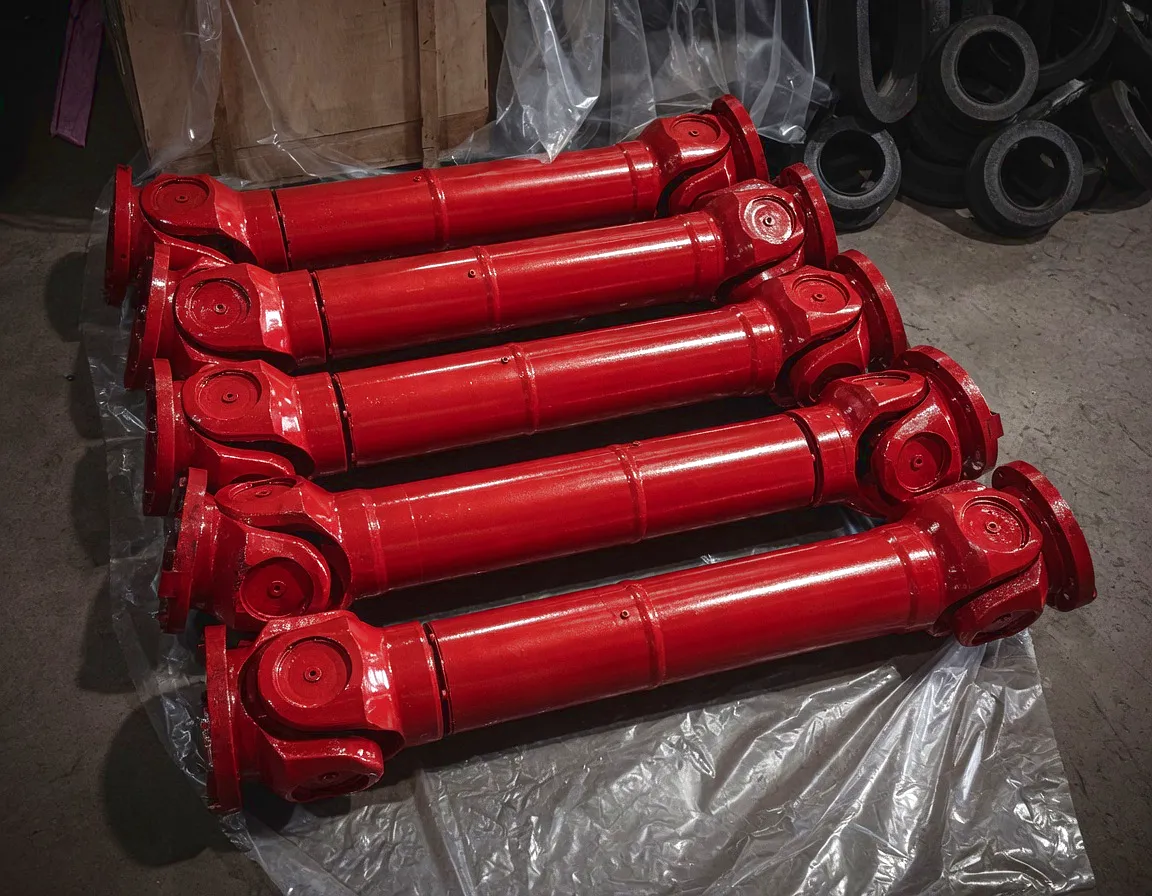
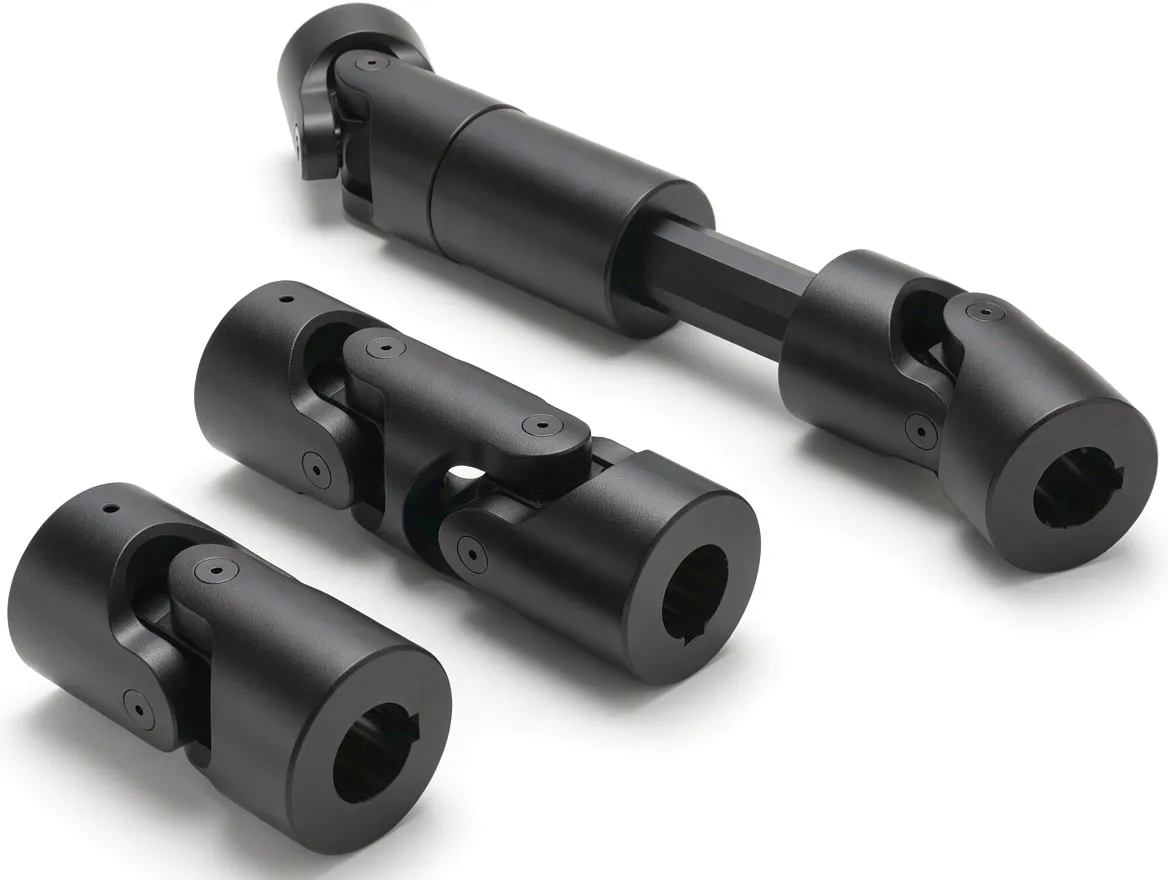
Ever Power precision cardan coupling — manufactured for heavy industrial drivetrain service
Phase Angles: The Engineering Solution to Velocity Fluctuation
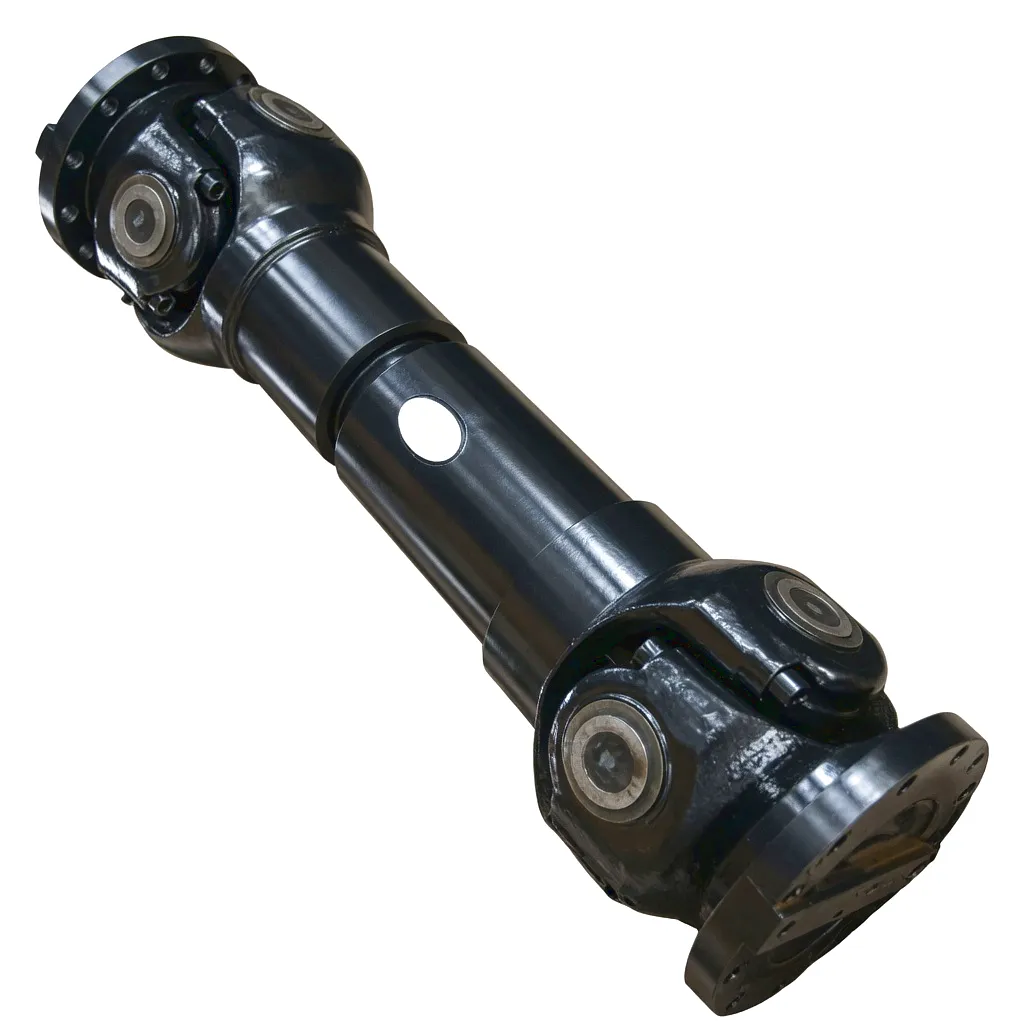 Understanding velocity fluctuation is only half the problem. The genuine engineering insight — the one that transforms a vibration-prone industrial driveshaft into a smooth, reliable power transmission system — lies in phase angle management. The concept is elegant in principle: if a second cardan joint is placed in series with the first, and oriented at the correct phase angle relative to the first, its velocity fluctuation will precisely cancel the fluctuation generated by the first joint. A double cardan arrangement, correctly configured, delivers a perfectly uniform output angular velocity regardless of the operating angle. This is the basis of every well-designed industrial propshaft, rolling mill spindle drive, and multi-span driveshaft assembly in service today.
For this cancellation to be complete and continuous, two geometric conditions must be met simultaneously. First, the operating angles of the two joints (β₁ and β₂) must be equal — any inequality leaves a residual velocity fluctuation that cannot be corrected without additional compensation. Second, and critically, the output yoke of the first joint and the input yoke of the second joint — both mounted on the intermediate shaft — must lie in the same geometric plane. When both conditions are satisfied, the intermediate shaft itself experiences twice the velocity fluctuation of either joint individually, but the two fluctuations are precisely out of phase with each other, and the final output shaft receives a smooth, constant angular velocity.
Condition 1: Equal Joint Angles
Both joints must operate at identical angles to the intermediate shaft (β₁ = β₂). Inequality produces a residual fluctuation that no amount of yoke phasing can eliminate, requiring either a design layout change or acceptance of residual vibration.
Condition 2: Coplanar Yoke Planes
The yokes of the intermediate shaft must lie in the same plane (in-phase). Even a 5° phasing error in a high-speed drive increases bearing dynamic loads by 8–12% and generates perceptible torsional excitation at twice the rotational frequency.
Condition 3: Shaft Parallelism
For Z-configuration driveshafts, the input and output shaft centrelines must be parallel. W-configurations require the intermediate shaft to bisect the angle between them. Non-compliance with either arrangement reintroduces cyclic velocity error across the shaft assembly.
The concept of phase angle in cardan couplings extends beyond the two-joint cancellation arrangement. In multi-span driveshafts incorporating three or more universal joints — common in long industrial drive lines connecting motors to equipment some distance away — each joint contributes its own velocity fluctuation signature. The combined system behavior depends entirely on the phase relationships between all joints simultaneously. This is where driveshaft engineering becomes genuinely demanding, requiring specialist knowledge and precise manufacturing to execute correctly. It is also precisely where Ever Power’s engineering-led approach to cardan coupling design provides clients with a measurable advantage over catalogue-based approaches.
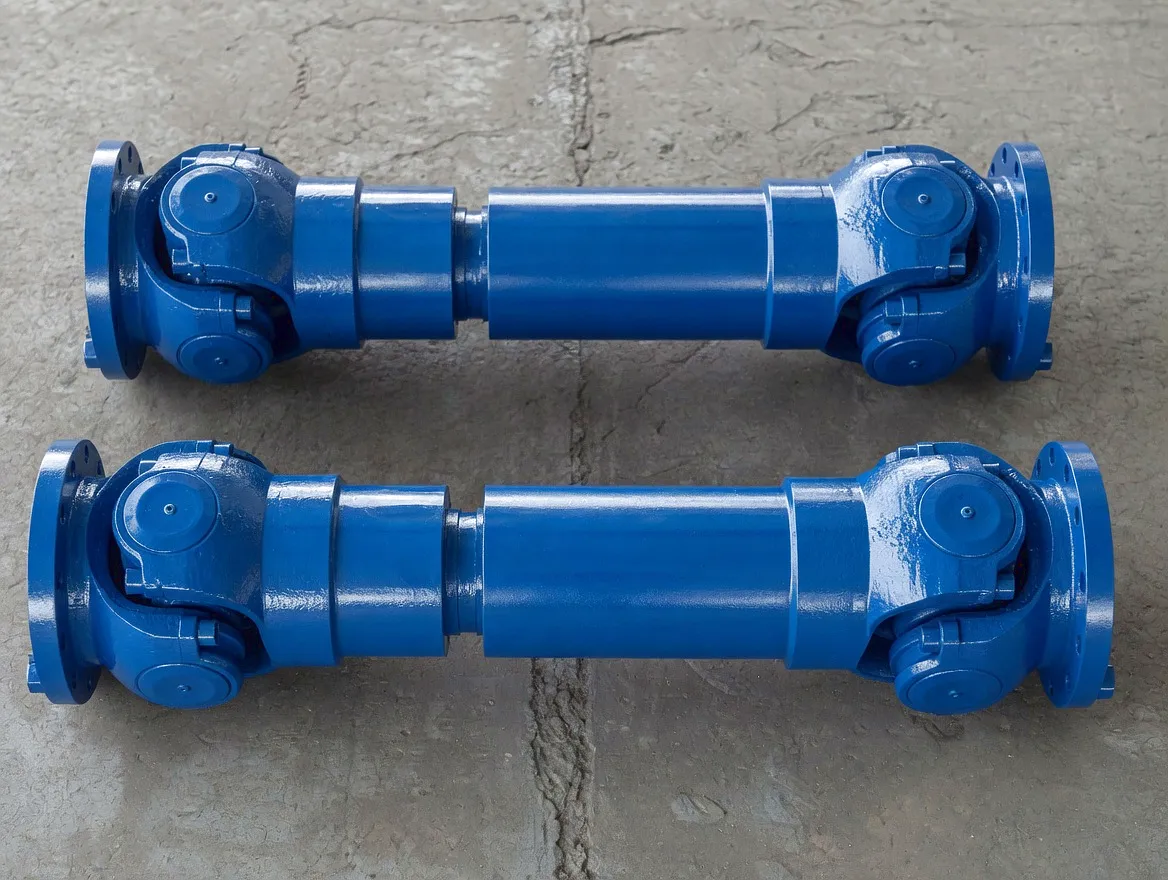
It is also worth recognising that the phase angle correction principle underpins the constant-velocity (CV) joint used in automotive front-wheel drives. A CV joint is mechanically a constrained double cardan arrangement that automatically maintains phase conditions at any operating angle. For heavy industrial applications — rolling mills, marine propulsion drives, mining conveyors, compressor trains — the ruggedness, torque capacity, and field serviceability of engineered double cardan assemblies make them the dominant engineering choice over CV joint configurations.
How the Cardan Coupling Transmits Torque: Core Principle
A cardan coupling transmits rotary torque between two angularly misaligned shafts through a beautifully simple mechanism. The assembly consists of two forged yokes — each produced from high-strength alloy steel — joined by a hardened cross-shaped trunnion assembly known as the spider or cross piece. Each of the spider’s four arms engages a needle roller bearing housed within the corresponding yoke bore. As the driving yoke rotates, it pushes against the spider trunnion, which in turn pulls the driven yoke. Because the spider can pivot freely about both its axes, the joint accommodates angular misalignment continuously while transmitting torque without interruption.
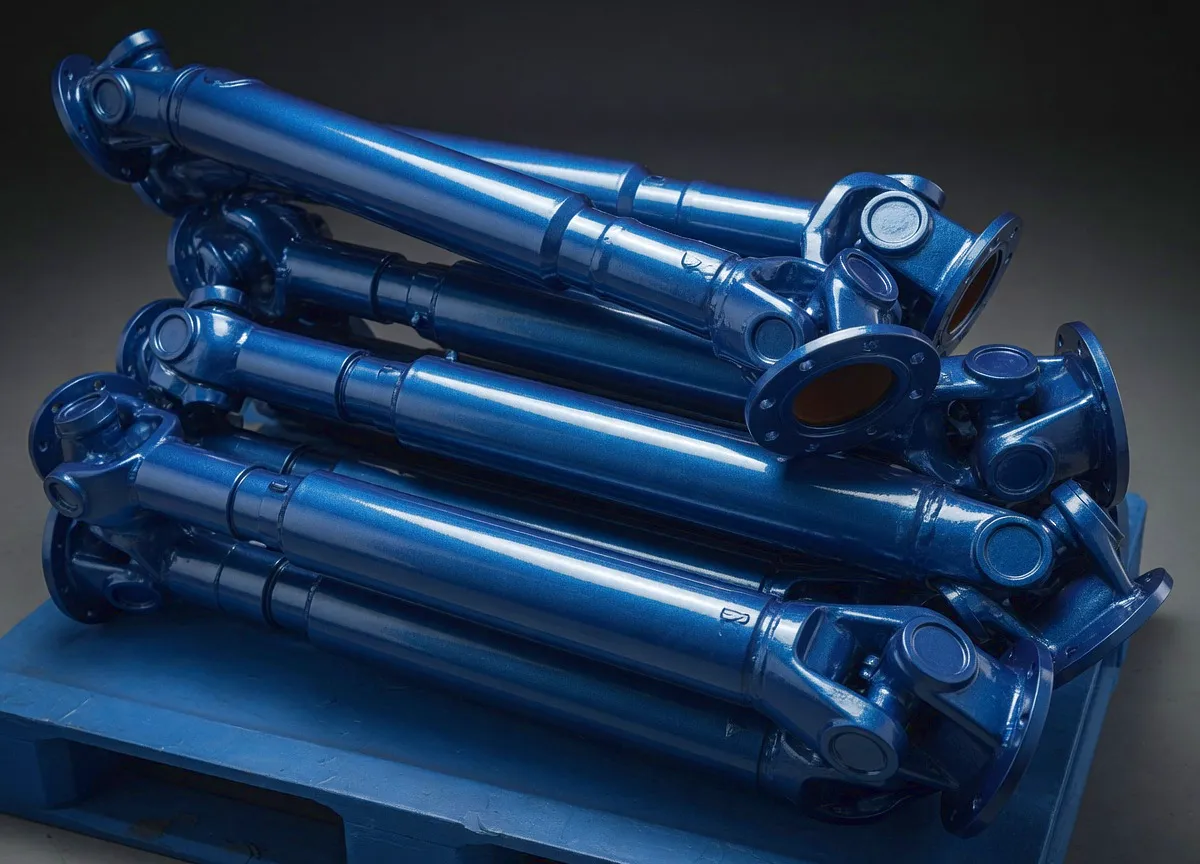
The engineering appeal of this arrangement lies in its mechanical directness. There are no gear meshes, no hydraulic circuits, no elastomeric elements, no complex sealing systems in basic versions. Torque travels from the drive to the driven shaft through a rigid mechanical linkage that articulates about two perpendicular axes. This simplicity yields an exceptional torque-to-weight ratio compared to most flexible coupling alternatives, combined with an angular accommodation capability that no other standard coupling type approaches. A cardan coupling operating at 25 degrees of angular offset can transmit the same peak torque as a gear coupling ten times its weight — this capability is irreplaceable in many industrial layouts.
However, this mechanical elegance comes with the velocity non-uniformity described in the preceding sections. The pivot-and-pull geometry means the instantaneous mechanical advantage between input and output yokes changes continuously through each revolution — not a design flaw, but a fundamental and unavoidable kinematic consequence. Engineers who account for it during system design build drivetrains that run reliably for decades. Those who overlook it risk building systems with chronic vibration, premature bearing failure, and unpredictable shaft fatigue.
Materials That Define Cardan Coupling Performance
42CrMo4 Alloy Steel
Standard specification for yokes and shafts. Tensile strength to 1,100 MPa after heat treatment; excellent fatigue endurance and machinability. The default choice for industrial and automotive cardan coupling service.
Case-Hardened Spider Steel
Spider cross pieces are case-hardened to 58–62 HRC at the bearing contact surfaces while retaining a tough, ductile core. This combination maximises wear resistance without risk of brittle fracture under impact and shock loads.
316L / 17-4PH Stainless
Specified for food processing, pharmaceutical, and offshore marine applications. 316L offers superior pitting resistance; 17-4PH delivers high strength and corrosion resistance combined — critical for North Sea installations from Aberdeen.
34CrNiMo6 Forged Steel
Selected for super-heavy-duty rolling mill and mining applications requiring maximum fatigue resistance at high cycle counts. Tensile strength up to 1,250 MPa; excellent impact toughness at low temperatures down to −40°C.
Material selection for a cardan coupling is never a default decision. The actual operating environment, load profile (steady-state torque versus peak shock torque, fatigue cycles per year), temperature extremes, exposure to corrosive media, and maintenance regime all influence the optimal material choice for each component. Ever Power’s engineering team conducts a detailed application review before finalising any material recommendation, ensuring that every custom-manufactured coupling delivers the intended service life under the actual operating conditions at the customer’s facility — not merely those in a generic performance table.
Why Engineers Specify Cardan Couplings
Key technical advantages over competing coupling technologies for angular misalignment applications
High Angular Capacity
Standard single cardan joints accommodate angular misalignment from 0° to 45°; heavy industrial designs operate continuously at up to 35°. No other rigid coupling design approaches this angular range at equivalent torque capacity.
Exceptional Torque Density
Direct mechanical linkage delivers torque with minimal energy loss. Heavy-duty cardan couplings achieve torque-to-weight ratios of 20–50 kN·m per kg of coupling mass — vastly superior to equivalent-capacity flexible disc or elastomeric designs.
Extreme Temperature Range
All-steel construction enables reliable operation from −40°C in cold-climate mining applications to +200°C in furnace drive environments. Elastomeric flexible couplings cannot approach these extremes without compromising capacity.
In-Situ Serviceability
Worn spider and bearing kits can be replaced without removing the yokes from the driveshaft — dramatically reducing planned maintenance downtime in continuous production environments such as rolling lines and paper mills.
Retrofit Flexibility
Flange interfaces, shaft bore sizes, overall length, and material specifications are all independently customisable. This makes cardan couplings uniquely suited to retrofit installations constrained by legacy machinery envelopes.
Whole-Life Cost Advantage
When assessed on total lifecycle cost — purchase, installation, planned maintenance, unplanned downtime, and eventual replacement — correctly specified cardan couplings consistently outperform alternative technologies in total ownership cost for heavy-duty angular drives.
Technical Performance Specifications
Standard range parameters — Ever Power cardan coupling series. All specifications are indicative; custom design available beyond these ranges.
| Parameter | Light Duty | Medium Duty | Heavy Duty | Super Heavy Duty |
|---|---|---|---|---|
| Nominal Torque (kN·m) | 0.05 – 2.5 | 2.5 – 50 | 50 – 500 | 500 – 5,000 |
| Max Operating Angle (°) | ≤ 45° | ≤ 35° | ≤ 25° | ≤ 15° typical |
| Max Speed (rpm) | 3,000 – 8,000 | 1,500 – 4,000 | 600 – 2,000 | 100 – 800 |
| Primary Yoke Material | 40Cr Steel | 42CrMo4 | 42CrMo4 / 34CrNiMo6 | 34CrNiMo6 Forged |
| Operating Temperature | −20°C to +120°C | −30°C to +150°C | −40°C to +180°C | −40°C to +200°C |
| Spider Bearing Type | Needle roller, sealed | Needle roller, greaseable | Needle roller / plain | Spherical plain / custom |
| Surface Treatment | Zinc plated / painted | Phosphated + painted | Hot-dip galvanised | Thermal spray / custom |
| Velocity Non-Uniformity δ | f(β) — see formula | f(β) — see formula | Double joint: δ ≈ 0 | Double joint: δ ≈ 0 |
| Flange Standard | DIN / ISO / Custom | DIN / ISO / Custom | DIN / Custom | Full custom design |
All parameters are indicative. Contact Ever Power engineering team for application-specific sizing verification and custom design scope.
Industrial Applications Across the UK and Beyond
The UK’s manufacturing sector offers an extraordinarily diverse range of operating environments for cardan couplings. Steel production concentrated around Sheffield and Scunthorpe, advanced engineering clusters throughout Birmingham and the West Midlands, offshore and energy infrastructure along the Aberdeen and Teesside coastlines, food and beverage processing hubs across Yorkshire and Lancashire, and quarrying operations throughout Wales and Northern England — each sector places distinct demands on a cardan coupling’s performance, and each provides real-world validation of the velocity fluctuation and phase angle principles explored in this article.
Steel Rolling Mills — Sheffield & Scunthorpe
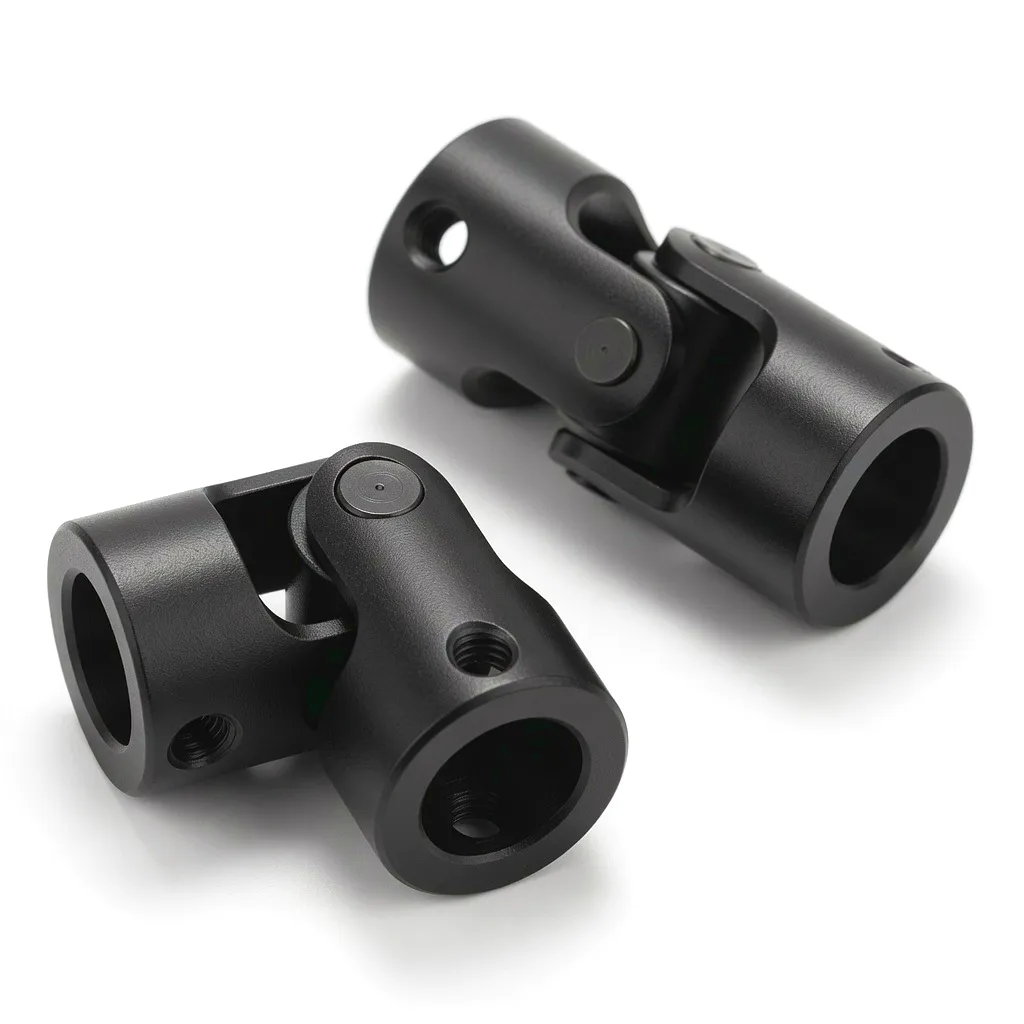
Rolling mill drives impose the most demanding combination of high torque, angular offset, and shock loading of virtually any industrial application. Cardan couplings in hot and cold rolling stands must absorb the angular offset between the gearbox output and roll chocks, withstand massive torque spikes during bar or strip entry, and do so reliably across years of continuous production service. Correctly engineered double cardan driveshafts are the standard specification in Sheffield’s specialty steel operations and Scunthorpe’s integrated steelworks. Phase angle verification is a non-negotiable step in every spindle drive installation.
Automotive Drivetrains — West Midlands & Coventry
Birmingham and Coventry remain at the heart of the UK’s automotive engineering tradition. Heavy-duty commercial vehicle propshafts and the precision driveshafts of specialist electric vehicle platforms being developed across the Midlands demand cardan coupling phase angle management as a direct determinant of drivetrain NVH (noise, vibration, harshness) performance. With EV platforms particularly sensitive to torsional excitation due to the absence of an internal combustion engine masking background noise, phase angle precision has never mattered more in this sector.
Offshore Energy — Aberdeen & Teesside
North Sea oil and gas platforms operating from Aberdeen and the expanding offshore wind sector along the Yorkshire and Lincolnshire coastline rely on cardan couplings in pump drives, compressor trains, and crane slewing mechanisms. The operating environment — salt spray, thermal cycling, high shock loads — demands stainless steel or specially coated alloy steel couplings with enhanced sealing systems, where Ever Power’s custom manufacturing capability provides a measurable engineering advantage.
Mining & Quarrying — Wales & Northern England
Aggregate crushing and screening plants in Wales, the Pennines, and Cumbria use cardan couplings to drive vibrating screens, jaw crushers, and conveyor drives where the driven equipment displaces relative to the drive unit under load. The cardan coupling’s ability to accommodate simultaneous angular and axial displacement — through a sliding spline combined with the universal joint — makes it uniquely capable in these demanding environments where other coupling types would fail rapidly.
The paper and board manufacturing industry — concentrated across Scotland and Northern England — presents a further set of demanding requirements. High-speed winder drives, dryer section roll drives, and calender stack drives all use cardan couplings to bridge the angular offset between fixed drive motors and roll positions that change as rolls are lifted, repositioned, and replaced. Phase angle management is particularly critical in these applications because even minor velocity fluctuation at the roll surface can damage the continuous sheet of paper running at speed. For this reason, paper machine builders in the UK routinely specify double cardan driveshaft assemblies with phasing verified at assembly, not merely assumed from the coupling catalogue.
Ever Power: Where Cardan Coupling Engineering Meets Precision Manufacturing
Custom engineering. Certified precision. Global delivery with UK-dedicated logistics. Trusted by clients in steel, automotive, offshore, and energy sectors worldwide.
5-Axis CNC Precision
Yoke bores, trunnion journals, and flange faces machined to positional tolerances of ±0.005mm in a single setup, eliminating cumulative error across the assembly. Phase angle alignment fixtures maintain yoke coplanarity to within ±0.3 degrees.
Full Material Traceability
In-house spectrometry, hardness testing, and magnetic particle inspection on every production batch. EN10204 3.1 and 3.2 material test certificates available. Heat treatment cycles documented and traceable to individual component serial numbers.
Drawing-to-Delivery Service
Full custom cardan coupling engineering from concept review to finished assembly. Our team analyses torque-angle profiles, velocity fluctuation, dynamic load spectra, and maintenance access constraints before committing to design, not after fabrication.
UK-Ready DDP Logistics
Dedicated freight partnerships delivering DDP (Delivered Duty Paid) to any UK mainland address. Standard items ship in 2–4 weeks; custom designs in 4–8 weeks. Emergency air freight available for critical plant breakdowns in Sheffield, Birmingham, Aberdeen, or anywhere across the UK.
At Ever Power, the engineering analysis that forms the backbone of this article — velocity fluctuation calculations, phase angle verification, torsional natural frequency assessment — is not optional reading for our team. It is the standard process applied to every non-trivial cardan coupling project before a drawing is released to the machine shop. Our customers in Sheffield’s specialty steel sector, Birmingham’s automotive supply chain, and Aberdeen’s offshore service industry come back to us not simply because we supply a quality component, but because we solve a specific engineering problem with accuracy and accountability. We also maintain a transparent fast-track quotation process — most enquiries receive an indicative price and technical commentary within one working day.
Have a cardan coupling application that demands a proper engineering solution?
Customer Success Story
Resolving a chronic rolling mill drivetrain failure in Sheffield through phase angle engineering
Stancroft Special Steels operates a finishing rolling mill in Sheffield producing high-specification stainless and tool steel bar for demanding UK and export markets. The facility had experienced a chronic problem with one of its four-high rolling stand drives: repeated fatigue cracking at the spider trunnion locations of the intermediate driveshaft, with failures appearing consistently within three to five months of each replacement cycle. The maintenance team had progressively worked through three different catalogue cardan shaft products from standard distribution suppliers, each time selecting the next-higher duty rating — without any improvement in service life or any reduction in the failure frequency.
When Stancroft’s chief mechanical engineer contacted Ever Power, the initial technical conversation focused not on the physical size of the coupling but on the phase arrangement of the driveshaft assembly. Reviewing the installation drawings, it became clear that although a double cardan configuration had been installed, the intermediate shaft yoke planes were not correctly phased — a 9-degree angular error existed between the two yoke centrelines. At the mill’s normal operating speed of 280 rpm, this phasing error was generating a second-harmonic torsional excitation at 9.3 Hz. A torsional natural frequency of the intermediate shaft assembly had been measured at 8.8 Hz during a previous vibration survey. The resonant amplification resulting from this near-coincidence was dramatically elevating the dynamic torque at the trunnion bearing journals beyond their fatigue endurance limit — regardless of the nominal static duty rating of the catalogue coupling. Every catalogue replacement had been failing for exactly the same root-cause reason.
Ever Power supplied a custom-manufactured double cardan driveshaft assembly specifically engineered for this installation. The intermediate shaft yoke planes were machined to a phasing alignment of ±0.3 degrees using dedicated checking fixtures. The trunnion journal diameter was increased by 8mm relative to the previous catalogue part, and the needle roller bearing specification was upgraded to a higher dynamic load rating. A revised dynamic model of the modified drivetrain was verified to confirm no torsional resonance within the operating speed range up to 600 rpm. The replacement assembly entered service 26 months ago at the time of writing and has run without incident through numerous production campaigns. Stancroft’s engineering team calculated the annual savings from eliminated breakdown costs, lost production time, and emergency procurement at approximately £84,000 per year — a figure that makes the custom engineering investment look straightforward in hindsight.
What Our Customers Say
★★★★★
“Ever Power’s engineering team understood our velocity fluctuation problem before we finished explaining it. The custom-phased driveshaft has been in service for over two years — no cracks, no unplanned downtime. We had three catalogue suppliers who just quoted the next size up. Ever Power actually solved it.”
— Head of Engineering, Rolling Mill Division, Sheffield
★★★★★
“We needed a non-standard bore and flange pattern to fit our existing gearbox envelope. Ever Power had detailed drawings back within 48 hours and confirmed DDP delivery to our Birmingham facility in four weeks. Material certs, dimensional reports — everything was in the package. Genuinely impressive service and price.”
— Mechanical Engineering Manager, Automotive Tier 1 Supplier, Birmingham
★★★★★
“Our offshore pump drive required a 316L stainless cardan coupling with an unusual bore combination and an extended shaft to clear a structural bulkhead. Three suppliers said it was out of budget. Ever Power delivered a fully compliant assembly with EN10204 3.1 certs, inside budget, a week early. Running offshore Aberdeen for 18 months without issue.”
— Lead Mechanical Engineer, Offshore Services Company, Aberdeen
Frequently Asked Questions
Real questions from engineers, plant managers, and procurement teams across the UK
How does the phase angle of a double cardan shaft affect velocity fluctuation in UK rolling mill drives, and what happens when the phase is wrong?
In a correctly configured double cardan shaft, the phase angle between the intermediate shaft yokes causes the velocity fluctuation from the first joint to be precisely cancelled by the opposing fluctuation from the second. When both operating angles are equal and both yokes lie in the same plane, the output is smooth and uniform. When the phase is incorrect — as seen in Sheffield rolling mill drives where this error has led to chronic fatigue cracking — the cancellation is incomplete. Even a 5 to 10 degree phasing error at operating speeds above 200 rpm can produce torsional resonance conditions that dramatically exceed the coupling’s fatigue endurance limit, regardless of its static torque rating. This is why proper phase angle verification at installation is a critical quality step, not an optional one.
What is the typical price and delivery time for a custom cardan coupling for heavy industrial use in the UK, and how do I get a quote from Ever Power?
The cost of a custom-designed cardan coupling varies significantly with torque rating, material specification, surface treatment, and overall size. Standard light-duty designs typically start from a few hundred pounds sterling; large custom heavy-duty assemblies for steel plant or mining applications can range from several thousand to tens of thousands of pounds depending on complexity. Ever Power provides transparent, itemised quotations — email [email protected] with your application parameters and you will normally receive an indicative price and engineering commentary within one working day. Standard catalogue items ship within 2–4 weeks; custom designs within 4–8 weeks, DDP to any UK mainland address. Emergency air freight is available for critical breakdown situations.
Which type of cardan coupling supplier in Birmingham or Sheffield can provide full engineering support including torsional vibration analysis and phase angle verification?
Most catalogue coupling distributors serving Birmingham and Sheffield can support basic size selection from published tables, but they do not typically offer torsional vibration analysis, phase angle calculation, or custom design engineering. For applications where these are needed — multi-span driveshafts, variable-speed drives, resonance-critical systems, or any installation with a history of unexplained drivetrain failures — a manufacturer like Ever Power that combines engineering capability with custom manufacturing is the correct choice. We routinely perform torsional natural frequency checks as part of the quotation process for industrial clients across the Midlands, South Yorkshire, and the wider UK, at no additional charge for standard applications.
Where can I get a reliable quote for stainless steel cardan couplings for offshore oil and gas pump applications operating out of Aberdeen?
Stainless steel cardan couplings for North Sea offshore use require EN10204 3.1 material test certificates, marine-grade coating specifications, and often non-standard dimensional configurations to fit within existing equipment envelopes on platforms. Ever Power manufactures 316L and 17-4PH precipitation-hardened stainless cardan coupling assemblies with complete material traceability for offshore service from Aberdeen and beyond. Email [email protected] with your bore sizes, operating torque, shaft centres, and any dimensional constraints for a detailed, accurate quotation. All relevant certs and inspection reports are supplied as standard with offshore-specification orders.
How do I calculate the velocity non-uniformity in my single cardan joint at a specific operating angle, and when does it become a problem I need to address?
The velocity fluctuation coefficient δ for a single cardan joint operating at angle β can be estimated as: δ = (1/cos β − cos β)/2, which simplifies to (sin²β)/(2 cos β). For quick reference: at 5° the fluctuation is under 0.4%; at 10° roughly 1.5%; at 15° approximately 3.5%; at 20° around 6%; at 30° it exceeds 15%. Whether a given level of fluctuation constitutes a problem depends entirely on your drive system’s sensitivity. High-speed systems, drives connected to variable frequency inverters, precision machine tools, and any system with known torsional resonances within the operating speed range need particular attention. If you are unsure, send your application data to Ever Power and we will carry out the assessment and advise whether a double cardan arrangement is warranted for your specific situation.
When should I use a double cardan shaft configuration rather than a single cardan joint for an industrial drive in the UK, and what are the key cost considerations?
A double cardan shaft configuration should be specified whenever the operating angle exceeds approximately 10 degrees and the driven machine is sensitive to velocity fluctuation, torsional vibration, or noise — or whenever any previous single-joint installation in the same position has suffered unexplained bearing or shaft fatigue failures. The additional cost of a double cardan assembly over a single joint is typically 40–80% at the component level, but this comparison becomes irrelevant if repeated single-joint failures are costing thousands of pounds per breakdown event in lost production, emergency procurement, and maintenance labour. In UK industries such as rolling mills in Sheffield and Scunthorpe, automotive propshafts in the Midlands, and large pump drives in the energy sector, double cardan configurations are standard engineering practice for any operating angle above 10 degrees where reliability matters.
Ready to Solve Your Drivetrain Challenge?
Whether you need a catalogue cardan coupling or a fully engineered custom driveshaft assembly with phase angle verification and torsional analysis, Ever Power’s engineering team is ready to respond quickly with technical depth and competitive pricing. UK clients welcome.
✉ Get Your Free Engineering Quote Today
[email protected] | Ever Power Cardan Coupling | UK & Global Industrial Supply
edit by gzl