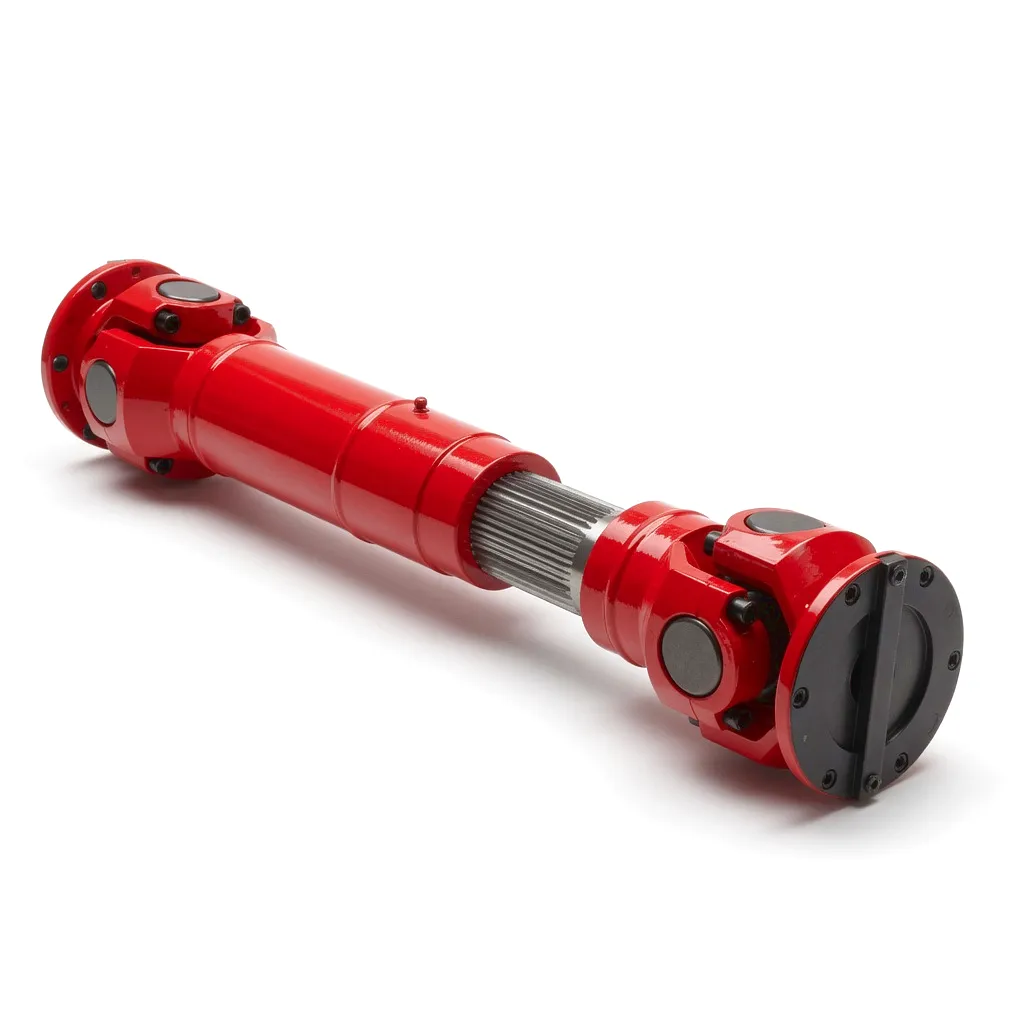
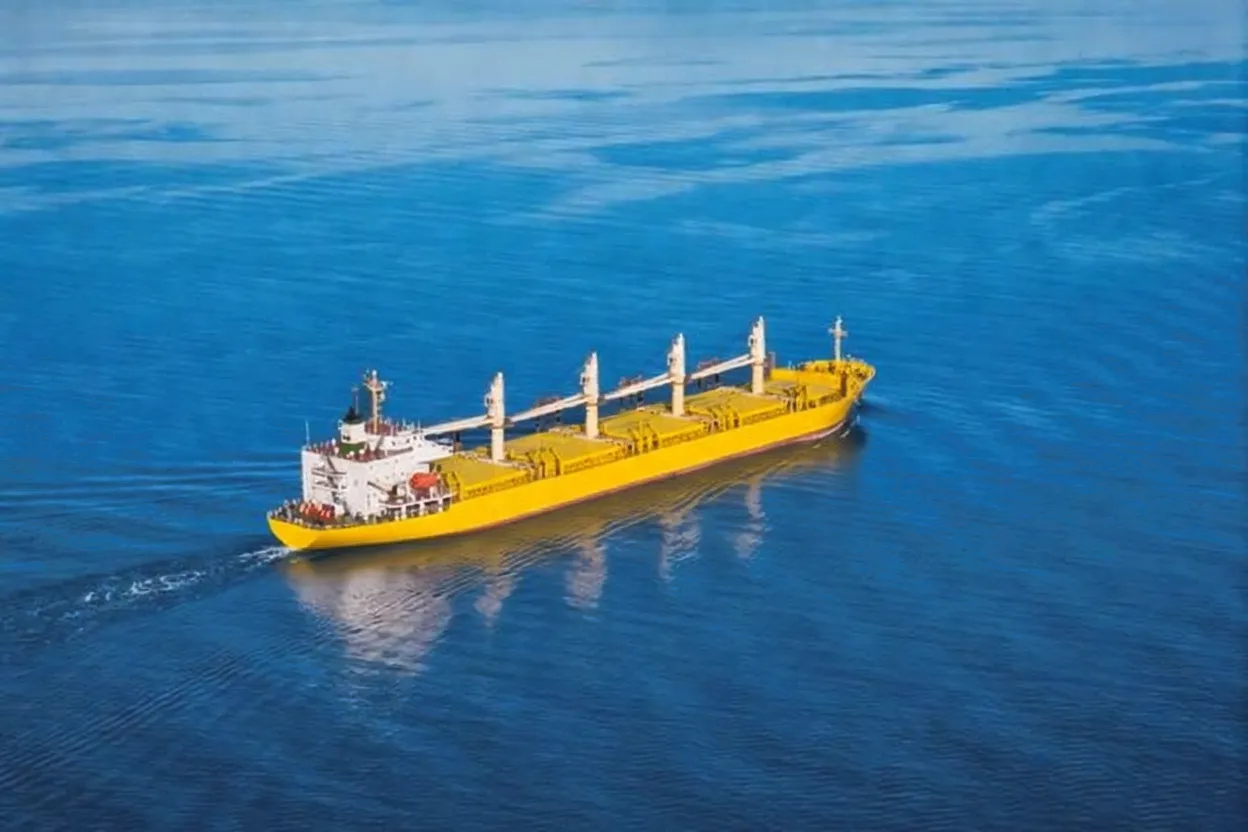
 Every vessel that leaves a British port — from North Sea supply boats departing Aberdeen to passenger ferries crossing the Solent — relies on a propulsion drivetrain that must deliver torque reliably through constantly shifting conditions. Ocean swells flex the hull, thermal loads warp shaft centrelines, and saltwater attacks every exposed surface. Somewhere between the main engine and the propeller, a critical component absorbs all of that punishment: the cardan coupling.
A marine-grade telescopic cardan shaft with corrosion-resistant coating does far more than simply connect two rotating shafts. It compensates for angular misalignment as the hull bends under wave loading, accommodates axial displacement caused by thermal expansion, and transmits hundreds — sometimes thousands — of kilonewton-metres of torque without introducing harmful vibration into the gearbox or stern tube bearings. Getting the coupling selection wrong means premature bearing failure, excessive noise in passenger compartments, and unplanned drydocking that can cost a vessel operator upwards of £40,000 per day in lost revenue.
This article draws on nearly two decades of drivetrain engineering experience to walk you through every aspect of cardan coupling technology as it applies to marine propulsion. Whether you are a naval architect specifying equipment for a new build at a yard on the Clyde, or a fleet maintenance engineer sourcing replacements for ageing tonnage, the information here will help you make a confident, well-informed purchasing decision.

Need a Custom Marine Cardan Coupling?
Ever Power engineers bespoke telescopic cardan shafts for commercial vessels, superyachts, and offshore platforms — with ABS, Lloyd’s Register, and DNV certification support.
Why Marine Propulsion Demands a Specialised Cardan Coupling
Land-based industrial drivelines can be bolted to concrete foundations and aligned with laser tools to within hundredths of a millimetre. A ship’s engine room offers no such luxury. The hull is a living structure: it hoggs and sags as wave crests pass beneath the keel, it twists under quartering seas, and it expands and contracts as engine-room temperatures fluctuate between cold start-up and full-power cruising. A 90-metre coastal tanker can experience shaft centreline deflections of 2–4 mm during routine North Sea transits, and short, sharp hull flexure in heavy weather can double that figure momentarily.
Rigid flange connections simply cannot absorb these movements. When forced to do so, they transfer bending loads into the intermediate shaft bearings, accelerate stern-tube seal wear, and generate structure-borne noise that radiates into accommodation spaces. Flexible-element couplings — rubber bushings, membrane packs — handle small misalignments, but their torque capacity drops steeply when angular offsets exceed 0.5 degrees, and many degrade rapidly in the hot, oily atmosphere of a marine engine room.
A properly specified cardan coupling solves these problems by using universal-joint geometry — paired yokes connected through a cross-journal bearing assembly — that can transmit full rated torque across angular misalignments of 2 to 15 degrees, depending on configuration. The telescopic spline section adds axial float, absorbing thermal growth and hull deflection simultaneously. Coating systems qualified to withstand continuous saltwater spray complete the package, giving shipbuilders a compact, proven, and classification-society-approved solution for the toughest drivetrain challenge afloat.
Operating Principle: How a Marine Cardan Coupling Transfers Torque
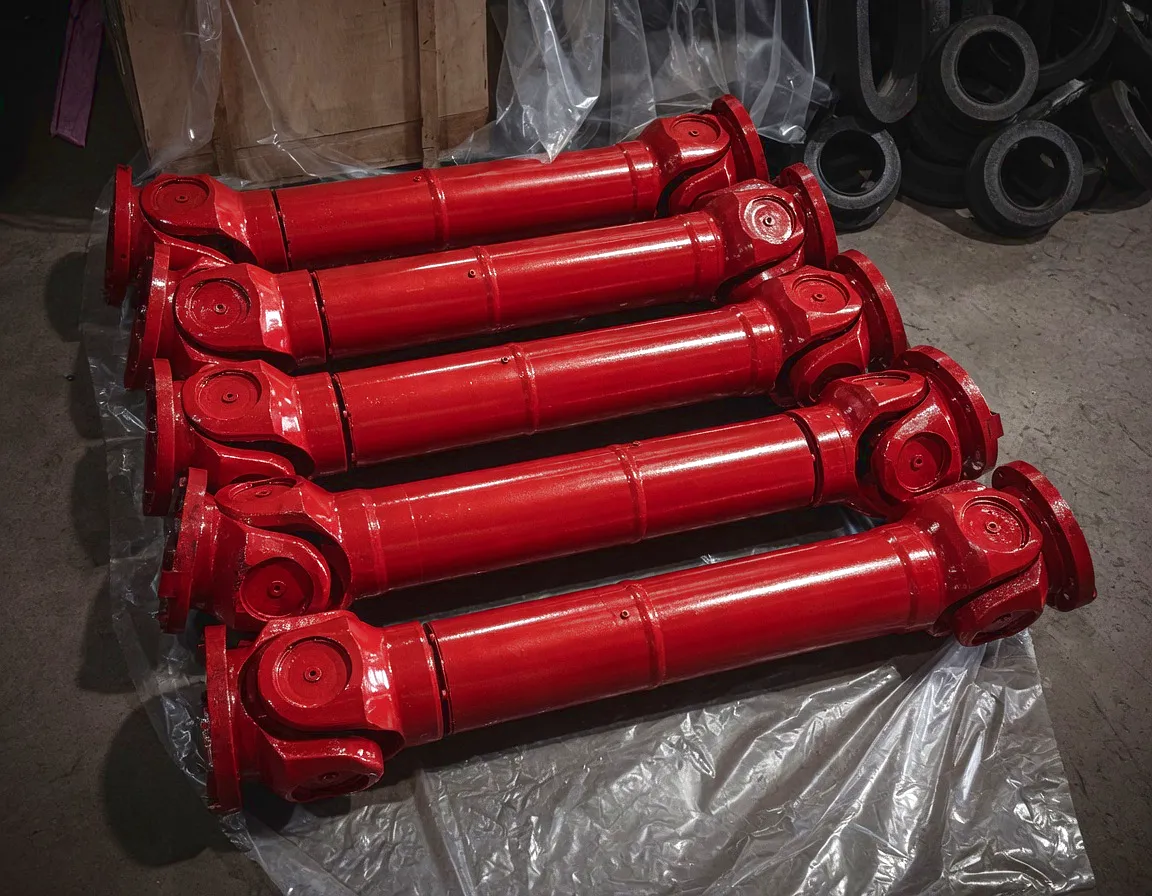 The core mechanism traces its lineage to Gerolamo Cardano’s 16th-century description of the universal joint, though modern marine variants bear little resemblance to the brass gimbal he envisioned. A contemporary marine-grade cardan coupling comprises two yoke-and-cross assemblies mounted at either end of a tubular or splined intermediate shaft. Each cross — often called a spider or trunnion — sits in four needle-roller bearing cups pressed into the yoke bores. When the driving yoke rotates, the cross pivots on one pair of bearings while the driven yoke pivots on the perpendicular pair, allowing angular deflection without breaking the torque path.
Because a single universal joint introduces cyclic speed variation proportional to the operating angle (a phenomenon described by the well-known Cardan joint velocity equation), marine propulsion shafts almost always use a double-joint arrangement — two crosses phased 90 degrees apart — so that the velocity fluctuation of the first joint is cancelled by the second. This produces constant-velocity output, eliminating the torsional excitation that would otherwise feed back into the gearbox and generate resonance in the propeller blades.
The telescopic spline section between the two joints is where axial compensation occurs. Ground and hardened spline teeth slide within a mating hub, typically with a molybdenum-disulphide or marine-grade grease lubricant retained by double-lip seals. Axial travel ranges from ±15 mm on small yacht applications up to ±80 mm on deep-sea cargo vessels. The entire assembly is dynamically balanced to ISO 1940 G6.3 or better, keeping vibration levels within classification-society limits even at shaft speeds above 1,200 rpm.
Materials and Construction: Built to Survive Salt, Heat, and Heavy Torque
Material selection separates a coupling that lasts a decade from one that fails inside two years. Marine cardan coupling yokes are typically forged from 42CrMo4 (EN 10083-3) alloy steel, quenched and tempered to achieve a yield strength of 750–900 MPa while retaining adequate impact toughness at low temperatures — an important consideration for vessels operating in the North Sea or North Atlantic winter. The cross-journal trunnions are case-hardened to 58–62 HRC using carburising heat treatment, providing a wear-resistant surface over a tough core that resists shock loading from propeller strikes or sudden manoeuvres.
Needle-roller bearings inside the yoke caps are manufactured from AISI 52100 bearing steel with anti-corrosion surface treatment. Each bearing cup is sealed with a double-lip FKM (Viton) seal rated for continuous operation at 200 °C and intermittent spikes to 250 °C, well above the temperatures encountered in even the hottest engine compartments. Grease fill uses a NLGI Grade 2 lithium-complex marine grease with extreme-pressure additives and water washout resistance below 3 % (ASTM D1264).
External surfaces receive a multi-layer protection system. The base coat is an epoxy zinc-phosphate primer applied to a surface blasted to Sa 2½ (ISO 8501-1), followed by a high-build polyurethane topcoat in marine blue or customer-specified RAL colour. For fully submerged or bilge-level applications, Ever Power offers an optional PTFE-impregnated nickel composite coating that resists continuous seawater immersion and biofouling adhesion. Spline teeth receive a manganese phosphate conversion coating (Mil-DTL-16232) plus molybdenum-disulphide dry-film lubricant, ensuring smooth axial travel even after prolonged static periods alongside a quay wall.
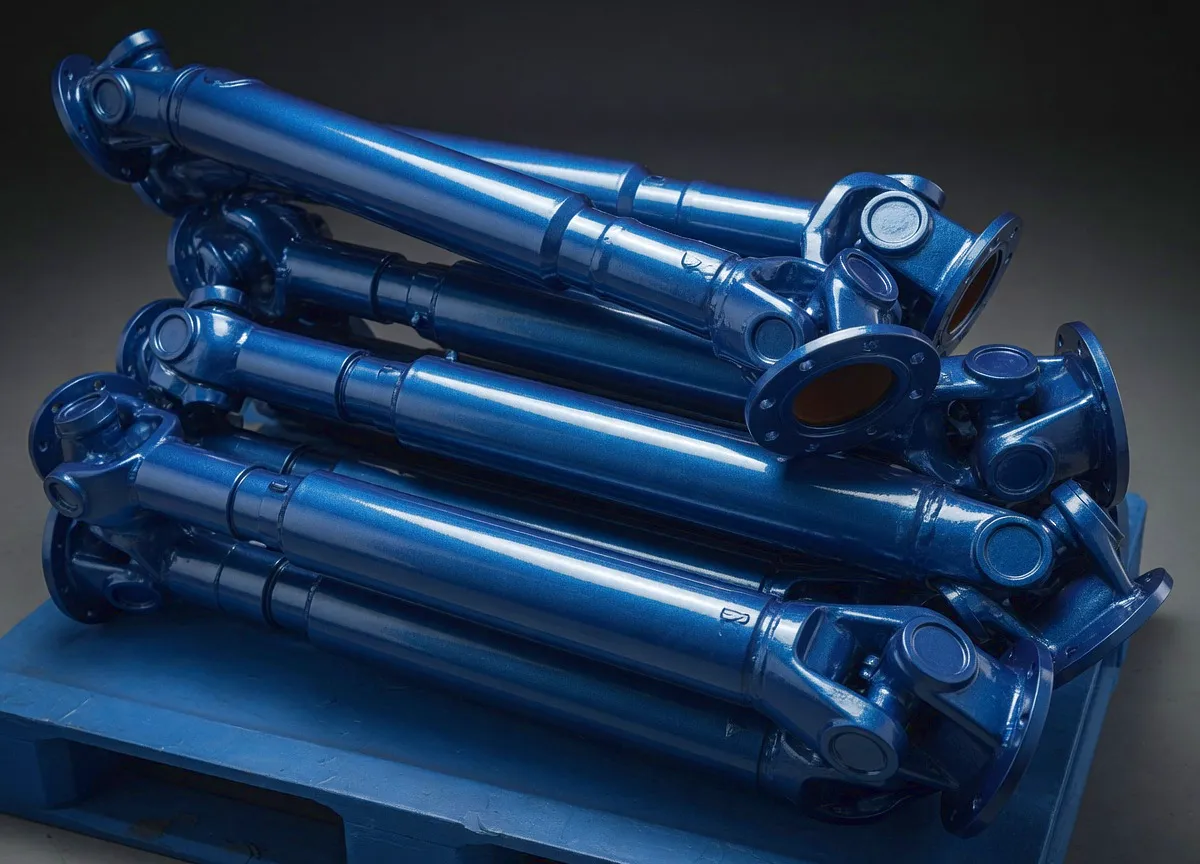
Technical Specifications — Ever Power Marine Cardan Coupling Range
| Parameter | EP-MC 200 | EP-MC 400 | EP-MC 800 | EP-MC 1500 |
|---|---|---|---|---|
| Rated Torque (Nm) | 20,000 | 40,000 | 80,000 | 150,000 |
| Peak Torque (Nm) | 30,000 | 60,000 | 120,000 | 225,000 |
| Max Speed (rpm) | 1,800 | 1,500 | 1,200 | 900 |
| Max Operating Angle | 15° | 12° | 10° | 8° |
| Axial Travel (mm) | ±20 | ±35 | ±55 | ±80 |
| Shaft Bore Range (mm) | 60–110 | 90–160 | 130–220 | 180–320 |
| Balance Grade | G6.3 | G6.3 | G6.3 | G2.5 |
| Weight (kg) | 85 | 165 | 310 | 580 |
| Coating System | Epoxy Zinc Phosphate + PU Topcoat (standard) / PTFE-Ni Composite (optional) | |||
| Classification Support | ABS, Lloyd’s Register, DNV, BV, CCS | |||
Key Advantages of Cardan Couplings in Marine Drivetrain Design
Vibration Attenuation
The double-joint constant-velocity arrangement eliminates torsional pulsation at the propeller, reducing cabin noise levels by 3–6 dB(A) in documented installations. Lower vibration also extends gearbox and bearing service life, cutting maintenance budgets over a vessel’s 25-year operational cycle.
High Misalignment Tolerance
Where rubber-element couplings struggle beyond 0.5 degrees, a cardan coupling handles 8–15 degrees of angular offset without derating. This generous allowance simplifies engine-room layout and reduces the precision required during initial shaft alignment — a real time-saver during new-build construction at yards across the UK.
Corrosion-Proof Longevity
Multi-layer coating systems and sealed bearing assemblies mean the coupling can operate in bilge-level positions exposed to seawater ingress, fuel spills, and high humidity without surface degradation. Field data from installations in the English Channel show coating integrity maintained beyond 10 years without touch-up.
Classification-Ready Documentation
Every Ever Power marine cardan coupling ships with a full material certificate package (EN 10204 3.1), dynamic balance report, dimensional inspection protocol, and drawings pre-formatted for ABS, Lloyd’s Register, or DNV submission. This dramatically accelerates the classification approval process for UK-flagged vessels.
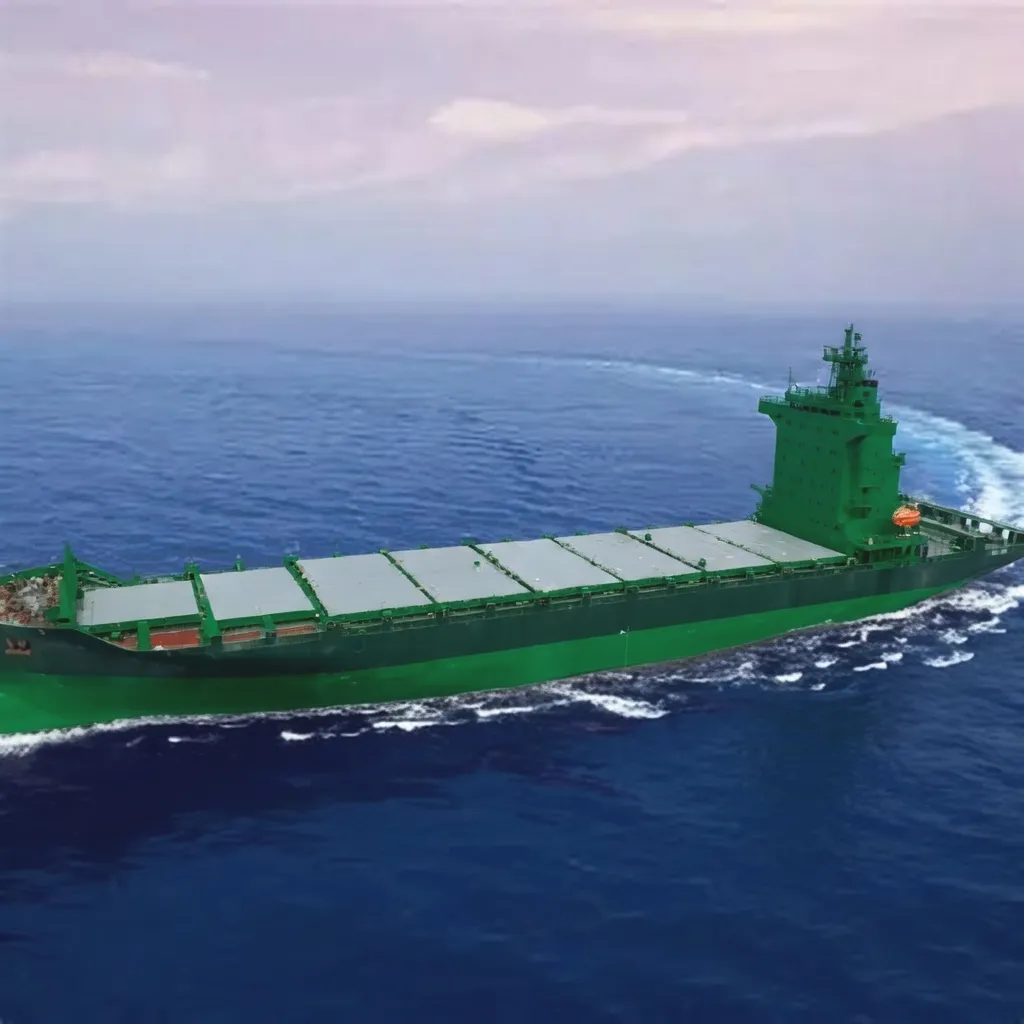
Where Marine Cardan Couplings Are Deployed Across the UK Fleet
Commercial Cargo Vessels and Bulk Carriers. On deep-sea and short-sea traders calling at Felixstowe, Southampton, and Liverpool, cardan couplings connect medium-speed four-stroke diesel engines to reduction gearboxes driving fixed-pitch propellers. Hull deflection is most severe on longer vessels (80 m+), making the telescopic axial compensation of a cardan shaft indispensable. Engine outputs in this segment typically range from 2,000 to 8,000 kW, corresponding to the EP-MC 400 and EP-MC 800 coupling sizes.
Passenger Ferries and Ro-Ro Vessels. Cross-Channel and Irish Sea ferries built or refitted at yards in Belfast, Birkenhead, and Appledore place extreme demands on noise and vibration control because passenger comfort directly affects ticket revenue. A cardan coupling’s constant-velocity output and inherent vibration damping outperform most alternatives. Dual-engine, twin-shaft configurations are common, and Ever Power supplies matched pairs balanced to identical residual imbalance values to prevent beat-frequency vibration between the two shafts.
Superyachts and Motor Yachts. Britain’s specialist yacht-build and refit sector — concentrated around Pendennis in Falmouth, Sunseeker in Poole, and Princess Yachts in Plymouth — increasingly specifies cardan couplings for vessels above 30 metres LOA. Owner expectations for near-silent running mean that every decibel matters, and the cardan coupling’s elimination of torsional pulsation gives naval architects a measurable acoustic advantage over membrane or disc-type alternatives.
Offshore Support Vessels and Workboats. Crew transfer vessels serving North Sea wind farms, anchor-handling tugs operating out of Aberdeen, and pilot launches in the Humber Estuary all face punishing sea states and aggressive manoeuvring cycles. The cardan coupling’s ability to handle high angular misalignment at full torque — without the fatigue limitations of flexible-disc elements — makes it the preferred choice for vessels that spend their working lives in rough water.
Engineering Challenges and How the Right Cardan Coupling Overcomes Them
Long-Term Seawater Immersion. Bilge-level and below-waterline coupling positions expose the unit to continuous or intermittent saltwater contact. Standard industrial paint systems fail within 18 months in this environment. Ever Power’s PTFE-nickel composite coating, combined with sealed-for-life bearing assemblies and stainless-steel fasteners (A4-80 to ISO 3506), delivers verified corrosion protection for at least 60 months of continuous immersion. Field returns from English Channel ferry operators confirm this benchmark under real-world conditions.
Classification Society Approval. Any component in the propulsion load path of a classed vessel requires type approval or project-specific approval from the relevant classification society. This involves detailed strength calculations (typically to IACS UR M56 or equivalent), material-test witnessing, and dimensional inspection by a society surveyor. Ever Power maintains active type-approval certificates with ABS and Lloyd’s Register and can arrange DNV and Bureau Veritas project approvals on request. Having these certificates in hand before the yard places an order can shave weeks off the approval timeline.
Torsional Vibration Analysis Integration. Marine classification rules mandate a torsional vibration analysis (TVA) for every propulsion installation. The cardan coupling’s stiffness and inertia values must be accurately modelled as part of this study. Ever Power provides full torsional stiffness data, moment-of-inertia figures, and damping coefficients in a format compatible with Wolfson, ShaftDesigner, and other TVA software packages, enabling naval architects and consultants to integrate the coupling into their models without guesswork.
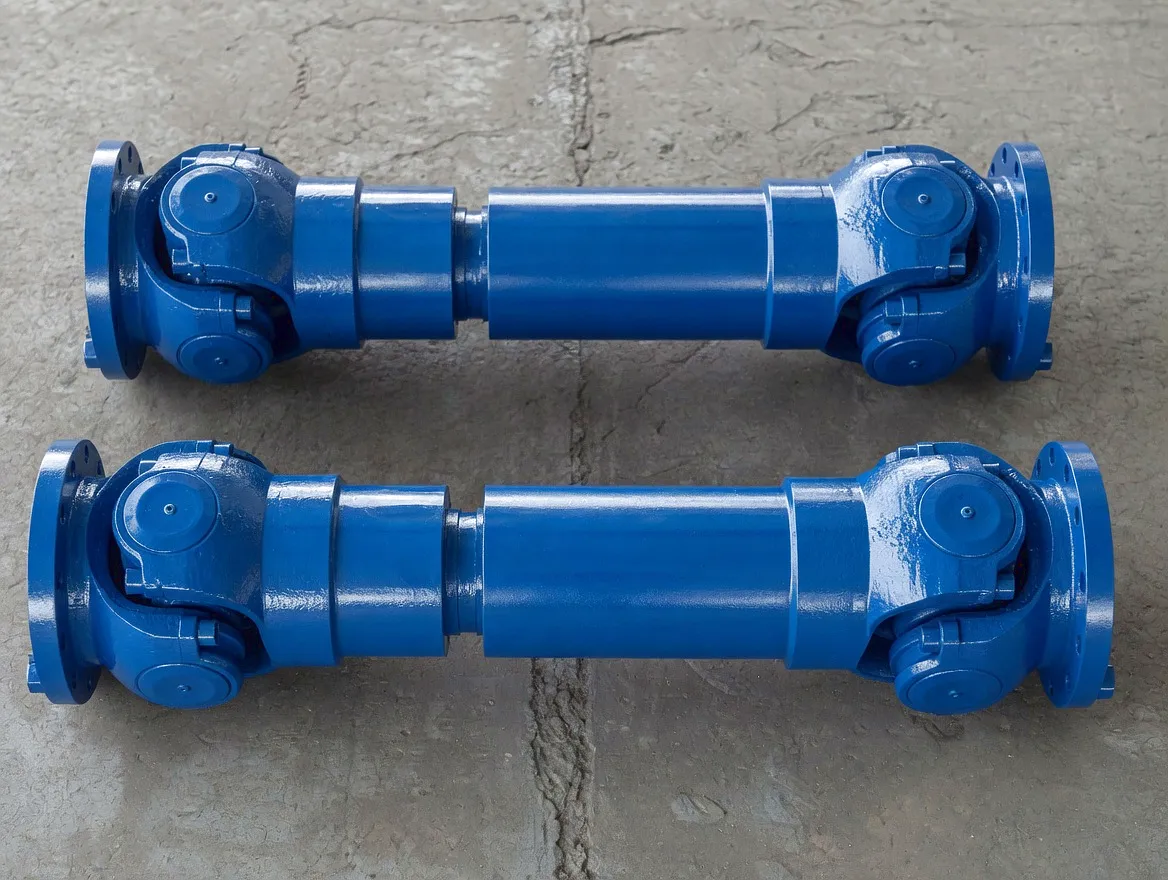
Customer Success: Caledonian Marine Services, Scotland
PROJECT OVERVIEW
Caledonian Marine Services operates a fleet of eight 45-metre passenger ferries serving island routes on the west coast of Scotland. During scheduled drydocking of the MV Hebridean Star in 2024, inspectors discovered advanced spalling on the cross-journal bearings of the existing flexible coupling, along with measurable wear on the intermediate shaft splines — after only four years of service. The vessel had logged 22,000 running hours in some of the harshest waters around the British Isles, including the exposed Minch crossing between Skye and the Outer Hebrides.
The operator contacted Ever Power seeking a replacement coupling that could withstand the same operating conditions for a minimum of eight years without major overhaul. After reviewing the vessel’s general arrangement drawings, engine output data, and shaft alignment survey reports, Ever Power’s marine engineering team recommended the EP-MC 400 with PTFE-nickel composite coating and double-sealed bearing assemblies rated to IP67.
Installation was completed during a 10-day drydocking at Ferguson Marine in Port Glasgow. Post-installation sea trials recorded a 4.2 dB(A) reduction in structure-borne noise at the accommodation-deck measurement point and a 38 % drop in lateral vibration amplitude at the forward intermediate-shaft bearing. After 14 months and 5,800 running hours, the coupling shows zero measurable bearing wear and the coating remains fully intact. Caledonian Marine has since ordered EP-MC 400 units for three additional vessels in its fleet.
WHAT OUR CLIENTS SAY
“We trialled several coupling types over the years. The Ever Power cardan coupling is the only one that has survived a full refit cycle without bearing replacement on our Minch routes. The noise reduction alone justified the investment — our passengers notice the difference.”
— Alistair MacLeod, Fleet Engineering Manager, Caledonian Marine Services, Glasgow
“The classification documentation package from Ever Power was comprehensive and ready to submit. Lloyd’s Register approved the installation within two weeks — significantly faster than we have experienced with other suppliers. That kind of support matters when you are working against a drydock schedule.”
— David Thornton, Naval Architect, Burgess Marine, Portsmouth
“We specified EP-MC 800 couplings for a series of 60-metre crew transfer vessels bound for the Dogger Bank wind farm. The angular misalignment capacity was critical because these boats flex dramatically in short, steep North Sea swells. Eighteen months in, zero issues.”
— Sarah Jennings, Chief Engineer, Tidal Transit Ltd, Great Yarmouth
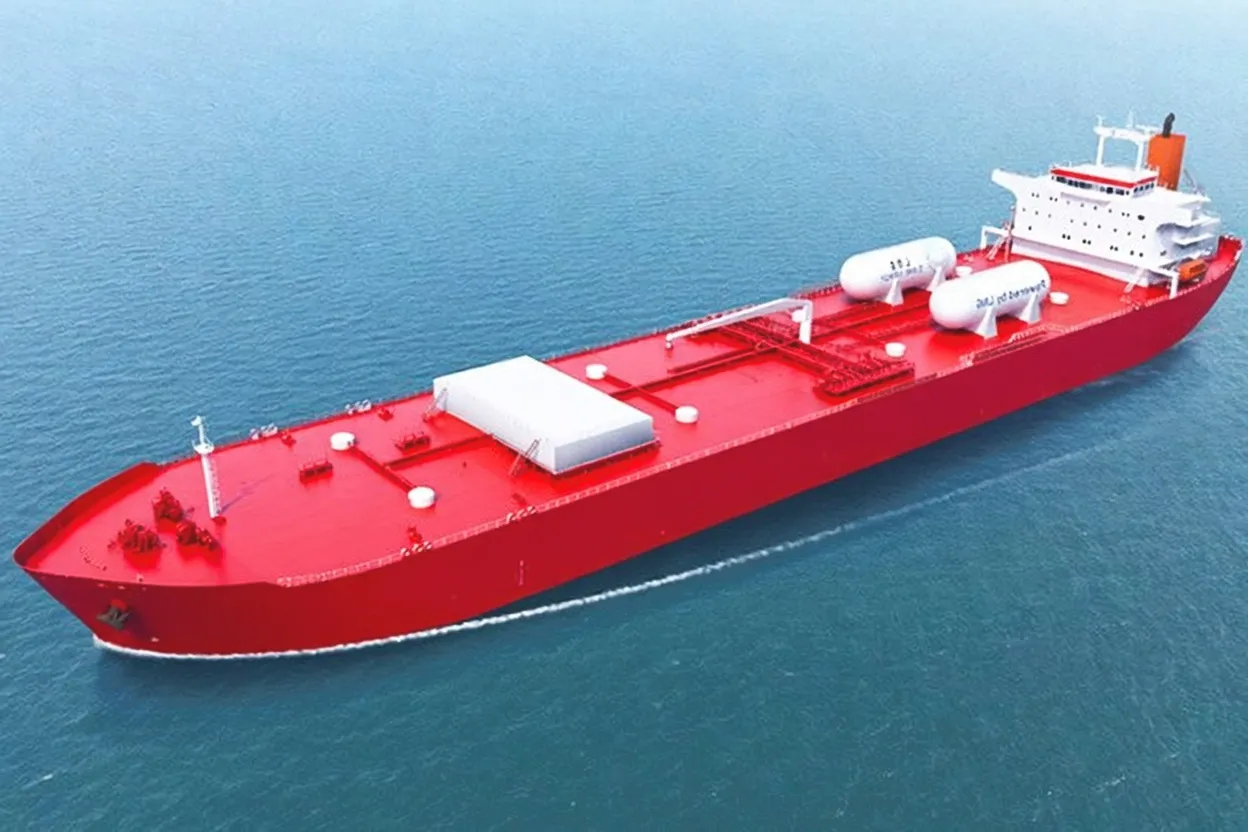
Ever Power: Your Specialist Cardan Coupling Manufacturer with Full Customisation Capability
Ever Power operates a purpose-built production facility spanning 28,000 m² equipped with CNC turning centres up to 2-metre swing, CNC gear-hobbing machines, induction hardening furnaces, and a dynamic balancing hall capable of handling shafts up to 6 metres in length and 3 tonnes in weight. An in-house metallurgical laboratory provides spectrographic analysis, Charpy impact testing, and hardness verification on every forging batch, ensuring traceability from raw billet to finished coupling.
What sets Ever Power apart from catalogue-only suppliers is the depth of its customisation service. The marine engineering team routinely adapts standard coupling designs to match unusual flange patterns, non-standard bore sizes, specific classification-society material requirements, and bespoke coating specifications. Typical lead time for a fully customised marine cardan coupling — including engineering drawings, material procurement, machining, heat treatment, coating, balancing, and testing — is 5 to 7 weeks from order confirmation. Urgent deliveries to UK ports can be arranged within 3 weeks by request.
Every unit leaves the factory with a full documentation pack: material certificates (EN 10204 3.1), dimensional inspection report, dynamic balance certificate (ISO 1940), hardness test results, coating thickness measurements, and a torque-test record if requested. This paperwork package is formatted for direct submission to ABS, Lloyd’s Register, DNV, and Bureau Veritas, accelerating the classification approval process and eliminating rework for the shipyard’s quality department.
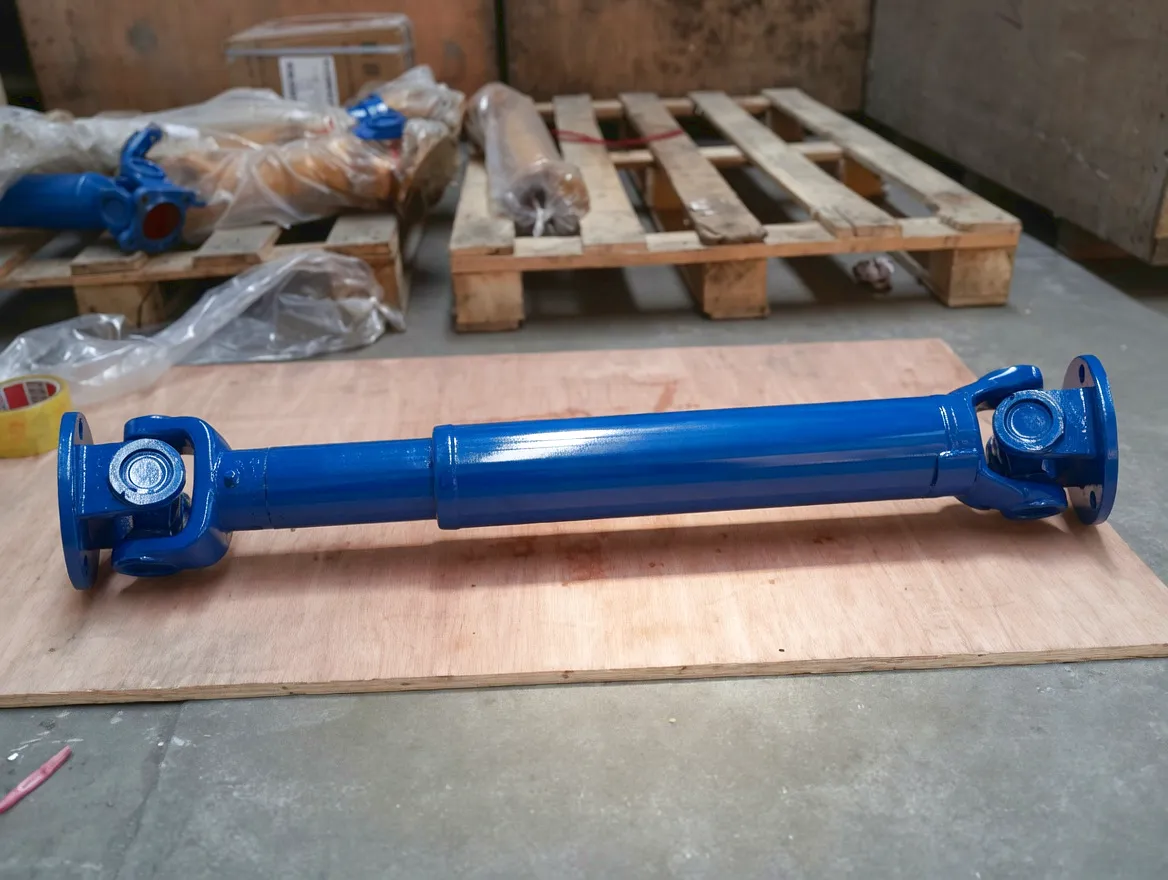
Ready to Discuss Your Project?
Whether you need a standard catalogue coupling or a fully bespoke marine cardan shaft, our engineering team is ready to help. Contact us with your vessel details and shaft arrangement drawings.
Selecting and Sizing a Marine Cardan Coupling: Practical Guidance
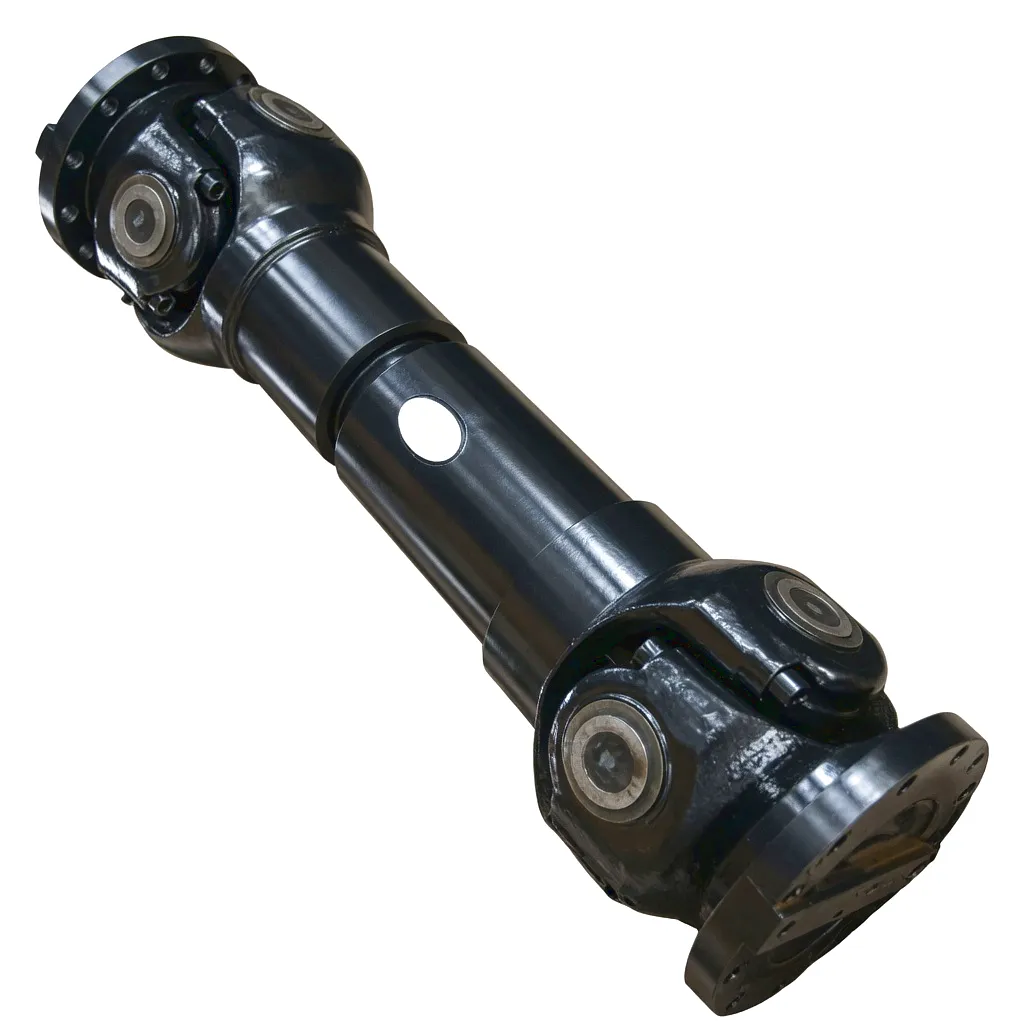 Proper coupling selection begins with three data points: the continuous rated torque of the prime mover (in Nm), the maximum anticipated angular misalignment during operation (in degrees), and the required axial travel to accommodate hull deflection and thermal growth (in mm). The coupling’s rated torque must exceed the engine’s maximum continuous rating multiplied by a service factor that accounts for the application severity. Marine classification societies generally prescribe service factors between 1.5 and 2.0 for propulsion drivelines, depending on engine type, number of cylinders, and whether a torsional vibration damper is fitted.
Angular misalignment is determined from the shaft alignment survey, which should account for both static (cold) and dynamic (hot, loaded) conditions. If no alignment survey is available, a useful rule of thumb for steel-hulled vessels under 100 metres LOA is to assume a dynamic angular offset of 1.0 to 2.5 degrees. Aluminium-hulled vessels flex more, and a 2.0 to 4.0 degree allowance is prudent. The selected coupling must accommodate this angle without exceeding its rated angular capacity, with a margin of at least 20 %.
Axial displacement is driven primarily by thermal expansion of the shaft between the engine flange and the gearbox or stern tube. For a typical carbon-steel intermediate shaft, thermal growth is approximately 0.012 mm per metre of shaft length per degree Celsius of temperature rise. On a vessel with a 6-metre intermediate shaft and a 40 °C temperature differential between cold start-up and full-power operation, expected axial growth is roughly 2.9 mm — well within the EP-MC 200’s ±20 mm capability. However, hull deflection adds to this figure, and designers should include a generous margin. When in doubt, moving up one coupling size is always the more conservative — and more cost-effective over a vessel’s lifespan — decision.
Cardan Coupling vs Alternative Marine Coupling Types
| Feature | Kardaanikytkentä | Flexible Disc | Rubber Element | Membrane Pack |
|---|---|---|---|---|
| Max Angular Offset | 8°–15° | 0.5°–1.0° | 1°–3° | 0.5°–1.5° |
| Axial Compensation | ±20 to ±80 mm | None | ±2–5 mm | ±1–3 mm |
| Torque Capacity | Very High | High | Medium | High |
| Vibration Damping | Excellent | Moderate | Good | Moderate |
| Saltwater Resistance | Outstanding | Poor | Moderate | Poor |
| Service Life (Marine) | 8–12 years | 3–5 years | 2–4 years | 4–6 years |
Maintenance, Inspection, and Service Life Expectations
One of the most commercially attractive aspects of a sealed marine cardan coupling is its minimal maintenance demand. The needle-roller bearings are greased and sealed at the factory, and under normal operating conditions they require no re-lubrication for the first 15,000 to 20,000 running hours. For a vessel averaging 3,000 hours per year, that translates to five or more years between bearing inspections — typically aligning with a scheduled drydocking cycle. The telescopic spline section benefits from a grease top-up via the external zerk fitting at the same interval, a task that takes less than 30 minutes and can be performed by the vessel’s own engineering crew.
Inspection during drydocking is straightforward. The surveyor checks for bearing play by attempting to rock the yoke relative to the cross journal; any perceptible movement indicates bearing wear approaching replacement threshold. The spline section is extended and retracted by hand to verify smooth, free movement without binding or excessive backlash. The coating is visually examined for chips, blisters, or corrosion creep. Ever Power provides a detailed inspection checklist and pass/fail criteria with every coupling, making it easy for class surveyors and yard technicians to complete the assessment efficiently.
When bearing replacement does become necessary — typically after 8 to 12 years or 30,000+ running hours — the cross-journal assembly can be removed and refurbished without withdrawing the entire coupling from the vessel. Ever Power supplies pre-assembled cross-and-bearing kits that include new needle rollers, seals, retaining rings, and grease fill, allowing a swap to be completed in under four hours. This modular approach keeps drydocking time — and cost — to an absolute minimum.
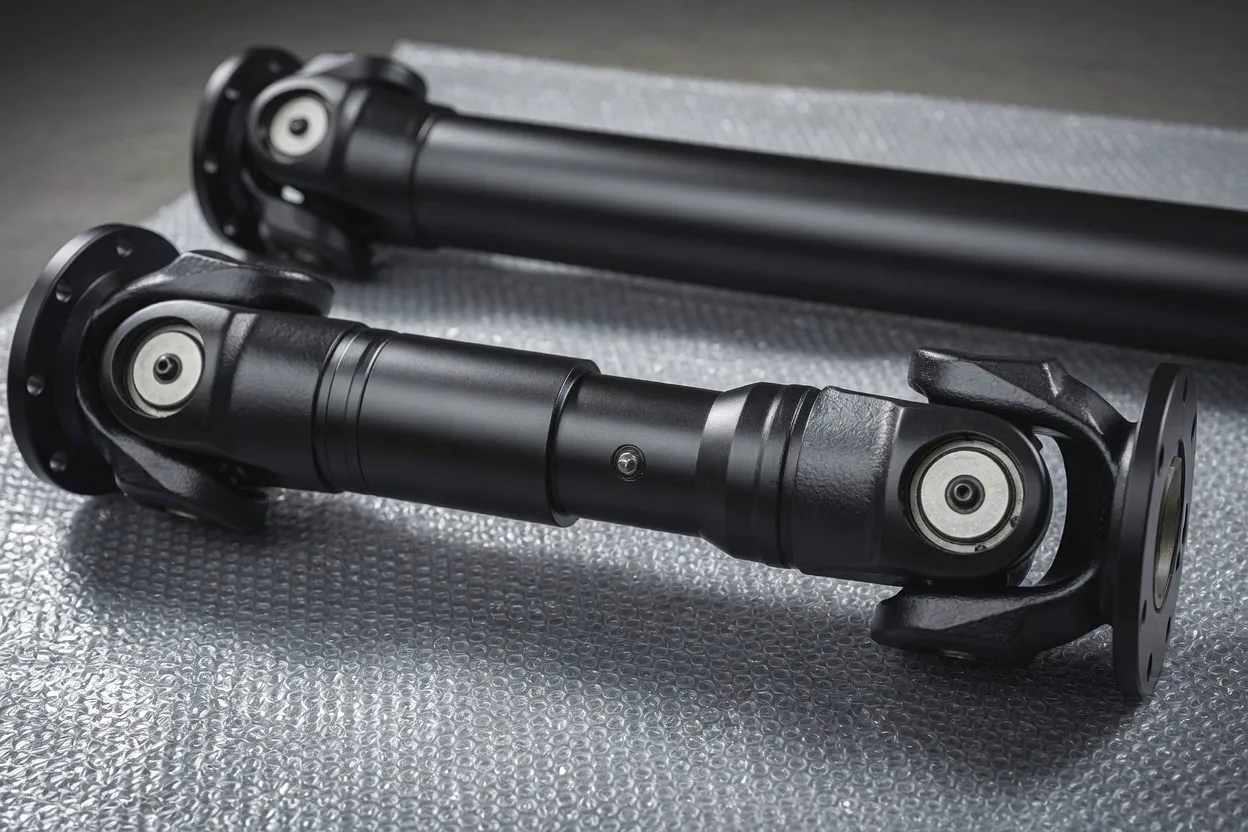
Serving the United Kingdom’s Maritime Industry
Ever Power ships marine cardan couplings to shipyards, refit facilities, and fleet operators throughout the United Kingdom. Regular deliveries reach ports and yards in Southampton, Falmouth, Plymouth, Portsmouth, Belfast, Glasgow, Aberdeen, Grimsby, Great Yarmouth, and the Tees. All shipments are crated to ISPM-15 standards for international transport and can be delivered DDP (Delivered Duty Paid) to any UK address, eliminating customs clearance headaches for the buyer.
For urgent spares and breakdown situations, Ever Power maintains a buffer stock of high-demand coupling sizes and cross-journal bearing kits that can be dispatched within 48 hours. A dedicated UK-facing sales engineer is available to discuss technical requirements, review drawings, and provide budgetary quotations — typically within one working day of receiving the enquiry. Whether your vessel is alongside in Tilbury or in drydock at Cammell Laird, we can get the right kardaanikytkentä to you on schedule.
Frequently Asked Questions About Marine Cardan Couplings
What does a marine-grade cardan coupling cost for a UK-built commercial vessel?
Pricing depends on rated torque, shaft diameter, axial travel requirement, and coating specification. For a typical 40,000 Nm rated coupling suitable for a coastal cargo vessel or medium-sized ferry, budget costs generally fall between £4,500 and £9,000 ex-works. Bespoke configurations with enhanced coatings or special flange patterns may be higher. Contact Ever Power at [email protected] with your shaft arrangement drawings for a firm quotation within one working day.
How do I get Lloyd’s Register approval for a cardan coupling on a UK-flagged vessel?
Ever Power holds active type-approval certificates from both Lloyd’s Register and ABS. When you order a coupling for a classed vessel, we supply a complete documentation package — material certificates, strength calculations, dimensional reports, and balance certificates — formatted to LR’s submission requirements. This package can be submitted directly to the attending surveyor, and approval is typically granted within two to three weeks.
Which cardan coupling supplier delivers to shipyards in Southampton and Portsmouth?
Ever Power delivers DDP to all major UK ports and shipyards, including Southampton, Portsmouth, Falmouth, Belfast, Glasgow, and Aberdeen. Standard delivery on stock items is within 48 hours; custom-engineered couplings typically ship within 5 to 7 weeks of order confirmation. Urgent delivery can be arranged for breakdown situations.
How long does a telescopic cardan shaft last in a North Sea offshore support vessel?
Under typical North Sea operating conditions — high sea states, aggressive manoeuvring, and continuous saltwater exposure — an Ever Power marine cardan coupling with PTFE-nickel coating and sealed bearings delivers a service life of 8 to 12 years or 30,000+ running hours before bearing replacement is needed. The coupling body and spline section typically last the full 25-year operational life of the vessel with periodic re-coating during scheduled drydockings.
Can I get a custom cardan coupling quote for a superyacht refit in Falmouth or Poole?
Ever Power routinely supplies bespoke marine cardan couplings for superyacht new builds and refits at Pendennis (Falmouth), Sunseeker (Poole), and Princess Yachts (Plymouth). We can adapt flange patterns, bore sizes, shaft lengths, and coating colours to match your vessel’s specific requirements. Email your GA drawings and shaft alignment data to [email protected] and receive a detailed engineering proposal within 48 hours.
What is the difference between a cardan coupling and a flexible disc coupling for ferry propulsion?
A flexible disc coupling uses thin metal laminations that flex to accommodate small misalignments, typically under 1 degree. A cardan coupling uses universal-joint geometry that handles 8 to 15 degrees of angular offset while providing axial travel through a telescopic spline. For ferry propulsion, where hull flexure and vibration control are critical, the cardan coupling offers substantially greater misalignment capacity, better noise attenuation, and longer service life in corrosive marine environments.
Where can I find a cardan coupling supplier with ABS and DNV certification for offshore vessels in Aberdeen?
Ever Power maintains active type-approval certificates with ABS and can arrange DNV project-specific approval for offshore vessel applications. We deliver directly to yards and operators in Aberdeen and throughout the North Sea supply chain. Our marine engineering team can review your vessel specifications and provide a certified coupling solution with full classification documentation included.
Engineered for the Sea. Built for Decades.
From North Sea workboats to Solent superyachts, Ever Power marine cardan couplings deliver the torque, absorb the movement, and survive the salt — so your vessel keeps running.
edit by gzl