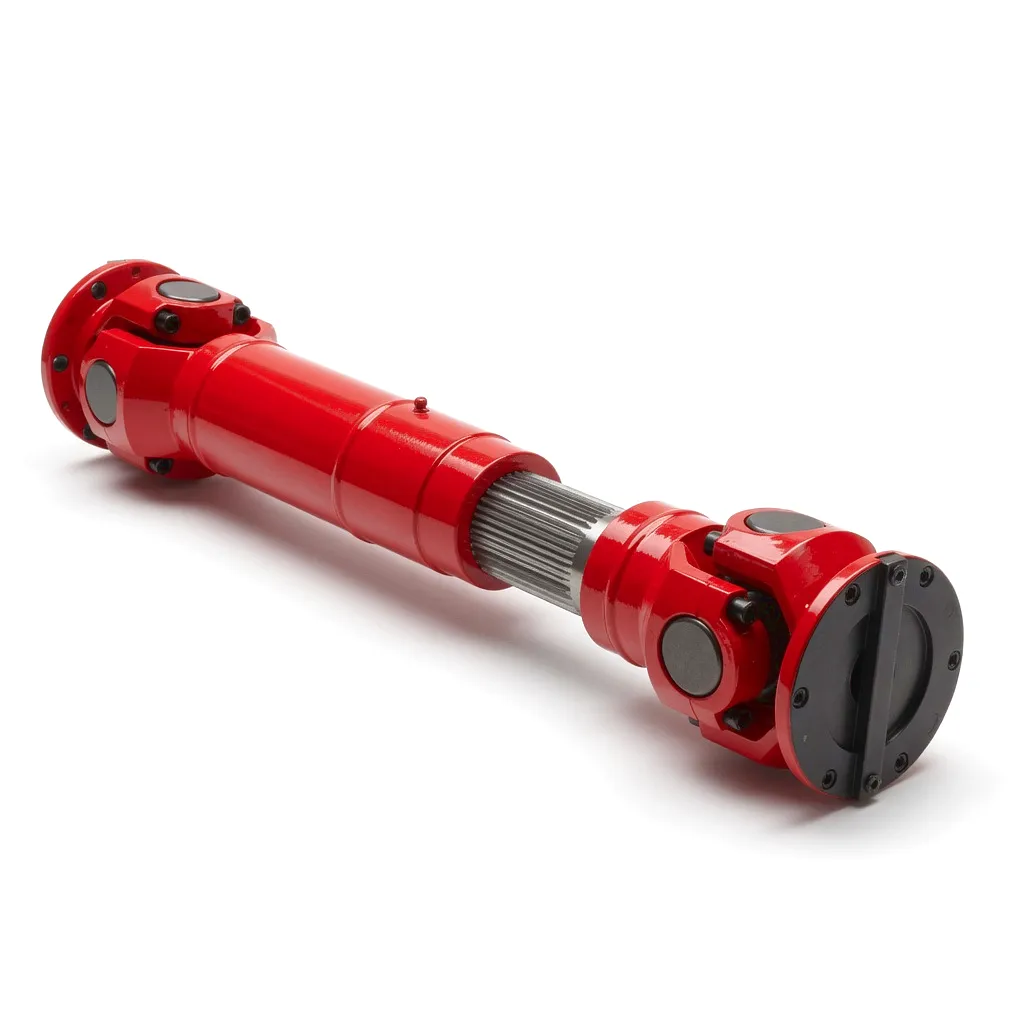
Concentrated solar power — commonly abbreviated as CSP — is one of the few renewable technologies that can generate dispatchable electricity around the clock when paired with thermal storage. Yet the mechanical engineering challenges it imposes on drive components are severe. A parabolic trough collector assembly can weigh upward of 500 kg, span lengths exceeding 100 metres in a single row, and still be expected to point at the sun with an angular tolerance tighter than 0.1°. The cardan coupling, in this context, is not merely a connector between shafts. It is the mechanical translator between motor intent and mirror reality.
At Ever Power, we manufacture and supply cardan couplings engineered specifically for high-precision solar tracking applications. Our engineering team has worked directly with CSP project developers, EPC contractors, and OEM tracking system manufacturers across the United Kingdom and Europe. This article draws on that accumulated knowledge to explain exactly why cardan couplings are chosen for CSP, what performance parameters matter most, and how to match the right product to your specific installation.
Why the Cardan Coupling Is the Preferred Choice in CSP Tracking Drives
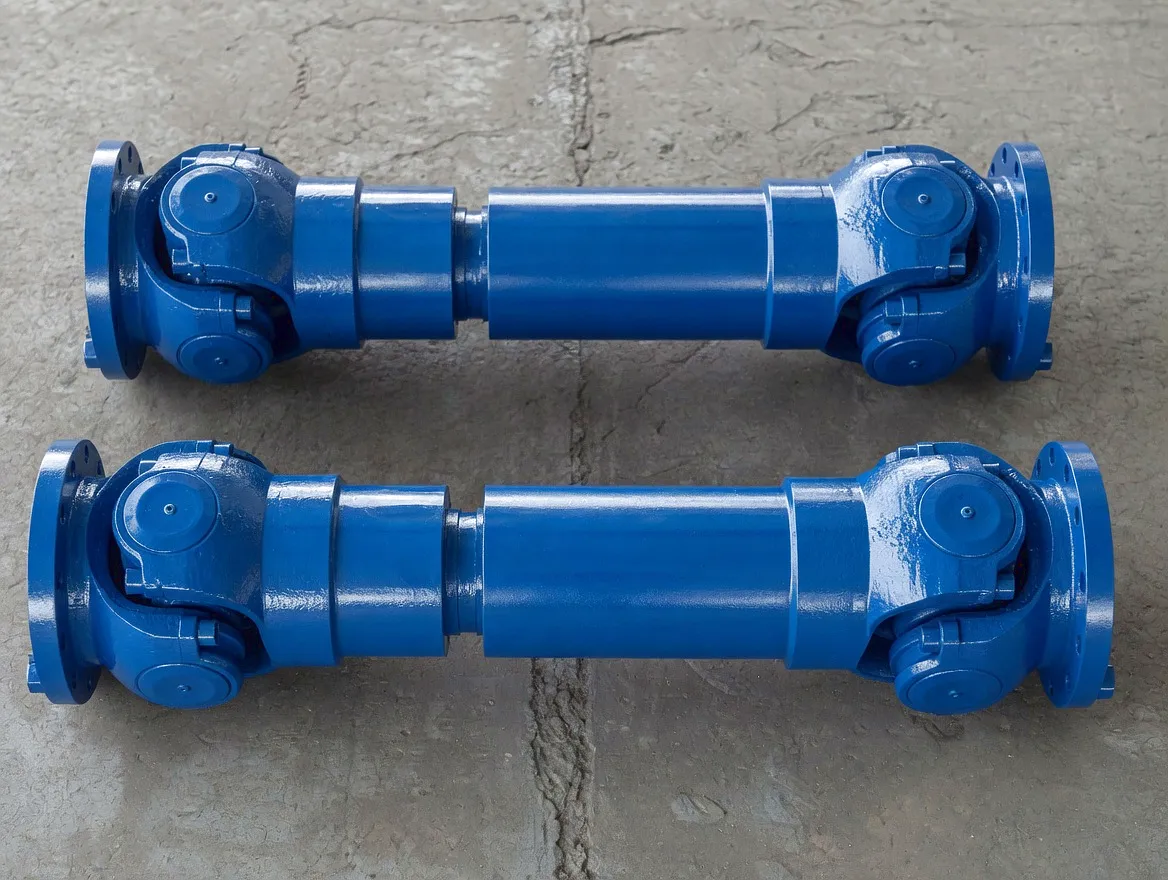
The solar tracking drive chain in a parabolic trough plant typically runs as follows: a hydraulic or electric motor drives a slewing gearbox, which in turn rotates the collector assembly through a primary shaft. Where multiple Solar Collector Assemblies (SCAs) are ganged together in a single row — and they routinely are, with eight to twelve SCAs per loop being common — the drive torque must be transmitted from one SCA to the next through inter-SCA coupling shafts. This is the critical zone where cardan couplings earn their keep.
Rigid couplings cannot survive the combination of thermal expansion differentials, foundation settlement, and the constant low-amplitude vibrations imposed by wind loading on large-aperture mirrors. Flexible jaw couplings lack the angular capacity needed when adjacent SCAs experience relative angular misalignment during their rotation arc. The cardan coupling — with its twin universal-joint architecture and intermediate splined telescoping shaft — handles all three misalignment modes simultaneously: angular deviation up to 35° per joint, axial displacement of ±30 mm or more, and lateral offset compensation through compound joint phasing.
 There is another subtler reason the cardan coupling dominates in this application. Because a double-cardan (constant-velocity) arrangement cancels the velocity fluctuation inherent in a single universal joint, the driven SCA rotates at exactly the same angular velocity as the driving SCA across the full tracking sweep. This is not a trivial engineering detail. In a CSP plant, the DNI-to-electricity conversion efficiency depends on the geometric concentration ratio staying as close to design as possible throughout the tracking day. Any cyclic angular velocity error across the inter-SCA coupling translates directly into focus scatter and thermal loss at the receiver tube.
The cardan coupling solves this with physics, not electronics. No encoder correction, no active compensation loop — just two phased universal joints, correctly assembled, delivering true constant velocity.
Technical & Performance Parameters
The table below outlines the standard performance envelope for Ever Power cardan couplings configured for CSP tracking duty. Custom configurations are available for any parameter outside these ranges — contact our engineering team for project-specific sizing.
| Parameter | Standard Range | CSP Optimised Value | Notes |
|---|---|---|---|
| Nominal Torque (Nm) | 50 – 50,000 | 200 – 8,000 | Per inter-SCA drive shaft |
| Max Single Joint Angle | 0° – 45° | ≤ 15° continuous / 35° peak | Double-joint CV configuration recommended |
| Axial Compensation | ±10 – ±80 mm | ±30 mm (spline telescoping) | Handles thermal expansion at 100 m row scale |
| Angular Positioning Accuracy | ±0.5° (standard) | < 0.1° (precision forged yokes) | Required for DNI concentration ratio |
| Operating Speed (rpm) | 0 – 3,000 | 0.001 – 2 (tracking) / 10 (stow) | Ultra-low-speed, high-torque duty cycle |
| Operating Temperature | -40°C – +120°C | -30°C – +80°C ambient | High-temp grease NLGI 2 / EP spec |
| Material — Yoke Body | Carbon steel / Alloy steel | 42CrMo4 alloy, forged | Heat-treated to HRC 28–34 |
| Surface Protection | Paint / Zinc plate | Hot-dip galvanised + epoxy topcoat | 20+ yr corrosion life outdoor desert/coastal |
| Design Life | ≥ 100,000 hrs | ≥ 25 years / 130,000 hrs | Matched to CSP plant design life |
Dish/Stirling Systems: The Two-Axis Challenge
 The dish/Stirling CSP configuration presents a fundamentally different engineering problem. Unlike the parabolic trough, which tracks on a single horizontal axis, the dish concentrator must follow the sun’s position precisely across both azimuth and elevation angles, updating continuously from sunrise to sunset. The elevation drive — the axis that tilts the dish from horizon to zenith and back — imposes a continuously variable angle on the coupling shaft connecting the fixed drive motor to the rotating elevation axis.
At the extremes of the elevation sweep (near 0° at dawn and dusk, approaching 90° at solar noon in summer), a single universal joint would introduce an unacceptable velocity ratio variation — the classic Hooke’s joint error that worsens nonlinearly as operating angle increases. The solution is the double-cardan constant-velocity joint, in which two phased universal joints with an intermediate centering socket yoke cancel each other’s velocity fluctuation, delivering a theoretically perfect 1:1 velocity ratio across the full 0°–90° working range.
Ever Power produces double-cardan assemblies rated for continuous duty across this full angular range, with bore-to-bore phasing accuracy held to ±0.25° during assembly. Centering socket yokes are precision-machined from solid billet 42CrMo4, and cross-and-bearing kits are individually matched in sets to maintain uniform contact pressure across all four trunnion bearings.
Core Advantages: Why Engineering Teams Specify Ever Power
Six performance characteristics that make the difference in long-horizon renewable energy projects.
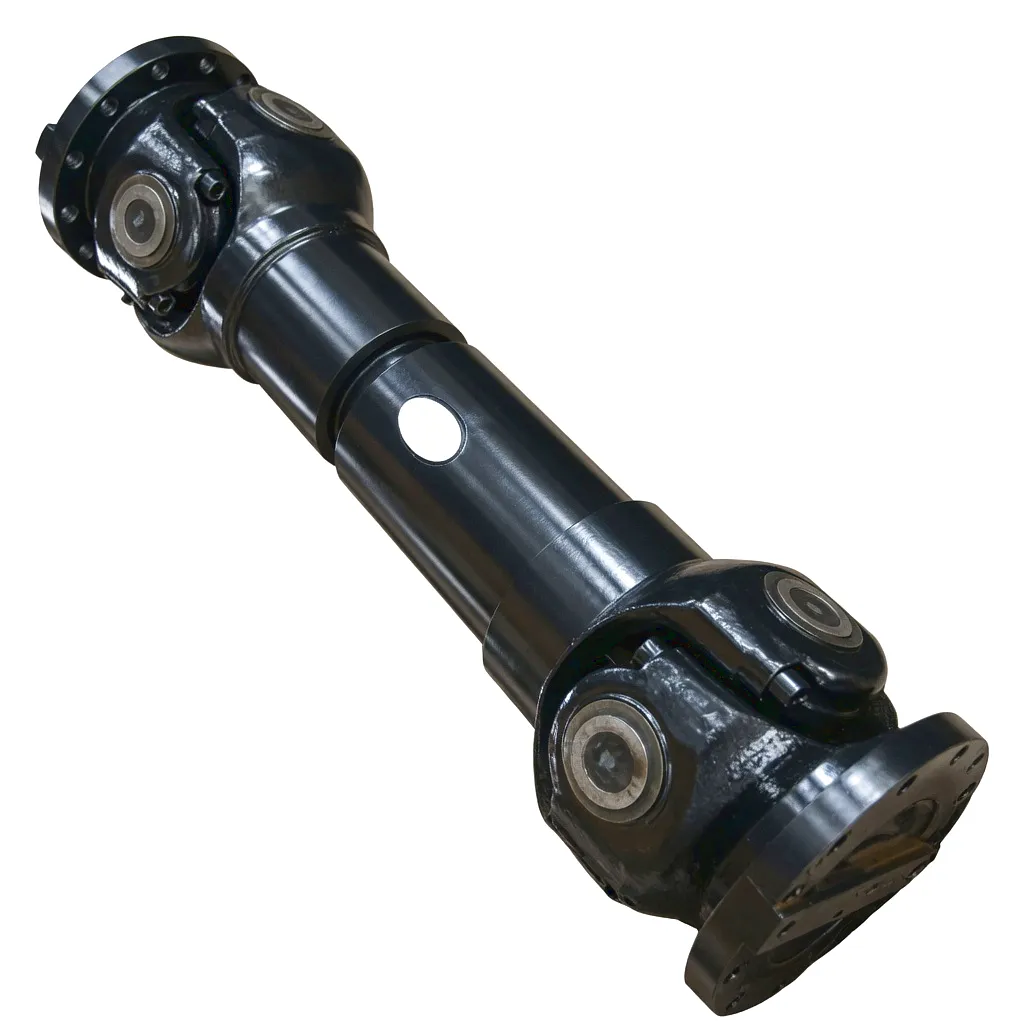
Constant Velocity Transmission
Double-cardan phasing eliminates angular velocity ripple, maintaining mirror focus geometry throughout the tracking arc. The result is measurably better optical efficiency — something single-joint competitors simply cannot match at high working angles.
Tolérance de désalignement sur trois axes
Angular, axial, and radial misalignment are absorbed simultaneously by the telescoping spline shaft and universal joints. Civil engineering tolerances, thermal growth, and wind-induced deflection are all accommodated without transmitting bending loads into the gearbox or motor shaft bearings.
Forged Alloy Construction
All structural yoke components are closed-die forged from 42CrMo4 alloy steel and heat-treated to a through-hardness of HRC 28–34. This process eliminates the porosity risk inherent in cast alternatives and delivers a fatigue life well beyond 130,000 operating hours — the 25-year design benchmark for utility-scale CSP plants.
Outdoor Corrosion Resistance
Hot-dip galvanising followed by an epoxy topcoat gives these cardan couplings a corrosion protection rating exceeding C5-I (ISO 12944), suitable for coastal desert environments where salt spray combines with abrasive dust. UK coastal and upland sites are equally well served.
Emergency Stow Rated
High-wind stow cycles demand rapid, high-torque rotation of the entire collector row to a safe park position. Ever Power cardan couplings are rated for peak stow torque at 2.5x nominal, and the needle-roller cross-and-bearing kits maintain full load capacity under sudden torque reversal without brinelling.
Low Maintenance Design
Sealed-for-life needle roller bearings filled with EP2 high-temperature grease require no field re-lubrication for up to five years under normal CSP tracking duty. Grease nipple access points are retained for projects specifying scheduled maintenance, but the default configuration eliminates this O&M cost entirely.
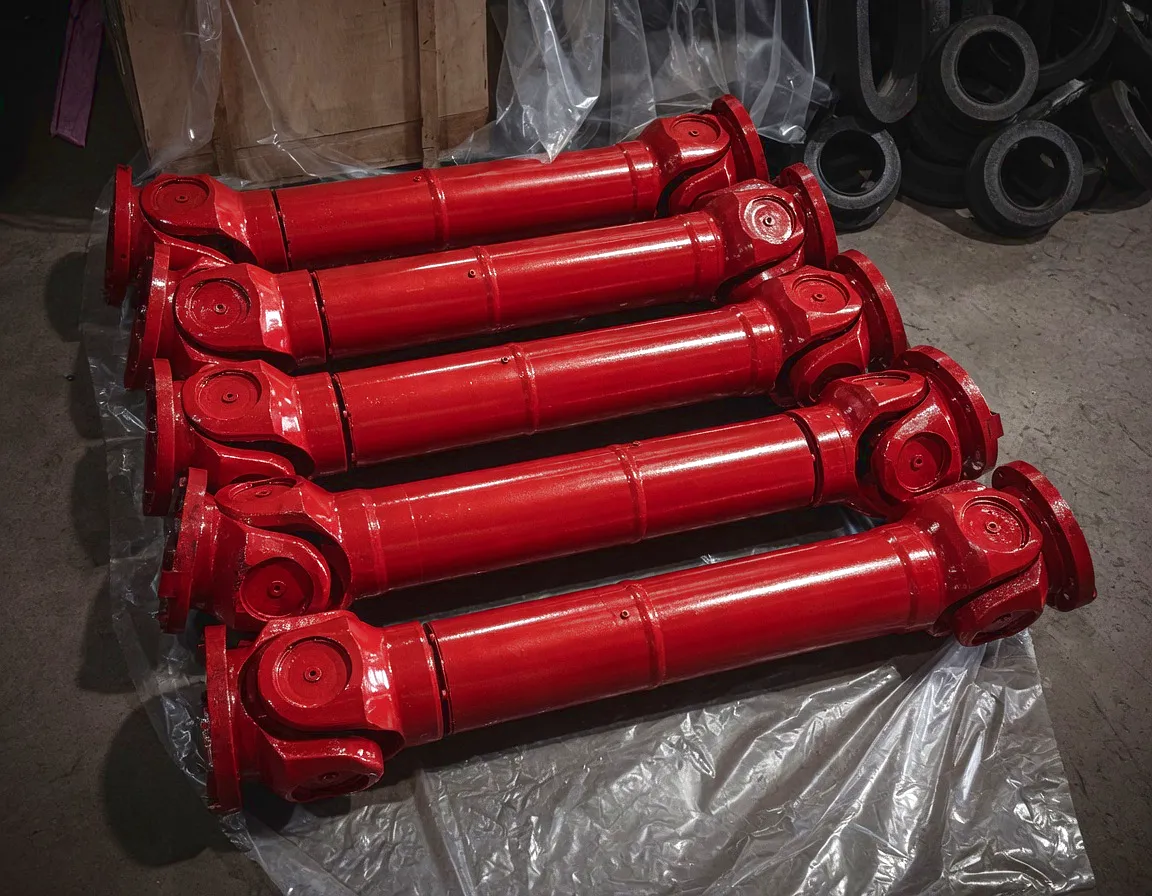
Material Selection and Design Philosophy
The cardan coupling’s performance in a CSP application is fundamentally determined by the quality of three sub-assemblies: the yoke pair, the cross-and-bearing kit (also called the spider assembly), and the intermediate telescoping shaft. Each of these components operates under a unique combination of loading conditions, and selecting the correct material grade and heat treatment for each is not interchangeable between them.
The yoke body transmits the full torsional moment of the drive train and is the highest-stressed structural element in the coupling. Ever Power produces CSP-grade yokes exclusively from closed-die forgings in 42CrMo4 (EN 10083-3), quenched and tempered to 850–1000 MPa ultimate tensile strength. This is not merely an engineering preference — it is a practical necessity when you consider that a utility-scale CSP plant cannot economically disassemble and replace a coupling shaft that sits at the centre of a 600 kg SCA mid-field.
The cross trunnion pins, by contrast, require a different metallurgical approach. They operate under alternating bending and contact stress at the bearing interface, and the ideal material response is a hard, wear-resistant surface over a tough, ductile core. Ever Power’s cross pins are manufactured from 20CrMnTi case-hardening steel, carburised and quenched to a case depth of 0.8–1.2 mm at HRC 58–62, with a core hardness of HRC 30–38. The result is a pin that can sustain millions of flex cycles without fatigue cracking at the trunnion root — the failure mode that ends the working life of inferior cross kits.
| Component | Material | Treatment |
|---|---|---|
| Yoke Body | 42CrMo4 forged | Q&T HRC 28–34 |
| Cross Pin (Trunnion) | 20CrMnTi | Carburised HRC 58–62 |
| Needle Roller Bearings | GCr15 bearing steel | Sealed, EP2 grease |
| Telescoping Spline Shaft | 45# steel / 40Cr | Induction hardened spline |
| Surface Finish | Hot-dip Zn + epoxy | C5-I (ISO 12944) |

Supplying CSP Drive Components Across the United Kingdom
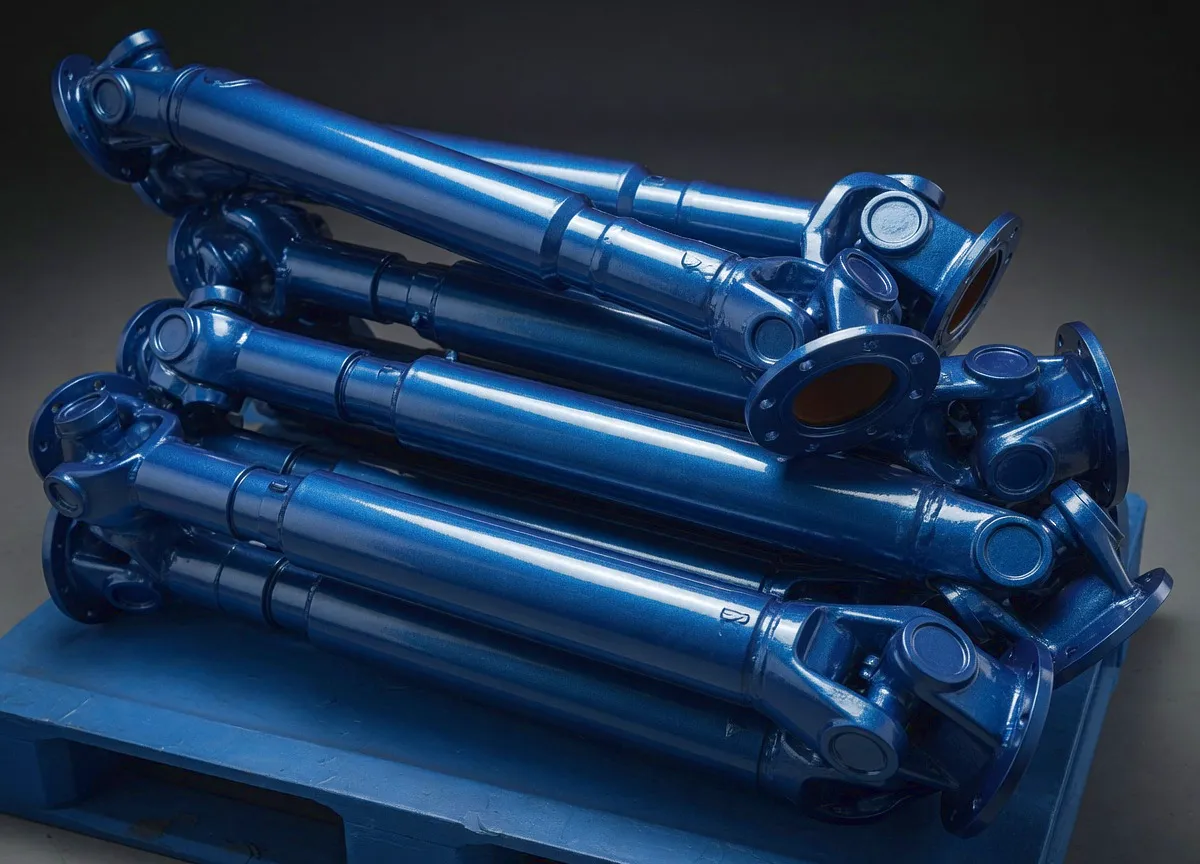
The United Kingdom’s CSP development pipeline, while smaller than those of Spain or Morocco, is growing with particular momentum in the South West of England and Scotland, where direct normal irradiance is sufficient to make small-to-medium dish/Stirling and compact linear Fresnel systems commercially viable — especially when integrated with industrial process heat applications. We regularly dispatch cardan couplings to UK-based engineering contractors, renewable energy OEMs in the West Midlands, and system integrators operating out of Edinburgh and Bristol.
Our export process from our manufacturing facilities includes full CE documentation, material test reports (EN 10204 3.1 certificates), and dimensional inspection reports per your nominated quality plan. Lead times for standard cardan coupling assemblies in the 500–5000 Nm torque range are typically 3–5 weeks from order confirmation. For non-standard bore diameters, keyway configurations, or flange bolt patterns matched to UK-specified drive components, our engineering team will issue a dimensioned drawing for approval within five working days.
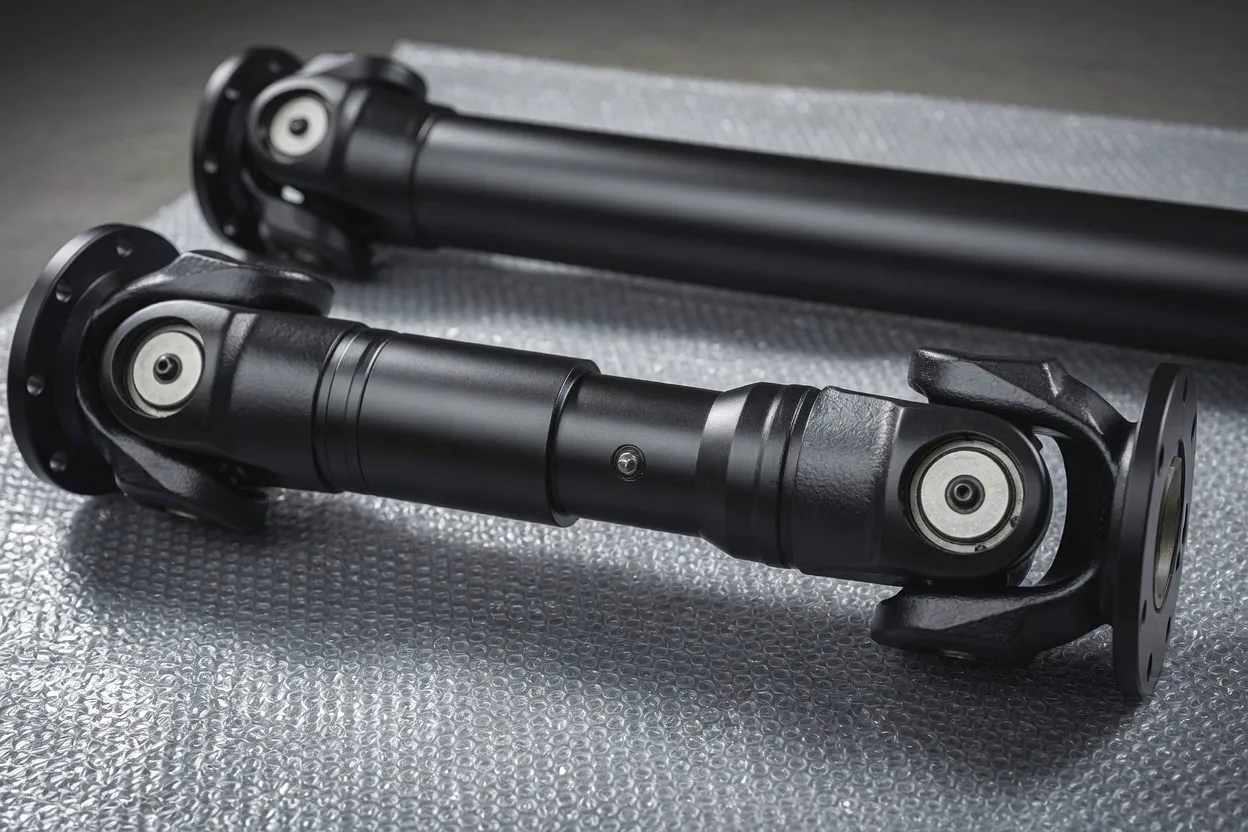
Factory & Custom Engineering Capability
Ever Power operates a dedicated precision engineering facility with CNC turning, gear hobbing, broaching, and in-house heat-treatment furnaces, giving us full control over every manufacturing step. More importantly for CSP clients, our product customisation capability is not a peripheral service — it is central to what we do. The reality of solar tracking engineering is that no two tracking system OEMs use exactly the same shaft diameter, key width, bolt circle, or flange thickness standard. Every new client project begins with a detailed dimensional survey of the mating interface components, and our engineering team produces a bespoke coupling assembly matched precisely to your system.
Customisation options available without minimum order quantity restrictions include: bore diameter from 20 mm to 280 mm; keyway profile (parallel, Woodruff, or spline); flange bolt circle and pattern; overall assembled length (telescoping range adjustable in 25 mm increments); cross-and-bearing kit specification (standard needle roller, heavy-duty needle roller, or plain bearing for very low speed / high contamination environments); and surface coating (bare machined, zinc plated, hot-dip galvanised, or Geomet). We also produce cardan coupling assemblies with integrated shrink disc locking elements for quick-release maintenance applications.
Ready to specify a cardan coupling for your CSP or renewable energy project?
Send us your drive shaft dimensional drawings, torque requirements, and installation angle envelope. Our application engineers will respond with a recommended coupling series, a dimensional approval drawing, and a firm quotation within five working days.
Customer Success: A Case Study from the Spanish CSP Sector
50 MW Parabolic Trough Plant: Inter-SCA Coupling Replacement Programme
 A Spanish EPC contractor managing a 50 MW parabolic trough plant near Écija, Andalusia, contacted Ever Power following premature fatigue failure of the original inter-SCA cardan shafts installed at commissioning. The failures were occurring at the cross-and-bearing kit at average intervals of 18 months — significantly below the 25-year design life expectation — and were attributed to undersized trunnion pin diameters and insufficient case hardening depth in the OEM-specified components.
Ever Power’s application engineering team conducted a failure mode analysis using the client’s maintenance records and recovered failed cross kits, identifying the root cause as contact fatigue (spalling) at the trunnion needle roller interface. We supplied a replacement programme covering 340 inter-SCA cardan assemblies in the 2,200 Nm nominal torque class, with upsized cross pins (trunnion diameter increased from 28 mm to 35 mm) and extended case depth to 1.1 mm. The first tranche was delivered within four weeks of order, and the second tranche followed six weeks later. Eighteen months post-installation, zero failures have been reported across the replacement population.
What Our Clients Say
“The failure analysis report Ever Power provided was as detailed as anything I’ve seen from a Tier 1 coupling supplier. They identified the root cause our own team had missed, and the replacement assemblies have performed without issue since installation. We’ve since standardised on their cardan shafts for all new project specifications.”
“We needed a double-cardan assembly with a very specific combination of bore diameter, flange pattern, and overall shaft length to match our dish tracking gearbox output. Ever Power produced a dimensioned drawing within three days of our enquiry and had the parts on-site within five weeks. The fit and quality were exactly as specified. Would recommend to any solar OEM needing a competent custom coupling supplier.”
“After sourcing cardan couplings from three different suppliers over two years and experiencing variable quality, we moved our entire programme to Ever Power. The material certificates are complete, the dimensional tolerances are tight, and the corrosion protection on the galvanised units is visibly superior to what we received from European distributors at twice the price.”
Application Scenarios Beyond CSP: Where Cardan Couplings Drive Critical Systems
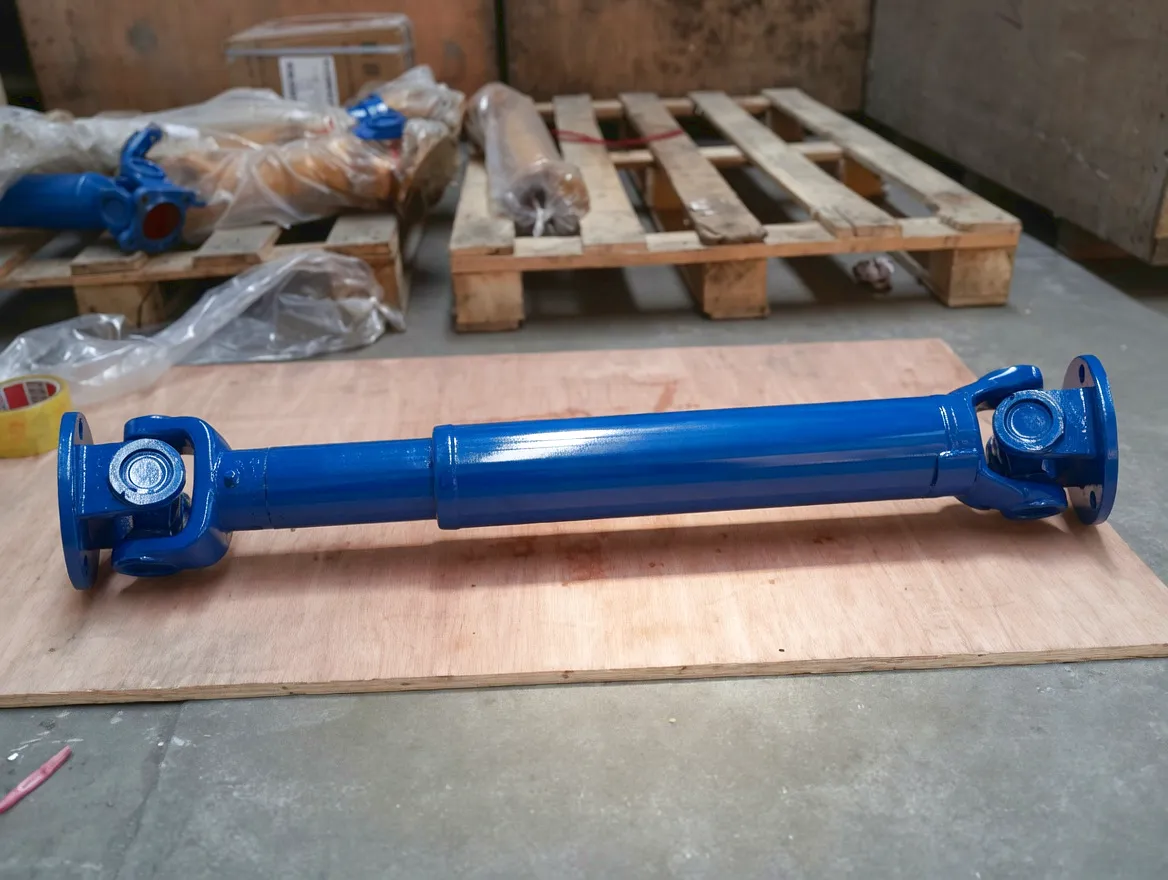
While the CSP tracking application is a technically demanding and growing market for our products, cardan couplings serve an enormously broad range of industrial sectors where angular misalignment, axial compensation, and torque transmission combine in ways that other coupling types cannot resolve. Understanding the cross-sector applicability helps engineers recognise when the cardan coupling is the right solution for a non-CSP application presenting similar kinematic constraints.
Rolling Mill Drives
Heavy-duty cardan shafts transmit rolling torque from main drive motors to work rolls that move vertically with each product gauge change, requiring continuous angular flexibility while carrying torques in the hundreds of kilonewton-metres range.
Marine Propulsion
Cardan couplings connect propeller shaft lines to gearboxes in vessels where engine/gearbox mounting flexibility and hull deflection introduce shaft angles that would destroy rigid couplings within months of operation.
Agricultural Machinery PTOs
Power take-off shafts on tractors and implements use cardan couplings to transmit power to mounted implements that articulate relative to the tractor, accommodating the full range of steering and terrain-following angles in the field.
Wind Turbine Yaw Drives
The slow-speed, high-torque yaw drive system that rotates a wind turbine nacelle into the prevailing wind uses cardan shafts to connect drive pinions to the main yaw ring gear, accommodating positional tolerance between the drive unit mounting plate and the ring gear plane.
Foire aux questions
Technical and commercial questions answered by our application engineering team.
Specify the Right Cardan Coupling for Your Project
Ever Power’s application engineering team is ready to support your CSP, wind, or industrial drive project with precision-engineered cardan couplings, complete documentation, and custom configurations delivered to the United Kingdom.
edit by gzl