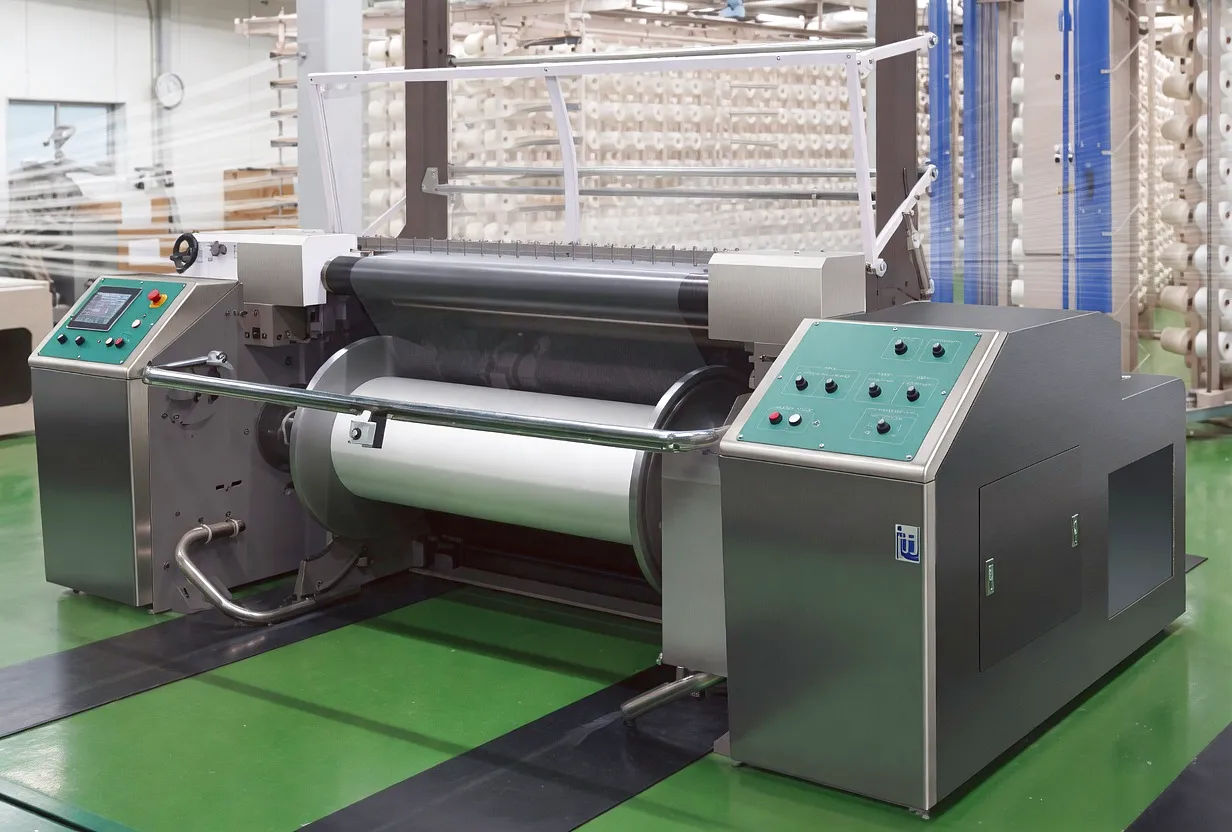
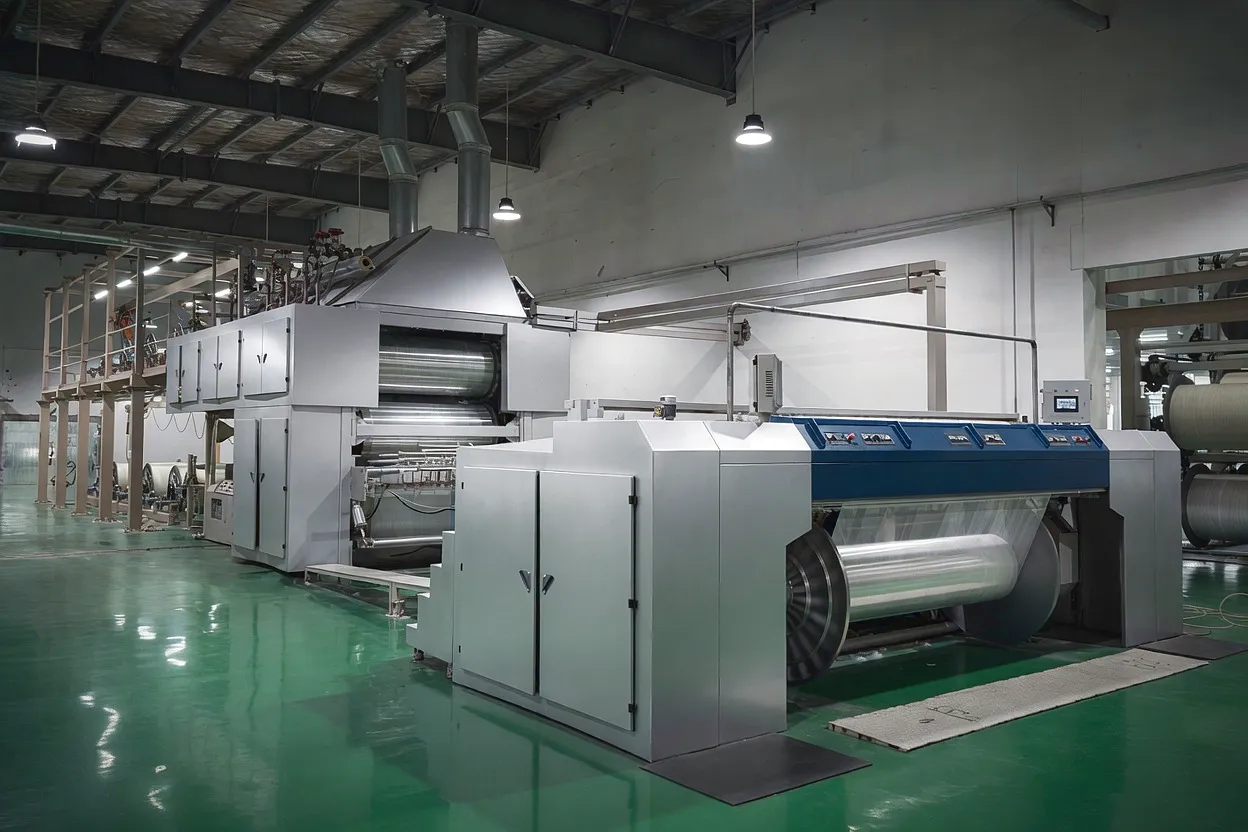
In warp sizing — the process that coats yarn with protective starch or chemical sizing agents before weaving — the drying cylinder section is arguably the most mechanically demanding zone of the entire machine. A bank of steam-heated drying rollers must rotate in perfect synchrony, transferring torque from a single main drive shaft to each individual cylinder without any angular velocity fluctuation. When the coupling between drive shaft and roller deviates even fractionally, you get uneven yarn tension, broken filaments, differential moisture content across the warp sheet, and ultimately a weave-room nightmare. That is the exact problem a properly engineered cardan coupling is built to solve.
Across spinning and weaving complexes in Lancashire, Yorkshire, and the East Midlands — regions where British textile manufacturing still holds global competitiveness — maintenance engineers and OEM machine builders have increasingly been moving away from chain-based and belt-driven roller interconnects toward universal joint coupling assemblies. The reasons are practical: longer service intervals, lower vibration, greater angular accommodation, and measurable improvements in fabric quality. This guide examines exactly how and why cardan couplings are specified for sizing machine drying roller drive chains, drawing on real engineering parameters, installation experience, and supplier capability.
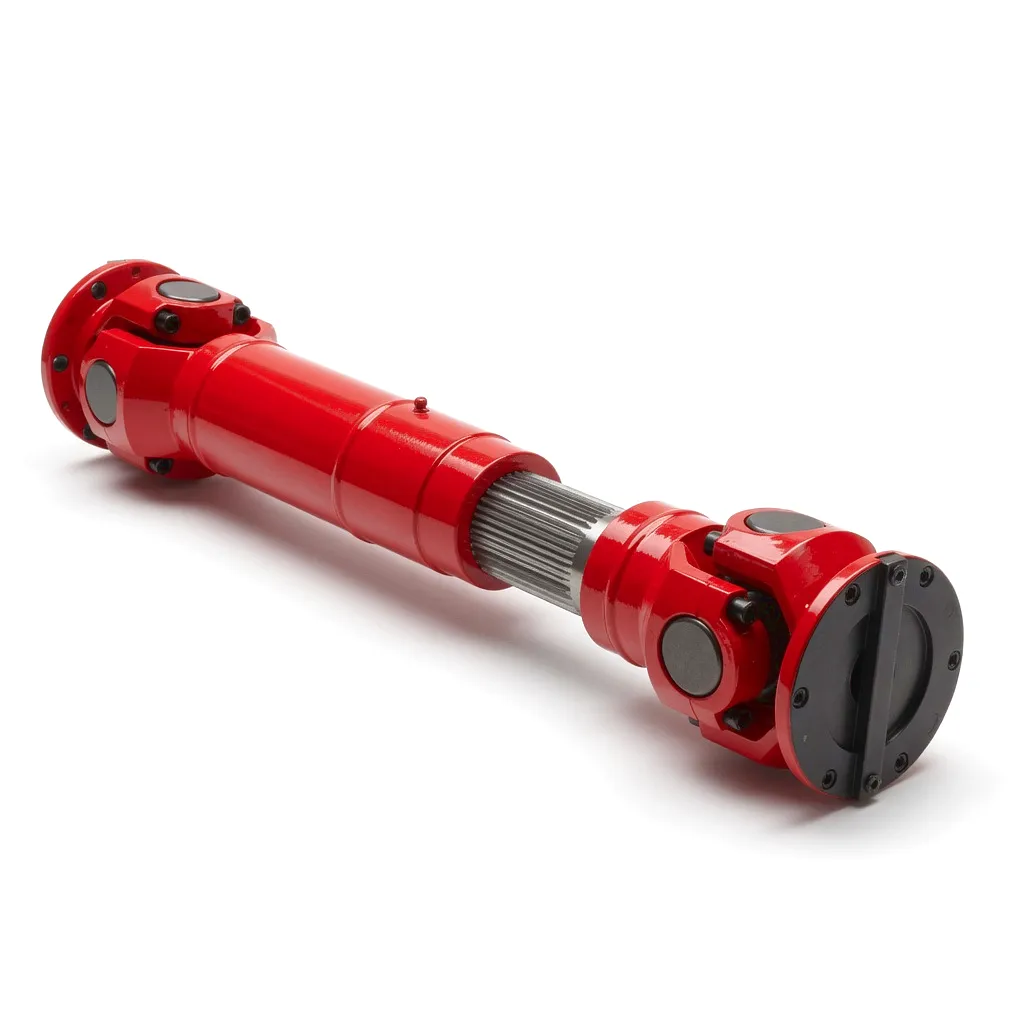
Need a cardan coupling for your sizing machine? Ever Power engineers are ready to assist with custom sizing and material selection.
Why Standard Couplings Fail in Drying Roller Applications
The engineering case for universal joint technology
The drying section of a sizing machine typically comprises eight to twenty-four individually driven cylinders, each with a diameter ranging from 400 mm to 800 mm, operating at surface speeds of 60 to 200 metres per minute. The cylinders are mounted in a rigid frame but experience thermal expansion — both axially and radially — as steam pressure brings them up to 110–140 °C working temperature. This thermal growth creates shaft misalignment between the drive train and the roller journal, often in the range of 0.5° to 3° angular offset and 2–8 mm parallel offset depending on the machine model and its age.
Conventional jaw couplings or rigid flanged couplings cannot accommodate this combined angular and axial misalignment without generating bending loads on the roller bearings. In practice, this dramatically shortens bearing life — a roller bearing rated at 50,000 hours under pure radial load might fail in fewer than 8,000 hours when continuously subjected to a misalignment-induced bending moment. Elastic couplings with rubber spiders offer partial relief but introduce angular velocity non-uniformity: as the coupling deflects through its angle, the driven shaft alternately speeds up and slows down within each revolution. In a multi-roller drive where six or more cylinders must maintain synchronous surface speed to ±0.2%, this pulsation is unacceptable — it produces differential warp tension and breaks fine filament yarns.
True Constant Velocity
A correctly specified double-joint cardan coupling transmits torque at a constant angular velocity ratio regardless of operating angle — eliminating the second-order velocity fluctuation that ruins fine-yarn quality.
Thermal Misalignment Tolerance
Angular working capacity of 1°–8° per joint (combined up to 15° for double-Hooke designs) absorbs the full range of thermal expansion misalignment without loading roller bearings.
Axial Compensation
Sliding spline or plunging joint sections allow axial displacement of 10–60 mm, compensating for the longitudinal thermal growth of heated rollers without transmitting end thrust to gearbox bearings.
Long Service Life
Needle or trunion-and-block cross-journal bearings with grease retention run 20,000–40,000 hours between services in clean textile environments — far exceeding the life of chain or belt alternatives.
How a Cardan Coupling Achieves Constant-Velocity Drive in a Drying Roller Chain
The fundamental operating principle of the cardan (or universal joint) coupling rests on the geometry of the cross-trunnion. When two shafts are connected through a single Hooke’s joint and the angle between them is greater than zero, the output shaft experiences a cyclic velocity variation of ±sin²(β/2) relative to the input, where β is the joint working angle. At 5° misalignment this produces roughly ±0.2% speed fluctuation — tolerable for many industrial drives but critical for a multi-cylinder sizing machine where adjacent rollers must maintain synchronous speeds.
The engineering solution is well-established: connect two single Hooke’s joints in series on an intermediate propeller shaft, with the yoke forks of both joints phased at exactly 90° relative to each other (known as “in-phase” or “W-configuration” alignment). When this geometry is correct and both joints operate at equal angles, the velocity variation introduced by the first joint is exactly cancelled by the second. The result is a true constant-velocity cardan coupling assembly — the driven roller receives torque at precisely the same angular velocity as the drive motor output shaft, irrespective of the combined working angle.
For sizing machine drying roller applications, this translates into a specific installation procedure. The drive gearbox output shaft, which may be at a fixed elevation, connects through a cardan coupling assembly to the roller journal, which is at a slightly different height due to thermal expansion and manufacturing tolerances. The coupling must be installed so that both cross-joint angles are equal and the yokes are phased correctly. Ever Power’s engineering team provides pre-assembled, phase-marked cardan coupling sets for exactly this reason — reducing installation error risk on the customer’s workshop floor.
Material selection for the trunnion bearings is another area where textile industry requirements differ from general industrial use. The humid, starch-contaminated atmosphere around a sizing machine is unkind to standard steel needle bearings. Ever Power’s textile-grade cardan couplings for this application use hardened and ground cross-trunnions with sealed needle roller bearing assemblies and high-temperature lithium grease fills, resisting the 60–80 °C ambient temperatures found adjacent to drying cylinder enclosures.
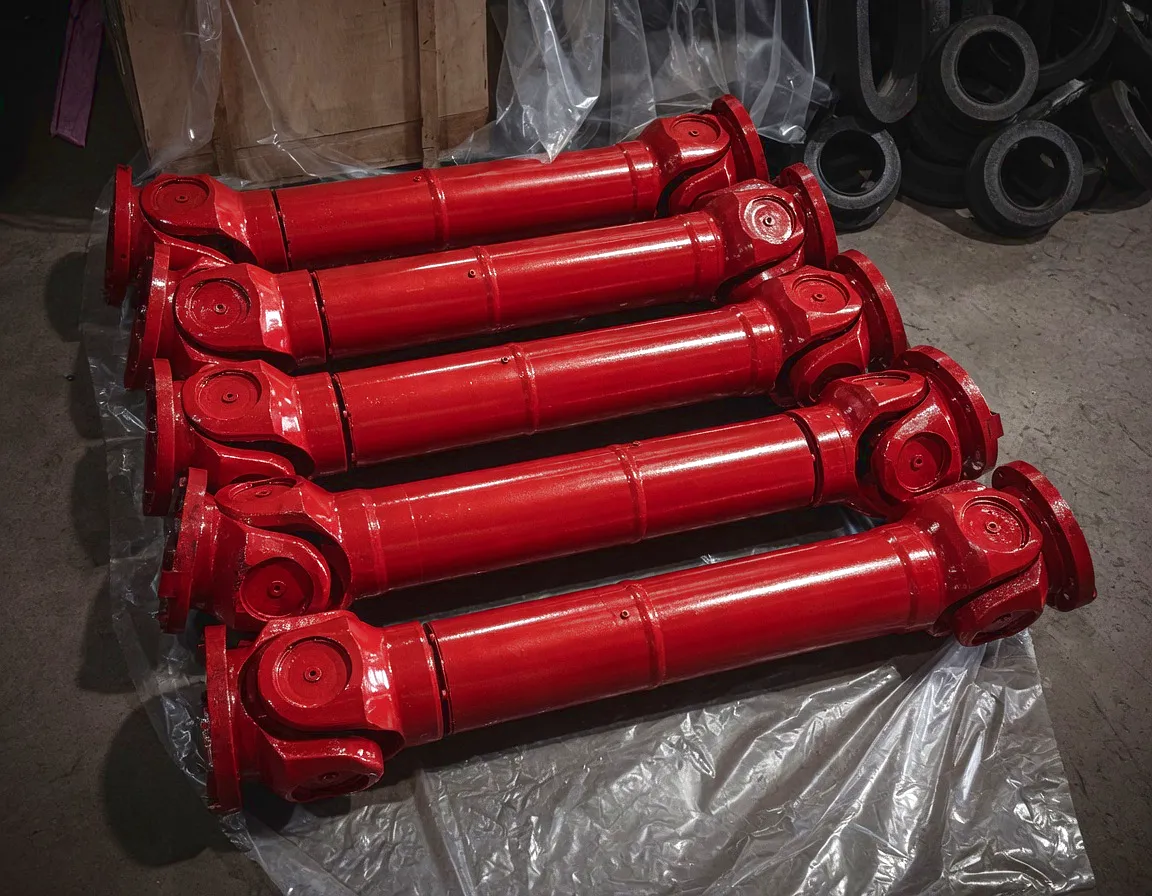
“The double-Hooke cardan coupling is one of the few coupling types that can simultaneously accommodate angular misalignment, axial displacement, and deliver true constant-velocity output — exactly the combination demanded by drying cylinder drive chains.”
Technical Parameters: Ever Power Cardan Coupling for Sizing Machine Drying Rollers
Standard series specifications — custom configurations available on request
| Parameter | SWC-A Series (Light) | SWC-B Series (Standard) | SWC-DH Series (Heavy) |
|---|---|---|---|
| Nominal Torque (Nm) | 250 – 1,000 | 1,000 – 6,300 | 6,300 – 50,000 |
| Max. Working Angle per Joint (°) | up to 10° | up to 15° | up to 25° |
| Axial Compensation (mm) | ±10 – 25 | ±15 – 40 | ±20 – 60 |
| Bore Diameter Range (mm) | 20 – 65 | 40 – 120 | 80 – 220 |
| Max. Operating Speed (RPM) | up to 3,000 | up to 1,500 | up to 800 |
| Bearing Type (Trunnion) | Sealed needle roller | Sealed needle roller | Trunion block + needle |
| Material (Cross Trunnion) | 20CrMnTi (case-hardened) | 20CrMnTi / 42CrMo | 42CrMo4 (alloy steel) |
| Surface Treatment (Yoke) | Zinc phosphate | Zinc phosphate / E-coat | Shot blast + E-coat |
| Ambient Temperature Tolerance | -20°C to +80°C | -25°C to +100°C | -30°C to +120°C |
| Balancing Grade | G6.3 | G6.3 / G2.5 (optional) | G2.5 |
* All specifications represent standard production ranges. Custom torque ratings, special bore geometries, keyway configurations, and non-standard shaft materials are available. Contact [email protected] for a tailored technical proposal.
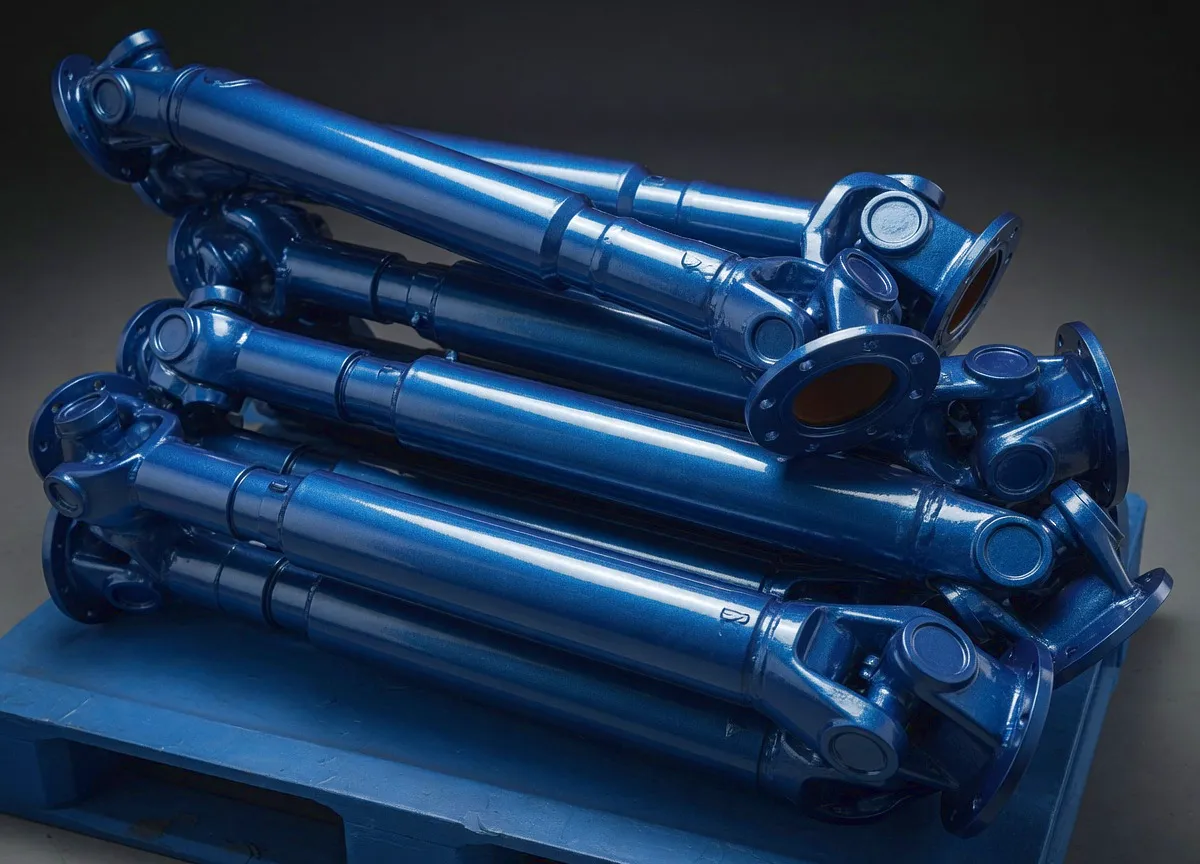
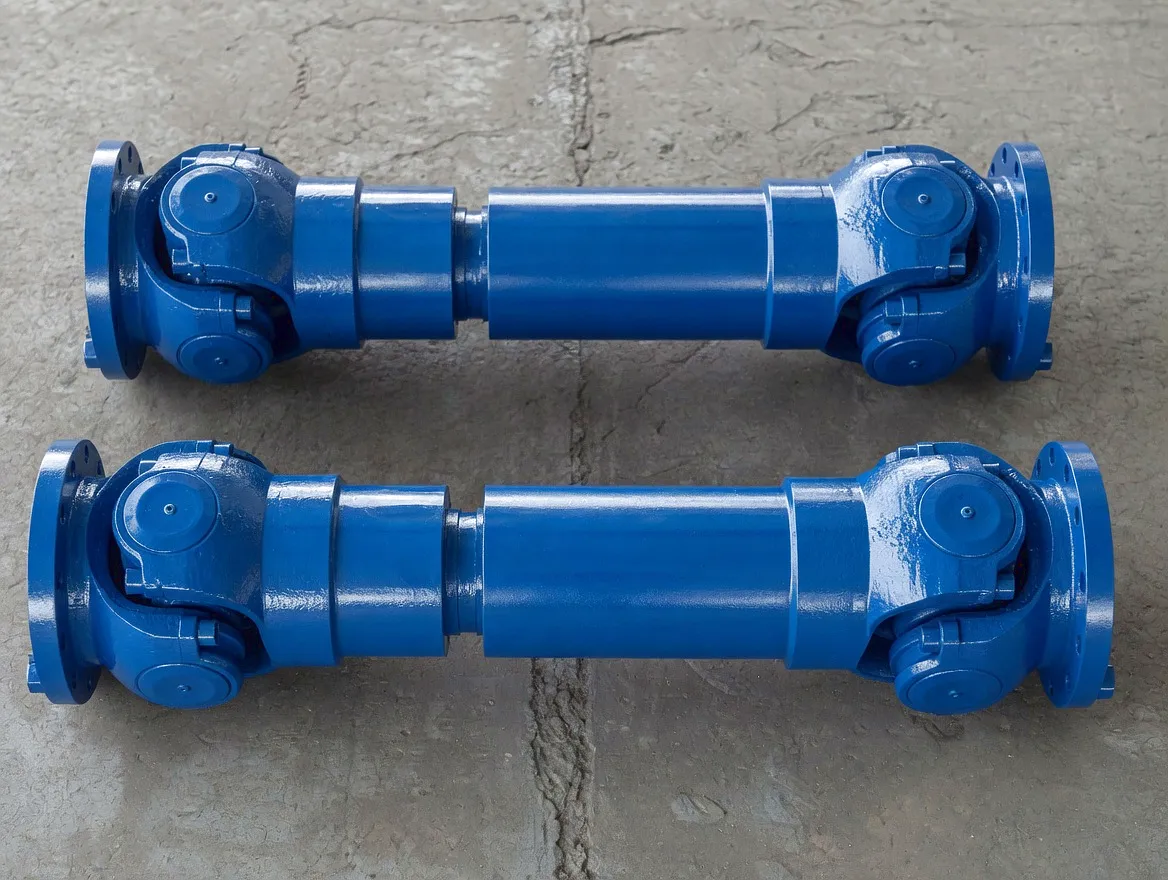
Specific Application: Sizing Machine Drying Cylinder Constant-Velocity Drive Chain
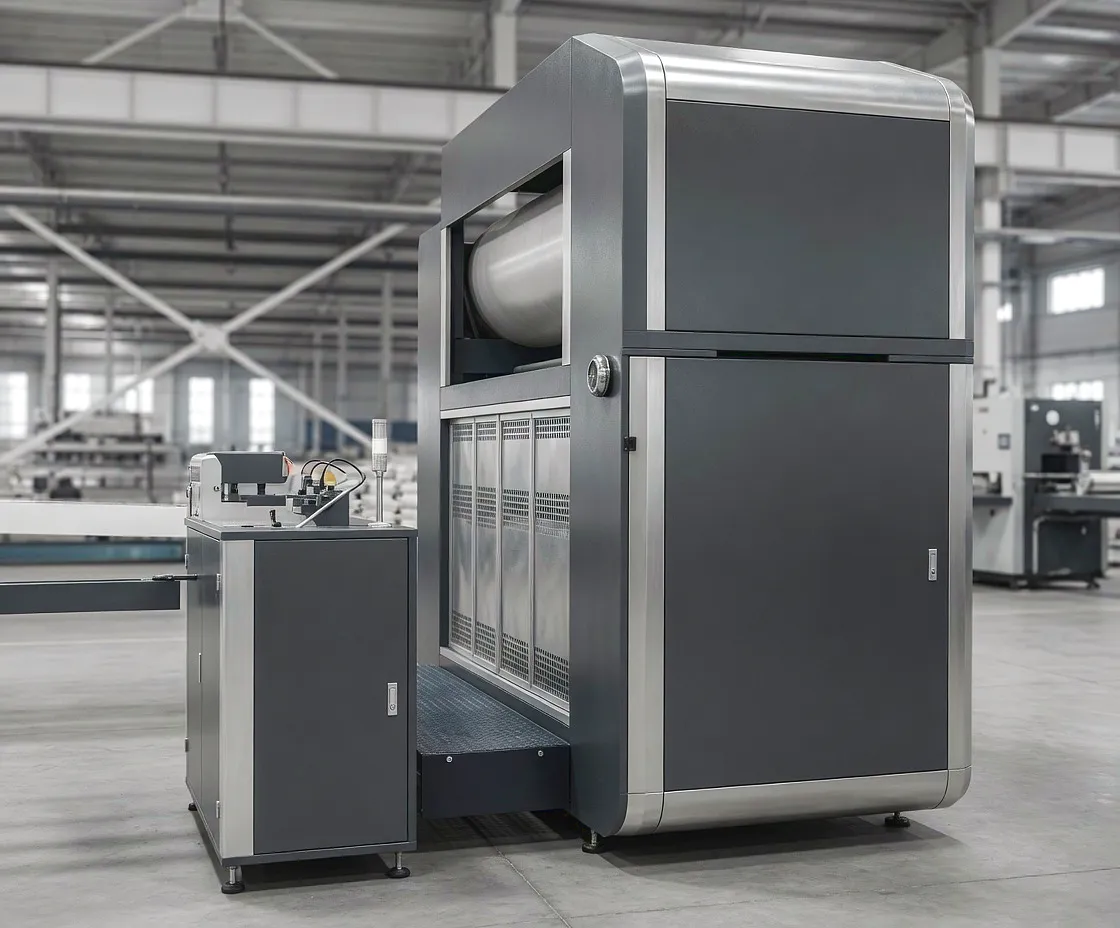
The warp sizing machine has a very particular mechanical architecture that makes the cardan coupling selection non-trivial. Understanding this architecture is essential to specifying correctly. In a typical high-speed sizing machine — such as those produced by Karl Mayer, Benninger, Tsudakoma, or various Chinese manufacturers now widely installed in UK contract weaving mills — the drying section is arranged as a series of steam-heated cylinders in a vertical or diagonal array. The warp sheet passes over and under alternate cylinders, maximising dwell time on the heated surfaces.
Each cylinder journal is driven by one cardan coupling assembly connected to a longitudinal line shaft running alongside the machine. The line shaft itself is driven from the main sizing machine gearbox at a speed calculated to give the correct cylinder surface speed for the warp yarn count being processed. Because the line shaft and cylinder journals are at different elevations and may shift relative to each other as machine temperatures equalise, the coupling must handle combined angular and parallel misalignment continuously — not just during initial start-up.
A secondary mechanical concern is that sizing machines operate at widely varying speeds during production: starting from zero, ramping to creep speed for yarn threading, then accelerating to full production speed, then decelerating for beam changes. This duty cycle imposes reversal loads and cyclic torque variations on the coupling. A poorly designed coupling with significant backlash will generate noise and shock during each speed change, eventually fatiguing the trunnion bearing cups. Ever Power addresses this through precision-ground cross trunnions with interference-fit needle bearing assemblies and minimal clearance spline connections in the sliding joint section.
🔄 Tension Synchronisation
All drying cylinders must rotate at exactly matching surface speeds. A cardan coupling with true constant-velocity output ensures zero differential tension across the warp sheet width, preventing the left-to-right tension variation that causes fabric distortion.
🌡️ Thermal Cycle Resilience
Repeated daily start-stop thermal cycles that expand and contract the cylinder journals by several millimetres are absorbed by the coupling’s built-in axial plunge and angular flexibility — no cumulative bearing damage.
💧 Starch-Environment Sealing
Textile-grade sealed bearing assemblies resist starch particle ingress and humid air condensation — the two leading causes of coupling failure in sizing rooms, and a key Ever Power design differentiator.
Proven Product Advantages: What Sets Ever Power Cardan Couplings Apart
Precision-Machined Cross Kits
Every trunnion cross kit is ground on all four journal diameters simultaneously in a dedicated four-axis grinding operation. Roundness tolerance is held within 2 µm, which translates directly into minimal bearing noise and extended grease life — a specification that matters in the quiet environments of modern weaving mills.
Matched-Angle Assembly Service
When ordering cardan couplings for a multi-roller drying section, Ever Power can pre-assemble and phase-mark entire sets of coupling assemblies to a customer-specified shaft layout drawing. This eliminates site installation errors and significantly reduces machine commissioning time — particularly valuable when retrofitting older Karl Mayer or Sucker-Müller sizing machines still operating in UK mills.
Non-Standard Bore Machining
Sizing machine roller journals are frequently non-standard diameter due to original equipment choices. Ever Power’s in-house CNC machining facility handles bore sizes from 20 mm to 320 mm with keyway, spline, or interference-fit connections — eliminating the need for adaptor sleeves that introduce additional compliance and backlash into the drive train.
Full Material Certification
Material certificates for all structural components (yoke forgings, trunnion steel, spline shafts) are supplied as standard with every order — a requirement for UK textile mills operating under ISO 9001 quality management and traceability obligations. Dimensional inspection reports and hardness test results are available on request.
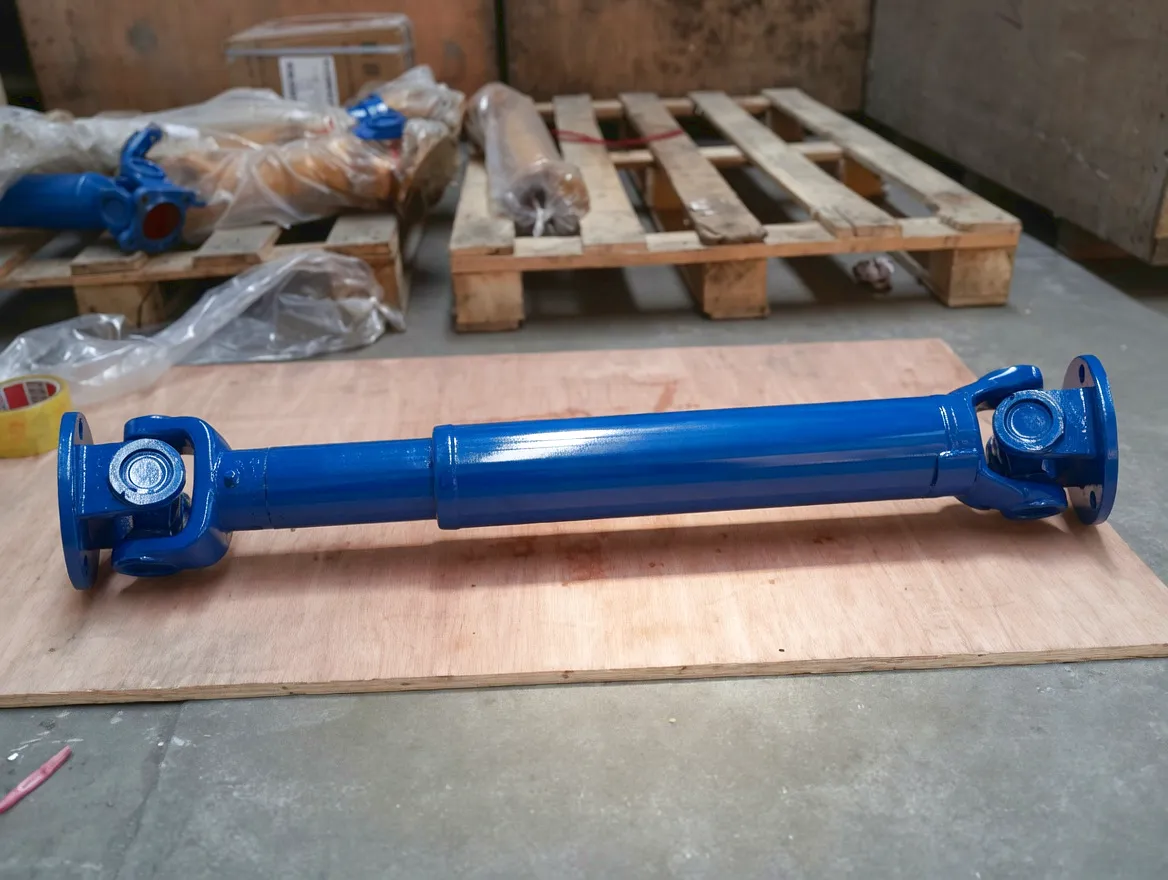
Ever Power has been engineering power transmission solutions for textile machinery for over eighteen years. During that time the company has developed specific product variants and service offerings tailored to the sizing machine sector, informed by direct engagement with maintenance teams at weaving mills across the UK, Turkey, India, and Bangladesh. This accumulated application knowledge is reflected in the product designs: the decision to use sealed rather than greaseable-through needle bearings in the textile series, for instance, came directly from field feedback about starch contamination of exposed grease nipples.
Customer Success: Derbyshire Contract Weaving Mill
Real results from a UK textile manufacturer
The Challenge
A mid-size contract weaving business near Derby, operating four Benninger Ben-Sizetec sizing machines from the mid-2000s, had been experiencing progressive deterioration in sized yarn quality. Production staff observed increasing warp tension variation, particularly in the early part of each production run when cylinders were warming up. Fabric rejected for “tension barring” — a fault characterised by periodic weft-density variation visible in the finished cloth — had climbed to 4.2% of output by early 2023.
The Solution
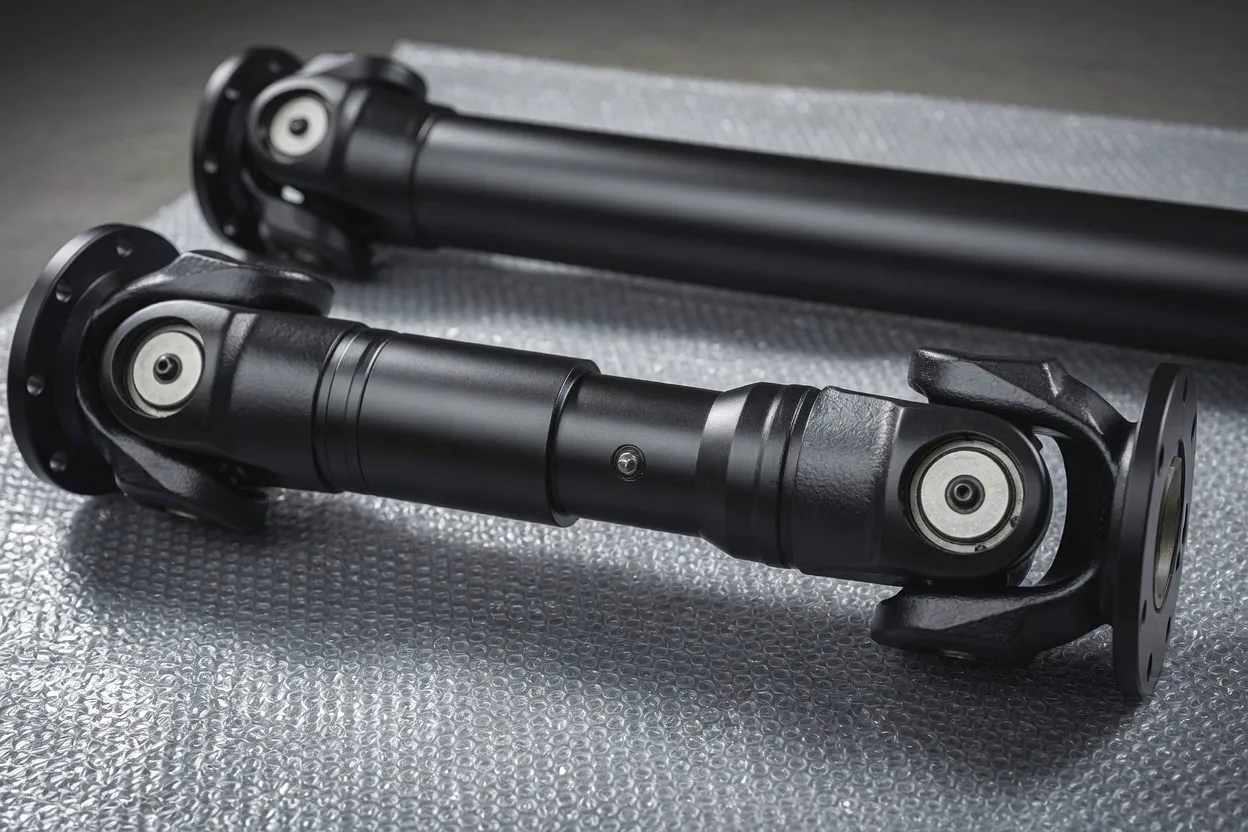
Ever Power was contacted through a UK industrial distributor. Following a site survey (shaft dimensions, misalignment angles, operating speeds, and torque requirements were all measured on-site by an Ever Power applications engineer during a planned maintenance shutdown), a specification was drawn up for SWC-B series double-Hooke cardan couplings, with 55 mm H7 bores, custom-length intermediate shafts to suit the Benninger frame geometry, and phase-marked assemblies for straightforward installation by the mill’s own maintenance team. Forty-eight coupling assemblies were manufactured, inspected, and delivered to the Derby site within eleven weeks.
The Results
What Our Customers Say
“We had been chasing warp tension faults for two years across three sizing machines. The Ever Power cardan couplings were installed during our August shutdown and the difference was immediate — our quality manager noticed the improvement on the very first production run after restart. These couplings have transformed what we thought was a hopeless situation.”
“As an OEM machine builder, we need coupling suppliers who can work to our specific shaft drawings rather than force us to adapt our design to standard catalogue sizes. Ever Power’s ability to machine custom bores and supply phase-marked assemblies has made them our preferred cardan coupling source for new sizing machine builds. Technical support response is also fast — hours, not days.”
“We originally tried a cheaper coupling from a domestic supplier and experienced premature failure of the trunnion bearings within four months — starch contamination. The Ever Power sealed-bearing version has been running for over a year in the same environment with no issues. The upfront price difference is trivial compared to the cost of a coupling failure that stops a sizing machine mid-production run.”
Ever Power Custom Manufacturing Capability
Beyond catalogue — engineered to your exact requirements
The reality of sizing machine maintenance is that no two machines are identical — even machines of the same model and generation have been modified, repaired, and adapted by different maintenance teams over decades of operation. Coupling replacement is rarely as simple as selecting a standard catalogue item. Shaft diameters may have been remachined, keyway positions altered, intermediate shaft lengths shortened to clear retrofitted guards, or flanges re-drilled to different bolt circles.
Ever Power’s custom manufacturing service addresses this directly. With a fully equipped in-house machining facility — CNC turning centres handling components up to 500 mm diameter, five-axis milling for complex yoke geometries, precision grinding for trunnion journals, and internal spline broaching — the company can produce cardan coupling assemblies to any customer drawing or dimensional specification. Minimum order quantities start at a single assembly for urgent replacement situations, with no tooling charges for bore and keyway machining within standard capacity ranges.
For UK sizing machine OEMs developing new machine designs, Ever Power offers a co-engineering service: customer design engineers share a draft layout, Ever Power’s applications team reviews the drive geometry and recommends coupling type, size, and configuration, and sample assemblies are produced and tested before series production begins. This collaborative approach has resulted in several successful new-machine programmes where the cardan coupling design was optimised for the specific drive geometry rather than adapted from a generic catalogue choice.
Stock availability is maintained for the most commonly requested SWC-A and SWC-B series sizes, ensuring that standard replacement couplings can be dispatched from the UK distribution partner within 24–48 hours for emergency situations. Non-standard and custom assemblies are manufactured to order with lead times quoted individually based on current production scheduling — typically 4–12 weeks depending on complexity and quantity.
Custom Capability at a Glance
Serving UK Textile Manufacturers: From Lancashire to the East Midlands
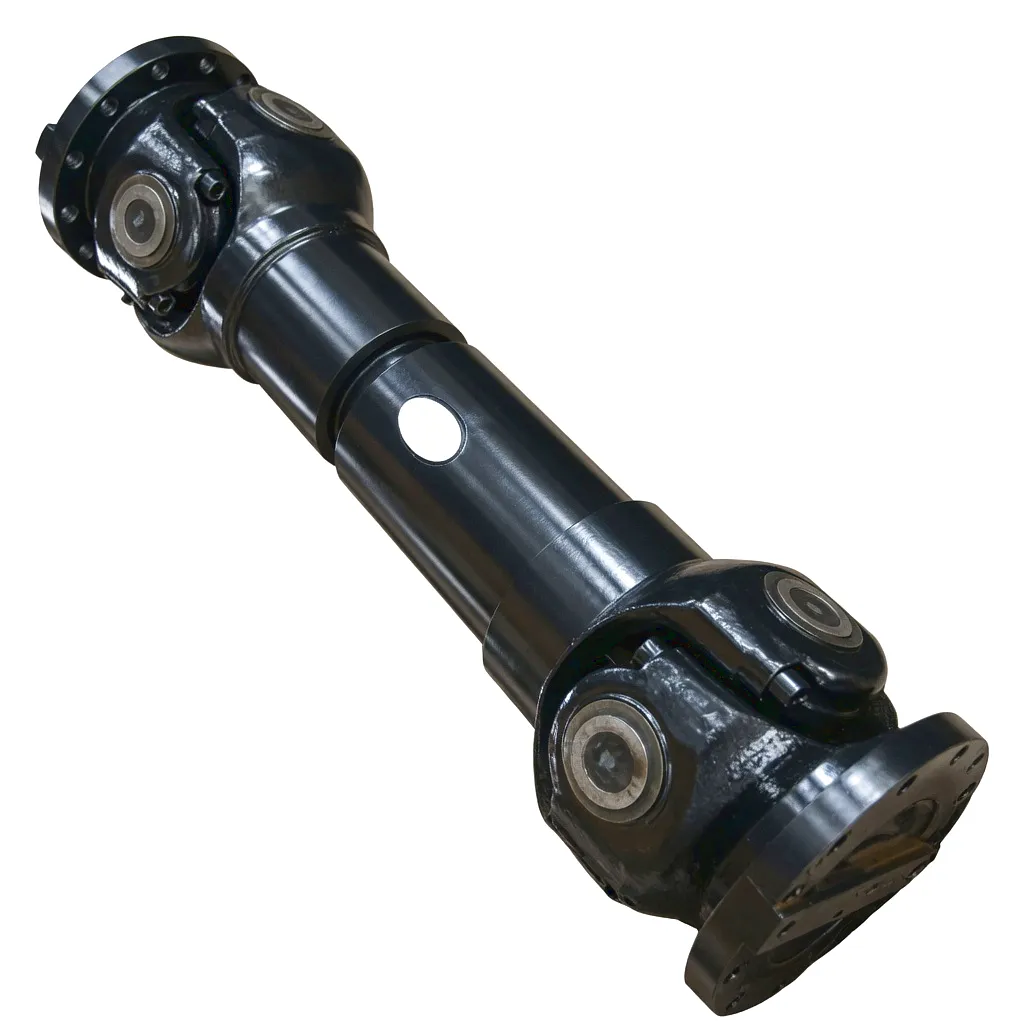 British textile manufacturing has experienced a well-documented renaissance over the past decade, with premium fabric production for fashion, technical, and defence markets driving investment in new and refurbished warp sizing equipment across Lancashire, Yorkshire, Derbyshire, Nottinghamshire, and the East Midlands. This revival has created a significant demand for precision coupling components that match or exceed the quality standards of original equipment.
For UK customers, Ever Power works through established UK industrial distribution partners who maintain stock of the most common SWC series sizes. This means that standard cardan couplings for sizing machine drying rollers can typically be sourced without long international lead times — critical when a production machine is standing idle awaiting a replacement coupling. For non-standard and custom assemblies, the Ever Power UK sales and technical contact handles enquiries directly: pricing, dimensional proposals, and lead time confirmations are provided within two UK business days as standard.
Technical enquiries from UK machine maintenance teams are particularly welcome — Ever Power’s engineering team is accustomed to working from old machine drawings, worn-out sample parts, and field measurements rather than clean CAD files. If you’re maintaining an ageing sizing machine and need a coupling replacement but don’t have the original supplier documentation, contact [email protected] with a description of the application and whatever measurements you can take, and the team will work through a specification with you.
Frequently Asked Questions
Real questions from UK textile engineers and procurement teams
What type of cardan coupling is best suited for the drying cylinder drive chain on a warp sizing machine in a UK textile mill?
How much does it cost to replace cardan couplings on all the drying rollers of a sizing machine, and can I get a price from a UK supplier quickly?
Where can I find a reliable cardan coupling supplier in the UK for sizing machine textile applications, and what lead times should I expect?
Why do cardan coupling trunnion bearings keep failing on our sizing machine drying rollers, and which bearing specification should we be using in a starch-contaminated environment?
How do I correctly phase the yoke forks of a double-cardan coupling when installing it on a sizing machine roller to achieve constant-velocity output?
Can I order a cardan coupling with a custom bore diameter for a Karl Mayer or Benninger sizing machine shaft that is not a standard metric or imperial size?
What is the difference between a single-joint and a double-joint cardan coupling, and which configuration should I use for a sizing machine drying roller drive?
Ready to Solve Your Sizing Machine Drive Problem?
Whether you need a direct replacement for a failed coupling, a full re-specification of your drying section drive train, or engineering support for a new machine design, Ever Power’s textile coupling team is ready to assist. Send your shaft dimensions, machine details, or just a description of the problem — we’ll take it from there.
Get a Quote: [email protected]
Technical response within 2 UK business days · Custom bores machined to drawing · Material certificates supplied as standard
© Ever Power · [email protected] · Cardan Coupling Specialists · Serving UK Textile Industry · edit by gzl