The Working Principle: How Torque Travels Through a Cardan Joint
The Cross-and-Yoke Mechanism
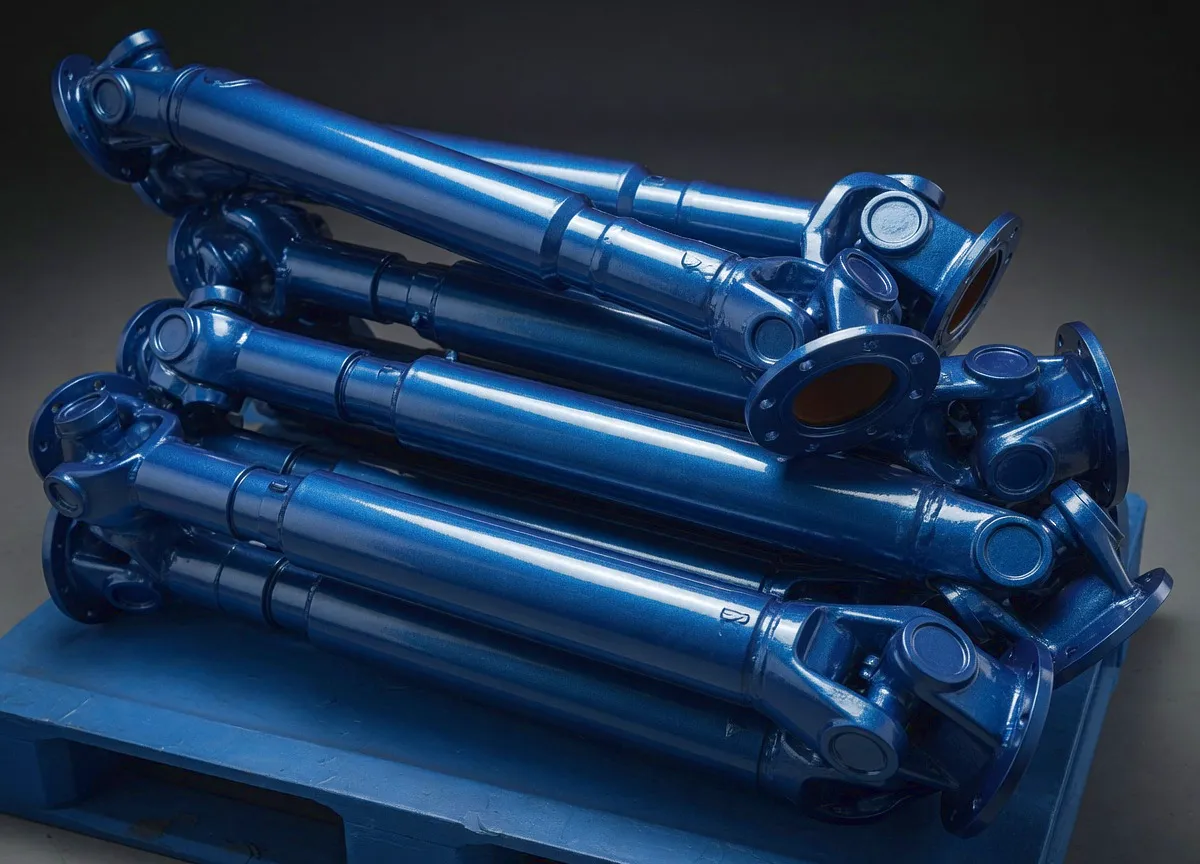
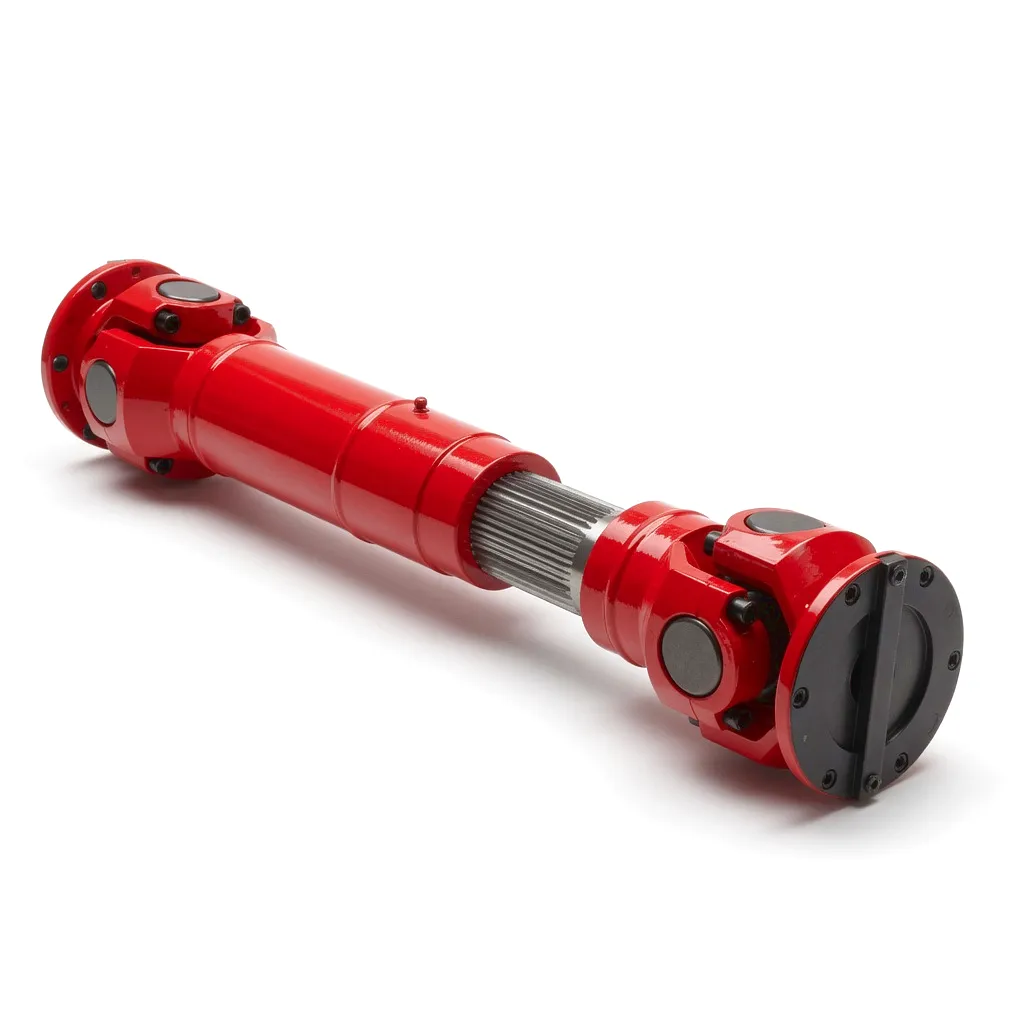
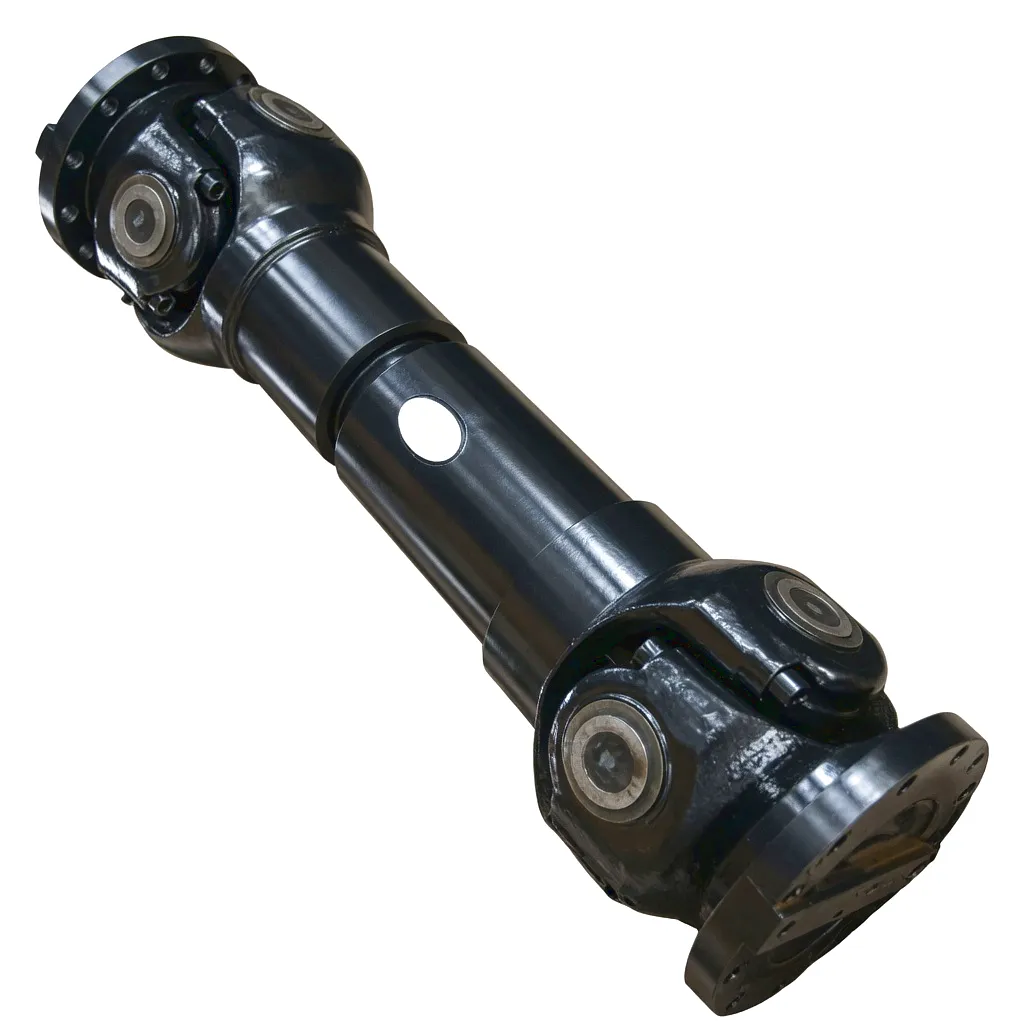
At the heart of every cardan coupling lies the cross-and-yoke assembly, commonly called the universal joint or U-joint. The driving shaft connects to a forked yoke, and that yoke grips the arms of a precision-machined cross journal — a cruciform piece with four trunnions set at 90 degrees to one another. The driven-side yoke engages the opposite pair of trunnions. Needle roller bearings sit on each trunnion, allowing each yoke to pivot freely about its own axis. When the input shaft rotates, the cross transmits that rotation to the output yoke through the bearing assemblies, and torque flows continuously across the joint regardless of the angular offset between shafts. The geometry means the connection is always positive — there is no slip, no electromagnetic coupling, no hydraulic medium — just direct mechanical engagement through hardened steel. This mechanical directness is precisely what makes the cardan coupling so dependable for high-torque, high-cycle industrial applications.
Angular Velocity Variation and Phase Correction
One of the most important physical phenomena to understand is that a single cardan joint does not transmit torque at a perfectly constant angular velocity when the shafts are misaligned. The output shaft undergoes a cyclic speed variation — it accelerates and decelerates twice per revolution relative to the input shaft — a characteristic known as the second-harmonic velocity variation. The magnitude of this fluctuation increases with the operating angle, which is why individual joint angles should be kept below 15 to 20 degrees in demanding applications. Engineers address this limitation by pairing two identical cardan joints in a double-joint configuration, connecting them with an intermediate shaft called the propeller shaft or spline shaft. By phasing the yokes of both joints correctly — typically with the driving yokes set in the same plane — the velocity irregularities introduced by the first joint are exactly cancelled by those of the second. The result is constant-velocity output, smooth torque delivery, and dramatically reduced vibration across the entire driveline.
Core Materials: What Cardan Couplings Are Made From
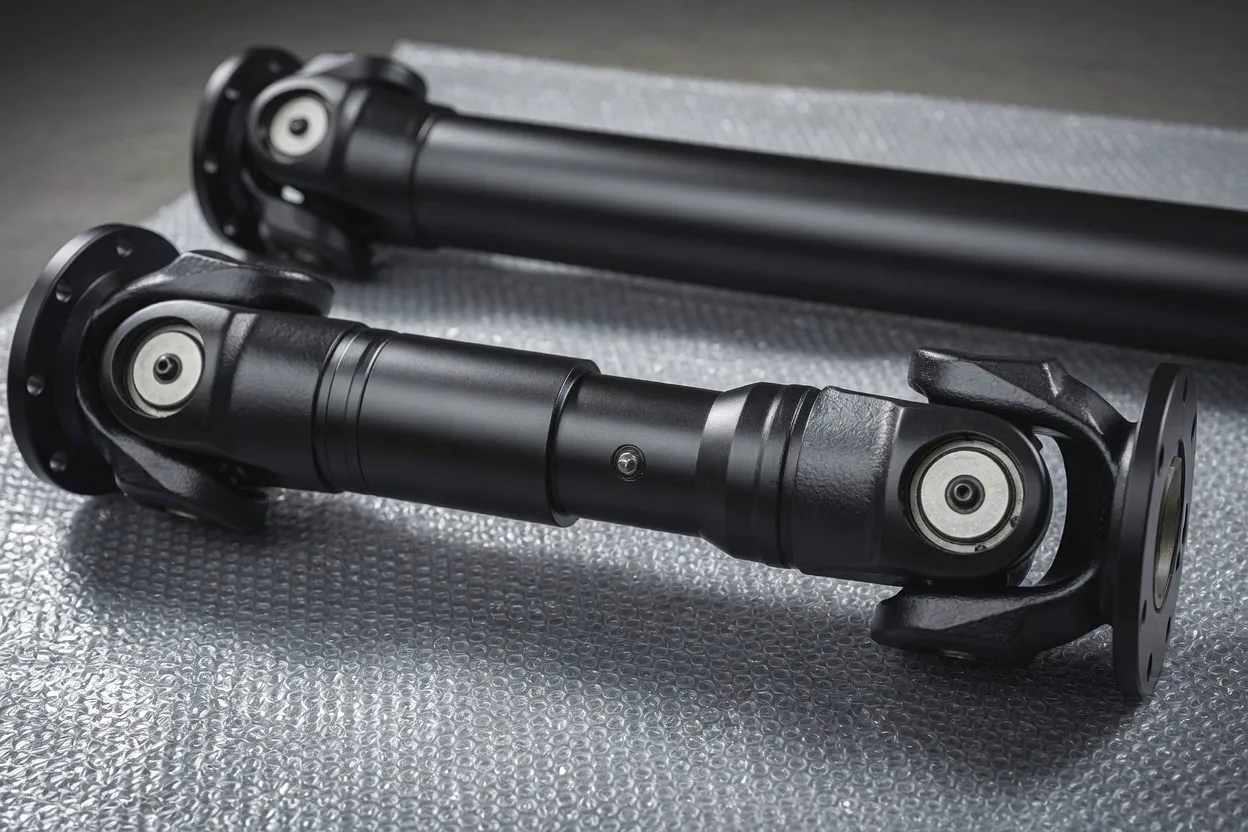
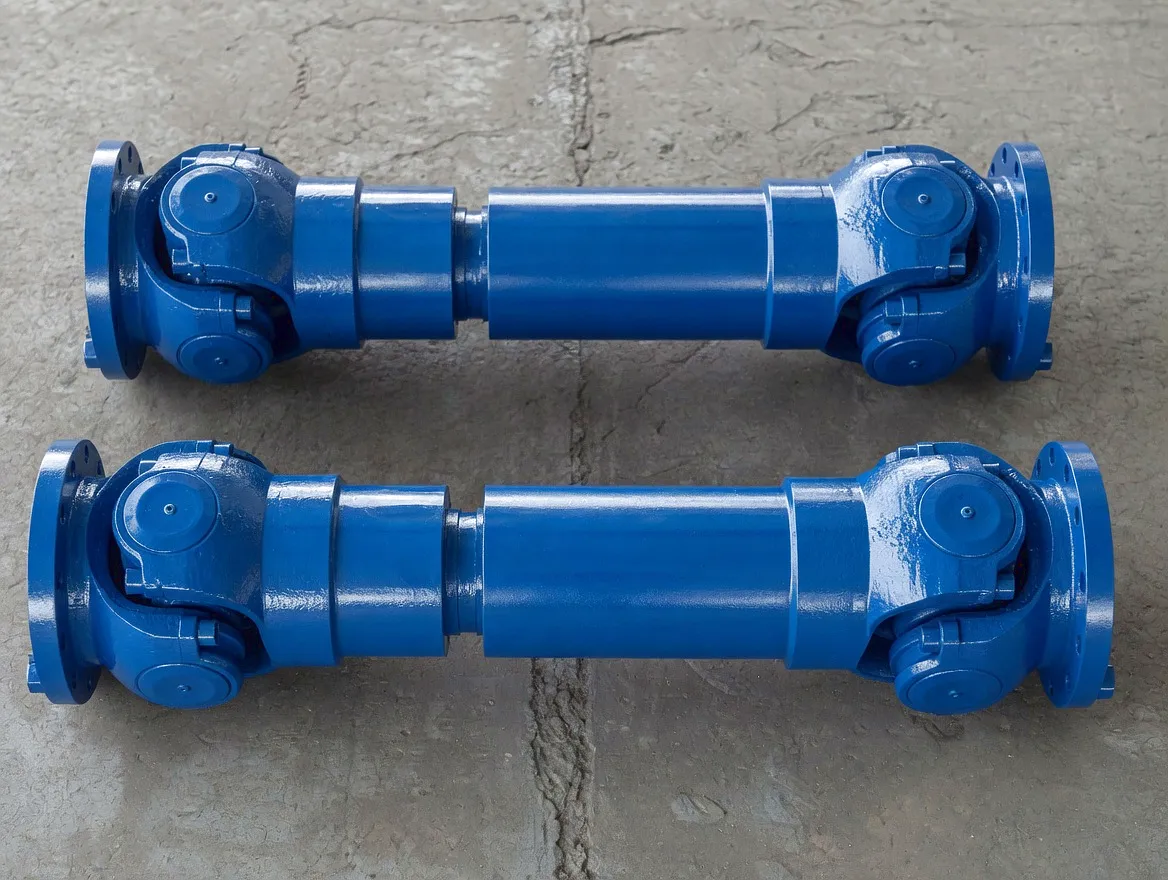
The material selection for a cardan coupling is not a footnote — it is one of the primary engineering decisions that determines the service life, operating envelope, and total cost of ownership of the entire driveline. Most high-duty cardan couplings used in the UK’s steel and automotive sectors are produced from alloy steels such as 42CrMo4 (equivalent to EN19 under British Standards), a chromium-molybdenum steel that delivers outstanding tensile strength in the range of 900 to 1100 MPa after quenching and tempering, combined with excellent fatigue resistance and machinability. The cross journals — arguably the most critically loaded component in the assembly — are typically carburised and case-hardened to achieve a surface hardness above 58 HRC, creating a wear-resistant shell that protects a tough, impact-absorbing core from shock loads common in rolling mill drives and press lines.
Standard for high-torque yokes and flanges; excellent toughness, weldability, and machinability. Preferred for steel mill and mining applications.
Widely used for cross journals and needle roller bearing journals. Case depth of 0.8–1.5 mm ensures wear resistance without brittleness.
Specified for food processing, pharmaceutical, and marine environments where corrosion resistance takes priority alongside mechanical strength.
Used for flange housings and intermediate flanges in medium-duty applications. Lower cost with adequate tensile strength for speeds below 800 rpm.
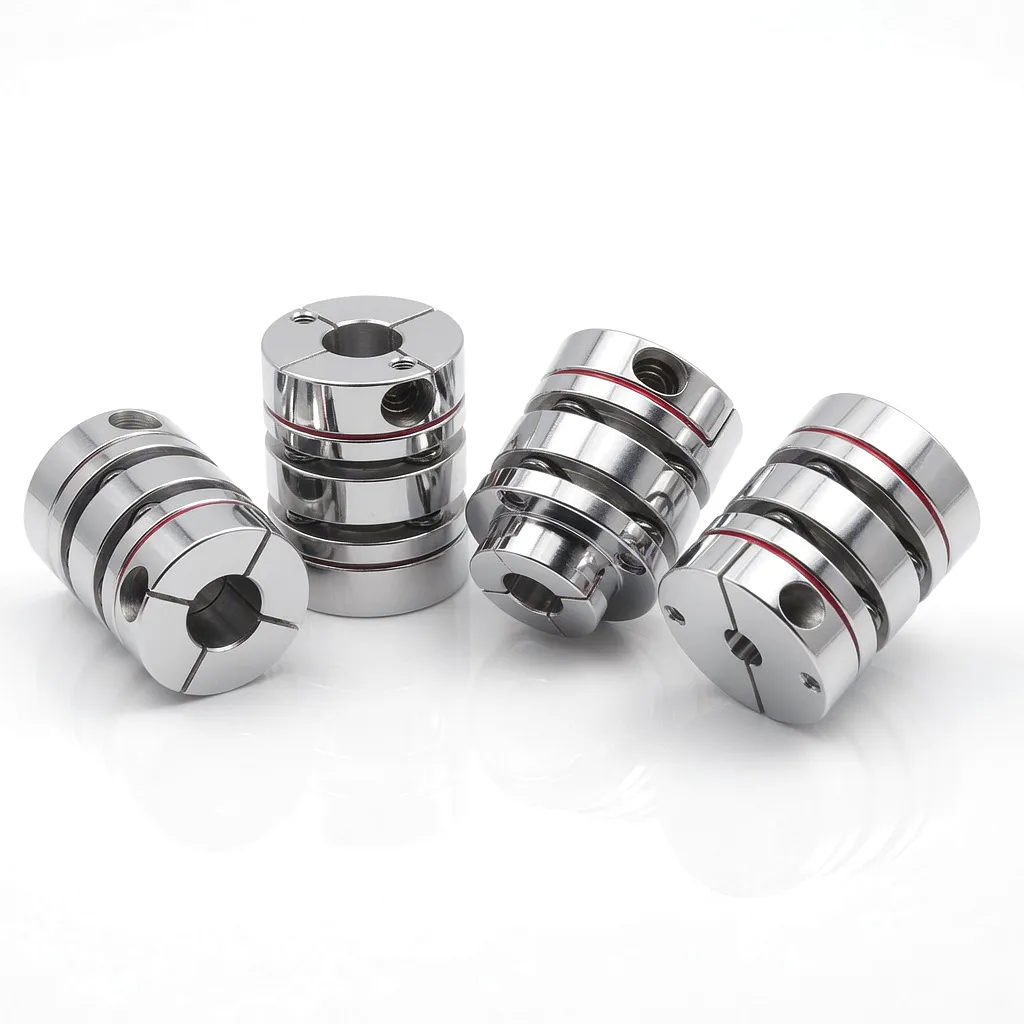
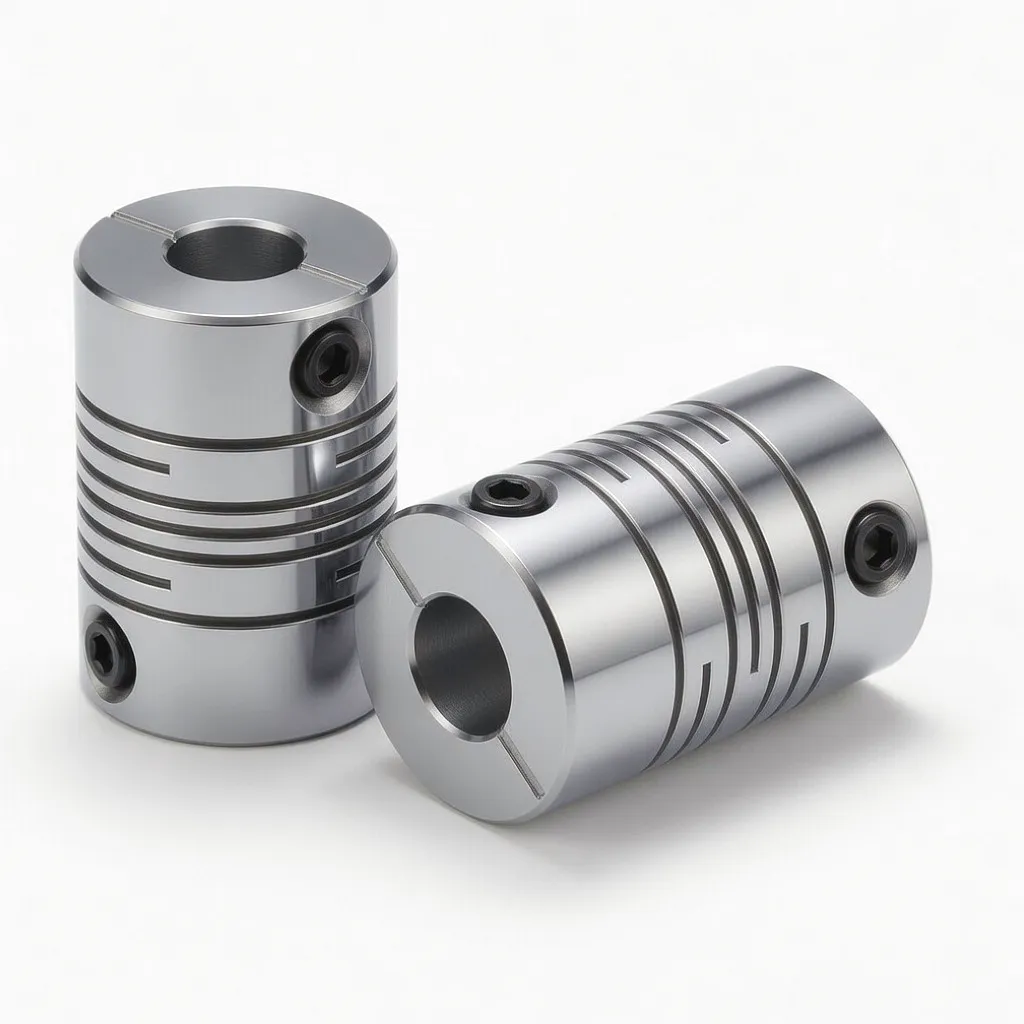
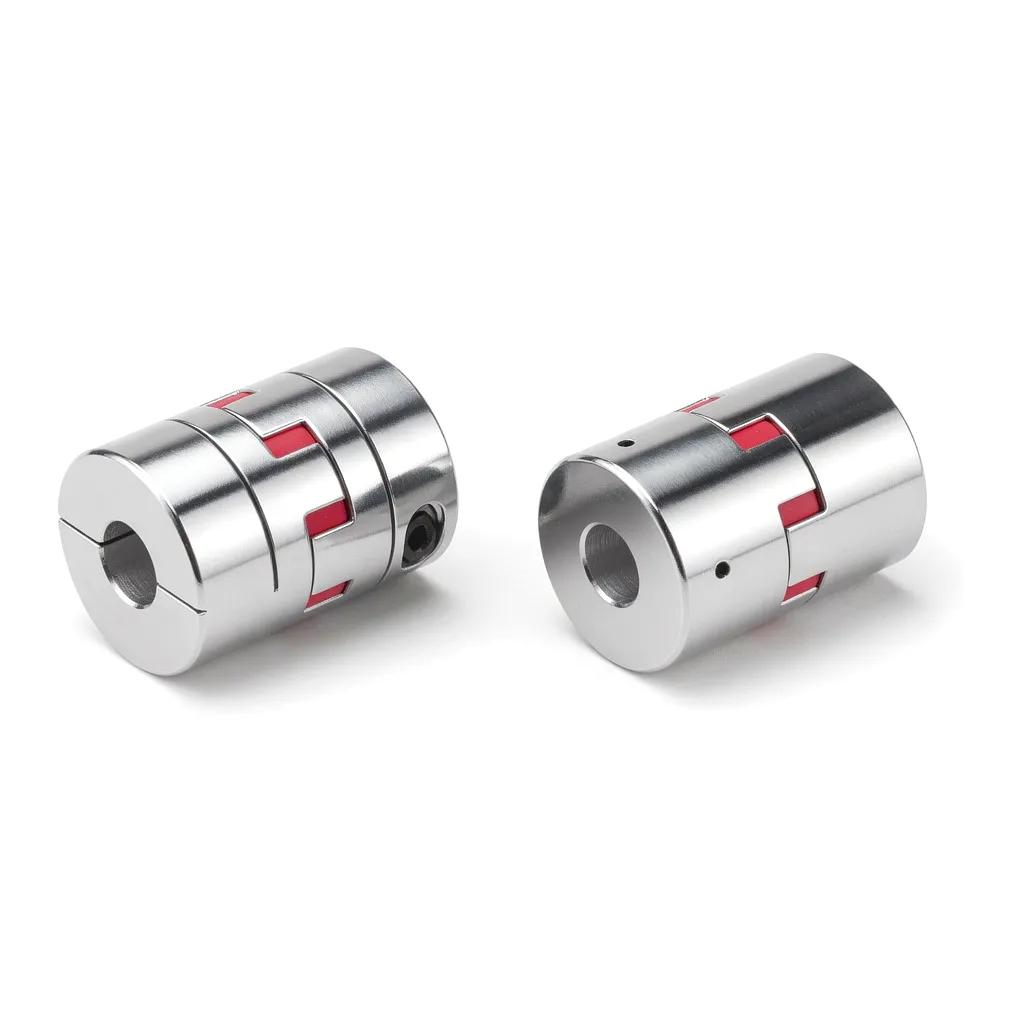
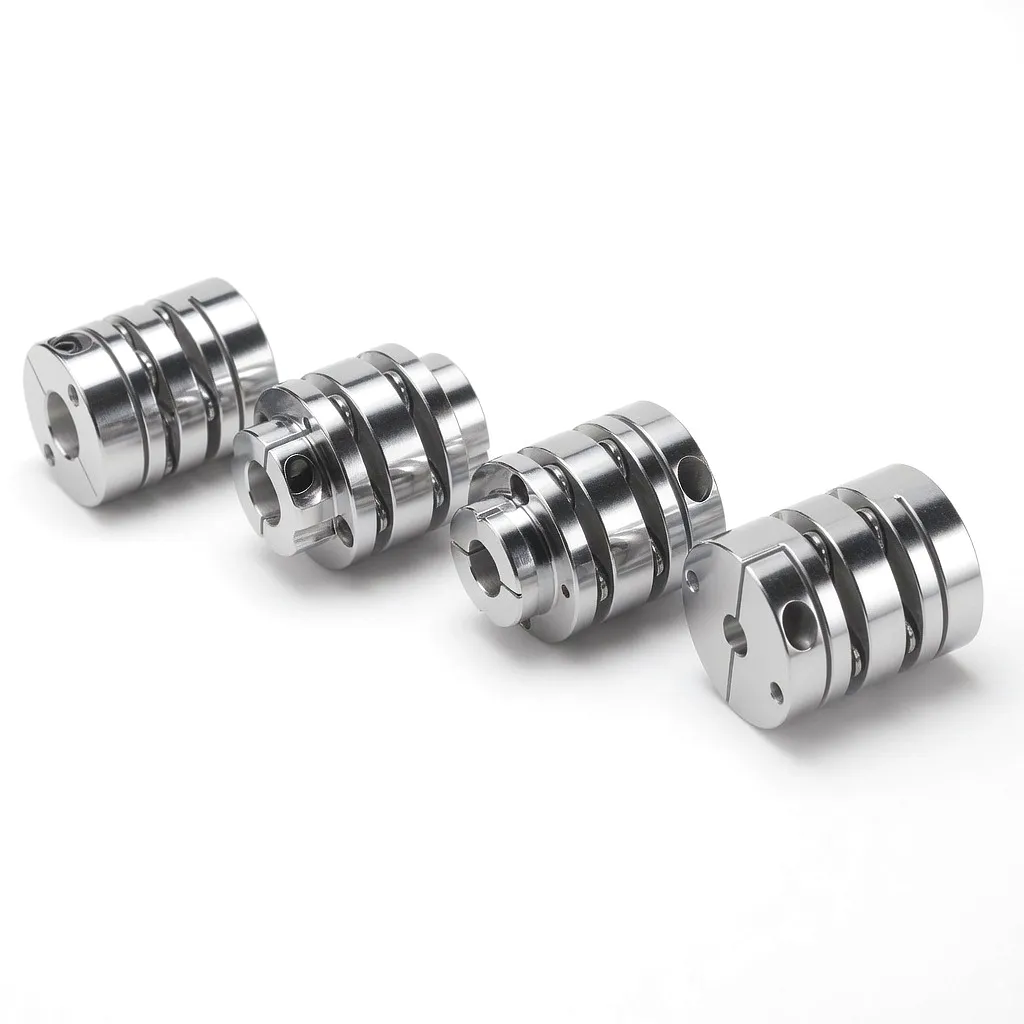
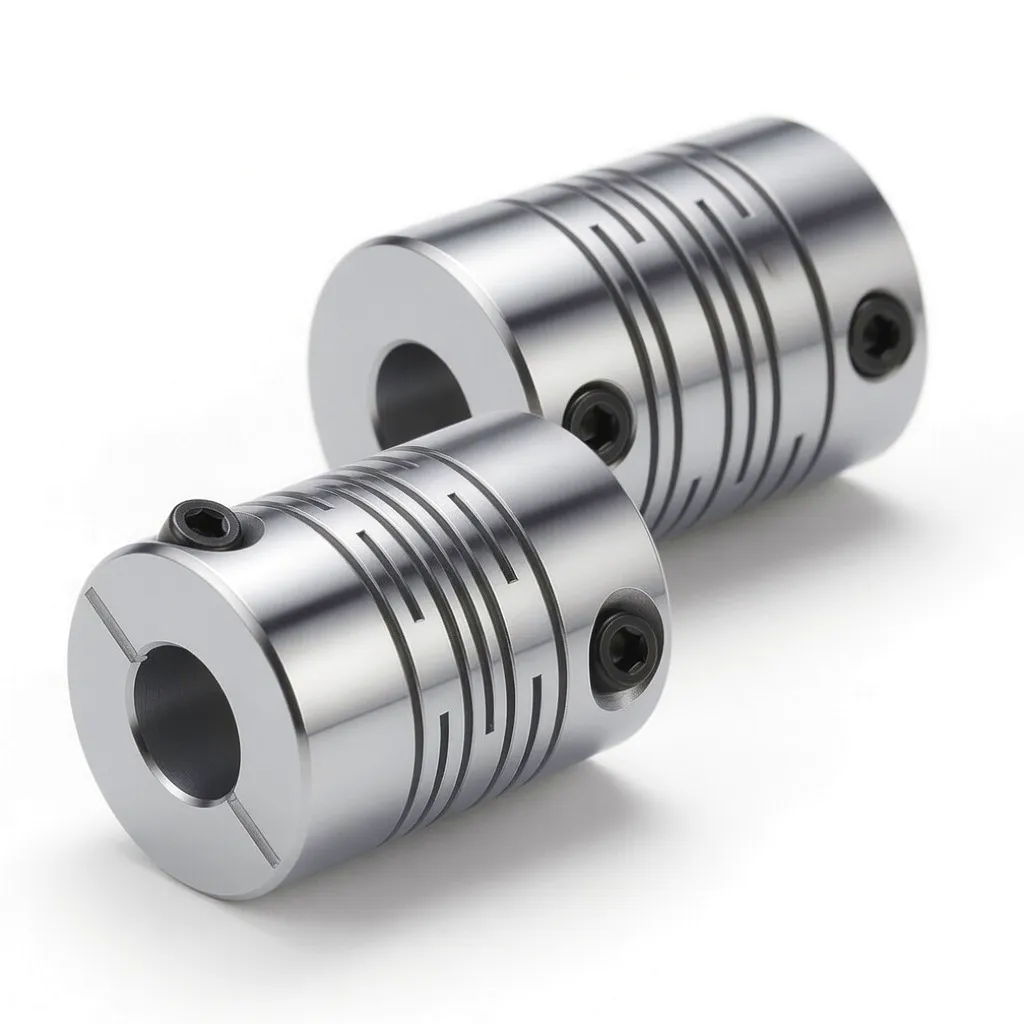
In precision coupling variants — disc couplings and flexible beam couplings that share the cardan coupling’s misalignment accommodation philosophy — high-strength aluminium alloys such as 7075-T6 are deployed to reduce rotational inertia in servo-driven and CNC machine-tool applications. Regardless of the base alloy, every coupling that leaves a reputable manufacturing facility will have undergone magnetic particle inspection, dynamic balancing to ISO 1940 Grade G6.3 or better, and dimensional verification against engineering drawings. Surface treatments range from phosphating and grease impregnation to hot-dip galvanising for outdoor industrial plant in the wetter climate conditions typical of northern England.
Why Engineers Specify Cardan Couplings: Core Technical Advantages
High Angular Misalignment Tolerance
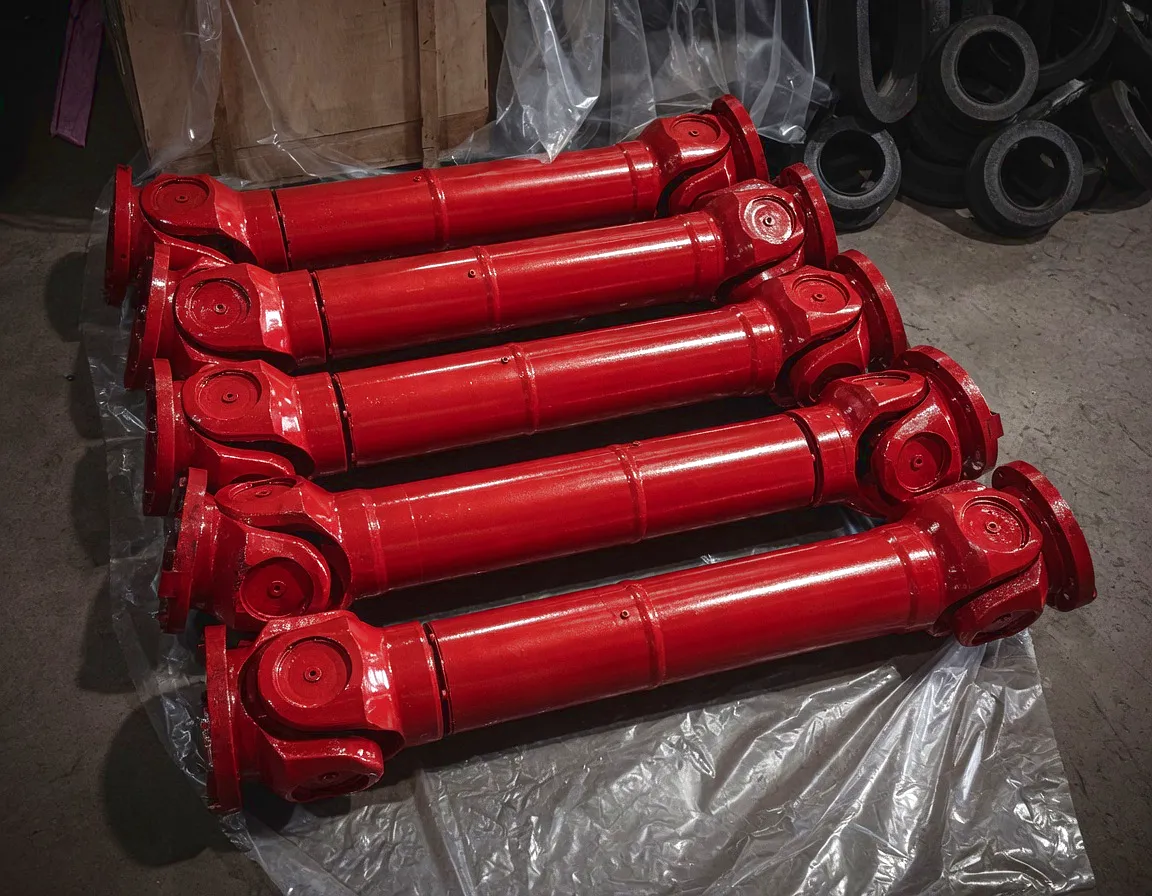
A single cardan joint accommodates angular misalignment up to approximately 45 degrees in some designs, with standard industrial heavy-duty joints operating reliably at angles of 15 to 25 degrees. This is far beyond the capability of gear couplings, disc couplings, or jaw couplings, making cardan arrangements essential wherever drive axes are set at an angle by design — such as in vehicle drivelines, articulated conveyor drives, and test rig configurations.
Exceptional Torque Density
The all-metal, direct-contact construction of a heavy-duty cardan coupling allows it to transmit torques from a few Newton-metres in precision instruments up to 2,000,000 Nm or more in rolling mill main drive applications. This torque density — the ratio of transmissible torque to component weight and envelope — is substantially higher than most elastomeric or hydraulic coupling alternatives, giving design engineers the freedom to keep driveline assemblies compact even under the most demanding power requirements.
Long Service Life and Low Maintenance
When correctly specified, installed, and maintained — typically involving periodic greasing of the cross bearing journals — a cardan coupling in industrial service can achieve operational lifespans measured in years rather than months. The needle roller bearings that carry the cross journal can be supplied as sealed, grease-packed units for demanding environments, or as grease-nipple-fitted types for re-lubrication on scheduled maintenance intervals, greatly simplifying the maintenance burden on plant operations teams.
Accommodation of Axial and Lateral Displacement
Beyond angular misalignment, cardan driveshaft assemblies equipped with telescoping spline sections readily absorb axial displacement — the lengthwise movement of connected shafts relative to each other during thermal expansion, machine cycling, or dynamic loading. This capability is critical in applications such as rolling mill stands, where roll change procedures alter the drive connection geometry by several hundred millimetres, and in vehicle suspensions where wheel travel alters the effective driveshaft length.
Operational Versatility Across Environments
Unlike elastomeric couplings, which degrade at elevated temperatures and in chemically aggressive environments, appropriately specified cardan couplings operate reliably from sub-zero outdoor environments — as encountered on offshore platforms in the North Sea — through to furnace-adjacent locations in UK steel production facilities where ambient temperatures can approach 150 degrees Celsius. Stainless steel and special-alloy variants extend this range further into corrosive or hygienic environments, giving cardan couplings a breadth of environmental tolerance that few other coupling technologies can match.
Technical Performance Parameters Table
The following table provides a representative overview of the key performance parameters associated with cardan couplings across standard industrial size ranges. Actual values depend on series designation, material specification, operating angle, speed, and lubrication conditions. Ever Power engineering team is available to provide detailed datasheets and load calculations for any specific application inquiry received from UK and international clients.
| Parameter | Light Duty | Medium Duty | Heavy Duty | Super Heavy Duty |
|---|---|---|---|---|
| Nominal Torque (Nm) | 25 – 500 | 500 – 10,000 | 10,000 – 250,000 | 250,000 – 2,000,000 |
| Max. Operating Angle (deg) | up to 45 | up to 25 | up to 15 | 3 – 10 |
| Max. Speed (rpm) | up to 6,000 | up to 3,000 | up to 1,500 | up to 500 |
| Bore Diameter Range (mm) | 8 – 40 | 40 – 120 | 120 – 320 | 320 – 800 |
| Primary Material | Alloy Steel / Aluminium | 42CrMo4 Steel | 42CrMo4 Forged Steel | Special Alloy Steel |
| Surface Treatment | Phosphate / Paint | Zinc Plate / Paint | Hot-dip Galvanise | Custom Coating |
| Balancing Grade | ISO G6.3 | ISO G6.3 | ISO G2.5 / G6.3 | ISO G2.5 |
| Operating Temperature (°C) | -30 to +120 | -30 to +150 | -40 to +180 | -40 to +200+ |
Industrial Application Scenarios Across UK and Global Markets
Ever Power: Precision Manufacturing & Custom Cardan Coupling Solutions
Your trusted manufacturing partner for standard and bespoke cardan coupling solutions, serving UK and global industry.
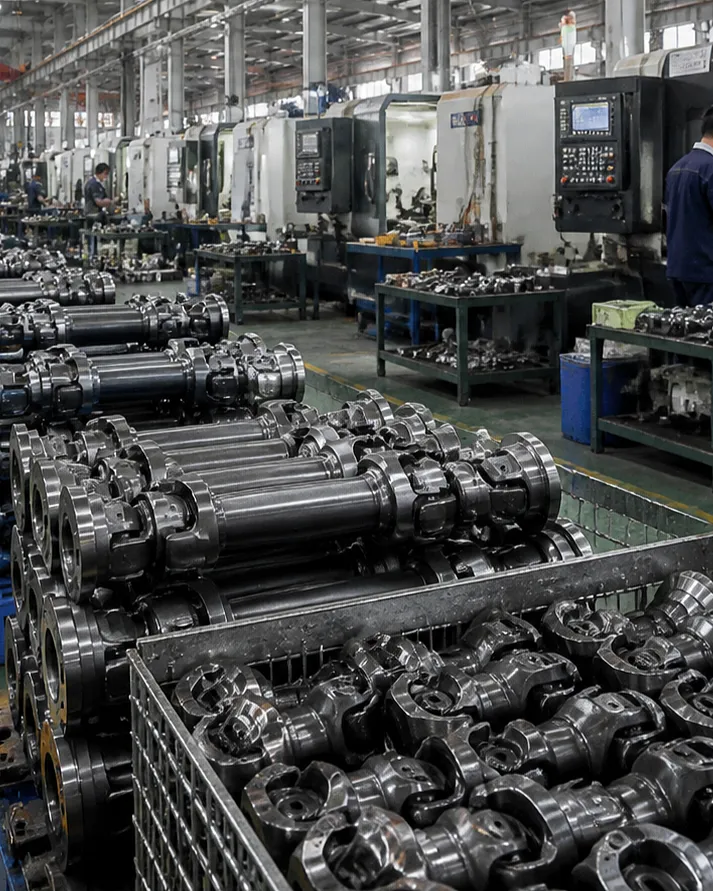
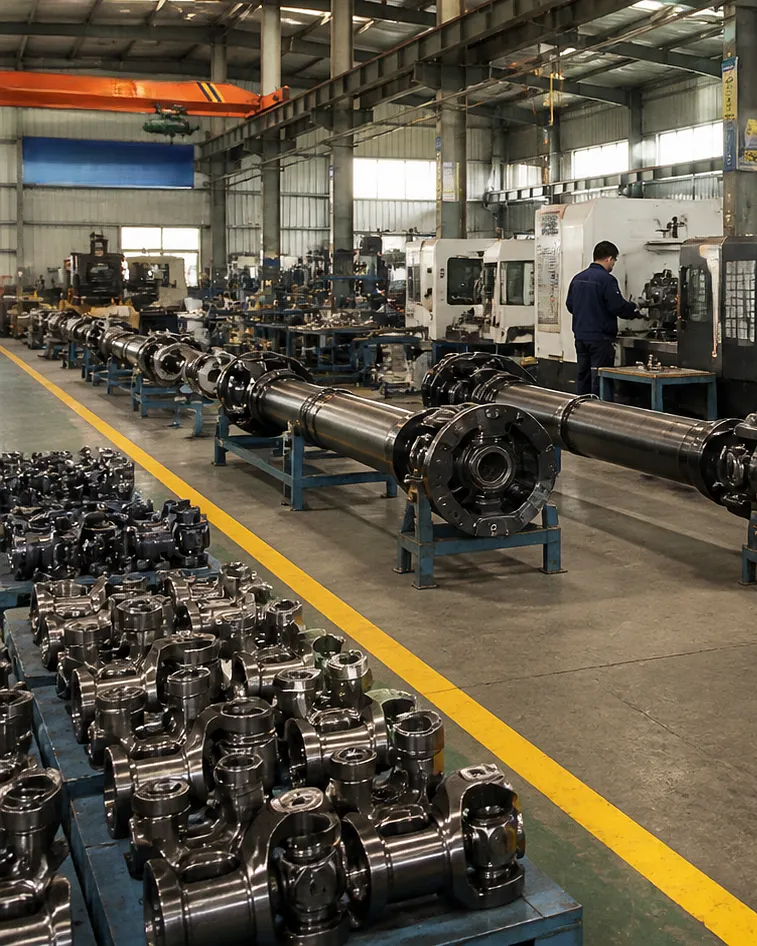
Ever Power operates a fully integrated manufacturing facility equipped with CNC turning centres, multi-axis machining centres, gear hobbing machines, heat treatment furnaces, and coordinate measuring machines (CMMs) capable of measuring component geometry to micron-level precision. Every cardan coupling assembly that leaves the production line has been manufactured to drawing tolerances, heat-treated to the specified metallurgical condition, inspected dimensionally, and dynamically balanced on calibrated balancing equipment traceable to national standards. The manufacturing process is supported by an ISO 9001-certified quality management system, giving procurement teams in the UK and Europe the documentation confidence needed to meet their own supply chain audit requirements.
From bore size and keyway specification to non-standard joint angles, special flange patterns, bespoke shaft lengths, and unique surface treatments — Ever Power engineers every detail to your exact project requirements. No off-the-shelf compromise.
With established freight partnerships and export documentation expertise, Ever Power delivers to UK addresses and international destinations efficiently. Urgent replacement orders for UK plant shutdowns are handled as a priority with expedited production scheduling.
Ever Power’s technical team provides selection guidance, load calculations, installation recommendations, and full material certification packs including material test reports, heat treatment records, and inspection certificates — everything a UK plant engineer needs for traceability and compliance.
Customer Success Story: Rotherham Steel Processing Plant
A long-established structural steel processing plant in Rotherham, South Yorkshire — operating two continuous hot-rolling lines producing structural sections for the UK construction market — encountered a persistent reliability problem on the main drive spindles connecting the roughing mill to the intermediate mill stand. The original cardan coupling assemblies, sourced from a European supplier, were experiencing accelerated cross bearing wear and yoke fatigue cracking at intervals of approximately eight to ten months, causing unplanned shutdowns that cost the site in excess of £60,000 per incident in lost production, maintenance labour, and emergency parts procurement.
Following a detailed root-cause engineering review, the plant’s chief mechanical engineer identified that the original couplings were borderline-rated for the peak impact torques generated during bar entry into the rolling stand, and that the cross journals’ case hardness was below specification. The plant’s procurement team contacted Ever Power and provided full operating data including nominal torque, peak shock torque factor, operating angle range, speed, and environmental conditions, along with dimensional drawings of the mating flanges on both mill housings.
Ever Power’s engineering team recommended an uprated heavy-duty cardan driveshaft series with 42CrMo4 yokes, case-hardened 20CrMnTi cross journals hardened to 60 HRC surface, needle roller bearings with sealed grease retention, and quick-release flanges compatible with the existing mill housing dimensions. Two full driveshaft assemblies were manufactured, dynamically balanced to ISO G2.5, and delivered to Rotherham within eleven working days including full material certification packs. Following installation, the Rotherham facility completed a full rolling campaign of fourteen consecutive months without a single coupling-related stoppage — a fourfold improvement in mean time between failures that delivered a return on investment within the first six weeks of operation.
“The uprated coupling Ever Power specified for our roughing mill drive performed beyond our expectations. After fourteen months of continuous service without a single failure, we have now standardised on Ever Power driveshafts across all three of our rolling lines. The precision of the machined components and the quality of the certification documentation made our internal audit process straightforward.”
“We needed a custom cardan driveshaft for a non-standard operating angle on our new test rig for EV powertrain development here in Coventry, and the standard catalogue items simply would not fit. Ever Power took our dimensional drawings and operating parameters, confirmed the design within 48 hours, and delivered a precision-balanced assembly within two weeks. The shaft runs smoothly at 3,500 rpm with no measurable vibration signature — exactly what a development test programme demands.”
“As maintenance manager for an offshore supply vessel based out of Aberdeen, I have always found sourcing quality cardan driveshaft components for marine applications more complex than it should be. Ever Power offered stainless steel variant cross journals, provided material test certificates to Lloyd’s Register standards, and shipped to Aberdeen within the scheduled maintenance window. The quality of the finished product and the responsiveness of their sales team made this our preferred route for all future propulsion coupling requirements.”
Frequently Asked Questions
Ready to Specify Your Cardan Coupling?
Contact Ever Power’s technical sales team with your requirements. We respond to all UK and international enquiries within one business day, and provide comprehensive selection guidance at no charge.