
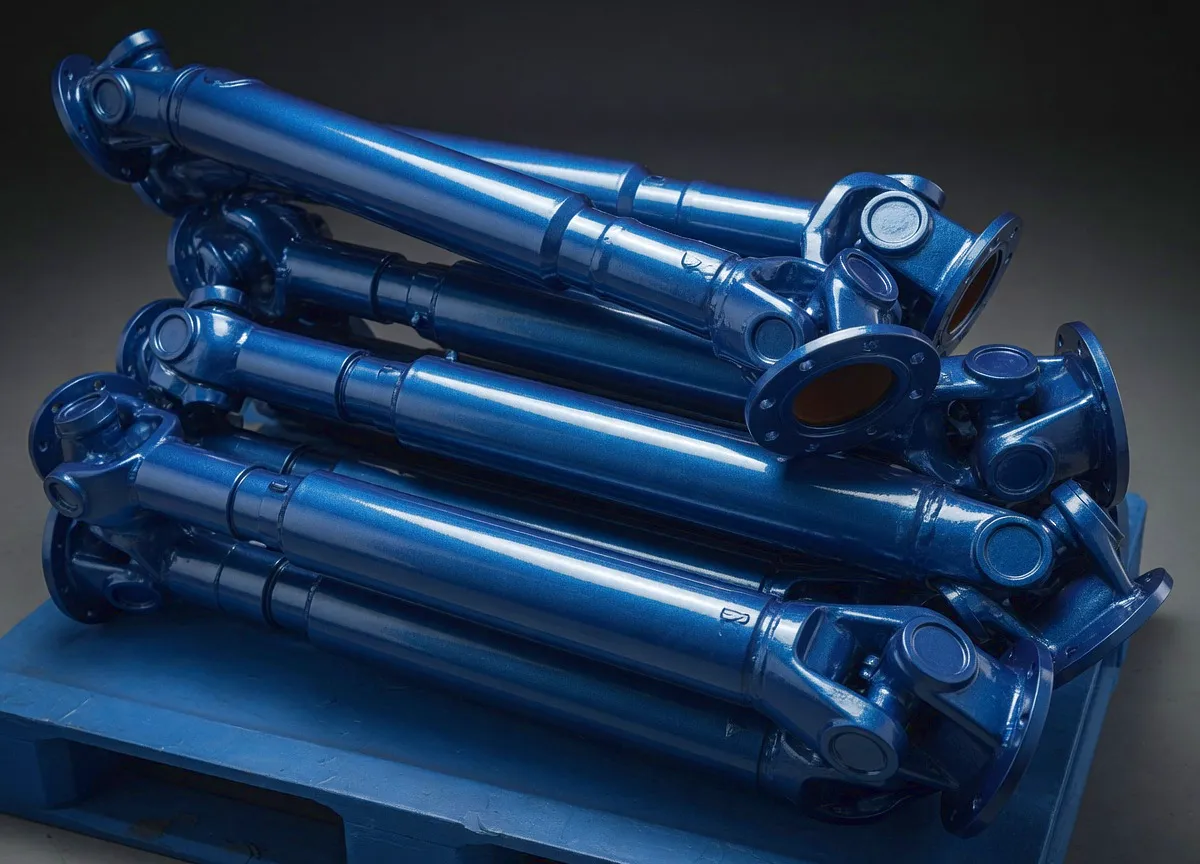
Understanding why this speed variation happens — and precisely how large it can become at different operating angles — is essential knowledge for any mechanical or design engineer working with drivetrain systems. It informs shaft angle selection, bearing specification, dynamic balancing requirements, and the fundamental question of whether a single joint is sufficient or whether a double cardan arrangement is necessary. This article sets out the complete mathematical basis of the velocity ratio in a Hooke’s joint, derives the fluctuation coefficient, and places this analysis within the real-world context of industrial applications across the United Kingdom and beyond.
What Exactly Is a Single Cardan Joint?
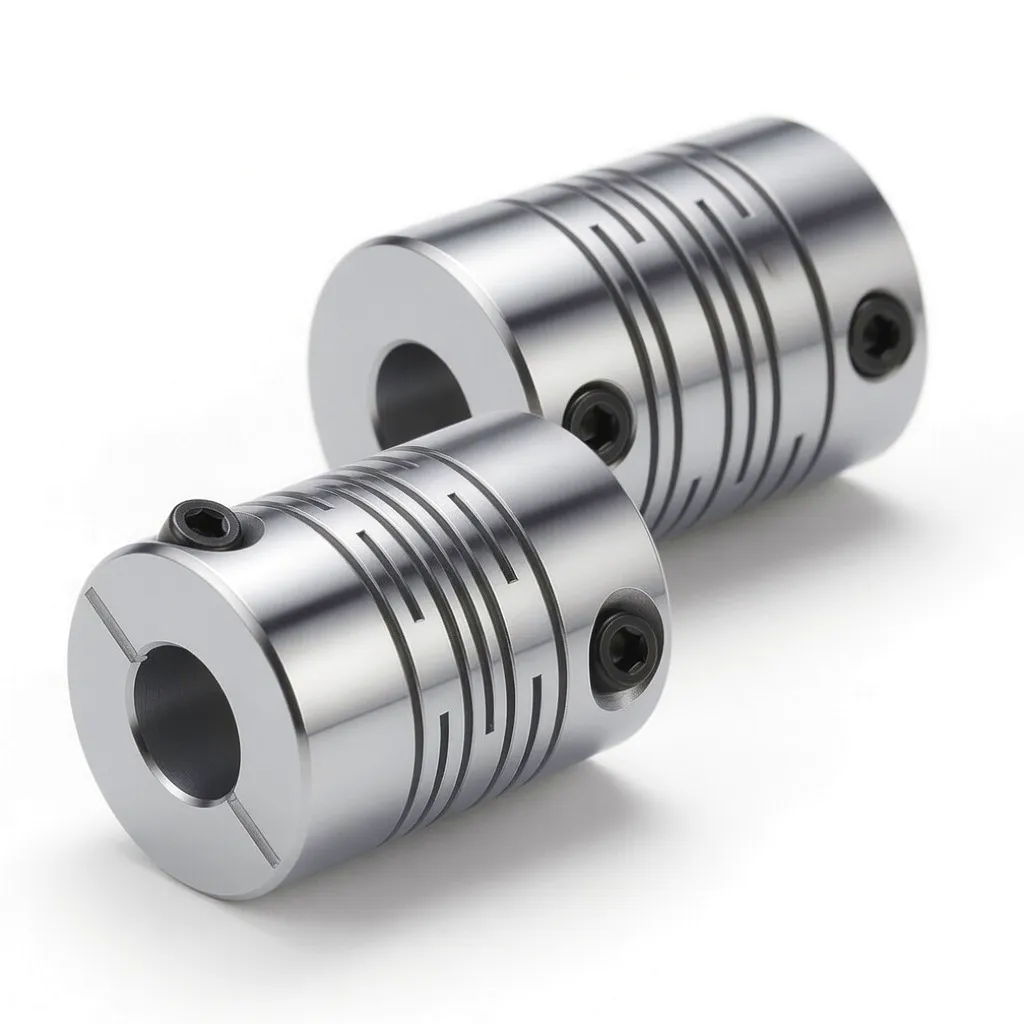
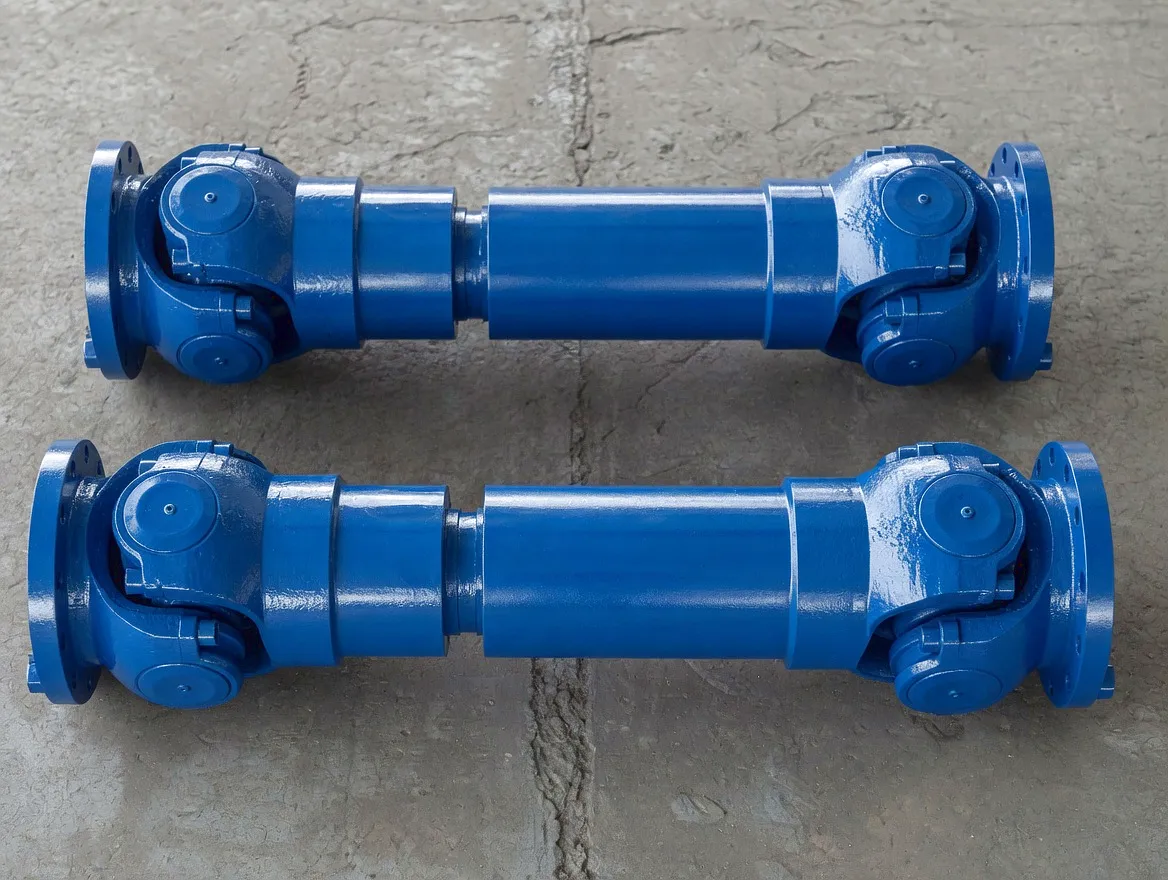
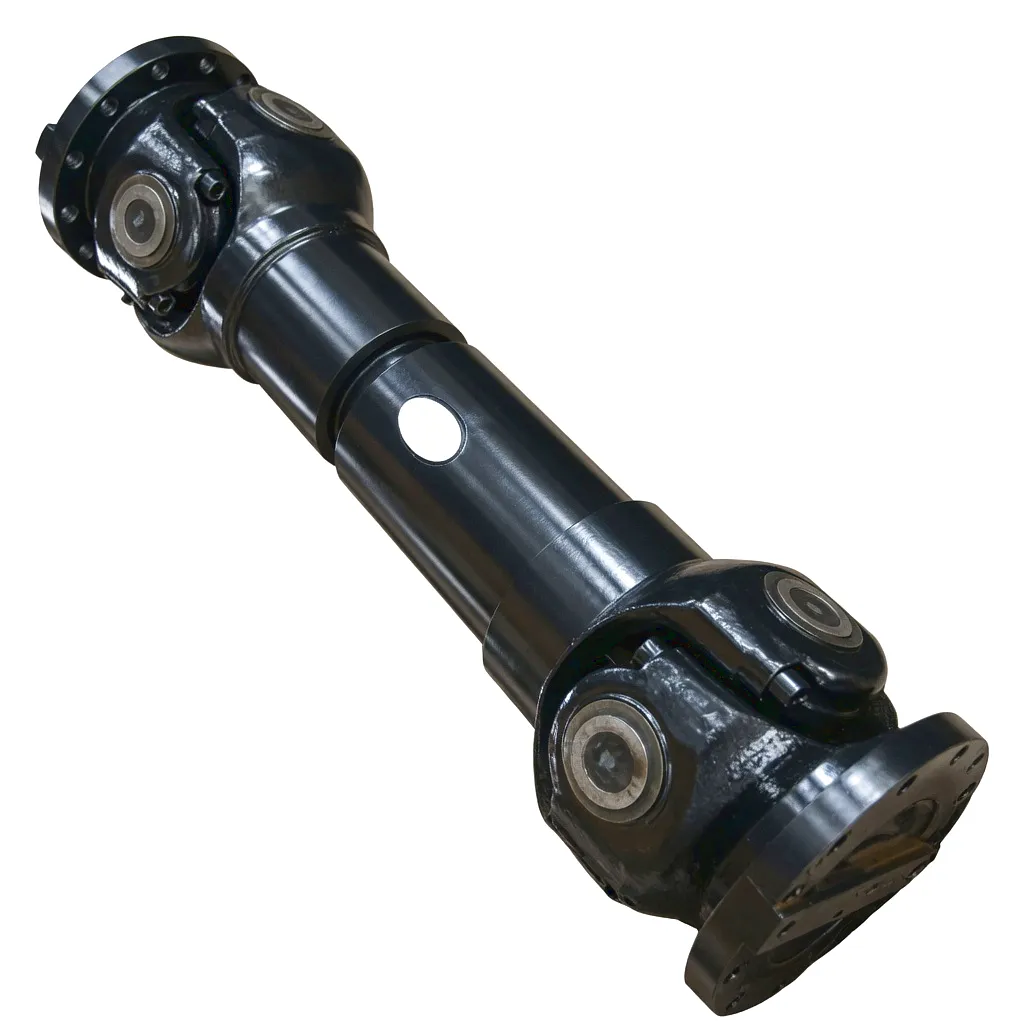
A single cardan coupling — the name derived from the Italian mathematician Gerolamo Cardano, though it was later refined by Robert Hooke — consists of two yokes connected by a cross-shaped intermediate piece commonly called the spider or trunnion cross. Each yoke is attached to one of the two shafts being connected, and the four trunnions of the cross are fitted into needle or plain bearings within the yoke arms. This construction allows rotation to be transmitted across an angular misalignment between the two shaft centre lines, which is the core purpose of the component. The joint permits angular articulation typically up to around 35 degrees in standard industrial designs, though precision-ground versions operating in critical applications are usually limited to far smaller angles to control the velocity error discussed in this article.
What makes the single cardan coupling structurally elegant is also what makes it kinematically imperfect: the cross-pin arrangement constrains the relative motion of the two yokes such that the output shaft does not rotate at a constant angular velocity relative to the input, even when the input itself rotates at a perfectly constant speed. This is not a problem with any individual specimen — it applies universally to every single Hooke’s joint ever manufactured. The fluctuation is a mathematical inevitability, and the only way to eliminate it entirely is to use two joints arranged correctly, as in a double cardan shaft.
The Geometric Root of Non-Uniform Output
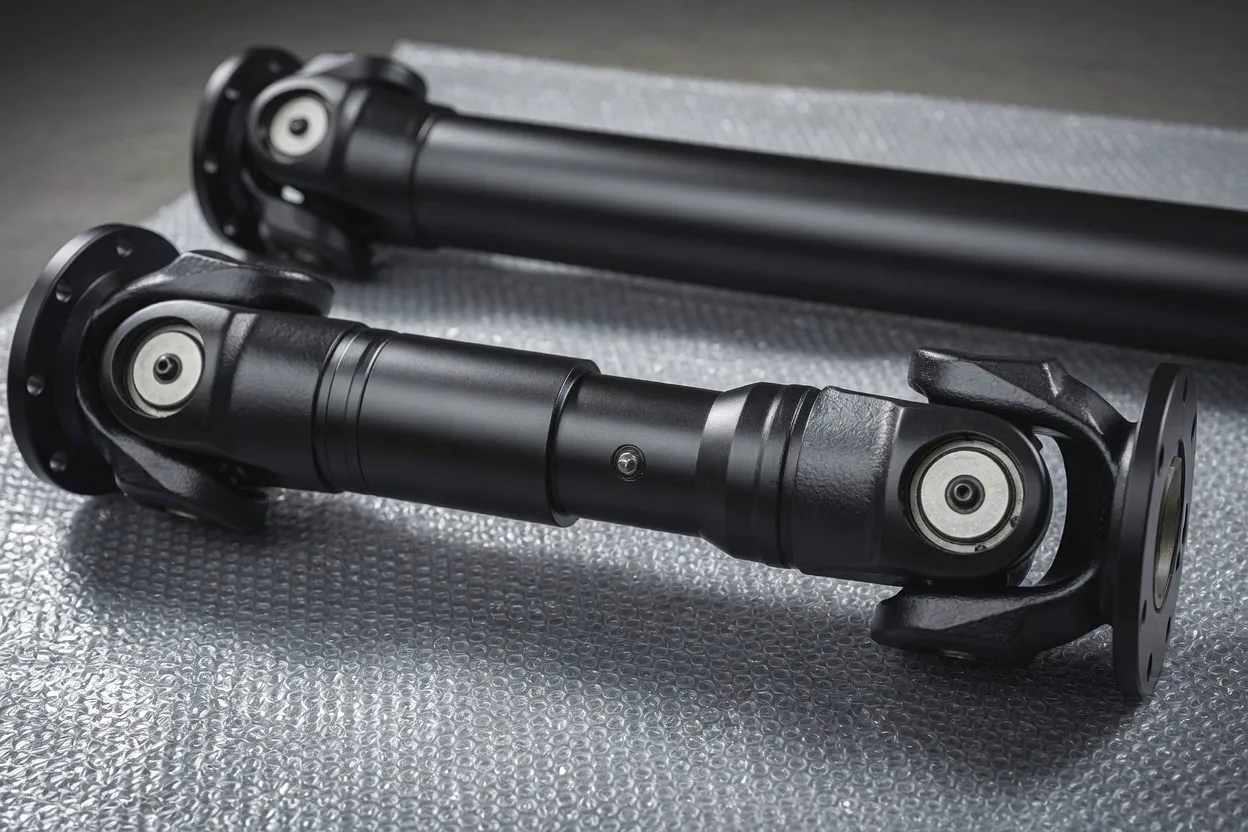
Mathematical Derivation of the Velocity Ratio
Core Velocity Ratio Formula
ω₂ / ω₁ = cos β / (1 – sin² β · cos² θ₁)
Where: ω₂ = output angular velocity, ω₁ = input angular velocity, β = shaft intersection angle, θ₁ = instantaneous angle of input shaft rotation
The fundamental relationship governing a single cardan coupling is derived from the constraint equations of the cross-pin mechanism. If we define the angle between the two shaft axes as β (beta), and we let θ₁ represent the instantaneous rotational position of the input yoke measured from the position where the driving pin is in the plane containing both shaft axes, then the instantaneous velocity ratio ω₂/ω₁ is given by the expression shown above. This formula was established through spatial vector analysis of the joint geometry and has been validated experimentally many times over in mechanical engineering research.
Inspecting this expression reveals something important: when β = 0, the denominator reduces to 1 regardless of θ₁, and the velocity ratio becomes exactly 1 — no fluctuation. As β increases above zero, the denominator oscillates between cos²β (when θ₁ = 90° or 270°) and 1 (when θ₁ = 0° or 180°). This oscillation produces two cycles of speed variation per revolution of the input shaft. The maximum instantaneous velocity ratio occurs when θ₁ = 90°:
(ω₂/ω₁)ₚₕₓ = 1 / cos β
And the minimum instantaneous velocity ratio occurs when θ₁ = 0°:
(ω₂/ω₁)ₚₐₙ = cos β
These two extremes define the full range over which the output velocity oscillates during a single rotation. At a modest angle of 10 degrees, the maximum ratio is 1/cos(10°) ≈ 1.015 and the minimum is cos(10°) ≈ 0.985 — a variation of about 3% from the mean, which is quite manageable for many applications. At 20 degrees, these figures become approximately 1.064 and 0.940 — a swing of nearly 13% from peak to trough, which starts to become a significant engineering concern in precision systems. At 30 degrees, the numbers reach 1.155 and 0.866, a fluctuation exceeding 28% across the output speed range. This escalating sensitivity to joint angle is one of the most important design considerations for any engineer specifying a cardan coupling for a real application.
Velocity Fluctuation vs. Joint Angle — Reference Table
The following table provides a comprehensive reference for engineers comparing the speed fluctuation characteristics of a single cardan coupling across the range of angles commonly encountered in industrial drive shaft design. All values assume constant input angular velocity. The fluctuation coefficient is defined as (ωmax – ωmin) / ωmean, expressed as a percentage, and gives a convenient single-number summary of the severity of the velocity variation at each angle.
Downstream Engineering Consequences of Speed Fluctuation
Torsional Vibration
Because the output velocity oscillates twice per revolution, the cardan coupling introduces a periodic torsional excitation into the driven shaft. The frequency of this excitation is twice the rotational frequency of the shaft — commonly written as 2N in vibration analysis shorthand, where N is the rotational speed in revolutions per second. In steel rolling mills in Sheffield and Rotherham, for example, drive shafts rotating at 600 rpm would produce a torsional excitation at 20 Hz, which falls squarely within the range where it can excite natural frequencies of connected gearboxes, mill stands, and even the foundation structure itself. If this 2N excitation frequency coincides with a torsional natural frequency of the system, resonance occurs, and the resulting vibration amplitudes can cause rapid bearing failure, gear pitting, shaft cracking, or in extreme cases catastrophic fracture. This is why experienced drivetrain engineers always check the Campbell diagram — the map of excitation frequencies against operating speed — when designing systems that incorporate single cardan couplings at meaningful angles.
Bearing Load Cycling
The velocity fluctuation directly translates into fluctuating torque in the driven shaft, because any rotational inertia downstream of the joint — rotors, flywheels, gears, rollers — resists the velocity change according to the relationship T = I · dω/dt. The fluctuating torque imposes cyclic radial and axial loads on the bearings at the trunnion cross, as well as on the shaft support bearings of both the driving and driven shafts. Over millions of load cycles at high operating speeds, this cyclic loading is the primary cause of fatigue failure in the trunnion needle bearings — the most maintenance-intensive wear point of a single cardan coupling in industrial service. Engineers specifying cardan couplings for continuous-duty applications in paper mills or textile machinery facilities in the English Midlands must account for this bearing life reduction and either select oversized bearings with adequate dynamic capacity, limit the maximum operating angle, or schedule preventive replacement intervals accordingly.
Secondary Bending Moments
A consequence of the velocity variation that is less frequently discussed but equally important in long shaft assemblies is the generation of secondary bending moments at the joint. Because the angular acceleration of the output shaft oscillates at twice the input frequency, reactive moments are generated at the yoke connections that act in bending rather than torsion. In short, stiff shaft assemblies these moments are small compared to the primary torque, but in long drive shafts with significant mass — such as propeller shafts in offshore vessels built and serviced in ports around Newcastle or Glasgow — the bending moments can be a meaningful fraction of the shaft’s fatigue limit. This is another reason why marine classification societies impose strict limits on the maximum operating angle of cardan couplings used in propulsion systems, and why drive shaft designers often add intermediate support bearings to limit the effective span over which bending moments can accumulate.
Cardan Coupling Components in Detail
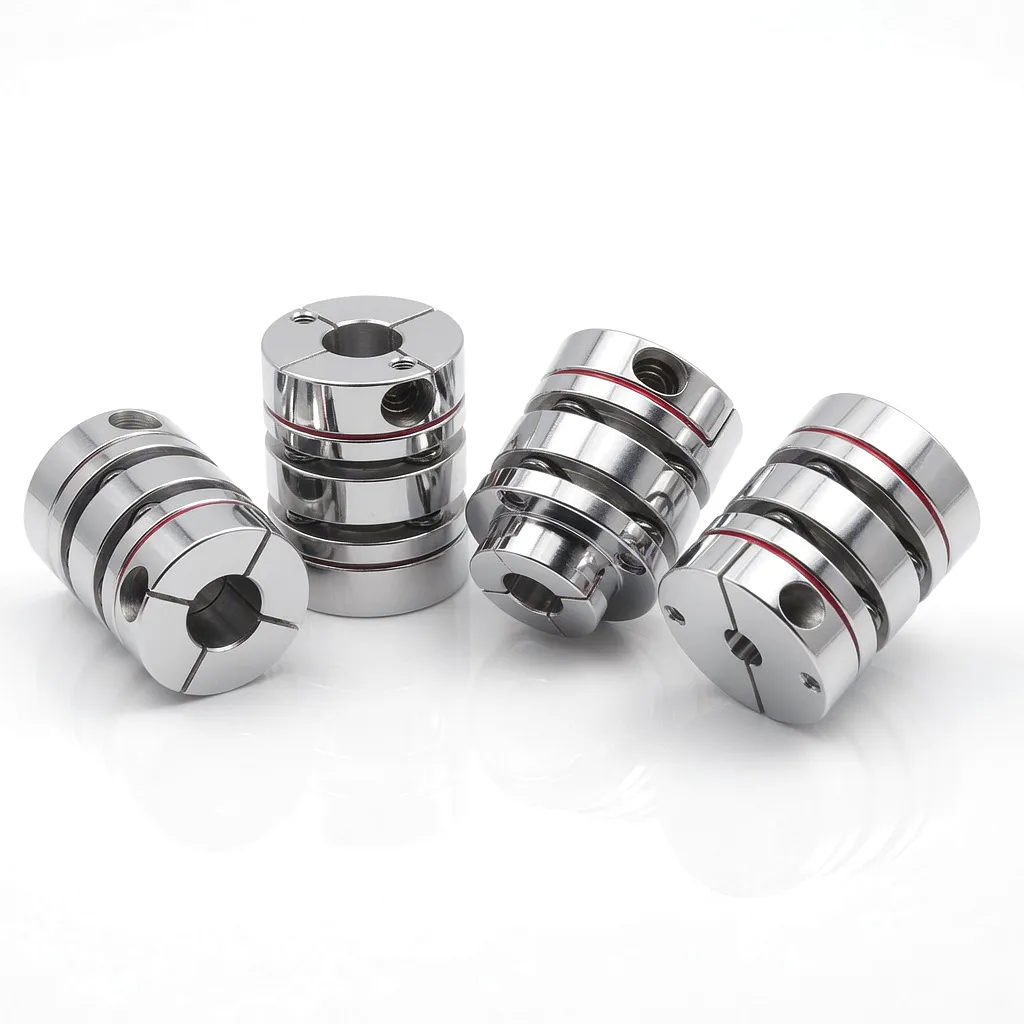
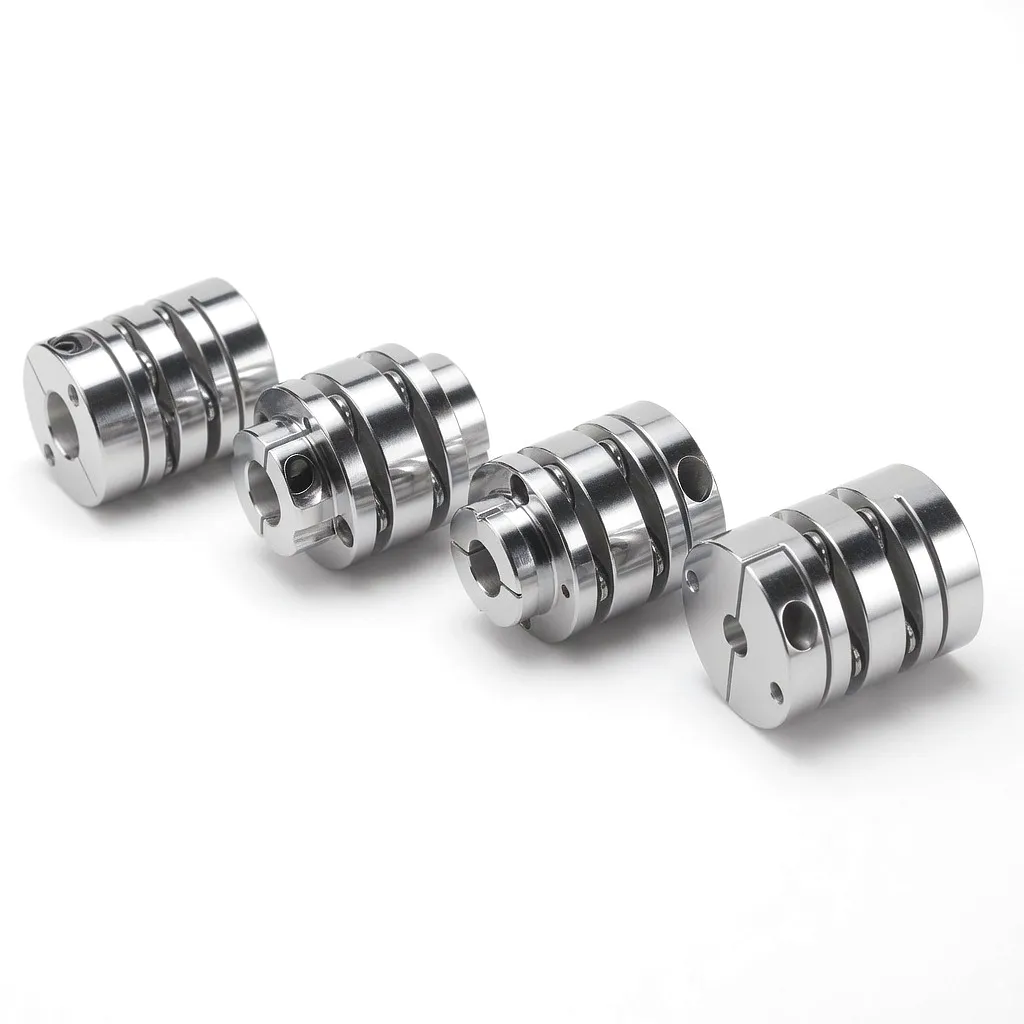
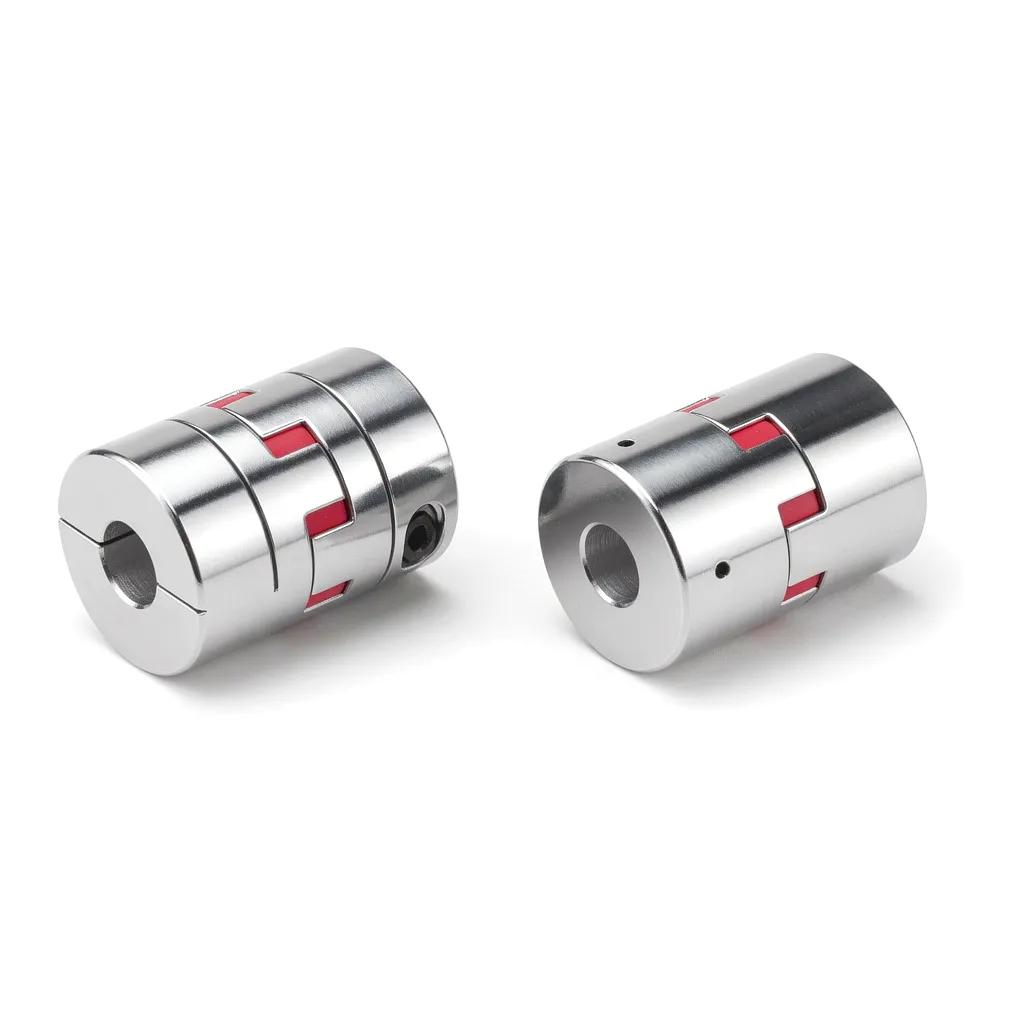
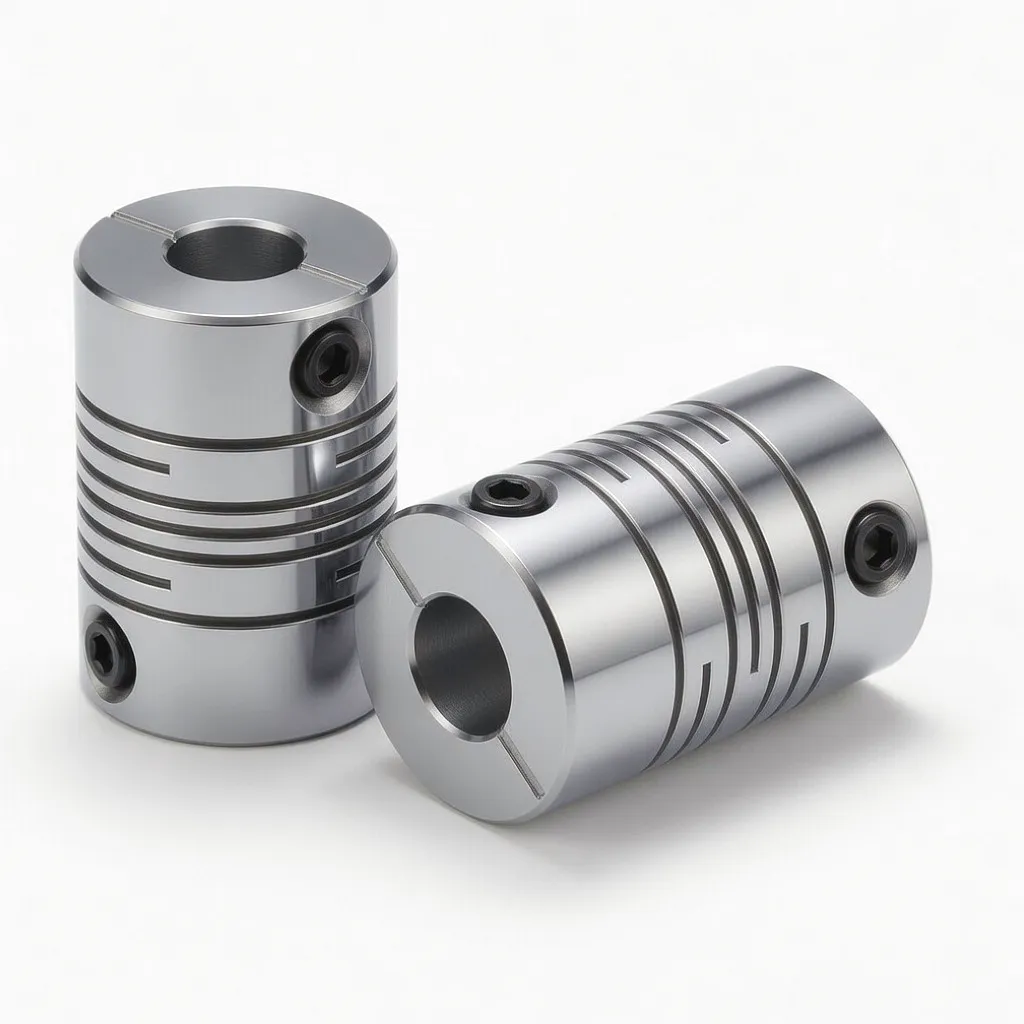
Engineering Approaches to Mitigate Velocity Variation
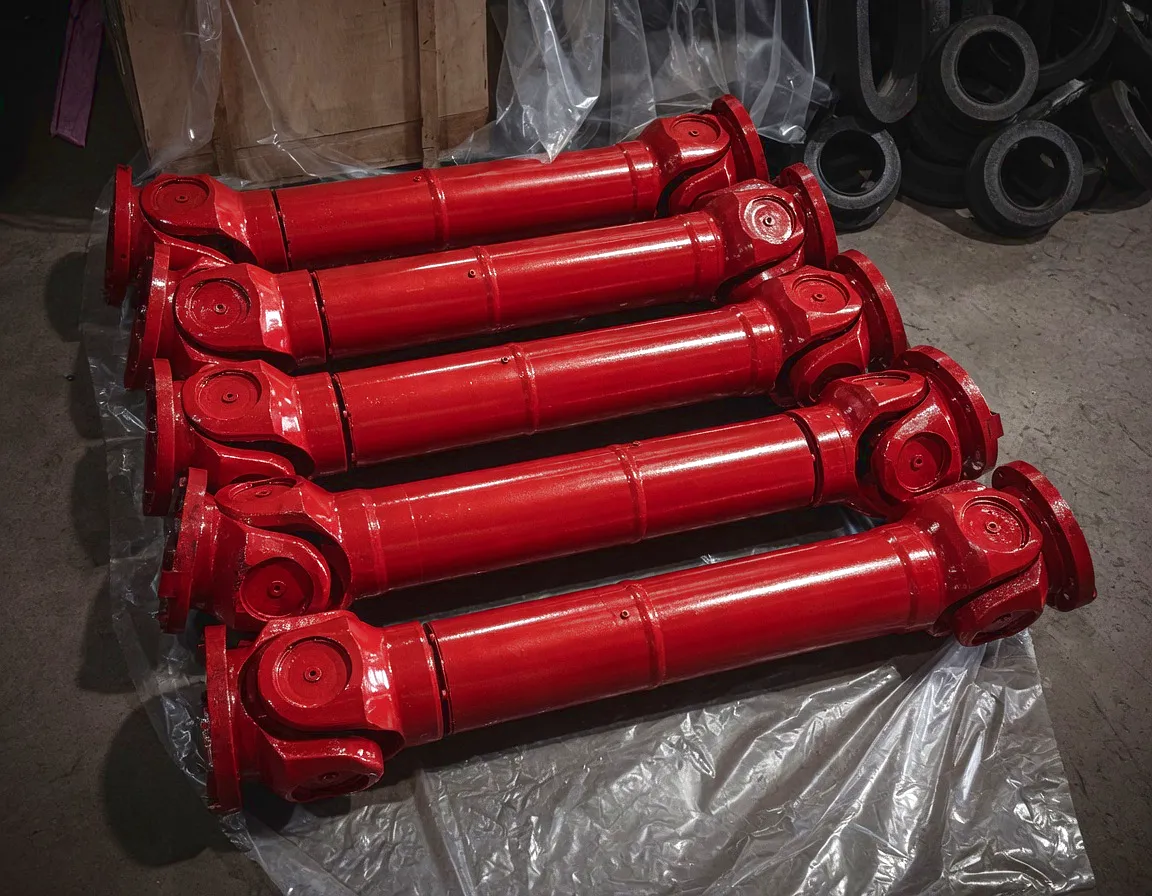
▶ Angle Reduction by Design
Repositioning motor, gearbox, or driven machine mounts to reduce the required shaft angle is often the cheapest and most effective intervention. Even reducing a joint from 20° to 12° cuts the fluctuation coefficient by more than half, with proportional reductions in vibration and bearing load cycling.
▶ Double Cardan Shaft Configuration
Two joints in series with correct phasing and equal angles delivers constant-velocity output. This is the standard solution in rolling mill drive systems, heavy duty pump drives, and industrial press lines where velocity uniformity is non-negotiable.
▶ Torsionally Flexible Intermediate Shaft
Inserting a torsionally flexible element — such as a rubber coupling or a disc pack coupling — between the single cardan joint and the driven machine filters high-frequency torsional excitations. This does not eliminate the fluctuation but prevents it from propagating into the driven machine at full amplitude.
▶ Operating Speed Management
If the drive system has a critical speed that falls within the normal operating range, the 2N excitation from the single cardan joint may be unavoidable. Variable-speed drives can be programmed to accelerate through the resonance band quickly without dwelling near it, reducing the time the system spends at maximum vibration amplitude.
Materials, Construction and Performance Parameter Reference
Industrial Application Scenarios Across the UK and Beyond
🏭 Steel & Rolling Mills — Sheffield / Rotherham
In the steel industry, which has deep historical roots in Sheffield and Rotherham and continues to operate at scale, cardan drive shafts transmit tens of thousands of Newton-metres from the main drive motors to the rolling mill stands. The velocity fluctuation characteristics of the single cardan coupling used here have direct consequences for strip quality — irregular output speed translates directly to variation in rolling force and therefore thickness tolerance in the finished strip or section. Precision double cardan arrangements with careful phasing are standard in modern tandem mills, while older reversing mills may still employ single joints with tight angle limits.
🚘 Automotive Drivelines — Midlands Manufacturing Corridor
The West Midlands automotive manufacturing corridor — encompassing Birmingham, Coventry, and Wolverhampton — relies heavily on cardan joints for production line testing rigs, gearbox test benches, and in the vehicles themselves for propeller shafts and steering columns. In vehicles, the 2N torsional excitation from a single cardan joint at road speed contributes directly to the driveline boom and shudder that NVH engineers spend enormous effort eliminating. Understanding the mathematical relationship between angle and fluctuation coefficient is foundational knowledge for driveline NVH engineers at the OEMs and Tier-1 suppliers concentrated in this region.
⚓ Marine Propulsion — Glasgow, Newcastle, Southampton
Marine applications demand rigorous attention to speed fluctuation because propulsion shaft vibration translates directly to vessel noise, crew comfort, and structural fatigue in the hull and engine room. Shipbuilding and marine engineering operations based around Glasgow’s Clyde waterfront, the Tyne in Newcastle, and the southern port facilities near Southampton all specify cardan couplings with strict angle limitations for main propulsion drives. The interaction between the 2N excitation of the joint and the blade-passing frequency of the propeller is a particular concern in twin-screw vessels.
⚙ Paper, Printing & Converting Machinery
Paper machines and high-speed printing lines are extremely sensitive to velocity non-uniformity. In a paper machine running at 1,000 m/min, even a sub-percent variation in roller surface speed causes visible cross-machine banding defects in the finished product. Cardan couplings used to drive section rolls from offset gearboxes must operate at angles small enough to keep the fluctuation coefficient below the threshold visible as product defects — typically below 0.5% — which means angles must not exceed roughly 4° to 5°. This severe constraint drives considerable creativity in machine layout and coupling design.
Ever Power: Precision Manufacturing for Demanding Drive Applications
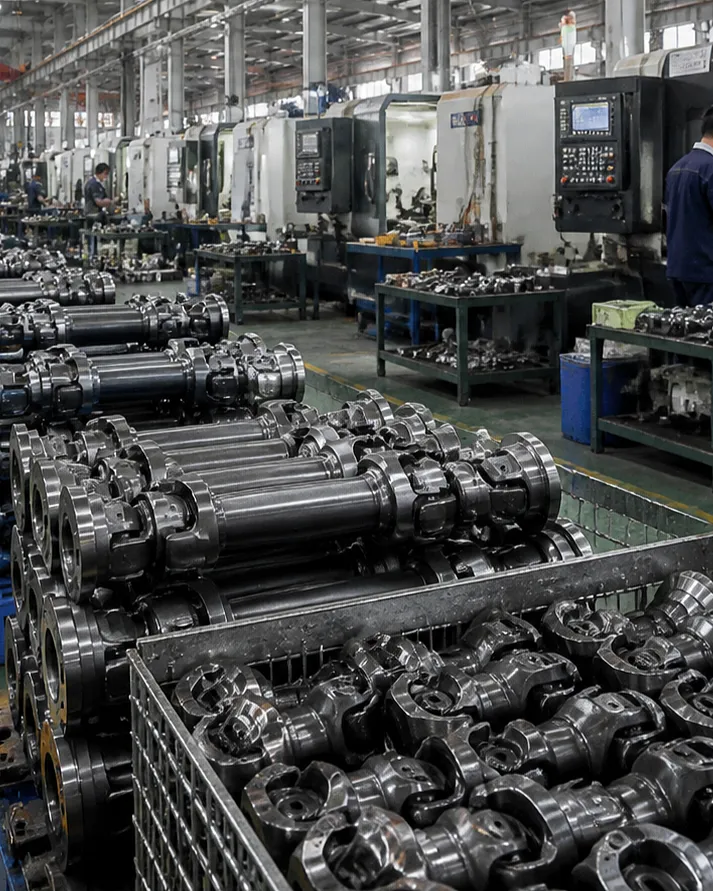
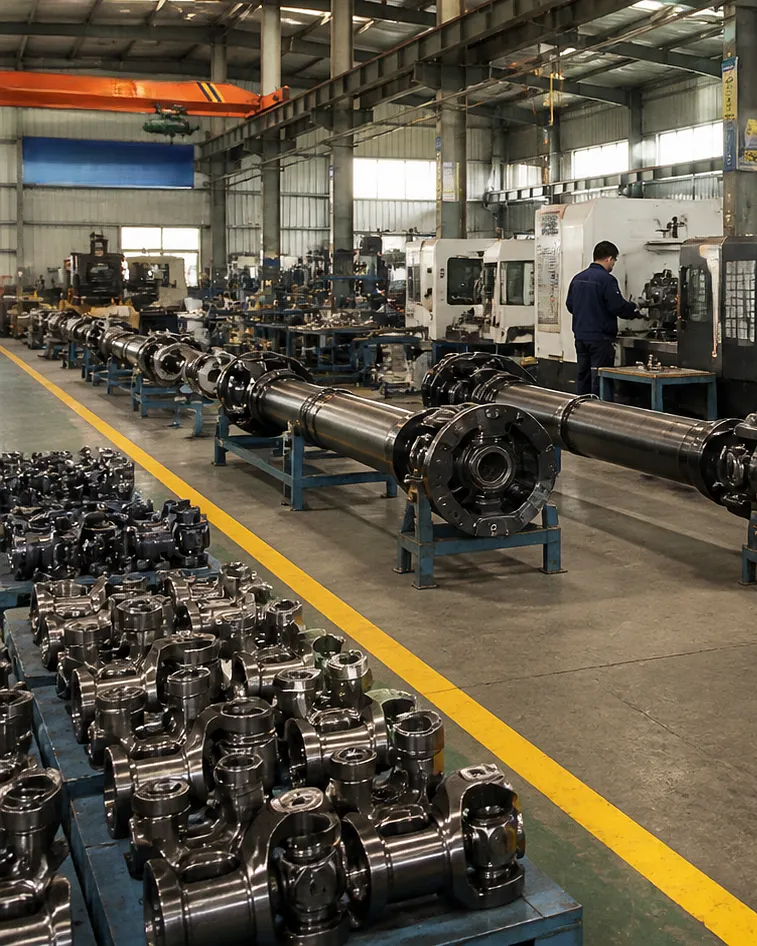
At Ever Power, engineering rigour and manufacturing precision are not aspirational statements — they are operational realities demonstrated every day on the shop floor. The single cardan coupling velocity fluctuation problem described throughout this article is one that Ever Power’s engineering team has spent decades solving for clients across heavy industry, marine, and precision manufacturing. Our approach begins not with a catalogue selection but with a technical consultation: we work with our customers to understand the operating angle, the input and output inertia, the speed range, the required torque capacity, and the tolerance for velocity non-uniformity at the application, and we use this information to define the optimal joint configuration from the outset.
Our customisation capabilities span the complete geometric envelope: bore diameter and profile (straight, splined, keyed), yoke geometry, intermediate shaft length and tube diameter, surface treatment, and lubrication configuration. For customers in the steel and mining sectors who require joints capable of transmitting over 500,000 Nm continuously, Ever Power’s heavy-duty manufacturing line produces precision-forged yoke assemblies and ground trunnion crosses with dimensional tolerances held to within microns — tolerances that directly determine the smoothness and balance quality of the assembled cardan coupling, and therefore its contribution to the 2N vibration signature at operating speed. Finite element analysis of both the static stress distribution and the dynamic bending modes of each custom design is standard practice before manufacture begins.
Supply chain reliability is another area where Ever Power distinguishes itself. We maintain strategic component inventory for the trunnion crosses, needle bearing assemblies, and seal kits that are the most frequently replaced elements in service, ensuring that customers in time-sensitive industries such as steel production and paper manufacturing receive replacement parts within committed lead times. Our UK distribution partners and international freight partnerships ensure rapid delivery to customers across England, Scotland, Wales, and Northern Ireland, as well as to offshore and export destinations worldwide.
Request a Custom Coupling Quote →
Email us at [email protected] · Response within 24 hours
Customer Success Story: Tyne Valley Rolling Mill, Newcastle upon Tyne
★★★★★
“The Ever Power team understood immediately what was causing our bearing failures. Their technical explanation of the velocity ratio and how our angle change had affected the fluctuation coefficient gave us complete confidence that the double cardan solution they proposed would work. It has delivered exactly as promised — nearly two years without a trunnion failure on either stand.”
— Colin Fairweather, Maintenance Engineering Manager
Tyne Valley Rolling Mill, Newcastle upon Tyne
★★★★★
“We had been sourcing cardan shafts from multiple suppliers and accepting variable quality. After switching to Ever Power for the custom heavy-duty units on our plate mill drive, the difference in dimensional consistency and balance quality was immediately apparent during installation. The vibration signature dropped to a level we hadn’t seen since the mill was new, and the noise level in the drive bay has improved noticeably.”
— Diane Strickland, Senior Mechanical Engineer
Midlands Plate Processing, Wolverhampton
★★★★★
“Lead time and supply chain reliability are as important as the technical specification for us — a delayed shaft delivery means a delayed mill restart, which costs far more than the component itself. Ever Power has consistently met or beaten the lead times quoted, and their after-sales support for spare trunnion cross kits has meant we now carry a much leaner replacement parts inventory. The cost saving versus our previous supplier arrangement is very significant on an annual basis.”
— Robert Ingham, Procurement Director
Northern Wire & Section, Sheffield
Frequently Asked Questions — Cardan Coupling Speed Fluctuation
The following questions reflect the real queries that engineers, procurement specialists, and plant maintenance managers across the UK raise when specifying or troubleshooting cardan couplings. They are answered here in the same direct, technical manner that Ever Power’s engineering team uses when speaking with customers.
How much speed fluctuation does a single cardan joint produce when operating at a 15-degree angle in a UK steel rolling application?
At 15 degrees, a single cardan coupling produces a velocity fluctuation coefficient of approximately 7.2%. This means the output shaft speed oscillates between about 96.6% and 103.5% of the mean speed twice per revolution. In steel rolling mill applications typical of operations in Sheffield and Rotherham, this level of fluctuation is generally acceptable for roughing mill duty but would be considered too high for finishing mill stands where surface quality and dimensional tolerance are critical. A double cardan arrangement would be the recommended solution for continuous finishing duty at this angle.
What is the mathematical formula used to calculate the instantaneous velocity ratio of a Hooke’s joint at any given rotation angle?
The instantaneous velocity ratio is given by: ω2/ω1 = cosβ / (1 – sin²β · cos²θ1), where β is the angle between the two shaft axes, θ1 is the instantaneous angular position of the input yoke, and ω1 and ω2 are the input and output angular velocities respectively. The maximum ratio is 1/cosβ (occurring at θ1 = 90°), and the minimum is cosβ (occurring at θ1 = 0°). This relationship holds for all Hooke’s joints regardless of size or manufacturer.
Where can I get a competitive price and fast delivery quote for custom heavy-duty cardan couplings for a Birmingham automotive test facility?
Ever Power provides custom cardan coupling quotes for industrial applications including automotive test rigs in Birmingham and across the Midlands region. You can request a detailed price quotation by emailing [email protected] with the application details — required torque, operating angle, speed range, bore specifications, and any surface treatment or certification requirements. Responses are typically provided within 24 hours, and expedited manufacturing is available for urgent replacement requirements.
Why does a single cardan coupling cause vibration and noise in my drive system, and how can I determine whether the joint angle is the root cause?
Speed fluctuation in a single cardan coupling generates a torsional excitation at exactly twice the shaft rotational frequency (2N). If vibration analysis of your drive system shows a prominent frequency component at twice the shaft speed — for example, a 40 Hz peak in a system running at 1,200 rpm (20 rev/s) — the single cardan joint angle is almost certainly the root cause. Measure or calculate the actual operating angle of the joint. If it exceeds 10–12° for your application’s speed and inertia combination, converting to a double cardan shaft arrangement or reducing the joint angle by repositioning one of the connected machines is the most effective solution.
Which type of cardan coupling is best suited for heavy-duty paper mill drive applications in northern England where angle and bearing life are both concerns?
For paper mill drives in northern England where velocity uniformity is essential and bearing life is a maintenance priority, the recommended solution is a double cardan shaft with precision-phased yokes and sealed needle-bearing trunnion crosses. The double cardan arrangement eliminates the 2N torsional excitation entirely when correctly configured, protecting the paper machine’s roll section from the speed variation that causes cross-machine banding defects. The sealed trunnion bearing option reduces re-lubrication intervals and is particularly advantageous in paper mill environments where contamination with water, steam, and fibres can degrade grease quality rapidly.
How does the cost of a custom double cardan shaft from a specialist UK supplier compare to standard off-the-shelf cardan coupling prices available from general engineering distributors?
A custom double cardan shaft from a specialist manufacturer will typically cost 2.5 to 4 times more than a comparable single joint from a general catalogue distributor. However, when the total cost of ownership is considered — including the bearing replacement labour, production downtime during maintenance, and the cost of product quality losses from velocity variation — the premium for a properly engineered double cardan solution usually delivers a payback period of under twelve months in continuous-duty industrial applications. For an accurate price specific to your torque range, angle, and bore requirements, contact Ever Power at [email protected].
Ever Power · Precision Drive Solutions
Ready to Solve Your Drive System Challenge?
Talk to our engineering team about cardan coupling selection, custom design, and UK delivery.
📧 Contact Ever Power: [email protected]
edit by gzl