
Request a Custom Quote
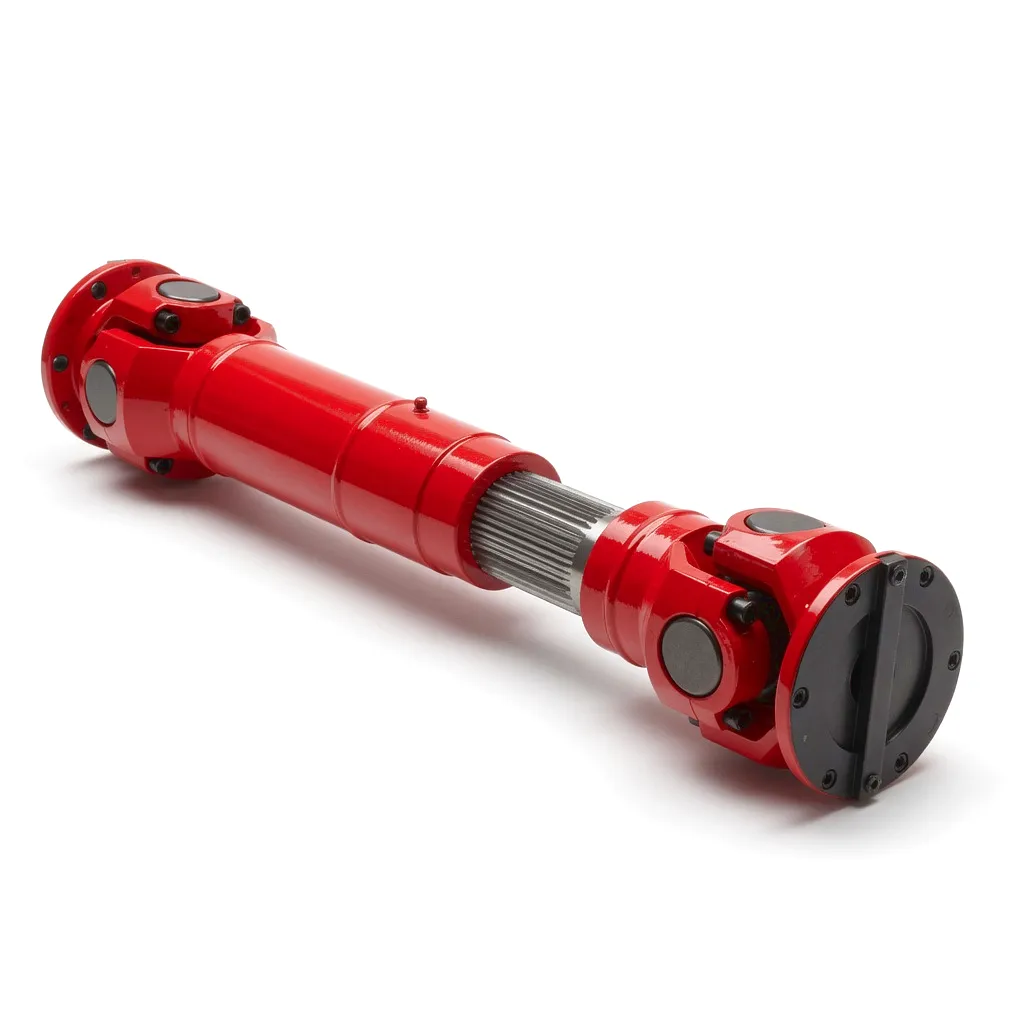
Our engineering team in the UK and global supply chain can specify the exact cardan coupling series for your hay rake model — standard or fully bespoke. Lead times, bore dimensions, torque ratings and yoke styles all discussed on first contact.
Why Hay Rakes Punish Drivetrains Like Almost Nothing Else in Agriculture
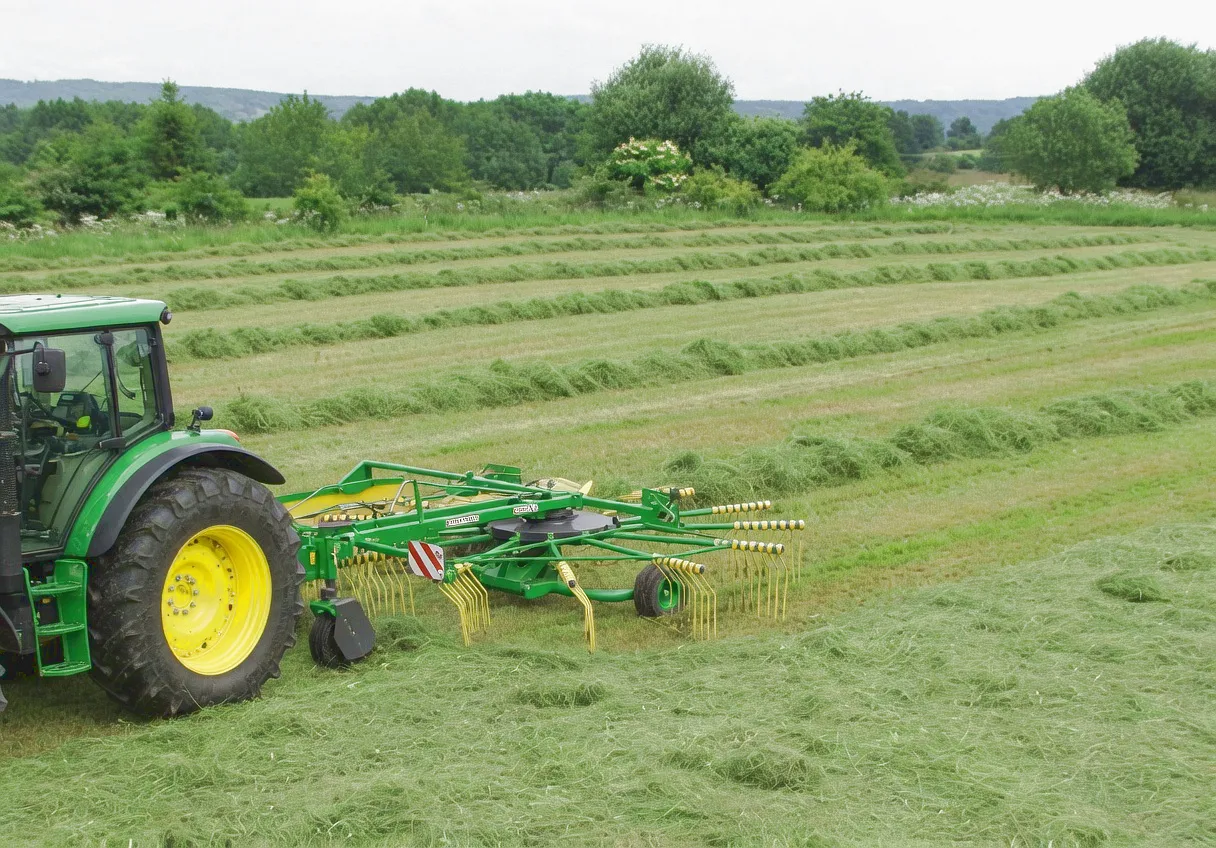
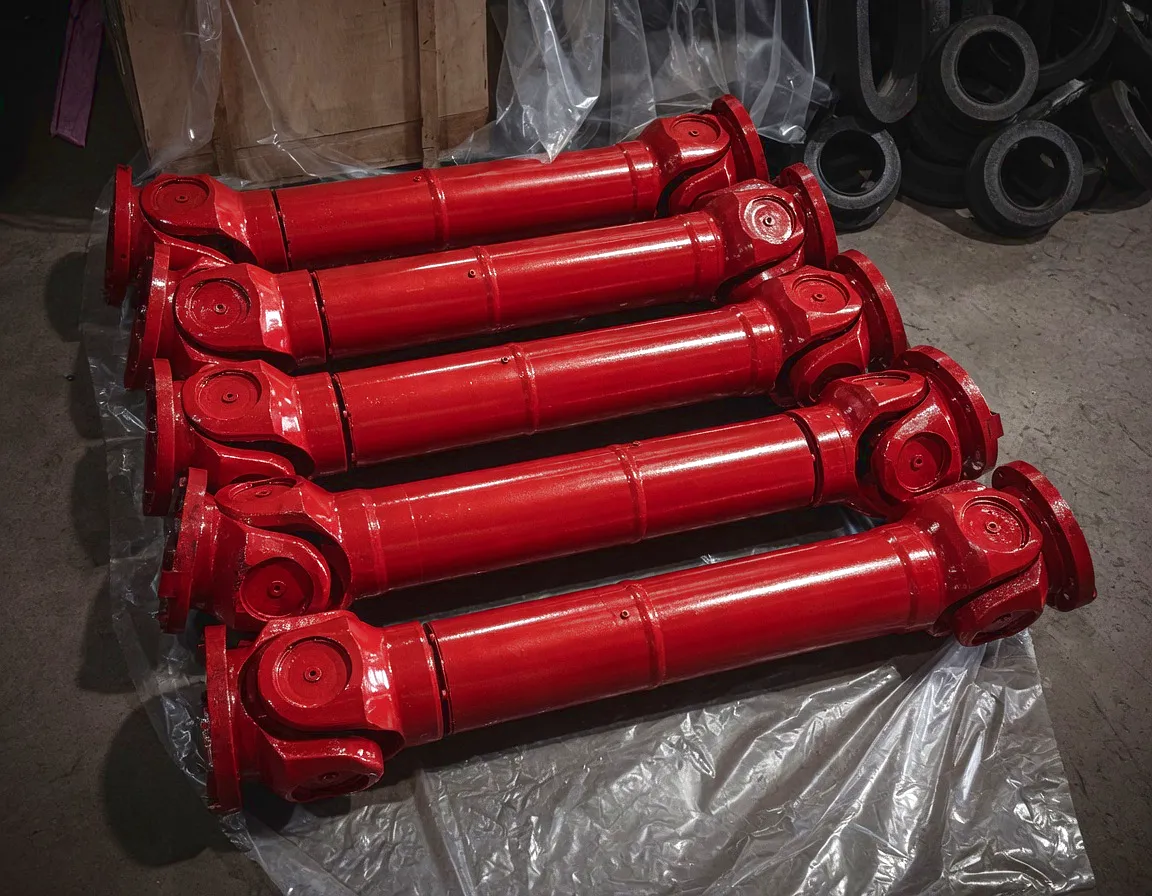 Walk around a twin-rotor or carousel hay rake mid-operation and you quickly realise the drivetrain is carrying a level of dynamic stress that most people associate with industrial machinery rather than farmyard equipment. The tractor PTO runs at either 540 RPM or 1,000 RPM depending on the machine specification, but the internal gearboxes on modern wide-working rakes multiply that substantially to drive the tine arms at the speeds needed to move cut grass efficiently without bruising it. At the same time, the whole machine is bouncing across undulating ground, the working angle of the PTO shaft changes with every headland turn, and the implement lift mechanism regularly demands the driveline absorb rapid angular transitions that would snap an undersized shaft in short order.
What makes this particularly demanding from a power-transmission engineering standpoint is the combination of high rotational speed, continuous cyclic torque variation, and large working angles — frequently between 15° and 25° in real field conditions across the rolling terrain typical of much of England, Scotland and Wales. A cardan coupling built to the correct specification handles all three simultaneously. A generic universal joint that happens to be the right diameter but was sourced without proper attention to operating angle, grease retention or bearing capacity will not. The financial consequences — lost harvest days, emergency parts sourcing, labour costs — are well known to anyone who has managed a UK hay operation over multiple seasons.
How a Cardan Coupling Actually Works — and Why the Detail Matters at High Speed
A cardan coupling — also widely called a universal joint or Hooke’s joint — transmits rotational torque between two shafts that are not perfectly aligned. The mechanism consists of two yoke forks linked by a cross-shaped trunnion (the spider), with needle roller bearings housed inside each trunnion cup to reduce friction and permit angular movement. When both yokes are oriented correctly relative to each other (the classic “double Cardan” or phased arrangement), the velocity fluctuation that a single joint introduces is cancelled out, delivering near-uniform output rotation even at significant working angles.
In the context of a hay rake running at high PTO speed, this velocity uniformity is not merely a comfort — it directly affects the longevity of every downstream component. If output velocity pulses at twice the shaft rotation frequency (which a single, unphased joint produces), the tine gearboxes, bearings and tine arms absorb those pulses as repeated shock loads. Over a season of operation in UK field conditions — long days, often on slopes, with frequent direction changes — the cumulative fatigue damage from an incorrectly phased or worn cardan coupling is significant. A well-engineered coupling eliminates the problem at source.
Material selection reinforces the engineering. The spider is typically manufactured from case-hardened alloy steel, often 20CrMnTi or equivalent, providing a hardened surface to resist needle bearing wear while retaining a tough core that resists shock fracture. The yoke forks on heavy-duty agricultural versions are frequently forged rather than cast, because the grain structure of a forging runs continuously through the part rather than ending abruptly at a machined surface — a critical distinction when cyclic bending loads are involved. The grease nipple placement and reservoir volume are designed to sustain lubrication through an entire operating shift, which matters enormously in dusty hay-making conditions where contamination enters any insufficiently sealed bearing within hours.
Technical Performance Parameters — Agricultural Cardan Coupling Series
| Parameter | Light-Duty (Series 1) | Standard (Series 2) | Heavy-Duty (Series 3) |
|---|---|---|---|
| Nominal Torque (Nm) | Up to 350 | 350 – 900 | 900 – 2,800 |
| Peak Torque (Nm) | Up to 700 | 700 – 1,800 | 1,800 – 5,600 |
| Max Operating Speed (RPM) | 1,200 | 1,000 | 800 |
| Max Single-Joint Angle (°) | 25° | 25° | 20° |
| Spider Material | 20CrMnTi alloy | 20CrMnTi forged | 20CrMnTi forged HRC 58–64 |
| Yoke Type | Welded / Cast | Forged | Forged, reinforced |
| Bore Range (mm) | 20 – 45 | 30 – 80 | 50 – 150 |
| Slip Clutch Integration | Optional | Optional | Standard available |
| Sealing Standard | IP54 | IP65 | IP65 / IP67 option |
Where Exactly Does the Cardan Coupling Sit in a Hay Rake Drivetrain?
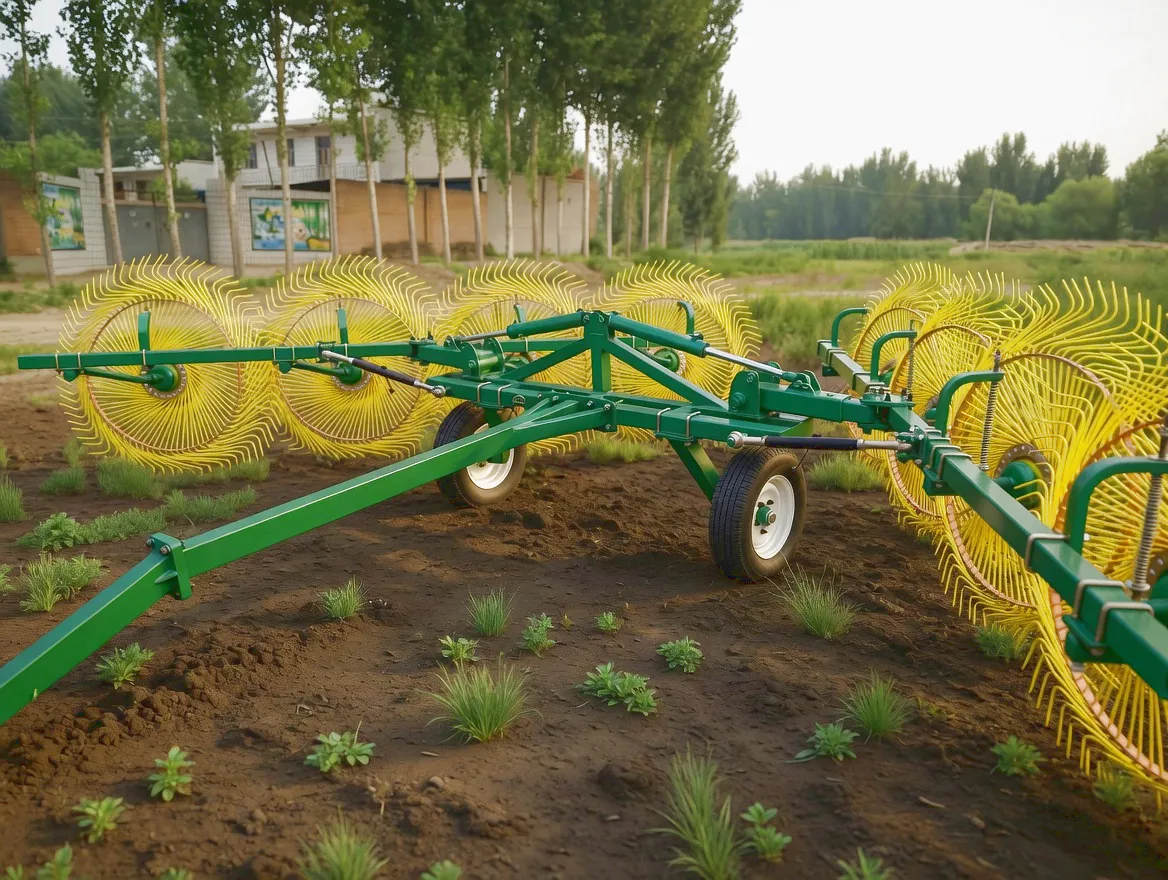
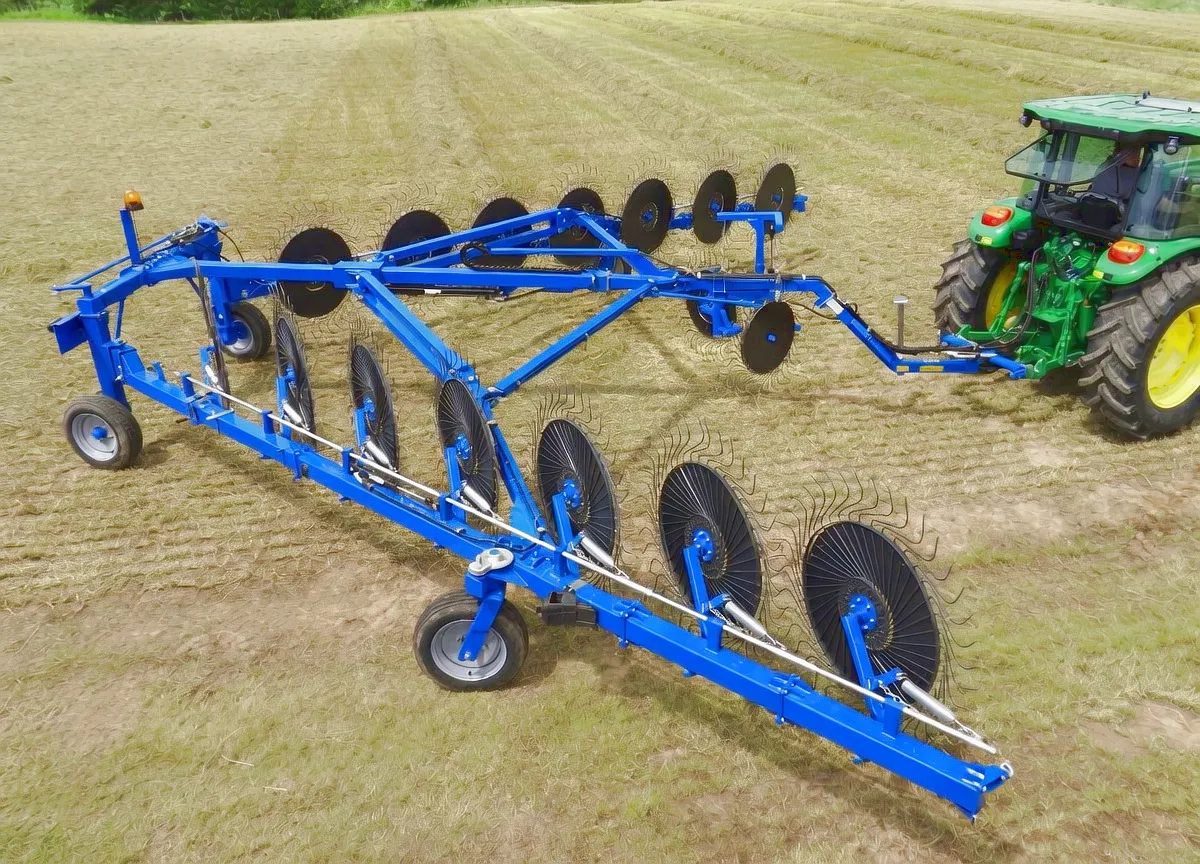
On a typical twin-rotor rake — the type most commonly operated on UK grassland farms from Yorkshire down to Devon — the power path runs from the tractor PTO stub shaft through a telescoping cardan shaft (itself incorporating two cardan couplings at each end plus an intermediate bearing in longer installations) into the main gearbox mounted on the rake frame. From there, further shafts and bevel gearboxes distribute drive to each rotor. The cardan couplings at the tractor end absorb the majority of angular change, particularly during headland turns where the operator raises the implement and pivots the tractor. At this moment the driveline angle can exceed 30° briefly, and the coupling must handle it without losing torque continuity.
The intermediate couplings linking the main gearbox to each rotor face a different but equally demanding profile: relatively consistent angles but sustained high-speed operation, combined with the vibration generated by thousands of tine impacts with the ground per minute. These couplings need bearing seals that maintain grease exclusivity despite the constant ingress of fine grass particles and dust — a challenge that an IP65-rated seal addresses far more reliably than a standard agricultural-spec wiper seal alone.
Modern wide-working machines — 9-metre to 13-metre working width rakes now used on larger farms in the English Midlands and Scottish Borders — add a further complication: the longer the machine, the more the frame flexes dynamically, and any coupling connecting two sections of the frame must accommodate this flex without developing play in the bearing cups. This is where the precision of needle roller bearing fit — specified to within microns — directly translates to machine life measured in seasons rather than weeks.
Why Procurement Engineers and Farm Machinery Dealers Choose Our Cardan Couplings
Forged Alloy Steel Construction
Every yoke and spider is forged, not cast, from 20CrMnTi alloy steel and case-hardened to HRC 58–64 surface hardness. The result is a part that handles shock loads without developing surface fatigue cracks over a long operating life, which matters enormously in the irregular load profile of hay raking.
High-Integrity Sealing System
IP65-rated labyrinth-plus-lip seal combinations keep grease in and dust out through a full hay-making season. Units rated to IP67 are available for machines operating in particularly wet or muddy conditions, such as early-cut silage work in western England and Wales where late-spring rains are frequent.
Full Customisation Service
Non-standard bore sizes, special yoke geometries, integrated overrunning clutches, or metric-to-imperial conversion flanges — we hold tooling for hundreds of configurations and can produce bespoke solutions from a drawing, a sample part, or even a description of the application requirement. OEM and dealer pricing available.
OEM Cross-Reference Availability
Our engineering library covers dimensional equivalents for coupling series used on Kuhn, Krone, Claas, Deutz-Fahr and other major rake brands. When a machine arrives with a worn-out coupling and no part number, our team can identify the correct replacement from measurements alone, saving days off the critical path during hay season.
Fast Dispatch to UK Addresses
Standard stock items for the most common agricultural coupling series are held ready for despatch within two working days to any UK mainland address. Expedited shipping options are available during the hay and silage season window, when even a 24-hour delay can mean missing an optimal cutting weather window.
Quality Documentation
Material test certificates, dimensional inspection reports and batch traceability are available on request — essential for OEM procurement teams and agricultural equipment manufacturers who operate formal supplier qualification processes. CE marking documentation for relevant coupling assemblies is provided as standard.
Materials, Heat Treatment and Manufacturing Tolerances Explained
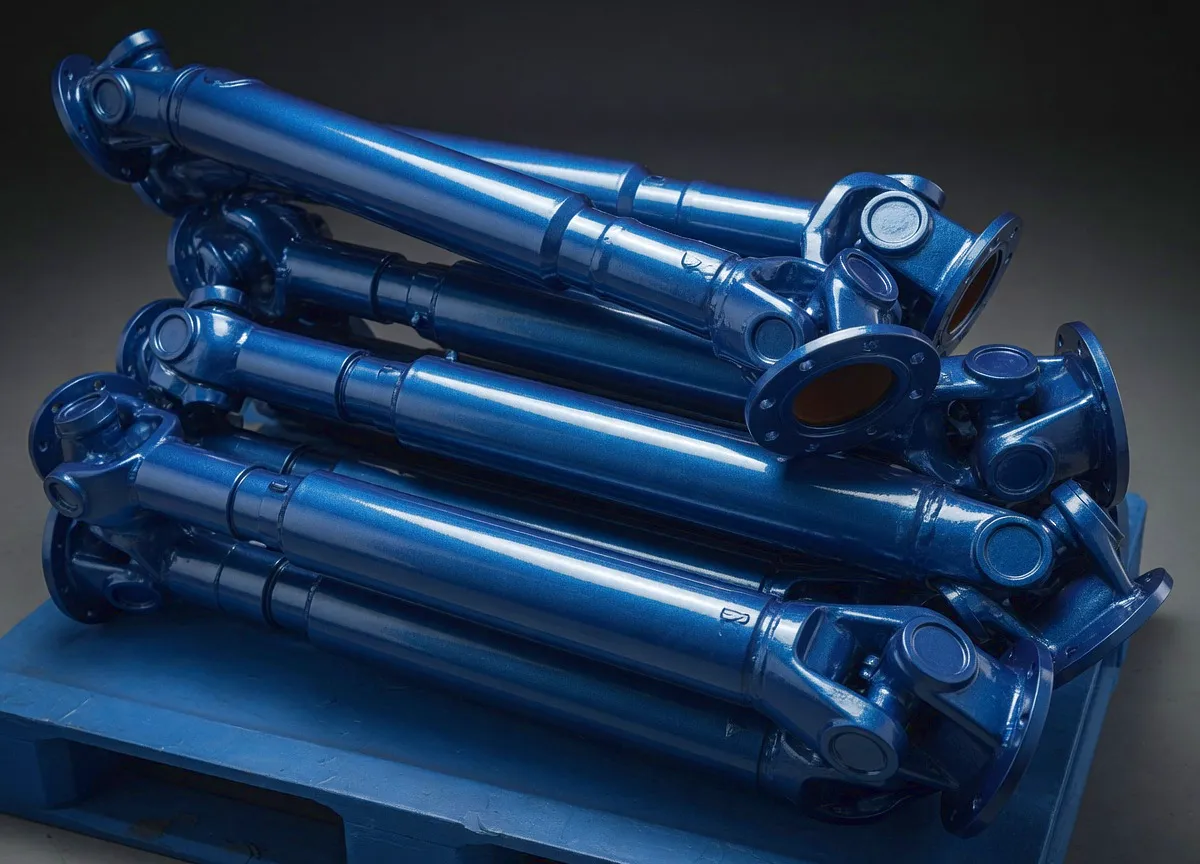
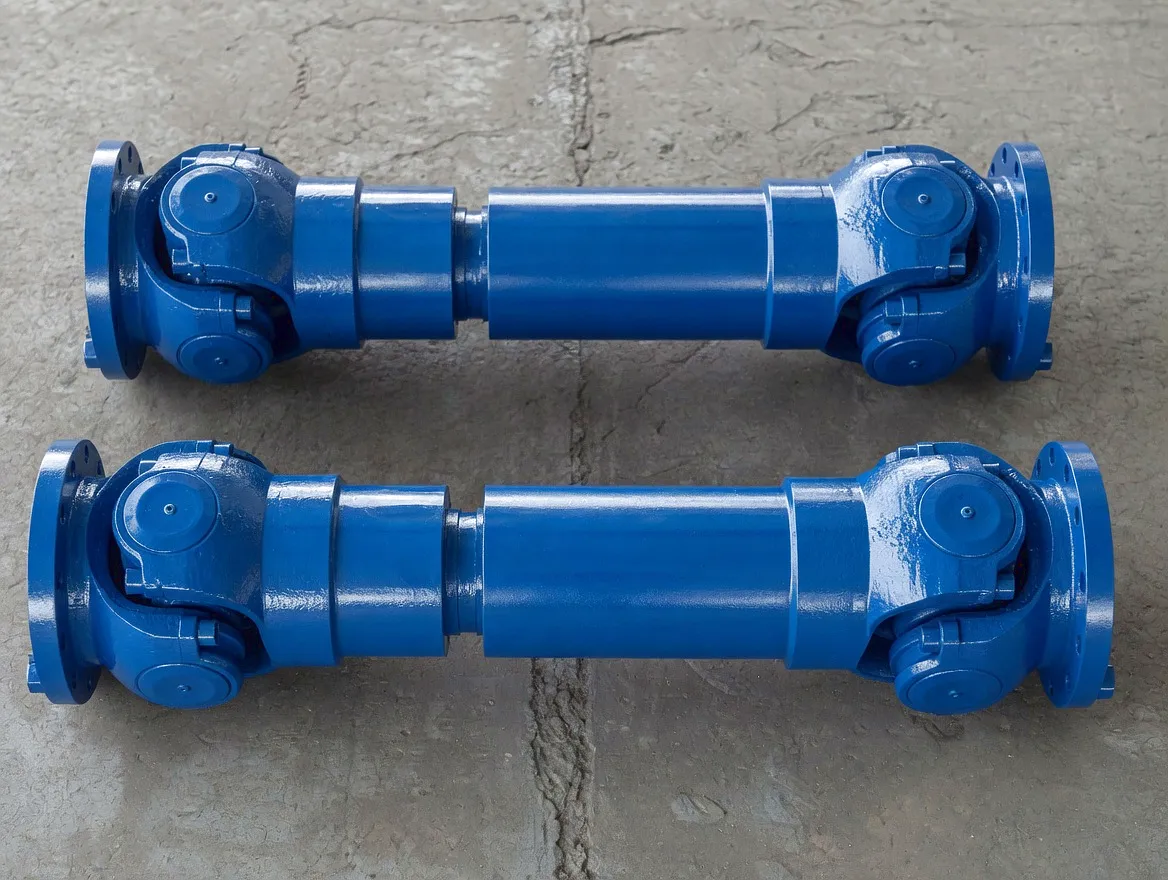
The performance gap between a cardan coupling that lasts one season and one that lasts five comes down almost entirely to materials processing and dimensional control. Our agricultural series starts with bar stock certified to 20CrMnTi — a chromium-manganese-titanium alloyed steel widely used in Chinese and European automotive driveline components due to its exceptional case-hardening response and core toughness. After forging, each spider undergoes carburising at 920°C followed by oil quenching and low-temperature tempering, achieving a surface hardness of HRC 58–64 while retaining an unnotched core impact toughness exceeding 80 J at 0°C — a figure that matters when a hay rake hits a buried stone at speed.
The needle roller bearings pressed into each trunnion cup are dimensionally matched during assembly to achieve a radial clearance of 0.005–0.015 mm. This tolerance window is narrow enough to prevent the micro-movement under load that causes false brinelling (the microscopic wear pattern that develops when a bearing oscillates through a very small arc without full rotation), yet generous enough to allow thermal expansion without preload under operating temperature. Getting this balance right in a manufacturing environment requires both tooling precision and rigorous incoming inspection of the bearing batches themselves — both of which are embedded in our production process.
The protective shaft covers — the guard that surrounds the telescoping tube in a complete PTO shaft assembly — are moulded from UV-stabilised polyethylene to comply with ISO 5674 and the relevant UK PUWER machinery safety regulations. The cover is not merely a safety item; it also reduces the rate of grass and debris wrapping around the outer tube, which can unbalance the shaft assembly and introduce vibration at high speed. A properly guarded, balanced shaft running through a precision cardan coupling is a fundamentally different operating experience from an old, worn assembly — quieter, smoother, and with noticeably less vibration transmitted to the tractor cab.
Beyond Hay Rakes: Related Agricultural Applications for the Same Coupling Series
Mowers & Disc Mowers
Very similar PTO speed profile to hay rakes, with the added demand of absorbing stone-strike shock loads through slip clutch + cardan combinations.
Tedders & Spreaders
Wide-working tedders use extended driveline runs with multiple cardan joints where proper phasing is critical to avoid resonance at operating speed.
Balers
Round and square balers subject their PTO shafts to highly variable torque as bale density changes. Heavy-duty series 3 couplings are typically specified here.
Slurry & Irrigation Pumps
Fixed-angle, continuous-duty operation — different from raking but served by the same bearing quality and sealing standards, particularly IP67 variants.
Our Factory Customisation Capability Goes Further Than You Expect
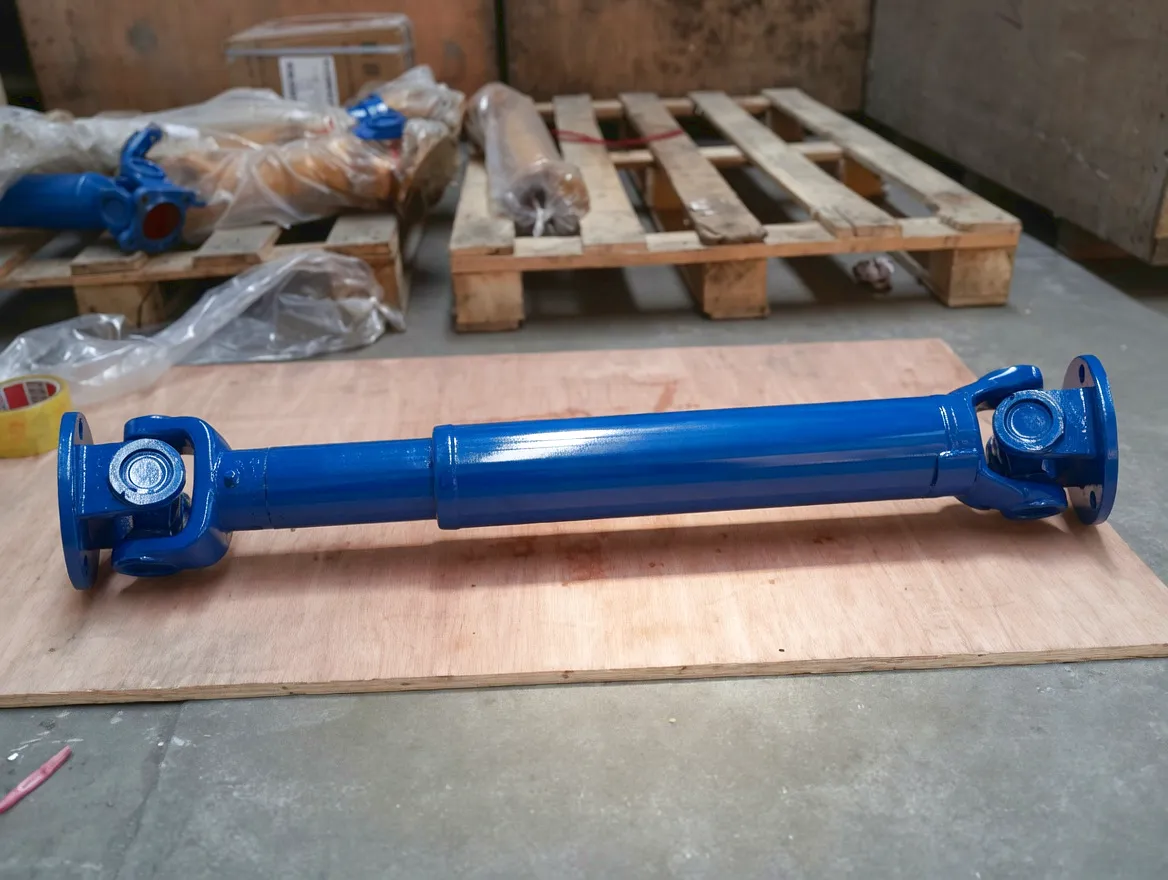
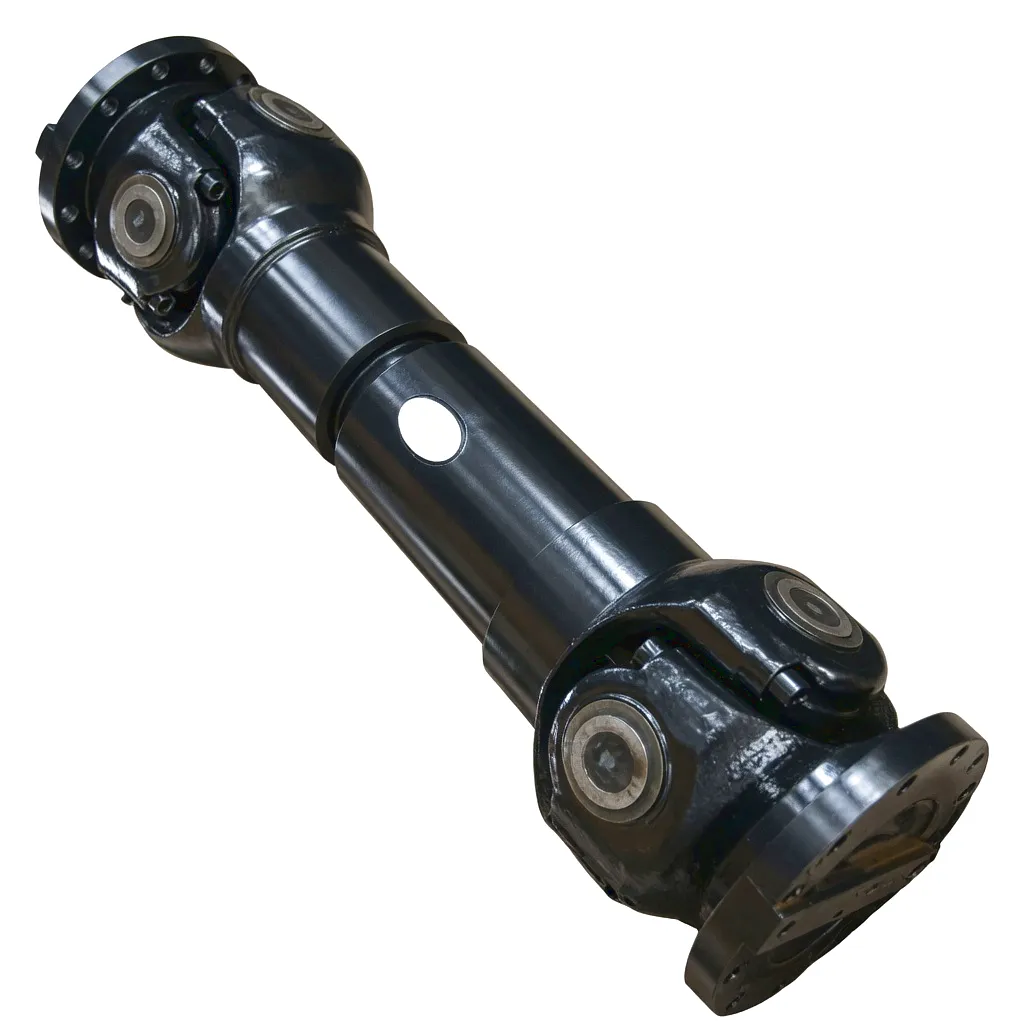 At Ever Power, the engineering conversation starts where the catalogue ends. Our manufacturing facility operates CNC turning centres holding h6 tolerances on bore diameters, 5-axis machining for complex yoke geometries, and dedicated heat treatment lines for case-hardening batches with full pyrometry records. If your hay rake — or any other agricultural or industrial machine — uses a coupling that isn’t available off the shelf, we can reverse-engineer from a worn sample, manufacture to a customer drawing, or co-develop a new design when the application is genuinely novel. We regularly produce coupling runs from as few as 10 units for OEM prototyping through to 5,000+ per batch for established agricultural equipment manufacturers across Europe, North America and Australasia. UK agricultural machinery companies receive dedicated account management and, where volume justifies it, consignment stock arrangements to guarantee availability through the season.
Customer Success: Real Results from UK Agriculture
Below is a documented customer case alongside verified testimonials from operators across the United Kingdom.
Verified Case Study
Langholm Grassland Services operates a contract hay-making and silage business across approximately 2,400 hectares of upland grassland in southwest Scotland. Their fleet includes three large-working-width twin-rotor rakes, all running at 540 PTO speed. In the 2023 season they experienced two coupling failures on a 9-metre Krone rake within six weeks — both sourced from a local agricultural merchant supplying an unbranded replacement part. The failures caused 11 days of combined downtime at a period of peak cutting weather.
Following a specification consultation with our technical team, Langholm switched to our Series 2 forged agricultural cardan coupling with IP65 sealing, correctly phased for the Krone driveline geometry and supplied with matching slip clutch integration. The 2024 season ran through without a single coupling-related stoppage across all three machines. The operator noted that vibration through the tractor cab during raking operations was perceptibly reduced — a direct consequence of the improved balance and bearing precision. Total coupling cost across the fleet for 2024 was less than 30% of the combined repair and downtime cost from 2023’s failures.
“We lost a decent week of cutting weather in 2023 to coupling failures that should never have happened. Since switching suppliers and getting the specification right, we’ve had no issues whatsoever. The vibration improvement alone made it worth the change.”
— Operations Manager, Langholm Grassland Services Ltd
“Ordered two replacement cardan couplings for our Claas Liner 2700 — shipped to our yard in Lincolnshire within three days. Dimensionally perfect, fitted without any modification. Ran 1,800 acres this season with no issues.”
Robert H.
Arable & Grassland Farmer — Lincolnshire, England
“We needed a non-standard bore size with a special keyway for a Kuhn GA 9531 on an older build. The Ever Power team got back to us the same day with a confirmed quote and had the part made and shipped within 12 working days. Impressive lead time for a custom item.”
James M.
Agricultural Machinery Workshop — Shropshire, England
“As a farm machinery dealer in Wales, I need suppliers who understand the agricultural season timeline. Ever Power holds the right stock and actually responds to technical questions with real engineering answers, not just catalogue numbers. We now stock their range as our primary coupling line.”
Gareth P.
Agricultural Parts Dealer — Powys, Wales
How to Select the Right Cardan Coupling for Your Hay Rake — A Practical Guide
Selecting a cardan coupling for a hay rake is not complicated if you approach it systematically, but it does require four specific pieces of information: the required torque capacity, the maximum operating angle, the shaft diameter and keyway specification at both ends, and the required extended and compressed lengths of the telescoping tube section. With these four data points, the correct series and configuration can be confirmed in a single engineering conversation.
Torque selection for hay rakes typically starts from the tractor PTO power. A 100 hp tractor at 540 PTO RPM delivers approximately 1,371 Nm of continuous torque at the shaft. Applying a service factor of 1.5 for agricultural machinery with moderate shock loading gives a design torque of around 2,050 Nm — which places you firmly in the upper range of our Series 2 or the lower range of Series 3, depending on the specific rake model and the number of rotors being driven. Our engineering team can confirm the correct selection once we know the PTO horsepower and machine configuration.
The operating angle calculation is something many procurement teams overlook. The maximum continuous angle in operation is not the headland turnover angle (which is typically brief and occurs with PTO disengaged or at low speed) — it’s the steady-state angle during normal field operation, which on hilly terrain in regions like the Yorkshire Dales, the Pennines, or the Welsh uplands can be significantly higher than on flat ground. Specifying the coupling for realistic field angles rather than flat-land ideal conditions is the difference between a component that lasts and one that fails mid-season.
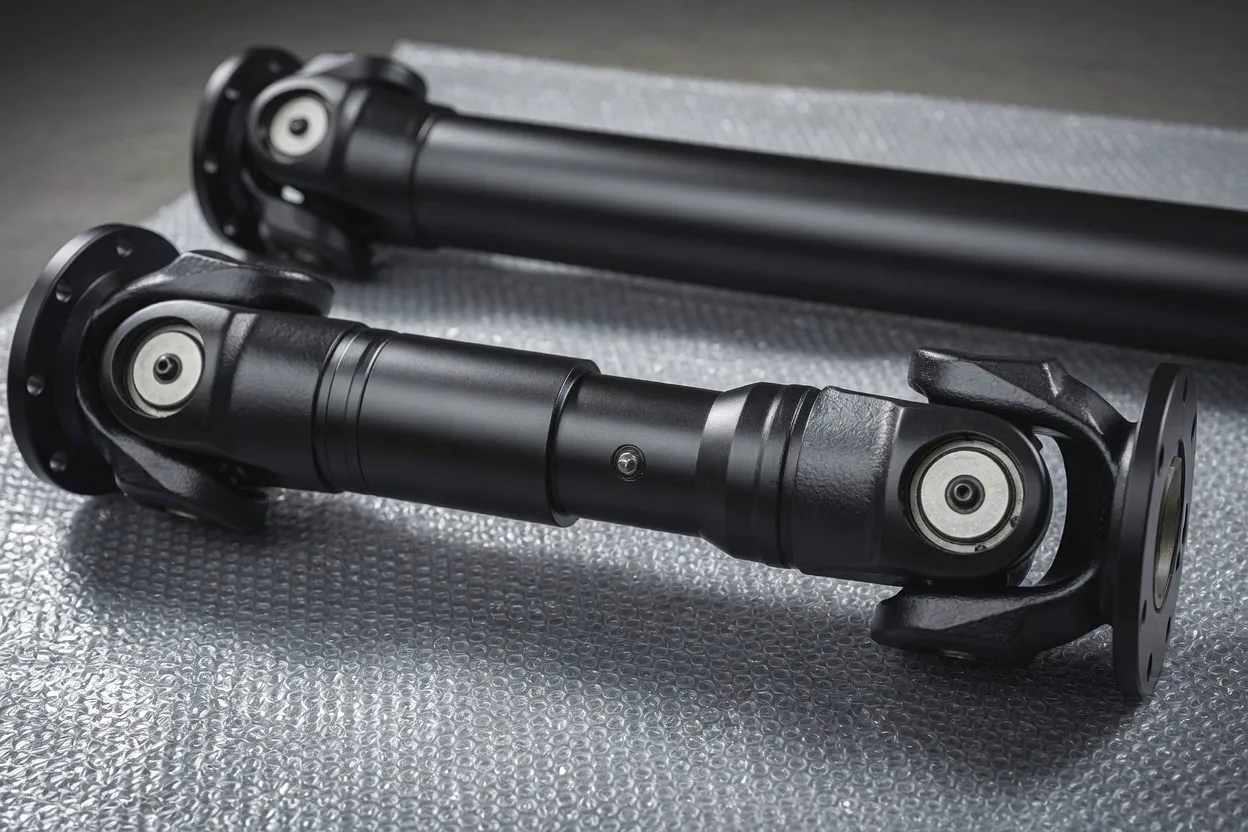
Cardan Coupling vs. Alternative Drive Solutions for Hay Rakes
| Criterion | Cardan Coupling | Flexible Disc Coupling | Rubber Spider Coupling |
|---|---|---|---|
| Max Operating Angle | Up to 25° continuous | Up to 5° | Up to 2° |
| High-Speed Suitability (1000 RPM+) | Excellent | Good | Limited |
| Torque Capacity | Very High | Moderate | Low–Moderate |
| Field Repairability | Good (spider kits) | Moderate | Moderate |
| Telescoping Axial Travel | Yes, integral | No | No |
| Typical Agricultural Duty Cost | Medium–High | Medium | Low |
Practical Maintenance — How to Get the Longest Life from Your Hay Rake Cardan Coupling
The single most impactful maintenance intervention is regular greasing at the correct intervals with the right lubricant. Needle roller bearings in agricultural cardan couplings should be re-greased every 8 operating hours under normal conditions, or every 4 hours in particularly dusty conditions such as dry-weather hay-making on chalk or light soils. The correct lubricant is an NLGI Grade 2 lithium-complex grease with EP (extreme pressure) additives — standard wheel bearing grease is inadequate because it lacks the mechanical stability to remain in the bearing under the high centrifugal forces generated at 540–1,000 RPM. Most failures we see in the aftermarket are preceded by a history of either under-greasing or using the wrong grease specification.
Beyond lubrication, a quarterly inspection of the bearing cup circlips (the snap rings that retain the bearing cups in the yoke bores) is worthwhile. A loose or missing circlip allows the cup to move axially under load, rapidly scoring the yoke bore and rendering the whole yoke scrap. Circlip replacement kits are available separately and cost a fraction of a new yoke. Similarly, checking the telescoping tube profile for ovality and the guard for cracks or missing brackets takes five minutes before the season begins and can prevent a failure that costs hours during it.
When a coupling does need replacement, the key decision is whether to replace the full shaft assembly or individual components. Our spider replacement kits (trunnion cross + four bearing cups + circlips, pre-greased and assembled) allow the yokes to be retained if they are undamaged — a cost-effective route for machines where the yokes have seen only one or two seasons. For older machines or those that have suffered a severe overload event, replacing the complete assembly is the more prudent choice, as overload stresses can introduce micro-cracks in yoke arms that are not visible externally but that will eventually cause fatigue fracture.
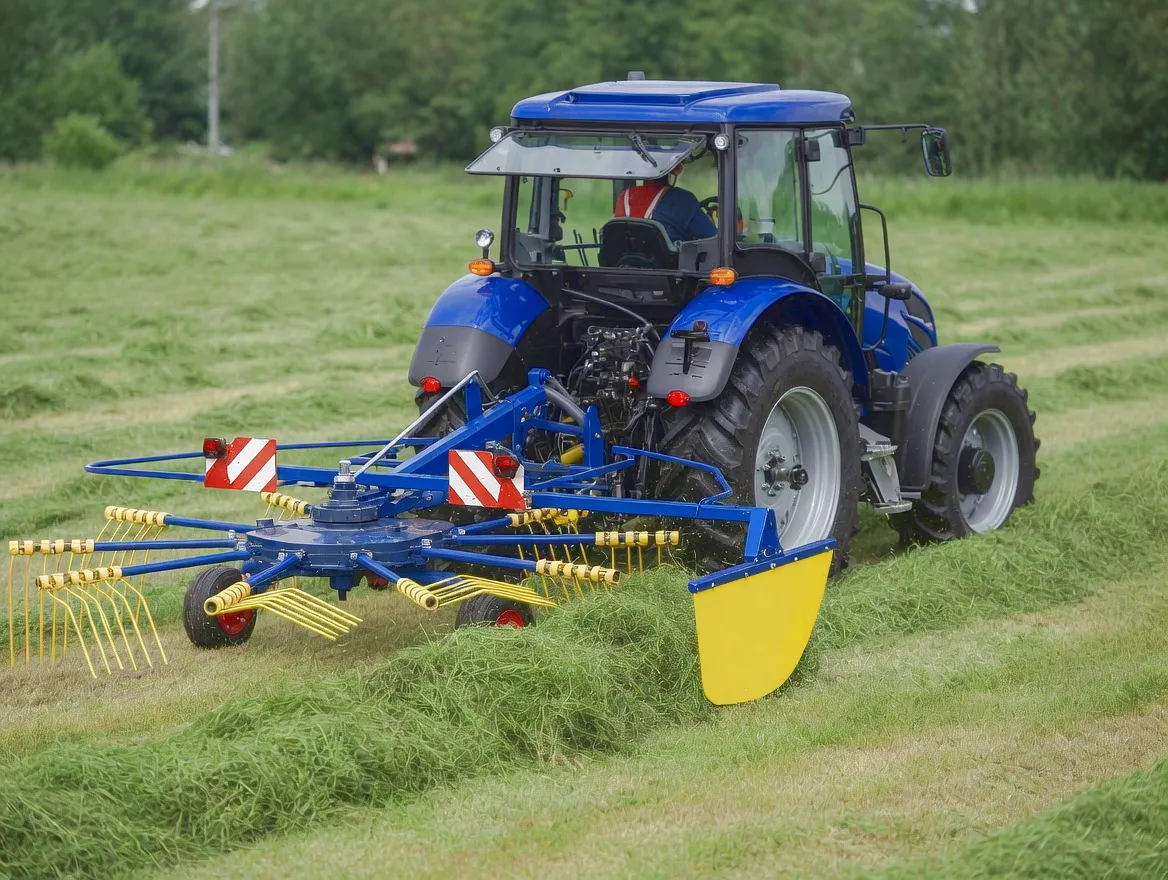
Ready to Specify Your Hay Rake Cardan Coupling?
Tell us your tractor PTO power, rake model, and working conditions. Our engineering team will confirm the correct series, bore specification and supply options — normally within 24 hours on working days. UK agricultural season stock available for fast despatch.
Frequently Asked Questions
Ever Power — Agricultural Cardan Coupling Specialists
Speak to Our Engineering Team Today
Whether you’re sourcing a single replacement coupling for a hay rake mid-season, or establishing a supply agreement for an OEM programme, our team is ready to help with specification, pricing and lead-time confirmation.
Get a Quote → [email protected]
edit by gzl