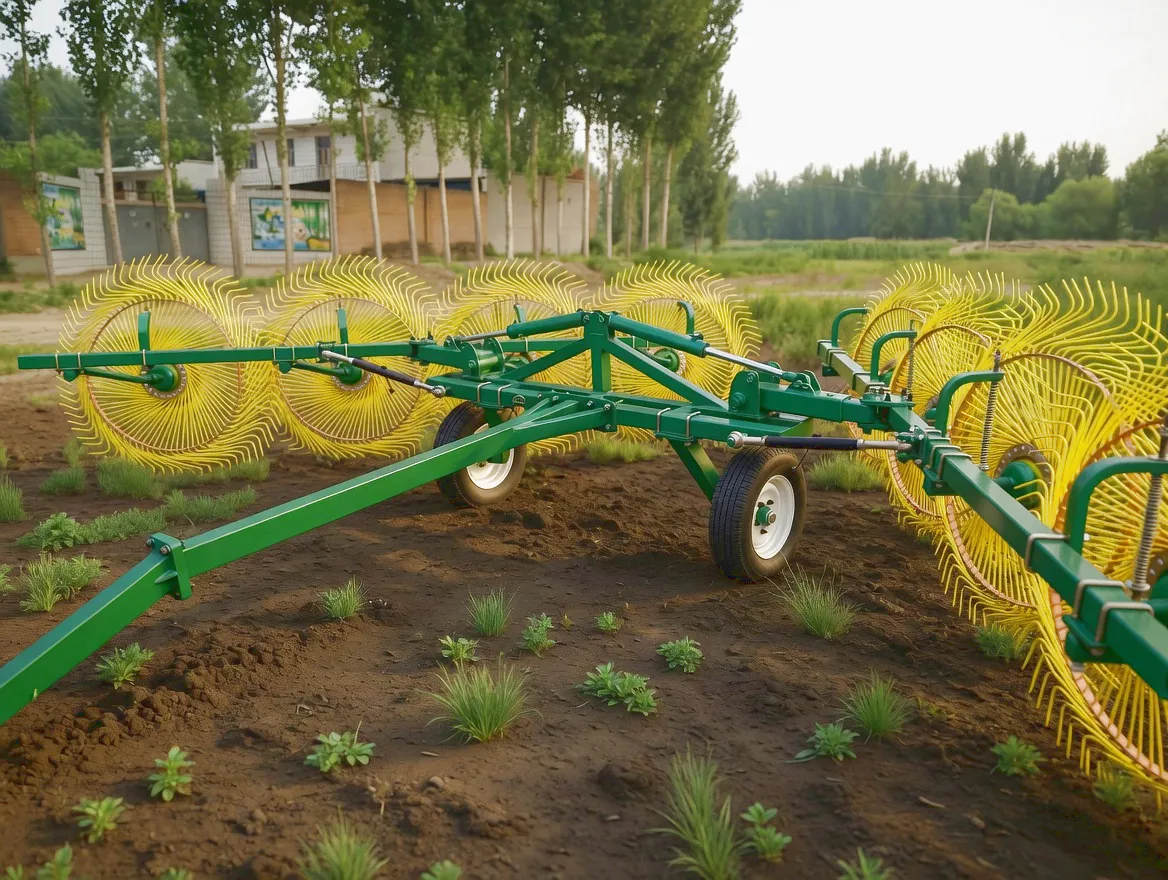
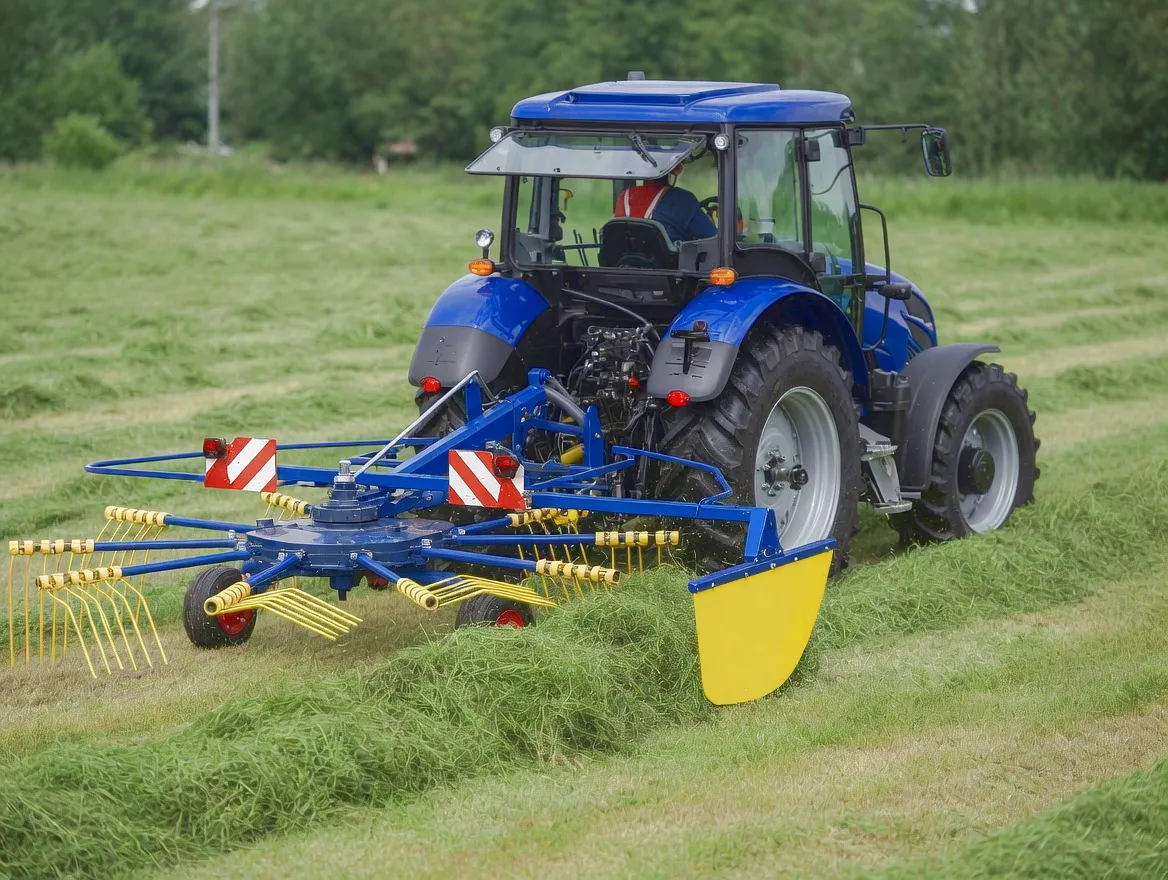
There is something deceptively straightforward about watching a modern rotary hay rake at work. The tines sweep methodically, the windrows form neatly, and the tractor moves steadily across the meadow. What you do not see — what no one standing at the field edge sees — is the mechanical complexity happening inside the driveline. The power take-off shaft spins at 540 rpm or 1,000 rpm. That rotation has to travel across misaligned angles, absorb the constant shock loading of uneven terrain, and transfer torque reliably to multiple rotating rake heads — all without generating the kind of vibration that would shake the machine apart over a season.
This is exactly the environment where the cardan coupling — sometimes called a universal joint coupling or Hooke’s joint assembly — earns its reputation. Unlike rigid couplings or even flexible disc couplings, the cardan design physically accommodates angular misalignment while transmitting continuous rotational power. For hay rake transmissions specifically, that combination of angular flexibility, high rotational speed capability, and robust torque transfer is not just convenient — it is functionally essential.
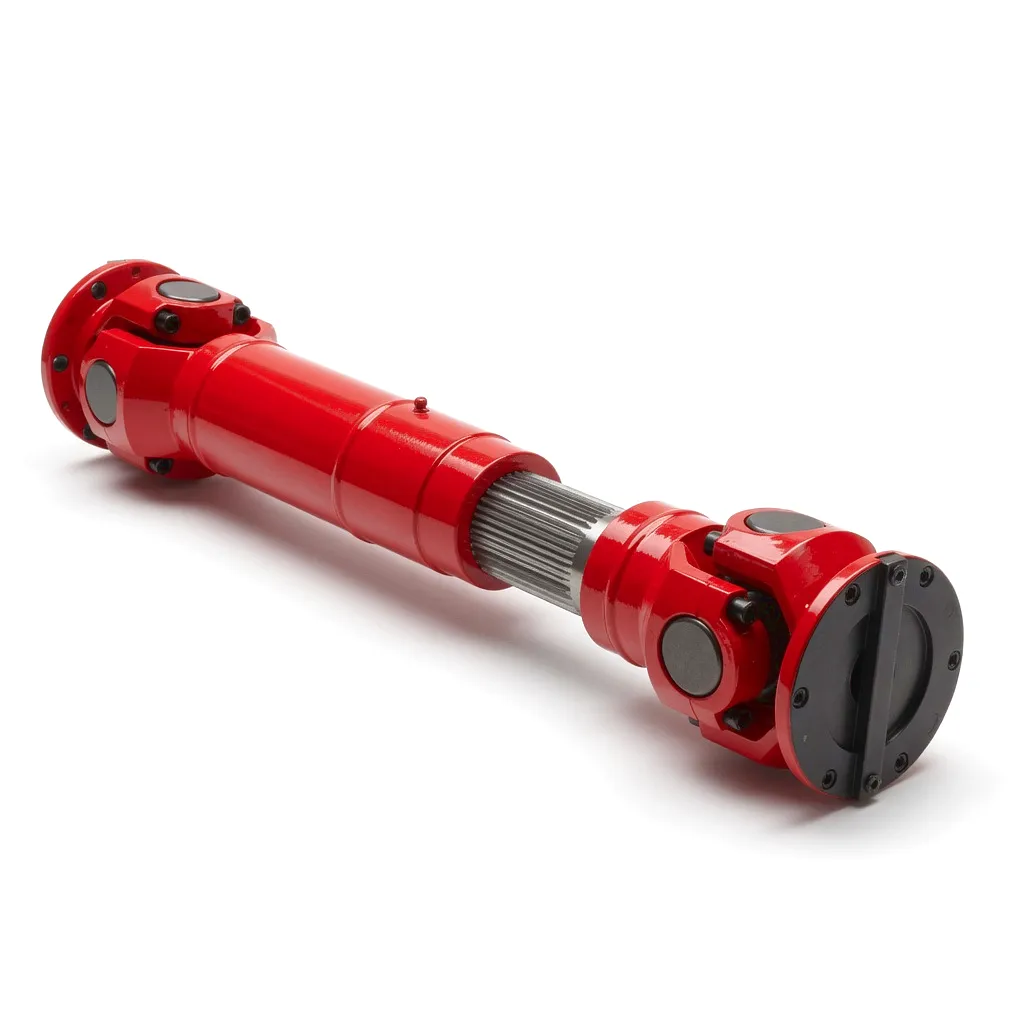
Ever Power cardan coupling — engineered for agricultural high-speed transmission
Why the Hay Rake Is One of the Most Demanding Applications for Any Coupling
Agricultural engineers who have spent time specifying machinery for British farming conditions — particularly the undulating terrain of Devon, the wet clay soils of East Anglia, or the stony uplands of Cumbria — consistently flag the hay rake as one of the hardest-working machines on the farm in terms of drivetrain stress. The challenge is multifaceted. First, the machine operates over uneven ground continuously, which means the angles between the tractor PTO shaft and the rake gearbox inlet are never static. They change by several degrees with every rise and fall in the field surface.
Second, hay raking is typically a high-speed operation. Unlike a cultivator or a roller, which can work at modest PTO speeds, rakes need high rpm to create the sweeping tine action that lifts and places the hay cleanly. This pushes the driveline into a speed regime where vibration, heat generation, and fatigue loading all intensify. Third, rakes are often run for extended continuous periods during the brief British haymaking window — which runs from late May through July in most of England and Scotland — leaving very little margin for mechanical downtime.
Add to this the shock loading that occurs whenever a tine assembly encounters a clump of compacted grass or a hidden stone, and you have a coupling application that genuinely separates the adequate from the exceptional. A standard rigid or jaw coupling simply cannot survive these conditions reliably. The cardan coupling — with its cross-and-bearing universal joint at the heart of its design — absorbs angular movement, transmits high-speed torque without significant energy loss, and provides the mechanical resilience that modern hay rakes require.
How the Cardan Coupling Actually Works — The Mechanical Principle Behind the Performance
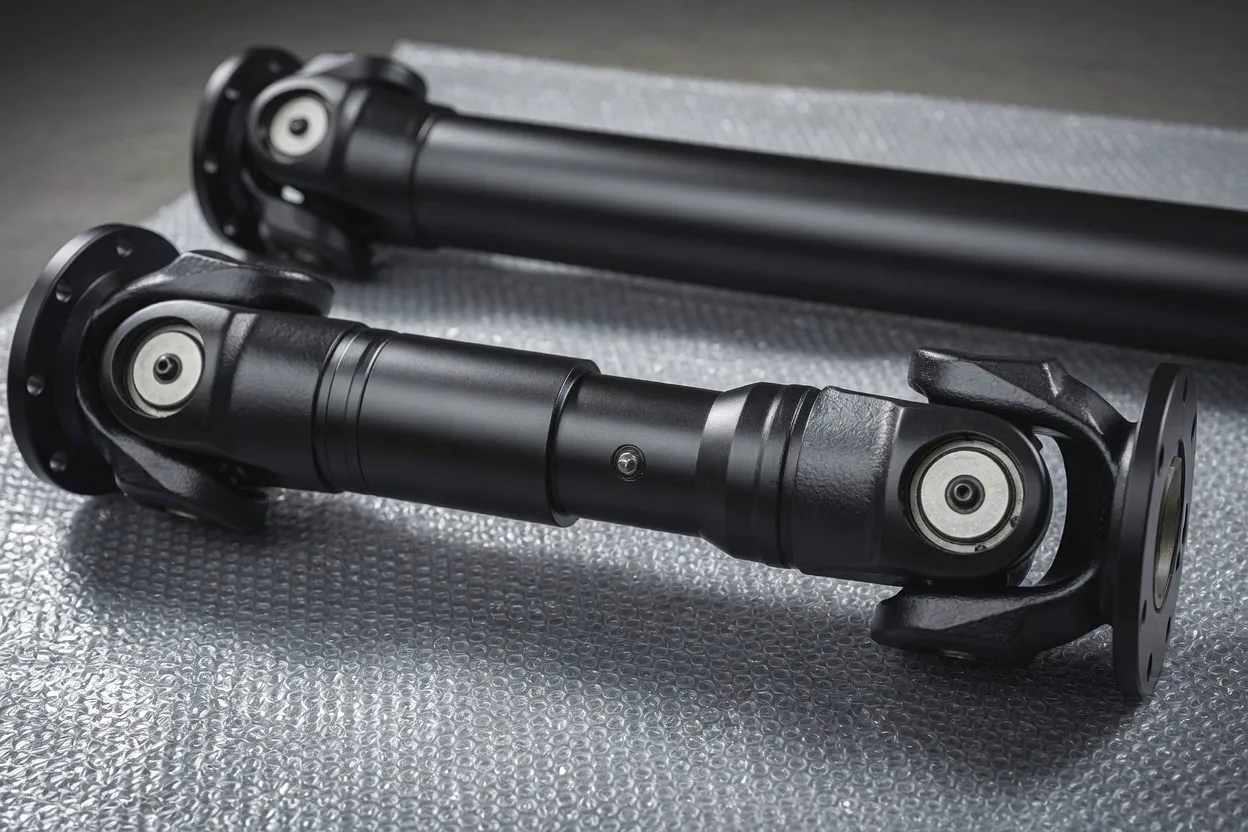
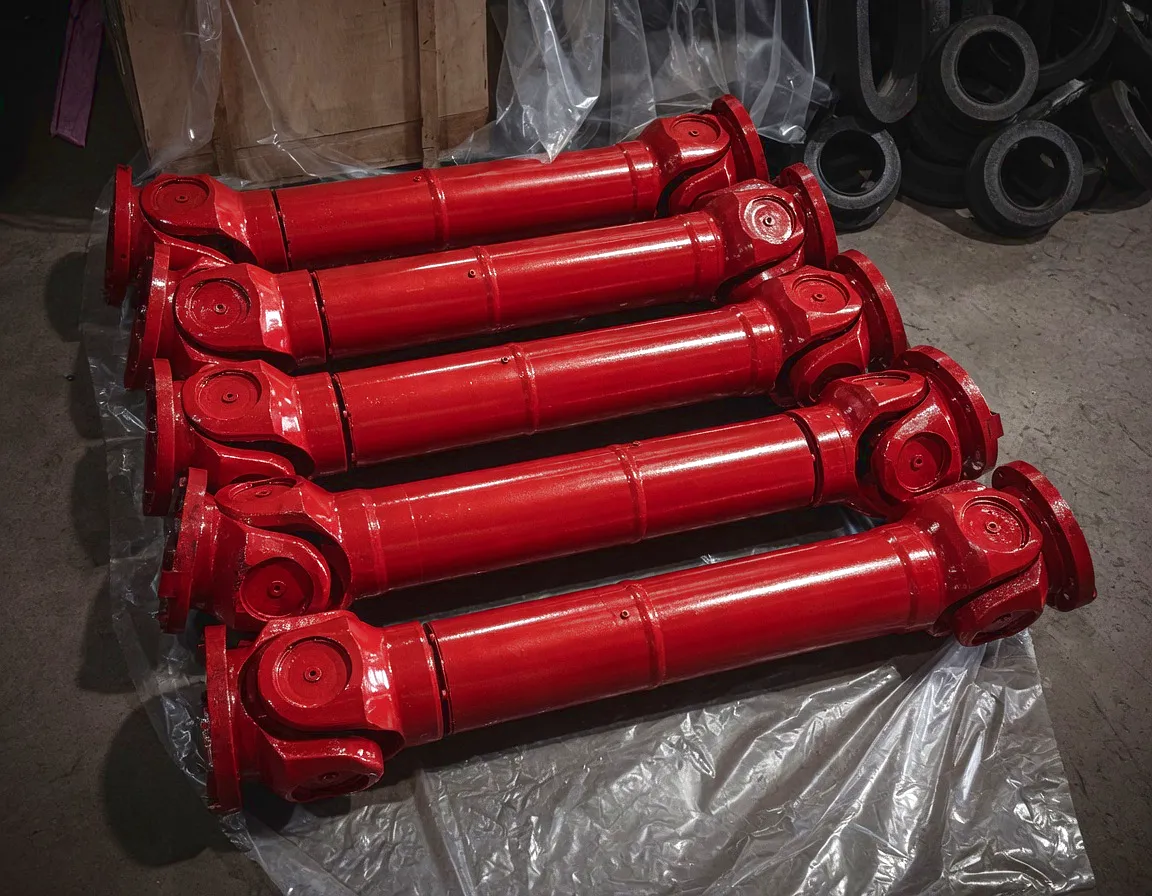 At its core, a cardan coupling works by connecting two rotating shafts through a cross-shaped trunnion — often called a spider — that is held in a pair of yokes by needle-roller bearings. This arrangement allows the joint to transmit rotation across an angular offset, typically up to 35° or even 45° in heavy-duty agricultural configurations, without interrupting the power flow. The elegant simplicity of this design has made it the dominant solution in PTO-driven machinery for over a century, yet the engineering details that separate a premium cardan coupling from a cheap imitation are considerable.
One characteristic of single cardan joints that is critically important in high-speed hay rake applications is the velocity fluctuation that occurs at operating angles. When a single universal joint operates at an angle, the output shaft does not rotate at perfectly constant speed — it oscillates twice per revolution. At 540 rpm and a 10° operating angle, this creates measurable vibration. The solution used in quality hay rake drivetrains is the double cardan configuration — two universal joints with a centring socket — which cancels out this velocity variation and delivers smooth, constant-velocity power transfer. This is why specifying the correct cardan coupling type for a specific rake model and operating angle is a genuine engineering decision, not simply a purchasing choice.
Materials, Construction, and What Separates a Quality Cardan Coupling
The material specification of a cardan coupling for high-speed agricultural use is not something that should be left to a catalogue search. The cross trunnion — the heart of the joint — is typically manufactured from case-hardened alloy steel, with surface hardness in the range of 58–62 HRC achieved through carburising and quenching. This hardening is essential because the trunnion journals are in constant contact with needle roller bearings under high Hertzian contact stress at operational speed. A soft or inadequately heat-treated trunnion will develop surface fatigue within one or two seasons, producing the characteristic pitting and spalling that signals imminent failure.
The yoke bodies are typically forged from medium-carbon steel or nodular cast iron, with the forged option offering superior grain structure and fatigue life for high-torque applications. Needle roller bearing assemblies are retained by snap rings or bearing caps and must be sealed effectively against the field environment — dust, crop debris, soil particles, and seasonal moisture are all present in hay raking conditions. Premium cardan couplings for this application use triple-lip seals or labyrinth seal arrangements, and include lubrication provision — either a grease nipple for scheduled maintenance or a sealed-for-life bearing assembly for reduced service requirements.
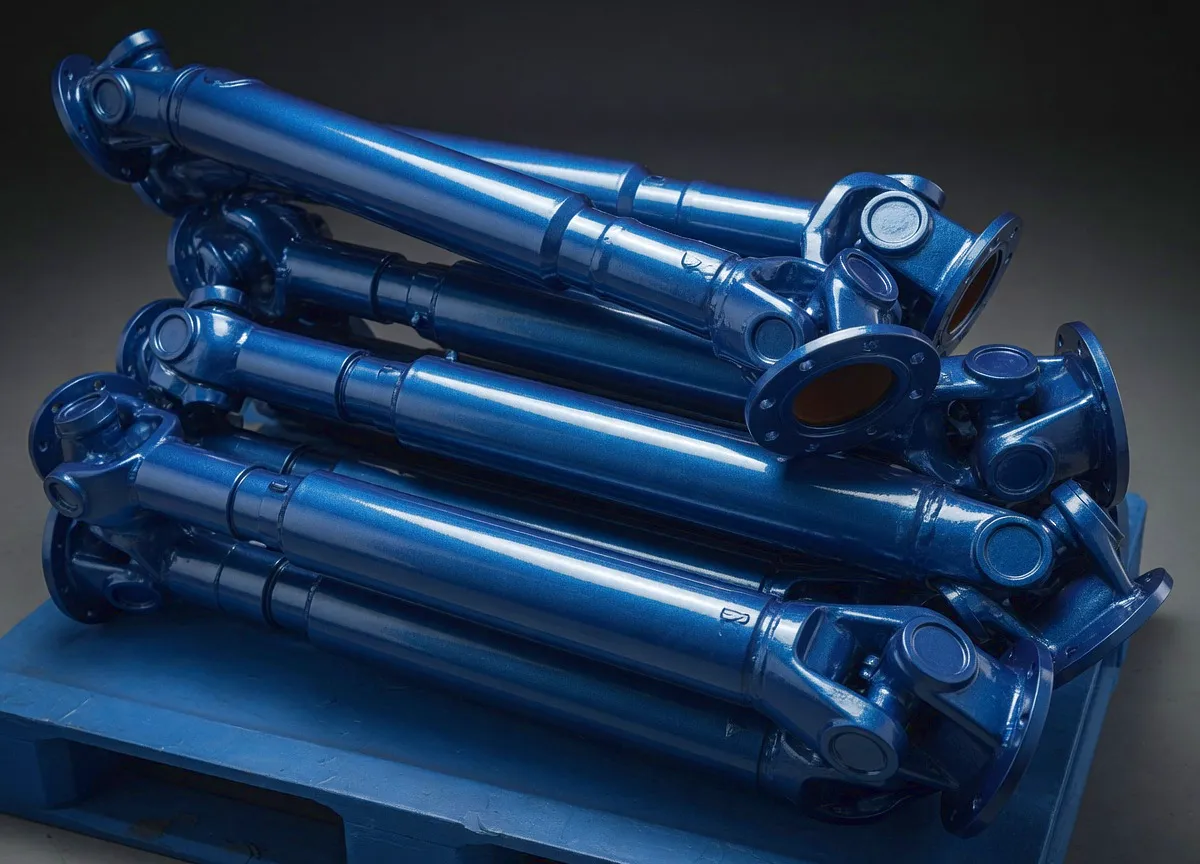
Technical Performance Parameters — Cardan Coupling for Hay Rake Transmission
The table below outlines the key technical parameters relevant to specifying a cardan coupling for rotary hay rake drivetrain applications. These figures reflect the typical performance envelope of Ever Power’s agricultural cardan coupling range, which is designed to exceed the demanding requirements of UK and European haymaking operations. All values are indicative; specific configurations are engineered to individual application requirements.
| Parameter | Specification | Notes |
|---|---|---|
| Max. Operating Speed | Up to 1,200 rpm (standard); 1,800 rpm (high-speed series) | Dependent on operating angle and series |
| Nominal Torque Range | 50 N·m – 5,500 N·m | Custom ratings available |
| Max. Operating Angle (Single) | Up to 35° per joint | Velocity fluctuation occurs above 10°; double cardan recommended |
| Max. Operating Angle (Double/CV) | Up to 70° combined | Constant-velocity output; preferred for high-speed rake duty |
| Trunnion Surface Hardness | 58–62 HRC | Carburised alloy steel standard |
| Protective Tube Guard | CE-compliant polypropylene or steel guard | UK HSE & EU Machinery Directive compliant |
| Slip Clutch / Overload | Optional friction or ratchet slip clutch, rated 100–1,200 N·m | Protects gearbox from shock load events |
| Shaft End Options | Splined (6-spline, 8-spline, 21-spline), keyed bore, smooth bore + clamp | Custom bore sizes to drawing |
| Surface Finish / Corrosion Protection | Zinc plating, powder coating, or hot-dip galvanising | All protect against field moisture and agricultural chemicals |
| Operating Temperature Range | -30°C to +120°C | Grease specification matched to climate conditions |
Application Scenarios — Where the Cardan Coupling Delivers Results in Hay Rake Operation
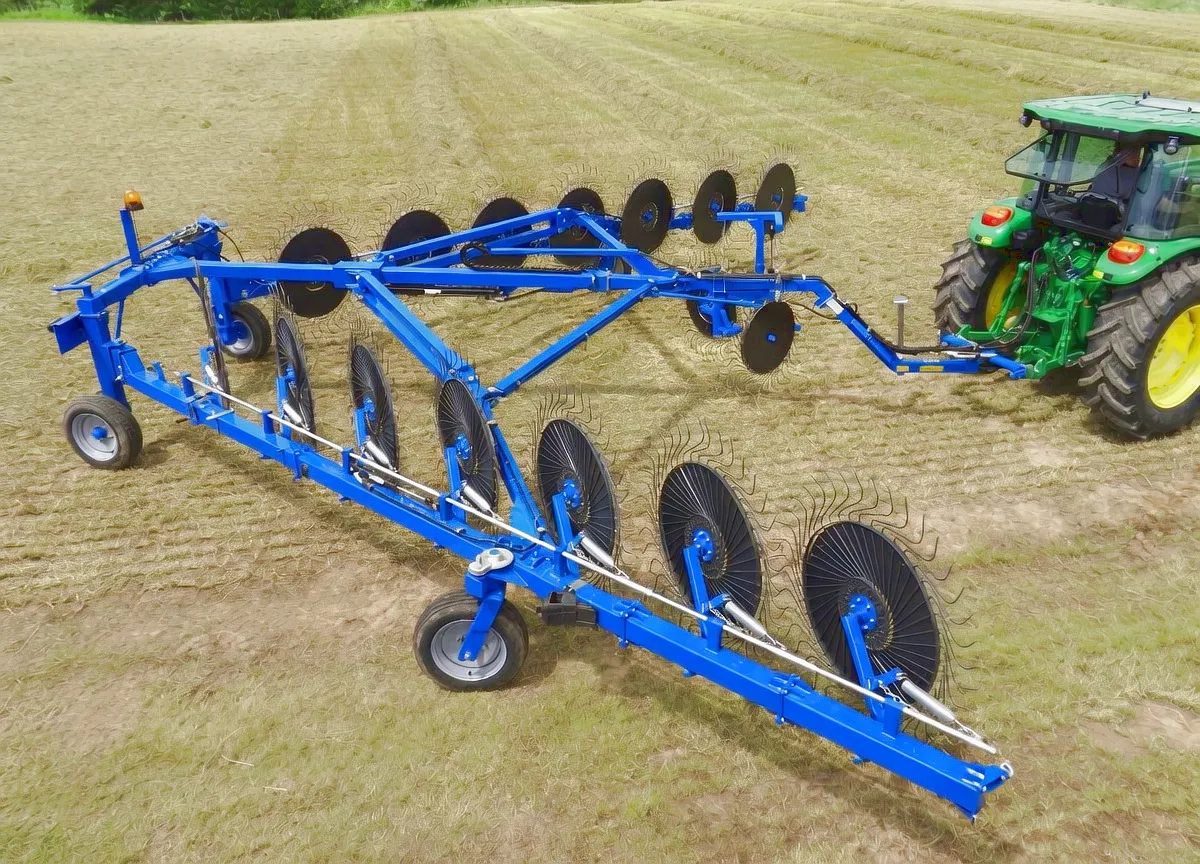 Rotary hay rakes come in a variety of configurations — single rotor, twin rotor, four-rotor, and carousel types — and each presents slightly different mechanical challenges for the driveline engineer. The single-rotor model common on smaller UK farms (typically operated by tractors in the 50–80 hp range) uses a relatively simple PTO driveline with one or two cardan joints. The critical design consideration here is managing the working angle between the tractor PTO and the rake gearbox, which changes every time the farmer lifts the rake at the headland or operates on a cross-slope.
On larger twin-rotor and four-rotor machines — which are increasingly common on larger UK arable and livestock farms operating in excess of 300 hectares — the driveline becomes considerably more complex. Power must be distributed from a single PTO input to multiple gearboxes driving separate rotor assemblies. This distribution is achieved through a central gearbox or distribution box, with cardan shafts feeding individual rotor drives. Each of these secondary shafts must accommodate the angular movement of its rotor assembly relative to the main frame as the machine follows the ground contour or folds for transport.
Product Advantages — What Sets an Ever Power Cardan Coupling Apart
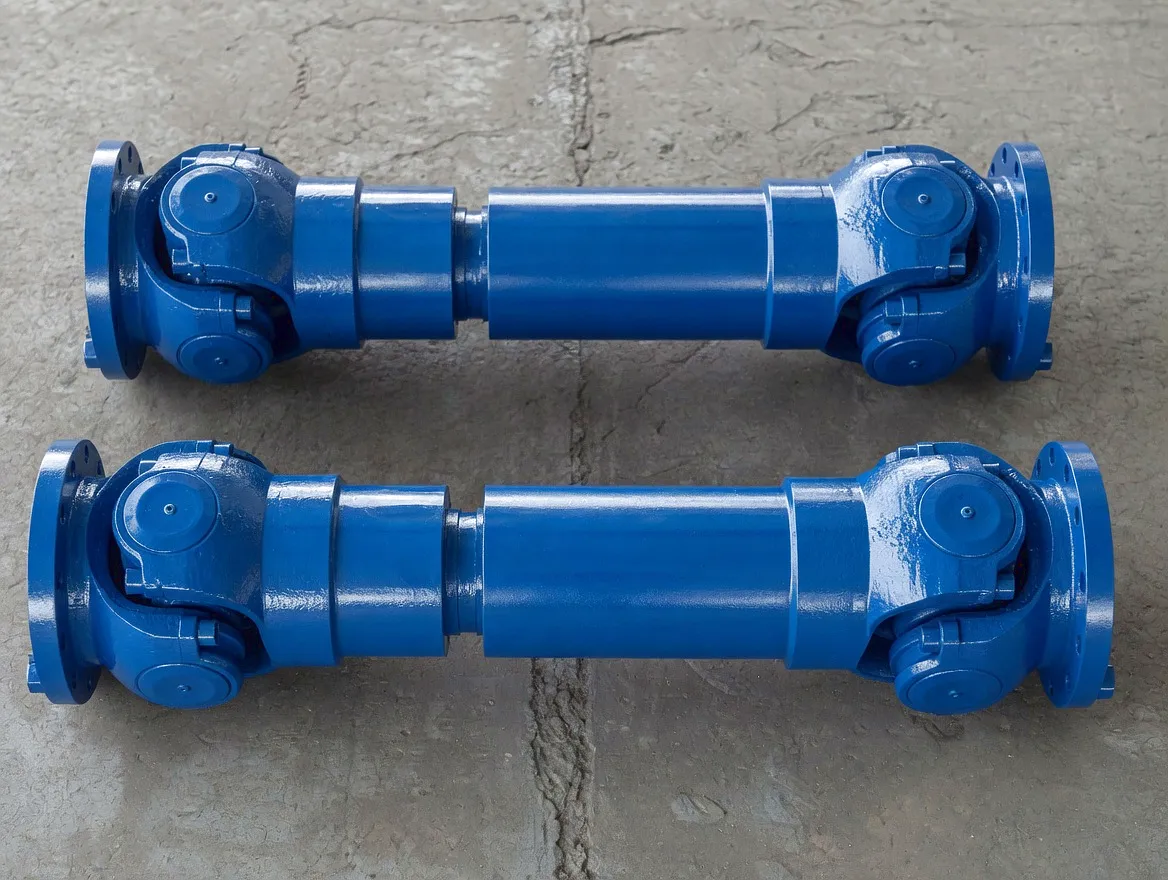
The advantages of a well-engineered cardan coupling in hay rake service go beyond simply accommodating angular misalignment. One of the most practically significant benefits for British farmers and machinery contractors is longevity under continuous high-speed operation. When a farm is raking 80 or 100 hectares in a single long summer day, the cardan shaft on the rake is spinning at operational speed for six, eight, even ten hours. A coupling that runs hot, that develops play in its bearings quickly, or that requires frequent greasing intervals will create significant operational headaches during the most time-sensitive period of the farming calendar.
Ever Power’s cardan coupling range is designed with this operational reality at its centre. The bearing assemblies are pre-loaded to minimise internal play and maximise load distribution across the needle rollers, reducing the risk of fretting and false brinelling during the transition from standstill to operating speed. The sealing systems are validated against the specific contamination profile of harvesting environments — not just dust bench tests, but field testing in actual crop debris conditions. For operators in the UK who are switching between different PTO-driven implements throughout the season, the quick-release yoke systems fitted to the Ever Power agricultural series reduce changeover time and eliminate the risk of incorrect installation that can cause premature failure.
Serving UK Hay Rake Operators — From the Scottish Borders to the South Downs
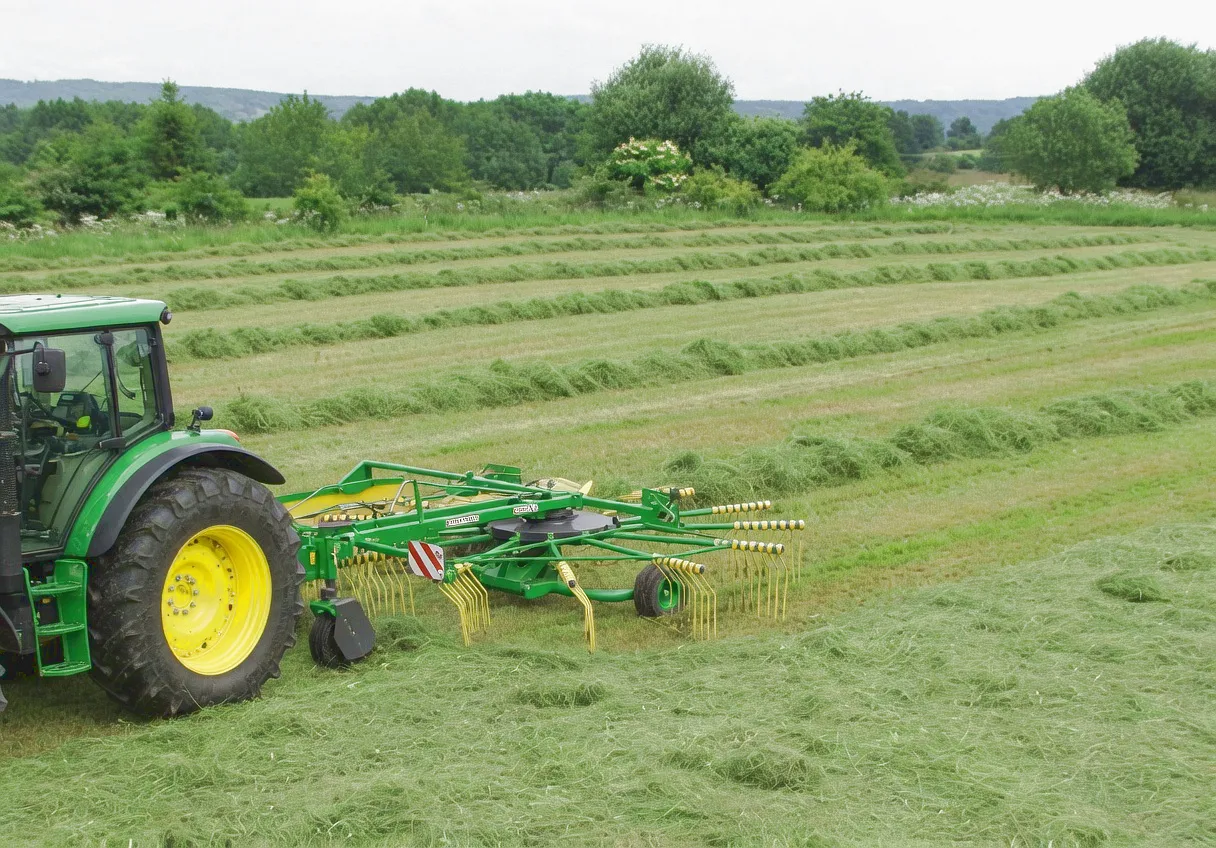
The United Kingdom’s hay and haylage production sector covers a remarkably diverse range of farming environments, and the mechanical demands placed on cardan couplings reflect that diversity. In the Scottish Borders and Northumberland, farms may be operating on terrain with slopes of 15° or more, which pushes cardan joints to higher operating angles and requires more robust sealing against wet upland conditions. East Midlands arable operations running large contractor fleets need rapid parts availability and consistent specification to avoid downtime during the tight haylage window. South West England farms — particularly those in Somerset and Dorset where spring hay cutting can begin as early as May — prioritise longevity and reduced maintenance intervals over the full summer season.
Ever Power maintains a catalogue of standard agricultural cardan couplings that cover the most common PTO shaft sizes used on UK-market hay rakes, including the W2400, W2500, and W2800 series sizes that correspond to the Class 3 and Class 4 PTO interfaces found on mainstream European-manufactured rakes from brands including Krone, Claas, Kuhn, Pöttinger, and Lely. For machinery dealers and agricultural engineers who need a replacement shaft to match OEM specifications precisely, we can typically provide a matched replacement within standard production lead times. For custom requirements — modified shaft lengths, non-standard bore sizes, or integrated overload clutch assemblies — our technical team in the UK works directly with customers to specify and engineer the correct solution.
Ever Power Manufacturing — Custom Cardan Coupling Solutions Built to Your Specification
One of the most significant capabilities that separates Ever Power from generic coupling distributors is the depth of our custom manufacturing service. Our production facility operates CNC turning centres, gear hobbing machines, heat treatment furnaces, and coordinate measuring equipment under one roof, giving us full control over every stage of cardan coupling production — from raw forging to final inspection. When a UK agricultural machinery manufacturer needs a non-standard shaft length because their chassis geometry differs from the European norm, or a farm machinery dealer needs a matched replacement with a modified bore size to suit a proprietary connection, we can manufacture to drawing without requiring minimum order quantities that make bespoke sourcing impractical for most customers.
Our technical team includes engineers with specific agricultural machinery drivetrain experience who understand the difference between specifying a coupling for a test rig and specifying one for a machine that will spend 500 hours a year in UK field conditions. We can review your existing driveline arrangement, identify any misalignment or loading issues that may be contributing to premature coupling wear, and propose modifications that extend service life without requiring significant changes to the host machine. This application engineering support is available to all B2B customers, including UK agricultural engineers, implement manufacturers, and machinery importers working with brands whose OEM part supply chains have become slow or unreliable.
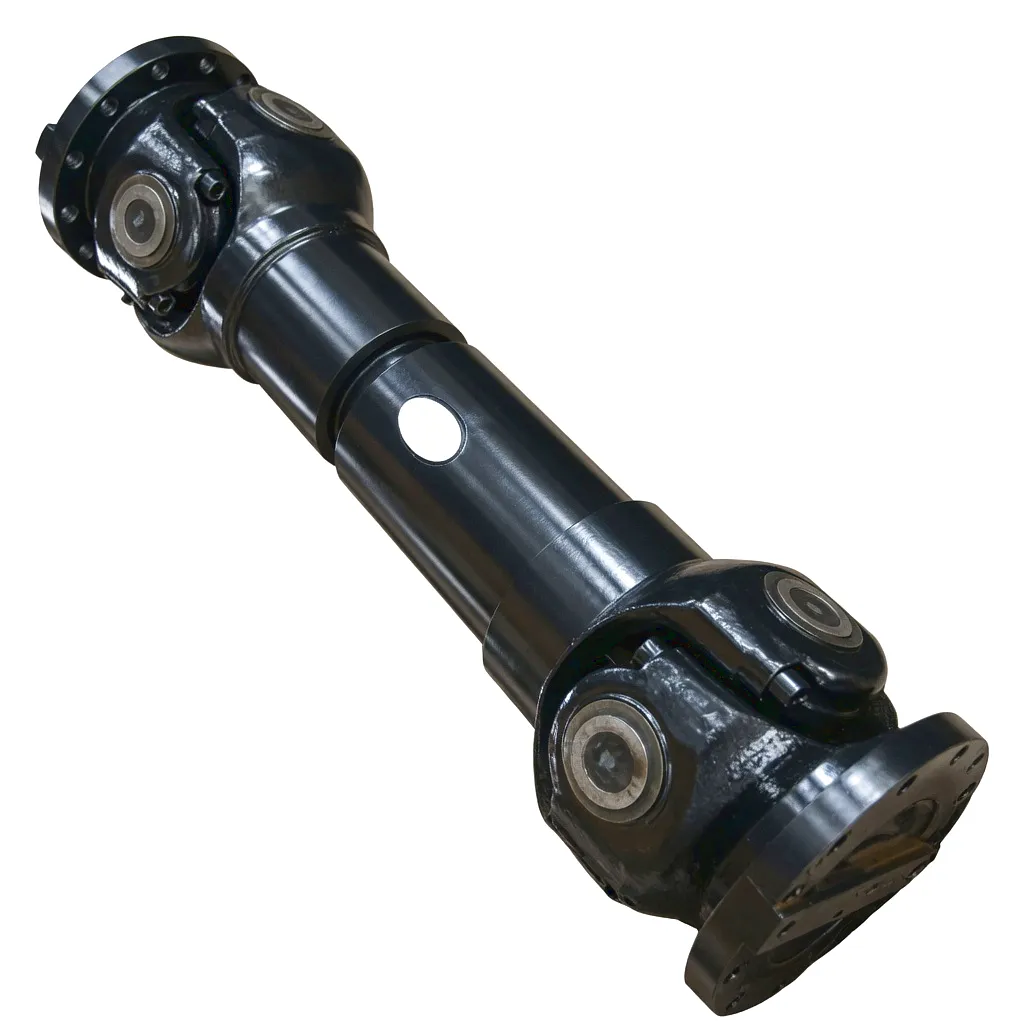
• Custom bore diameters and keyway profiles
• Modified flange bolt patterns for OEM replacement
• Integrated friction or ratchet overload clutch
• Wide-angle (45°+) joint assembly on request
• Sealed-for-life bearing kits for low-maintenance operation
• Full safety guard assembly — CE marked to UK/EU standard
• Special surface coatings for corrosive environments
Customer Success — Real Results from Real Agricultural Operations
Lincolnshire Agricultural Contractor Eliminates Seasonal Driveline Failures
Farmland Contracts Ltd, based near Sleaford in Lincolnshire, operates a large-scale agricultural contracting business serving arable and mixed farms across a 60-kilometre radius. Their equipment fleet includes four Krone twin-rotor hay rakes, which they operate continuously from May through August each year across approximately 1,800 hectares of meadow and set-aside grassland. In 2022, they were experiencing recurring cardan coupling failures on two of their rakes — typically occurring during the second or third week of the haymaking season when accumulated fatigue loading, combined with the heat of summer operation, was taking its toll on what turned out to be undersized, generic-sourced coupling assemblies.
The failures were not just an inconvenience — each breakdown during the haymaking window cost the business approximately £1,200–£1,800 in idle machine time, labour, and expedited parts sourcing. Their workshop manager contacted Ever Power after finding our product range through an online search for specialist agricultural cardan coupling suppliers. We supplied a matched set of correctly rated cardan shaft assemblies for the Krone rakes, specified to the correct torque class with integrated ratchet overload clutches and sealed bearing assemblies. The 2023 and 2024 seasons both completed without a single cardan coupling failure across the entire fleet.
“We run four-rotor Claas rakes across our Yorkshire contract area and the Ever Power cardan shafts have been running two full seasons without any attention beyond seasonal greasing. The quality is noticeably better than the OEM parts we were buying — the sealing in particular is much more robust.”
“The custom bore modification service was exactly what we needed. We had a Lely rake with a non-standard gearbox connection and couldn’t source a matching shaft anywhere in the UK. Ever Power’s team turned the job around in good time with full CE guard included. Impressed with the technical knowledge on their end.”
“We manage fodder production for three dairy herds across 400 acres of Shropshire grassland. The cardan shafts on our Kuhn rakes take a real hammering across the undulating pasture. Since switching to Ever Power we’ve had no in-season failures. Good value against OEM prices and the overload clutch option is worth specifying.”
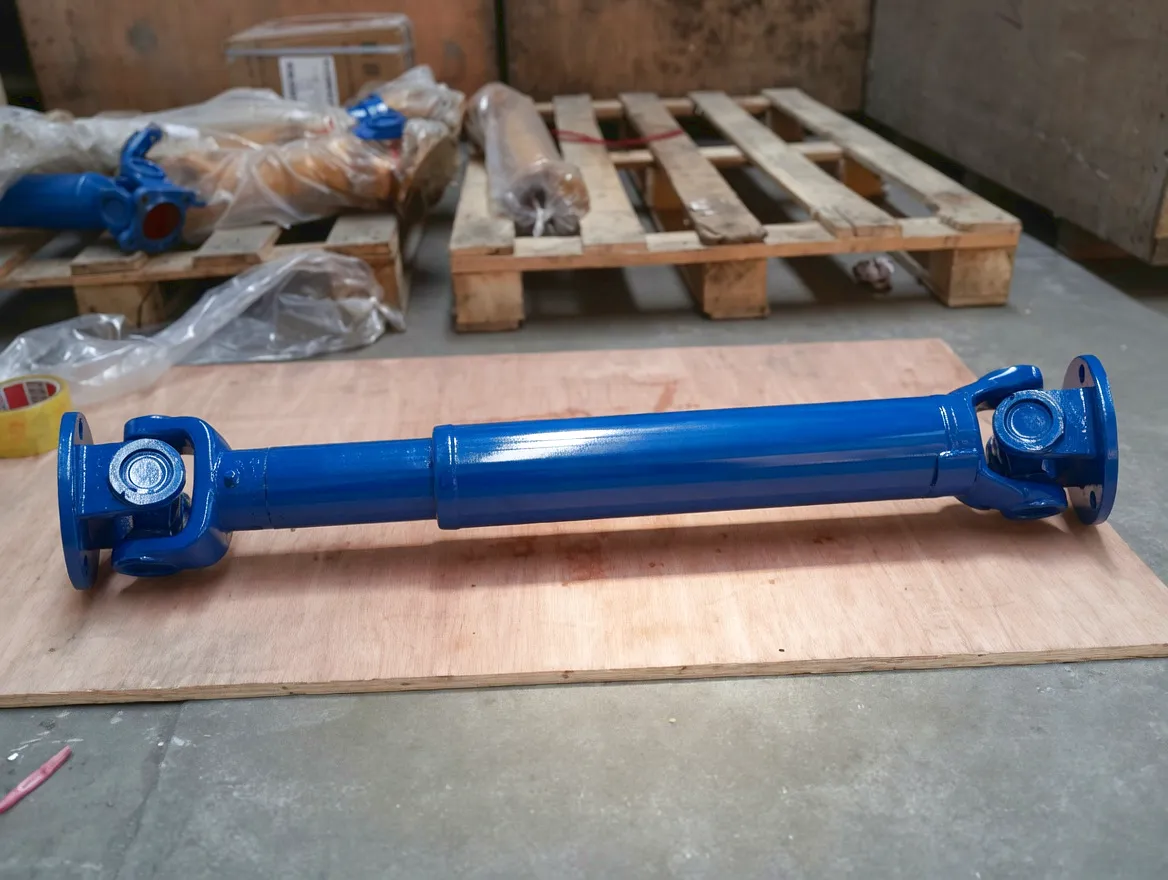
Ready to Specify the Right Cardan Coupling for Your Hay Rake?
Our technical sales team can help you select or specify the correct cardan coupling for your specific rake model, tractor PTO class, and field operating conditions. We supply to UK agricultural dealers, contractors, farm workshops, and OEM machinery manufacturers. Custom orders welcome.
Frequently Asked Questions — Cardan Coupling for Hay Rake High-Speed Transmission
Talk to an Ever Power application engineer about the right cardan coupling for your specific rake model, field conditions, and performance requirements. Custom specification, UK supply, CE-compliant safety guards included.
📩 Contact Us: [email protected]