Why Straw Returning Machines Destroy Ordinary Drivelines
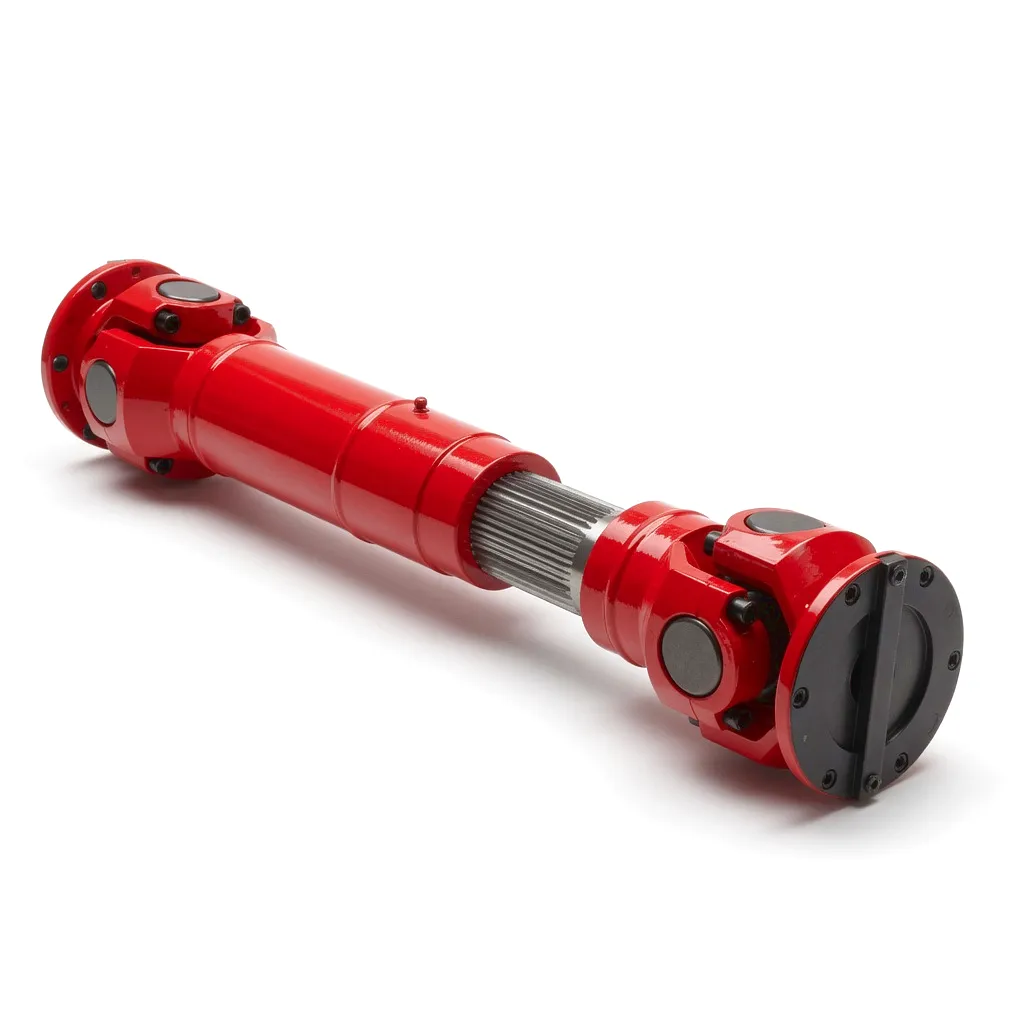 A straw returning machine — known in the UK as a straw chopper or crop residue incorporator — operates in one of the harshest mechanical environments in modern agriculture. The rotor, which can carry dozens of flail knives or blades, spins at high rpm and strikes dense rows of wheat, barley, oilseed rape or maize straw. In a single revolution the blades may accelerate freely through air and then slam into a compacted mat of fibrous material, generating instantaneous torque spikes that can be three to seven times the nominal operating torque. Multiply that by the frequency of impacts — potentially several hundred per second across the full rotor width — and you have a driveline environment that is, frankly, brutal.
Standard jaw couplings, chain couplings and even many gear couplings simply cannot absorb this kind of repetitive shock loading without progressive fatigue failure. The result is unexpected breakdowns mid-harvest — precisely when downtime is most expensive. A properly rated cardan coupling, with its ability to transmit torque through angular misalignment and its compatibility with integrated torque-limiting devices, changes the equation entirely. It absorbs shock, protects the gearbox, and keeps the machine running through the longest harvesting shifts.
This article draws on more than 18 years of applied engineering experience in agricultural driveline systems to walk you through the physics, the selection criteria, the materials science and the real-world case evidence that should inform your next purchasing decision — whether you are an OEM design engineer in Lincolnshire, a farm machinery distributor in East Anglia, or a procurement manager sourcing components for a fleet of combine-mounted residue choppers.
The Mechanics Behind the Coupling
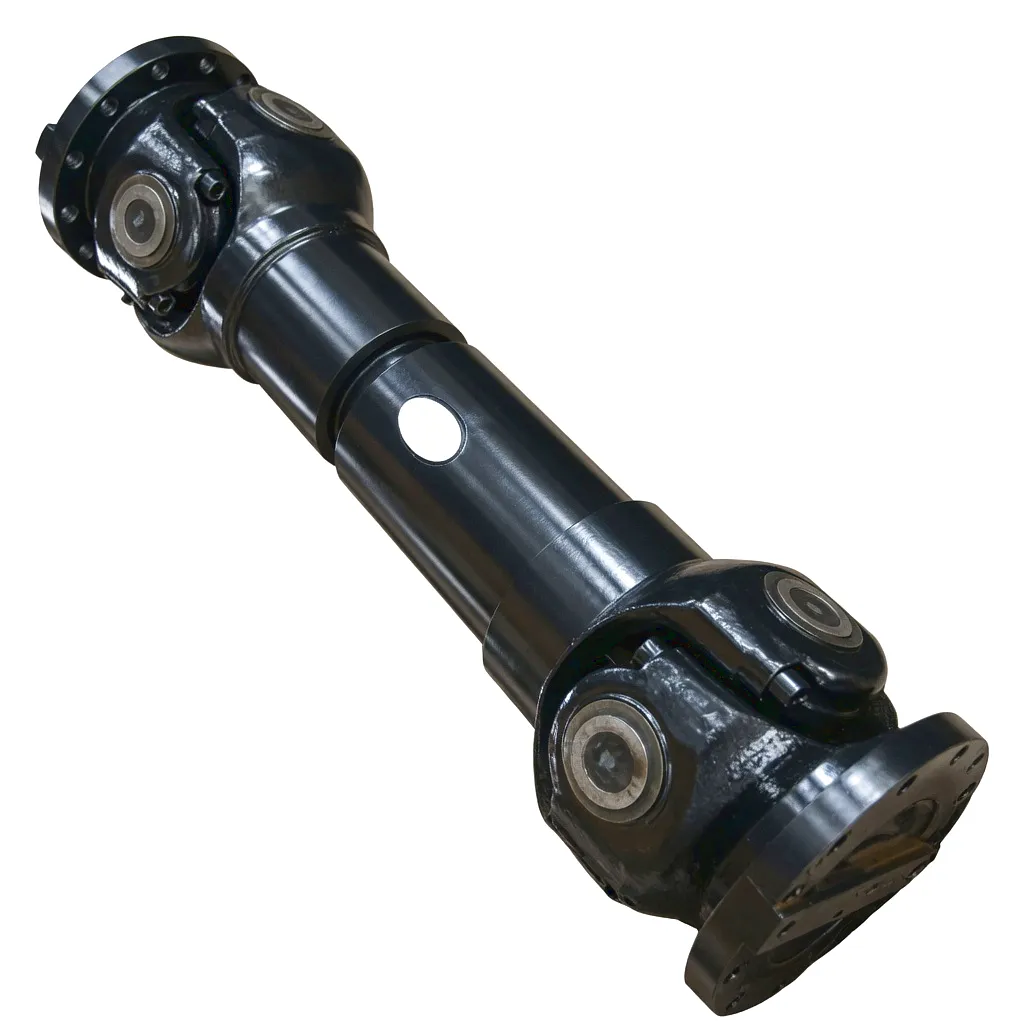
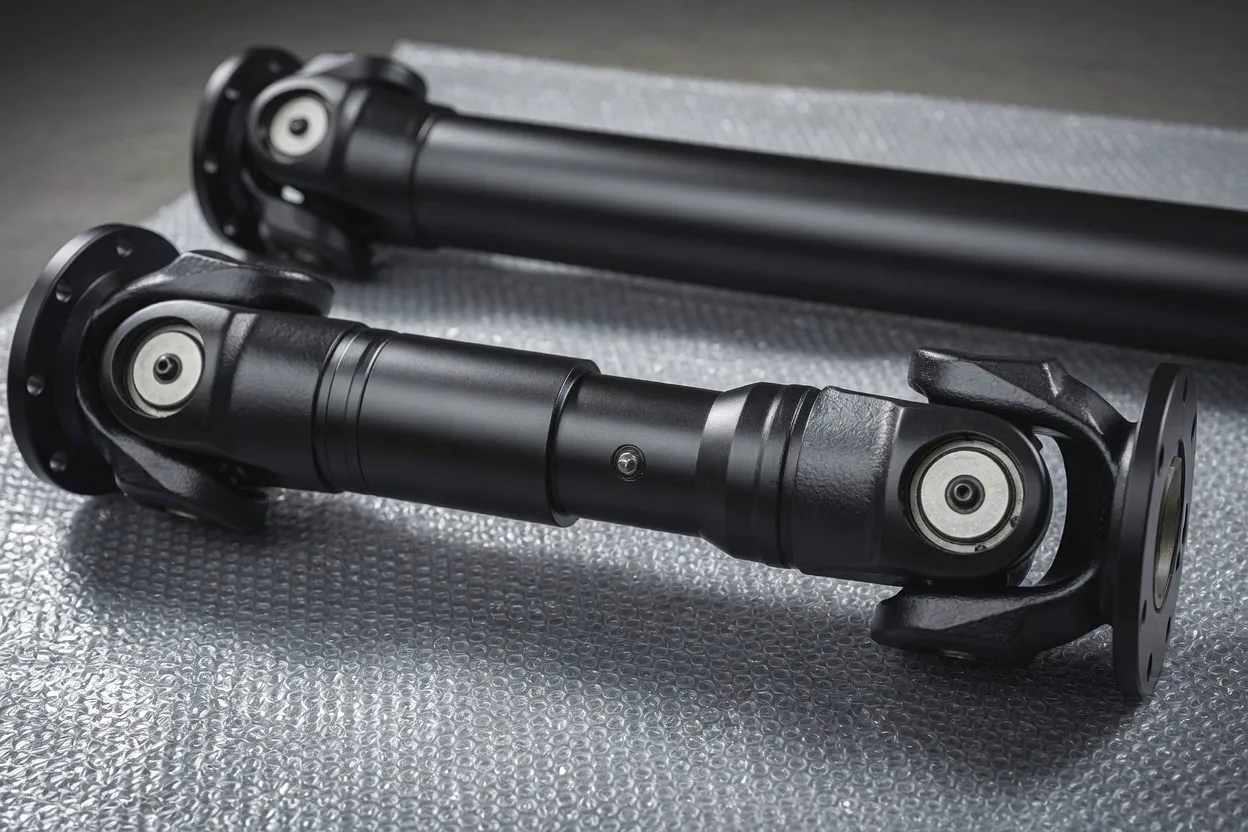
A cardan coupling — also called a universal joint coupling or Hooke’s joint assembly — transmits rotary motion between two shafts that are not collinear. The defining feature is the cross-shaped trunnion (spider) and its bearing cups, which allow the output shaft to operate at an angle to the input shaft, typically up to 30° depending on the design, without interrupting power flow. In a double-cardan arrangement, two such joints are combined with an intermediate shaft (splined slip tube), eliminating the velocity fluctuation inherent in a single-joint setup and enabling constant-velocity transmission even at moderate operating angles.
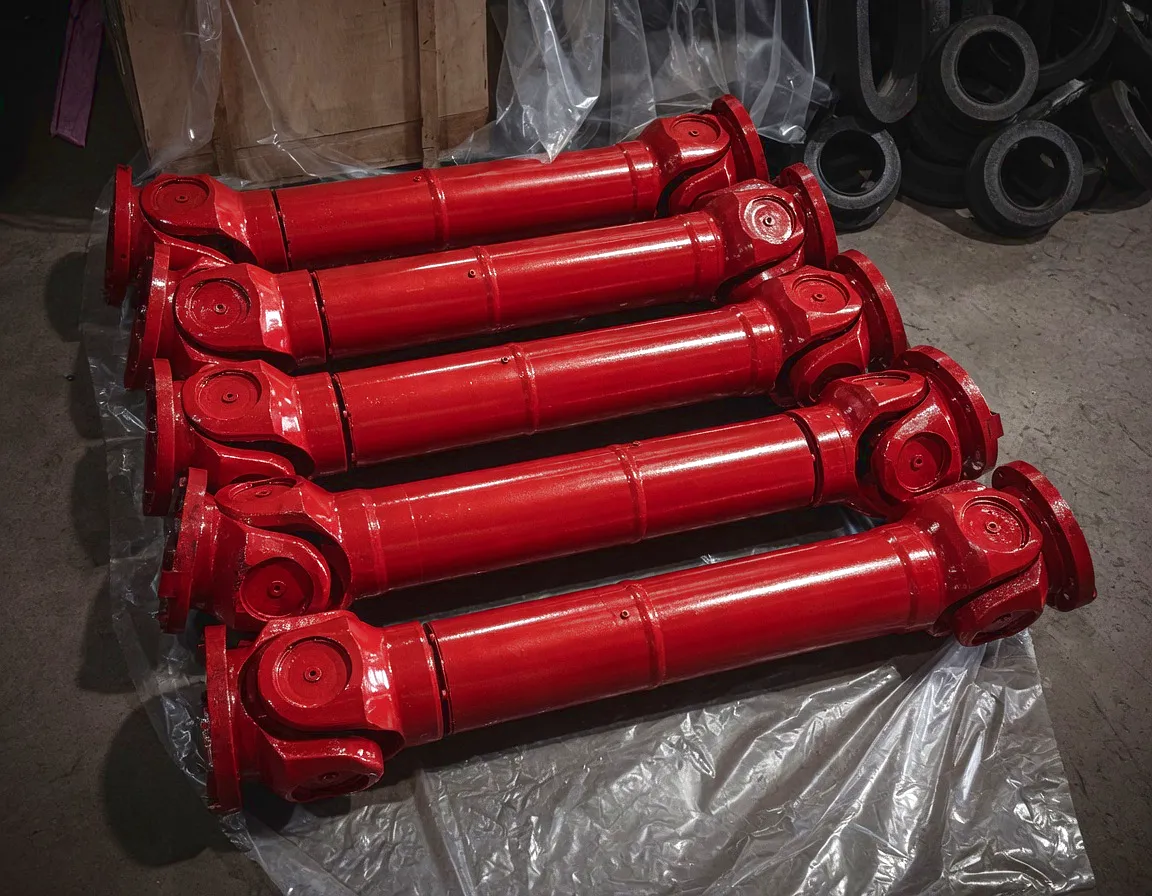 For straw returning machines, the double-cardan configuration is almost universally preferred. The PTO shaft from the tractor connects through a telescopic slip-yoke tube to a gearbox input, and the cardan coupling accommodates both the angular displacement caused by three-point linkage movement and the axial displacement that occurs as the linkage rises and falls. The torque limiter — typically a shear-bolt, friction-disk or cam-and-roller type — is integrated either at the PTO end or the implement gearbox end. Its job is to disconnect the driveline the moment torque exceeds a set threshold, preventing catastrophic failure when the rotor strikes a rock, a ridge of compacted soil, or a buried drainage pipe.
Technical Performance Parameters
The table below covers the principal performance parameters for Ever Power’s agricultural cardan coupling range, specifically as applied to straw returning machine drivetrains. These figures represent verified test data from our in-house torque test rigs and field validation programmes running over multiple harvest seasons. Values marked with ± represent manufacturing tolerances at 95% confidence intervals.
Straw Returning Machine: The Application Environment
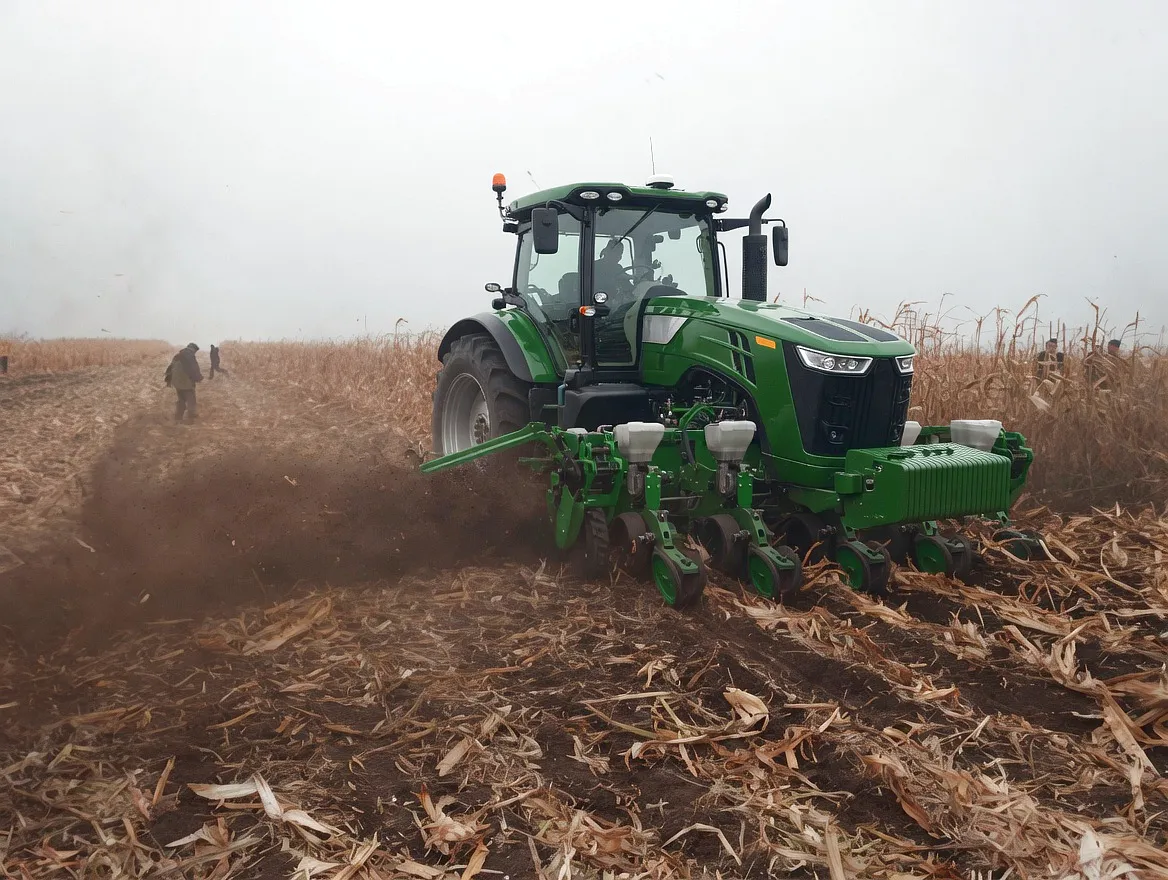
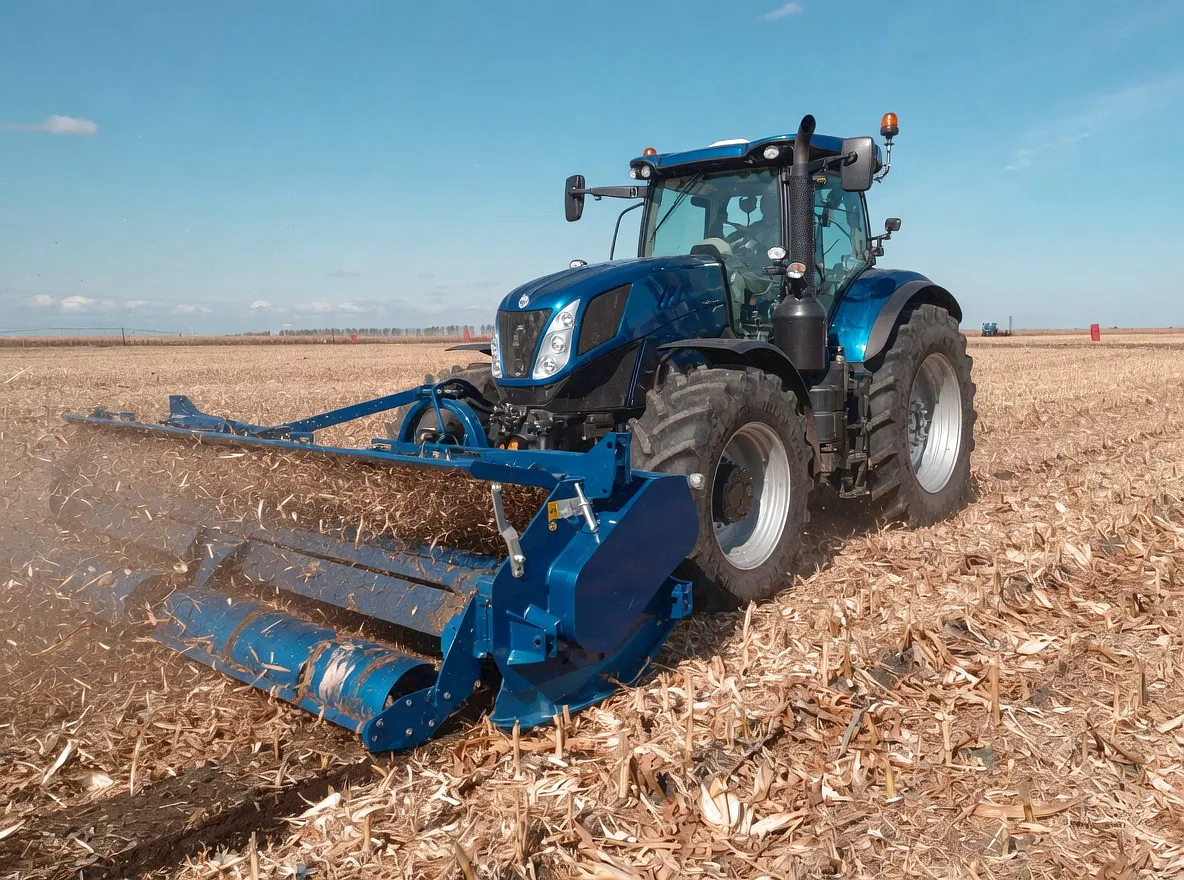
Understanding what a straw returning machine actually goes through in the field is essential to specifying the right cardan coupling. The photos below illustrate the range of operating conditions these machines encounter — from clean, dry cereal stubble in the Yorkshire Wolds to the damp, tangled residue left after oilseed rape harvest in Cambridgeshire.
Why You Need an Oversized Torque Limiter — Not Just Any Limiter
 This is where most buyers make a costly mistake. Consultants and procurement teams often look at the rated PTO output of the tractor — say, 540 rpm at 65 kW — calculate the theoretical torque at the coupling, and then specify a torque limiter rated at, or only slightly above, that figure. In a low-shock application like a mower or a pump drive, that approach is perfectly reasonable. In a straw returning machine application, it is dangerously inadequate.
The kinetic energy stored in a high-inertia rotor spinning at 1,000 rpm is substantial. When that rotor hits a sudden obstruction — a buried stone is the classic example — the stored energy is discharged into the driveline as an impulsive torque over a period of perhaps 20 to 50 milliseconds. The peak torque during that event can easily reach four or five times the steady-state operating torque. A standard-sized torque limiter set just above nominal torque will trip unnecessarily several times per hour on normal material, causing repeated interruptions, wear on the trip mechanism and driver frustration. Set it too high to avoid false trips, and it no longer offers adequate gearbox protection.
The correct engineering approach is to specify an oversized torque limiter — one rated for a trip torque that is typically 2.5 to 3.5 times the nominal operating torque, but whose trip mechanism is fast enough to respond to the sharp leading edge of an impact event rather than the sustained torque of normal material processing. Cam-and-roller type limiters are preferred for straw returning machines because they reset automatically after the overload event passes, without requiring the operator to leave the cab. Friction disc types offer adjustability but require periodic re-calibration as the discs wear and their coefficient of friction changes.
Ever Power’s Series XH cardan couplings are specifically engineered for this configuration. The cam-and-roller torque limiter in this range is sized one to two grades above what would normally be required for the coupling’s nominal torque rating, and the trip accuracy of ±8% ensures consistent, repeatable protection even after thousands of operating hours. The bearing cups are needle-roller type, with full-complement cage design to withstand the rapid acceleration and deceleration cycles that characterise straw-chopper operation.
Materials Science: What Makes the Difference
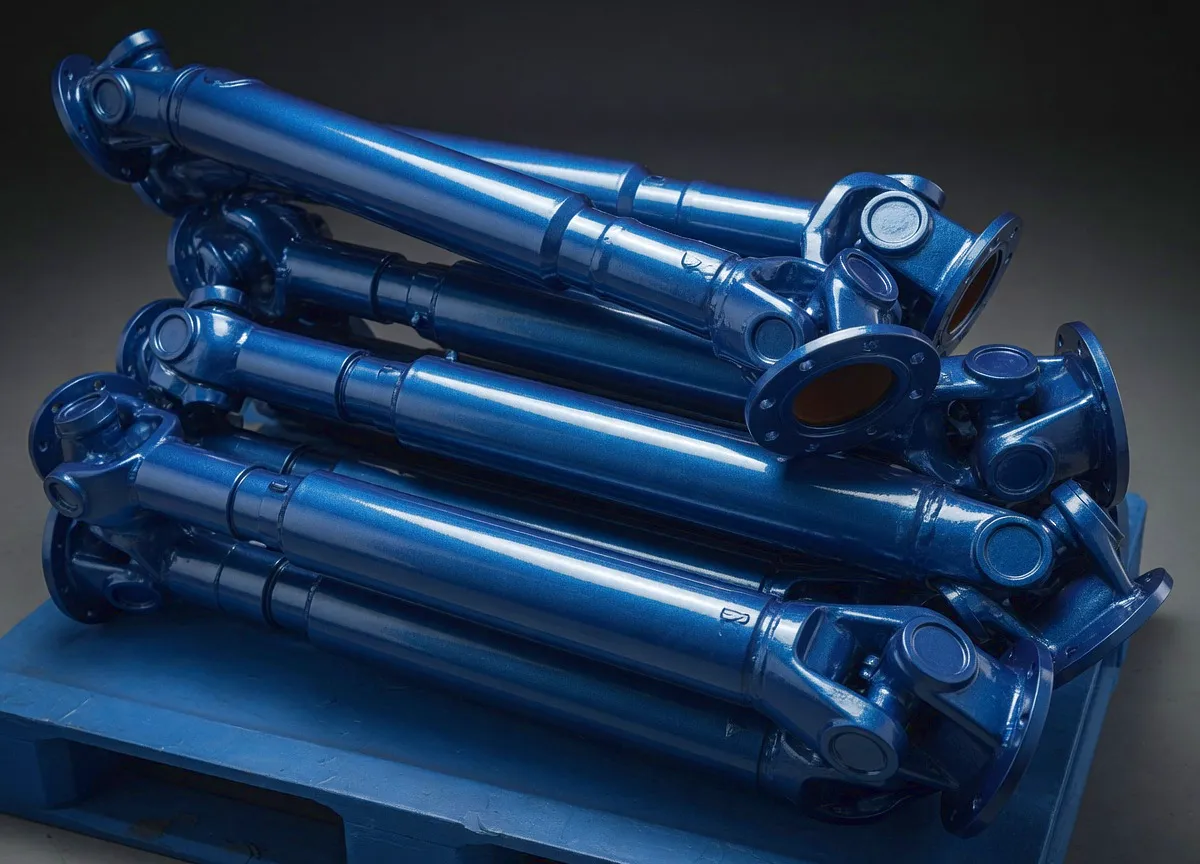 The spider (cross-piece) is the most highly stressed component in any cardan coupling. In a straw returning machine application, this part must survive repeated impact torque cycles for the entire lifespan of the implement — often a decade or more of seasonal use across thousands of hectares. At Ever Power, our Series H and XH spiders are machined from 42CrMo4 alloy steel billet, a material widely recognised in agricultural and industrial driveline engineering for its combination of high tensile strength (typically 900–1,100 MPa after heat treatment), excellent toughness and good fatigue resistance.
Following rough machining, each spider undergoes induction hardening on the trunnion journals to achieve a surface hardness of 62–64 HRC to a case depth of 1.2–1.8 mm. The core retains its toughness at 30–35 HRC, providing the crack-arrest properties needed when impact loading causes brief plastic deformation in the surface layers. This is fundamentally different from through-hardened components, which are brittle under impact, and from case-carburised lower-alloy steels, which offer shallower hardened cases and lower core strength.
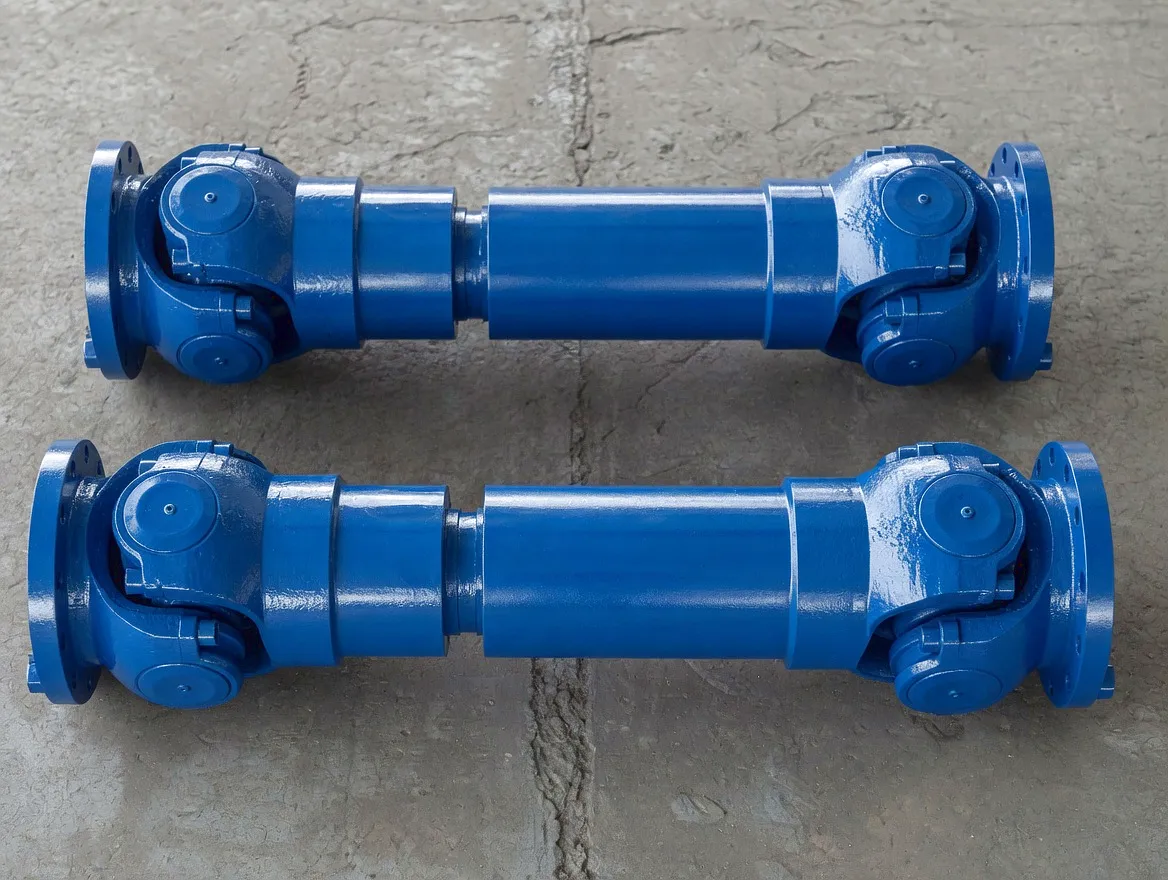 The yokes are forged, not cast. Forging aligns the grain flow of the steel with the direction of principal stress, producing a part that is typically 20–30% stronger in fatigue than an equivalent casting. The weld preparation zones on telescopic tube assemblies are MIG-welded under controlled preheat conditions and then stress-relieved, eliminating the residual tensile stresses that would otherwise serve as fatigue crack initiation sites. The complete assembly is phosphate-coated and then painted with a two-component polyurethane topcoat for corrosion resistance in the wet, muddy conditions typical of UK autumn harvesting.
Six Advantages That Make Ever Power the Right Choice
Oversized Torque Limiter as Standard
Trip torque is factory-set at 2.5–3.5× nominal operating torque, providing decisive protection without nuisance tripping during normal straw processing operations.
42CrMo4 Induction-Hardened Spider
Surface hardness of 62–64 HRC on a tough core delivers the best possible balance of wear resistance and impact toughness — engineered specifically for shock-dominant duty cycles.
Auto-Reset Cam-and-Roller Trip Mechanism
Re-engages automatically once the obstruction clears. No stopping, no manual re-pinning, no lost time during the harvest window — critical when daylight hours are short in October.
Full ISO Spline Compatibility
Offered with Z6, Z8, Z20 and Z21 splines per ISO 500-1, ensuring direct fitment to all major tractor PTO standards and most implement gearbox input shafts without adaptation flanges.
Designed for UK Operating Conditions
Two-component polyurethane coating, HDPE safety guards and sealed bearing cups resist the persistent moisture, mud and crop debris encountered in British autumn harvest conditions.
Full Custom Engineering Service
OEM and aftermarket customers can request custom shaft diameters, spline profiles, overall lengths, guard colours and torque limiter trip settings — with prototypes in as few as 15 working days.
Customer Success: Real-World Evidence
Three cases from our active customer base — across different countries, crop types and machine configurations — demonstrate the performance differential that a properly specified cardan coupling makes.
UK Arable Contractor · Lincolnshire · Winter Wheat Residue Management
From Three Coupling Failures Per Season to Zero
A leading arable contracting firm operating across 4,200 hectares of winter wheat in Lincolnshire was replacing cardan couplings on their straw returning machines at a rate of three per season, each failure costing approximately £480 in parts plus three to four hours of downtime per incident. Their previous supplier’s standard-duty units were rated for 1,400 N·m nominal torque — adequate on paper for their 100 kW tractors at 540 rpm PTO, but entirely inadequate for the shock torque profile generated by their six-rotor straw choppers working in heavy, tangled wheat straw after a wet summer.
After switching to Ever Power’s Series XH cardan coupling with 3,500 N·m nominal rating and oversized cam-and-roller torque limiter, the firm completed two full harvest seasons — spanning approximately 8,400 hectares of treated stubble — without a single coupling failure. The operations manager noted that the auto-reset limiter tripped an average of twice per 10-hectare field in stony ground conditions, but re-engagement was instantaneous and did not require the operator to slow or stop.
German OEM Agricultural Machinery Manufacturer · Bavaria · Maize Straw Returning
Custom Spline and Guard Solution for an OEM Product Launch
A mid-sized Bavarian OEM developing a new combined maize straw returning and soil conditioning machine approached Ever Power during the product development phase. Their engineering team required a cardan coupling capable of transmitting 2,800 N·m nominal torque through a 15° operating angle, with a non-standard Z24 spline on the implement gearbox side and a specific overall compressed length to fit within the machine’s driveline envelope. Standard catalogue products from three European suppliers could not meet all three constraints simultaneously.
Ever Power’s custom engineering team produced working prototypes within 12 working days of receiving the CAD envelope drawings. The final production coupling incorporated a 42CrMo4 spider, a forged-steel yoke with customer-specified mating flange, and a cam-and-roller torque limiter pre-set to 7,200 N·m trip torque. The OEM incorporated this coupling as a standard fitment across their entire new model range, with annual volumes exceeding 600 units.
Australian Grain Producer · Western Australia · Canola Residue Processing
Reducing Replacement Parts Spend by 61% in a Single Season
A large-scale grain producer in the Western Australian wheat belt was running five straw returning machines as part of a no-till canola residue management programme. The extremely dry, brittle canola straw combined with the high forward speeds needed to cover vast acreages created severe impact loading on the driveline. The operation was spending AUD 18,000 per season on replacement couplings, shear bolts and associated repair labour.
After trialling two Ever Power Series XH units on their highest-throughput machines in the first season, the total parts spend across those two machines dropped by 61% compared to the previous season average. The remaining three machines were converted for the second season, and the overall replacement parts budget was reduced by AUD 9,800. The farm manager cited the auto-reset torque limiter and the sealed, pre-greased bearing cups as the two features that made the biggest practical difference in a remote operating environment where workshop time is scarce.
What Our Customers Say
“We’ve run two full harvest seasons without touching the driveline. The auto-reset limiter trips cleanly on stones and comes back straight away — that’s exactly what you need when you’re trying to cover ground before dark in October.”
“The custom engineering team at Ever Power turned our non-standard spline requirement around in under two weeks. The coupling has been in serial production for two years now and we have had zero warranty returns related to the driveline. That is genuinely rare in this industry.”
“Being six hours from the nearest agricultural engineering workshop means breakdowns are expensive. The sealed bearings and the fact that we barely need to think about greasing intervals has made a real difference. Parts spend is down substantially and the machines just keep running.”
Manufacturing Capability & Custom Engineering Services
 Ever Power’s manufacturing facility operates a fully integrated production flow — from raw billet receipt through forging, rough machining, heat treatment, precision grinding, assembly and final inspection — under a single roof. This vertical integration gives us control over lead times and quality at every stage, which is why we can offer prototype turnaround times that European importers simply cannot match.
Our custom engineering services are available to OEM customers, specialist machinery distributors, and large fleet operators across the UK and internationally. We can accommodate a wide range of custom parameters: shaft diameter and bore tolerance, spline profile and fit class, overall compressed and extended length, torque limiter type and trip torque setting, bearing specification (needle roller vs. spherical), guard colour and marking requirements, and documentation packages for CE and UKCA compliance. Customers with annual volumes above 50 units are typically eligible for a dedicated account engineer and scheduled production slots.
For UK-based distributors supplying the agricultural machinery aftermarket, we offer stocked fast-turn SKUs covering the most common Z6, Z8 and Z20 spline configurations in Series S and Series H, with typical despatch from our partner UK logistics hub within 48 hours of order confirmation. For export customers in the EU and further afield, we work with established freight partners to provide competitive landed cost calculations on request.
Selecting the Right Series: A Quick Reference Guide
Use the table below as a starting point for narrowing down the appropriate coupling series for your straw returning machine application. Always confirm with our engineering team, who will validate the selection against your specific operating parameters, tractor PTO rating and rotor inertia data.
Supplying Agricultural Engineers and Contractors Across the UK
British arable farming faces some of Europe’s most variable conditions — wet autumns in the Welsh Marches, stone-rich chalk soils in the Yorkshire Wolds, heavy boulder clay in Cambridgeshire, and the sheer scale of operations in the Fens where a single farm might cover thousands of hectares. Each of these environments makes different demands on straw returning machine drivelines, and a cardan coupling that performs flawlessly in one context may fail prematurely in another.
Ever Power works directly with agricultural machinery dealers and distributors across England, Scotland and Wales, supplying both OEM fitment components and aftermarket replacement couplings for all major straw returning machine brands. Our UK-based logistics partner maintains a stock of the most popular Series S and Series H configurations, allowing orders placed before midday to ship for next-day delivery to most mainland UK postcodes. For Scotland and Northern Ireland, two-day delivery is standard, with express options available on request.
Machinery dealers in the East Midlands, East Anglia and Yorkshire — the three regions that account for the majority of the UK’s cereal straw returning machine activity — can discuss volume pricing and holding stock arrangements directly with our sales team. We understand the seasonal nature of agricultural parts demand and structure our pricing and lead-time commitments accordingly, with pre-season orders placed before 31 July eligible for extended payment terms.
Technical support is available in English from our engineering team, and we can provide installation guidance, torque limiter calibration advice and compatibility checks for all current and legacy straw returning machine models. All products supplied to UK customers include documentation compliant with UKCA marking requirements where applicable under the Supply of Machinery (Safety) Regulations 2008.
Frequently Asked Questions
What size cardan coupling do I need for a straw returning machine driven by a 100 kW tractor in the UK?
▼
How much does a heavy-duty cardan coupling for a straw returning machine cost from a UK supplier?
▼
Which type of torque limiter — shear bolt or cam and roller — is best for a straw returning machine working in stony Lincolnshire fields?
▼
Can I get a cardan coupling with a non-standard spline profile custom-made for my straw returning machine in the UK?
▼
How often should I grease the universal joints on a cardan coupling used on a straw returning machine?
▼
Where can I buy a replacement cardan coupling for a straw returning machine with next-day delivery in England?
▼
What is the difference between a Series H and Series XH cardan coupling, and when should I specify the heavier option?
▼
Ready to Protect Your Straw Returning Machine Driveline?
Talk to an Ever Power application engineer about your specific machine, tractor PTO rating and field conditions. We will recommend the right cardan coupling, confirm the torque limiter specification and provide a competitive delivered price to your UK location.
📧 Contact Ever Power: [email protected]
edit by gzl