
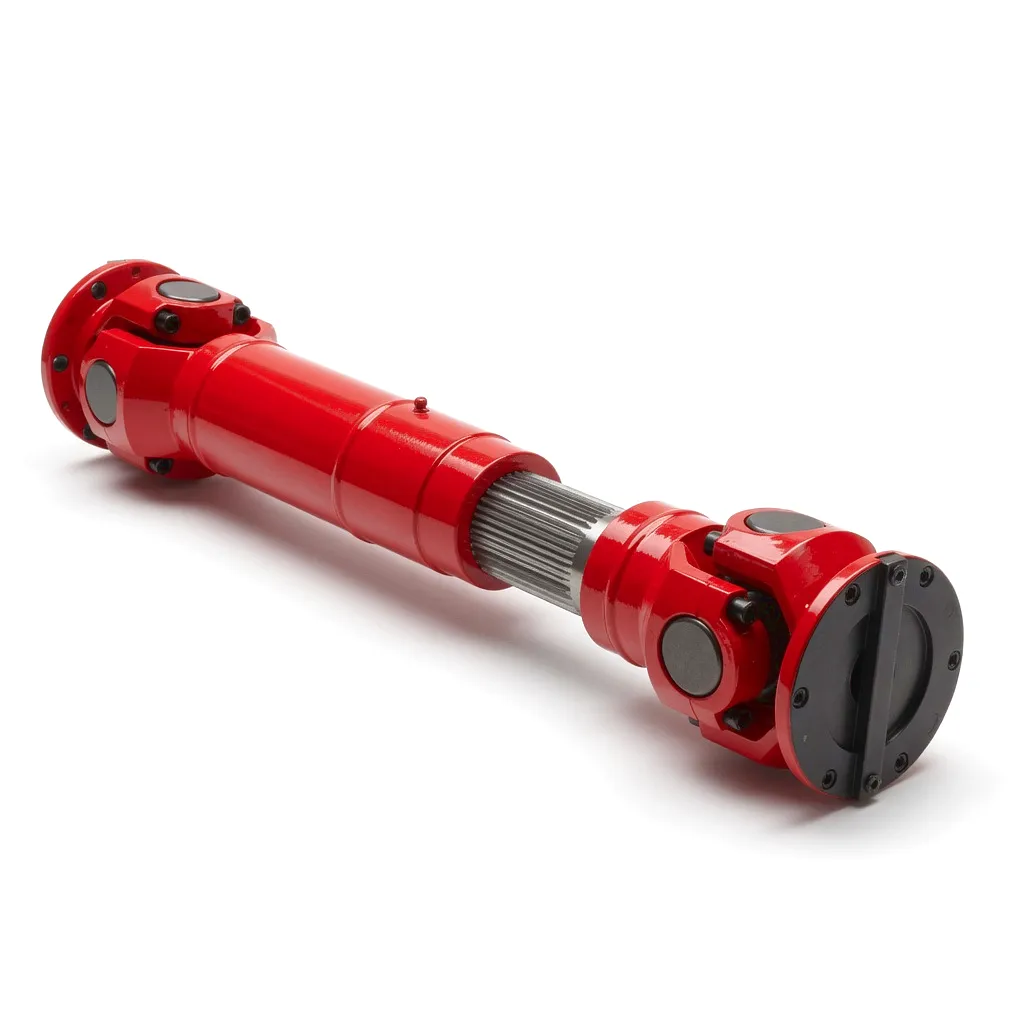
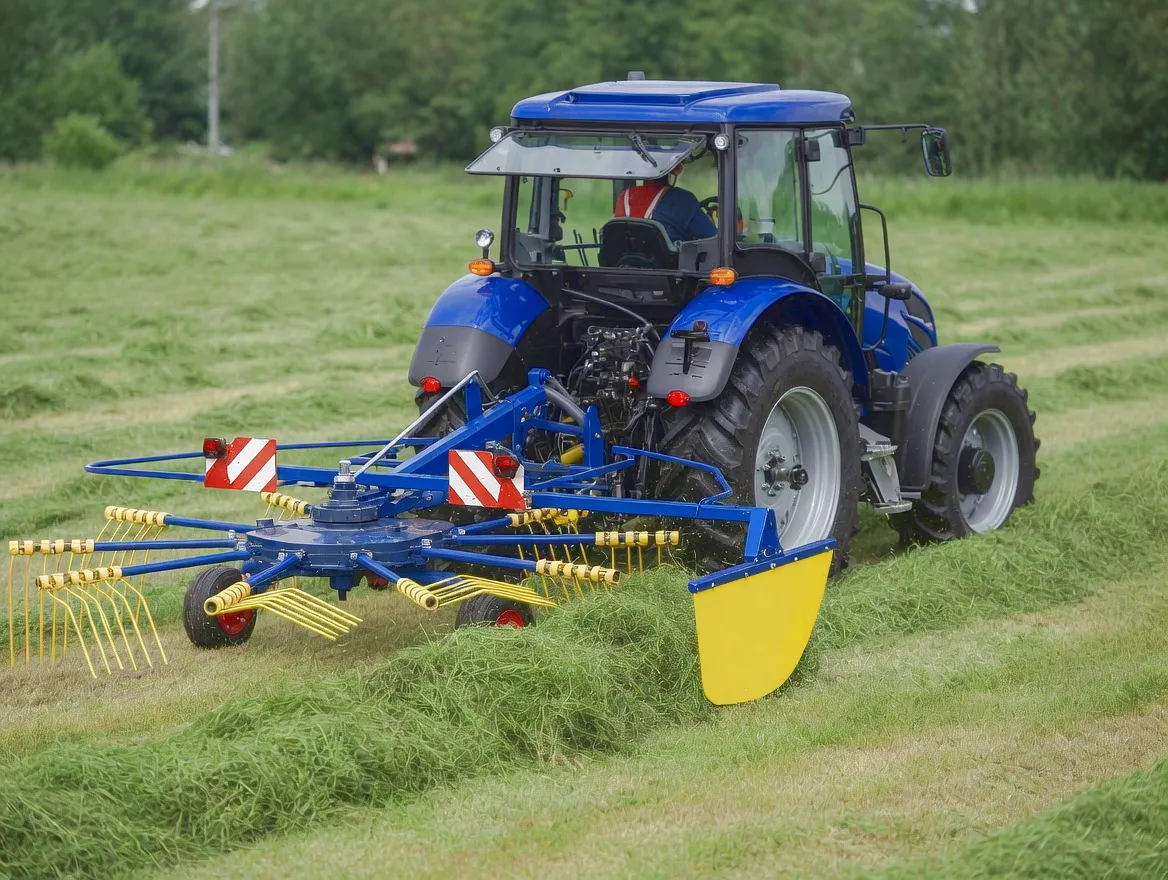
 Walk around any commercial hay farm in Yorkshire, Lincolnshire, or Devon during summer and you’ll see rotary rakes working hard across rolling fields. These machines look simple from a distance — a spinning rotor, a few tines, a PTO shaft connecting them to the tractor. But look closer at the mechanical heart of that system and you’ll find something that takes real engineering to get right: the cardan coupling. It’s the component that translates tractor PTO rotation into reliable, smoothly-transmitted torque, all while absorbing angular misalignment, ground shock, and the relentless speed variation that comes with real-world agricultural use.
In the UK, where hay and silage production underpins livestock farming across millions of acres, the performance of a single universal joint shaft can genuinely determine whether a farmer gets their crop in before the weather turns. A failed cardan shaft mid-operation doesn’t just stop the machine — it can mean a wasted cut of grass, lost nutrients, and the kind of financial hit that ripples through an entire farming operation. The stakes are real, and the component choices made at procurement stage matter far more than most people realise.
What Exactly Is a Cardan Coupling — and Why Does It Matter for Hay Rakes?
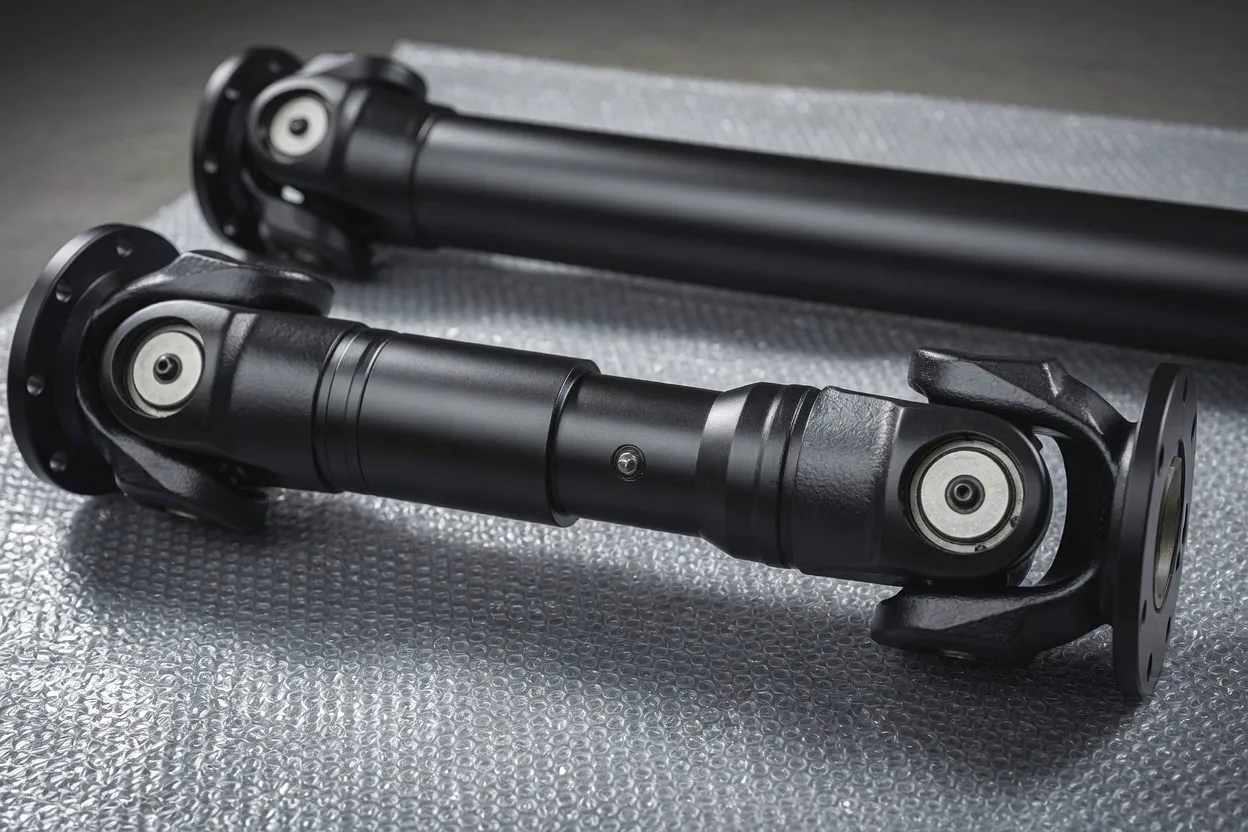
A cardan coupling — also referred to as a universal joint coupling, cardan shaft, or Hooke’s joint — is a mechanical device that transmits rotational torque between two shafts that are not perfectly aligned. Unlike a rigid coupling, which demands precise co-axial alignment, the cardan design allows angular deviation of typically 5° to 45° per joint, depending on configuration and load. A standard agricultural cardan shaft uses two universal joints connected by a sliding telescopic tube, which also handles axial length variation as the tractor and implement move relative to each other during field operation.
For hay rake applications specifically, this design is non-negotiable. A rotary rake works by spinning multiple rotor arms at high speed — often exceeding 500 RPM — while being pulled across ground that may slope, undulate, or contain dips and rises. The angle between the tractor’s PTO output shaft and the rake’s gearbox input changes constantly. Rigid drive solutions simply cannot accommodate this. The cardan coupling absorbs that angular variance without interrupting torque delivery, protecting both the tractor gearbox and the rake’s internal drivetrain from shock loads that would otherwise cause rapid wear or catastrophic failure.
- Transmits torque at operating angles up to 45°
- Telescopic shaft handles axial displacement
- Two universal joints cancel velocity fluctuation
- Overload protection clutch options available
- CE-marked safety guards for UK market
- Yoke profiles matched to standard PTO splines
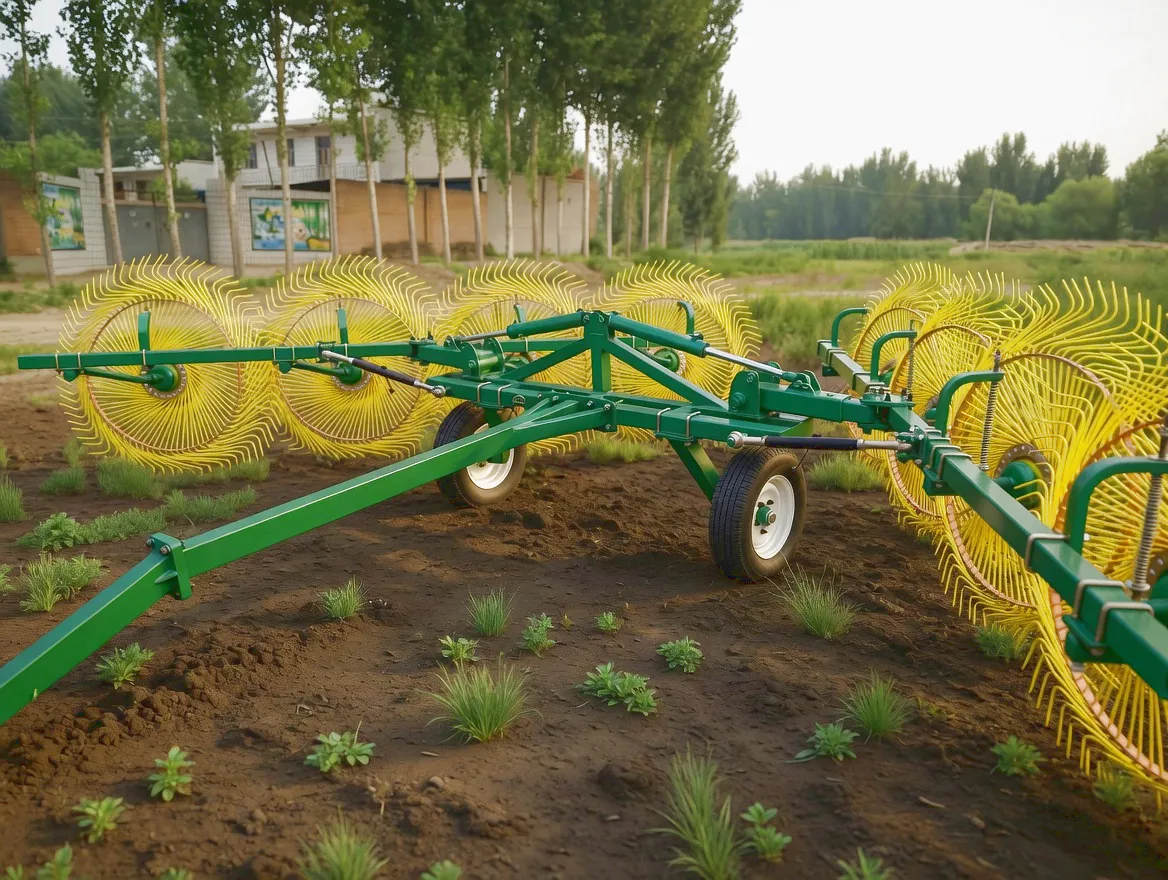
The Physics Behind High-Speed Rake Drive: Why Standard Joints Aren’t Enough
Here’s something that catches out many engineers who come to agricultural machinery from industrial backgrounds: a single Hooke’s joint, while it transmits torque at an angle, does NOT deliver uniform output velocity. When the input shaft spins at constant speed and the joint is working at an angle, the output shaft actually accelerates and decelerates twice per revolution — a phenomenon described by the cyclic velocity fluctuation inherent to a single cardan joint. At low angles and low speeds, this matters very little. At the 500–700 RPM typical of a high-speed rotary hay rake, operating at angles of 10° or more, those velocity fluctuations become significant. They create torsional vibration, increased bearing wear, noise, and — at worst — harmonic resonance that can crack shafts or strip gearbox teeth.
The engineering solution is the double-cardan configuration — two Hooke’s joints connected with their yoke planes phased correctly (i.e., the drive yokes of both joints lie in the same plane). When set up this way, the velocity error introduced by the first joint is precisely cancelled by the second joint, delivering constant velocity output regardless of operating angle. This is the standard configuration for agricultural PTO shafts used on hay rakes and similar high-speed implements throughout the UK and Europe, and it’s the configuration that Ever Power engineers specify by default for rake drive applications.
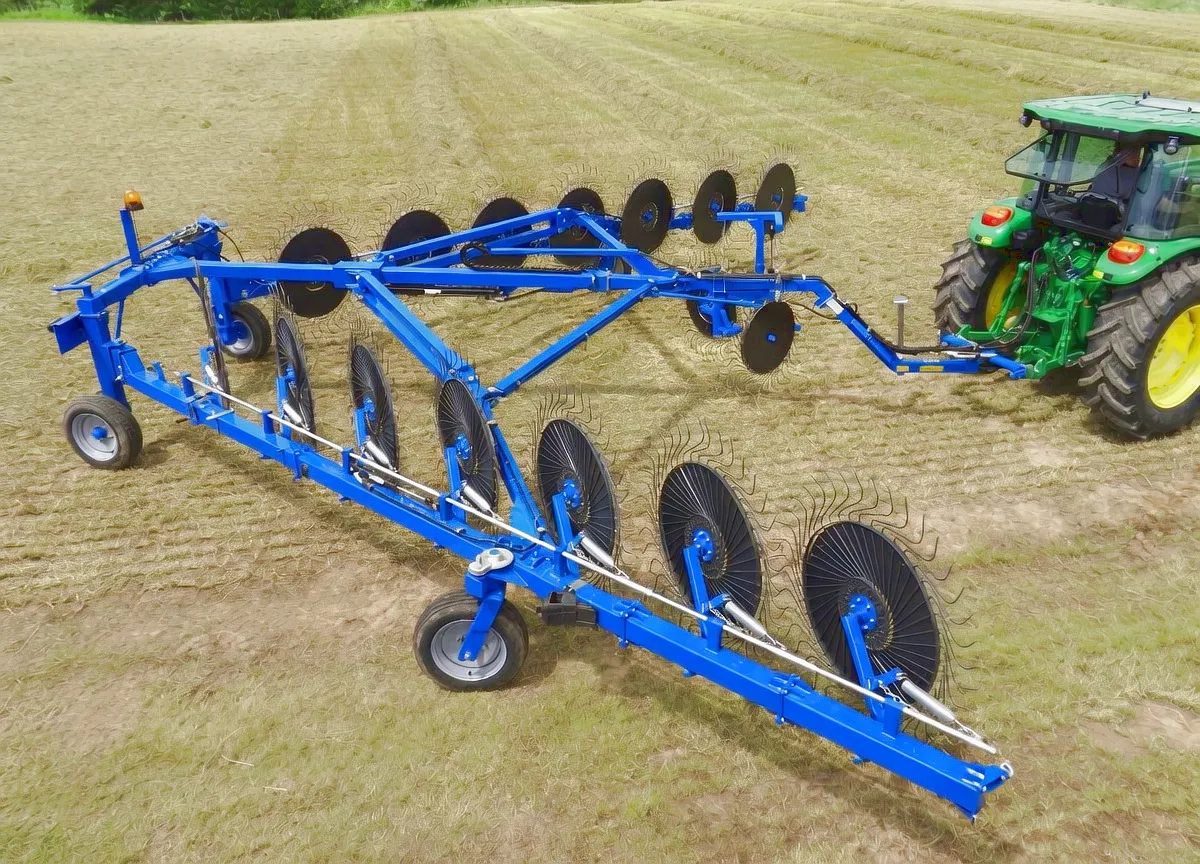
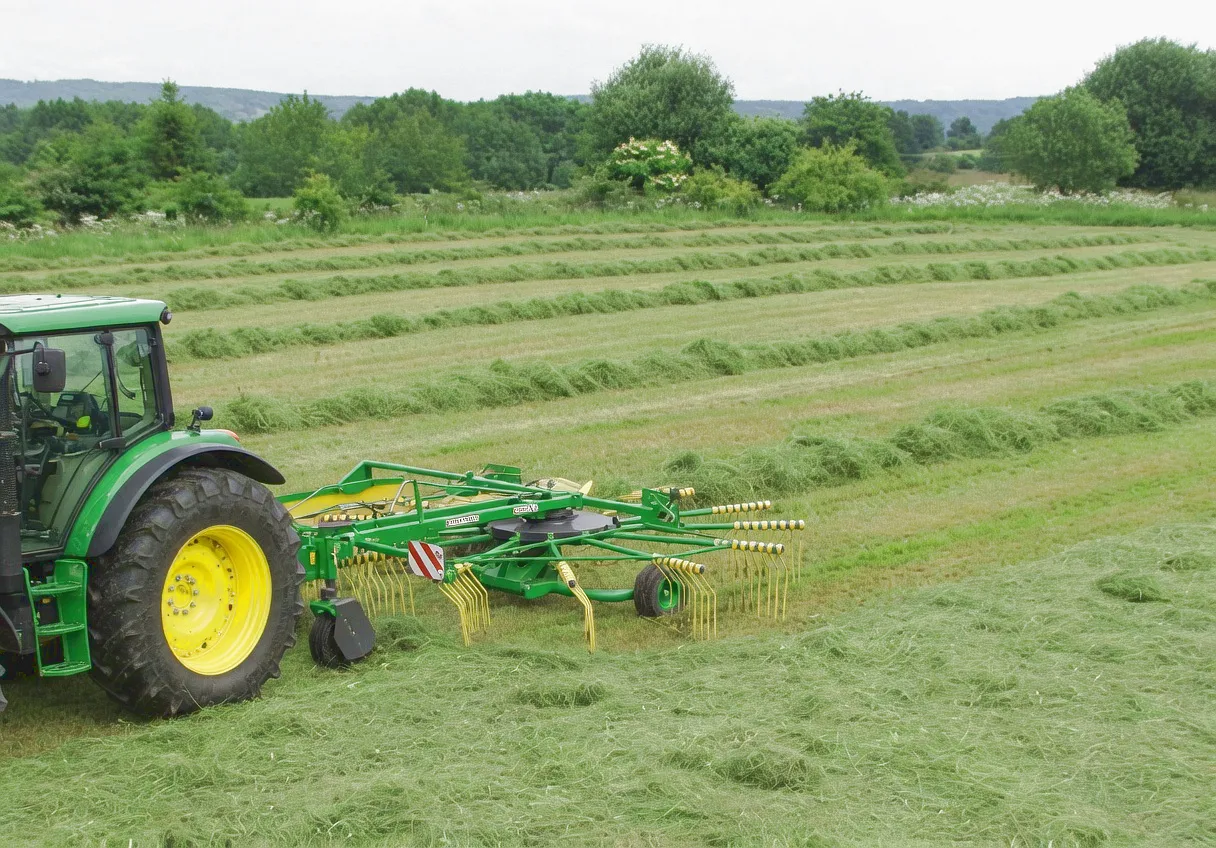
Technical Specifications: Ever Power Agricultural Cardan Coupling Range
The following table summarises the core specification range across Ever Power’s agricultural cardan shaft series, covering sizes commonly used for hay rake and related high-speed implement applications. All values are nominal; custom configurations are available on request.
| Series / Size | Nom. Torque (Nm) | Peak Torque (Nm) | Max Speed (RPM) | Max Angle (°) | Spline Profile | Protection |
|---|---|---|---|---|---|---|
| EP-AG S2 | 210 | 420 | 800 | 25° | 6-spline, 1-3/8″ | Friction Clutch |
| EP-AG S3 | 310 | 620 | 750 | 30° | 6-spline, 1-3/8″ | Ratchet / Friction |
| EP-AG S4 | 490 | 980 | 700 | 35° | 6-spline, 1-3/8″ | Shear Bolt |
| EP-AG S5 | 780 | 1560 | 650 | 40° | 21-spline, 1-3/4″ | Cam / Ratchet |
| EP-AG S6 | 1150 | 2300 | 600 | 45° | 21-spline, 1-3/4″ | Custom on Request |
* All specifications subject to application review. Custom shaft lengths, yoke profiles, and clutch types available. Contact Ever Power for a tailored technical data sheet.
Materials, Construction, and Why Quality Matters in Wet British Field Conditions
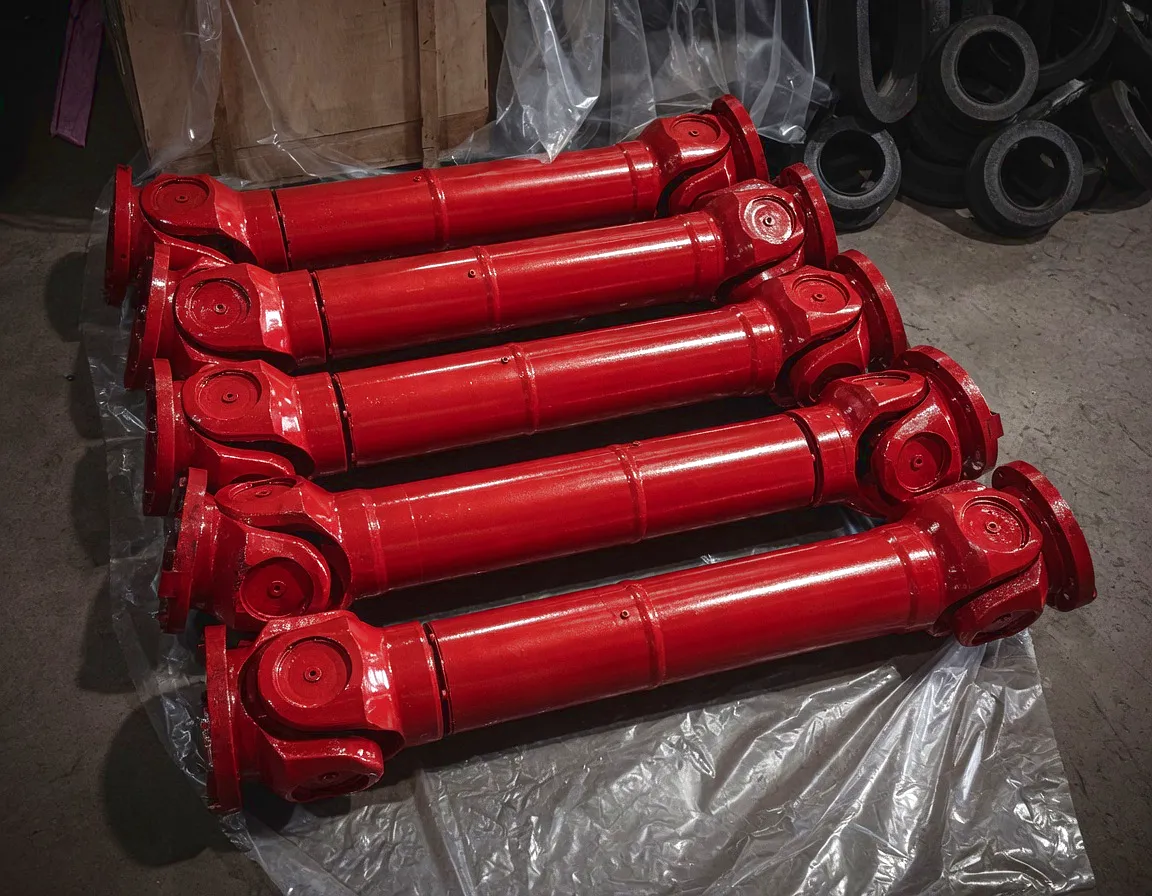
British field conditions are among the most demanding in the world for agricultural equipment. A hay season in England doesn’t wait for perfect weather — rakes operate in damp, clay-heavy fields, through morning dew, and sometimes in light rain when windows of dry weather are narrow. This places very specific demands on the materials and surface treatments used in cardan couplings for agricultural use. Ever Power’s agricultural-grade cardan shafts are constructed from a combination of high-grade carbon steel forgings for the yokes and cross-kit journals, cold-drawn seamless steel tube for the telescopic shaft body, and hardened alloy steel for the splined sections. Each cross-kit journal is ground to tight tolerances and fitted with needle roller bearings packed with high-temperature, water-resistant grease.
Surface protection is applied as a multi-stage process: mechanical shot blasting to Sa 2.5 standard, followed by either zinc phosphate primer plus epoxy topcoat or hot-dip galvanising depending on the application. For shafts operating in high-moisture environments — such as riverside meadow cutting in the Norfolk Broads area or the wet upland pastures of Cumbria and Wales — the additional galvanised option provides meaningfully better corrosion resistance over a multi-season service life. The safety guard — a statutory requirement for PTO-driven shafts in the UK under PUWER regulations — is manufactured from UV-stabilised polypropylene, designed to remain flexible and non-brittle even after years of outdoor exposure.
Application Scenarios: Where Cardan Couplings Are Used in Hay Rake Operations
The term “hay rake” covers a surprisingly wide family of machines, and the cardan coupling requirements differ noticeably across types. Understanding where and how each variant operates helps engineers and procurement teams specify the right coupling solution without over-engineering — or under-engineering — for the task at hand.
The most common type across UK farms. Rotor diameters typically range from 2.8 m to 4.2 m. PTO input is 540 RPM (some newer models take 1000 RPM). The cardan coupling must handle shock loads when tines strike embedded stones, particularly on chalk downland in Hampshire or flint-heavy soils of East Anglia. An overload clutch — friction or ratchet type — is strongly recommended at this torque level.
Higher output machines covering working widths of 7–12 m, popular on larger mixed farms and contractor operations in counties like Northumberland and Shropshire. Two rotor drive shafts are fed from a central gearbox, each requiring its own cardan coupling. Operating torques are higher and steady-state; the shock profile is somewhat more predictable than single-rotor machines but the consequences of a failure are more severe given the wider swath being processed.
Designed for high-output silage and hay production on large arable farms and contracting fleets, particularly prevalent in Scottish Borders and Lincolnshire. These machines operate four or more rotors, all driven via a complex driveline. The main PTO shaft and primary drive cardan coupling here must handle sustained high torque with minimal angular variation — precision balance and dynamic rating are key selection criteria. Ever Power custom engineers multi-section cardan assemblies for these applications on request.
Combination machines that both ted and rake in a single pass are increasingly common as labour costs rise across British farming. These units switch between functions via hydraulic fold and have complex driveline geometries that change with fold position. Cardan shafts for these applications require careful angle analysis across all operating configurations — a task Ever Power’s engineering team supports with full CAD modelling services for OEM partners.
Six Reasons UK Farm Machinery Specialists Choose Ever Power Cardan Couplings
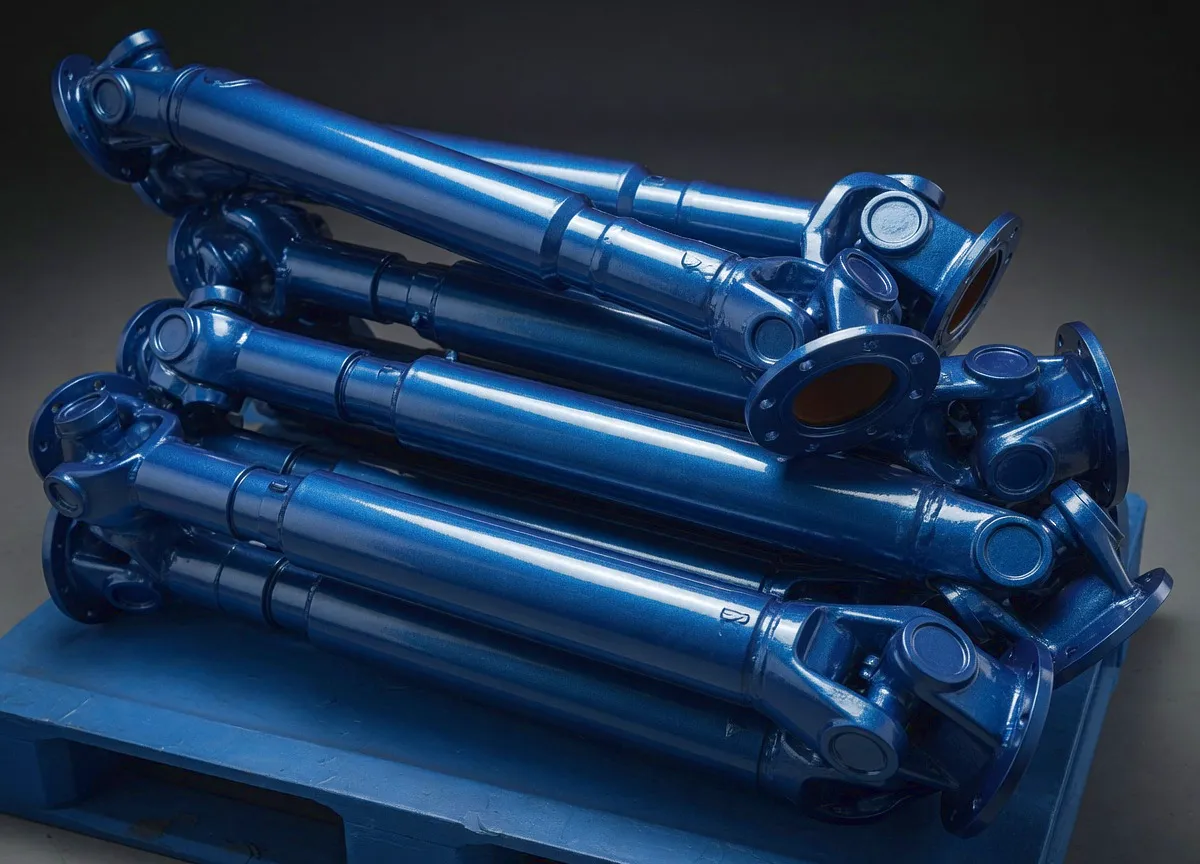
After 18 years of specifying drive components across a wide range of agricultural applications, certain patterns become clear. The following advantages aren’t marketing copy — they’re the factors that repeatedly come up in post-installation reviews and renewal conversations with UK farm machinery dealers and OEM engineers alike.
All shafts above 500 RPM operation are dynamically balanced to ISO 1940 G6.3 standard. This is not a standard practice among all suppliers, but for high-speed rake drive it makes a tangible difference to bearing life and vibration levels in the tractor cab.
Friction, ratchet, and shear-bolt clutch options are available as integrated units rather than add-on components. This keeps the overall shaft length shorter and reduces the risk of assembly errors in the field — an important consideration for UK dealers who stock replacement shafts for in-season breakdowns.
CE-marked polypropylene safety guards are supplied as standard on all agricultural shafts. These comply with PUWER 1998 and LOLER requirements relevant to UK farm machinery. The guard cone design is compatible with most standard tractor PTO guard configurations without modification.
Non-standard shaft lengths, special yoke profiles, proprietary spline cuts, private-label marking — Ever Power handles all of these. UK machinery manufacturers developing new rake designs are welcome to share CAD files and receive prototype cardan assemblies within lead times that genuinely support product development schedules.
Bulk pricing tiers, distributor stock programmes, and fast-turnaround despatch make Ever Power a practical stock-and-sell option for UK farm machinery dealers. Minimum order quantities are flexible, and dedicated account support means no waiting through generic customer service queues during the critical May–July harvest window.
Material certificates, dimensional inspection reports, and CE declaration of conformity are supplied with every batch. This documentation trail matters particularly for UK OEMs supplying their finished machines to commercial operators under service agreements, and for dealers who need to satisfy insurance and warranty requirements for their end-customers.
Customer Success Story: Wilkinson Agriculture, North Yorkshire
Replacing Three Seasons of Repeated Shaft Failures on a Twin-Rotor Merger Rake
Background: Wilkinson Agriculture is a family-run contracting business operating across the Vale of York and the North Yorkshire Moors. Their fleet includes two large twin-rotor merger rakes used intensively from late May through August for both first-cut silage and hay. In 2022 and 2023, they experienced three separate PTO shaft failures on one of their machines — two cross-kit seizures and one telescopic tube fracture — all occurring during peak season operation and costing them an estimated £4,200 in combined downtime, emergency parts, and contractor standby costs.
Problem Analysis: The original shafts fitted to the machine were sourced through a general farm supplies catalogue. On inspection, the cross-kit journals showed undersize needle roller bearings that had insufficient grease retention capacity for the sustained high-speed operation typical of merger rake work. The telescopic section was also running with excessive play, contributing to dynamic imbalance at operating speed — something that only became apparent under field conditions.
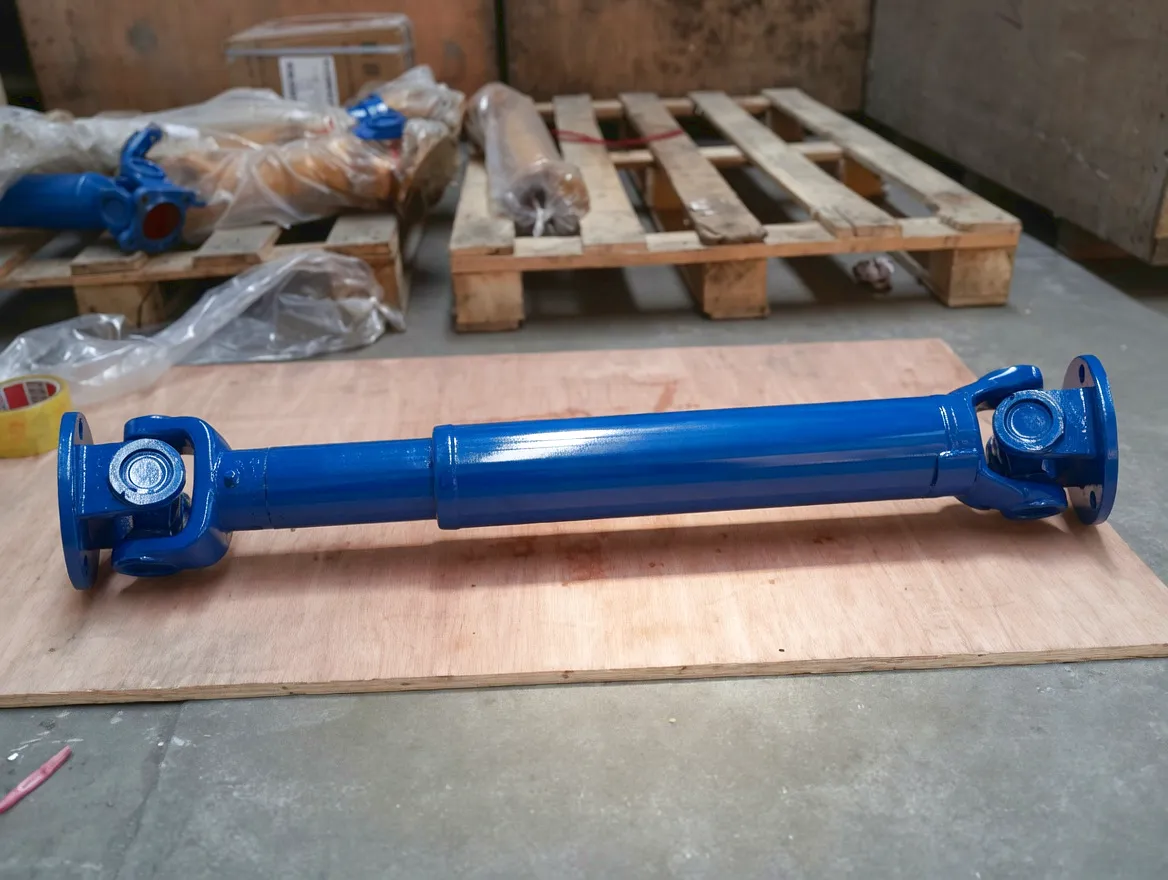
Solution: After contacting Ever Power, the application was reviewed and a matched pair of EP-AG S4 rated cardan shafts were specified. The shafts were custom-built to the exact collapsed and extended lengths measured from the machine, with friction-clutch overload protection set to a slip torque appropriate to the rake gearbox rating. Both shafts were dynamically balanced and supplied with inspection reports.
Outcome: The replacement shafts completed the full 2024 and 2025 seasons without incident — approximately 340 operating hours combined. Greasing intervals were extended from every 8 hours to every 20 hours due to the improved bearing seal design, reducing maintenance time. The total cost of the Ever Power shafts was recovered within the first season through downtime savings alone.
What UK Agricultural Customers Say
We’ve been running Ever Power cardan shafts on our four-rotor rake for two seasons now. The build quality is noticeably better than what we had before — tighter tolerances on the telescopic section, proper sealed bearings on the cross-kits. No vibration, no noise. Just works. For a contracting business, that’s all you need from a drive shaft.
As a machinery dealer, I need to be able to stock replacement shafts that customers can fit quickly themselves. Ever Power’s agricultural range uses standard spline profiles and the guards clip on properly — which sounds obvious but a lot of cheaper shafts get this wrong. The pricing works for us too, and their lead times are reliable. We won’t be switching.
We’re developing a new compact tedder-rake combo and needed a custom cardan shaft to work across three fold positions. Ever Power’s engineering team responded to our technical query within 24 hours, sent us a data sheet the same day, and had a prototype assembly with us within three weeks. That’s a level of responsiveness you don’t always get at this price point. The shaft passed our angle analysis and is going into production.
How to Specify the Right Cardan Coupling for Your Hay Rake: A Practical Selection Guide
Getting this specification wrong is more common than it should be, and it almost always results in either premature failure (from under-specifying) or wasted cost (from over-specifying). The following table provides a structured approach to gathering the information needed before making a component selection or placing an enquiry with Ever Power’s technical team.
| Parameter | What to Measure / Check | Why It Matters |
|---|---|---|
| PTO Speed | 540 or 1000 RPM from tractor dataplate | Determines shaft speed rating and balance requirement |
| Tractor PTO Power | kW at PTO from tractor specification sheet | Base for nominal torque calculation (T = P x 9550 / n) |
| Implement Input Torque | From rake manufacturer’s spec or gearbox rating plate | Cross-check against tractor PTO torque; apply service factor 1.5-2.5 for shock loads |
| Collapsed / Extended Length | Measure with implement in transport and working position | Ensures adequate telescopic overlap (min. 1/3 of tube length) at all positions |
| Max Operating Angle | Measure worst-case angle between PTO and implement input | Joint angle rating must exceed max operating angle with margin |
| Spline Profile | Count splines on existing shaft or tractor PTO stub | Must match: 6-spline 1-3/8″ or 21-spline 1-3/4″ are UK standards |
| Overload Protection Type | Consider field conditions and operator preference | Friction clutch (adjustable slip) or shear bolt (replace after overload) — both valid; choose based on terrain hazard level |
Not sure about any of the above? Ever Power’s application engineers will work through the specification with you — just email [email protected] with your machine details.
Maintenance Guidance: Keeping Your Hay Rake Cardan Coupling in Peak Condition Through a UK Season
Even the best-quality カルダンカップリング will underperform if maintenance is neglected. In agricultural use, where shafts are exposed to field dust, chaff, moisture, and UV radiation for extended periods, a simple maintenance routine dramatically extends service life. The following schedule is what Ever Power recommends for hay rake applications under typical UK operating conditions — roughly 100–200 hours of annual use during the summer cutting season.
- Grease all cross-kit nipples until fresh grease purges
- Grease telescopic tube splines via zerk fitting
- Check guard condition — replace if cracked or fouled
- Check all cross-kits for radial play — replace if >0.1 mm
- Inspect telescopic splines for wear — replace if sloppy
- Check overload clutch slip torque setting
- Inspect coating for rust or mechanical damage
- Cross-kit play exceeds 0.2 mm
- Vibration or noise increases during operation
- Guard is missing — legal requirement in UK
- Spline coupling is loose or exhibits rocking movement
- Shaft shows any visible crack or bend
Frequently Asked Questions
Get a Custom Cardan Coupling Quote from Ever Power
Whether you need a standard replacement shaft for a UK farm or a fully engineered custom assembly for an OEM development project, Ever Power’s team responds within one business day. Share your machine details and we’ll provide a technical recommendation alongside a competitive quote — no obligation, no generic catalogue response.
Ever Power | Agricultural Cardan Couplings for UK Farms, Contractors & OEMs | Supplying England, Scotland & Wales
edit by gzl