 Few mechanical components carry as much engineering responsibility — or appear in as many critical industrial settings — as the Cardan coupling. Walk through the drive train of a Sheffield rolling mill, follow the prop-shaft on a North Sea platform compressor, or inspect the spindle assembly on a Birmingham automotive transfer line, and sooner or later you will encounter this compact yet extraordinarily capable component quietly doing its job. Despite its ubiquity across the UK’s heavy industries, the internal structure of a Cardan coupling remains surprisingly poorly understood outside specialist engineering circles. Engineers and procurement professionals often select couplings based on headline torque figures alone, without appreciating how each individual component within the assembly contributes to — or limits — the coupling’s real-world performance, reliability, and service life. This guide changes that. Starting from first principles and working through every key component in detail, it provides a rigorous technical reference for anyone who specifies, installs, maintains, or sources industrial Cardan couplings in the UK market and beyond.
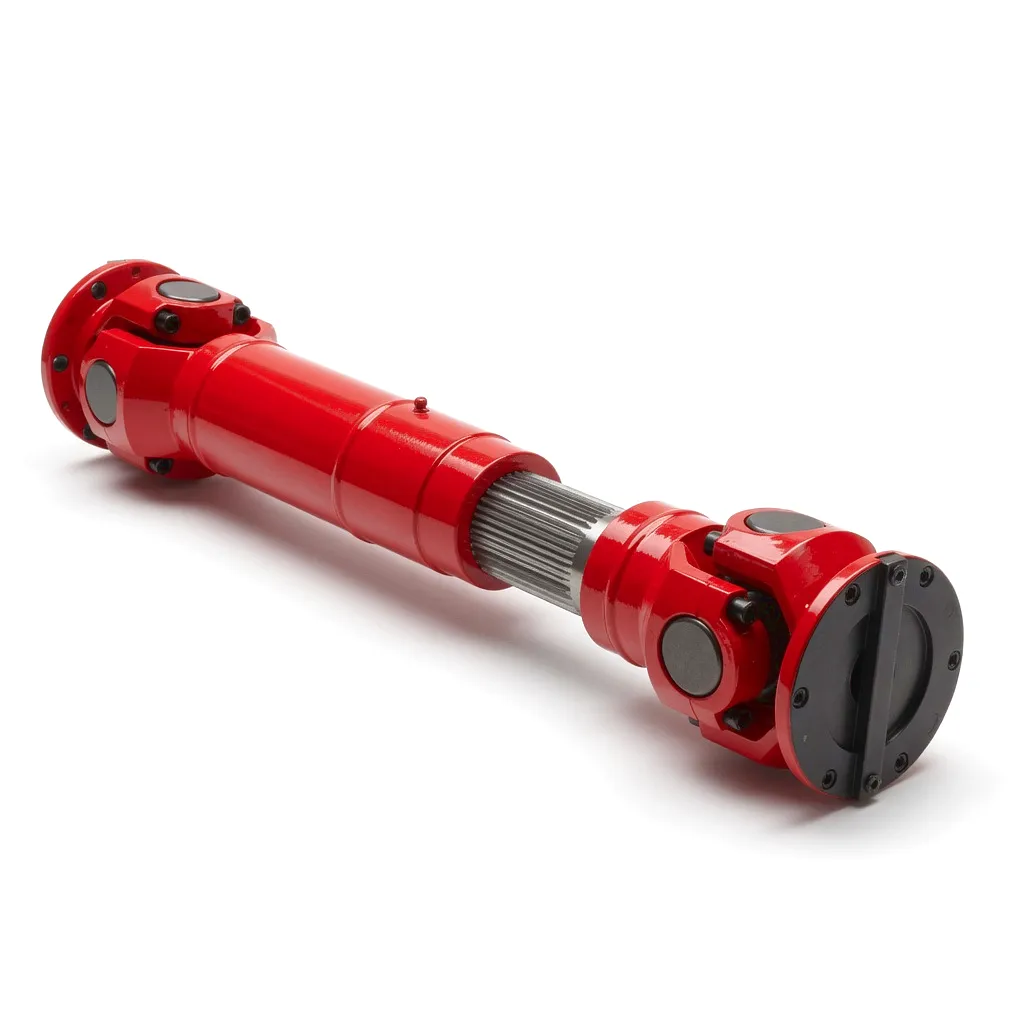
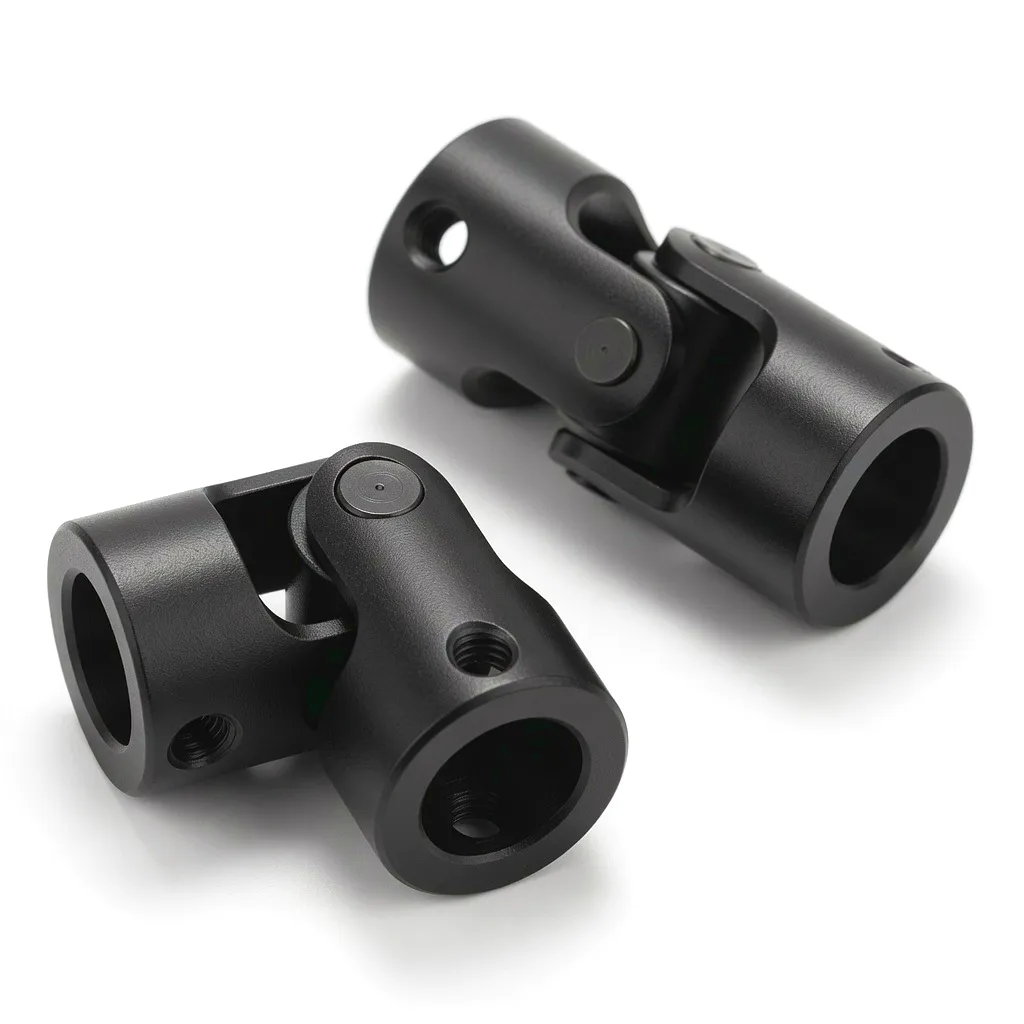
Heavy-duty industrial Cardan coupling assembly — Ever Power manufacturing series
Custom specifications • Full documentation • UK delivery available
How a Cardan Coupling Works: Core Operating Principle
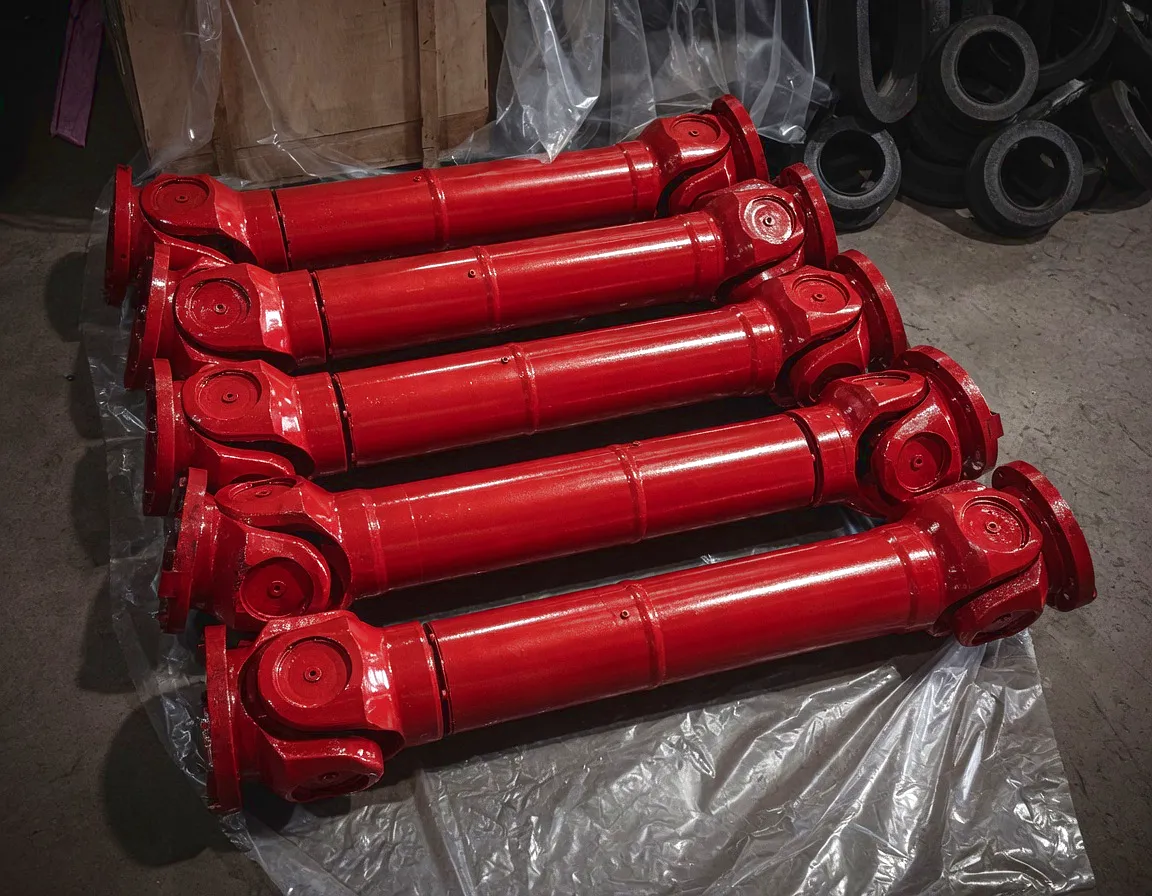
At its foundation, a Cardan coupling is a mechanical linkage engineered to transmit rotational torque between two shafts that share a broadly common axis but may be offset by an angular misalignment. Named after Italian polymath Gerolamo Cardano — though the device’s precise historical origins remain a subject of lively debate among historians of technology — the universal joint principle has been foundational to mechanical transmission since the 17th century and today underpins drive systems across every sector of heavy industry.
The mechanism works by exploiting a cruciform intermediate piece — commonly called the spider or trunnion cross — to link two yoke-shaped connector forks. When the driving shaft rotates, its yoke turns. Because the spider connects pivotally to both yokes through needle roller bearings, the rotation transfers across to the driven yoke and shaft even when the two shafts form a significant included angle. This elegant geometry is precisely what makes the Cardan coupling so valuable wherever perfect shaft alignment is mechanically impossible or prohibitively expensive to maintain — a reality that describes the majority of heavy industrial drive applications.
Velocity Fluctuation: The Single-Joint Limitation
A critical behaviour engineers must understand and account for is that a single Cardan coupling introduces a periodic velocity fluctuation in the output shaft. When operating at an angle, the driven shaft does not rotate at a perfectly uniform speed — it accelerates and decelerates twice per revolution. The angular velocity relationship is:
Here ω1 is input speed, ω2 is output speed, β is the joint operating angle, and θ is the instantaneous rotation angle. This non-uniformity becomes significant above roughly 3–5 degrees and is why double Cardan couplings — two single joints phased to cancel each other’s fluctuations — are specified for rolling mill spindles, precision transfer lines, and similar applications where torsional smoothness is critical.
The Anatomy: Every Key Component, Dissected
Understanding each part enables engineers to specify, maintain, and troubleshoot cardan couplings with confidence.
01
Yokes (Drive Forks)
The yoke is the forked, U-shaped metallic arm that clamps onto — or is forged integrally with — each shaft. Every Cardan coupling assembly includes at least two yokes: one on the input shaft (driving yoke) and one on the output shaft (driven yoke). The geometry of the yoke bores and their angular relationship to the shaft axis is critical. Both yokes must lie in the same plane for the velocity fluctuation of a single joint to be correctly phased. Yokes are typically forged from medium-carbon or alloy steel for maximum strength, and in high-torque applications they are heat-treated to 30–40 HRC. The flange yoke variant — which bolts onto a mating flange rather than clamping a bare shaft — is standard in rolling mill drives across Britain’s steel-producing regions in South Yorkshire and the wider Humber industrial corridor. The quality of the yoke ear bore finish and its bore-to-trunnion running clearance is among the most consequential dimensional specifications in the entire coupling assembly.
02
Spider (Trunnion Cross)
The spider — also called the trunnion cross, journal cross, or simply “the cross” — is the heart of the Cardan coupling. It takes the form of a cruciform body with four cylindrical trunnion pins projecting at precisely 90-degree intervals. Two opposing trunnions fit into the bearing cups of one yoke; the remaining two engage the bearing cups of the second yoke. This arrangement creates two mutually perpendicular pivot axes, allowing the assembly to flex in any direction within its design angle. The spider is the component most susceptible to fatigue loading and wear during service, and it is therefore machined from case-hardened alloy steel — typically 20CrMnTi or 42CrMo4 — with a carburized surface hardness exceeding 58 HRC on the trunnion journals. In the most demanding applications — such as the heavy section rolling mills of Sheffield and the plate mills of South Wales — spider assemblies can weigh over 50 kg and are engineered to handle peak torques in excess of 800 kNm without yielding.
03
Needle Roller Bearings & Bearing Cups
Enclosing each of the four trunnion pins is a bearing cup — a hardened steel cap housing a complement of needle roller elements. Needle rollers are chosen over ball bearings specifically because their elongated geometry dramatically increases the contact area against the trunnion surface, enabling a substantially higher radial load capacity within the same overall envelope. In industrial Cardan couplings, the bearing cups are press-fitted into the bores of each yoke ear and secured with snap rings or circlips. The bearing’s C/P ratio — dynamic load capacity to applied load — directly determines the coupling’s calculated service life, so designers carefully match bearing dimensions to radial and axial loads at each joint. Some bearing cups incorporate a lip seal on the open face to retain lubricant and exclude contaminants, which is especially important in the abrasive, water-rich environments typical of quarrying operations across Derbyshire, the Welsh uplands, and the limestone quarries of the Yorkshire Dales.
04
Snap Rings & Circlips
The bearing cups must be axially restrained within the yoke bores to prevent them from migrating outward under operating loads — a failure mode that destroys couplings rapidly and without warning. This restraint is provided by snap rings (circlips or retaining rings) seated in precision-machined grooves at the open end of each bearing bore. Though they appear trivial, these small spring-steel rings carry considerable responsibility: they resist the axial forces generated during torque transmission and joint articulation, particularly under shock loading. In many Cardan coupling designs, snap rings also serve as a precision shim mechanism. By selecting from a range of available ring thicknesses, the assembler sets the end-play of the spider within the yokes to a close tolerance — typically 0.00–0.05 mm — which minimises operational vibration and wear. High-quality snap rings are through-hardened and held to tight dimensional tolerances to prevent deformation over service lives that routinely involve tens of millions of load cycles.
05
Seals & Grease Nipples
Contamination is the single most common root cause of premature bearing failure in industrial Cardan couplings, and effective sealing is therefore non-negotiable. Heavy-duty couplings employ rubber lip seals or labyrinth seal arrangements at each bearing cup, creating a robust barrier against water ingress, mill scale, and abrasive particles. Paired with these seals are grease nipples — Zerk or taper-thread type — located on the spider body or yoke bores, enabling periodic relubrication of the needle bearings during planned maintenance windows. This routine task, taking minutes per coupling, dramatically extends service life. In sealed-for-life variants, a controlled initial grease charge is sufficient for the coupling’s intended maintenance interval — a design feature particularly valued by operators of automated transfer lines in Birmingham and Coventry’s automotive manufacturing sector, where scheduled downtime is managed to the minute and ad-hoc greasing is logistically impractical.
06
Shaft Tube & Slip Spline
In a double Cardan coupling or cardan shaft assembly, the two universal joints at each end are connected by a hollow steel tube — the propeller shaft or drive shaft tube. This tube must be precision-balanced to avoid vibration at operating speed, a concern that intensifies at higher RPM and with longer shaft lengths. A slip spline is typically incorporated at one end: an externally splined stub shaft mates with an internally splined sleeve, allowing the overall assembly length to vary as machinery flexes, thermally expands, or installation tolerances require — all without generating axial thrust on the connected bearings. Dynamic balancing is performed to ISO 1940-1 Grade G6.3 as standard for general industrial use, with Grade G2.5 available for high-speed precision applications such as spindle drives in precision machining centres.
07
Centering Ball & Socket
In a double Cardan coupling designed to deliver true constant-velocity output, a centering ball and socket mechanism sits at the midpoint between the two single joints. The centering ball — mounted on the centre yoke — engages a socket on the connecting flange, holding the two joints at precisely equal and opposite angles relative to the shaft centreline. This geometric constraint is the key to cancelling velocity fluctuation: because the angular velocity variation introduced by the first joint is equal and opposite to that of the second, the output shaft rotates at a smooth, constant speed regardless of the operating angle. This design is essential in articulated vehicle drivelines, precision mill spindle drives, and any transmission where torsional irregularity would cause excessive vibration, noise, or fatigue damage to connected equipment.
08
Flanges & Connection Interfaces
The flange forms the mechanical interface between the Cardan coupling and the adjacent machinery — whether that is a gearbox output shaft, a motor coupling hub, or a reducer input. Flanges can be integral to the yoke (forged as one piece) or bolted on, and they come in a range of bolt-circle diameters and face configurations matching common standards including DIN, SAE, and ISO. In the heavy industries of northern England, it is common to encounter couplings that must mate with both legacy British-standard components and newer imported equipment — a challenge Ever Power’s engineering team addresses routinely through bespoke flange design and CNC machining. Correct bolt preload and a mating surface finish of Ra 1.6 µm or better are critical for ensuring a fretting-resistant joint under the cyclic torque reversal that characterises reversing rolling-mill drives.
Why Sub-Component Quality Determines Coupling Lifespan
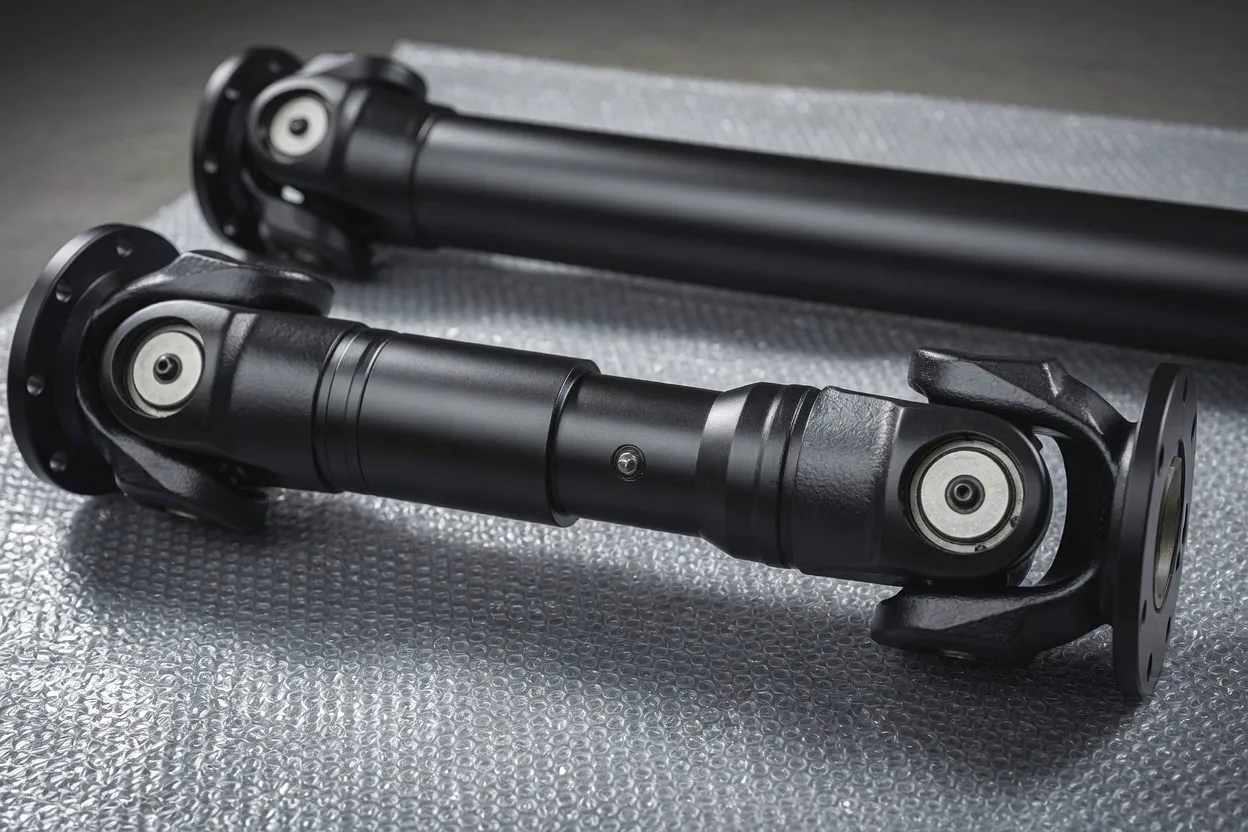 Every element within a Cardan coupling — from the snap ring groove tolerance measured in hundredths of a millimetre to the surface hardness of the spider trunnions — directly shapes the assembly’s torque capacity, operational lifespan, and maintenance interval. Purchasing decisions made purely on price or nominal torque rating, without understanding how each component is manufactured and heat-treated, consistently result in early failures that cost production facilities far more in downtime, emergency labour, and product losses than was ever saved at the point of purchase.
At Ever Power, every critical component undergoes dimensional inspection, hardness verification, and surface roughness measurement before assembly. This approach is not unique to bespoke or high-value orders — it is the baseline for every Cardan coupling that leaves our facility. The difference between a coupling that runs quietly for five years and one that shows bearing pitting within months of commissioning almost always traces back to this sub-component-level quality discipline.
Core Materials: What Industrial Cardan Couplings Are Made From
Material selection for a Cardan coupling is not a single decision but a layered series of choices made independently for each component, each governed by its specific loading regime, wear requirements, and operating environment. The spider and yoke assembly carries the highest stresses and therefore uses the most highly engineered alloys; secondary components such as dust caps and seals use polymer or elastomeric materials selected for chemical and thermal resistance.
For the spider body, 42CrMo4 alloy steel (broadly equivalent to AISI 4140) is the workhorse choice across the majority of industrial Cardan couplings. This chromium-molybdenum alloy responds superbly to through-hardening and delivers an excellent balance of tensile strength — typically 850–1,100 MPa after heat treatment — combined with good toughness and fatigue resistance that suits the cyclic loading inherent to universal joint operation. For heavier-duty applications, particularly the mill spindle drives found in Sheffield’s surviving special steels sector, 18CrNiMo7-6 case-hardening grade is specified for the spider trunnions. It provides a surface hardness of 58–62 HRC on the trunnion journals combined with a tough, ductile core that absorbs the shock loads generated when billets enter a rolling pass without initiating brittle fracture.
Yoke forgings follow a parallel progression: medium-duty Cardan couplings use 42CrMo4 or S355 structural steel; high-torque designs favour 34CrNiMo6, which provides exceptional yield strength and impact toughness at the large section sizes involved. For corrosion-resistant variants used in offshore or food processing environments, 17-4PH precipitation-hardening stainless steel or duplex stainless can be specified, though these premium materials command a significant price premium and are reserved for applications where carbon steel’s corrosion susceptibility would present a genuine service risk.
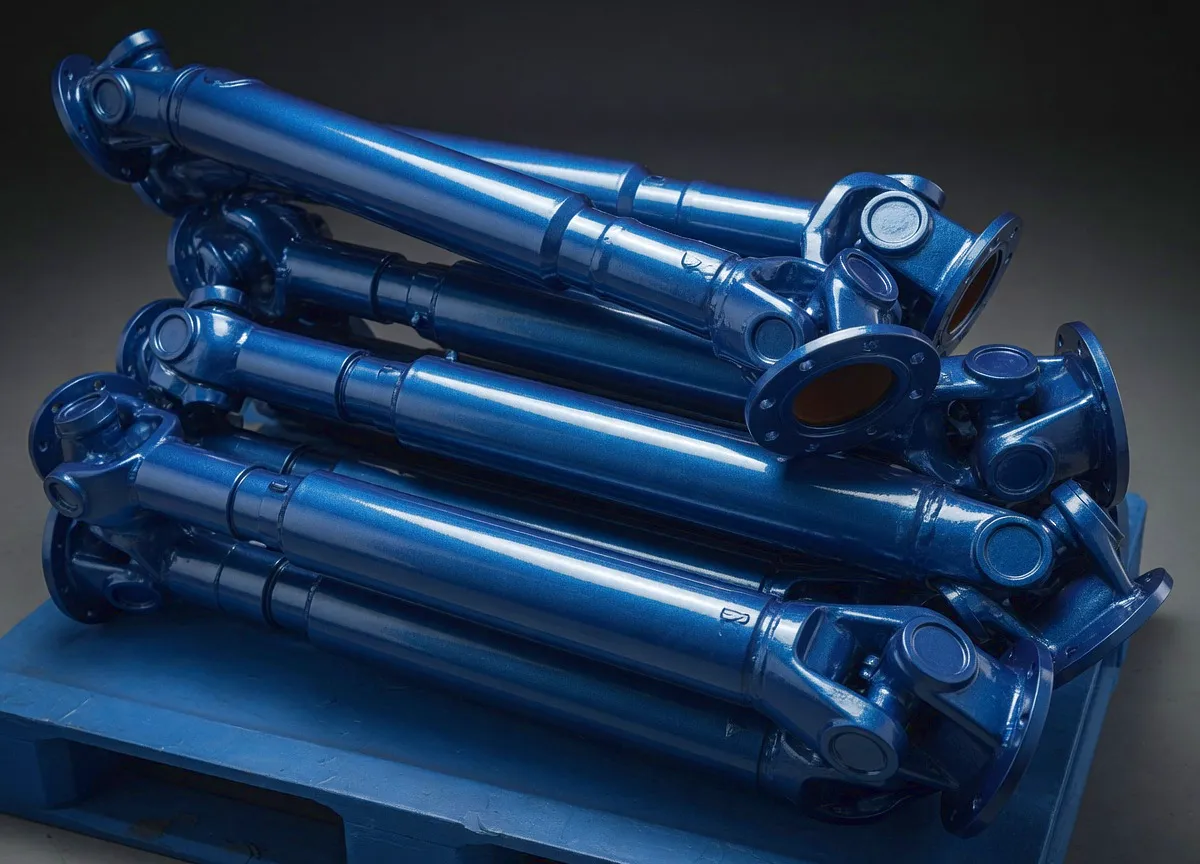
Component Material Quick Reference
| Component | Material | Hardness |
|---|---|---|
| Spider Trunnions | 18CrNiMo7-6 | 58–62 HRC |
| Yoke Body | 42CrMo4 / 34CrNiMo6 | 28–36 HRC |
| Bearing Cups | 100Cr6 / SAE 52100 | 60–64 HRC |
| Shaft Tube | E355 / SAE 1020 | Normalised |
| Seals | NBR / FKM Rubber | Shore A 70–80 |
| Snap Rings | Spring Steel DIN 472 | 44–52 HRC |
Technical Performance & Specification Parameters
The table below reflects the representative performance envelope of the Ever Power industrial Cardan coupling range, from light-duty drive-line configurations to super-heavy mill-spindle assemblies. All figures are indicative and subject to confirmation during the application engineering review. Customers requiring parameters outside these ranges — including higher torques, atypical angles, or specialist material grades — are encouraged to contact the engineering team for a tailored assessment at [email protected].
| Parameter | Light Duty | Medium Duty | Heavy Duty | Super Heavy Duty |
|---|---|---|---|---|
| Nominal Torque (kNm) | 0.5 – 5 | 5 – 50 | 50 – 400 | 400 – 2,500+ |
| Max Operating Angle | 45° | 35° | 25° | 10° – 20° |
| Max Speed (RPM) | 3,000 – 5,000 | 1,500 – 3,000 | 500 – 1,500 | 10 – 500 |
| Bore Diameter Range | 10 – 60 mm | 40 – 150 mm | 100 – 280 mm | 200 – 600 mm |
| Spider Surface Hardness | 58 – 62 HRC (case-hardened trunnions) • 28 – 36 HRC (yoke core) | |||
| Operating Temperature | -40°C to +150°C (standard grease) • up to +250°C (specialist lubricant) | |||
| Balancing Standard | ISO 1940-1 G6.3 standard • G2.5 precision option | |||
| Customisation Options | Bore, keyway, spline, flange PCD, shaft length, seal type, surface treatment, material grade | |||
Core Technical Advantages of Industrial Cardan Couplings
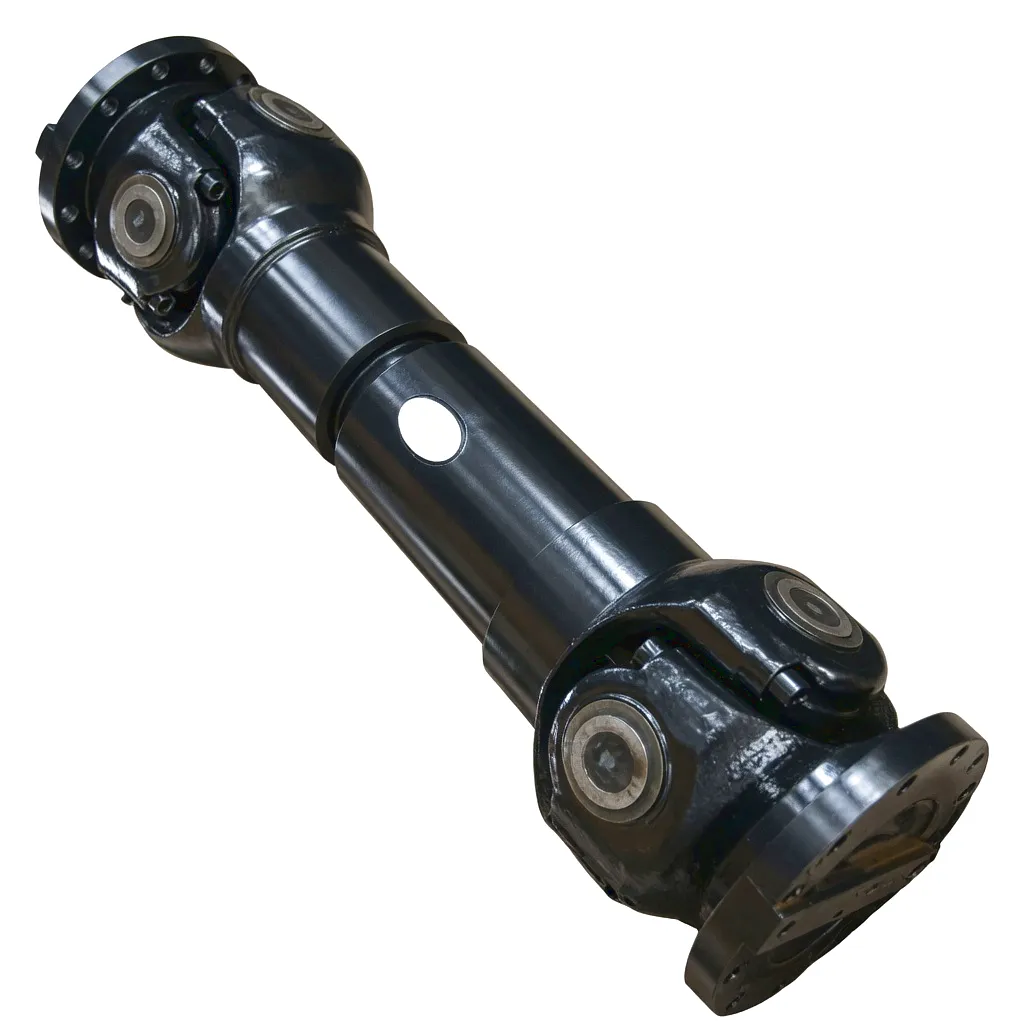
High Angular Flexibility
A Cardan coupling accommodates operating angles far beyond what gear couplings, disc packs, or jaw couplings can manage — up to 45° in light-duty configurations. This eliminates many costly alignment correction procedures and enables machinery layouts that would otherwise be mechanically impossible.
Exceptional Torque Capacity
With correct alloy selection and heat treatment, a Cardan coupling transmits from a fraction of a kNm up to thousands of kNm. Heavy mill spindle versions used in UK plate and section rolling facilities routinely handle peak torques exceeding 1,000 kNm — a level of power density no other coupling type matches.
Field-Maintainable Design
Unlike sealed elastomeric or diaphragm couplings, industrial Cardan couplings are designed for in-field servicing. Spider and bearing cup assemblies can be replaced in many designs without shaft removal, and greasing intervals are predictable. This is a major operational advantage for UK facilities running continuous three-shift patterns.
Torque Reversal Capability
The symmetrical cross-and-yoke geometry of a Cardan coupling handles bidirectional torque equally well, making it ideal for reversing drives found in rolling mill reversing stands, crane travel mechanisms, and excavator swing drives — applications that destroy many other coupling types through backlash-induced shock loading on reversal.
Axial Length Compensation
The optional slip spline incorporated into shaft-type Cardan coupling assemblies absorbs thermal expansion and structural flex without generating axial forces on connected bearings or gearboxes — a particularly important feature for furnace-area drives and large structural steel construction equipment subject to wide temperature cycles.
Broad Industry Versatility
From automotive test benches in Coventry to offshore deck equipment in the North Sea, the Cardan coupling serves an extraordinarily wide range of sectors and environments. Its adaptability to custom flanges, bores, and surface treatments makes it arguably the most versatile rotary coupling technology available to design engineers globally.
Industrial Applications Across the UK and Beyond
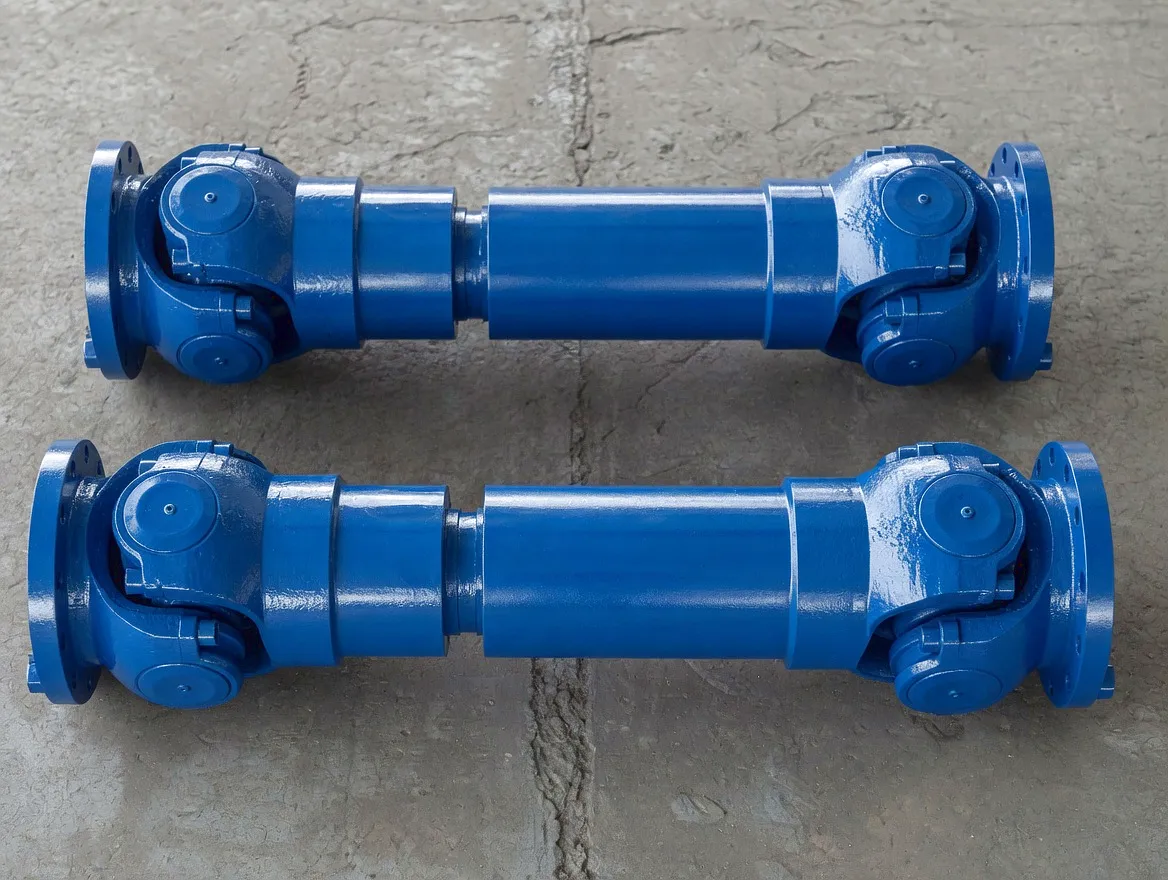
The true measure of any industrial component is the breadth and severity of the applications that depend on it. Across Britain’s manufacturing and energy landscape — from the rolling mills that made Sheffield’s reputation in special steels to the offshore platforms anchoring the UK’s hydrocarbon economy — the Cardan coupling appears in some of the most demanding mechanical environments on the planet. The sectors below represent current application areas served by Ever Power’s industrial range.
🏭 Steel & Metals Processing
Rolling mill spindle drives are arguably the most demanding application class for any industrial Cardan coupling. In Sheffield’s special steels sector and the broader South Yorkshire metals processing corridor, these couplings transmit massive torques while continuously accommodating the angular offset between driven mill rolls and fixed gearbox outputs. They handle shock loads as fresh billet enters the rolling pass, bidirectional torque during reversing passes, and relentless contamination from cooling water and mill scale. Ever Power’s mill-spindle grade couplings are purpose-engineered for this environment with sealed bearing assemblies and 18CrNiMo7-6 spiders as standard.
⚓ Marine & North Sea Offshore
North Sea platforms rely on Cardan couplings in pump drives, compressor trains, and diesel generator sets. The offshore environment mandates stainless-steel or zinc-rich coated components, and operating angles must accommodate hull flex and vibration-mounted equipment. Ever Power has supplied cardan shaft assemblies to North Sea operators with units designed to DNV class requirements and delivered with full 3.1 material traceability documentation — a mandatory requirement under UKCS certification frameworks.
🌬️ Wind Energy
As the UK expands onshore and offshore wind capacity, Cardan couplings feature in drivetrain configurations requiring angular compensation between the rotor main shaft and gearbox input without transmitting bending moments to the gearbox housing. Nacelle environments favour compact, sealed-for-life designs that require no lubrication access between major service intervals — a specification the Ever Power sealed range addresses directly.
⛏ Mining & Aggregate
Jaw crushers, cone crushers, and screening equipment across Derbyshire, the Welsh uplands, and the Peak District impose brutal shock and vibration loads on drivetrain components. A Cardan coupling withstands these loads while absorbing angular misalignment, and its modular cross-and-yoke construction allows replacement on-site in the field during planned shutdowns — critical in quarrying where unplanned stoppages have a direct and immediate impact on daily output targets.
🚂 Rail Engineering
Rail axle-drive systems and ballast tamping machines use Cardan couplings extensively, accommodating suspension travel between the driven axle and the fixed gearbox. Birmingham’s rail engineering and maintenance sector, central to the national network, requires couplings to BS EN standards with full inspection documentation. Ever Power supplies rail-specification couplings with material certificates, hardness test records, and dimensional inspection reports that meet railway procurement audits.
📄 Paper & Pulp Machinery
Paper machine section drives across Scotland and northern England use Cardan couplings where press rolls and dryer cylinders shift position during threading and grade changes. Low-backlash precision variants from Ever Power are valued in this application for the torsional smoothness they contribute to multi-section drive synchronisation, where speed deviations of even a fraction of a percent can cause sheet breaks and costly paper waste.
Manufacturing Partner of Choice
Ever Power: Precision-Built Cardan Couplings, Delivered Worldwide
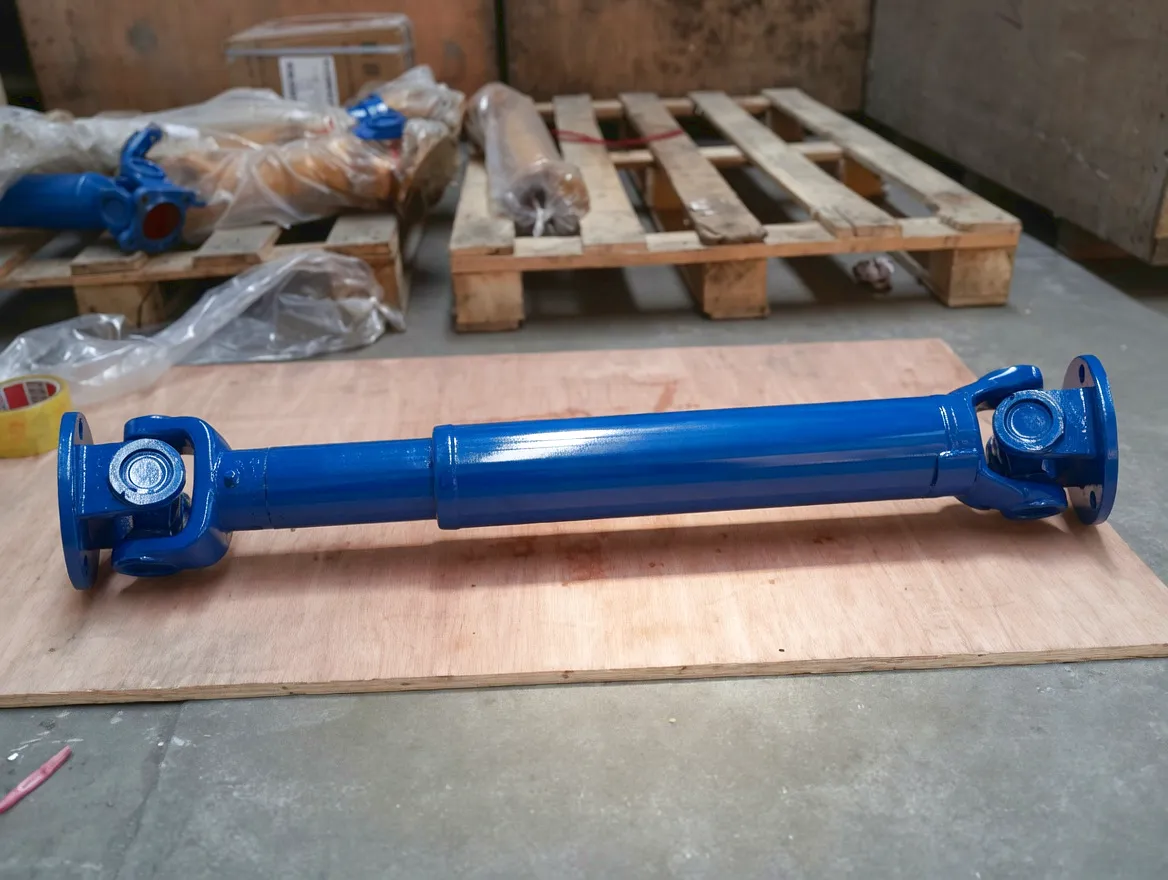 Ever Power has been engineering precision Cardan couplings for heavy industry for over two decades. Our manufacturing facility houses CNC turning and milling centres capable of ±0.01 mm tolerances, dedicated gear hobbing and spline-cutting machines, and an in-house heat treatment shop performing carburising, quench-and-temper, and induction hardening to customer-specific case depth and hardness profiles. Every coupling assembly exits the facility with a full dimensional inspection report and raw material traceability certification to EN 10204 3.1 standard.
What genuinely differentiates Ever Power is our customisation capability. Custom designs are not exceptions to our process — they are its core. Whether you need a non-standard bore diameter to match a legacy shaft, a bespoke flange pattern to mate with a unique gearbox interface, a specific surface treatment for a corrosive offshore environment, or a modified shaft length for an awkward installation geometry, our engineering team will design, manufacture, and validate the solution. We hold extensive raw material stocks of 42CrMo4, 18CrNiMo7-6, and 34CrNiMo6, which means custom lead times are measured in weeks — a critical advantage for UK maintenance teams facing unplanned equipment failures with production on hold.
CNC Precision
5-axis centres, ±0.01 mm
Heat Treatment
Carburising, Q&T, induction
Dynamic Balancing
ISO 1940-1 G6.3 / G2.5
Full Documentation
EN 10204 3.1, FAT on request
UK Logistics
DDP terms, optimised routing
Custom Config
Bore, spline, flange, coating
Customer Success Story: Sheffield Heavy Sections Rolling Mill
Sheffield, UK
Tripling Spindle Coupling Lifespan at a South Yorkshire Heavy Sections Plant
A heavy sections rolling mill near Sheffield — producing structural I-beams and H-sections for the UK construction and rail infrastructure markets — had been experiencing persistent Cardan coupling spider failures on its roughing mill stand drive. The original couplings, sourced from a European distributor, were failing at their spider trunnion journals within 8–14 months of service. Root cause analysis identified two compounding factors: cyclic bending loads from pass-line variation during different section sizes, and inadequate lubricant retention in the existing sealed bearing arrangement, which was allowing early pitting fatigue to develop on the trunnion journals.
The mill’s maintenance engineering team contacted Ever Power following a recommendation from a contracting firm that had used our products on a crusher drive project in Derbyshire. After a detailed technical review of the failed components, pass-line geometry data, and maintenance records, the Ever Power engineering team proposed a redesigned spider assembly using 18CrNiMo7-6 case-hardened alloy with extended trunnion journals (increasing the effective bearing span by 18%), combined with a dual-lip seal arrangement and a modified grease nipple routing that delivers lubricant more effectively to the full length of the needle rollers.
The replacement Cardan couplings were delivered within six weeks of order, allowing the mill to schedule installation during a planned roll change rather than an emergency breakdown. After commissioning, the new assemblies ran for 28 months without any intervention — a nearly threefold improvement over the previous specification. Routine thermal surveys showed measurably lower bearing temperatures throughout this period, confirming the improved lubricant delivery was functioning as designed. The mill subsequently converted three additional stand drives to the Ever Power specification based on this result.
What Our Customers Say
“We were replacing a spider assembly roughly every ten months on the roughing stand. Ever Power’s engineers actually worked through the application data rather than just quoting a standard part off a shelf. The new coupling has been running for over two years and bearing temperatures during thermal surveys are noticeably lower. The improvement in service life has had a real, measurable impact on our maintenance budget.”
— Ian Marsden, Maintenance Engineering Manager, South Yorkshire Sections Mill
“The custom flange configuration was the obstacle every other supplier we approached couldn’t get past — they all wanted us to modify our gearbox output to suit a standard catalogue part. Ever Power simply designed the flange to match our existing interface. Delivery came in ahead of the initial estimate and the documentation package for our third-party inspector was complete without any chasing whatsoever.”
— Sarah Thornton, Procurement Lead, North Sea Platform Operator, Aberdeen
“We run jaw crushers and cone crushers across five quarry sites in Derbyshire and Staffordshire. The Ever Power Cardan couplings have outlasted two previous makes by a significant margin on all the primary crushers. When we eventually changed a spider set after nearly three years on the hardest-working machine, the yoke bores showed no measurable wear. We are standardising the whole fleet.”
— Mark Griffiths, Plant Engineering Director, Midlands Aggregate Group, Staffordshire
Frequently Asked Questions
Straight answers to the questions engineers and procurement teams across UK industry ask us most.
What exactly is a Cardan coupling and how does it differ from a standard universal joint used in an everyday car?
A Cardan coupling is the heavy industrial evolution of the universal joint principle, using the same fundamental cross-and-yoke mechanism but engineered to a completely different standard of torque capacity, service life, and repairability. Automotive U-joints are mass-produced to a narrow range of dimensional standards and are treated as consumable, sealed-for-life items. Industrial Cardan couplings, by contrast, range from small shaft assemblies up to enormous mill spindles, are frequently custom-designed for specific applications, incorporate serviceable greasing provisions, and are built to be maintained and repaired rather than simply replaced as a unit. The material grades, case depths, and dimensional tolerances applied to industrial couplings are also substantially more demanding than their automotive counterparts.
How much does a heavy-duty industrial Cardan coupling typically cost, and what factors most affect the price for a UK buyer?
Pricing spans an enormous range — from a few hundred pounds for a small light-duty shaft assembly to tens of thousands for a large mill-spindle configuration. The primary cost drivers are shaft diameter and torque capacity, material grade and heat treatment specification, whether a standard or fully custom configuration is required, surface treatment and documentation requirements, and the supplier’s quality management overhead. For UK buyers, import duty classification, freight routing, and the chosen delivery incoterm also affect the landed price meaningfully. The most reliable route to an accurate quote is to share your application data — torque, speed, angle, environment, and interface dimensions — directly with the engineering team. Contact Ever Power at [email protected] for a full technical and commercial proposal.
Which type of Cardan coupling is best suited for a rolling mill spindle drive in Sheffield or the South Yorkshire steel sector?
For rolling mill applications in Sheffield and the surrounding South Yorkshire steelmaking corridor, a mill-spindle grade Cardan coupling with 18CrNiMo7-6 case-hardened spider trunnions (58–62 HRC surface hardness), sealed needle roller bearings, and a dual-lip contamination seal arrangement is the appropriate specification. Where the drive involves a reversing stand, both yokes must be matched to the spider with minimal backlash. Coupling selection must be based on peak torque including the shock factor for the rolling process — not simply the motor nameplate rating — combined with the pass-line angle, operating speed range, and maintenance access constraints. Ever Power’s engineering team can assist with the selection and sizing exercise as part of the quotation process.
Where can a UK manufacturing plant find a Cardan coupling supplier who handles custom specifications and offers reasonable delivery lead times?
UK-based distributors typically stock light automotive-style U-joints but rarely carry the heavy industrial variants that serious applications demand, and almost none have manufacturing capability for custom designs. Ever Power manufactures precision industrial Cardan couplings to bespoke specifications with typical lead times of three to six weeks for non-standard designs — achievable because of our on-hand raw material stockholding and integrated machining, heat treatment, and assembly capability. Technical enquiries and orders can be placed via [email protected], and our team is fully versed in the documentation requirements — material certificates, hardness records, dimensional inspection reports, balancing test data — that UK procurement teams and quality auditors typically require before approving a new supplier.
How often should the needle roller bearings in an industrial Cardan coupling be regreased, and what grease specification should I use for heavy plant in the UK?
Regreasing intervals depend on operating speed, joint angle, ambient temperature, and contamination exposure. As a broad starting point, couplings operating at moderate duty (below 500 RPM, under 15° angle) are typically regreased every 500–1,000 operating hours. High-speed or high-angle applications need more frequent attention. For the wet, abrasive environments common to UK mill and quarry settings, a lithium-complex or polyurea-based grease with an EP (extreme pressure) additive package, NLGI Grade 1 or 2, and good water washout resistance is generally appropriate. Always defer to the coupling manufacturer’s specific recommendation, as general guidance cannot account for all application variables. The manufacturer’s greasing specification will also define the correct quantity of grease per nipple to avoid over-packing, which can itself damage seals.
Can a Cardan coupling be used on a North Sea offshore installation, and what certification would a UKCS operator typically need from the supplier?
Cardan couplings are routinely used on North Sea offshore platforms in pump, compressor, and generator drive applications. Operators working under UKCS regulations typically require material traceability certificates to EN 10204 3.1 standard, dimensional inspection records, dynamic balancing test reports, and for safety-critical services, third-party verification from an accepted certification body such as DNV, Bureau Veritas, or Lloyd’s Register. Ever Power supplies offshore-specification couplings with complete documentation packages; external component surface treatments including zinc-rich primer, hot-dip galvanising, or epoxy coating can be applied to order. Our team is experienced in coordinating with third-party inspectors and can facilitate hold-point inspections during manufacturing if required by the operator’s technical authority.
What is the practical difference between a single and a double Cardan coupling, and when should engineers at UK manufacturing plants choose one over the other?
A single Cardan coupling — one spider connecting two yokes — introduces a periodic velocity fluctuation in the output shaft that grows with operating angle. At small angles (typically under 3 degrees) the effect is negligible; at angles above 5–7 degrees it becomes significant enough to cause vibration, noise, and accelerated fatigue in connected equipment. A double Cardan coupling uses two single joints connected in the same assembly with their velocity fluctuations phased to cancel, delivering near-constant output velocity. Choose a double arrangement where the operating angle exceeds about 5 degrees and velocity uniformity matters — for example in precision forming lines, vehicle drivelines, or multi-roll calibration stands. For low-speed, very high-torque mill spindle drives where some velocity variation is acceptable, a single joint design is often preferred for its greater torque capacity per unit size and simpler maintenance procedure.
Ready to Specify Your Next Industrial Cardan Coupling?
Share your application data with the Ever Power engineering team and receive a detailed technical proposal — including coupling selection recommendation, full material and heat treatment specification, and indicative pricing — within 48 hours of your enquiry.
✉ Get a Quote: [email protected]
Fast response • Custom configurations • Full technical documentation • Worldwide delivery • UK logistics experience
© Ever Power | Precision Industrial Cardan Coupling Manufacturer | [email protected] | edit by gzl