
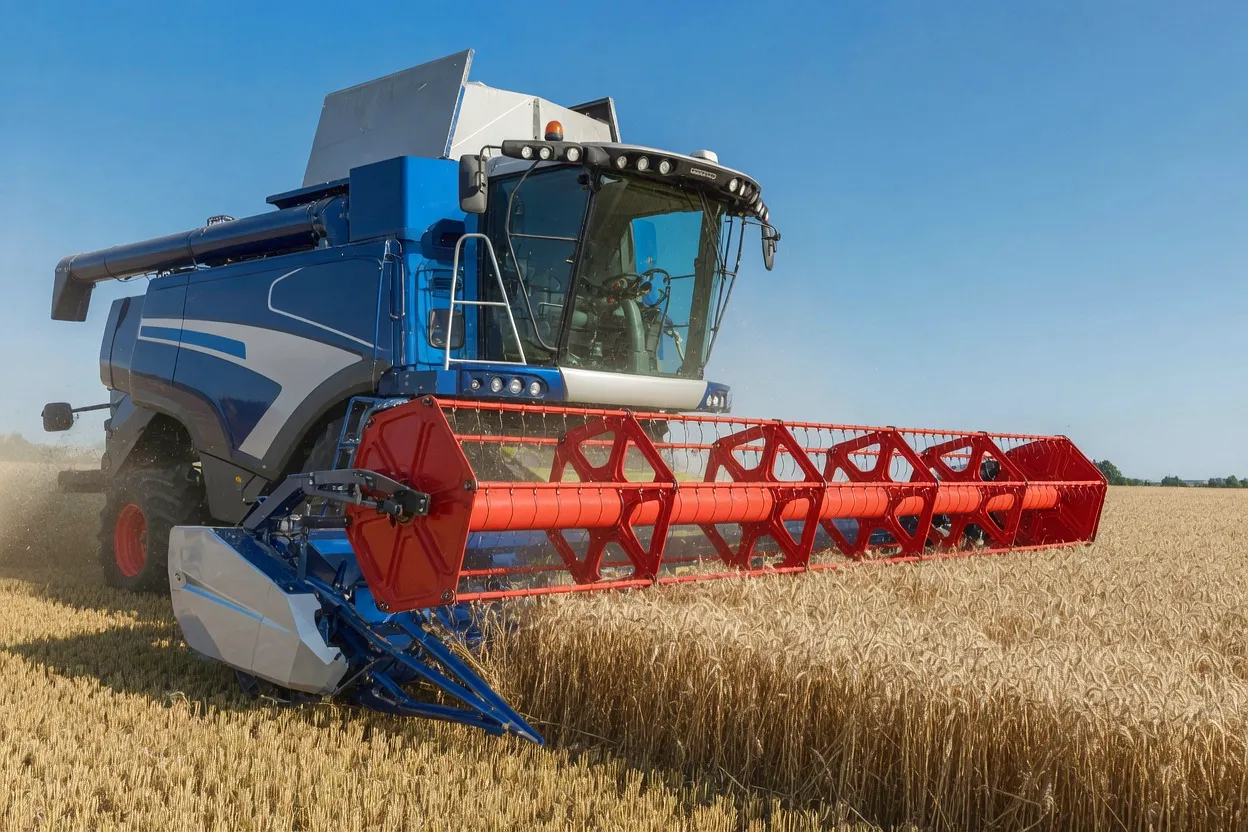
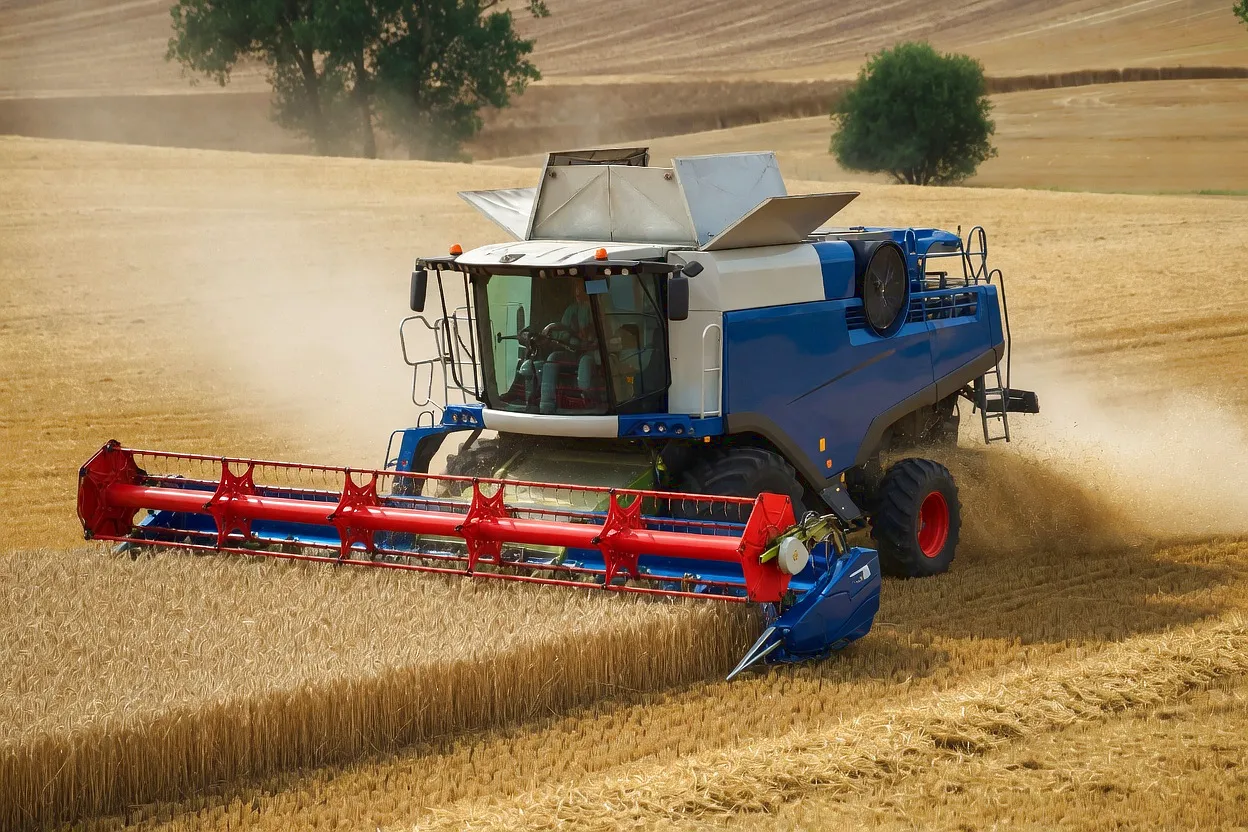
 Modern combine harvesters rank among the most mechanically complex agricultural machines ever built. A single high-capacity machine — think a John Deere S700 series or a Claas LEXION working British grain fields — can process upwards of 50 tonnes of grain per hour while simultaneously managing header tilt, grain elevator speed, chaff spreader rotation, and straw chopper engagement. All of these driven systems depend on a continuous, shock-absorbing, misalignment-tolerant power transmission backbone. That backbone, in most professional agricultural engineering circles, is the cardan coupling.
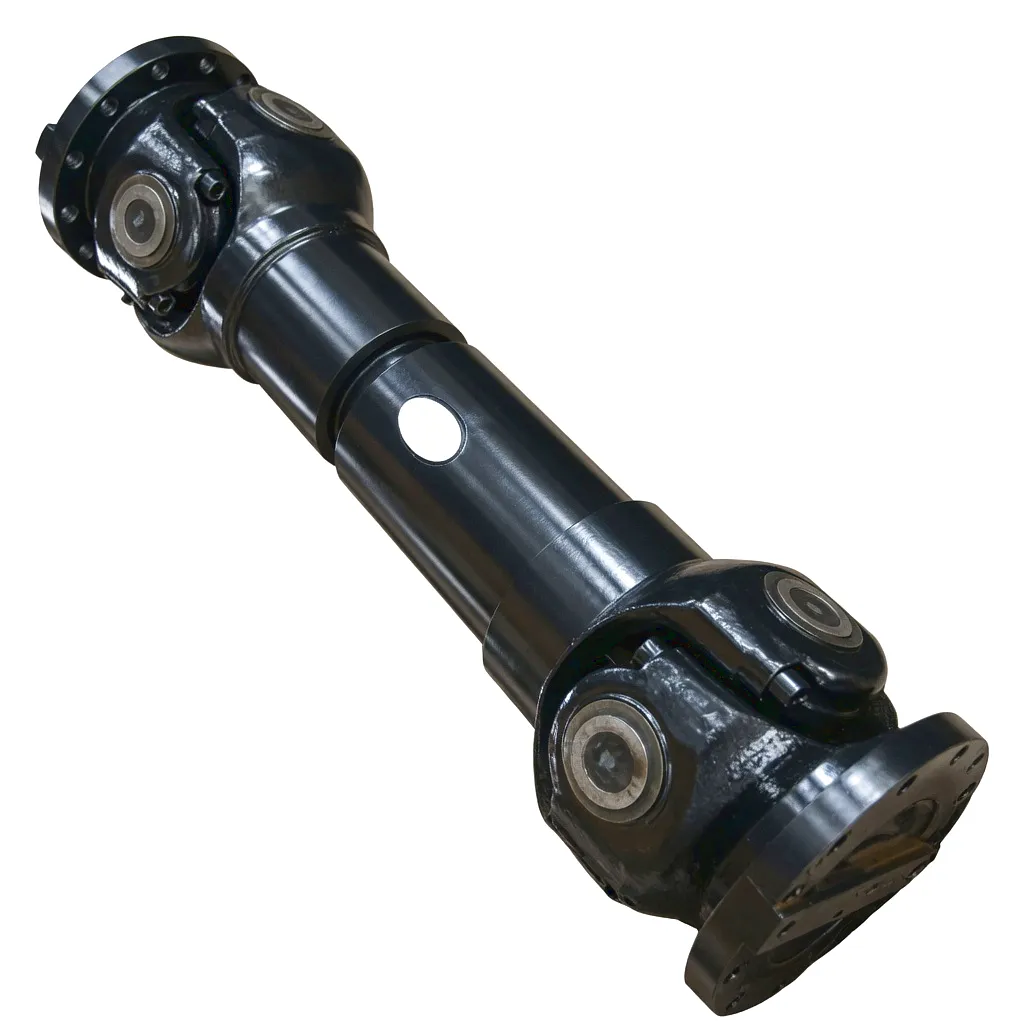
The term “cardan coupling” (also written as Cardan joint, universal joint, or Hardy Spicer coupling in older British engineering literature) refers to a cross-shaped, double-jointed or single-jointed mechanical device capable of transmitting torque between two shafts that are not perfectly aligned — angularly, axially, or both. In the context of combine harvesters, this characteristic is not merely a performance bonus; it is an operational necessity. Headers rise and fall over contoured terrain. Drive shafts connect engine outputs to PTO-driven attachments at angles that change with every undulation of field topography. Dust, chaff, grain husks, and moisture attack every exposed bearing surface throughout the harvest season. The cardan coupling must perform under all of these conditions without complaint.
This guide is written for agricultural machinery engineers, procurement managers at UK farming cooperatives, and independent combine harvester specialists who need precise, technically grounded information about cardan coupling selection, specification, and sourcing. We draw on over 18 years of application engineering experience across agricultural, industrial, and heavy-duty drive system projects to give you real-world guidance rather than catalogue copy.
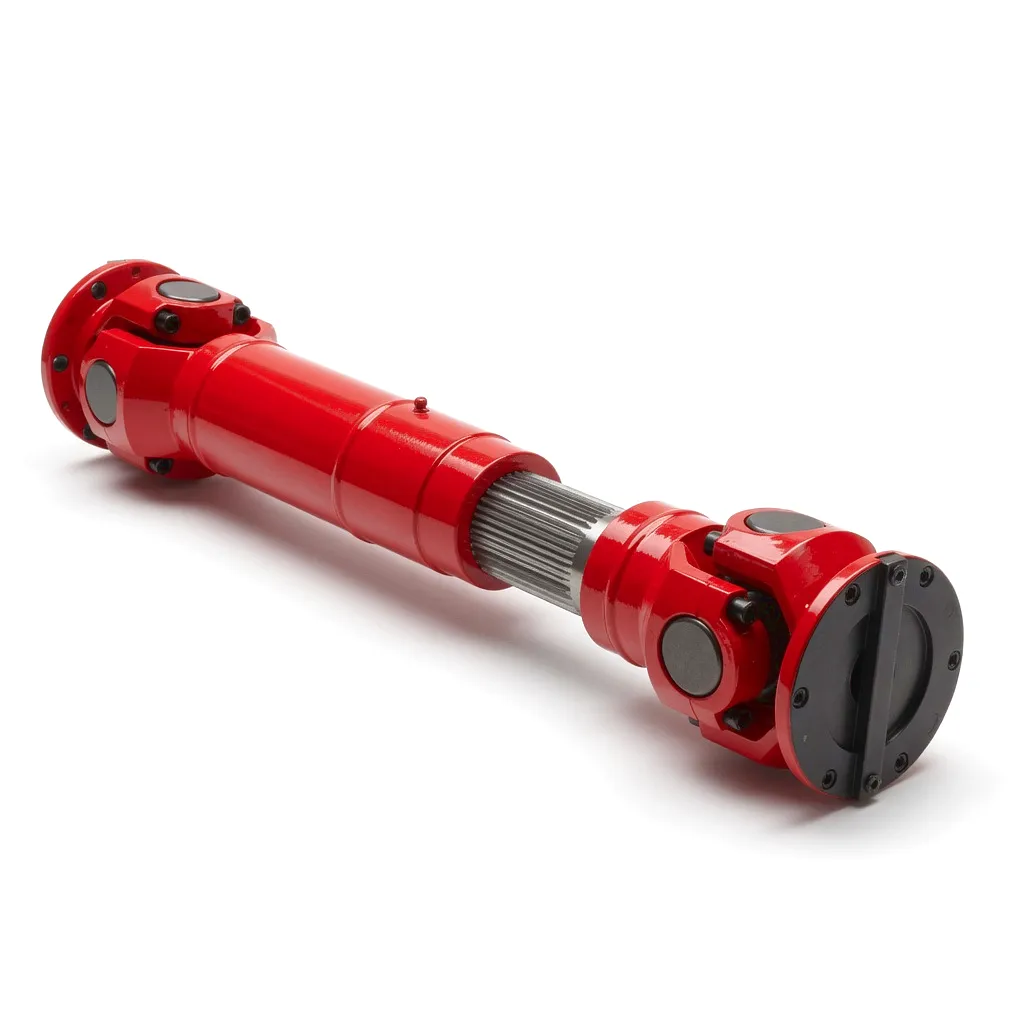
Need a Cardan Coupling for Your Combine Harvester?
Tell us your torque requirements, shaft dimensions, operating angle, and application environment. Our engineering team will specify the right solution — whether standard, modified, or fully bespoke.
Why Combine Harvesters Demand Cardan Couplings Above All Other Joint Types
Angular Misalignment Tolerance
Standard single-joint cardan couplings handle operating angles up to 15–20°, while double-joint (double Cardan) configurations extend this to 35° or more — essential for header drives that angle sharply when the cutting platform follows uneven ground.
High Torque Density
Cardan couplings deliver exceptional torque-to-weight ratios. In a 450 kW combine drivetrain, the coupling between the main engine gearbox and the threshing drum must handle peak torques exceeding 2,000 Nm without slipping, flexing excessively, or generating heat buildup that could ignite chaff.
Shock Load Absorption
When a header ingests a stone, a compacted mat of wet straw, or an oversized crop clump, the threshing drum can experience instantaneous torque spikes three to five times the nominal operating value. Well-engineered cardan couplings with integrated overload protection absorb and dissipate these shocks before they destroy gearbox shafts.
There are competing technologies — jaw couplings, gear couplings, disc pack couplings — and each has its place in industrial machinery. But in the combine harvester environment specifically, no other coupling type combines the angular flexibility, torque capacity, compact cross-section, and field-replaceable bearing design that the cardan coupling delivers. Agricultural engineers who have specified both know this from experience, not from manufacturer claims.
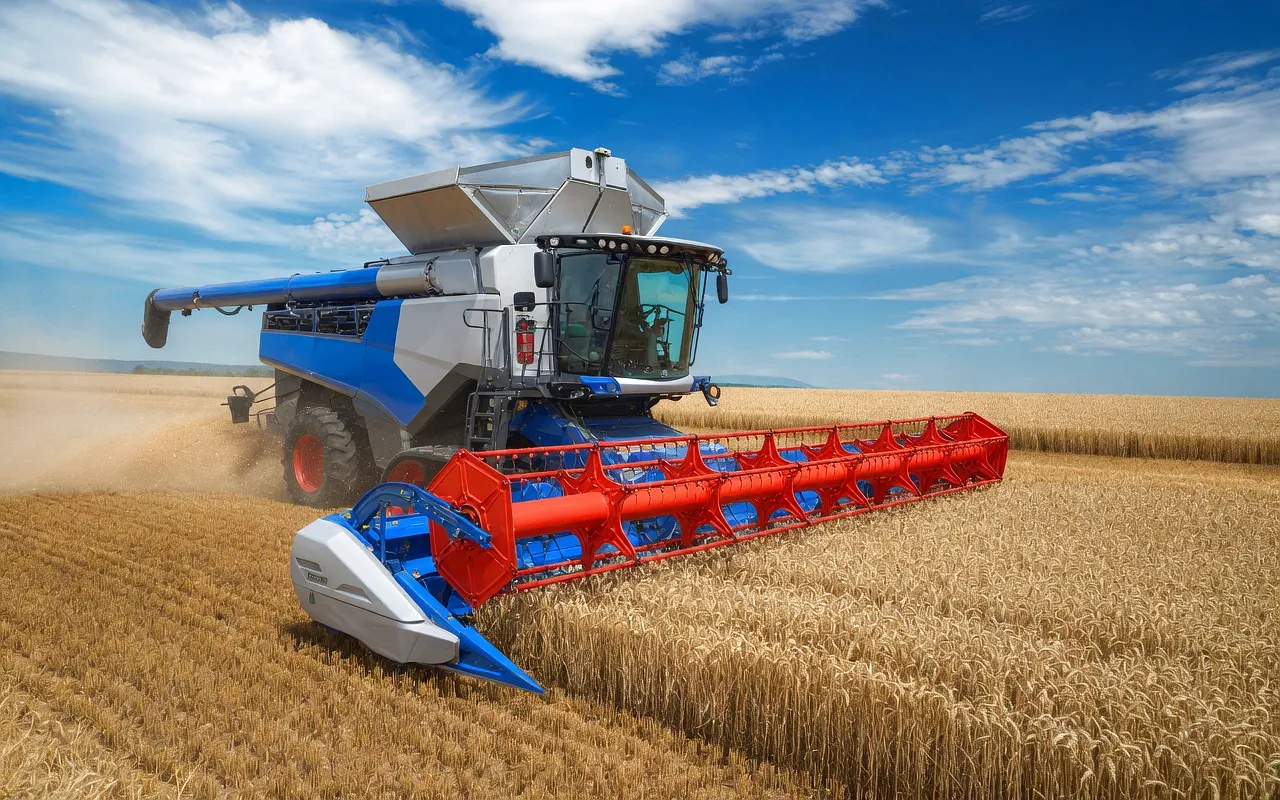
Across the UK’s arable farming heartlands — from the broad acre barley fields of East Anglia to the oilseed rape rotations of the East Midlands — combine harvesters work in conditions that test every drivetrain component to its limits. Summer harvest windows are short, weather-dependent, and brutally unforgiving of mechanical downtime. A cardan coupling failure during peak harvest can cost a farming business thousands of pounds per hour in lost throughput. This is why specification decisions made in the engineering office in February can determine profitability in August.
Technical Performance Parameters: Agricultural Cardan Coupling Series
The table below summarises key performance parameters for the Ever Power agricultural cardan coupling series, covering the range most commonly specified for combine harvester header drives, threshing drum drives, and grain elevator shafts. Values are indicative — custom configurations are engineered to precise customer specifications.
| Parameter | EP-AG-S100 | EP-AG-S200 | EP-AG-D300 | EP-AG-D500 |
|---|---|---|---|---|
| Coupling Type | Single-Joint | Single-Joint | Double-Joint | Double-Joint |
| Nominal Torque (Nm) | 800 | 1,600 | 2,500 | 4,800 |
| Peak Torque Capacity (Nm) | 2,400 | 4,800 | 7,500 | 14,400 |
| Max Operating Angle (°) | 15° | 18° | 30° | 35° |
| Max Speed (RPM) | 2,500 | 2,200 | 1,800 | 1,500 |
| Bore Diameter Range (mm) | 25 – 60 | 40 – 80 | 50 – 110 | 70 – 140 |
| Lubrication Type | Grease nipple | Grease nipple | Sealed / Re-greaseable | Sealed / Re-greaseable |
| Operating Temperature (°C) | -20 to +80 | -20 to +80 | -25 to +100 | -25 to +100 |
| Material (Cross Kit) | 20CrMnTi | 20CrMnTi | 42CrMo4 | 42CrMo4 |
All values subject to final engineering review. Custom bore sizes, keyway profiles, and surface treatments available on request.
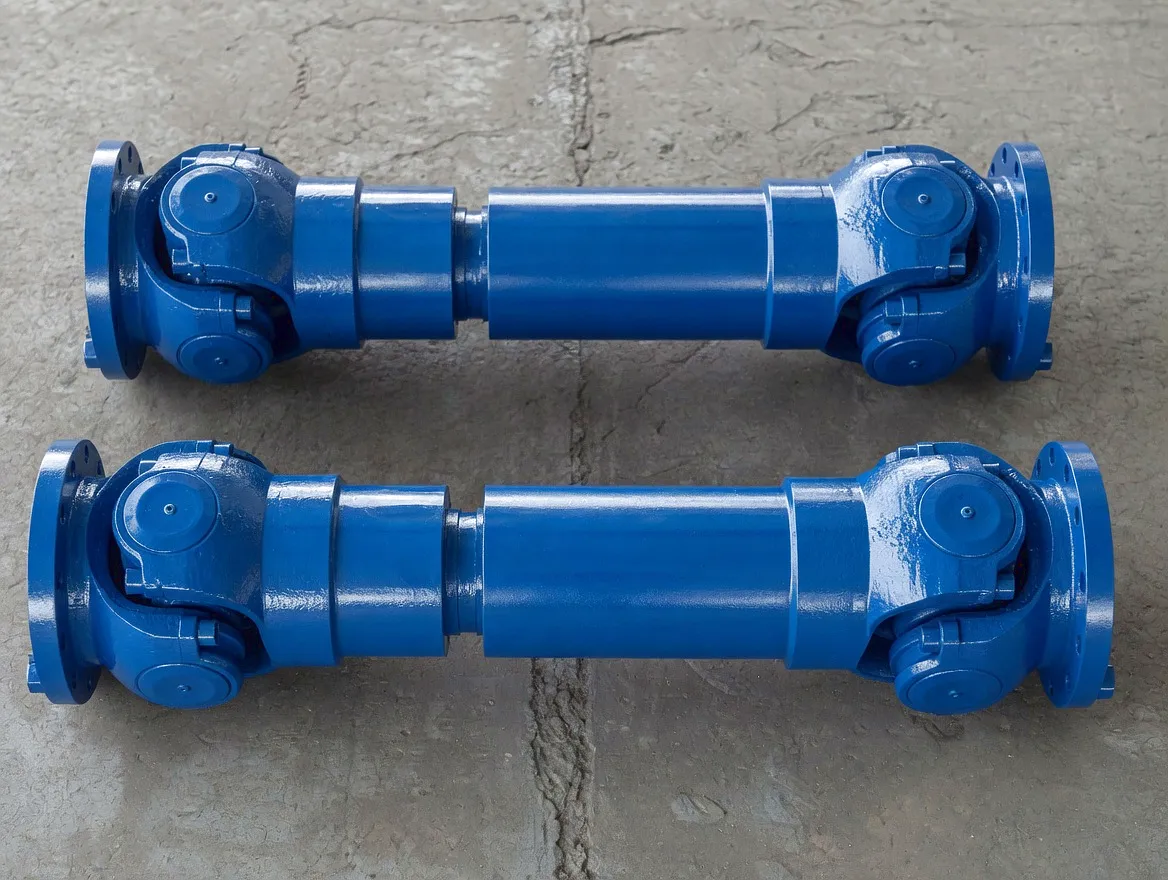
Materials, Heat Treatment, and the Engineering Behind Long Service Life
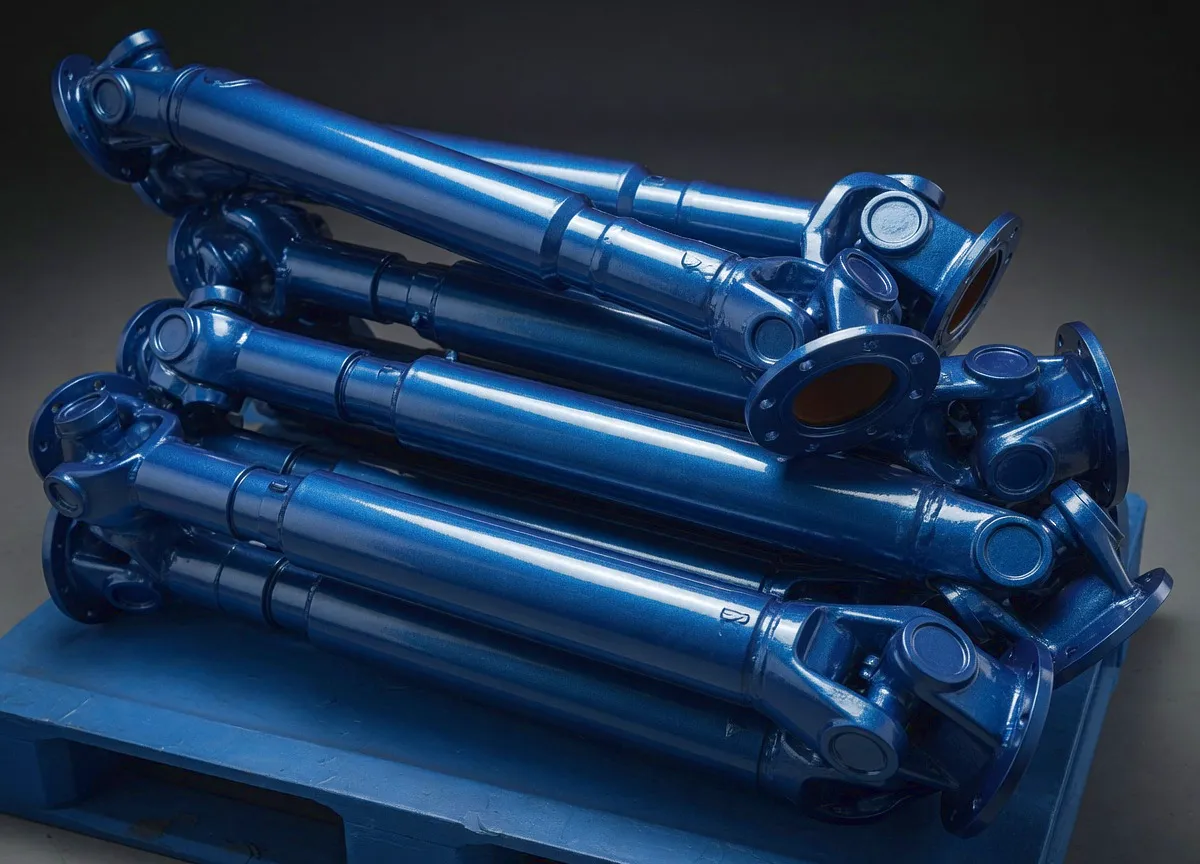
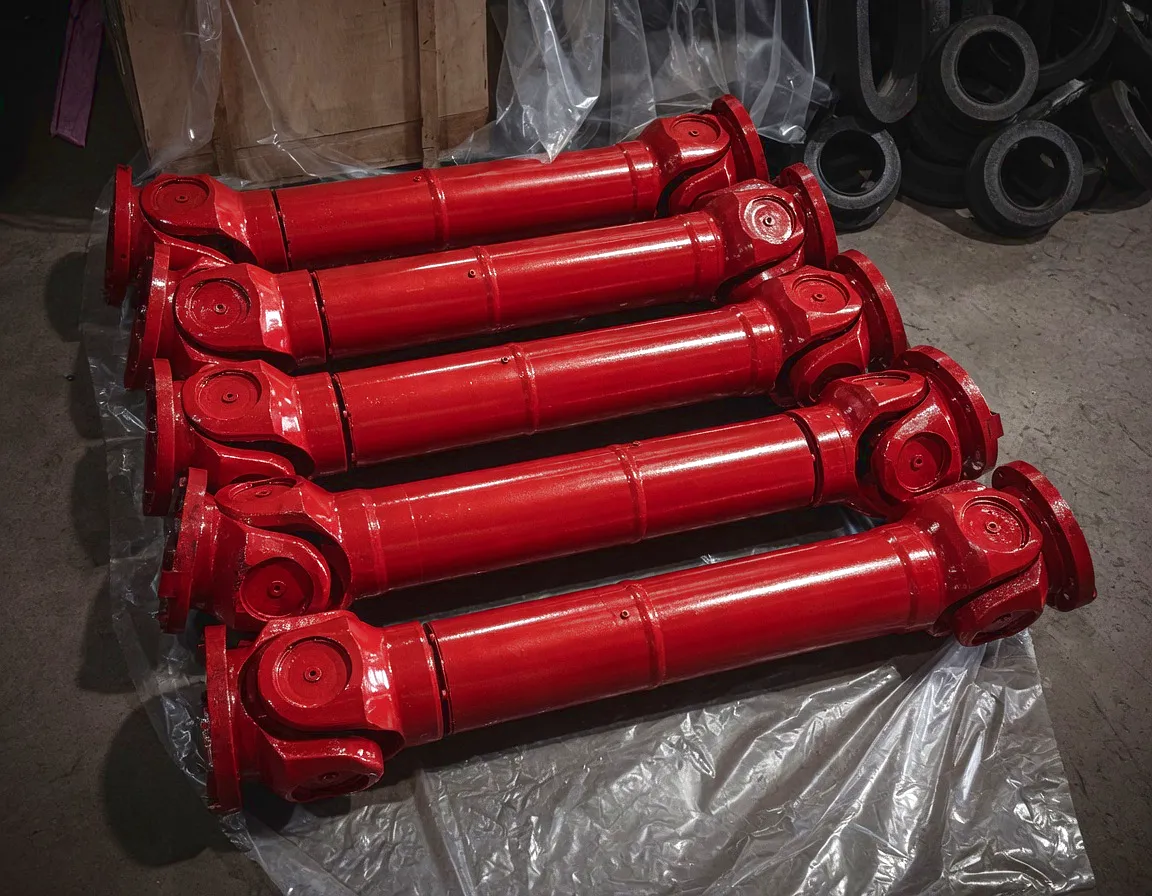
The durability of a cardan coupling under agricultural operating conditions is almost entirely determined by three factors: the alloy composition of the cross kit (spider), the heat treatment process applied to the bearing journals, and the quality of the needle roller bearing assembly that sits between them. Cut corners on any one of these and the service life collapses — sometimes catastrophically, during peak harvest.
Cross Kit Material: 42CrMo4
Chromium-molybdenum alloy steel offers a tensile strength in the range of 900–1,100 MPa after quench-and-temper treatment. The cross journals are carburised to a case depth of 0.8–1.2 mm and hardened to 58–62 HRC at the needle contact surface, providing fatigue resistance that outlasts mild steel alternatives by factors of three to five under cyclic agricultural loading.
Needle Roller Bearing Selection
The needle rollers used in agricultural-grade cardan couplings must be precision-ground to ISO tolerances no coarser than IT5/IT6. Each bearing cup is induction-hardened independently. In Ever Power’s agricultural series, bearing assemblies are pre-filled with high-consistency lithium complex grease (NLGI 2), rated for operating temperatures up to 130°C and resistant to water washout — critical when morning dew, irrigation runoff, and field dust combine.
The yoke flanges — the forged or machined steel forks that clamp onto the drive shaft and accept the cross kit — deserve equal attention. In lower-cost couplings, these are often produced from grey cast iron, which offers adequate static strength but cracks under shock loading. Our agricultural cardan couplings use SG (spheroidal graphite) iron for medium-duty applications and forged 40Cr steel for high-torque configurations. The difference in toughness is substantial: forged 40Cr yokes exhibit Charpy impact values exceeding 60 J at -20°C, meaning they remain reliable through early-morning harvests in northern England where ground temperatures drop sharply even in late summer.
Surface protection is the final engineering consideration. Exposed cardan coupling components in agricultural environments face a cocktail of abrasive crop dust, moisture, dilute fertiliser residues from the soil, and occasional chemical spray overspray. Our standard agricultural series uses a phosphate-and-oil (Parkerising) base treatment for internal components, with zinc-nickel electroplating or a hot-dip zinc coating on external yoke surfaces. This provides salt spray resistance exceeding 480 hours per ISO 9227, and in field conditions, routinely delivers service intervals of 400–600 operating hours between regreasing.
Six Critical Power Transmission Positions in a Combine Harvester Where Cardan Couplings Operate
1. Header Drive Shaft
The header reciprocates vertically across uneven terrain, creating continuous angular changes in the drive shaft connecting it to the machine’s main drivetrain. Operating angles regularly reach 12–15° and can spike to 20° in hilly conditions. A double-joint cardan coupling with built-in telescopic sleeve accommodates this range without velocity fluctuation in the header drives.
2. Threshing Drum Input Drive
The threshing drum is the highest-torque driven component in the machine. In a large-capacity harvester processing dense winter wheat, drum input torques can exceed 2,800 Nm under normal operating conditions and spike significantly higher during a slug feed. The cardan coupling here must transmit this torque reliably while accommodating minor shaft misalignment caused by thermal expansion and frame flex during operation.
3. Straw Walker Drive Shaft
Straw walkers operate at relatively moderate torques but at continuous, cyclical loads over the entire harvest day. The eccentric motion of the walker system creates pulsating loads that are transmitted back up the drive chain. A cardan coupling with adequate torsional compliance absorbs these pulses, extending the fatigue life of the gearbox output shaft that would otherwise be subjected to bending fatigue from transmitted vibration.
4. Grain Elevator Drive
The grain elevator transfers cleaned grain from the cleaning shoe up to the grain tank. The elevator head shaft runs continuously from the moment harvesting begins and must transmit smooth, constant-velocity rotation to avoid grain damage from inconsistent paddle timing. A precision cardan coupling with minimal backlash and low torsional compliance is specified here to protect grain quality — an important consideration for malting barley and high-value seed crops commonly grown across Cambridgeshire and Lincolnshire.
5. Chaff Spreader and Straw Chopper
The rear-mounted residue management system — whether a chaff spreader or a straw chopper — operates at high rotational speeds and requires consistent drive velocity. Many modern combines allow the operator to engage and disengage the straw chopper on the go, which creates engagement shock loads in the drivetrain. An overload-protected cardan coupling in this position prevents this engagement spike from reaching the engine PTO shaft or transmission.
6. Axial Rotor Drive (Rotary Combines)
In axial-flow combine designs (CASE IH Axial-Flow, New Holland CR series), the primary threshing and separation functions are handled by one or two longitudinal rotors. The input to these rotors typically passes through a cardan coupling — often a heavy-duty double-joint configuration — that must handle continuous high-torque transmission at precise shaft alignment over a lifespan of 1,500+ operating hours per season in the largest machines.
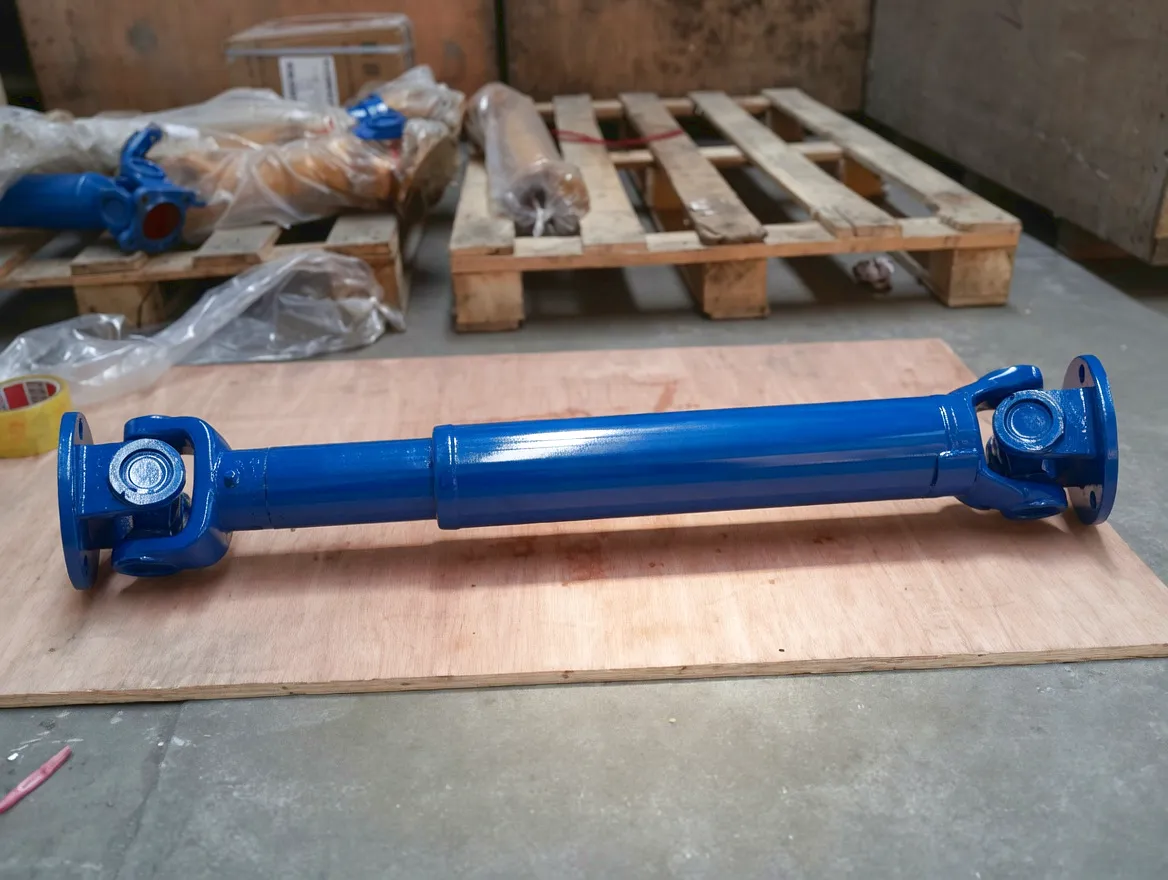
What Sets Ever Power Agricultural Cardan Couplings Apart
18+ Years Agricultural Application Experience
Our engineering team has accumulated field data from combine harvester applications across Europe, Australia, and North America. This translates into coupling designs that anticipate real-world failure modes rather than simply meeting catalogue specifications on paper.
Full Custom Engineering Service
No two combine harvester configurations are identical — headers vary, rotor designs differ, and regional grain varieties impose unique load profiles. Ever Power provides complete OEM-level custom engineering from drawing stage to prototype, supporting modifications to bore diameters, yoke configurations, shaft spline profiles, and overload protection settings.
Rapid Delivery to UK Customers
Standard agricultural cardan coupling series stock is maintained for fast dispatch to UK addresses. For agricultural machinery dealers and cooperatives managing pre-season preparation windows, this delivery reliability is a genuine operational advantage over suppliers relying on spot-production schedules.
ISO and Agricultural Equipment Standards Compliance
All Ever Power agricultural cardan couplings are manufactured under ISO 9001-governed quality processes with dimensional and performance testing referenced to ISO 8734 and relevant DIN standards for universal joint assemblies. Traceability documentation is available for OEM integration and CE-compliant machine build projects.
One area where our engineering approach genuinely differs from standard catalogue suppliers is in what we call “application-matched design.” When a customer approaches us with a combine harvester drivetrain problem — whether that is premature cross kit wear, excessive vibration at the header drive, or repeated bearing seizure in the grain elevator shaft — our process begins with a load analysis, not a product catalogue reference. We calculate the actual torque demand, including the dynamic overload factor appropriate for the crop type and field conditions, determine the required operating angle range accounting for frame flex and terrain profile, and then specify a coupling that is sized for real operating loads rather than nominal rated conditions.
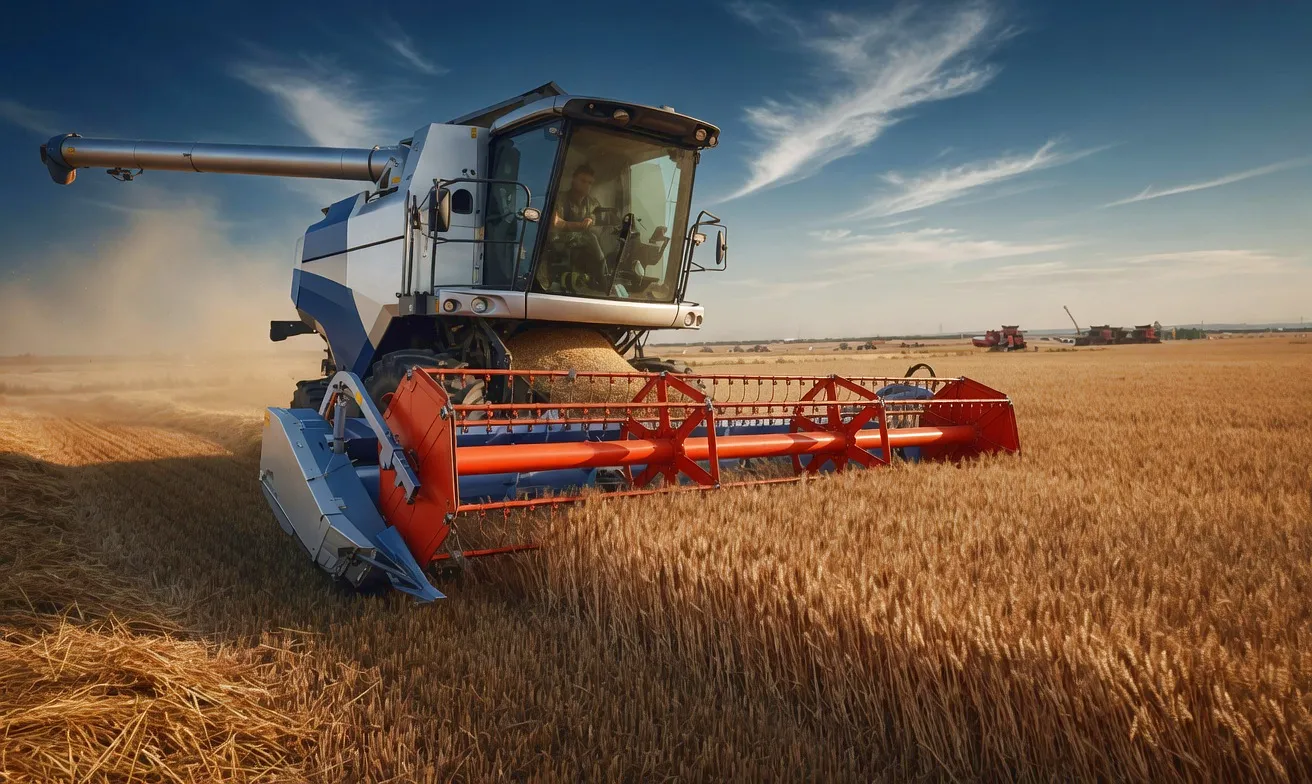
This engineering rigour matters particularly for UK conditions. British cereal harvest windows are often compressed into a two-to-three week period in July and August, during which machines operate at maximum throughput for 16+ hours per day. Components specified with comfortable safety margins and correct material selection for fatigue loading will complete a season without issue. Components selected purely on static torque rating and purchase price often do not.
Ever Power Manufacturing: Built for Custom Agricultural OEM Requirements
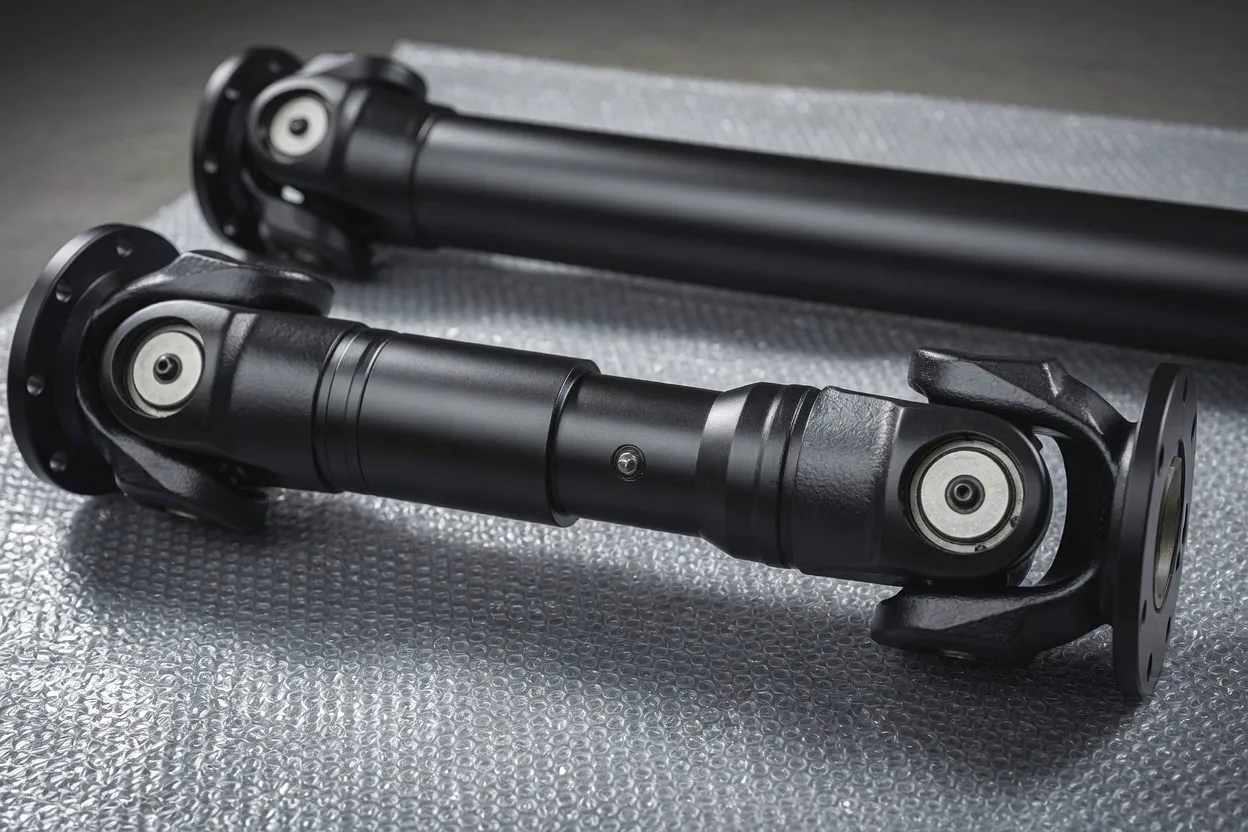
Ever Power operates a dedicated transmission component manufacturing facility with capabilities spanning raw forging, CNC precision turning and milling, heat treatment (carburising, induction hardening, quench-and-temper), gear cutting, and full assembly with dimensional verification. The facility runs under a quality management system that supports the production of custom кардан муфтасы assemblies from single prototype units up to high-volume batch production for agricultural OEMs.
Custom Service Capabilities Include:
- ✦ Non-standard bore and keyway profiles (DIN, ANSI, metric, inch)
- ✦ Extended or shortened shaft lengths to customer-specified dimensions
- ✦ Modified yoke flange dimensions and bolt-circle patterns
- ✦ Integration of overload-protection friction discs or shear pins
- ✦ Special surface treatments: GEOMET, Deltacoll, DACROMET, hot-dip zinc
- ✦ OEM private-label packaging and documentation
Customer Success: Lincolnshire Arable Farming Co-operative
What UK Agricultural Professionals Are Saying
“We had been fighting the same header drive failure every season for three years. Ever Power’s team actually took the time to look at our operating data and came back with a coupling specification that solved the root problem rather than just supplying a like-for-like replacement. Two seasons on and we haven’t touched those drives.”
“We source cardan coupling assemblies for our aftermarket header adaptor range from Ever Power. Their ability to customise bore sizes and yoke bolt patterns to match our product drawings, at competitive pricing and with consistent quality, is what keeps us coming back. Delivery to our workshop in Norfolk is reliable and lead times are well within what our production schedule requires.”
“As a combine harvester dealer in the East Midlands, our customers expect us to carry reliable spares for all major driveline components. Ever Power’s agricultural cardan coupling range covers the common fitments for CLAAS and John Deere combines at better-than-OEM pricing, and the cross kits have held up well in independent field comparison against original parts. A genuine alternative that we now stock as standard.”
Cardan Coupling Sourcing for UK Arable Farmers and Agricultural Machinery Specialists
 The United Kingdom’s arable farming sector spans approximately 4.5 million hectares of cultivated land, concentrated primarily across the eastern counties — Lincolnshire, Norfolk, Suffolk, Cambridgeshire, Yorkshire, and the East Midlands. These regions collectively produce the majority of the UK’s wheat, barley, oilseed rape, and sugar beet, and during the summer harvest window, they represent the highest concentration of working combine harvesters in the country. Agricultural machinery dealers serving these areas, farming cooperatives managing large fleets, and independent agricultural engineers all share a common requirement: access to high-quality drivetrain components at competitive prices, with delivery speed that supports pre-harvest servicing schedules.
For UK-based customers, Ever Power’s cardan coupling range offers a compelling combination of technical quality and procurement flexibility that positions them as a credible alternative to both OEM parts channels and domestic distributor catalogue stock. Our pricing on standard agricultural series couplings is structured for volume procurement by machinery dealers and co-operative buying groups, and we can accommodate blanket purchase orders with phased delivery across the pre-season preparation period (typically February through May in the UK agricultural calendar).
For combine harvester specialists and independent agricultural engineers in Scotland — where harvests are typically later, conditions wetter, and the operating season compressed into an even shorter window — the reliability demands on drivetrain components are particularly acute. We work with machinery engineers across the Scottish grain belt from Aberdeenshire through to the Lothians and supply custom cardan couplings specified for the higher moisture and contamination exposure of northern UK conditions, including enhanced bearing sealing and corrosion-resistant surface treatments as standard.
Frequently Asked Questions
Ready to Specify or Source? Our Engineering Team Is Available Now.
Whether you are an agricultural machinery dealer building a pre-season parts inventory, an OEM engineer specifying a new combine header drive, or a farm machinery manager looking to resolve a repeated coupling failure on a working fleet — we can help. Send us your technical requirements or simply describe the application problem.
✉ Get a Quote — [email protected]
edit by gzl