Wind turbine drivetrains operate under conditions that would quickly destroy almost any conventional coupling. Loads shift unpredictably with every gust, misalignment accumulates as the nacelle yaws into the wind, and thermal cycling repeats thousands of times per year. Yet the connection between the main rotor shaft and the gearbox must remain absolutely reliable — a single drivetrain failure on an offshore turbine can cost an operator in excess of £250,000 in lost generation revenue and crane mobilisation costs alone.
 This is precisely why the cardan coupling — the engineering descendant of the Giordano Cardano universal joint — has become a cornerstone component in modern turbine drivetrain architecture. With the ability to accommodate angular misalignment of up to 15°, transmit torques exceeding 500 kNm, and absorb torsional shock loads that would shatter rigid alternatives, the cardan coupling brings a combination of capability and durability unmatched in rotary power transmission.
Drawing on more than 18 years of application engineering experience, this guide covers the technical mechanics, material science, real-world performance data, and procurement considerations relevant to engineers, procurement managers, and plant operators working with wind energy systems across the United Kingdom and beyond.
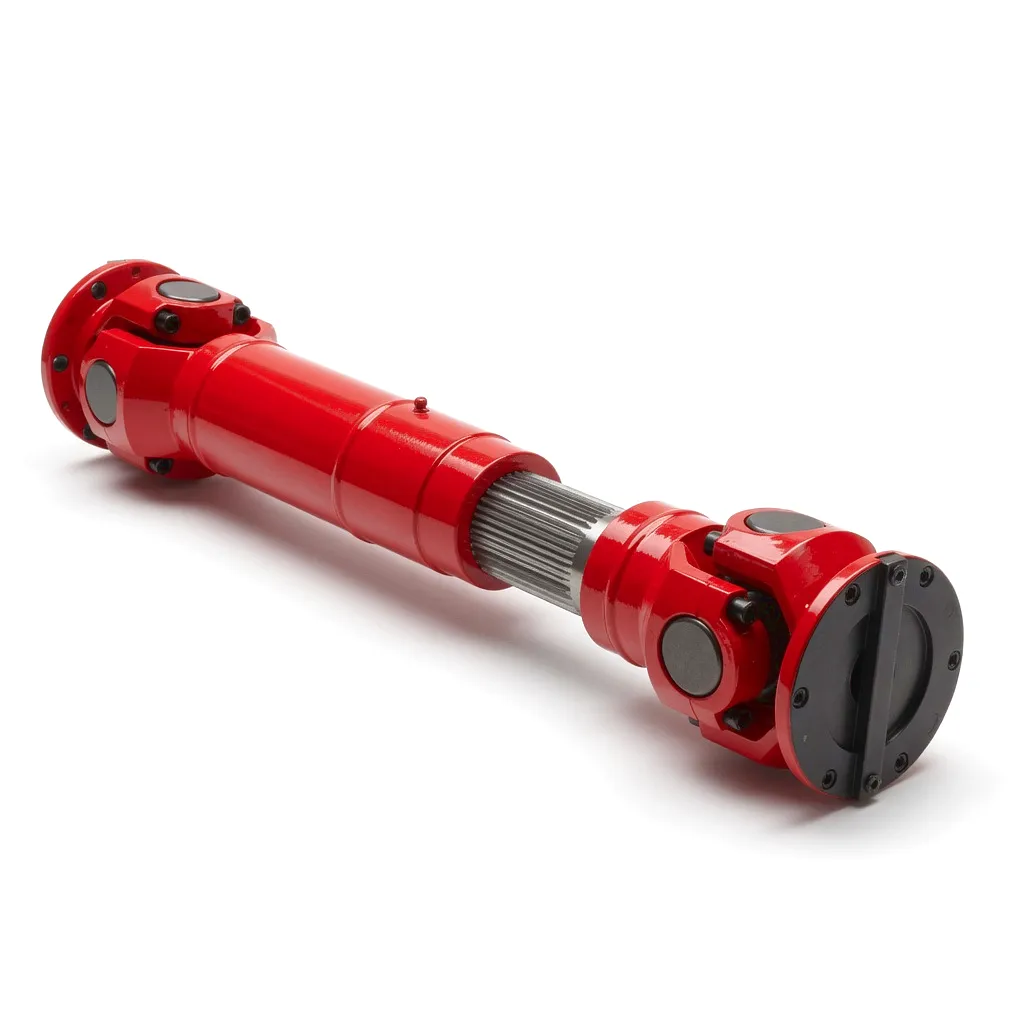
Industrial-Grade Cardan Couplings Built for Wind Energy
Ever Power manufactures heavy-duty cardan couplings specifically engineered for wind turbine drivetrain applications. Custom bore sizes, flange configurations, and surface treatments are available to match your exact turbine model and site conditions.
What Exactly Is a Cardan Coupling, and Why Does It Belong in a Wind Turbine?
 A cardan coupling — also referred to as a universal joint coupling, cross-shaft coupling, or Hooke’s joint assembly — is a mechanical device that transmits rotary motion and torque between two shafts that are not collinear. At its heart are one or more cruciform spider assemblies (commonly called the cross or spider), each connecting two yokes at 90° to each other via needle or plain bearings on the trunnion pins.
In a standard single-joint arrangement the output shaft experiences a cyclical velocity variation at twice the rotational frequency of the input shaft — a phenomenon well understood since the 17th century. Wind turbine engineers address this by using double-cardan configurations (two universal joints phased correctly with an intermediate shaft), which cancel the velocity fluctuation and deliver constant velocity output. This matters enormously in the drivetrain, because any torsional irregularity that reaches the gearbox translates directly into tooth-load variation and accelerated fatigue.
Beyond correcting velocity non-uniformity, the cardan coupling in a wind turbine context performs two additional roles. It accommodates the unavoidable angular and parallel shaft misalignments that arise from thermal growth, foundation settlement, and manufacturing tolerances — without transmitting bending loads into the gearbox input shaft. It also acts as a torsional compliance element, absorbing torque spikes produced by sudden wind gusts, grid fault events, or emergency braking of the rotor. Without this compliance, those shock events travel directly into the gearbox planet carrier, creating impact loads several times higher than rated torque.
Technical Performance Parameters — Wind Turbine Cardan Couplings
| Parameter | Typical Range | Heavy-Duty Wind Grade | Significance in Drivetrain |
|---|---|---|---|
| Nominal Torque (Tn) | 5 – 500 kNm | 50 – 500 kNm | Determines sustained load capacity at rated wind speed |
| Peak Torque (Tp) | 2.0 × Tn | 2.5 – 3.0 × Tn | Must survive grid fault and E-stop braking events |
| Max Angular Misalignment | ±5° – ±15° | ±8° – ±12° | Accommodates nacelle deflection & settling |
| Operating Speed | 5 – 1500 rpm | 5 – 25 rpm (LSS) | Low-speed shaft applications; high torque at low rpm |
| Service Temperature | -20°C to +80°C | -40°C to +80°C | UK offshore climate; cold-start at sub-zero temperatures |
| Flange PCD (Typical) | 80 – 600 mm | 200 – 600 mm | Matches gearbox & main shaft flange bolt circles |
| Torsional Stiffness | Variable by design | Tunable (soft / rigid) | Critical for avoiding drivetrain resonance |
| Corrosion Protection | Painted / Zinc | Hot-dip galvanised / Epoxy | Essential for UK North Sea salt-fog environments |
* Parameters vary by model and custom specification. Contact Ever Power engineering for project-specific calculations.
Where the Cardan Coupling Lives Inside the Wind Turbine Drivetrain

Main shaft–gearbox interface in a 5 MW onshore turbine
Main Shaft to Gearbox — The Low-Speed Shaft Connection
The most demanding application for a cardan coupling in any wind turbine is the low-speed shaft (LSS) connection, sitting between the main bearing assembly and the gearbox input. At this location, the coupling must handle the full aerodynamic torque of the rotor — which at rated power for a 5 MW turbine is in the order of 4 MNm — while simultaneously accommodating angular offsets caused by main shaft deflection under thrust loads. The deflection is not theoretical: instrumented turbines in UK offshore wind farms routinely show 0.3° to 0.8° of dynamic angular misalignment at the LSS connection during above-rated wind conditions. A rigid flange coupling at this location would transmit those bending moments directly into the gearbox planet carrier, initiating fretting fatigue on the planetary gear teeth within 18–24 months of commissioning.
The cardan coupling addresses this problem elegantly. Its angular articulation absorbs the misalignment without any reaction force on the connected shafts. The bearing seats within the cross assembly distribute the transmitted load across four trunnion pins, reducing unit bearing pressures and extending the maintenance interval dramatically compared with older rubber-element coupling designs. For offshore UK installations — where crane access for replacement can cost £80,000–£120,000 per mobilisation — this extended service life is commercially critical.
Yaw and Pitch Drive Systems
Smaller-diameter cardan couplings play an equally important role in the yaw and pitch drive trains. The yaw system rotates the entire nacelle to track wind direction, while the pitch system adjusts individual blade angles to regulate power output and protect the turbine from over-speed. Both systems connect electric or hydraulic actuators to ring gears via short shaft drives, and both must accommodate installation misalignments arising from the nacelle’s welded steel frame. In these low-torque, high-cycle applications, the universal joint coupling provides misalignment tolerance without the stick-slip behaviour associated with jaw couplings, which can cause control instability in the pitch regulation loop.
Materials, Manufacturing, and What Makes a Wind-Grade Cardan Coupling Different
Not every cardan coupling on the market is suitable for wind energy service. The conditions inside a nacelle — particularly an offshore UK nacelle — present challenges that simply cannot be met by a standard automotive or light-industrial universal joint. Specification differences begin with the raw material and extend through every stage of manufacturing.
Yoke & Spider Material
Wind-grade couplings use forged alloy steel (42CrMo4 / 4140) for yokes and cross spiders rather than cast iron. Forging aligns the grain structure with the principal stress direction, improving fatigue life by 40–60% compared with cast equivalents under the cyclic loading conditions typical of turbine drivetrains.
Needle Bearing Design
Precision needle roller bearings at the trunnion pins are manufactured to DIN 617 tolerances. For offshore applications, these bearings are sealed with nitrile or Viton elastomers and pre-filled with lithium complex grease rated to -40°C. The sealing arrangement prevents saltwater ingress during the condensation cycles that occur daily inside a North Sea nacelle.
Surface & Corrosion Treatment
Structural yoke components for offshore use receive either hot-dip galvanising to BS EN ISO 1461 or a two-pack epoxy primer with polyurethane topcoat achieving Corrosion Category C5-M (Marine) per ISO 12944. Flange bolt fasteners are specified in A4-80 stainless steel or mechanically zinc-plated Grade 10.9 with dacromet coating.
Dynamic Balancing
Complete cardan shaft assemblies are dynamically balanced to ISO 1940-1 Quality Grade G2.5 as standard, with G1.0 available for high-speed shaft applications. Residual imbalance generates bearing loads and nacelle vibration that accumulate over years of service; a correctly balanced coupling reduces these parasitic loads to negligible levels.
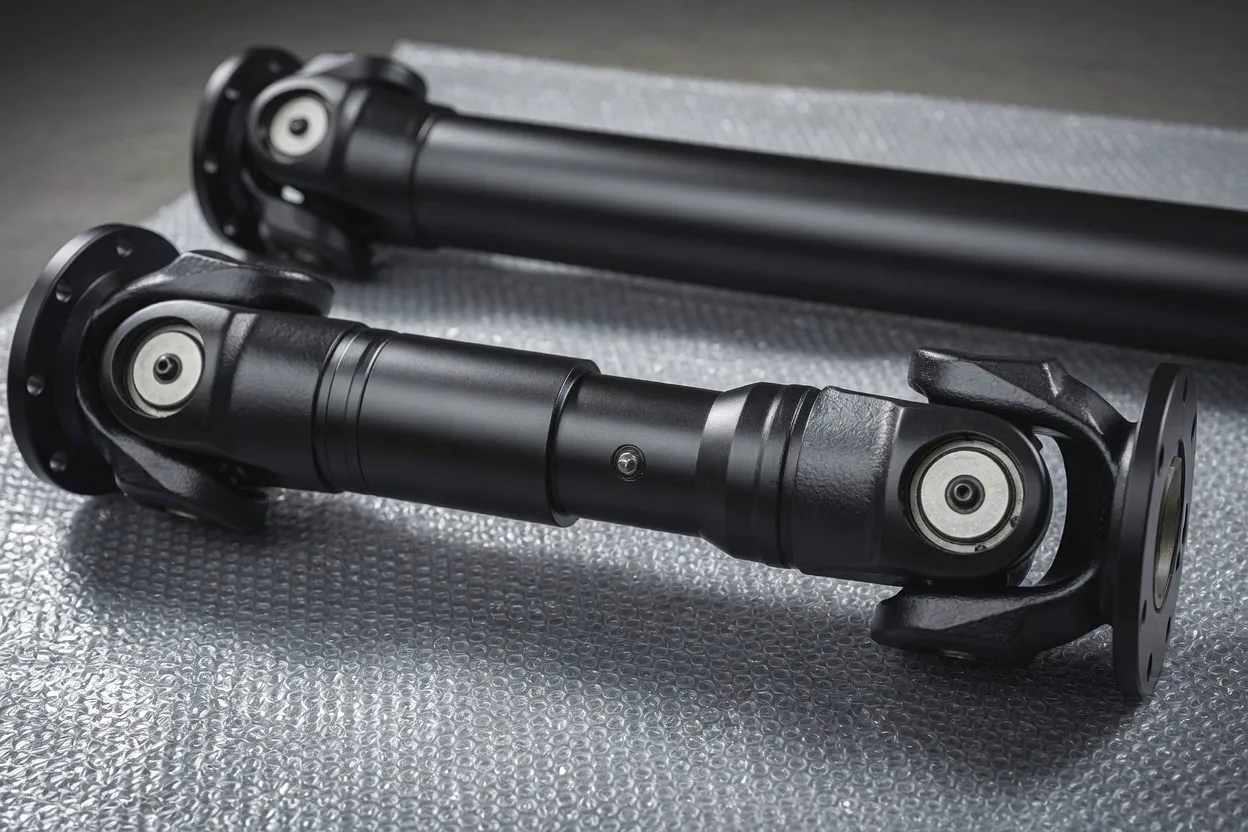
Ever Power heavy-duty forged cardan coupling assembly — ready for wind turbine integration
The Operating Principle: How a Cardan Coupling Handles Wind’s Unpredictability
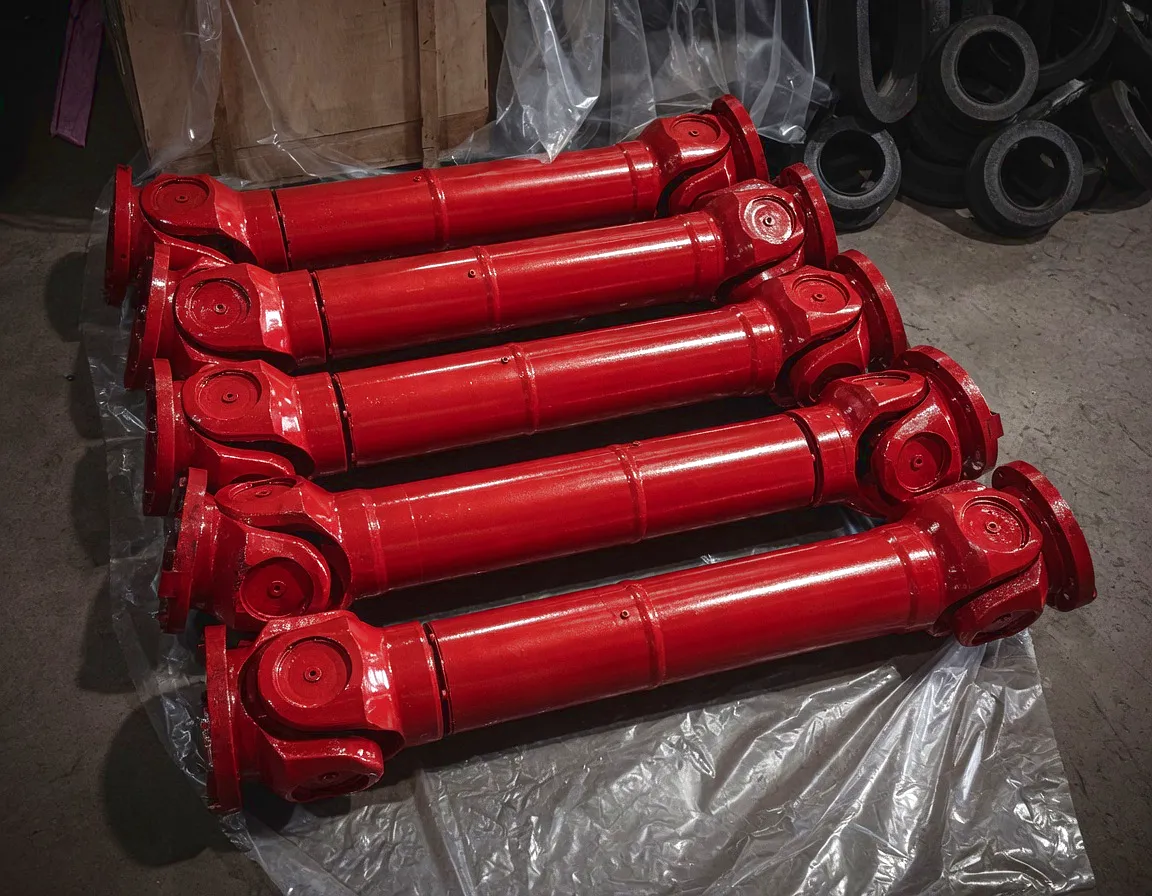 The operating principle of a double-cardan shaft assembly can be visualised in three stages. During steady-state power generation — when the rotor is turning at rated speed in consistent wind — the two universal joints operate at equal and opposite phase angles, producing a near-constant output velocity at the gearbox input flange. The intermediate tube connecting the two joints transmits torque by pure torsion, with negligible bending stress. This is the condition the drivetrain is designed for, and it represents the majority of turbine operating hours over its 20–25 year life.
During wind gusts, the scenario changes rapidly. A 3 m/s wind speed step — not unusual in UK North Sea conditions — can increase aerodynamic torque by 25–40% within 0.3 seconds. Without torsional compliance, this torque step propagates as a shockwave through the drivetrain, exciting natural frequencies in the gearbox planetary stages. The cardan coupling’s torsional compliance absorbs the torque gradient, spreading the load transient over a longer time window and keeping peak gear tooth loads within the material’s fatigue envelope. Over a 25-year service life, this difference between compliant and rigid coupling translates to tens of thousands of additional load cycles within the safe operating range, directly impacting the probability of gearbox bearing failure.
Emergency stop events — triggered by grid faults, over-speed detection, or remote shutdown — generate the most extreme torsional transients in the drivetrain. When the rotor brake engages, kinetic energy stored in the spinning blades and main shaft must be absorbed. A correctly designed cardan coupling acts as the primary torsional buffer at this moment, protecting the gearbox from peak torques that can exceed 3× rated values. This emergency braking compliance is a safety-critical function, and it is why wind turbine OEMs specify cardan couplings with a peak-torque-to-nominal-torque ratio of 2.5 or higher as a design requirement, not a desirable option.

Drivetrain layout showing cardan coupling integration points
Key Design Insight
Torsional natural frequency of the drivetrain must be designed to avoid the 3P excitation frequency (three times per revolution, from the three rotor blades). An incorrectly stiff coupling can push the drivetrain resonance into this frequency band, leading to resonant amplification of gear loads — the most common cause of premature gearbox failure in early-generation turbines.
Application Note for UK Operators
UK Health & Safety Executive guidance (HSG41 and relevant sections of the Machinery Directive 2006/42/EC) requires that coupling installations on wind turbines include documented load capacity analysis, material certification to EN 10083, and traceability records for safety-critical components. Ever Power supplies full material test certificates and load calculation packages as standard with all wind turbine drivetrain orders.
Seven Reasons Wind Turbine Engineers Specify Cardan Couplings
Wide Misalignment Tolerance
Accommodates angular misalignment up to ±12° continuously, eliminating the need for precision-aligned foundations and reducing installation time significantly — an advantage that compounds across a multi-turbine wind farm.
No Bending Moment Transmission
The double-cardan arrangement transmits pure torque — zero bending loads pass into the gearbox input, protecting planet carrier bearings and sun gear shafts from a failure mode responsible for a significant proportion of UK offshore turbine unscheduled maintenance events.
Superior Torsional Shock Absorption
Peak torque capacity of 2.5–3.0 × nominal provides a robust safety margin during grid fault events and E-stop braking sequences. This compliance extends gearbox life, which accounts for roughly 20% of total turbine O&M costs over a 20-year asset life.
Long Maintenance Intervals
With sealed, pre-lubricated needle bearing arrangements, wind-grade cardan couplings can operate for 40,000–60,000 hours between grease changes — aligning with typical annual service visit schedules and avoiding the need for interim access during harsh winter conditions at UK offshore sites.
Compact Axial Profile
The telescoping intermediate shaft element of a cardan coupling accommodates axial movements caused by thermal expansion and main shaft thrust variations without generating axial reaction forces on connected bearings — critical in the confined space of a modern nacelle where every millimetre of axial clearance is engineered by design.
Customisable Flange Interfaces
Custom flange bolt-circle diameters, splined shaft connections, and shrink disc interfaces are available to mate directly with existing turbine components from major OEMs including Vestas, Siemens Gamesa, GE, and Goldwind — avoiding costly adapter plates or shaft modifications during retrofit or upgrade projects.
Proven 20+ Year Service Life
Turbines installed across Scottish and English offshore wind zones since the early 2000s continue to operate with their original cardan coupling assemblies, demonstrating service lives that match or exceed the design life of the turbine itself when correctly specified and maintained.
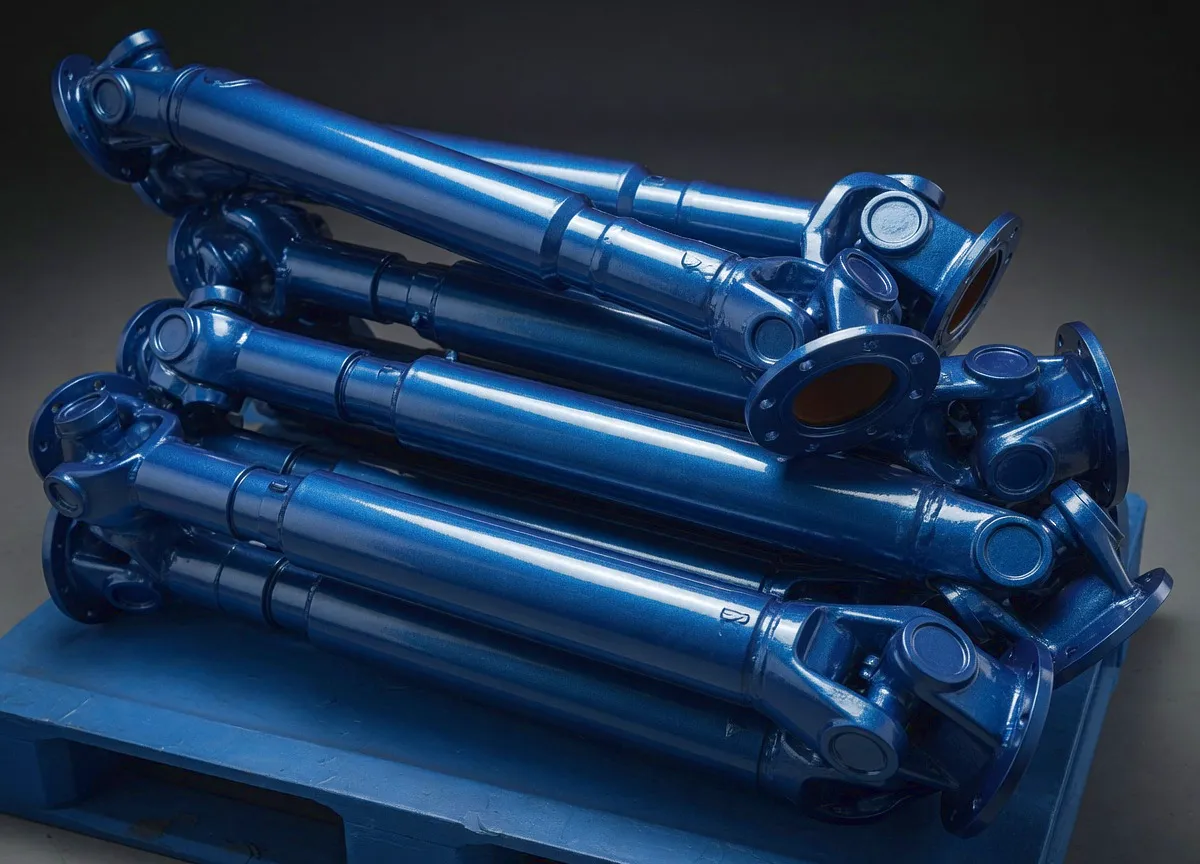
Customer Success: Drivetrain Upgrade at a UK Offshore Wind Farm
East Anglian Offshore Wind Farm, UK
35 × 5 MW Turbines
The Challenge
RenewTech Energy Ltd operates a 35-turbine, 175 MW offshore wind farm off the East Anglian coast. By year eight of operation, 14 of the 35 turbines had experienced accelerated planet carrier bearing wear attributed to bending moment transmission through the original rubber-element main shaft couplings, which had softened beyond acceptable tolerance limits due to the harsh marine environment and repeated emergency stop cycles.
The Solution
Working with Ever Power’s application engineering team, RenewTech specified a custom double-cardan shaft assembly for their Siemens Gamesa SG 5.0-145 turbines. Ever Power supplied 14 complete assemblies with forged 42CrMo4 yokes, Viton-sealed needle bearings, and C5-M epoxy coating within 12 weeks of order placement. Each assembly was dynamically balanced to G2.5 and supplied with full EN 10083 material certification and load calculation documentation as required by the UK HSE.
The Results
What Wind Energy Professionals Say
We had been fighting planet carrier bearing failures every 18 months on four of our turbines. After fitting Ever Power’s cardan couplings, those turbines have run cleanly for going on two years now. The difference in drivetrain vibration signature is clearly visible on our condition monitoring system from day one.
The documentation package from Ever Power was exactly what we needed for our UK HSE compliance submission — material certs, load calculations, balance reports, all in order. Delivery within the promised 10-week window too, which on an offshore retrofit project genuinely matters.
We’ve standardised on Ever Power cardan couplings across our new-build onshore projects in Wales and Yorkshire. The ability to customise the flange PCD to our exact turbine specification without minimum order quantity restrictions gives us flexibility that most suppliers simply cannot match at this torque range.
Ever Power Manufacturing: Where Custom Drivetrain Solutions Are Built
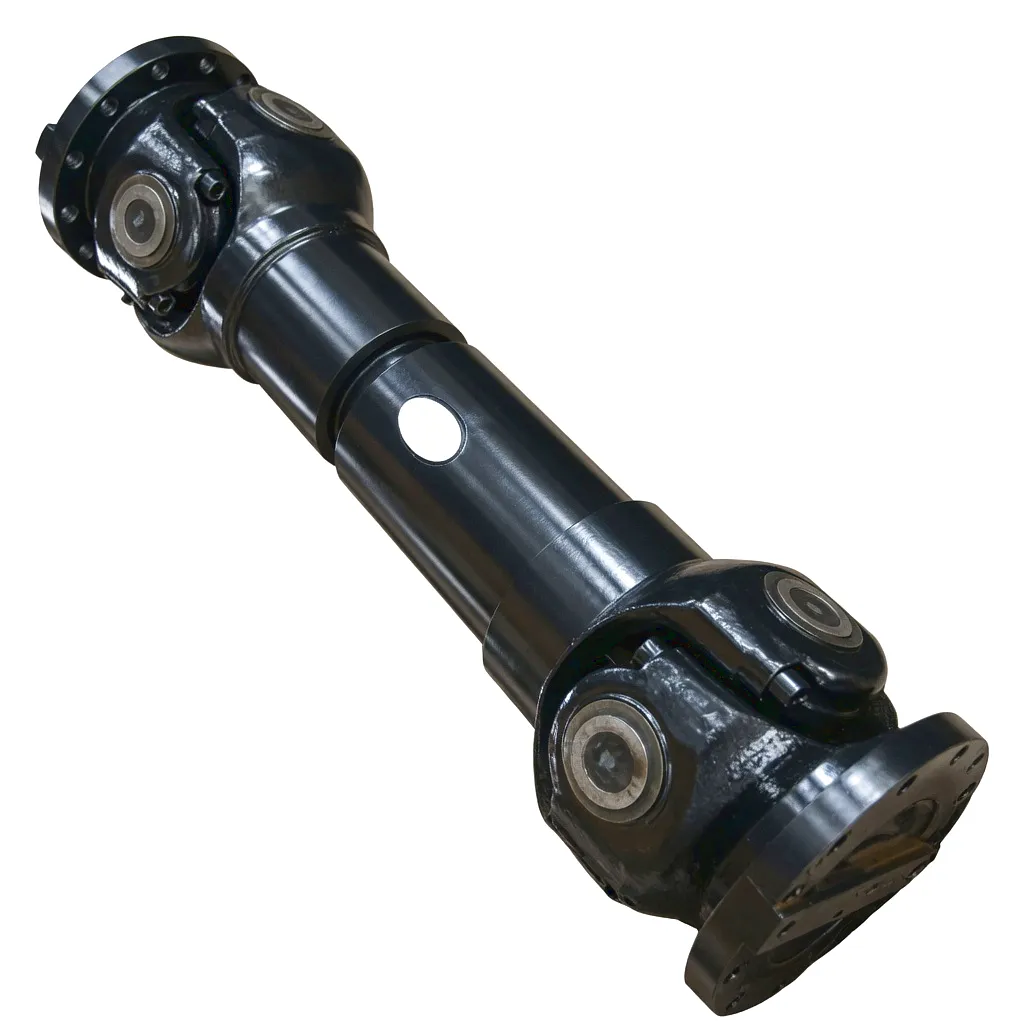
Ever Power operates a purpose-built manufacturing facility with a complete in-house production chain for heavy-duty cardan couplings. From raw material inspection — using optical emission spectroscopy to verify alloy composition against EN 10083 certificates — through precision CNC machining, heat treatment, and dynamic balancing, every stage of production is completed under controlled conditions with full traceability to individual component serial numbers.
The real strength of Ever Power’s offering for wind energy clients, particularly those operating turbines across UK sites, lies in its bespoke customisation capability. The engineering team works directly with customer drawings, OEM maintenance manuals, and site measurement data to produce coupling assemblies that integrate precisely with existing turbine components. There are no off-the-shelf compromise solutions — each wind turbine drivetrain coupling is designed, manufactured, and tested against the specific operating parameters of that turbine model and site location.
Custom services available include: non-standard flange bolt-circle diameters from 80 mm to 600 mm; splined shaft connections to DIN 5480 or customer-specific profiles; shrink disc flanges for zero-clearance shaft locking; special intermediate tube lengths to suit specific nacelle space envelopes; and paint/coating specifications to meet project-specific corrosion category requirements. The engineering team provides full FEA (finite element analysis) load documentation on request, supporting OEM approvals and insurance compliance submissions.
✓ Gear hobbing & profile grinding
✓ Induction hardening (55–62 HRC)
✓ Dynamic balancing ISO 1940-1
✓ NDT inspection (MPI / UT)
✓ Salt spray testing (500+ hrs)
✓ Full dimensional CMM inspection
✓ Custom packaging for offshore logistics
Beyond the Main Shaft: Other Wind Turbine Applications for Cardan Couplings
While the low-speed shaft connection receives the most engineering attention, cardan couplings appear throughout the modern wind turbine drivetrain at multiple power transmission points. Each location has its own specific requirements, and the engineering challenge lies in matching the coupling specification precisely to the application demands.
| Application Location | Torque Range | Speed Range | Key Coupling Requirement |
|---|---|---|---|
| Main shaft → Gearbox (LSS) | 1 – 5 MNm | 5 – 25 rpm | High misalignment; peak torque survival; long service life |
| Gearbox HSS → Generator | 5 – 50 kNm | 1,000 – 1,800 rpm | Precision balance; low angular velocity variation; vibration isolation |
| Yaw drive motors | 0.5 – 5 kNm | 10 – 200 rpm | Installation misalignment tolerance; vibration damping; compact size |
| Blade pitch actuators | 0.1 – 2 kNm | 5 – 100 rpm | Zero backlash; precise control response; high-cycle fatigue life |
| Hydraulic pump drives | 1 – 20 kNm | 200 – 1,500 rpm | Flexible mounting; oil-mist environment resistance; serviceability |
The high-speed shaft (HSS) connection between the gearbox output and the generator presents a contrasting set of challenges to the LSS application. At speeds of 1,000–1,800 rpm and torques an order of magnitude lower, the primary concerns shift from misalignment tolerance and shock load survival to rotational balance quality and angular velocity uniformity. Any velocity non-uniformity at this speed generates significant vibration energy at twice rotational frequency, which can excite structural resonances in the nacelle frame and accelerate generator bearing fatigue. The double-cardan configuration is mandatory at the HSS connection for this reason, and dynamic balance to G1.0 is standard practice for this speed range.
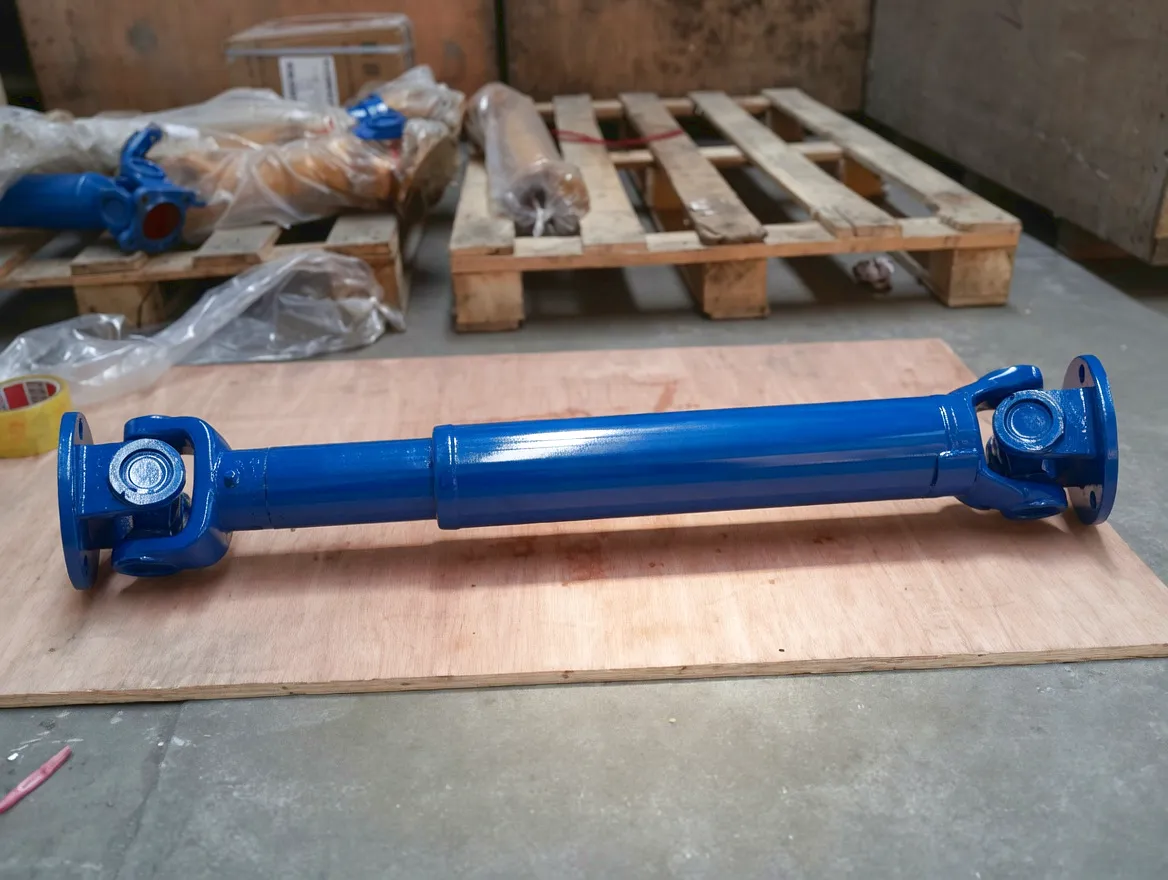
Operators planning turbine upgrades or repowering projects across UK wind farms — from the North Sea offshore assets to onshore sites in Scotland, Wales, and Northern England — will find that Ever Power’s engineering team can provide detailed technical recommendations for each application point in the drivetrain, based on turbine model, operating data, and site-specific environmental conditions.
Serving the UK Wind Energy Industry: From North Sea Offshore to Scottish Onshore
The United Kingdom holds a unique position in global wind energy — as of 2025, the UK operates the world’s largest installed offshore wind capacity, with major farms across the North Sea, Irish Sea, and English Channel. The technical demands of operating turbines in these environments — salt-laden air, corrosive spray, frequent storm-force conditions, and the logistical complexity of offshore access — mean that every drivetrain component must be specified to a higher standard than equivalent onshore equipment.
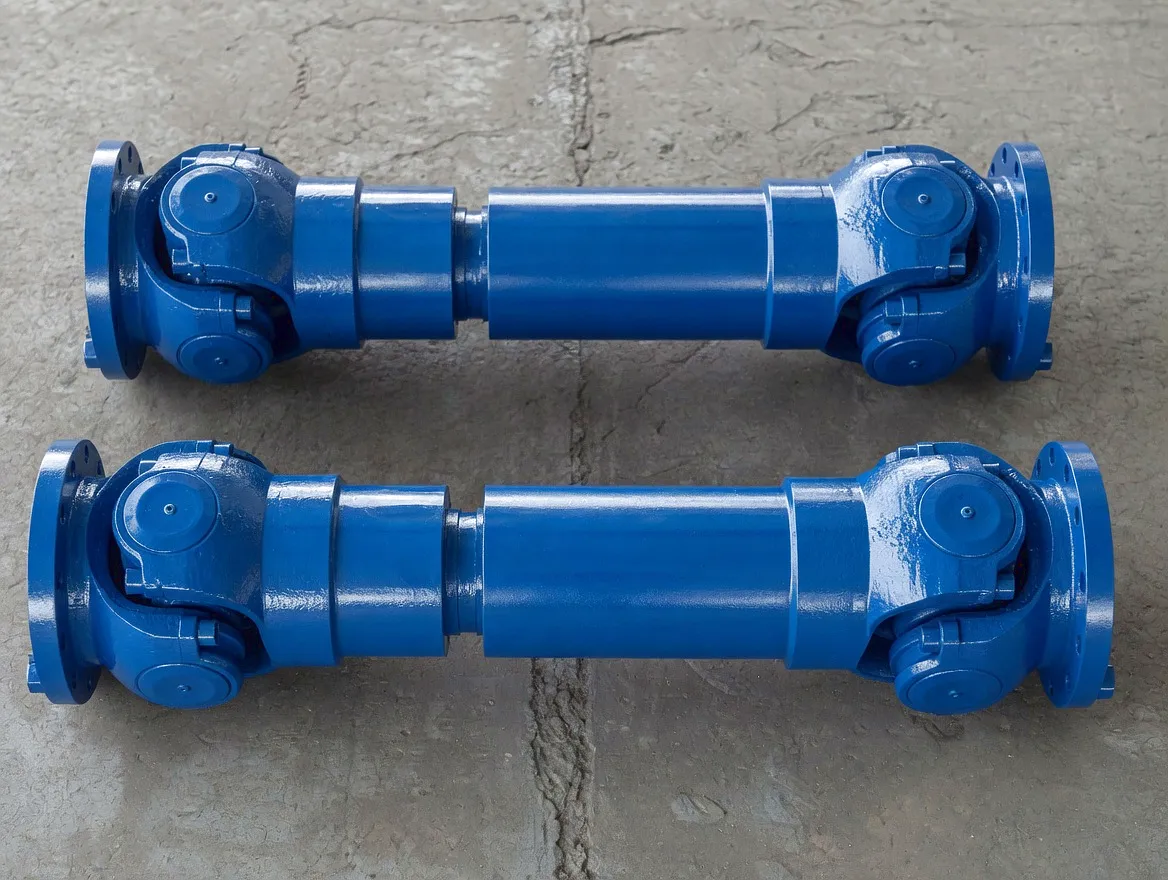
Ever Power supplies кардан муфтасыs to wind energy operators, OEM service partners, and maintenance companies serving projects across the entire UK wind portfolio. Orders are processed from UK-based distribution partners with typical lead times of 6–10 weeks for standard configurations and 10–14 weeks for full custom assemblies. Technical support is available via direct communication with the Ever Power application engineering team, who can provide torque sizing calculations, FEA documentation, and compatibility assessments for specific turbine models currently operating across UK sites.
Frequently Asked Questions
Ready to Specify a Cardan Coupling for Your Wind Turbine Drivetrain?
Send Ever Power’s application engineering team your turbine model, operating torque data, and flange drawings. Receive a technical proposal with load calculations within 48 hours.
✉ Get a Quote — [email protected]
edit by gzl