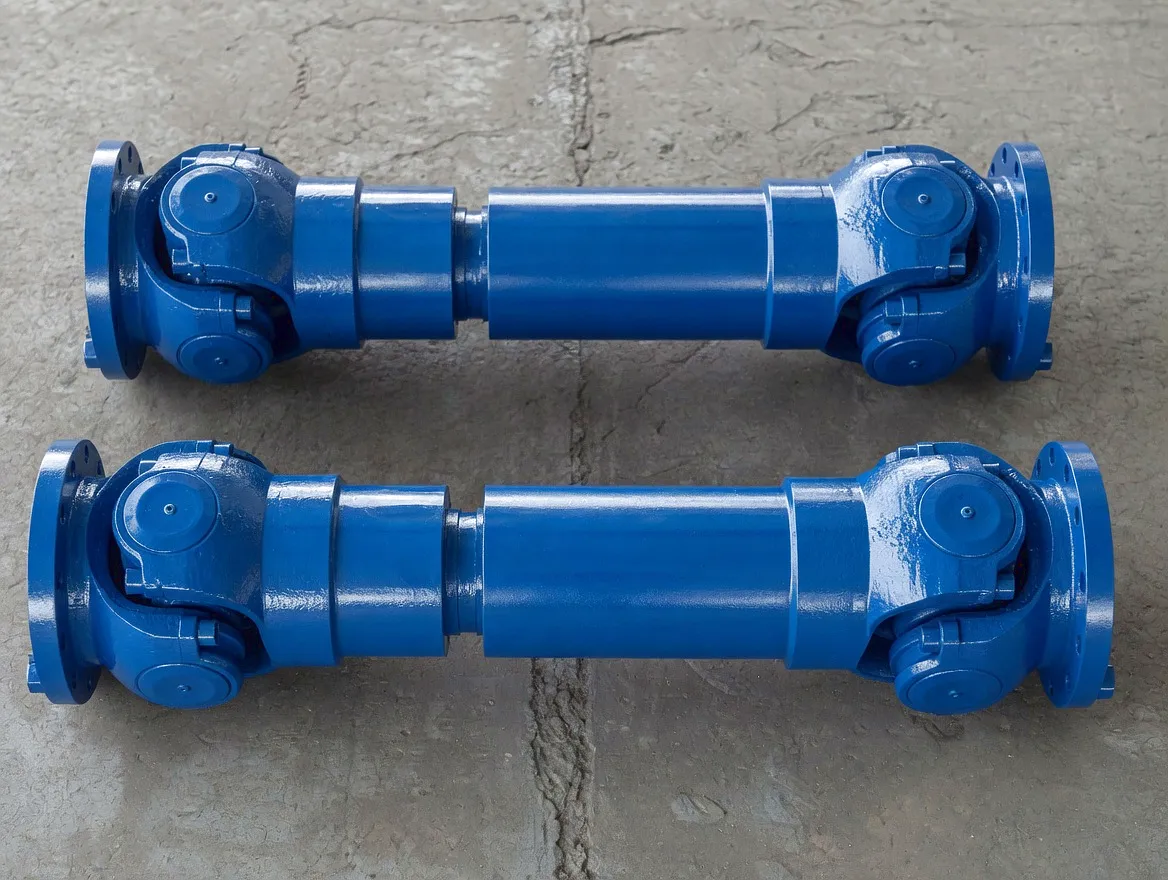
Sourcing Cardan Couplings for Your UK Drive Line?
Ever Power delivers custom-engineered solutions with full material certification and 2–4 week UK delivery.
Gerolamo Cardano and the Geometry of a New Idea
To understand the cardan coupling as it exists today, it is worth sitting for a moment with the man who gave it a name. Gerolamo Cardano was born in Pavia in 1501, the illegitimate son of a lawyer who was also an accomplished amateur mathematician — a man described by Leonardo da Vinci, who knew him, as having a fine understanding of geometry. Cardano’s own intellectual range was astonishing even by the standards of the Renaissance, which produced more than its share of polymaths. He published the first systematic treatment of cubic and quartic equations, practised medicine at a standard that attracted the Archbishop of St Andrews as a patient, wrote extensively on natural philosophy, and held professorships at Pavia and Bologna. His 1550 treatise De Subtilitate, one of the most widely circulated scientific works of the 16th century, addressed questions ranging from cosmology and the nature of precious stones to the design of mechanical instruments. It was in De Subtilitate that Cardano described a gimbal mounting — two concentric rings, each pivoting about a perpendicular axis — that could keep an object stable regardless of the rotation of its support. His application was navigational: a compass or lamp that would remain level aboard a ship in heavy weather. The mechanical insight was geometric: if a frame can pivot about one axis and carry within it a second frame pivoting about a perpendicular axis, the innermost body is isolated from rotation about both of those axes simultaneously. That observation, transposed from isolation to transmission, is the operating principle of every cardan coupling in service today.
Robert Hooke and the London Moment That Industrialised the Joint
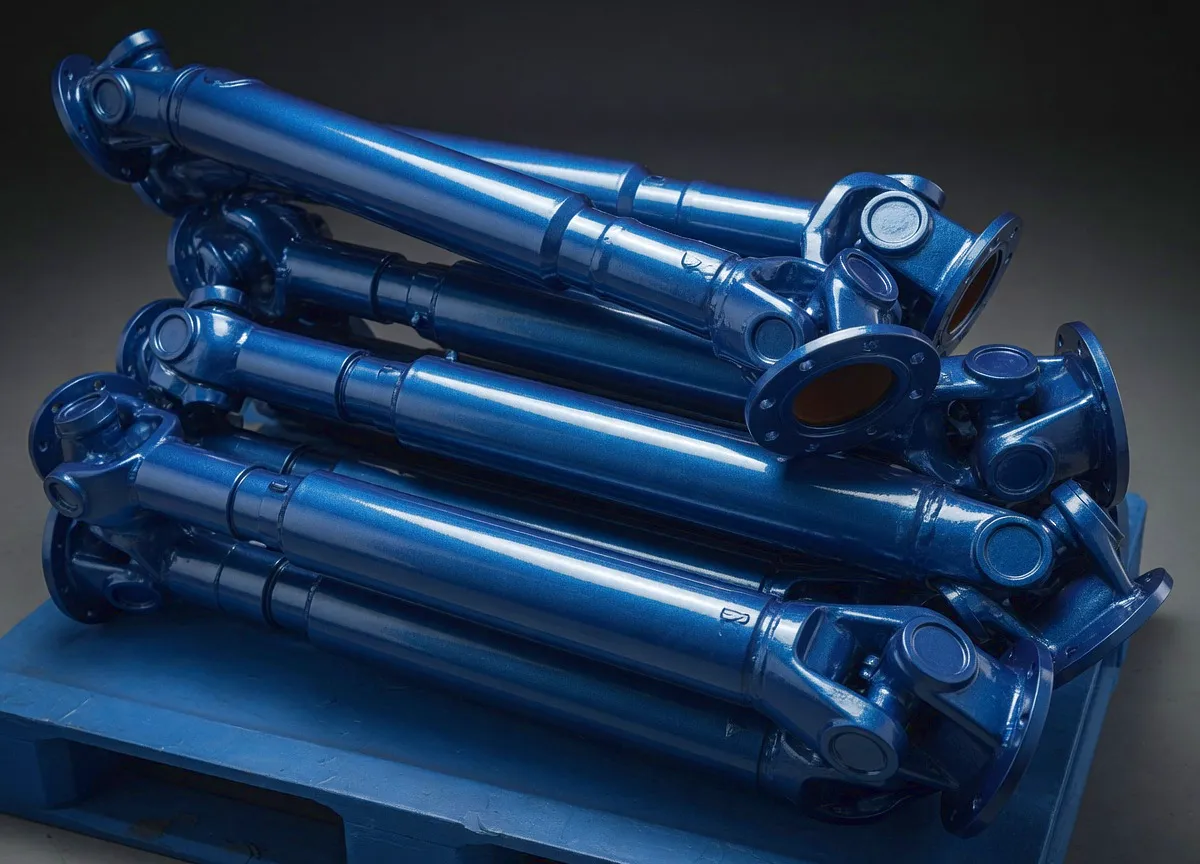
Robert Hooke’s contribution to the cardan coupling story is distinct from Cardano’s in both character and consequence. Where Cardano theorised, Hooke built. Where Cardano described an isolation mechanism, Hooke demonstrated a transmission instrument. And where Cardano published for a broad philosophical audience, Hooke presented his work to the Royal Society of London — the institution that, more than any other, connected 17th-century scientific knowledge to the practical engineering community that would eventually put it to industrial use. In 1676, Hooke demonstrated a working universal joint to the Fellows of the Royal Society in connection with his heliostat, a device for keeping an astronomical mirror oriented toward the sun as the Earth rotates. The joint appeared in his 1678 publication Helioscopes with sufficient geometric description to allow a competent instrument maker to reproduce it from scratch. That reproducibility was the key contribution: it moved the cardan coupling from the category of clever ideas to the category of replicable instruments. Hooke’s law of spring force, his microscopy work, his contributions to gravitation and planetary motion — all are better known than his universal joint demonstrations. But in terms of long-run industrial consequence, few of his accomplishments can match the moment in 1676 when a working cross-trunnion joint rotated in front of the Royal Society and the English-speaking world acquired both a name for it (Hooke’s joint) and a technical specification from which engineers could work.
Hooke’s wider scientific contributions also shaped the theoretical framework that later engineers would need to understand the joint’s kinematic behaviour. His studies of vibration and oscillation gave engineers conceptual tools for thinking about torsional dynamics. His understanding of elastic deformation was foundational to the fatigue analysis that governs how cardan coupling spiders are designed against crack propagation today. And his specific recognition — recorded in his geometric analysis of the joint — that a single Hooke’s joint operating at a non-zero angle introduces a cyclic output speed variation gave later designers the problem they needed to solve. The solution, in the form of the double cardan arrangement, would take another two centuries to become standard practice, but the problem was identified correctly in 17th-century London. It is that kind of intellectual continuity — a chain of analysis stretching from Hooke’s Royal Society demonstrations to the torsional vibration calculations carried out on modern steel mill drives in Sheffield — that makes the history of the cardan coupling genuinely instructive rather than merely antiquarian.
How Britain’s Industrial Revolution Made the Cardan Coupling a Production Necessity
Sheffield contributed equally critical raw material to this process. The development of cemented and then crucible steel in Sheffield during the 18th century gave British engineers access to steel with a level of hardness and toughness that earlier iron alloys could not provide. A cardan joint spider operating under cyclic bending load at a rolling mill drive requires a material that is simultaneously hard enough at the trunnion surface to resist roller contact fatigue, tough enough in the core to resist fracture under impact torque, and consistent enough in its metallurgical properties to be case hardened and machined to predictable dimensions. Sheffield’s steelmakers, by the early 19th century, were producing alloy grades that met all three requirements — and the proximity of Sheffield’s steel supply chain to the heavy machinery markets of the Midlands, West Riding, and Tyneside created a manufacturing ecology in which the cardan coupling could evolve rapidly from craft component to standardised trade item. By the mid-Victorian period, universal joint assemblies in standard dimensional series appeared in the catalogues of major British engineering suppliers, stocked for replacement service, priced by torque class, and understood by maintenance engineers from Aberdeen to Cardiff. The cardan coupling had been domesticated, normalised, and industrialised — and the British engineering tradition deserves the primary credit for that transformation.
The Working Principle: Why the Geometry Endures
The cardan coupling transmits torque between two shafts that are not perfectly aligned through the intermediary of a cross-shaped piece — the spider — whose four arms project along two mutually perpendicular axes. Each pair of opposing arms seats into bearing cups housed in a yoke fork, and each yoke fork connects to one of the drive shafts. Because the spider’s two pairs of trunnion arms are oriented at ninety degrees to each other, each yoke can pivot about its own axis relative to the spider independently of the other yoke’s motion. The result is a joint that can transmit continuous rotation across an angular offset of up to thirty-five degrees in standard configurations — a capability that has no close equivalent in any coupling technology that keeps the torque path entirely metallic. The bearing arrangement at the trunnions — almost universally needle roller bearings in modern designs — minimises friction losses while distributing the radial load generated by the angular displacement across a large roller contact area, giving the spider an excellent fatigue life relative to the bending moments it must sustain. The torque transmission efficiency of a well-maintained cardan coupling operating at its design angle typically exceeds ninety-eight percent, making it energetically competitive even with the most efficient gear or disc coupling alternatives in applications where significant angular offset is present.
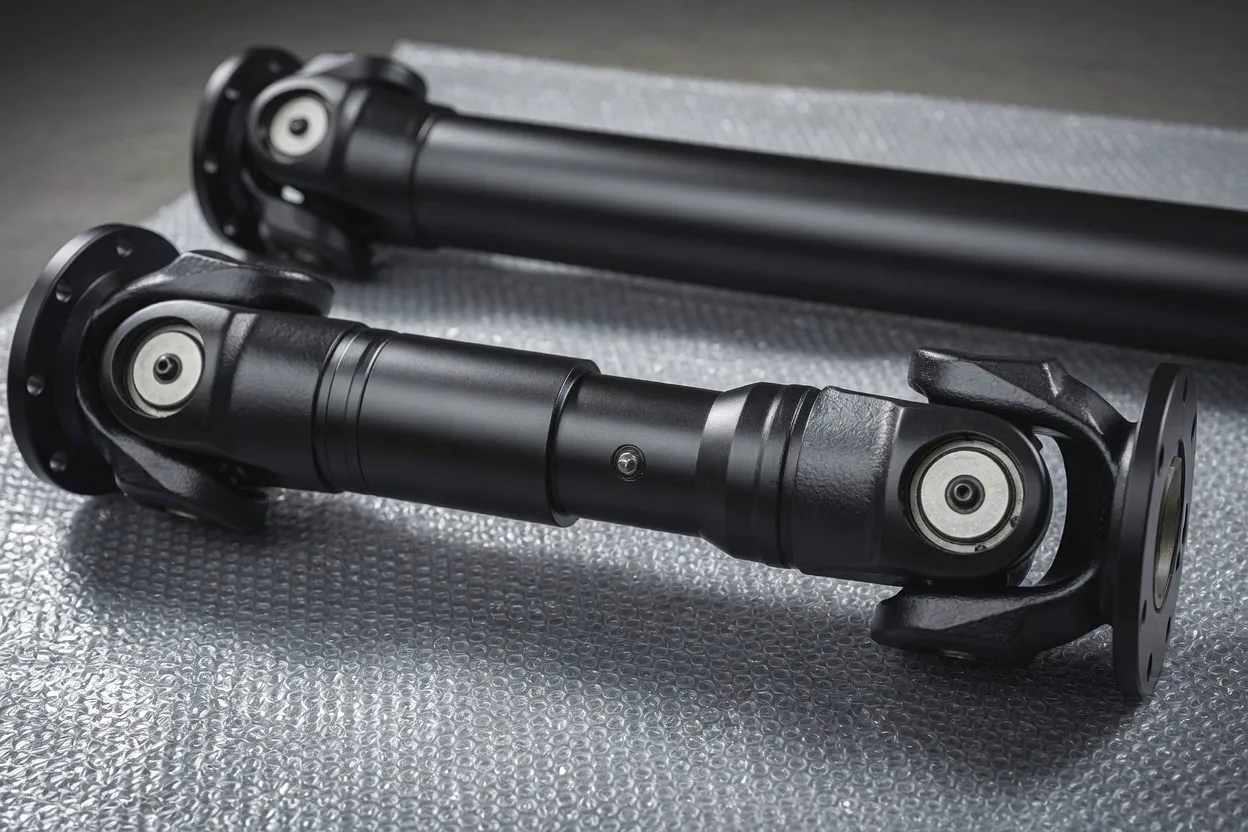
Cross Trunnion (Spider)
The hardened alloy steel cross piece seated in needle roller bearing cups within both yoke forks. Case hardened to 58–62 HRC on the trunnion contact surfaces with a tough ductile core, the spider is simultaneously the most mechanically loaded and most replaced component in the cardan coupling assembly. Standard material in heavy service is 42CrMo4 quenched and tempered, with trunnion surface hardening by induction or carburising processes.
Yoke Forks
The U-shaped flanged arms connecting each shaft to the spider assembly. Yoke bore configuration — parallel bore with keyway, tapered bore, spline bore, or custom flanged end — is the principal design variable in coupling customisation, allowing the same spider assembly to interface with almost any shaft connection geometry that industrial practice requires. The yoke must resist bending as well as torsion, making its cross-sectional geometry and material grade as important as the torque class selection.
Double Cardan / Constant Velocity Arrangement
Two single joints phased in opposition, connected by an intermediate tube, delivering kinematically uniform output speed. The double cardan is not a different type of coupling but a system configuration, and it is the standard choice wherever speed uniformity, vibration control, or precision process quality cannot accommodate the second-harmonic pulsation of a single joint. It has been a standard configuration in UK industrial practice since the early 20th century.
Materials: Five Centuries of Metallurgical Evolution in a Single Component
42CrMo4 — The Universal Standard for Heavy Duty
Tensile strength 900–1,100 MPa in Q+T condition. Case hardened to 58–62 HRC on trunnion surfaces. The default specification for spider and yoke materials in steel mill, mining, marine, and heavy industrial drive applications operating at sustained torques above 500 Nm. The combination of chromium and molybdenum alloying elements gives 42CrMo4 a fatigue endurance limit approximately 40% higher than equivalent plain carbon steel grades — a margin that translates directly into extended service intervals at bearing-load-intensive operating angles.
316L Stainless Steel — Corrosion-Critical Environments
The molybdenum addition in 316L grade confers superior resistance to chloride-induced pitting compared to standard 304, making it the correct specification for pharmaceutical plant installations in the Cambridge and Oxford biotech corridors, food processing lines across East Anglian agricultural counties, and coastal or offshore applications where salt spray exposure is continuous. Full material traceability under EN 10204 3.1 is standard in pharmaceutical and food sector supply.
CFRP Intermediate Tube — High-Speed Precision Applications
Carbon fibre reinforced polymer tube replaces the steel intermediate shaft in high-speed cardan shaft assemblies where the critical whirl speed of the shaft is a limiting factor on operating speed range. The specific stiffness of CFRP is approximately five to six times that of steel at a fraction of the density, allowing CFRP-tubed cardan shafts to operate at speeds well above those achievable with steel tubes of equivalent bore — a decisive advantage in NVH test dynamometers, aerospace ground support equipment, and precision spindle drives.
Product Technical and Performance Parameters
| Parameter | Light Duty | Medium Duty | Heavy Duty | XH / Custom |
|---|---|---|---|---|
| Nominal Torque (Nm) | 50 – 500 | 500 – 10,000 | 10,000 – 250,000 | >250,000 |
| Max Working Angle (°) | Up to 35° | Up to 30° | Up to 25° | Up to 45° (special) |
| Max Speed (RPM) | Up to 6,000 | Up to 3,500 | Up to 1,500 | Up to 800 |
| Spider Material | C45 / GGG-40 | 40Cr / 42CrMo4 | 42CrMo4 Q+T | 34CrNiMo6 / custom |
| Bore Diameter (mm) | 10 – 50 | 50 – 160 | 160 – 400 | >400 per drawing |
| Operating Temp (°C) | -30 to +100 | -30 to +120 | -40 to +150 | -50 to +200 |
| Balance Grade | G16 | G6.3 | G2.5 | G1 / G0.4 |
| Surface Treatment | Phosphate / paint | Zinc plate / paint | Hot-dip galv. | Custom per spec |
Indicative data. Ever Power confirms parameters per application at quotation stage.
Product Advantages: What Five Centuries of Engineering Refinement Delivers
The cardan coupling’s persistence in modern engineering is not a product of institutional inertia or procurement habit. It reflects a genuine set of technical capabilities that competing coupling technologies struggle to reproduce simultaneously — capabilities that become more rather than less relevant as industrial machinery grows more powerful, more compact, and more demanding of both angular accommodation and mechanical reliability. The four principal advantages of the cardan coupling, in the context of the UK’s advanced manufacturing and process industries, can be stated precisely: angular capacity that exceeds any metallic alternative; all-metal torque transmission with no upper bound set by material softness; field repairability at the component level; and environmental tolerance across a temperature range and chemical exposure spectrum that eliminates elastomeric coupling technologies from whole categories of application.
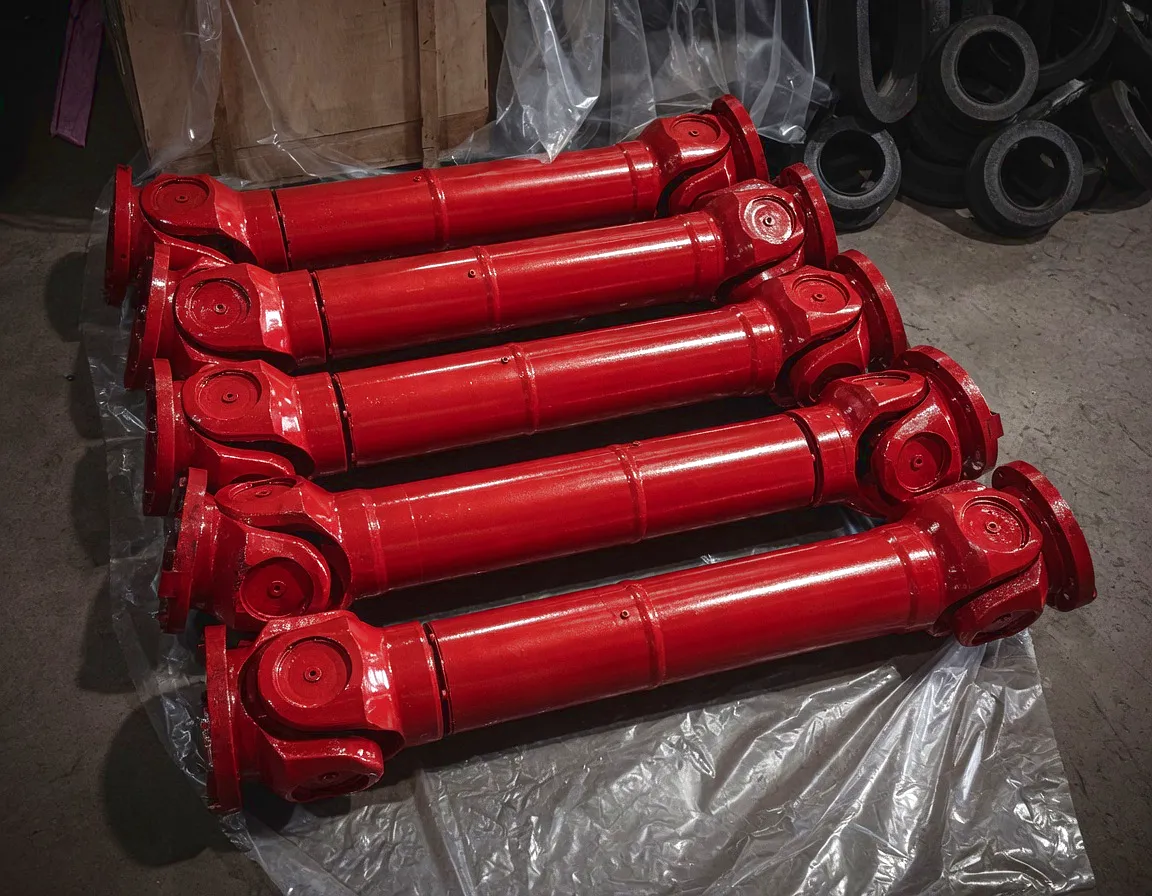
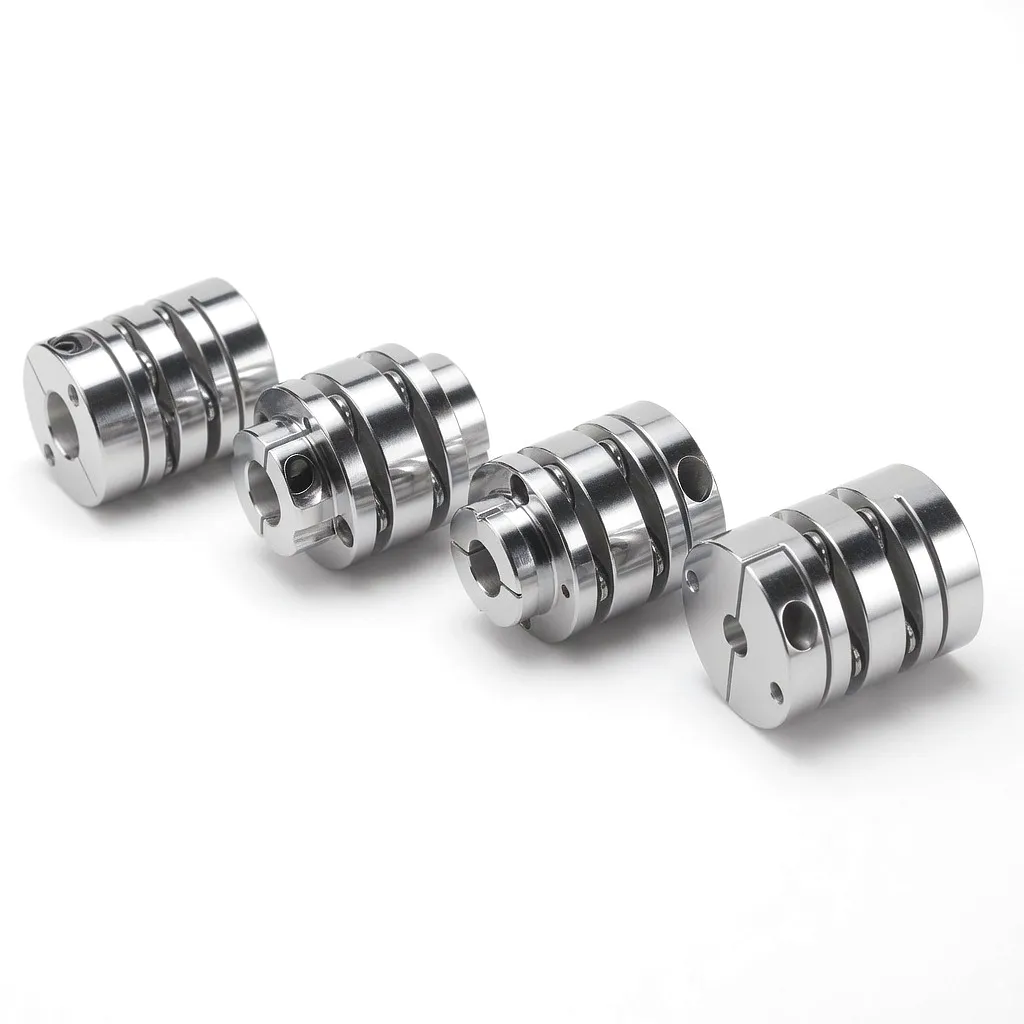
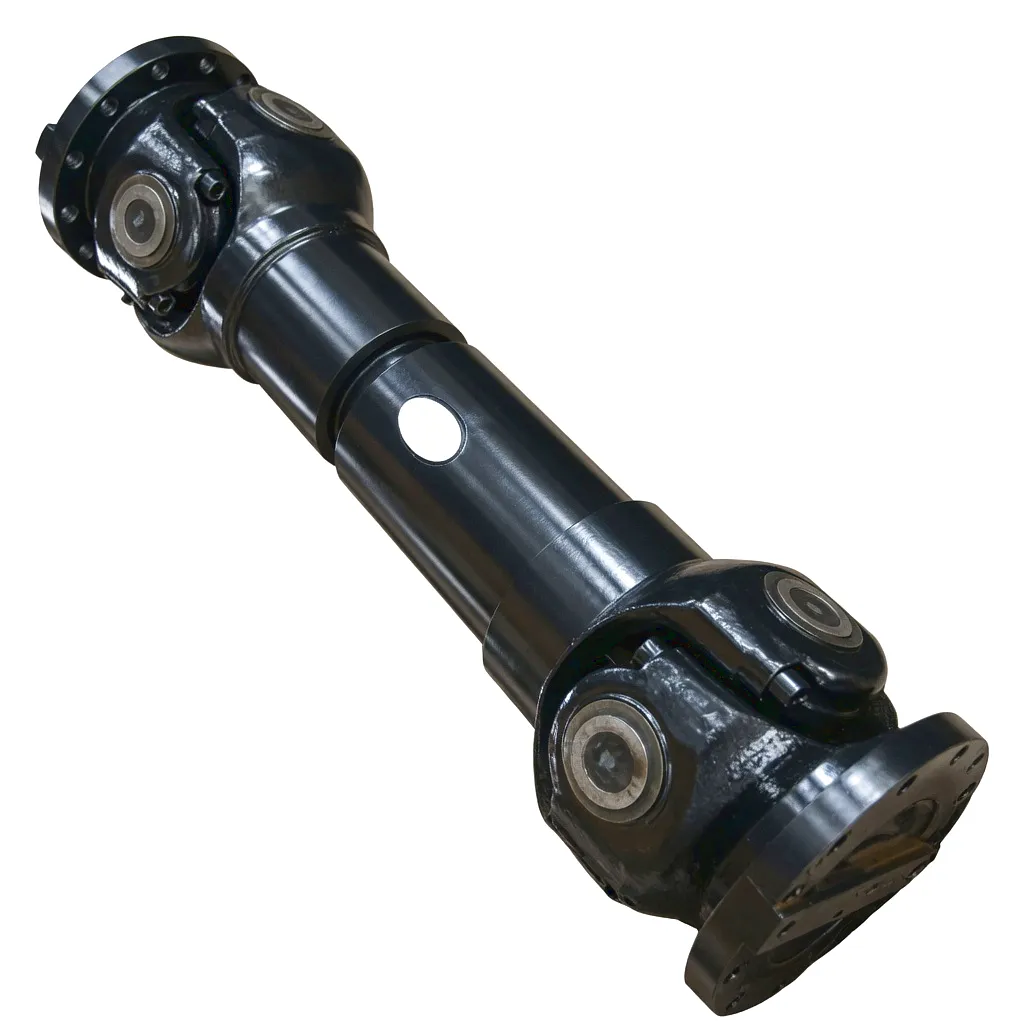
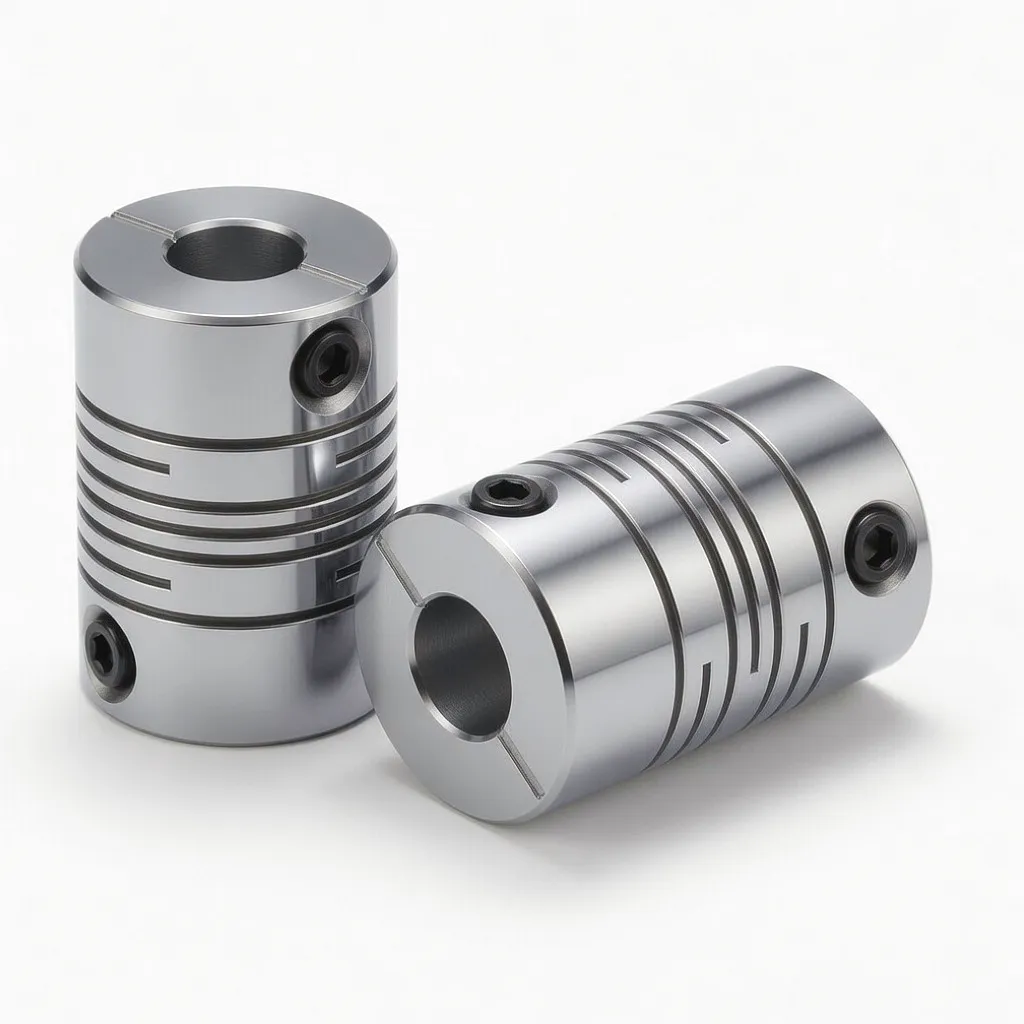
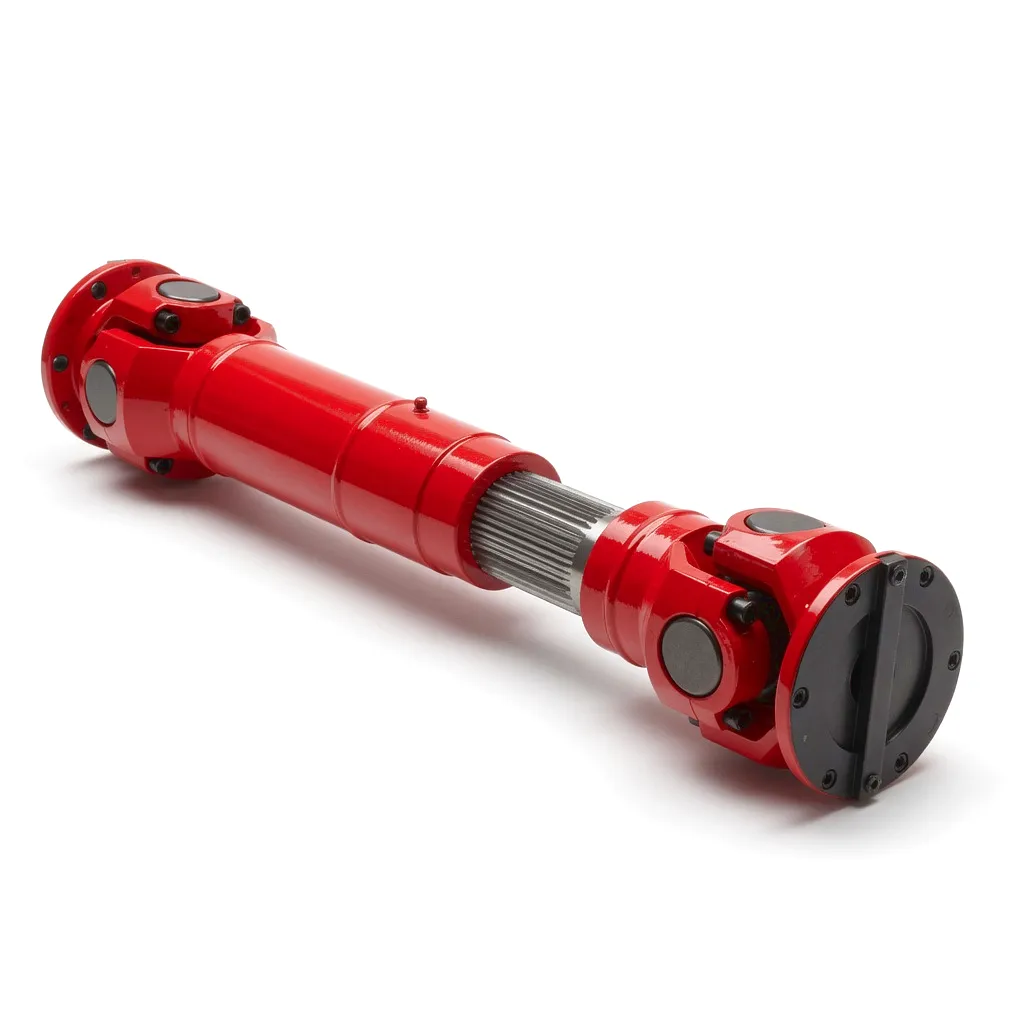
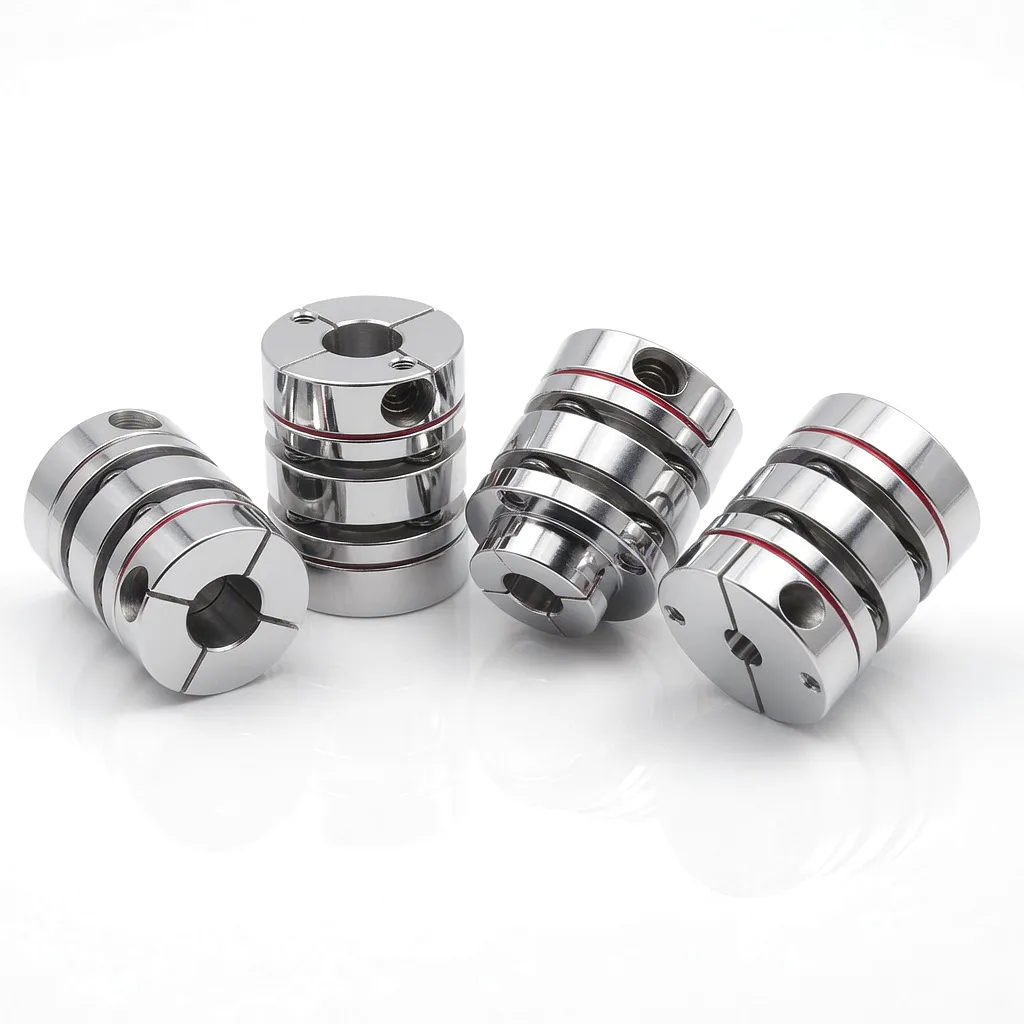
Ever Power coupling range — disc, beam, gear, and custom cardan configurations
Application Scenarios: Where the Cardan Coupling Is Doing Indispensable Work Today
The breadth of the cardan coupling’s application base is a direct consequence of the breadth of its mechanical capabilities. From the deepest colliery hoist in the Yorkshire coalfield to the lightest precision laboratory instrument drive, the same fundamental joint geometry — spider, bearing cups, yoke forks — appears in configurations scaled by six orders of magnitude in torque and adapted to environmental conditions ranging from Arctic offshore platforms to pharmaceutical clean rooms. In the context of British industry, which spans from the heavy process industries of Teesside and the steelworks of South Yorkshire to the high-technology manufacturing of the Cambridge–Oxford arc, the cardan coupling’s presence is near-universal in any application where shaft misalignment is a structural reality rather than an installation error to be corrected.
Sheffield · Scunthorpe · South Wales
Rolling mill main spindle drives, coiler mandrel drives, continuous casting withdrawal roll drives — all demand cardan shaft assemblies capable of handling peak torques during bar entry shock events while continuously accommodating the angular displacement generated by pass line adjustments, roll diameter changes, and thermal growth of the mill structure. The cardan coupling is the only technology that handles all three of these requirements simultaneously at the power levels these applications require.
Coventry · Sunderland · Derby
Vehicle propshafts in heavy goods vehicles, buses, and construction equipment use single or double cardan arrangements to manage the working angle between gearbox output and driven axle as suspension articulates. NVH test dynamometers at UK automotive development facilities require precision-balanced cardan shaft assemblies — often with CFRP intermediate tubes — capable of delivering constant velocity rotation at speeds up to eight thousand revolutions per minute without measurable vibration contamination of test data.
Aberdeen · North Sea · East Anglia
Offshore platform pump drives and drilling rig mud motor connections demand cardan couplings in stainless steel or heavily protected carbon steel to survive continuous salt spray and aggressive chemical cleaning. The UK’s expanding offshore wind sector — targeting fifty gigawatts of installed capacity by 2030 — is generating increasing demand for cardan couplings in nacelle auxiliary drives and rotor-to-gearbox transmission arrangements where permanent angular misalignment is a structural feature of the installation geometry.
Customer Success: How an Ever Power Custom Design Resolved a Paper Mill Crisis in Manchester
Salford, Greater Manchester
Specialty Paper Manufacturing
Speed-related banding defects and coupling wear
A specialty paper manufacturing facility in Salford, Greater Manchester, had been struggling for over two years with periodic banding defects in its premium-grade coated paper output — faint but commercially unacceptable transverse striations in the paper surface that appeared and disappeared unpredictably across production runs. The defects had been attributed at various points to web tension inconsistencies, coating weight variation, and press roll eccentric wear, and a series of expensive corrective actions addressing each of those potential causes had produced no lasting improvement. The plant’s process engineers eventually engaged an external vibration analysis specialist, whose measurements identified a torsional pulsation in the section drive of the press section’s primary drive line at a frequency corresponding directly to the double-rotational-frequency output variation of a single cardan coupling operating at a measured misalignment angle of 7.8 degrees. The original coupling specification had been a single joint in a position where a double cardan arrangement was the correct engineering choice. The velocity non-uniformity — invisible in the coupling itself and apparently modest in absolute terms — was being amplified through the drive train into the nip between the press rolls and appearing on the paper web as the banding pattern that had been generating product quality failures for two years.
Ever Power’s technical team was contacted following the vibration analysis findings. The brief was clear: design and supply a double cardan shaft assembly to replace the original single-joint coupling, with a shaft configuration that maintained the existing installation envelope — the distance between shaft faces, the yoke bore dimensions, and the working angle — without modification to either the drive motor or the driven roll bearing housings. The replacement assembly was designed with standard 42CrMo4 spiders, yokes matched to the existing shaft dimensions with keyway bores to DIN 6885, and an intermediate tube length calculated to position the two joints at equal angles to the shaft line, maximising the accuracy of the velocity cancellation. The assembly was dynamically balanced to ISO 1940 G2.5. Total engineering, manufacturing, and delivery lead time from receipt of shaft drawings to despatch to the Salford site was eighteen working days.
The banding defect disappeared within the first production run after installation. Post-installation vibration measurements confirmed that the torsional pulsation frequency that had been driving the defect was no longer detectable in the drive line signal. At the six-month review, production quality statistics showed a twenty-two percent reduction in total product rejections across all grades produced on the affected machine, with the specific banding fault category reduced to zero incidents. The manufacturing director estimated that the quality improvement translated to an annual saving in raw material waste and customer claims of approximately £160,000 — against a total capital cost for the Ever Power coupling assembly that was recovered in the first five weeks of fault-free production.
What Our Customers Say
“Two years of banding defects, a series of expensive root cause investigations that found nothing, and then a single Ever Power coupling assembly that eliminated the problem on the first production run. The technical support during the application review — the detailed explanation of how single-joint velocity non-uniformity was reaching our paper web — gave us far more understanding of our own drive line than we had before. The eighteen-day lead time was genuinely impressive for a custom assembly. We have since replaced three further section drive couplings on the same machine to the double cardan specification, and the production quality improvement has been consistent throughout.”
Specialty Paper Plant, Salford
“Our spindle drive application on the new rolling line at our Sheffield site had a non-standard yoke bore configuration that no stock coupling supplier could accommodate without major shaft modification. Ever Power turned around a custom yoke design from our dimensional drawing in under three weeks. The material certificates on delivery were comprehensive — full traceability to heat number on both the spider and yoke forgings — which matters for our customer audit requirements. The coupling has been running continuously for eight months now at the rated duty with no service incidents, which is exactly what we needed to prove out the new line.”
Rolling Mill OEM, Sheffield
“The 316L stainless cardan coupling kit Ever Power supplied for our tablet coating installation in Leeds arrived with full EN 10204 3.1 certification on all material batches, the sealed bearing variant we needed for our cleaning protocol, and dimensional inspection records for every bore. The delivery was on the committed date, which is not something we always experience with bespoke engineering suppliers. The maintenance team found the installation straightforward and the coupling has required no attention in twelve months of continuous operation. We are now standardising on the Ever Power sealed-bearing stainless specification across all drive lines in our cleanroom facilities.”
Pharmaceutical Manufacturer, Leeds
Frequently Asked Questions
Specify Your Cardan Coupling with Confidence
Ever Power reviews every application individually and delivers a priced technical proposal within 24 hours. From single replacement units to full production contracts — get in touch.
© Ever Power Engineering | cardancoupling.top | edit by gzl