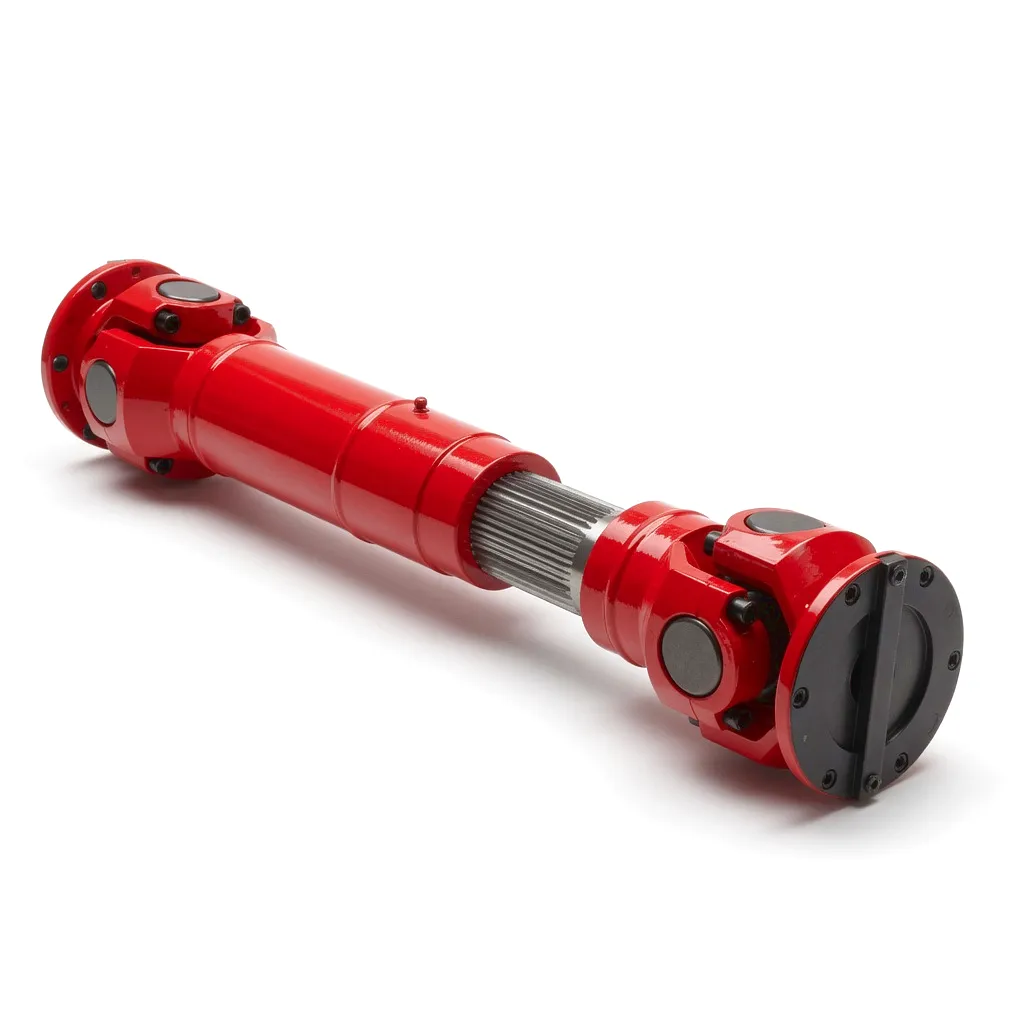
 Anyone who has spent time around marine engineering knows that a vessel’s propulsion shaft system faces punishment unlike anything on land. Waves flex the hull, thermal cycles warp metal, and seawater attacks every exposed surface. Somewhere between the engine room bulkhead and the stern tube, there sits a component that quietly absorbs all of that abuse — the cardan coupling. Specifically, the marine-grade telescopic cardan shaft fitted with a corrosion-resistant coating has become the go-to solution for shipyards and refit specialists across the United Kingdom, from the Solent to the Clyde. This article walks through the engineering principles, material choices, classification requirements, and real-world performance data behind these couplings, drawing on field experience gathered over nearly two decades in drivetrain applications. Whether you are specifying a coupling for a new-build commercial ferry or replacing worn units in a superyacht during a Pendennis refit, the information here is designed to help you make a confident, well-informed decision.
Why Marine Propulsion Demands a Cardan Coupling
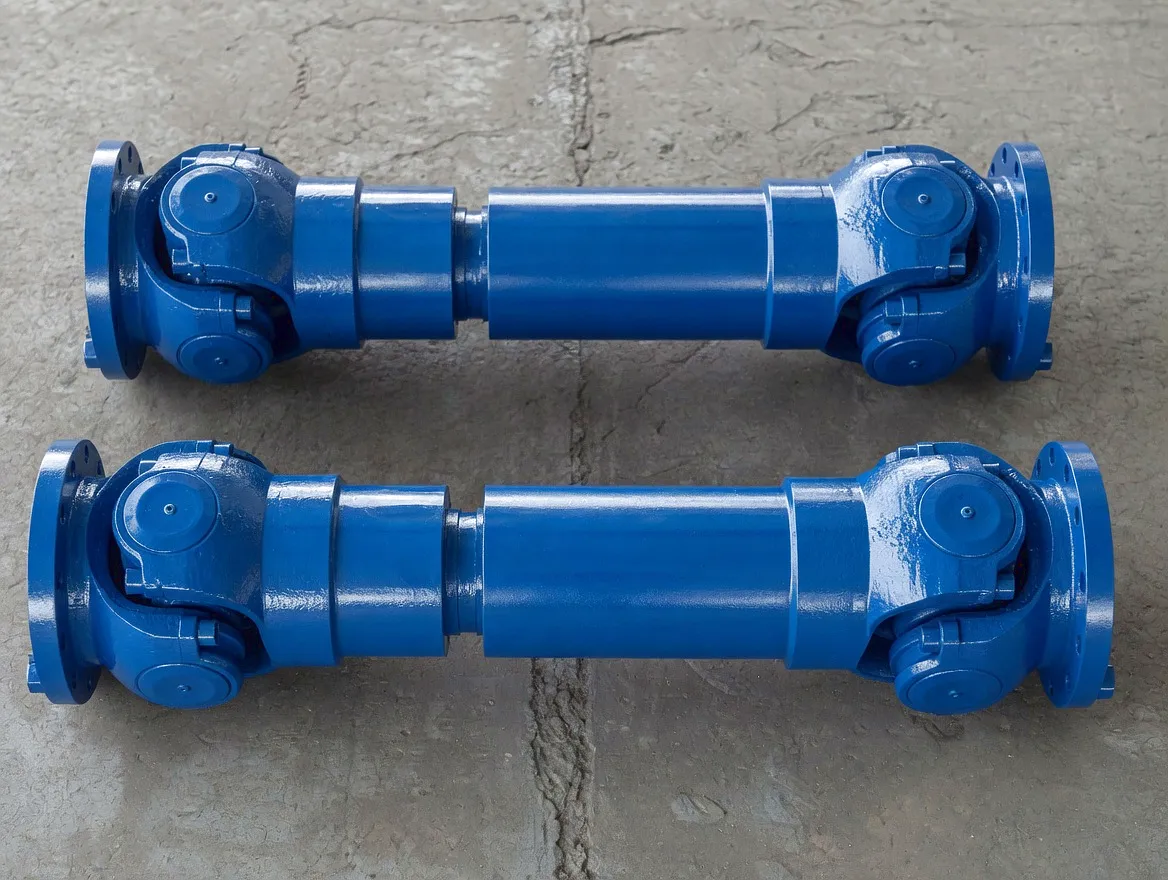
A ship’s hull is not rigid. In Sea State 4 or above, longitudinal bending moments can shift the relative position of the main engine output flange and the propeller shaft input by several millimetres — sometimes more on longer hulls. Traditional rigid flanged couplings cannot tolerate that kind of dynamic misalignment without transferring damaging loads into bearing housings and gearbox casings. A marine-grade telescopic cardan shaft, by contrast, is engineered to accommodate angular, axial, and parallel offsets simultaneously while transmitting the full rated torque of the engine. The telescopic section — usually a precision-ground splined sleeve — allows the coupling to lengthen or shorten as the hull flexes, while the universal joints at each end handle angular displacement. Coating the entire assembly with a zinc-rich epoxy or marine-grade polyurethane provides the corrosion resistance needed for decades of service in salt-spray environments. Without this combination of flexibility and protection, propulsion lines on British-built vessels would suffer chronic vibration, premature bearing wear, and unplanned drydocking — all of which translate directly into lost revenue for shipowners operating out of ports like Liverpool, Aberdeen, and Falmouth.
Engineering Principles Behind the Telescopic Cardan Shaft
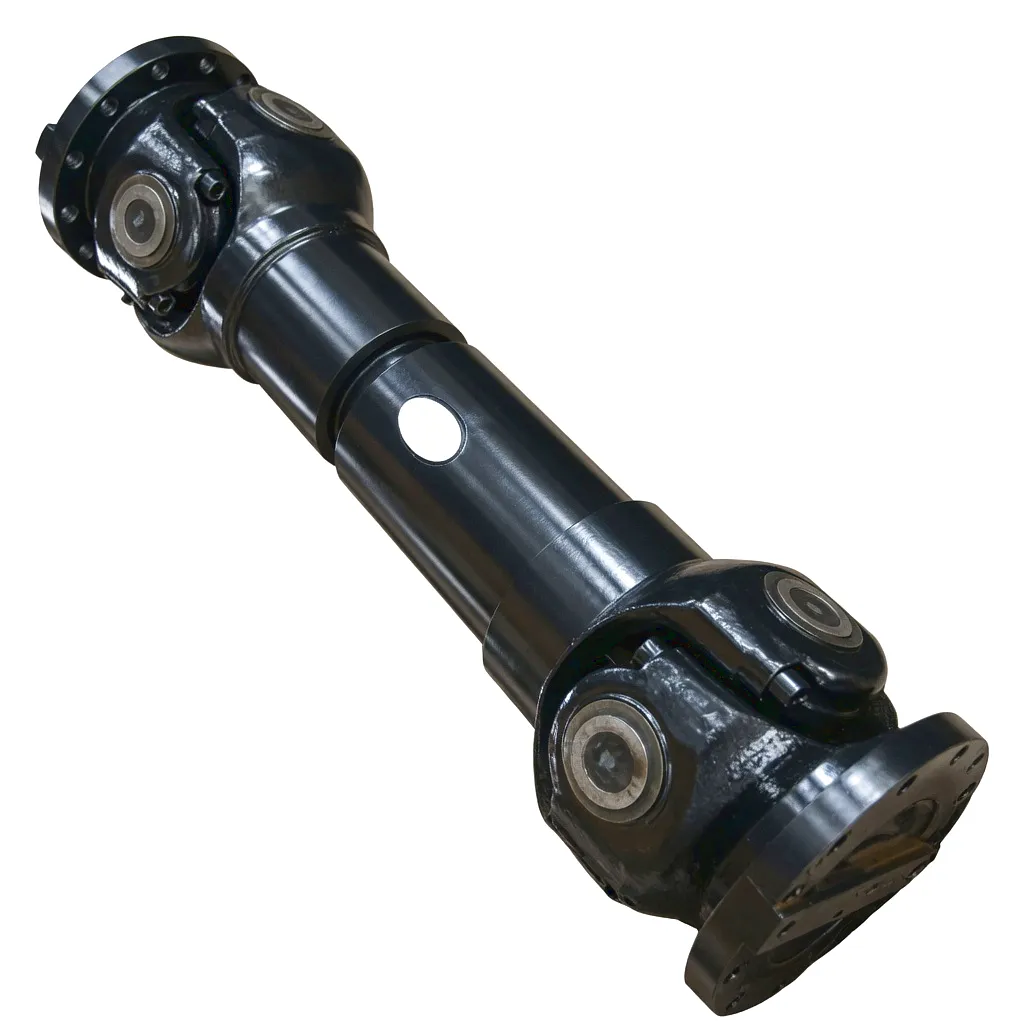 The operating concept relies on Hooke’s joint geometry — two yokes connected by a cross-shaped trunnion that permits rotation through an angle. When two such joints are placed in series with the correct phasing (the input and output yoke planes aligned), the velocity fluctuation inherent in a single universal joint cancels out, delivering near-constant angular velocity to the driven shaft. The telescopic element sits between the two joints: a male spline slides inside a female spline housing, both precision-ground to DIN 5480 or equivalent. This spline pair carries torque while allowing free axial travel. In a marine propulsion application, the cardan coupling might need to absorb 8 to 15 mm of axial stroke under heavy-sea conditions, and angular misalignment up to 3 degrees at each joint. Getting those numbers right during the design phase depends on accurate hull deflection data — typically sourced from finite element analysis of the vessel’s longitudinal structure — combined with thermal growth calculations for the engine and reduction gearbox. Shipyards across Britain, from BAE Systems on the Clyde to Wight Shipyard on the Isle of Wight, increasingly demand this level of analytical rigour before signing off on coupling specifications, and rightly so. Inadequate stroke allowance or underrated angular capacity has been behind some of the costliest warranty claims in recent UK marine projects.
Material Selection and Corrosion-Resistant Coatings
Material choice is everything in a seawater environment. The trunnion crosses and bearing cups on a marine cardan coupling are almost always manufactured from case-hardened alloy steel — typically 20CrMnTi or SAE 8620 — because the needle roller bearings inside each cup demand a surface hardness above 58 HRC combined with a tough, ductile core. The yokes and flanges are commonly forged from 42CrMo4 (EN 10083), offering an excellent balance of tensile strength, fatigue resistance, and machinability. For the telescopic spline section, Ever Power uses 40Cr or equivalent medium-carbon alloy steel, induction-hardened on the spline teeth to resist fretting wear caused by the constant micro-movements during hull flexure. The corrosion-resistant coating applied to the exterior surfaces is a multi-layer system: a zinc-rich epoxy primer applied at 75 microns, followed by an intermediate polyamide-cured epoxy at 125 microns, and finally a polyurethane topcoat at 60 microns. This three-coat system meets the requirements of NORSOK M-501, System 1, which is widely accepted by classification societies including Lloyd’s Register and the American Bureau of Shipping. Internal spline surfaces receive a molybdenum disulphide dry-film lubricant to reduce sliding friction while keeping out moisture. The result is a cardan coupling that can operate in fully submerged or splash-zone conditions for 15 years or more between major overhauls, which is the kind of service life UK ferry operators and offshore support vessel owners expect.
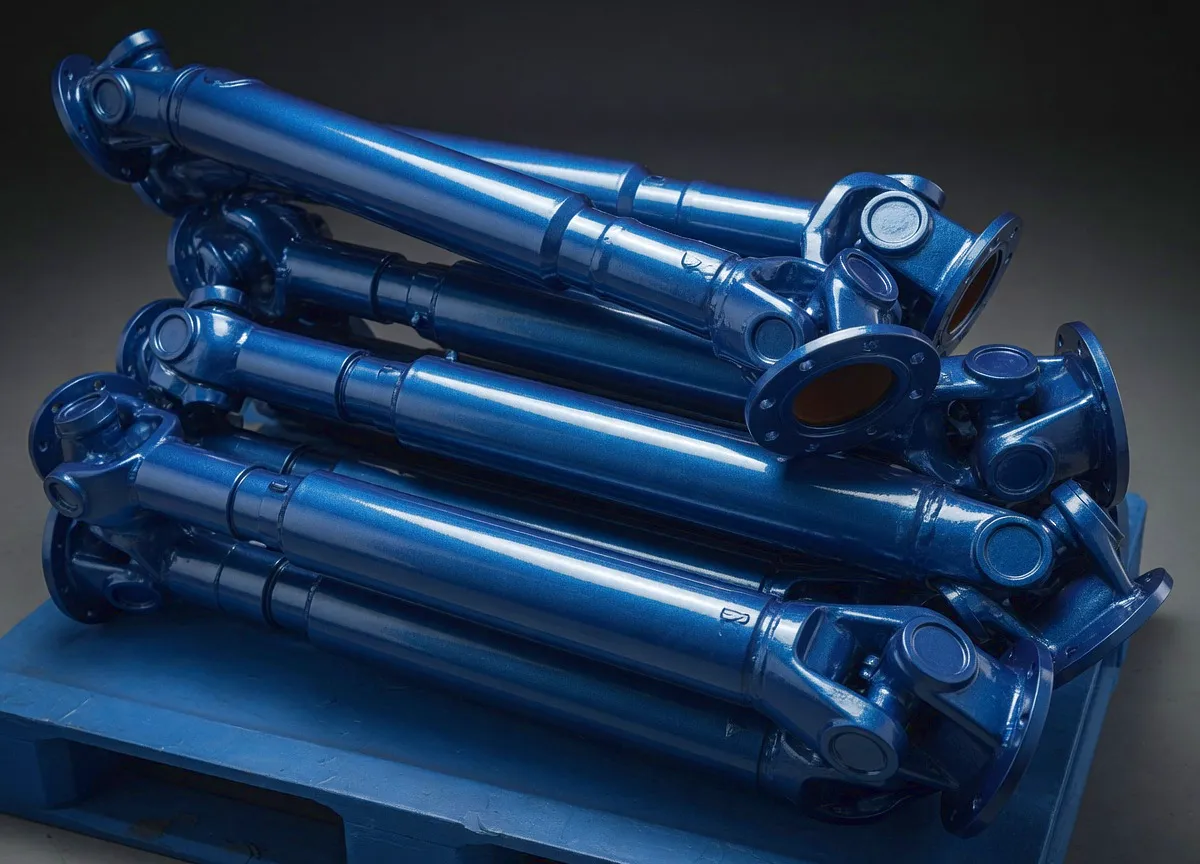
Technical Specifications — Marine Telescopic Cardan Shaft Range
| Parameter | SWC-M120 | SWC-M180 | SWC-M250 | SWC-M350 |
|---|---|---|---|---|
| Rated Torque (kNm) | 6.3 | 20 | 63 | 190 |
| Max Operating Speed (RPM) | 1500 | 1200 | 800 | 500 |
| Angular Misalignment (deg) | 0 – 15 | 0 – 15 | 0 – 15 | 0 – 15 |
| Axial Stroke (mm) | 10 – 25 | 12 – 35 | 15 – 50 | 20 – 80 |
| Flange Diameter (mm) | 120 | 180 | 250 | 350 |
| Collapsed Length (mm) | 480 | 650 | 880 | 1150 |
| Coating System | NORSOK M-501 System 1 — Zinc epoxy primer + Epoxy intermediate + PU topcoat (260 microns DFT) | |||
| Bearing Type | Sealed needle roller bearings with marine-grade grease (NLGI 2) | |||
| Classification Approval | Available with Lloyd’s Register (LR), ABS, DNV, BV, and RINA type approval | |||
Key Advantages of Marine-Grade Cardan Couplings
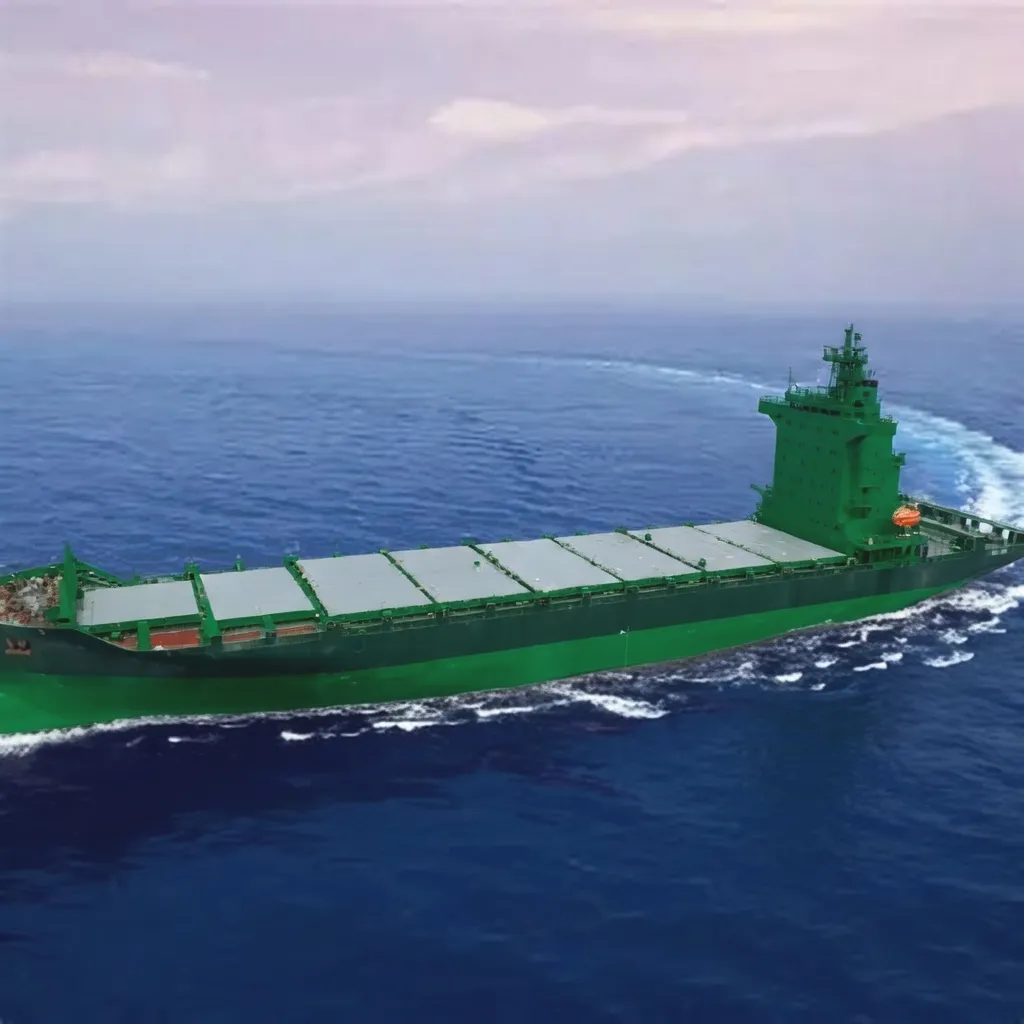
Vibration Damping and Noise Reduction
The angular freedom within the universal joints, combined with the slight radial play inherent in the spline engagement, creates a natural vibration isolation barrier between the engine and the propeller shaft. In controlled sea trials, Ever Power marine cardan couplings have demonstrated a 30 to 40 percent reduction in torsional vibration amplitude at the second and third engine firing orders compared with rigid flange connections. For passenger vessels and luxury yachts — where onboard comfort standards are critical — that level of damping is a significant selling point.
Dynamic Misalignment Compensation
Unlike rubber-element flexible couplings that lose elasticity over time and stiffen in cold North Sea water, a cardan coupling provides mechanical angular compensation that is temperature-independent and virtually wear-free for millions of cycles. Each joint can handle up to 15 degrees of angular offset, though typical marine installations operate within 1 to 3 degrees. The telescopic section absorbs axial displacement without imposing thrust loads on adjacent bearings, which protects expensive gearbox internals and stern tube seals from premature failure.
Extended Service Life in Harsh Conditions
The multi-layer NORSOK-compliant coating system, sealed needle roller bearings, and MoS2 spline lubrication combine to deliver a service interval of 8,000 running hours — approximately 18 to 24 months in continuous commercial operation — before re-greasing is required. Full overhaul intervals stretch to 40,000 hours or more. That kind of longevity matters enormously to operators running tight schedules along routes like the Portsmouth–Bilbao ferry corridor or the North Sea offshore supply chain, where unplanned downtime can cost upwards of GBP 15,000 per day.
High Torque Density in Compact Packages
Space inside a vessel’s engine room is always at a premium. A cardan coupling transmits more torque per unit of installed weight and volume than most competing coupling types, including disc packs and gear couplings of similar outer diameter. The SWC-M250, for example, delivers 63 kNm of rated torque from a unit that weighs under 58 kg — an excellent power-to-weight ratio for installations where every kilogram affects stability calculations and fuel consumption. Naval architects working on fast patrol craft and crew transfer vessels particularly value this compactness.
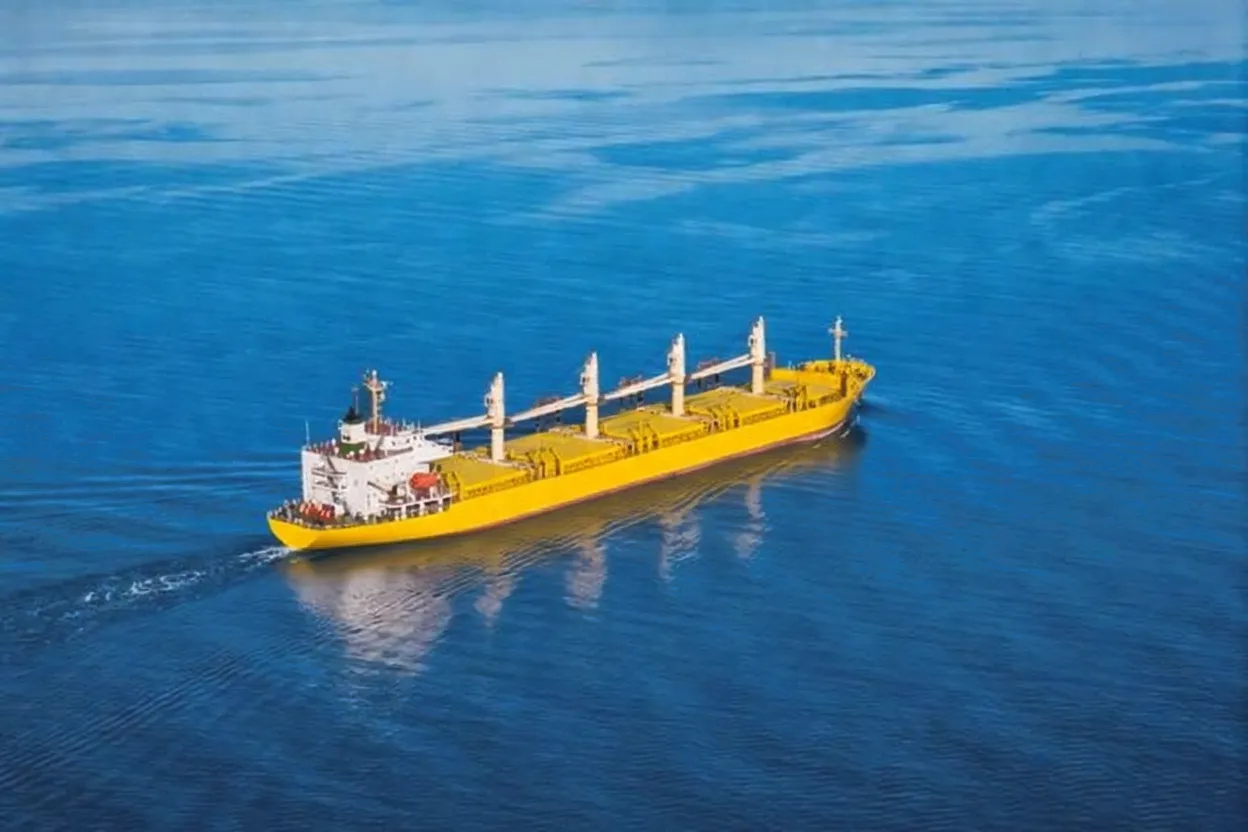
Marine propulsion shaft system with telescopic cardan coupling absorbing dynamic hull deflection
Where Marine Cardan Couplings Are Used Across British Waters
The versatility of the telescopic cardan shaft makes it a fit for an unusually broad range of vessel types. Here is a breakdown of the most common applications that our engineering team encounters when supporting UK-based shipyards and operators.
Commercial Ferries and RoPax Vessels
Ro-Pax ferries operating on routes from Dover to Calais or Holyhead to Dublin rely on cardan couplings to maintain propulsion integrity during Channel crossings. The coupling compensates for the substantial hull deflection that occurs when vehicle decks are loaded asymmetrically, and the vibration damping helps keep passenger cabin noise below IMO comfort thresholds. Operators like those serving the Irish Sea routes have reported measurably smoother shaft behaviour after switching from disc-type couplings to telescopic cardan shafts.
Offshore Supply Vessels (OSVs) and Platform Supply Vessels
The North Sea demands the highest levels of mechanical reliability. OSVs operating out of Aberdeen and Great Yarmouth face extreme sea states, heavy dynamic positioning loads, and extended time on station. A marine cardan coupling provides the torsional flexibility needed when DP thrusters impose sudden load changes on the propulsion train. The corrosion-resistant coating is non-negotiable in this environment, where salt spray is constant and maintenance windows are short.
Superyachts and Motor Yachts
The superyacht sector — with refit hubs in Pendennis (Falmouth), Burgess Marine (Portsmouth), and Endeavour Quay (Gosport) — places an extreme premium on low vibration and noise. A telescopic cardan shaft, particularly when paired with a resilient mount system, can bring structure-borne noise below the 55 dB(A) threshold that most charter clients and owners expect in sleeping cabins. Custom lengths and flange configurations are standard for these projects, and Ever Power’s engineering team works directly with yacht design offices to produce bespoke coupling assemblies.
Workboats, Tugs, and Pilot Vessels
Harbour tugs in ports like Felixstowe, Tilbury, and Southampton operate under punishing duty cycles — frequent starts, stops, and rapid power reversals. The cardan coupling’s ability to absorb torsional shock loads during bollard pull operations protects downstream drivetrain components from impact damage. Pilot vessels, which must maintain speed in rough bar crossings, also benefit from the misalignment tolerance that a telescopic cardan shaft provides, particularly as these smaller hulls flex proportionally more than larger commercial vessels.
Classification Society Approval: ABS, Lloyd’s Register, and Beyond
 No marine coupling reaches a vessel’s engine room without passing through the scrutiny of a classification society. In the UK market, Lloyd’s Register (LR) dominates, though many internationally trading vessels also carry ABS, DNV, or Bureau Veritas class. Obtaining type approval for a cardan coupling involves submitting detailed engineering calculations — covering torque capacity, fatigue life, and critical speed — alongside material certificates that trace every heat of steel back to the melting furnace. Physical prototype testing under witnessed conditions is often required for new designs or larger sizes. Ever Power maintains current type approval certificates from LR, ABS, and DNV for the SWC-M series marine cardan coupling range, which means specifying engineers and shipyard purchasing teams can include these couplings in class-approved designs without additional testing delays. For non-standard sizes or custom configurations, our engineering department can prepare the classification submission package and manage the approval process on behalf of the yard — a service that saves weeks of lead time on tight new-build programmes. This matters especially in Scotland and Northern England, where yards building offshore wind farm crew transfer vessels and fish farm support craft face intense delivery pressure from end clients.
Customer Success: North Sea OSV Fleet Upgrade
Client: Highland Maritime Services, Aberdeen, Scotland
Industry: Offshore oil and gas logistics
Vessel type: 4 x 75-metre platform supply vessels
Challenge: Highland Maritime was experiencing repeated failures of elastomeric flexible couplings on their PSV fleet. The rubber elements degraded rapidly in the cold North Sea environment (average water temperature 6 to 12 degrees C), leading to increased vibration, seal leaks in the gearbox, and two unplanned drydockings in a single twelve-month period. The direct cost of each drydocking exceeded GBP 85,000, and the loss of charter revenue added approximately GBP 210,000 in total across the fleet.
Solution: Ever Power supplied 8 units of the SWC-M250 marine telescopic cardan shaft with full NORSOK M-501 corrosion protection and DNV type approval. Each coupling was custom-dimensioned to match the existing flange bolt patterns, eliminating the need for any modification to the engine or gearbox output flanges. Installation was completed during scheduled class surveys at Dales Marine Services in Aberdeen, with each vessel out of service for only four days.
Result: Over 22 months of operation post-installation, Highland Maritime has reported zero unplanned coupling-related downtime. Torsional vibration measurements taken by an independent consultant showed a 37 percent reduction at the second engine order compared with the previous elastomeric arrangement. Gearbox oil analysis confirmed that bearing wear particles dropped below detectable limits. The fleet manager estimates the switch has saved the company in excess of GBP 320,000 in avoided drydocking and lost-charter costs.
What Our Clients Say
“We retrofitted four PSVs with Ever Power cardan couplings during routine class surveys. The vibration improvement was noticeable on the very first sea trial. Our chief engineers are genuinely impressed — and they are not easy to impress.”
— Alistair Grant, Fleet Technical Manager, Highland Maritime Services, Aberdeen
“The custom flange design Ever Power delivered for our 32-metre motor yacht refit saved us two weeks of machining time. The coupling bolted straight onto the existing gearbox flange — no adapter plates, no alignment headaches. Excellent communication throughout the project.”
— James Whitfield, Project Manager, Endeavour Quay, Gosport
“We needed a Lloyd’s Register type-approved cardan coupling for a newbuild crew transfer vessel on a very tight delivery schedule. Ever Power had the LR paperwork sorted and the units shipped within three weeks. Hard to beat that turnaround for a classified component.”
— Sarah Dawson, Procurement Lead, Alicat Workboats, Isle of Wight
Installation Considerations and Maintenance Best Practices
Fitting a cardan coupling correctly is just as important as selecting the right model. The universal joints must be phased properly — meaning both yoke pairs are aligned in the same rotational plane — to cancel out the inherent velocity variation of a single Hooke’s joint. If the phasing is off by even a few degrees, the driven shaft will experience a twice-per-revolution speed fluctuation that creates audible noise and accelerates bearing wear. Ever Power supplies each marine cardan shaft with alignment marks and a detailed installation manual that includes step-by-step phasing instructions, torque specifications for all fasteners, and recommended clearance checks. For UK yards, we also offer on-site installation supervision through our network of authorised service engineers based in Southampton, Aberdeen, and Belfast. Maintenance is straightforward: re-grease the needle roller bearings at 8,000 running hours using the grease nipples fitted to each bearing cap, inspect the telescopic spline for wear marks or coating damage at the same interval, and carry out a full disassembly inspection at the major class survey — typically every five years. If the spline shows measurable wear beyond tolerance, replacement spline assemblies are available as spare parts, which avoids the cost and lead time of replacing the entire coupling. Maintaining a stock of spare bearing kits and spline assemblies aboard the vessel or at the operator’s shore-side stores is a sensible precaution for fleets operating in remote waters.
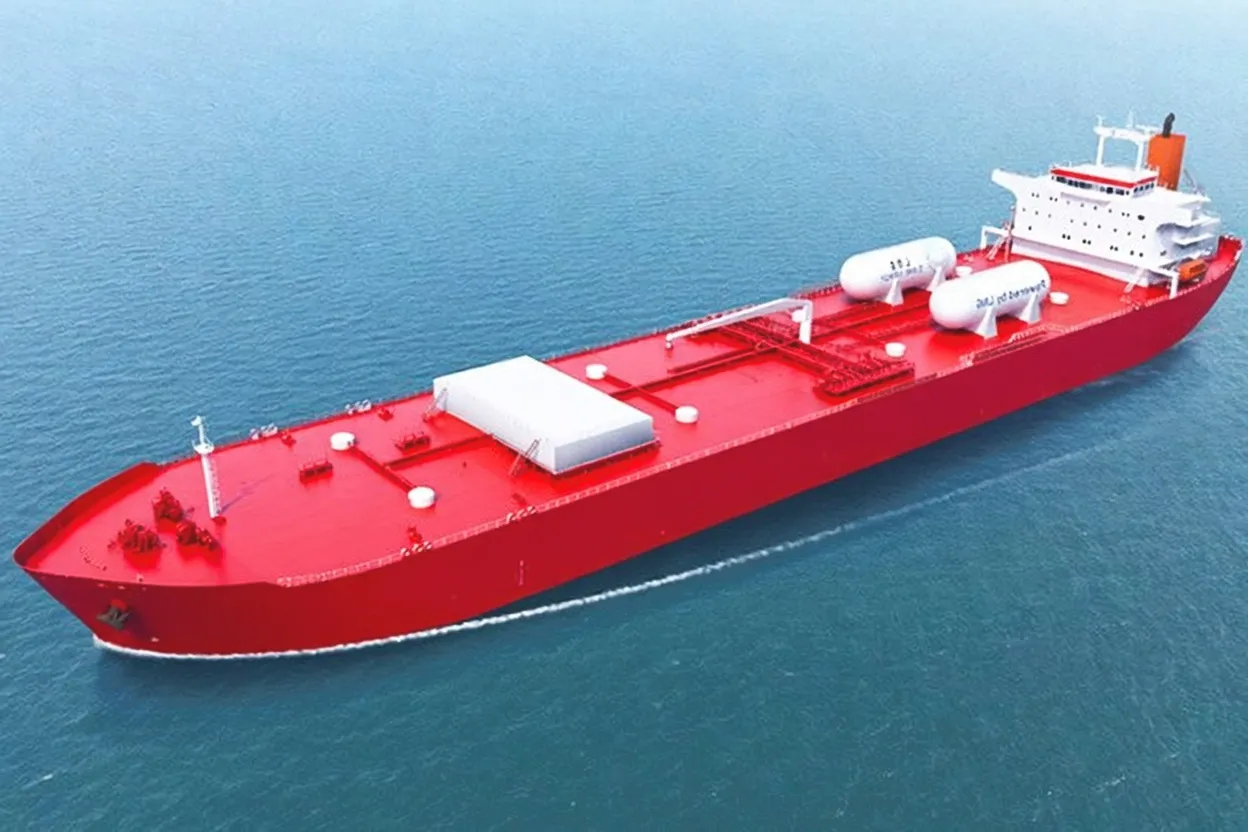
Ever Power: Your Custom Marine Cardan Coupling Manufacturer
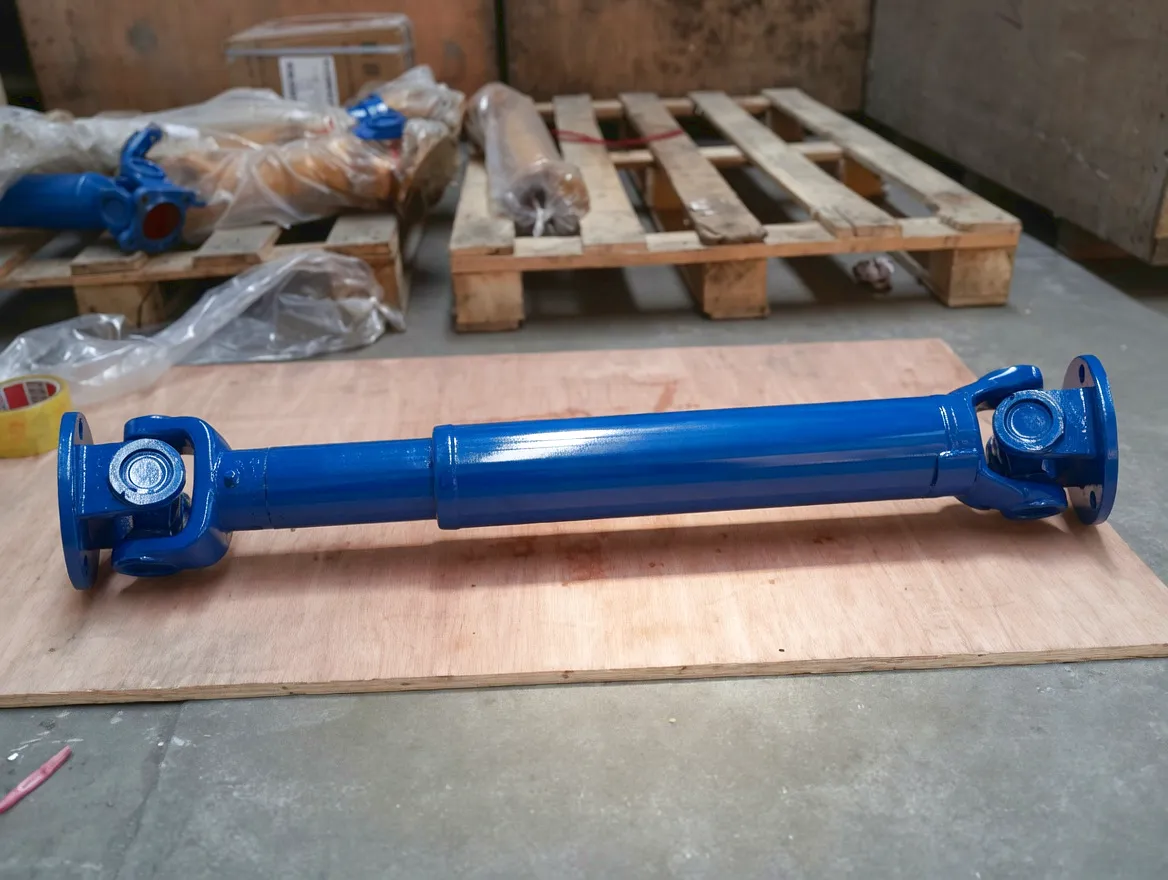 Ever Power operates a dedicated 카르단 커플링 production facility equipped with CNC lathes up to 2-metre swing, gear hobbing machines, induction hardening lines, and an in-house coating shop capable of applying full NORSOK M-501 paint systems. Every coupling undergoes dynamic balancing to ISO 1940 G6.3 or better before dispatch, and our quality management system is certified to ISO 9001:2015. What sets us apart for UK marine customers is the depth of our customisation capability. Need a non-standard flange PCD to match a Volvo Penta IPS pod? We can machine it. Require an unusually long telescopic stroke to accommodate a high-deflection hull? Our engineers will design a custom spline length. Want the coating colour-matched to your engine room paint scheme? That is not a problem either. We maintain dedicated stock of raw forgings for the most popular marine sizes (SWC-M120 through SWC-M350), which allows us to deliver custom-configured units in as little as 15 working days — significantly faster than many European competitors. For urgent breakdown replacements, we offer an expedited programme that can cut that lead time further.
Marine Coupling Comparison: Cardan vs Alternatives
| Feature | Telescopic Cardan Shaft | Elastomeric Coupling | Disc Pack Coupling | Gear Coupling |
|---|---|---|---|---|
| Angular Capacity | Up to 15 deg | 1 – 3 deg | 0.5 – 1 deg | 0.5 – 1.5 deg |
| Axial Compensation | Built-in telescopic | Limited | Minimal | Slight |
| Temperature Independence | Yes | Stiffens in cold | Yes | Yes |
| Vibration Damping | Excellent | Good (when new) | Moderate | Low |
| Torque Density | High | Low | Moderate | High |
| Maintenance Interval | 8,000 hrs (re-grease) | 4,000 – 6,000 hrs | Inspect at survey | 6,000 hrs (lubricate) |
| Class Approval Ease | Pre-approved (LR, ABS, DNV) | Varies | Pre-approved | Pre-approved |
Practical Selection Guide for UK Specifying Engineers
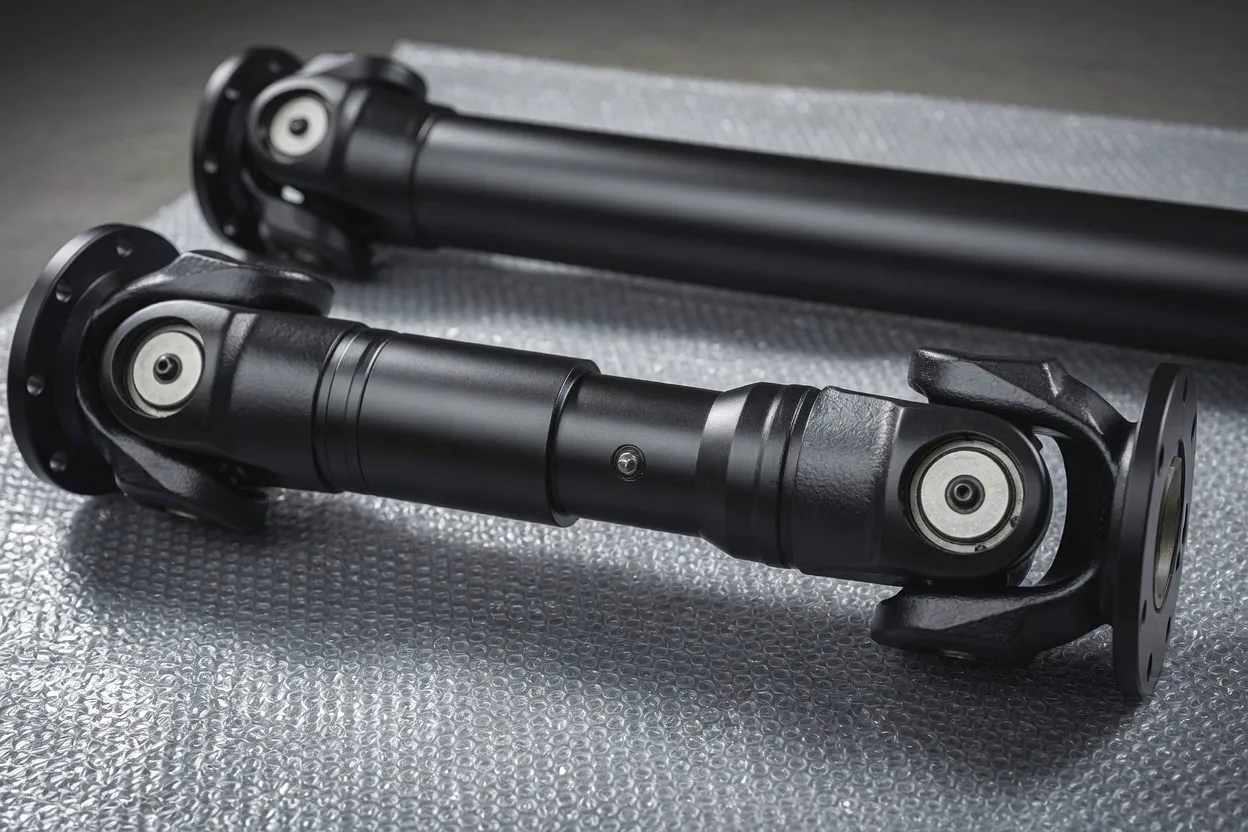 Choosing the right marine cardan coupling comes down to five data points that any competent marine engineer should have available during the specification stage. You need the maximum continuous torque at the coupling location (not just the engine rated torque — include any gearbox ratio), the maximum transient torque (typically 1.5 to 2.0 times continuous for marine diesel applications), the operating speed in RPM, the estimated angular misalignment at each joint based on hull deflection analysis, and the required axial stroke. With those numbers in hand, selecting a coupling from the Ever Power SWC-M range is a straightforward exercise in matching the application envelope to the product capability. Our engineering team is available to review your selection and confirm suitability — we do this for dozens of UK-based projects every year, from Scottish fish farm support boats to Channel Islands passenger tenders. There is no charge for the engineering review, and we provide a formal suitability confirmation letter that can be included in the classification submission package. If your application falls outside the standard range — perhaps an unusually high torque at low speed, or a need for exotic materials like duplex stainless steel yokes — our custom design service can produce a solution tailored precisely to your requirements. A reasonable quote turnaround is five working days for standard configurations and ten for custom designs.
Delivery and Technical Support for United Kingdom Customers
Ever Power ships marine cardan couplings to UK ports and shipyards via DDP (Delivered Duty Paid) Incoterms, meaning the product arrives at your facility with all import duties, VAT, and customs clearance handled. Standard shipping to destinations in England, Scotland, Wales, and Northern Ireland takes 7 to 12 working days from order confirmation, with express air freight available for urgent requirements. We hold safety stock of the most commonly ordered marine sizes at a logistics partner warehouse near Felixstowe, which can further reduce delivery times for repeat orders. Technical support does not end at delivery. Our applications engineering team provides remote alignment guidance via video call, and we can arrange on-site commissioning support through our authorised service partners in Southampton, Aberdeen, Glasgow, and Belfast. For fleet operators managing multiple vessels, we offer framework supply agreements with fixed pricing, priority production slots, and dedicated account management — a practical arrangement that several North Sea operators have adopted to simplify their procurement processes and protect against supply chain disruptions.
자주 묻는 질문
What is the typical cost of a marine-grade cardan coupling for a UK commercial vessel?
Pricing depends on the torque rating, flange configuration, coating specification, and whether classification society type approval documentation is required. For a mid-range SWC-M180 with NORSOK coating and Lloyd’s Register certification, UK customers can typically expect a delivered price in the range of GBP 1,800 to GBP 3,200 depending on quantity and customisation level. Contact Ever Power at [email protected] for a detailed quotation tailored to your project.
Where can I find a reliable cardan coupling supplier for offshore vessels in Aberdeen?
Ever Power supplies marine cardan couplings directly to shipyards and vessel operators throughout Scotland, including the Aberdeen offshore hub. We deliver DDP to any UK port and can arrange on-site commissioning support through our authorised service partners based in Aberdeen. Our SWC-M series carries DNV, ABS, and Lloyd’s Register type approval, making it straightforward to integrate into class-approved offshore vessel designs.
How long does it take to get a custom cardan shaft quote for a ferry refit project in Southampton?
For standard configurations based on the SWC-M range, Ever Power typically provides a detailed quotation within 3 to 5 working days. If your ferry refit requires a non-standard flange pattern, unusual telescopic stroke, or special material grade, allow approximately 7 to 10 working days for the engineering review and costing. Email your project details — including torque, speed, misalignment data, and flange drawings — to [email protected] and we will confirm the timeline.
Which cardan coupling should I choose for a North Sea platform supply vessel with heavy DP loads?
Platform supply vessels operating in the North Sea with dynamic positioning typically require a coupling in the SWC-M250 or SWC-M350 range, depending on the engine output and gearbox ratio. The key specification drivers are the peak transient torque during DP thruster mode changes and the axial stroke needed to handle hull deflection in Sea State 5 or above. Ever Power’s marine engineering team can review your vessel’s FEA hull deflection data and recommend the optimal model and configuration.
What classification society approvals does Ever Power hold for marine cardan couplings sold in the UK?
The Ever Power SWC-M marine cardan coupling range holds current type approval certificates from Lloyd’s Register (LR), the American Bureau of Shipping (ABS), and DNV. Approval from Bureau Veritas (BV) and RINA is also available on request. These certificates cover the full size range from SWC-M120 to SWC-M350, including the NORSOK M-501 coating system. For non-standard or bespoke designs, Ever Power can manage the classification submission process on behalf of the specifying yard.
How does a telescopic cardan shaft reduce propulsion vibration on passenger ferries crossing the English Channel?
The telescopic cardan shaft incorporates two phased universal joints that cancel out rotational velocity variation, combined with a sliding spline section that decouples the engine from axial hull movements. This mechanical isolation prevents engine-generated torsional pulses from reaching the propeller shaft at full amplitude. In Channel ferry applications, this typically reduces torsional vibration by 30 to 40 percent at the dominant firing orders, which directly lowers cabin noise levels and improves passenger comfort scores.
Can Ever Power deliver a replacement marine cardan coupling urgently to a Scottish shipyard within two weeks?
Yes. Ever Power holds safety stock of raw forgings for the most popular marine coupling sizes at a logistics hub near Felixstowe. For urgent breakdown replacements, our expedited production programme can deliver a custom-configured unit within 10 to 15 working days to any UK destination, including Scottish yards in Glasgow, Leith, and Aberdeen. Express air freight is available for the most time-critical situations. Contact [email protected] with your requirements and we will confirm the fastest achievable delivery date.
Ready to Specify a Marine Cardan Coupling for Your Next Project?
Whether it is a new-build, a refit, or an urgent replacement — Ever Power’s marine engineering team is here to help. Send us your torque, speed, and alignment data and we will return a fully costed proposal within days.
gzl님이 편집함