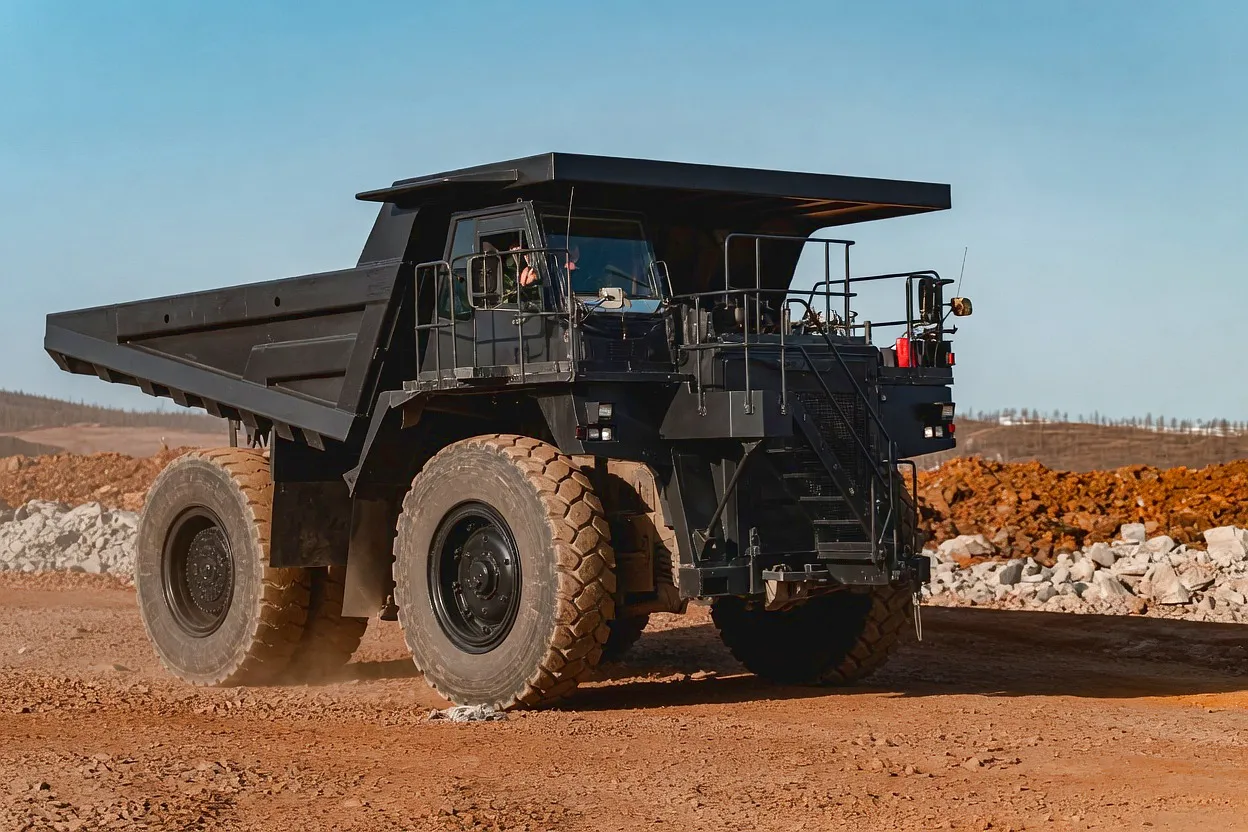
 Few mechanical environments are as unforgiving as the rear axle driveshaft of an ultra-class mining truck. Machines like the Caterpillar 797F, Komatsu 960E, and Liebherr T 284 regularly carry payloads exceeding 290 metric tonnes across broken ground, steep haul roads, and conditions that would destroy conventional power transmission components in days. At the centre of keeping those wheels turning — efficiently, reliably, and with minimal downtime — is the cardan coupling.
A cardan coupling, also referred to as a universal joint coupling or Hooke’s joint driveshaft, transmits rotational motion between two shafts that are not perfectly aligned. In a mining truck’s rear axle circuit, this misalignment is not incidental — it is constant, dynamic, and severe. The suspension travels through enormous arcs under load, the chassis flexes over uneven terrain, and the powertrain must continue delivering torque through all of it without faltering. Selecting the right cardan coupling for this application requires a depth of understanding that goes far beyond a catalogue number.
This article draws on direct field experience with mining operations across the UK, Germany, Chile, and Australia to explain why cardan coupling selection for rear axle driveshaft use is so technically demanding, what material and design parameters matter most, and how procurement teams can make confident sourcing decisions — including working with custom coupling manufacturers who can engineer to precise machine specifications.
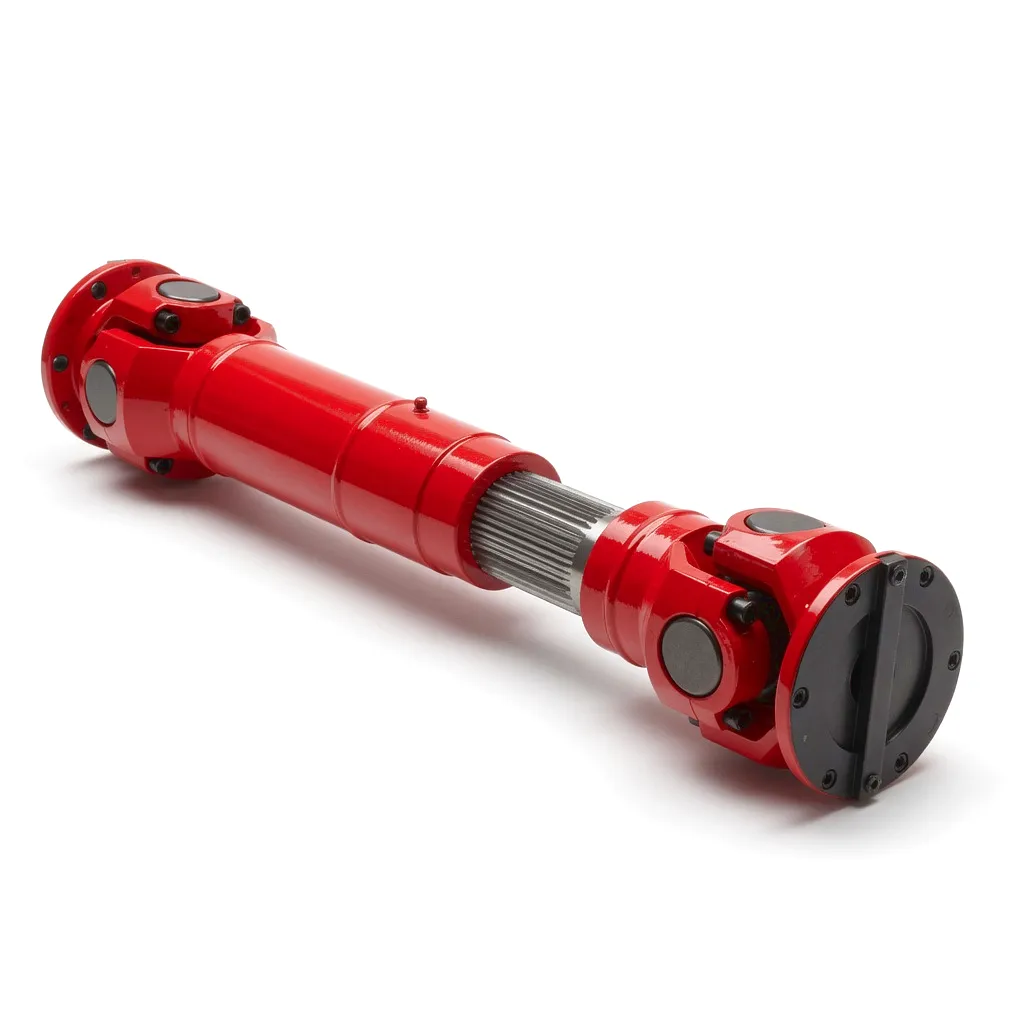
Need a cardan coupling engineered to your exact rear axle driveshaft geometry, torque rating, and operating angle? Our engineering team responds within 24 hours to all technical enquiries from UK mining operators and OEM procurement teams.
Why Ultra-Class Mining Trucks Demand Specialised Cardan Couplings
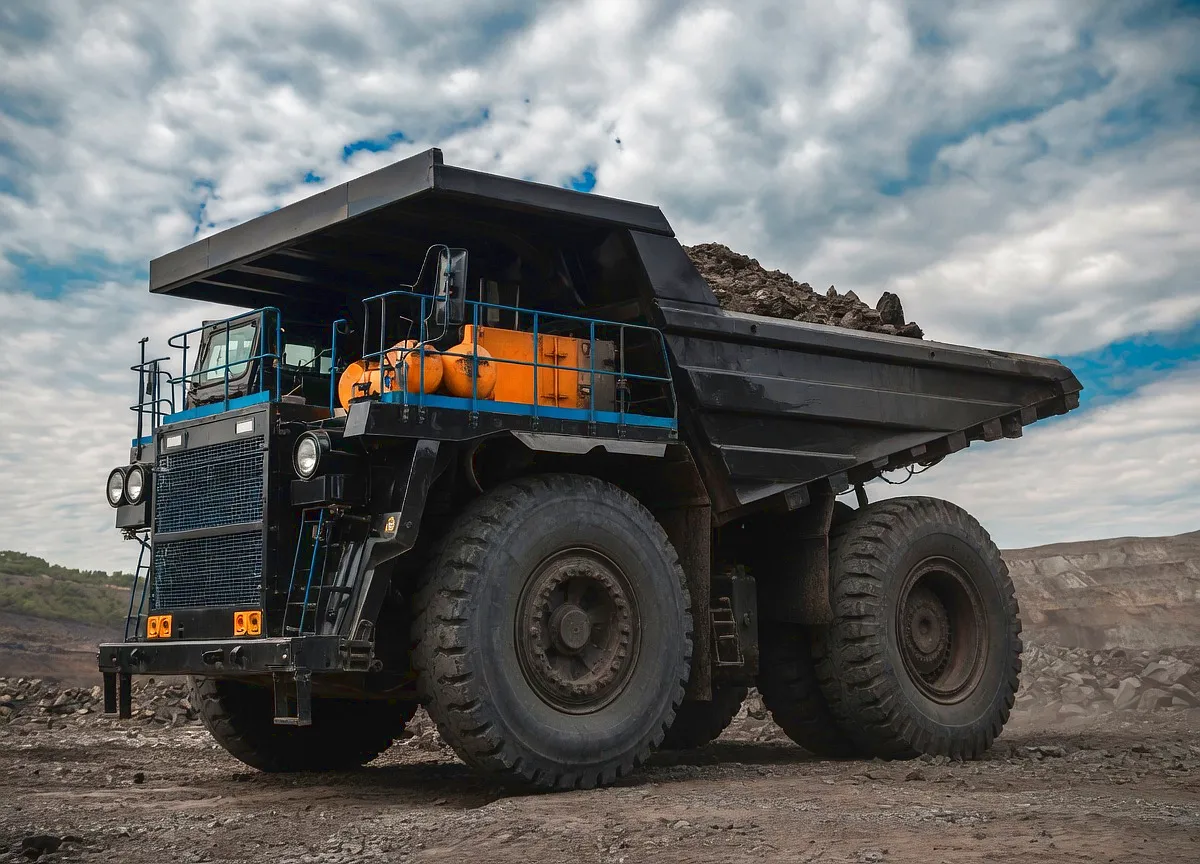
The rear axle driveshaft on a haul truck is not simply a rotating steel tube. It is the critical link between the final drive and the wheel motors — or, in mechanical drive configurations, between the differential and the rear axle shafts. Every time a 290-tonne truck drops a wheel into a pothole, the impulse load on the driveshaft can exceed ten times the calculated nominal torque. That spike lasts milliseconds, but it repeats tens of thousands of times per shift, over months of continuous operation.
Standard off-the-shelf cardan couplings simply are not designed for these combined stresses. The cross journals wear prematurely, the bearing cups lose their press fit under thermal cycling, and the yoke forgings develop fatigue cracks at the lug radii. When a driveshaft fails on a 797F hauling from a 400-metre pit depth, the cost is not just the coupling — it is the lost production, the crane mobilisation, the shift delay, and potentially the cascade damage to the final drive housing if the shaft separates suddenly.
This is why purpose-engineered heavy-duty cardan couplings with full-floating needle roller bearings, case-hardened 42CrMo4 steel crosses, and grease-sealed bearing assemblies designed for extended relubrication intervals have become the specified choice for rear axle driveshafts in ultra-class haul trucks operated by major mining groups across the UK, including operations in Scotland’s opencast coal sites and the aggregates industry in the Midlands and North West.
The Operating Principle: How a Cardan Coupling Handles Rear Axle Misalignment
A cardan coupling transmits torque through a cross-shaped journal, known as the spider or trunnion, fitted into bearing cups pressed into the yoke arms of both the driving and driven flanges. When the two shaft centrelines are not collinear — which is the default state in any rear axle suspension arrangement — the cross journal rocks on its bearing cups to allow angular movement while continuously transmitting rotation. The elegance of this mechanism is that it requires no elastomeric elements that could degrade under heat, oil contamination, or UV exposure; the transmission is purely mechanical, steel-on-steel through hardened needle rollers.
There is, however, a well-documented kinematic characteristic that becomes critical in rear axle design: at any single cardan joint operating at a non-zero angle, the output shaft does not rotate at perfectly uniform velocity. It oscillates twice per revolution at an amplitude proportional to the joint angle — the higher the angle, the greater the velocity variation. In a truck rear axle operating at ±8° of suspension travel, this produces cyclic torque pulsations that can excite driveshaft resonances and accelerate wear at the wheel motor input splines.
Engineers solve this with a double cardan arrangement — two joints phased 90° to each other — which cancels the velocity non-uniformity and delivers a smooth, constant-velocity output. For mining trucks where the cardan coupling must accommodate both suspension articulation and lateral axle wander, the double cardan configuration is essentially mandatory. Understanding this principle separates cardan couplings specified by knowledgeable engineers from those selected purely on price, and it is one of the most common points of failure when operators source replacement shafts without engaging with the coupling manufacturer’s technical team.
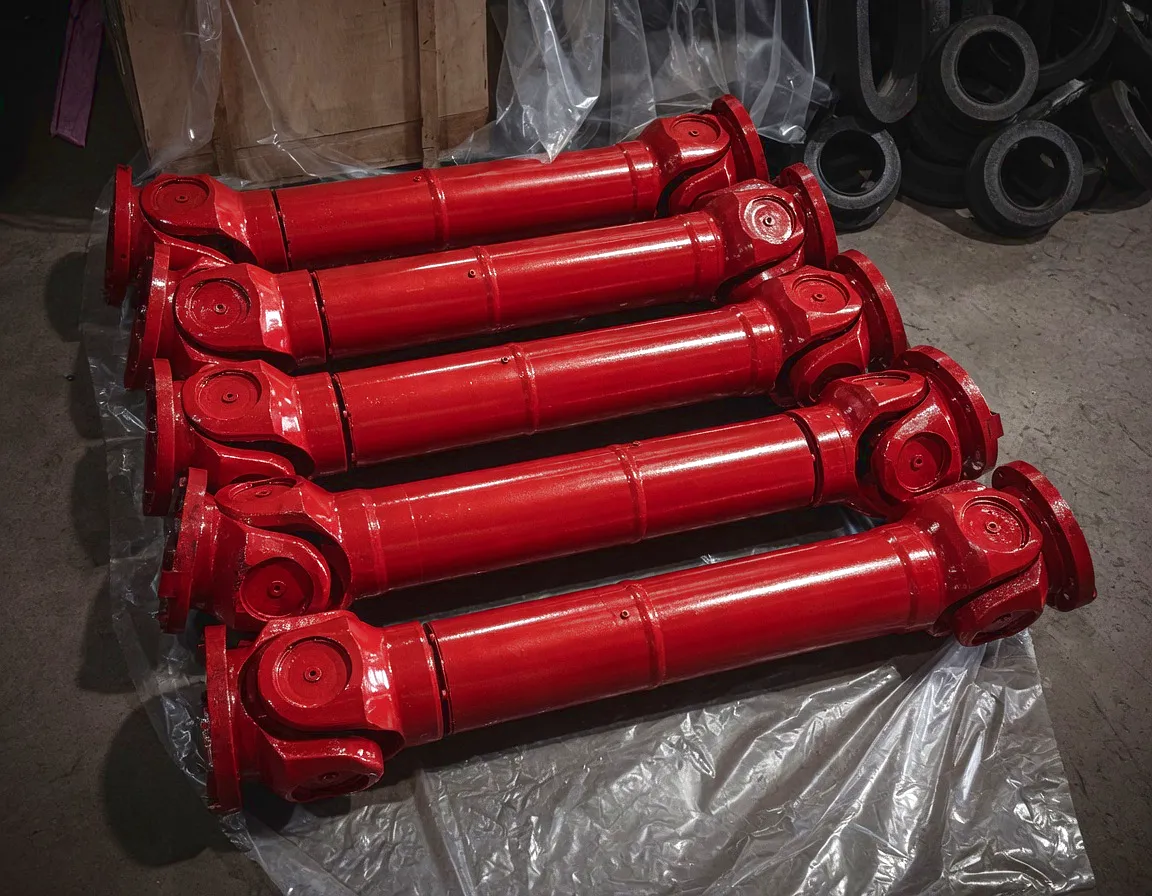
One cross joint. Simple, compact. Velocity non-uniformity at angles above 5°. Suitable for small misalignment or where angle is fixed and resonance is not a concern.
Two phased joints with centring socket. True constant-velocity output at all operating angles up to 35°+. The correct choice for mining truck rear axle driveshafts.
Incorporates a splined sliding section to absorb axial length changes. Essential where suspension travel changes the distance between input and output flanges.
Technical Performance Parameters for Mining Truck Rear Axle Cardan Couplings
The table below summarises the key performance and material parameters that define a properly specified cardan coupling for ultra-class rear axle driveshaft service. These values represent the range commonly encountered across different truck models; actual specifications must be engineered for each application.
| Parameter | Standard Range | Ultra-Class Spec | Notes |
|---|---|---|---|
| Nominal Torque (Nm) | 5,000 – 50,000 | 80,000 – 250,000+ | Per 797F class drivetrain requirements |
| Peak Torque Capacity (Nm) | 3× nominal | 5–8× nominal | Shock load rated, not fatigue-limited |
| Max Operating Angle | 15° (single), 35° (double CV) | Up to ±18° continuous | Dynamic; accounts for suspension travel |
| Cross Material | 20CrMnTi, 40Cr | 42CrMo4 / 4340 alloy steel | Case-hardened HRC 58–62, core HRC 30–38 |
| Yoke / Flange Material | Ductile iron or mild steel | Forged 42CrMo4 or 35CrMo | No castings at ultra-class torque levels |
| Bearing Type | Needle roller, grease-packed | Full complement needle, sealed / grease nipple | 500 h+ regreasing intervals in practice |
| Tube (Shaft) Material | ERW steel tube | Seamless DOM or forged solid section | Dynamic balance to G6.3 at operating RPM |
| 표면 처리 | Painted or zinc phosphate | Hot-dip galvanised + epoxy or xylan coat | Resists mine wash water, acid rock drainage |
| Temperature Range | -20°C to +80°C | -45°C to +120°C continuous | Grease selection critical below -30°C |
| Flange Connection | 4-bolt SAE std | 6–8 bolt ISO / OEM-matched PCD | Custom PCD and bolt pattern available |
Materials, Heat Treatment, and Manufacturing Standards That Actually Matter
When you are selecting a cardan coupling for a rear axle driveshaft operating in a mine environment, the material specification sheet is not a formality — it is the document that determines whether your shaft survives one production quarter or three. The cross journal is the most critically stressed component. In ultra-class service, the trunnion pins experience contact pressures at the needle roller interface that approach the material’s yield strength on every torque peak. This is why the cross must be manufactured from a through-hardening alloy steel — 42CrMo4 being the most common European specification — and then precisely carburised and case-hardened to a depth of 1.2 to 1.8 mm, leaving a tough, ductile core that can absorb impact energy rather than shattering.
The bearing cups are equally critical. Pressed into the yoke bores with a controlled interference fit, these cups must maintain their dimensional stability through the thermal cycles of mine operation — from cold morning start-ups in a Scottish opencast to the heat generated during sustained full-load hauling. Cup material specification typically calls for SAE 8620 or 5120 alloy steel, case-hardened, with the internal bore ground to an H6 tolerance and the external OD ground to a k6 press-fit tolerance. Any deviation from these tolerances and the cup either spins in its bore — allowing fretting corrosion to destroy the yoke — or is so tight that the bearing cage cracks on installation.
The yoke forgings on a mining-grade cardan coupling represent another area where shortcuts become immediately apparent in service. Ductile iron yokes — common on light commercial vehicle driveshafts and sometimes found on cheap industrial couplings sold as mining-suitable — do not have the fatigue life required. Forged steel yokes, properly normalised and stress-relieved after forging, and then precision-machined to ensure the bearing bore axes are perpendicular and coplanar within 0.02 mm, are the only appropriate solution. The flange face runout must also be controlled: excessive runout introduces a cyclic bending moment into the shaft at every revolution, which is the most reliable way to generate a fatigue crack at the flange-to-tube weld in a very short period of time.
Where Cardan Couplings Operate in the Mining Truck Drivetrain
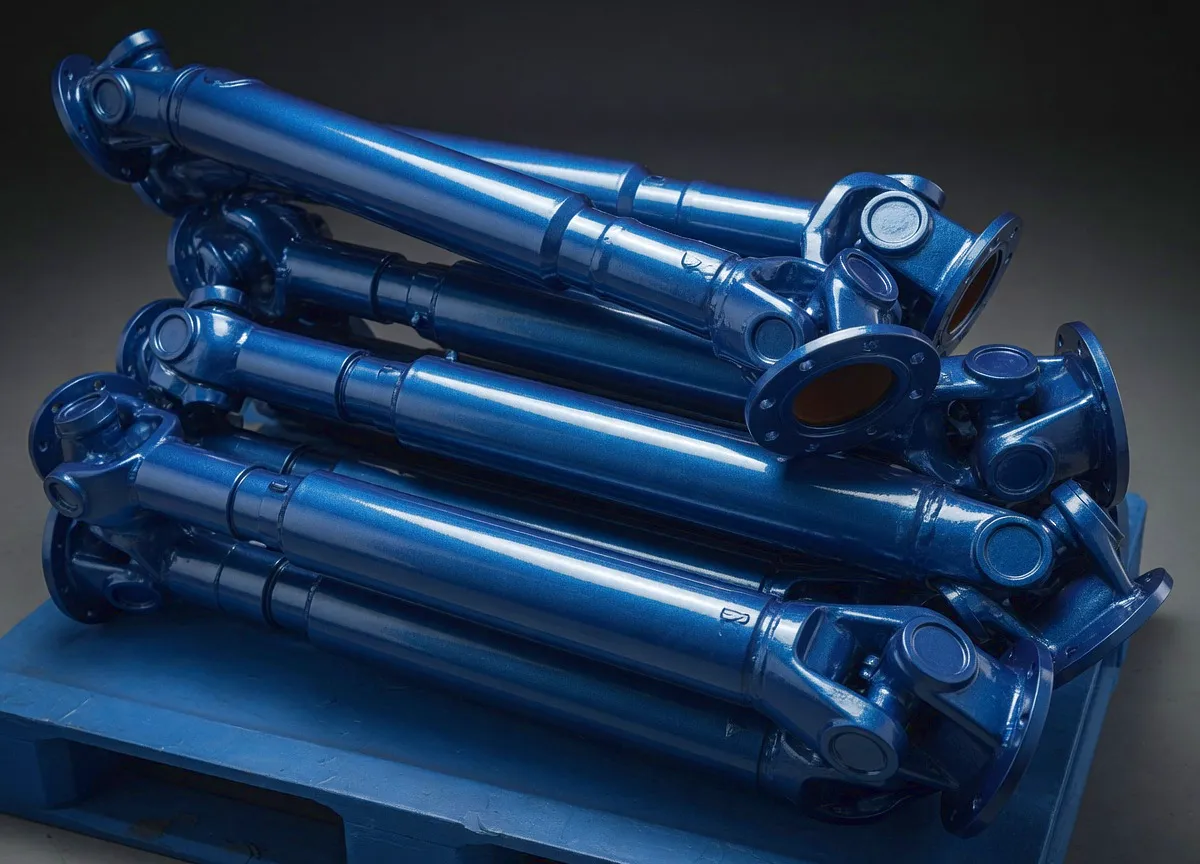
The rear axle of an ultra-class haul truck is not a single point of cardan coupling application. Depending on the drivetrain configuration — fully mechanical, diesel-electric with mechanical final drive, or hybrid — there may be multiple cardan joints in the power path, each with distinct torque, angle, and speed requirements.
Connects the main gearbox output to the transfer case or inter-axle differential. Moderate angle, very high torque. Often a twin-tube design for added torsional rigidity. Cardan coupling must tolerate vibration from engine torque irregularity.
The primary application discussed in this article. Maximum torque, maximum dynamic angle, highest shock load exposure. Double cardan with telescoping slip joint is the standard engineering solution for this position.
On solid-axle configurations, the inner half-shaft may incorporate a cardan joint where the axle shaft meets the differential side gear, providing compliance under suspension articulation without transmitting bending moment into the differential housing.
Mining trucks carry hydraulic pumps, air compressors, and retarder systems driven from PTO outputs. These auxiliary cardan shafts operate at lower torque but must accommodate the same chassis flexing and vibration environment as the main driveline.
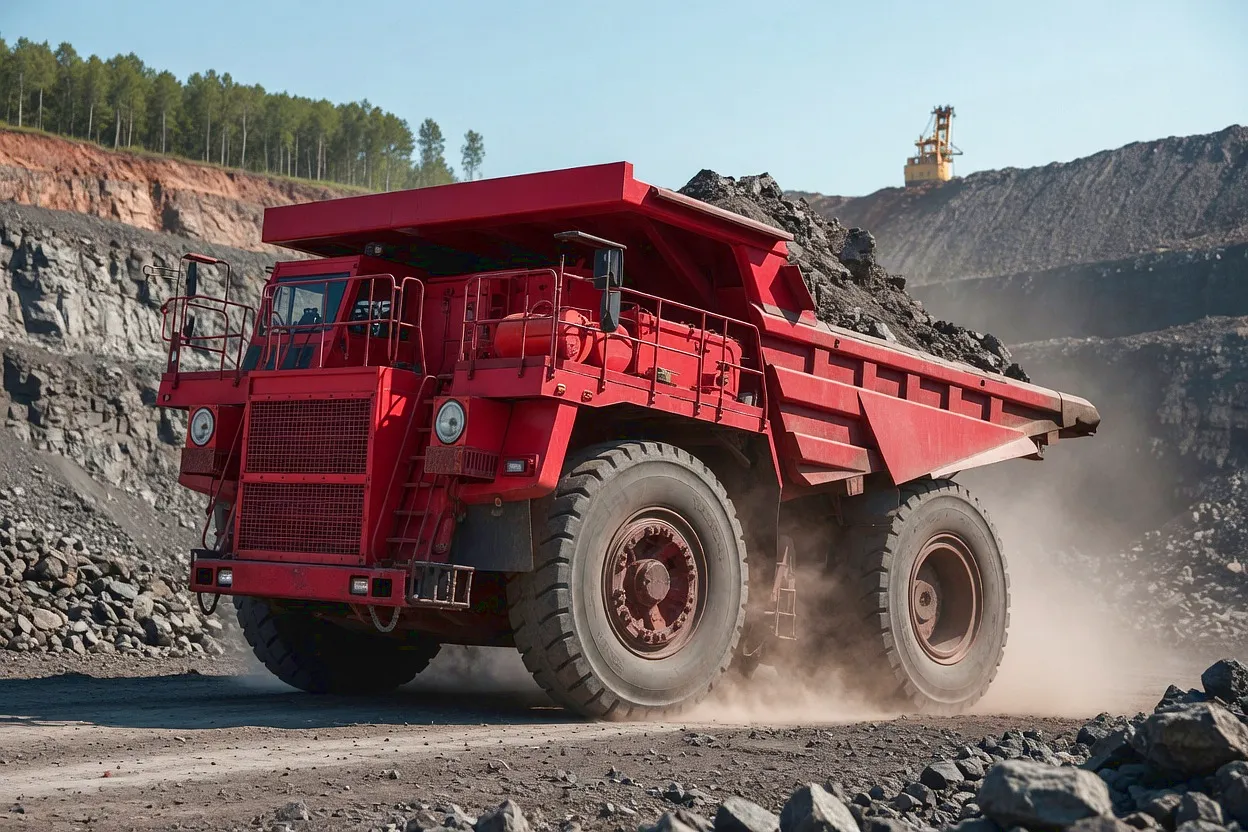
While the UK’s primary mining activities have shifted significantly toward aggregates, quarrying, and potash extraction in recent decades, the equipment deployed is often identical in scale to the largest international open-pit operations. Surface aggregates quarries across Yorkshire, Derbyshire, and the Scottish Highlands run 100-tonne class haul trucks with identical drivetrain demands to their counterparts in Chilean copper mines or Australian iron ore operations.
UK OEM equipment dealers and mining maintenance contractors source cardan coupling replacements through two channels: OEM direct supply, which carries significant lead time and price premiums, or third-party specialists who manufacture to the same or higher specification and can typically supply within shorter lead times. The decision often comes down to how quickly a mine can get a downed truck back on haul road — and cardan coupling availability at the right specification is frequently the critical path.
Our engineering team has supplied cardan couplings to quarrying and mining operations across Scotland, Wales, Northern England, and the Midlands, supporting maintenance schedules for trucks from Caterpillar, Komatsu, Hitachi, and Liebherr — both as direct replacement assemblies and as engineered upgrades where the OEM specification has proven insufficient for site-specific conditions.
Key Advantages of Our Mining-Grade Cardan Couplings
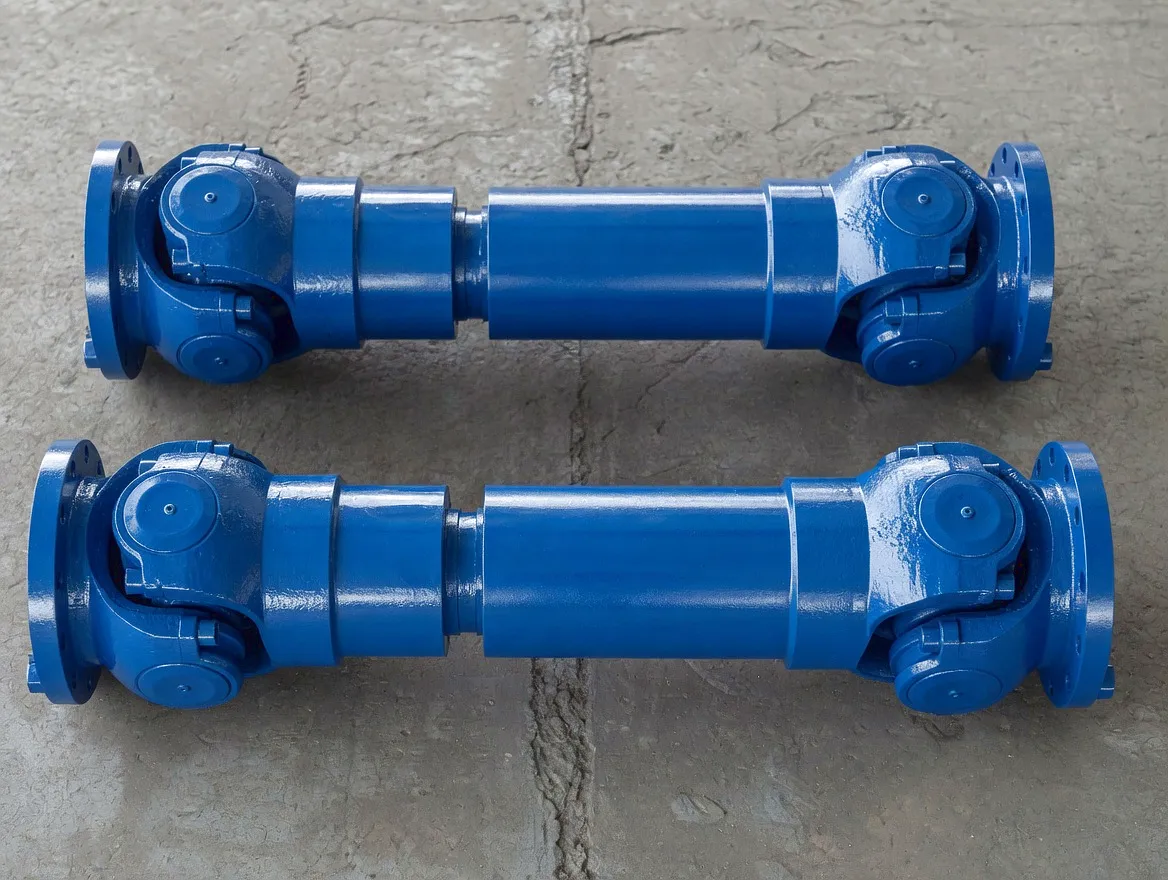
The product advantages listed here are not marketing language — they are engineering properties that translate directly into measurable outcomes in the field: longer service intervals, fewer unplanned stoppages, and reduced total cost of ownership per tonne of material moved.
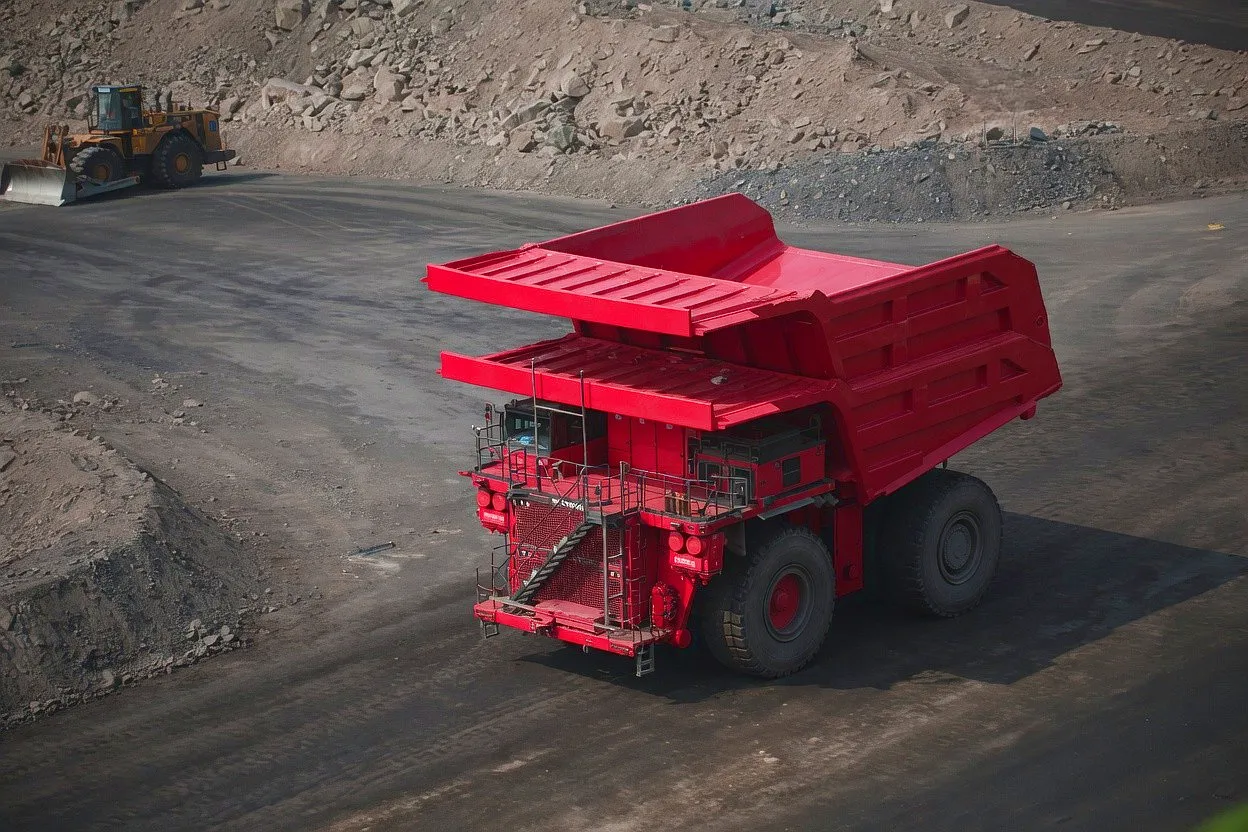
Customer Success: Quarry Operations in Northern England
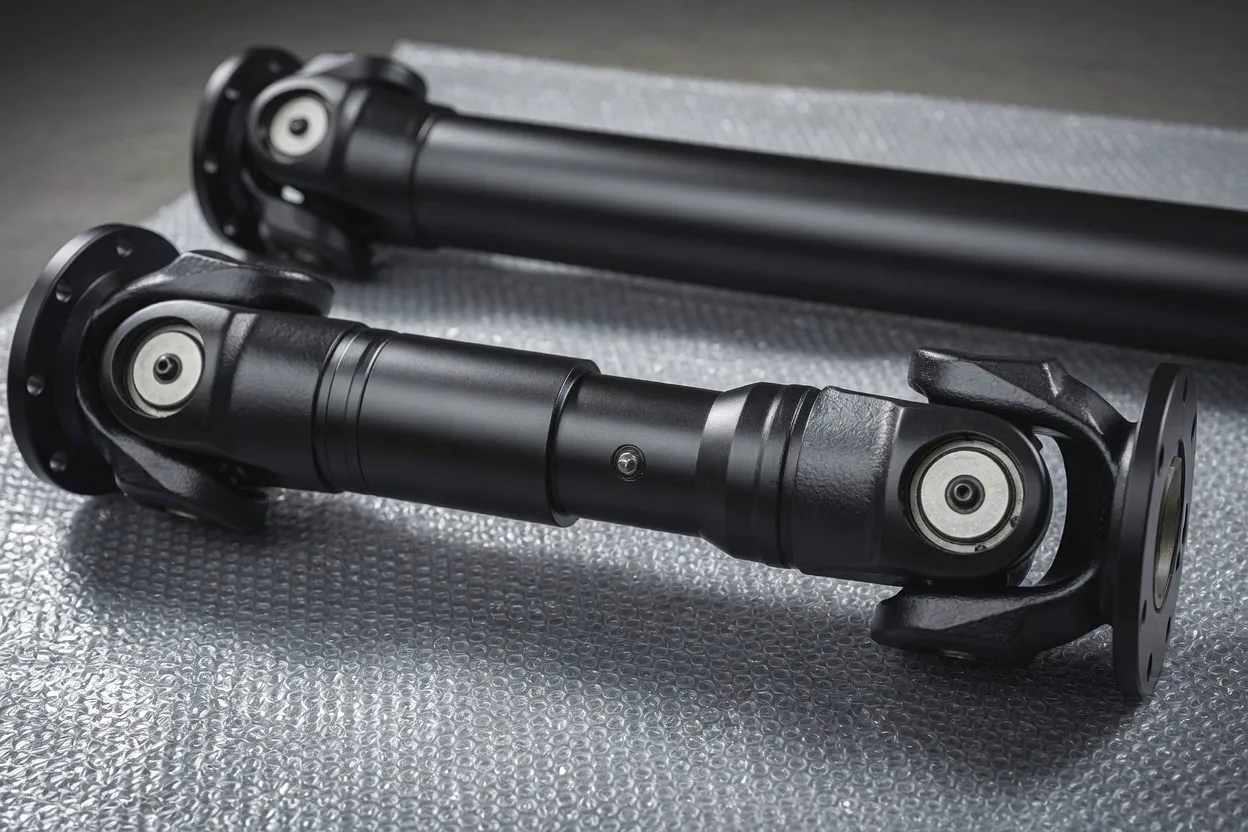
“We’ve standardised all our rear axle driveshaft replacements through Ever Power. The technical support during the specification process is exactly what you need when you’re dealing with a non-standard application. These aren’t just couplings — they’re engineered components backed by people who understand mining drivetrains.”
“The custom telescoping cardan shaft Ever Power designed for our Hitachi EH4000AC-3 fleet addressed a misalignment issue that had been causing premature wear for two years. The design process was collaborative and methodical, and the product performs exactly as modelled. Highly recommended for any UK mining operation running non-standard drivetrains.”
“We had a situation where two Komatsu 730E units were sitting out of service waiting for OEM driveshafts with an eight-week lead. Ever Power reverse-engineered from our drawings and delivered conforming replacements in 19 days. The quality was excellent and both shafts have now been in service for over a year without issue. They’ve earned a place on our approved supplier list.”
Ever Power Manufacturing & Custom Engineering Capabilities
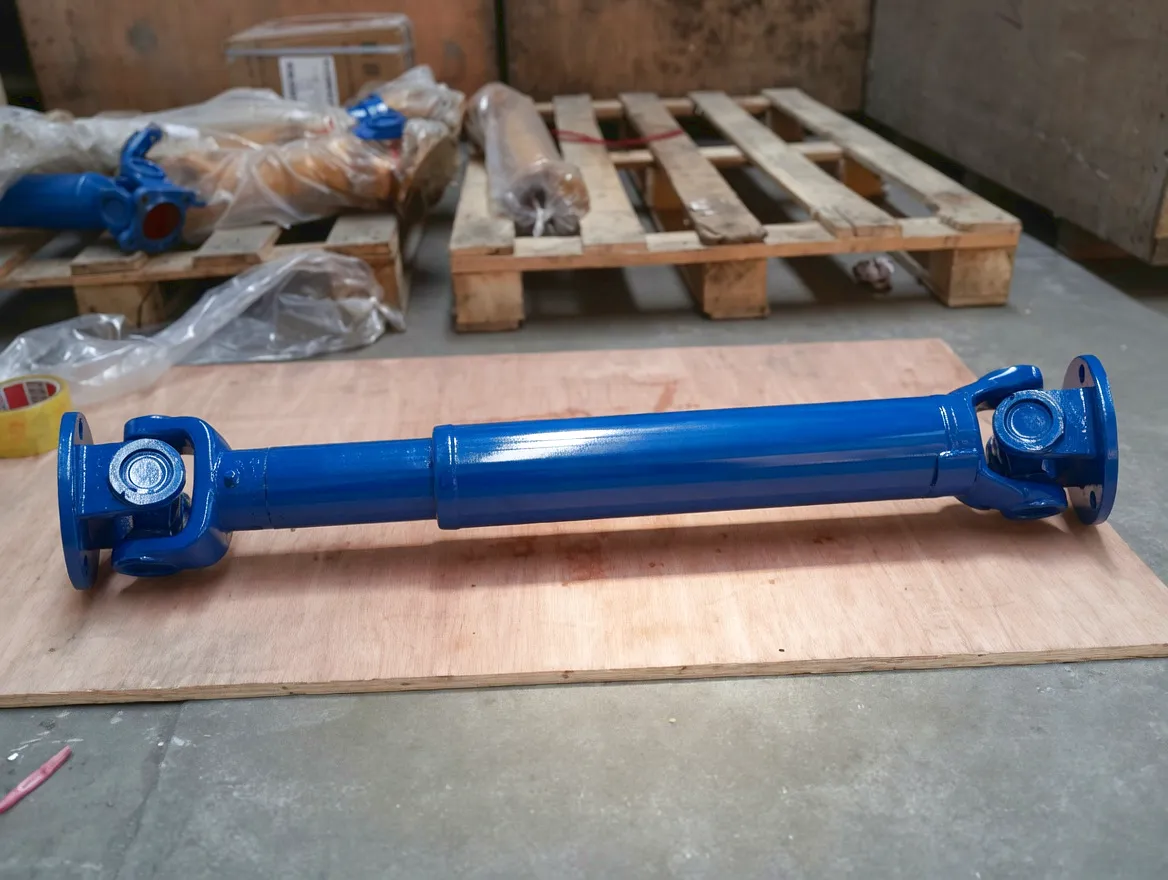
Ever Power’s manufacturing facility is set up specifically to handle the requirements that characterise large mining drivetrain projects: long component lengths, large diameters, heavy forged feedstock, and the kind of precision machining that standard job shops either cannot achieve or will not undertake. Our CNC turning centres can handle component diameters up to 800 mm and lengths up to 3,000 mm, covering the full range of rear axle driveshaft dimensions encountered in ultra-class truck applications.
What distinguishes our custom 카르단 커플링 service from standard catalogue supply is the depth of the engineering engagement. We do not simply put your dimensions on a drawing and produce to them. Our application engineers review your torque data, operating angle measurements, haul road profile, truck model specification, and maintenance history before proposing a design. Where the operating data reveals that the original OEM design has an inherent weakness — as is often the case with trucks that have been run on harder-than-designed terrain — we will propose a cross-section geometry change, a material upgrade, or a bearing arrangement modification that addresses the root cause rather than reproducing a part that will fail in the same way.
Our customisation service covers every dimension and feature of a cardan coupling assembly: flange bolt circle diameter, bolt count and grade, spline specification for sliding sections (including involute spline form, module, and pressure angle), tube outside diameter and wall thickness, overall length in both collapsed and extended positions, balance grade, surface treatment specification, and grease type. We also offer the option of cross-kit supply — where we provide the cross journal, bearing cups, and snap rings as a precision-matched set — for operations that prefer to rebuild their own yokes in the workshop.
자주 묻는 질문
Custom Cardan Couplings for Mining Trucks — UK Enquiries Welcome
Send your drawings, OEM part numbers, or technical requirements to our engineering team. We respond within 24 hours with a technical assessment and quotation.