Introduction
Why Torque Transmission Defines Drive Train Performance
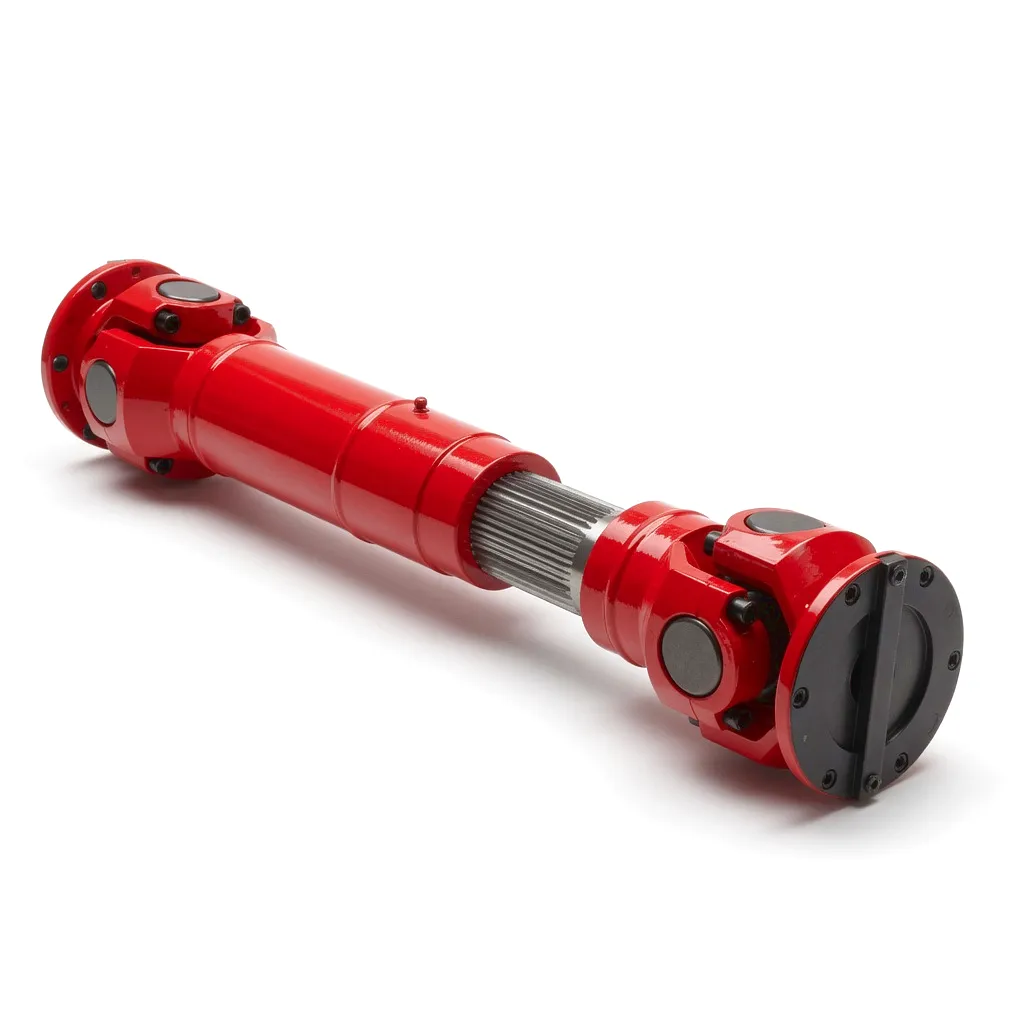 In every heavy-duty drive system — from the rolling mills of Sheffield and the steel fabrication shops of Scunthorpe to the offshore platform drives that power North Sea operations — one engineering challenge consistently rises above the others: how to transmit torque smoothly and reliably when the driving and driven shafts are not perfectly aligned. Rigid couplings fail under angular load. Elastomeric types wear rapidly under high torque. It is the Cardan coupling — with its cross-and-trunnion universal joint architecture — that has proven itself decade after decade as the definitive solution when angular misalignment and high torque must coexist without compromise.
The relationship between torque and angle is not simply additive. As joint angle increases, secondary velocity variation — the cyclic fluctuation in output speed that every single-joint Cardan shaft produces — grows substantially, imposing dynamic loads on bearings, gearboxes, and driven equipment. Understanding precisely how torque is transmitted through the cross-and-trunnion joint, what angular limits govern safe operation, and how design choices in shaft length, material, and joint phasing manage those dynamics is fundamental knowledge for any engineer specifying power transmission equipment for demanding UK industrial applications.
This article addresses that subject in full technical depth. We cover the geometry of the cross-and-trunnion joint, the mathematics of velocity fluctuation, how double-jointed configurations achieve constant-velocity output, the influence of bearing design on torque capacity, material selection for hostile environments, and the performance data that procurement engineers in Birmingham, Aberdeen, and across the British industrial corridor need before specifying a Cardan coupling for their next project.
Working Principle
The Geometry of Torque Transmission at Angle
At the core of every Cardan coupling lies the cross-and-trunnion joint — sometimes called the spider joint — which consists of a forged cross piece whose four trunnion pins engage needle or journal bearings housed in two perpendicular yokes. One yoke connects to the driving shaft; the other connects to the driven shaft. As the driving shaft rotates, torque is transmitted through the cross to the driven yoke. Critically, because the cross can pivot about two mutually perpendicular axes simultaneously, the joint accommodates the angular offset between the shaft centrelines while maintaining torque flow at all positions throughout the rotation cycle.
This mechanism is elegant but carries an intrinsic kinematic limitation: the output shaft of a single universal joint does not rotate at a perfectly constant velocity when the shafts are misaligned. The output speed varies cyclically at twice the shaft rotation frequency. The magnitude of this velocity non-uniformity — often expressed as the velocity ratio fluctuation delta — increases with the square of the sine of the joint angle. At 3°, the fluctuation is minimal and often acceptable. At 15°, secondary dynamic loads become significant. Above 25° in a single-joint arrangement, vibration, bearing fatigue, and gear tooth wear accelerate sharply. This is the fundamental physics that drives the design decision between single-joint and double-joint Cardan shafts.
A double-joint Cardan shaft — two universal joints connected by an intermediate tube with the joints phased at 180° to each other — cancels the velocity fluctuation of the first joint with an equal and opposite fluctuation introduced by the second joint. The result, provided both joints operate at the same angle, is true constant-velocity transmission. This is why all high-speed and precision-drive applications in UK manufacturing — paper mills in Shotton, automotive transmission test rigs in Coventry, and high-line tube mills in Hartlepool — specify double-joint configurations as standard. The phasing of the yokes is not incidental detail; it is the engineering mechanism that separates a reliable drive from a damaging one.
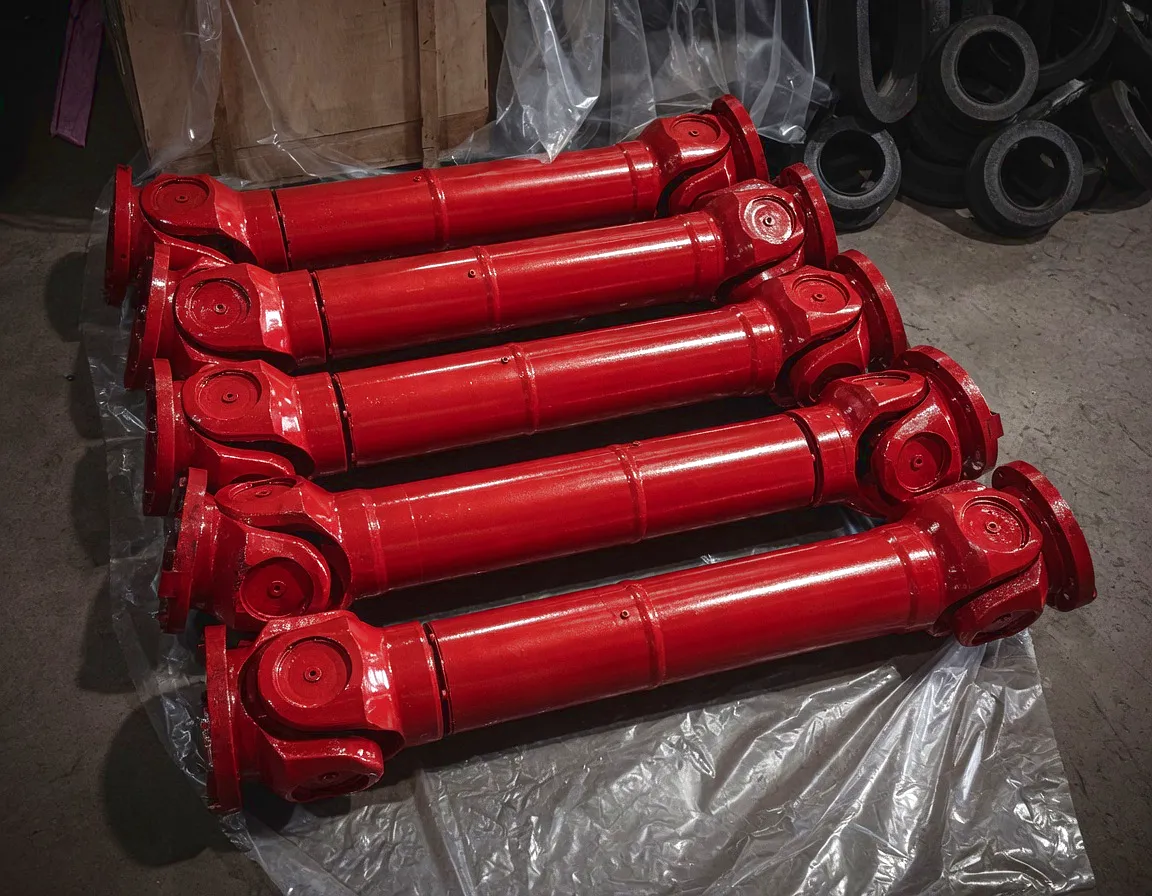
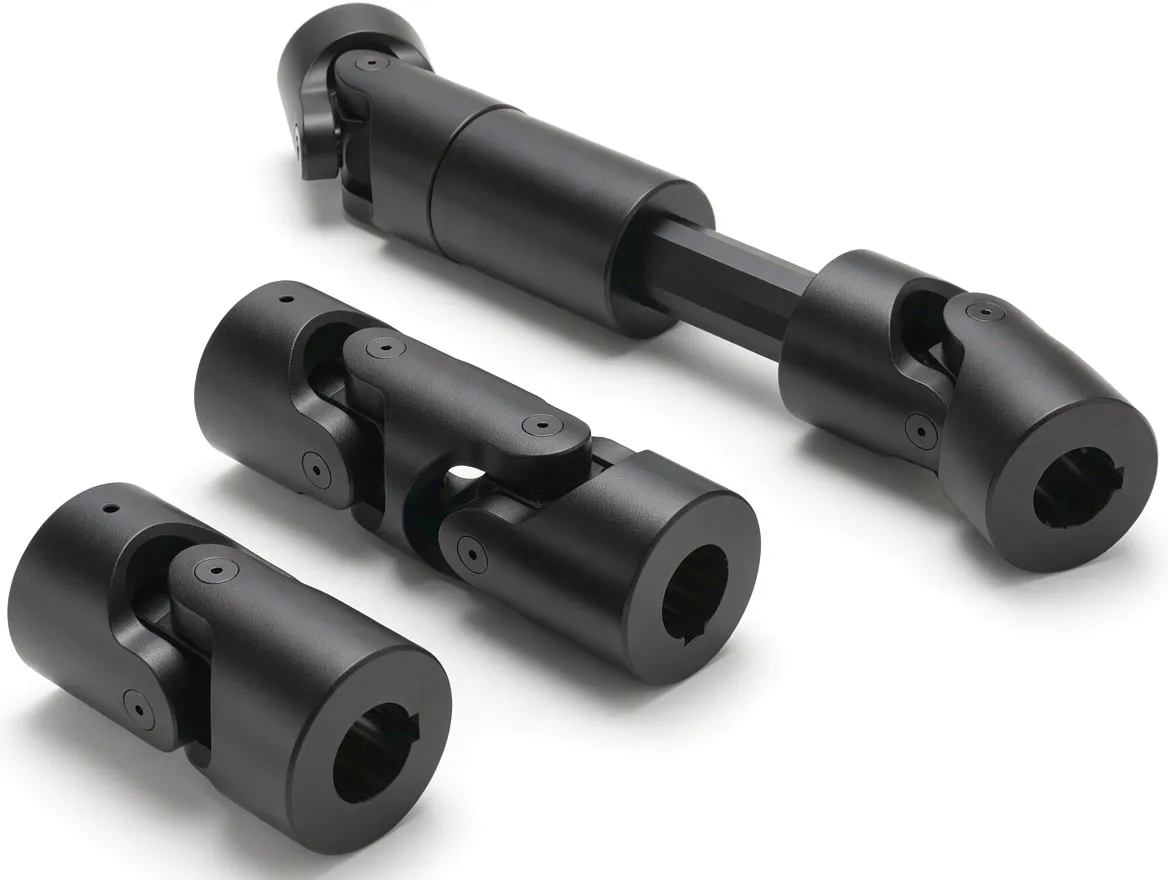
Single Joint
Cyclic velocity fluctuation; suitable up to ~15–18° in non-precision drives.
Double Joint
Constant-velocity output via yoke phasing; ideal for precision and high-speed drives.
Telescopic Shaft
Splined sliding section accommodates axial displacement alongside angular flex.
Material Engineering
What a Cardan Coupling Is Made Of — and Why It Matters
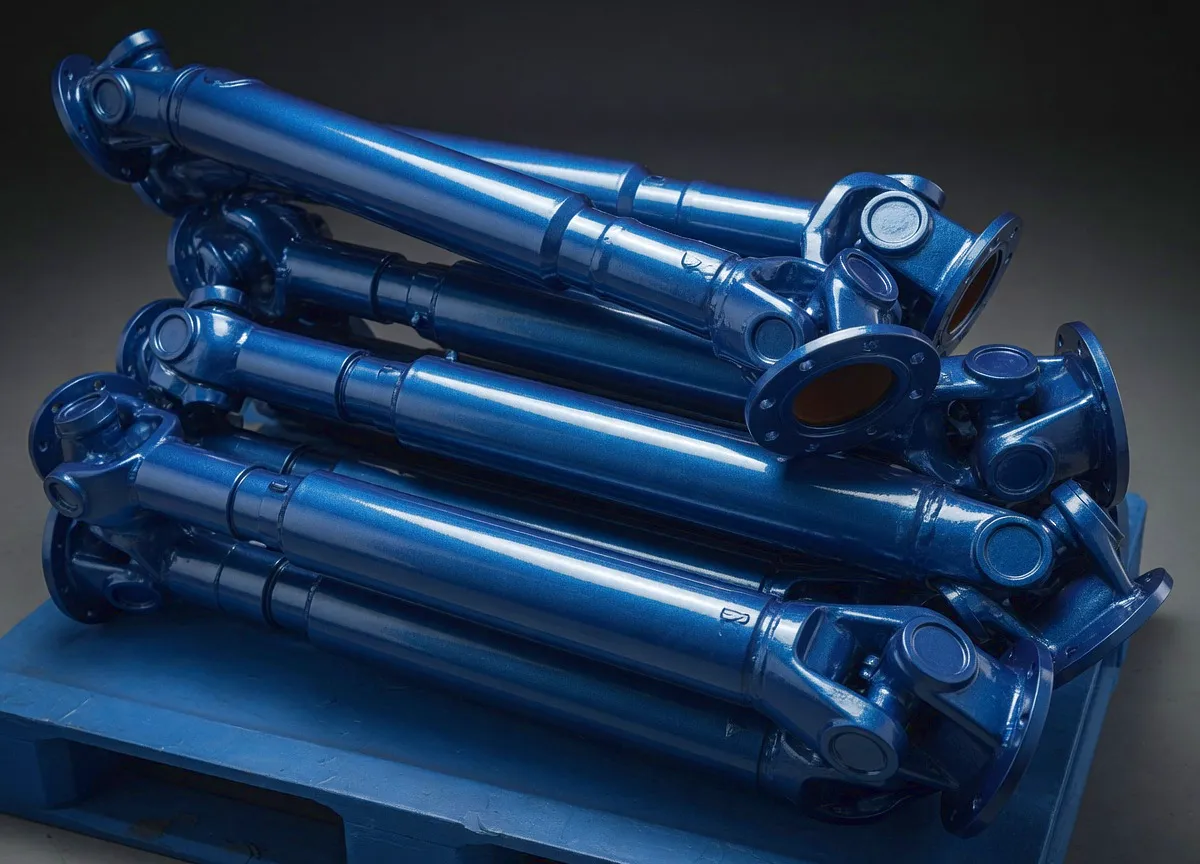
The performance ceiling of any Cardan coupling is set by its weakest material decision. Cross pieces, yokes, and tube sections are loaded simultaneously in torsion, bending, and shear — often at elevated temperatures or in corrosive service environments. Material selection is therefore an engineering decision with direct consequences for load capacity, fatigue life, and maintenance interval.
42CrMo4 Alloy Steel
The industry benchmark for cross pieces and yokes in heavy rolling-mill and steel-plant service. Quench-and-tempered to 900–1050 MPa tensile strength, it combines excellent toughness with resistance to fatigue crack initiation — critical where cyclic reversing loads are the norm. UK steelworks in Rotherham and Scunthorpe have standardised on this alloy for their main drive Cardan shafts precisely because of its predictable failure behaviour and robust weldability.
SUS316 Stainless Steel
Selected for applications where chloride exposure or wash-down regimes make carbon steel impractical. Marine drive systems on vessels operating out of Aberdeen, offshore platform auxiliary drives, and food-processing lines in the English Midlands all benefit from the superior corrosion resistance of 316-grade austenitic stainless. Molybdenum addition provides pitting resistance that 304 grade cannot match in saline environments. Cardan coupling assemblies in this material typically operate at reduced rated torque versus alloy-steel equivalents, a trade-off that is engineered and documented in Ever Power’s selection tables.
GGG-60 Ductile Iron
Used for flanges, end caps, and support brackets in medium-duty Cardan coupling designs where cost efficiency matters alongside adequate mechanical performance. Spheroidal graphite iron offers approximately 400 MPa tensile strength with meaningful elongation before fracture, making it far more forgiving than grey cast iron under shock loads. It machines cleanly to tight tolerances and provides a sound, dense material for bearing housing bores — an important consideration when needle bearing radial clearance must be held within 5–8 micrometres on precision drive applications.
Surface Treatments
Cardan coupling service life is strongly influenced by surface engineering choices. Induction hardening of trunnion pins to 58–62 HRC substantially extends needle bearing life in high-cycle applications. Hard chrome plating or ceramic-composite coatings on sliding splines reduce fretting wear in telescopic shafts operating under combined torsion and axial displacement. Hot-dip zinc galvanising or epoxy-primer plus polyurethane topcoat systems are specified for outdoor installations in the UK where precipitation, industrial airborne contaminants, and temperature cycling conspire to accelerate corrosion on exposed components.
Product Advantages
Six Engineering Advantages That Define the Cardan Coupling
When engineers across the UK evaluate coupling types for demanding drive applications, the Cardan coupling consistently earns its specification through a combination of performance characteristics that competing designs cannot replicate simultaneously.
1. Large Misalignment Tolerance
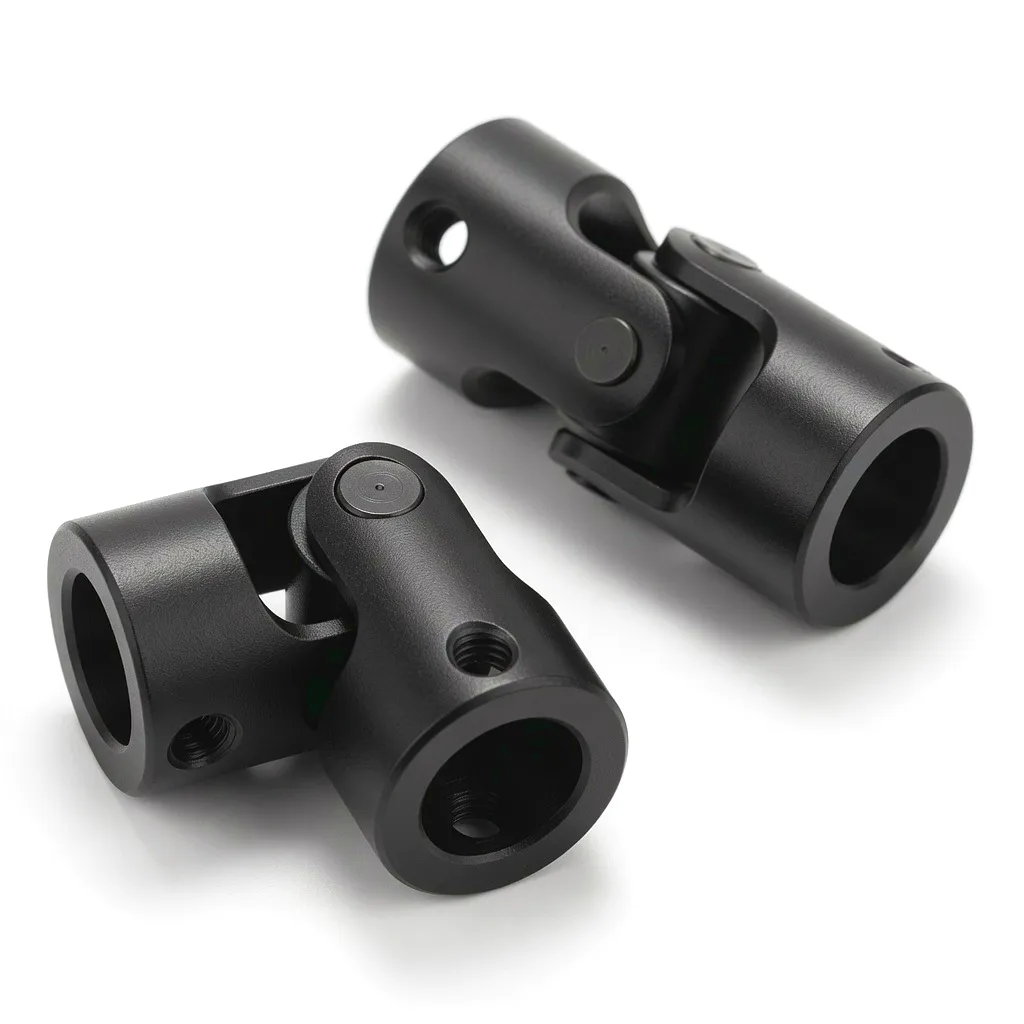
Standard Cardan coupling designs accommodate angular misalignment from 1° up to 45° depending on configuration — a range no flexible disk, gear coupling, or jaw-type coupling can approach. This makes them irreplaceable in drive trains where structural movement, thermal growth, or deliberately adjustable shaft positions must be accommodated in continuous operation, such as the roll-gap adjustment drives of a hot strip mill or the tilt mechanism drives of a steel converter.
2. High Torque Density
The forged cross-and-trunnion structure achieves torque transmission capacity up to 500 kNm in heavy-rolling-mill grade configurations, with a torque-to-weight ratio that significantly exceeds comparable gear couplings at the same nominal bore size. This matters enormously in retrofit projects where space and structural load are constrained — a common challenge when upgrading existing drive lines in older UK manufacturing facilities without full civil modification works.
3. Transmission Efficiency Above 98%
Needle roller bearing trunnion joints running in modern grease or oil-mist lubrication achieve mechanical efficiency consistently above 98%, a figure that elastomeric and disc-pack couplings struggle to match under combined angular and torque load. For continuous process drives operating 8,000 hours per year, even a 0.5% improvement in coupling efficiency translates to measurable savings in electrical energy and associated carbon reporting — an increasingly important consideration for UK manufacturers with net-zero commitments.
4. Long Maintenance Intervals
Modern grease-sealed needle bearing assemblies in quality Cardan coupling designs achieve lubrication intervals of 1,000 to 2,000 operating hours in normal service — significantly reducing the planned maintenance burden compared to gear couplings that require oil flushing and refill cycles. On continuous strip-processing lines in the Midlands where planned stoppages must be minimised and planned within tight production scheduling windows, this extended lubrication interval is a strong operational argument for the Cardan configuration.
5. Speed Range Versatility
Cardan coupling designs span from very-low-speed, very-high-torque rolling mill applications (2–30 rpm at 100–500 kNm) all the way to medium-speed propulsion and test stand drives (up to 6,000 rpm in dynamically balanced, precision-ground configurations). This breadth of speed applicability, with the same fundamental joint architecture scaled and optimised at each speed range, means that a single preferred supplier relationship — such as Ever Power — can cover the full drive portfolio of a diversified UK industrial manufacturer.
6. Customisation Without Compromise
Unlike standardised coupling families where the designer must compromise application requirements to fit catalogue geometry, the Cardan coupling architecture accepts deep customisation — bore size, spline form, shaft length, flange pattern, lubrication fitting arrangement, protective guard design, and end-connection type can all be specified to exact application requirements. This flexibility is central to the Ever Power design service, where application-specific finite element analysis is used to verify stress levels before a single component enters the production sequence.
Technical Data
Performance & Specification Reference Table
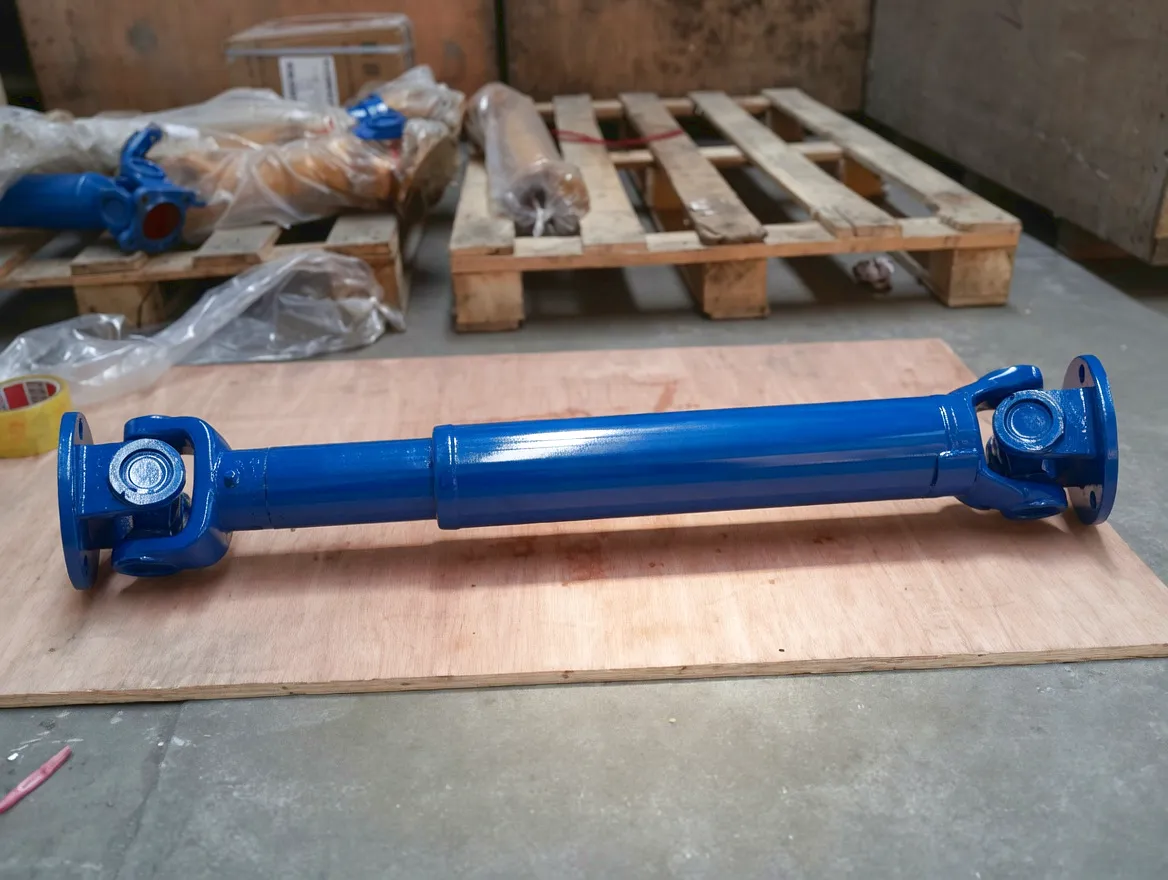
The following table provides representative performance parameters across the four principal Cardan coupling series offered by Ever Power. Values reflect nominal operating conditions; actual performance in specific applications is confirmed through application engineering review. All torque figures are rated values; peak or shock torque capacity is typically 2.5–3× rated torque for well-designed alloy steel assemblies.
Application Scenarios
Where Cardan Couplings Perform When Other Designs Cannot
▶ Rolling Mills & Steel Plants
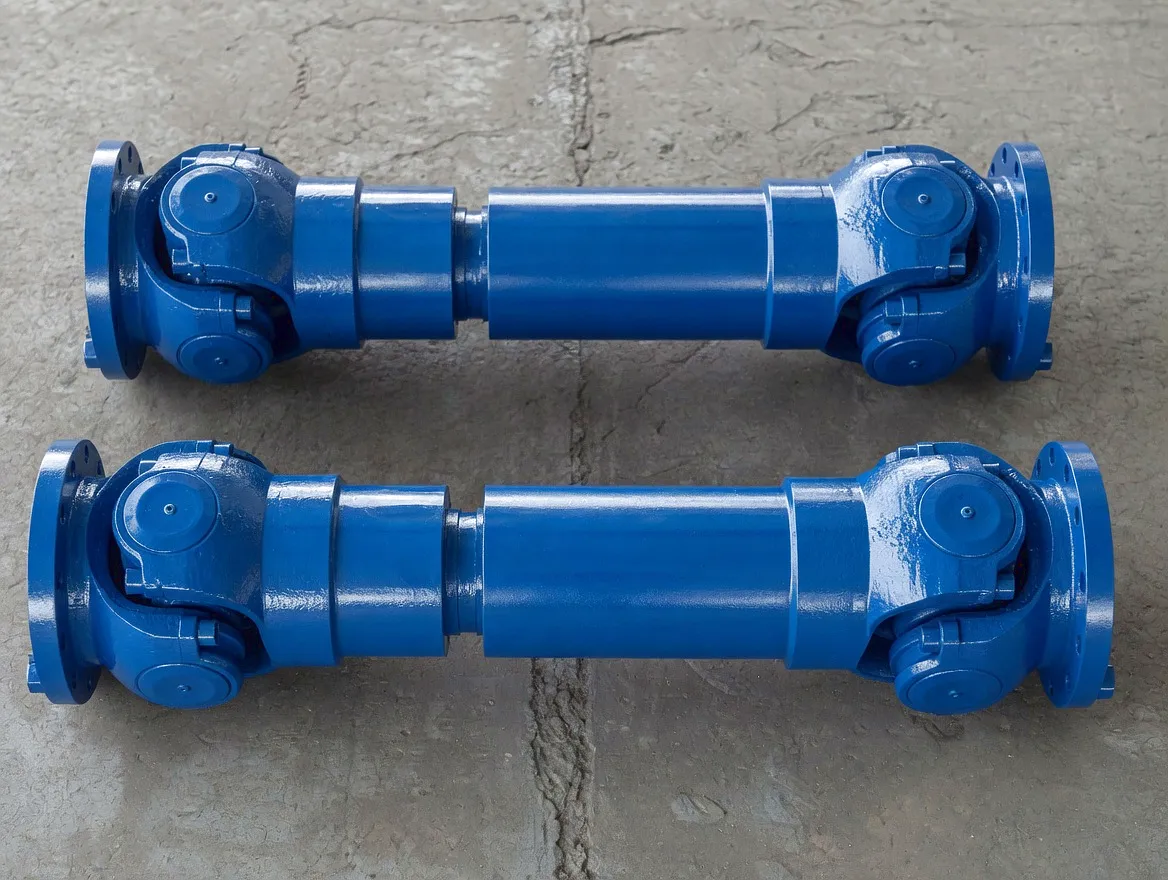
Hot and cold rolling mills represent the most demanding Cardan coupling application in UK industry. Main roll drives in Sheffield, Scunthorpe, and Rotherham plants operate at torques well in excess of 100 kNm with frequent load reversals as passes begin and end. The coupling must accommodate roll gap adjustments — typically 5–12° of angular displacement — while transmitting full rated torque throughout the adjustment range. The WSD-series Cardan shaft, with its large-bore journal bearing trunnion and continuously oil-lubricated joint, is specifically engineered for this service.
▶ Marine & Offshore Propulsion
Vessels operating out of Aberdeen, Hull, and the Tyne regularly specify Cardan coupling assemblies in their auxiliary drive trains — windlass drives, bow thruster gear trains, and generator coupling arrangements where propulsion shaft movement relative to engine-room structure cannot be eliminated. The combination of angular flexibility, high efficiency, and the availability of corrosion-resistant stainless or coated carbon-steel variants makes the Cardan coupling the preferred choice for UK North Sea support vessel operators who demand maximum reliability in demanding marine environments.
▶ Dynamometer & Test Stand Drives
Engine test facilities and powertrain dynamometers at UK automotive engineering centres in Coventry and Gaydon require coupling solutions that can absorb deliberate misalignment between the test article and the absorber, transmit high transient torque during full-load sweeps, and yet not introduce rotational non-uniformity that would corrupt measurement data. Precision-balanced, double-joint Cardan shafts with cross-ground trunnion pins and individually verified yoke-phase accuracy are specified for these high-value test stand applications, where instrumentation accuracy depends directly on the mechanical purity of the drive.
⚒
Mining & Quarrying
⛽
Paper & Board Mills
🌊
Wind Turbine Drives
⛭
Cement & Aggregates
⛩
Food Processing
⛯
Conveyor & Lifting
UK Industrial Market
Serving the Backbone of British Heavy Industry
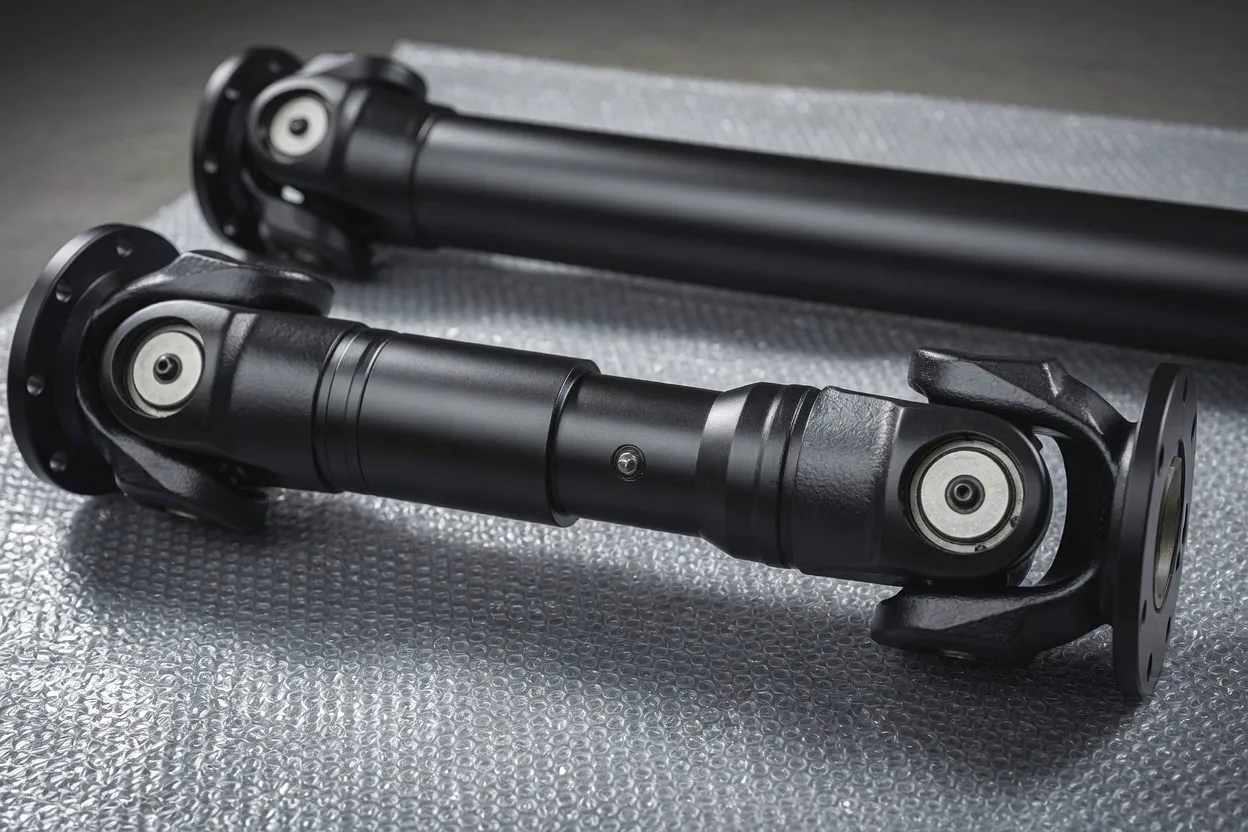
Britain’s heavy manufacturing corridor — stretching from the steel plants of Scunthorpe and Rotherham through the engineering workshops of Sheffield and Birmingham down to the port-based industrial clusters of Hull, Bristol, and Southampton — sustains some of the most demanding power transmission environments in Europe. Mill drives operate around the clock; conveyor systems in quarries and aggregate plants in Yorkshire and the East Midlands run for months without planned stops; offshore platform auxiliary drives in the North Sea face salt spray, vibration, and the ever-present requirement for zero unexpected downtime.
Ever Power supplies Cardan coupling assemblies to British industrial customers with documented engineering review, application-specific selection, and competitive lead times from a manufacturing base with global logistics reach. Enquiries from UK procurement teams and maintenance engineers are handled by application engineers with direct expertise in the common drive configurations found in UK mills, quarries, and processing plants — not through a generic distributor tier. Technical datasheets, dimensional drawings, and material certification documents are provided as standard with every quotation, meeting the documentation expectations of UK procurement departments operating under BS/ISO quality frameworks.
UK Customer Support
✓ Technical datasheets & 3D CAD models on request
✓ Application engineering review for non-standard drives
✓ Material test certificates (EN 10204 3.1 / 3.2 as required)
✓ Expedited delivery options for breakdown replacement
✓ Metric and inch bore configurations available
Ever Power Manufacturing
Precision Manufacturing for Demanding Drive Applications
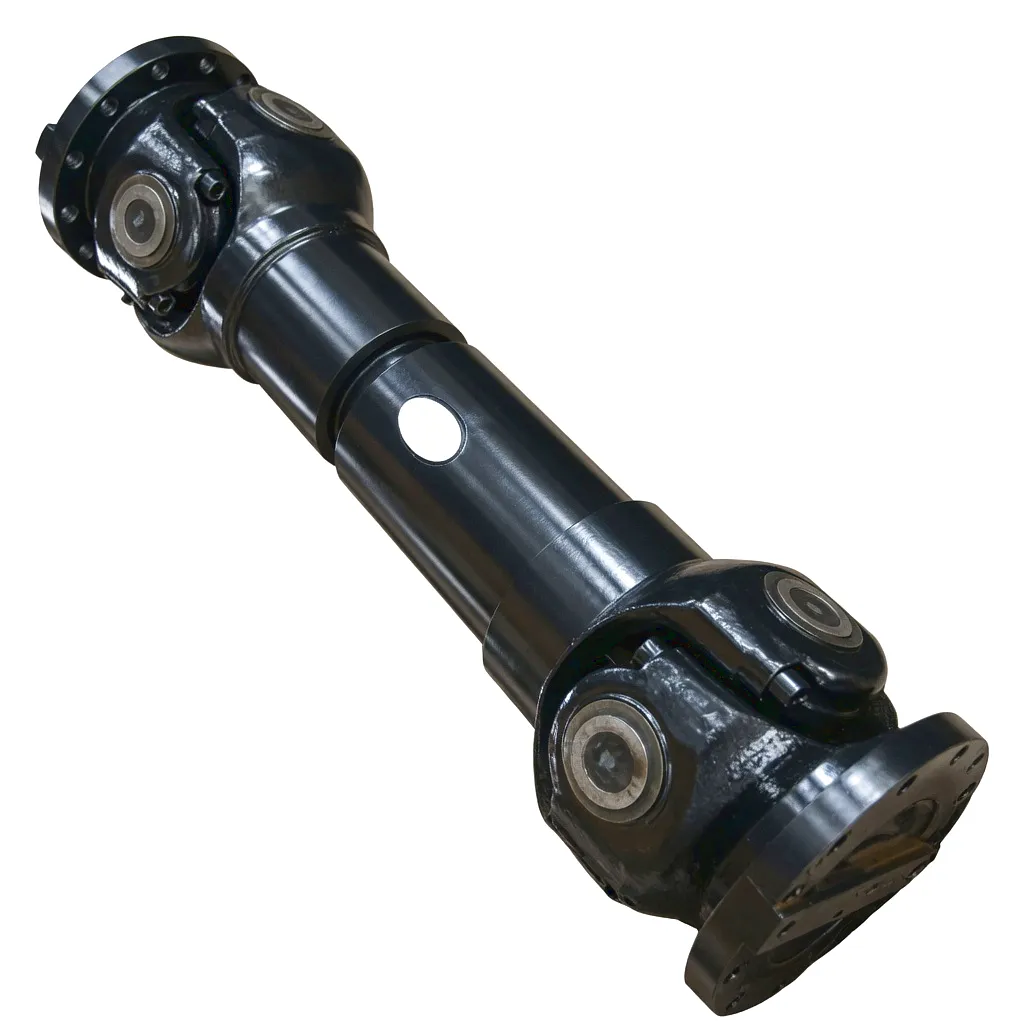 Ever Power operates a purpose-built Cardan coupling manufacturing facility equipped with CNC vertical turning centres capable of machining cross pieces up to 800 mm flange diameter, CNC horizontal boring mills for yoke bore and face machining, and dedicated needle bearing assembly cells with clean-room humidity and particulate control. Cross piece forgings are produced from certified billet with full material traceability through to the finished assembly, meeting the documentation requirements of ISO 9001 and customer-specific quality plans.
Dimensional verification uses CMM (coordinate measuring machine) inspection with probing of trunnion pin diameter, roundness, and taper at the rate of 100% of cross pieces for heavy and rolling-mill series. Assembled Cardan shaft balance is verified on a dynamic balancing machine with correction capability in two planes — a necessity for shafts that will operate above 500 rpm where residual imbalance would generate bearing loads that progressively shorten joint life.
The Ever Power customisation service handles bore modifications, non-standard flange bolt patterns, special shaft lengths, specific surface treatment specifications, and integrated guard and coupling guard assemblies designed to the safety requirements of UK Machinery Directive compliance. Applications where the standard catalogue does not provide a direct fit are handled through application engineering design review, with FEA stress analysis used to confirm that custom modifications do not reduce the structural safety factor below the project minimum — typically 2.5× rated torque for standard applications and 3.0× for shock-loaded or reversing drives.
Customer Success Story
Sheffield Hot Strip Mill: Eliminating Recurring Main Drive Coupling Failures
A heavy-plate rolling mill operating in the Sheffield industrial corridor had experienced a pattern of recurring main drive coupling failures over a four-year period. The original equipment, a gear-type coupling installed during a mill upgrade, was failing at its flange connection approximately every eight to eleven months — a failure rate that was driving unplanned downtime costs of roughly £30,000 per incident and forcing the maintenance team into a reactive repair cycle rather than planned preventive maintenance.
Root cause analysis conducted with Ever Power’s application engineering team identified the underlying problem: the mill’s main drive motor and gearbox were sitting on separate foundation plinths with independent thermal growth characteristics, producing a dynamic angular misalignment that cycled through 4–8° as the mill reached operating temperature. The gear coupling, designed for minimal angular displacement, was being subjected to sustained angular loading that its hub sleeve could not absorb without generating fretting wear and bolt fatigue at the flange joint. The solution was direct: replace the gear coupling with an Ever Power WSD-series double-joint Cardan coupling sized for 180 kNm rated torque with an 8° per joint working angle and a telescopic sliding section to absorb the 22 mm of axial float that thermal growth produced between the motor and gearbox flanges.
Installation was completed during a scheduled 36-hour maintenance window, using the existing motor and gearbox flange faces without modification. Ever Power supplied a purpose-designed intermediate support bracket and a full set of dimensional verification tools to ensure correct shaft alignment before commissioning. The mill returned to production on schedule, and subsequent monitoring showed vibration levels at the gearbox input shaft reduced by 62% compared to pre-retrofit baseline measurements — a direct consequence of eliminating the forced angular loading that the previous coupling had imposed on the gearbox input bearing.
At the 22-month post-installation review, the Cardan coupling assembly had accumulated over 17,000 operating hours without a single coupling-related maintenance intervention. Gearbox input bearing condition, monitored continuously by the plant’s vibration analysis system, remained within new-component baseline parameters — confirming that the reduction in dynamic misalignment load had materially extended the bearing’s expected service life. The mill’s maintenance manager estimated total savings against the previous failure pattern at approximately £120,000, accounting for avoided unplanned downtime, eliminated emergency repair labour, and extended gearbox bearing replacement intervals.
Project Results
Torque rated
180 kNm
Vibration reduction
–62%
Operating hours MTF
17,000+
Coupling failures
Zero
Estimated savings
£120,000
Customer Reviews
What UK Engineers Say About Ever Power Cardan Couplings
★★★★★
“We’d been fighting gearbox input bearing failures for years. Ever Power’s application team diagnosed our misalignment issue immediately and delivered a Cardan coupling that not only solved the problem but came with full material certs and a dimensional report. The shaft has been running faultlessly for nearly two years.”
James H.
Senior Maintenance Engineer — Sheffield Heavy Plate Mill
★★★★★
“The custom bore and flanging arrangement Ever Power produced for our Birmingham tube mill would have taken a standard catalogue supplier months of negotiation. Their team turned a non-standard flange drawing into a confirmed order and a confirmed delivery date within 48 hours. That’s the kind of response speed our production schedule demands.”
Sarah R.
Procurement Lead — Birmingham Tube & Section Plant
★★★★★
“Offshore Aberdeen operations don’t leave much room for component quality questions. We specified the SUS316 stainless variant from Ever Power for a subsea platform auxiliary drive, and the technical documentation package — material certs, balancing reports, dimensional inspection sheets — met our project quality plan without a single NCR. Competitive price and no corners cut on quality.”
Mark T.
Mechanical Systems Engineer — Aberdeen Offshore Services
FAQ
Frequently Asked Questions About Cardan Couplings
edit by gzl