Mechanical Engineering • Power Transmission
Double Cardan Joints:
How to Achieve Near-Constant Velocity
From the rolling mills of Sheffield to the offshore wind turbines of the North Sea — understanding the mechanics of the double cardan coupling is essential knowledge for engineers and procurement specialists demanding smooth, reliable power transmission.
Operating Angles to 45°
ISO 9001:2015 Certified
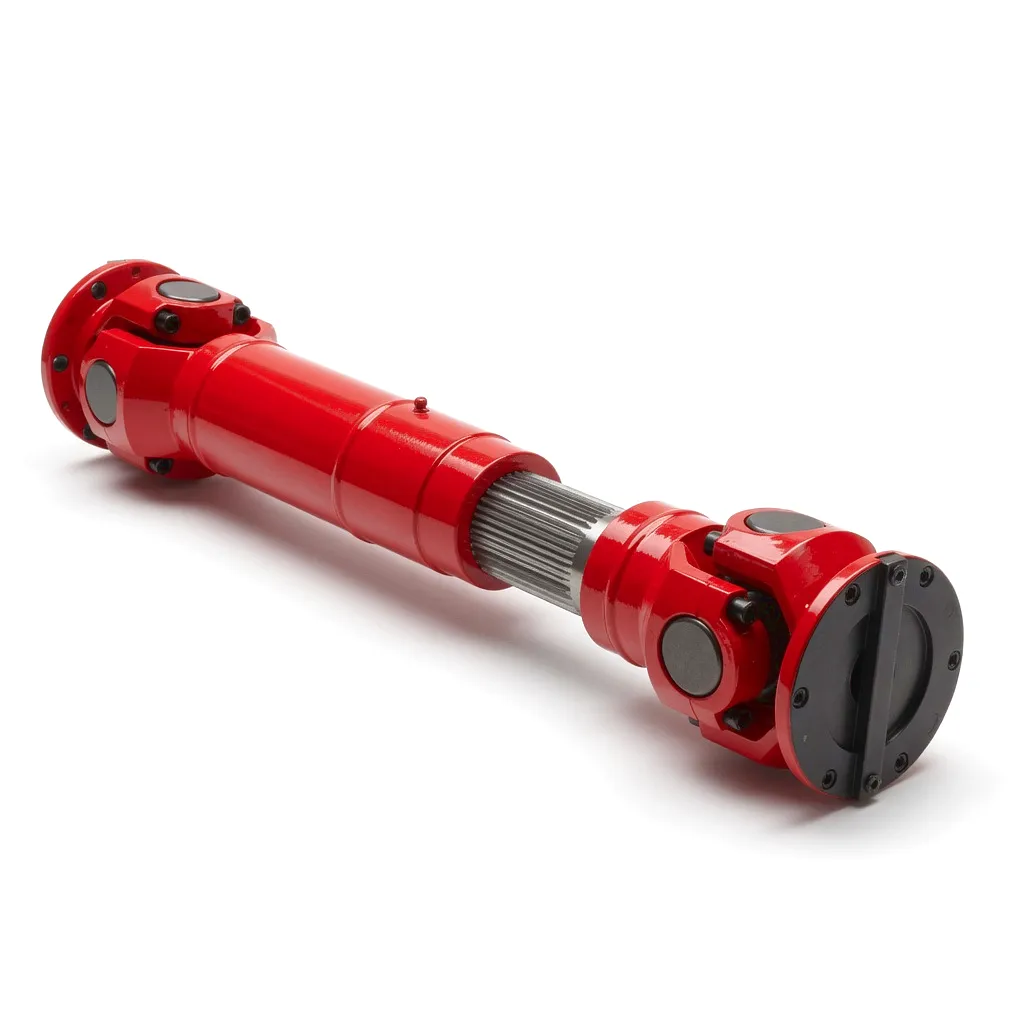 Power transmission engineering has long grappled with a fundamental challenge: how do you transfer rotational motion between two shafts that are not perfectly aligned, without sacrificing the smoothness of the output? The cardan coupling — also known as the universal joint or Hooke’s joint — has been the industry’s answer for well over a century. But a single cardan joint, for all its mechanical elegance, introduces an inherent velocity variation that limits its usefulness in precision-demanding applications. Enter the double cardan joint: a refined configuration that uses two universal joints in a symmetric arrangement to cancel velocity errors and deliver near-constant velocity output. This capability is not merely an academic distinction — it is a practical necessity for rolling mill drives, precision test rigs, paper machine dryer sections, and a host of other industrial applications across the United Kingdom and beyond. This article examines the engineering principles behind the double cardan coupling, the materials and manufacturing standards that determine its quality, and the real-world applications where it delivers decisive advantages over simpler coupling types.
Why Single Cardan Joints Fall Short
A single cardan coupling — at its most basic — is a Hooke’s joint: two yokes connected by a cross-shaped spider assembly with four needle-roller bearing caps. The geometry is robust and well-understood, and for decades it has served reliably in automotive driveshafts, agricultural power take-offs, and general industrial machinery across Britain. The problem, however, is embedded in the joint’s fundamental kinematics. When input and output shafts are misaligned by an angle θ, the output shaft does not rotate at a constant angular velocity. Instead, it accelerates and decelerates twice per revolution of the input shaft. The mathematical relationship governing this behaviour is:
Here, ω₁ is input angular velocity, ω₂ is output angular velocity, θ is the joint operating angle, and φ is the instantaneous rotation angle of the input shaft. At small angles below 3°, this variation is minimal — typically less than 0.1% — and is completely acceptable for most drive applications. The situation changes dramatically as the operating angle increases. At 10°, the peak-to-trough velocity variation reaches approximately 3%. At 20°, it approaches 12%. At 30°, the fluctuation exceeds 26%. These are not theoretical tolerances — they translate directly into cyclic torque loading, torsional vibration, and accelerated wear on every connected component downstream of the joint.
Velocity Error by Joint Angle
Peak-to-trough velocity variation of a single Hooke’s joint
The Near-Constant Velocity Principle
How the double arrangement cancels velocity errors and delivers smooth output
The double cardan coupling uses a beautifully simple principle to eliminate the velocity problem: it uses one joint to cancel the error introduced by the other. If one universal joint introduces a sinusoidal velocity error, a second identical joint positioned at an equal but opposite angle introduces an equal and opposite error — and the two cancel algebraically. The result is an output angular velocity that closely approximates the input angular velocity, regardless of the operating angle, providing the near-constant velocity characteristic that distinguishes this configuration from all single-joint arrangements.
Mechanically, this is achieved by connecting two single cardan joints in series through a centering socket assembly. This centering element — typically a precision-hardened ball located in a spherical socket positioned midway along the assembly — is the most critical component in the entire double cardan design. Its function is to maintain the geometric symmetry of the arrangement throughout the full rotation cycle: the angle between the input shaft and the intermediate shaft must always equal the angle between the intermediate shaft and the output shaft. When this equality is maintained, the velocity variation introduced by the first joint is cancelled exactly by the second. The centering socket must be manufactured to tight geometric tolerances and must maintain this precision under the combined stresses of load, thermal cycling, and dynamic vibration throughout the assembly’s service life.
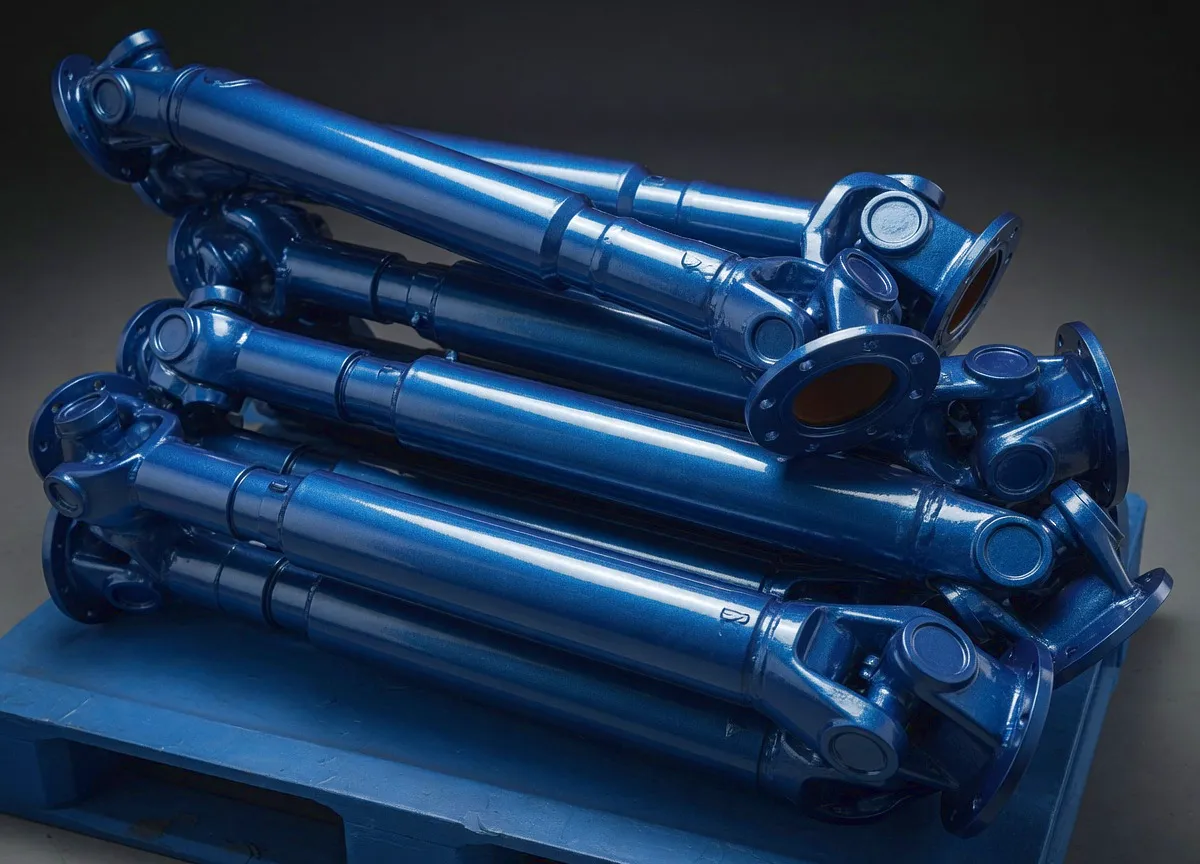
In practice, manufacturing tolerances mean that cancellation is not mathematically perfect — true constant velocity joints achieve theoretical perfection through a different mechanism (such as Rzeppa or tripod designs) — but the residual velocity variation in a well-manufactured double cardan joint is typically less than 0.3 to 0.5% across the full operating angle range. This level of performance is more than adequate for virtually all heavy industrial applications. Ever Power machines centering socket components to a concentricity tolerance of 0.01 mm, which is why the residual velocity error in Ever Power assemblies consistently falls at the lower end of this range.
Input Joint
First cardan joint introduces sinusoidal velocity variation proportional to sin²(θ).
Centering Socket
Hardened ball-and-socket enforces equal joint angles on both sides at all times.
Output Joint
Second cardan joint cancels the first joint’s velocity error through equal-and-opposite geometry.
Result
<0.5% residual velocity variation across operating angles up to 40°.
Core Manufacturing Materials
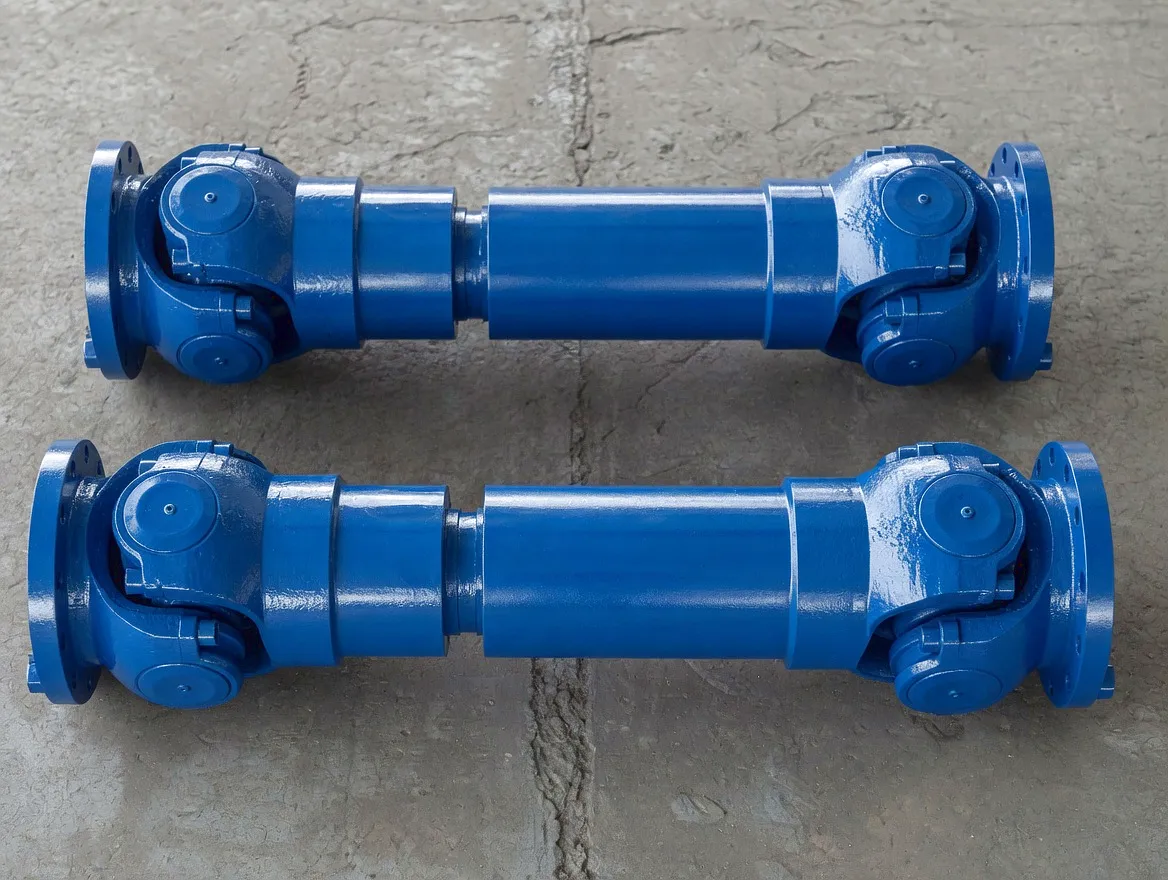
The materials used in a cardan coupling are not a secondary consideration — they define the assembly’s torque capacity, fatigue life, and environmental suitability. Ever Power applies rigorous material engineering to every component in its double cardan joint product range, matching alloy grades and heat treatment specifications precisely to the demands of each application. The foundation of any high-quality cardan shaft assembly is its alloy steel specification, and the choices made here cascade through every aspect of performance from rated torque to service life.
42CrMo4 (equivalent to SAE 4140 and widely specified in UK engineering to BS EN 10250) is the industry standard for industrial cardan coupling yokes. After quenching and tempering, it achieves a typical tensile strength of 900–1,050 MPa with excellent fatigue resistance under fully reversed torsional loading. For applications involving higher peak shock loads — open-die forging press drives, large mining crusher drives, or heavy rolling mill roughing stands — Ever Power specifies 34CrNiMo6, which offers approximately 20–25% higher notched impact toughness at comparable hardness levels. This material choice proved decisive in the Sheffield forging press case documented later in this article.
The cross-shaft spider and needle roller bearing assemblies are manufactured from through-hardened bearing steel (100Cr6 / SAE 52100). Needle rollers are case-hardened to 62–64 HRC and ground to tight cylindricity tolerances, ensuring even load distribution and minimum friction in service. For high-speed applications — such as the balanced cardan shafts used in automotive dynamometers at facilities like Gaydon or Millbrook — Ever Power uses precision-matched needle roller sets to achieve G2.5 dynamic balance grades.
Surface treatments are selected to match the operating environment. Standard industrial cardan couplings receive zinc phosphate plus oil treatment, adequate for indoor controlled environments. For offshore North Sea platforms operating from Aberdeen, or wind turbines in Orkney and Humberside, zinc-nickel electroplating (8–12 µm, >1,000 hours salt spray resistance per ISO 9227) or HVOF (High Velocity Oxy-Fuel) thermal spray coatings are specified. Stainless steel yoke variants in AISI 316L are available for chemical processing environments such as those found on Teesside and in the wider North East England chemical manufacturing corridor.
Material Reference
| Yoke (standard) | 42CrMo4 |
| Yoke (heavy-duty) | 34CrNiMo6 |
| Needle bearings | 100Cr6 (52100) |
| Centering ball | Hardened alloy steel |
| Offshore variant | 316L + Zn-Ni coat |
| Sliding spline | Case-hardened steel |
Core Technical Advantages
Why engineers across British industry specify double cardan couplings for their most demanding drives
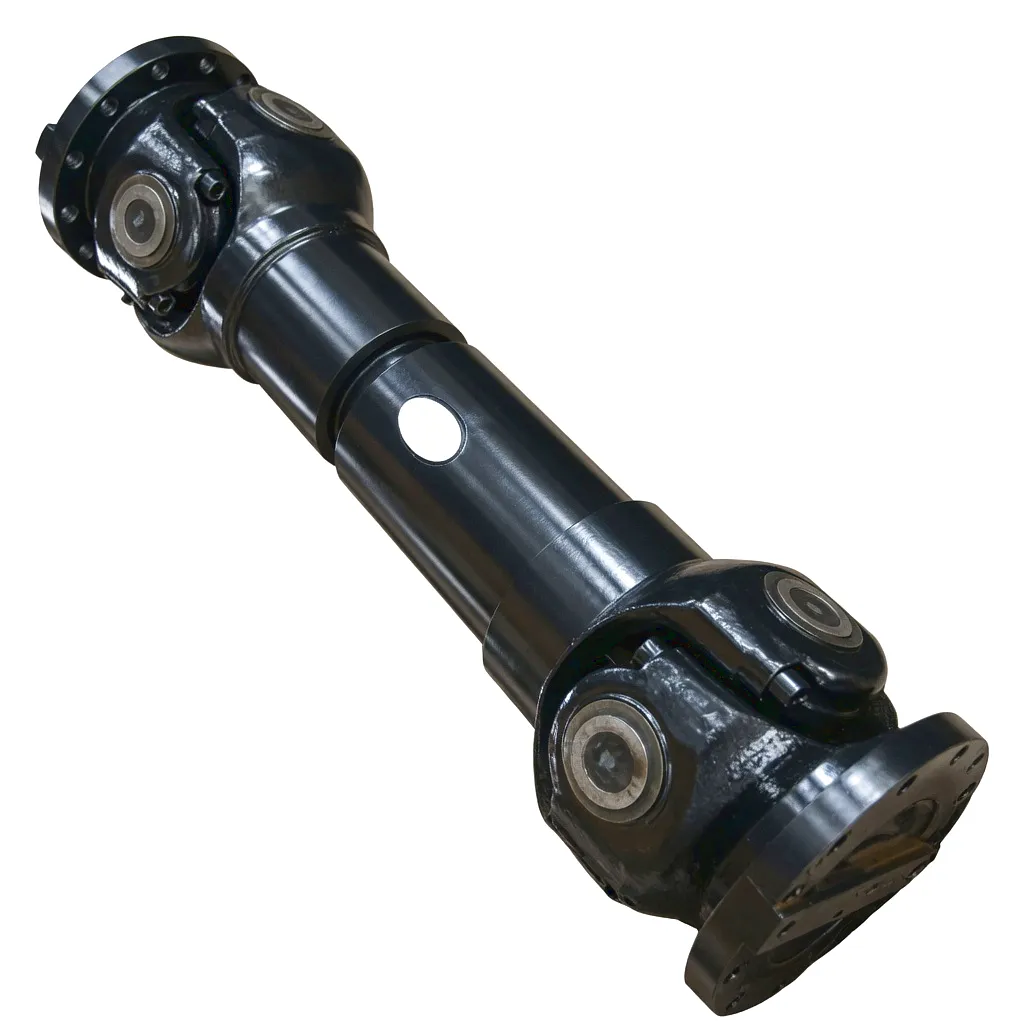
Near-Constant Velocity Output
The double cardan configuration reduces residual velocity variation to below 0.5% across operating angles up to 35°. This eliminates the cyclic torque loading and torsional vibration that afflicts single cardan joint arrangements, dramatically reducing wear on connected components including gearboxes, rolling mill housings, and precision test rig instrumentation.
Exceptional Torque Capacity
Forged alloy steel yokes and hardened needle bearing assemblies allow double cardan couplings to transmit torques from a few hundred Newton-metres up to over 2,500,000 Nm in heavy rolling mill or marine applications. This range is unmatched by disc couplings or gear couplings at comparable angular misalignment angles.
Wide Angular Operating Range
Standard double cardan shaft assemblies operate up to 35° of angular misalignment; custom Ever Power designs extend this to 45°. This far exceeds gear couplings (typically 1.5–3°) or disc pack couplings (typically 0.5–1°), making the double cardan coupling the only viable solution where large misalignment is unavoidable.
Axial Displacement Accommodation
Many double cardan coupling assemblies incorporate a sliding spline section, permitting controlled axial movement between machines. This accommodates thermal expansion in hot-rolling processes and installation adjustments without imposing axial thrust on connected bearings. The spline is case-hardened and ground for low friction.
Field Maintainability
Unlike sealed CV joints, industrial double cardan joints are designed for in-service maintenance. Needle bearing kits are available for field replacement, yokes are interchangeable across size families, and Ever Power provides complete spare parts kits with each assembly — a key advantage in UK continuous-process plants where planned maintenance windows are short.
Broad Environmental Tolerance
With appropriate sealing and material selection, Ever Power’s double cardan couplings operate reliably from −40°C to +200°C. This range covers Arctic offshore platform environments, North Sea wind turbines, high-temperature furnace drives, and demanding thermal cycling in automotive test cells — making one product family applicable across the full breadth of UK industrial requirements.
Technical Performance Specification
| Parameter | Standard Series | Heavy-Duty Series | Custom (Ever Power) |
|---|---|---|---|
| Rated Torque (Nm) | 50 – 5,000 | 5,000 – 200,000 | Up to 2,500,000 |
| Max Operating Angle | Up to 25° | Up to 35° | Up to 45° |
| Max Speed (RPM) | Up to 3,000 | Up to 1,500 | Up to 6,000 (balanced) |
| Shaft Bore Diameter (mm) | 20 – 150 | 100 – 450 | Custom to drawing |
| Yoke Material | 42CrMo4 | 42CrMo4 / 34CrNiMo6 | Per specification |
| 표면 처리 | Phosphate + oil | Zn-Ni / Hard chrome | Per environment |
| Operating Temperature | −20°C to +120°C | −20°C to +150°C | −40°C to +200°C |
| Dynamic Balancing Grade | G16 standard | G6.3 | G2.5 (precision) |
All values are indicative. Contact Ever Power for confirmed specifications for your application. Custom sizes and materials available on request — [email protected]
Industrial Application Scenarios
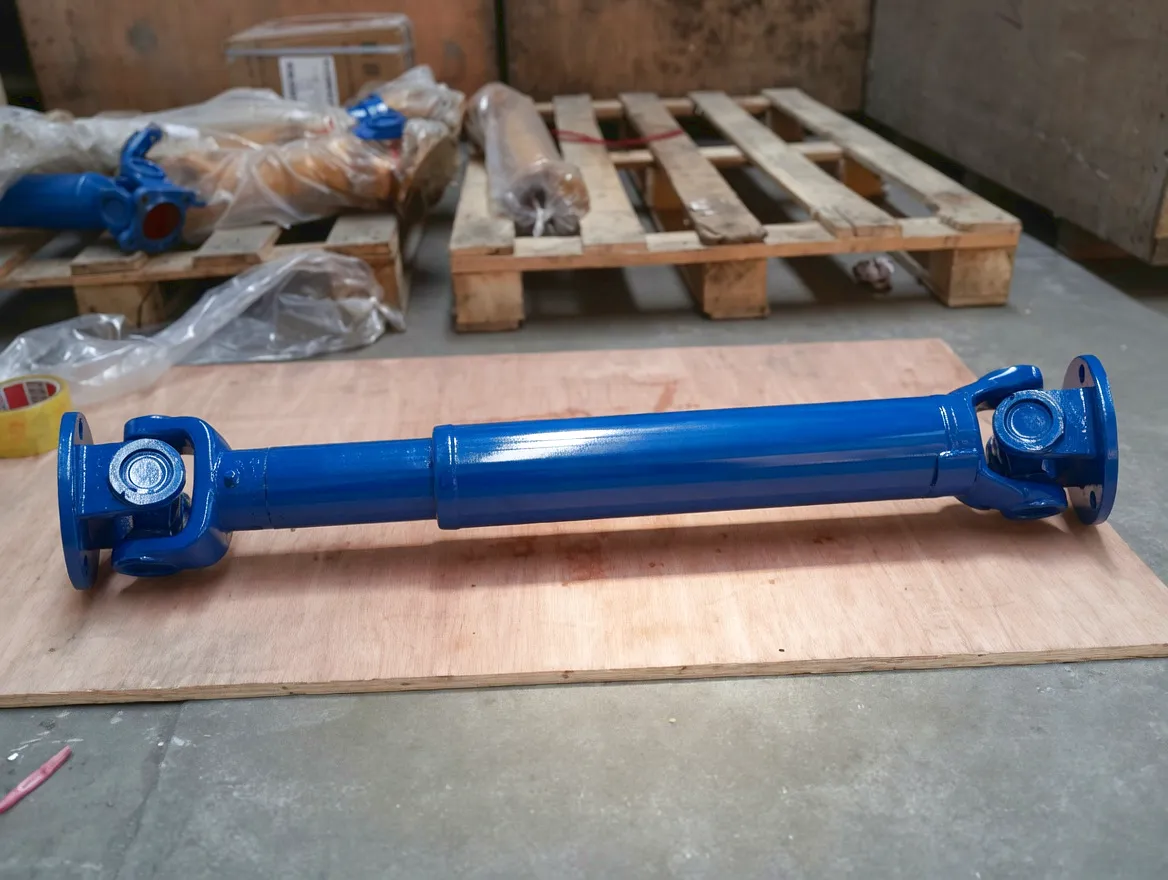
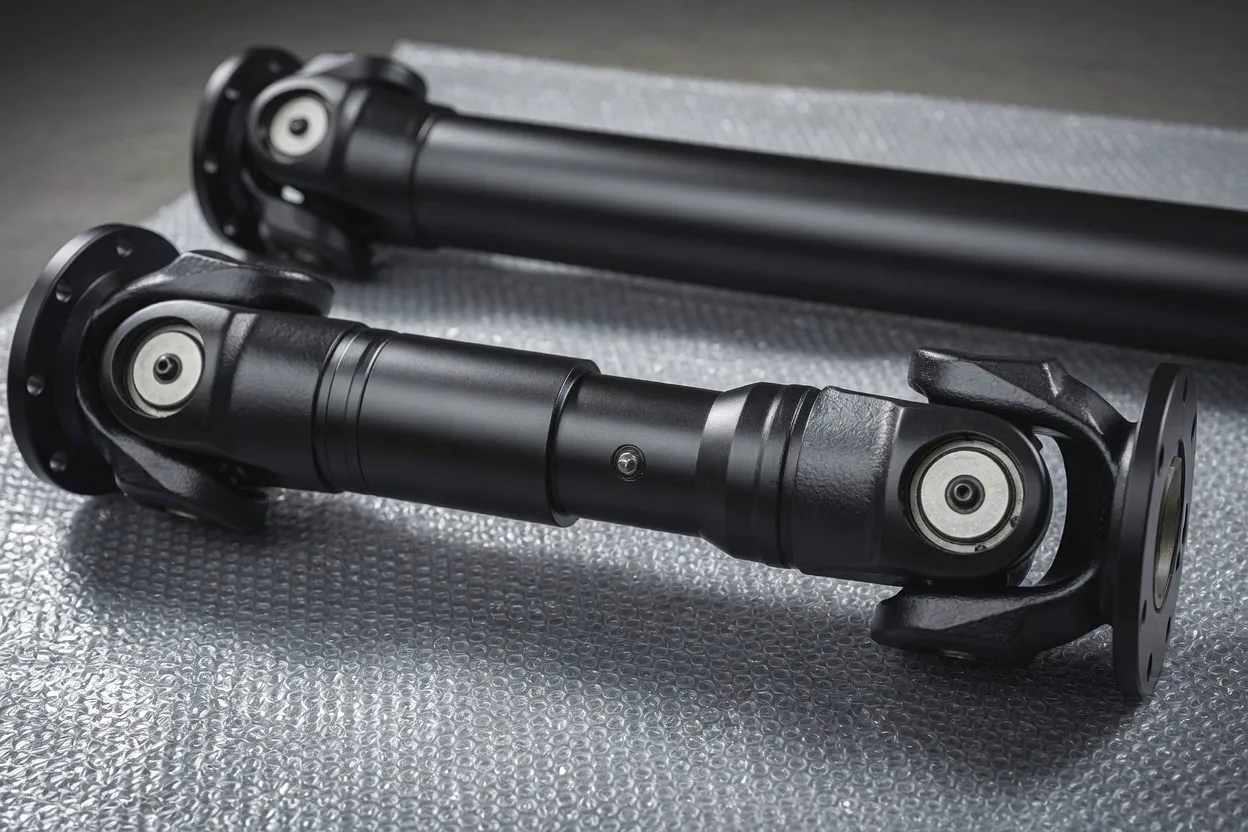
From the rolling mills of Sheffield to the wind turbines of Humberside — where double cardan couplings deliver decisive performance advantages
Ever Power: Precision Manufacturing & Custom Cardan Solutions
Your specialist partner for custom cardan coupling engineering, supplied to UK industry
Ever Power has built its reputation on a straightforward premise: every industrial drive application is unique, and a cardan coupling that almost meets the requirement will eventually fail. With more than two decades of specialist experience in precision cardan shaft
gzl님이 편집함