
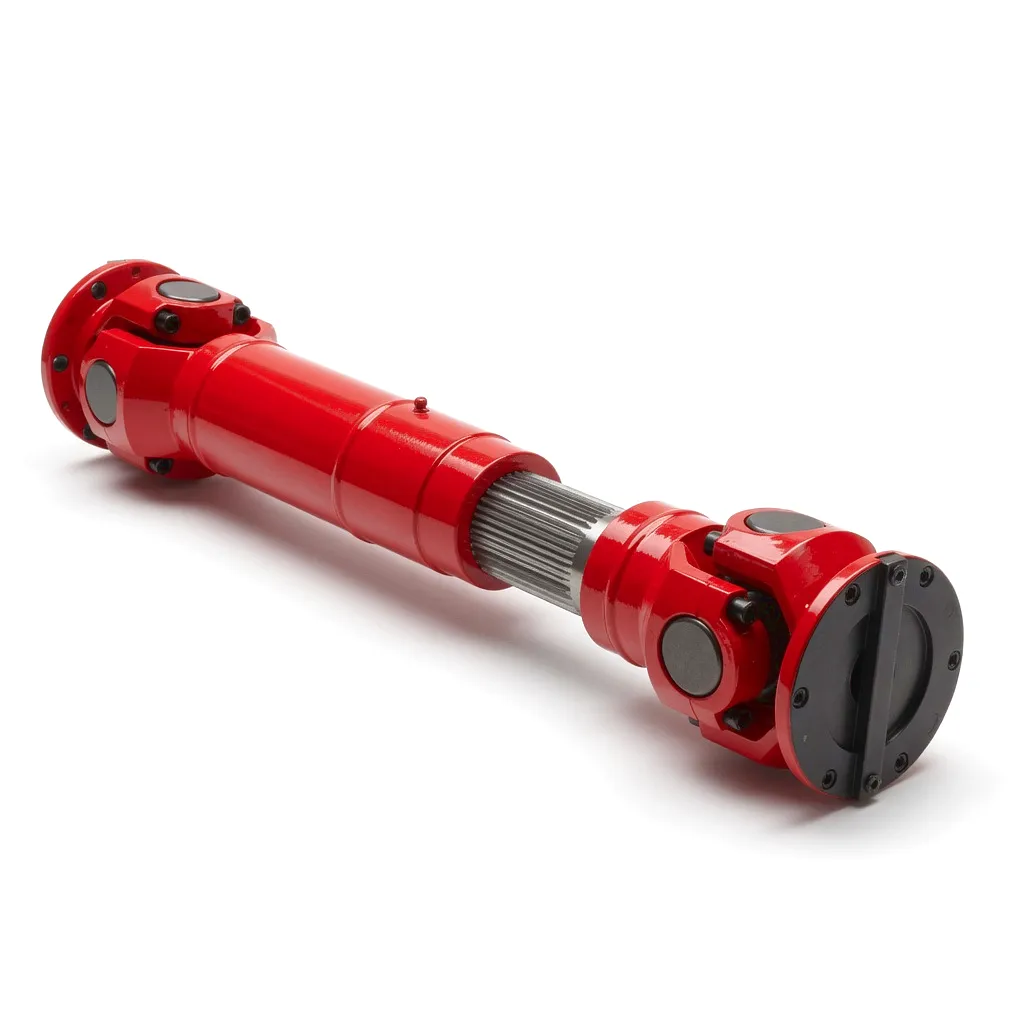
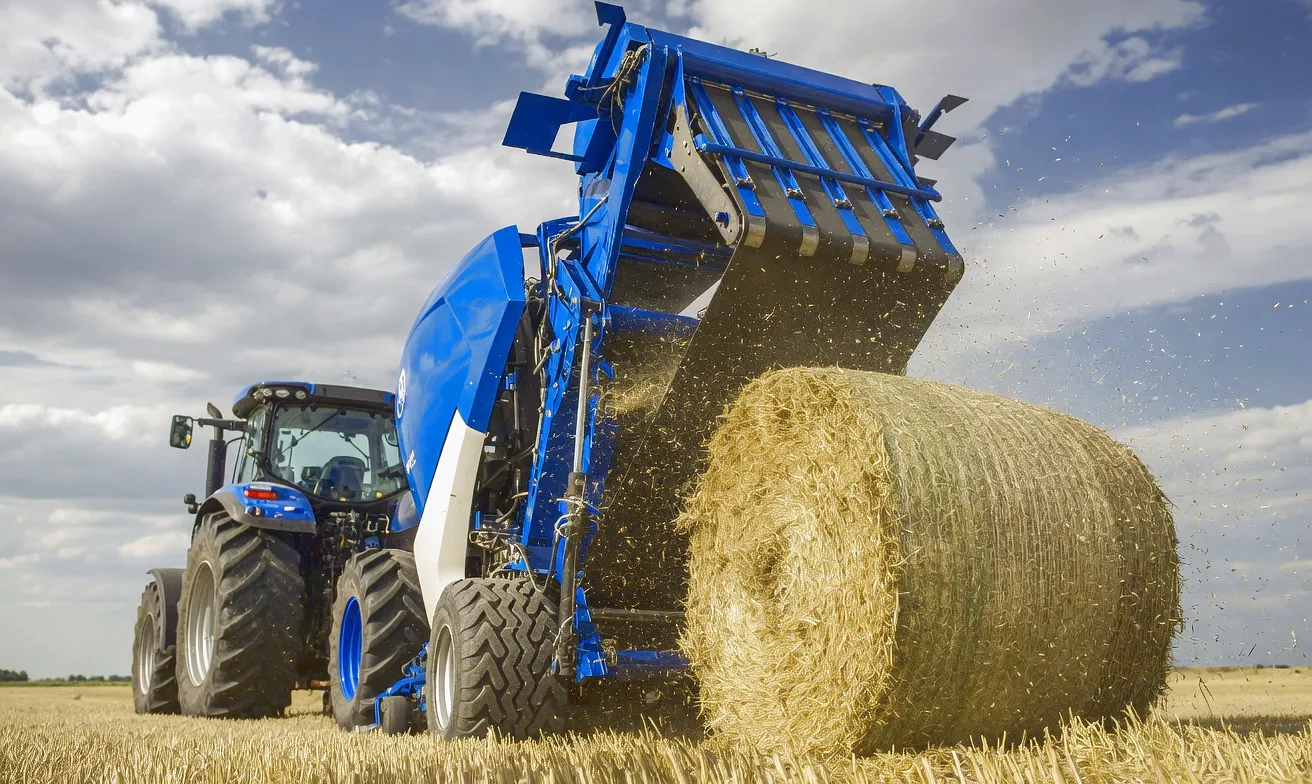
 Walk into any agricultural machinery yard in Yorkshire, Norfolk, or the Scottish Borders during harvest season and you will find round balers working flat out from dawn to dusk. Behind every bale that gets ejected cleanly and every pickup reel that sweeps the windrow without hesitation, there is a cardan coupling — more precisely, a PTO cardan shaft — quietly doing work that most operators never think about until something goes wrong. And by the time something goes wrong, downtime costs are already mounting.
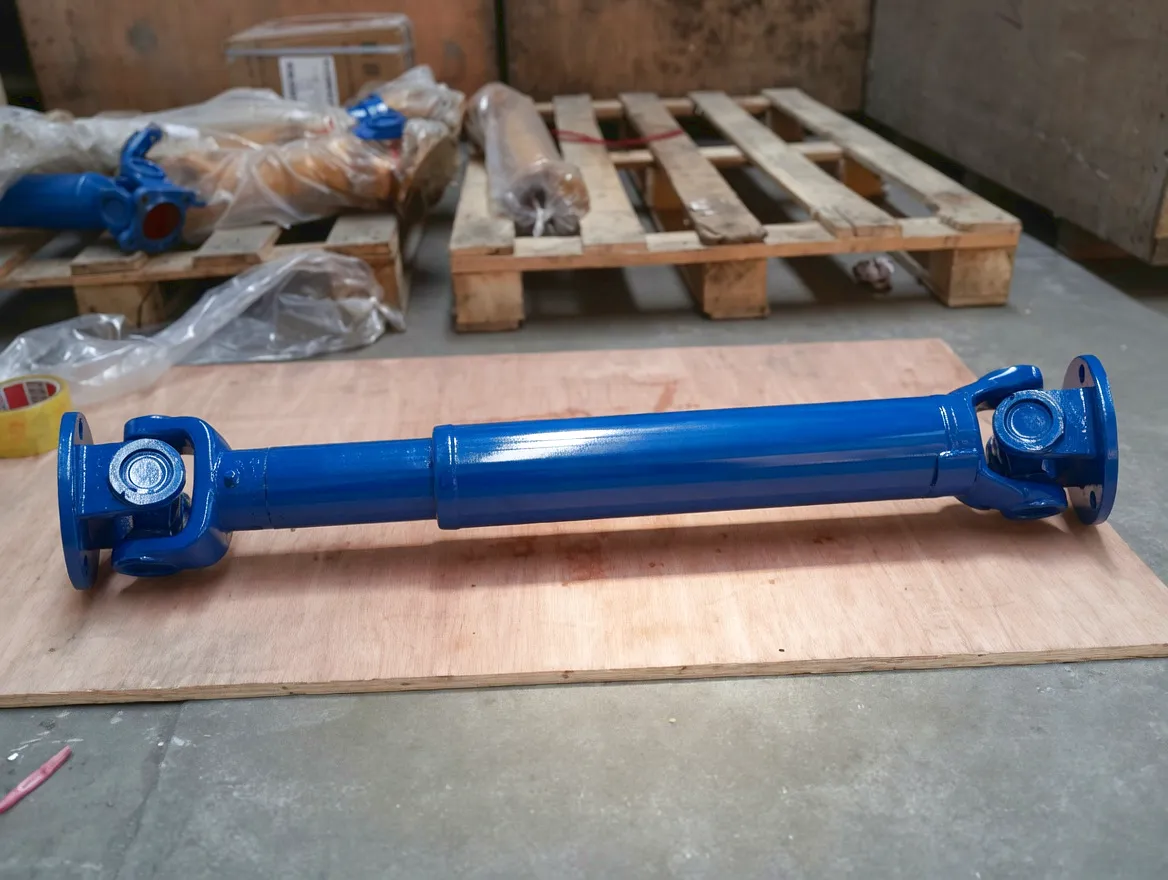
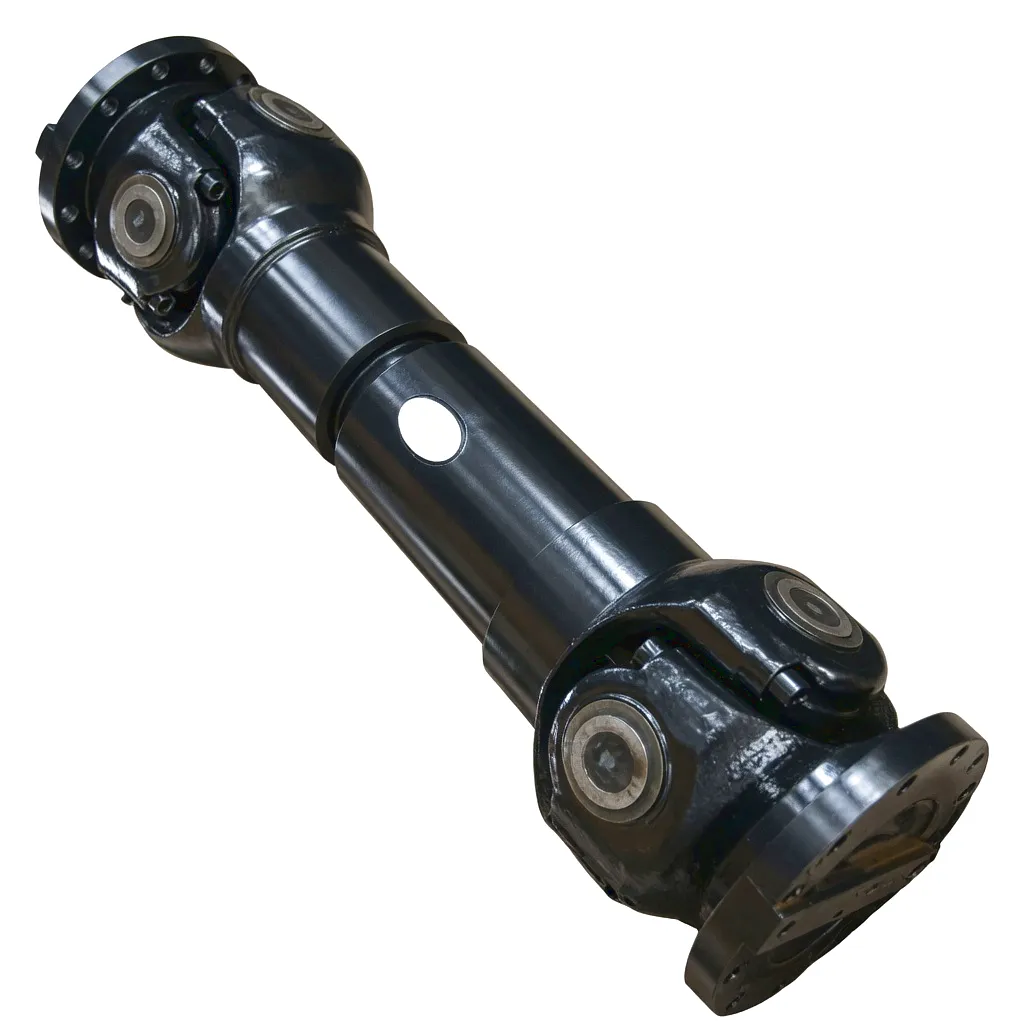
The cardan coupling — also called a universal joint shaft, cardan shaft, or PTO driveshaft — is the component that bridges a tractor’s power take-off stub and the gearbox input of an implement like a round baler. It does this while accommodating constant angular changes caused by uneven terrain, implement articulation, and the natural rise and fall of a baler’s hitch geometry. What makes this deceptively simple looking shaft so technically demanding is the combination of high torque, shock loading, dust, crop debris, and continuous articulation that it must endure across thousands of operating hours without failure.
This article draws on more than eighteen years of application engineering experience in cardan coupling design and manufacture to give UK farmers, machinery dealers, and agricultural engineers a genuinely practical resource — covering materials, torque ratings, safety requirements, maintenance cycles, and the specific selection criteria that separate a reliable baler PTO shaft from one that will let you down mid-season.
What Makes a Round Baler’s Drive Demands So Unusual
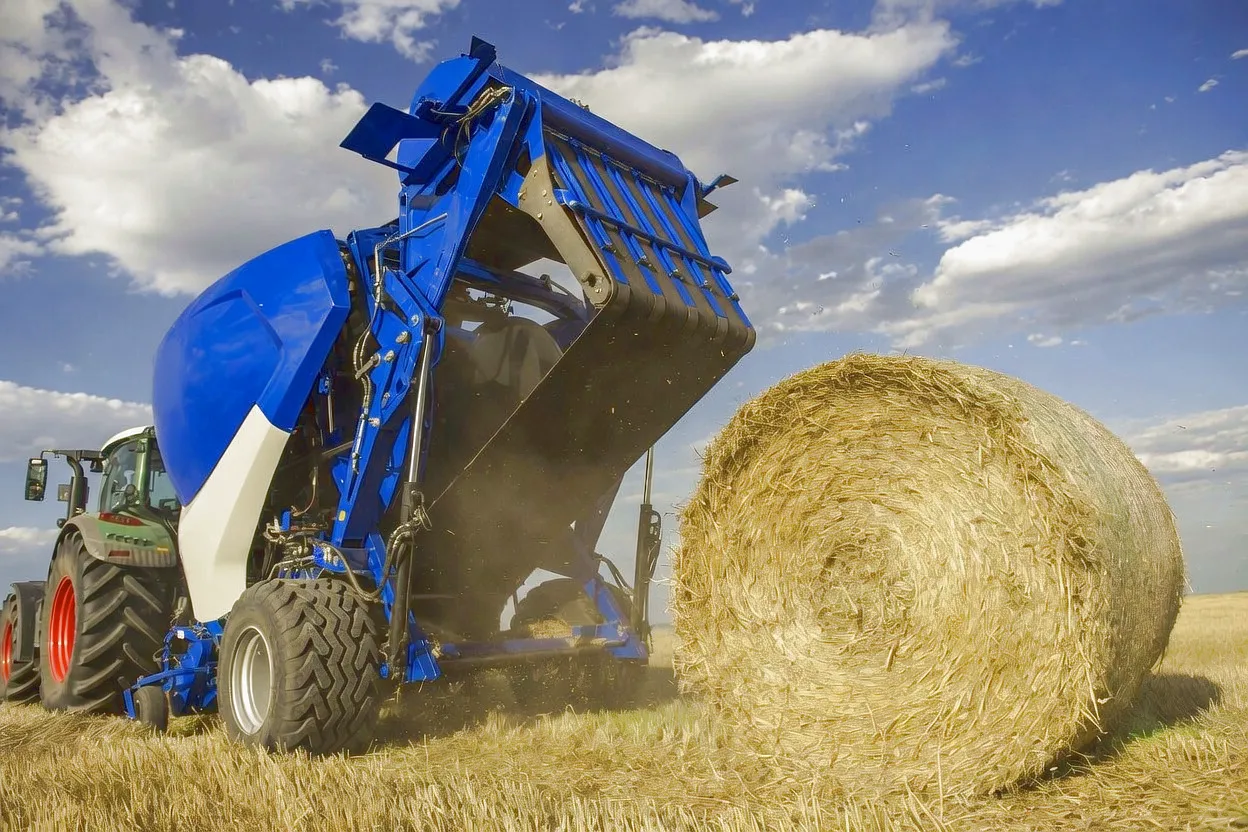
A round baler is, mechanically speaking, one of the most demanding implements ever put behind a farm tractor. Unlike a mower or a spreader, it combines continuous high-speed rotation of the belt drive or roller assembly with cyclical shock loads every time dense crop material enters the pickup chamber. The flywheel effect within the bale formation chamber creates torque reversals, and when a plug situation occurs — common with wet or tangled material — instantaneous peak torques can reach four to six times the rated running torque of the machine.
British conditions compound these challenges. UK harvests frequently contend with damp grass silage, late-cut heavy ryegrass leys, and the kind of unpredictable ground that shifts from firm chalk to soft clay within the same field. Tractor PTO speeds run at either 540 rpm or 1000 rpm, with modern variable-rate PTO tractors increasingly common on progressive UK farms. The cardan coupling connecting tractor to baler must handle all of this, across working angles that range from near-zero on flat arable fields to 25 degrees or more when navigating field gateways or headland turns.
4–6×
Peak torque multiplier during baler plugging events
25°
Maximum working angle encountered on UK headland turns
1000h+
Target service interval for correctly specified agricultural cardan shafts
Understanding these operational realities is the starting point for every specification conversation we have with UK machinery dealers and farm businesses. The cardan coupling is not a commodity — it is a precision-engineered safety-critical component, and treating it as such is the difference between a season that runs to plan and one that does not.
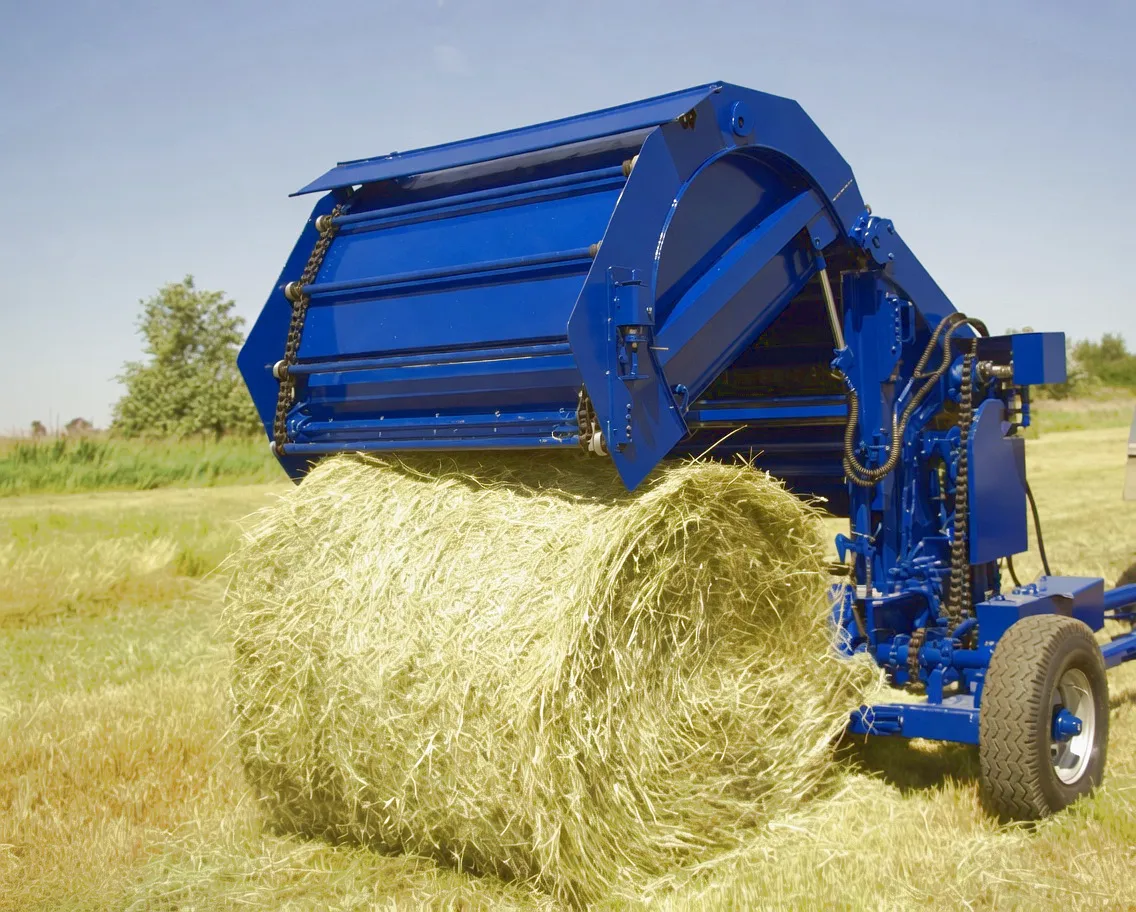
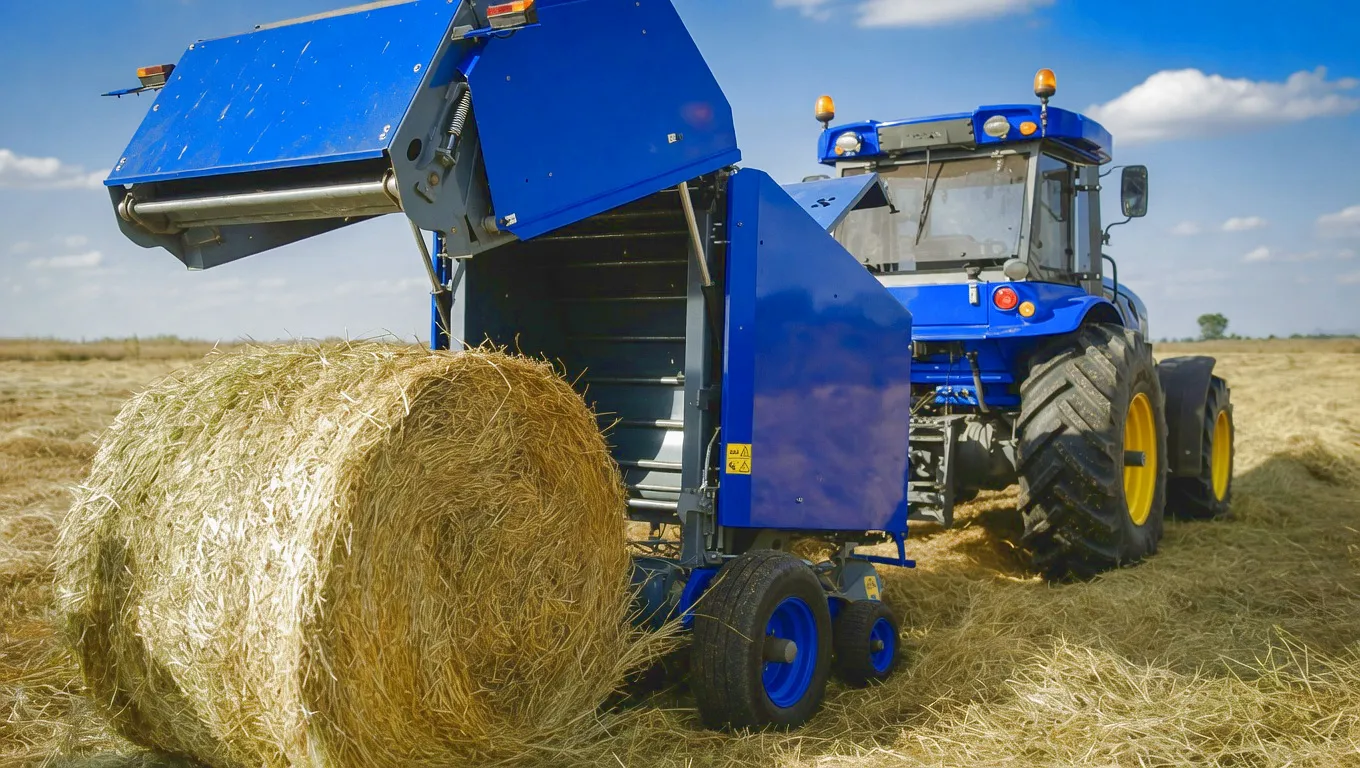
Cardan coupling in a live round baler PTO drive application — field conditions, UK harvest season.
Engineering Principles: How a Cardan Coupling Works Under Load
The classic Hooke’s joint at each end of a cardan shaft operates on a beautifully simple principle: two yokes connected through a cross-shaped journal bearing, where the cross can pivot simultaneously in two perpendicular planes. This geometry allows the shaft to transmit rotation through an angle. However, a single Hooke’s joint introduces a well-known velocity irregularity — the output shaft accelerates and decelerates twice per revolution even when the input rotates at constant speed. For a round baler running its pickup reel at 540 rpm input, this angular velocity variation creates vibration, fatigue, and noise if not addressed.
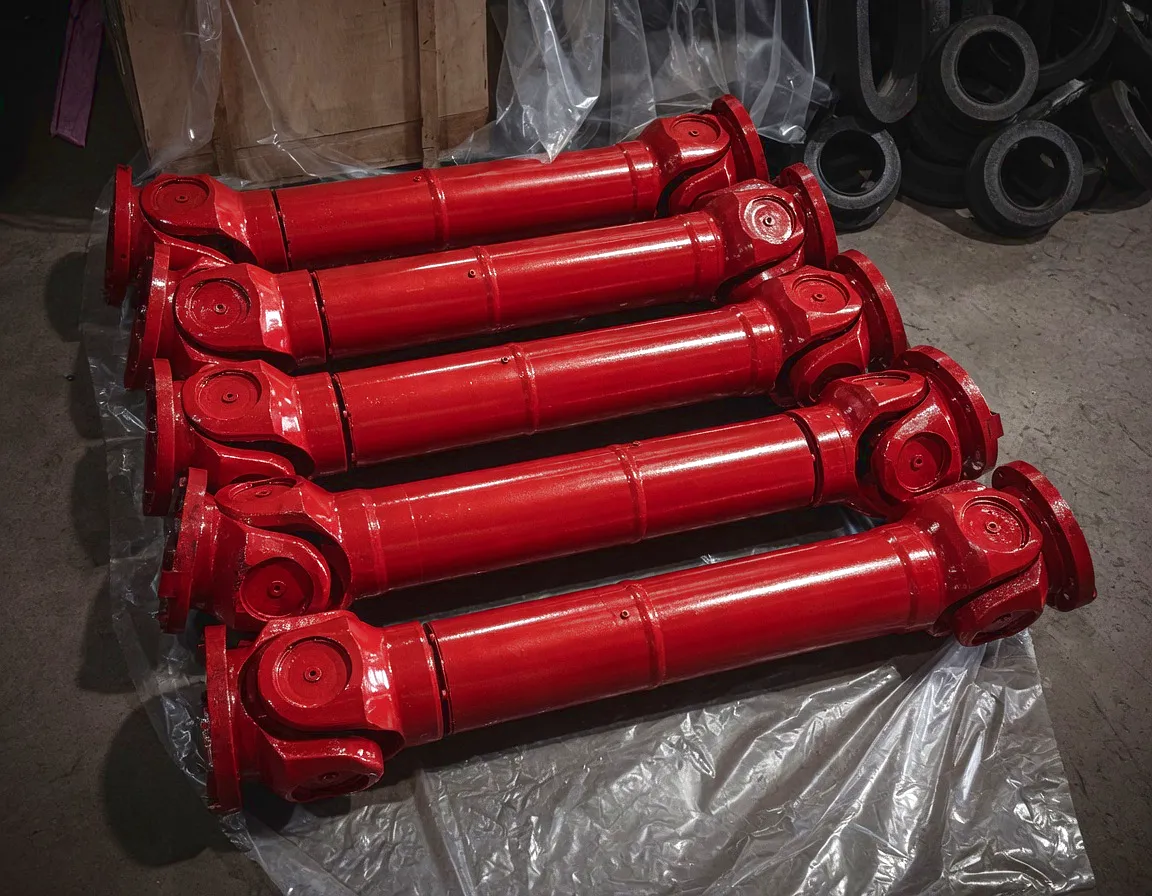
The engineering solution is to use two Hooke’s joints phased correctly — with the yokes aligned (in phase) and the intermediate shaft at equal angles on both ends. This double-joint arrangement, which is standard in all agricultural cardan shafts, cancels the velocity irregularity and delivers smooth, constant-velocity power transmission across the operating angle range. The intermediate shaft — typically a telescoping tube-and-profile assembly for length adjustment — must be sized to resist both the torsional loads and the bending moments introduced when the shaft operates at angle.
Wide-angle Hooke’s joints, also called “wide-angle yokes” or large-bore joints, extend the smooth operating range beyond the standard 25 degrees. These are increasingly relevant for short wheelbase tractors paired with compact balers where the hitch-to-PTO geometry is compromised, or where operators regularly navigate tight field corners. At Ever Power, we design wide-angle variants up to 35 degrees of continuous articulation as part of our standard agricultural cardan coupling range.
Materials and Construction: What Goes Into a High-Grade PTO Cardan Shaft
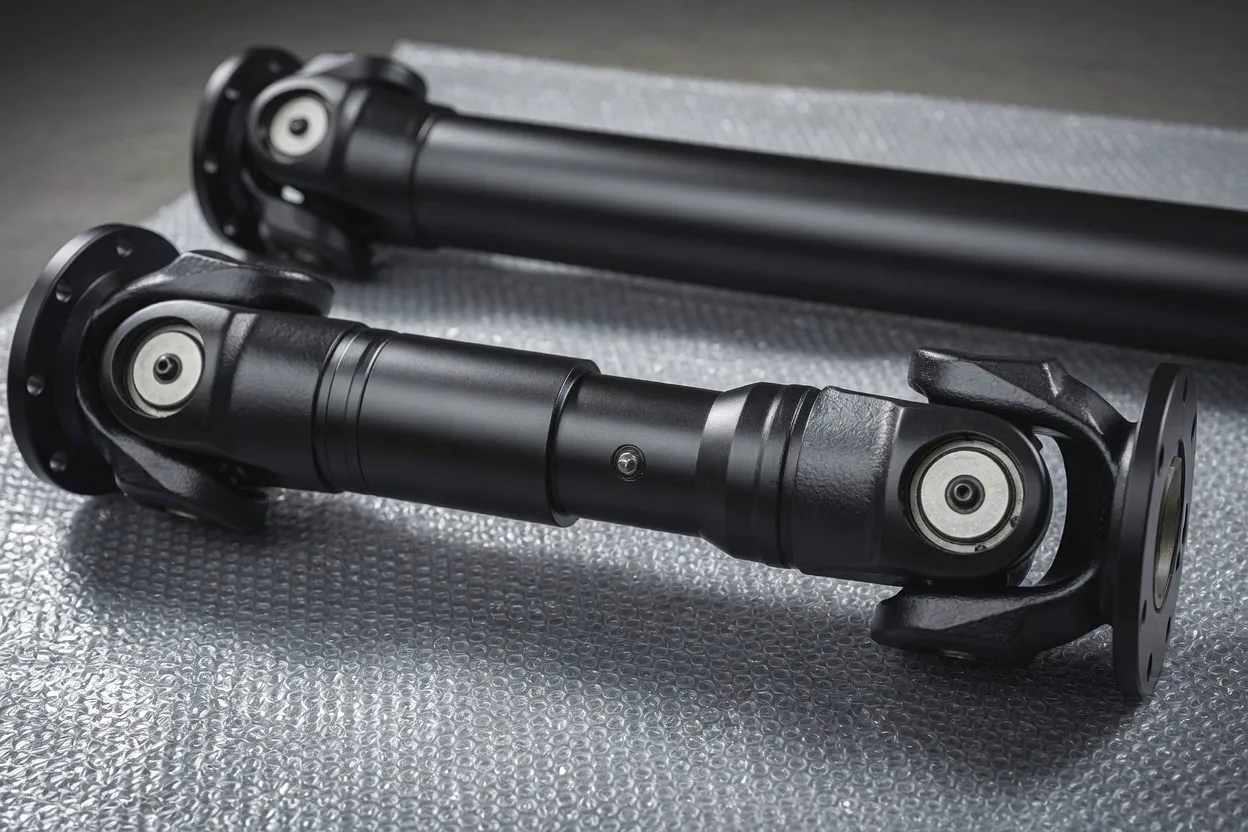
The material science behind a good cardan coupling for agricultural use is not glamorous, but it is the foundation of everything. Yoke forgings are machined from medium-carbon alloy steels — typically 40Cr, 42CrMo, or their EN equivalents — with controlled grain flow from the forging process contributing significantly to fatigue resistance under the cyclic bending loads that agricultural shafts experience during field work. Cross journal sets are manufactured from case-hardened bearing steel, ground to tight tolerances, and filled with high-pressure grease nipples or sealed-for-life grease packs depending on application.
Yoke Forgings
42CrMo4 alloy steel — tensile strength 900–1100 MPa, excellent fatigue life under cyclic torsional and bending stress.
Cross Journal Sets
Through-hardened bearing steel, case depth 0.8–1.4 mm, surface hardness 58–64 HRC, precision ground needle roller raceways.
Telescoping Tubes
Seamless drawn steel tubes — square, star, lemon, or wide-angle profiles — with nylon-lined inner cones for smooth sliding and rust prevention.
Safety Shields
Impact-resistant UV-stabilised polypropylene or HDPE guards — CE-marked per EN ISO 4254 agricultural machinery safety standards.
Overload Protection
Integrated friction clutch or ratchet torque limiters — preset trip torques from 200 Nm to 6000 Nm to protect baler gearboxes from shock loads.
Surface Treatment
Hot-dip galvanising, epoxy powder coat, or zinc-phosphate + paint — engineered for UK outdoor storage and rain exposure conditions.
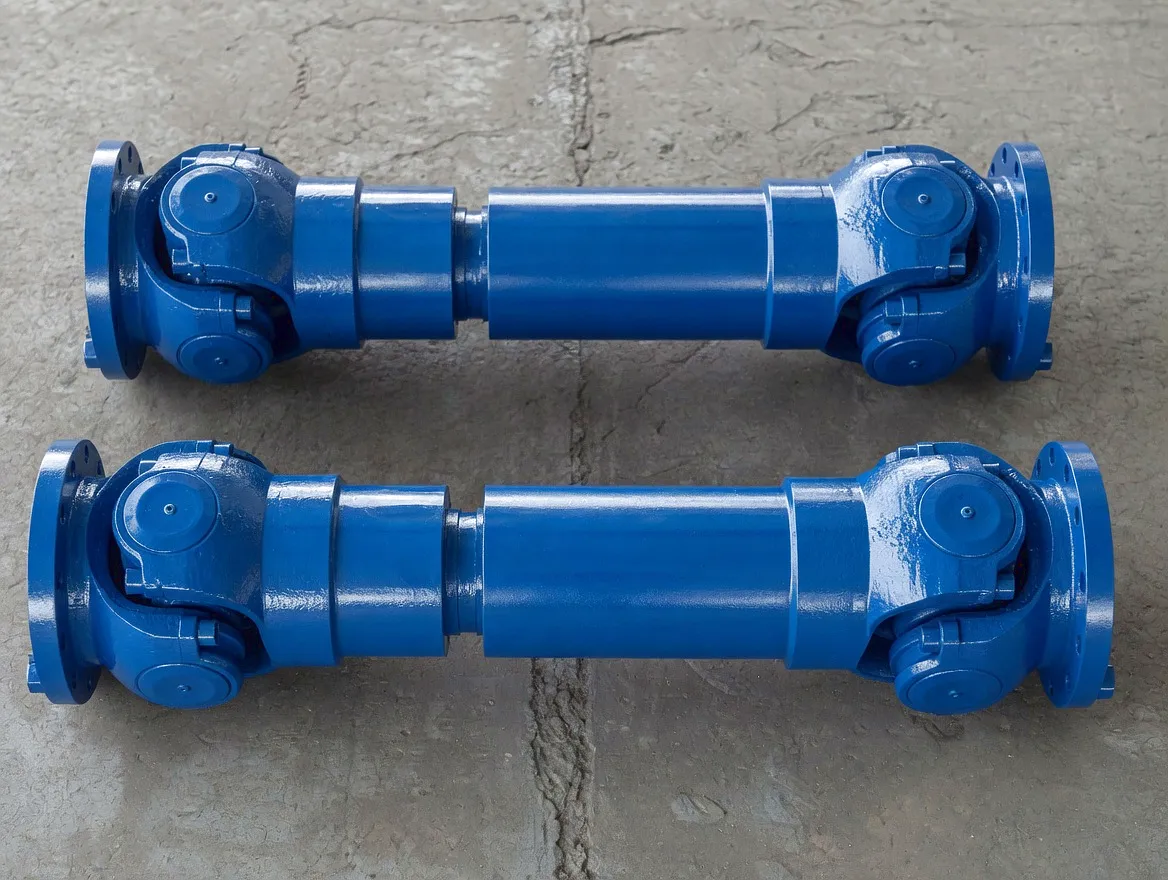
Technical Performance Parameters — Agricultural Cardan Shaft Range
The table below covers the primary technical parameters across our standard agricultural cardan coupling series, designed specifically for PTO-driven implements including round balers, square balers, forage harvesters, and slurry tankers. All values are for standard temperature operation at recommended lubrication intervals. Contact our engineering team for extended duty cycle, extreme environment, or high-cycle hydraulic actuation applications.
WA = Wide-angle yoke variant. All rated torques at 10° operating angle. Custom torque limiter settings available. Values subject to final engineering review.
Why These Cardan Couplings Outperform Generic Alternatives
The agricultural PTO shaft market is flooded with cheap generic product from sources that do not understand farming conditions. After eighteen years of working directly with agricultural machinery OEMs, UK dealers, and end-user farmers on problem diagnoses, certain patterns emerge very clearly. Cross journal sets that fail at 200 hours in wet silage conditions. Telescoping profiles that bind under mud contamination. Torque limiters preset at the factory to trip values that bear no relationship to the actual machine being protected. These are not component failures in isolation — they represent specification failures that started at the selection stage.
Precision Cross Sets
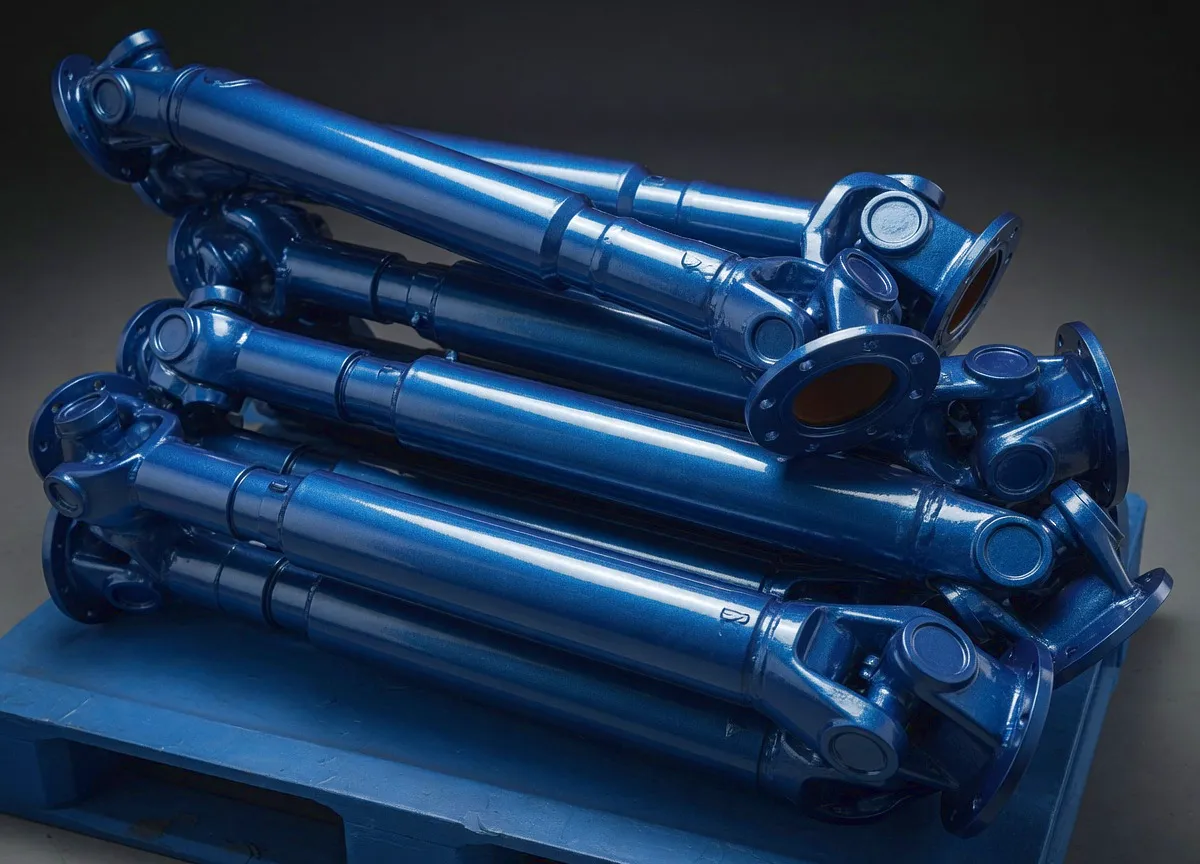
Ground needle roller raceways to within 0.005 mm tolerance, heat-treated to 58–64 HRC, with grease retention seals that actually work in crop dust and silage acid environments. Service life consistently 30–50% longer than market-standard journal sets in independent UK field trials.
Calibrated Torque Limiters
Every friction clutch and ratchet torque limiter we supply is calibrated to the specific implement’s gearbox rating, not a generic preset. This protects gearbox output shafts that can cost £800–£3,500 to replace in mid-season downtime scenarios — a real concern for UK round baler operators running multi-cut silage programmes.
Custom Length and Profile
Our manufacturing capability extends to custom shaft lengths, custom telescoping ranges, non-standard spline profiles, and hybrid assemblies combining wide-angle yokes with standard mid-shaft sections. Whether you are retrofitting an older Welger or Claas baler or specifying for a new OEM product line, we can match the geometry exactly.
UK Weather Resistance
Exterior surfaces are treated with corrosion protection systems specified for the UK’s wet Atlantic climate — not the dry continental storage conditions many mainland European products are designed around. Hot-dip zinc, epoxy powder coat, and silicone-based joint seals resist the moisture ingress that accelerates rusting of telescoping profiles during winter storage.
CE Safety Compliance
All guards and safety shielding are designed and tested to EN ISO 4254-1:2013 and CE Machinery Directive requirements — essential for UK farm compliance and insurance coverage. Documentation packages including Declaration of Conformity are available for machinery manufacturers integrating our shafts into CE-marked equipment.
Fast Supply to UK
Standard catalogue cardan shafts ship within 3–5 working days to UK agricultural machinery dealers. Custom-engineered shafts typically require 15–25 working days from drawing approval. Express dispatch available for urgent harvest breakdowns — contact our team directly at [email protected].
Application Scenarios: Where These Cardan Couplings Are Deployed
The round baler is the headline application for agricultural PTO cardan shafts in the UK, but the same shaft technology — with appropriate torque ratings, length calibration, and yoke specifications — extends across a wide range of PTO-driven implements. Understanding where cardan coupling demands vary most by application helps when selecting the right product or discussing custom requirements with our engineering team.
Ever Power Manufacturing: Custom Cardan Shaft Capability
Ever Power’s manufacturing facility operates CNC forging cells, precision grinding lines, and dedicated agricultural shaft assembly areas under one roof. The vertical integration from raw steel input through to finished, calibrated cardan coupling assembly means we control every variable that matters for performance — and that we can respond to custom requirements without the delays introduced by multi-supplier sourcing chains that slow down most Western cardan shaft distributors.
Our product customisation capability for UK agricultural customers includes: non-standard cross journal sizes (from 22 mm to 130 mm across joint diameter); bespoke telescoping tube profiles to match legacy OEM baler specifications; custom torque limiter trip settings calibrated to specific gearbox warranty requirements; private-label or OEM-marked product for UK machinery distributors building own-brand parts ranges; and custom lengths from 400 mm to 4,200 mm. If you have a specification drawing, a broken shaft to copy from, or even just a make and model of baler that currently has no reliable aftermarket shaft supply, contact our team — we have matched more unusual specifications than you might expect.
18+
Years manufacturing experience
200+
Standard catalogue cardan shaft models
50+
Countries with active supply
15–25
Days lead time on custom orders
Customer Success: Real Results from Agricultural Operations
The best validation of any engineering product comes from operators running it in conditions the factory tests cannot fully replicate. Below are three cases from agricultural businesses that switched to Ever Power cardan coupling supply, along with outcomes measured in their own operational terms.
Case Study — UK Contractor
Lincolnshire Silage Contractor: Eliminating Mid-Season Shaft Failures
A Lincolnshire-based agricultural contractor running four round balers on grass and maize silage contracts was experiencing two to three cardan shaft failures per season across their fleet. Each failure meant an unplanned machine-off period of three to six hours including workshop diagnosis and shaft replacement, during which baling capacity was lost at the critical moment of harvest. The contractor’s workshop manager described the pattern as “always the cross kit in the gearbox-end joint — same place, same failure mode, different shaft brand every year.”
After specifying Ever Power W2500 shafts with sealed-for-life cross kits and calibrated ratchet limiters at 1,800 Nm trip torque, the contractor completed two full silage seasons — approximately 1,800 operating hours per machine — without a single shaft failure across the fleet. The sealed cross kits eliminated the maintenance task of greasing journal bearings in-field, which the previous shafts required every 8 hours during intensive operation.
Key Outcomes
0
Shaft failures over 1,800 hr per machine
8h
Greasing interval eliminated entirely
4×
Fleet coverage from single supplier
“
We run Claas Rollant balers on a busy contracting round in the East Midlands. The Ever Power W2300 shaft has been on our main machine for two seasons now. No issues, no surprises. The torque limiter tripped correctly twice in wet maize — which is exactly what it is supposed to do — and reset without any tool. That is worth a lot when you are working against the weather.
James Cartwright
Agricultural Contractor, Nottinghamshire, UK
“
I manage spare parts procurement for a machinery dealership covering South Wales and the Welsh Borders. We added Ever Power agricultural cardan shafts to our workshop shelf stock because our customers were asking for alternatives to OEM-priced replacement shafts. The fit accuracy on standard profiles is very good and the documentation support for our records has been straightforward. Price, lead time, and quality are all where they need to be for us to recommend them confidently.
Rhiannon Davies
Parts Manager, Agricultural Machinery Dealership, South Wales, UK
“
We are a 600-hectare mixed farm in Aberdeenshire running two round balers and a square baler. We had a consistent problem with shaft vibration on our square baler that two previous supplier shafts had not fixed. The Ever Power engineering team actually asked questions about our tractor PTO height versus baler input geometry before recommending the wide-angle variant. Fitted it, vibration gone. Sometimes it really does come down to someone taking the time to understand the actual application.
Alasdair Munro
Farm Manager, Aberdeenshire, Scotland, UK
Practical Maintenance: Keeping Your PTO Cardan Shaft in Service
Even the best-specified cardan coupling needs basic maintenance to deliver its designed service life. The most common cause of premature failure in agricultural cardan shafts is not overloading or manufacturing defect — it is deferred maintenance on cross journal lubrication and contamination exclusion. On a busy UK farm, this is understandable; the shaft tends to be invisible until it fails. But ten minutes of attention per season, in the right places, changes outcomes dramatically.
The question of correct shaft length is particularly important when a new tractor is paired with an existing implement. PTO height and hitch pin position vary between tractor models, sometimes by 80–120 mm. Using a shaft from the previous tractor without remeasuring the working length and overlap can result in either permanent under-collapse (tube endloading risk) or excessive over-compression (profile end impact during headland turns). If in doubt, contact our engineering team with the tractor model, implement make/model, and measured distances — we can recommend the correct shaft from our catalogue or quote for a custom length.
Supplying UK Agricultural Engineers and Machinery Dealers
 The United Kingdom has a distinctive agricultural machinery landscape. Farms in the English East Midlands and East Anglia tend toward large arable and combinable crop operations with high-output baler-wrapper combinations. Scotland and Northern England run significant sheep and dairy enterprises where grass silage baling intensity is high through May, June, and July. Wales and the West Country add challenging terrain — hilly ground with tight field margins — that puts unusually high demands on shaft articulation geometry. And Northern Ireland has its own blend of dairy and silage operations running at often very high field utilisation rates during the brief Atlantic harvest window.
We supply cardan coupling solutions for all of these regional contexts. Agricultural machinery dealers in England, Scotland, Wales, and Northern Ireland who want to develop a reliable own-brand or private-label PTO shaft range are welcome to discuss volume supply arrangements. Our minimum order for catalogue items is low enough to suit a single machinery dealer’s workshop shelf stock, and our custom tooling and labelling capability extends to packaging and documentation to match dealer branding.
UK agricultural engineers specifying cardan shafts for bespoke machinery projects — from robotic baling systems to baler-wrapper conversion kits for older machines — are also a regular part of our customer base. We work to BS/EN standards with full traceability documentation, which simplifies CE marking submissions for new equipment programmes. Whether you are looking for a standard replacement shaft for a Krone Comprima, a John Deere C440R, or a Vicon FastBale, or a fully engineered custom assembly for a prototype implement, reach out to our team to discuss your specification.
Frequently Asked Questions
These are the questions we most commonly receive from UK agricultural machinery dealers, farm managers, and contractors when evaluating cardan coupling supply options. We have answered them in practical, plain terms.
Ready to Specify the Right Cardan Coupling for Your Round Baler?
Send us your baler make, model, and any existing shaft dimensions. Our engineering team will recommend the correct cardan shaft series, confirm pricing, and confirm UK lead time — typically within one business day.
edit by gzl