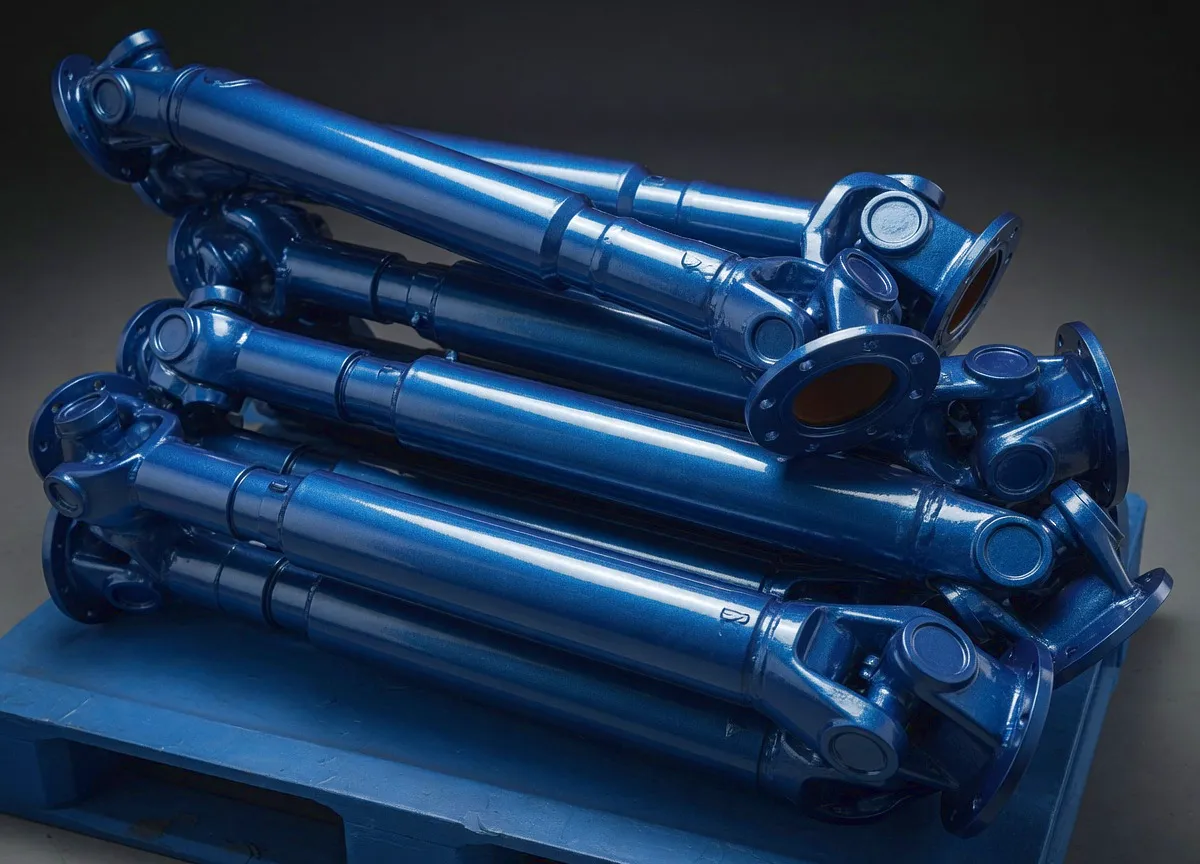
The sizing machine — known in the trade as the slasher — is one of the most mechanically demanding pieces of equipment in any weaving preparatory room. It draws warp yarn through a bath of hot starch or synthetic size, then passes it across a bank of steam-heated drying cylinders before winding onto the beam. The drying section alone can involve eight to twelve independent cylinders rotating in precise synchrony at speeds of 60 to 120 metres per minute. Each cylinder must turn at exactly the same peripheral velocity — not approximately the same, but exactly — otherwise differential tension builds, the yarn stretches unevenly, and the beam you wind will break ends the moment it hits the loom. This is precisely the engineering problem that a correctly specified cardan coupling solves, and it solves it better than any alternative currently available.
What follows is a detailed technical and commercial guide for textile machinery engineers, procurement managers, and maintenance teams — particularly those working within UK mills, OEM builders in the West Midlands and Yorkshire, and export-focused machinery integrators who need a reliable cardan coupling supplier with genuine customisation capability.
🔩 Get a Quote — Email Our Engineering Team
Response within 24 hours · Custom sizing available · UK & export enquiries welcome
Why Constant-Velocity Transmission Is Non-Negotiable in Drying Roller Drives
A standard Hooke’s joint — the single universal joint most engineers are first taught — introduces a cyclical velocity variation as the input and output shafts articulate through an angle. The magnitude of that variation is governed by the formula: output speed = input speed × cos(β) / (1 − sin²(β) × cos²(θ)), where β is the joint angle and θ is the rotational position. At a working angle of just 6°, you already see peak-to-valley velocity fluctuation of roughly 1.1%. At 12°, it reaches 4.4%. In a drying roller chain transmitting 30 kW at 80 rpm, that cyclical oscillation translates directly into tension pulses on the yarn — and tension pulses cause end breaks.
The double-Cardan arrangement — two Hooke’s joints phased exactly 90° apart and connected by a centre yoke — cancels these velocity errors completely. The output shaft rotates at a perfectly constant velocity regardless of the articulation angle, provided the input and output shafts remain parallel (or intersect at the coupling’s geometric centre). In practice, the residual velocity variation of a correctly assembled double-cardan coupling is below 0.05%, which is well within the ±0.2% tolerance the finest yarn grades demand. This is the engineering basis for specifying a cardan coupling — not gear coupling, not elastomeric coupling — at every position in the drying roller constant-velocity drive chain of a modern sizing machine.
The Drying Section Drive Architecture
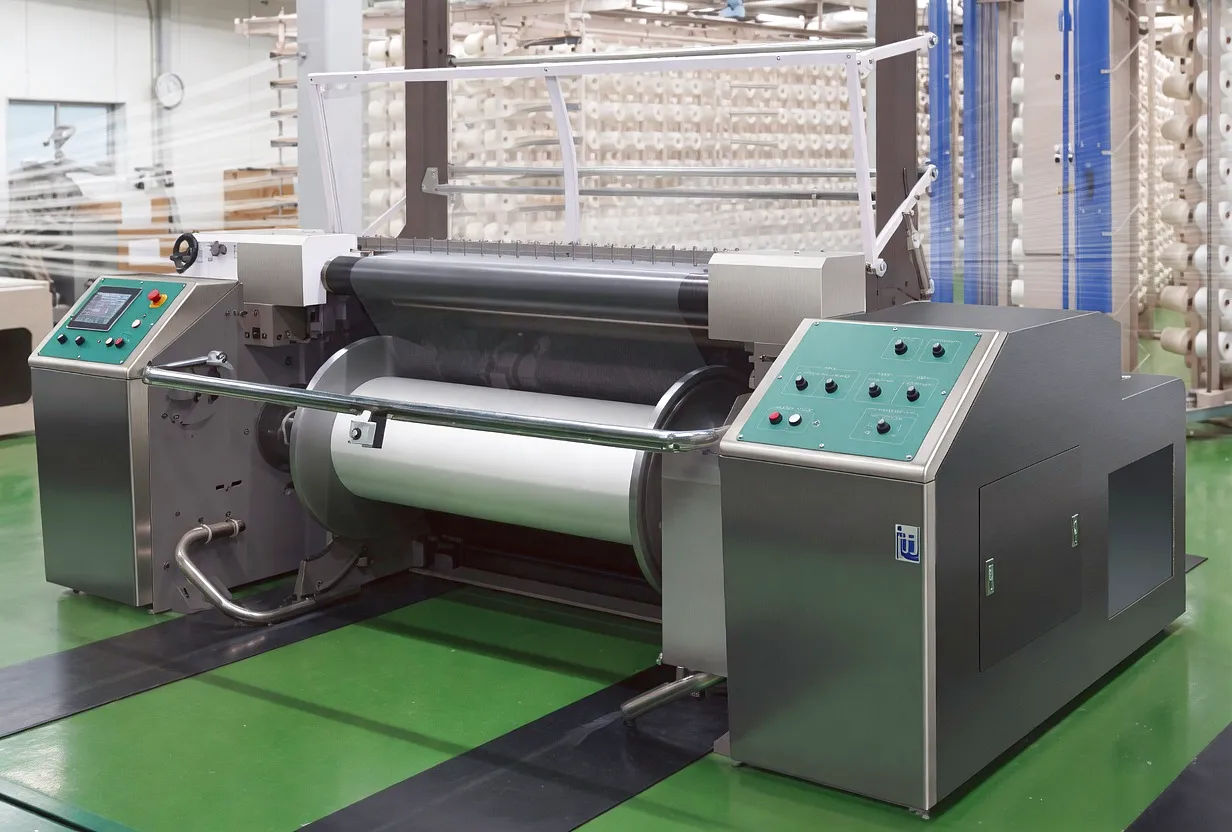
A typical beam-slasher drying section routes drive from a single gearbox output through a series of cardan coupling shafts — one per cylinder — arranged in a parallel transmission chain. Each shaft must transmit torque across a geometric offset (typically 50–180 mm centre distance variation) and an angular misalignment introduced by thermal expansion of the heated cylinder housings. Only the cardan coupling handles both simultaneously without introducing speed variation.
The steam temperature inside drying cylinders regularly reaches 150°C, causing the cylinder shafts to migrate by 1–3 mm axially and radially during warm-up. A telescoping cardan coupling — with a sliding spline shaft — accommodates that thermal growth silently, without transmitting axial thrust back into the roller bearings.
Technical Performance Parameters
Ever Power cardan coupling — standard sizing machine series
| Parameter | SZ-Light Series | SZ-Standard Series | SZ-Heavy Series |
|---|---|---|---|
| Nominal Torque | 250 N·m | 800 N·m | 2,500 N·m |
| Peak Torque (2 sec) | 500 N·m | 1,600 N·m | 5,000 N·m |
| Max Operating Speed | 500 rpm | 300 rpm | 180 rpm |
| Max Working Angle | 15° | 20° | 25° |
| Residual Velocity Variation | < 0.05% | < 0.05% | < 0.05% |
| Axial Telescoping Range | ±15 mm | ±25 mm | ±40 mm |
| Operating Temperature | -20°C to +120°C | -20°C to +150°C | -20°C to +150°C |
| Lubrication Interval | 2,000 hrs | 2,000 hrs | 1,500 hrs |
All values are nominal at standard operating conditions. Custom specifications available on request.
Materials, Construction & Working Principle
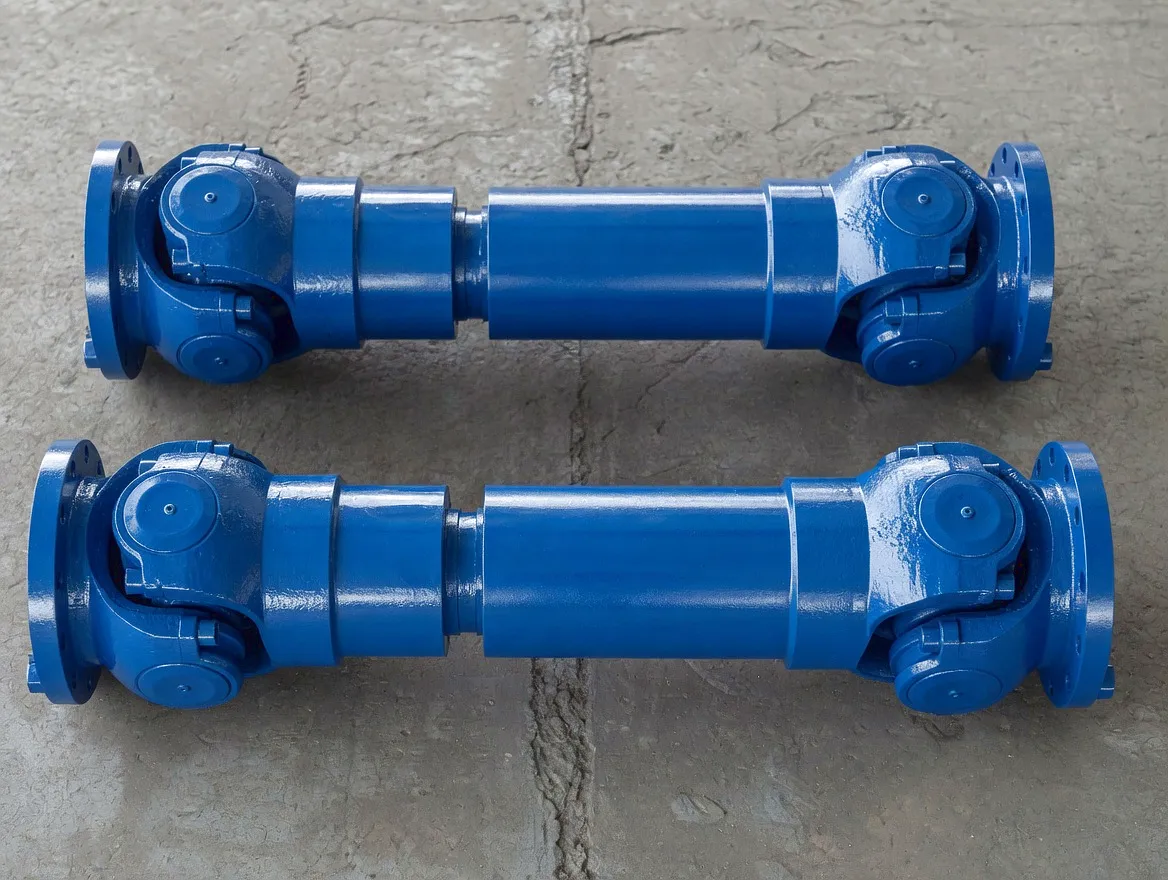
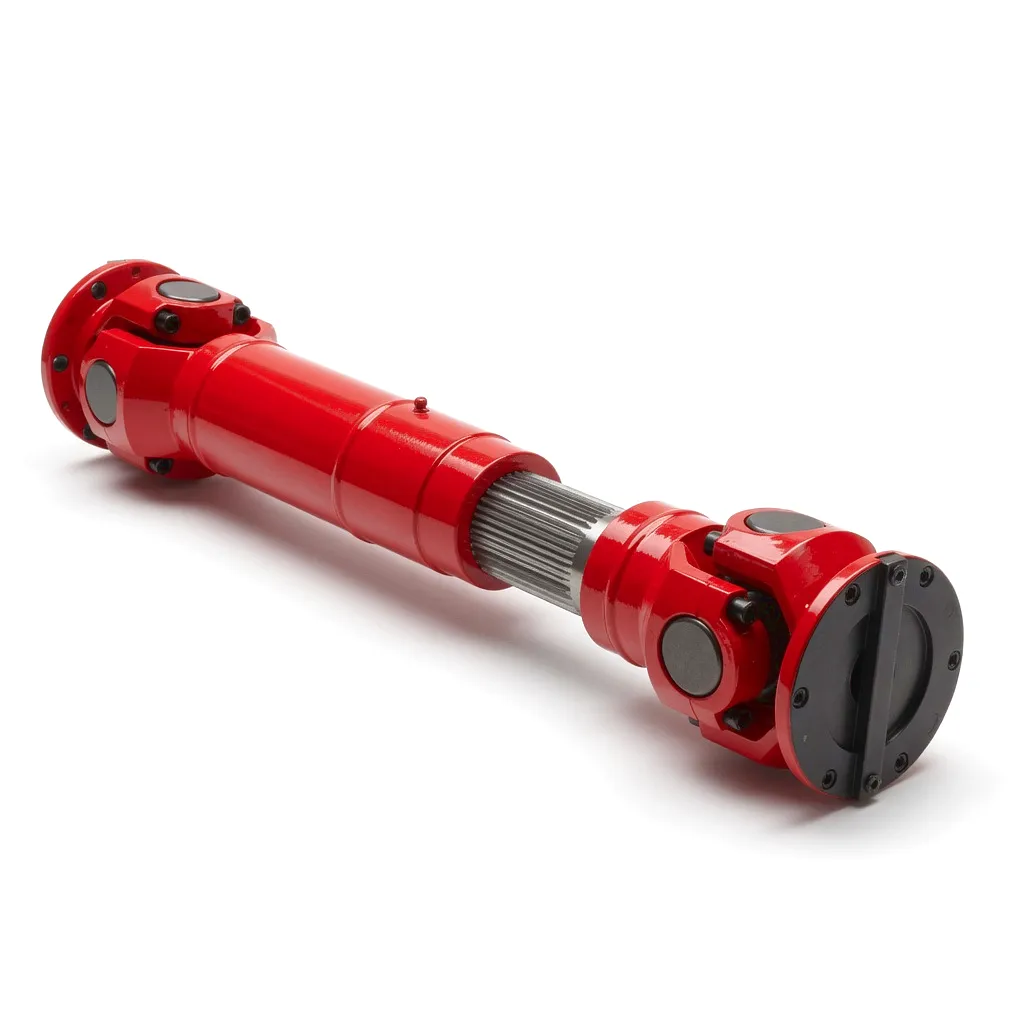
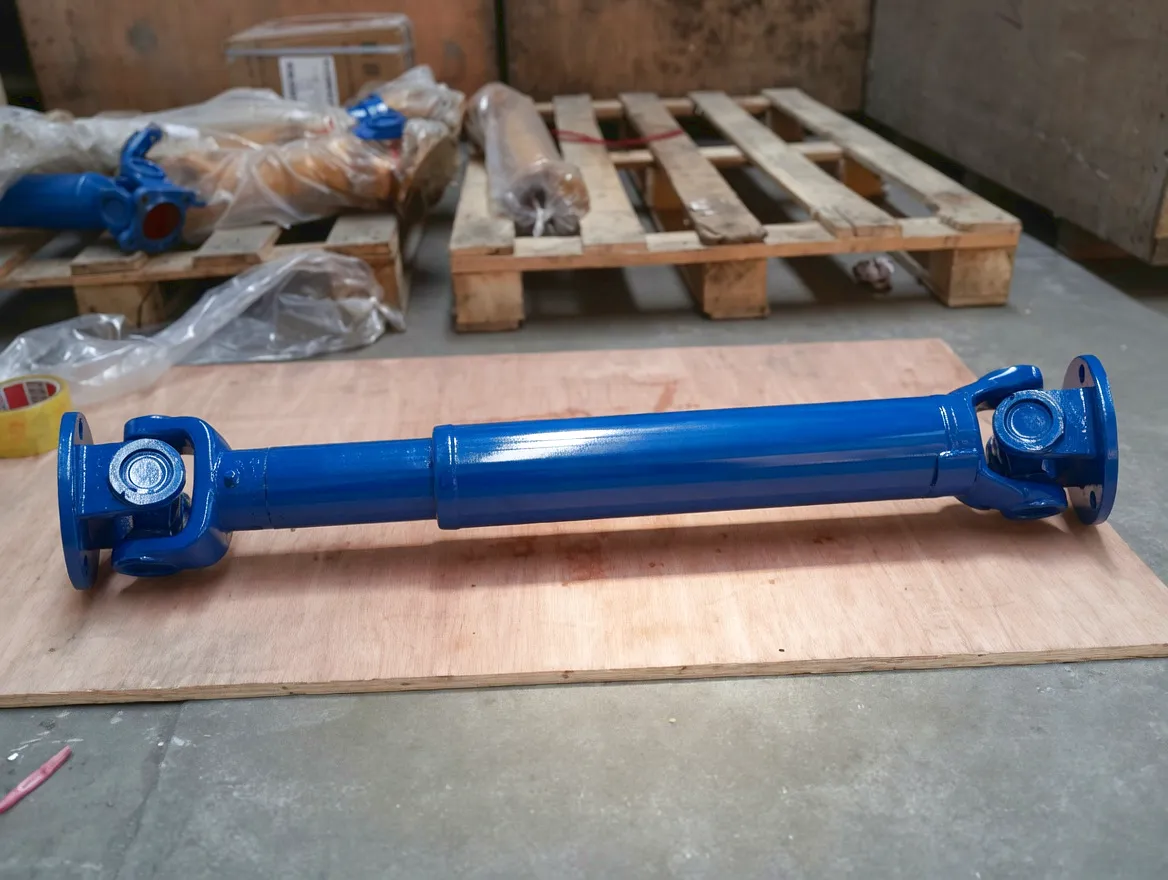
The heart of the cardan coupling for sizing machine service is the cross-and-trunnion assembly — what most engineers simply call the “spider.” In our SZ-series couplings, this component is precision-forged from 20CrNiMo alloy steel, case-hardened to 58–62 HRC on the trunnion journals, and ground to an h6 tolerance. This combination gives you a Hertzian contact stress capacity in excess of 3,200 MPa — far beyond what the drying roller application demands — while maintaining the dimensional stability needed for needle-bearing service life measured in years rather than months.
The yoke flanges are closed-die forged from 42CrMo4 (EN 10083 grade) and machined on our four-axis CNC machining centres. Yoke bores are available as straight bore with keyway, splined bore (DIN 5480 or custom), or tapered bore (1:10 or 1:8), ensuring direct fitment to the cylinder shaft ends without adaptor sleeves that introduce additional misalignment.
The telescoping intermediate shaft — the element that gives the cardan coupling its axial compliance — uses involute spline profiles (typically DIN 5480 module 2, 40–80 teeth depending on torque class). The male and female spline elements are case-hardened and surface-coated with a molybdenum disulphide (MoS2) dry film prior to assembly. This coating eliminates the fretting corrosion that destroys plain-steel splines in humid, chemically aggressive sizing room environments within 6–12 months, and reduces the sliding friction coefficient to below 0.06, meaning the axial compliance is genuinely “free” rather than a source of variable axial load on the roller bearings.
True Constant Velocity
Double-joint geometry cancels velocity error completely. Output shaft angular velocity is equal to input at all articulation angles within design limits — the fundamental reason for choosing cardan coupling over all alternatives in this application.
Thermal Growth Tolerance
MoS2-coated telescoping spline absorbs up to ±40 mm of thermal shaft migration without transmitting axial thrust to cylinder bearings. Dramatically extends bearing life in high-temperature drying sections operating at 120–150°C.
Rapid Maintenance Access
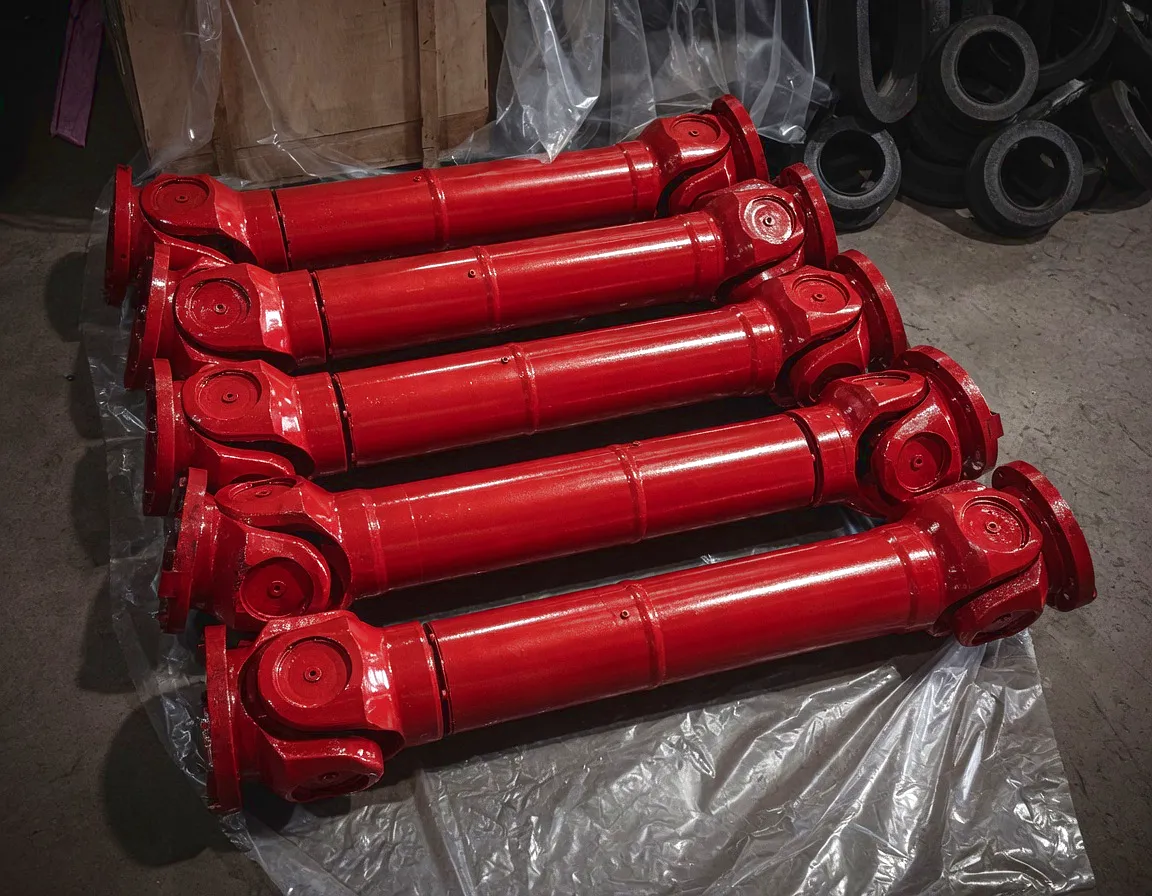
Bolt-flange yoke ends allow bearing kit replacement without removing the intermediate shaft. In a drying section with 10 cylinders, a full cross-kit service cycle can be completed during a planned weekend stop — no shaft removal, no laser alignment after reassembly.
Corrosion-Resistant Finish
Zinc-nickel alloy electroplating as standard (12–18 μm), with optional hot-dip galvanising or stainless steel journal option for particularly aggressive humid/chemical environments in starch-based or PVA sizing rooms.
Application Scenario: The Sizing Machine Drying Roller Constant-Velocity Drive Chain
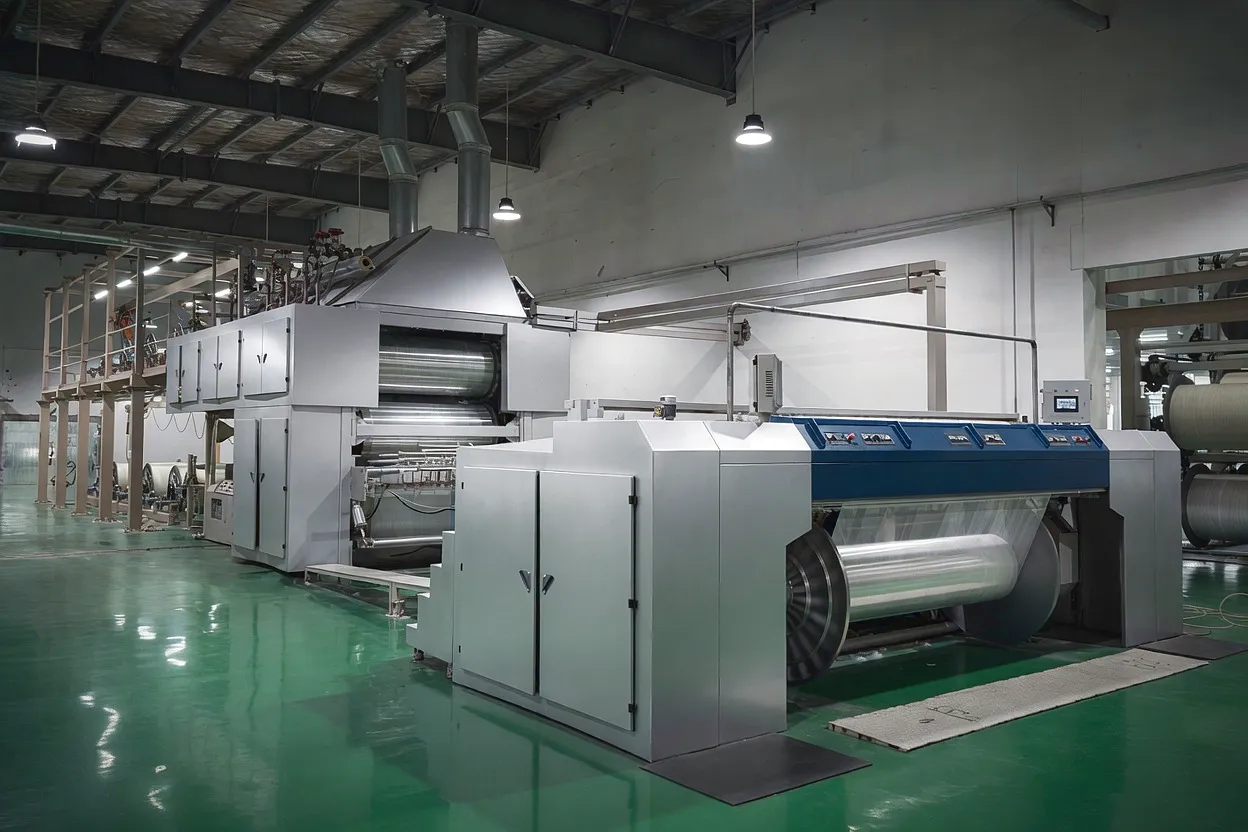
The typical slasher drying section, as used in UK and export weaving mills producing cotton, polyester-cotton blends, and technical fabrics, consists of a pre-drying section (two to four cylinders at 120–135°C) and a finish-drying section (four to eight cylinders at 105–120°C). The cylinders are arranged in a staggered or in-line configuration, with each cylinder’s drive shaft positioned 60–200 mm offset from the gearbox output stub shaft. This offset cannot be eliminated through frame design — it is inherent to the cylinder geometry — so it must be absorbed by the drive coupling.
A gear coupling would tolerate the angular misalignment but would introduce torsional stiffness that transmits bending loads into cylinder shaft ends, accelerating fatigue cracking in the hollow cylinder shells. An elastomeric coupling would damp the torsional peaks but would introduce velocity lag under temperature cycling, causing the very tension variation the system is designed to prevent. The cardan coupling is the only solution that offers true constant-velocity output, genuine axial compliance, and the structural rigidity to transmit full-load torque without torsional windup.
Beyond the fundamental velocity and compliance arguments, there is a maintenance economics argument that matters enormously to UK mill managers facing skilled-labour shortages. A gear coupling in this position typically requires a full disassembly of the coupling housing to replace the gear tooth elements — a 4–6 hour job per cylinder in a confined drying hood environment. The cardan coupling’s cross-kit service procedure, by contrast, involves unbolting four circlip-retained bearing cups, pressing the old cross out, pressing the new one in, and re-lubricating. An experienced maintenance engineer can complete the job in under 45 minutes per coupling. Across a 10-cylinder machine running 350 days per year, that difference in service time is worth thousands of pounds annually in recovered production.
Other Sizing Machine Drive Positions
While the drying roller chain is the highest-value application, the cardan coupling also appears in several other positions on a modern slasher. The size box immersion roller — submerged in the hot-size liquor at 90–95°C — places similar demands on its drive coupling in terms of angular misalignment and chemical resistance. The lease dividing section, which separates individual yarn layers before the beam winder, uses smaller cardan couplings (SZ-Light series, 250 N·m) to ensure synchronised separation tension that preserves yarn structure without stretching.
The let-off tension roller at the creel end of the machine — which must maintain constant back-tension across the warp sheet as beam diameters reduce — also benefits from cardan coupling drive when driven by a separate servo motor and gear unit. Velocity variation from an incorrect coupling in this position causes cyclic tension variation that propagates through the entire sizing process, defeating the precision of even the best tension-control algorithms in the machine’s drive system.
Why Cardan Coupling Outperforms All Alternatives
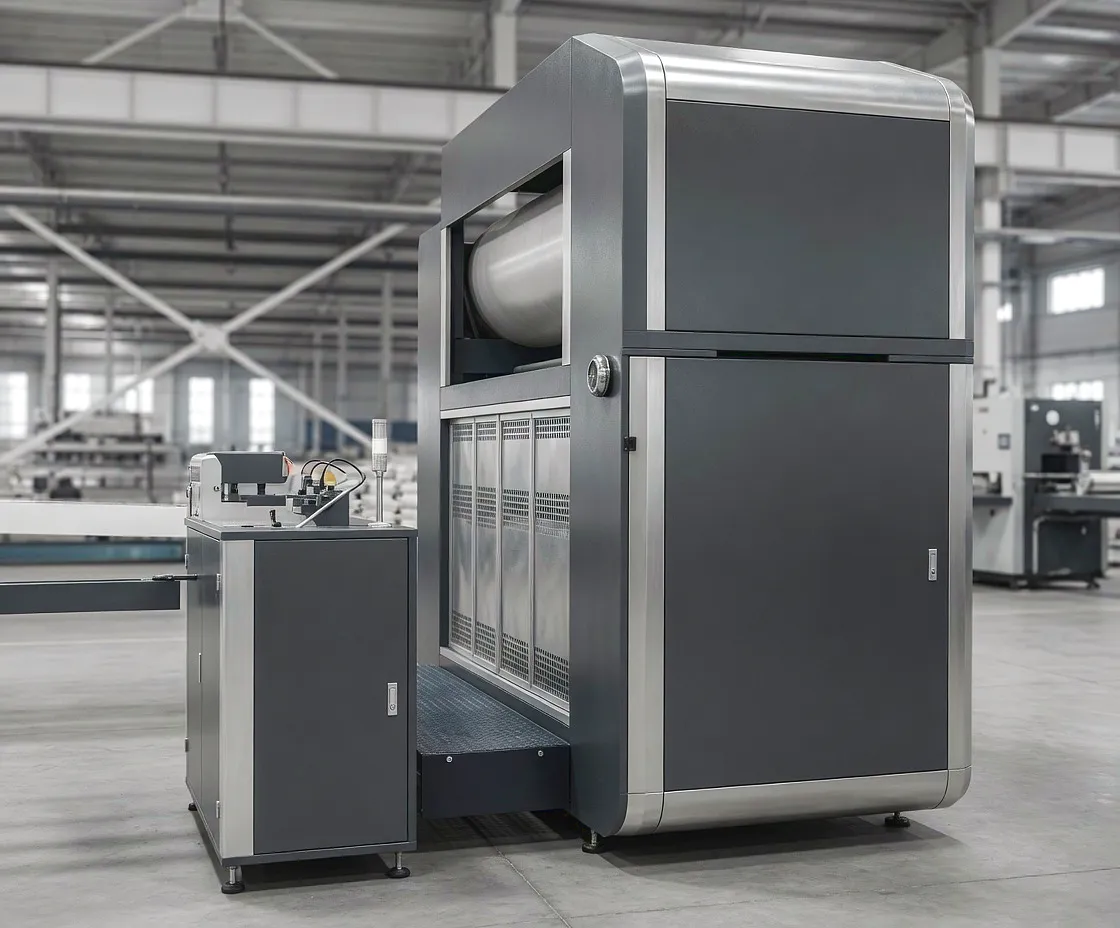
| Criterion | Cardan Coupling | Gear Coupling | Elastomeric |
|---|---|---|---|
| Constant-velocity output | ✔ True CV | ✘ Velocity error | ~ Lag under load |
| Axial thermal growth | ✔ ±40 mm free slide | ~ Limited slide | ~ Compression only |
| High-temp operation (150°C) | ✔ No degradation | ✔ Acceptable | ✘ Element degrades |
| Service time per unit | ✔ < 45 min | ✘ 4–6 hours | ✔ < 1 hour |
| Chemical/humidity resistance | ✔ Zn-Ni plated | ~ Oil-sealed | ~ Depends on element |
| Angular misalignment capacity | ✔ up to 25° | ~ up to 6° | ~ up to 5° |
Manufacturing Capability & Custom Engineering Service
Ever Power’s manufacturing facility operates a fully integrated production process — from raw billet procurement through forging, heat treatment, precision CNC machining, surface treatment, and assembly — all under one roof and under ISO 9001:2015 quality management. This end-to-end control is what allows us to offer genuine customisation rather than the modified-catalogue-part approach that characterises most coupling distributors operating in the UK market.
For sizing machine OEMs building machines in the UK — particularly in the Yorkshire and West Midlands machinery clusters — our engineering team works directly from customers’ CAD drawings (SolidWorks, CATIA, DXF accepted) to produce coupling shafts matched to the exact cylinder shaft end geometry, including non-standard spline profiles, stepped bores, keyway combinations, and special flange bolt patterns that do not correspond to any catalogued standard. Minimum order quantity for fully custom shafts is one piece, with lead times of 15–25 working days depending on complexity.
For UK maintenance and repair teams replacing worn cardan couplings on existing machines — particularly older Karl Mayer, Benninger, Sucker-Müller, or similar slashers where the original coupling supplier is no longer active — our reverse-engineering service can produce a dimensionally identical replacement from a sample or drawing in as little as 10 working days. We maintain a library of over 1,200 cross-reference profiles for historical machine coupling designs.
Custom Engineering Capabilities
- ▸Custom bore diameters 15–280 mm
- ▸Shaft length 200–4,000 mm
- ▸DIN, ISO, ANSI, JIS spline standards
- ▸Needle, plain or roller bearing options
- ▸Stainless, carbon, alloy steel options
- ▸OEM private-label & drawing NDA
- ▸Reverse-engineering from sample/drawing
Customer Success: Real Results from Real Mills
Burnley Technical Fabrics Ltd — Lancashire, UK
Industry: Technical woven fabrics (geotextiles, medical backing cloth, industrial filtration fabric)
Machine: Benninger DIADEM slasher, 12-cylinder drying section, 3.6 m weaving width, running at 90 m/min warp speed.
Challenge: The mill was experiencing an average of 6.2 end breaks per 100,000 warp ends in the drying section, significantly above their target of 2.0. Root cause analysis by the production team traced the breaks to cyclic tension variation with a frequency corresponding exactly to the rotational speed of the drying cylinder drive — a clear signature of coupling-induced velocity variation. The existing gear couplings on cylinders 3–8 had worn gear teeth that introduced approximately 2.3% velocity variation under full load.
Solution: Ever Power supplied a full set of 12 SZ-Standard series cardan couplings, custom-bored to match the Benninger cylinder shaft ends (55 mm diameter, DIN 6885 keyway, shoulder location). The shafts were pre-assembled and balanced to G6.3 as a complete unit, ready for direct fitment by the mill’s own maintenance team during a planned 3-day annual maintenance stop.
Result: Post-installation monitoring over 8 weeks showed end break rate reduction to 1.4 per 100,000 warp ends — a 77% improvement. The mill also recorded a 12% reduction in beam-winding tension variation, allowing them to reduce their sizing add-on percentage by 0.8 percentage points without any quality deterioration. The combined saving on size consumption and reduced end-break remediation labour was estimated at approximately £18,000 per year across two shifts.
“We replaced our worn gear couplings on a Karl Mayer slasher at our Huddersfield site. The Ever Power cardan shafts went in over a weekend and we’ve not had a single end break traceable to coupling velocity variation since. The reverse-engineering of our non-standard bore was spot on — no reaming required on fitment.”
David Hartley
Maintenance Manager · Hartley Woollens Ltd, West Yorkshire
“As a machinery OEM exporting to South Asia and the Middle East, we need coupling suppliers who can deliver consistent quality and accommodate our drawing changes without a six-week delay. Ever Power turns custom shafts around in two weeks and their dimensional accuracy is genuinely impressive. We’ve standardised on their SZ-Standard range across all our sizing machine builds.”
Priya Mehta
Chief Engineer · Coventry Textile Machinery Ltd, West Midlands
“We run four slashers producing polyester-cotton for the shirt fabric market. The MoS2-coated telescoping splines have been in service for 22 months without any fretting at all — the previous supplier’s shafts needed re-greasing every three months just to stop them seizing. The price per unit is competitive, but the reduced maintenance cost is where the real value is.”
James Whitfield
Production Director · Whitfield Fabrics PLC, Nottinghamshire
Serving UK Textile Machinery Customers — From Yorkshire to the West Midlands
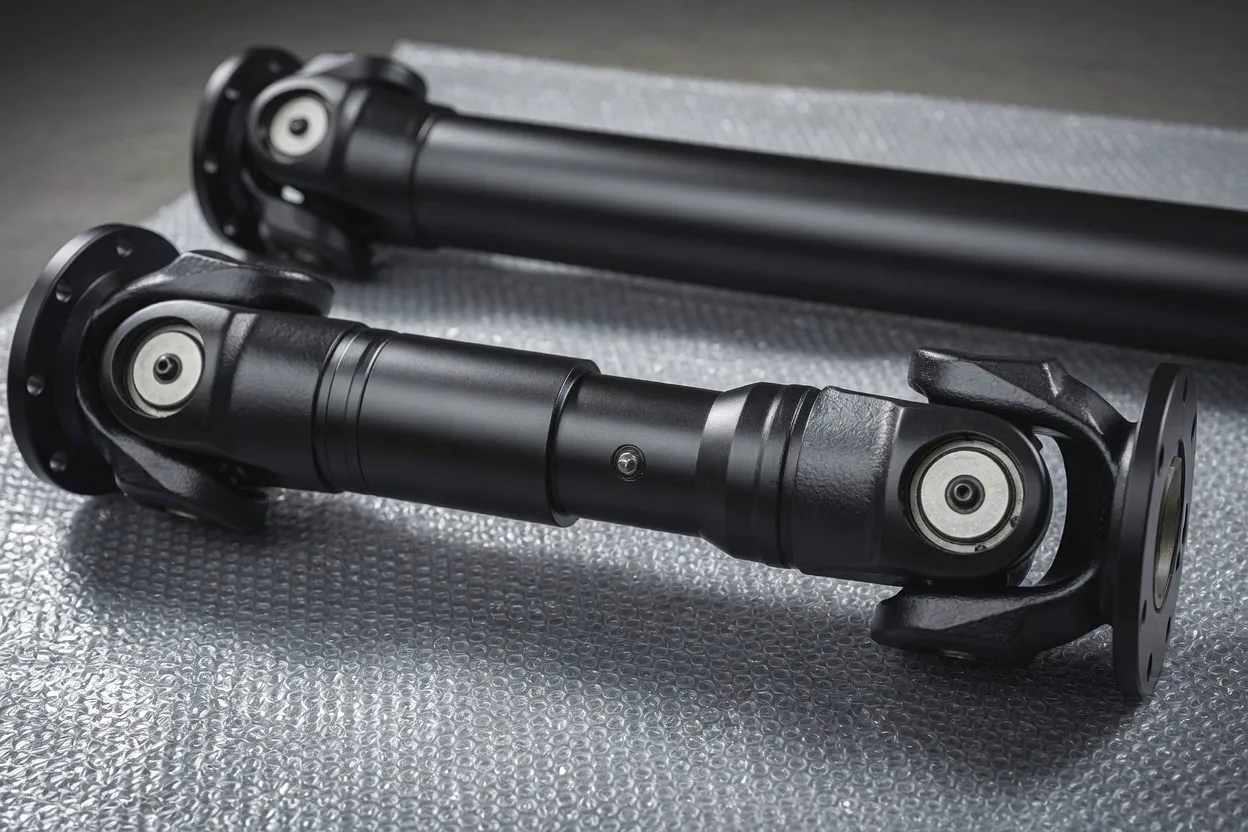
The UK’s weaving preparatory machinery sector — though much reduced from its Victorian-era scale — remains a technically sophisticated industry with mills and machinery manufacturers concentrated in Yorkshire, Lancashire, the West Midlands, and East Midlands. These businesses operate premium machinery processing high-value fabrics where downtime costs are measured in thousands of pounds per hour and where coupling failure is never an acceptable maintenance event.
Ever Power ships cardan couplings and replacement cross-kit spares to UK customers via established freight routes with typical transit times of 7–12 working days for standard catalogue items. For emergency replacement situations — where a machine is stopped awaiting a coupling — we offer expedited manufacturing and airfreight options that can deliver a replacement shaft in 5–7 working days from order confirmation. Our pre-sales engineering team communicates in English during UK business hours and is experienced in interpreting British engineering drawing conventions, BS specification references, and the particular dimensional vocabulary of UK-built and European-import textile machinery.
UK Textile Focus
Yorkshire, Lancashire, West & East Midlands specialist knowledge. Familiar with local machinery heritage brands and maintenance conventions.
Fast Delivery
Standard items: 7–12 working days to UK. Emergency airfreight: 5–7 working days. Catalogue cross-kits available ex-stock for immediate dispatch.
Full Documentation
Material certificates (EN 10204 3.1), dimensional inspection reports, dynamic balance certificates, and installation instructions included as standard with every shipment.
Engineering Support
Pre-sales application sizing, torque & angle verification, and cross-reference service available via email. Application engineers with textile machinery background.
Frequently Asked Questions
What is the best cardan coupling for sizing machine drying roller drives in a UK textile mill running at 80 to 100 metres per minute?+
For a typical UK slasher running 80–100 m/min with drying cylinder diameters of 300–500 mm, the SZ-Standard series at 800 N·m nominal torque covers the majority of applications. You should verify by calculating actual drive torque from the cylinder shaft power (typically 2–6 kW per cylinder) and applying a service factor of 1.5–2.0 for the repeated start-stop and jam conditions typical of sizing machine operation. Our engineering team will verify this calculation for free as part of the quotation process.
How much does a cardan coupling for a sizing machine drying section typically cost, and can I get a price without sending full drawings?+
Standard catalogue SZ-series shafts are priced competitively against European alternative suppliers, with unit costs typically 30–45% lower than equivalent German-origin products when you factor in customs duties and current exchange rates. For a budgetary quotation, we need only: shaft centre-to-centre distance, input/output bore diameters and bore types (keyed, splined, or tapered), and the nominal torque requirement. Send those details to [email protected] and we will respond with a budgetary price within 24 hours, no formal drawing required at the quotation stage.
Where can I find a reliable cardan coupling supplier in the UK for replacement shafts on older Benninger or Sucker-Müller sizing machines?+
Ever Power supplies directly to UK mills and OEMs and maintains dimensional records for coupling designs used on Benninger DIADEM, SUCKER Aerosize, and several other legacy sizing machines. If you can provide a worn coupling sample or a dimensional sketch, our engineers can produce a dimensionally matching replacement. We ship via established UK-cleared freight services with documentation compliant with UK customs requirements post-2021.
Why does my sizing machine have high end-break rates, and could worn or incorrect cardan couplings on the drying rollers be the cause?+
Worn couplings are among the most commonly overlooked causes of high end-break rates in sizing machines. If the break pattern shows cyclic clustering — bursts of breaks separated by periods of clean running — rather than random distribution, that is a strong indicator of a speed-variation source rather than a yarn or size quality issue. Check whether the break frequency correlates with cylinder rotation speed. If it does, the drive coupling should be at the top of your investigation list, ahead of humidity control, size viscosity, or creel tension.
How long does it take to get a custom cardan coupling shaft for a textile machinery OEM based in the West Midlands, UK, from an overseas supplier?+
For a custom cardan coupling shaft requiring non-standard bore, length, or spline profile, our standard production lead time is 15–25 working days, including quality inspection and documentation. Airfreight transit to UK ports adds 3–5 working days. The total door-to-door timeline for a custom shaft is therefore typically 18–30 working days from drawing approval. For repeat orders of the same specification, lead time reduces to 10–15 working days once we hold the machining programme and tooling setup in our system.
Which cardan coupling design — single joint or double joint — should I specify for the constant-velocity drive chain on a sizing machine drying section?+
Always specify the double-joint (double-Cardan) configuration for the drying roller constant-velocity chain. A single universal joint introduces a velocity variation that is zero only when the input and output shafts are exactly collinear — a condition that cannot be maintained in practice due to thermal expansion and frame deflection. The double-Cardan geometry cancels the velocity error of the first joint with an equal-and-opposite error from the second, provided the joint angles are equal and the centre yoke phasing is correct at 90°. This is a fundamental design requirement, not an optional upgrade.