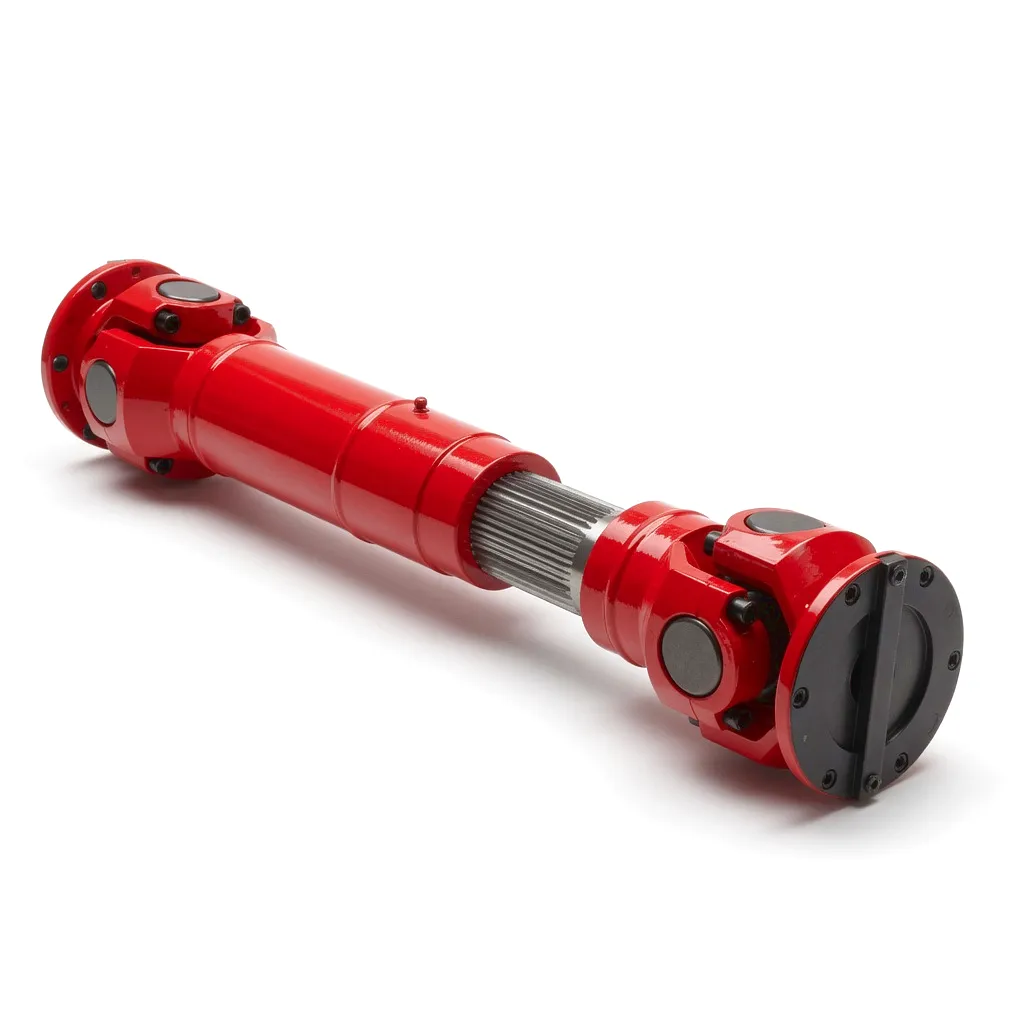
 The UK’s solar energy sector has grown dramatically over the past decade. From large-scale ground-mounted solar farms in the South of England to rooftop installations across industrial parks in the Midlands, the mechanical demands placed on tracking actuators and drive shafts are significant. A single-axis or dual-axis solar tracker moves panels through arcs of up to 180 degrees each day, repeating this cycle across thousands of operational hours per year. At the heart of these systems, a cardan coupling quietly handles every degree of rotation, compensating for shaft misalignment, absorbing torsional shock, and transmitting the precise torque needed to keep photovoltaic arrays facing the sun.
At Ever Power, our engineering team has spent over 18 years designing and manufacturing cardan couplings specifically for demanding industrial applications. Working with solar energy contractors, EPC companies, and OEM tracker manufacturers across the United Kingdom, Europe, and globally, we’ve developed a deep understanding of what separates a coupling that lasts 25 years from one that fails after three monsoon seasons. This article walks through the engineering rationale, material science, real-world performance data, and procurement considerations that matter most to engineers and buyers sourcing cardan couplings for solar power applications.
What Makes a Cardan Coupling Ideal for Solar Tracking?

Angular Misalignment Tolerance
Solar tracker shafts rarely achieve perfect geometric alignment in field installations. Ground settlement, thermal expansion of steel structures, and installation tolerances all introduce angular offset. A well-engineered cardan coupling accommodates misalignment angles of up to 45° in single-joint configurations and greater ranges in double-joint (constant velocity) arrangements, meaning the tracker drive continues operating smoothly regardless of minor positional drift across the array.
Torsional Load Management
Wind loading on solar panels creates sudden torsional spikes in the drive shaft. British weather in particular — with its unpredictable gusting patterns across exposed hillside and coastal farm sites — means the coupling experiences repeated impact torque cycles. Unlike rigid flanged couplings, a cardan joint distributes these shock loads across its cross-journal bearing assembly, protecting both the actuator motor and the panel mounting structure from premature fatigue failure.
Compact Shaft-to-Shaft Connection
Solar tracker torque tubes are long, often spanning 30–60 metres across a single row of panels. The drive coupling must connect the central gearbox output shaft to the torque tube cleanly, without consuming excessive axial space. Cardan couplings offer an inherently compact connection profile, and with customised yoke bore sizes and keyway configurations, they integrate directly onto standard tracker torque tube diameters used by leading UK and European tracker OEMs.
Engineering Principles: How the Cardan Joint Works in Solar Applications
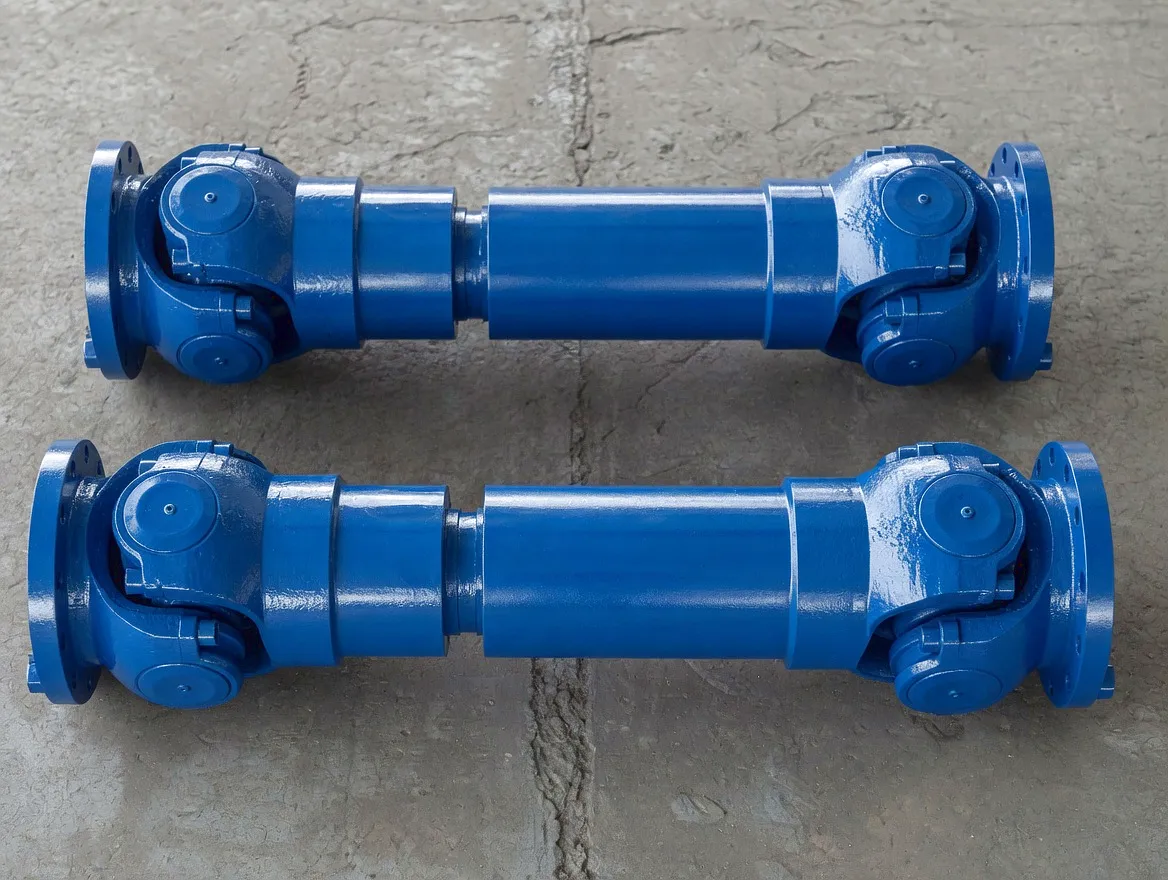
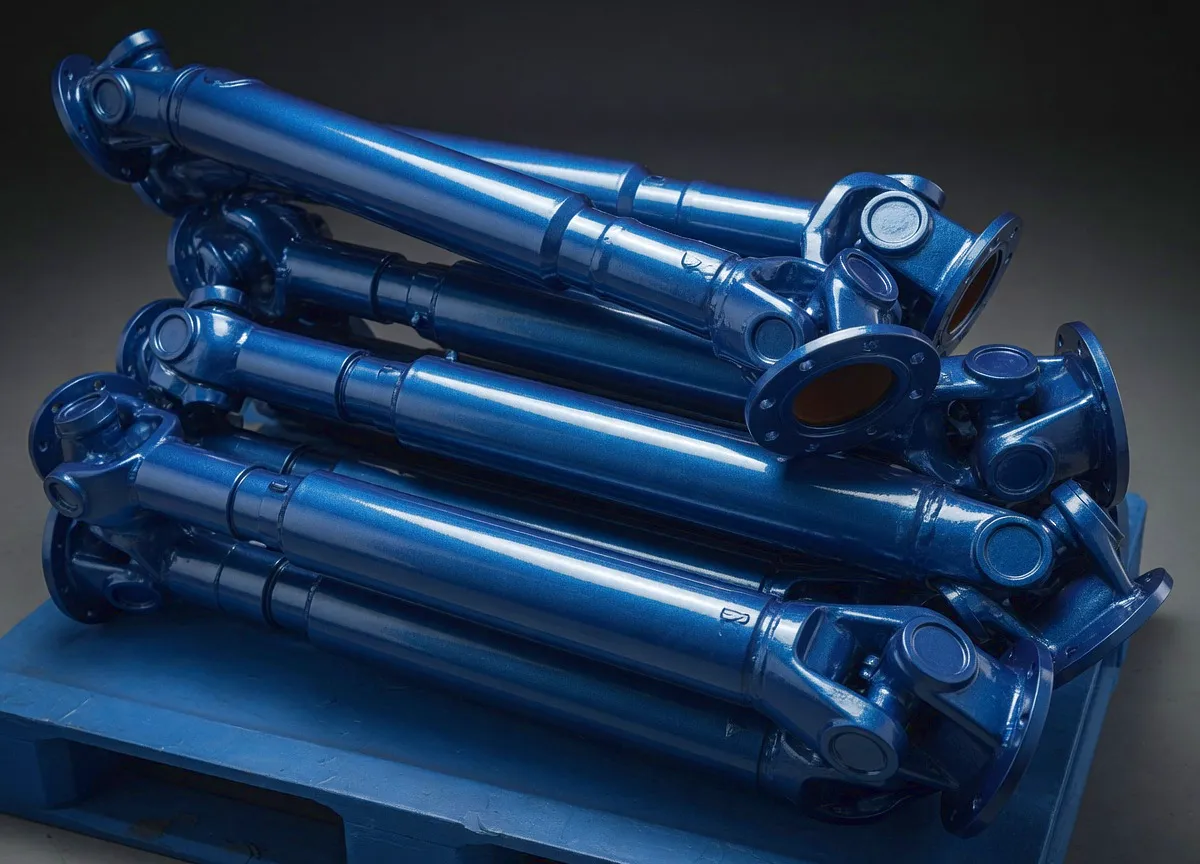 The classical Hooke’s joint — the foundation of every cardan coupling — transmits rotary motion between two shafts that are not co-linear. The cross-journal (spider) sits at the intersection of two yoke forks, allowing rotation about two perpendicular axes simultaneously. In a single universal joint, there is a known velocity variation: at an angular offset, the output shaft velocity oscillates twice per revolution relative to the input. For most solar tracker speeds (typically 0.1–2 RPM), this non-constant velocity characteristic is entirely inconsequential and does not affect panel positioning accuracy or drive system longevity.
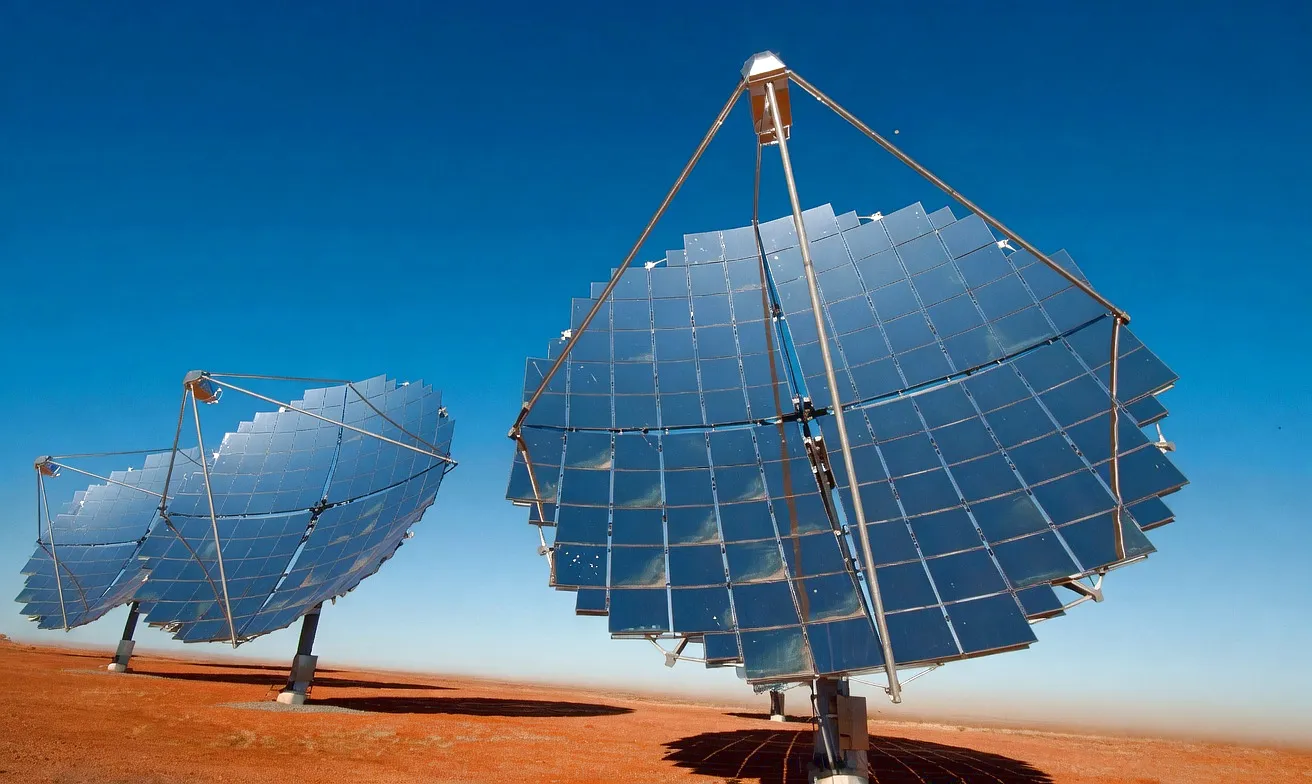
Where higher positional precision is demanded — in concentrated photovoltaic (CPV) systems or heliostat arrays, for instance — a double cardan joint configuration eliminates velocity variation entirely, delivering true constant-velocity performance. Ever Power manufactures both single and double joint configurations, and our engineering team routinely assists UK solar contractors in selecting the correct arrangement based on tracker type, drive speed, torque envelope, and installation geometry.
The cross-journal bearing is the most mechanically stressed component in the assembly. In solar tracking, the bearing rotates slowly but carries continuous radial load from the weight of the torque tube and panel array, plus dynamic wind-induced moments. Ever Power sources cross-journal assemblies machined from case-hardened alloy steel (typically 20CrMnTi or equivalent EN 36 grade), ground to h6 tolerance for precise yoke fit. Each bearing cup is individually heat treated, assembled with high-load needle roller sets, and sealed with triple-lip polyurethane seals rated for -40°C to +180°C operating temperatures — a specification that comfortably covers Scottish Highland winters and Spanish desert summers alike.

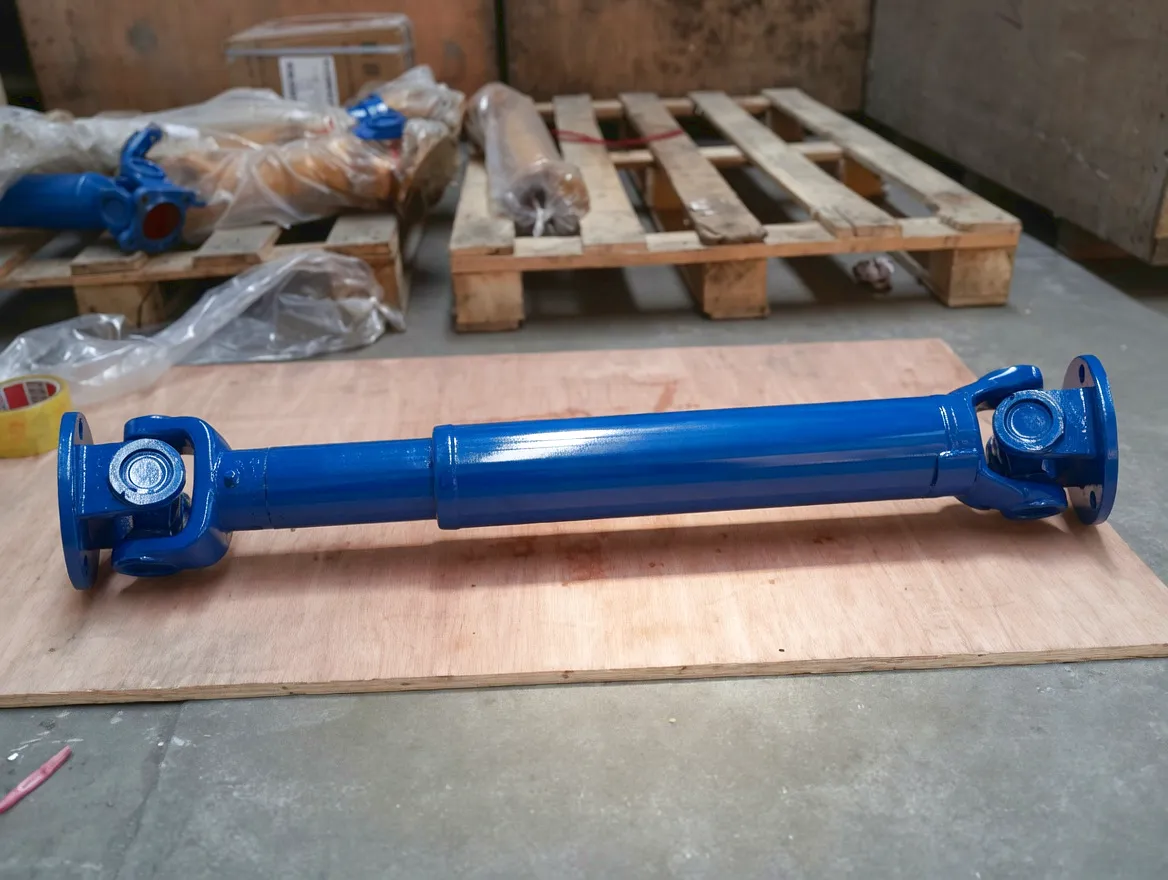
Cardan coupling driving a single-axis solar tracker torque tube assembly
Technical Specifications & Performance Parameters
The table below summarises the key performance parameters for Ever Power’s solar-grade cardan coupling range. All values represent standard catalogue specifications; custom designs are available outside these ranges upon request. Rated torque figures assume continuous operation at the stated misalignment angle; peak torque capacity is typically 2.5× rated for shock load events.
| Parameter | Light-Duty (SL) | Medium-Duty (SM) | Heavy-Duty (SH) |
|---|---|---|---|
| Rated Torque (Nm) | 50 – 500 | 500 – 5,000 | 5,000 – 50,000 |
| Max. Operating Speed (RPM) | ≤ 1,500 | ≤ 1,000 | ≤ 600 |
| Max. Single-Joint Angle (°) | 35° | 45° | 35° |
| Bore Diameter Range (mm) | 12 – 40 | 30 – 100 | 80 – 200 |
| Operating Temperature (°C) | -40 to +120 | -40 to +150 | -40 to +180 |
| Lubrication Interval | Grease / 2,000 hrs | Grease / 3,000 hrs | Grease / 5,000 hrs |
| Surface Treatment | Zinc phosphate + epoxy coating / Hot-dip galvanising (optional) | ||
| Material (Yoke / Spider) | Ductile iron GGG50 / Case-hardened alloy steel 20CrMnTi | ||
Material Choices & Corrosion Resistance for UK Outdoor Environments
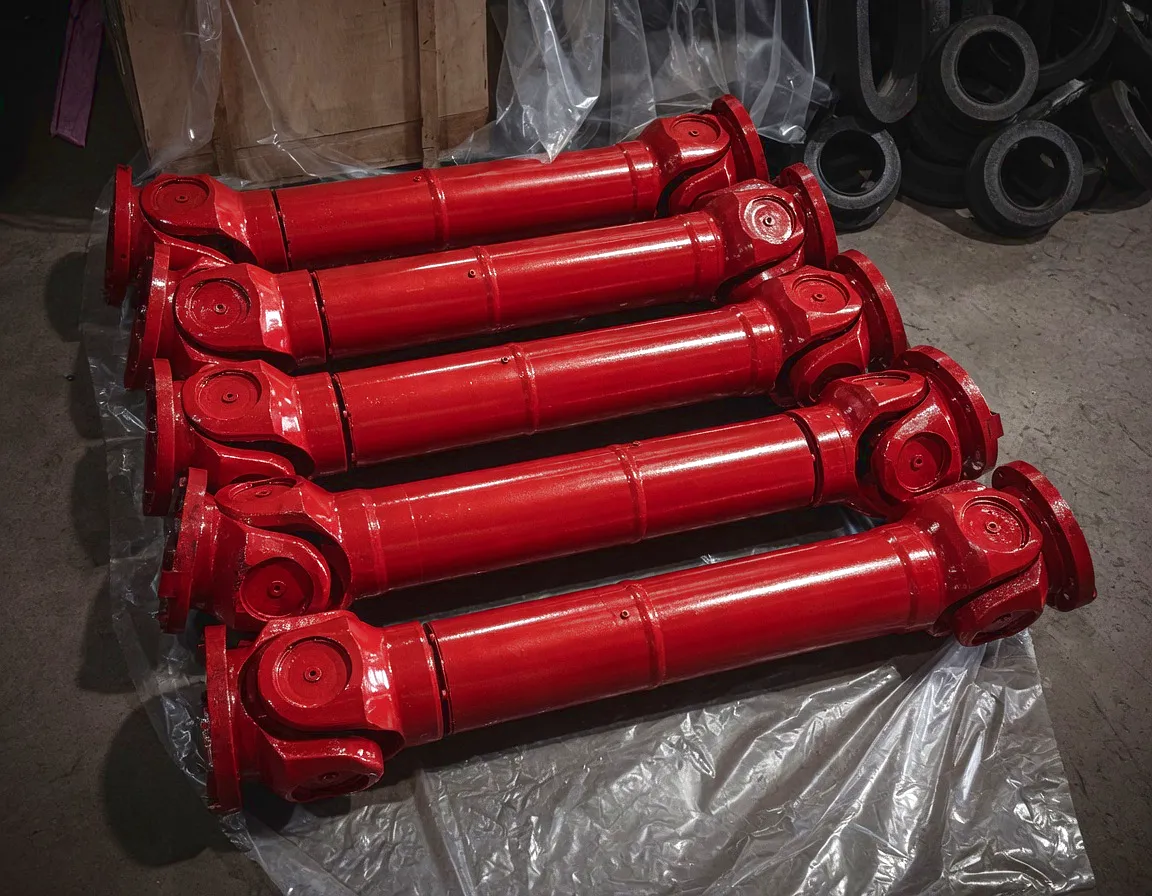 Solar installations in the United Kingdom face a specific corrosion challenge that differs from many other global markets. The combination of Atlantic salt air (particularly relevant for coastal farms in Cornwall, Wales, and East Anglia), frequent rainfall, freeze-thaw cycling, and UV exposure creates an aggressive electrochemical environment. A cardan coupling that might perform reliably for 20 years in a dry desert climate could fail within five years if not properly specified for British outdoor conditions.
Ever Power addresses this through a layered material and coating approach. The yoke forks are cast from spheroidal graphite (ductile) iron GGG50, which offers superior toughness compared to grey iron and resists brittle fracture even at sub-zero temperatures. The cross-journal assembly uses through-hardened and tempered alloy steel, with the bearing journals ground and superfinished to Ra 0.4 μm or better to extend needle roller life. External surfaces receive a two-stage protective system: a zinc phosphate conversion coating for adhesion, followed by a high-build epoxy topcoat resistant to salt spray per ISO 9227 for a minimum of 1,000 hours. For particularly aggressive coastal sites, hot-dip galvanising of the yoke assembly is offered as a standard upgrade at no disproportionate cost premium.
Seal technology is equally critical. The needle roller bearing cups are fitted with nitrile rubber primary seals and a secondary polyurethane excluder lip, creating a labyrinth that prevents ingress of rain water, condensation, and fine soil particles. This dual-seal arrangement has been validated in IP67-equivalent immersion tests. Grease nipples are fitted as standard to all sizes above 200 Nm rated torque, with extended lubrication interval grease options available for sites where scheduled maintenance access is difficult or expensive.
Key Advantages of Cardan Couplings over Alternative Drive Connection Methods
Engineers specifying solar tracker drivetrains have several coupling technologies to evaluate, including flexible jaw couplings, bellows couplings, and chain-type couplings. Each has its place, but cardan couplings offer a combination of advantages that makes them the preferred solution for most ground-mounted tracker configurations.

High Misalignment + High Torque in One Package
Flexible elastomeric couplings handle misalignment but cannot transmit the high torque required by large tracker rows. Cardan couplings handle both simultaneously, making them the only sensible choice for high-torque tracker drives with real-world installation tolerances.
No Rubber Degradation Over Time
Jaw and spider couplings rely on elastomeric elements that harden, crack, and lose their damping capacity over years of UV and thermal cycling. A steel cardan joint with properly maintained bearings maintains its performance characteristics across the full 25-year operational life expected of a solar farm investment.
Proven in Extreme Climate Conditions
The Hooke’s joint design has been in continuous industrial use for over 350 years. In solar tracking specifically, the technology is validated in operating conditions from -45°C in Mongolian steppes to +55°C ambient in Middle Eastern desert installations — proving its adaptability long before any new design standard was written.
Field Serviceable & Spare-Part Friendly
When maintenance is eventually needed, the cross-journal assembly can be replaced in the field without removing the entire drivetrain. This is particularly valuable for large UK solar farms where a prolonged drive failure represents significant lost generation revenue. Ever Power can supply replacement spider kits for all standard coupling sizes.
Why Engineering Teams Across the UK Choose Ever Power
Ever Power has supplied cardan couplings to solar projects ranging from 5 MW community farms in rural Yorkshire to 200 MW utility-scale installations requiring thousands of identical coupling units with tight dimensional tolerancing for robotic tracker assembly lines.
Our ISO 9001-certified manufacturing facility operates modern CNC machining centres, coordinate measuring machines (CMM), and automated heat treatment lines, giving us full control over every tolerance-critical dimension in the coupling assembly.
Application Scenarios Within Solar Energy Systems
Cardan couplings appear in multiple mechanical sub-systems within a modern solar energy installation. Understanding each application context helps procurement engineers select the right specification and avoid over- or under-engineering the coupling for its duty cycle.
Customer Success Stories
Real projects. Real results. From the UK to continental Europe.
A major UK renewable energy developer contracted Ever Power to supply 4,800 units of our SM-series cardan coupling for a new 78 MW single-axis tracking farm in Lincolnshire, commissioned in 2023. The project EPC team had experienced premature elastomeric coupling failures on a previous project in Scotland — specifically rubber element hardening caused by sustained below-zero temperatures during winter months. Switching to Ever Power’s all-steel cardan joints with dual-seal bearings eliminated the cold-weather failure mode entirely. Post-commissioning inspection at 12 months confirmed zero coupling-related tracker downtime events across the entire array. The client’s O&M team reported that maintenance intervals were extended from the originally planned 6 months to 18 months based on actual grease consumption data from sampled units.
“We’ve used various coupling suppliers over the years, but Ever Power’s solar-grade cardan joints are simply in a different category for corrosion resistance. We’re on year four of a coastal Welsh project and haven’t touched them — no rust, no play, no noise.”
“The custom bore and keyway configuration Ever Power produced for our tracker torque tube was exactly what our design called for, delivered ahead of schedule. Their engineering team responded to technical queries within hours — impressive for a cross-border procurement.”
“Price, lead time, and technical spec all came together better than any previous UK solar coupling supplier I’ve worked with. We ordered 1,200 units for a Scottish Highlands project — all within specification and with full material certificates. Will order again without hesitation.”
Ever Power Manufacturing & Custom Engineering Capability
Ever Power’s manufacturing campus covers 35,000 square metres and houses over 120 CNC machining centres, dedicated heat treatment lines, and a full quality inspection laboratory. Our engineering team includes mechanical and metallurgical specialists with deep experience in coupling design for renewable energy applications specifically, not just general industrial power transmission.
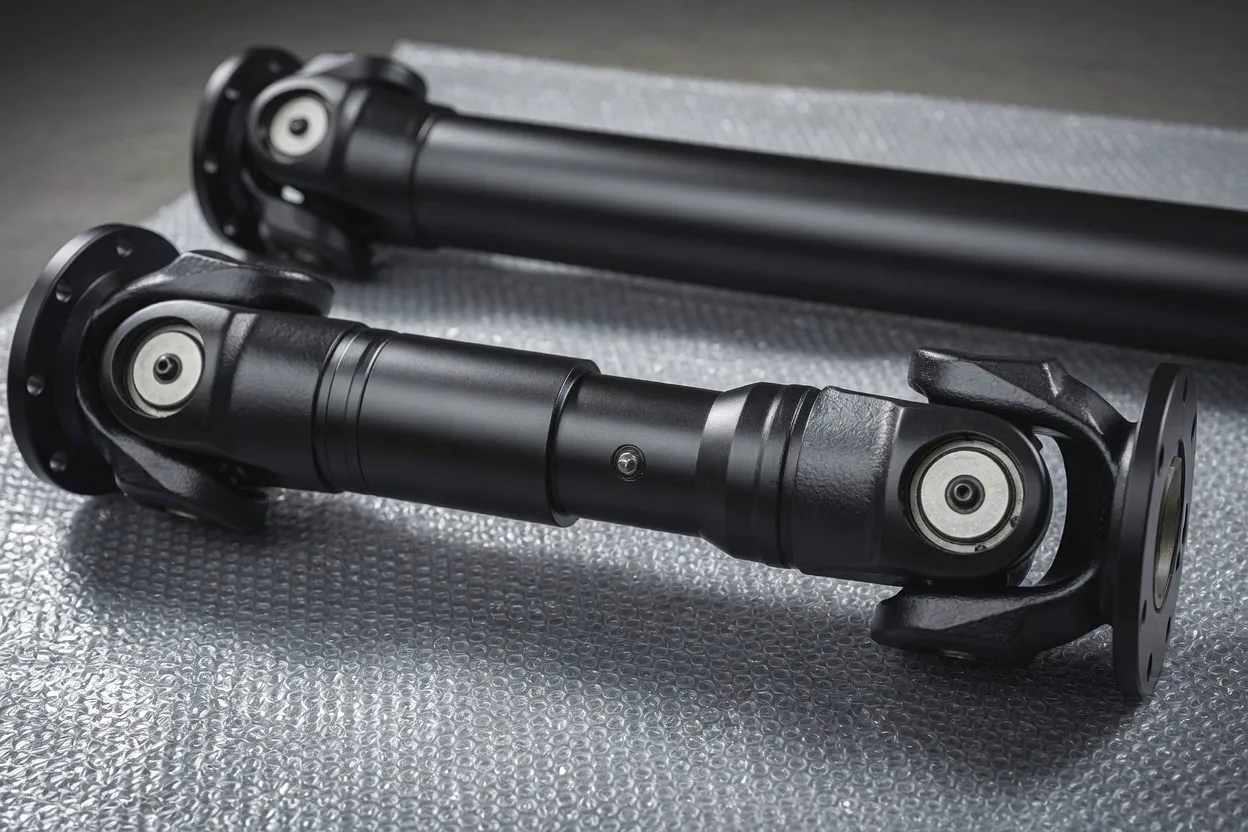
Our custom engineering capability is one of our strongest differentiators when supplying to UK solar OEMs and EPC contractors. Standard catalogue couplings cover the majority of solar tracker applications, but every project has details that don’t quite fit a standard. We routinely engineer and manufacture cardan couplings with custom bore diameters, non-standard keyway profiles, modified yoke fork geometry, bespoke intermediate shaft lengths, custom coating specifications, and non-standard cross-journal bearing materials (including stainless steel variants for marine-adjacent sites).
From receipt of a technical drawing or dimensional specification, our team can produce prototype samples within 15 working days, and commit to production lead times of 25–45 days depending on complexity and batch size. For projects requiring large quantities, we offer dedicated production scheduling with weekly delivery call-off to support just-in-time construction site logistics. DDP (Delivered Duty Paid) Incoterms to any UK address are available as standard, giving procurement teams complete cost certainty from the moment of order.
Sourcing Cardan Couplings for UK Solar Projects: What Buyers Need to Know
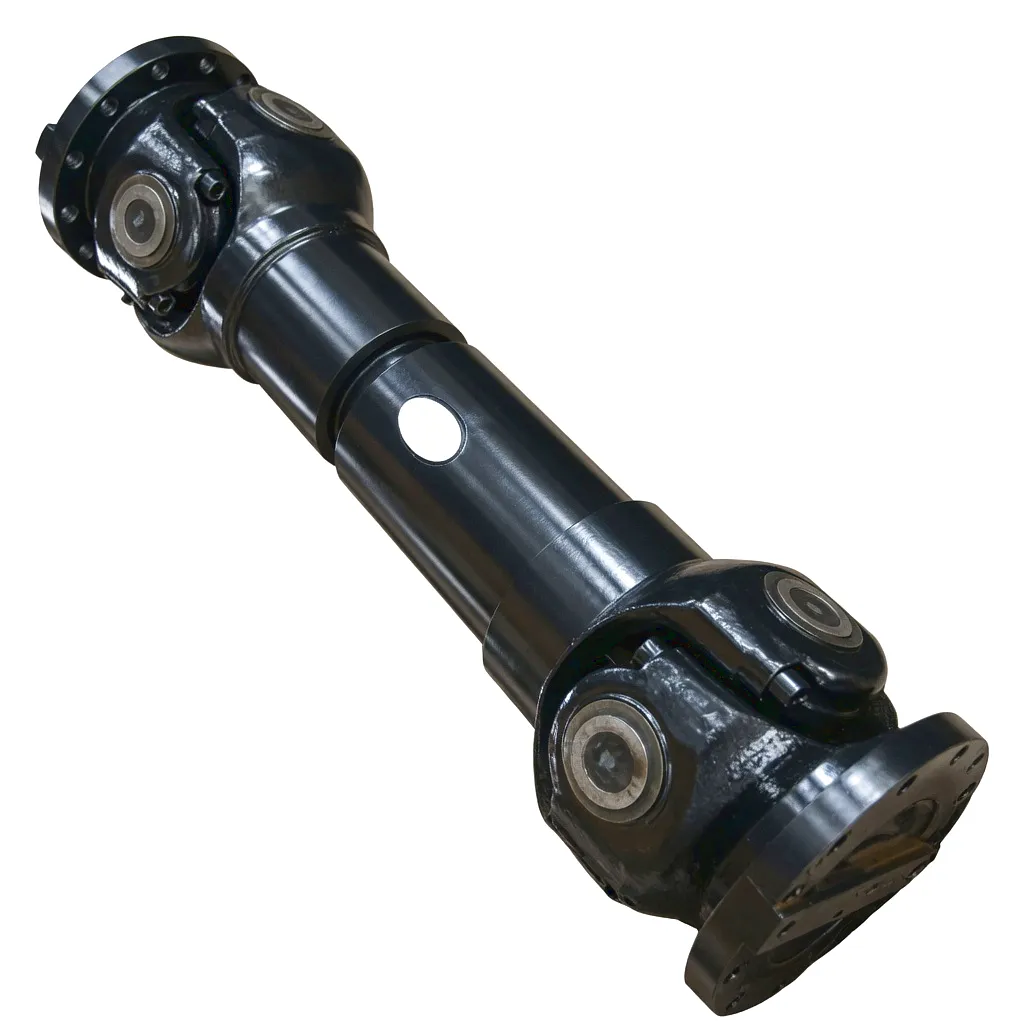 UK solar procurement teams typically work within tight project timelines, where mechanical component delays can push back panel commissioning and affect contracted generation start dates. Selecting a coupling supplier that combines solid engineering competence with reliable global logistics is therefore as important as the technical specification itself. Ever Power ships from our manufacturing facility directly to UK construction sites via established freight partners, with DDP Incoterms available as standard for orders above a minimum batch threshold. Our packaging is engineered for freight — couplings are individually wrapped, boxed with dimensional foam inserts, and packed in export-grade pallets with full labelling for site logistics teams.
From a quality assurance standpoint, all cardan couplings supplied for solar applications are dispatched with a Certificate of Conformance, material test certificates (MTCs) for the yoke and cross-journal material, and dimensional inspection records. Projects in England, Scotland, and Wales that require third-party inspection (TPI) at source can be accommodated through approved inspection agencies operating in our region. UKCA marking and CE marking (for export to remaining EU markets) are available where applicable standards apply.
For buyers comparing the total cost of ownership between our cardan coupling and locally-sourced alternatives, we encourage a full life-cycle cost analysis rather than a unit price comparison. The extended lubrication intervals, corrosion-resistant coating systems, and field-replaceable bearing assemblies built into every Ever Power solar coupling translate directly into reduced O&M expenditure across a 25-year farm life — savings that typically exceed the initial per-unit cost differential many times over.
Frequently Asked Questions
Ready to Source Cardan Couplings for Your Solar Project?
Send your specifications to our engineering team and receive a detailed technical proposal and competitive price within 48 hours.
© Ever Power Transmission Co., Ltd. | Cardan Coupling Manufacturer & Supplier | [email protected] | cardancoupling.top | edit by gzl