 Every vessel that leaves port — whether a container ship navigating the English Channel, a fishing trawler heading out of Grimsby, or a superyacht cruising the Solent — depends on a propulsion shaft system that functions under extraordinary stress. The ocean never stays still. Hull flexing, wave impact, thermal cycling of engine components, and the relentless corrosive assault of saltwater all conspire against mechanical integrity. In this environment, the connection between engine and propeller shaft must do far more than simply transmit torque. It must absorb misalignment, dampen vibration, resist corrosion, and do all of this continuously for thousands of operating hours between maintenance windows.
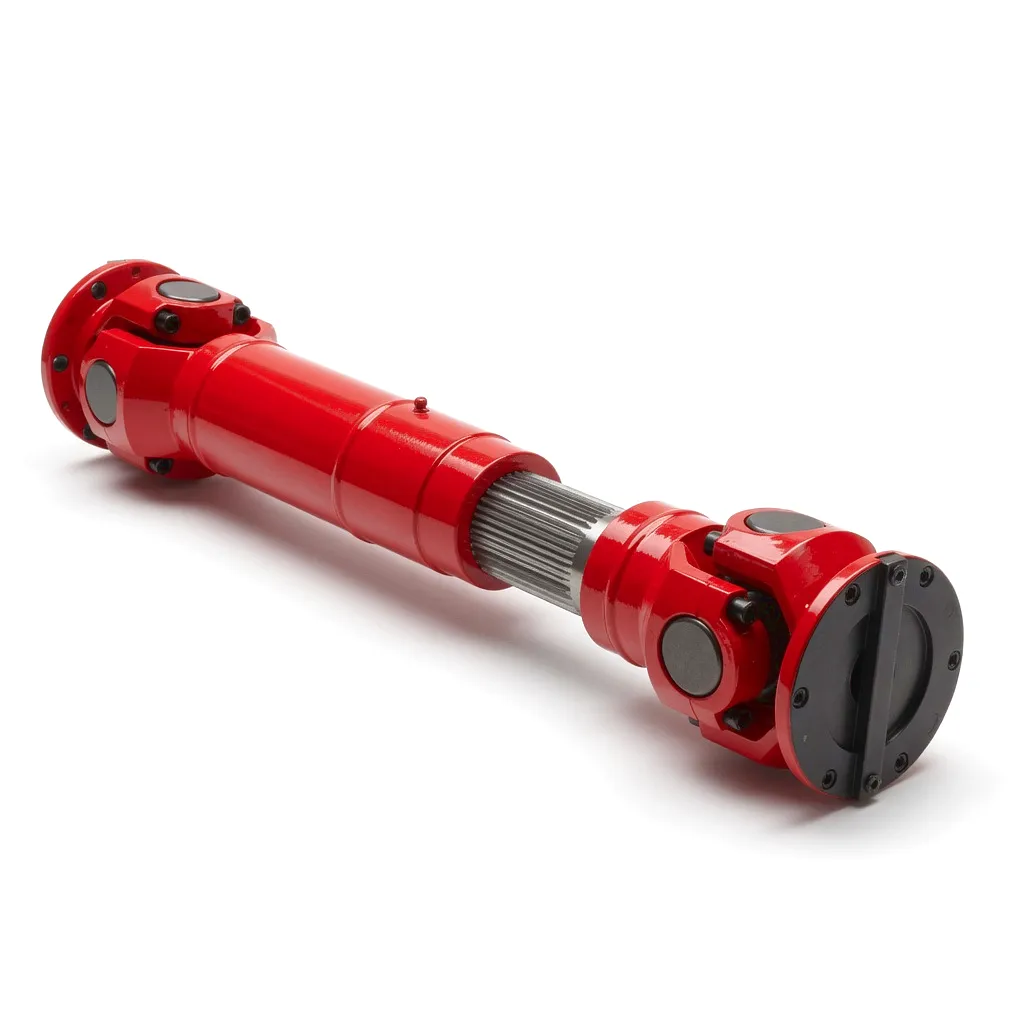
That is precisely the role of the marine-grade telescopic cardan coupling — a component that rarely receives the attention it deserves until something goes wrong. Having spent nearly two decades specifying drivetrain components for marine, industrial, and heavy-equipment applications, the cardan coupling remains one of the most underestimated yet mission-critical elements in any vessel’s propulsion architecture. This article unpacks the engineering, material science, performance criteria, and real-world outcomes that define modern cardan coupling technology for marine propulsion, with particular attention to the needs of UK-based shipyards, naval architects, and fleet operators.
Why Marine Propulsion Demands a Specialised Cardan Coupling
 A vessel’s propulsion shaft system is fundamentally different from any land-based drivetrain. On solid ground, you bolt an engine to a concrete foundation and the alignment stays within tight tolerances indefinitely. At sea, nothing stays still. A cargo ship encountering moderate swells experiences hull deflection measured in millimetres at the bow and stern, but those deflections translate into angular and axial displacement along the entire length of the shaft line. The engine, typically mounted amidships on resilient mounts, moves independently of the stern tube and propeller shaft. Without a coupling capable of absorbing these continuous, multi-axis displacements, bearing loads escalate, vibration amplifies throughout the hull, and fatigue cracks propagate through rigid connections.
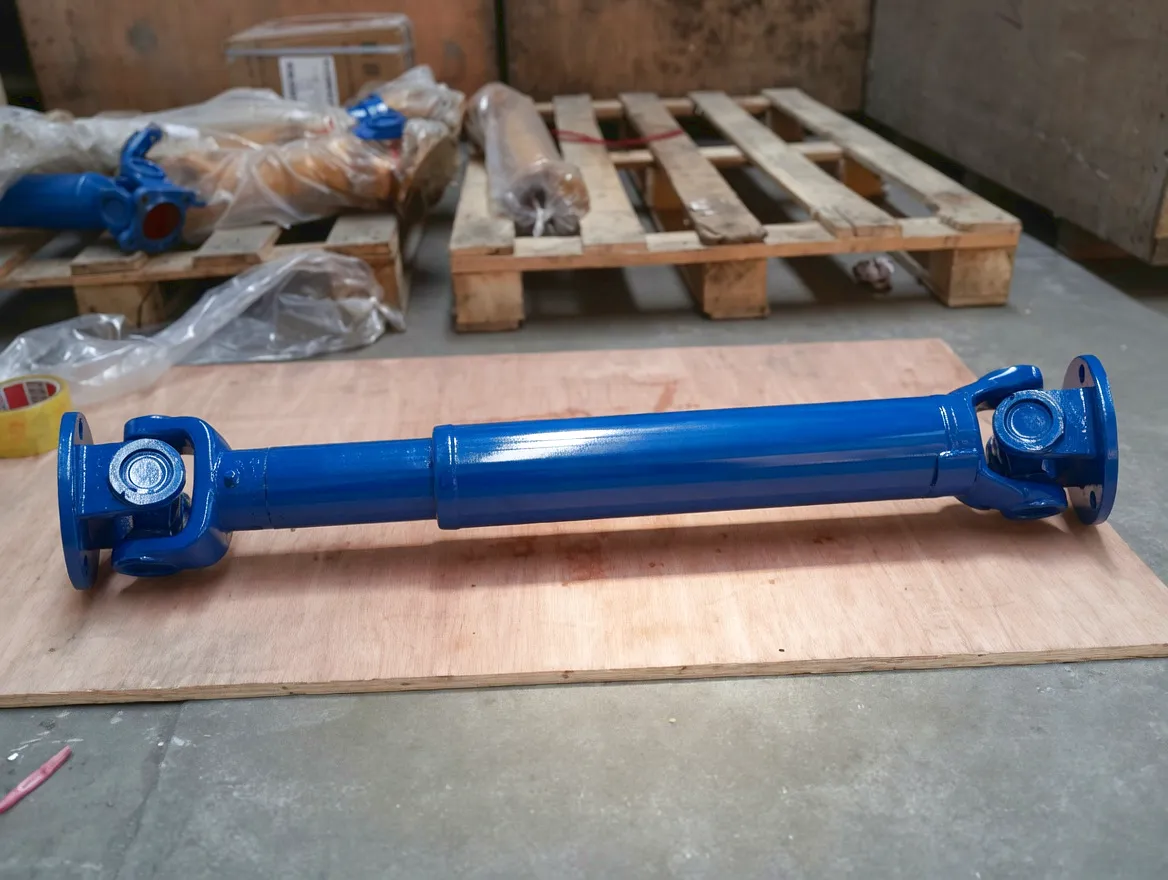
The cardan coupling addresses this directly. Its universal joint geometry permits angular misalignment across two perpendicular planes simultaneously, while the telescopic element accommodates axial displacement as the shaft line lengthens and shortens under thermal load and structural flex. This combination — angular compensation plus axial freedom — is what separates a marine cardan coupling from simpler flexible coupling designs that can handle only one mode of misalignment at a time. For a propulsion system that must transfer hundreds or thousands of kilowatts reliably through decades of service, no alternative mechanism matches the cardan coupling’s combination of torque capacity, misalignment tolerance, and mechanical simplicity.

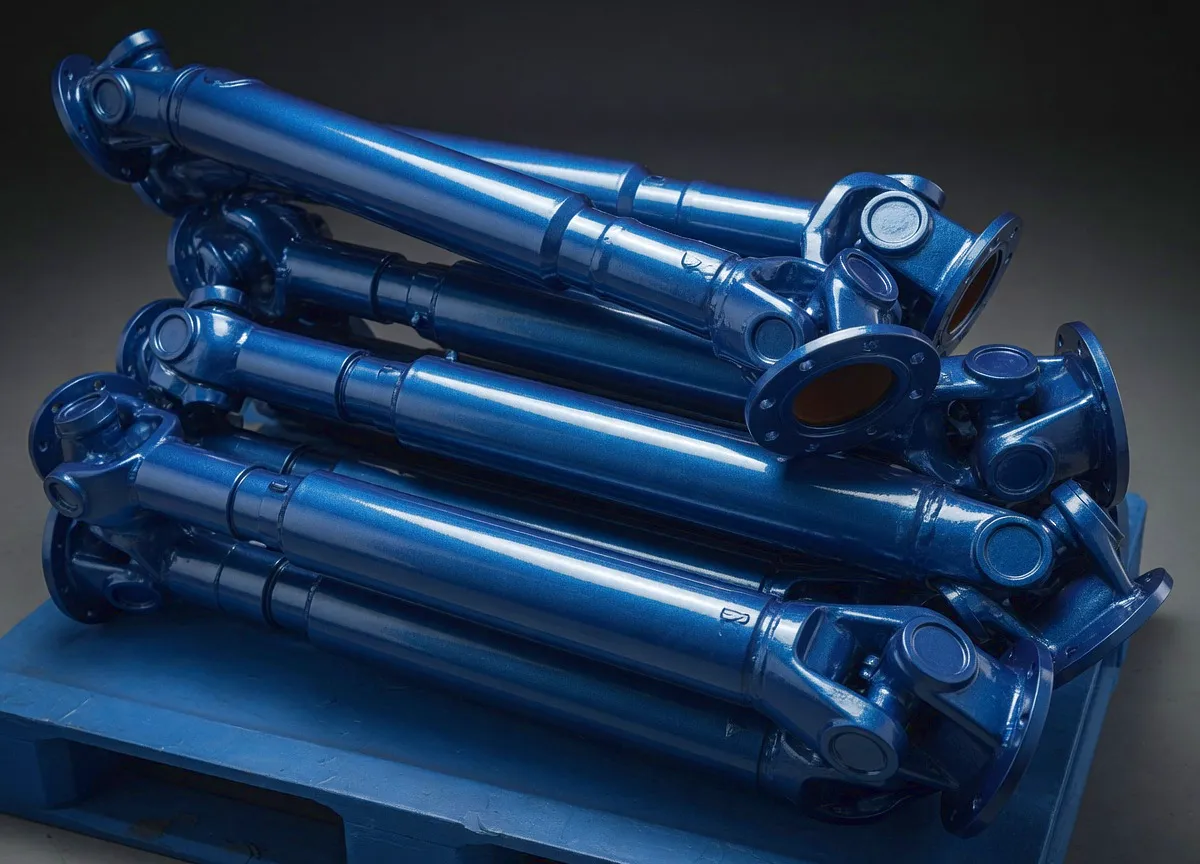
Marine propulsion drivetrain — where cardan couplings maintain alignment integrity under dynamic sea conditions
Operating Principle and Material Engineering Behind the Marine Cardan Coupling
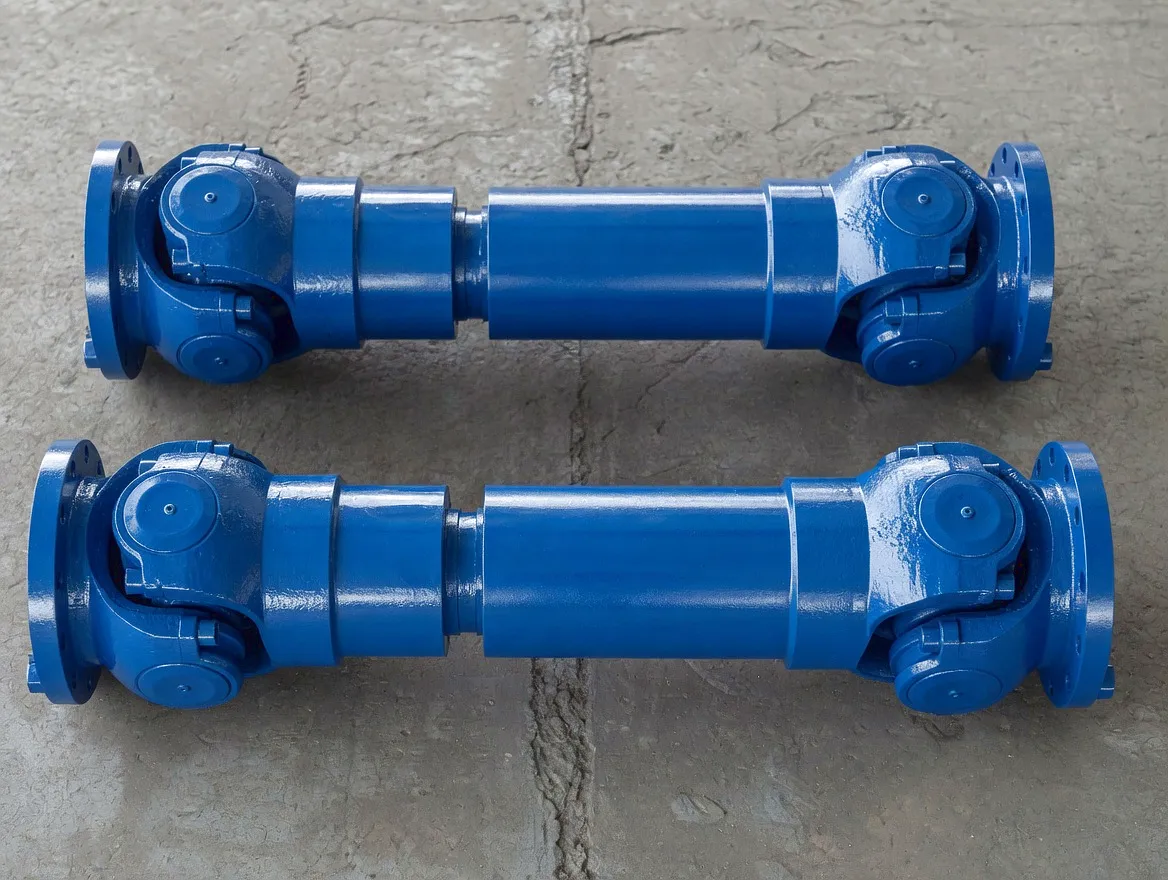
The fundamental mechanism of a cardan coupling dates back centuries, but modern marine versions bear little resemblance to the early designs. A contemporary marine-grade telescopic cardan shaft consists of two universal joint assemblies connected by a telescopic intermediate section. Each universal joint contains a cross-shaped journal (the “spider”) with four trunnion bearings housed in yokes welded or forged to the connecting flanges. As the driving and driven shafts rotate at an angular offset, the cross journal pivots within its bearing caps, permitting smooth torque transfer despite misalignment of up to 15 degrees per joint in some heavy-duty configurations.
The telescopic section — a splined male-and-female shaft assembly — allows the overall coupling length to change as thermal expansion or hull flex pushes the engine and propeller shaft apart or together. Spline profiles are carefully ground to minimise backlash while permitting free axial sliding under load. For marine service, the entire assembly receives a multi-layer corrosion-resistant coating system. Typical material selections include alloy steels such as 42CrMo4 or AISI 4140 for the shaft bodies and journal crosses, chosen for their excellent fatigue strength and toughness. Bearing surfaces use needle roller assemblies graded to marine vibration spectra, packed with synthetic marine grease formulated to resist washout by seawater intrusion. The exterior coating system often combines zinc-rich epoxy primer with polyurethane topcoat, providing thousands of hours of salt spray resistance verified to ISO 12944 standards.
Technical Performance Specifications
| Parameter | Specification Range | Notes |
|---|---|---|
| Nominal Torque Capacity | 500 – 85,000 Nm | Based on shaft diameter and joint series |
| Maximum Angular Misalignment | Up to 15° per joint | Total system: up to 30° with dual joints |
| Axial Telescopic Travel | 50 – 200 mm | Custom lengths available on request |
| Operating Speed Range | 0 – 4,500 RPM | Balancing grade G6.3 or better for high-speed |
| Shaft Material | 42CrMo4 / AISI 4140 | Quenched and tempered |
| Bearing Type | Needle roller, sealed | Marine-grade grease, washout-resistant |
| Corrosion Protection | Zinc-rich epoxy + PU topcoat | ISO 12944 C5-M rated |
| Salt Spray Resistance | 2,000+ hours (ASTM B117) | Optional: hot-dip galvanising |
| Classification Approvals | ABS, Lloyd’s Register, DNV | Bureau Veritas on request |
| Operating Temperature | -30°C to +120°C | Suitable for Arctic and tropical waters |
| Service Life (Typical) | 20,000 – 40,000 hours | Dependent on maintenance regime |
Why Shipyards and Fleet Operators Choose Cardan Couplings for Propulsion
Dynamic Misalignment Compensation
The dual universal joint configuration absorbs angular displacement in two planes simultaneously, while the telescopic section accommodates axial movement. This prevents bearing overload, reduces hull-transmitted vibration, and eliminates the need for impractically tight installation tolerances that rigid or semi-flexible couplings demand. For vessels operating in North Sea conditions, where wave-induced hull deflection is continuous, this capability directly extends the working life of every component in the shaft line.
Corrosion Resistance for Saltwater Environments
Marine-grade cardan couplings from Ever Power feature a multi-layer protective coating system rated to ISO 12944 category C5-M — the highest corrosion protection class for marine and offshore environments. With over 2,000 hours of verified salt spray resistance, these couplings perform in bilge spaces, engine rooms with poor ventilation, and partially submerged installations where lesser coatings would fail within months. Optional hot-dip galvanising provides even greater protection for vessels on long-haul international routes.
Vibration Damping and Noise Reduction
Crew comfort and passenger experience on commercial ferries and yachts depend heavily on noise and vibration control. The cardan coupling’s bearing geometry naturally decouples torsional vibration harmonics from the propeller shaft, preventing them from transmitting into the hull structure. Field measurements on vessels fitted with Ever Power marine cardan couplings have shown vibration reductions of 30–45% at the stern bearing compared to rigid flange connections, translating directly to quieter cabins and longer equipment life throughout the vessel.
High Torque Density in Compact Packages
Engine room space on any vessel is at a premium. The cardan coupling delivers exceptional torque capacity relative to its physical envelope — often 30–50% more torque per kilogram than equivalent diaphragm or elastomeric coupling designs. This compact efficiency makes it particularly valuable in retrofit projects where a more powerful engine is being installed into an existing hull with fixed shaft line geometry. Naval architects appreciate the dimensional flexibility that custom cardan coupling solutions offer when optimising machinery arrangements.
Application Scenarios: Where Marine Cardan Couplings Prove Indispensable
Commercial Cargo Vessels and Container Ships
Bulk carriers and container ships operating from major UK ports such as Felixstowe, Southampton, and London Gateway rely on propulsion shafts spanning 20 metres or more between engine and propeller. At this length, even minor hull deflection produces significant angular misalignment at the coupling point. A correctly specified cardan coupling absorbs these displacements continuously, preventing the catastrophic bearing failures that have historically caused propulsion loss incidents in heavy weather. Classification societies including Lloyd’s Register specifically recognise cardan coupling designs that meet their type-approval standards for unrestricted ocean service.
Luxury Yachts and Superyachts
In the yacht market — where builders in the Solent region, Poole, and along the south coast of England craft some of the world’s finest vessels — noise and vibration are dealbreakers. Owners and charter guests expect whisper-quiet cabins even at cruising speed. The cardan coupling’s inherent vibration isolation capability, combined with its compact installation footprint, makes it the coupling of choice for naval architects designing twin-screw yachts with complex shaft line angles. The ability to accommodate the aggressive shaft angles common in planing hulls, often exceeding 10 degrees, without generating objectionable harmonics distinguishes the cardan coupling from membrane or rubber-element alternatives that struggle above 3–4 degrees of misalignment.
Fishing Trawlers and Workboats
The UK fishing fleet, operating primarily from ports in Scotland, Grimsby, Brixham, and Newlyn, subjects propulsion equipment to punishing conditions. Trawlers frequently operate in rough seas while towing heavy nets, placing combined torsional and bending loads on the shaft system that exceed normal cruising stresses by a factor of two or more. The robustness and overload tolerance of the cardan coupling make it especially well suited to this duty cycle. Its mechanical simplicity also means that maintenance can be performed by the vessel’s own engineering crew during port calls, without requiring specialist tooling or factory service — a genuine advantage for fishing operations where downtime directly impacts revenue.
Naval and Government Vessels
Defence and government marine applications demand propulsion components that meet stringent shock and vibration specifications beyond commercial standards. Cardan couplings configured with enhanced journal cross materials and shock-rated bearing assemblies satisfy NATO STANAG shock requirements, making them appropriate for patrol vessels, mine countermeasure ships, and research vessels operated by agencies throughout the United Kingdom. The ability to specify custom flange patterns matching legacy equipment simplifies integration into vessels undergoing mid-life propulsion upgrades at Royal Navy dockyards and contracted facilities.
Engineering Challenges in Marine Cardan Coupling Selection
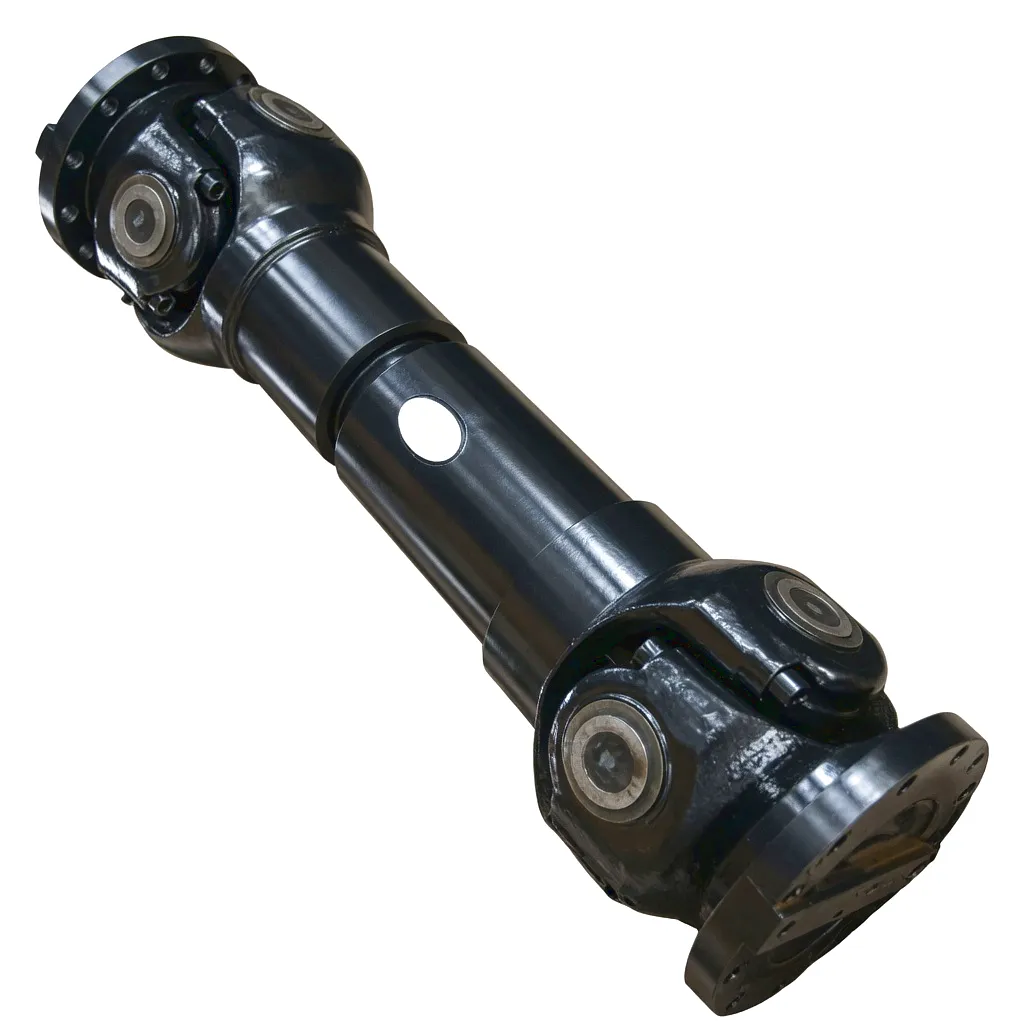 Selecting the correct cardan coupling for a marine propulsion application is more nuanced than choosing a unit from a catalogue based on torque rating alone. The marine environment introduces challenges that demand careful engineering judgement at the specification stage. Long-term immersion or exposure to saltwater spray creates a corrosive environment that accelerates wear on bearing seals and surface coatings. A coupling that would perform flawlessly in a land-based industrial gearbox application may fail prematurely at sea if its sealing system, coating specification, or bearing lubrication are not upgraded to marine standards.
Torsional vibration analysis is another area where marine applications demand deeper engineering engagement. Propeller-driven systems generate excitation frequencies related to blade count, shaft speed, and wake field characteristics. If any of these frequencies coincide with a natural frequency of the cardan coupling assembly, resonance can develop, producing destructive vibration amplitudes. A thorough torsional vibration analysis (TVA) performed during the design phase — using accurate mass, stiffness, and damping data for the specific cardan coupling model — prevents these costly problems before they manifest at sea trials. Ever Power provides complete inertia and stiffness data packages to support TVA integration by naval architects and classification society reviewers.
Certification requirements represent a further layer of complexity. Vessels classed by Lloyd’s Register, ABS, DNV, or Bureau Veritas must use propulsion components that carry the relevant type-approval certificates. Ever Power maintains current approvals from ABS and Lloyd’s Register for its marine cardan coupling range, with DNV and BV certification available on request. This compliance infrastructure saves weeks from project timelines compared to sourcing from manufacturers who lack pre-existing marine classification approvals.
Customer Success: North Sea Offshore Support Vessel Fleet Upgrade
Aberdeen, Scotland — Offshore Marine Services Sector
A Scotland-based operator running a fleet of eight platform supply vessels (PSVs) from Aberdeen contacted Ever Power in early 2025 following repeated propulsion coupling failures across three vessels in their fleet. The existing elastomeric couplings were deteriorating after just 8,000 operating hours — well below their rated 15,000-hour service life — due to the severe wave conditions prevalent in the northern North Sea and the corrosive engine room environment aboard ageing vessels.
Ever Power’s engineering team visited the Aberdeen dockyard, measured the existing shaft line geometry, and designed a custom marine-grade telescopic cardan coupling to replace the failing elastomeric units without requiring modification to the engine mounting or stern tube arrangement. The bespoke design incorporated upgraded needle roller bearings rated for the specific vibration signature of the vessels’ MAN diesel engines, along with a C5-M rated coating system and double-lip seal configuration to prevent saltwater ingress in the bilge-adjacent installation location.
The results after 14 months of service across the initial three vessels have been measured and documented. Stern bearing vibration levels dropped by 38% compared to baseline measurements taken with the original couplings. No coupling failures or seal breaches have been recorded. The operator has since ordered cardan coupling replacements for the remaining five vessels in the fleet, with delivery scheduled through 2026 to coincide with planned drydocking intervals. Estimated annual maintenance cost savings across the fleet total approximately £165,000.
What Our Clients Are Saying
We tried three different coupling suppliers before Ever Power. The cardan coupling they engineered for our twin-screw yacht build eliminated the vibration issue that had plagued us for months. Installation was straightforward, and the quality of the anti-corrosion coating is a step above anything else we’ve sourced. Our repeat orders speak for themselves.
— James W., Technical Director, Yacht Builder, Southampton, UK
The turnaround on our custom order was impressively quick. We needed a cardan coupling with non-standard flanges to match a legacy gearbox on one of our older trawlers. Ever Power delivered the finished unit, fully coated and balanced, in under four weeks. The price was competitive with standard catalogue couplings from European brands, which frankly surprised us.
— Alistair M., Fleet Engineer, Commercial Fishing Operator, Peterhead, Scotland
We specified Ever Power cardan couplings for a patrol vessel refit at our Devonport facility. The Lloyd’s Register type-approval documentation was complete and current, which saved us significant time during the classification review process. The coupling performance on sea trials exceeded expectations — vibration readings at the stern bearing were 40% below our acceptance threshold.
— Sarah T., Marine Systems Engineer, Defence Contractor, Plymouth, UK
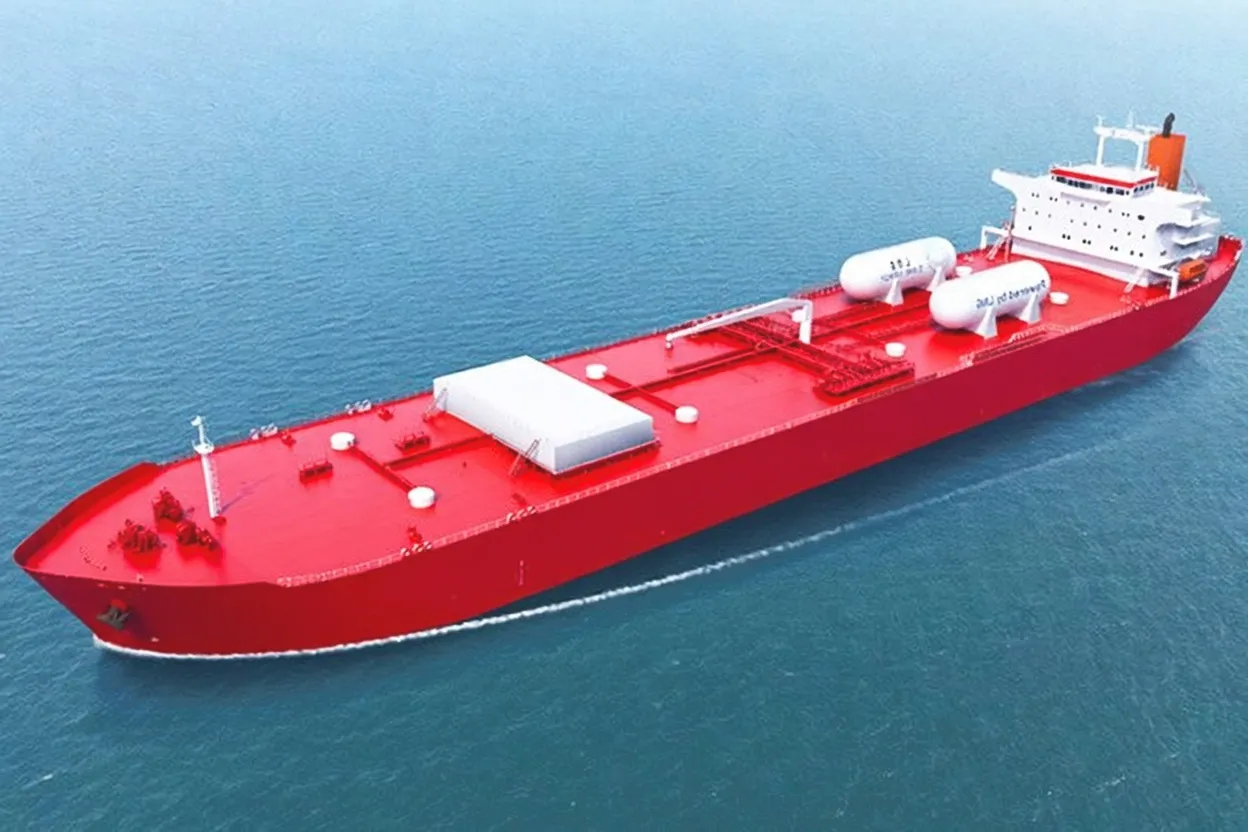
Ever Power: Custom Marine Cardan Coupling Manufacturing
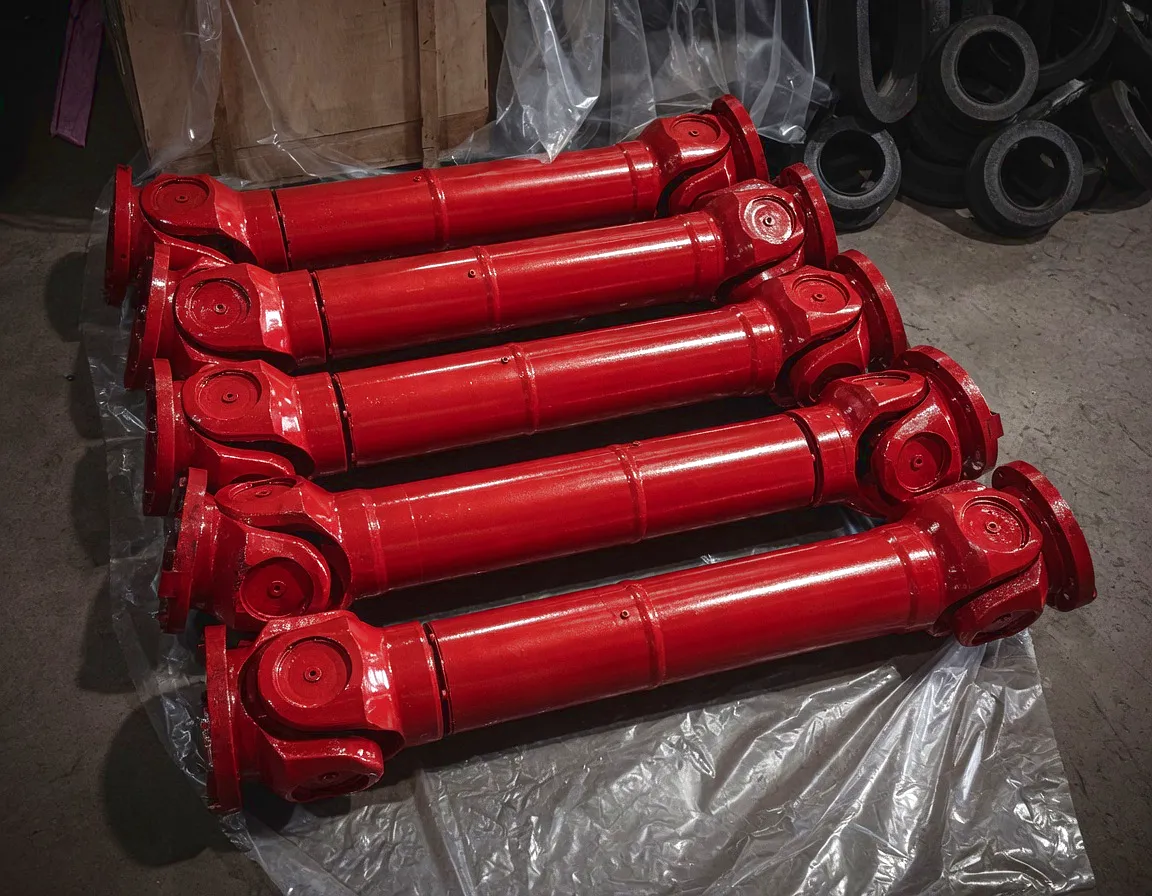
Marine propulsion projects rarely fit neatly into a standard product catalogue. Shaft diameters, flange bolt patterns, coupling lengths, and angular offset requirements vary from vessel to vessel, and retrofit projects frequently involve matching to legacy equipment that no longer conforms to current dimensional standards. Ever Power’s manufacturing facility operates with a clear focus on custom-engineered cardan coupling solutions, supported by in-house CNC machining centres, dedicated heat treatment lines, and a purpose-built dynamic balancing facility rated to G2.5 precision for high-speed applications.
The engineering team works directly with naval architects, shipyard project managers, and fleet maintenance departments to develop coupling specifications matched precisely to the application. This collaborative process covers dimensional design, material selection, coating system specification, and certification pathway — ensuring that the final product integrates seamlessly into the vessel’s shaft line and meets all classification society requirements without rework. Typical lead times for custom marine cardan couplings range from three to six weeks depending on complexity, with expedited production available for emergency repair and refit situations.
Quality control encompasses material certification traceability, dimensional inspection at each manufacturing stage, non-destructive testing (NDT) of all critical welds and stress areas, and final dynamic balancing with certified test reports. Every marine cardan coupling ships with a comprehensive documentation package including material certificates, dimensional inspection records, balance certificates, and coating system test reports — the complete audit trail that classification societies and shipyard quality departments require.
Serving Shipyards and Marine Engineers Across the United Kingdom
Ever Power supplies marine-grade cardan couplings to shipyards, boat builders, fleet operators, and marine engineering consultancies throughout England, Scotland, Wales, and Northern Ireland. Direct delivery is available to all major commercial and naval ports, including Southampton, Felixstowe, Liverpool, Glasgow, Belfast, Aberdeen, Plymouth, and Falmouth. The company’s technical support team is available to assist with specification development, installation guidance, and ongoing maintenance planning for any marine cardan coupling application — from a single coupling for a private yacht refit to fleet-wide standardisation programmes involving dozens of units.
For marine engineers working in the UK who need reliable, classification-approved, custom-manufactured cardan couplings with competitive pricing and responsive technical support, Ever Power is a partner built for the demands of the maritime sector. Whether the project involves a newbuild at a Scottish yard, a mid-life refit in the Solent, or an emergency repair at a North Sea support base, the team is equipped to respond with engineering depth and manufacturing capability that matches the urgency and precision the marine industry requires.
Maintenance Practices That Maximise Marine Cardan Coupling Lifespan
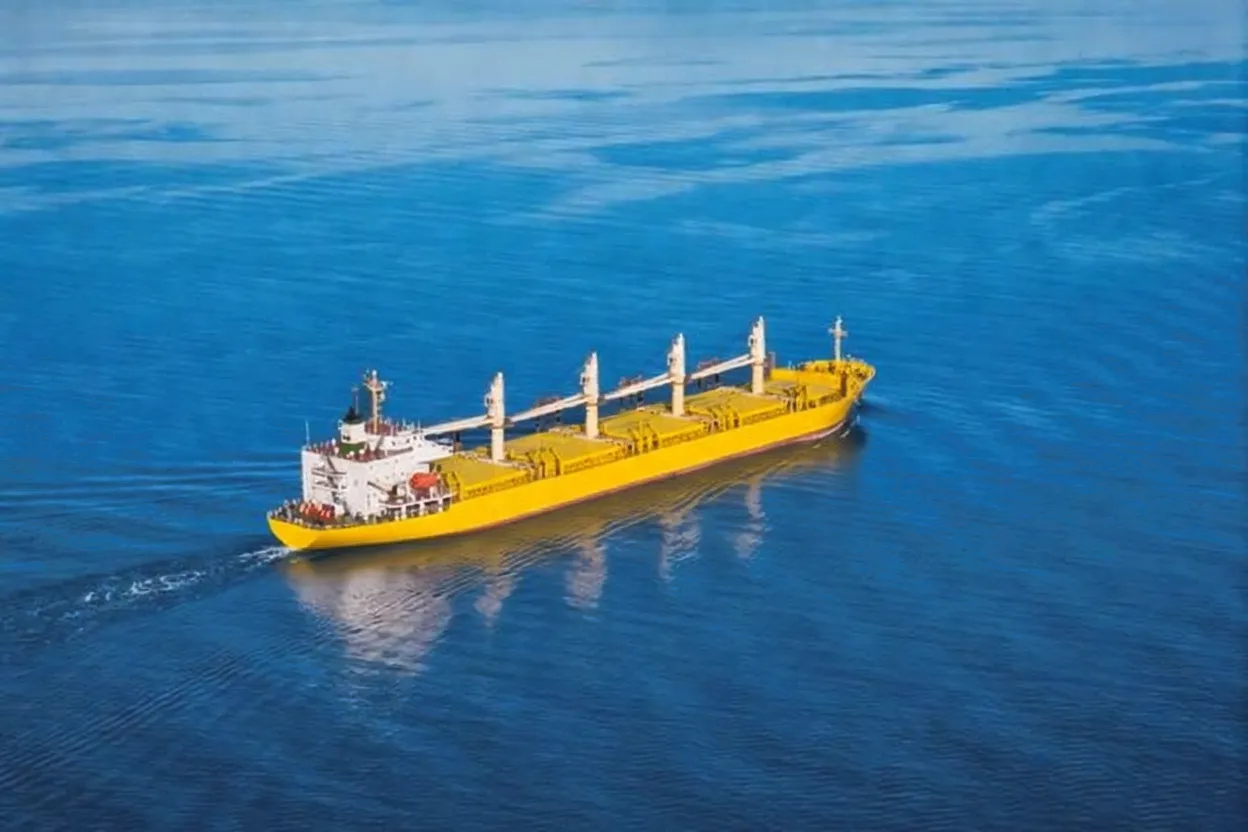
Even the most robust cardan coupling requires a disciplined maintenance programme to deliver its full service life potential. In marine environments, the two greatest threats to coupling longevity are bearing seal deterioration and coating breakdown — both accelerated by saltwater exposure. A structured inspection regime should include visual examination of seal integrity and coating condition at every 500 operating hours, with a comprehensive bearing play measurement performed during each scheduled drydocking. Vessels operating in the particularly aggressive conditions of the North Sea or North Atlantic may benefit from more frequent 300-hour visual inspections.
Grease replenishment intervals depend on operating speed, angular misalignment, and ambient temperature, but a general guideline for marine service is every 750–1,000 operating hours using a synthetic marine-grade grease with verified seawater washout resistance. Ever Power provides detailed maintenance schedules and lubrication specifications with every marine cardan coupling delivery, and technical support is available by email for any maintenance-related questions that arise during service.
Frequently Asked Questions About Marine Cardan Couplings
Ready to Specify a Marine Cardan Coupling for Your Next Project?
Contact Ever Power’s marine engineering team for technical consultation, custom specification support, and competitive quotations delivered within 24 hours.
edit by gzl