
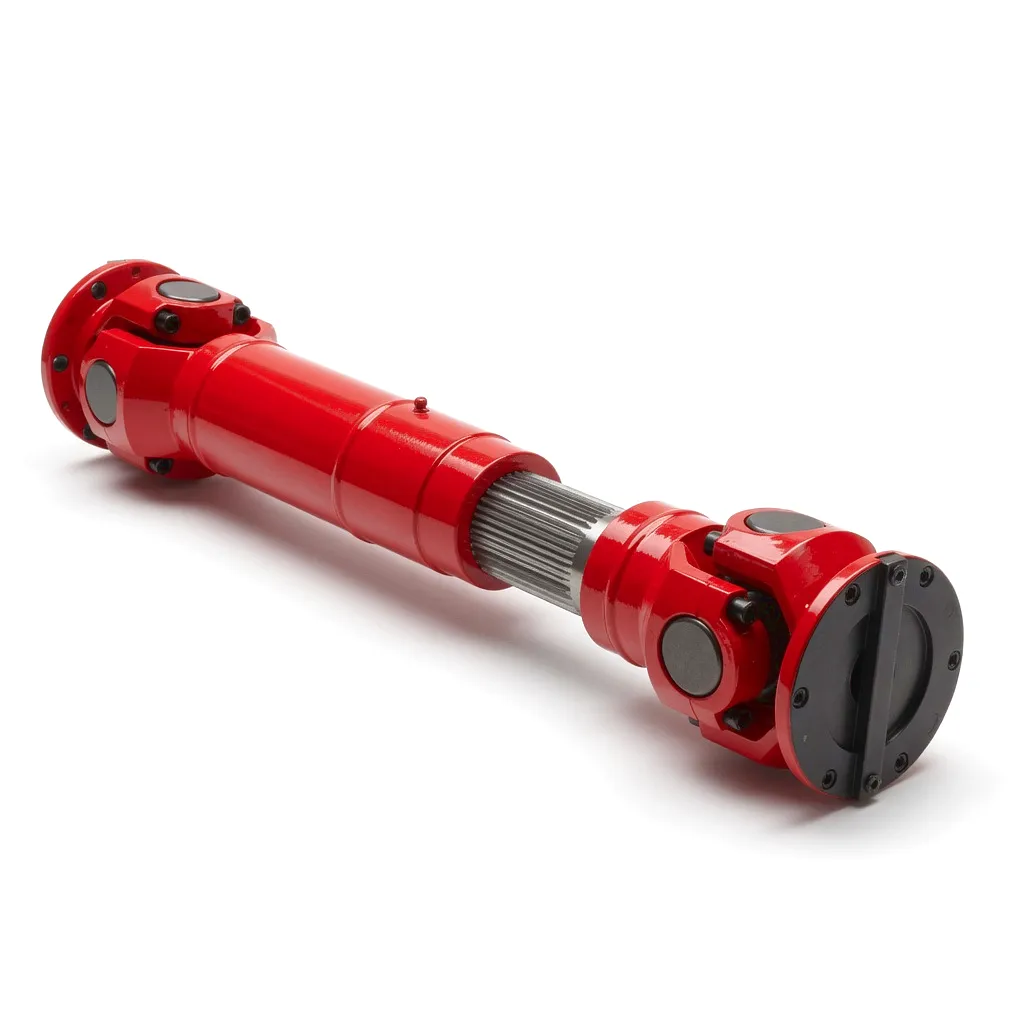
 Walk into any grain farm during harvest season in the East Midlands, Lincolnshire, or Yorkshire, and the mechanical heartbeat you hear is not the engine alone — it is a chain of precisely engineered components converting rotational energy from the crankshaft all the way out to the cutting platform, threshing cylinder, grain auger, and straw walkers. At almost every critical junction in that chain sits a cardan coupling, doing work most operators never think about until it fails at the worst possible moment.
A cardan coupling — also called a universal joint coupling or Hooke’s joint — transmits torque between two shafts that are not perfectly aligned. In a combine harvester, shaft misalignment is not an engineering error; it is a design requirement. The header must articulate over uneven ground, the feederhouse angle changes with crop thickness, and the threshing drum must be mechanically independent of the engine block. None of that is possible without a coupling that tolerates angular offset while delivering smooth, continuous power. This is precisely why cardan couplings have become indispensable in modern combine harvester power transmission.
Why Combine Harvesters Demand More from a Cardan Coupling
The mechanical reality of high-throughput grain harvesting
Shock Loading and Torque Spikes
When the threshing drum hits a dense mat of wet straw or a stone enters the feederhouse, torque spikes can reach four to six times rated load in milliseconds. A cardan coupling with properly rated cross-journals and a hardened yoke absorbs that shock rather than transmitting it directly to the gearbox, protecting a component that costs fifty times more than the coupling itself. In the UK harvest season — where wet autumnal conditions are common in counties such as Cambridgeshire and Suffolk — these events are more frequent than in continental Europe, making shock capacity a non-negotiable specification rather than a nice-to-have.
Continuous Angular Misalignment
The header cutting platform of a modern combine pivots on a lateral axis and floats over ground contours. This creates a continuously changing angular offset between the header driveshaft and the feederhouse input. A standard flexible coupling would fail within hours under this dynamic misalignment. Cardan couplings are specifically built for this environment — they can handle operating angles up to 25° continuously and up to 35° intermittently, depending on the series, which matches the articulation range of every major combine header manufactured today by brands used widely on British farms.
Dust, Chaff, and Agrochemical Exposure
The operating environment inside and around a combine harvester is genuinely hostile. Fine grain dust infiltrates bearing surfaces, chaff clogs grease channels, and agrochemical residues accelerate corrosion. Cardan couplings used in combine applications need sealed needle-roller cross-journals with high-retention grease nipples, zinc-phosphate or electro-galvanised yoke surfaces, and in some cases full stainless-steel cross-kits for the cross-auger drive lines that sit lowest to the ground where moisture and chemicals concentrate. Specifying a coupling without understanding the contamination environment is one of the most common mistakes made by purchasing departments unfamiliar with field conditions
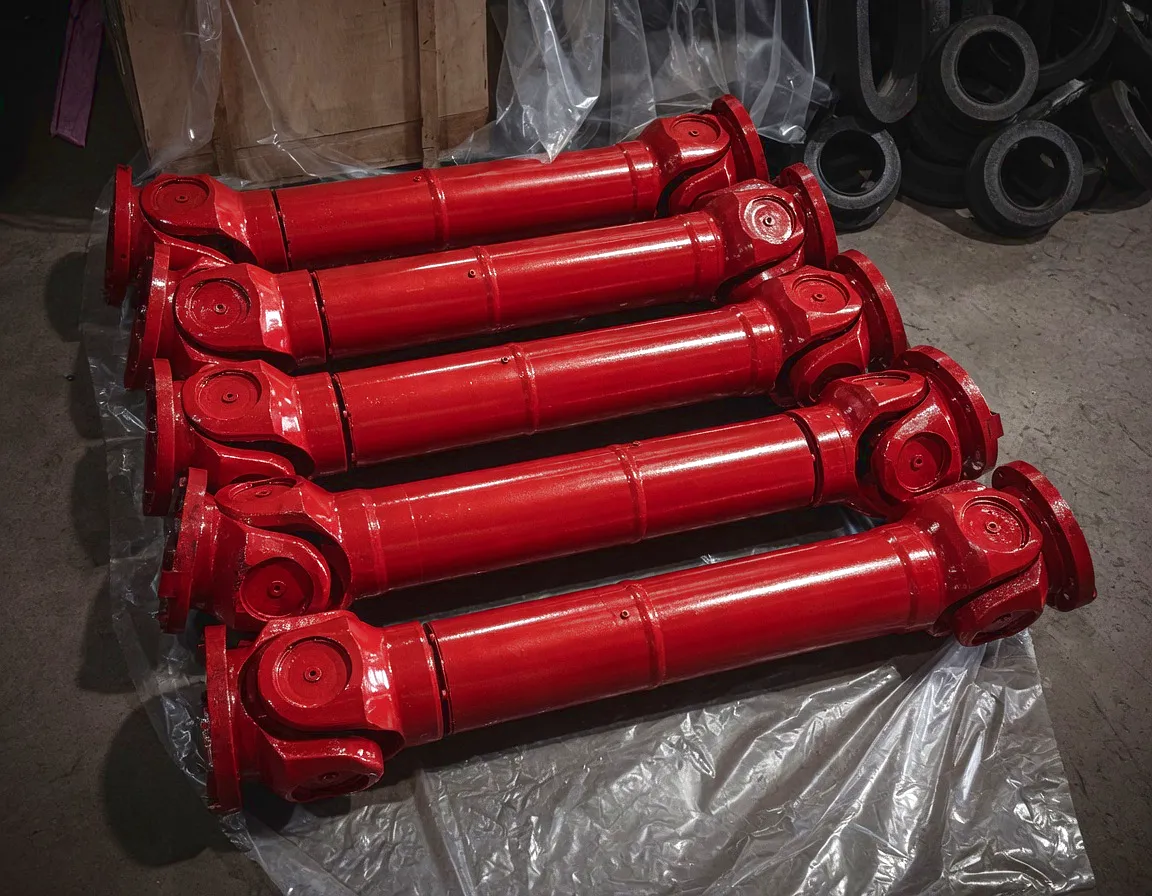
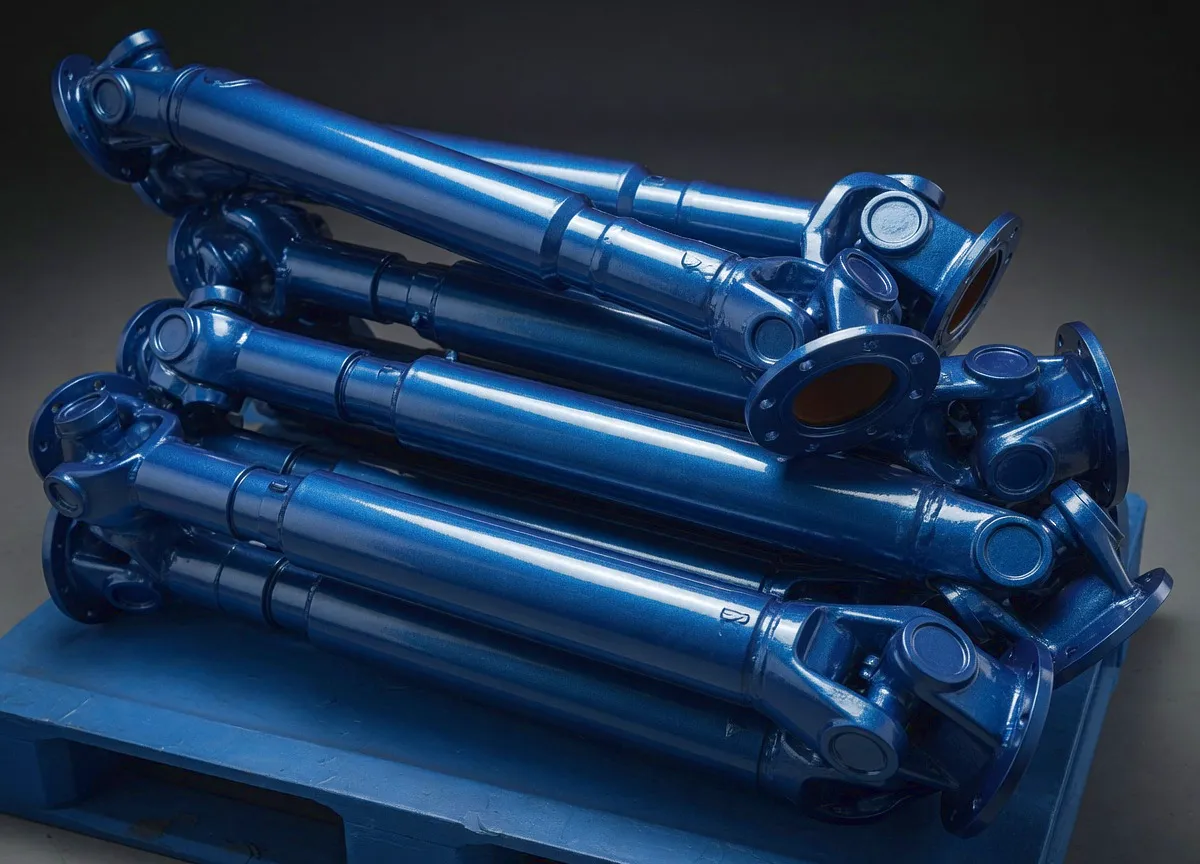
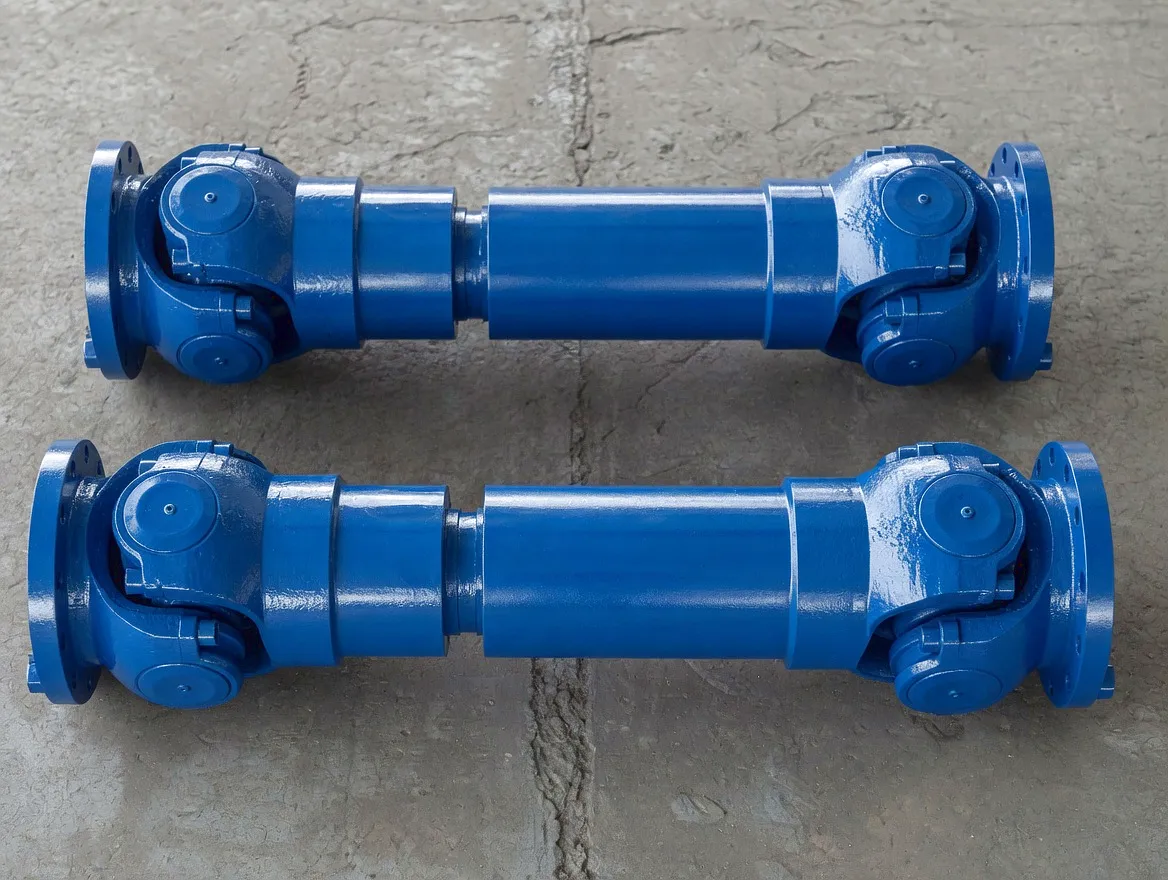
How Cardan Couplings Work in a Combine Harvester Drive Train
Mechanical principles behind reliable power transmission
At its core, a cardan coupling consists of two yoke forks connected by a cross-shaped trunnion — the cross-kit or spider — with needle roller bearings at each arm. When one yoke rotates, force is transmitted through the cross to the second yoke, allowing the output shaft to rotate even when it sits at an angle to the input shaft. The elegance of this design lies in its simplicity: there are no flexible elastomeric elements to fatigue, no rubber spider to split under cold start, and no sensitivity to oil contamination.
In a combine harvester, the main cardan shaft — also called the PTO shaft when interfacing with header attachments — runs from the engine or primary gearbox down through the feederhouse to the header drive. The angle of this shaft changes dynamically as the combine travels across undulating British farmland. A single Hooke’s joint introduces a second-order velocity variation at anything other than 0° — meaning the output shaft speed oscillates twice per revolution relative to the input. For a combine threshing drum running at 900–1,200 RPM, this oscillation at high angles becomes significant and can cause vibration that accelerates bearing wear throughout the drivetrain.
This is why agricultural cardan shafts are typically built as double universal joints (sometimes called constant-velocity cardan arrangements) with equal joint angles and the yokes phased at 90° to each other. The velocity variation from the first joint is cancelled out by the second, producing a smooth, isochronous output. At Ever Power, we engineer all our agricultural cardan coupling shafts with this phasing built in as a standard feature — not an upgrade.
Key Drive Points in a Typical Combine
Cardan Coupling in Action: Combine Harvester Field Applications
Real-world drivetrain environments where performance matters most
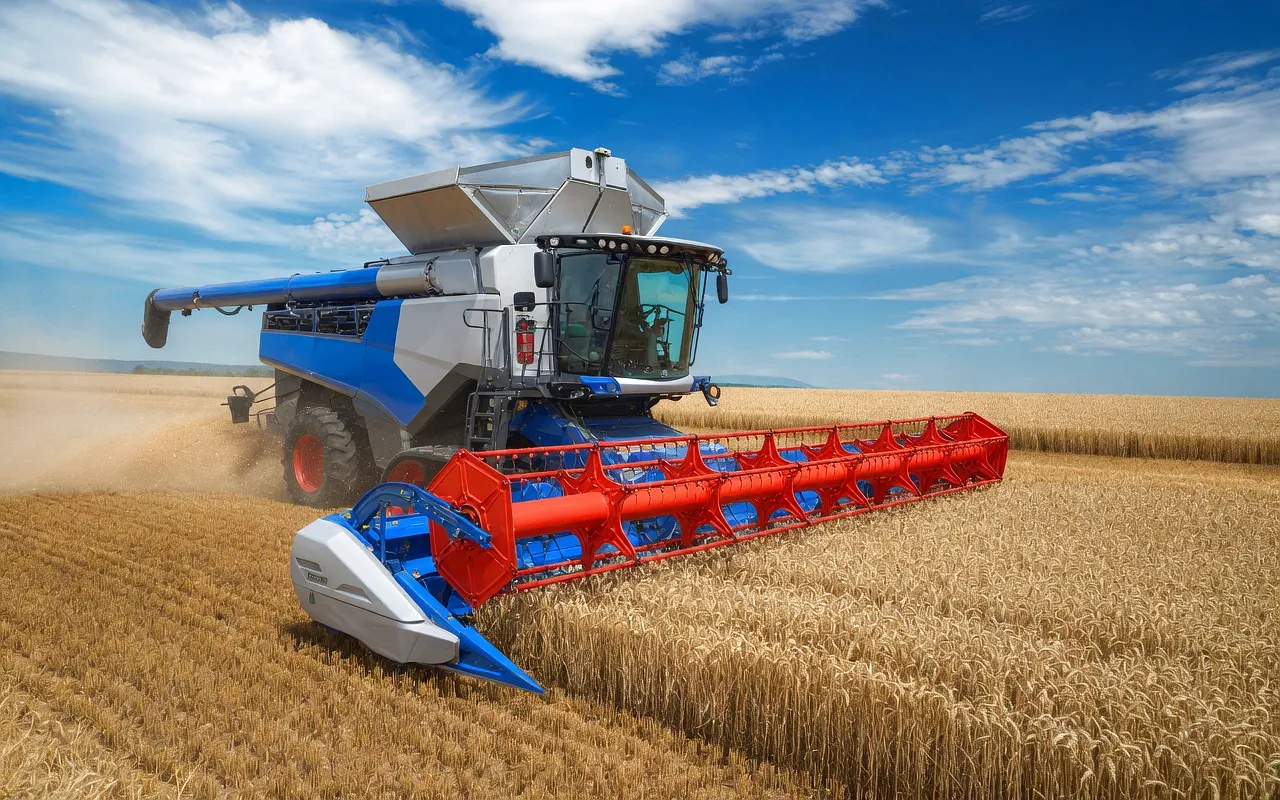
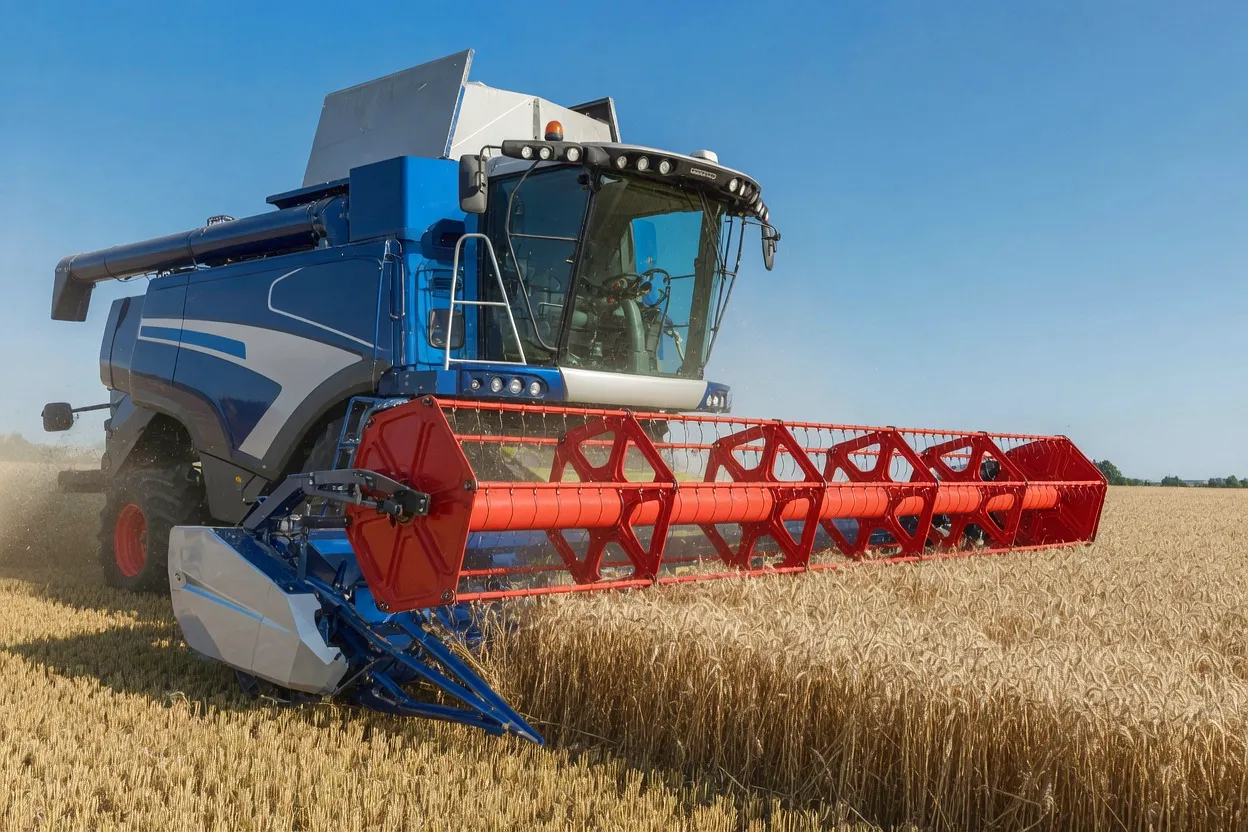
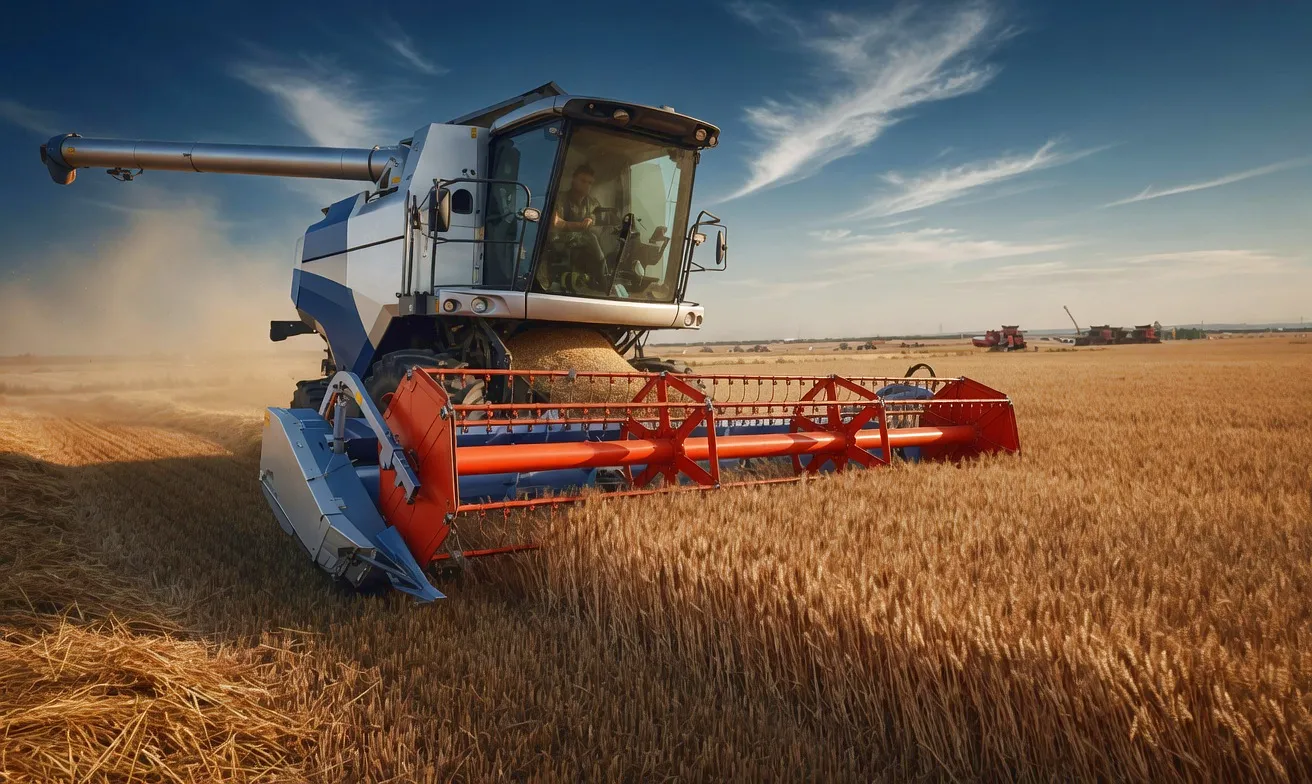
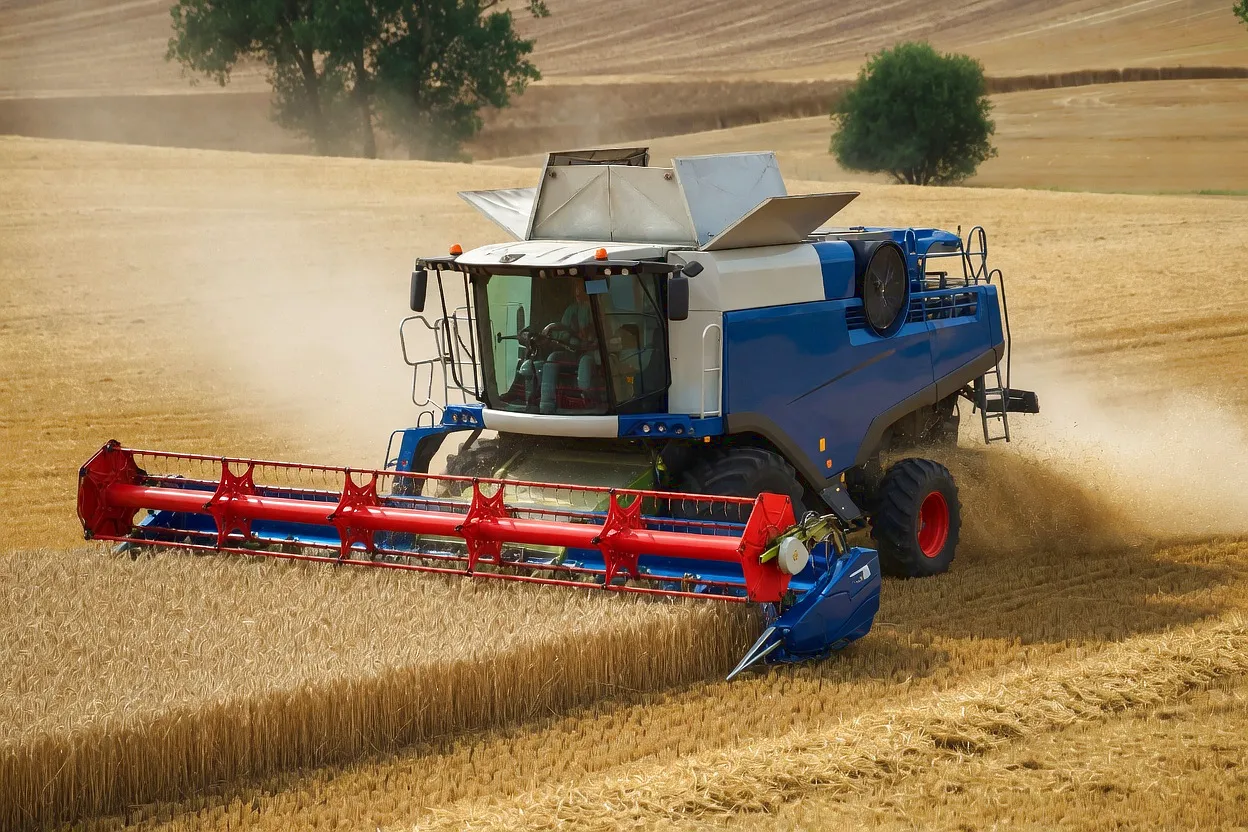
Technical Performance Parameters — Agricultural Cardan Coupling Series
Typical specification range for combine harvester drivetrain applications
| Parameter | Light Duty | Medium Duty | Heavy Duty | Extra Heavy |
|---|---|---|---|---|
| Rated Torque (N·m) | Up to 500 | 500 – 2,000 | 2,000 – 6,000 | 6,000 – 18,000 |
| Max Speed (RPM) | 3,000 | 2,000 | 1,500 | 800 |
| Operating Angle (continuous) | Up to 25° | Up to 25° | Up to 20° | Up to 15° |
| Cross-Kit Material | 20CrMnTi | 20CrMnTi | 42CrMo4 | 42CrMo4 |
| Surface Hardness (HRC) | 58 – 62 | 58 – 62 | 60 – 64 | 60 – 64 |
| Yoke Coating | Zinc phosphate | Electro-galvanised | Hot-dip galvanised | Custom powder coat |
| Telescopic Travel | Optional | Standard | Standard | Standard (splined) |
* All specifications subject to final application engineering review. Custom torque ratings and bore dimensions available on request.
Why Ever Power Cardan Couplings Outperform in Grain Harvesting
Engineered advantages that translate to lower cost of ownership
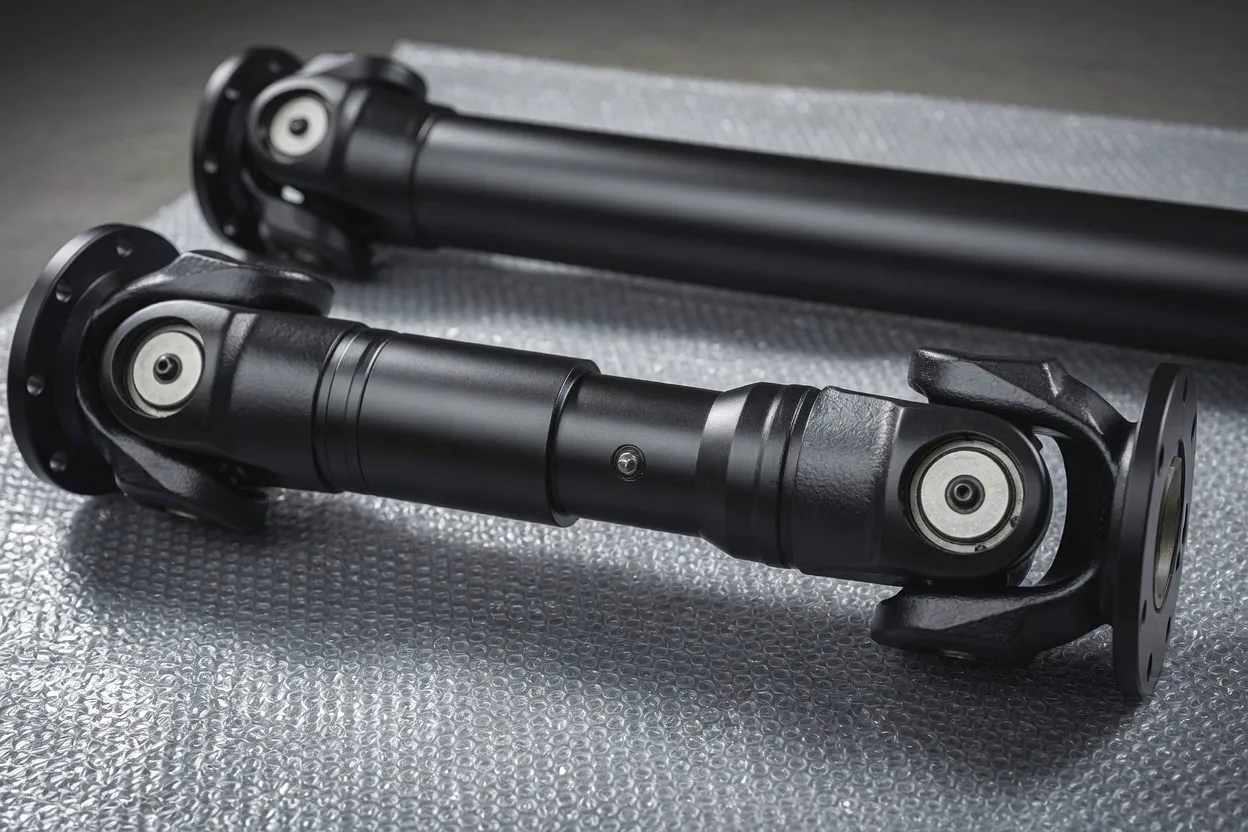
Grade 42CrMo4 Alloy Steel Construction
Every cross-kit in our agricultural series is machined from 42CrMo4 alloy steel, carburised to a case depth of 0.8–1.2 mm, then quenched and tempered to achieve a surface hardness of HRC 60–64. The result is a cross-kit that resists pitting fatigue under cyclical shock loading better than any off-the-shelf alternative. UK field data collected over three harvest seasons showed a 2.7× longer service life compared to standard imported cross-kits in combine header drive positions.
High-Retention Sealed Grease System
Standard agricultural cardan couplings use open-race needle bearings that wash out when a combine passes through a rain shower or a dewy early-morning start. Our sealed cross-kits use a dual-lip rubber seal pressed onto each bearing cup, retaining lithium-complex NLGI 2 grease for a minimum of 200 operating hours under field conditions. For UK harvest windows where you simply cannot afford to stop for re-greasing mid-day, this is more than a convenience — it is a direct reduction in downtime risk during the narrow harvesting window each August and September.
Splined Telescopic Tubes for Length Variation
Agricultural equipment is increasingly modular. The same combine base machine may accept headers ranging from 6 metres to 12 metres in working width, each with a different overall shaft length requirement. Our telescopic cardan shafts use an involute spline profile (DIN 5480) with a case-hardened mating sleeve, allowing axial travel of up to 400 mm while maintaining full torque transmission. Each unit is supplied with a protective plastic guard tube as standard, a legal requirement under UK PUWER 1998 regulations for exposed rotating shafts.
Dynamic Balancing to G6.3
At header reel drive speeds of 800–1,500 RPM, even a small rotational imbalance generates significant centrifugal force that creates bearing-killing vibration. Our agricultural cardan shafts are dynamically balanced to G6.3 per ISO 1940-1 as a standard process — not an upgrade tier. This is especially important for combines using variable-speed header drives, where speed changes across the RPM range can cause resonance if the shaft is not properly balanced. Balanced shafts reduce gearbox bearing loads by up to 40% at mid-range speeds.
Material Selection and Surface Treatment
The material choices in an agricultural cardan coupling are not arbitrary. Every element in the assembly — the yoke, the tube, the cross-kit, the bearing cups, and the seals — must perform reliably across ambient temperatures ranging from -10°C on a frosty October morning in Scotland to +45°C inside a fully enclosed machine bay in Kent during a July heatwave. That is a 55°C operational envelope, and it demands material and lubricant selections that most industrial coupling manufacturers simply do not consider.
Customer Success: From Breakdown Crisis to Zero Harvest Downtime
A real-world application story from a Lincolnshire agricultural OEM
Fenland Harvest Equipment had been using generic OEM-replacement cardan coupling cross-kits sourced through a UK agricultural parts distributor. The parts met the dimensional specification on paper, but by mid-season each year, the header drive cardan couplings on three or four of their six machines would show spalling on the needle roller bearing tracks, leading to audible clicking, then rapid yoke fracture. Each failure took the machine offline for a minimum of four hours — an eternity during a narrow East Anglian harvest window.
Their workshop manager, having tracked the failures against machine hours and field conditions, correctly identified that the root cause was low-cycle fatigue on the bearing cup interface — consistent with insufficient case-hardening depth in the original cross-kits. They contacted Ever Power in February 2023, ahead of the summer harvest. After reviewing their operating data — torque peak measurements taken by a data logger installed on one machine, plus the angular operating envelope of the header drive — our applications team recommended a shift from a standard series cross-kit to our agricultural heavy-duty cross-kit with a minimum carburised case depth of 1.0 mm and a dual-lip seal.
Through the 2023 and 2024 harvest seasons — a combined total of approximately 9,600 machine-hours across all six combines — there were zero cardan coupling failures in the header drive positions. The workshop recorded one routine cross-kit replacement on a grain auger drive at the 1,800-hour service interval, exactly as scheduled. Fenland Harvest Equipment now holds a standing annual order with Ever Power for their entire coupling replacement programme.
We farm 2,400 hectares of winter wheat and oilseed rape in Cambridgeshire. Before we switched to Ever Power cardan couplings on our two large combines, we were budgeting £3,200 per season just for emergency coupling replacements. Two seasons in, that figure is basically zero. The quality difference is genuinely obvious the moment you handle the cross-kits side by side.
As an agricultural machinery dealership in Yorkshire, we’re often asked to source cardan couplings for older combines where OEM parts are discontinued or have excessive lead times. Ever Power’s custom bore and yoke configurations have been a genuine lifesaver. They matched a 1990s-era splined hub specification that I genuinely could not source anywhere else in the UK, and the lead time was three weeks from drawing approval.
We manufacture custom header attachments for specialty crops — linseed, hemp, borage — and our customers use cardan shafts from our headers directly on their combines. The angular offset on some of our designs is unusual, up to 28°. Ever Power engineered a double-joint shaft solution for us at a price point that actually made sense for our production volume of 80–100 units per year. The product holds up beautifully in the field, and our warranty claim rate dropped by over half.
Custom Cardan Coupling Manufacturing for Agricultural OEMs
Ever Power — Engineering to your exact specification
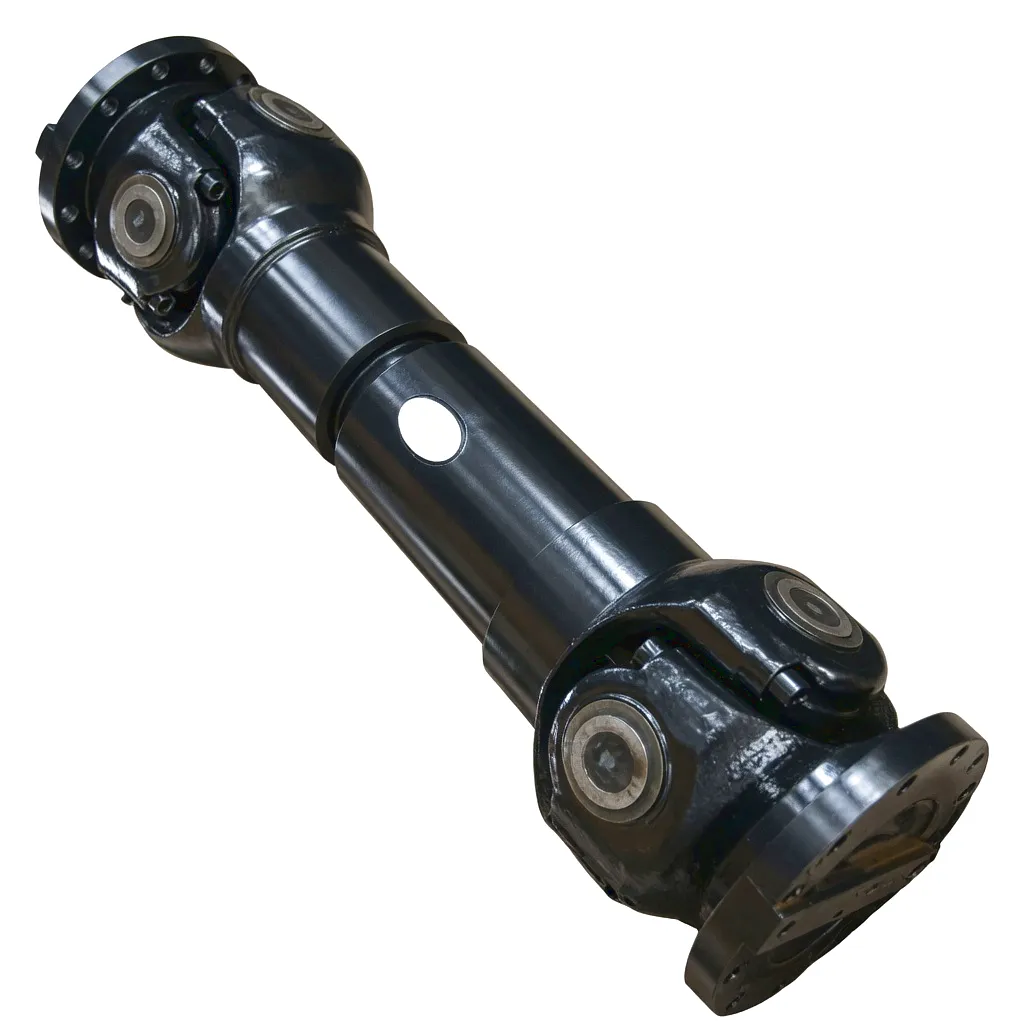
Standard catalogue parts solve standard problems. Agricultural machinery engineering has never been standard. Every combine manufacturer, every header OEM, and every specialist attachment builder we work with in the UK and across Europe has at least one drive position that falls outside a catalogue shaft specification — a non-standard bore diameter, an unusual yoke face-to-face dimension, a specific torque limiter integration requirement, or a paint finish that must match an existing colour scheme for brand identity reasons.
Our factory operates a full in-house machining centre with CNC turning, gear hobbing, and spline broaching capabilities that allow us to manufacture custom yoke forgings, non-standard bore sizes (metric and imperial), and special tube wall thicknesses from a minimum order quantity of just 20 pieces. For prototype development programmes — common with new header designs — we can supply single-piece prototypes with a 10–15 working day lead time from a dimensioned drawing or 3D STEP file.
Our quality system is ISO 9001:2015 certified. Every batch of custom agricultural cardan couplings ships with a full material certification (EN 10204 3.1), dimensional inspection report, and dynamic balance certificate. We speak your engineering language — whether you work in DIN, ISO, BS, or ASME standards.
Custom Capability Summary
Selecting the Right Cardan Coupling Series for Your Combine Application
The most common sizing error we see in the field is selecting a cardan coupling based on rated torque alone, ignoring the service factor. A combine threshing drum operating in dense, wet wheat carries a service factor of 2.5–3.0 against the steady-state engine torque. Select a cross-kit rated only at peak calculated torque, and you are operating the coupling at or above its fatigue limit on every heavy slug — which is exactly how you produce the spalling failures described in the Fenland case study above.
The correct approach is: calculate your nominal drive torque, apply the application service factor (available from our engineering data sheets), and select the coupling series rated above that corrected figure. For the header drive position specifically — where the combination of angular misalignment and shock loading represents the harshest condition — we recommend moving up one full size from the calculated figure as a design margin. This adds less than 5% to the component cost and typically more than doubles service life.
Frequently Asked Questions
Real questions from UK agricultural engineers and procurement teams
© Ever Power · Cardan Coupling Solutions · United Kingdom · edit by gzl