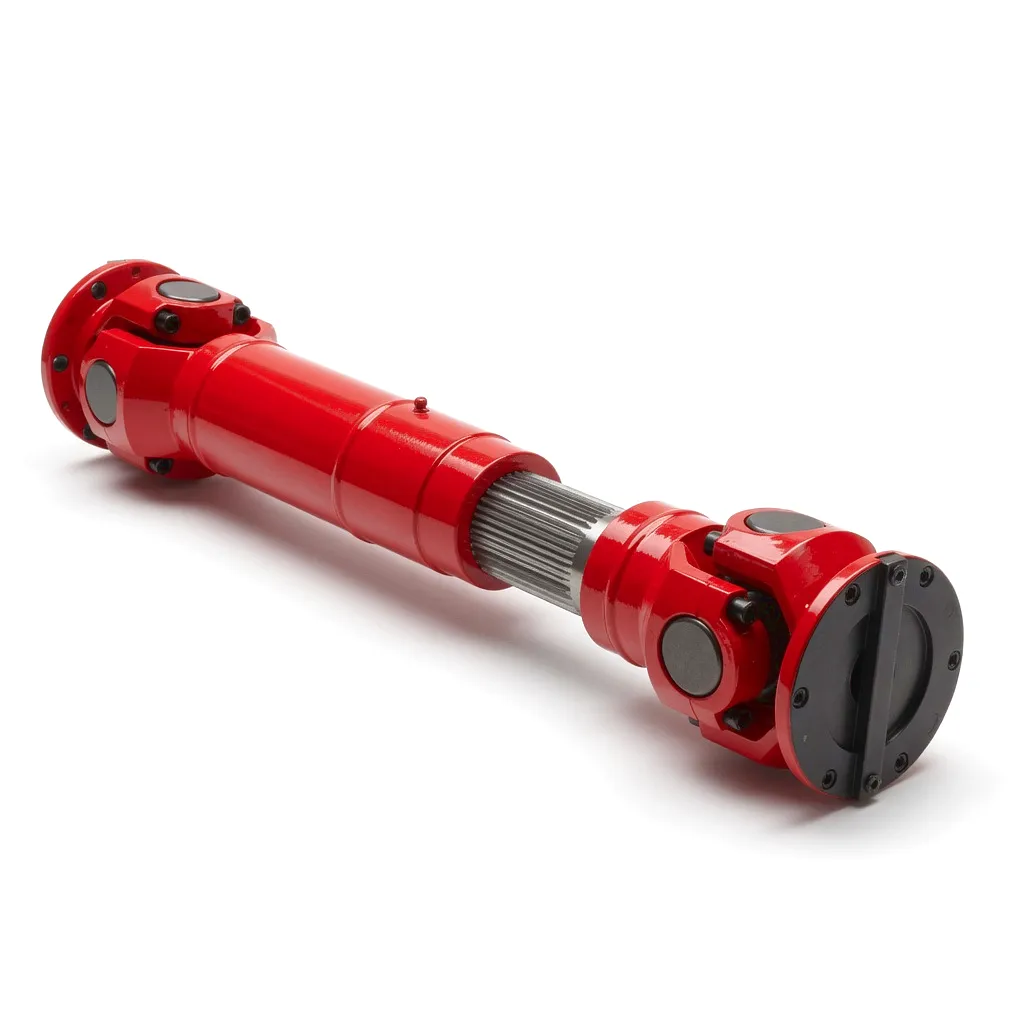
Ever Power Cardan Couplings
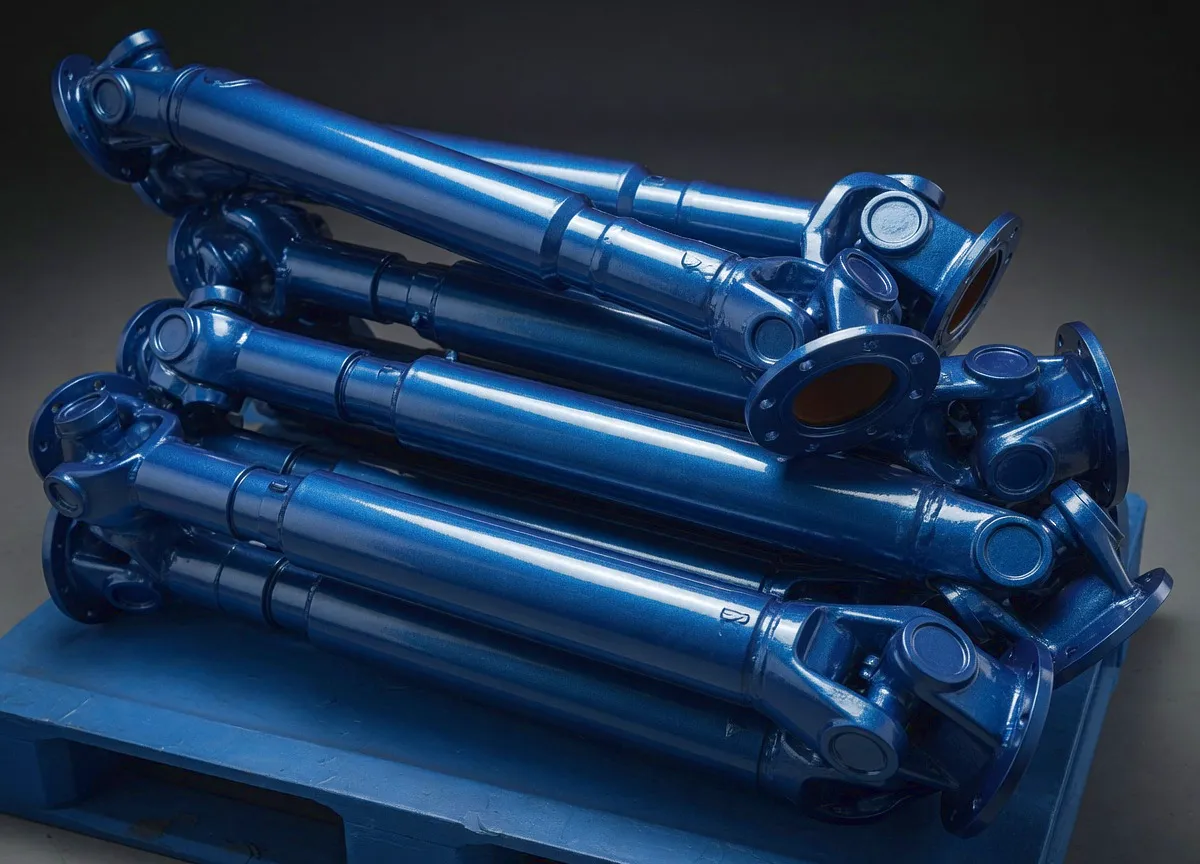
Engineered for the demands of continuous solar tracking, our cardan couplings deliver angular flexibility up to 35°, robust torque transmission, and corrosion resistance suited to outdoor British conditions. Whether you’re commissioning a ground-mount farm in Yorkshire or upgrading a tracker system in Surrey, we manufacture to your exact shaft geometry and load profile.
Solar tracker technology has advanced remarkably over the past decade. Single-axis and dual-axis tracking systems now routinely deliver energy yield improvements of 20–35% over fixed-tilt installations, and that figure is driving rapid adoption across the UK’s growing renewables sector. Yet none of those gains are realised without a dependable mechanical drivetrain — and the cardan coupling is one component that deserves far more attention than it typically receives in procurement conversations.
 A cardan coupling — also referred to as a universal joint or U-joint coupling — transmits rotary motion between two shafts that are not perfectly aligned. In a solar tracker, this misalignment is not an engineering error. It is a deliberate design feature. Terrain undulations, thermal expansion, installation tolerances, and the angular demands of east–west rotation all create shaft offset conditions that a rigid coupling simply cannot accommodate. The cardan coupling absorbs those angles while maintaining consistent torque delivery, protecting both the drive motor and the panel structure from mechanical stress that would otherwise lead to fatigue failure.
At Ever Power, our engineers have been specifying and manufacturing cardan couplings for solar applications since the early days of utility-scale installations in China, and we have since supplied components to projects across Europe, the Middle East, and increasingly to contractors and EPC firms based in the United Kingdom. This article draws on that accumulated field knowledge to explain precisely why the cardan coupling matters in solar power generation, how to select the right specification, and what to expect from a properly engineered solution.
Why Solar Trackers Depend on Cardan Couplings
Understanding the mechanical relationship between tracker motion and coupling design
Angular Misalignment Compensation
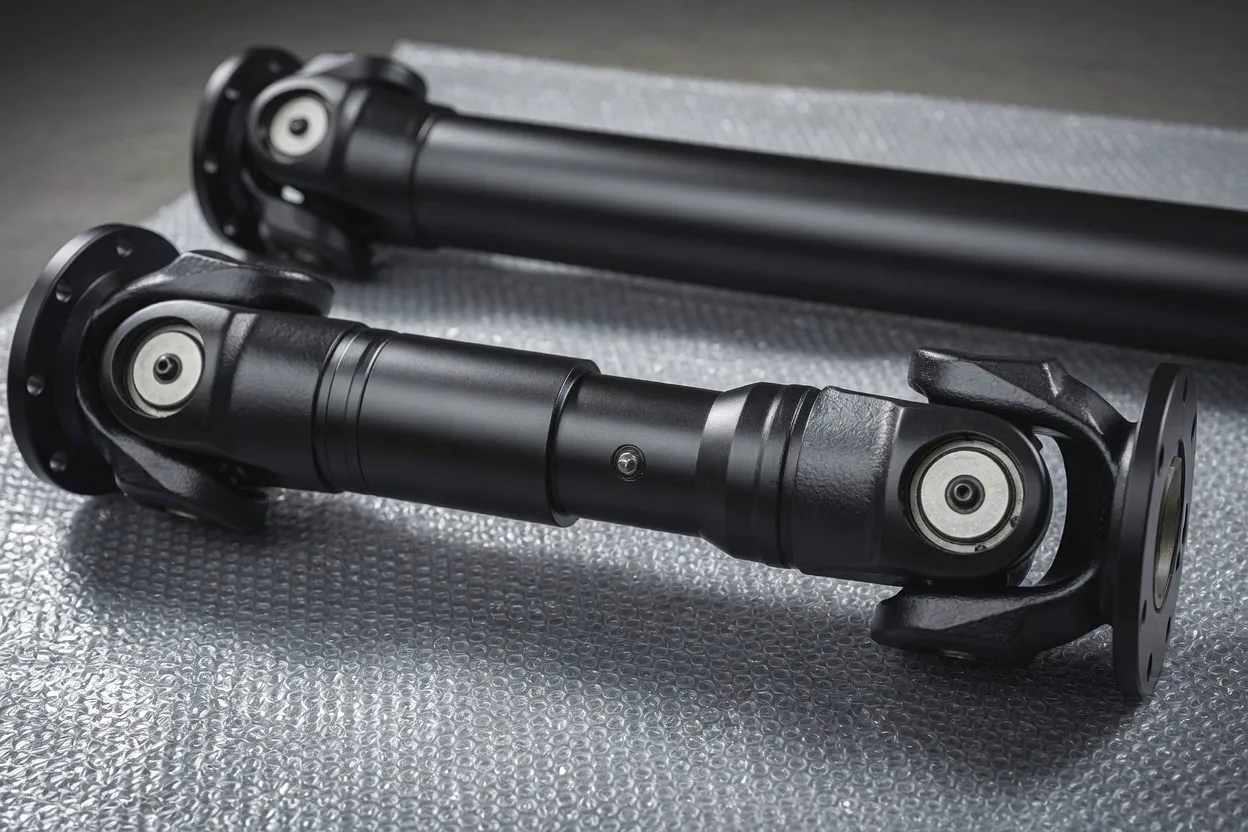
Ground-mount solar installations rarely sit on perfectly flat terrain. Across a row of fifty or more panels, cumulative grade changes can introduce shaft misalignment of several degrees between adjacent drives. A cardan coupling handles this continuously — without binding, without vibration spikes, and without imposing bending loads on the motor shaft that would degrade bearing life. This angular tolerance is the core reason the cardan coupling became the standard solution for torque transmission in horizontal single-axis trackers (HSATs) deployed across rolling British farmland.
Thermal Expansion Absorption
The UK climate presents an interesting challenge: daily temperature swings between seasons can exceed 40°C across the structural steel of a tracker torque tube. A 60-metre row of steel will expand or contract by several millimetres across that thermal range. Rigid couplings under these conditions generate axial stress at both the motor and the bearing pillow blocks. A properly rated cardan coupling, by contrast, accommodates that axial float through its yoke geometry, ensuring the mechanical system stays stress-free regardless of ambient temperature on a July afternoon in Kent or a January morning in Aberdeenshire.
Continuous Oscillating Duty
Solar trackers don’t rotate quickly, but they rotate every single day, day after day, for the full operational life of the installation — which is commonly quoted at 25 to 30 years. That translates to roughly 9,000 to 11,000 rotation cycles annually. For a cardan coupling, this means needle roller bearings within the cross-journal kit must be rated for oscillating duty, not just standard continuous rotation. The distinction matters enormously: needle bearings designed for full-rotation machinery will suffer fretting corrosion in oscillating applications if the oscillation angle doesn’t circulate the lubricant film effectively. Specifying the correct bearing configuration for the tracker’s actual rotation angle is non-negotiable.
The Mechanical Principle Behind the Design
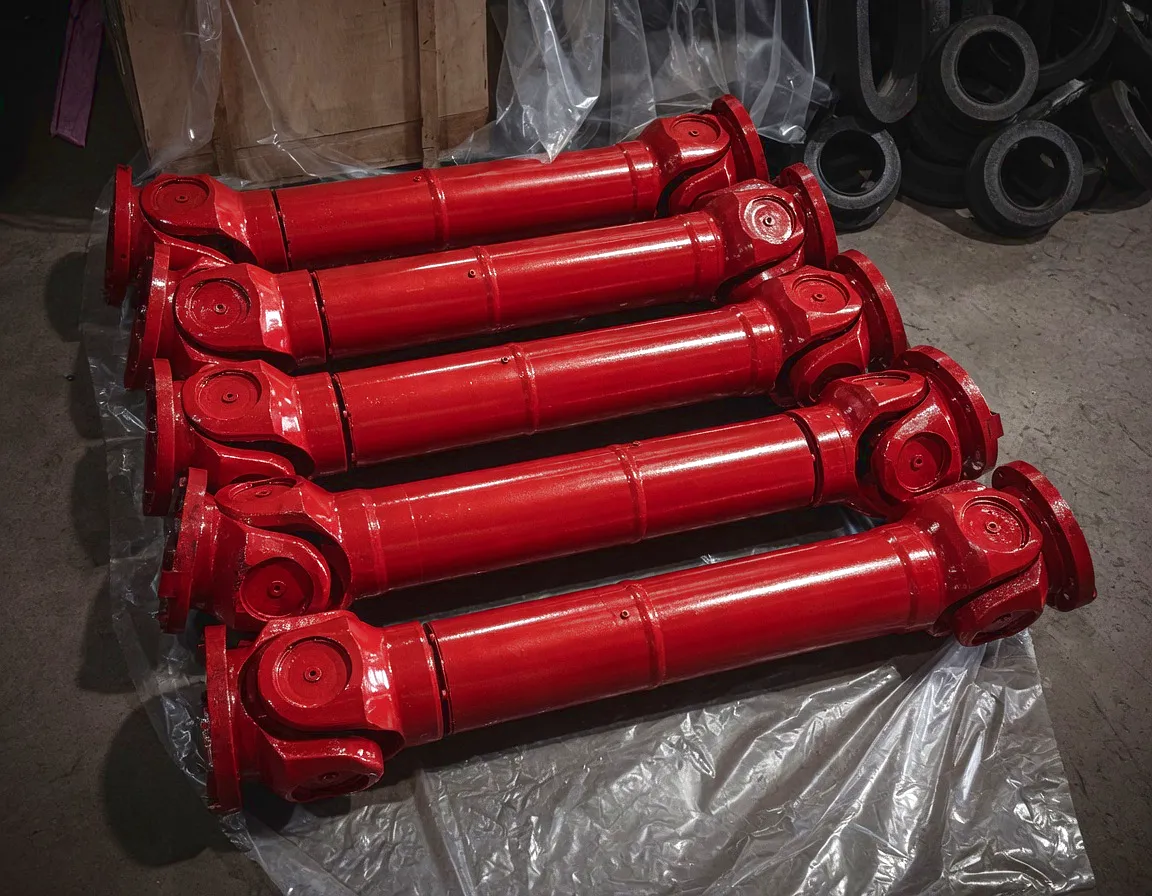
At its core, a cardan coupling — named after the Italian mathematician Gerolamo Cardano — uses two yoke-and-cross assemblies to bridge the angle between shafts. The cross (also called the spider or trunnion) sits within needle roller bearing cups in both yokes, allowing relative angular movement in two planes simultaneously. When a single cross-journal is used, the coupling transmits torque through up to 15–20 degrees of misalignment, though output shaft velocity will fluctuate slightly through the rotation cycle due to the inherent geometry of the homokinetic joint.
For solar tracker applications where smooth, consistent torque delivery is essential to avoid resonance in the panel structure, double-cardan configurations are used. By phasing two crosses in series — with an intermediate shaft between them — the velocity fluctuation of the first cross is precisely cancelled by the second, producing a constant angular velocity output regardless of the operating angle. This is why you will see “double cardan” or “constant velocity” specified on higher-end solar tracker drives, particularly on installations above 1 MW that use precision motor controllers sensitive to drivetrain irregularities.
Materials & Construction Standards
Built to withstand outdoor UK operating environments for 25+ year service life
Yoke Body — 20CrMo / 42CrMo4
Chromium-molybdenum alloy steel offers tensile strength in the 900–1,100 MPa range while remaining machinable. The yoke undergoes normalising or quench-and-temper heat treatment to achieve the required impact toughness for outdoor conditions where temperatures drop below freezing during British winters.
Cross Journal — Bearing-Grade Steel
Case-hardened to 58–62 HRC on the trunnion surfaces for needle roller contact. The cross geometry is ground to tight dimensional tolerances ensuring correct bearing preload and minimising angular backlash — a critical factor when solar tracker controllers use encoder feedback for position accuracy.
Surface Protection — Hot-Dip or Zinc-Nickel
Outdoor solar installations demand corrosion protection that holds up in coastal UK sites — Norfolk, Suffolk, Cornwall, and the Western Isles all present salt-laden air environments. We offer hot-dip galvanising, zinc-nickel electroplating, and zinc-rich epoxy primer options, each providing 1,000+ hours of salt spray resistance to ISO 9227.
Sealing — Dual-Lip Grease Seals
Each bearing cup incorporates dual-lip NBR seals to retain grease and exclude the mud, dust, and moisture that accumulate around ground-mount installations. Grease nipples are positioned for accessibility during routine O&M visits, and we can supply factory-grease-packed assemblies that meet a 2-year maintenance interval for remote sites.

Technical Performance Parameters
Standard range for solar tracker cardan couplings — custom specifications available on request
| Parameter | Light-Duty (LD) | Standard (SD) | Heavy-Duty (HD) |
|---|---|---|---|
| Nominal Torque (Nm) | 50 – 500 | 500 – 5,000 | 5,000 – 50,000 |
| Max Operating Angle (°) | Up to 25° | Up to 30° | Up to 35° |
| Shaft Bore Diameter (mm) | 20 – 60 | 60 – 120 | 120 – 280 |
| Max Speed (rpm) | 1,500 | 1,000 | 800 |
| Balancing Grade | G16 | G6.3 | G2.5 |
| Operating Temperature (°C) | -30 to +100 | -30 to +100 | -40 to +120 |
| Material — Yoke | 20Cr / SG Iron | 20CrMo / 40Cr | 42CrMo4 Forged |
| Corrosion Protection | Zinc electroplate | Zinc-nickel / HDG | HDG + epoxy coat |
| Salt Spray Resistance (hrs) | 500+ | 1,000+ | 1,500+ |
Solar Power Application Scenarios
Where cardan couplings are deployed across the solar generation value chain


Product Advantages for Solar Applications
Why project developers across the UK specify Ever Power cardan couplings
Longer Service Life
High-precision bearing fits and quality sealing mean our couplings regularly achieve 15+ year service intervals in solar tracker applications, well within the typical 25-year project life without bearing replacement.
Low Maintenance Cost
Factory-filled grease nipples and extended regreasing intervals reduce O&M visits to the site. For UK agri-solar installations where access is seasonal, this translates into meaningful operational savings over the project lifetime.
Compact Installation Geometry
Solar tracker drivetrains have tight envelope constraints. Our couplings are designed to ISO 8 / DIN 808 dimensional standards, ensuring they drop directly into existing shaft systems without requiring structural modifications to the torque tube support.
Full Customisation Available
Non-standard shaft sizes, special bore tolerances (H7/k6), keyway specifications, flange bolt patterns — we machine to drawing. No minimum order on custom configurations, and we support DXF/STEP file submissions for fast quotation turnaround.
How to Specify a Cardan Coupling for Your Solar Project
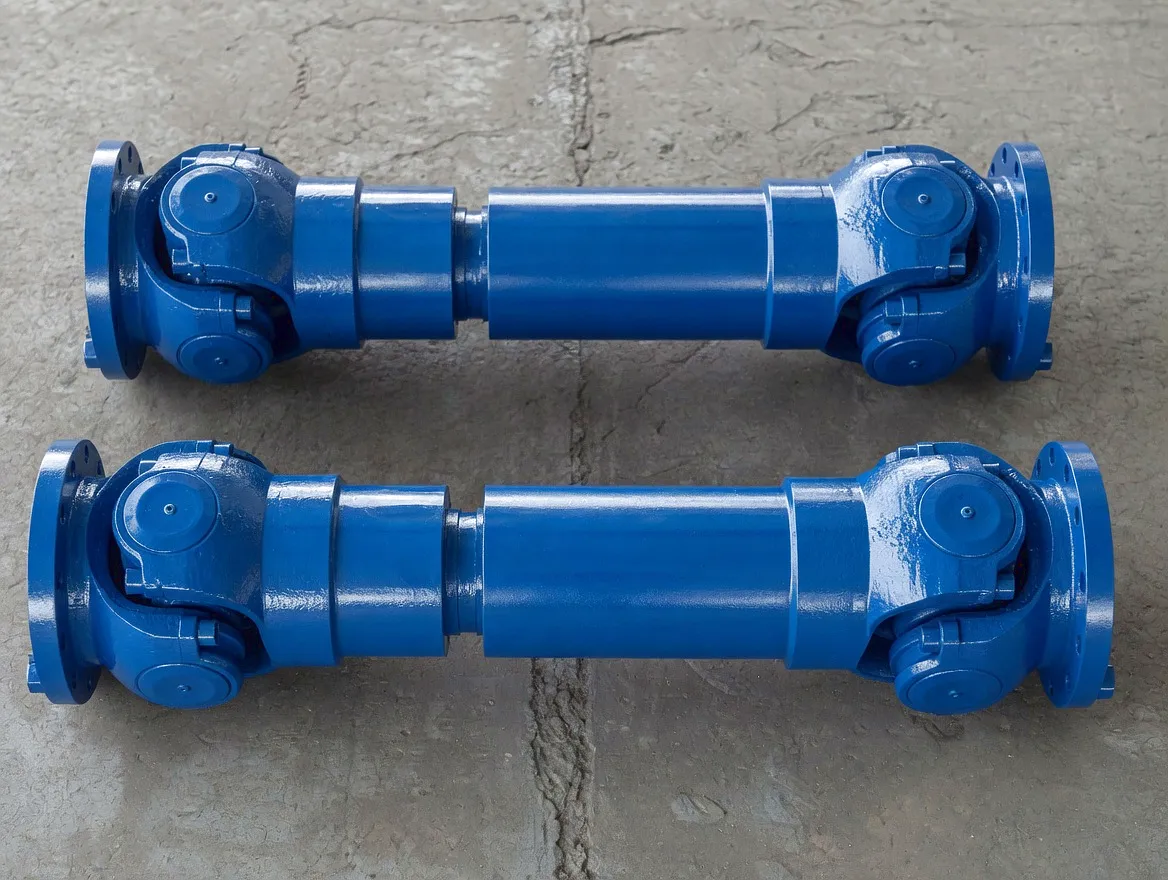 The specification process for a cardan coupling in a solar tracker application requires more information than a standard industrial coupling selection. The solar environment introduces variables — oscillating duty, outdoor exposure, long maintenance intervals, high cycle counts — that shift the selection criteria significantly from, say, a pump-coupling application in a factory. Here is what our engineers need to arrive at a correct, confident specification for your project.
The starting point is always the torque requirement. Your tracker drive system supplier should be able to provide the design torque at the coupling interface — this is the steady-state torque during normal tracking, not the stall torque of the motor. Add a service factor based on the load profile: for smooth single-axis HSAT drives, a factor of 1.5–2.0 is typical; for wind-exposed CSP collectors, 2.5–3.0 is more appropriate. The result is your design torque for coupling selection.
Next, establish the maximum misalignment angle. This is not just the angle you intend to operate at — it is the maximum angle the coupling will ever see, including during installation tolerancing, structural deflection under wind load, and any planned adjustment of the tracker row geometry. Sizing a coupling to its exact operating angle with no margin is a common error that leads to premature bearing failure. We recommend specifying a coupling rated for at least 125% of the maximum expected angle.
Information Required for Quotation
- Nominal and peak torque (Nm)
- Maximum operating angle (degrees)
- Drive and driven shaft diameters (mm)
- Shaft-to-shaft distance or intermediate shaft length
- Rotation speed range (rpm)
- Operating temperature range
- Corrosion protection requirement (coastal / inland)
- Annual maintenance access frequency
- Any flange or custom end configuration
What We Deliver With Every Order
- Material test certificate (MTC) per EN 10204 3.1
- Dimensional inspection report
- Hardness test records for critical surfaces
- Salt spray test certificate where specified
- Installation and maintenance manual (English)
- CAD drawing (DXF/STEP) for project documentation
- Recommended greasing schedule
- Traceability markings on component body
Customer Success Story
Real-world performance in UK solar infrastructure
Greenfield Solar commissioned a 72 MW single-axis tracker installation on converted arable land in Lincolnshire in 2022–2023. The site presented significant terrain challenges — natural field drains created elevation changes of up to 1.8 metres across individual tracker rows, generating shaft misalignment angles of up to 8 degrees at certain row connections. The EPC contractor’s initial coupling specification, sourced locally, had already failed on the pilot row within 14 months due to fretting corrosion in the needle bearings — a direct consequence of oscillating-duty bearing failure that our engineering team has seen on numerous solar projects that began life with standard off-the-shelf couplings.
Ever Power supplied 3,840 cardan coupling assemblies in our SD-range, bored to the tracker’s 80mm shaft diameter with H7 tolerance and keyed to DIN 6885A. The cross-journal kits were loaded with NLGI-2 lithium-complex grease rated to -35°C and fitted with dual-lip seals to handle the site’s clay-soil conditions. An extended-reach grease nipple was added at the customer’s request to simplify regreasing from ground level without removing the coupling shroud.
Two years post-commissioning, zero coupling-related failures have been recorded across the entire 3,840-unit population. The site’s O&M manager reported that the 24-month regreasing interval has been maintained on schedule and bearing condition checks during the first planned maintenance visit showed no signs of fretting or lubricant degradation. The client has since placed orders for two further solar farms in Norfolk and East Yorkshire using the same coupling specification.
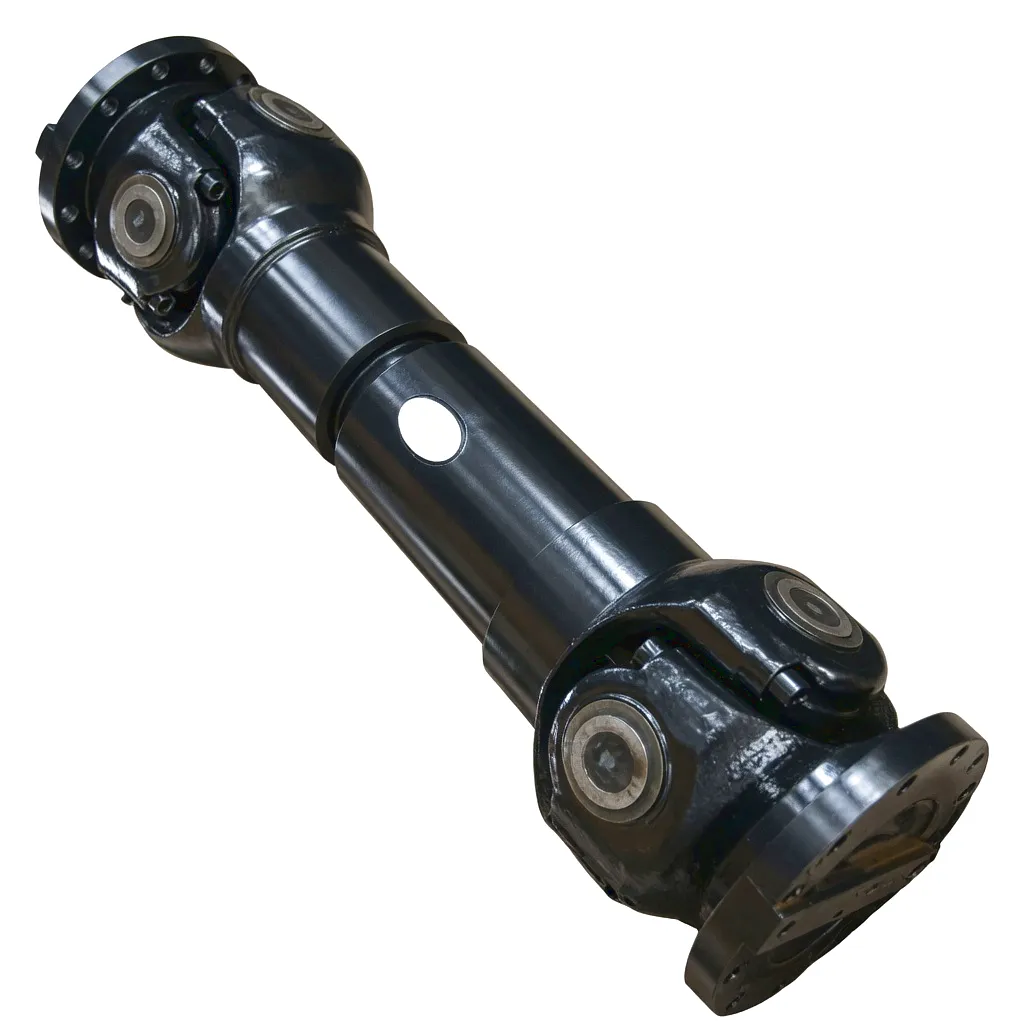
We had gone through two other coupling suppliers before Ever Power. The difference in quality is immediately apparent when you handle the product — the finish on the cross journals, the sealing, the documentation pack. On our Lincolnshire farm it’s been two years without a single coupling callout. That’s exactly what you need on a 72 MW site.
The technical support from Ever Power was outstanding during commissioning. When we hit an unusual shaft diameter on one of the secondary drives, their engineers turned around a modified bore and keyway drawing within 48 hours. For an EPC contractor running on a tight programme, that responsiveness matters enormously. The couplings themselves have been completely trouble-free across our Scottish site.
We specified Ever Power cardan couplings on a 45 MW agri-solar installation in Somerset. The site has sheep grazing under the panels so access for maintenance is genuinely difficult at certain times of year. The extended regreasing interval and factory-sealed bearing kits have made our maintenance schedule far more manageable. The price-to-quality ratio is very competitive compared with European alternatives.
Manufacturing & Custom Design Capability
Built to your exact project requirements — from prototype to volume supply
Ever Power operates a fully integrated manufacturing facility with CNC turning, CNC milling, heat treatment furnaces, coordinate measuring machines (CMM), and an in-house coating line capable of hot-dip galvanising, electroplating, and epoxy powder coating. This vertical integration — from raw steel to finished, tested assembly — is one of the key reasons we can offer rapid turnaround on custom designs without relying on external subcontractors who may introduce quality or lead-time variability.
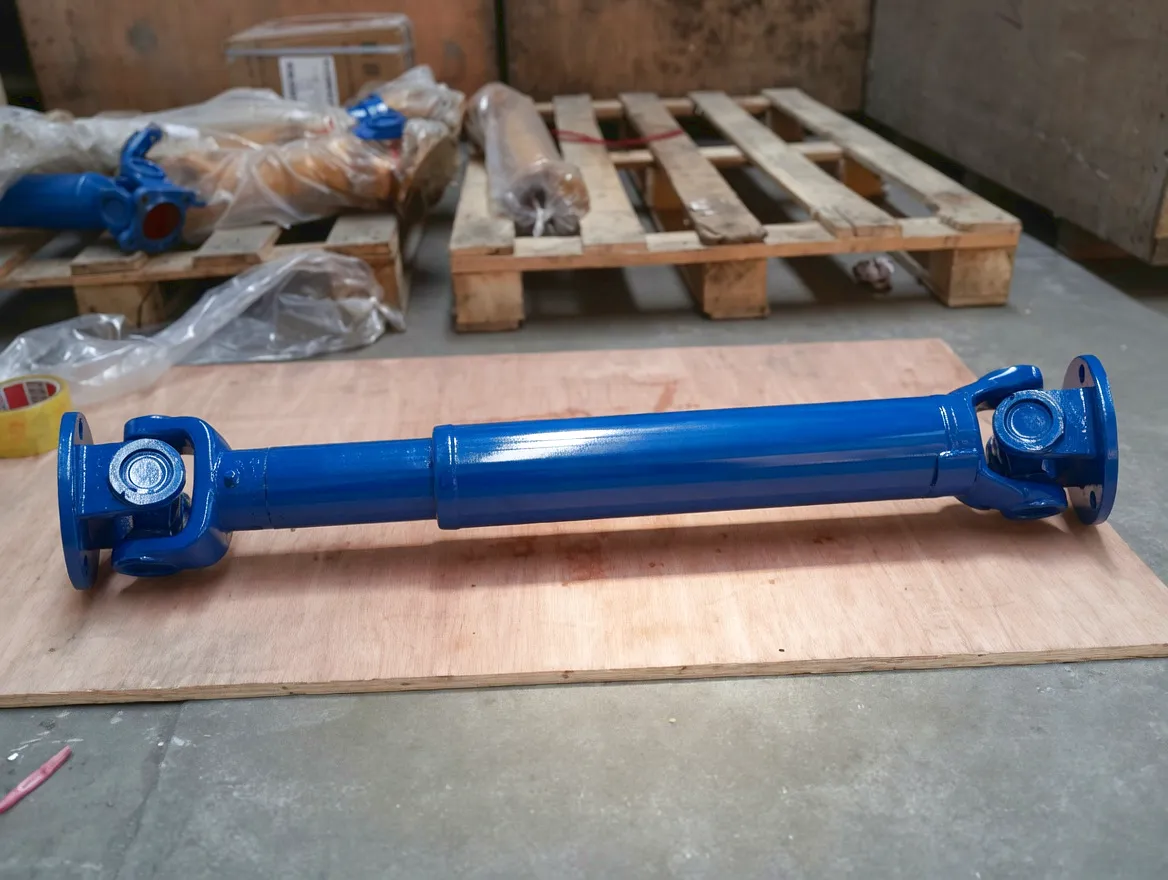
For solar tracker customers across the UK, our product customisation service covers non-standard bore diameters (16mm to 320mm), special keyway forms including involute splines and DIN 5480 profiles, flange-to-flange variants for close-coupled installations, tube yoke configurations for intermediate shaft assemblies, and bespoke surface finish packages for coastal environments in Cornwall, Devon, Scotland’s Western Isles, and other high-salinity locations. We accept drawings in DXF, STEP, and PDF format, and our engineering team will review and revert with comments or an RFQ within 48 hours.
Our minimum order for custom cardan coupling configurations is one piece for prototype/sample orders, with production runs from 50 units upward benefitting from tooling amortisation and quantity pricing. We hold standard stock of common cross-journal kit sizes, enabling rapid supply of replacement service kits to UK customers without the 6–8 week lead times associated with sourcing from European distributors. Ask about our UK distributor partnership programme if you’re an established mechanical component distributor seeking to add solar drivetrain components to your catalogue.
Customisation Options
Frequently Asked Questions
Common questions from UK solar developers, EPC contractors, and O&M teams