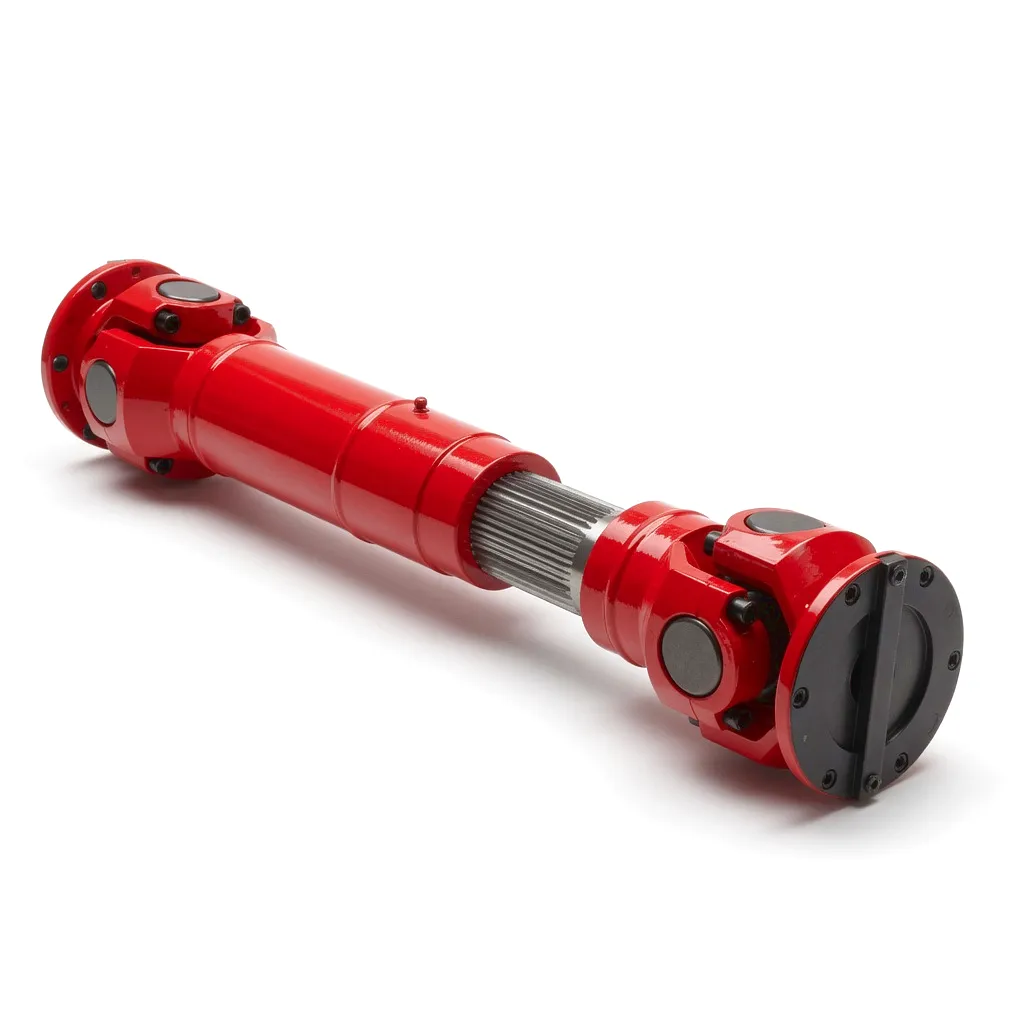
Wind turbines operate in some of the most unforgiving mechanical environments imaginable. From the gale-swept hilltops of Scotland to the rolling seas off the Yorkshire coast, these machines endure fluctuating torque loads, thermal cycling, vibration, and misalignment — all simultaneously, all relentlessly. At the heart of every reliable turbine drivetrain sits a component that most engineers outside the renewables sector take for granted: the cardan coupling, also known as the universal joint coupling or propeller shaft coupling.
5 kNm – 2,500 kNm
up to ±6°
4 – 22 RPM (main shaft)
≥ 20 years
> 30 GW installed
How a Cardan Coupling Functions Inside a Wind Turbine Drivetrain
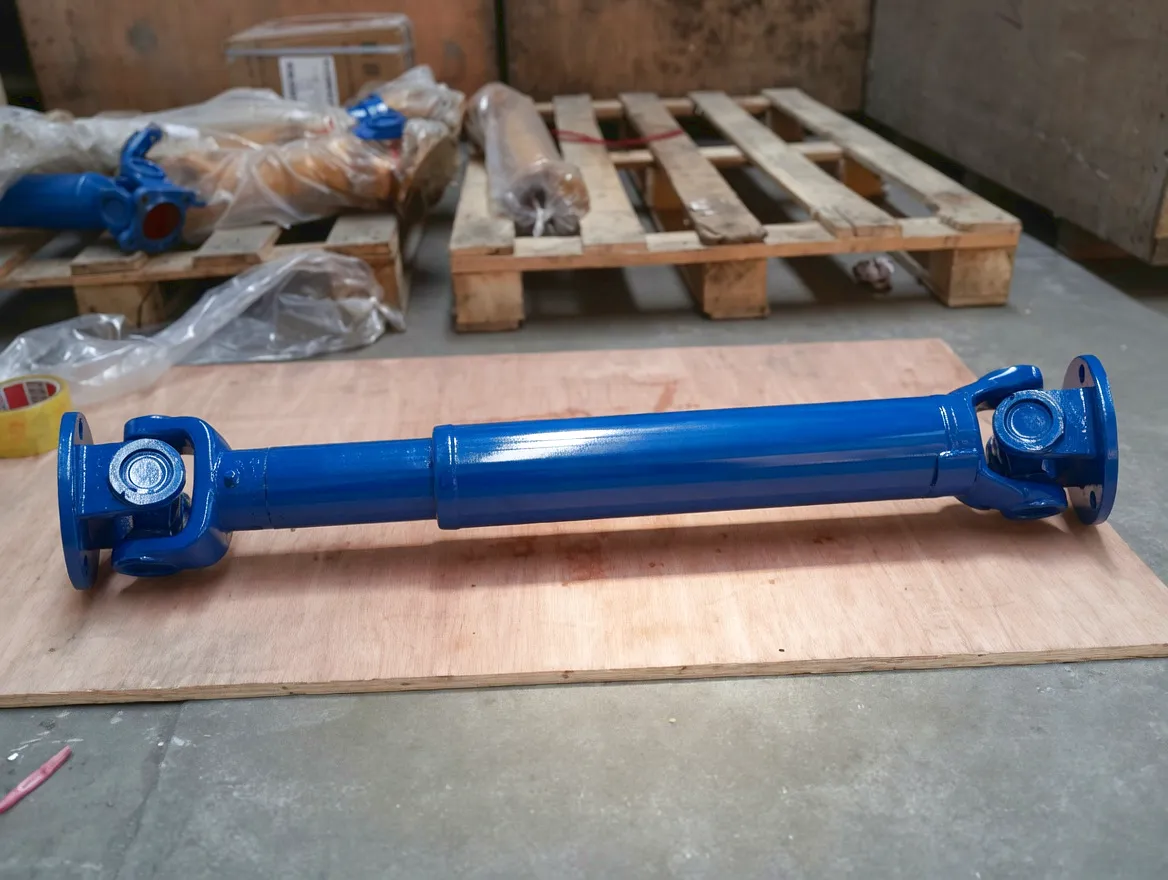
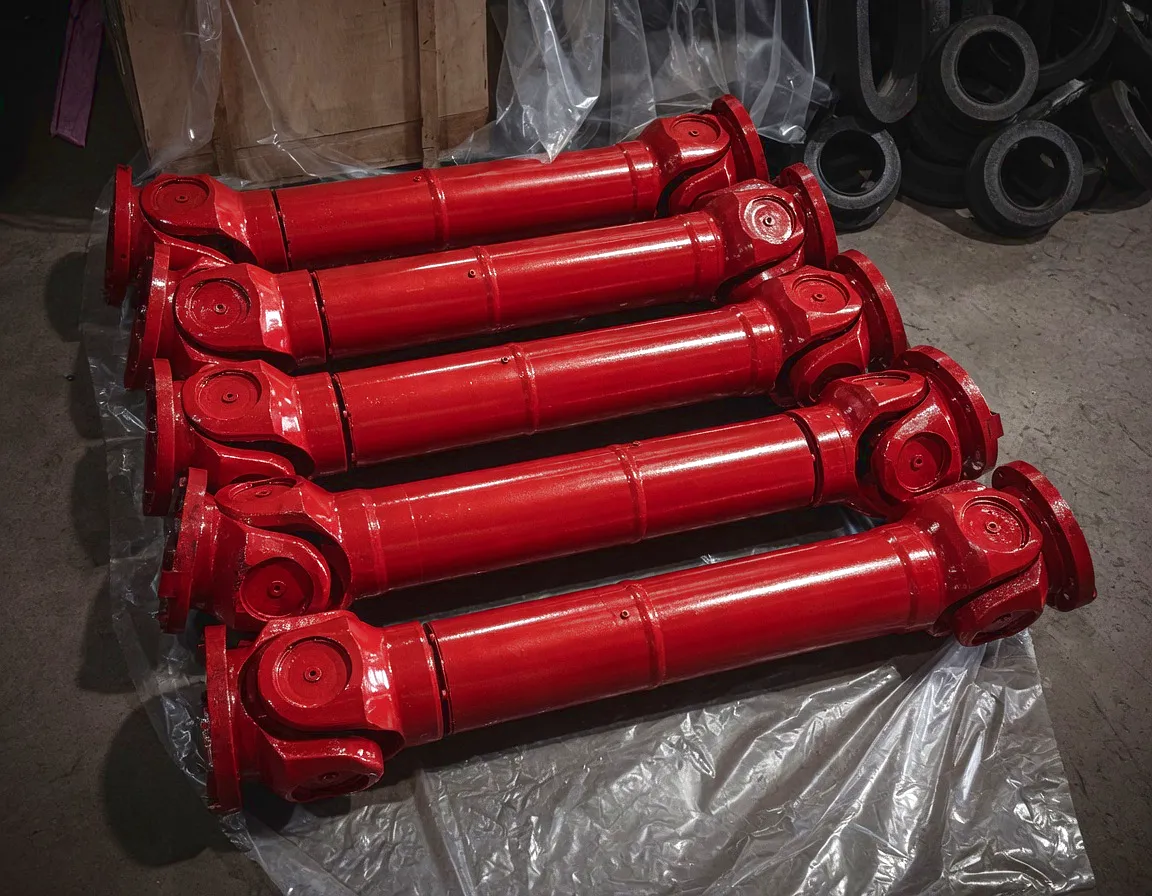 A cardan coupling — named after Italian mathematician Gerolamo Cardano — is a mechanical device that transmits rotational torque between two shafts that are not perfectly aligned. Unlike rigid flanged couplings, which demand near-perfect shaft collinearity, cardan couplings accommodate angular, radial, and axial misalignment while maintaining continuous power transmission. The core working principle relies on a cross-and-block (spider) assembly within a yoke-and-flange arrangement: as the driving yoke rotates, the cross transfers torque to the driven yoke through four bearing journals, each capable of articulating independently.
In a wind turbine, the main shaft rotates at very low speeds — typically between 4 and 22 RPM depending on rotor diameter and rated power. This shaft connects the rotor hub to the gearbox input. Structural deflection of the tower, differential thermal expansion between nacelle components, rotor imbalance, and dynamic bending moments from wind gusts all introduce real-time misalignment between these connection points. A correctly specified cardan coupling absorbs these deviations continuously, preventing the transfer of bending loads into gearbox bearings and extending their service life dramatically.
The coupling’s ability to handle torsional compliance — that is, to absorb sudden torque spikes without transmitting full shock load to the gearbox — is equally important. Wind gusts, grid fault events, and emergency stop sequences generate torque transients that can be three to five times the rated torque. In drivetrains without adequate compliance, these events have historically caused gearbox planet carrier cracking, main bearing raceway damage, and in extreme cases, complete shaft failure. A well-designed cardan coupling with elastomeric damping elements or flexible disc packs acts as the drivetrain’s first line of mechanical protection.
Materials, Construction, and Engineering Standards
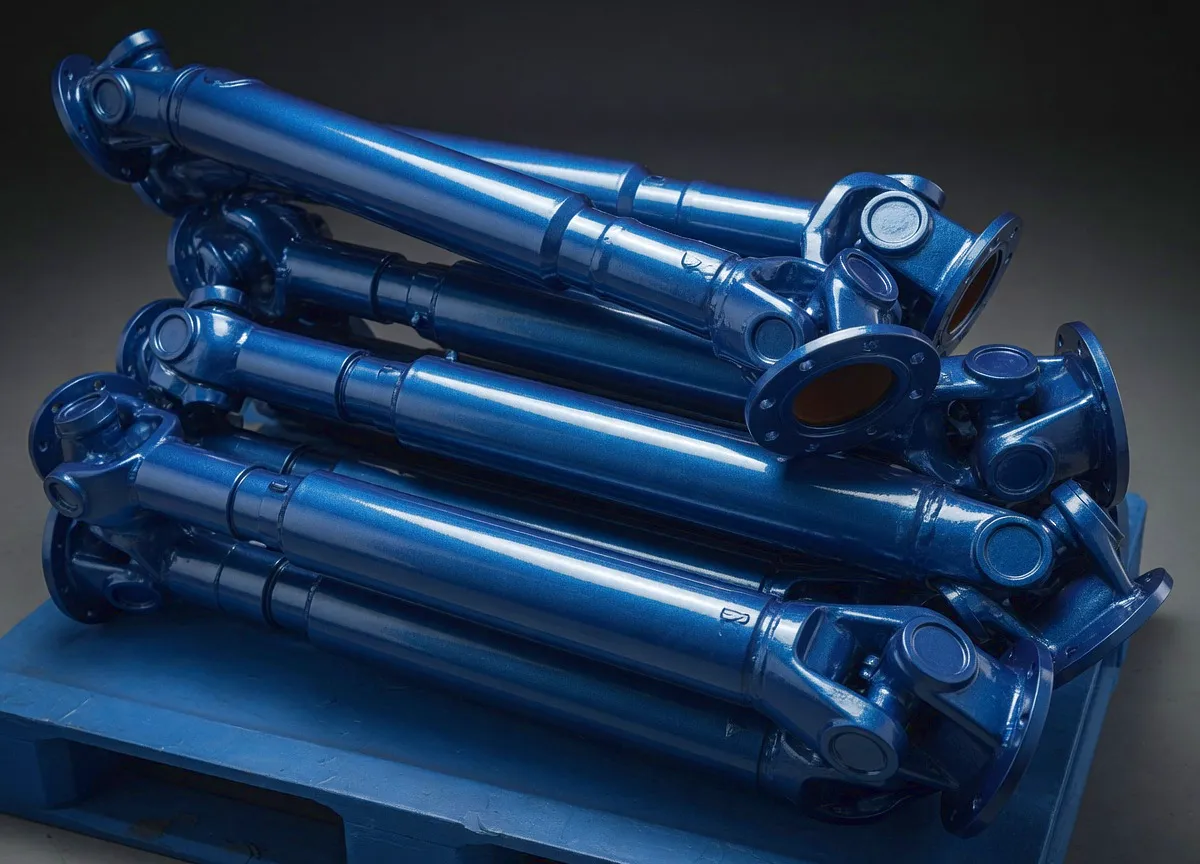 The metallurgical specification of a wind turbine cardan coupling is not a decision that should be made lightly. These components operate in environments where ambient temperatures can drop to -25°C in Scottish highland sites and where nacelle internal temperatures during summer operation can reach 50°C or higher offshore. The cross journal — the hardest-worked component in the assembly — must withstand cyclical contact stresses that, in a 20-year service life, can accumulate to over 10^9 load cycles.
For this reason, high-quality wind turbine cardan couplings are manufactured from alloy steels conforming to BS EN 10083 or equivalent DIN specifications. Common choices include 42CrMo4 for cross journals and yoke bodies, with surface hardness in the range of 58–62 HRC after induction hardening. Needle roller bearings within the cross assemblies use bearing-grade steel (100Cr6) and are designed for grease intervals matching the turbine’s major service schedule — typically 3 to 5 years for onshore, or condition-monitored continuously for offshore. The flanged tube sections are often manufactured in S355J2 structural steel with precision-machined mating faces, and bolted connections use grade 10.9 fasteners with locking elements to prevent vibration-induced loosening.
Technical Performance Parameters
| Parameter | Standard Range | Wind Turbine Typical | Notes |
|---|---|---|---|
| Nominal Torque (Tn) | 100 Nm – 5,000 kNm | 500 kNm – 2,500 kNm | 3–15 MW turbines |
| Peak Torque Capacity | Up to 3x Tn | 3–5x Tn (fault events) | Grid fault, E-stop |
| Angular Misalignment | ±0.5° – ±8° | ±1° – ±4° | Continuous service |
| Axial Displacement | ±5 mm – ±100 mm | ±10 mm – ±50 mm | Thermal expansion |
| Operating Speed | Up to 3,000 RPM | 4–22 RPM main shaft | Pre-gearbox position |
| Operating Temperature | -40°C to +120°C | -25°C to +80°C | UK/Northern Europe climate |
| Dynamic Balance Grade | ISO 1940 G6.3 – G1.0 | G2.5 minimum | Nacelle vibration limits |
| Design Life | 10 – 25 years | 20 years minimum | IEC 61400-4 compliant |
Key Application Scenarios in Wind Turbine Systems
Main Shaft to Gearbox Interface
The primary application. The cardan coupling bridges the low-speed shaft (LSS) to the gearbox input, compensating for misalignment caused by rotor dynamic loading, bedplate flexure, and thermal expansion. Without this interface component, gearbox life would be reduced to a fraction of design targets.
Yaw Drive System
Yaw motors rotate the nacelle to face the wind. Cardan couplings in yaw drives transmit torque from electric or hydraulic motors to yaw gearboxes while managing the angular offset between motor output and gearbox input shafts — particularly important in compact nacelle designs where packaging constraints are tight.
Pitch Control Mechanism
Individual pitch control systems adjust blade angle in real time, responding to gusts and turbulence in milliseconds. The electric pitch motors drive through compact gearboxes mounted inside the rotating hub — a challenging environment where cardan couplings absorb centrifugal loads, vibration from rotor rotation, and the angular offset inherent to hub-mounted installations.
Direct-Drive Generator Interface
In gearless direct-drive turbines, large permanent magnet generators connect directly to the main shaft. Here, cardan couplings with high torsional stiffness and minimal backlash protect the generator’s air gap geometry from deformation under rotor eccentric loading — a critical function given that air gap variations of even a few millimetres can cause catastrophic stator-rotor contact.




Why Ever Power Cardan Couplings Outperform the Alternatives
The wind energy sector is unforgiving of mediocre mechanical design. A gearbox replacement on an offshore turbine can cost upwards of £500,000 when you factor in vessel hire, crane operations, and lost generation revenue. This is why the specification of every component in the drivetrain — including the cardan coupling — deserves rigorous engineering justification, not just lowest-cost procurement. Ever Power’s cardan couplings for wind turbine drivetrains have been developed over years of iterative field feedback and laboratory fatigue testing, resulting in a product line that addresses the specific failure modes that engineers encounter in real-world UK wind installations.
Misalignment Tolerance
Up to ±4° continuous angular compensation — more than double the typical rigid coupling allowance — protecting gearbox bearings from bending moment overload and reducing fatigue accumulation rate by an order of magnitude.
Torsional Shock Damping
Elastomeric damping elements (optional on high-torque models) reduce peak torque transmission during grid fault events by 30–45%, directly extending gearbox ring gear and planet carrier life beyond the 20-year design target.
Extended Maintenance Intervals
High-retention labyrinth seals and centrally purged grease nipples allow bearing re-lubrication during scheduled turbine service without nacelle dismantling, reducing access time and lowering the cost per maintenance event across large wind farm portfolios.
Offshore-Grade Corrosion Protection
Zinc-phosphate primer plus two-part epoxy topcoat system certified to C5-M corrosivity category (ISO 12944) — the standard required for UK North Sea offshore structures. Hot-dip galvanising available for splash zone components on tidal or nearshore turbines.
Customer Success: Energen Scotland Wind Portfolio Retrofit
Challenge: Premature Gearbox Bearing Failures Across a 47-Turbine Portfolio
Energen Scotland Ltd operates a 47-turbine, 2.3 MW onshore wind farm in the Scottish Borders. From 2019 onwards, the operations team began recording an escalating frequency of gearbox intermediate shaft bearing failures — initially two events per year, rising to seven by 2021. Replacement costs and unplanned downtime were accumulating to over £340,000 per annum, and the root cause analysis was inconclusive using standard vibration monitoring alone.
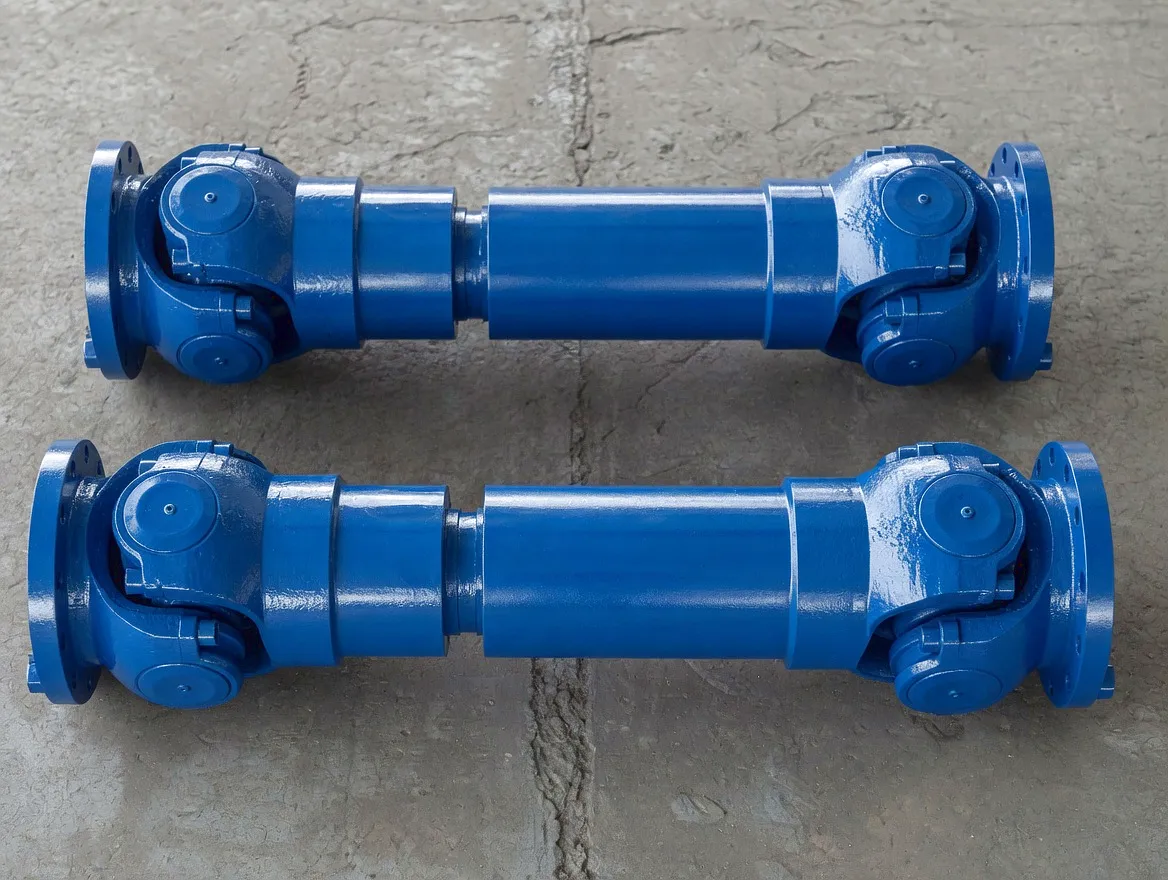
Our field engineering team was engaged in early 2022. On-site inspection of three turbines revealed that the original rigid flanged couplings connecting the main shaft to the gearbox input had developed micro-cracks in their mating faces — not structural failure, but sufficient to allow shaft misalignment of 0.8°–1.2° to be transmitted directly into the gearbox input bearing. Bedplate settlement and seasonal thermal cycling in the harsh Scottish climate had moved the shaft centrelines beyond the rigid coupling’s tolerance without triggering any alarms.
What UK Wind Operators Say
We’ve been sourcing cardan couplings from Ever Power for three years across our Scottish and Welsh portfolios. The technical support during specification is genuinely exceptional — they reviewed our load duration curves and identified a torque peak scenario we hadn’t adequately accounted for. That level of engineering engagement is rare from a coupling supplier.
Lead time was critical for us — we had a turbine offline during peak generation season and needed a non-standard bore size on short notice. Ever Power came back with a custom coupling in 16 working days. The fit was perfect, the balance certificate was included, and the technical drawing matched our existing flange pattern exactly. That’s the kind of supplier reliability that matters when you’re measuring lost revenue in £2,000-per-day increments.
We compared three European cardan coupling suppliers for our 6 MW offshore repowering project off the Yorkshire coast. Ever Power won on technical specification, offshore corrosion certification, and price. But what surprised us most was the post-delivery inspection support — they sent their application engineer to site during installation to verify assembly torques and confirm bore fit. That kind of after-sales engagement is genuinely differentiated in this market.
Ever Power Custom Manufacturing Capability
Standard catalogue products serve a large proportion of wind turbine applications — but the most technically demanding projects require something more. When you’re dealing with a legacy turbine model for which original OEM couplings are no longer available, a repowering project with non-standard shaft geometry, or a new turbine design pushing the boundaries of current power ratings, catalogue selection simply cannot deliver the engineering confidence you need. This is where Ever Power’s custom manufacturing capability becomes a genuine competitive advantage.
Our engineering team provides full custom cardan coupling design from a customer-supplied load spectrum, shaft drawing, or even a failed OEM part. We can reverse-engineer existing couplings using 3D scanning technology, produce detailed FEA fatigue analysis reports to IEC 61400-4 standard, specify bearing arrangements and seal geometries for the specific operating environment, and provide full material traceability documentation for offshore certification requirements.
Our manufacturing facility operates CNC machining centres with turning capacity up to 1,200 mm diameter and boring mills handling components up to 3,500 mm in length — covering every drivetrain cardan coupling application from small pitch control motors to the largest offshore direct-drive generators. Dynamic balancing to ISO 1940 G1.0 is available in-house, and all assemblies are function-tested before despatch.
Serving the UK Wind Energy Supply Chain
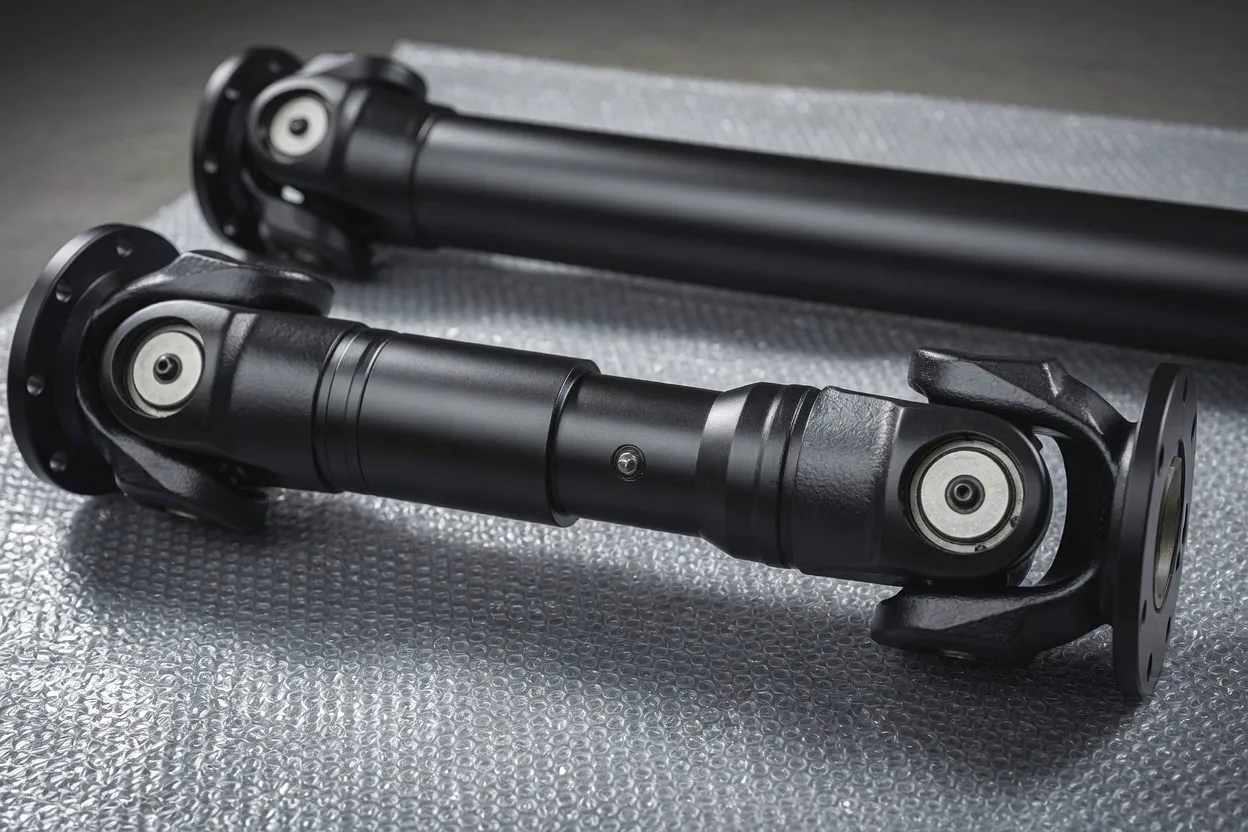
The United Kingdom has the largest installed offshore wind capacity in the world, with major wind farm clusters across the North Sea, Irish Sea, and Scottish waters. Onshore wind continues to expand across Scotland, Wales, and increasingly Northern England, with consented capacity in the pipeline through 2030 and beyond. This scale of deployment creates substantial demand for precision drivetrain components — and the cardan coupling market in particular — from O&M contractors, independent service providers, turbine OEMs, and wind farm operators directly. Ever Power supplies into this ecosystem through a combination of stocked standard products and bespoke manufactured couplings, both available for export to UK customers with full documentation and CE/UKCA marking where required.
Frequently Asked Questions
© Ever Power Cardan Coupling · cardancoupling.top · edit by gzl