
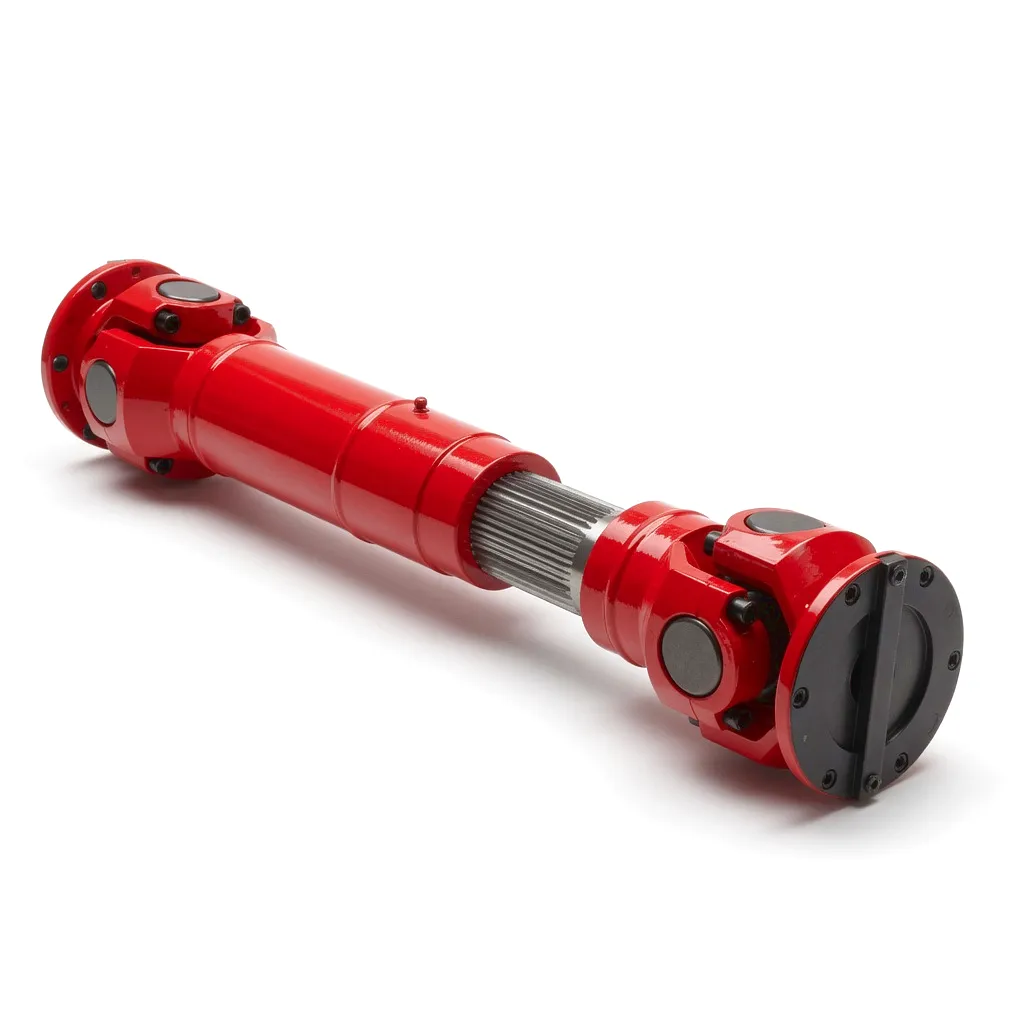
 Walk into any agricultural merchant across England, Scotland, or Wales and you will find rows of replacement PTO shafts hanging from the rafters. That universal, yellow-painted driveshaft connecting a tractor’s power take-off to the gearbox of a hay rake is, at its mechanical heart, a cardan coupling — two universal joints linked by a telescoping tube. It is one of the oldest power transmission concepts in engineering, dating back to Girolamo Cardano in the sixteenth century, and yet modern agricultural variants have evolved into precision-engineered components that handle shock loads, angular misalignment, and seasonal field abuse with remarkable resilience.
Hay rake machines — whether rotary rakes, finger-wheel rakes, or twin-rotor tedder-rakes — sit at the far end of a significant power transmission chain. The tractor engine fires torque into the PTO stub, the cardan coupling absorbs misalignment as the machine follows ground contours, and the implement gearbox finally converts that rotational energy into the sweeping, gathering motion that turns cut grass into neat windrows. Every link in that chain matters, but the cardan coupling is uniquely exposed: it must flex constantly, it must cope with sudden shock loads when a tine strikes buried stone, and it must keep doing so for hundreds of hours across a single silage season.
Need a custom cardan coupling for your hay rake or agricultural PTO application?
How a Cardan Coupling Actually Works in a Hay Rake PTO System
The classic cardan coupling — technically a Hooke’s joint assembly — uses a cross-shaped trunnion (the spider) mounted in four bearing cups to connect two yokes at an angle. When torque is applied, the spider transmits it through 90-degree offset bearings, allowing the output shaft to operate at angles typically between 0° and 35° relative to the input. In a hay rake PTO drive, those angles change continuously: the machine lifts over ridges, drops into furrows, and swings on headlands, all while the tractor keeps delivering 540 rpm or 1000 rpm to the shaft.
A single universal joint produces a velocity variation at the output — the so-called velocity ripple — that becomes significant at angles above 10°. To eliminate this, agricultural cardan couplings almost universally use a double-joint (double Hooke) configuration: two joints with their yokes phased at exactly 90° to each other. When the joints are set up correctly and the intermediate shaft is positioned symmetrically, the velocity ripple from the first joint is cancelled by an equal and opposite ripple from the second. The result is a constant-velocity output regardless of operating angle, which protects the rake gearbox from pulsating loads that would accelerate gear and bearing wear.
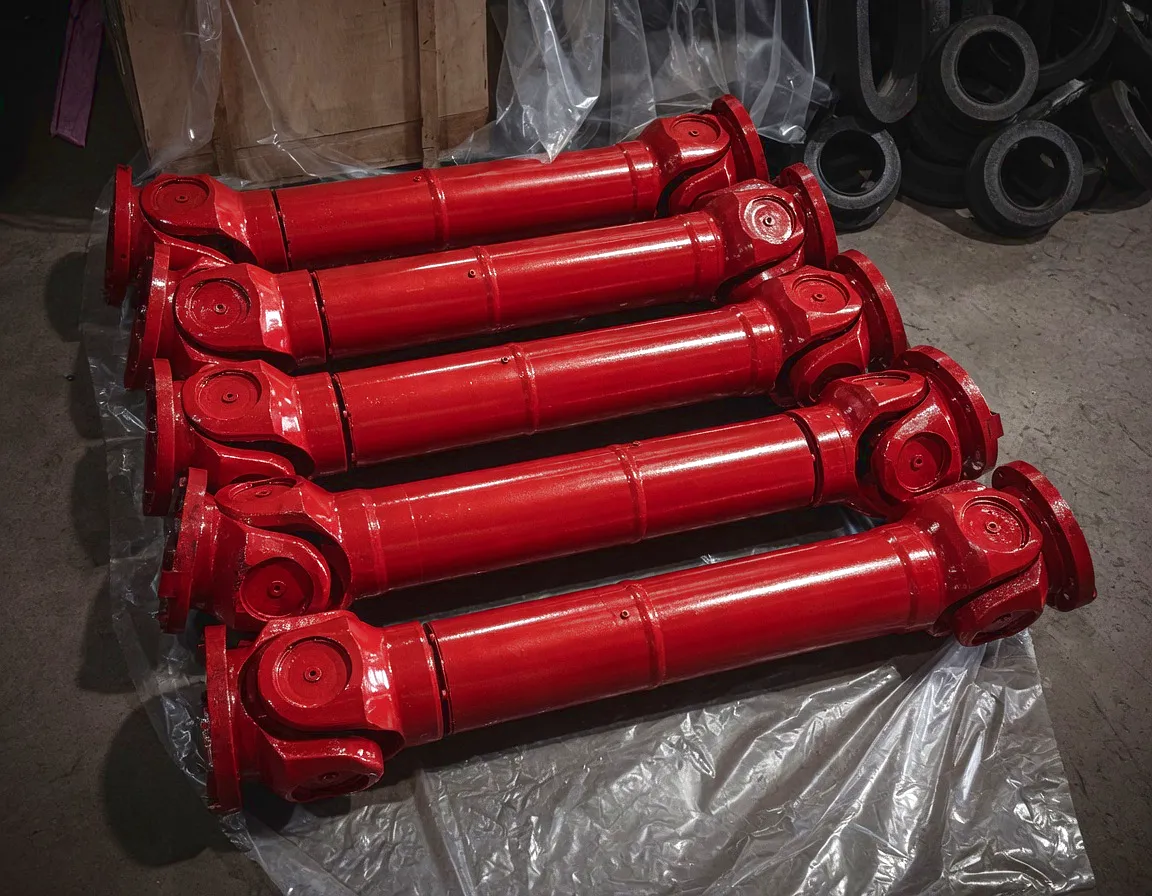
The telescoping profile tube running between the two joints accommodates changes in the distance between tractor PTO and implement input as the machine follows terrain or is raised and lowered by the three-point linkage. In most agricultural shafts this tube is either a triangular (Lemon profile) or star-profile section, chosen for its ability to transmit torque without slipping under load while still sliding axially with reasonable force. Some heavier hay rake drives use wide-angle CV joints at the implement end, allowing articulation angles of up to 80° — a useful feature when reversing into storage or navigating tight field gateways in the compact farm yards typical of the British countryside.
Materials, Construction, and Why Quality Matters on British Farmland
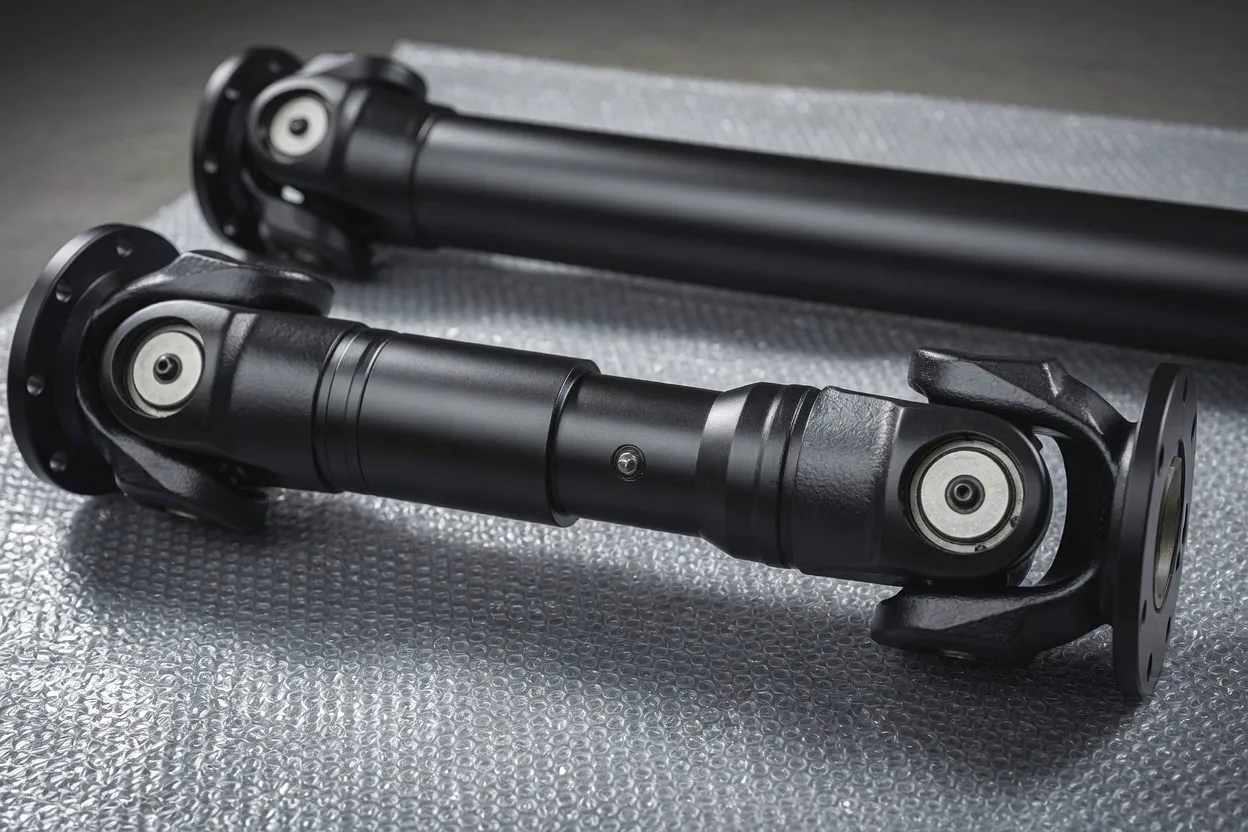
Agricultural cardan couplings sold for hay rake and general PTO use in the United Kingdom are typically manufactured from forged alloy steel — grades such as 20CrMnTi or 42CrMo are common in quality products. The spider (cross journal) is carburised and case-hardened to achieve a surface hardness in the region of 58–62 HRC, giving the bearing contact areas resistance to the repeated shock loading that characterises PTO drives. The bearing cups themselves use needle-roller bearings, retained by circlips or retaining rings, which provide a high load-carrying surface area relative to the compact diameter that agricultural applications demand.
Profile tubes — the sliding telescoping section — are drawn from seamless steel tube and given a precision-machined internal profile. The exterior of the inner tube and the bore of the outer tube are phosphated and grease-lubricated at assembly; heavy grease nipples allow re-lubrication in the field. Experienced farmers know that the number one cause of premature PTO shaft failure is neglected lubrication: the needle bearings run dry, overheat, and seize, often causing catastrophic yoke fracture. Quality shafts therefore include generous grease retention channels and heavy-duty external seals to exclude the field dirt and crop debris that are endemic in hay and silage operations.
Key Material Grades Used
20CrMnTi or 42CrMo — carburised, 58–62 HRC surface
Drop-forged steel, normalised, minimum 600 MPa tensile
Seamless drawn steel, phosphated, tri-lobe or star profile
DIN 808 compliant, full complement roller, grease-retained
HDPE or LDPE — CE-marked to EN ISO 5674 (mandatory in UK)
The outer plastic guarding — a legal requirement under UK and legacy EU machinery directive provisions — is moulded from high-density or low-density polyethylene and must be able to withstand impact and resist the UV degradation that is a real concern in the long summer days of a Yorkshire or Lincolnshire harvest. CE-marked shafts meeting EN ISO 5674 include guarding that covers all rotating parts reachable from the operator position, protecting both tractor drivers and those working around the machine. Operators in the UK should note that post-Brexit, the UKCA mark is being phased in for agricultural machinery components placed on the GB market, so verifying conformity documentation from suppliers is increasingly important when purchasing replacement or upgrade shafts.
Technical Performance Parameters
| Parameter | Light Duty (Small Rakes) | Medium Duty (Standard) | Heavy Duty (Large Rakes) |
|---|---|---|---|
| Nominal Torque (Nm) | Up to 500 | 500 – 1200 | 1200 – 3500 |
| Peak Torque (Nm) | Up to 1500 | 1500 – 3600 | 3600 – 10000 |
| Operating Speed (RPM) | 540 / 1000 | 540 / 1000 | 540 / 1000 / 1350 |
| Max Operating Angle | 25° | 30° | 35° (80° wide-angle CV) |
| Slip Clutch Torque Setting | Optional | Standard fitted | Standard + overrun clutch |
| Profile Bore Options | 1-3/8″ 6-spline | 1-3/8″ / 1-3/4″ 6-spline | 1-3/4″ 20-spline / custom |
| Overall Length Range | 600 – 1200 mm | 800 – 1800 mm | 1000 – 2500 mm |
| Surface Treatment | Painted / Phosphated | Phosphated + Epoxy Coated | Hot-dip galvanised option |
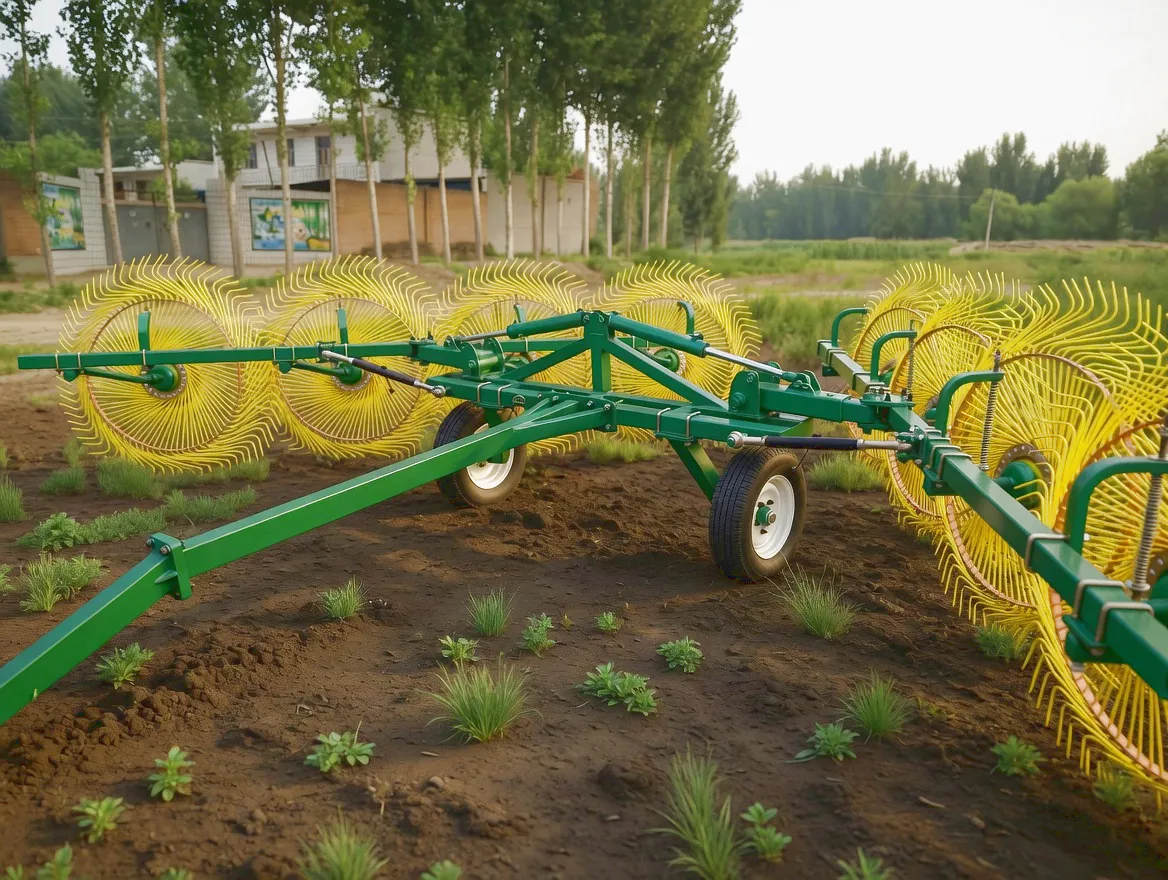
Where Cardan Couplings Are Used in Agricultural Hay and Forage Equipment
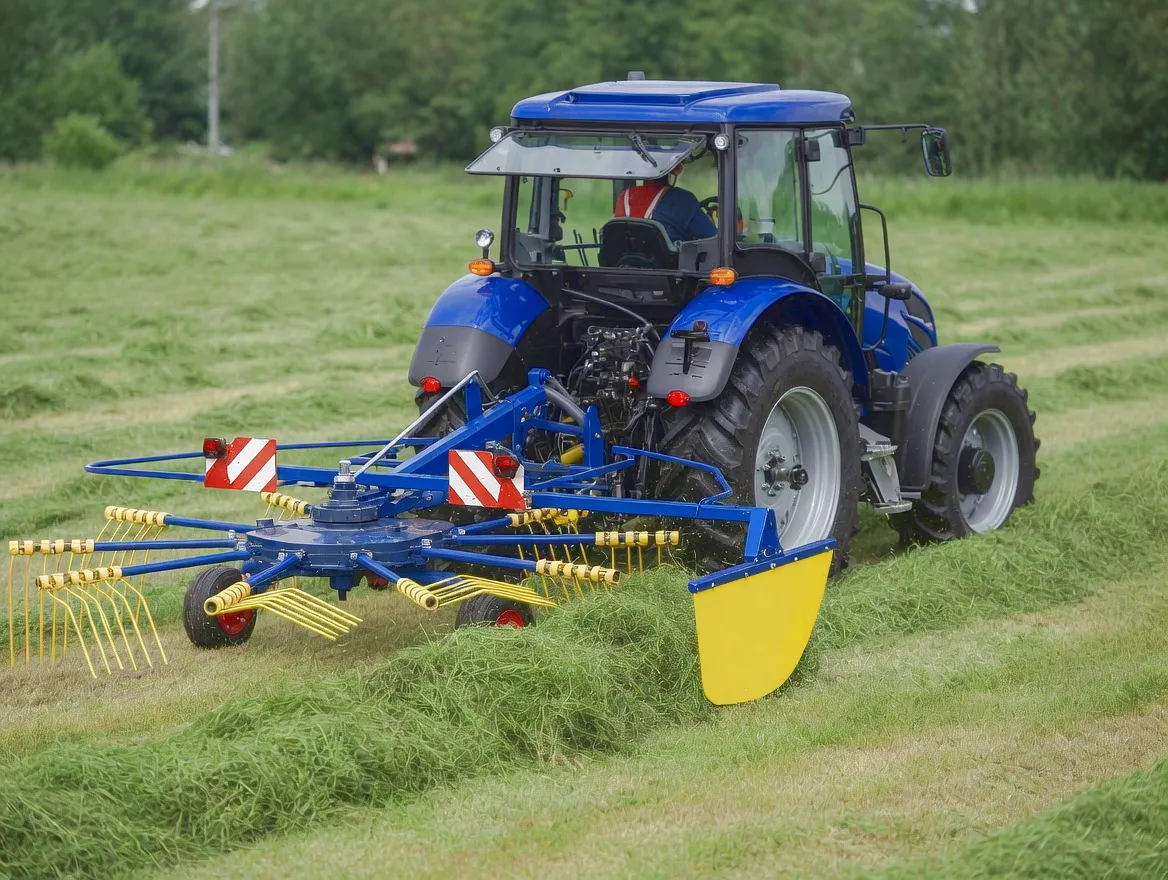
The hay rake is the most visible user of the agricultural PTO cardan shaft, but it represents just one node in a much wider forage production network. Across British farms — from the dairy country of Devon to the arable flatlands of Cambridgeshire — the same core cardan coupling technology appears in a variety of implements, each placing slightly different demands on the shaft.
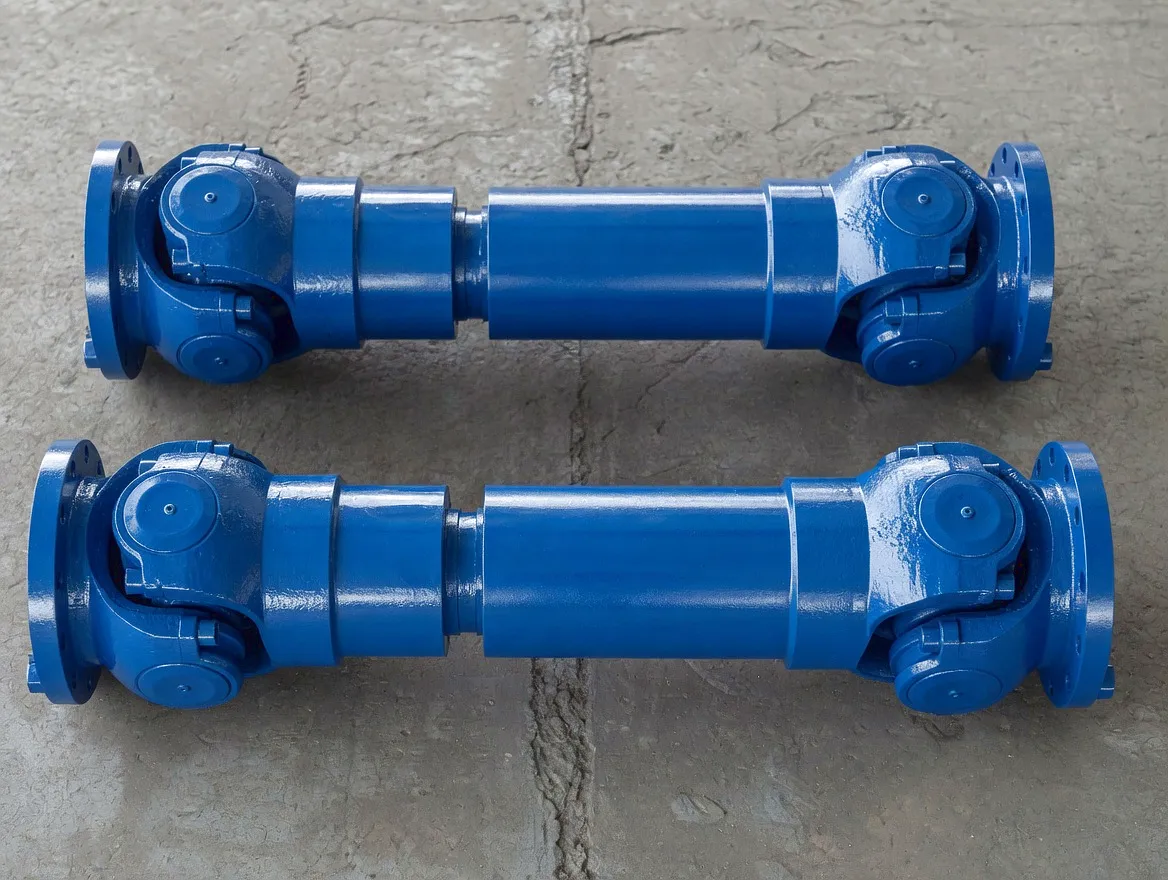
Rotary Hay Rakes
Single- or twin-rotor rakes powered directly from the 540 rpm PTO. The cardan coupling must handle sudden load spikes when tines encounter uneven windrow density or hidden obstructions. A spring-loaded slip clutch integrated at the tractor end of the shaft is essential protection for both the gearbox and the coupling itself.
Finger-Wheel Rakes & Tedder-Rakes
Multi-rotor implements used extensively in Northern England and Scotland for drying grass before baling. Several rotors may be driven from a single PTO gearbox using a sequence of cardan joints internally. These arrangements demand exceptional angular accuracy in shaft phasing to avoid vibration across the multiple-rotor drive train at field-working speeds.
Mowers & Conditioners
Disc mowers and mower-conditioners driving cutter bars at 1000 rpm impose very high transmitted torques, particularly at start-up when the cutter disc overcomes its own inertia. Wide-angle CV joints are commonly used at the implement end because the mower head must articulate freely for contour following.
Round & Square Balers
Balers driving pick-up augers, knotting mechanisms, and flywheel masses require robust cardan couplings with high peak torque ratings. The intermittent nature of the baling cycle — continuous pick-up followed by sudden compression chamber loading — creates a demanding duty cycle that separates premium shafts from budget alternatives very quickly.
Forage Harvesters
Self-propelled or trailed forage harvesters transmit very high power levels through their internal cardan shaft arrangements. In trailed versions driven by tractor PTO, the external cardan coupling must handle up to 200 kW continuously — requiring heavy-duty, large-diameter joint assemblies with premium bearing packs and robust tube sections.
Irrigation Pumps & Grain Augers
Beyond forage, UK farms use PTO-driven cardan shafts for irrigation pump drives — particularly relevant in the drier eastern counties — and for portable grain-handling equipment. These applications generally favour constant-speed running over the variable-load cycling of forage work, and require shafts optimised for thermal stability over extended duty cycles.
Six Reasons Serious Agricultural Operators Choose Premium Cardan Couplings
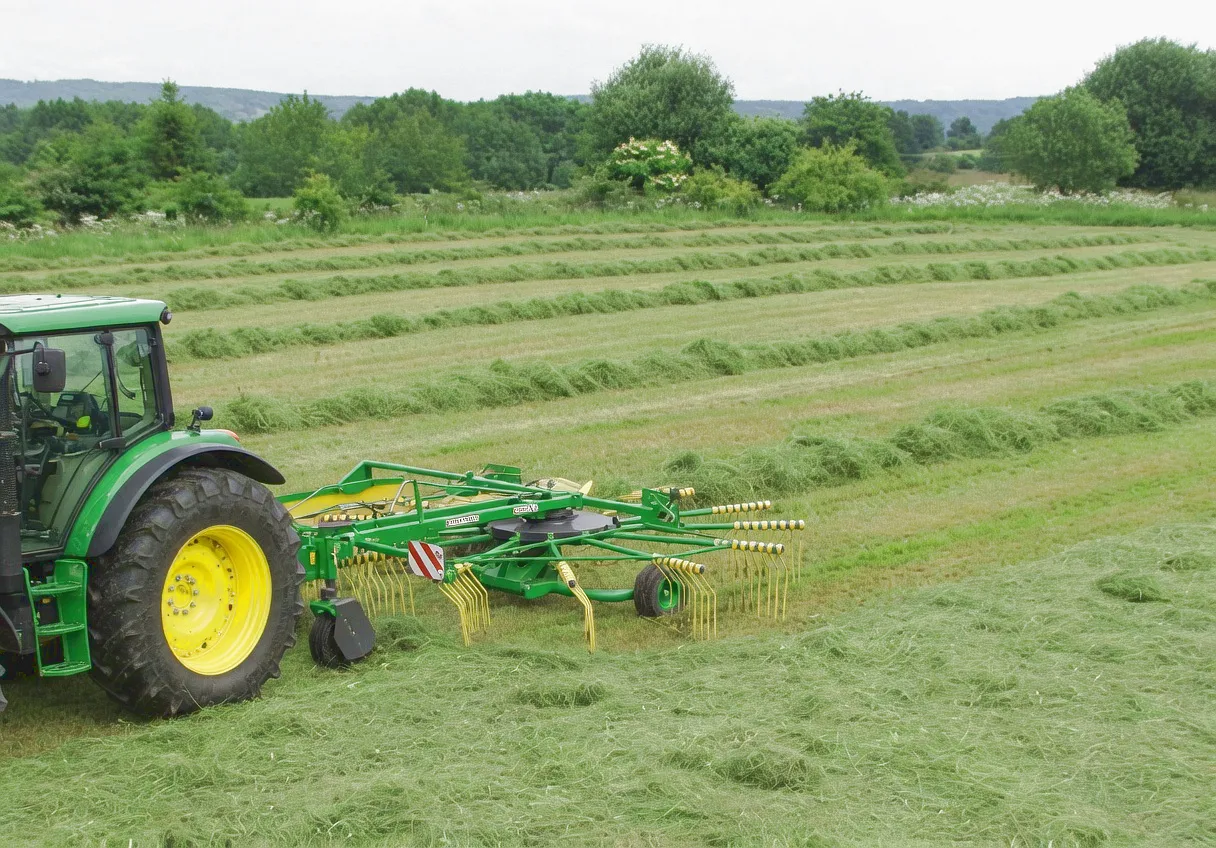
1. True Constant-Velocity Output
Properly phased double-joint designs eliminate the torsional vibration that damages implement gearboxes and causes premature bearing failure in rake head assemblies. Over a season of regular use, this translates directly into lower maintenance costs and extended component life — something any farm manager tracking workshop hours will appreciate.
2. Integrated Overload Protection
Friction slip clutches, ratchet clutches, and shear bolt assemblies can all be integrated at the gearbox-side yoke. When a hay rake tine strikes a boulder — an everyday occurrence on the limestone uplands of the Peak District or the Cotswolds — the clutch slips before the joint or implement gearbox is damaged. This is not an optional extra: it is the single most cost-effective protection investment available.
3. Wide Angle Capability
Wide-angle CV joint configurations — rated to 80° of articulation — allow hay rakes and mowers to be stored folded, manoeuvred through tight gateways, and raised steeply on the three-point linkage without disconnecting the drive. This flexibility is particularly valued on mixed farms with varied field shapes and older farm building access constraints that are common throughout rural Britain.
4. Telescoping Flexibility
Precision-machined profile tubes accommodate the axial length variation that occurs as the tractor’s three-point linkage rises and falls. The phased profile prevents rotation while allowing smooth sliding, and quality shafts include end-stop limits to prevent dangerous over-extension or over-compression. Getting this right is critical: an incorrectly sized or collapsed shaft can strike the tractor bodywork or release from the implement under load.
5. Corrosion Resistance for UK Conditions
British field conditions — wet soils, silage effluent splatter, salt air in coastal areas — accelerate corrosion on exposed steel components. Premium shafts use phosphate-and-oil treatment, epoxy powder coating, or optional hot-dip galvanising on tubes and yokes. These surface treatments extend the intervals between replacement and help maintain the structural integrity of yoke forgings that are exposed to stress corrosion on seasonal hay operations.
6. Custom Bore and Length Options
Not every hay rake or PTO-driven implement uses the standard 1-3/8″ 6-spline profile. Older Massey Ferguson, Ford, or David Brown tractors may have non-standard stubs; purpose-built contractor equipment can use metric bores. Sourcing from a manufacturer offering custom bore machining, non-standard tube lengths, and matching yoke profiles means you can get the exact shaft you need rather than adapting an off-the-shelf product that may compromise safety margins.
Customer Success: Yorkshire Dairy & Forage Contractor
Replacing an Entire Hay Rake Drive Fleet — Hargreaves Agricultural Contractors Ltd
Hargreaves Agricultural Contractors Ltd, based near Thirsk in North Yorkshire, runs a mixed contracting operation covering hay, silage, and combinable crops across some 4,000 acres of client land each season. By 2023 their fleet included eight rotary hay rakes — four twin-rotor machines and four single-rotor units — all of which had developed a pattern of PTO shaft failures concentrated in the spider bearing assemblies of the implement-end joints. The bearings were being contaminated by silage effluent during third-cut operations, causing rapid wear and joint seizure, and replacement shafts purchased from UK agricultural merchants were failing after fewer than 100 hours.
After reviewing several suppliers, operations manager David Hargreaves sourced a batch of 16 replacement agricultural cardan couplings — two per machine — through Ever Power. The shafts were specified with enhanced lip seals on the implement-end joint, 42CrMo spiders with extended grease channels, and profile tubes with a premium phosphate-plus-epoxy finish. The total procurement value was approximately £3,800 for the full fleet, including a small number of non-standard bore variants for the older John Deere 702 rakes. Hargreaves reports that in the following two seasons — covering 2023 and 2024 — there were zero spider bearing failures across the fleet, and the profile tubes showed no signs of the binding and corrosion that had been routine on the previous shafts. Workshop time for PTO-related repairs dropped from an estimated 18 hours per season to under three hours for routine greasing and pre-season inspection.
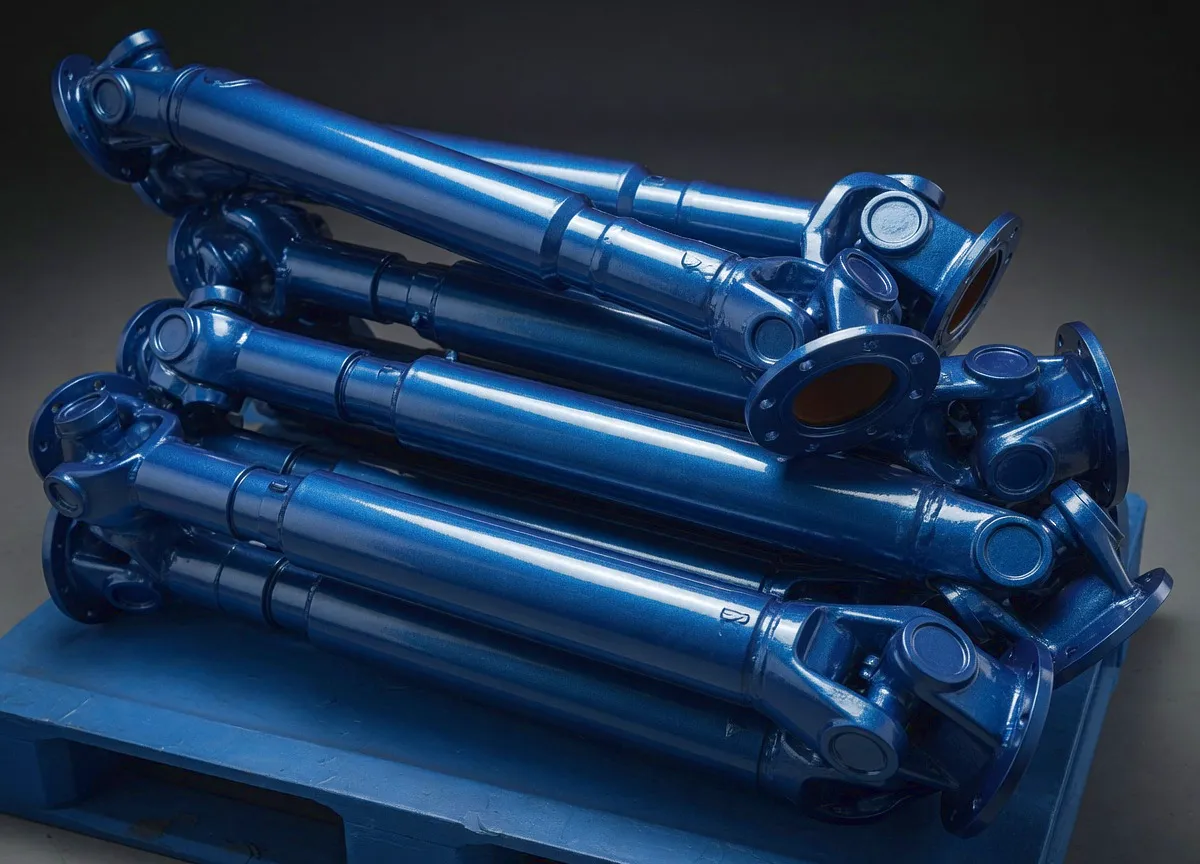
What Our Agricultural Customers Say
We’ve been running the same eight hay rakes for two full cutting seasons without a single PTO shaft issue. The seals on the implement-end joints are miles better than what we were getting from local merchants. Worth every penny when you consider the cost of downtime at second-cut silage time.
I needed a non-standard length with a metric gearbox input bore for my Claas Liner and was told by two other suppliers it would need to be a special order with a 10-week lead time. Ever Power had it sorted and shipped within the week. The quality is clearly professional-grade — forged yokes, proper needle roller cups, not pressed sheet metal.
As a farm machinery dealer in Devon, we’ve started stocking Ever Power cardan couplings as our preferred replacement brand for hay and silage equipment. The consistent quality and the ability to get custom specifications without a massive minimum order quantity makes all the difference for the independent dealer market. Our workshop customers trust the product.
Ever Power: Precision-Engineered Cardan Couplings, Built to Your Specification
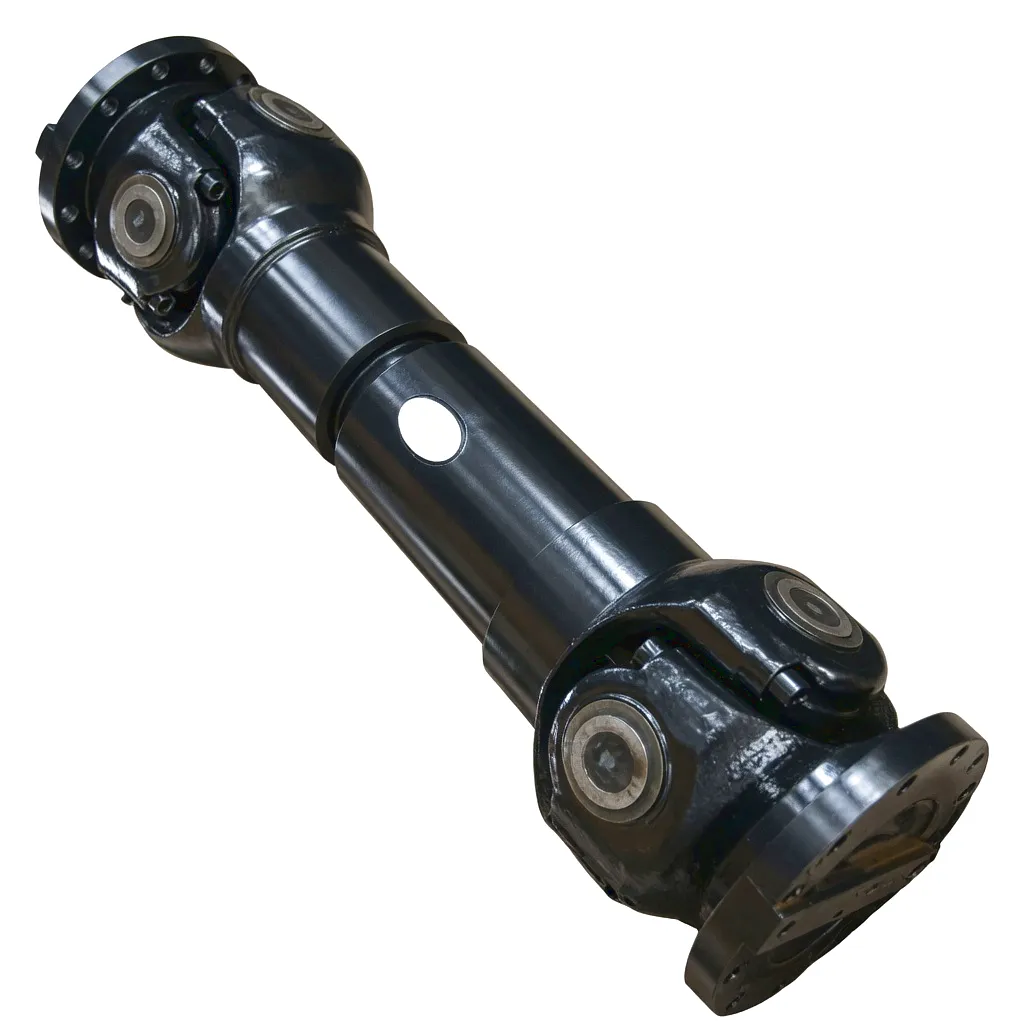 At Ever Power, custom manufacturing capability sits at the core of what we offer. Our factory is equipped with CNC turning centres, gear-hobbing machines, and precision profile-broaching equipment that allow us to produce non-standard bores, unusual tube lengths, specialist yoke geometries, and custom clutch torque settings without the extended lead times or high minimum quantities that are typical of European catalogue suppliers.
We work routinely with UK agricultural machinery dealers, OEM manufacturers, and direct-buying farm contracting businesses to develop shaft assemblies that match their exact application — whether that means a wide-angle CV variant for a continental-style hay rake, a heavy-duty assembly with overrun clutch for a large square baler, or a replacement shaft for an obsolete implement where no catalogue part number exists. Our engineering team can reverse-engineer from a worn-out sample, work from a drawing, or develop a specification from your operational requirements.
Batch sizes range from single units for emergency breakdown replacements to full fleet quantities for dealer stock programmes. All products ship with CE certification documentation and material test certificates on request — essential for UK farm machinery compliance records and important when machinery is subject to LOLER or PUWER inspection regimes on larger agricultural estates.
Custom Specification Checklist
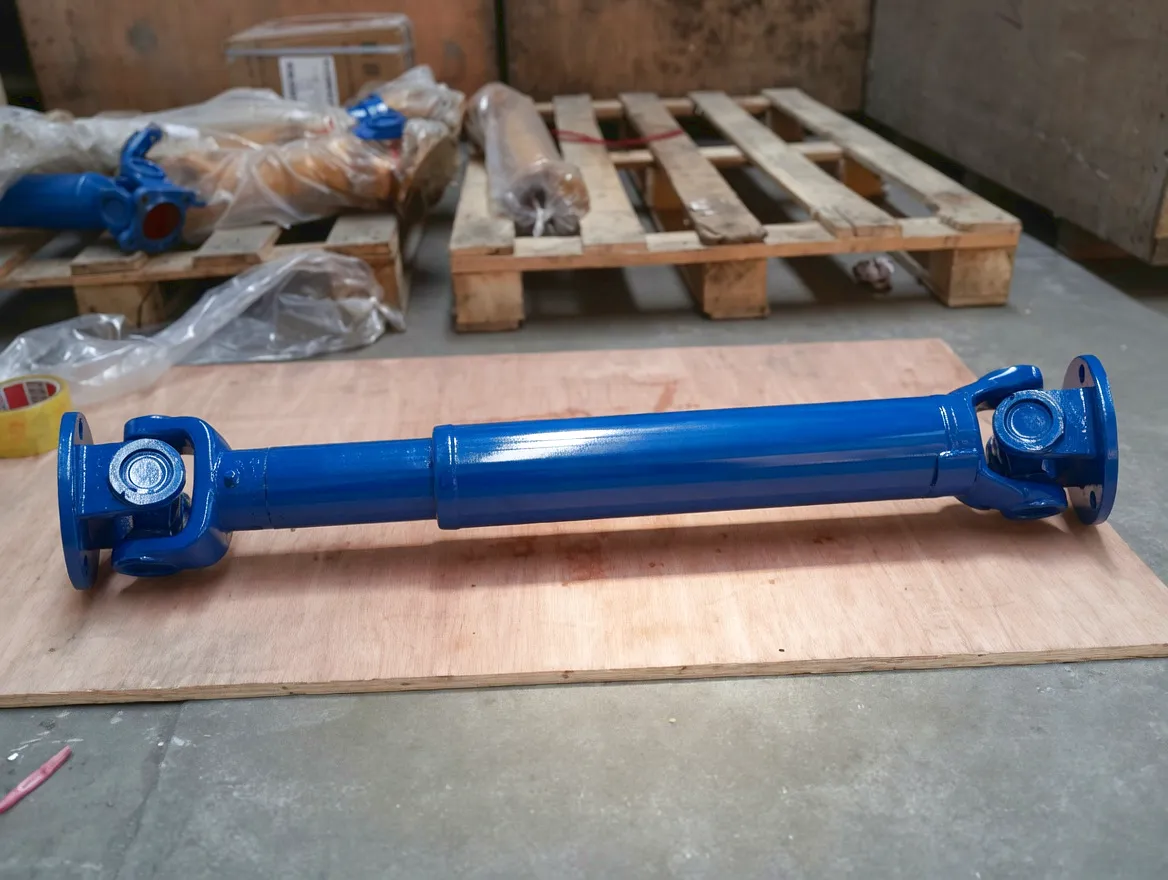
Selecting the Right Cardan Coupling for Your Hay Rake: Quick Reference
Getting the shaft selection right before ordering saves time, cost, and the risk of operating with an under-rated component. The table below covers the most common hay rake and forage implements found on British farms and gives indicative shaft specifications as a starting point. Always verify the actual torque requirement from the implement manufacturer’s data before finalising the order — especially for older machines where documentation may be incomplete.
| Implement Type | Typical PTO Speed | Nom. Torque | Clutch Type | Notes |
|---|---|---|---|---|
| Single-rotor hay rake (2.5–3.5m) | 540 rpm | 400–600 Nm | Friction slip | Standard 1-3/8″ 6-spline yoke. Wide-angle option beneficial. |
| Twin-rotor rake (6–9m) | 540 rpm | 800–1200 Nm | Friction slip + overrun | Overrun clutch protects gearbox on sudden deceleration. |
| Disc mower (2.4–3.2m) | 1000 rpm | 700–1000 Nm | Shear bolt | High inertia start-up. Wide-angle CV at cutter bar end standard. |
| Round baler (small) | 540 rpm | 1000–1500 Nm | Ratchet or friction slip | High cyclic peak loading. Premium needle roller bearings essential. |
| Large square baler | 1000 rpm | 2500–3500 Nm | Heavy-duty friction + overrun | 1-3/4″ 20-spline. Large-diameter tube. Custom lengths common. |
| Trailed forage harvester | 1000 rpm | 3000+ Nm | Friction slip heavy-duty | Custom specification essential. Contact Ever Power for engineering support. |
Serving Agricultural Businesses Across the United Kingdom
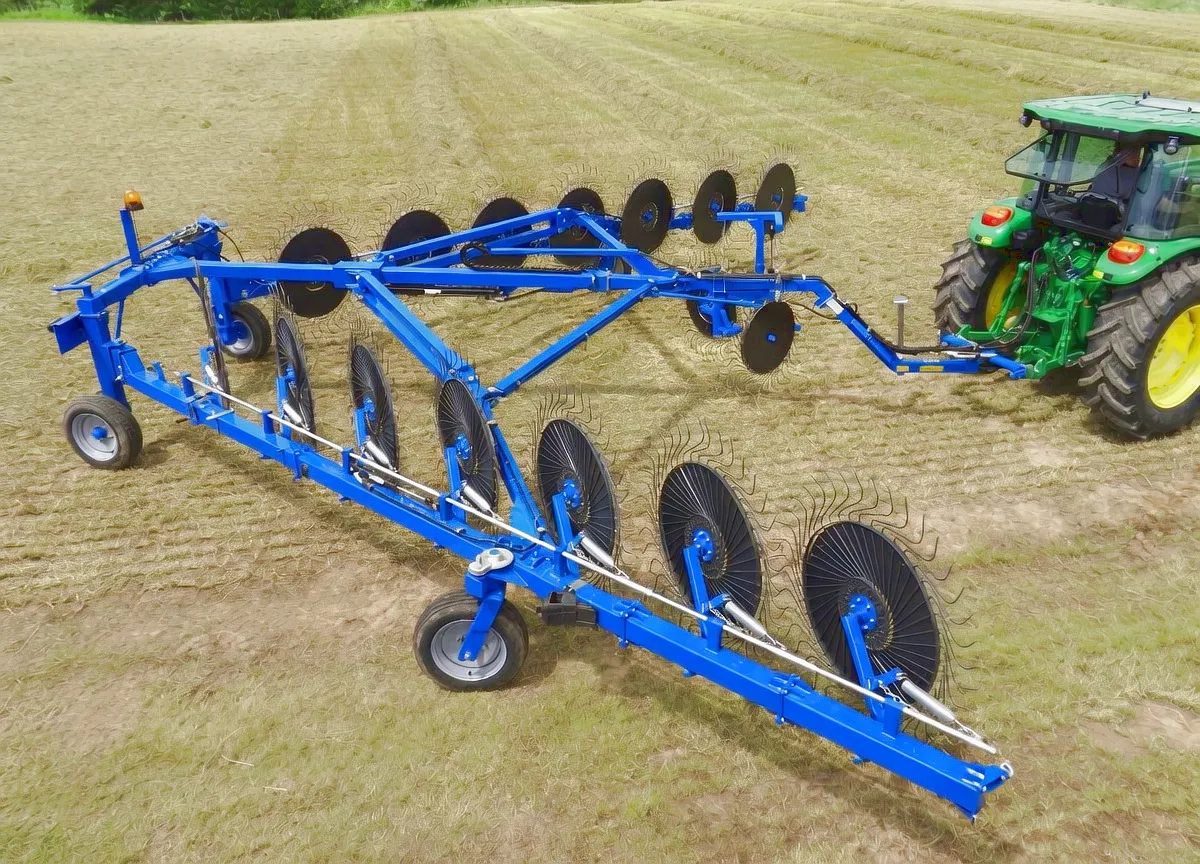
The United Kingdom’s agricultural sector spans highly diverse terrain and farming systems — and the kardankoppling requirements that go with them vary considerably by region. In the intensive dairy farming areas of Somerset, Cheshire, and South Wales, high-frequency silage making with multiple cuts per season puts cumulative wear hours onto PTO shafts at a rate that demands premium bearing quality. In the arable belt running through Lincolnshire, Cambridgeshire, and East Anglia, the scale of combinable crop growing means PTO-driven grain augers and cultivators add to the hay and straw handling workload, requiring contractors to maintain large shaft inventories for rapid field-side replacement.
Yorkshire, Lincolnshire, Somerset, Devon, Kent — intensive dairy, arable, and mixed contracting demanding premium shaft quality.
Angus, Perthshire, Dumfries & Galloway — challenging terrain with pronounced ground contour variation; wide-angle CV joint demand high.
Carmarthenshire, Ceredigion — hilly dairy country with high annual rainfall; corrosion-resistant surface treatments are priority spec.
County Down, Antrim — high-intensity grass farming; multiple silage cuts annually placing extreme demand on PTO system reliability.
Agricultural machinery dealers and distributors based in the UK are welcome to discuss stocking programmes, and we can provide competitive pricing structures for regular repeat orders. Our export documentation covers all requirements for GB and Northern Ireland customs compliance, and we can supply in the volumes needed for dealer inventory programmes — from a few units to pallet quantities. International shipping to mainland UK ports is handled routinely, with typical transit times of 10–18 working days from dispatch depending on destination and shipping mode selected.
Ready to Specify Your Agricultural Cardan Coupling?
Whether you need a standard replacement shaft, a custom-bore assembly, or a full fleet specification for a hay rake or forage operation anywhere in the UK — our engineering team is ready to help. Get a fast, no-obligation quote today.
✉ Get a Quote — [email protected]
Ever Power | Agricultural & Industrial Cardan Coupling Specialists | Serving the UK Agricultural Sector
edit by gzl