
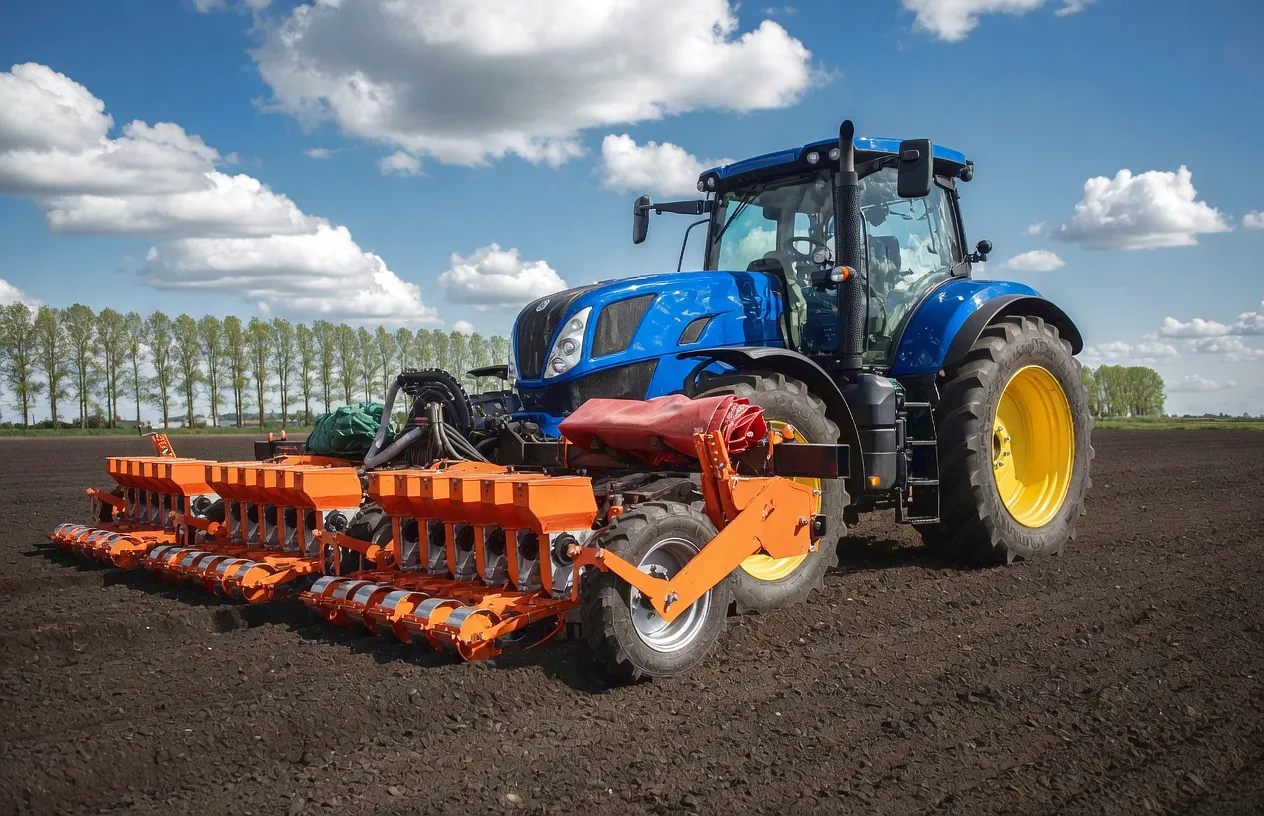
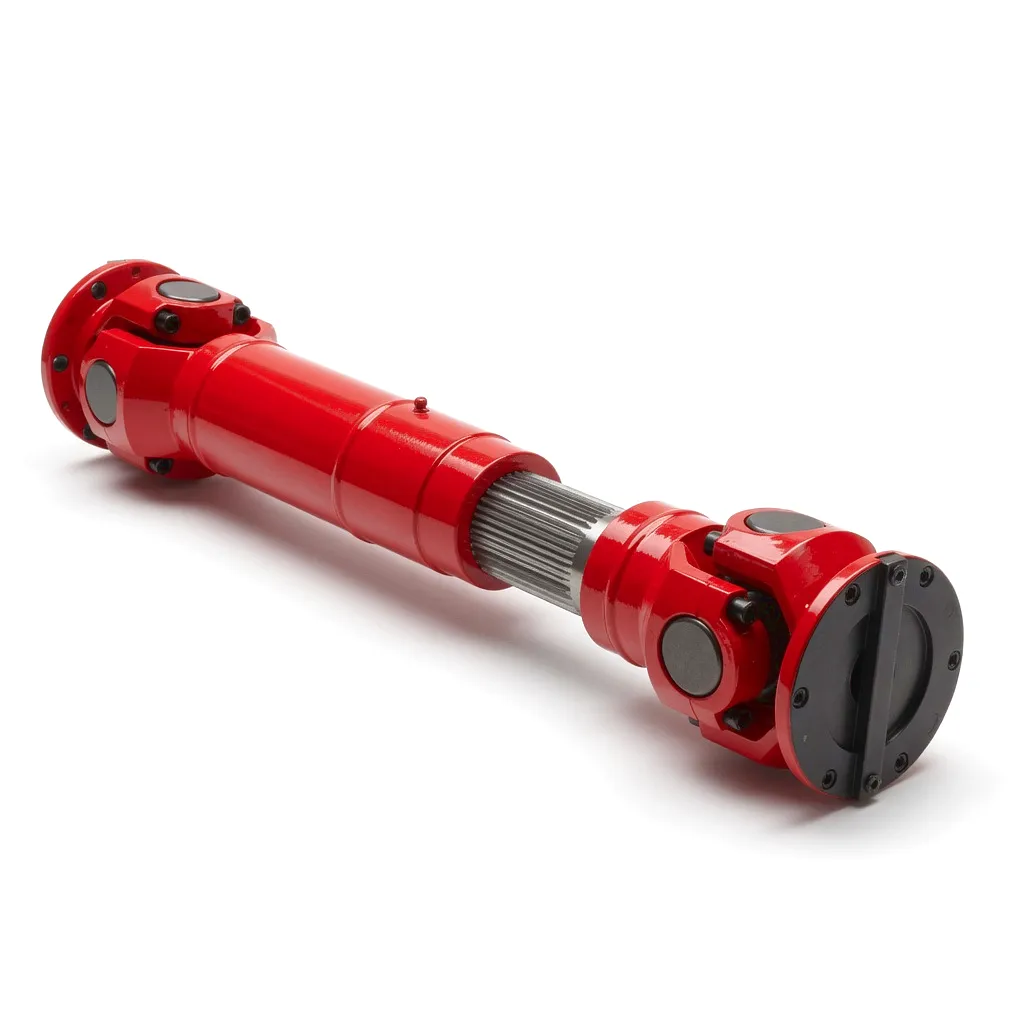
Walk around any working farm in England, Scotland, or Wales during the spring drilling season, and you will see cardan couplings doing their job in almost complete anonymity. The rotating steel shaft bridging the tractor’s power take-off stub and the gearbox of a seed drill, a muck spreader, or a power harrow — that is a cardan coupling, or more precisely, a PTO driveshaft built around one or two universal joints. It transmits rotational torque across an angular offset that changes constantly as the tractor pitches over uneven ground, as the implement bounces, and as the operator raises or lowers the three-point linkage. No other coupling technology achieves this combination of angular articulation, high torque capacity, and the ability to telescope in length at the same time.
This guide is written for procurement engineers, farm machinery dealers, and workshop technicians across the United Kingdom who need to understand what a cardan coupling actually does inside agricultural equipment, how to specify the right shaft, and where the common failure modes hide. It draws on 18 years of hands-on application experience across arable, horticultural, and livestock machinery platforms.
Why PTO Driveshafts Are Non-Negotiable
The standard 540 rpm and 1,000 rpm PTO speeds used on UK tractors demand a coupling that can sustain continuous rated torques of several thousand Newton-metres while articulating through angles that can exceed 25° during headland turns. A rigid coupling would shatter within seconds. A cardan coupling handles this effortlessly — and that is why every agricultural PTO driveshaft in the world is built around universal joints.
What Is a Cardan Coupling and How Does It Work in Agricultural Drive Systems?
A cardan coupling — named after the 16th-century Italian polymath Gerolamo Cardano, though the mechanical form we use today was refined considerably by later engineers — consists of two yokes connected by a cruciform spider bearing. Each yoke can rotate freely relative to the spider in its own plane, which means the assembly can transmit rotation across an angle. In a typical agricultural PTO shaft, two such universal joints are used at each end of a telescoping shaft, which allows the shaft to both articulate and change length simultaneously. This double-Cardan (or double-universal) arrangement also partially cancels out the velocity fluctuation that a single universal joint introduces at angles above about 5°.
The spider bearing sits at the heart of every cardan coupling. Needle-roller bearings surround each trunnion of the cross, packed with grease and sealed behind lips that must withstand mud, water, fertiliser, and crop residue. The quality of these bearings — their material grade, heat treatment, seal geometry, and grease formulation — determines whether a PTO shaft lasts one season or a decade. This is precisely where the difference between a low-cost replacement shaft and a properly engineered one becomes apparent in the field.
Angular Articulation
Operates continuously at shaft angles of up to 25–30°, accommodating tractor pitch and implement movement without torque interruption.
Telescoping Length
Sliding splined tube allows the shaft to extend and compress as the implement moves relative to the tractor, preventing binding or overextension.
Overload Protection
Integrated shear bolt or friction clutch limits peak torque spikes that occur when a seed drill hits a stone or a PTO implement jams.
Safety Guard System
CE-compliant rotating guard prevents entanglement, a mandatory requirement for agricultural PTO equipment under UK/EU machinery safety regulations.
Cardan Coupling Applications Across Agricultural Machinery
The range of agricultural machines using cardan-based PTO driveshafts in the UK is surprisingly broad. Each application places a distinct set of demands on the coupling in terms of torque level, operating angle, duty cycle, and shock load profile. Understanding these differences is essential when sourcing replacement shafts or specifying a new coupling for a prototype or batch-produced implement.
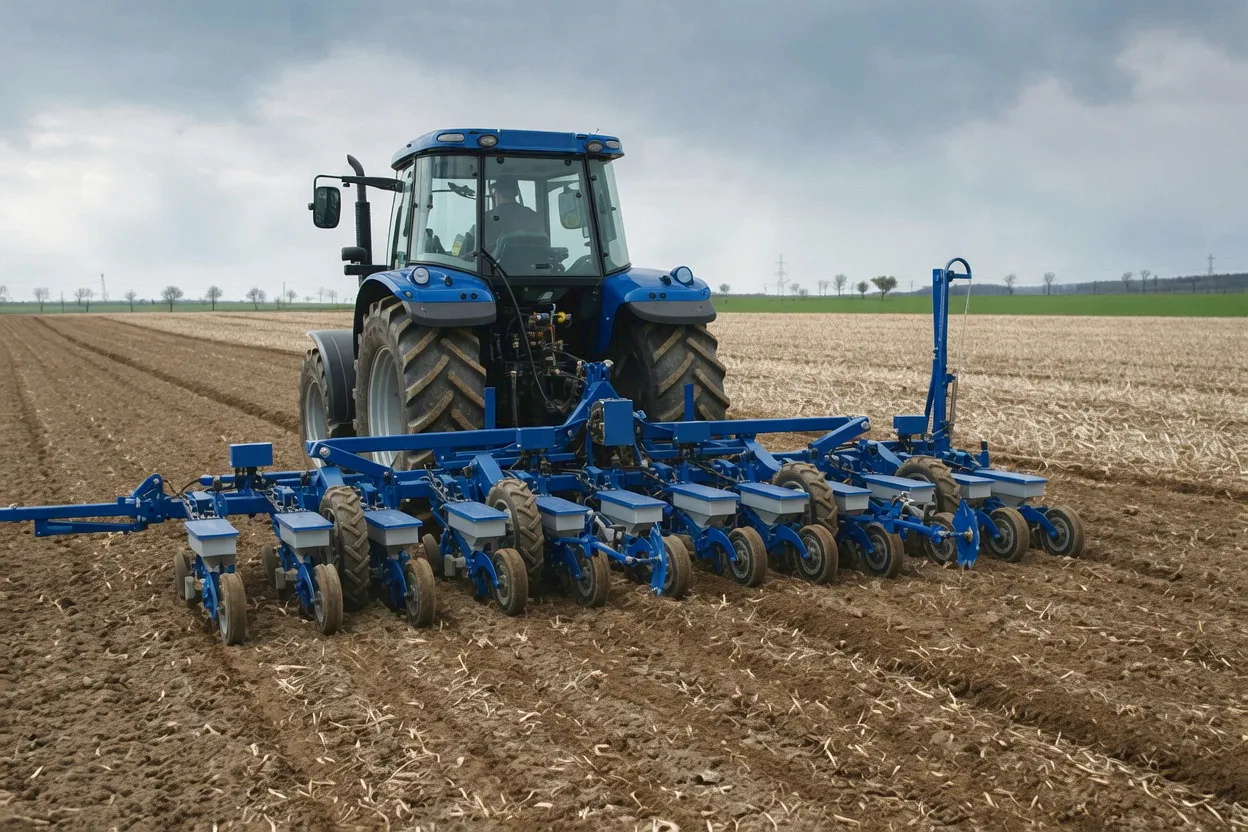
1. Seed Drills and Precision Seeding Machines
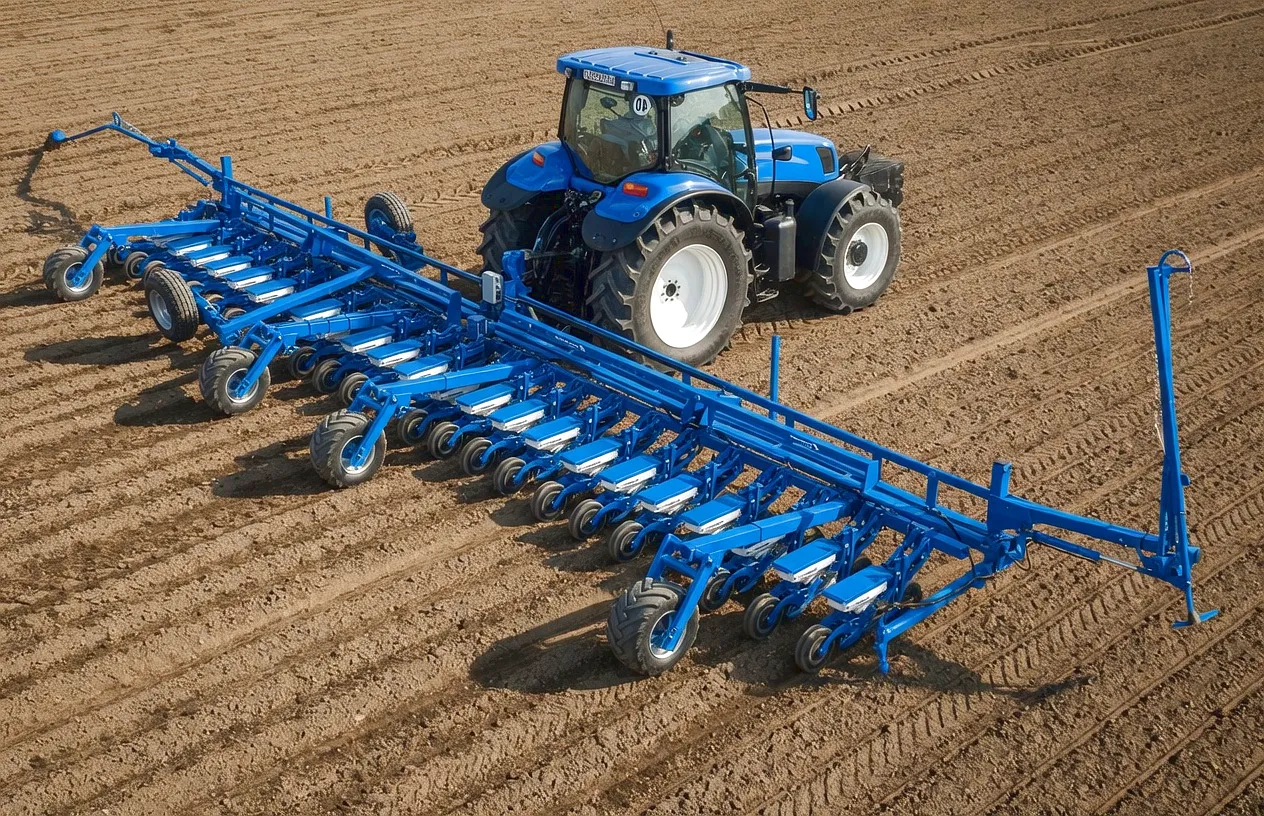
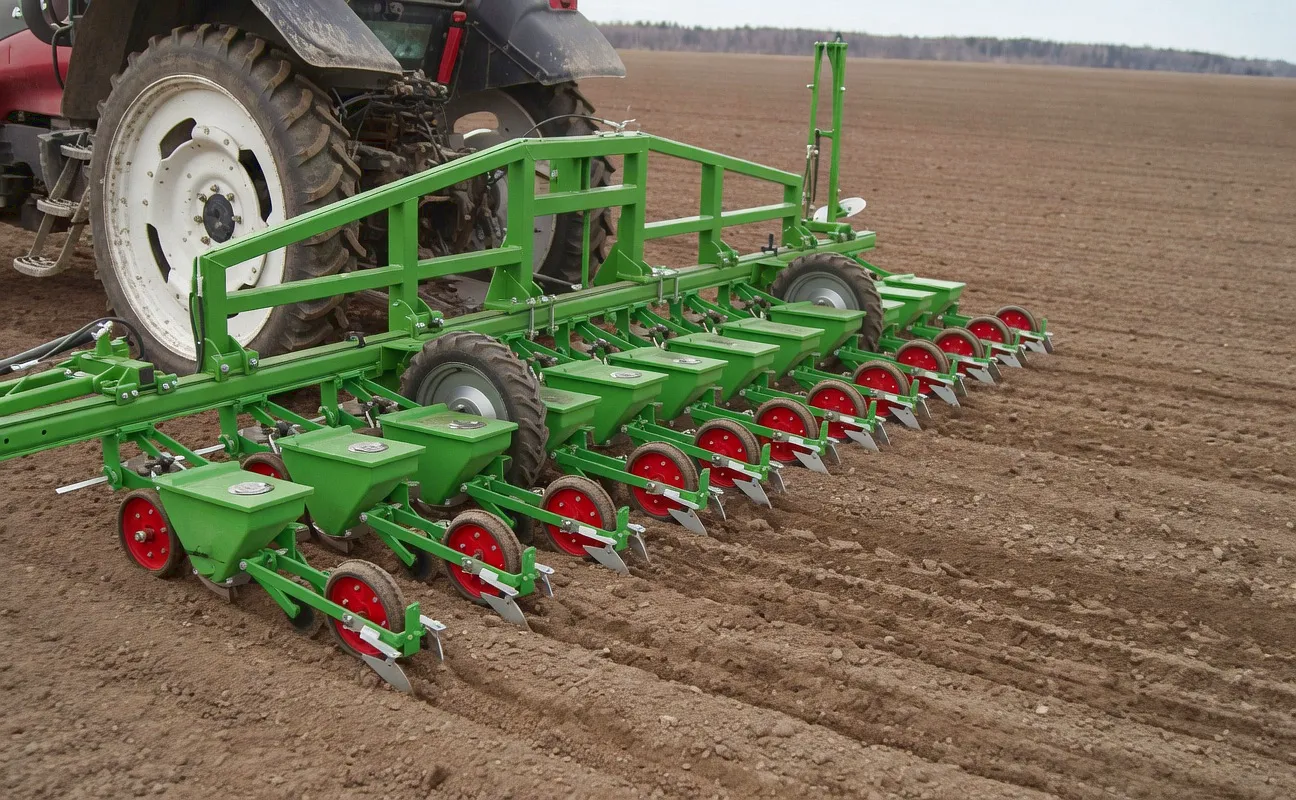
Seed drills are perhaps the most technically demanding cardan coupling application in routine farm use. A modern pneumatic seed drill working at 8–12 km/h across a cambered field generates a constantly varying shaft angle, a moderate but sustained torque load (typically 300–800 Nm depending on disc coulter configuration), and a significant amount of shock loading when coulters strike flints, buried brick, or compacted clay bands common in southern England fields. The PTO driveshaft must maintain smooth rotation throughout because any velocity pulse transmitted to the metering rollers risks inconsistent seed spacing — a yield penalty that the operator may not even notice until harvest. Double-Cardan joint configurations are preferred on precision drills for exactly this reason: they cancel the second-order velocity variation and deliver near-constant angular velocity at the implement gearbox input.
2. Power Harrows and Rotary Cultivators
Rotary power harrows and tine cultivators sit at the opposite end of the torque spectrum. A 4-metre power harrow driven at 540 rpm PTO speed on a 150 hp tractor can demand peak torques of 2,500 Nm or more during the first few seconds in hard, dry soil. Cardan coupling selection here is dominated by shock torque capacity rather than average load — the coupling must survive repeated starting shocks without fatigue failure in the yoke bores or spider trunnions. High-strength forged steel yokes, alloy-steel spiders through-hardened to 58–62 HRC on the trunnion journals, and needle rollers with a minimum dynamic load capacity appropriate for the expected L10 life are the specification cornerstones. Many UK contractors now demand friction slip-clutch protection integrated into the PTO shaft assembly for power harrow use, after bitter experience with bent gearbox input shafts on expensive combination drills.
3. Muck Spreaders and Slurry Tankers
Organic waste spreading equipment presents a different challenge: the PTO driveshafts operate in one of the most corrosive environments on a farm. Liquid slurry, ammonia vapour, acidic leachate from composted manure — all attack conventional steel and standard grease formulations. Cardan couplings used here benefit significantly from stainless steel guard components, sealed-for-life bearing units with EP (extreme-pressure) grease or polymer-thickened lubricants, and powder-coat or galvanised surface treatment on the tube and yoke assemblies. Many Scottish and Northern Irish dairy farm operators report that a well-specified shaft from a quality supplier outlasts three or four budget alternatives over a single five-year equipment lifecycle. The shaft geometry matters too: spreader beater bars and agitator paddles create high-frequency vibration superimposed on the average torque load, making bearing selection and grease channel geometry particularly important.
4. Forage Harvesters and Grass Machinery
From tedders and rakes to self-propelled forage harvesters, grass-handling machinery keeps UK dairy and beef producers supplied with silage and hay. Forage equipment typically runs at 1,000 rpm PTO speed and demands high continuous torque with excellent vibration tolerance. The chop drum of a pull-type forage harvester, for instance, must maintain a very steady input speed to produce consistent particle length — another argument for double-Cardan arrangements with phased yokes. On trailed forage wagons operating over hilly Welsh or Scottish grazing land, the shaft may operate at angles of 20° or more for extended periods during steep field traverses. Proper phasing of the two universal joints is critical here: if the yokes are assembled 90° out of phase rather than in-phase, velocity oscillation doubles rather than cancels, leading to rapid wear and the characteristic rhythmic vibration that experienced operators learn to diagnose from the cab.
Technical Performance Parameters
Representative specification ranges for Ever Power agricultural PTO cardan coupling series
* Custom lengths, yoke interfaces, and guard profiles available upon request. Contact Ever Power technical sales for bespoke specifications.
Materials, Construction, and Engineering Principles
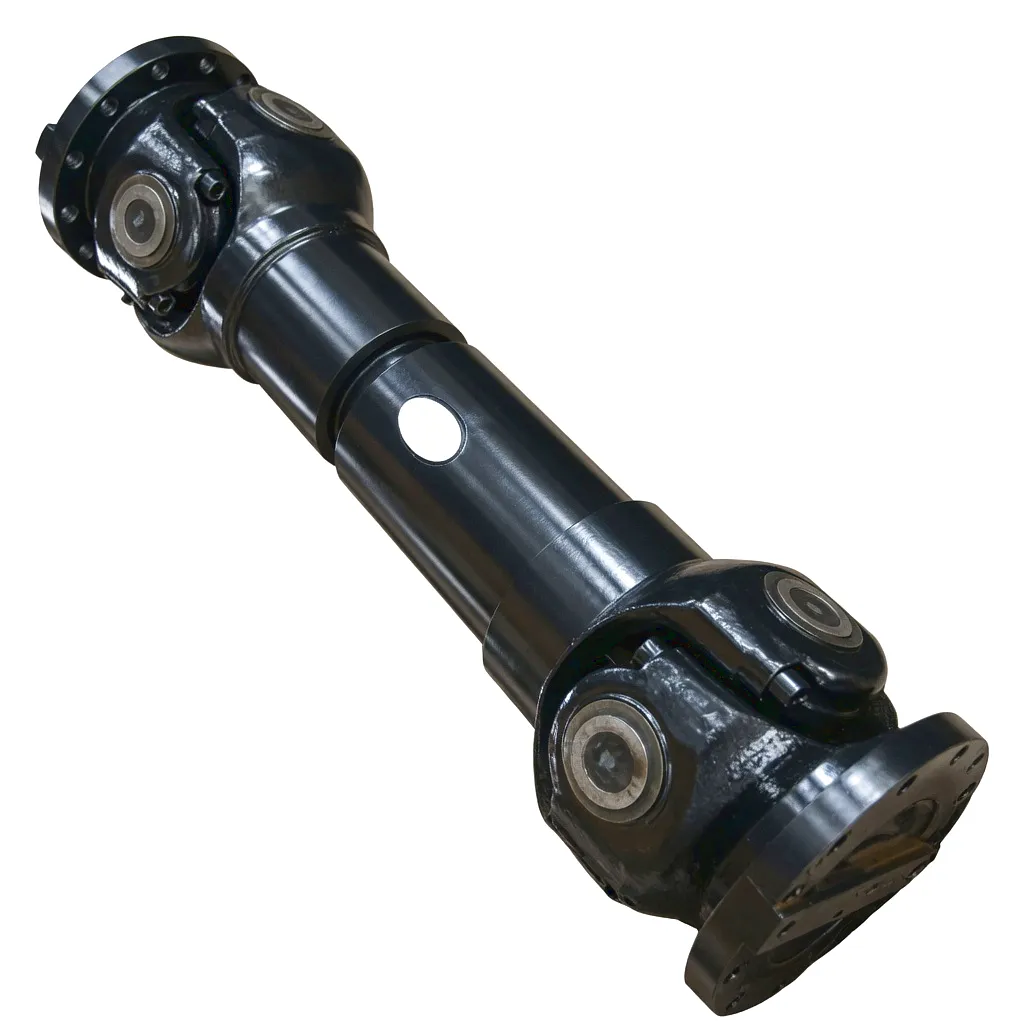 The material chain in a quality cardan coupling starts with the spider. In agricultural grades, the cross/spider is investment-cast or drop-forged from 20CrMnTi or 20CrNi2Mo case-hardening steel, machined to tight tolerances on the trunnion journals (typically h6 to h5 fit), and then carburised and hardened to achieve a case depth of 0.8–1.2 mm at 60–64 HRC surface hardness, over a tough 38–42 HRC core. This combination resists both the surface contact fatigue from needle rollers and the bending fatigue from torque reversals.
Yoke forgings in heavy agricultural series are produced from 42CrMo4 (4140 equivalent) alloy steel, quenched and tempered to 900–1,050 MPa tensile strength. The bore machining tolerance stack between the yoke ear holes and the bearing cup outside diameter governs preload — too loose and the bearing rocks, too tight and the needle cage distorts. Getting this right is a quality control challenge that separates engineered products from commodity castings.
Telescoping tubes are produced as seamless cold-drawn steel with profiles — triangular, lemon, star, or square — that transmit torque while allowing axial sliding. The interior of the outer tube and the exterior of the inner tube are treated with a low-friction polymer coating or bronze-bushed to reduce the sliding force in muddy field conditions where soil ingress can pack around the guard sleeves.
Why Ever Power Cardan Couplings Outperform in the Field
Advantages built into every shaft we manufacture for UK agricultural customers
Precision-Phased Universal Joints
Both joints are assembled with verified yoke phasing, eliminating second-order velocity variation at operating angles and protecting downstream gearboxes from cyclic loading.
Forged Alloy Steel Throughout
No cast-iron components in torque-bearing parts. Every yoke, spider, and coupling hub is drop-forged or precision-cast alloy steel with documented heat treatment certificates available on request.
High Shock Torque Capacity
Peak torque ratings 2.5x continuous rated torque, validated by dynamic impact testing. Handles the sudden loads from implement stone strikes or start-up inertia without bearing failure.
CE-Marked Safety Guards
All agricultural series supplied with CE-compliant rotating guard systems meeting EN ISO 4254-1 machinery safety requirements, protecting operators and meeting UK Health and Safety Executive standards.
Long Greasing Intervals
Sealed-and-greased bearings with dedicated Zerk fittings positioned for easy access on the tractor side and implement side. Recommended interval is 8 hours under heavy-duty use, 50 hours in moderate arable work.
Full Custom Capability
Non-standard lengths, bespoke yoke profiles, OEM spline configurations, special finishes, and unique guard geometries are all within our manufacturing scope. Minimum orders for customs start from as low as 5 pieces for implement manufacturers.
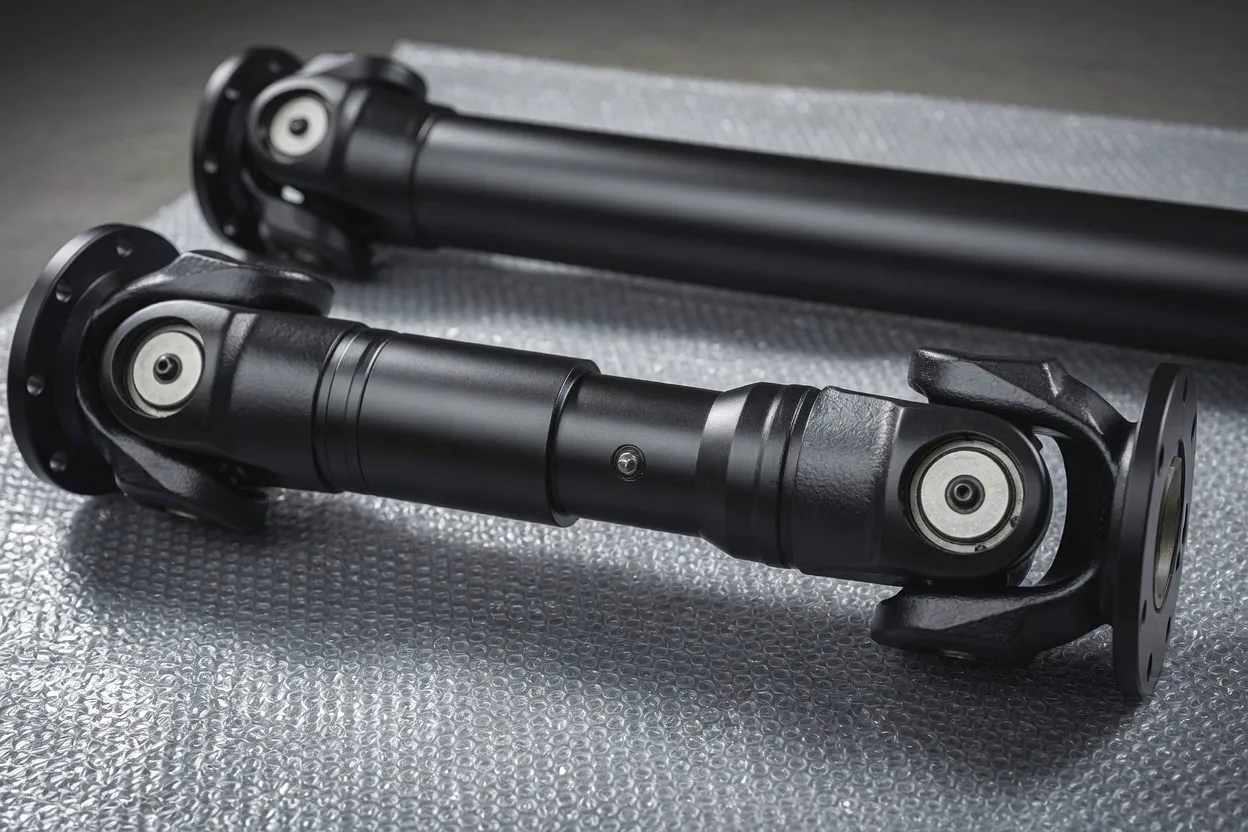
Supplying the UK Agricultural Machinery Sector
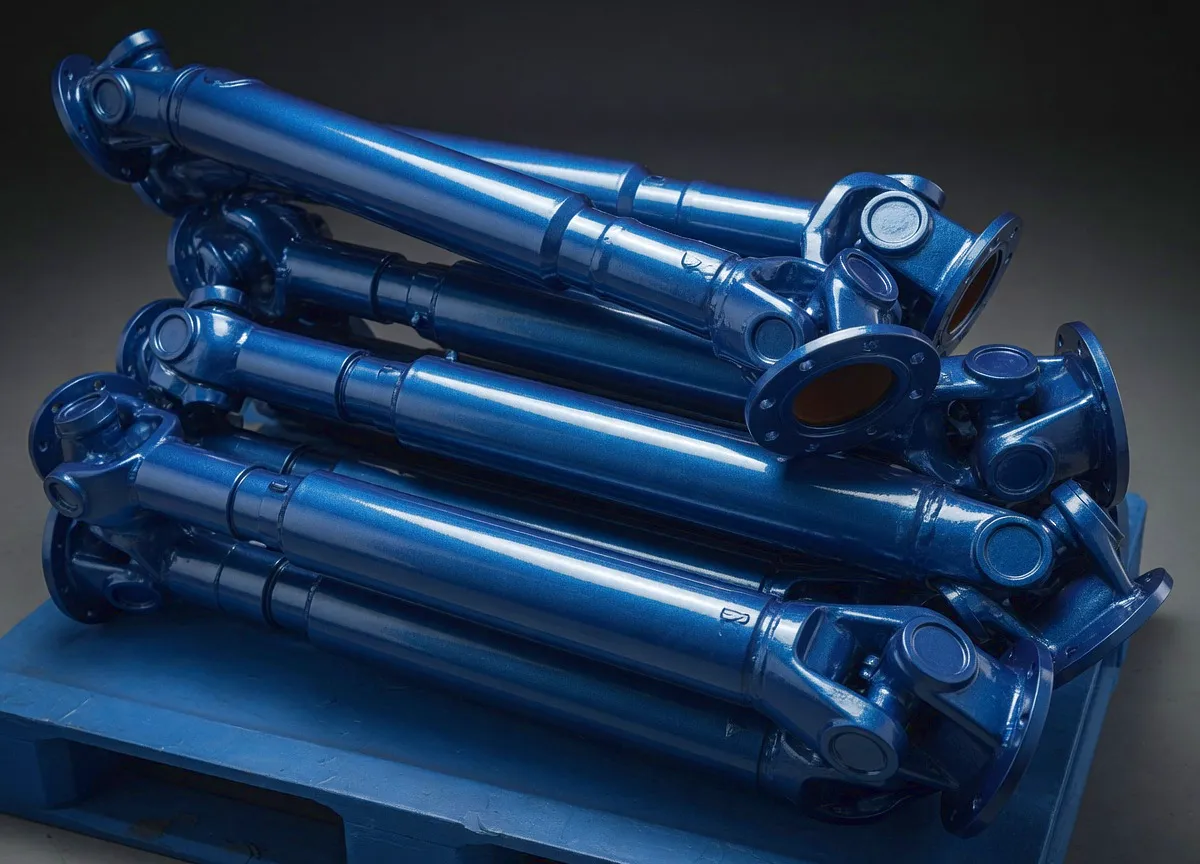 Britain’s agricultural landscape is among the most varied in northern Europe. From the intensive arable plains of East Anglia — where large-scale combinable crop operations run powerful Horsch, Amazone, and home-produced seed drills and cultivators across light silt and heavy clay soils — to the steep, wet grassland of Cumbria, Devon, and the Welsh borders, where compact tractors and small-to-medium PTO implements handle the bulk of work, the range of cardan coupling specifications needed is genuinely wide. A cardan coupling supplier working seriously with UK agricultural machinery manufacturers and dealers must understand this diversity rather than offering a single “good enough” product range.
UK farm machinery dealers from agricultural towns including Spalding, Fakenham, Driffield, Shrewsbury, and Dumfries are increasingly sourcing replacement PTO shafts and universal joint kits on a direct-import basis, bypassing traditional European distribution to manage post-Brexit supply chain costs. Ever Power supplies cardan couplings and replacement universal joint kits directly to UK trade customers with DDP (Delivered Duty Paid) shipping terms, meaning no customs clearance complications for the buyer. Stock levels of the most common agricultural series — covering the equivalent of Walterscheid W2000, W2300, and W2500 series dimensions — are maintained for rapid dispatch.
UK-based agricultural equipment manufacturers and OEM implement builders — from horticultural machinery producers in Lincolnshire and Yorkshire to bespoke spreader and loader builders in the Scottish Borders — increasingly require custom-length PTO shafts with specific yoke profiles that match their own gearbox interfaces. Ever Power’s manufacturing capability covers non-standard tube lengths from 400 mm to 3,000 mm, bespoke splined end fittings machined to customer drawings, and special surface treatment packages for corrosive duty environments. Lead times for fully custom agricultural shafts typically run to three to five weeks from drawing approval.
Cardan Coupling Selection Guide by UK Agricultural Application
| Machine Type | Typical Torque Range | PTO Speed | Protection Recommended | Key UK Region |
|---|---|---|---|---|
| Seed Drill (pneumatic) | 300–800 Nm | 540 / 1,000 rpm | Friction Clutch | East Anglia, Yorkshire |
| Power Harrow | 800–2,500 Nm | 540 rpm | Friction + Shear | All arable regions |
| Muck Spreader | 500–1,500 Nm | 540 rpm | Shear Bolt | Scotland, N. England |
| Grass Tedder / Rake | 200–600 Nm | 540 rpm | Shear Bolt | Wales, SW England |
| Forage Harvester | 1,500–5,000 Nm | 1,000 rpm | Torque Limiter | N. Ireland, Scotland |
| Slurry Tanker Pump | 400–1,200 Nm | 540 rpm | Friction Clutch | Dairy regions UK-wide |
Customer Success: How UK Agricultural Businesses Are Using Ever Power Cardan Couplings
Real-world outcomes from customers across the UK and beyond — illustrating what well-engineered cardan couplings deliver in practice
Precision Seed Drill Manufacturer Reduces Warranty Claims by 60%
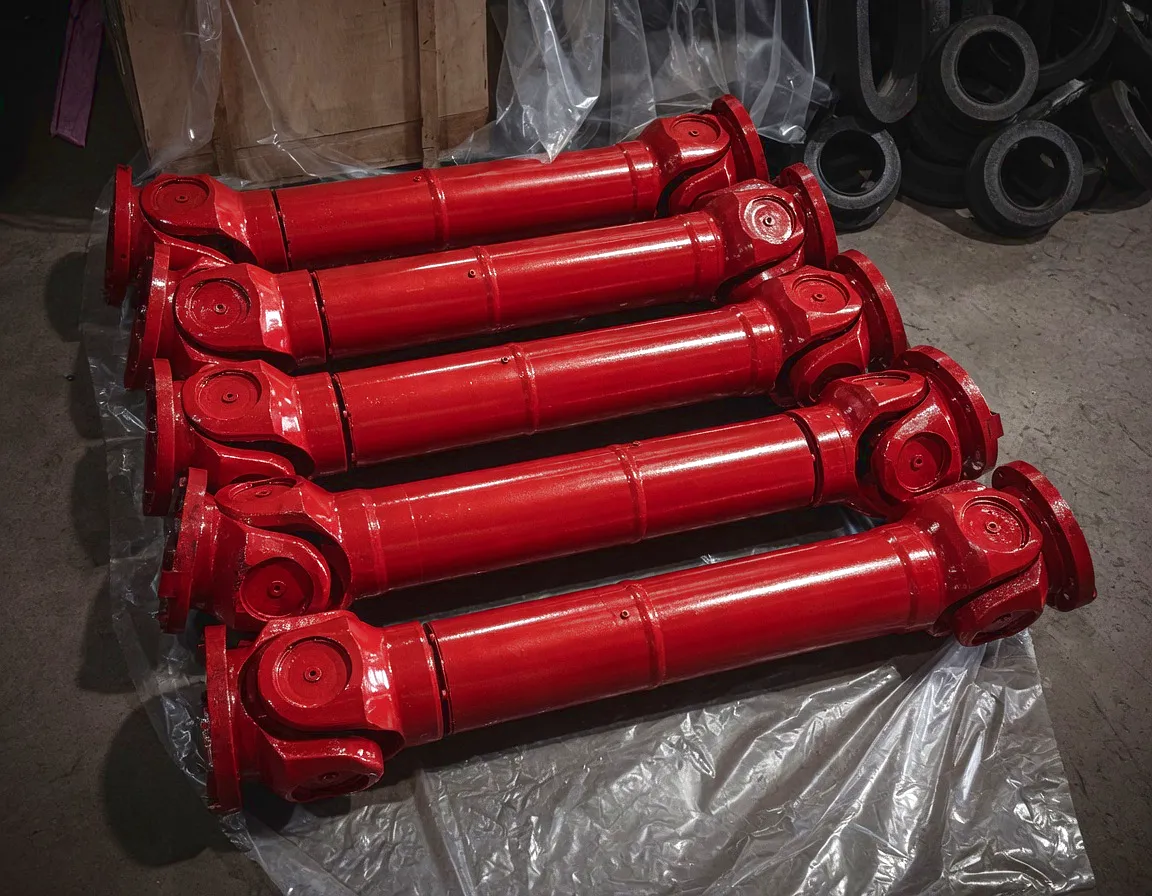 A Lincolnshire-based manufacturer of disc-coulter seed drills was experiencing recurring PTO driveshaft failures on machines sold to large arable contractors in East Yorkshire and Cambridgeshire. The original shafts, sourced through a European intermediary, were showing spider bearing failure within two seasons of use — particularly on the tractor-side joint where maximum angular operation occurred. Warranty replacement costs were running at approximately £18,000 per year across the fleet, and customer satisfaction scores were suffering.
After switching to Ever Power EP-AGR 800 series shafts with upgraded trunnion hardness specification and improved seal geometry, the manufacturer tracked a 60% reduction in warranty claims across the following three production years. Crucially, the Ever Power shafts were dimensionally interchangeable with the previous supplier’s parts, meaning no tooling or assembly process changes were needed. DDP shipping to their Lincolnshire factory kept landed costs comparable to the European source despite the quality uplift.
“We had tried two other Chinese suppliers before Ever Power and been disappointed both times. The difference with Ever Power is that they actually understand the application — they asked the right questions about operating angles and duty cycle before recommending a spec. That technical conversation is what gave us confidence to switch.”
— Technical Director, Lincolnshire Precision Drilling Equipment Ltd (name withheld at customer request)
“We run a mixed arable and vegetable enterprise in Norfolk and go through a lot of PTO shafts on our stone-burier and bed-tiller combination. Ever Power’s heavy series have lasted two full seasons without bearing replacement — that’s genuinely twice what we were getting from the previous brand. The sealed bearing cups are the difference.”
James R.
Farm Manager, Norfolk
“As a machinery dealer covering Dumfries and Galloway, I stock the Ever Power agricultural cardan shaft range as our primary service parts recommendation. Farmers here are hard on equipment — the ground is rough and the season is short, so there’s no room for substandard driveshafts. The pricing is fair and the technical support when I need a non-standard length is excellent.”
Craig M.
Agricultural Machinery Dealer, Scotland
“We manufacture bespoke slurry application equipment and needed a cardan coupling supplier who could match non-standard yoke bolt patterns for our own gearbox input flanges. Ever Power turned around a sample set from drawings in under four weeks and the dimensional accuracy was spot-on. We’ve since qualified them as an approved OEM supplier.”
Dave T.
Production Engineer, Yorkshire Agricultural Equipment Manufacturer
Manufacturing, Factory & Custom Cardan Coupling Service
Ever Power operates a vertically integrated manufacturing facility covering forging, precision machining, heat treatment, assembly, and quality verification — all under one roof. For agricultural cardan coupling production, this matters because the properties of each sub-component are tightly interdependent. A bearing cup hardened to the wrong case depth will fail under cyclic load even if the spider itself is perfect. In-house metallurgical testing, including hardness gradient measurement, microstructure examination, and magnetic particle inspection for surface cracks on finished spiders, gives us control that cannot be replicated through outsourced component purchasing.
Our product customisation service for UK agricultural implement manufacturers and equipment rebuilders covers every dimension of the driveshaft assembly. We work from customer drawings, reverse-engineered samples, or collaborative design sessions with our application engineering team. Bespoke specifications include: non-standard tube profiles and wall thicknesses; custom yoke bore diameters, keyways, and spline counts; special surface treatments including hot-dip galvanising, nickel plating, and specialist agricultural-grade powder coatings; extended guard systems with customer-logo branding; and friction clutch calibration to specific release-torque values required by the implement design.
For UK businesses that have historically relied on European OEM replacement shafts — Walterscheid, Bondioli & Pavesi, GKN — and are now looking at alternative supply routes post-Brexit, Ever Power represents a technically qualified option at lower landed cost. We carry ISO 9001 certification, maintain dimensional traceability on all forging and machining operations, and can provide material test certificates and dimensional inspection reports as standard quality documentation with each shipment.
Custom Manufacturing Capabilities
Custom shaft lengths: 400 mm – 3,000 mm
Bespoke spline profiles and yoke interfaces to customer drawing
Friction clutch calibration: 200 – 5,000 Nm release torque
Special coatings: galvanised, nickel-plated, powder-coat
MOQ from 5 pieces for custom specifications
Material certs and CMM inspection reports standard
DDP shipping to UK — no import duties for buyer
Lead time custom agricultural shafts: 3–5 weeks
Common Failure Modes and How to Avoid Them
Even the best-specified cardan coupling will fail prematurely if maintained incorrectly or operated outside its design envelope. Understanding the most common failure mechanisms helps both operators and procurement teams make better decisions about replacement intervals, grease schedules, and the right specification for each application.
⚠ Needle Roller Bearing Failure
Cause: Grease starvation, water ingress, or operation at sustained high angles. Manifests as knocking or clicking noise, vibration, and eventually seizure. Prevention: regular greasing, replace seals at first sign of weeping, keep operating angle below 25° continuous.
⚠ Yoke Bore Fatigue Cracking
Cause: Repeated shock torques exceeding the coupling’s rated peak capacity. Common on power harrow applications without friction clutch protection. Prevention: always fit torque-limiting device rated to 1.5–2x the coupling’s continuous torque rating.
⚠ Telescoping Tube Seizure
Cause: Dirt ingress around guard sleeve seals, leading to abrasive scoring of the tube surfaces. Common on muck spreader and slurry equipment. Prevention: clean and lightly grease the slip tube at the start of each season, replace worn guard cone seals promptly.
⚠ Velocity Vibration (Wrong Phasing)
Cause: Reassembly after repair with yokes phased 90° rather than 0°. Creates second-order velocity oscillation at operating angles, rapidly destroying bearings and downstream gearboxes. Prevention: always mark yoke alignment before disassembly; verify phasing after any telescoping section reassembly.
Frequently Asked Questions
Voice-search friendly answers to the questions UK agricultural buyers and engineers ask most often
Ready to Source the Right Cardan Coupling for Your Agricultural Equipment?
Our application engineering team responds to UK agricultural cardan coupling enquiries within one working day. Custom quotes, technical specifications, and sample requests welcome.
Ever Power Engineering · Cardan Coupling Specialists · Supplying UK Agricultural Machinery Manufacturers & Dealers · [email protected] · edit by gzl