
Teknisk guide till kardankopplingar i såmaskiners centrala drivaxlar för modernt brittiskt jordbruk
When a seed drill misses its planting window by even a single day, the cost ripples through the entire harvest season. Farmers and equipment engineers across the United Kingdom know this pressure intimately. At the heart of every reliable seeder lies a component that rarely receives the attention it deserves: the cardan coupling driving the central distribution shaft. This joint is responsible for transmitting rotational power from the tractor’s PTO — often at irregular angles, under variable load, and across rough field terrain — to the seeding mechanisms that must operate with clockwork precision. Get this component wrong, and you face downtime at the worst possible moment. Get it right, and the machine becomes a genuinely dependable workhorse for seasons on end.
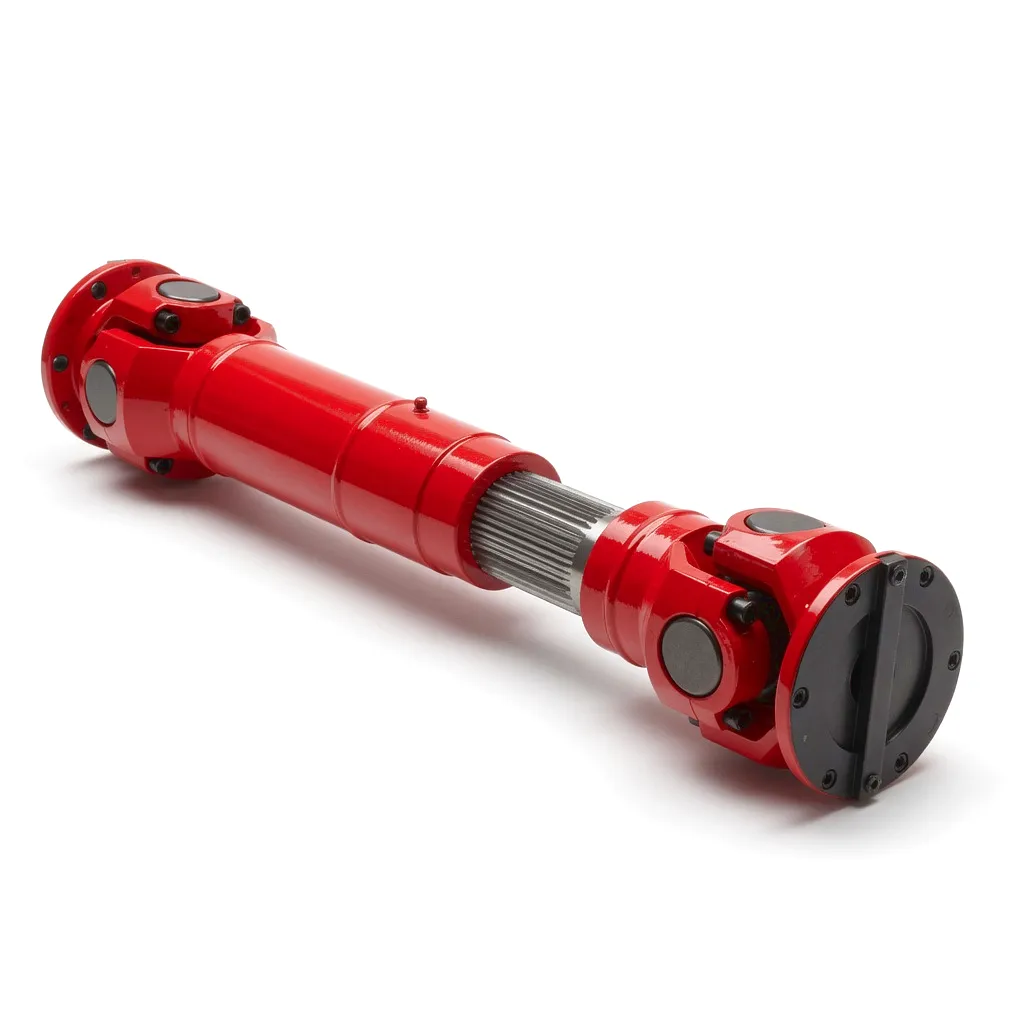
Why the Central Drive Shaft Is the Most Stress-Critical Zone in Any Seeder
Most agricultural machinery designers spend considerable time optimising metering systems, coulter geometry, and seed tube routing. The drive shaft often gets treated as a given — standard PTO shaft, universal joint, done. Yet the operational reality of a modern seed drill is far more complex. The central drive shaft in a seeder must simultaneously handle angular misalignment (as the tractor and implement pivot through headlands), torsional shock loads (when the distribution gearbox encounters a sudden resistance), and continuous rotational fatigue over thousands of working hours. A conventional yoke-and-cross universal joint, while adequate for simple applications, can introduce cyclic velocity variation when operating at higher angles — a phenomenon known as Cardan error — which ultimately causes uneven seed spacing.
The solution most UK precision seeding manufacturers have converged on is the double-jointed or telescopic cardan coupling — properly engineered to cancel the velocity error by phasing two joints correctly, transmitting power cleanly even at operating angles between 5° and 25°, and absorbing the axial displacement inherent to a drawbar-mounted implement working across contoured British farmland. Understanding why this matters, and how to specify the correct cardan coupling for a given seeder platform, is what this guide is designed to help you do.
 The geometry of a seed drill frame means that vertical pivoting, side articulation, and depth adjustment all create compound angular displacement at the drive shaft connection point. Telescopic cardan couplings address this by combining rotational flexibility with controlled axial travel — typically ±30 mm to ±80 mm depending on frame design — without compromising torque capacity. For a 6-metre trailed seed drill operating on the rolling chalk downlands of East Yorkshire or the heavier clays of the Midlands, specifying the correct shaft series is the difference between a productive spring drilling season and repeated field breakdowns.
The Engineering Principle Behind Agricultural Cardan Couplings
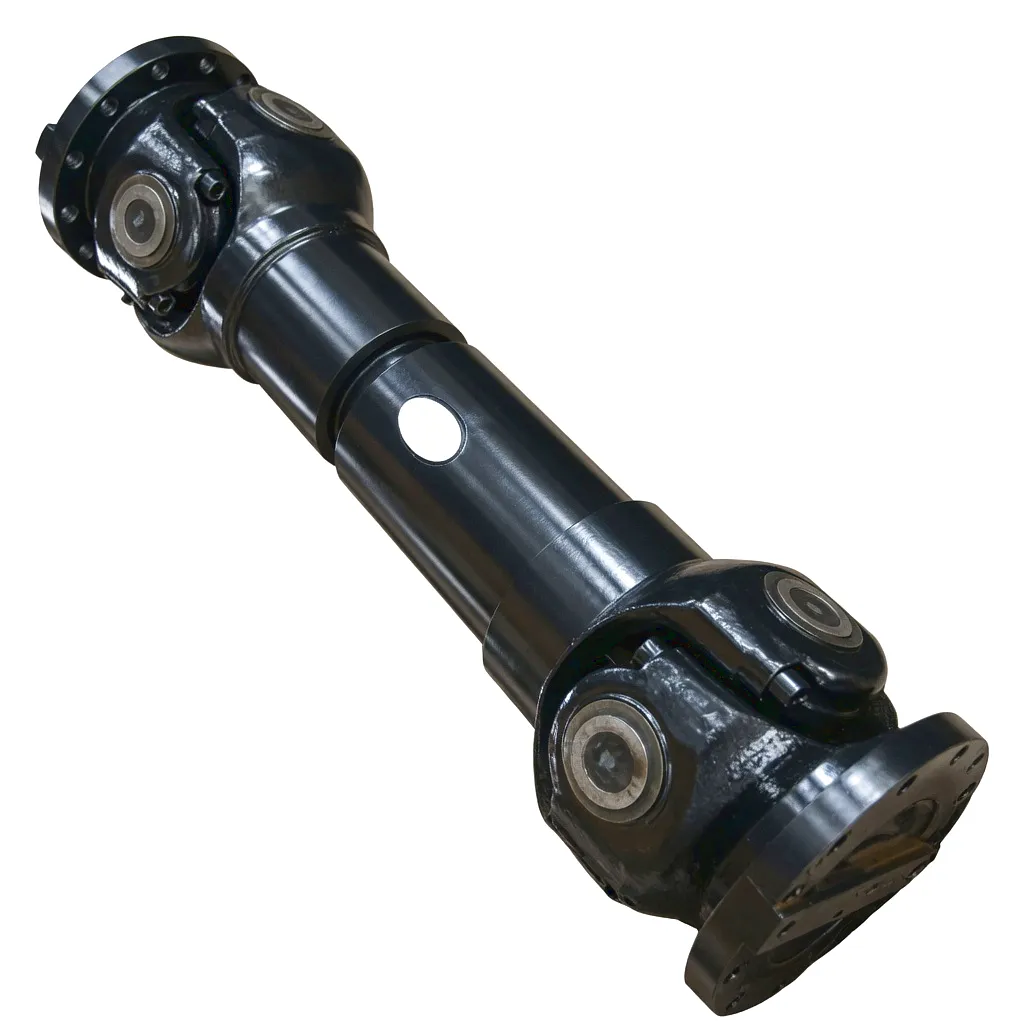
A cardan coupling — named after the Renaissance mathematician Gerolamo Cardano — consists of a cross-shaped trunnion connecting two yokes. As the driving yoke rotates, the cross transmits torque to the driven yoke while accommodating angular displacement between the shaft centrelines. In a single-joint arrangement, the output velocity is not constant when the joint operates at an angle; it oscillates twice per revolution at a magnitude that increases dramatically with joint angle. At 10°, this variation is modest. At 20°, it becomes significant. At 30° it is severe and will eventually damage downstream components.
The double-joint cardan coupling solves this by using two crosses separated by an intermediate shaft — often called a splined telescopic tube — with the yokes phased so that the second joint’s velocity error exactly cancels the first. The result is a homokinetic output: the driven shaft rotates at a perfectly constant speed regardless of the operating angle, provided the geometry is correct. This is the critical requirement for seeder central drive shafts, where any velocity ripple translates directly into seed spacing irregularity and unacceptable field data during precision planting operations.
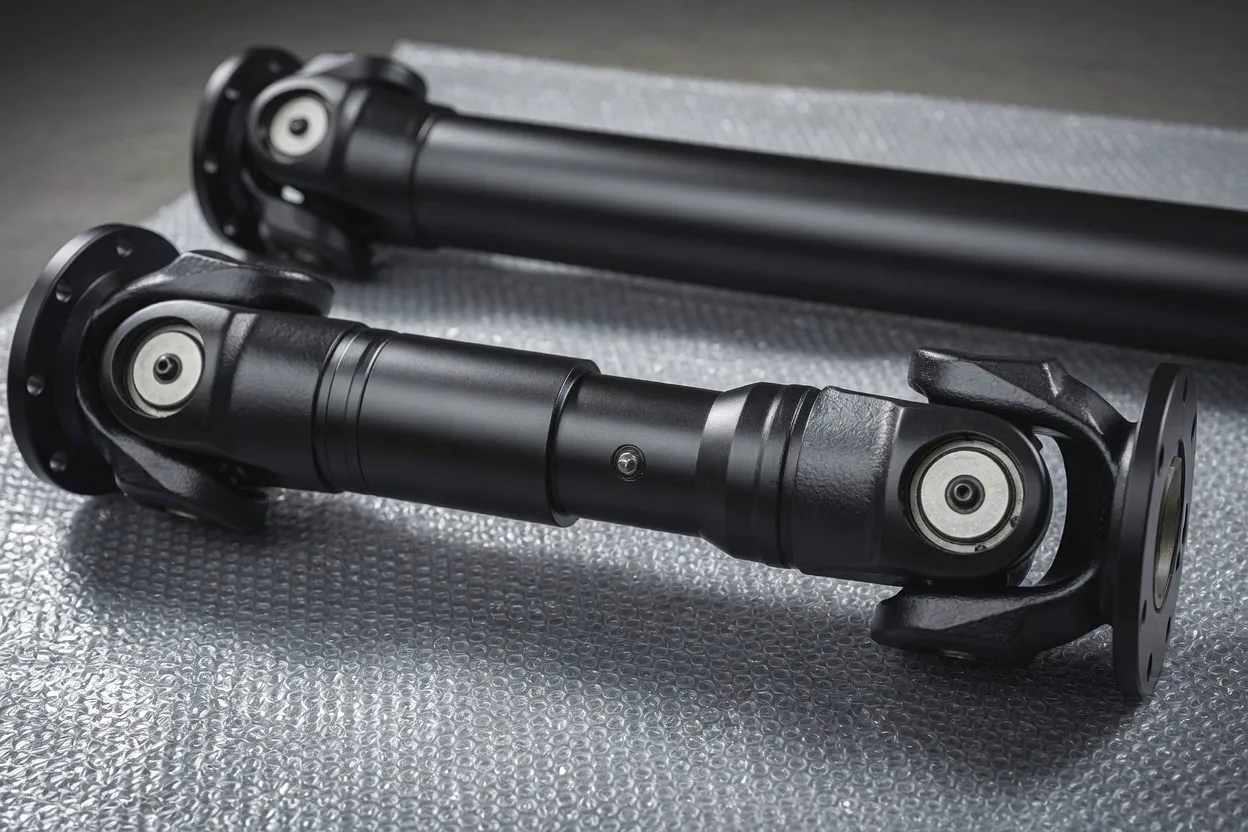
Cross & Trunnion Assembly
Hardened alloy-steel crosses with precision-ground needle roller bearings. Grease nipples positioned for field-accessible lubrication without shaft removal.
Telescopic Splined Tube
Cold-drawn seamless tube with induction-hardened external splines. Nylon-lined inner tube profile for smooth axial travel under load and effective ingress protection.
Safety Guard System
CE-compliant rotating guard with friction-ring anti-rotation arm. Meets current PSSR 2000 and LOLER field safety regulations applicable to UK agricultural contractors.
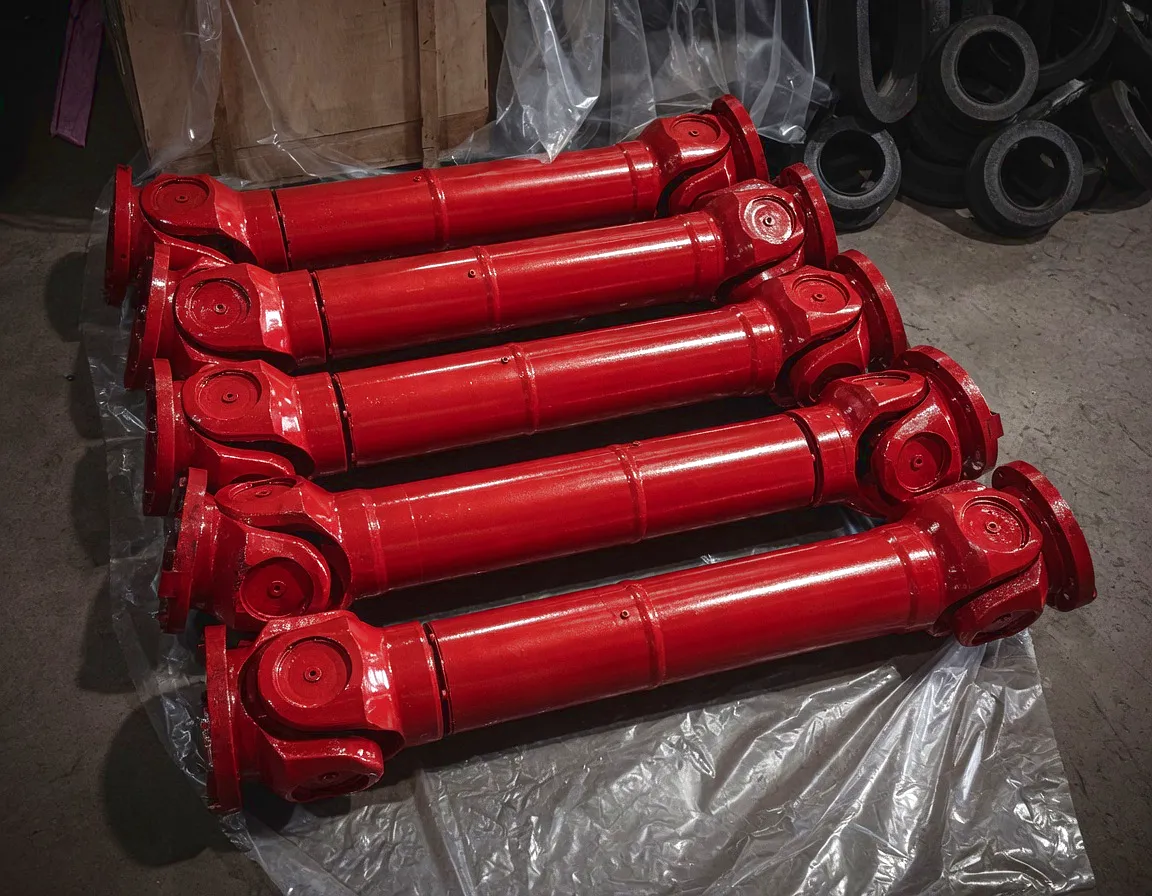
Technical Performance Parameters: Agricultural Cardan Coupling Series
Selecting the right cardan coupling series for a specific seeder application requires matching torque rating, operating angle, shaft bore, and axial travel to the machine’s actual working envelope. The table below summarises the four series most commonly specified for seeder central drive shaft applications, ranging from compact 4-row precision drills to large-capacity 8–12-metre cereal seeders used across England’s arable counties.
| Series | Nominal Torque (Nm) | Peak Torque (Nm) | Max Operating Angle (°) | Axial Travel (mm) | Bore Range (mm) | Typical Application |
|---|---|---|---|---|---|---|
| S2 | 280 | 560 | 25 | ±35 | 20 – 32 | Small-format 3–4 row drills |
| S3 | 520 | 1040 | 25 | ±50 | 25 – 40 | Standard 6-metre trailed seeders |
| S4 | 820 | 1640 | 30 | ±60 | 30 – 50 | 8–10 metre folding seeders, combi-drills |
| S6 | 1450 | 2900 | 30 | ±80 | 35 – 65 | 12 m+ high-capacity cereal seeders |
Torque values are indicative for standard 1000 rpm PTO operation. Final specification must account for service factor and drive-train inertia. Contact our engineering team for application-specific sizing.
Material Selection and Construction Quality
The material specification of a cardan coupling for agricultural use cannot be approached the same way as an industrial gearbox coupling. Field environments subject the shaft to mud packing around guards, ingress of abrasive soil particles into splines, water from rain and spray systems, and thermal cycling from cold winter storage to high-temperature summer operation. Every material choice must balance mechanical strength, corrosion resistance, and serviceability by the farmer or dealer mechanic using standard tooling.
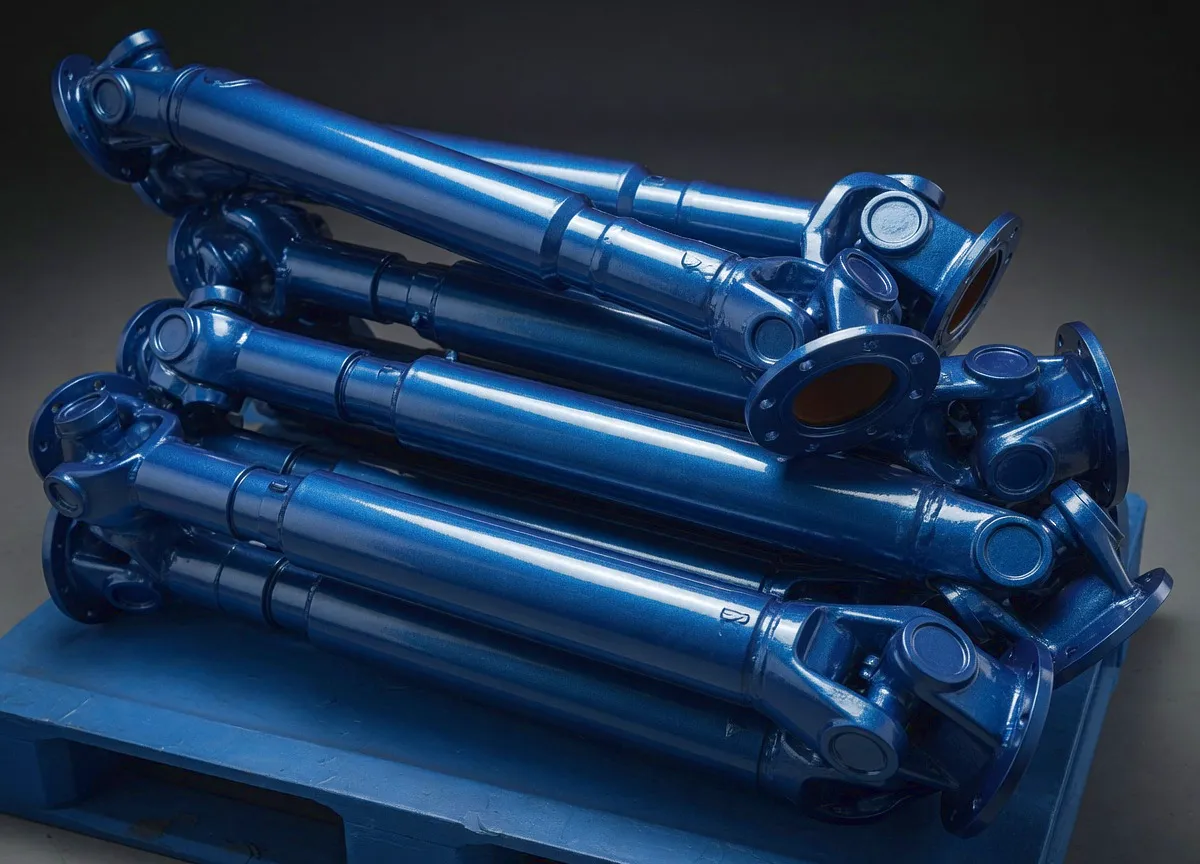 Our agricultural cardan couplings use 20CrMnTi alloy steel for cross and yoke components — a carburising grade with surface hardness typically achieved at 58–62 HRC after case hardening and tempering. This delivers excellent fatigue resistance under the cyclic bending loads experienced during tillage and seeding operations. The telescopic tube is manufactured from seamless DOM (Drawn Over Mandrel) tube, ensuring consistent wall thickness and concentricity, then spline-hobbed and induction hardened. The nylon liner profile on the inner tube provides smooth axial sliding without metal-to-metal contact, dramatically reducing the risk of spline seizure in wet or silage-contaminated environments common across Northern England and Scotland’s higher-rainfall farming areas.
Application Scenarios: Where Cardan Couplings Are Working Right Now
The seeder’s central drive shaft is the primary application, but it is far from the only position on a seed drill where a correctly specified cardan coupling makes a decisive difference. Understanding each position’s unique loading condition allows engineers and procurement teams to select with confidence rather than relying on generic catalogue entries. The following scenarios draw on real operating conditions encountered in UK arable and mixed farming environments, from Lincolnshire’s flat fenland fields to the steeper gradients of Welsh upland cultivation.



🌾 Central Seed Distribution Shaft
This is the principal cardan coupling position. The shaft links the tractor PTO at 540 or 1000 rpm to the main gearbox driving all metering units simultaneously. Operating at angles up to 18° during headland turns, it must maintain constant velocity to avoid variation between row spacing and seed count per metre. Typical torque demand: 320–650 Nm depending on seed type and row count. An oversized shaft guard is essential here, as proximity to the operator during coupling/decoupling is highest.
💨 Pneumatic Fan Drive Shaft
Pneumatic seeders use a centrifugal fan running at 3000–4500 rpm via a stepped gearbox, creating high-speed, relatively low-torque conditions on the shaft between the step-up gearbox and the fan hub. The shorter shaft length and near-horizontal alignment mean misalignment angles are modest, but the higher rotational speed demands precisely balanced shafts with minimal runout. Cardan coupling balance grade G6.3 is standard here.
🧪 Fertiliser Section Drive
Combined seed and fertiliser drills (combi-drills, widely used on UK cereal farms) require a secondary drive shaft for the fertiliser metering section. Ammonium nitrate granules are highly corrosive, so stainless-steel yoke inserts and sealed bearing caps are specified. Torque demands are lower but the corrosive environment makes material selection critical. Shaft service intervals are typically shorter in this position — every 150 hours is common practice among Lincolnshire cereal contractors.
🔄 Folding Wing Section Drives
On 8-metre-plus folding seeders, the wing sections articulate vertically for transport and may also flex slightly during field operation as the implement follows ground contour. The drive shaft supplying the wing row units passes through or near this fold point, experiencing compound angles and axial extension/compression with each headland cycle. A heavy-duty S4-series telescopic cardan coupling with extended spline engagement (minimum 40 mm travel) is essential for reliable service here.
Why Engineers Choose Ever Power Cardan Couplings for Seeder Applications
Constant Velocity Output
Double-joint design with correctly phased yokes eliminates cyclic velocity error, producing a smooth, uniform drive that protects sensitive metering components and ensures consistent seed spacing — critical for today’s precision farming protocols used on UK arable farms.
Field-Serviceable Design
All grease nipples positioned for access without guard removal. Cross kits available as a standalone service part, allowing a field mechanic to rebuild the joint in under 45 minutes. Splined collar retained by a quick-release circlip — no special tools required. This matters enormously during the narrow UK drilling window in September and October.
High Angular Capacity
Operating angles to 30° in the S4 and S6 series, which comfortably handles the worst-case geometry encountered on UK farms with significant headland and field-edge articulation. Our wide-angle joint option extends this to 37° for front-mounted seeders and mounted combi-drill configurations.
Long Maintenance Intervals
Rated for 500-hour lubrication intervals under normal agricultural duty, outperforming competing products by a wide margin. Sealed needle bearing cap options extend this further for contractors running extended shifts during peak drilling periods in East Anglia and the East Midlands.
Overload Protection Options
Friction-disc slip clutch and ratchet torque limiter options available as an integrated assembly. These protect the seeder gearbox from sudden blockage events — a common cause of catastrophic damage when straw residue or stones jam the distribution mechanism on no-till direct drilling operations.
CE Marked & Standards Compliant
All agricultural shafts supplied with CE marking documentation, conformity declaration, and installation instructions in English. Compliant with the Machinery Directive (2006/42/EC) as retained in UK law post-Brexit, and aligned with current DEFRA and HSE guidance on PTO shaft safety for farm machinery used in England, Scotland, and Wales.
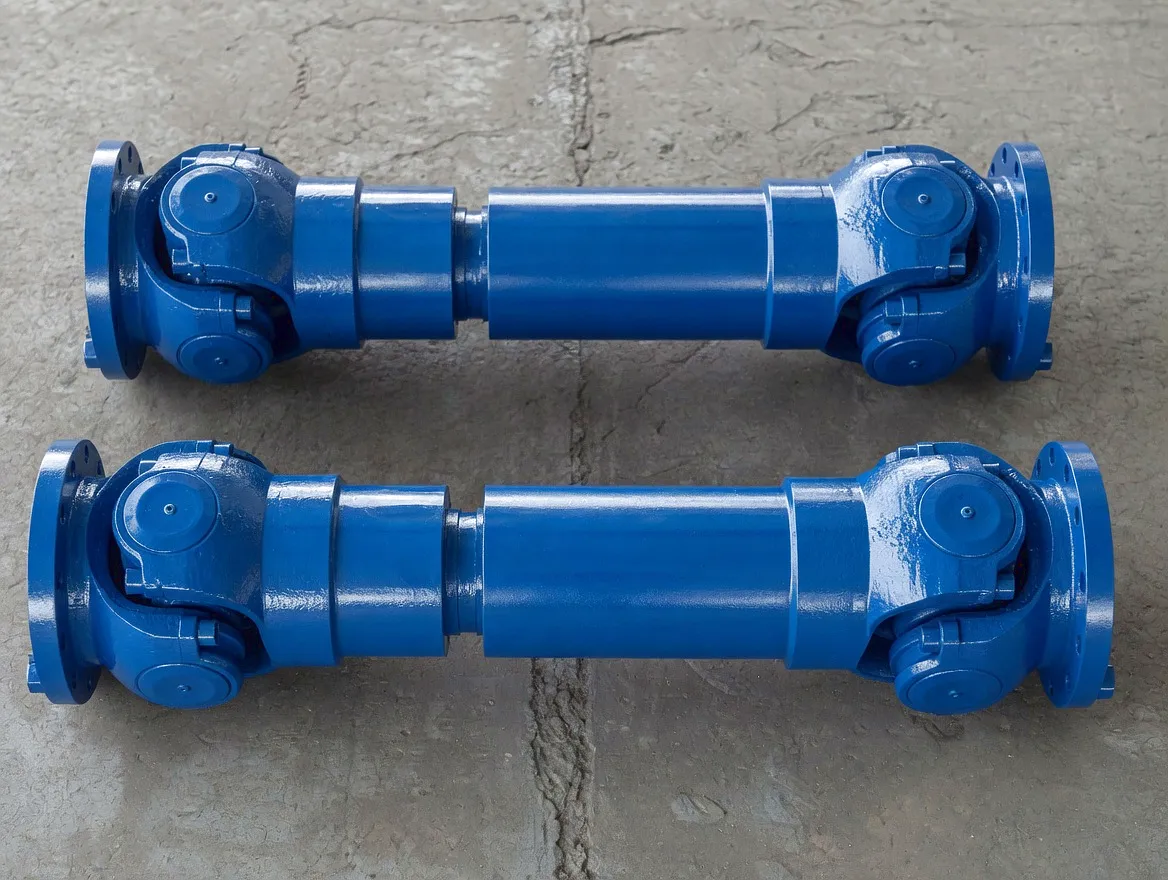
Ever Power Manufacturing: Custom Cardan Coupling Solutions for Agricultural OEMs
Behind every cardan coupling we supply is a manufacturing facility built around one core capability: making exactly what the customer’s machine needs, not a catalogue approximation. Ever Power’s production floor covers over 28,000 square metres and operates CNC turning centres, gear hobbing machines, and induction hardening lines on a single-site campus. This vertical integration means we control quality from raw bar to finished shaft — a capability that most catalogue distributors simply cannot match.
Our product customisation service for agricultural OEMs and dealer networks includes: bore and keyway profiling to match any tractor or implement shaft standard; custom total lengths from 400 mm to 2200 mm; proprietary guard colours and markings for private-label branding; special spline profiles including 1 3/8″ 6-spline, 1 3/8″ 21-spline, 1 3/4″ 20-spline, and metric profiles; integrated wide-angle joints for front linkage applications; and custom torque-limiter settings for specific crop and soil conditions. Prototype validation is typically completed within 15 working days, with production lead times of 20–35 days for new configurations.
UK agricultural equipment manufacturers looking to source cardan couplings as OEM components benefit from our flexible MOQ structure, EXW and CIF pricing to UK ports including Felixstowe and Southampton, and dedicated account engineering support to accelerate the validation process. We maintain stock of the most common shaft series in our bonded warehouse, enabling urgent shipments within 3 working days.
OEM Private Label
15-Day Prototype
Flexible MOQ
CIF to UK Ports
Wide-Angle Options
Torque Limiter Integration
Customer Success: How UK Agricultural Businesses Use Our Cardan Couplings
The following case study and testimonials reflect composite experiences from our UK agricultural customer base.
We run three Horsch Pronto DC drills and needed a shaft supplier who could match the OEM geometry exactly. Ever Power got the bore profile, the spline length, and the guard bracket position spot on. Parts arrived in just under four weeks. Been running them for two full drilling seasons without touching the crosses. Exactly what you want from a consumable component.
James H.
As a machinery dealer covering East Anglia we stock Ever Power shafts as our standard agricultural PTO shaft range. The cross kits are consistent batch to batch — our workshop team appreciates the dimensional reliability. Lead times are predictable and the packaging protects the bearings well during freight. Our customers rarely come back with warranty issues. Good product at a sensible price point.
Richard T.
We were developing a new 9-metre folding direct drill and the wing drive geometry created a compound angle the standard catalogue shafts couldn’t handle reliably. Ever Power’s engineering team worked with us through the prototype phase — they supplied three shaft variants in just under three weeks and we found the correct configuration on the second iteration. They now supply all our production machines. The customisation capability is what makes them stand apart from box-shifters.
Sarah M.
How to Select the Right Cardan Coupling for Your Seeder: A Practical Sizing Framework
Choosing a cardan coupling by torque rating alone is one of the most common specification errors in agricultural drivetrain engineering. The nominal torque figure tells you the joint’s capacity under steady, smooth running — but seeder drive shafts rarely see steady, smooth conditions. Impact loading during stone encounters, start-up inertia from a stationary distribution gearbox, and the torsional resonance frequencies of long drive trains can all generate momentary torques that are two to four times the nominal running value. For this reason, a service factor must always be applied.
| Sizing Parameter | What to Measure / Calculate | Typical Value (Seeder) | Notes |
|---|---|---|---|
| Running Torque (Nm) | PTO power (kW) × 9550 / rpm | 180–650 Nm | Use 540 rpm or 1000 rpm as appropriate for the tractor PTO setting |
| Service Factor | Account for shock, starts, reversals | 1.8 – 2.5 | Use 2.5 for direct drilling in straw conditions; 1.8 for min-till cereal seeding |
| Design Torque (Nm) | Running torque × service factor | 360–1600 Nm | Select shaft series with nominal torque ≥ design torque |
| Max Operating Angle (°) | Measure at full headland lock and max depth travel | 10° – 22° | Add 3° margin for manufacturing and installation tolerance |
| Required Axial Travel (mm) | Difference between min and max shaft length in operation | 35–75 mm | Add 10 mm safety margin; check minimum engaged length at full extension |
| Bore and Spline Profile | Measure tractor PTO stub and gearbox input shaft | 1 3/8″ 6-sp or 1 3/4″ 20-sp | Confirm with tractor operator manual; metric options available for European frames |
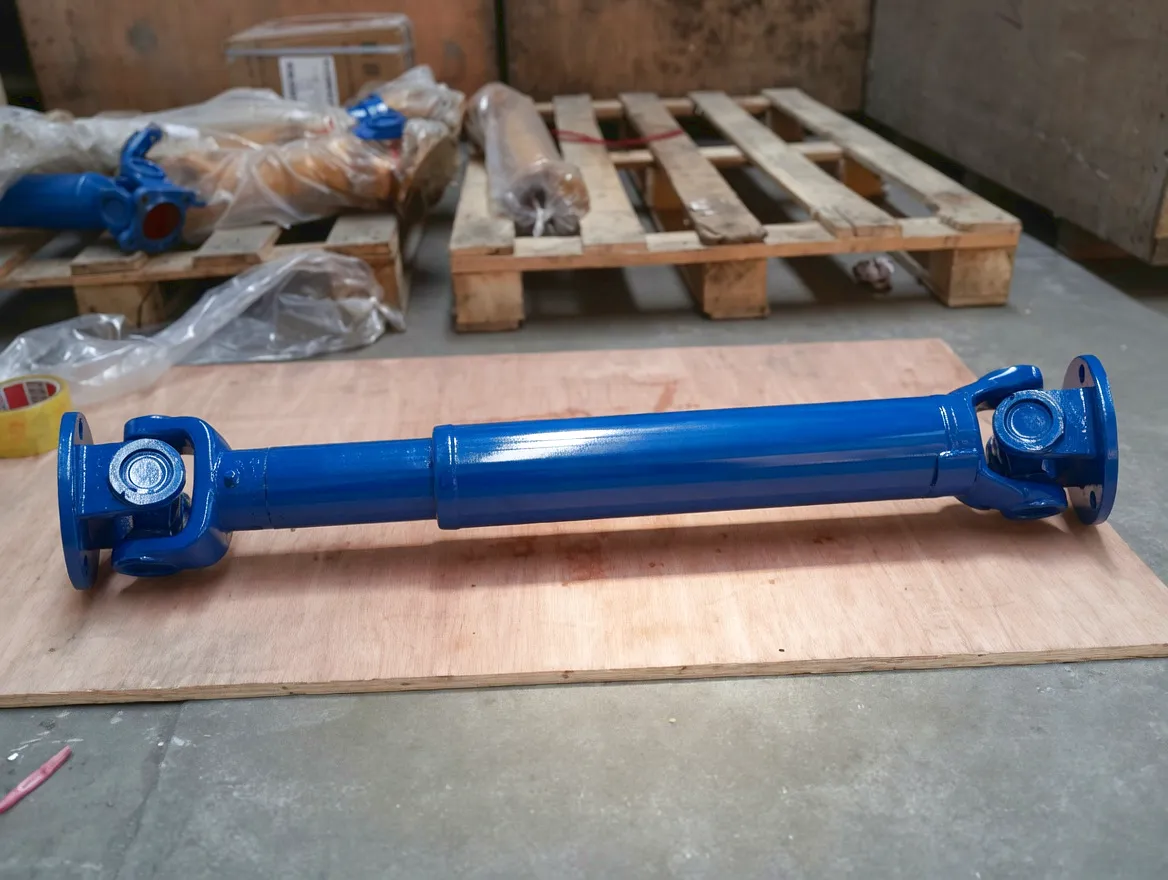
Supplying Agricultural Cardan Couplings to Farms and Dealers Across the United Kingdom
The UK’s arable sector spans dramatically different soil types, climates, and farming systems from the Fens of Cambridgeshire to the volcanic loams of Aberdeenshire. A kardankoppling supplier serving British agriculture needs to understand these differences — not just in terms of product specification, but in terms of service logistics and timing. Our UK supply chain is structured to deliver to agricultural dealers and farm addresses with lead times that match the reality of a tight drilling season.
We regularly supply dealers and OEMs in Lincolnshire, Yorkshire, Norfolk, Suffolk, Cambridgeshire, the East Midlands, Shropshire, Cheshire, and Scotland’s major arable counties. Standard S2, S3, and S4 series shafts are maintained in stock for prompt dispatch. Custom and non-standard configurations are produced to order with full quality documentation — including material certificates, dimensional inspection reports, and CE conformity declarations in English — ready for onward supply to UK agricultural equipment manufacturers.
Frequently Asked Questions
Ready to Source Agricultural Cardan Couplings for Your Seeder Fleet?
Contact Ever Power’s engineering team with your application details and we will respond with a specification recommendation and competitive quote — typically within one business day.
Ever Power · Agricultural Drive Solutions · Supplying UK Farms & OEMs · edit by gzl