
Ever Power Engineering · Agricultural Driveline Solutions
Heavy-Duty Double Cardan Coupling for Combine Harvester Power Transmission Systems
How variable-angle cardan joints keep UK grain harvests running — engineering deep dive, selection guidance, and real-world performance data from the field.
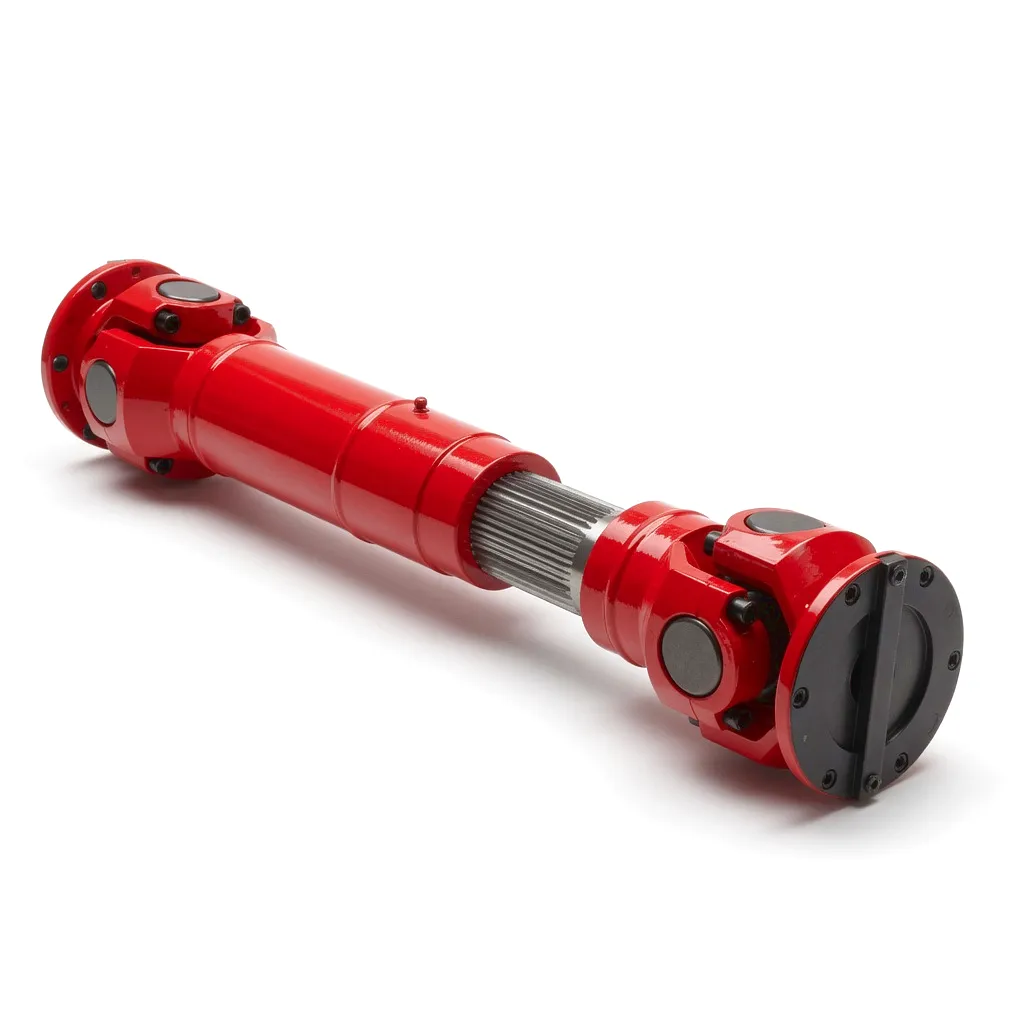 Every autumn across the United Kingdom, combine harvesters roll through wheat fields in Lincolnshire, barley acreage in East Anglia, and oat parcels scattered across the Scottish Borders. These machines represent some of the most complex mobile drivetrain assemblies in modern agriculture. At the heart of each harvester’s power delivery network sits a component that rarely makes headlines but determines whether an entire season’s grain makes it from stalk to store: the cardan coupling. Specifically, the heavy-duty double cardan joint engineered for variable operating angles is the unsung workhorse that transfers hundreds of kilowatts from a diesel engine to cutting heads, threshing drums, and grain conveyors — all while the machine pitches and rolls across uneven terrain.
This article examines why a properly specified cardan coupling matters so much in combine harvester design, what separates a mediocre joint from an outstanding one, and how UK-based farming operations and machinery dealers can source precision-manufactured couplings that actually survive the brutal demands of British harvest conditions. Drawing on eighteen-plus years of applications engineering experience, we walk through torque calculations, material science, real installation data, and the practical lessons learned from thousands of hours of field operation. Whether you manage a 2,000-acre arable estate in Norfolk or maintain a fleet of contract harvesters working across the Midlands, the information here is grounded in the reality of metal meeting grain at high speed.
Why the Cardan Coupling Is the Most Critical Driveline Component on a Combine Harvester
A modern combine harvester is not a single machine — it is a collection of sub-systems that must synchronise with millisecond precision. The header platform sweeps crop material inward, the feeder house elevator conveys it upward, the threshing cylinder or rotor strips grain from the stalk, separation mechanisms shake out remaining kernels, and cleaning fans blow away chaff. Each of these sub-systems draws power from the main engine through a branching driveline, and many of those branches require angular flexibility because the header tilts to follow ground contours, the feeder house pivots, and the entire chassis flexes as the machine traverses ruts, ridges, and slopes. A rigid shaft connection would snap within minutes under these conditions. The cardan coupling — also known as a universal joint coupling or Cardan shaft — provides the controlled angular freedom that allows torque to flow continuously despite dynamic misalignment between the driving and driven shafts.
The double cardan joint goes a step further. Unlike a single universal joint, which introduces cyclical speed variation (a phenomenon described by the kinematic equations governing Hooke-type joints), a double cardan joint pairs two universal joints with a centring yoke between them. When phased correctly, the velocity fluctuation produced by the first joint is cancelled by the second, delivering near-constant-velocity output to the driven component. For a threshing drum spinning at 800 to 1,400 RPM, even minor speed pulsation translates into uneven grain separation and increased kernel damage. The double configuration eliminates that problem, which is precisely why it has become the standard for high-performance combine drivelines operated on British farmland.
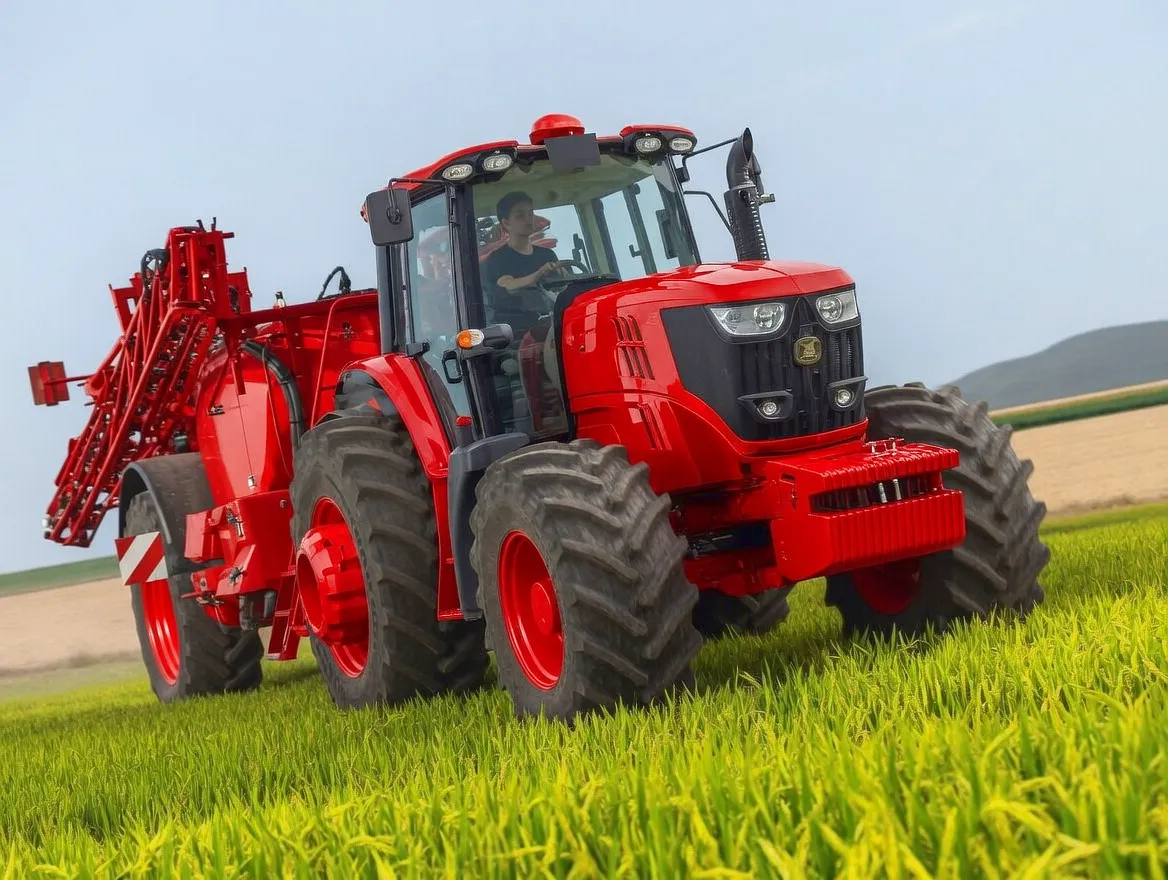
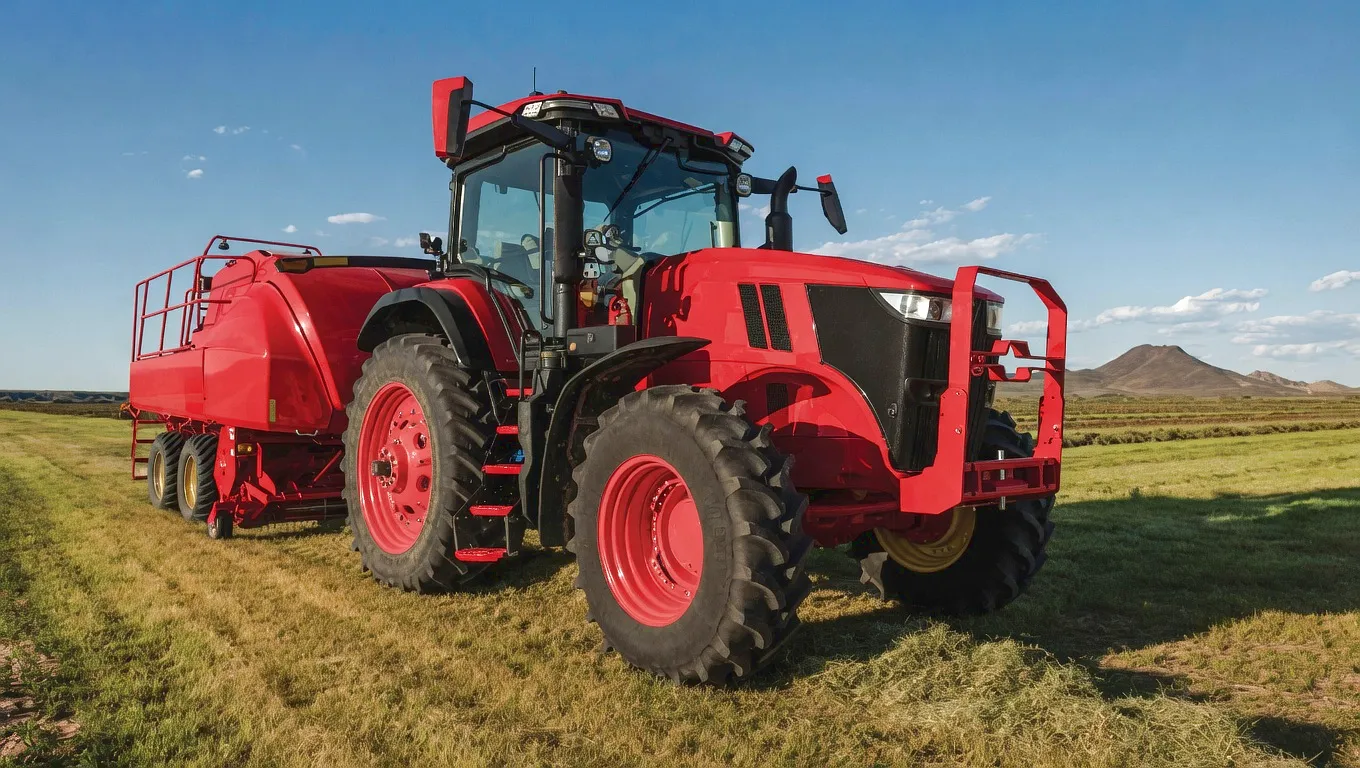
Engineering Principles Behind Variable-Angle Double Cardan Joints
The operating principle of a cardan coupling rests on cross-shaped journal assemblies — often called spider bearings or trunnion crosses — seated within bearing caps packed with needle rollers. Torque enters through one yoke, passes through the cross journal, and exits through the connected yoke at whatever angle the two shafts present. In a double cardan joint, two of these assemblies are linked by a centre yoke or coupling yoke that maintains the phasing geometry necessary for velocity cancellation. The mathematics behind this are rooted in the classic Hooke’s joint equations: if shaft A drives at constant angular velocity ω, the output angular velocity through a single joint at angle θ fluctuates as ω / (1 – sin²θ · sin²φ), where φ is the rotation angle. The double joint, when the input and output shafts are coplanar and the two joint angles are equal, restores constant output velocity regardless of the operating angle — up to the mechanical limit of the joint.
For combine harvester applications, this operating angle typically ranges between 3 and 22 degrees during active fieldwork. The lower values correspond to flat terrain in areas like the Fens of Cambridgeshire, while the higher values occur when working undulating ground in the Yorkshire Wolds or the rolling chalk downs of Hampshire. A well-engineered cardan coupling must handle continuous operation at moderate angles while tolerating brief excursions to maximum angle without bearing damage. The needle bearings within each cross journal carry combined radial and thrust loads that vary sinusoidally with each revolution, placing demanding fatigue requirements on the bearing steel and the journal surface finish.
Material Science and Construction Quality
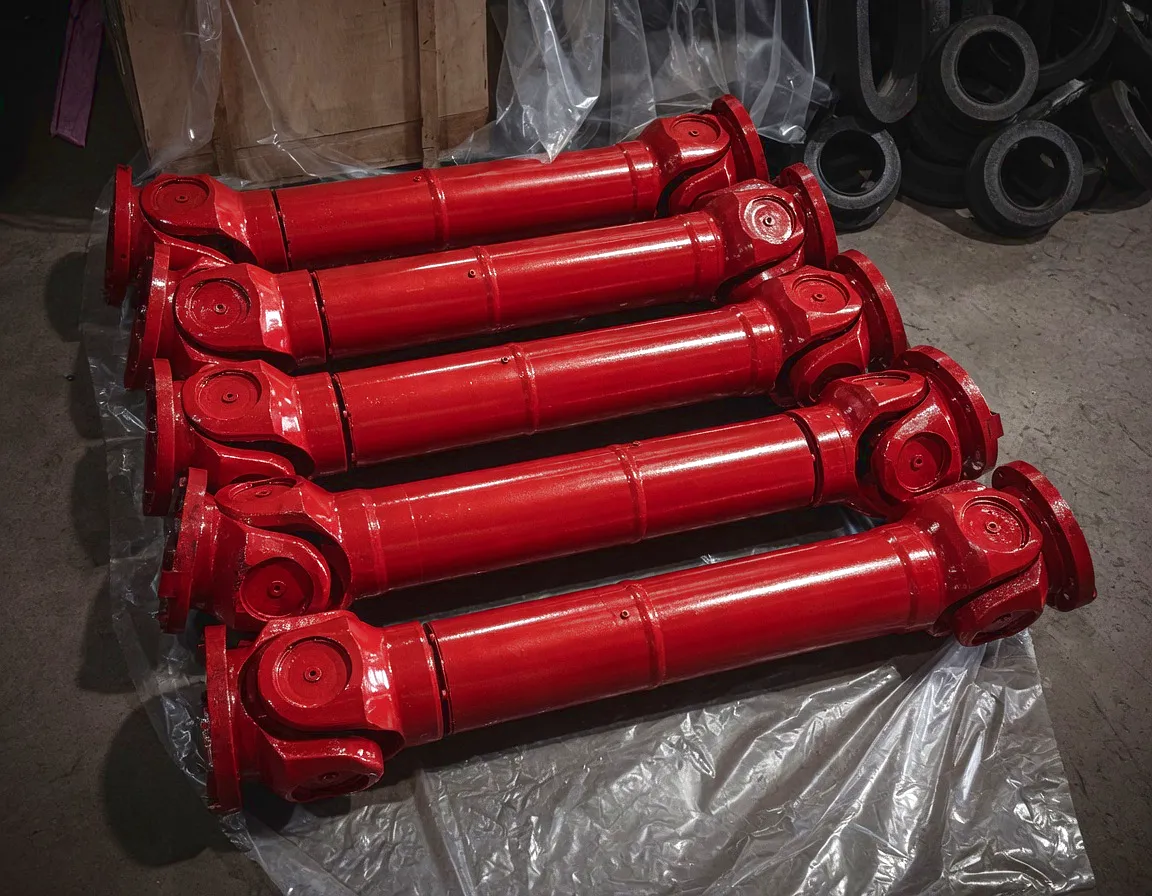
The performance ceiling of any cardan coupling is defined by its materials. Ever Power’s heavy-duty double cardan joints for agricultural applications use 20CrMnTi alloy steel for the cross journals — a chromium-manganese-titanium formulation that offers exceptional case-hardening characteristics. After carburising to a surface hardness of 58–62 HRC with a core hardness of 33–38 HRC, these journals resist surface pitting under cyclic contact stress while maintaining the toughness needed to absorb shock loads. The bearing cups are machined from GCr15 chromium bearing steel, ground to a surface roughness below Ra 0.4 μm, and heat-treated to 60–64 HRC. Needle rollers of the same material grade are sorted to within 2 μm diameter tolerance to ensure uniform load distribution across the bearing.
Yoke forgings are produced from 40Cr medium-carbon alloy steel, quenched and tempered to achieve a tensile strength above 850 MPa. The spline profiles cut into each yoke are involute-form with a pressure angle of 30 degrees, broached to DIN 5480 tolerance, and surface-hardened by induction to resist fretting wear. Sealing is handled by multi-lip NBR seals rated to 120 °C continuous and 150 °C intermittent, a critical detail given the heat generated during sustained high-speed operation. The entire assembly is pre-packed with EP2 lithium-complex grease containing molybdenum disulphide (MoS2) solid lubricant additives, providing boundary lubrication protection during the brief but intense loading peaks that occur when a harvester hits a concealed stone or hard clod of earth.
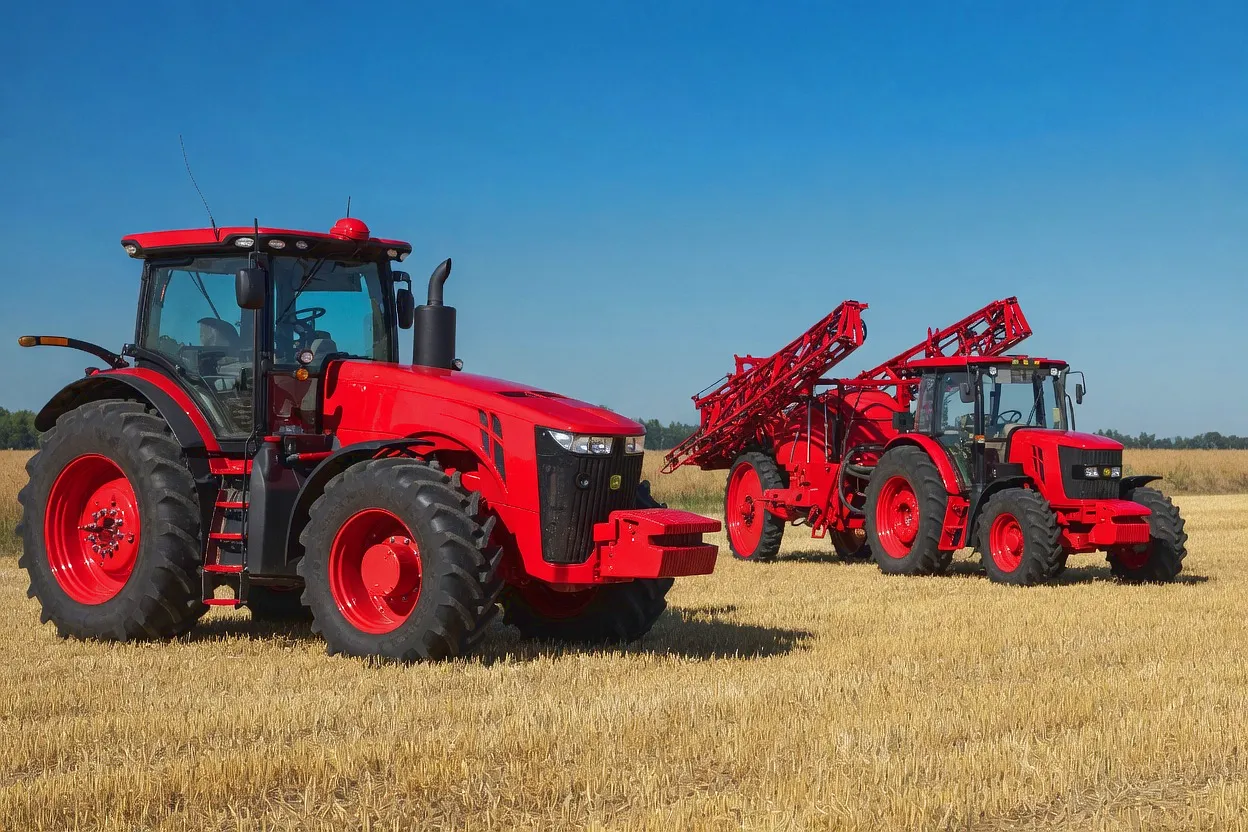
Technical Specifications — Heavy-Duty Double Cardan Joint Series
| Parameter | EP-DC 60 | EP-DC 80 | EP-DC 100 | EP-DC 120 |
|---|---|---|---|---|
| Nominal Torque (Nm) | 3,200 | 5,500 | 8,000 | 12,500 |
| Peak Torque (Nm) | 6,400 | 11,000 | 16,000 | 25,000 |
| Max Operating Angle | 25° | 22° | 20° | 18° |
| Max Speed (RPM) | 1,800 | 1,500 | 1,200 | 1,000 |
| Journal Cross Size (mm) | 27 x 74.5 | 30.2 x 92 | 34.9 x 10⁶ | 42 x 125 |
| Seal Type | Multi-lip NBR with dust shield | |||
| Lubrication | EP2 Lithium-complex + MoS2 (grease nipple fitted) | |||
| Yoke Material | 40Cr forged steel, quenched & tempered | |||
| Weight Range (kg) | 4.2 | 7.8 | 12.5 | 19.3 |
Key Advantages of Ever Power Cardan Couplings for Harvesting
🔩 Constant-Velocity Output
The phased double-joint geometry cancels velocity fluctuation, protecting threshing drums and cleaning mechanisms from damaging speed pulsation. This directly reduces grain cracking rates — a measurable yield quality improvement that translates to higher prices per tonne at UK grain merchants.
⚙️ Extreme Torque Capacity
Rated up to 12,500 Nm continuous with 2x peak overload allowance, these couplings absorb the violent torque spikes that occur when a harvester encounters a dense crop patch, tangled straw, or an unexpected obstruction. Over-engineering at the coupling prevents catastrophic downstream failures in gearboxes and shafts.
🛡️ Sealed Against Crop Debris
Multi-lip seals combined with integrated dust shields prevent the fine chaff, straw fragments, and grain dust that saturate the air during harvesting from entering the needle bearing assemblies. This contamination resistance is a decisive factor in coupling longevity — most premature failures in the field trace back to debris ingress through inadequate seals.
📐 Compact Envelope
Space inside a combine harvester is fiercely contested. Ever Power’s double cardan joint design achieves its torque rating within a package length 12–15% shorter than competing products at comparable capacity, freeing valuable installation space for other driveline and hydraulic components inside the machine frame.
Application Deep Dive: Power Flow Through the Combine Harvester
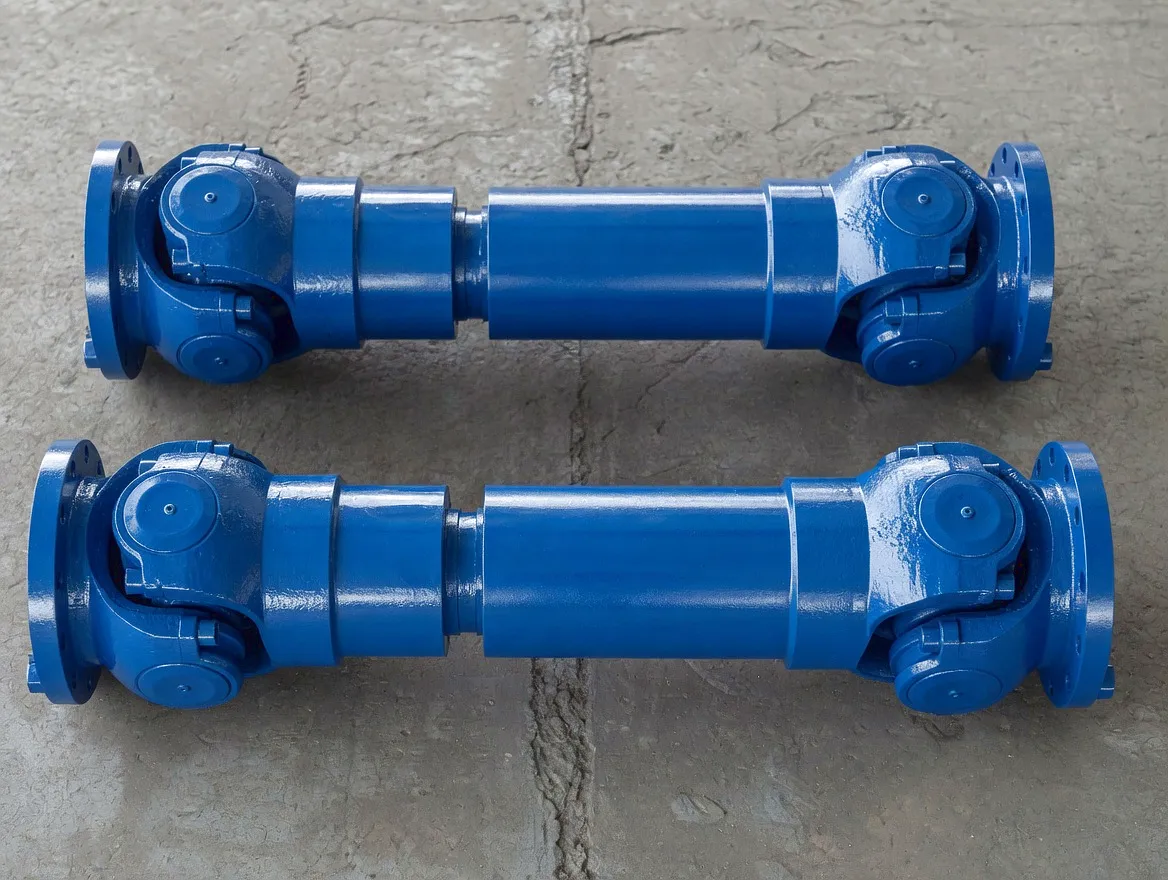 To appreciate where the cardan coupling fits, consider the power flow of a typical modern combine rated at 350 to 500 HP. The diesel engine drives a central gearbox, which splits output to the threshing system, the header drive, the cleaning system, and the propulsion hydrostatic drive. The header driveline is where cardan couplings earn their keep most dramatically. The header — which may span 7 to 12 metres on large UK arable machines — connects to the feeder house through a pivoting junction that must accommodate both lateral float (side-to-side tilt to follow ground contour) and fore-aft pitch as the header rises and falls. The operating angle at this junction changes continuously during field operation, sometimes shifting by 10 degrees or more within a single pass across a rolling field.
The cardan coupling installed at this position must transmit the full header drive torque — typically 2,500 to 4,000 Nm at the knife drive and reel system — while smoothly tracking angle changes that occur several times per second. A poorly matched coupling here introduces vibration into the cutter bar, accelerating sickle section wear, loosening guard bolts, and potentially cracking the knife head casting. Operators in Lincolnshire and East Anglia, where harvest windows can be as narrow as three weeks, cannot afford a two-day shutdown to replace a failed coupling during peak season. This is why specification matters as much as price when sourcing these components. The coupling must work flawlessly through 800 to 1,200 hours of seasonal operation — with nothing more than periodic greasing — or it is not fit for purpose in a professional harvesting operation.
Selection and Sizing Guide for UK Farming Conditions
Selecting the correct cardan coupling for a combine harvester begins with three numbers: the continuous torque requirement, the maximum operating angle, and the shaft speed at the installation point. For the header knife drive on a Class 7 or 8 combine operating in UK wheat, the continuous torque demand typically falls between 2,800 and 3,500 Nm, with transient peaks reaching 6,000 Nm during heavy crop ingestion. The operating angle at the header-feeder house junction normally ranges from 5 to 15 degrees, with brief excursions to 20 degrees on hilly ground. Shaft speed is usually 540 RPM (standard PTO speed) or 1,000 RPM depending on the drive configuration.
Given these parameters, the EP-DC 80 or EP-DC 100 from the Ever Power range covers most UK combine header applications with comfortable margin. The selection should account for the service factor — typically 1.5 to 2.0 for agricultural machinery subject to shock loading — meaning a drive with 3,500 Nm continuous demand requires a coupling rated for at least 5,250 Nm. The EP-DC 80 at 5,500 Nm nominal satisfies this for moderate-duty headers, while the EP-DC 100 at 8,000 Nm provides the headroom needed for the largest headers and most aggressive harvesting conditions. British dealers and farm workshops familiar with these products can verify fitment dimensions against the OEM shaft and spline specifications; Ever Power’s technical team also provides dimensional verification drawings on request to ensure drop-in compatibility with existing machines.
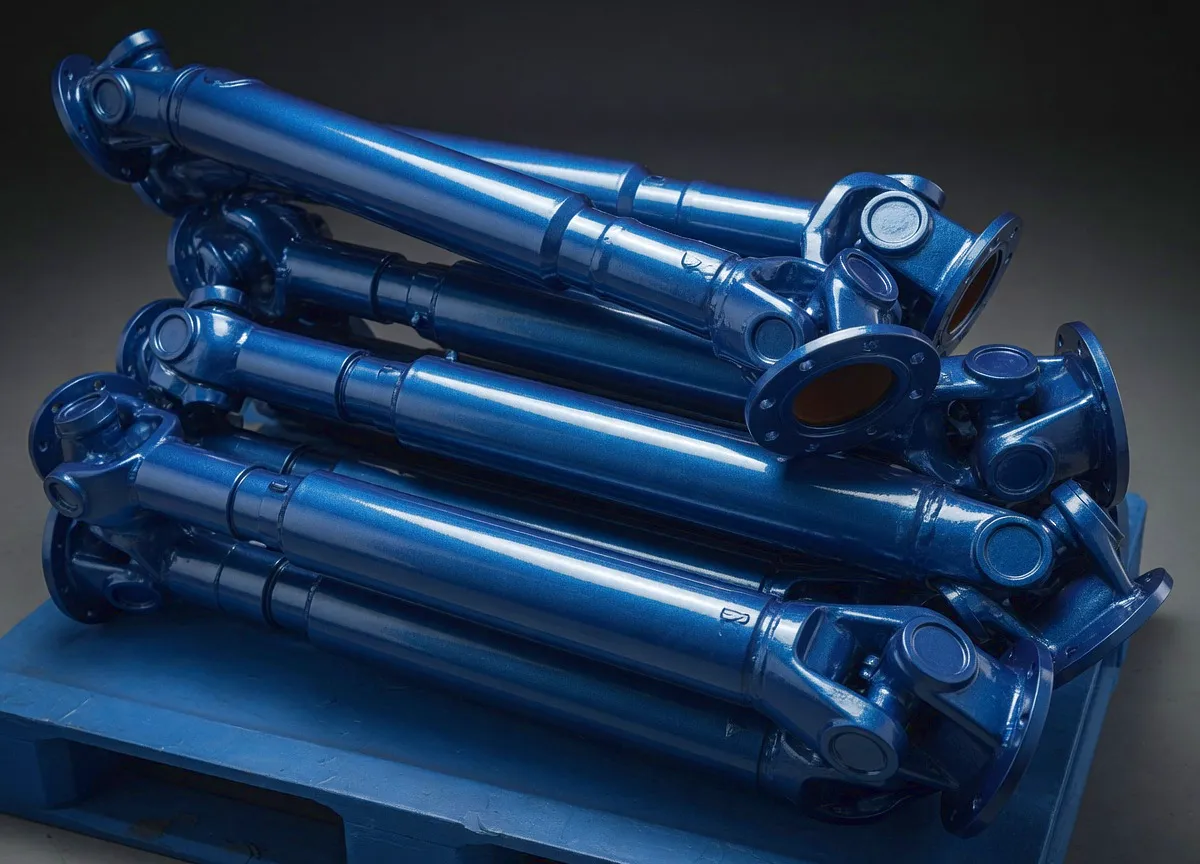
Overcoming Field Challenges: Crop Debris, Load Surges, and British Weather
Anyone who has stood beside a working combine during harvest knows the environment is punishing. The air is thick with dust and chaff. Temperatures inside the machine frame can exceed 60 °C on a warm August afternoon. Straw wraps around exposed shafts with remarkable persistence. And the British climate adds its own twist: a sudden rain shower can transform a dry, dusty field into a partially damp one within thirty minutes, causing crop material to clump and bind on rotating components. The cardan coupling must function reliably through all of this. The sealed bearing design used by Ever Power addresses contamination ingress, but the engineering extends beyond seals alone. The grease nipple fitted to every bearing cap allows operators to purge old lubricant and flush out any moisture that accumulates during overnight condensation — a common issue when machines are parked in open fields during the harvest campaign rather than returned to covered storage each night.
Load surges present the other major challenge. When a combine enters a particularly dense stand of wheat — or worse, encounters a patch of weeds or volunteer oilseed rape tangled through the crop — the torque demand on the header drive can spike to double or triple the steady-state value within a fraction of a second. The cardan coupling absorbs this through the torsional compliance of its yoke-and-cross geometry, spreading the shock across the needle bearing contact surfaces rather than concentrating it at a single point. The 2x peak overload rating specified in the Ever Power technical data is not a marketing claim but a design requirement validated by accelerated fatigue testing that simulates thousands of impact cycles at maximum rated angle.
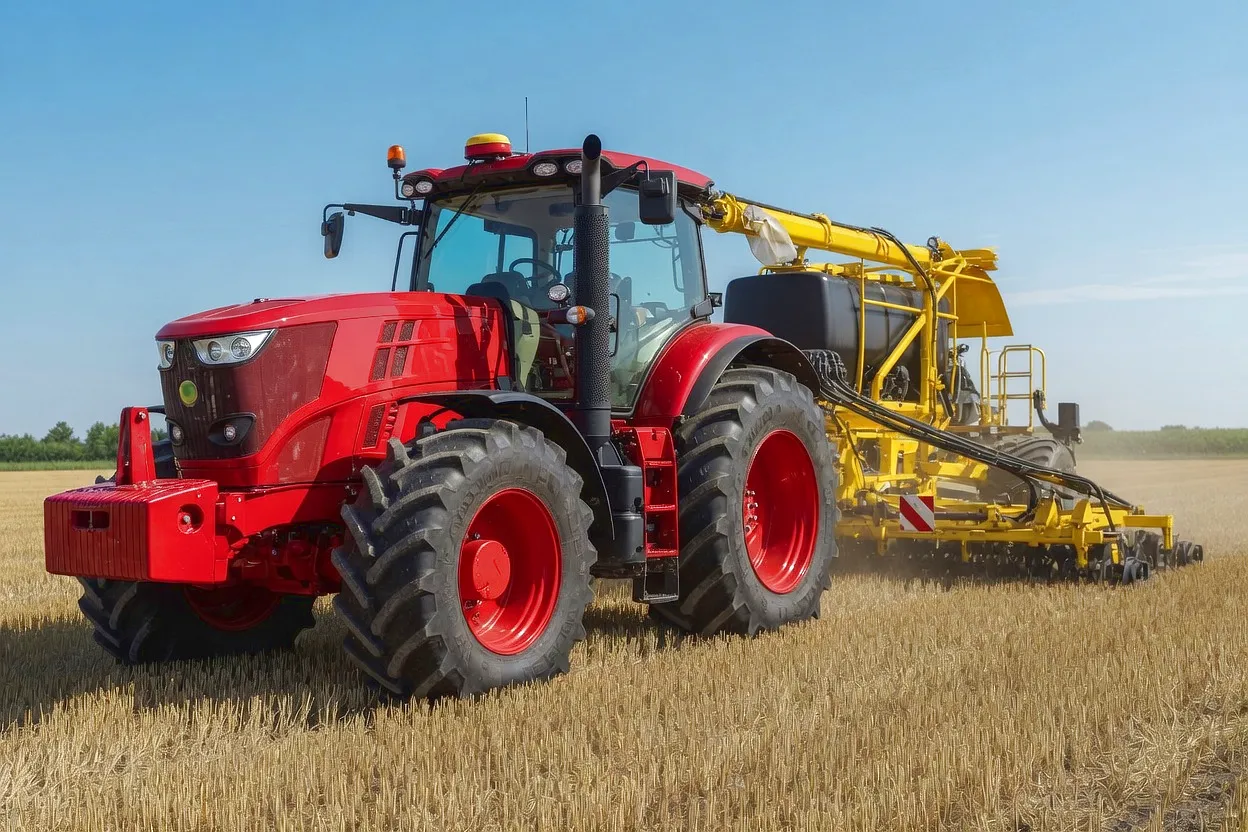
Customer Success: Fenland Grain Contractors, Cambridgeshire
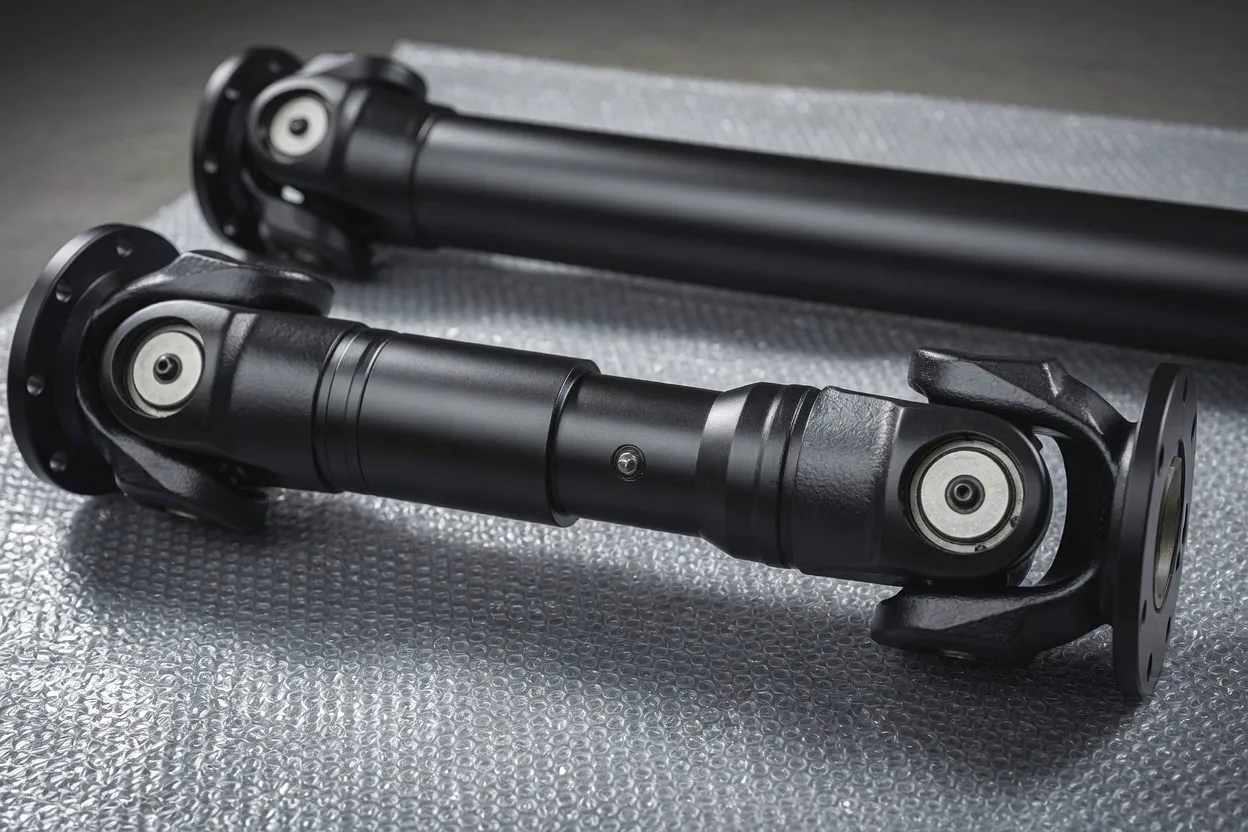 Fenland Grain Contractors operates six Class 8 combine harvesters across 14,000 acres of cereal crops in the Cambridgeshire and Norfolk Fens — some of the most productive arable land in the United Kingdom. During the 2025 harvest season, the company experienced repeated cardan coupling failures on two machines fitted with budget aftermarket joints sourced through a general agricultural parts distributor. Each failure resulted in approximately 18 hours of downtime including diagnosis, parts sourcing, and reinstallation — a loss the company estimated at over £4,200 per incident when accounting for the cost of idle machinery, delayed harvest, and additional drying charges for grain left standing in deteriorating weather.
Following a consultation with Ever Power’s UK applications support team, Fenland Grain Contractors replaced the failed couplings with EP-DC 80 heavy-duty double cardan joints sized for the specific torque and angle requirements of their header drive systems. The engineering team at Ever Power reviewed the OEM shaft dimensions, confirmed spline compatibility, and recommended a greasing interval matched to the high-dust conditions typical of Fenland peat soils. The replacement couplings completed the remaining 640 hours of the 2025 season without a single issue and are still in service heading into the 2026 harvest with no measurable bearing play. The company has since standardised on Ever Power cardan couplings across their entire fleet, citing the reduction in unplanned downtime as the single largest improvement to their harvest campaign logistics.
“We tried three different coupling brands before settling on Ever Power. The difference is night and day — zero vibration at the header, no bearing failures in two full seasons, and the greasing interval is practical rather than theoretical. These are properly engineered components, not cheap copies.”
— James Hargreaves, Fleet Manager, Fenland Grain Contractors, Cambridgeshire
“I run a 3,500-acre mixed farm in the Scottish Borders and our harvest window is brutally short. When I switched to the EP-DC 100 on our main combine, the improvement in header smoothness was immediately noticeable. My operator commented that the cutter bar felt ‘like new’ again. That is the kind of feedback that justifies the investment.”
— Robert McIntyre, Owner-Operator, Borders Arable Partnership, Scottish Borders
“We’re an agricultural dealer in Hampshire supplying parts to farms across the South of England. Ever Power’s cardan couplings have become our go-to recommendation for harvester driveline replacements. The dimensional accuracy is excellent — they drop straight in — and we’ve had zero warranty returns in eighteen months of stocking them.”
— Sarah Whitfield, Parts Director, Wessex Agricultural Supplies, Hampshire
Beyond the Header: Other Cardan Coupling Positions on Combine Harvesters
While the header-to-feeder house junction is the most demanding installation point for a cardan coupling on a combine harvester, it is far from the only one. The straw chopper drive on machines equipped with residue management systems typically requires a cardan coupling rated for 1,500 to 2,500 Nm, operating at lower angles (3 to 8 degrees) but at higher speeds — often 2,500 to 3,400 RPM for the chopper rotor. The grain unloading auger drive is another common application, particularly on machines where the unloading tube folds for transport and requires an articulated driveline connection. Even the engine-to-gearbox junction on some older combine designs uses a cardan coupling to compensate for chassis flex, though modern machines increasingly use elastomeric couplings at that position. The Ever Power product range covers all of these positions with models scaled from the compact EP-DC 60 up to the heavy-duty EP-DC 120, ensuring that every driveline connection in the harvester can be matched with an appropriately rated cardan coupling.
Agricultural machinery is not the only sector where these products find application. Ever Power supplies double cardan joints to the UK steel rolling industry, paper mills, marine propulsion systems, and industrial pumping stations — any application where angular misalignment between shafts must be accommodated while maintaining smooth, constant-velocity torque transmission. The engineering principles are identical; what changes between applications is the scale, the operating environment, and the specific material and sealing requirements. This cross-industry experience strengthens the agricultural product line because lessons learned from, say, the extreme cleanliness demands of food-grade processing equipment inform the sealing technology applied to agricultural couplings exposed to crop debris.
Recommended Maintenance Schedule for UK Harvest Conditions
| Maintenance Action | Interval | Notes |
|---|---|---|
| Grease all bearing caps | Every 50 hours | Use EP2 lithium-complex grease; pump until fresh grease exits seal |
| Check for play in cross journals | Every 100 hours | Rock the yoke by hand — any detectable play indicates bearing wear |
| Inspect seals for damage | Every 200 hours | Replace seals showing cracks, hardening, or lip damage |
| Verify spline engagement | Pre-season | Measure spline wear with go/no-go gauge; replace if worn beyond 0.1mm backlash |
| Full coupling replacement | Every 3–5 seasons | Planned replacement prevents in-season failure; retain old unit as emergency spare |
Ever Power Manufacturing: Custom Cardan Coupling Engineering
Ever Power operates a vertically integrated manufacturing facility equipped with CNC forging presses, automated heat treatment lines, precision grinding centres, and in-house metallurgical testing laboratories. This vertical integration is what enables the company to offer custom cardan coupling solutions that go far beyond selecting from a catalogue. When a customer in the UK agricultural sector needs a coupling with non-standard spline dimensions to fit an older or rare combine harvester model — a Claas Dominator 98, a vintage Massey Ferguson 860, or a lesser-known make imported from continental Europe — Ever Power’s engineering team can reverse-engineer the original component from sample measurements or technical drawings and manufacture a replacement to OEM or improved specifications. Custom yoke lengths, non-standard bore diameters, alternative flange mounting patterns, and application-specific seal materials are all within the standard scope of the custom engineering service.
The custom capability extends to prototype development for OEM customers designing new harvester models or retrofitting existing platforms with updated driveline architectures. Ever Power has supported machinery manufacturers across Europe with prototype cardan couplings delivered within four to six weeks from initial enquiry, including finite element analysis of stress distribution, 3D CAD models for integration into the customer’s assembly environment, and pre-production samples for field validation. For UK-based OEMs and tier-one agricultural equipment manufacturers, this responsiveness eliminates the long lead times and minimum order quantities that typically constrain bespoke component procurement. Whether the requirement is for a single prototype or a production run of 5,000 units, the same engineering rigour and quality control applies.
Serving UK Agriculture: From East Anglia to the Scottish Highlands
The United Kingdom’s agricultural sector harvests approximately 16 million tonnes of cereals annually, with the majority concentrated in the eastern and southern counties of England and the lowlands of Scotland. The combine harvester fleet operating across this acreage numbers in the thousands, ranging from compact 250 HP machines on mixed farms in Devon and Somerset to 600 HP tracked behemoths covering the vast arable expanses of the East Midlands and East Anglia. Each one of these machines relies on cardan couplings at multiple driveline positions, and the replacement parts market for these components is substantial. Ever Power supplies directly to farms, agricultural dealers, and machinery workshops throughout England, Scotland, and Wales, with distribution logistics designed to ensure rapid delivery during the time-critical harvest period when a parts delay of even 48 hours can translate into significant financial loss.
Regional conditions across the UK influence coupling selection in subtle but important ways. The heavy clay soils of the Midlands produce more violent chassis movement than the light silts of the Fens, increasing operating angles at the header junction. The wetter harvest conditions typical of the North West and Wales mean greater exposure to moisture and a correspondingly higher risk of bearing corrosion if seals are compromised. The steep gradients found on farms in the Welsh Marches and the Yorkshire Dales push machines to their maximum articulation angles, testing the limits of any coupling’s angular capacity. Understanding these regional nuances is part of the applications engineering knowledge that Ever Power brings to customer consultations, helping buyers across the United Kingdom select the right cardan coupling model for their specific terrain, crop type, and machine configuration.
Frequently Asked Questions
Where can I find a reliable cardan coupling supplier for combine harvesters in the UK?
How much does a heavy-duty double cardan joint for a combine harvester cost in the United Kingdom?
What is the difference between a single cardan joint and a double cardan joint on harvesting equipment?
How often should I replace the cardan coupling on my combine harvester during UK harvest season?
Can Ever Power supply custom cardan couplings for vintage or older model combine harvesters?
Which cardan coupling specification works best for high-horsepower combine harvesters used on UK farms?
What causes premature cardan coupling failure on combine harvesters and how can I prevent it?
How do I get a quick quote for cardan couplings delivered to my farm in England or Scotland?
Ready to Improve Your Harvester’s Driveline Performance?
Contact Ever Power’s applications engineering team for expert cardan coupling selection, custom manufacturing, and fast UK delivery. Eighteen years of driveline engineering experience — applied to your machine.
© 2026 Ever Power Group Co., Ltd. · Cardan coupling solutions for agriculture, industry, and beyond · edit by gzl