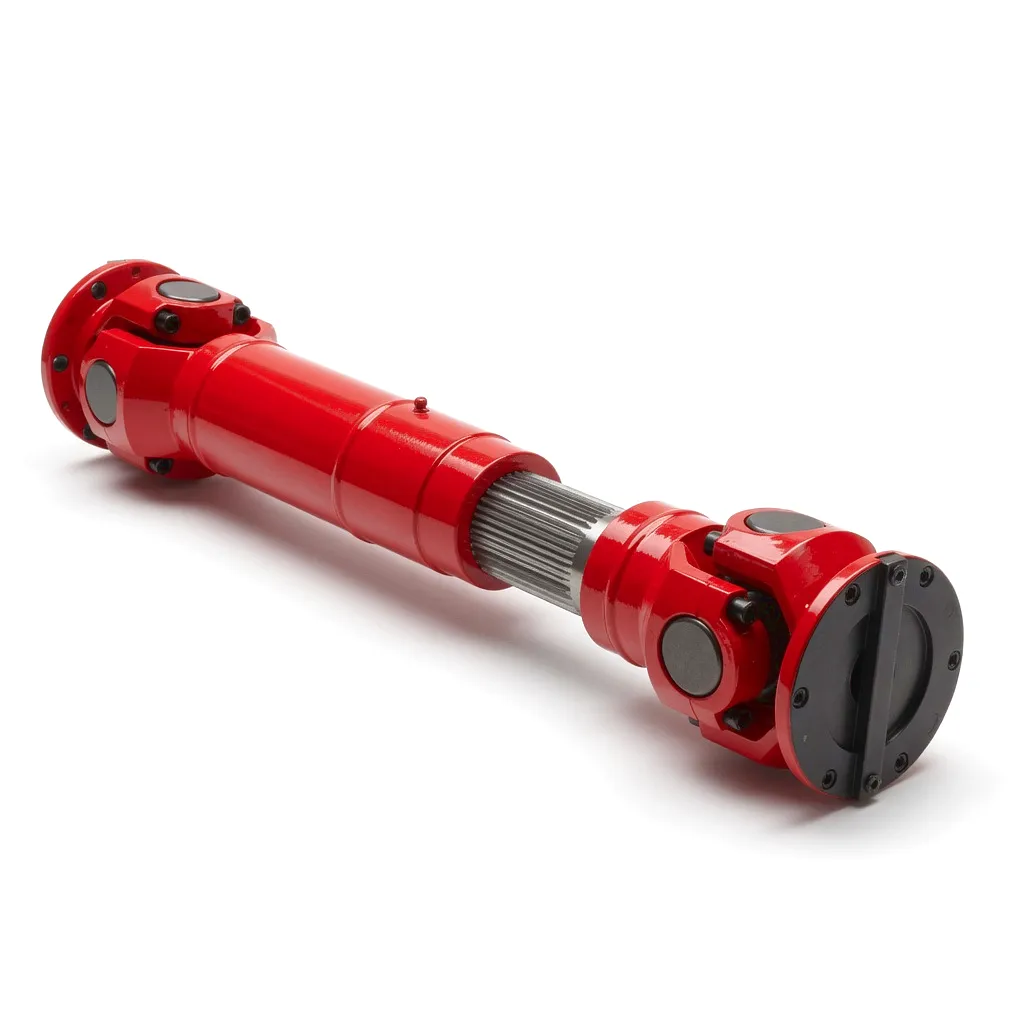
 The British wind energy industry has matured dramatically over the past two decades. With the UK ranking among Europe’s leading producers of wind-generated electricity and offshore capacity continuing to expand from the North Sea to the Irish Sea, the engineering demands placed on turbine drivetrain components have never been more stringent. At the heart of many of these high-performance transmission systems sits a cardan coupling — a deceptively robust piece of engineering that bridges the rotor’s main shaft and the gearbox input while tolerating the angular misalignments, shock loads, and torsional oscillations that characterise real-world wind loading.
What follows is a detailed, practice-focused exploration of why cardan couplings have become an essential specification in modern wind turbine drivetrains — covering engineering principles, material science, performance data, UK application cases, and procurement guidance for maintenance engineers and project buyers across England, Scotland, and Wales.
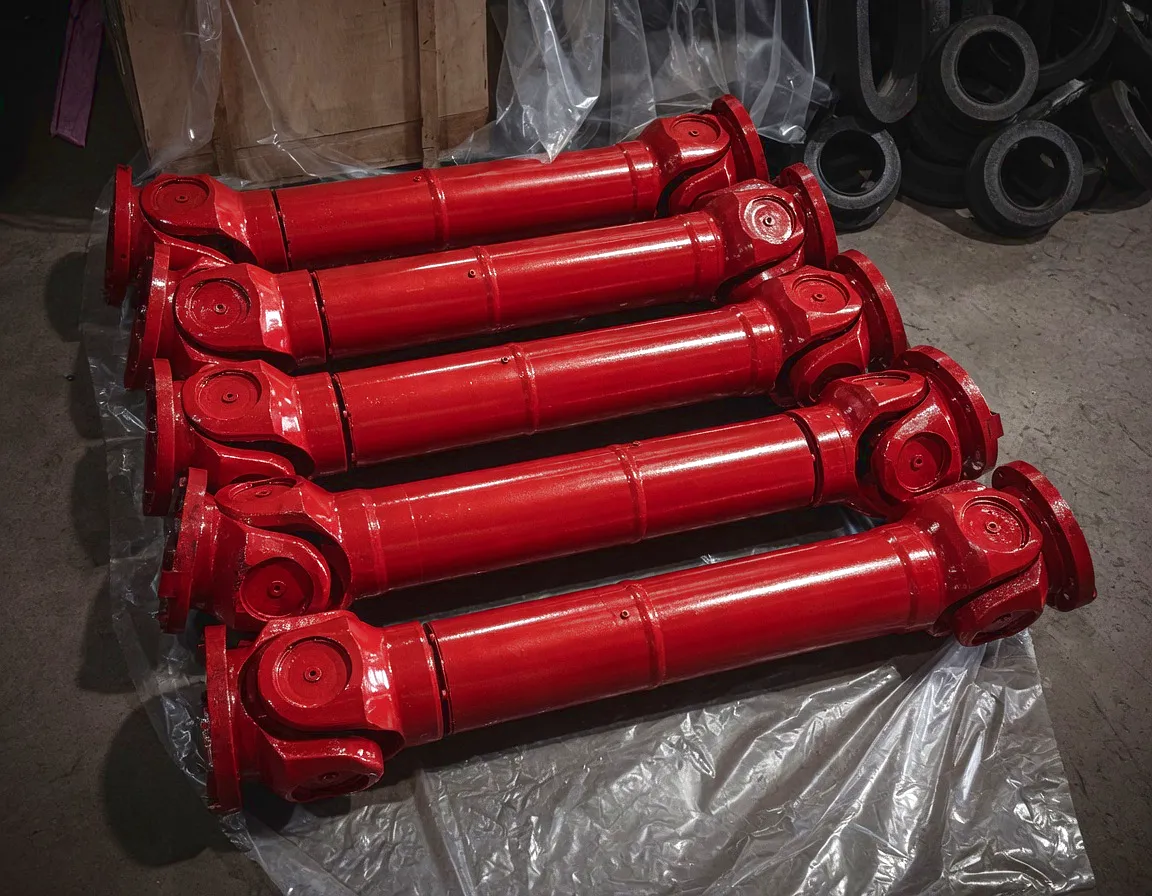
What Exactly Is a Cardan Coupling and Why Do Wind Turbines Need One?
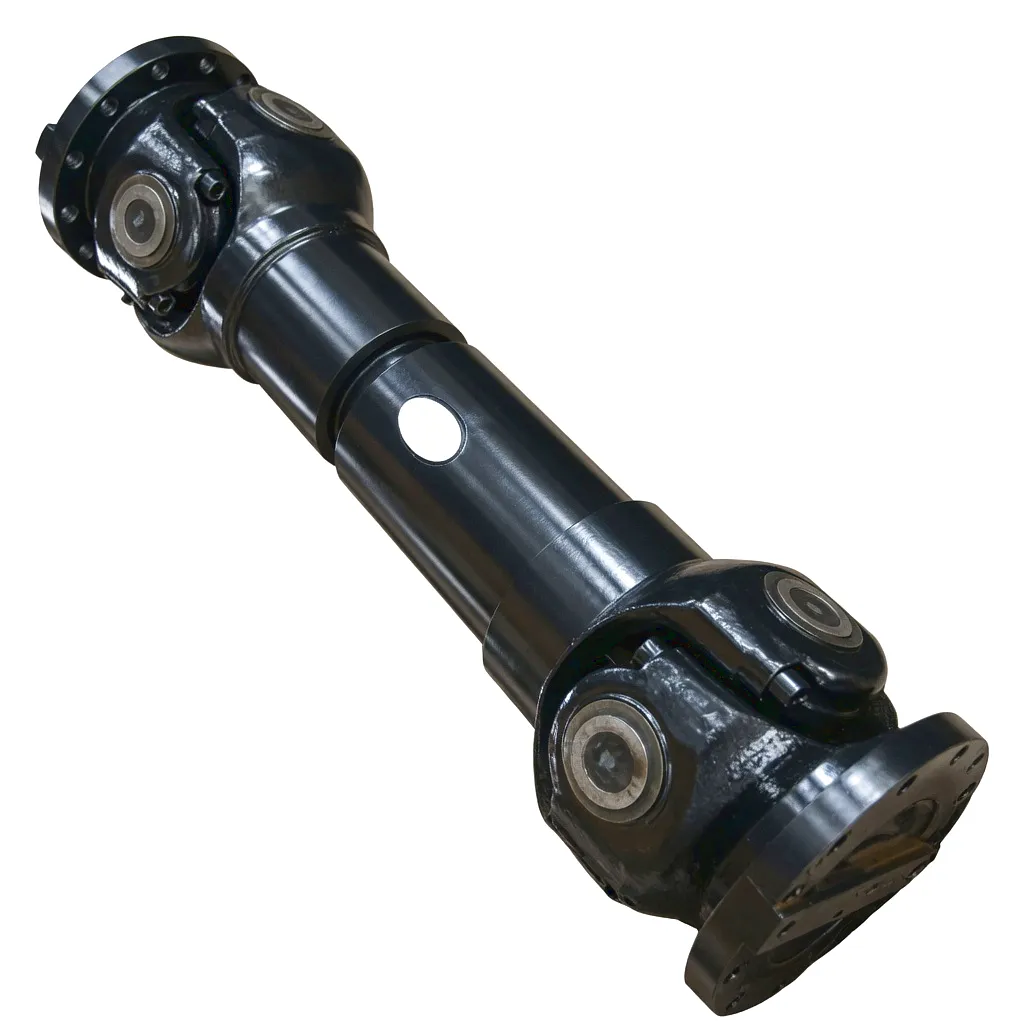 A cardan coupling — also referred to as a universal joint coupling or Cardan shaft coupling — is a mechanical power transmission device built around one or more cross-joint (spider) assemblies that can accommodate significant angular misalignment between two rotating shafts, typically up to 15° per joint. Unlike rigid couplings or even flexible disc couplings, the cardan design inherently tolerates continuous angular displacement without transferring bending moments back into the connected equipment, making it exceptionally well-suited to large rotating machinery where perfect shaft alignment is neither achievable nor maintainable over the service life.
In a wind turbine drivetrain, the rotor hub connects to a low-speed main shaft spinning anywhere from 5 to 20 RPM. That shaft then feeds into a gearbox (in conventional three-stage designs) or directly into a medium-speed generator. The problem is structural: the nacelle, main shaft, and gearbox never remain in perfect alignment. Tower deflection, rotor aerodynamic thrust, thermal expansion of the nacelle frame, and foundation settlement all introduce dynamic misalignment that fluctuates with every gust. A cardan coupling absorbs precisely these kinds of continuous, variable angular offsets without transmitting destructive side-loads into gearbox bearings or generator windings.
Beyond the main shaft connection, cardan couplings appear in yaw drive gearboxes (which rotate the entire nacelle into the wind), pitch control actuators (which adjust individual blade angles), and auxiliary hydraulic pump drives. Their combination of high torque capacity, shock-load tolerance, and compact cross-section means they slot into tight nacelle spaces where bulkier couplings simply cannot fit.
How a Cardan Coupling Works: The Mechanics Behind the Reliability
The fundamental operating principle of any cardan coupling rests on the Hooke’s joint geometry. Two yoke flanges, oriented 90° to each other, are connected through a hardened cross-journal (spider) assembly fitted with needle roller bearings at each trunnion. This arrangement allows the driving and driven yokes to pivot independently in two planes simultaneously, producing continuous rotation across an angular offset. When two Hooke’s joints are combined in a double-cardan (constant-velocity) configuration with the intermediate shaft set at equal but opposite joint angles, the inherent velocity fluctuation of a single joint cancels out, delivering a smooth, constant-velocity output — critical for minimising torsional vibrations in gearbox input stages.
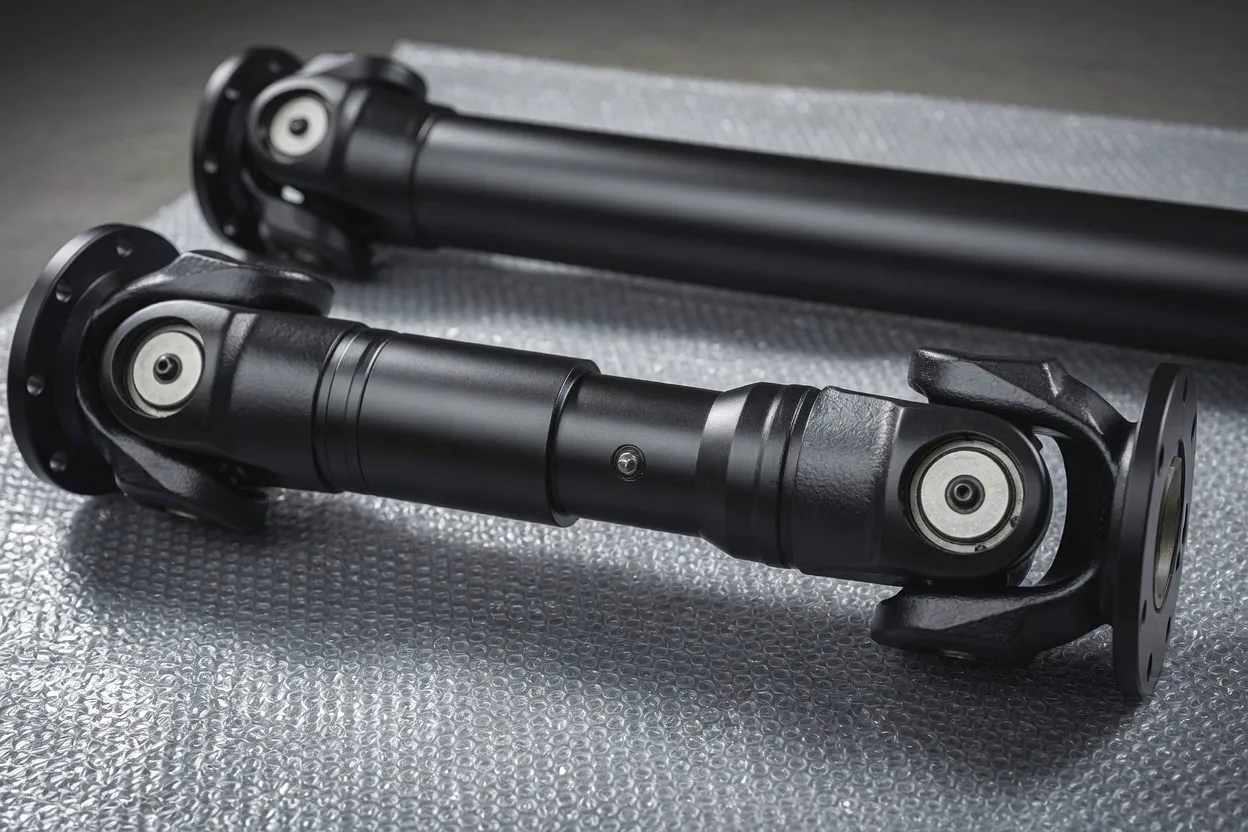
The needle roller bearings at each trunnion are engineered to handle both radial and axial loads simultaneously. In wind turbine applications, these bearings are typically sealed and pre-greased or fitted with centralised lubrication ports, because nacelle access for manual greasing is both expensive (especially offshore) and difficult to schedule. The spider material is typically case-hardened alloy steel (commonly 20CrMo or 20CrMnTi), providing a hard wear-resistant surface over a tough, ductile core — exactly the metallurgical combination needed when impact torque spikes from grid connection events or emergency braking can reach three to five times nominal torque.
Flanged yokes and flange adaptors — machined to tight DIN or ISO tolerances — complete the assembly. The flange bolting pattern is engineered to distribute load uniformly across the joint interface, preventing fretting corrosion at the mating faces under cyclic loading. On offshore-rated units, stainless fasteners and marine-grade coating systems are standard.
Technical Performance Parameters for Wind Turbine Cardan Couplings
| Parameter | Standard Series | Heavy-Duty Wind Series | Offshore Rated |
|---|---|---|---|
| Nominal Torque (Tn) | 500 – 50,000 Nm | 50,000 – 800,000 Nm | Up to 1,200,000 Nm |
| Max Angular Misalignment | Up to 8° | Up to 12° | Up to 15° |
| Operating Speed Range | 5 – 500 RPM | 3 – 200 RPM | 3 – 120 RPM |
| Shock Load Factor (Ks) | 2.0 – 2.5 | 2.5 – 3.5 | 3.0 – 4.5 |
| Spider Material | 42CrMo4 | 20CrMnTi (case-hardened) | 20CrMnTi + DLC coating |
| Operating Temperature | -20°C to +100°C | -30°C to +100°C | -40°C to +100°C |
| Lubrication Type | Grease-packed sealed | Centralized lubrication port | Sealed for life / CLU |
| Surface Protection | Zinc-phosphate + paint | Epoxy primer + topcoat | Marine C5-M coating system |
| Design Standards | DIN 808 / ISO 4183 | DIN 808 / GL Wind 2010 | GL Wind / DNV-ST-0437 |
Materials, Construction Quality, and Product Advantages
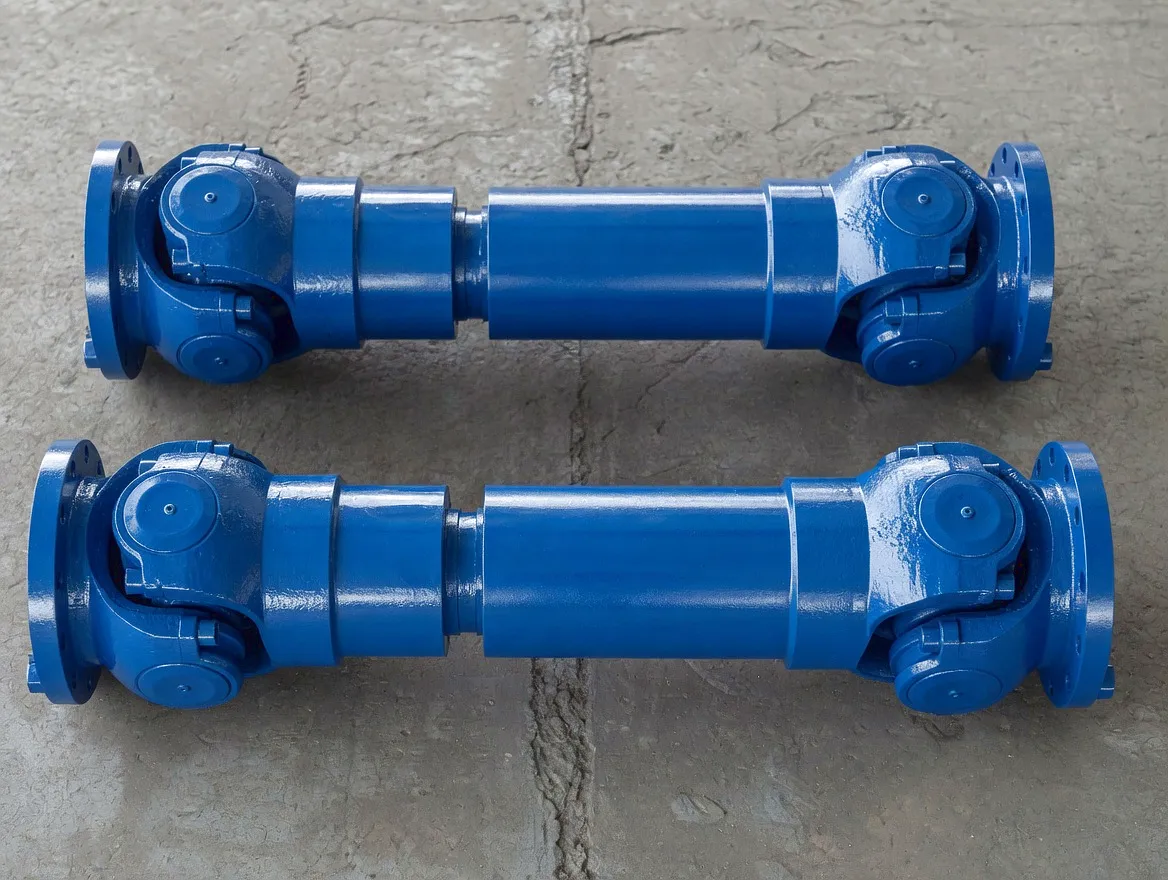
The performance of a cardan coupling over a 20–25 year wind turbine design life depends almost entirely on material selection and manufacturing precision. Ever Power sources forgings from ISO 9001–certified steel mills, with each cross-journal (spider) blank heat-treated to achieve a surface hardness of 58–62 HRC while retaining a core impact toughness exceeding 60 J at -30°C. This dual-property combination is non-negotiable in wind applications, where sub-zero nacelle temperatures during UK winter operations can cause brittle fracture in inferior-grade alloys. The yoke flanges are machined on CNC turning centres with concentricity tolerances held to within 0.02 mm, eliminating the residual imbalance forces that accelerate bearing fatigue in high-cycle applications.
High Torque Density
Compact cross-section transmits up to 1.2 MNm in the largest offshore-rated frames, enabling fitment within constrained nacelle envelopes.
Angular Misalignment Tolerance
Absorbs up to 15° angular offset per joint, protecting gearbox and generator bearings from bending loads even under rotor thrust excursions.
Extended Maintenance Intervals
Sealed-for-life or centralised lubrication options stretch service intervals to 24–36 months, reducing costly technician access to offshore nacelles.
Shock Load Absorption
Needle roller trunnion bearings combined with precision-ground spiders dissipate transient torque spikes from emergency stops and grid faults without plastic deformation.
Corrosion Resistance
Marine-grade C5-M coating systems and optional stainless-steel fasteners give offshore-rated units a 25+ year corrosion protection life in North Sea salt spray environments.
Custom Engineering
Flange patterns, shaft bore diameters, intermediate shaft lengths, and coating specs can all be tailored to match existing OEM or retrofit installation interfaces.

Where Cardan Couplings Operate Inside a Wind Turbine
The nacelle of a multi-megawatt wind turbine is a densely packed mechanical system. Understanding precisely where a cardan coupling fits — and which variant is appropriate for each position — is essential for both OEM designers and O&M engineers managing retrofit or repair programmes.
▶ Main Shaft to Gearbox Input (High-Torque Zone)
This is the highest-torque location in the drivetrain. In a 3 MW turbine, peak input torques can reach 2.5–3.5 MNm during emergency stops. Double-flanged cardan couplings with oversized needle roller trunnions are specified here, often with an integrated torsional compliance element to damp first-mode drivetrain resonances. UK offshore operators have seen gearbox bearing life extended by 30–40% after replacing worn disc couplings with correctly rated cardan couplings at this interface.
▶ Yaw Drive System (Nacelle Rotation)
Multiple yaw motors engage simultaneously to rotate the 60–100 tonne nacelle. Each motor output shaft connects through a compact single-joint cardan coupling to a yaw gearbox. The coupling must accommodate minor angular misalignments between the motor and gearbox mounting faces, which shift under the structural deformations of yaw manoeuvres. Cardan couplings here must also resist vibration-induced fretting while stationary during parked turbine periods — a failure mode that straight rigid couplings cannot handle.
▶ Blade Pitch Drive (Individual Blade Control)
Individual pitch control systems use electric or hydraulic actuators to adjust each blade’s angle independently, enabling power curve optimisation and load reduction. A compact cardan coupling connects the pitch motor output to the worm-gear or planetary pitch gearbox, compensating for the slight misalignment inherent in the hub’s rotating structure. Given that pitch actuators operate continuously throughout turbine life — executing hundreds of thousands of angular corrections — the cardan coupling’s ability to operate under constant cyclic angular displacement without developing backlash is critical.
▶ Auxiliary Systems (Cooling Fans, Hydraulic Pumps)
Nacelle cooling fans and hydraulic power units (for brake actuation and hydraulic pitch systems) are driven from the main shaft or from dedicated induction motors. Compact cardan couplings provide vibration isolation between these auxiliary drives and the main drivetrain, preventing high-frequency motor vibration from entering the main shaft bearing housings. In the event of a cooling system failure, this isolation also allows rapid motor replacement without disturbing the drivetrain alignment.
UK Wind Energy Sector: Drivetrain Component Procurement Context
The United Kingdom’s wind energy sector is unique in several engineering respects. Offshore installations like Hornsea One, Hornsea Two, and the developing Dogger Bank projects face corrosion environments far more aggressive than most European onshore sites, with salt spray concentrations, humidity, and thermal cycling all working against exposed drivetrain components. UK onshore wind across Scotland, Wales, and northern England encounters extreme gusting profiles — particularly in highland sites — that generate high-frequency torque spikes not present in calmer European continental conditions.

For O&M teams managing aging turbine fleets in Scotland or England, the practical procurement challenge is finding cardan couplings that either match legacy OEM bolt patterns exactly, or come with engineering support to create bespoke adapter flanges. Grid upgrade programmes that are retrofitting turbines with larger rotors (repowering) similarly need cardan couplings engineered to handle higher torque ratings than the original drivetrain design assumed. This is precisely the engineering challenge that Ever Power’s custom design team addresses as a routine matter — not an exception.
Supply chain resilience has moved to the top of procurement agendas across the UK energy sector since 2022. Wind project operators are increasingly seeking manufacturer relationships that offer documented quality management, short lead times on repeat orders, and technical co-engineering capability — rather than simply the lowest catalogue price. Ever Power’s engineering team works directly with UK-based project managers, offering drawing review, FEA validation, and factory acceptance testing for critical drivetrain couplings.
Client Success Story: Scottish Offshore Wind O&M Programme
Client: A leading UK-based offshore wind O&M contractor (wind farm operator, North Sea, Scotland)
Industry: Offshore Renewable Energy | Location: Aberdeen, Scotland, UK | Turbine Fleet: 52 × 3.6 MW geared turbines
The Challenge: During an annual inspection campaign in late 2023, the client’s O&M engineers identified accelerated wear on the main shaft cardan couplings across 11 turbines within a 7-year-old wind farm operating approximately 40 km off the Aberdeen coast. The original OEM couplings were showing fretting corrosion on the yoke flange mating faces and a measurable increase in backlash at the cross-joint, indicative of needle roller bearing wear accelerated by the farm’s particularly high annual average wind speeds (10.2 m/s) and salt spray exposure. Gearbox input bearing temperature trending data confirmed that misalignment loads were increasing.
The Solution: After reviewing drawings and torque history from the SCADA system, Ever Power’s engineering team proposed a direct-replacement cardan coupling set with upgraded specifications: 20CrMnTi spiders with DLC surface coating, C5-M marine coating on all external surfaces, sealed-for-life needle roller bearings rated to -40°C, and an intermediate shaft length adjusted to provide a 3 mm axial compensation range to simplify offshore installation. The flange bolt-hole pattern was maintained exactly to the original OEM standard, eliminating any modification to existing hub or gearbox flanges.
The Outcome: All 11 replacements were completed during a single scheduled maintenance window. Gearbox input bearing temperatures returned to normal operating range within the first week of resumed operation. Twelve months later, SCADA vibration and temperature data showed no indication of coupling wear, and the client extended the inspection interval on the remaining turbines’ couplings from 12 months to 24 months. Total avoided unplanned downtime over the subsequent year was estimated at over 1,400 turbine-hours — a significant AEP (annual energy production) saving for the project’s financial performance.

“
“The upgrade couplings installed faultlessly during our summer maintenance campaign. Gearbox bearing temperatures dropped noticeably within the first few operating days. The Ever Power team’s responsiveness to our technical queries — including providing full material certificates and an FEA summary for our asset owner — was exactly the level of support we needed for a critical component.”
— Senior Drivetrain Engineer, Offshore O&M Contractor, Aberdeen, Scotland
“
“We had a specific non-standard flange bore requirement from a 2015 OEM drivetrain design, and Ever Power accommodated it without any premium or delay. The delivered couplings matched our drawings to within tolerance, and the marine coating held up perfectly through the first winter season. We’ve since issued a preferred-supplier approval for their cardan coupling range.”
— Procurement Manager, Wind Energy Asset Owner, Newcastle upon Tyne, England
“
“We manage a portfolio of onshore turbines across mid-Wales, and the highland wind profiles here are brutal on drivetrain components. The heavy-duty cardan couplings we sourced from Ever Power for our repowering programme are now two years in with zero maintenance interventions. The sealed-for-life bearing option was a game changer for remote-site cost management.”
— Operations Director, Onshore Wind O&M Firm, Cardiff, Wales
Ever Power Factory: Custom Cardan Coupling Manufacturing Capability
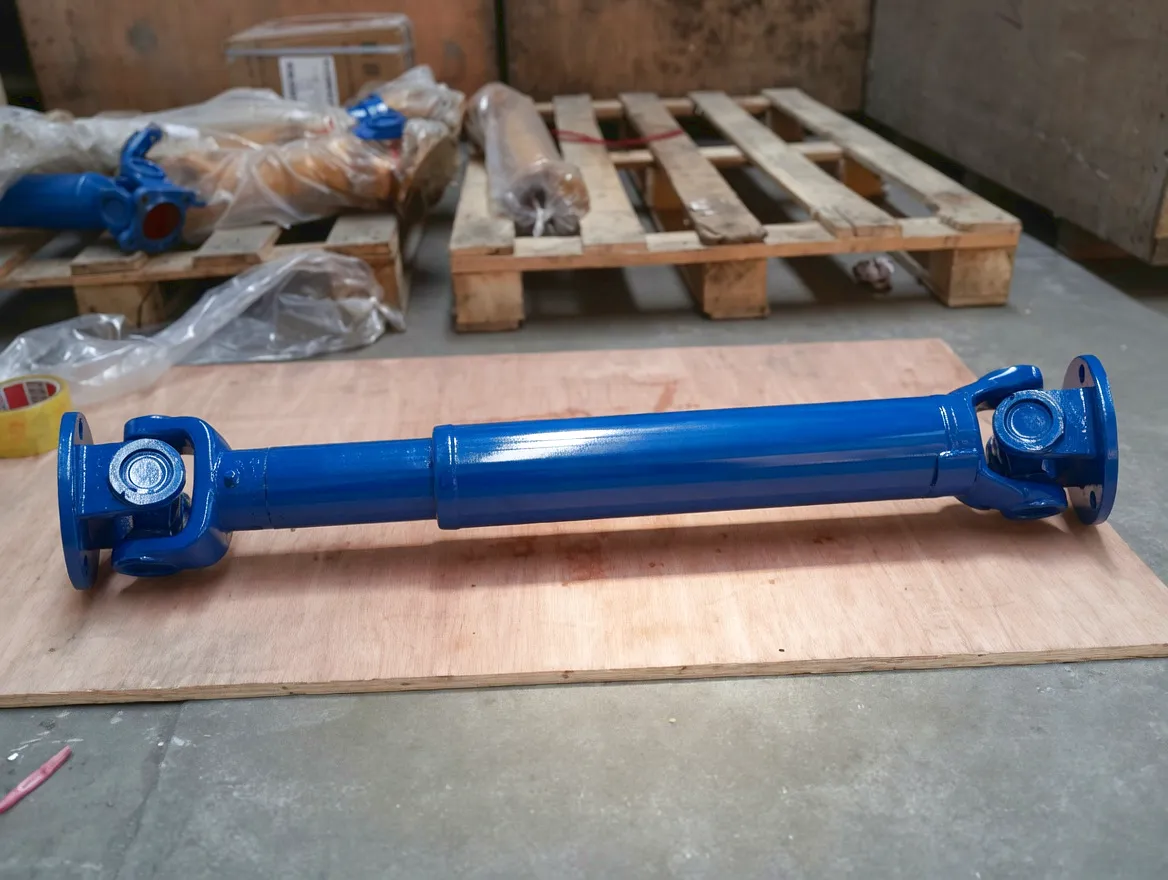
Ever Power operates a dedicated ข้อต่อคาร์ดาน manufacturing facility with an installed machine capacity covering everything from small-frame single-joint units (100 Nm) to large-bore double-cardan assemblies rated beyond 1,200 kNm. The factory’s CNC turning and milling centres hold tolerances to DIN quality grade 6, while the in-house heat treatment furnaces and quench lines are calibrated to AMS 2759 standards — the same specification used in aerospace and heavy industrial drivetrain production. A full CNC grinding line finishes trunnion journals to Ra 0.4 µm, which is the surface roughness specification required for needle roller bearing assemblies operating at low RPM under high load — exactly the conditions found in wind turbine main shaft interfaces.
What genuinely distinguishes Ever Power’s manufacturing offer is the custom design and co-engineering service. Clients are not limited to catalogue flange patterns or standard bore sizes. The engineering team accepts customer DXF/DWG drawings, performs in-house FEA on critical components, and issues a design validation report before committing to production. For UK wind projects requiring DNV or GL type certification, Ever Power can coordinate third-party witness inspection and provide full material traceability documentation from steel billet through to finished assembly. Lead times for custom cardan couplings are typically 4–8 weeks from design approval, with standard-range items typically shipped within 10 business days to UK addresses.
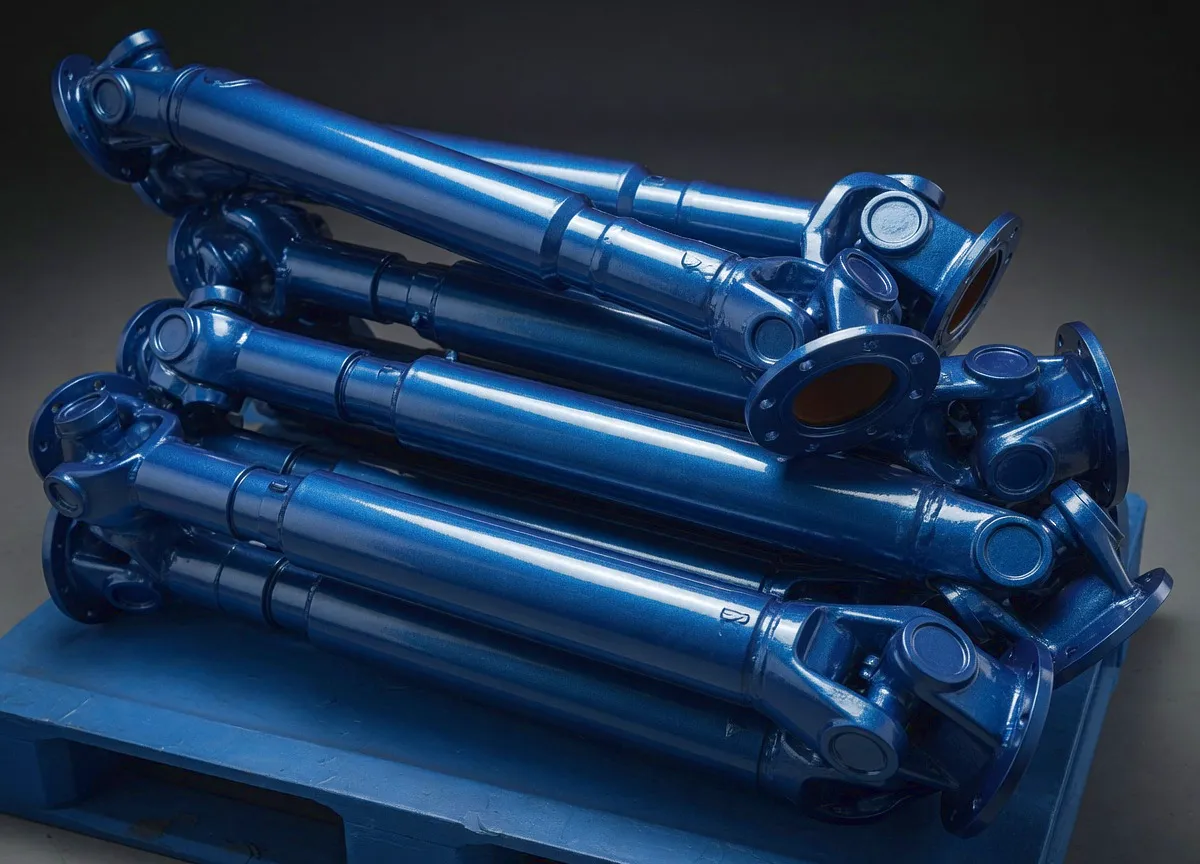
The product customisation capability extends to: non-standard flange face patterns (BCD, number of holes, bolt diameter), modified intermediate shaft lengths for specific installation constraints, alternative cross-journal materials for extreme temperature or chemical environments, integrated torque limiters or shear-pin provisions for overload protection, and bespoke surface treatment systems including thermal-spray metallic coatings for the harshest offshore exposure zones.
Cardan Coupling Selection Guide for Wind Turbine Positions
| Drivetrain Position | Recommended Type | Torque Range | Key Feature |
|---|---|---|---|
| Main Shaft → Gearbox | Double-Cardan (CV joint) | 500 kNm – 1,200 kNm | Constant-velocity, shock-rated |
| Gearbox HS Stage → Generator | Single-joint Cardan + flange | 50 kNm – 200 kNm | High-speed rated, balance grade |
| Yaw Motor → Yaw Gearbox | Compact single-joint | 1 kNm – 20 kNm | Fretting-resistant, vibration-isolated |
| Pitch Motor → Pitch Gearbox | Miniature cardan coupling | 0.5 kNm – 10 kNm | Zero-backlash, cyclic-rated |
| Auxiliary Pump Drive | Stub-shaft cardan coupling | 0.2 kNm – 5 kNm | Vibration isolation, quick-disconnect |
Frequently Asked Questions
Ready to Source a Cardan Coupling for Your Wind Turbine Drivetrain?
Whether you’re managing a North Sea offshore O&M programme, a Scottish onshore wind repowering project, or sourcing drivetrain components across England and Wales — our engineering team is ready to help you specify, validate, and procure the right cardan coupling solution.
edit by gzl