
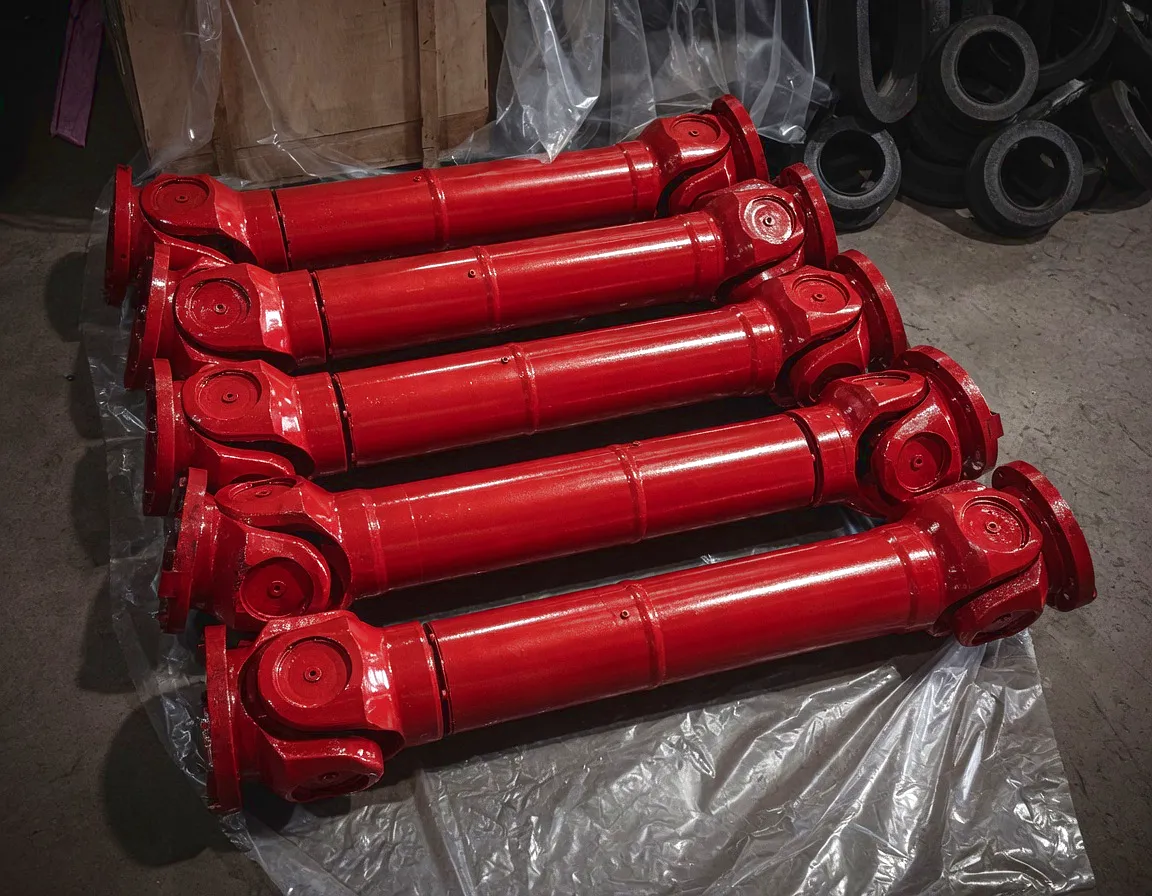
 Walk through any British farm during June or July and you will see hay rakes working flat out — rotary, parallel bar, side-delivery — all depending on a single driveline component to keep the tines spinning at exactly the right speed. That component is the cardan coupling, and in the context of tractor PTO-driven machinery, it carries a workload most engineers outside agriculture would find remarkable. Angular misalignment can reach 20 to 25 degrees when the tractor negotiates a headland turn while the implement is still engaged. The shaft must handle that geometry change smoothly, without shock loading, vibration, or the kind of fatigue failure that leaves a rake stranded in the middle of a field at 7 a.m. on a dry forecast day.
Ever Power has supplied cardan couplings and agricultural PTO shafts to UK dealers and machinery manufacturers for over a decade. The engineering behind these products draws on 18 years of direct application knowledge across grassland machinery, root-crop harvesters, and tillage equipment. This article covers every aspect of selecting, specifying, and maintaining a cardan coupling for hay rake applications — including the technical parameters that matter, the failure modes to avoid, and what to ask a supplier before you commit to a stock purchase or a custom build.
How a Cardan Coupling Actually Works in a Hay Rake Driveline
Mechanics, Torque Path & Angular Compensation
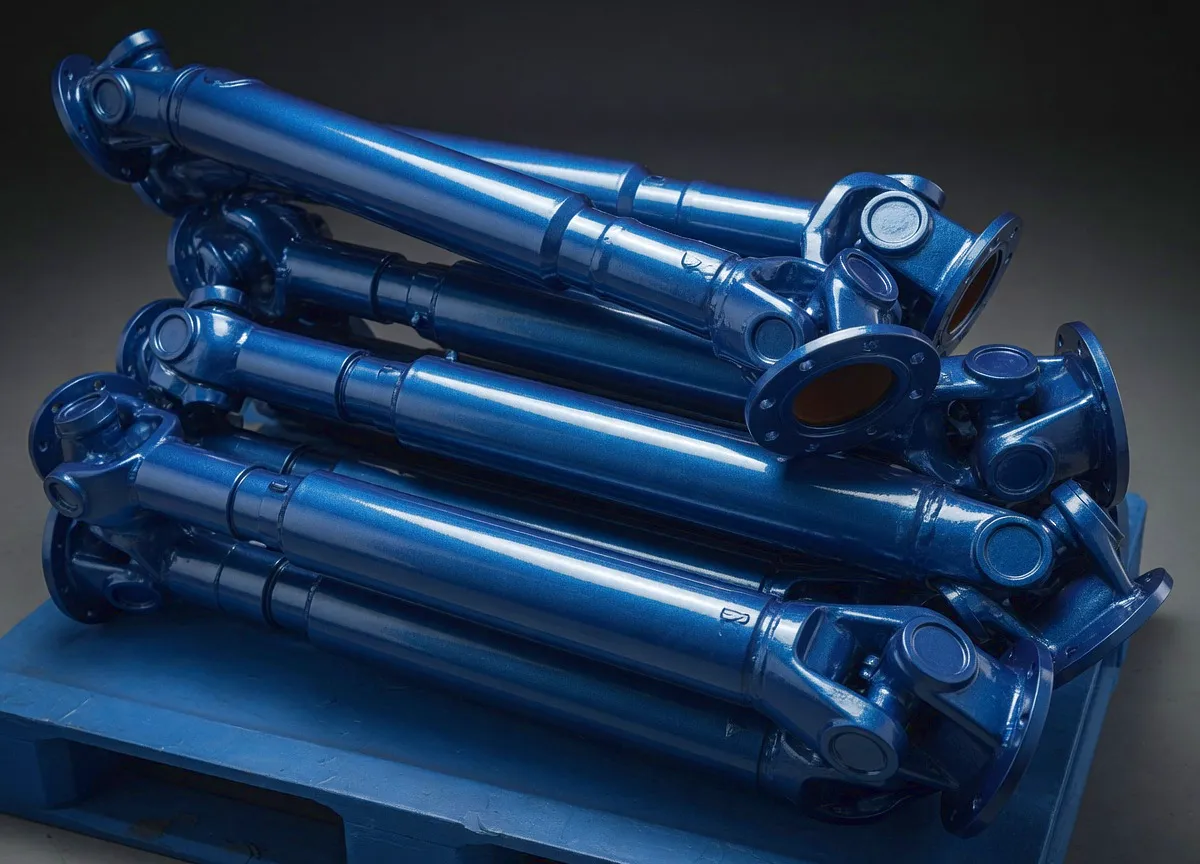
A cardan coupling — properly called a universal joint or Hooke’s joint in engineering literature — transmits rotary motion between two shafts that are not perfectly aligned. In its simplest form, two yokes are joined by a cross-shaped trunnion block (the spider). As the input shaft rotates, the spider pivots in both planes simultaneously, allowing torque to travel across an angular offset without interrupting the rotation. The elegance of this design has kept it dominant in agricultural machinery for over a century, and modern manufacturing has refined every dimension without changing the core principle.
For hay rake applications, the typical driveline begins at the tractor’s rear PTO stub — a 6-spline or 21-spline shaft rotating at either 540 RPM or 1,000 RPM depending on the tractor setting. The cardan shaft connects this stub to the implement gearbox, and from there a secondary shaft (often a lighter PTO sub-shaft) drives the rake rotor directly. The total angular deflection across the primary coupling can vary from near-zero when the rake is directly behind the tractor on flat ground to 22 degrees or more during a sharp headland turn on cambered ground in Yorkshire or the Welsh Marches where field topography is rarely forgiving.
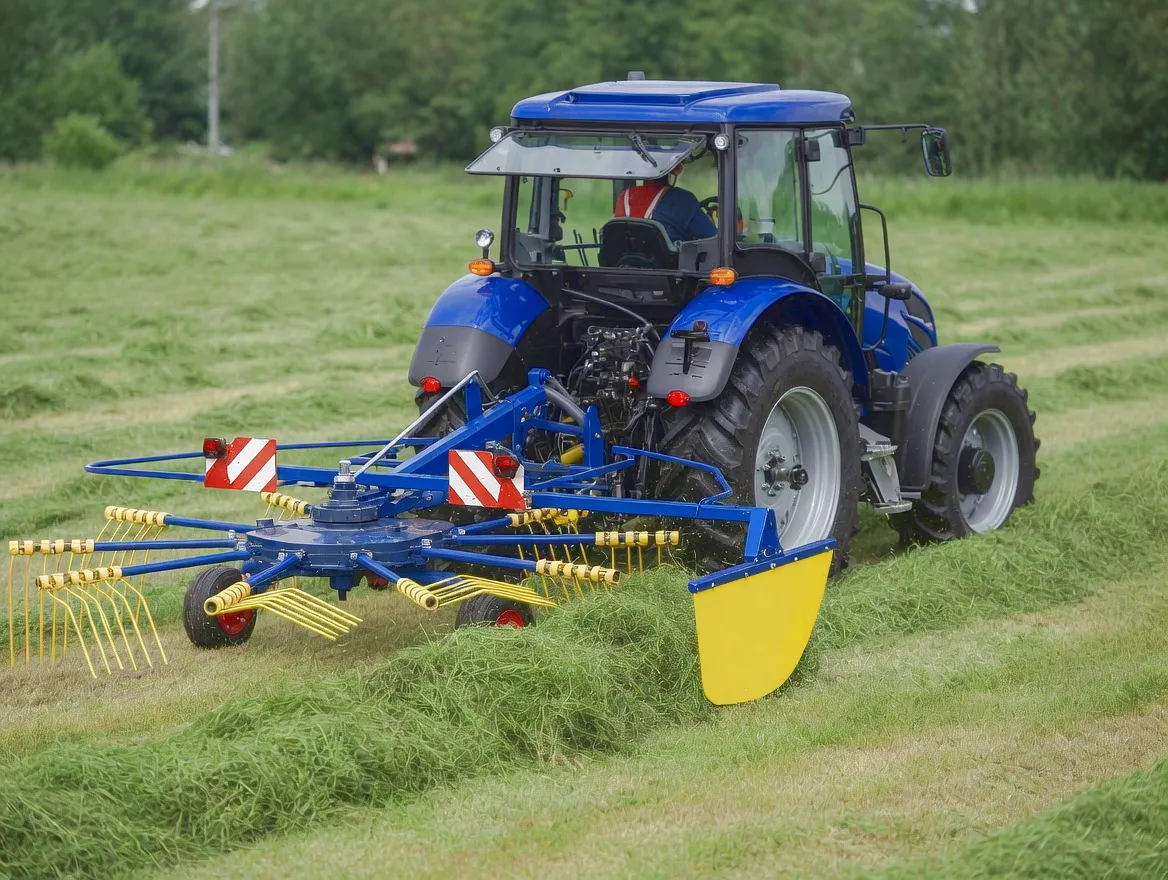
One physics reality that catches operators off-guard: a single Hooke’s joint produces a cyclic velocity variation at the output — the output shaft actually speeds up and slows down twice per revolution when operating at an angle. At 8 degrees of offset the variation is barely perceptible, but at 20 degrees it becomes a measurable pulsation that increases wear on rake tines and the implement gearbox. The solution adopted in all well-designed agricultural PTO shafts is a double-cardan configuration — two joints phased 180 degrees apart so their velocity variations cancel each other out. This is why specifying a double-universal shaft rather than a single-joint shaft is so important for rakes operating in hilly terrain, and it is one of the first questions an experienced engineer asks when a customer reports premature gearbox wear.
The sliding section of the shaft — the telescoping splined tube — handles length variation as the implement rises and falls over undulations or lifts for transport. Grease-packed cross-groove sliding profiles are standard in quality shafts, reducing friction and preventing the stick-slip behaviour that can otherwise generate axial shock loads through the gearbox mountings.
Technical Specifications: Cardan Coupling Ranges for Hay Rake & PTO Applications
Performance Data & Selection Parameters
| Parameter | Light Series (W2100) | Medium Series (W2400) | Heavy Series (W2800) |
|---|---|---|---|
| Nominal Torque (Nm) | 680 | 1,350 | 2,800 |
| Peak Torque (Nm) | 1,360 | 2,700 | 5,600 |
| Max Operating Angle (degrees) | 25° | 25° | 22° |
| Input Speed (RPM) | 540 / 1,000 | 540 / 1,000 | 540 / 1,000 |
| Telescoping Range (mm) | 120–280 | 150–320 | 180–400 |
| Overload Clutch Option | Friction / Shear bolt | Friction / Ratchet | Ratchet / Cam |
| Safety Guard Material | HDPE | HDPE reinforced | HDPE reinforced |
| Spline Profile | 1-3/8″ 6-spline | 1-3/8″ 21-spline | 1-3/4″ 20-spline |
| Material — Tube | DIN 2395 E355 | DIN 2395 E355 | DIN 2395 S420 |
| Surface Finish — Yokes | Yellow zinc plate | Epoxy powder coat | Epoxy powder coat |
All values are indicative standard-range data. Custom specifications available on request — contact [email protected] for tailored datasheets.
Materials, Construction & Why They Matter in Wet British Fields
Engineering-Grade Metallurgy for Demanding Conditions
Spider & Trunnion Steel
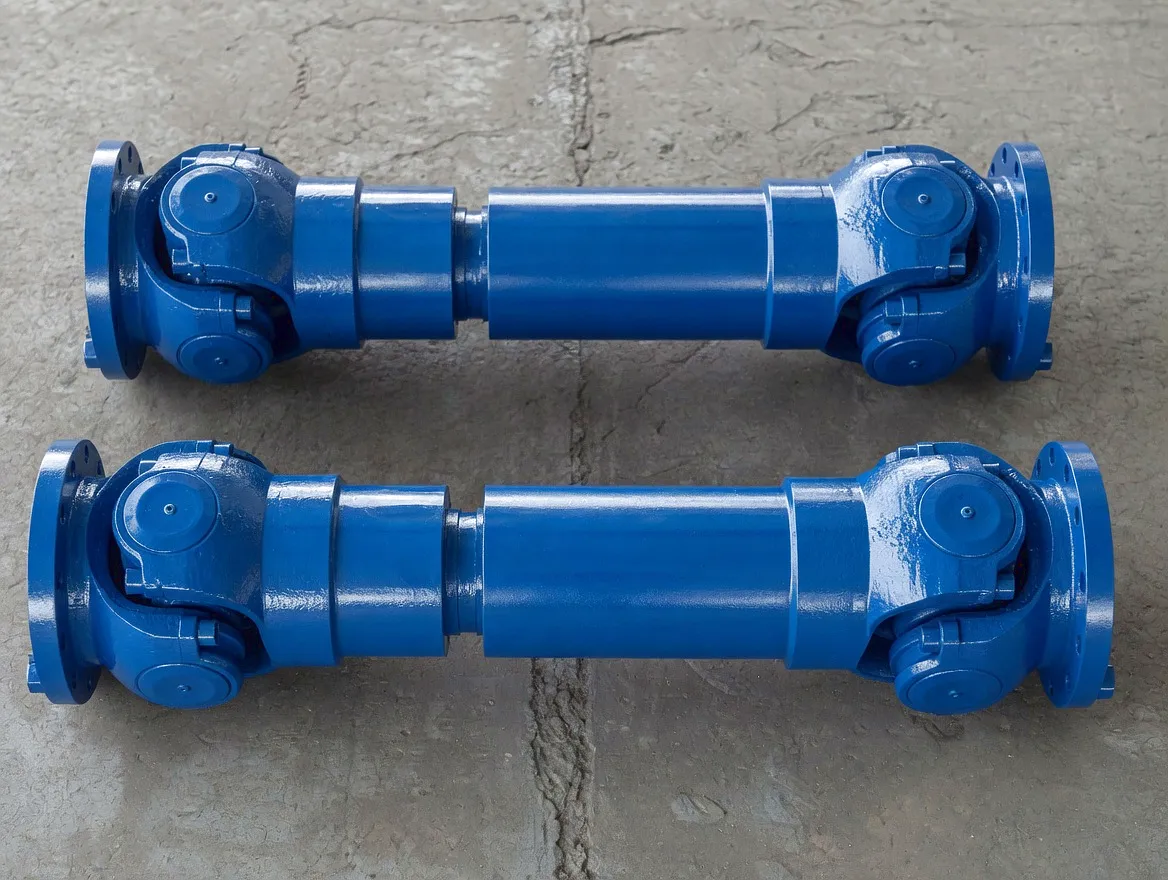
Case-hardened 20CrMnTi alloy steel with a surface hardness of 58–62 HRC and a tough core that absorbs shock loads from stone strikes. The trunnion needle bearings are precision-ground to ISO class P5, packed with NLGI 2 lithium-complex grease at assembly and re-greaseable in the field via a nipple on the cross cap.
Shaft Tube — E355 / S420
Seamless precision tube to DIN 2395 with tight wall-thickness tolerance. E355 covers the light and medium series; S420 high-strength grade is used in the W2800 heavy series where peak torques exceed 5,000 Nm. The external surface is hot-dip zinc primed then powder-coated in agricultural yellow or custom RAL colour to resist the corrosive combination of wet grass silage acids and soil minerals common across UK dairy farming regions.
Safety Guard — HDPE Shell
High-density polyethylene guard with integral bearing cone at each end. UK PSSR 2000 and PUWER 1998 regulations require rotating PTO shafts to be guarded — HDPE combines impact resistance in sub-zero morning starts with UV stability for outdoor storage. The cone bearing design allows the guard to remain stationary while the shaft spins, eliminating the entanglement hazard that has claimed lives on British farms.
The sliding spline profile — the component most commonly neglected during maintenance — uses a profile-ground lemon or star cross-section in the medium and heavy series. Compared with plain square tube, these profiles distribute torque more evenly across a larger contact area, reducing the peak contact pressure that causes fretting corrosion on the spline flanks. For UK operators who may not get around to greasing the slip section until a full service interval, this design choice translates directly into fewer seized shafts during spring fieldwork.
Application Scenarios: Where Cardan Couplings Drive Hay Rake Performance
Field Conditions, Implement Types & Drive Configurations
Rotary Hay Rake (Single & Twin Rotor)
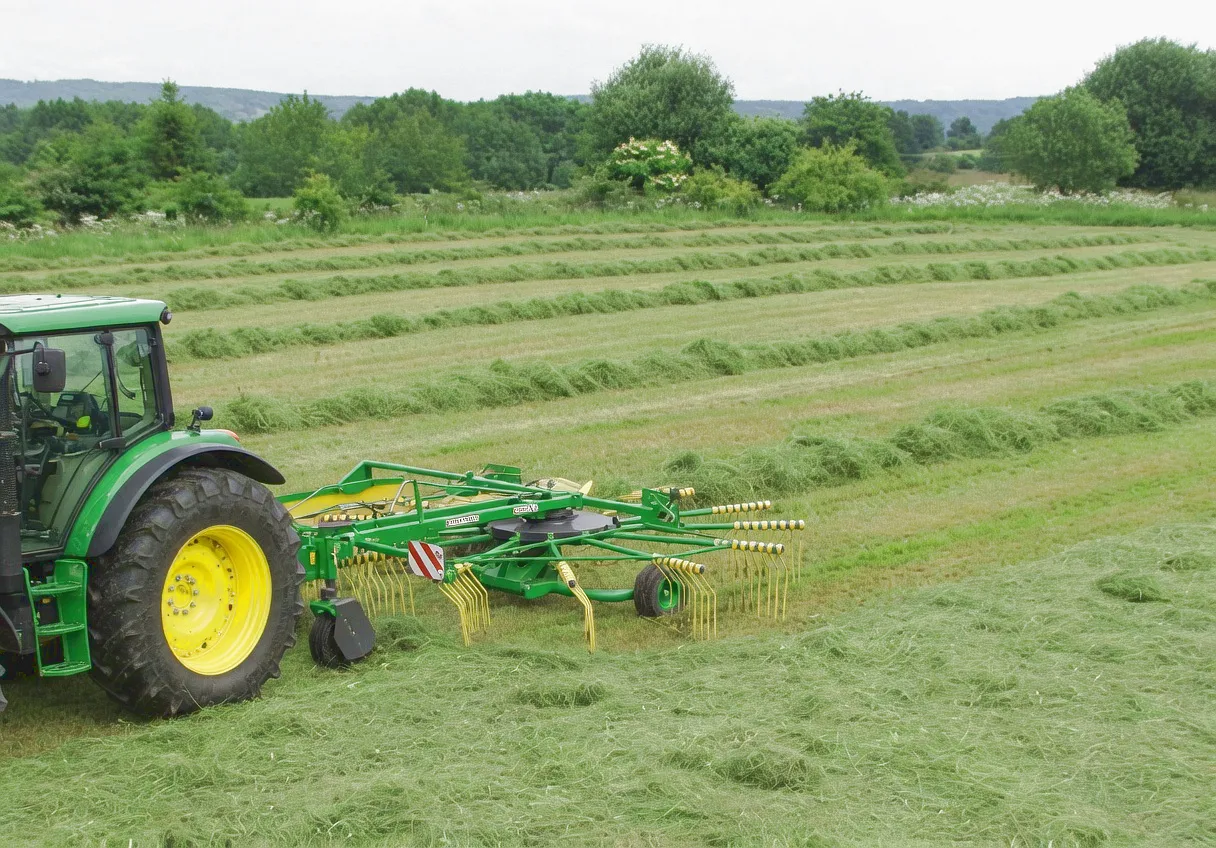
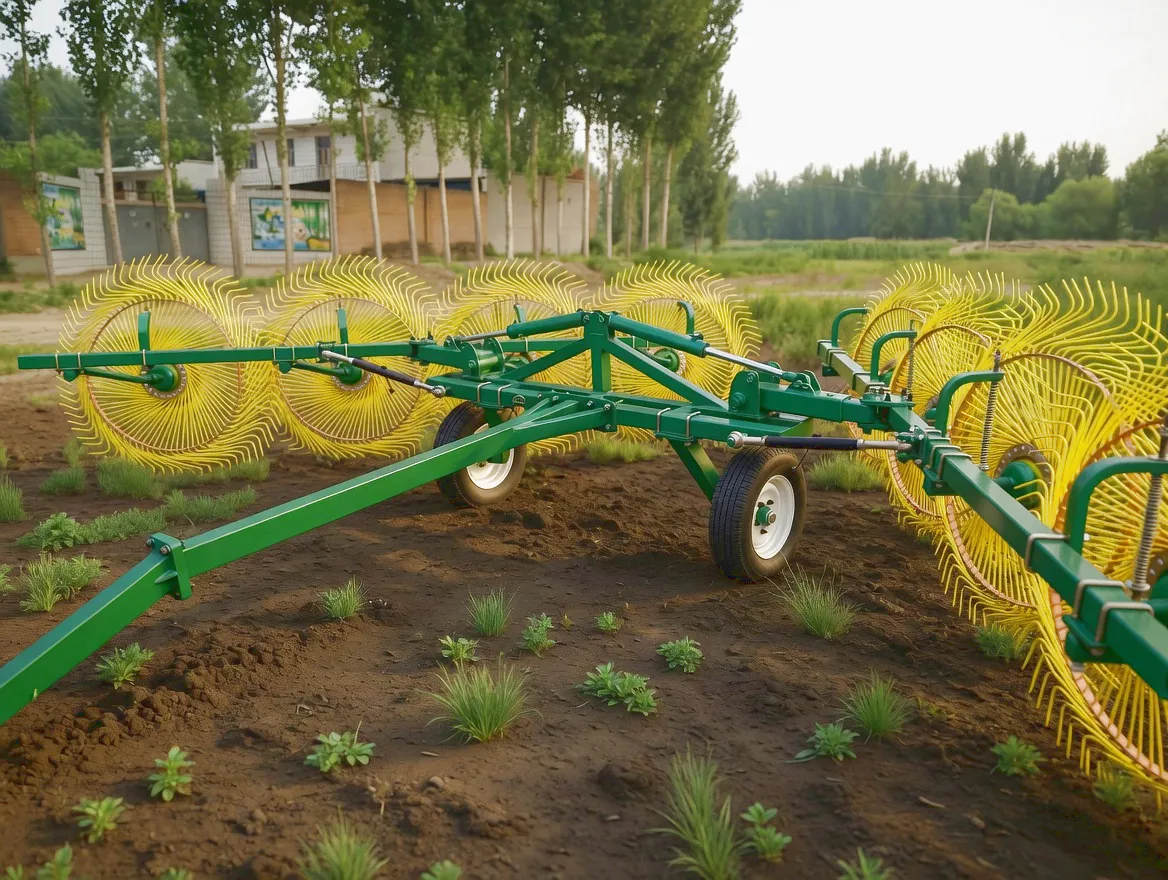
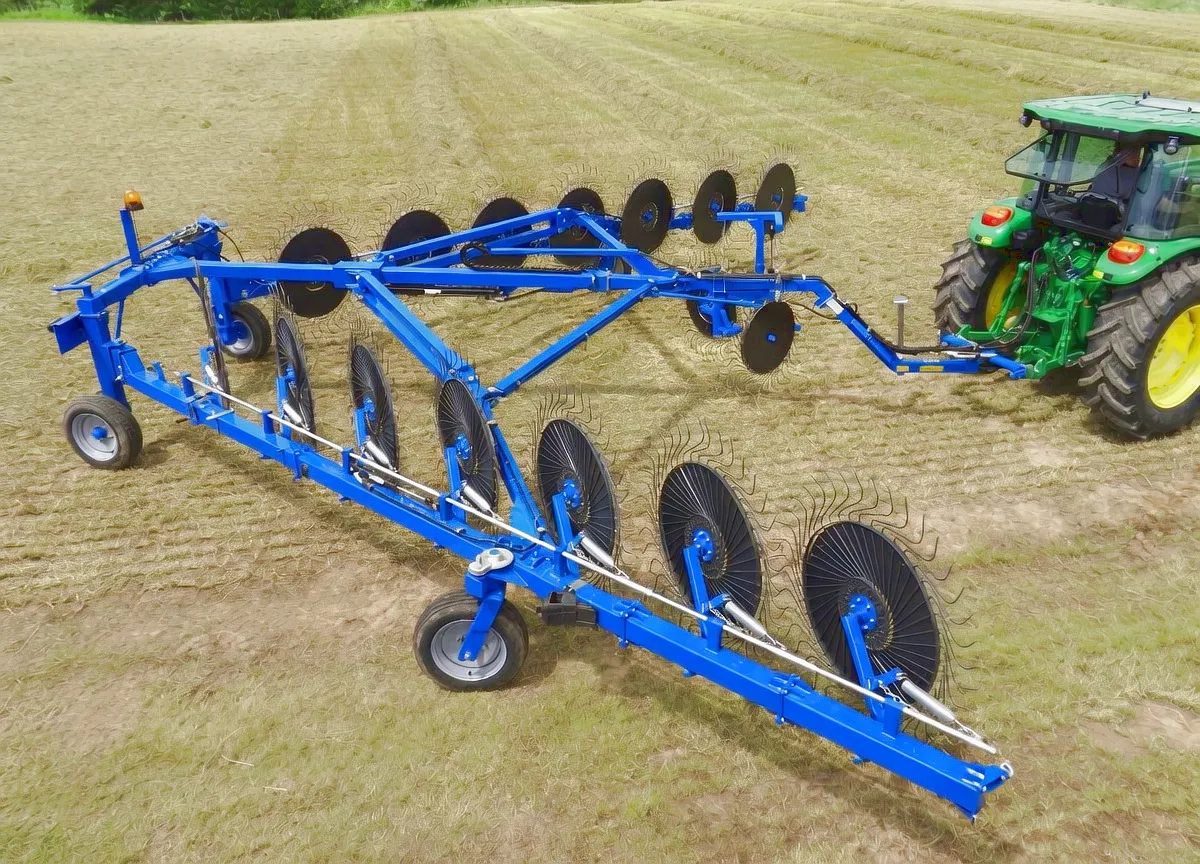
Single-rotor rakes from manufacturers like Krone, Claas, and KUHN typically demand a W2100 or W2400 series PTO shaft running at 540 RPM. The implement gearbox drives the rotor at a stepped-down speed, but the primary cardan shaft sees full tractor PTO torque during engagement on thick swards. An overload friction clutch set to 1.2 times nominal torque is strongly recommended to protect the gearbox when the tines encounter a compacted swath or a stone lodged in the rotors. Twin-rotor machines used on wider headlands in Lincolnshire and the East Midlands often split the drive through a centre gearbox, each half-shaft then requiring its own coupling — correct telescoping length matching is critical here to avoid binding under the large working widths these machines achieve.
Side-Delivery Rake & Parallel Bar Rake
Older-design side-delivery rakes common on smaller farms across Devon, Cornwall, and the Yorkshire Dales use a reciprocating cam mechanism driven at lower torque but with a highly irregular torque trace — peaks occur twice per crank revolution. This irregular input accelerates spider wear if the bearing geometry is inadequate. Specifying needle-bearing-grade spiders rather than plain bush crosses in these applications roughly triples the service life. Parallel bar rakes used in hay tedding operations share a similar drive profile and benefit from the same needle-bearing upgrade. Ever Power stocks replacement cross-and-bearing kits for these legacy machine types at competitive prices, with UK-compatible 1-3/8″ six-spline input profiles as standard.
Hilly Terrain & Hillside Raking
Farms across the Lake District, the Welsh uplands, and the Scottish Borders rake on gradients where the tractor and implement are frequently at offset angles in both the horizontal and vertical planes simultaneously. This compound angle situation demands careful shaft selection — the resultant angle is the geometric sum of the two individual plane angles, and it frequently exceeds the safe operating limit of a single-joint shaft. For these conditions, a double-cardan wide-angle shaft with ball-and-socket pivot at the tractor end is the correct solution, maintaining constant velocity output even at combined angles up to 40 degrees. Ever Power manufactures these wide-angle assemblies with custom input spline and protective chain-link guards, fully compatible with standard Category 1 and Category 2 lower link profiles.
Contractor & Multi-Machine Fleet Operation
Agricultural contractors running a fleet of three or more rakes face a different challenge — they need interchangeable shafts that can move between implements without custom fitment, and they need fast replacement when a shaft fails mid-harvest. Ever Power supports contractors with blanket stock agreements where a minimum number of service shafts are held at UK distribution points, shipped next-day against contract. The cross-and-bearing kit programme allows on-farm repair in under 20 minutes with standard hand tools, minimising the window between failure and return to work during critical June and July harvest weather windows. Pricing is structured at volume tiers to suit the commercial reality of contracting businesses operating across counties such as Norfolk, Suffolk, and Cambridgeshire where large acreages depend on fast turnaround.
Why Ever Power Cardan Couplings Outperform in Agricultural Service
Six Engineering Advantages
Constant-Velocity Engineering
Double-cardan geometry eliminates the velocity pulsation inherent in single-joint shafts, reducing tine wear and gearbox fatigue across the full harvest season.
Integrated Overload Protection
Friction, ratchet, and cam-style clutches matched to each torque range protect implement gearboxes worth far more than the shaft itself — a sound engineering investment in any hire or contractor fleet.
CE-Marked Safety Guards
Every shaft ships with a full-length HDPE guard assembly marked for CE and carrying the chain-ring attachment required under UK PUWER regulations — no additional compliance cost for the buyer.
Field-Serviceable Cross Kits
Replacement spider-and-bearing assemblies are available as bagged kits with snap-ring and grease nipple included, engineered to OE dimension so they drop straight into existing yokes without machining.
Wide Angle to 40° (CV Version)
The wide-angle CV range uses a ball-and-socket pivot joint at the tractor end to accommodate the extreme compound angles found on UK hillside farms without exceeding the joint’s fatigue-rated operating envelope.
Corrosion-Resistant Finish
Dual-layer protection — zinc primer plus epoxy powder coat — resists the acidic fermentation juices, rain, and mud slurry that challenge PTO shaft finishes on UK farms through a 10-month outdoor storage season.
Customer Success: How a Devon Grass Contractor Cut Shaft Failures by 70%
Real-World Case Study — South West England
Grassland Contractor
Fleet: 4 rakes
Westcountry Grassworks Ltd — Okehampton, Devon
Westcountry Grassworks operates a four-machine hay and silage contracting business covering farms across the Dartmoor fringe, where fields slope between 5 and 18 degrees and the combination of Dartmoor stone walls and tight headlands means tractors are frequently in sharp turns while implements are still operating. Prior to switching to Ever Power shafts, the business was replacing cardan coupling crosses on average twice per season per machine — a combination of premature spider wear and one catastrophic yoke fracture that bent the implement gearbox input stub and cost £1,400 to repair.
We’ve run Ever Power shafts on three Krone rakes for two seasons now and haven’t broken a spider yet. The ratchet clutch saved our gearbox twice that I know of. For the price point, they’re exceptional value and the delivery to our farm in Herefordshire was faster than any other supplier we’ve tried.
I ordered a custom-length shaft for our side-delivery rake — the standard catalogue length was 50 mm too short for our CLAAS Liner. Ever Power turned around a custom build in under a week and the fit was perfect straight out of the box. Their technical team actually understood the machine without me sending diagrams.
As a machinery dealer serving farms across Angus and the Mearns in Scotland, I need a PTO shaft supplier who can quote quickly, deliver reliably, and stand behind the product. Ever Power tick all three boxes. We’ve made them our preferred cardan coupling supplier for replacement sales and we’ve had zero returns on quality grounds in 18 months of trading.
Manufacturing Capability & Custom PTO Shaft Design Service
Built to Your Specification
Ever Power’s manufacturing facility covers CNC turning, spline milling, induction hardening, and precision assembly under one roof. This vertical integration is the reason custom orders are fulfilled so much faster than suppliers who rely on sub-contracted machining. Every production run is calibrated against dimensional drawings, and cross-kit components are 100% dimensionally checked before leaving the assembly area. When a UK hay equipment manufacturer wants a 7-degree non-standard input yoke for a new machine design, or a contractor needs a shaft extended by 30 mm to suit a specific tractor-implement combination, the engineering team can produce a validated prototype within five working days and deliver production quantities within three to four weeks.
Request a Custom Shaft Quote
Send your torque requirement, collapsed and extended length, input/output spline spec, and any additional features to the engineering team. Response within 24 hours on working days.
Standard Lead Times — UK Supply
How to Select the Right Cardan Coupling for Your Hay Rake: A Practical Buying Guide
Five Questions to Ask Before You Order
Selecting the correct shaft starts with knowing the torque requirement of the implement. Most manufacturers publish a required input torque figure in the operator manual — if it is not available, a reasonable approximation is to divide the implement’s PTO power requirement in kW by the angular velocity in rad/s (which for 540 RPM is 56.5 and for 1,000 RPM is 104.7). Add a service factor of 1.5 for hay rakes, which accounts for the peak loads during engagement and stone impact. The resulting figure should be within the nominal torque rating of the shaft series — not at its peak figure, which is intended only for transient spikes, not sustained operation.
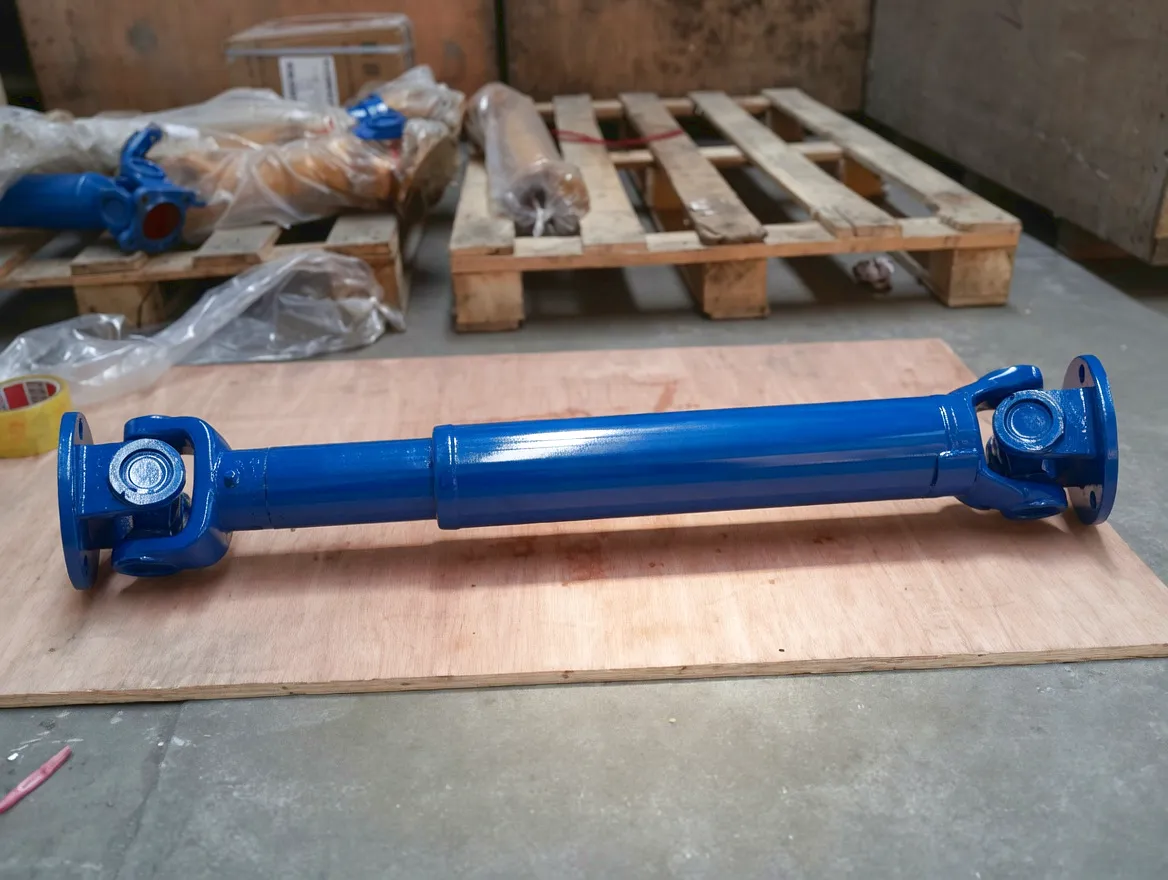
The second critical dimension is collapsed length. Measure from the face of the tractor PTO stub to the face of the implement input yoke when the implement is in transport position (three-point linkage fully raised) and when the linkage is lowered to working height. The shaft’s collapsed length must accommodate the shorter distance (transport position) without the inner tube bottoming out, and the extended length must not exceed the outer tube’s travel limit at maximum working height. Getting this wrong results in either a bent shaft or, worse, a shaft that disengages from the spline under load — a significant safety hazard. Ever Power provides a free dimensional check service: email the four measurements (PTO stub to implement yoke face at minimum and maximum height, collapsed and extended shaft body dimensions from the old shaft) and the technical team will confirm the correct shaft part number before you order.
| Selection Factor | What to Check |
|---|---|
| Torque (Nm) | Nominal x 1.5 service factor |
| PTO speed | 540 or 1,000 RPM — must match tractor setting |
| Working angle | >15° compound → specify wide-angle CV |
| Collapsed length | Measure at linkage raised (transport) |
| Spline profile | Count splines and measure bore diameter |
| Overload protection | Stone/obstacle risk → ratchet or cam clutch |
| Guard compliance | UK PUWER 1998 — CE guard mandatory |
Supplying Agricultural PTO Shafts Across the United Kingdom
England, Scotland, Wales & Northern Ireland
UK farms operate under a specific set of regulations, terrain conditions, and seasonal pressure patterns that differ from continental European agriculture. The wetter and more unpredictable British growing season means the window for hay-making can be extraordinarily short — five or six consecutive dry days is sometimes all a farmer or contractor has to cut, ted, rake, and bale a full silage crop across hundreds of acres. In that environment, equipment failure is not merely inconvenient; it can mean the loss of a season’s crop value. Supplying a cardan coupling that is correctly specified, properly warranted, and backed by responsive after-sales support is not a commodity decision — it is a commercial commitment.
Ever Power actively supports agricultural machinery dealers and merchants across England — including the major grassland regions of the South West, the Midlands, Yorkshire, and East Anglia — as well as dealers serving Scottish farming areas from the Borders through Tayside to the Black Isle. In Wales, where many holdings rely on older tractor equipment with 6-spline Category 1 PTO outputs that can be difficult to source through mainstream channels, Ever Power’s broad compatibility range covers the older profiles as standard stock. Orders placed before midday on a working day are processed and dispatched the same day from UK-held inventory, with next-day delivery available to all mainland UK postcode areas through the standard courier network.
Maintenance Schedule: Keeping Your Hay Rake PTO Shaft in Peak Condition
Seasonal Service Programme
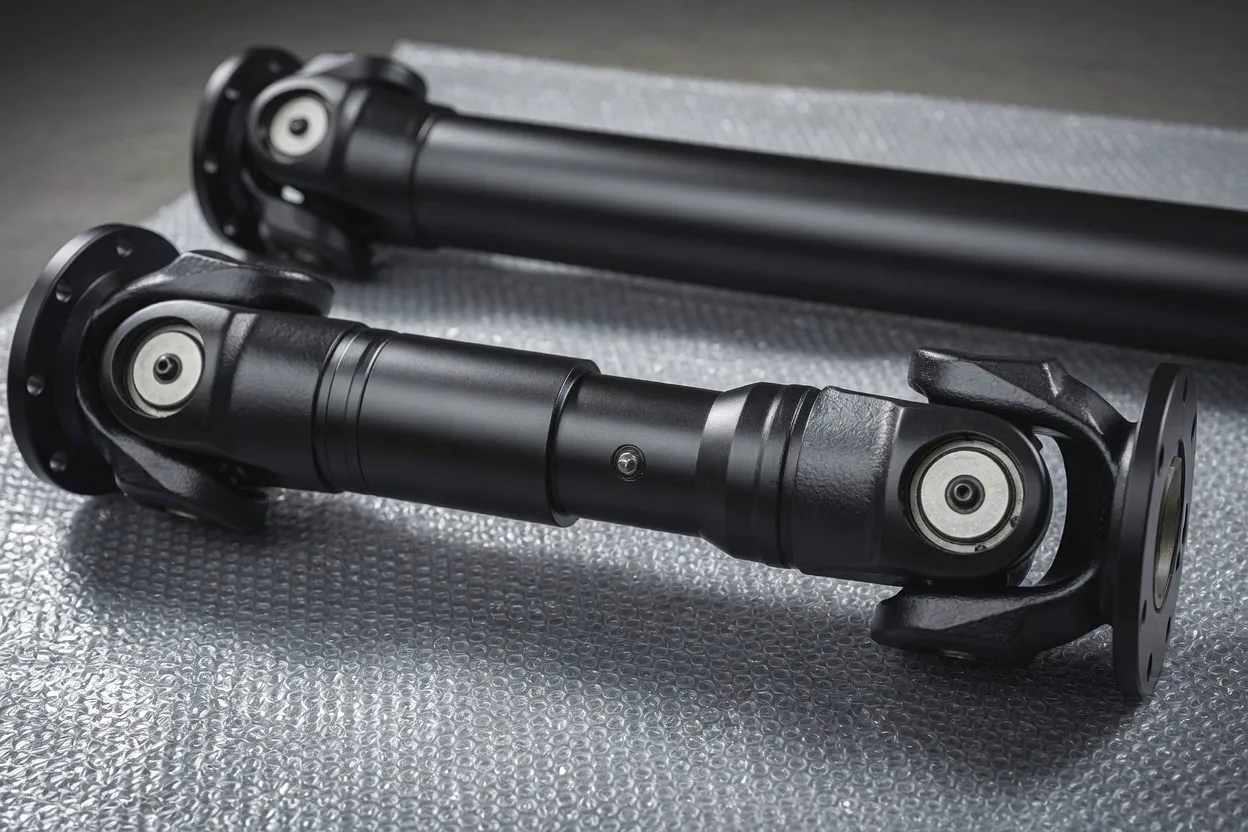
Most shaft failures on UK farms are directly attributable to inadequate lubrication and the absence of a structured inspection routine. This is not a criticism of farmers — the scheduling pressure during spring and summer fieldwork leaves virtually no time for preventive maintenance, which is exactly why the routine needs to happen in autumn and winter when the equipment is stood in the shed. A properly maintained cardan coupling will typically last five to eight seasons on a rotary rake running 500 to 800 hours per year in moderate UK conditions. A neglected shaft may fail within two seasons, often at the worst possible moment.
| Interval | Task | What to Look For |
|---|---|---|
| Daily (in-season) | Visual check — guard and shaft | Cracks, guard damage, unusual vibration or noise |
| Every 8 hours | Grease cross nipples (3–4 pumps) | Grease purging at seal — indicates bearing is accepting grease |
| Every 50 hours | Grease sliding section (10–12 pumps) | Smooth sliding — no stick-slip; spline grooves filled, not packed solid |
| Pre-season | Full disassembly and inspection | Spider bearing play (<0.05 mm acceptable); yoke cracks at weld; spline wear; guard integrity |
| At replacement | Check yoke bore condition before fitting new cross kit | Bore wear above 0.1 mm oversize — yoke must be replaced, not re-kitted |
Frequently Asked Questions
PTO Shaft Buying, Specification & Supplier Questions
© Ever Power — Cardan Coupling Specialists · United Kingdom Supply · [email protected] · edit by gzl