
Why the Drive Shaft Connection Is Everything
Across the UK’s rolling farmland — from the chalk downlands of Wiltshire to the heavy clay plains of Lincolnshire — seed drills face terrain that rarely stays flat. The central drive shaft must transfer constant torque while the machine pitches and yaws over headlands, compacted headrig corners, and waterlogged tramlines. A rigid coupling simply cannot handle this. A standard jaw coupling introduces too much backlash. The cardan coupling — properly specified, precisely manufactured — delivers velocity-constant power flow at operating angles that would destroy any alternative.
With over 18 years spent specifying drive components for OEM agricultural machinery manufacturers and aftersales distributors throughout Britain and Europe, I have seen first-hand how the right cardan coupling selection transforms a problematic seed drill into a reliable, high-output machine season after season.
The Mechanics Behind Constant-Velocity Torque Transmission
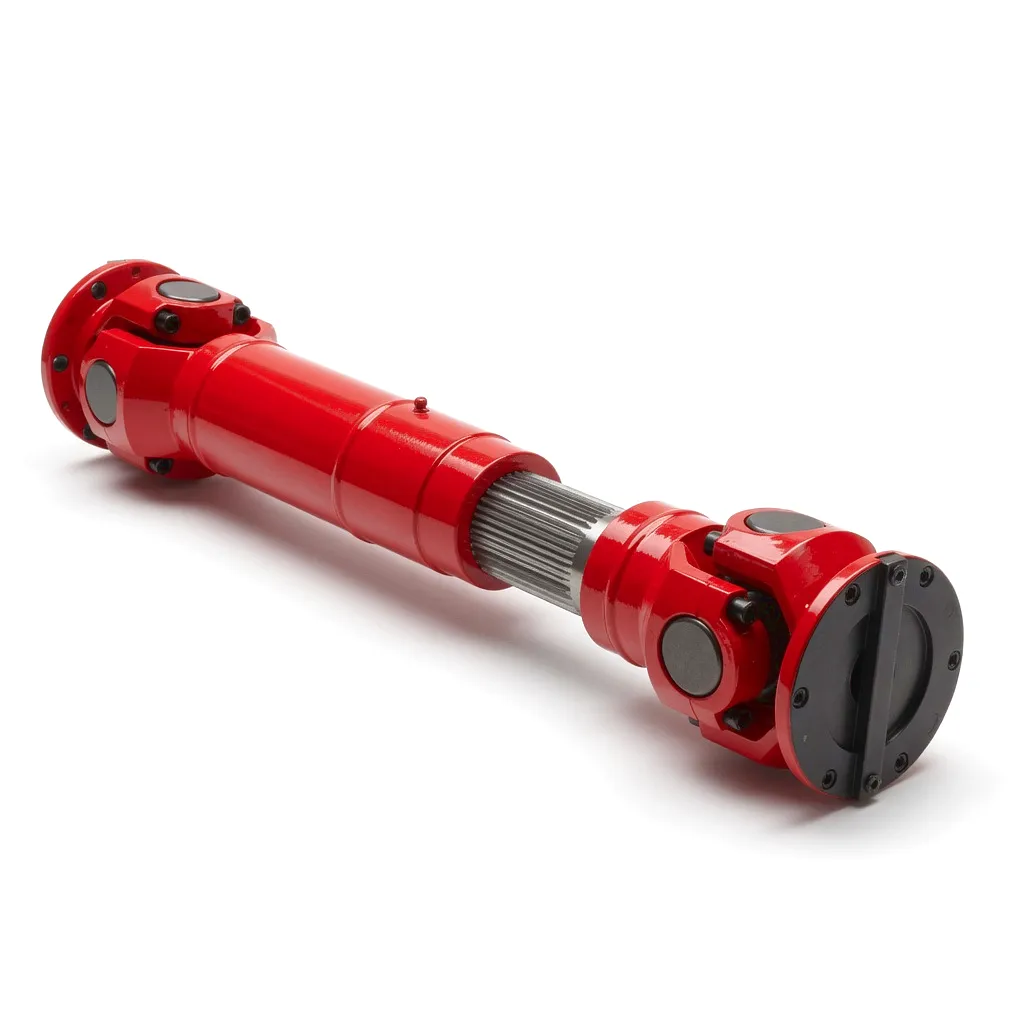
A cardan coupling — also called a universal joint shaft or Hooke’s joint assembly — operates on the principle of transferring rotational motion through two yoke-and-cross-journal assemblies connected by an intermediate shaft. When a single universal joint transmits rotation at an angle, it produces a cyclic speed variation: for every revolution, the output shaft accelerates and decelerates twice. In a seed metering system, this pulsation is catastrophic — it directly causes irregular seed spacing, the one defect agronomists measure most critically.
The solution engineered into quality agricultural cardan couplings is the double Cardan arrangement, or more precisely, the phased double-joint design. By installing two universal joints at equal but opposing phase angles and keeping the intermediate shaft parallel to the yoke centrelines, the speed fluctuations cancel out. The output shaft of the central drive receives genuinely constant angular velocity regardless of operating angle — a performance characteristic measured in tenths of a percent deviation rather than the 10–15% swings seen in single-joint arrangements.
The cross-journal bearings at each end are needle-roller assemblies lubricated through pressure-fit grease nipples. These handle both the radial loads from transmitted torque and the axial loads that arise as the telescopic intermediate shaft extends or retracts when the seed drill frame flexes. Understanding this load interaction is essential when specifying a replacement or OEM component — and it is exactly where undersized catalogue selections cause premature failures.
What Goes Into a Professional-Grade Agricultural Cardan Coupling
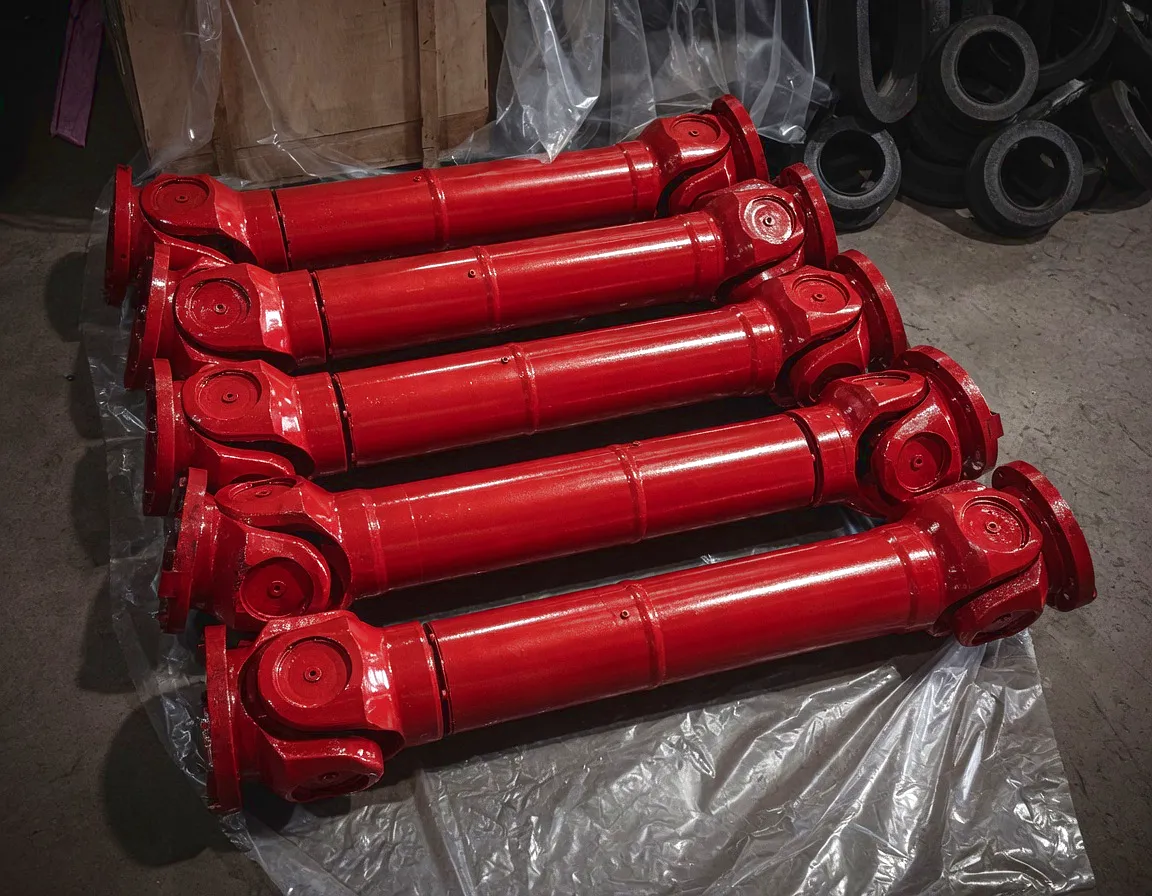
Every component in an agricultural cardan coupling must earn its place. The field environment — abrasive soil dust, pressure-washer cleaning, ultraviolet exposure, impact from stones deflected through the drivetrain — demands materials and surface treatments that go well beyond standard industrial coupling specifications. The yoke forgings on high-specification agricultural units are manufactured from alloy steel grades such as 20CrMnTi or 42CrMo4, quench-and-tempered to achieve tensile strengths exceeding 900 MPa while retaining enough ductility to absorb shock loads without catastrophic brittle fracture. Shafts are induction hardened at the bearing journals and spline zones to provide wear resistance exactly where it matters, leaving core toughness intact.
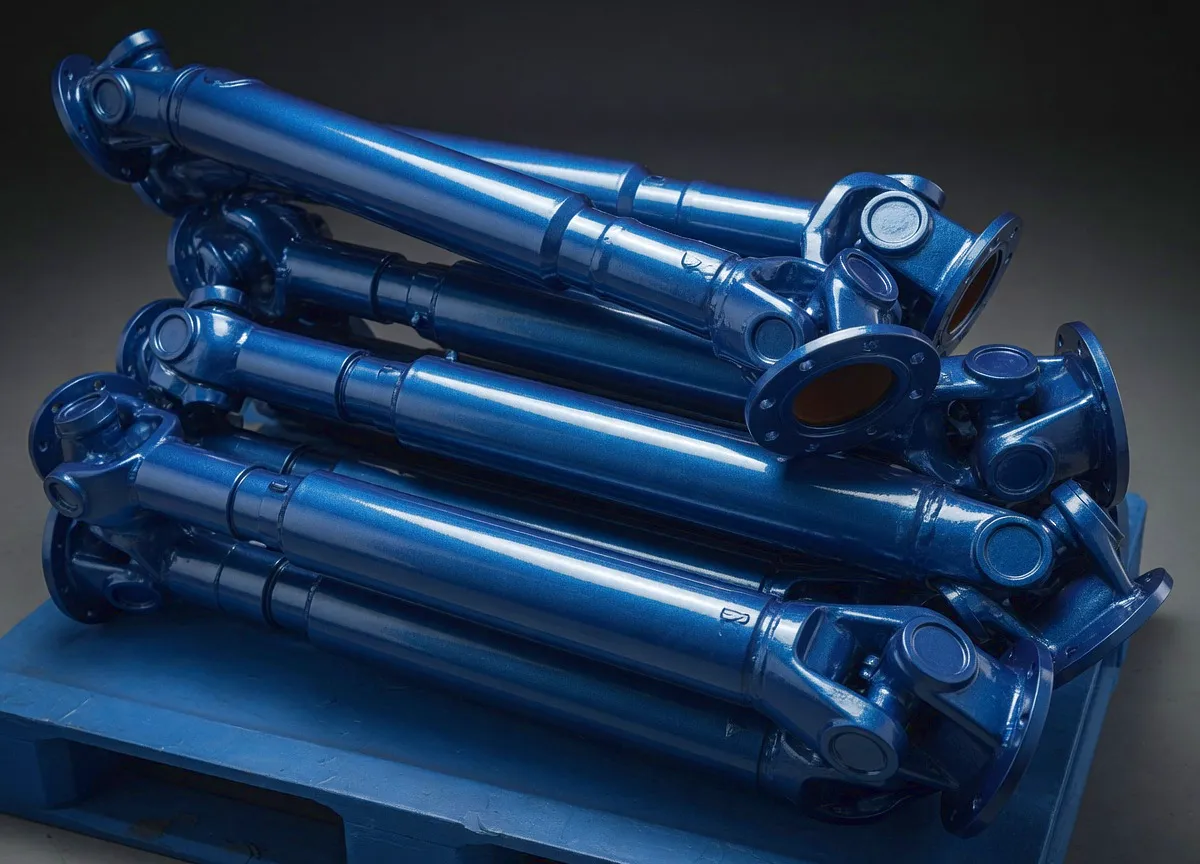
The intermediate tube on telescopic cardan couplings is typically cold-drawn seamless steel tubing, finished with a zinc-phosphate conversion coating before painting to give corrosion protection adequate for British winters and frequent field washdowns. The sliding spline interface — which allows axial length compensation as the tractor moves relative to the implement — uses a nylon or sintered-bronze liner on premium models, reducing friction forces that would otherwise cause stick-slip torque spikes during engagement.
Safety shielding is not an afterthought. UK agricultural machinery regulations under PUWER 1998 and the associated ACoP require PTO drive shafts to carry complete shielding that rotates independently of the shaft. Our cardan couplings for seed drill applications carry co-rotating cone guards in high-density polyethylene (HDPE) secured by quick-release clips, designed to survive contact with crop residue and field debris without shattering.
Technical Performance Parameters
| Parameter | Standard Series (W2400) | Heavy Duty Series (W3800) | Wide-Angle Series (WA) |
|---|---|---|---|
| Nominal torque (Nm) | 2,400 | 3,800 | 2,800 |
| Peak torque (Nm) | 7,200 | 11,400 | 8,400 |
| Max operating angle (per joint) | 25° | 25° | 40° |
| PTO speed compatibility | 540 / 1000 rpm | 540 / 1000 rpm | 540 rpm |
| Telescopic travel range (mm) | 80 – 200 | 100 – 250 | 80 – 180 |
| Yoke material | 42CrMo4 forged steel | 42CrMo4 forged steel | 20CrMnTi forged steel |
| Bearing type | Needle roller (sealed) | Needle roller (regreasable) | Needle roller (sealed) |
| Safety shield | HDPE co-rotating cone | HDPE co-rotating cone | HDPE co-rotating cone |
| Surface treatment | Zinc phosphate + enamel | Hot-dip galvanised + enamel | Zinc phosphate + enamel |
Inside the Seed Drill Central Drive System
The central drive shaft of a modern combinatorial seed drill — think of machines like the Horsch Pronto, the Väderstad Rapid, or the Amazone Cirrus series — runs the full width of the toolbar, typically 3 to 6 metres on machines used across the arable farms of East Anglia, the Yorkshire Wolds, and the Scottish Lowlands. Power enters from the tractor PTO at one end, travels along the central shaft, and branches into individual row unit gearboxes via bevel gear sets. The cardan coupling sits between the tractor PTO stub and the first shaft bearing, absorbing the angular offset that inevitably exists between a fixed tractor output and a hitched, swinging implement frame.
What makes this location particularly demanding is the combination of high torque — starting torque during seedbed engagement can spike to three times the running torque — and continuous angular variation as the implement follows field contours. On a 6-metre drill working across the gentle undulations of the Lincolnshire chalk, the joint may cycle through 8° to 18° of working angle several hundred times per field pass. Over a 2,000-hectare spring drilling season, that adds up to bearing loads that separate a well-specified cardan coupling from a catalogue part that looks similar but fails by mid-April.

Why Professional Agronomists and OEM Engineers Choose Ever Power
Die-forged yokes from 42CrMo4 alloy steel are machined to DIN 808 dimensional tolerances. The bearing bore roundness is held within 0.008 mm, which eliminates the fretting corrosion and fatigue cracking that begin at poorly-fitted journal cups on inferior products. When you are specifying a cardan coupling that will handle 3,800 Nm continuously across a 1,000-hectare drilling programme, that tolerance is not academic — it directly determines whether you finish the season on time.
The heavy-duty W3800 series ships with a friction-disc overload clutch factory-set to disengage at 1.5× nominal torque. When a stone jams a disc coulter or a row unit gearbox seizes, the clutch releases within 20 milliseconds, protecting both the metering drive gearboxes — which can cost £800 or more to replace — and the tractor PTO shaft. For UK farms operating on stony brash soils in Cambridgeshire or boulder clay in the Midlands, this protection pays for itself in the first season.
Sealed needle-roller bearings on the standard series are factory-packed with NLGI 2 lithium-complex grease rated to 160°C continuous and 180°C peak, which comfortably exceeds the heat generated even in high-duty drilling cycles. Regreasable variants on the W3800 heavy-duty series carry German-specification grease nipples (DIN 71412 Type A) for compatibility with standard farm grease guns. Properly maintained, our agricultural cardan couplings routinely achieve 2,500 to 3,500 operating hours before bearing replacement is required.
All spline profiles are manufactured to DIN 5480 and DIN 5462 standards, ensuring dimensional interchangeability with PTO connections conforming to ISO 500, ISO 8759, and ASAE S201.4. Whether the tractor runs a 6-spline 35 mm or 21-spline 35 mm PTO shaft — standard across the John Deere, CLAAS, and New Holland tractors dominant in UK arable fleets — our cardan couplings fit without modification. Cross-reference data for all major seed drill OEM part numbers is available on request.
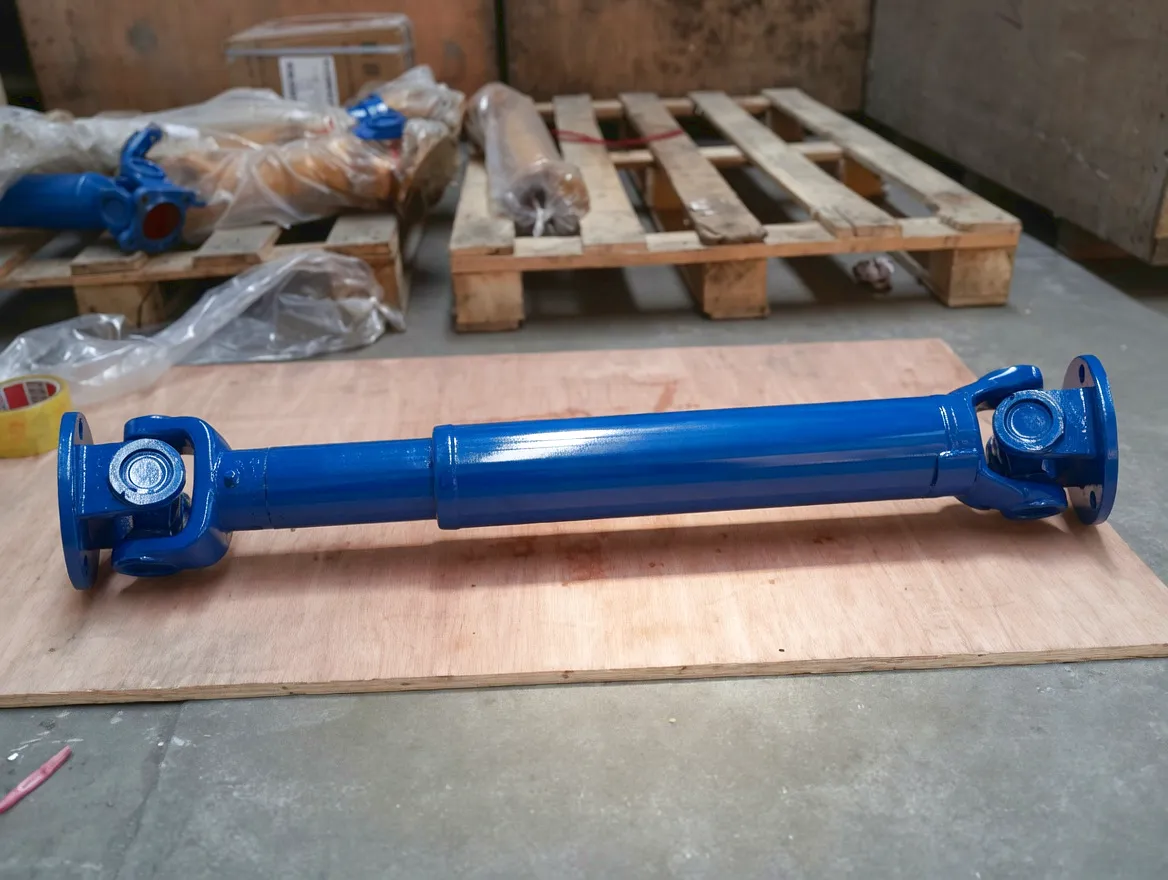
Where Agricultural Cardan Couplings Deliver Results Across UK Farming
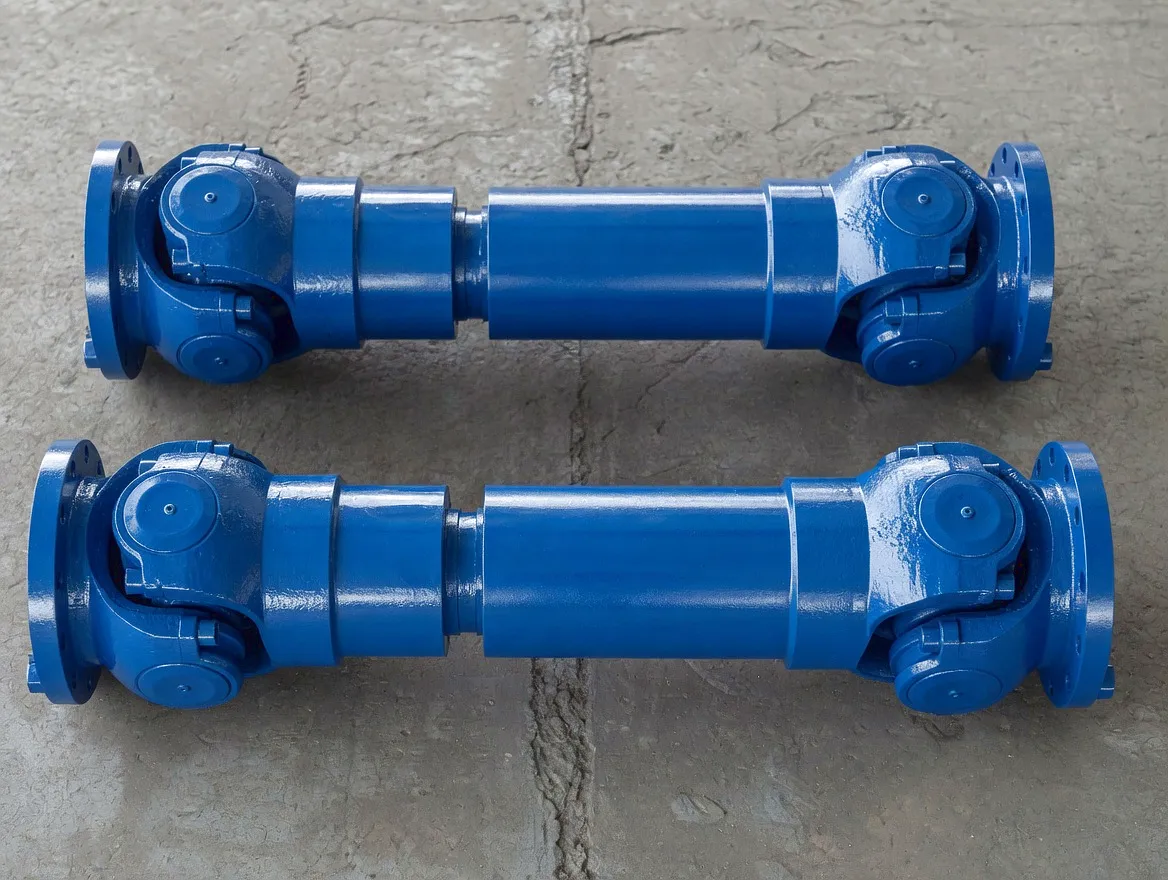
While the seed drill central drive shaft is the primary focus here, the same cardan coupling specification logic applies across a broad range of arable and livestock machinery found on British farms. Slurry tanker agitator drives in the Scottish Borders dairy sector, forage harvester table drives in Welsh silage operations, and power harrow gearbox input shafts on East Anglian cereal farms all rely on correctly rated cardan couplings to prevent costly seasonal breakdowns.
On seed drills specifically, there are actually multiple cardan coupling positions beyond the central drive connection. Many wide-bout machines use cardan joints to connect individual section drives across folding frame hinges — points where the working angle can exceed 30° during transport and still need to transmit metering drive torque when sections are deployed at 5° to 8° operational angles. The wide-angle WA series, rated to 40° per joint, was developed precisely for this application on machines working the larger field structures of Lincolnshire, Northumberland, and the Scottish Lowlands.

Constant-velocity double-joint cardan couplings for Horsch, Amazone, Väderstad, and Kuhn seed drills working UK arable farmland, ensuring metering uniformity at all operating angles.
Wide-angle WA series cardan couplings for section hinge drives on 6–12 m wide drills, transmitting metering drive torque across 8°–40° angular excursions at fold joints.
High-torque cardan couplings for power harrow rotor gearbox PTO inputs, rated to handle the aggressive torque impulses generated during primary cultivation in heavy UK clays.
Corrosion-resistant cardan couplings for fertiliser spreader spinner drives and crop protection sprayer pump inputs, built to withstand chemical exposure and seasonal storage conditions.


Ever Power: Bespoke Cardan Coupling Manufacturing for Agricultural OEMs and Aftermarket
Ever Power operates a purpose-built manufacturing facility equipped with 5-axis CNC machining centres, automated heat treatment lines, and a metrology laboratory holding traceable calibration. Our production capability spans standard catalogue cardan couplings from 200 Nm nominal torque up to 32,000 Nm for heavy extraction equipment, but the area where we genuinely differentiate from commodity suppliers is our custom engineering service.
Agricultural machinery OEMs across the UK, Germany, and Scandinavia bring us problems that off-the-shelf catalogues cannot solve. A bespoke shaft length between end faces. A non-standard spline profile inherited from a legacy platform. A custom overload clutch engagement torque matched to a specific gearbox protection requirement. An OEM shielding profile with a proprietary quick-release system. These are not complications for our team — they are our core competency.
Our in-house design engineers work in SolidWorks and carry out FEA analysis on all custom yoke and cross-journal designs before the first forging die is cut. Prototype lead times from drawing approval to first article inspection typically run 4 to 6 weeks for standard geometries. Full production tooling for OEM volumes follows within 8 to 12 weeks. All custom parts carry full material certification, dimensional inspection records, and dynamic balance test data where required by the application specification.
How UK and European Farmers Solved Their Drive Shaft Challenges
A farming partnership operating across the heavy red marlstone soils of south Lincolnshire had been experiencing premature central drive shaft failures on their 6-metre Amazone Cayena disc drill — two failures in consecutive spring seasons, each costing between 4 and 6 drilling days at peak time. The original cardan coupling was a catalogue-specification part from a regional agricultural dealer, rated adequately on paper but undersized when tested against the actual starting torque profile on their 260 hp John Deere 7R during engagement on cloddy, partially consolidated seedbeds.
The partnership’s machinery manager contacted Ever Power in January 2024. After reviewing torque logging data from the failed shaft and the specific machine-tractor combination, our engineering team recommended the W3800 heavy-duty series with an integrated 5,700 Nm friction-disc overload clutch — rated at 1.5× the measured peak torque rather than the nominal drilling torque. The shaft was built to a custom between-flange length of 1,124 mm to match the Amazone stub shaft position precisely, avoiding the fitment compromise that had been introduced on the previous catalogue replacement.
Through the 2024 spring drilling campaign — 1,100 hectares of spring barley across 47 fields — and the 2024/25 autumn drilling season — 2,100 hectares of winter wheat — the Ever Power cardan coupling completed the full programme without intervention. Seed spacing uniformity, measured at five field positions during the spring campaign, averaged 97.3% — comfortably within the target threshold and an improvement on the 94.1% recorded with the previous drivetrain arrangement. Total cost of the bespoke replacement, including delivery to Lincolnshire, was recovered against avoided downtime costs within the first drilling season.
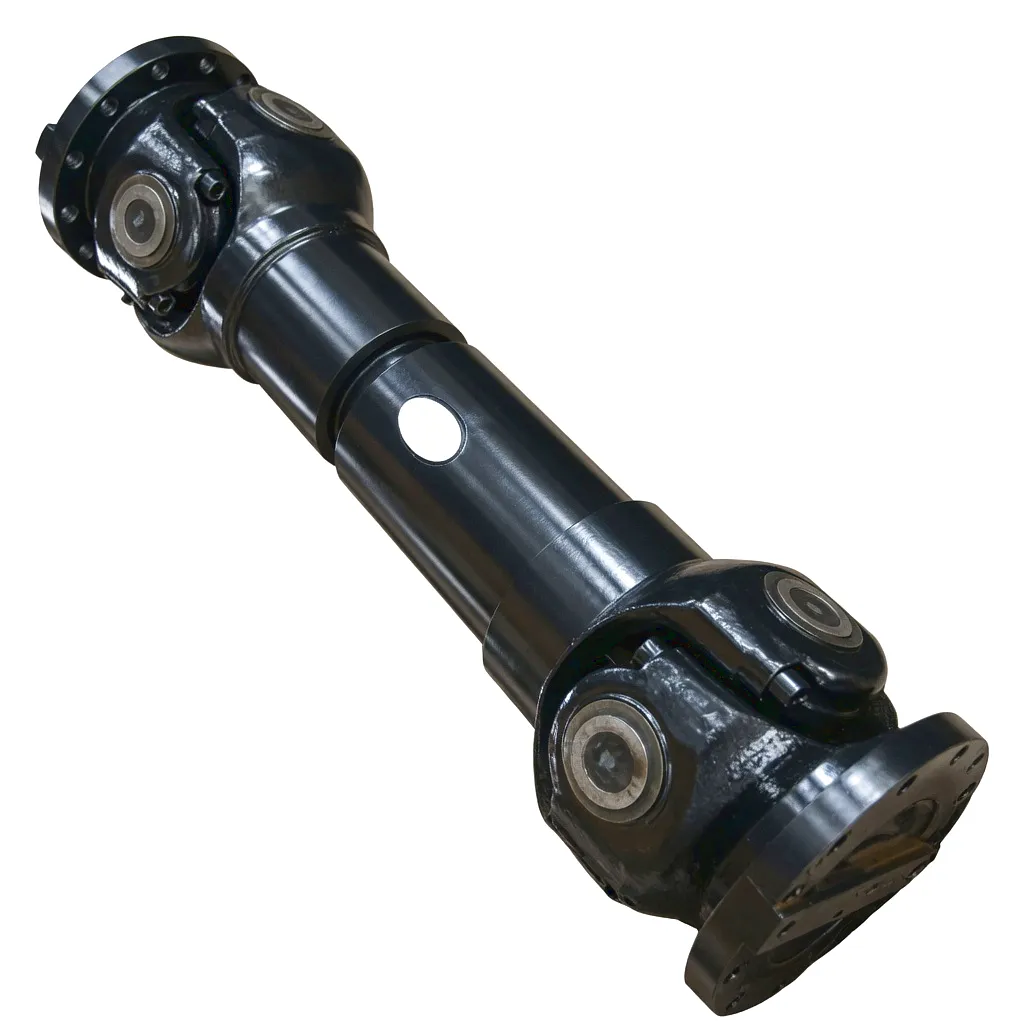
We had been through three aftermarket shafts in four seasons on our Horsch Pronto 6 DC. Ever Power’s custom W3800 with the overload clutch is now two seasons in and running perfectly. The difference is night and day — and the phone support from their technical team during the selection process was genuinely impressive. They actually understood the machine.
We source cardan couplings for our aftermarket parts range serving German and Dutch seed drill dealers. Ever Power’s documentation — material certs, dimensional reports, balance test data — is first class. Delivery to our warehouse in Hamburg has been consistently within the quoted lead time. They have become our primary supplier for agricultural coupling lines above 2,000 Nm.
Running 1,800 hectares of winter oilseed rape in Aberdeenshire, our Väderstad Rapid 600 sees some demanding headland conditions. The Ever Power wide-angle WA series on the fold section drive has handled every field we have taken it through for two seasons — including some very muddy November headlands. No bearing noise, no vibration. Exactly what we needed.
Supplying Seed Drill Drive Shaft Components Across Britain
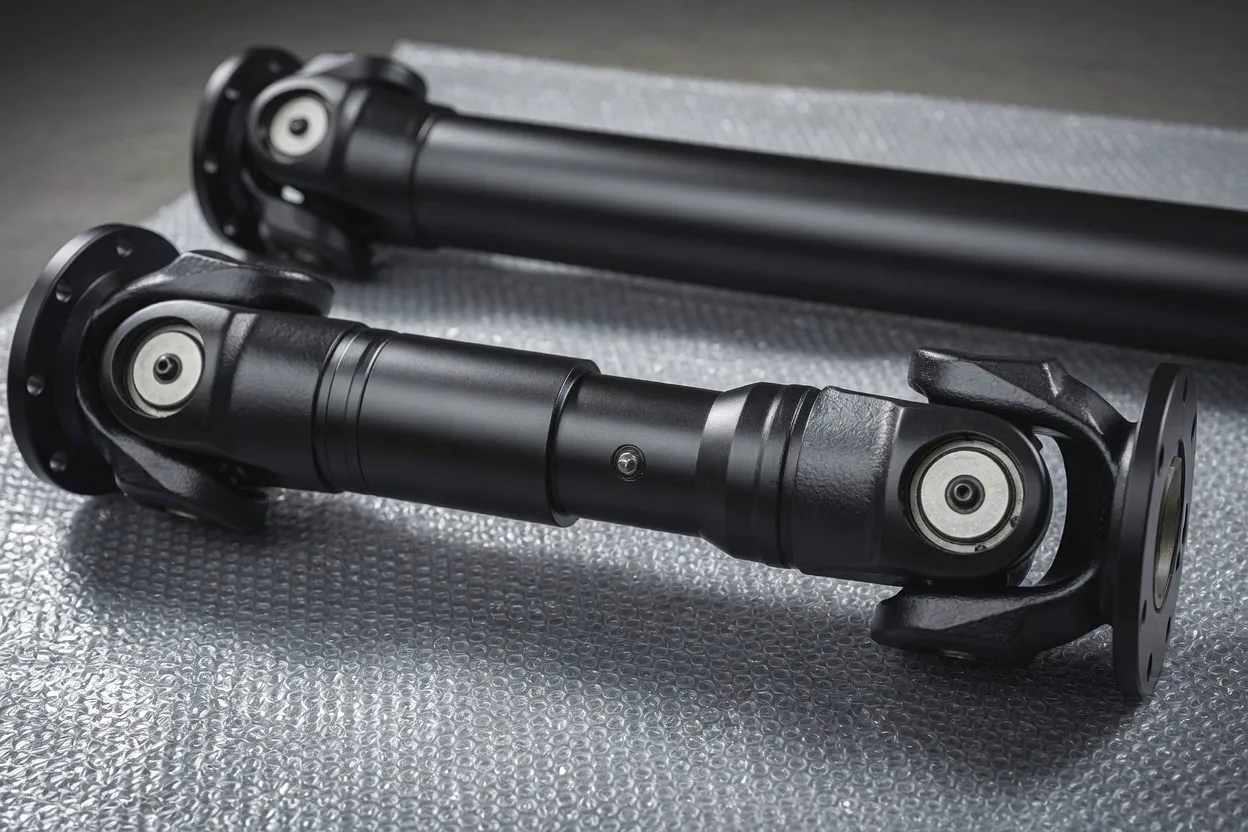
The UK arable sector accounts for roughly 4.5 million hectares of cropped land, predominantly worked by a machinery fleet that includes some of the highest-specification seed drills in European agriculture. From the intensive cereal enterprises of East Anglia and the East Midlands — where Horsch, Amazone, and Väderstad drills work field sizes of 50 to 200 hectares — to the mixed arable and livestock farms of the West Country, Northern Ireland, and the Scottish Lowlands, the demand for reliable ข้อต่อคาร์ดาน supply is year-round and geographically dispersed.
Ever Power supplies seed drill cardan couplings into the UK market via both direct OEM contracts and established agricultural machinery dealers. Standard series items for common drill platforms — matched to Amazone, Horsch, Väderstad, Kuhn, and Sulky reference numbers — carry stock at our distribution partner facilities in Peterborough and Stirling, enabling next-day despatch for urgent seasonal replacements. Bespoke engineered items ship direct from manufacture, with accelerated lead times available during the pre-season period from January through March.
Technical enquiries from UK farm managers, agricultural engineers, and machinery dealers are handled directly by our applications team, who carry 18 years of accumulated experience with the specific challenges of British arable conditions — heavy clay soils in the Midlands, flint-bearing chalks in the South Downs and Wiltshire, and the wet, compaction-prone conditions across much of Scotland and Wales. Specifications, cross-reference requests, and custom geometry enquiries can be directed to our team at any time of year.
Questions from UK Farmers and Agricultural Engineers
Ready to Solve Your Seed Drill Drive Shaft Challenge?
Whether you need a catalogue replacement, a custom-engineered solution, or technical guidance on the right cardan coupling specification for your seed drill and UK field conditions — our team is ready to help. Send your enquiry today and receive a detailed technical response within one business day.
📧 Get a Quote — [email protected]