Concentrated Solar Power (CSP) is one of the most mechanically demanding environments in renewable energy. Unlike photovoltaic panels that simply sit and absorb light, CSP systems are kinetic — they move, track, pivot, and articulate throughout every operating hour of every day. At the heart of this constant motion sits a component that most people outside the industry rarely think about: the cardan coupling, also known as a universal joint or Hooke’s joint.
Whether you are specifying drive components for a parabolic trough solar field stretching hundreds of metres across the Moroccan desert, or engineering a compact Dish/Stirling unit destined for off-grid deployment in rural Scotland, the cardan coupling you select will determine whether your tracking system delivers sub-0.1° pointing accuracy or drifts into costly inefficiency. This article draws on over 18 years of application engineering experience to explain why, and to guide you through every relevant selection criterion.
The UK renewable energy sector is growing rapidly, with CSP interest increasingly aligned to hybrid solar-thermal storage projects. Procurement engineers based in London, Birmingham, and Edinburgh have been reaching out to industrial coupling suppliers more frequently than ever before. Understanding the right product specification from the outset saves significant commissioning time and avoids premature component failure in the field.
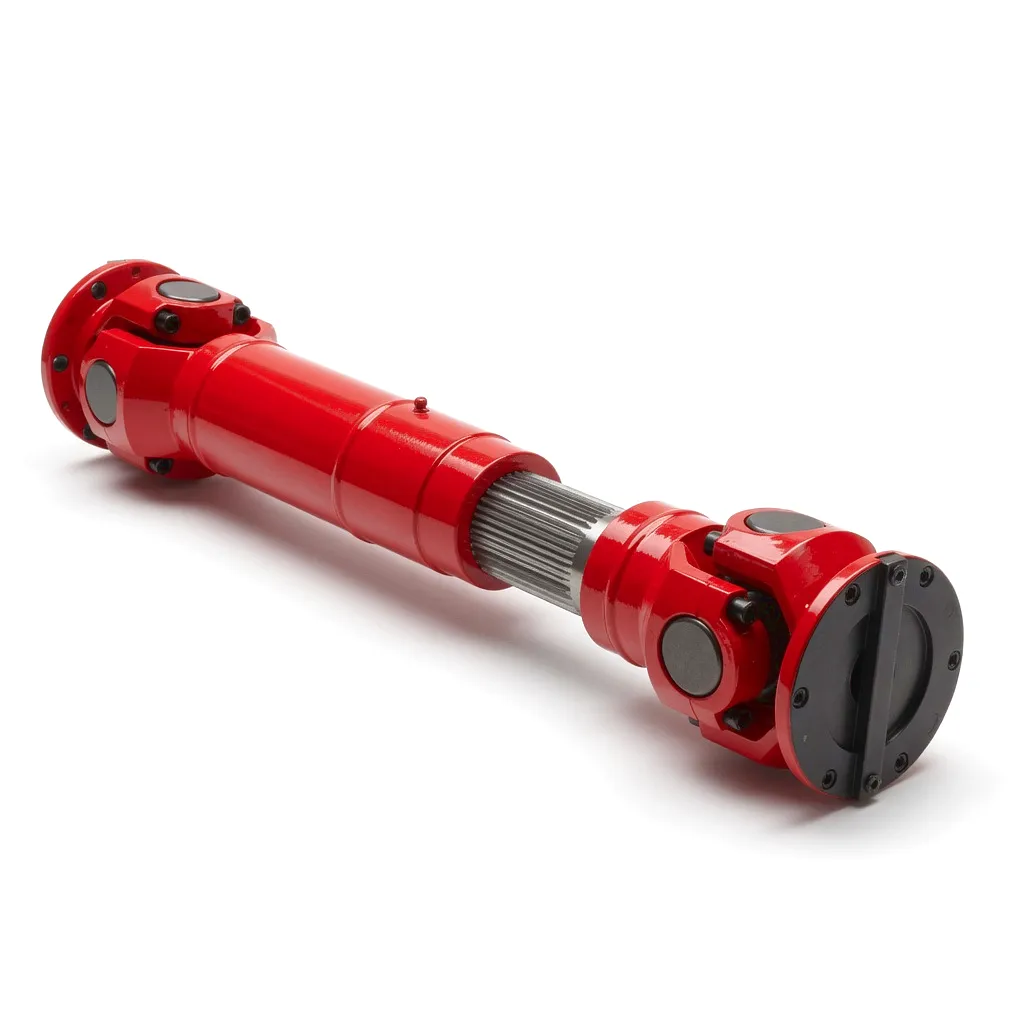
Ever Power cardan couplings are engineered for continuous outdoor operation in solar tracking applications — rated for 50,000+ hours service life under fluctuating angular loads.
Need a custom cardan coupling for your CSP project?
UK-supported. Factory-direct pricing. Lead time from 5 working days.
What Makes a Cardan Coupling Indispensable in Solar Tracking Drive Trains?
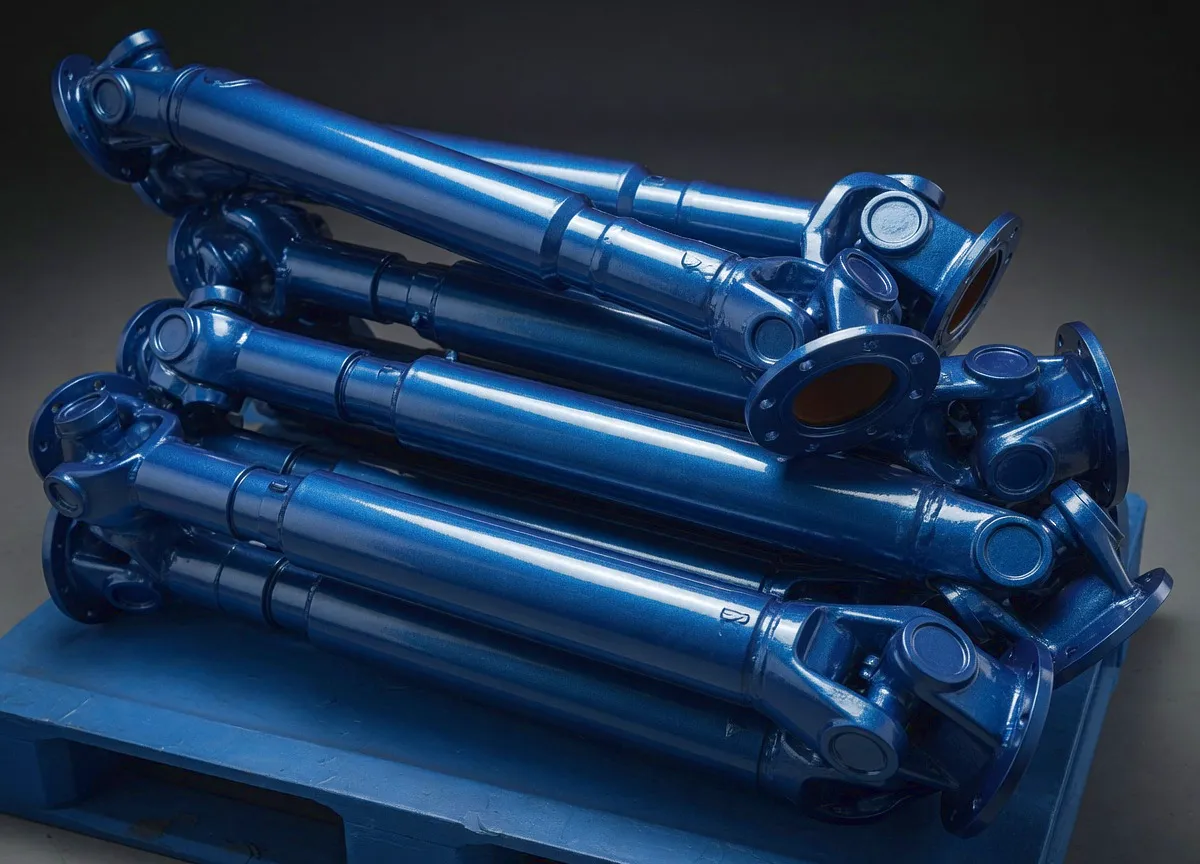
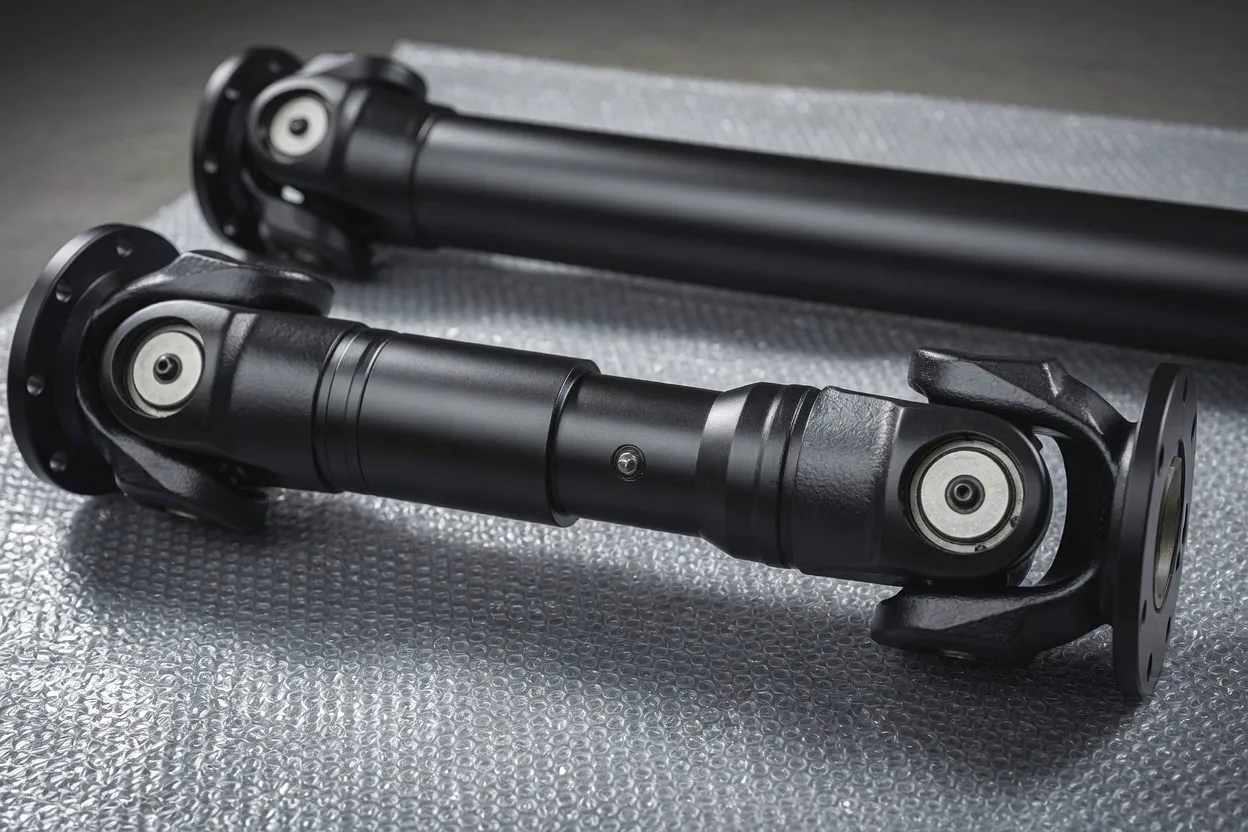
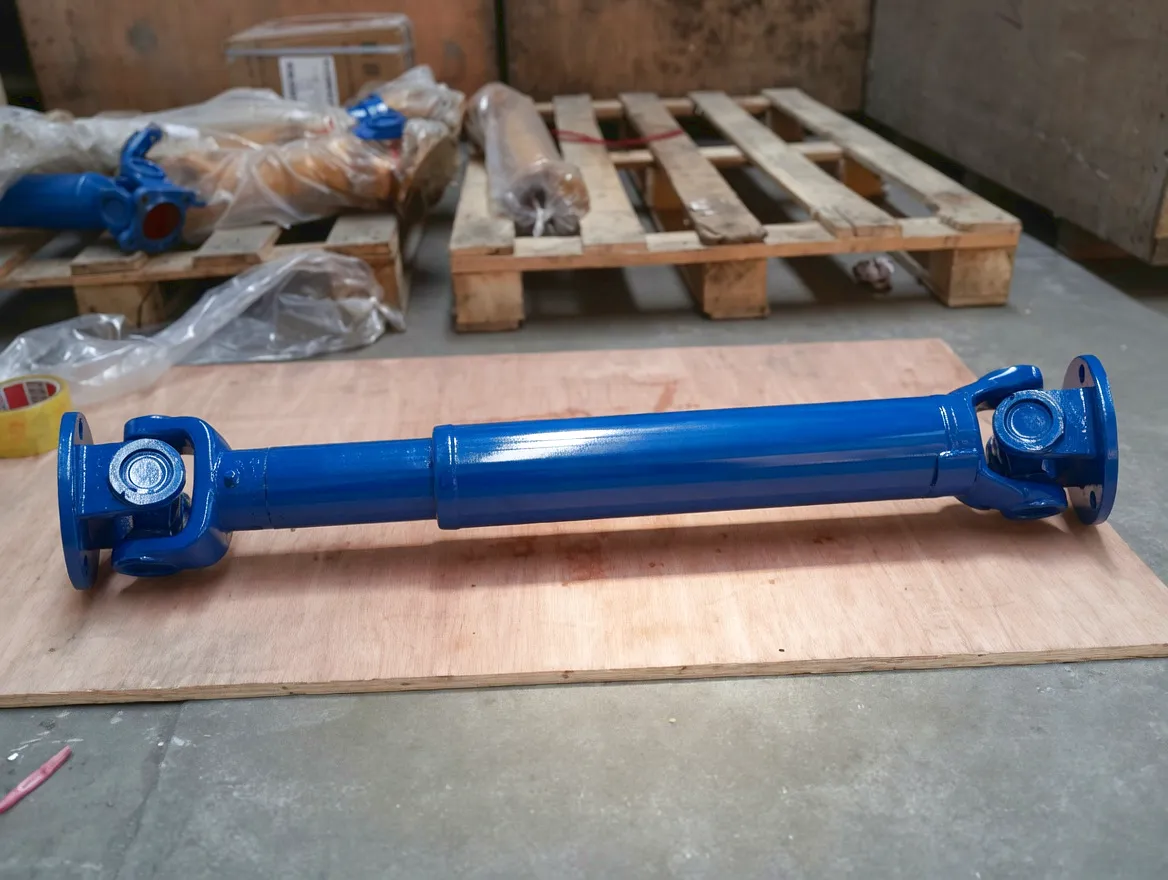
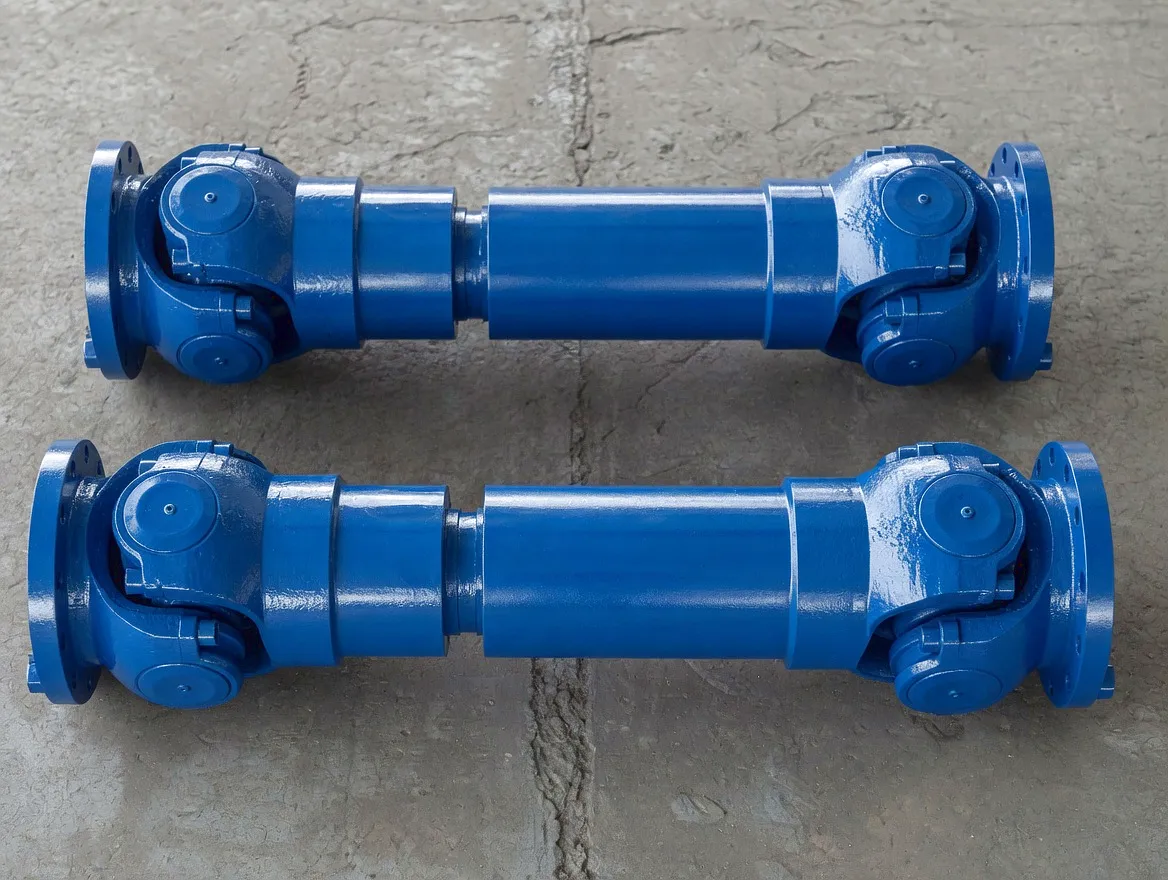
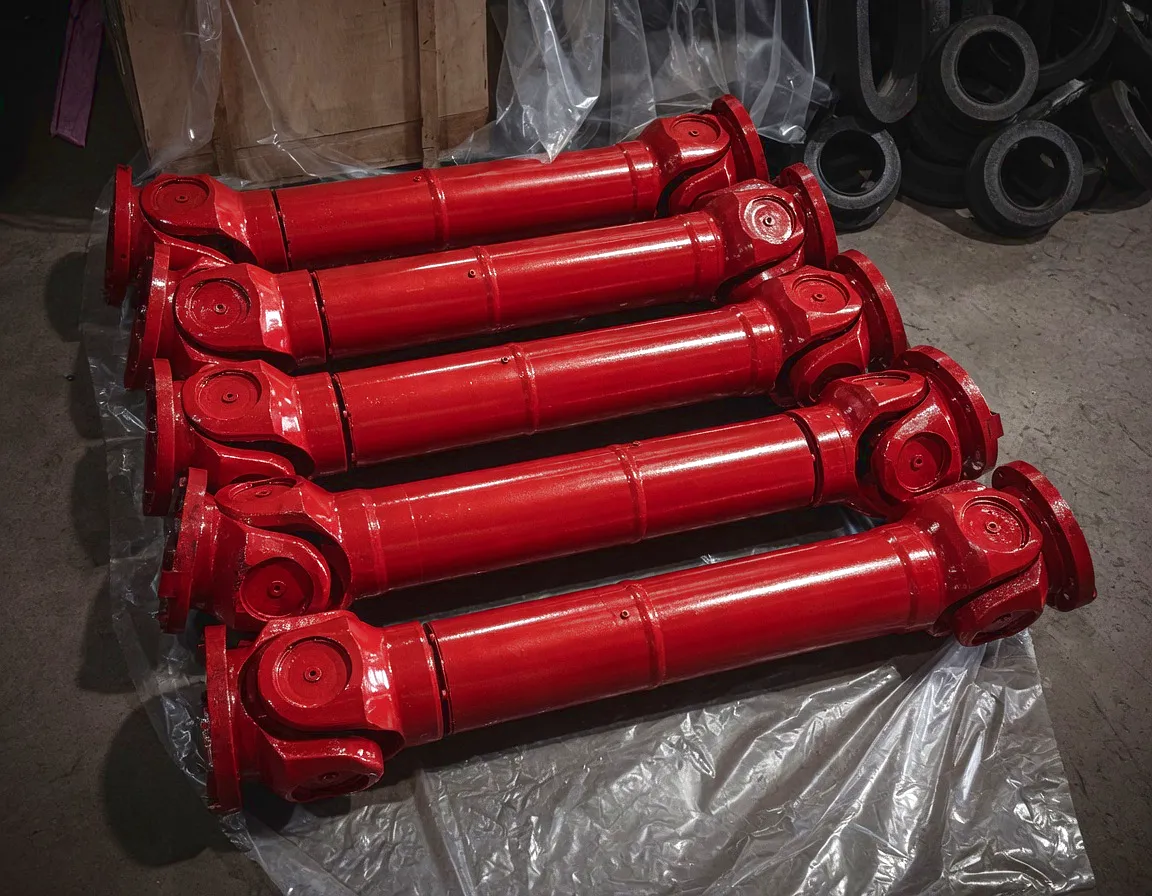 A cardan coupling — in its classical form — consists of two yokes connected by a cross-shaped journal bearing, sometimes called a spider. This seemingly simple geometry enables the transmission of rotational torque between two shafts that are not perfectly aligned, whether due to deliberate angular offset or structural flex under load. In a solar tracking context, this is not a “nice to have” — it is a fundamental engineering requirement.
In a parabolic trough CSP plant, individual Solar Collector Assemblies (SCAs) each span 100 to 150 metres in length. The thermal expansion alone across a single SCA can produce axial displacements of ±30 mm and angular deviations of ±0.3° between adjacent drive points. Without a coupling capable of absorbing this movement continuously while transmitting torque, the mechanical drive train will either bind, fatigue, or fracture — often within a single season.
The cardan coupling handles all three axes of misalignment simultaneously: angular, axial, and — when combined with a sliding spline — radial offset. This multi-axis compliance is why no other coupling family competes on equal terms for this duty cycle.
Parabolic Trough CSP — SCA Inter-Drive Cardan Coupling
The parabolic trough remains the most widely deployed CSP technology worldwide, and its tracking drive train is among the most mechanically repetitive applications a cardan coupling will ever encounter. A solar field might contain 800 to 2,000 SCAs, each driven by a hydraulic or electric motor via a torque tube running the full length of the collector. Adjacent SCAs must rotate in near-perfect synchrony, which is why the connecting drive shaft between them carries not just torque but angular position data encoded in every degree of shaft rotation.
The coupling between consecutive SCAs must allow for: axial thermal displacement of ±30 mm (over a 100 m span at a delta-T of approximately 80 °C, using a steel thermal expansion coefficient of 12 × 10⁻⁶ /°C); angular misalignment of ±0.3° caused by foundation settlement or manufacturing tolerance accumulation; and torsional stiffness sufficient to limit the rotational phase error between adjacent SCAs to under 0.1°. These three requirements pull in somewhat conflicting directions — high torsional stiffness resists both angular absorption and axial compliance — which is why the double Hooke’s joint arrangement, combining two cardan joints separated by an intermediate shaft, is the standard engineering solution.
The double-joint configuration cancels the velocity fluctuation inherent in a single Hooke’s joint, ensuring that when joint angles remain equal and opposite, output shaft speed is a constant multiple of input speed. In tracking accuracy terms, this translates directly to pointing repeatability — critical when the focal line tolerance is measured in millimetres at the absorber tube level.

Key Engineering Constraints
- Tracking accuracy < 0.1°
- Axial displacement ±30 mm / 100 m
- Angular misalignment ±0.3°
- Continuous outdoor duty, 20+ years
- IP65 or higher sealing
Dish/Stirling Dual-Axis Tracking — Elevation Drive Cardan Coupling
Elevation Axis Duty
- Working angle range: 0° to 90°
- Double-joint type recommended
- Stow position: near-horizontal
- Wind load torque peaks at low elevation
- Grease-sealed needle bearings standard
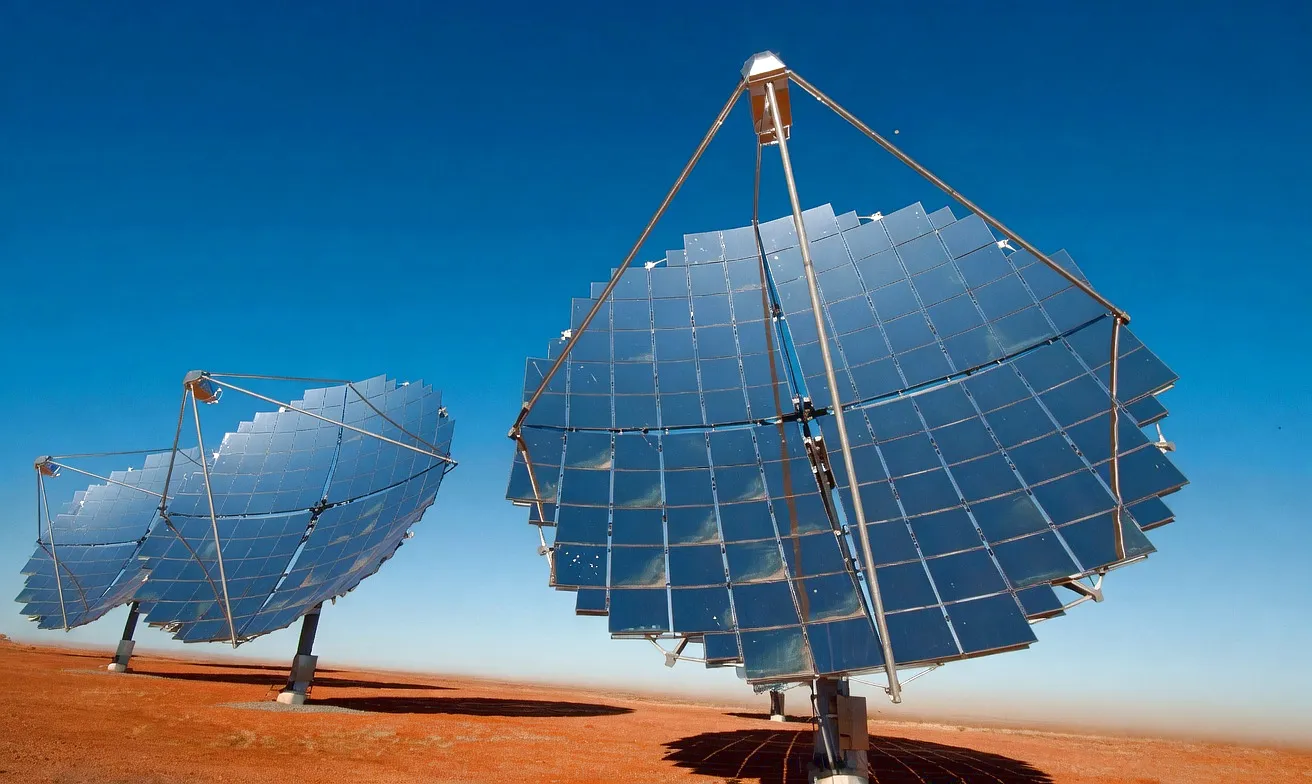
The Dish/Stirling concentrator presents a different but equally demanding set of requirements. Unlike the parabolic trough, which only tracks in a single axis, the dish system must simultaneously articulate in azimuth (0° to 360°) and elevation (0° to 90°). The azimuth drive is typically served by a slew ring gear, but the elevation drive — rotating the entire dish assembly about its horizontal tilt axis — relies heavily on a cardan coupling to transmit torque from a fixed-position electric motor to a rotating shaft whose angular relationship to the motor changes continuously throughout the day.
At sunrise, the dish may be near horizontal (elevation approx. 5°); at solar noon it may reach 75° or more depending on latitude. This means the cardan coupling on the elevation drive operates across the full angular range of a single Hooke’s joint — ideally up to 45° per joint — or, for wide-angle designs incorporating a double-joint arrangement, effectively 0° to 90° total angular displacement. The mechanical design challenge is that at high joint angles, the velocity irregularity of a single Hooke’s joint becomes significant, introducing periodic torque pulsation that can excite structural resonance in the dish framework.
Ever Power’s solution for this application is a double-joint cardan coupling with equal joint angles set by a centring support bearing, ensuring constant velocity transmission at all elevation positions. The intermediate shaft is sized to accommodate the maximum design torque with a safety factor of 2.5, accounting for inertia loads during fast-slew stow manoeuvres triggered by wind speed alarms.
Our Cardan Coupling Product Range
Technical Performance Parameters
Standard series specifications — custom dimensions and materials available on request for CSP project requirements.
| Parametre | Light Series | Standard Series | Heavy-Duty Series | CSP Custom |
|---|---|---|---|---|
| Nominal Torque (N·m) | 50 – 500 | 500 – 5.000 | 5.000 – 50.000 | Up to 200,000 |
| Max Single-Joint Angle | 25° | 35° | 45° | 45° per joint |
| Max Speed (rpm) | 6,000 | 3,500 | 1,500 | ≤ 100 (tracking) |
| Axial Displacement | ±15 mm | ±30 mm | ±60 mm | ±80 mm |
| Operating Temp. (°C) | -20 to +80 | -30 to +100 | -40 to +120 | -40 to +150 |
| Bearing Type | Needle roller | Needle roller | Heavy needle / Plain | Application-specific |
| Sealing Standard | IP54 | IP65 | IP65/IP67 | IP67 + Dust boot |
| Material (yoke/spider) | 42CrMo4 | 42CrMo4 | 34CrNiMo6 | As specified |
| Yüzey İşlemi | Zinc plate | Hot-dip galv. | Epoxy coat | Thermal-spray + seal |
| Design Life (hours) | 20,000 | 35,000 | 50,000 | 70,000+ |
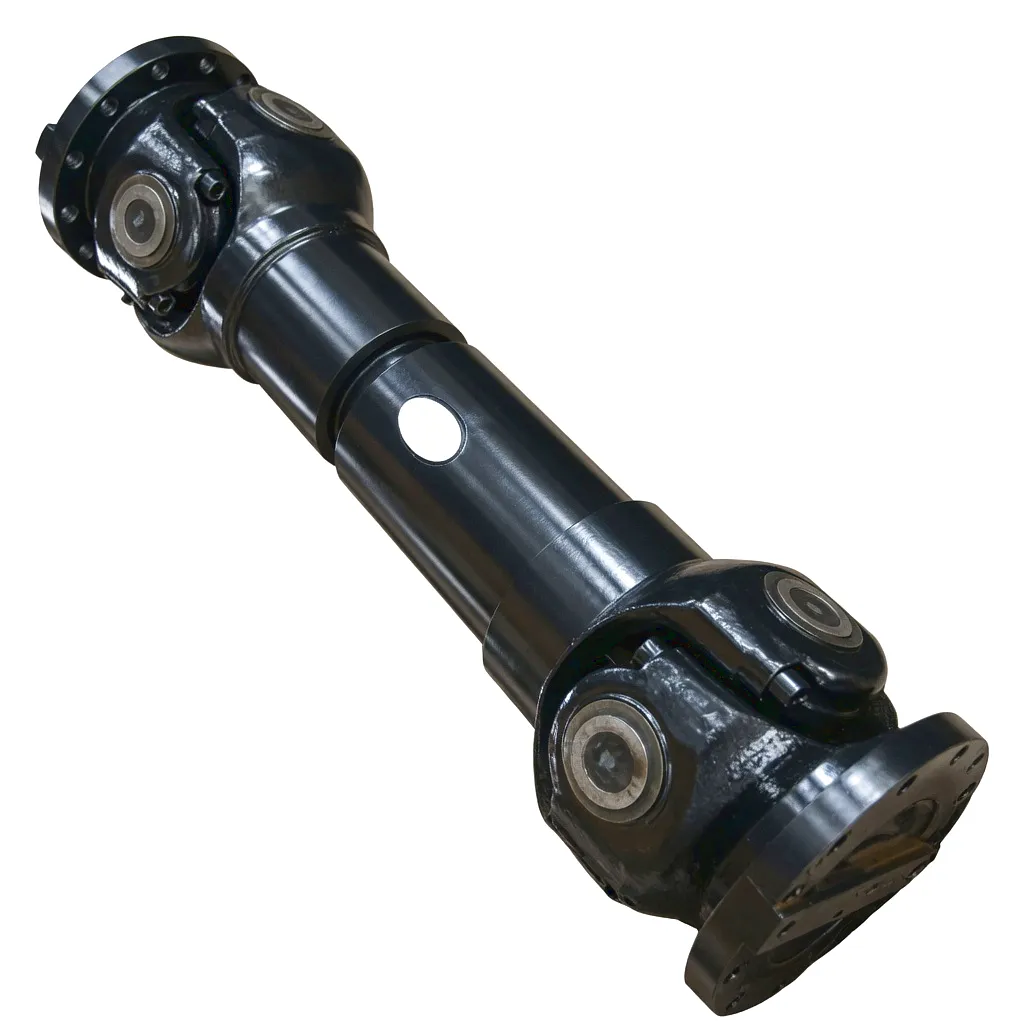
Why Engineers Choose Ever Power Cardan Couplings for Solar Applications
Sub-0.1° Tracking Precision
Our double-joint constant-velocity cardan couplings eliminate the velocity fluctuation of single Hooke’s joints, enabling the pointing accuracy that CSP systems require to maintain peak optical efficiency across a full solar day.
Thermal Compliance by Design
Integrated sliding spline sections absorb axial thermal movement of up to ±80 mm without imposing axial load on adjacent gearbox or motor bearings — a detail that eliminates a major failure mode seen with rigid coupling alternatives in outdoor solar fields.
70,000-Hour Design Life
CSP-grade couplings from our factory are rated for 70,000+ hours of operational life. This exceeds the industry-standard 20-year plant design life even under continuous two-axis movement, validated by internal fatigue testing under representative load cycles and temperature cycling.
Full Customisation Capability
From bore diameter and keyway specification to flange bolt circle and surface finish, every dimension of our cardan coupling is available as a factory-configured option. Our application engineers work from your OEM interface drawings and return confirmed-fit GA drawings within 72 hours of enquiry.
UK Distribution Support
Standard series stock items ship ex-works with 5-day lead time to UK ports. Technical support from English-speaking engineers is available Monday to Friday, with emergency response for operational field issues via our direct sales line. Suitable for direct purchase or through established UK industrial distributors.
Corrosion-Proof for Outdoor Duty
Hot-dip galvanised yokes, stainless-fastened bearing caps, and UV-stable elastomeric dust boots ensure that our couplings tolerate the salt-laden coastal winds of Southern Spain, the sand-laden desert air of the Sahara, or the persistent damp of a UK autumn without accelerated corrosion of the precision bearing surfaces.


Material Selection & Design Principles for CSP-Grade Cardan Couplings
Material selection for a solar-field cardan coupling is more nuanced than for an equivalent industrial application because the component must survive extreme environmental exposure while maintaining precise dimensional tolerances. Yokes and spiders are typically manufactured from 42CrMo4 alloy steel, quench-and-temper heat treated to a tensile strength of 900–1,100 MPa. This grade offers excellent fatigue resistance under the low-speed, high-cycle bending loads typical of continuous solar tracking — the joint flexes once or twice per minute for 4,000 to 5,000 operating hours per year.
For heavy-duty CSP couplings rated above 20,000 N·m, Ever Power specifies 34CrNiMo6 material for the spider, which provides a notch toughness of approximately 100 J at -40 °C — critical for cold-climate installations where thermal shock during rapid morning warm-up can otherwise initiate subsurface cracking in lower-grade steels. This matters particularly for projects in Scotland, Northern England, or Continental European sites where winter temperatures may drop significantly overnight.
Material Comparison at a Glance
| Material | Tensile (MPa) | Toughness at -40°C |
|---|---|---|
| 42CrMo4 (Q&T) | 900–1,100 | ≥ 50 J |
| 34CrNiMo6 (Q&T) | 1,050–1,250 | ≥ 100 J |
| Stainless 316L | 515–690 | Excellent |
Customer Success — Real Projects, Real Results
50 MW Parabolic Trough CSP Plant — Andalusia, Spain
Client: A Spanish utility-scale renewable energy developer, responsible for a new-build 50 MW parabolic trough CSP plant with thermal energy storage located in the province of Seville, Andalusia. The project involved 1,400 SCAs arranged in 350 parallel loops, each loop requiring drive shaft interconnections between consecutive SCAs.
Challenge: The project engineer had initially specified a flexible jaw coupling for the inter-SCA drive connections. During commissioning of the first solar field loop, jaw coupling wear rates were found to be unacceptably high at operating temperatures above 60 °C — the field ambient temperature regularly exceeds this in Andalusian summer — and angular misalignment caused by SCA foundation tolerance accumulation was at the upper limit of the jaw coupling specification. After two months of operation, three coupling elements had failed across the trial loop.
Solution & Outcome: Ever Power supplied 2,800 units of our SCA-series double-joint kardan bağlantısı with integrated sliding spline and IP67 dust boot. Following retrofit across the entire field (completed in six weeks), zero coupling failures were recorded over the subsequent 18-month operational period. The plant achieved its target annual thermal output, with tracking accuracy verified by the plant’s control system at 0.06° RMS — well within the design specification.
“We replaced our original inter-SCA couplings with Ever Power’s double-joint cardan units across our Murcia facility. The improvement in tracking consistency was measurable from the first week — our control logs showed a 40% reduction in angular correction pulses from the tracking motors, which translates directly to reduced motor wear and lower maintenance cost.”
“Our Dish/Stirling prototype required an elevation drive coupling that could genuinely handle 0° to 85° operation under intermittent peak torque from emergency stow commands. We sent our OEM interface drawings on a Tuesday; Ever Power had preliminary GA drawings confirmed by Thursday and parts in our workshop within three weeks. That kind of response is genuinely rare in this supply chain.”
“As a UK-based procurement manager sourcing components for our client’s hybrid solar-thermal project in Portugal, I was concerned about lead times from overseas suppliers. Ever Power delivered standard-series couplings to our Bristol warehouse in eight working days with full material certification. The technical datasheet quality was the best I have seen from any coupling supplier in this category.”
Factory Capability & Custom Engineering Services
Ever Power operates a dedicated manufacturing facility for cardan couplings and universal joints, with CNC turning centres, gear hobbing machines, and in-house heat treatment furnaces capable of processing workpieces up to 1,200 mm in diameter and 3,000 mm shaft length. This vertical integration allows us to offer true custom cardan coupling engineering — not just catalogue selection — and to deliver confirmed-specification components rather than nearest-standard alternatives.
Our customisation service covers every dimension of the cardan coupling geometry: bore diameter from 8 mm to 400 mm, flange bolt circle to customer drawing, overall shaft length to ±0.5 mm, keyway and spline profile to DIN or customer standard, surface treatment specification (from standard zinc plate to thermal-spray ceramic coating for extreme-temperature duty), and bearing selection optimised for the specific duty cycle of your application. We can also produce hybrid coupling assemblies that combine a cardan joint with a torsional elastomeric stage for applications requiring damping of hydraulic motor torque ripple.
For solar project developers and OEM equipment manufacturers in the UK, we offer a no-obligation application review service: send us your load case, interface envelope, and environmental exposure data, and our senior application engineers will return a written coupling recommendation with supporting calculations within three working days. This is the kind of pre-sales technical depth that justifies long-term preferred supplier relationships.
Customisation Options Available
- Bore & keyway to drawing
- Flange PCD and bolt pattern
- Overall shaft length ±0.5 mm
- DIN / ANSI / customer spline standard
- IP54 to IP68 sealing options
- Hot-dip galv. / epoxy / ceramic coating
- Integrated torque limiter option
- Elastomeric damping stage option
- Third-party material certification
- FEA structural analysis on request
Lead Time Guide
| Standard (stock) | 5–8 working days to UK |
| Standard (to order) | 2–3 weeks |
| Custom (simple) | 3–5 weeks |
| Custom (complex) | 6–10 weeks |
Frequently Asked Questions
What type of cardan coupling is best for parabolic trough CSP solar tracking in the UK?
For parabolic trough CSP applications in the UK or internationally, the double-joint (double Hooke’s joint) cardan coupling with an integrated sliding spline is the engineering standard. The double-joint configuration cancels the velocity fluctuation inherent in a single Hooke’s joint, maintaining constant angular velocity between drive and driven shafts — critical for the sub-0.1° tracking accuracy that parabolic trough optical performance demands. The sliding spline absorbs thermal axial movement without imposing axial load on adjacent bearings. For UK outdoor duty, an IP67 sealing specification with UV-stable dust boots is recommended.
How much does a custom cardan coupling for a CSP project cost, and how do I get a UK supplier quote?
Pricing depends on torque rating, joint angle range, bore size, surface treatment, and order quantity. Standard-series couplings are priced from a few hundred pounds per unit at low quantities, with substantial volume discounts available for solar field projects requiring hundreds or thousands of units. Custom-engineered versions carry a non-recurring tooling charge that is typically offset at order quantities above 50 units. To obtain an accurate price and lead time, email your application data (torque, angle, bore, quantity) to [email protected] — our application engineers respond within one working day.
Which cardan coupling supplier in the UK or Europe can deliver CSP-rated couplings within a few weeks?
Ever Power maintains stock of standard-series cardan couplings that ship to UK addresses within five to eight working days from our factory. For custom-specification items, lead times run from three to ten weeks depending on complexity. We work with UK freight forwarders and can deliver directly to project sites, UK warehouses, or via nominated EPC contractor logistics hubs. For emergency replacement requirements, contact us directly to discuss expedited production options.
How does a double-joint cardan coupling improve solar tracking accuracy compared with a single Hooke’s joint?
A single Hooke’s joint introduces a cyclic velocity variation whose amplitude increases with operating angle — at 5° of angular misalignment, the output shaft speed oscillates ±0.4% per revolution; at 15° this rises to ±3.5%. Over 100 m of drive shaft in a parabolic trough SCA, these fluctuations accumulate as angular position error at the far end of the collector. A double-joint cardan coupling, with equal and opposite joint angles separated by an intermediate shaft, cancels this velocity variation so that output speed equals input speed at all angular positions within the design range. The practical result is measurably improved pointing precision, reduced motor hunting, and lower wear on motor drive electronics.
What maintenance schedule is recommended for a cardan coupling installed on a CSP solar field in a hot and dusty climate?
For CSP-duty cardan couplings in hot and dusty environments — typical of the Middle East, North Africa, or Southern Spain — we recommend annual greasing of the cross journal needle bearings using a high-temperature lithium-complex grease (NLGI grade 2, dropping point above 260 °C). The dust boot condition should be inspected every six months; a damaged boot allows abrasive particulate ingress that accelerates needle bearing wear significantly. For IP67-sealed versions, the sealed bearing cartridge requires no periodic greasing and is typically replaced as an assembly at the 35,000-hour service interval. Overall, annual inspection and a five-year major overhaul interval is appropriate for most CSP field cardan coupling applications.
Where can I find a cardan coupling manufacturer that offers full customisation for UK renewable energy projects with fast lead times?
Ever Power is a direct-manufacturing supplier of cardan couplings covering bore sizes from 8 mm to 400 mm, torque ratings up to 200,000 N·m, and operating angles up to 45° per joint. We offer a full custom design service — from application review and calculation to confirmed-fit GA drawings, full material certification, and surface treatment to project specification. English-language technical support is available Monday to Friday, and we regularly supply UK-based EPC contractors, renewable energy OEMs, and industrial distributors. Email [email protected] to start your application review.
Ready to Specify the Right Cardan Coupling for Your Solar Project?
Our engineering team is ready to review your load case, advise on product selection, and deliver a competitive quotation. UK enquiries welcome — response within one working day.
✉ Get a Quote — [email protected]
edit by gzl