 The shift toward renewable energy across the United Kingdom has placed enormous mechanical demands on every component within a solar power installation. From utility-scale ground-mounted arrays in Scotland to rooftop commercial installations in the West Midlands, the solar tracker drive train is exposed to wind loading, thermal cycling, moisture ingress, and continuous low-speed rotation that together create a uniquely punishing environment for shaft couplings.
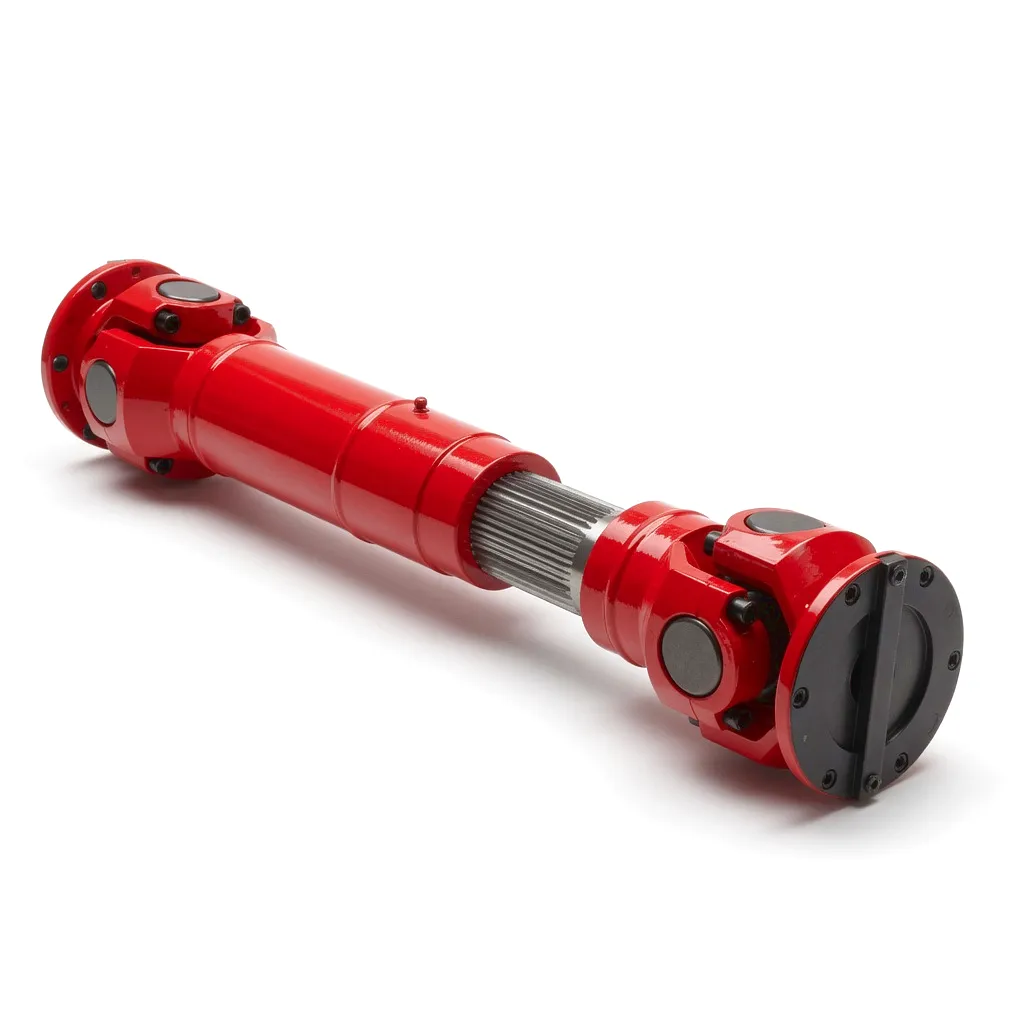
A cardan coupling — also widely referred to as a universal joint coupling or Hooke’s joint assembly — handles angular misalignment between a drive motor and the tracker’s rotating torque tube without transmitting shock loads back through the gearbox. In solar tracking applications specifically, this misalignment tolerance is not optional: thermal expansion of steel tube structures, civil engineering tolerances on post foundations, and continuous dynamic loading mean that rigid couplings fail early and fail expensively.
What Makes a Cardan Coupling Different from Other Shaft Couplings in Solar Drive Trains
Angular Misalignment Tolerance
Unlike elastomeric or jaw couplings, the cardan design accommodates angular offsets between 1° and 45° depending on the joint configuration. For solar tracker torque tubes mounted on uneven ground — common across UK hillside installations — this flexibility is mechanically essential rather than a performance bonus.
High Torque Density
The cross-and-yoke mechanism of a heavy-duty cardan coupling transmits torque through needle or plain bearing contact rather than elastomeric material, giving it a torque-to-weight ratio that suits the demanding start-stop cycling profile of bifacial panel trackers that reposition dozens of times daily.
Weather Resilience
Properly sealed cardan couplings with grease-lubricated needle bearings and IP65-rated dust caps operate reliably across the full UK climate range — from −20 °C winter frosts in the Scottish Highlands to the 45 °C internal temperatures reached inside tracker housing during summer heatwaves.
The fundamental working principle is straightforward: two yoke assemblies connect to a central cross-piece (the spider), and needle or plain bearings at each of the four trunnions allow the yokes to pivot independently. This construction lets the output shaft rotate continuously even when it is angled relative to the input shaft, transmitting motion and torque through a wide operational arc without binding or backlash. In the context of solar power generation, where a gearbox motor output might be perfectly horizontal while the tracker torque tube sits at a slight compound angle due to terrain, the cardan coupling bridges that geometric gap silently and without measurable power loss.
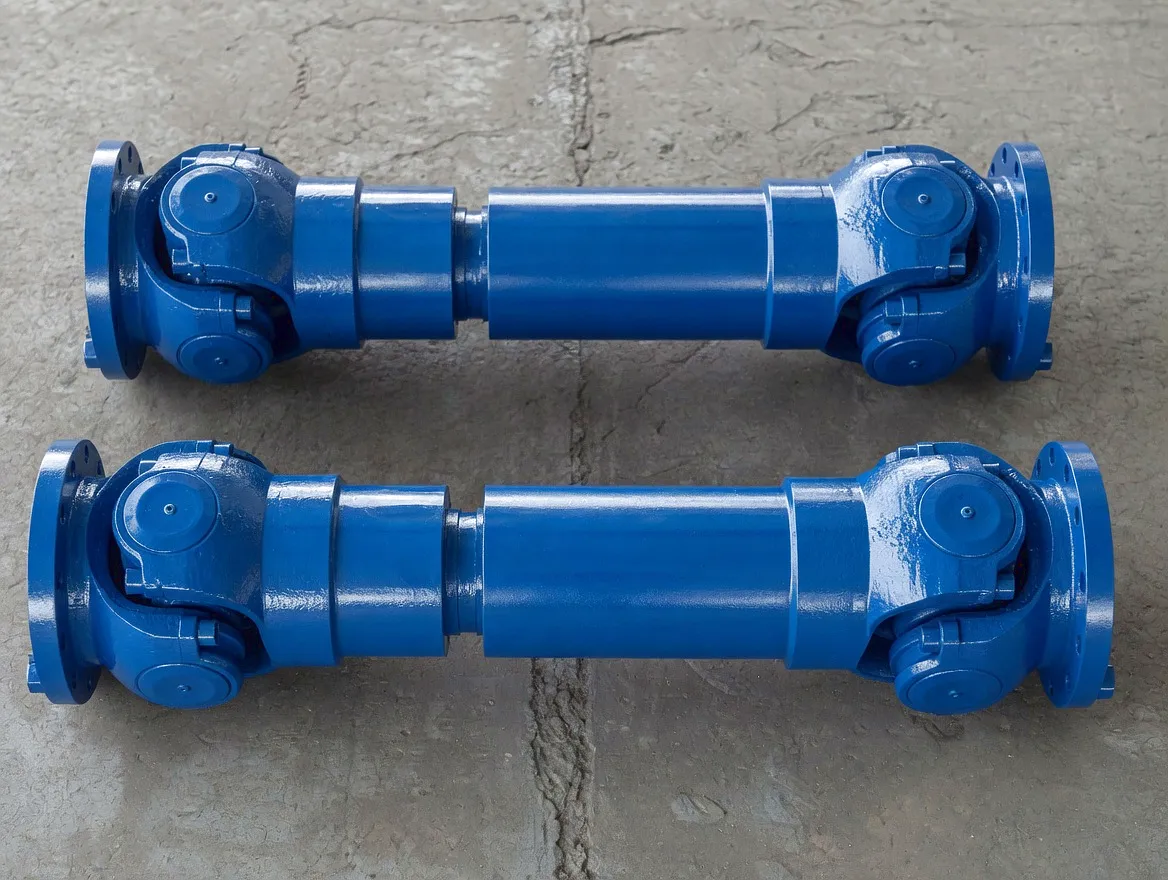
Technical Specifications: Cardan Coupling for Solar Tracker Applications
The table below covers the standard performance and dimensional range across Ever Power’s solar-grade cardan coupling series. All figures are validated under continuous-duty laboratory cycling and corroborated by field data from installations operating in the UK, Germany, and Spain. Custom bore sizes, flange patterns, and surface treatments are available on request — our engineering team works directly with project developers to match specifications to tracker OEM requirements.
| Parametre | Light Series (SWC-A) | Medium Series (SWC-C) | Heavy Series (SWC-DH) |
|---|---|---|---|
| Nominal Torque | 150 – 500 Nm | 500 – 1,500 Nm | 1,500 – 3,500 Nm |
| Max Angular Misalignment | ±5° | ±7° | ±10° |
| Operating Speed Range | 0 – 600 rpm | 0 – 400 rpm | 0 – 250 rpm |
| Temperature Range | −30 °C to +80 °C | −30 °C to +80 °C | −40 °C to +100 °C |
| Bore Diameter Range | 20 – 55 mm | 40 – 90 mm | 70 – 160 mm |
| Bearing Type | Needle roller bearing | Needle roller bearing | Plain / Composite |
| Material (Yoke / Spider) | 45# Steel / 20CrMnTi | 42CrMo / 20CrMnTi | 42CrMo / Alloy Steel |
| Yüzey İşlemi | Zinc phosphate | Zinc phosphate / Paint | Hot-dip galvanised / Epoxy |
| Design Life (Duty Cycles) | 500,000+ cycles | 800,000+ cycles | 1,200,000+ cycles |
Cardan Coupling in Action: Solar Power Plant Applications
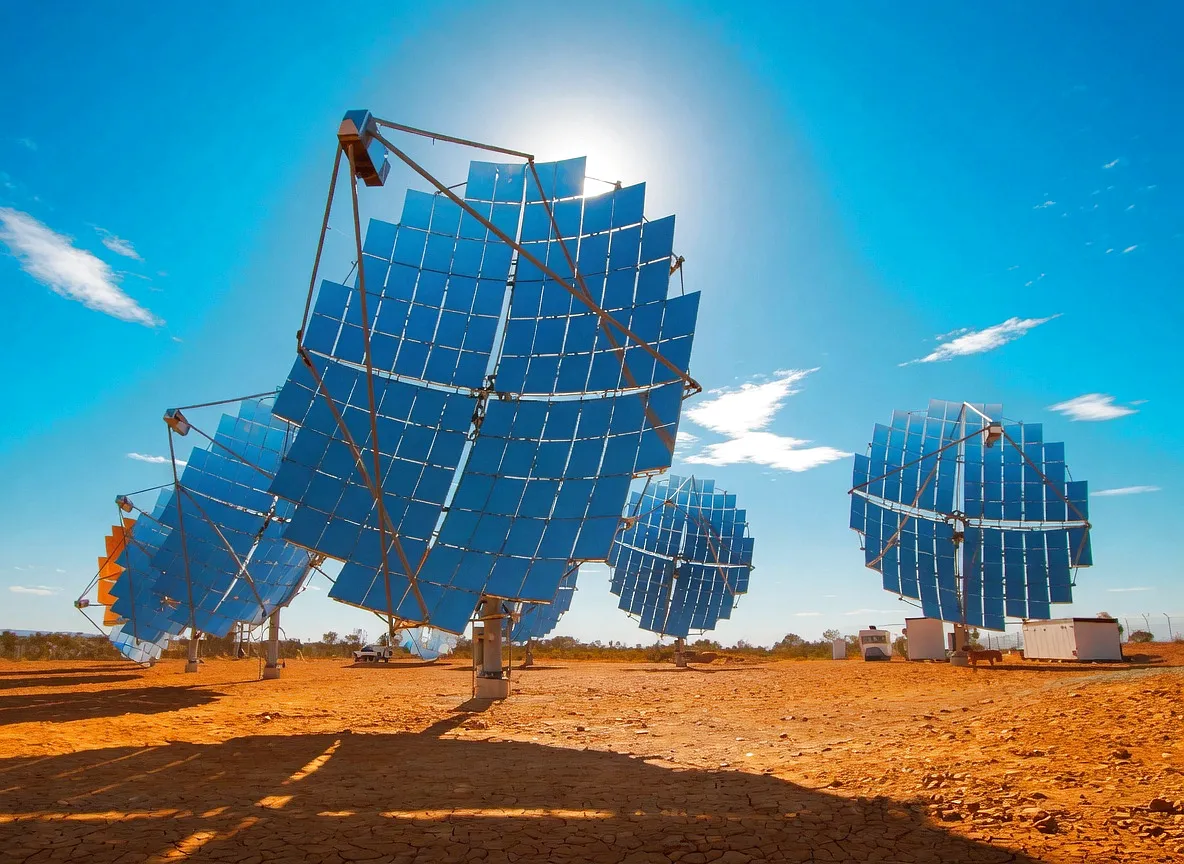


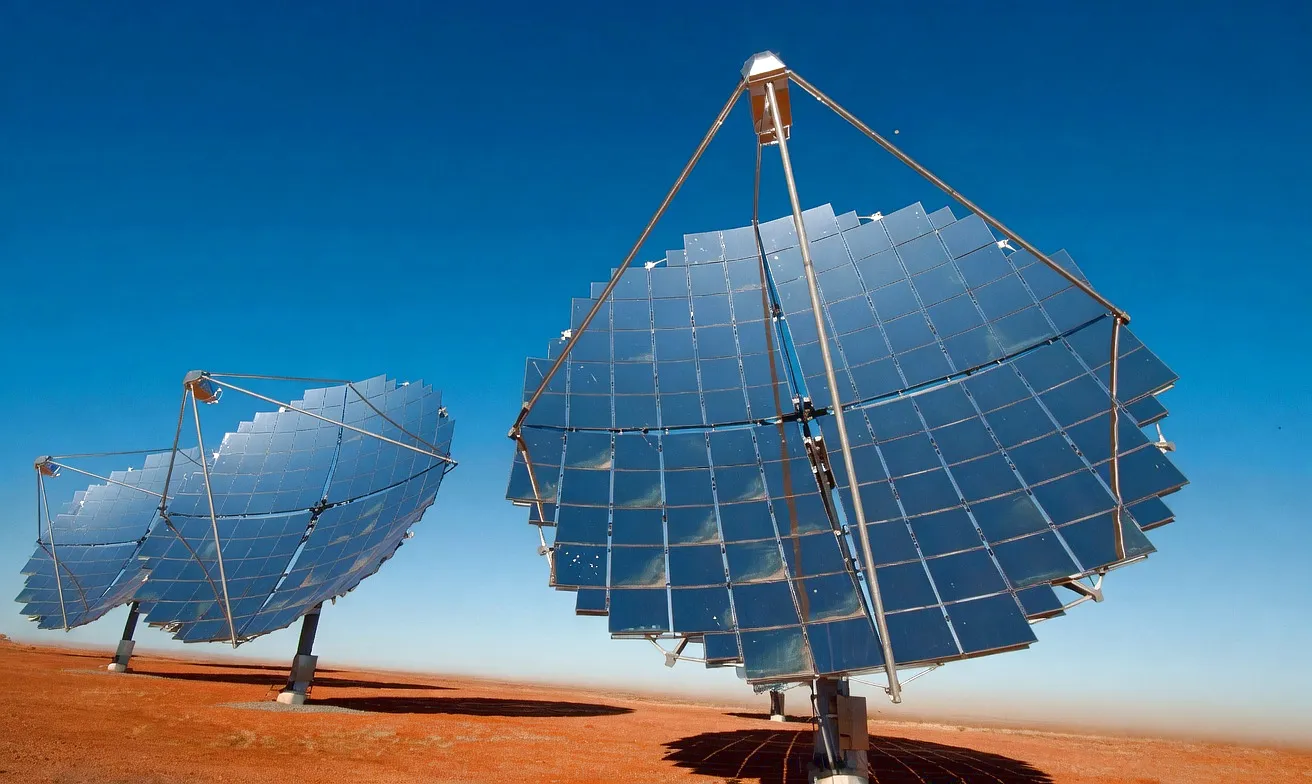
Solar power generation encompasses a surprisingly wide range of mechanical drive challenges. Single-axis horizontal trackers used in ground-mounted utility farms across East Anglia and Lincolnshire rotate one long torque tube spanning 60–100 metres, driven by a central gearmotor. The cardan coupling here must handle the torsional compliance of the tube itself while still delivering precise angular positioning. Dual-axis trackers fitted to concentrated photovoltaic (CPV) installations require simultaneous azimuth and elevation adjustment, meaning two independent cardan coupling assemblies work in concert. Concentrated solar power (CSP) parabolic trough reflectors present arguably the most demanding case: heavy steel mirror structures must track the sun within 0.1° accuracy while tolerating significant thermal distortion — a job that stretch-tests any coupling to its limits.
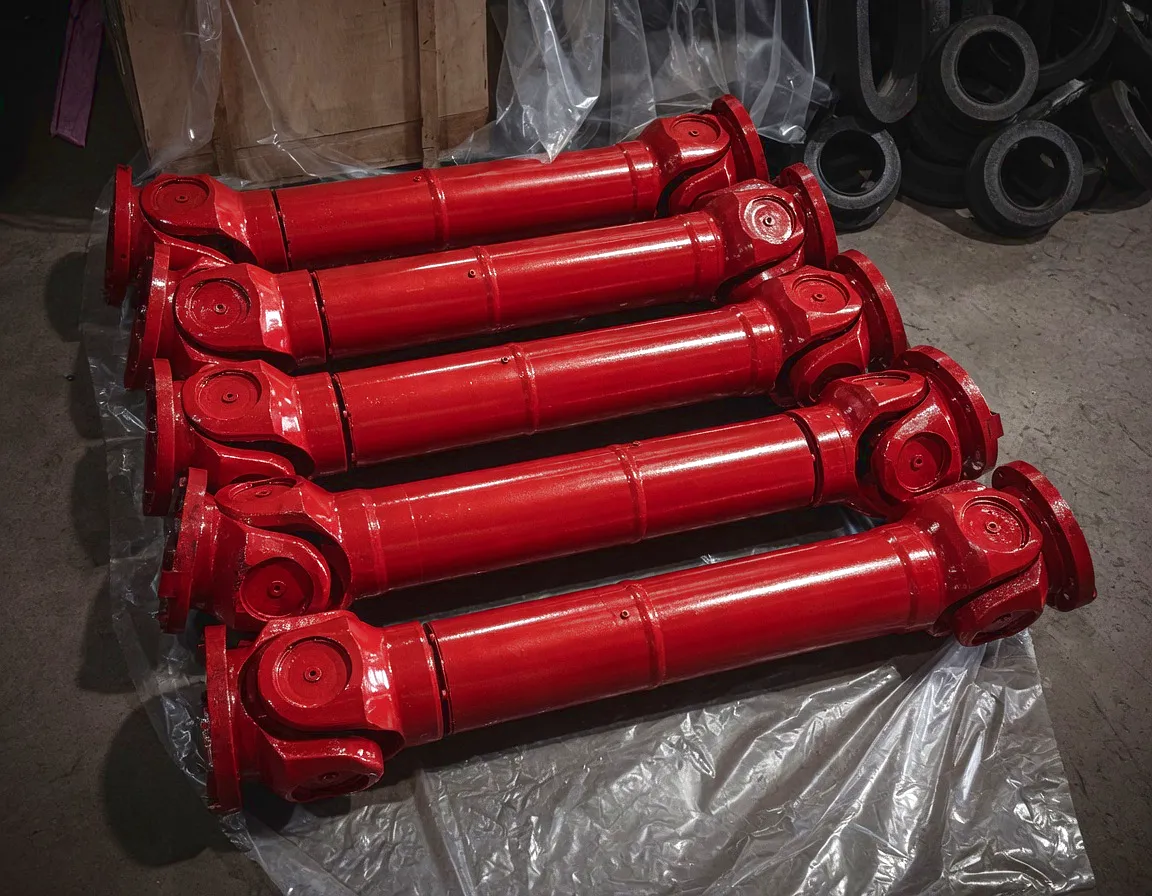
Seven Reasons Solar Power Engineers in the UK Specify Cardan Couplings Over Alternatives
No Lubrication-Free Degradation Risk
Elastomeric couplings harden and crack when exposed to UV radiation and ozone — both abundant on solar farm sites. Cardan couplings built with grease-sealed needle bearings and steel construction have no rubber element to degrade, giving them a service life measured in decades rather than years when maintained correctly.
Handles Foundation Settlement Without Realignment
Ground conditions at UK solar farms vary enormously — clay soils in the Midlands can heave 15–20 mm seasonally, while chalky downland sites in the South East present their own settlement challenges. A cardan coupling absorbs these geometric shifts continuously, eliminating the need for time-consuming drive-train realignment visits that rigid couplings would otherwise demand.
Low Backlash for Accurate Panel Positioning
Even fractional degree errors in tracker positioning translate into measurable energy yield losses — modelling studies consistently show that tracking accuracy within 0.5° recovers 20–35% more energy than a fixed-tilt array. Ever Power’s solar-grade cardan couplings are manufactured to a backlash specification of less than 0.3°, supporting the closed-loop control algorithms used in modern tracker controllers.
Wind Load Shock Absorption
UK coastal and upland solar sites regularly experience wind gusts exceeding 90 km/h. The sudden torque spike generated when a tracker row snaps into stow position against wind loading can exceed three times the nominal operating torque. The mechanical compliance inherent in the cardan coupling’s cross-pin design dampens these transient overloads before they reach the gearbox, protecting a component that costs far more to replace than the coupling itself.
Simple Field Replacement
Tracker drive systems operate in remote fields, sometimes hours from the nearest service depot. The cardan coupling’s bolted flange connections allow a trained technician to swap a failed unit in under 90 minutes using basic hand tools, without specialised lifting or alignment equipment. Contrast this with gear coupling replacement, which demands precise axial alignment and often a dial gauge setup that takes considerably longer in field conditions.
Competitive Total Cost of Ownership
Although the upfront price of a precision cardan coupling may exceed that of a simple elastomeric alternative, the absence of rubber replacement, the reduced alignment maintenance burden, and the dramatically lower gearbox failure rate together produce a total cost of ownership over a 25-year plant lifecycle that compares very favourably — particularly on large UK installations where labour rates for field service are significant.
Customisation for Bespoke Tracker Geometries
Tracker manufacturers increasingly move away from off-the-shelf platforms toward proprietary torque tube diameters, non-standard flange bolt patterns, and specific telescoping shaft arrangements. Ever Power’s in-house machining capability means we manufacture cardan couplings to customer drawings rather than asking customers to adapt their design to our catalogue — a distinction that genuinely matters at the engineering procurement stage of a large UK solar development.
Material Science Behind the Design
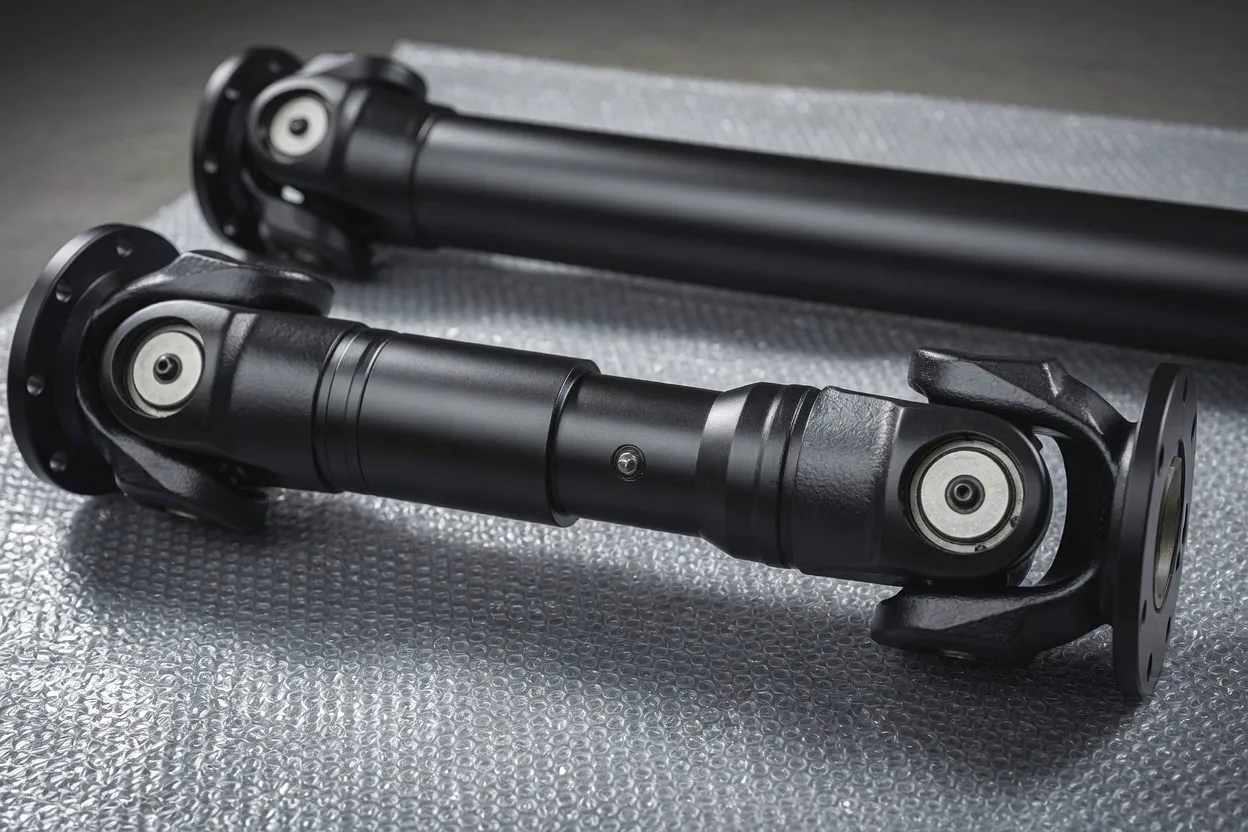 The choice of steel grade for yoke and spider components is not merely a catalogue decision — it directly determines fatigue life under the oscillating bending loads that characterise solar tracker service. Ever Power uses 42CrMo alloy steel for medium and heavy series yokes, a chromium-molybdenum grade that offers a tensile strength above 900 MPa combined with good toughness at sub-zero temperatures. Spider cross-pieces are manufactured from 20CrMnTi case-hardened steel, giving a hard surface layer (58–62 HRC) resistant to trunnion wear while maintaining a tough core that resists fracture under impact loading.
For installations near the UK coastline — where salt-laden air can cause rust penetration on unprotected mild steel within eighteen months — we offer hot-dip galvanised yoke assemblies and epoxy-coated intermediate shafts as standard options rather than costly special orders. This coastal-grade treatment has been validated by installations in South West England and along the North Sea coast of Scotland, where salt spray testing equivalent to ISO 9227 Class 720 hours was passed without blistering or delamination.
Customer Success: 78 MW Solar Farm in Lincolnshire, England
GreenField Energy Holdings — Bourne Solar Park
The project O&M manager, reporting at the annual asset performance review, noted that eliminating the recurring coupling replacement programme had materially improved both the O&M budget variance and the plant’s capacity factor. The Ever Power engineering team supported the installation by providing dimensioned drawings compatible with the tracker OEM’s standard drive bracket, removing the need for any site-side machining or adaptor plates. Twelve months after the initial installation, GreenField Energy placed a follow-on order for an identical specification to retrofit a 45 MW sister plant in Cambridgeshire.
“We’ve been specifying these cardan couplings on our tracker projects across the East Midlands for two seasons now. No failures, no call-outs, no gearbox incidents. The custom bore option saved us an adaptor sleeve on every drive unit — that alone was worth the conversation with the Ever Power engineering team.”
“The coastal variant with hot-dip galvanising solved a persistent corrosion issue we had on a 32 MW project near Skegness. Previous supplier’s products were showing surface rust after two winters. Ever Power’s couplings look the same now as they did on commissioning day. Very impressed with the quality and the delivery lead time was genuinely better than quoted.”
“We source components across Europe and Ever Power consistently delivers technical documentation that meets our QA requirements — drawings, material certificates, hardness test reports. For a 200-unit order on a Scottish wind-solar hybrid site, they turned around a full drawing pack within 48 hours of receiving our specification. That responsiveness is rare.”
Ever Power’s Manufacturing Capability & Custom Cardan Coupling Service
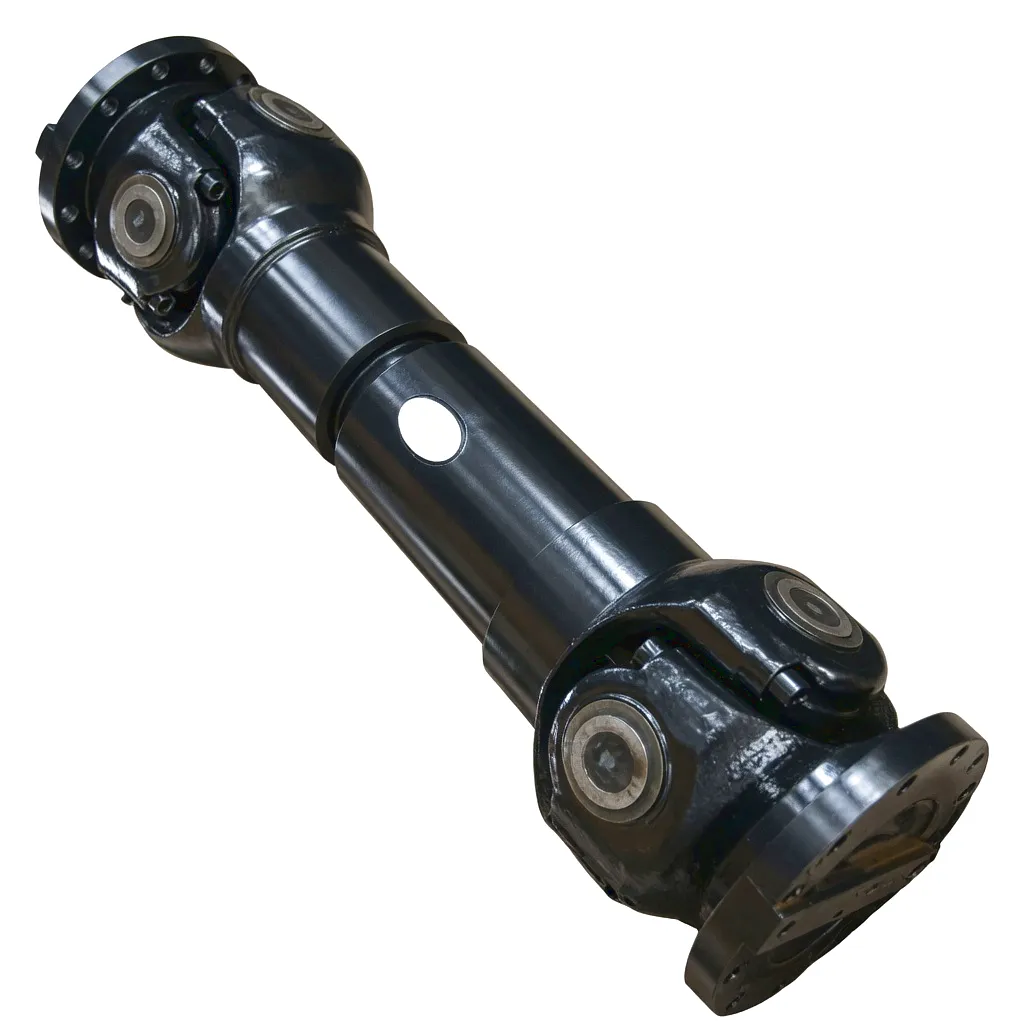 The Ever Power manufacturing facility operates a dedicated kardan bağlantısı production line equipped with CNC turning centres, broaching machines for keyway cutting, and coordinate measuring machines (CMM) for dimensional verification to tolerances of ±0.01 mm. Heat treatment is performed in-house using controlled-atmosphere furnaces, eliminating the batch-to-batch variability that can arise when heat treatment is outsourced. This vertical integration means we control every variable in the production chain — from raw bar stock certification through to finished assembly testing.
Product customisation is a genuine strength rather than a marketing claim. Our engineering team regularly delivers the following bespoke modifications for solar power generation clients: non-standard bore diameters and keyway profiles matched to tracker motor shaft specifications; custom flange bolt circle diameters and bolt count configurations; telescoping intermediate shaft assemblies for variable-length installations where structural tolerances are wide; and integrated torque-limiting slip rings for installations where overload protection at the coupling level is specified by the system designer. Minimum order quantities for custom pieces are flexible — we accommodate both single-prototype runs for validation work and bulk production orders exceeding 1,000 units per batch.
Non-standard flange patterns
Telescoping shafts
Coastal / marine grades
Torque-limiting options
OEM drawing-to-part service
Full CMM inspection reports
Material traceability certs
How to Select the Right Cardan Coupling Size for Your Solar Tracker Project in the UK
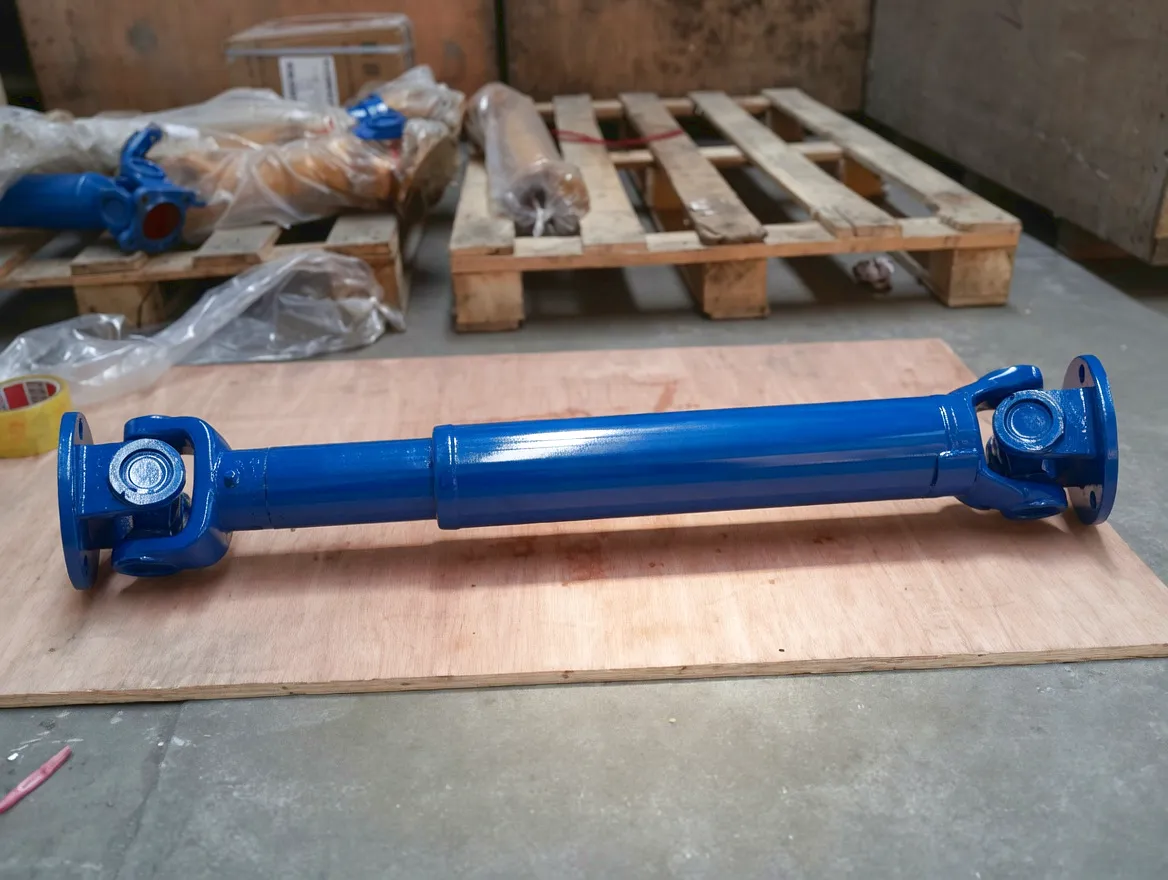 Sizing a cardan coupling for a solar tracker drive is not simply a matter of matching the motor shaft diameter and calling it done. The calculation must account for the service factor applicable to the tracker’s duty cycle — typically 1.5 to 2.0 for start-stop positioning service — which multiplies the motor’s nominal output torque to arrive at the design torque. Angular misalignment must be measured or estimated from the site survey data: for hillside sites in Wales or Northern England, a worst-case compound misalignment of 6°–8° is not uncommon and should be used for selection rather than the average figure. Shaft speed is rarely a constraining factor in solar trackers, which typically operate below 100 rpm, but should nonetheless be verified against the coupling’s maximum speed rating to avoid bearing resonance.
If you supply Ever Power’s engineering team with your gearbox motor datasheet, the tracker tube diameter and material, the site’s maximum wind speed design load, and any known foundation settlement figures from the civil engineering report, we will generate a coupling selection recommendation and supporting calculation note within two working days — at no cost and with no obligation. This is a standard service we offer to project engineers at UK solar developers, EPC contractors, and equipment procurement teams alike.
Frequently Asked Questions
Ready to Specify a Cardan Coupling for Your UK Solar Project?
Our engineering team has supported solar developers, EPC contractors, and O&M firms across the United Kingdom. Send us your specification and we’ll have a coupling recommendation and detailed quotation back to you within 48 hours.
Get Your Free Quote → [email protected]
edit by gzl