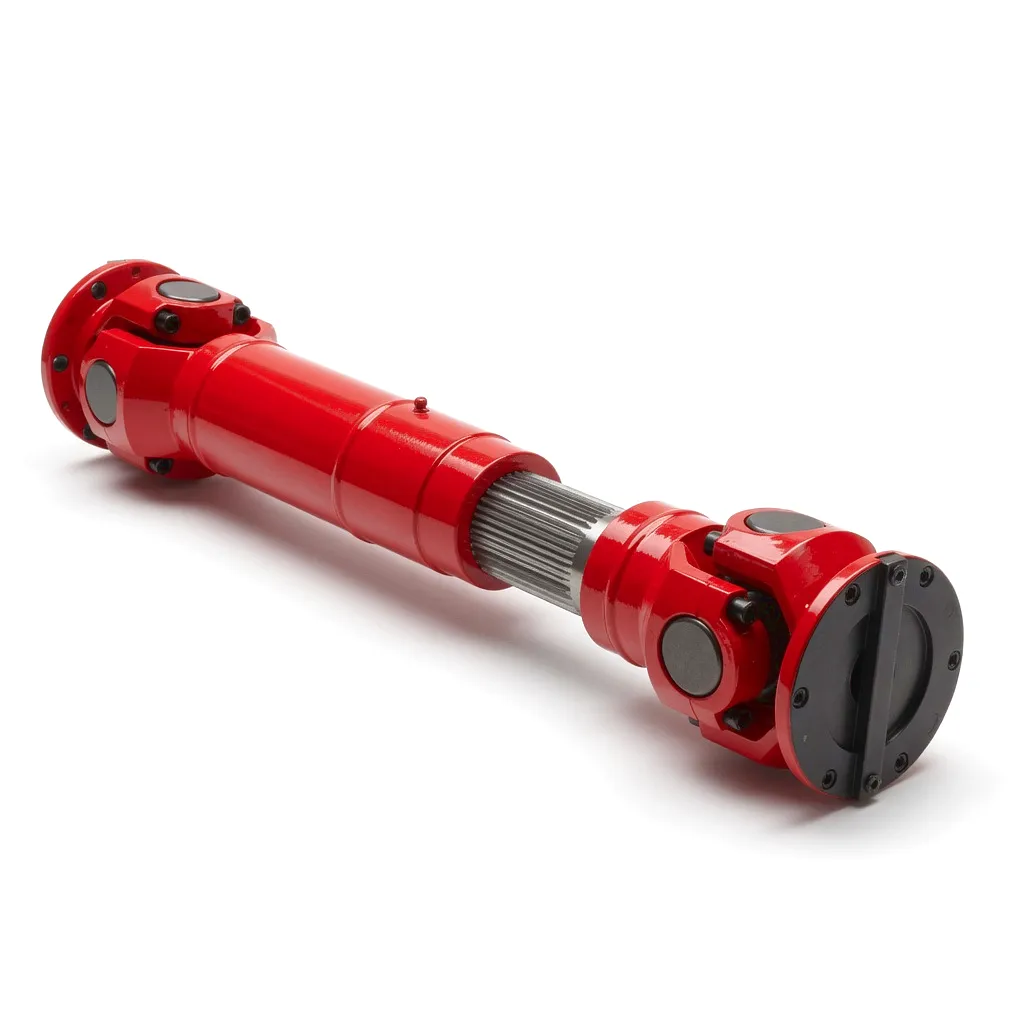
 When an engineer in Sheffield asks why a rolling-mill drive shaft keeps failing every 900 hours, or when a wind-farm maintenance team in the North Sea needs to reduce unplanned downtime, the conversation almost always arrives at the same mechanical component: the Cardan Coupling. Sometimes called a universal joint coupling or propeller shaft coupling, the Cardan Coupling has been a cornerstone of industrial power transmission for over a century — yet the engineering decisions behind specifying one correctly are anything but simple.
The challenge is not merely selecting a coupling that fits the shaft diameter. High-performance applications demand careful consideration of misalignment angles, operating torque, dynamic balance, material grades, surface treatment and bearing geometry — all simultaneously. A coupling undersized for peak torque will fail; one over-specified may introduce unnecessary mass and rotational inertia. Between these two extremes lies an engineering sweet spot that separates reliable long-service installations from chronic maintenance headaches.
This guide unpacks the key design considerations that determine whether a Cardan Coupling performs flawlessly for tens of thousands of hours or becomes a recurring cost centre. We draw on real-world data from UK heavy industries and Ever Power’s precision manufacturing experience to give you a genuinely useful technical framework — not a product brochure dressed up as an article.
Working Principle: How a Cardan Coupling Transmits Motion
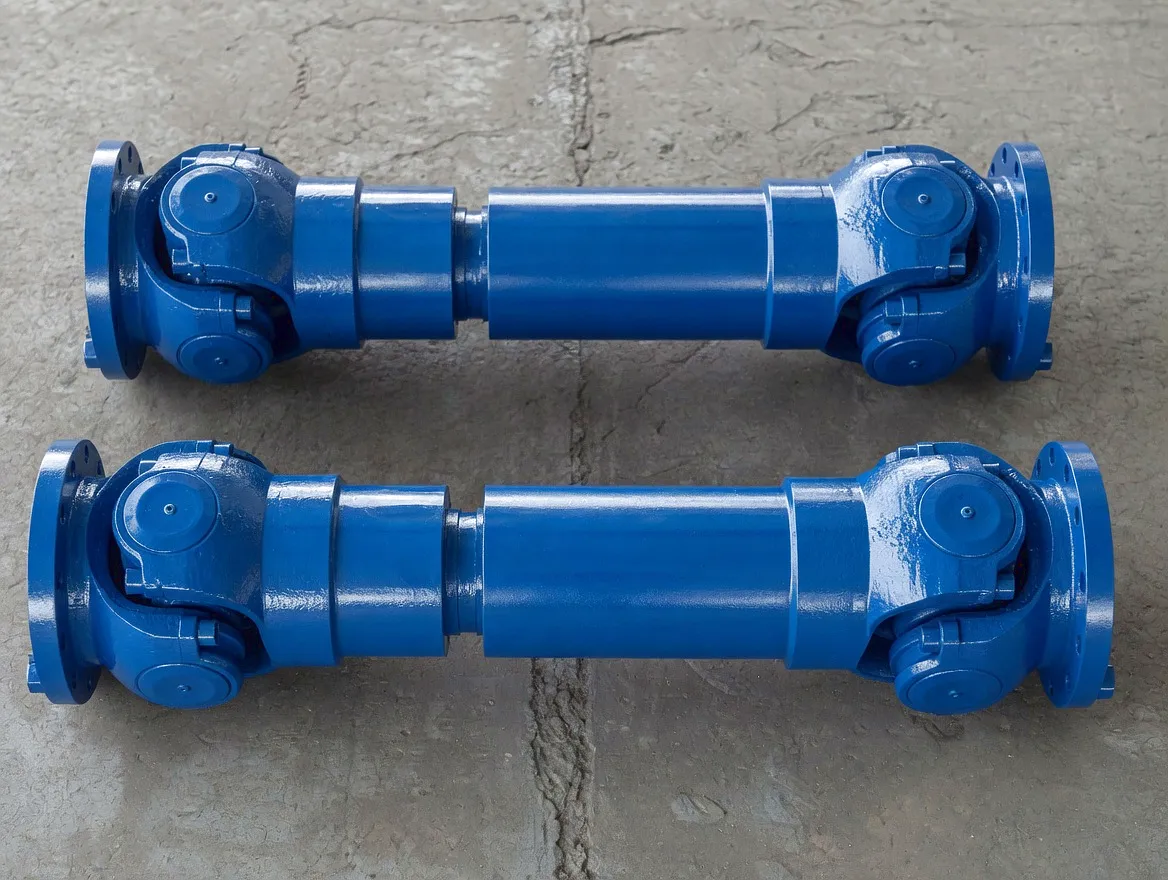
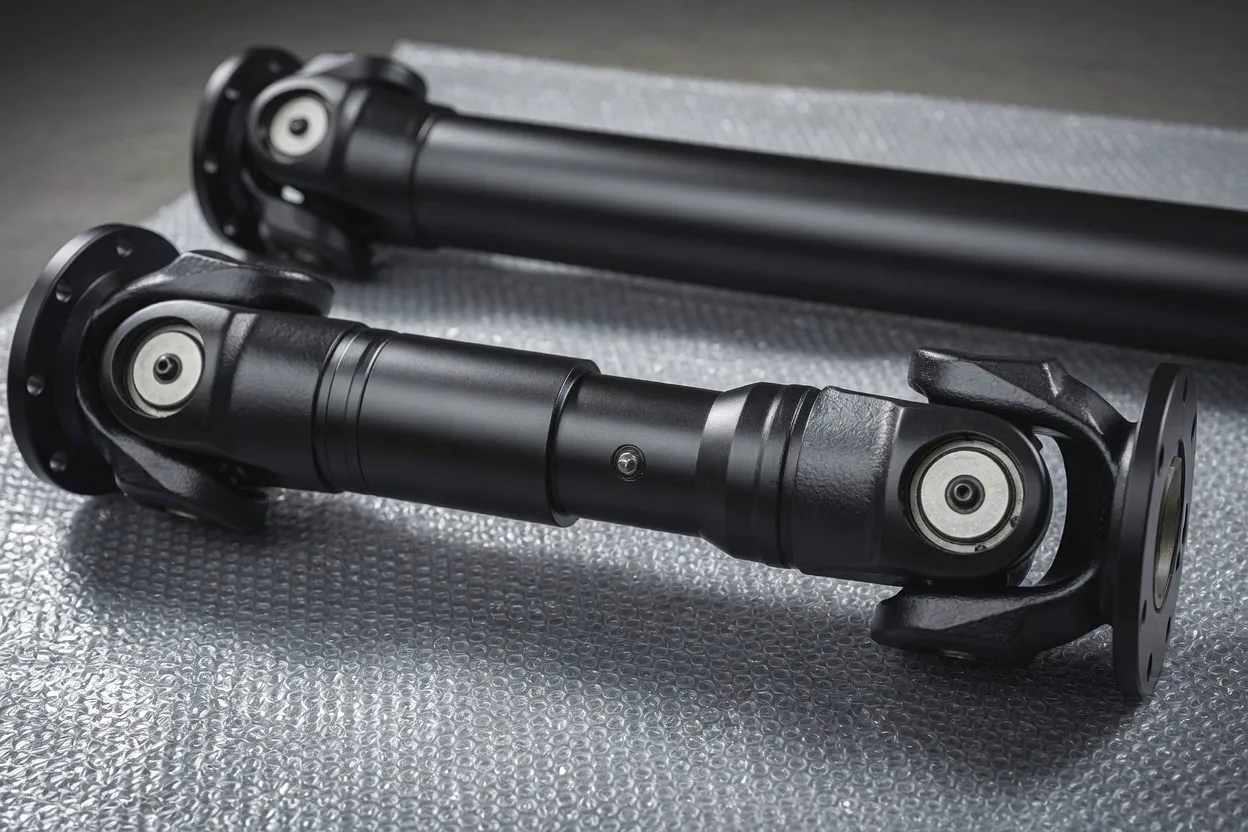
At its core, a Cardan Coupling — or Hooke’s joint — consists of two yokes connected by a cross-shaped trunnion journal, commonly called the cross or spider. Each arm of the cross fits into a needle-roller bearing housed in the yoke ears, allowing the input and output shafts to rotate at an angle to one another while still transmitting torque. This deceptively straightforward geometry has profound implications for design.
The single Cardan Coupling introduces a second-order velocity variation — the output shaft speeds up and slows down twice per revolution even when the input runs at constant speed. The magnitude of this velocity fluctuation increases with the operating angle: at 5°, it is negligible; at 15°, it becomes measurable; beyond 20°, it can generate destructive torsional vibrations that damage gearboxes and seals.
The double Cardan Coupling solves this by placing two single joints in series with a centring socket and ball, phased 90° apart. When the joint angles are equal and the yokes correctly phased, the velocity errors cancel each other out, delivering near-constant velocity output. This is the configuration preferred in high-speed applications such as automotive driveshafts and precision rolling-mill spindles, where speed fluctuation cannot be tolerated.
Critical Geometry: Angle, Phase and Shaft Offset
 The articulation angle is arguably the single most important design variable for any Cardan Coupling installation. Engineers frequently underestimate the effect of combined static misalignment (the designed offset between shaft centrelines) and dynamic misalignment (deflection under load). A drive shaft designed for 8° static angle may operate at 12° once structural deflection is included — pushing it into a range where bearing load spikes, heat generation and fatigue life become critical concerns.
Shaft offset — parallel misalignment between input and output centres — is handled differently depending on coupling type. Sliding spline couplings permit axial movement but add friction and wear under high torque. Constant-velocity double joints handle angular misalignment cleanly but impose limits on the maximum angle per joint. The designer must resolve which type of misalignment dominates and specify the coupling architecture accordingly, then verify the result against the manufacturer’s correction-factor curves at operating temperature and speed.
Material Selection: The Foundation of Long Service Life
Material selection for a Cardan Coupling is not a simple lookup table exercise. The trunnion cross is the most highly stressed component: it experiences fully reversed bending at four points every revolution, combined with Hertzian contact stress at the needle-bearing interfaces. Choosing the wrong grade — or heat treatment — here will halve the fatigue life regardless of how well everything else is designed.
Six Engineering Advantages That Define Performance
Understanding why a well-engineered Cardan Coupling outperforms alternatives like gear couplings or jaw couplings in demanding applications requires looking beyond the headline torque rating. The following six attributes collectively determine whether the coupling is genuinely fit for purpose in real industrial conditions.
The cross-and-yoke architecture of a Cardan Coupling transmits torque directly through rigid metal components rather than elastomeric elements, enabling torque densities of up to 18,000 Nm per kilogram of coupling mass in premium 42CrMo4 designs. This is typically 3–5× higher than equivalent rubber jaw couplings, making the Cardan Coupling the preferred choice where installation space is tight but duty is severe.
Unlike disc pack or diaphragm couplings, which are limited to ±1–3° misalignment, the Cardan Coupling handles operating angles up to 35° in single-joint form. This makes it uniquely capable in applications where shaft axes are fundamentally non-parallel — such as between a gearbox on one deck level and a driven machine on another, common in Sheffield steel rolling lines and Birmingham press shops.
Modern sealed-for-life needle-roller trunnion bearings eliminate the need for scheduled re-greasing, reducing planned maintenance cost significantly. Where re-greasable designs are specified for high-shock or elevated-temperature duties, a centralised grease nipple manifold allows all four trunnion bearings to be lubricated simultaneously without removing coupling guards — a feature that resonates strongly with UK maintenance teams operating under tight shutdown windows.
The all-metal construction of a Cardan Coupling absorbs instantaneous torque spikes — electric motor starting transients, mill cobble events, hydraulic press reversals — without the permanent set or thermal degradation that elastomeric couplings suffer after repeated overloads. With a service factor applied to the rated torque, the coupling can routinely handle peak torques 2.5× the continuous rating, making it particularly robust in start-stop duty cycles.
Steel-on-steel Cardan Couplings operate reliably across –40 °C to +250 °C without physical property degradation, expanding application scope to include foundry drives, dryer section rolls in paper mills and cryogenic pump drives. High-temperature grease grades or dry-film lubricants (MoS2, PTFE) are used at extreme ends of this range, allowing the same basic coupling design to serve radically different thermal environments with straightforward substitutions.
The trunnion cross and needle-bearing kits are standard wearing-part assemblies, replaceable without disturbing the shaft alignment or removing the yokes from the shafts. This split-serviceability design cuts planned maintenance time significantly and enables a site to hold a small spare-parts inventory — a single cross-kit SKU — to cover multiple coupling sizes, an approach embraced by large industrial sites from Leeds to Glasgow running lean MRO strategies.
Technical Performance Parameters
The table below summarises the principal design and performance parameters for Ever Power’s standard Cardan Coupling series, spanning light industrial through to heavy-duty rolling-mill grades. All values reflect continuous-duty ratings; peak (instantaneous) torque capacity is typically 2.5× the rated figure with appropriate service factor applied. Custom configurations — non-standard bore, special materials, flanged ends — are available on request.
| Parametre | Light Duty | Medium Duty | Heavy Duty | Mill-Grade |
|---|---|---|---|---|
| Rated Torque (Nm) | Up to 500 | 500 – 5.000 | 5.000 – 50.000 | 50,000 – 2,000,000 |
| Max Single-Joint Angle (°) | 35 | 30 | 25 | 20 |
| Max Speed (rpm) | 6,000 | 3,500 | 1,800 | 800 |
| Bore Range (mm) | 10 – 50 | 30 – 120 | 80 – 280 | 150 – 600 |
| Yoke / Shaft Material | C45 / EN8 | 42CrMo4 | 42CrMo4 HT | 42CrMo4 / Custom Alloy |
| Cross / Trunnion Material | 20CrMnTi case-hardened | 20CrMnTi / 100Cr6 | 100Cr6 HRC 58–63 | 100Cr6 / M50 (high temp) |
| Balance Grade (ISO 1940) | G16 – G6.3 | G6.3 | G6.3 – G2.5 | G2.5 – G1.0 |
| Journal Surface Finish (Ra µm) | 0.8 | 0.4 | 0.4 | 0.2 |
| Yüzey İşlemi | Zinc plate / paint | Phosphate + oil | Manganese phosphate | Nitriding / DLC optional |
| Certification / Standards | ISO 9001 | ISO 9001, CE | ISO 9001, CE, ATEX opt. | ISO 9001, CE, custom cert. |
Industrial Application Scenarios Across the UK
Rolling Mills — Sheffield Steel Industry
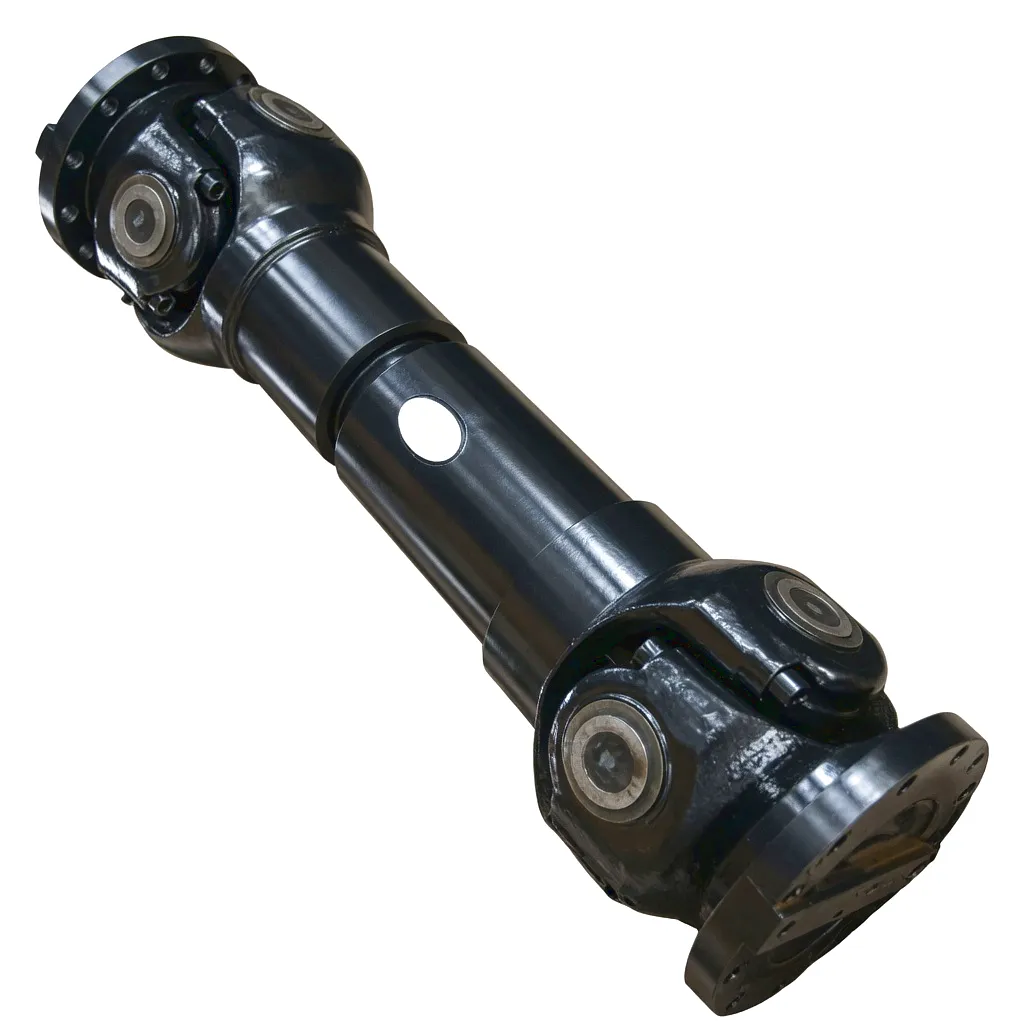 Sheffield’s steel rolling tradition demands the most punishing duty a Cardan Coupling can encounter: high continuous torque combined with angular misalignment arising from the progressive vertical stack of rolling stands, and violent cobble-event shock loads when a billet jams in the roll gap. The Cardan Coupling is the only coupling architecture that meets all three of these requirements simultaneously.
In a typical Sheffield bar mill, the mill-grade Cardan Coupling on the roughing stands handles rated torques of 350,000 Nm to 800,000 Nm at 120–250 rpm, operating at fixed angles of 8–12°. The coupling must also accommodate thermal expansion of the rolling stand housing — typically 3–5 mm axial growth — through its sliding spline section. Planned service intervals on these couplings are measured in millions of rolling tonnes, not calendar months.
Marine & Offshore — Aberdeen and Tyneside
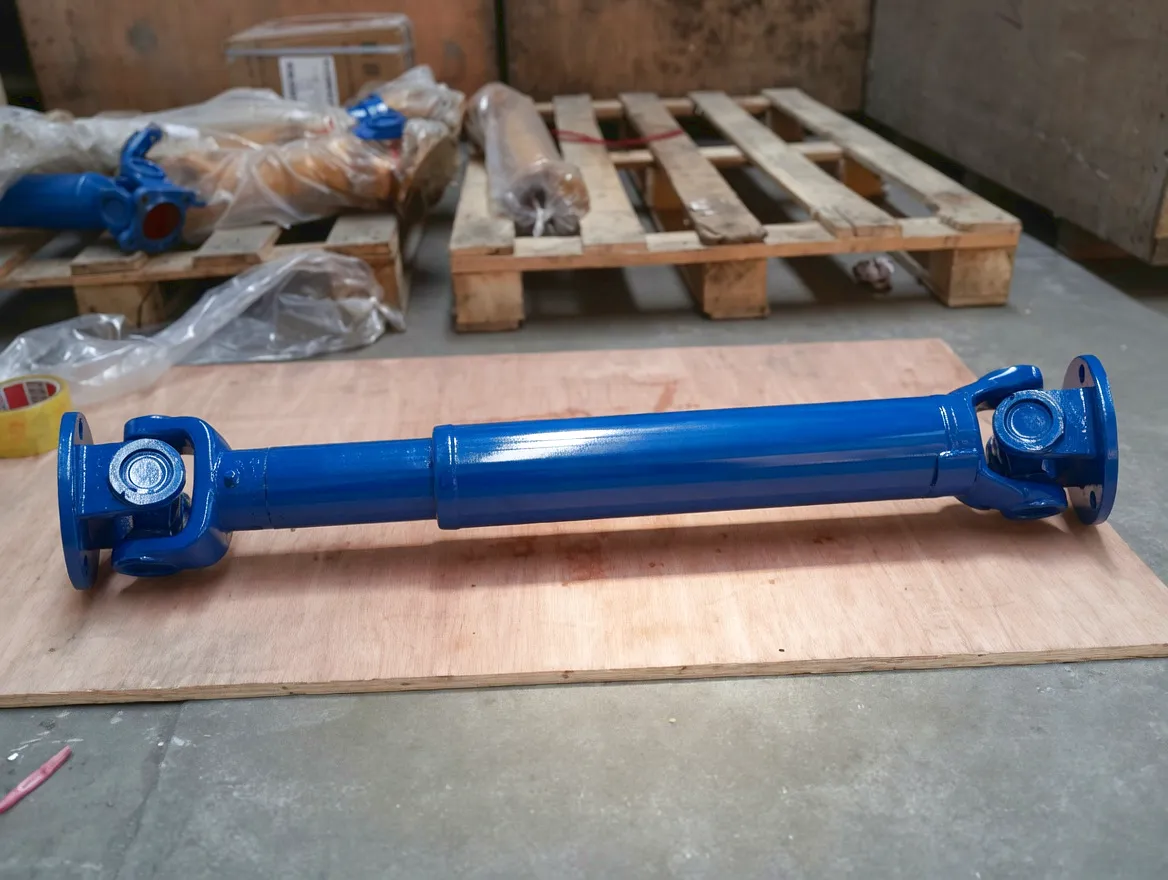 Marine propulsion and thruster drives present a distinct challenge: the engine and gearbox are aligned at installation, but hull flexure, thermal cycling and propeller-induced thrust loading cause continuous dynamic misalignment during service. Aberdeen-based North Sea platform supply vessels and Tyneside-built offshore construction ships both rely on Cardan Couplings in their pod thruster drives, where the coupling must tolerate ±2–4° dynamic angular displacement at 900–1,200 rpm under full propulsive torque.
316L stainless steel construction or high-build epoxy coating is specified for all marine Cardan Couplings to withstand salt-laden atmospheres. Offshore operators also mandate ATEX-rated grease compounds where propellant or gas vapours may be present. Ever Power supplies DNV-reviewed and Bureau Veritas-compliant Cardan Coupling designs for these environments.
Wind Energy — Onshore and Offshore UK
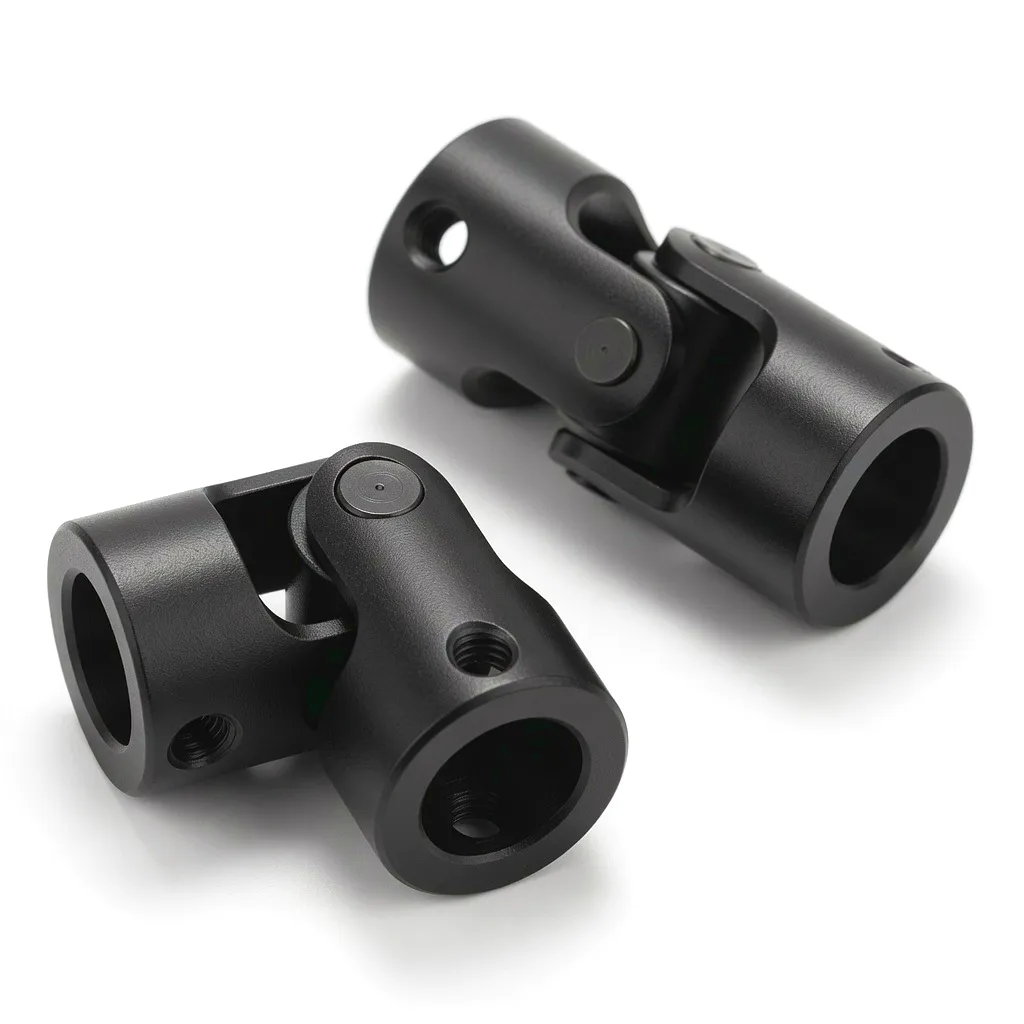 The UK’s aggressive offshore wind expansion — from Dogger Bank off Yorkshire to the Hornsea zones — has created substantial demand for high-reliability drivetrain components capable of 20-year design lives with minimal planned maintenance. The Cardan Coupling appears in wind turbine nacelles in several roles: as the main shaft coupling between the rotor hub and gearbox, and as secondary couplings in auxiliary systems including yaw drives and pitch actuators.
The primary driver for specifying a Cardan Coupling over a flexible disc coupling in large-turbine main shaft applications is the ability to accommodate the significant bending moment imposed on the main shaft by rotor overhang. A 6 MW turbine may impose a 50 tonne-metre bending load on the main shaft — a load that would destroy a disc coupling but is routinely handled by a correctly rated Cardan Coupling with appropriate moment capacity.
Automotive Manufacturing — West Midlands Press Lines
The West Midlands automotive supply chain — spanning press shops in Coventry, Birmingham and Wolverhampton — operates large-scale body stamping presses driven by high-torque eccentric shaft mechanisms. The Cardan Coupling connects the flywheel gear train to the eccentric shaft, which by design runs at an angle. The coupling must handle both the rated torque and the severe torsional impulse generated every stroke as the press punches through sheet steel.
Automotive press cardan couplings typically run at 40–80 strokes per minute, placing an equivalent fatigue cycle count of 2–4 million cycles per month on the trunnion bearings. Material cleanliness, bearing preload and grease selection are all tightly controlled in Ever Power’s press-line coupling designs to achieve the 36+ month bearing life that automotive customers in the UK demand for planned component change intervals.
Ever Power: Precision Manufacturing and Customisation
Ever Power’s manufacturing philosophy centres on the belief that a catalogue solution is only the starting point. A significant proportion of our Cardan Coupling orders involve some degree of customisation — whether that is a non-standard bore tolerance, a special flange drilling pattern to mate with an existing gearbox output, a specific surface treatment demanded by the operating environment, or a phased-delivery programme to support a planned plant overhaul in Birmingham or Edinburgh.
Our dedicated Cardan Coupling manufacturing cell is equipped with CNC turning centres capable of machining yokes up to 1,200 mm diameter, coordinate measuring machines for 100% dimensional verification, and a dedicated dynamic balancing bay covering shafts up to 3,000 mm between bearing faces. Every trunnion cross is individually hardness-tested and magnetically particle-inspected before assembly. Cross-journal surface finish is verified with a calibrated profilometer to ensure Ra values meet drawing requirements — not just estimated from process parameters.
Share your operating torque, speed, angle and shaft dimensions. Ever Power’s engineering team will respond with a fully engineered recommendation within 24 hours.
Customer Success Story: Thornfield Precision Metals, Sheffield
Thornfield Precision Metals operates a three-stand long bar rolling mill in Sheffield, producing alloy steel bars for the aerospace and automotive supply chain. By 2022, their existing OEM cardan couplings on the intermediate and finishing stands were failing every 1,400 operating hours — roughly every seven weeks — due to trunnion bearing seizure caused by inadequate grease penetration at operating angles of 14–16°.
Thornfield’s engineering team approached Ever Power in early 2023. After a site survey and full duty analysis, Ever Power proposed a redesigned mill-grade Cardan Coupling with enlarged trunnion cross journals (+18% contact area), optimised needle-bearing cage geometry, a manifold re-greasing system with zero-leak grease nipple fittings, and a switch from lithium-complex to polyurea high-temperature grease rated to 180 °C continuous. The yokes were upgraded from EN8 to 42CrMo4 with tighter bore tolerances (H7/p6 interference fit) to eliminate fretting corrosion at the shaft interface.
(from 1,400 hrs)
unplanned downtime
maintenance cost
Thornfield’s maintenance manager noted that the switch to Ever Power’s redesigned Cardan Coupling also eliminated the secondary damage to gearbox seals and roll bearings that had been associated with the torsional vibration generated by the failing OEM couplings — an unexpected but significant additional saving.
What UK Engineers Say About Ever Power
“We’ve been running Ever Power’s Cardan Coupling on our No. 2 rolling stand for eighteen months now without a single unplanned stop. The previous supplier’s units were lasting six weeks at best. The difference is the quality of the trunnion cross — you can see it in the surface finish and hardness consistency. Ever Power also worked with our team to adjust the bore tolerance to suit our existing keyway shaft, saving us a shaft remachining job.”
“Our press shop runs three large transfer presses in Birmingham and the Cardan Coupling was always the component we watched most closely given the shock loading per stroke. Ever Power’s heavy-duty version has been in service for over two years on the number one press. The manifold greasing system is particularly well thought through — our maintenance fitters can complete the service in twelve minutes without removing the guards. Very professional technical support from the Ever Power team throughout.”
“We specified Ever Power’s 316L stainless Cardan Coupling for a North Sea platform supply vessel thruster retrofit out of Aberdeen. The marine environment is unforgiving and the previous carbon-steel units corroded at the joint within a season. Twelve months in, the Ever Power couplings look almost new despite constant saltwater exposure. The DNV documentation package was thorough and saved us considerable time during the class survey. We’ll be specifying Ever Power across our next two newbuild projects.”
Frequently Asked Questions
Answers to the questions UK procurement managers, maintenance engineers and plant designers most commonly ask about Cardan Coupling selection, pricing and supply.