
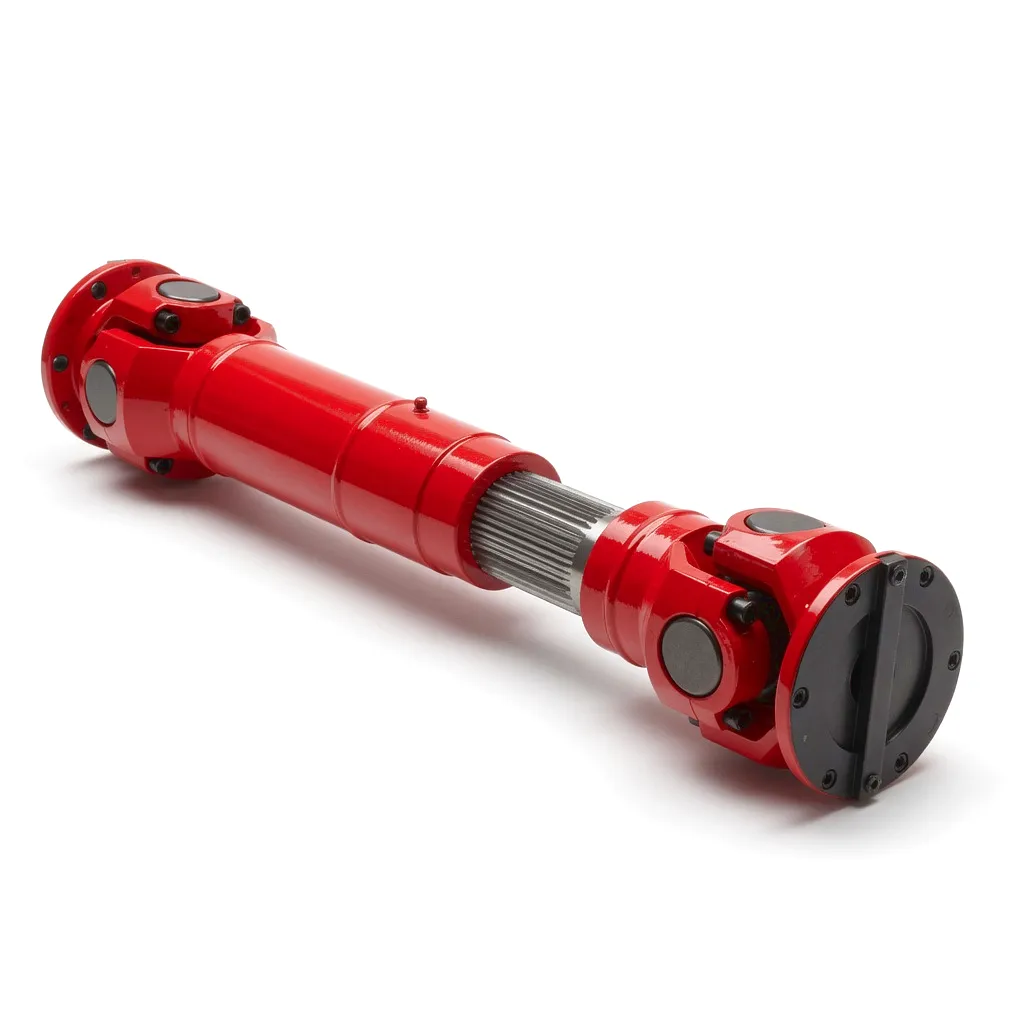
 There is a moment every spring when the countryside around Lincolnshire and the East Midlands seems to hum with purpose. Tractors move methodically across fields, their power take-off shafts spinning at 540 or 1000 RPM, transferring torque from the engine through a series of joints to seed drills, mowers, and cultivators. At the heart of that energy transfer — often overlooked, rarely celebrated — is the cardan coupling. It is one of the most mechanically elegant inventions in engineering history, and in agriculture it carries a workload that few other components can match.
A cardan coupling — also called a universal joint coupling, cardan shaft, or PTO shaft assembly — accommodates angular misalignment between the driving and driven shafts while transmitting torque continuously. In the agricultural sector, this means that as a tractor hitches, unhitches, and traverses uneven ground, the implement behind it continues to receive consistent, smooth power. Without a properly engineered cardan coupling, precision seed drilling, high-speed rotary cultivation, and large-scale forage harvesting would simply not be possible at the efficiency levels modern British farming demands.
Need a Custom PTO Cardan Coupling?
Our engineering team handles bespoke torque ratings, bore sizes, and safety guards for UK agricultural OEMs and replacement part distributors. Lead times from 7 working days.
What Is a Cardan Coupling and Why Does Agriculture Depend on It?
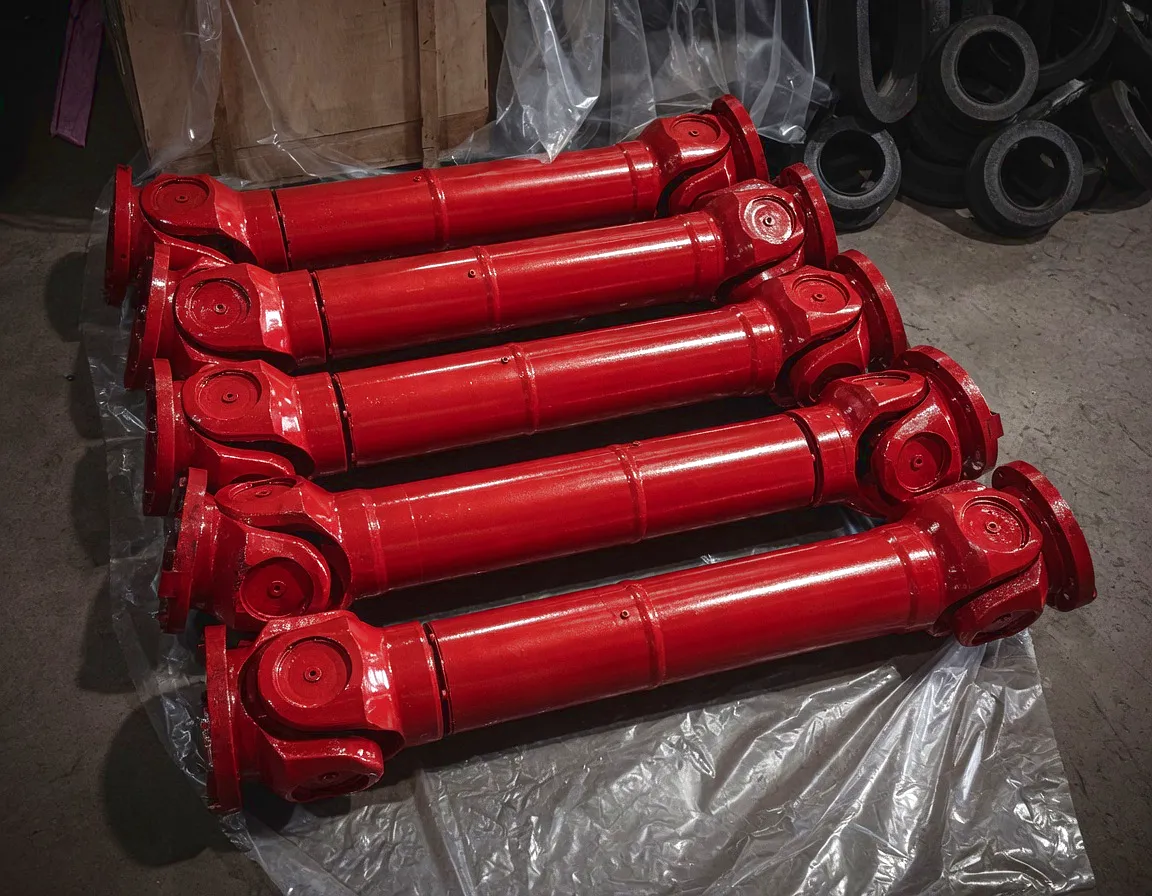
A cardan coupling is a mechanical transmission component built around one or more universal joints — typically Hooke’s joints — connected by an intermediate shaft. The genius of the design lies in its ability to transmit rotational torque between two shafts that are not perfectly aligned, whether that misalignment is angular, axial, or a combination of both. In agricultural applications, the cardan coupling bridges the Power Take-Off (PTO) stub shaft on the rear or mid-mount of the tractor with the input gearbox of implements including seed drills, balers, mowers, slurry tankers, and grain augers.
The working angle the coupling must accommodate changes constantly as a tractor turns at the headland, as the implement follows ground contour, and as the three-point linkage raises or lowers during transport. A well-designed agricultural cardan shaft handles these dynamic angle changes — sometimes reaching 25° or more at full lock — without imposing torsional irregularity on the implement drive. The telescoping function built into most PTO shafts adds another dimension: as the implement swings on its linkage, the effective distance between the tractor PTO and the implement input changes, and the shaft must slide freely without binding or pulling apart.
Modern agricultural cardan couplings incorporate a broad range of safety and performance features: overrun clutches that prevent the shaft from spinning back through the gearbox when power is cut, torque-limiting clutches that protect implement gearboxes from shock loads, wide-angle joints that maintain smoother velocity characteristics at extreme angles, and robust plastic or steel guard tubes with a drive chain that keeps the guard stationary while the shaft spins. These are not trivial additions — they directly protect both operator safety and the capital investment represented by expensive implements and tractors.
Engineering Principles: How a PTO Cardan Coupling Transmits Power
The fundamental mechanism of a cardan coupling relies on a cross-shaped journal — the spider — whose four trunnions seat into bearing cups within two yokes. One yoke connects to the driving shaft, the other to the driven shaft. As the assembly rotates, torque is transmitted through the needle roller bearings on the spider trunnions. The brilliant simplicity of this design has remained essentially unchanged since Gerolamo Cardano described it in the 16th century, yet the materials science and precision manufacturing behind a modern agricultural PTO spider have advanced enormously.
When a single Hooke’s joint operates at an angle, it introduces a cyclic velocity variation — the output shaft accelerates and decelerates twice per revolution. At modest angles this is barely perceptible, but at the large angles encountered in agricultural headland turns, it produces torsional pulsation that can fatigue implement gearbox shafts and cause vibration. The engineering solution is the double-cardan arrangement: two universal joints phased 90° apart cancel each other’s velocity variation, delivering essentially constant angular velocity at the driven end. Wide-angle constant velocity (CV) joints represent a more sophisticated geometry that achieves the same result in a more compact package, and these are increasingly specified on premium PTO shafts for forage harvesters and large round balers where smooth torque delivery is critical.
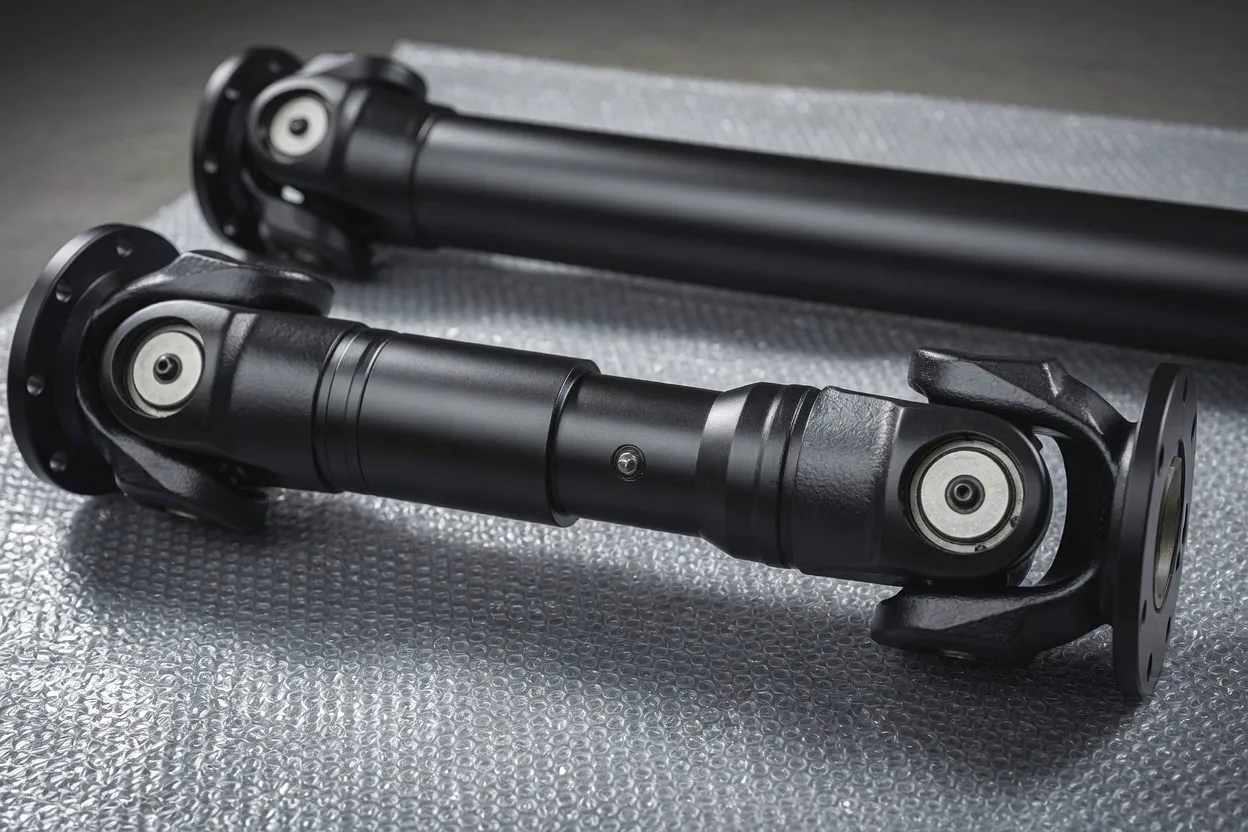
The telescoping section — typically a square, hexagonal, or splined profile inner tube sliding within an outer tube — accommodates length variation. Lubrication of the sliding interface is critical: insufficient grease leads to fretting corrosion and eventual seizing, which in the field means a dangerously stuck implement at the worst possible time. Quality agricultural cardan couplings use hardened, ground profiles with high-capacity grease nipples at regular intervals. Some premium units feature sealed, maintenance-free sliding sections that suit UK contractors running multiple implements through long seasons without time for daily greasing routines.
Technical Specifications: Agricultural Cardan Coupling Series
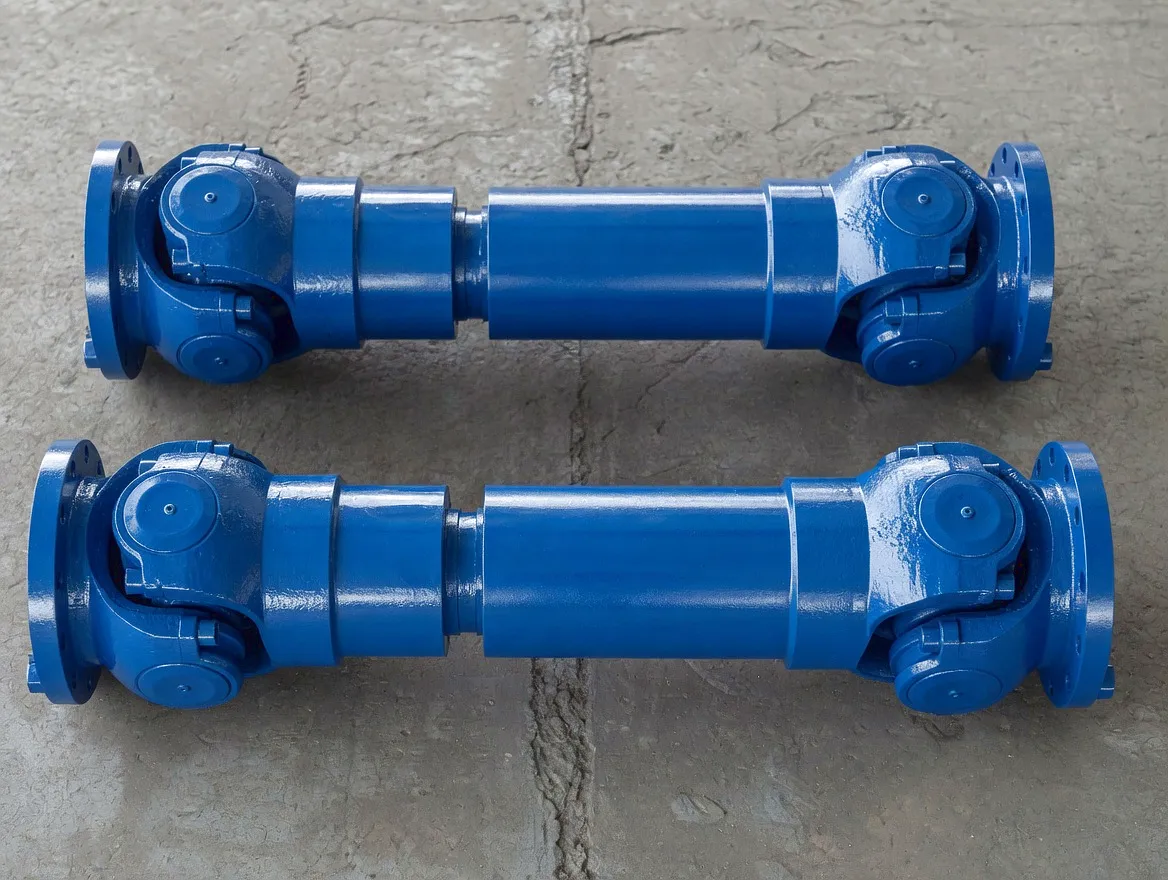
Representative performance parameters for PTO shaft assemblies supplied to UK agricultural OEMs and the replacement market.
| Series | Nominal Tork (Nm) | Max Speed (RPM) | Max Operating Angle | Profile | Clutch Option |
|---|---|---|---|---|---|
| Light Duty L | Up to 560 | 1000 | 25° | Square / Hex | Friction disc |
| Medium Duty M | 560 – 1500 | 1000 | 25° | Lemon / Spline | Ratchet / Shear bolt |
| Heavy Duty H | 1500 – 4500 | 1000 | 35° (CV joint) | Spline 6 / 21 tooth | Cam overrun |
| Extra Heavy XH | 4500 – 10000+ | 1000 | 40° (wide-angle CV) | Splined / Flanged | Multi-disc torque limit |
* All figures are representative. Custom specifications available on request. Contact our team for certified test data.
Spider & Yokes
Forged from 20CrMnTi or equivalent case-hardening steel, carburised and quench-hardened to HRC 58–64 on trunnion surfaces. Needle roller bearing cups are precision-ground for minimal running clearance. Agricultural spiders in the heavy and extra-heavy series are magnaflux-tested to detect sub-surface fatigue cracks before assembly.
Telescoping Tubes
Outer and inner profiles are cold-drawn from seamless DOM steel tubing or precision-rolled section. Surface hardness is enhanced by induction hardening. The sliding interface uses a nylon or sintered bronze bushing in premium series to reduce wear and enable longer greasing intervals — particularly important for UK contractors who operate from March through November with minimal service windows.
Safety Guards
Compliance with EN ISO 4254-1 (agricultural machinery safety) and UK PSSR 2000 regulations requires a full-length guard covering the rotating shaft and joints. Our guards use UV-stabilised HDPE with a hinge-joint at each yoke. A drive chain or cone anchors the guard to a fixed point on the implement, ensuring the outer surface remains stationary. This is not a detail to cut corners on — PTO entanglement remains one of the leading causes of serious farm injuries in England, Wales, and Scotland.
Agricultural Application Scenarios: Where Cardan Couplings Make the Difference
The breadth of agricultural implements driven through PTO cardan couplings is remarkable. Each application places a distinct demand profile on the coupling, and understanding these differences is the first step to specifying correctly.
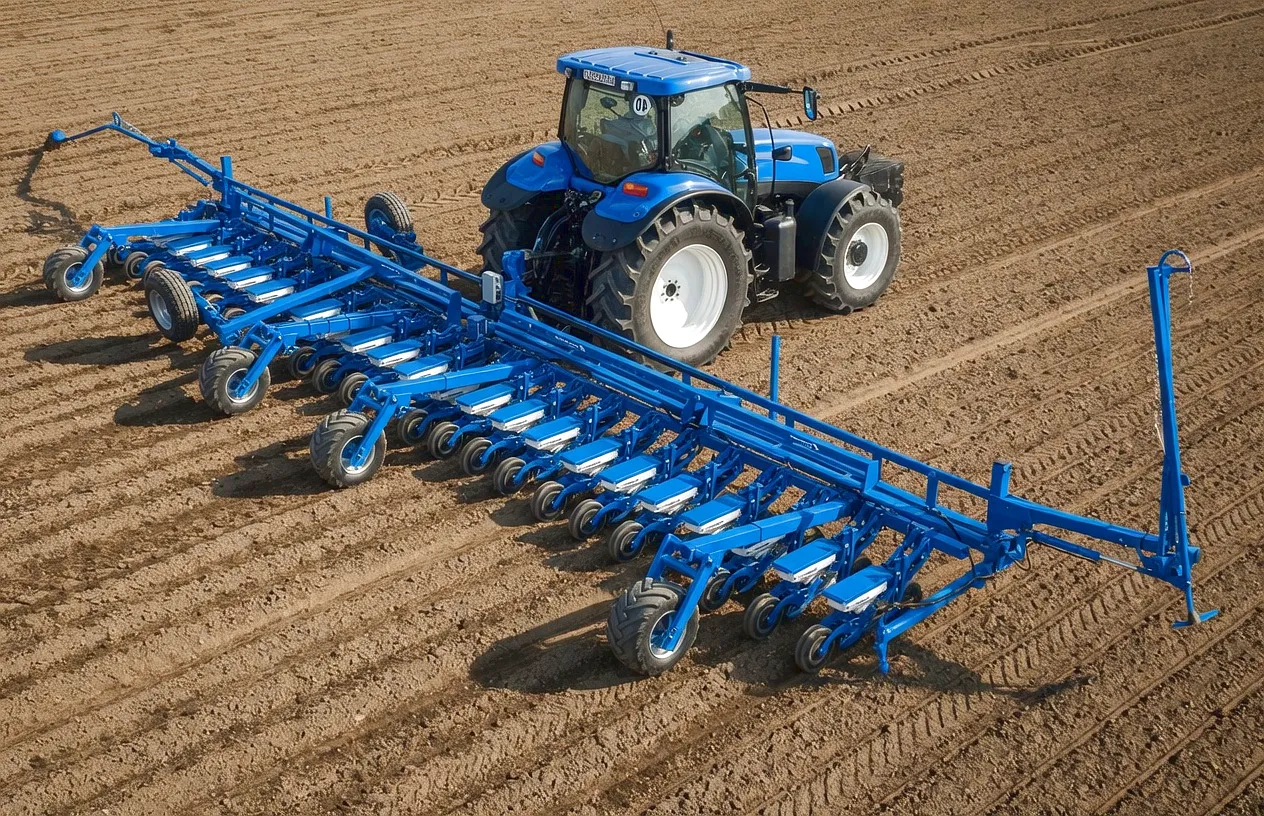
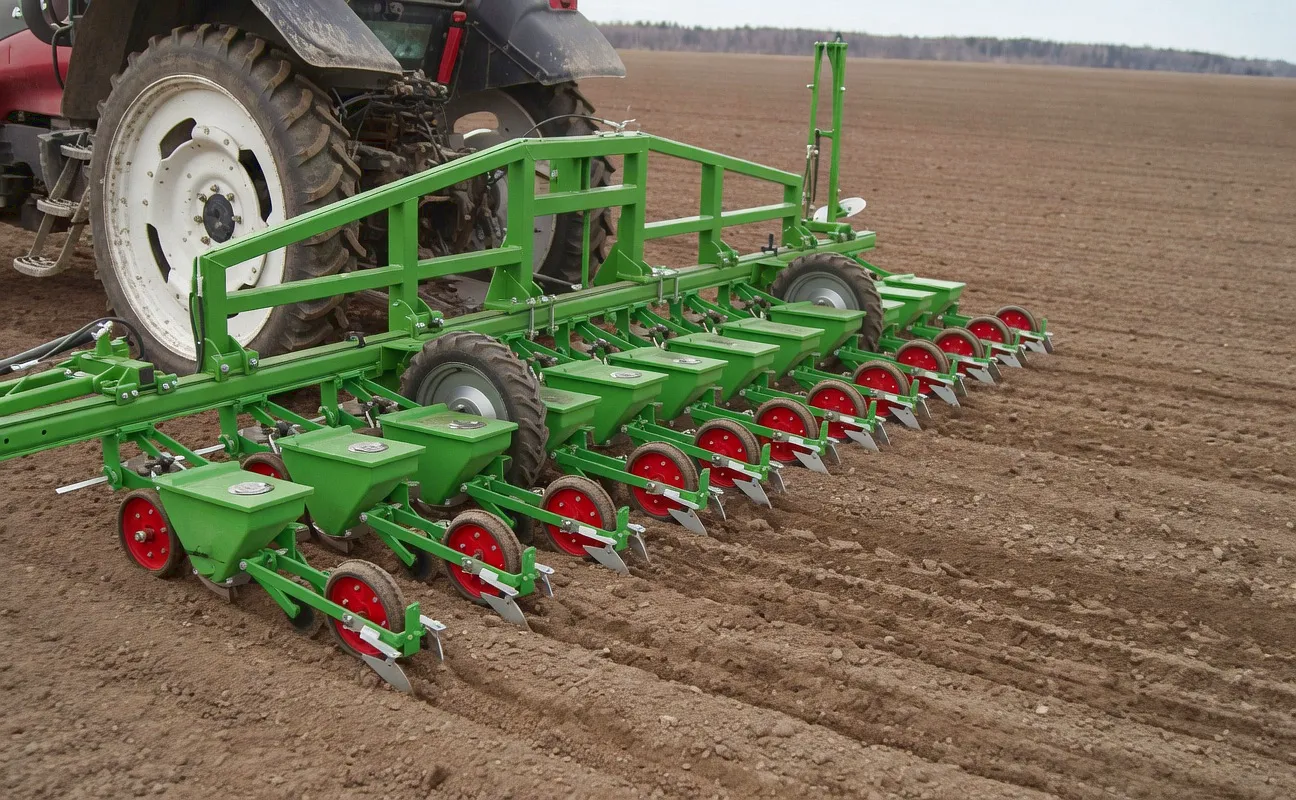
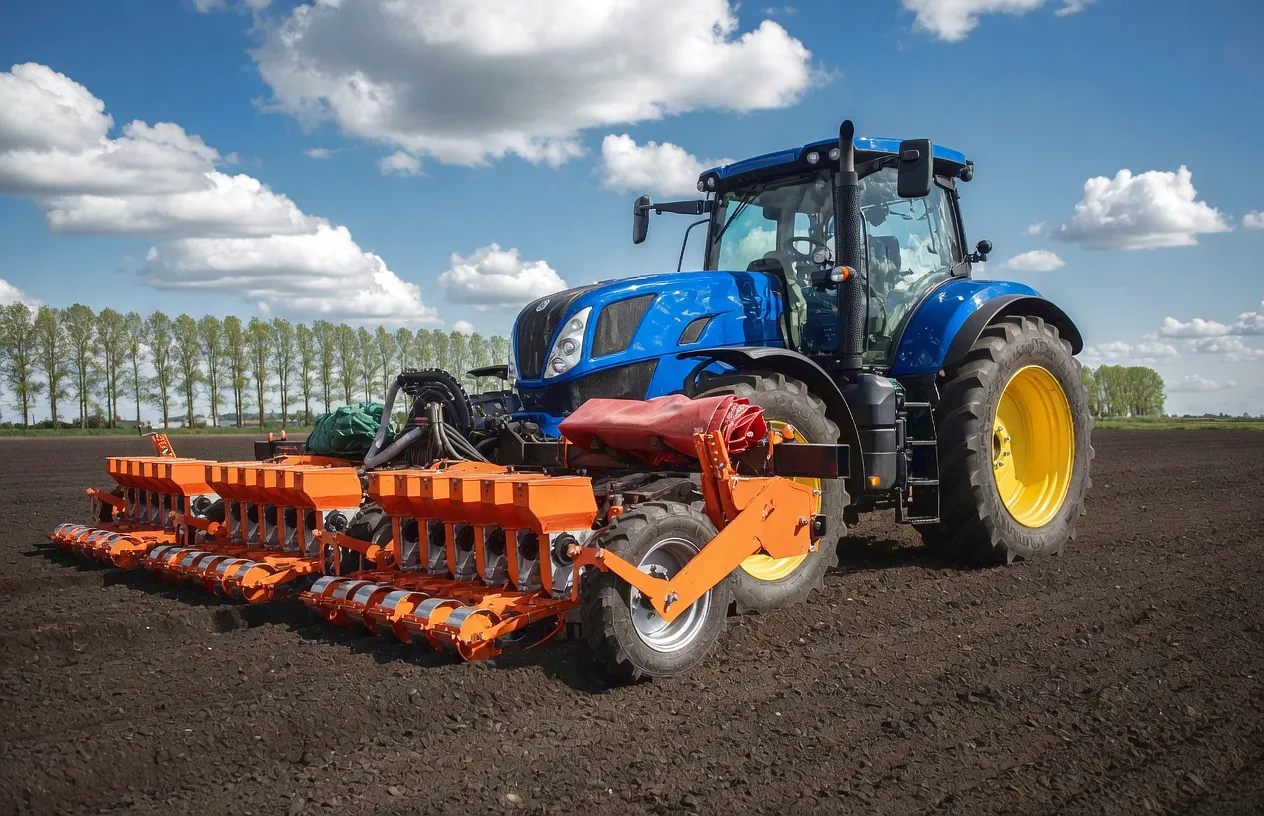
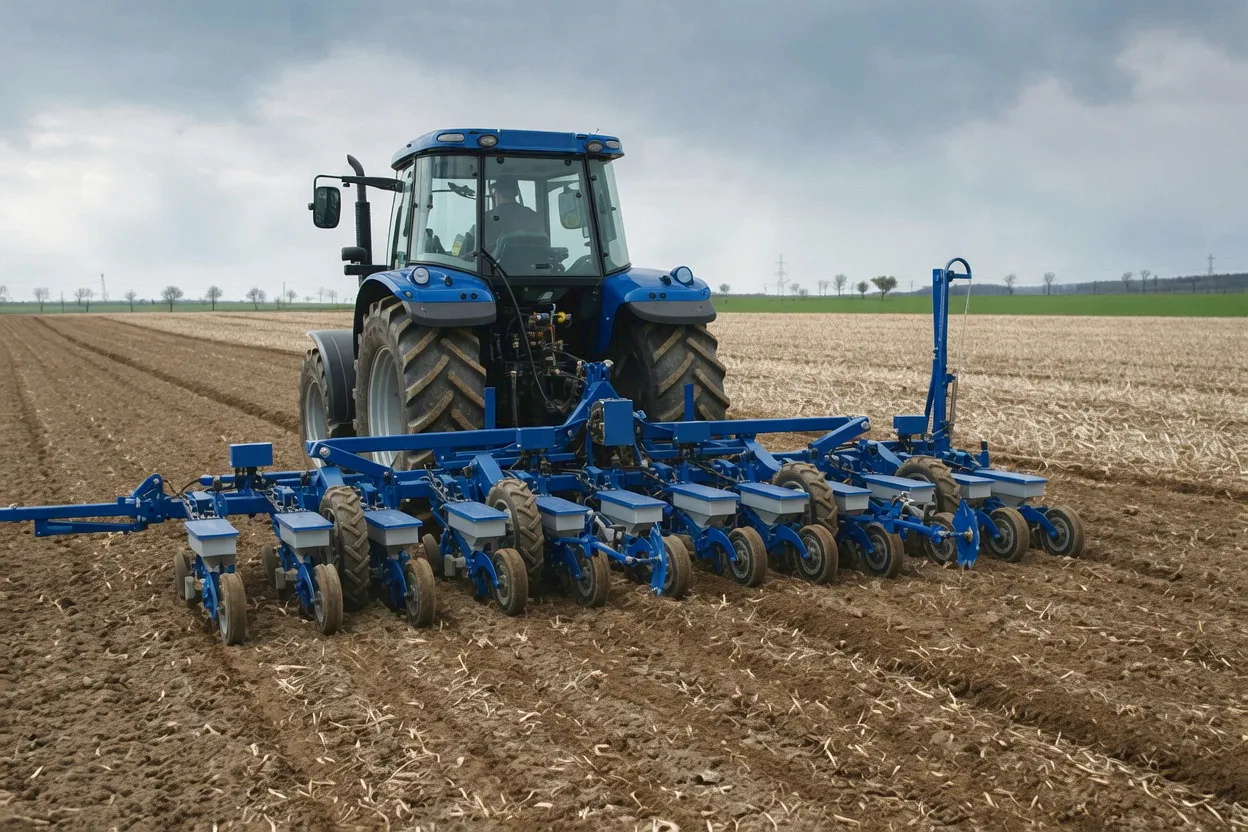
Seed Drills
Precision seed metering demands steady, pulsation-free rotation at 540 RPM. The cardan coupling must operate smoothly at 15–22° working angles common when a folded drill is lowered into work. Any torsional irregularity causes uneven seed spacing — commercially unacceptable in today’s precision farming environment.
Rotary Cultivators & Tillers
Probably the most punishing environment for a PTO cardan coupling. Rotary tines striking stones generate sudden shock torques — sometimes 5× rated torque in a single impact. A shear-bolt or cam-type torque-limiting clutch is not optional here. The cardan coupling body must absorb torsional shocks without yoke fracture or spider failure.
Round & Square Balers
Large variable-chamber round balers operating at 1000 RPM impose high peak torques during bale formation. Wide-angle CV joints at the tractor end prevent the velocity pulsation that would otherwise occur at 20–30° headland lock. An overrun clutch is essential — when bale ejection stops the rotor, kinetic energy stored in the flywheel must not spin back through the PTO gearbox.
Forage Harvesters
Self-propelled or trailed forage harvesters demand cardan couplings rated to 10,000+ Nm. The constant 1000 RPM speed combined with the shear loads of chopping green material through hardened cutterhead blades places severe fatigue demands on spider and yoke. Only heavy forged assemblies with full heat treatment documentation are appropriate for this duty class.
Why Engineers and Procurement Teams Across Britain Choose Our Cardan Couplings
Extended Service Life
Case-hardened spiders, premium needle rollers, and precision-ground bearing cups combine to deliver service intervals 40–60% longer than budget alternatives. In practical terms, that means fewer unplanned breakdowns during peak harvest windows when downtime is most costly.
Precision-Matched Profiles
From the standard 1⅜” 6-spline connection used on most European tractors to wide-flange flanged ends for specialised machinery, our range covers every common PTO interface. Custom bore machining and keyway cutting are available within standard lead times, enabling rapid OEM fitment without bespoke tooling delays.
Safety Standard Compliance
Every shaft assembly leaves our factory fitted with a compliant guard meeting the requirements of EN ISO 4254-1 and UK PSSR 2000. Our documentation pack includes material certificates, dimensional inspection records, and torque test data — essential for agricultural OEMs supplying CE-marked or UKCA-marked machinery to the UK market.
Competitive Pricing, No Compromise on Quality
Direct factory supply eliminates intermediate distributor margins. We quote in GBP for UK buyers, with Incoterms options suitable for both small agricultural merchants and large OEM programmes. Volume pricing structures are available from 50 units per SKU, making our products accessible to regional dealers as well as national supply chains.
Custom Manufacturing: Engineered Exactly to Your Requirements
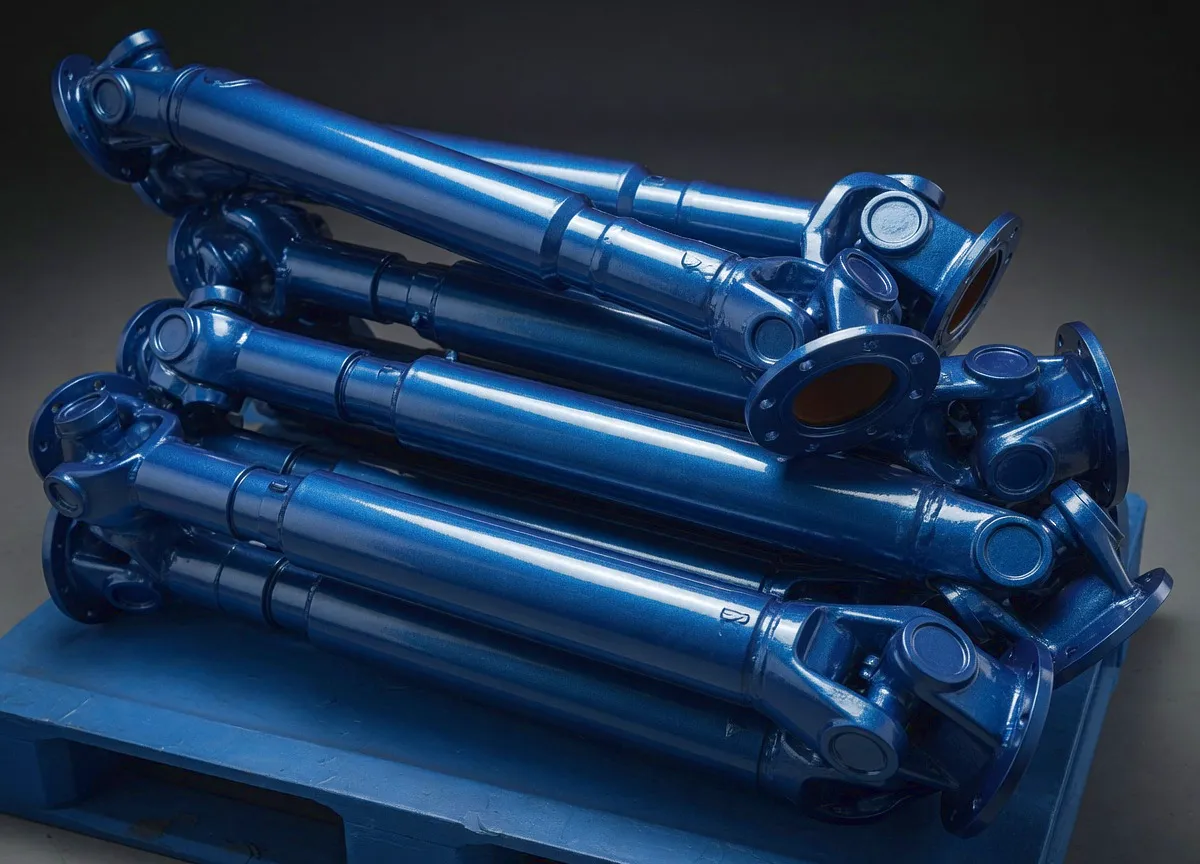 Our factory operates a fully integrated design-and-manufacture process that handles bespoke cardan coupling projects from first drawing to finished assembly. The engineering team includes former agricultural machinery designers with hands-on experience in PTO system integration, which means we can review your application data — torque curves, speed cycles, implement geometry — and recommend or design the correct assembly rather than simply shipping a catalogue item.
Customisation capabilities include non-standard telescoping lengths from 400 mm to 2400 mm, flanged or welded end connections for specialised implement gearboxes, custom torque-limiting clutch settings pre-calibrated to your implement’s maximum allowable input torque, customer-branded guard colours and markings for OEM programmes, and expedited delivery for seasonal agricultural spares demand spikes around planting and harvest periods.
Customer Success: Real Projects, Measured Results
Three case studies drawn from our agricultural supply portfolio demonstrate the practical value of specifying correctly engineered cardan couplings.
Lincolnshire Implement Manufacturer Eliminates In-Season PTO Shaft Failures
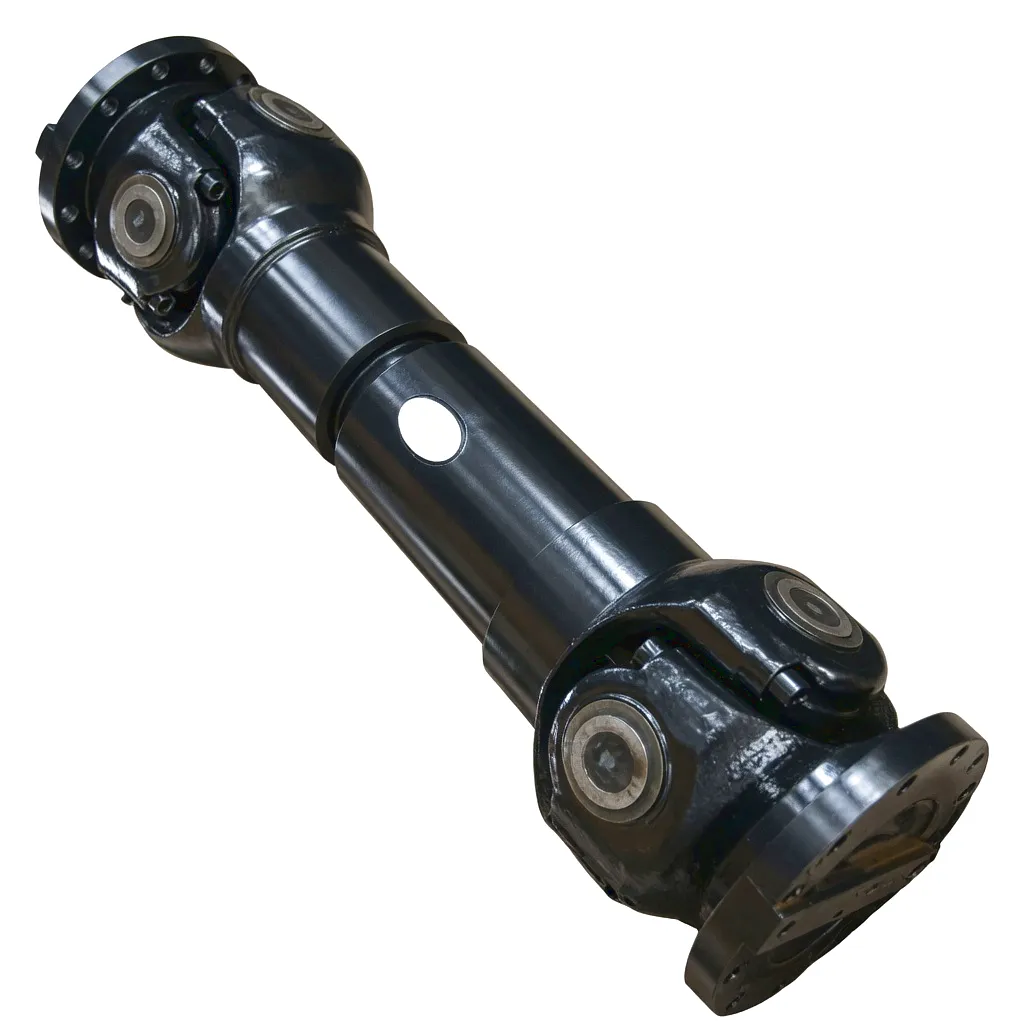 A mid-size agricultural implement manufacturer based in Spalding, Lincolnshire — producing precision seed drills and combination seed-and-fertiliser applicators — was experiencing an unacceptably high field warranty return rate on PTO shaft assemblies sourced from a previous supplier. Cardan joint failures were occurring after 120–180 hours of operation, well short of the 400-hour seasonal target. The root cause analysis revealed insufficient case depth on the spider trunnions and inconsistent needle roller bearing pre-load in the assembled units.
After switching to our Medium Duty M-series shafts with third-party metallurgical certification, the warranty return rate fell from 3.8% to 0.4% over two full seasons. The cost saving on dealer labour and replacement parts more than offset the modest unit price premium. The production engineering team also valued the consistent dimensional tolerances, which simplified assembly line fitment and reduced torque-check rejection rates at end-of-line testing.
We’ve been sourcing replacement PTO shafts for our hire fleet from Ever Power for three years. The quality is consistent, the guard profiles match our John Deere and New Holland tractors without modification, and we’ve never had a mid-season failure. Their custom length service sorted out two unusual mower-conditioner fits that nobody else could supply quickly enough.
Our procurement team compared three suppliers for our new wide-span sprayer programme. Ever Power came out ahead on both technical specification and lead time. The material certificates and dimensional inspection reports they provided were exactly what our UKCA compliance file required. I’d recommend them to any UK agricultural machinery manufacturer looking for a reliable cardan coupling partner.
As a spare parts distributor serving farms across East Anglia, we need suppliers who can react quickly when a combine operator or baler contractor calls at 6 AM. Ever Power’s stock range covers the most common PTO sizes, and their express shipment to our Norwich depot has never let us down during the critical windows of harvest. Very strong value for money at the volumes we purchase.
Selection Guide: Choosing the Right PTO Cardan Coupling for Your Application
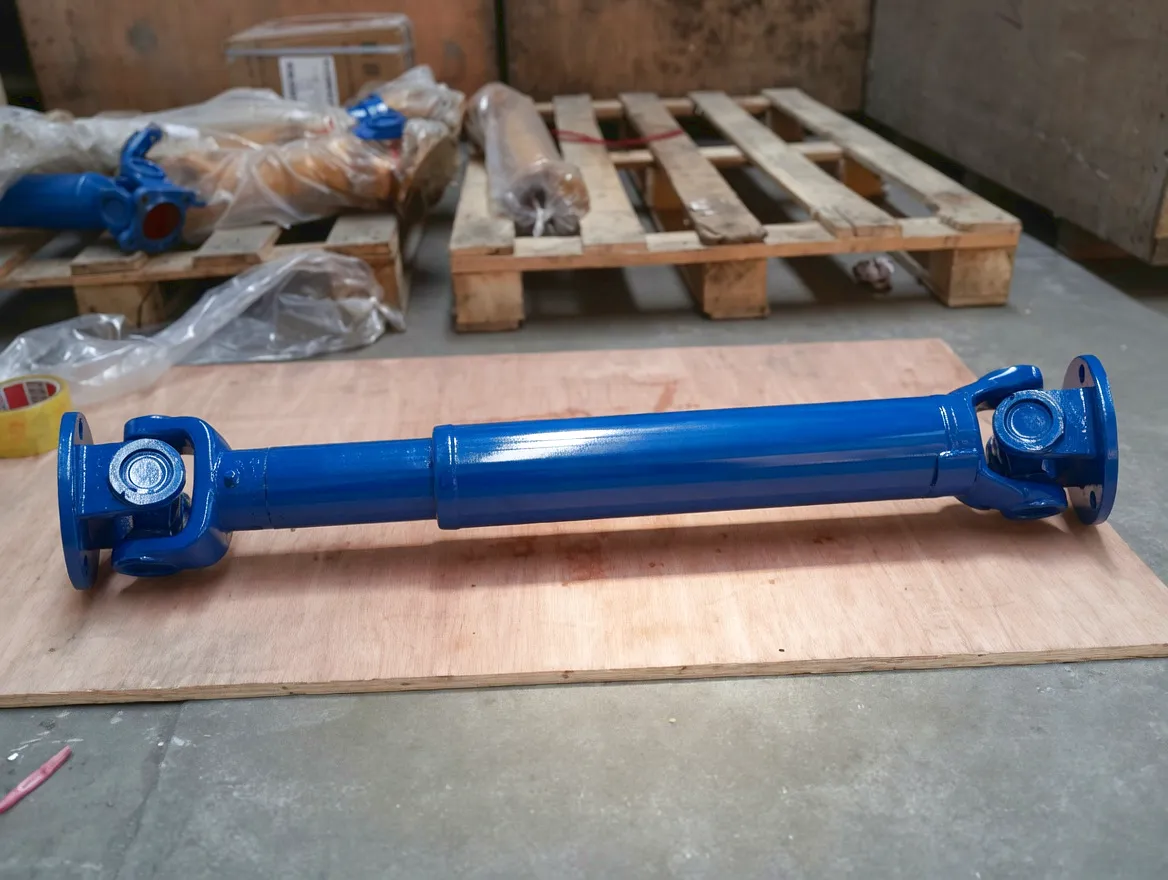
Getting the specification right before ordering avoids costly errors. The three most important parameters are the peak torque your implement gearbox input must withstand (not average torque — peak, including shock factor), the maximum working angle at headland, and the minimum and maximum operating length of the driveline. Secondary considerations include whether you need an overrun clutch, a torque-limiting device, or both, and whether the implement has a wide-angle joint requirement due to mid-mount positioning or extreme linkage geometry.
If you are replacing a failed shaft, the best starting point is to photograph both the tractor PTO stub and the implement input shaft, note the profile type and spline count or key size, measure the compressed and extended length with a tape measure, and send this information to our technical team. We can match or improve on the original specification within 24 hours of receiving your enquiry in most cases.
Supplying British Farmers, Contractors, and Agricultural Manufacturers
The United Kingdom has one of the world’s most demanding and technically sophisticated agricultural sectors. From the intensive arable farms of East Anglia and the Lincolnshire Wolds to the mixed dairy and livestock operations of Devon and Cumbria, British farming places exceptional mechanical demands on every component in the powertrain. The seasonal character of UK agriculture — where wet autumns can compress planting windows to a matter of days — means that component reliability is not a theoretical concern but a direct financial risk with consequences measured in thousands of pounds per day.
Our supply chain serves UK agricultural machinery dealers in Kent, Suffolk, Norfolk, Lincolnshire, Yorkshire, and the North West who need consistent stock of common PTO shaft sizes for replacement and repair work. We also supply directly to farm businesses running large self-maintained fleets of implements. For OEM manufacturers operating in the UK under UKCA marking obligations, our documentation capability — covering material traceability, dimensional inspection, and torque testing — simplifies your technical file construction significantly.
Pricing is quoted in GBP with DDP or DAP delivery to UK mainland addresses. MOQs are structured to suit both independent agricultural merchants and national distributor programmes. We understand that seasonal demand peaks around spring drilling (March–April), hay and silage making (May–July), and cereal harvest (July–September) require responsive stock management, and we plan our production and logistics calendar to meet these windows reliably.
Frequently Asked Questions About Agricultural Cardan Couplings
Ready to Source Agricultural PTO Cardan Couplings for Your Business?
Whether you need standard replacement shafts for a busy harvest season or a full custom engineering specification for a new implement programme, our team is ready to help. B2B pricing, documentation, and fast UK delivery as standard.