
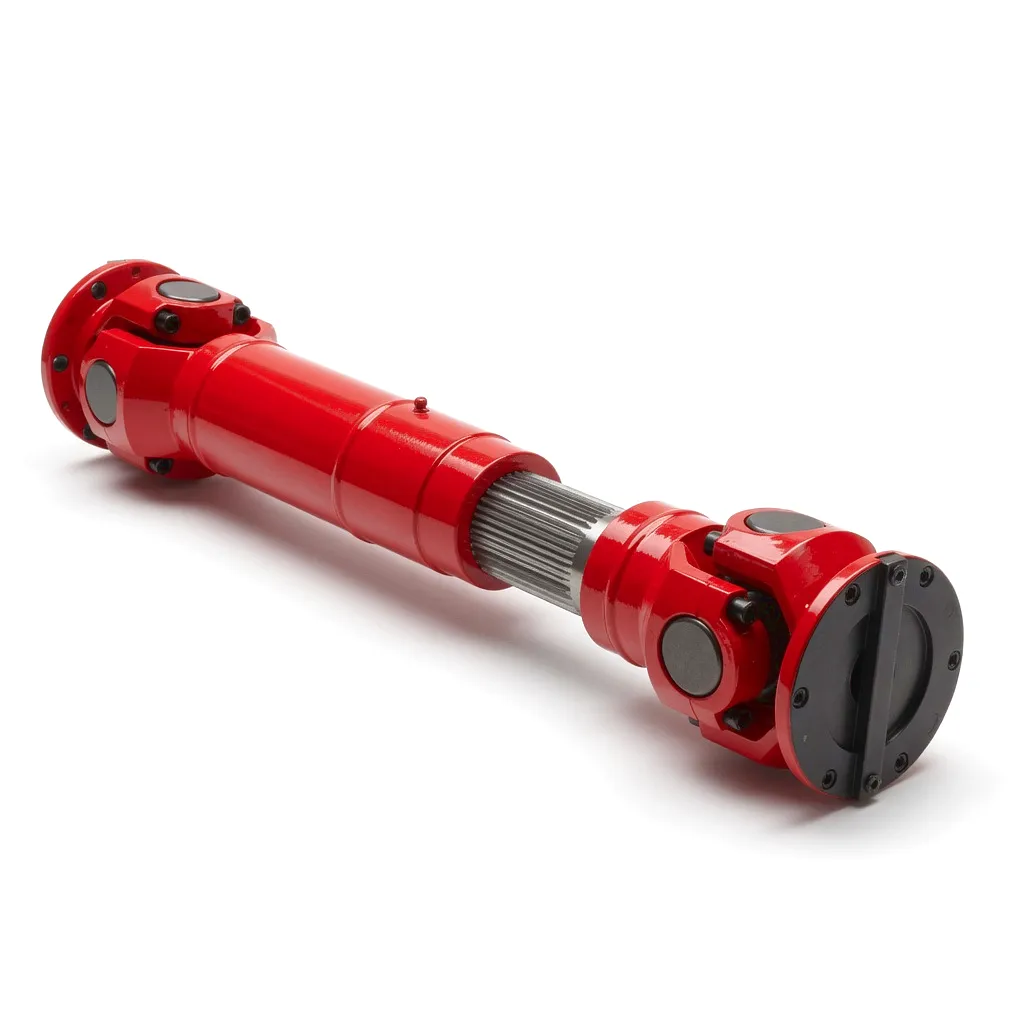
Ready to Upgrade Your Harvester Drive System?
Our engineering team provides full technical consultation, custom bore sizing, shaft keyway matching and CE-compliant documentation for every cardan coupling supplied to the UK agricultural market.
How a Cardan Coupling Functions Inside a Combine Harvester
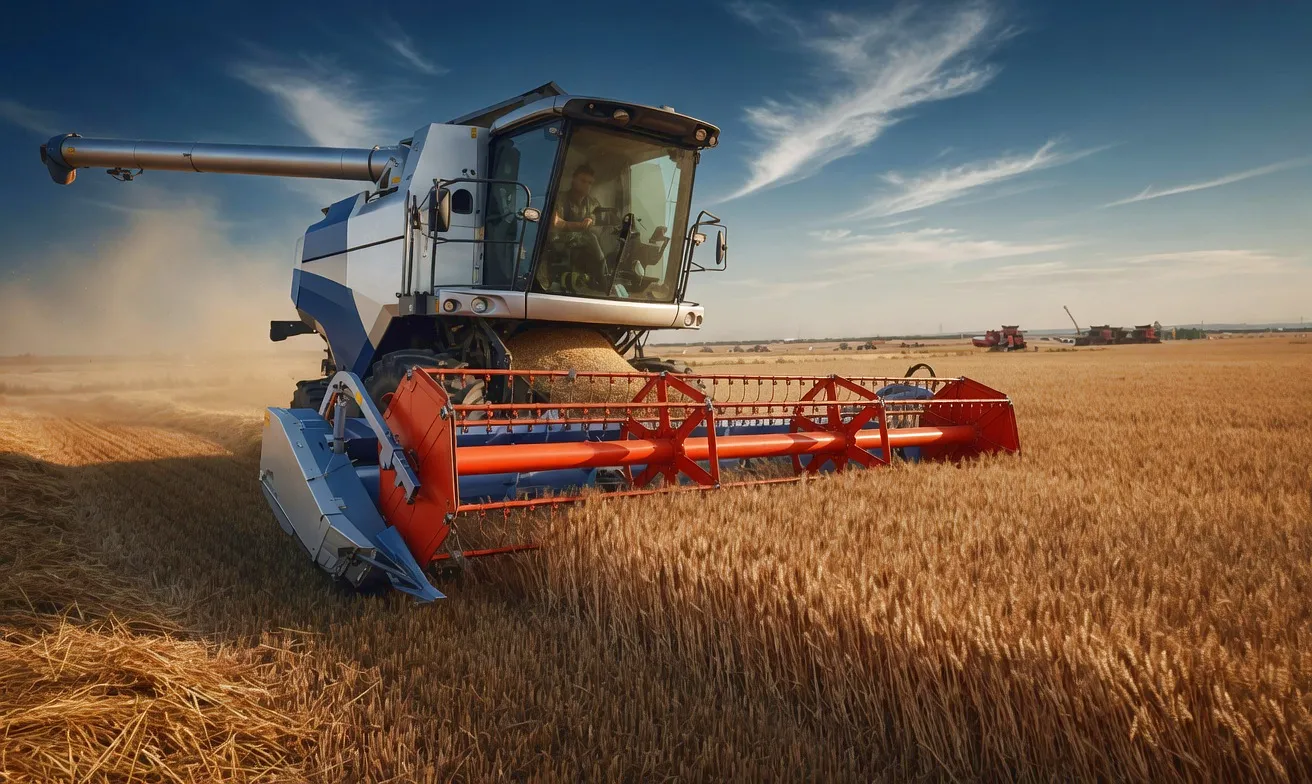
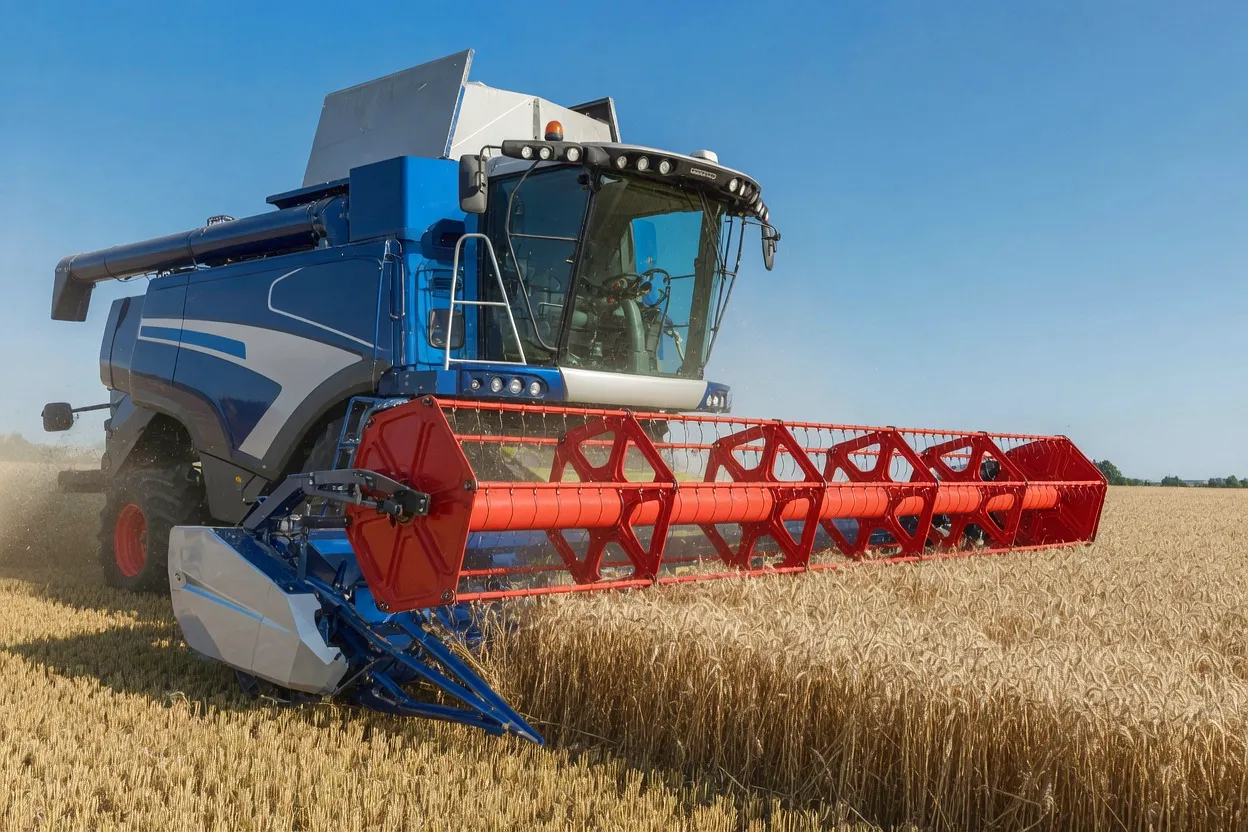 The operating environment of a combine harvester is unlike almost any other machine in agricultural use. A large self-propelled combine — such as those manufactured by John Deere, Claas, New Holland or AGCO — can produce engine outputs exceeding 500 kW. That power must reach the threshing system, which processes crop at rates of 40 tonnes per hour or more, while simultaneously driving the header, the cleaning system and the grain handling conveyors. The cardan coupling sits at the heart of this web of rotating shafts.
At its core, a cardan coupling consists of two yokes connected by a cross-shaped journal bearing, known as a spider or trunnion. When the input shaft rotates, the spider transmits torque to the output yoke, accommodating angular misalignment between the two shafts. In a double-cardan (or constant-velocity cardan) arrangement, a second joint is added to cancel the velocity fluctuations that a single joint would otherwise introduce. This is particularly important in header drives, where variable-speed operation and frequent direction changes demand smooth, even torque delivery without the harmonic vibrations that single-joint designs generate at angles above 5 degrees.
Threshing Drum Drive
The drum shaft runs at 800–1,200 rpm under full crop load. Cardan couplings absorb sudden torque spikes from stones and thick crop ingestion, protecting the gearbox and engine from shock damage.
Header Drive Shaft
The cutting header rises and falls over undulating UK farmland, creating a continuous angular offset in the drive shaft. Double-cardan designs maintain constant velocity through angles of up to 25°, preventing crop cutting irregularities.
Straw Walker & Cleaning Fan
These components run at precisely controlled speeds for effective separation. The cardan coupling maintains accurate speed ratios while compensating for the mechanical offsets inherent in combine frame architecture.
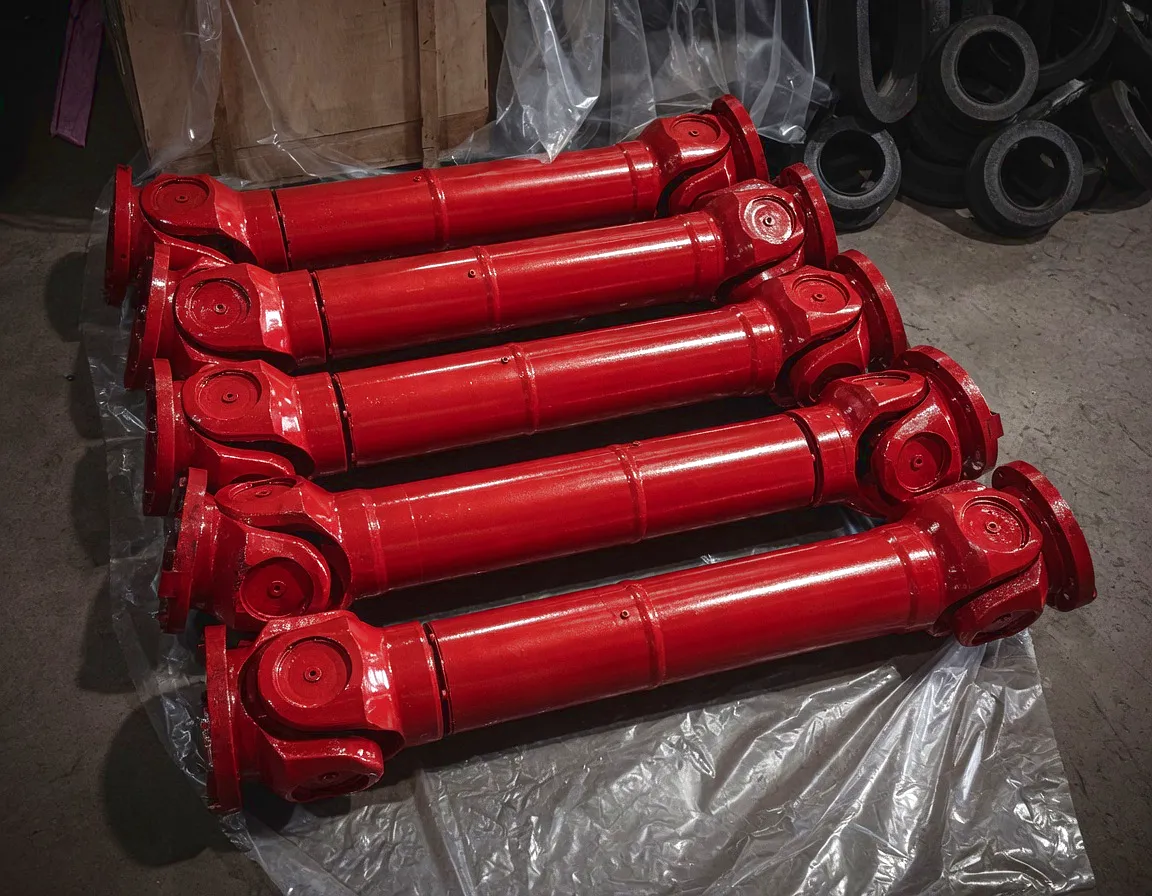
What sets an agricultural-grade cardan coupling apart from an industrial equivalent is its ability to handle both continuous torque and sudden peak loads simultaneously. When a combine harvester encounters a patch of damp, dense wheat in Lincolnshire or a field of thick barley in East Yorkshire, the threshing system must absorb the sudden resistance without stalling. The cardan coupling in that drive line is the first component to experience the shock. If it is under-specified, it fails. If it is correctly engineered for the application, it will absorb the impact, protect adjacent components and keep the machine working.
Technical Specifications & Performance Parameters
Selecting the correct cardan coupling for a combine harvester is an engineering decision, not a purchasing one. The parameters below define the performance envelope that any coupling must meet to survive inside a working agricultural machine. Ever Power produces units spanning this entire range, with custom configurations available beyond the standard catalogue for OEM and aftermarket customers across the United Kingdom.
| Parameter | Standard Range | Heavy-Duty Range | Notes |
|---|---|---|---|
| Nominal Torque (Tn) | 250 – 1,800 N·m | 1,800 – 12,000 N·m | Thresher drives typically 2,000–6,000 N·m |
| Operating Speed (rpm) | Up to 1,500 rpm | Up to 3,000 rpm | Balanced to DIN ISO 21940-11 G6.3 |
| Max Operating Angle | Single: up to 15° | Double: up to 25° | Header drives use double-cardan for CV output |
| Shaft Bore Diameter | 20 – 80 mm | 80 – 200 mm | Custom bores, keyways and splines available |
| Lubrication Interval | Every 50–100 hours | Sealed-for-life option | Grease nipples accessible during harvest season |
| Working Temperature | -20°C to +80°C | -30°C to +120°C | UK harvest season: typically +10°C to +35°C |
| Material — Yoke / Spider | 42CrMo4 alloy steel | 20MnCr5 / Case hardened | Hardness HRC 58–62 on spider trunnions |
| Surface Protection | Zinc phosphate + paint | Hot-dip galvanised or epoxy coat | Salt spray >500 h (DIN EN ISO 9227) |
| Overload Capacity | 3 × Tn (momentary) | 4 × Tn (momentary) | Critical for stone-ingestion shock events |
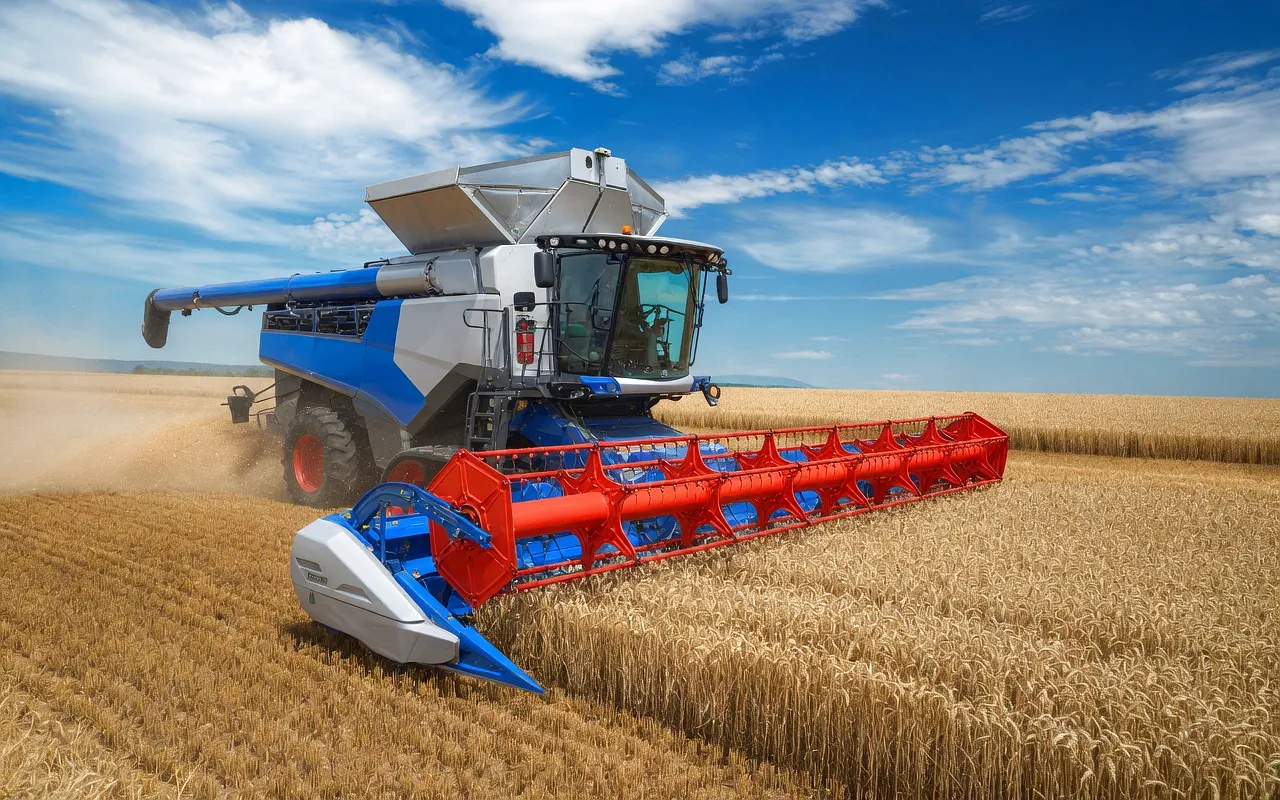
Real-World Application: Combine Harvester in the Field
Material Selection & Manufacturing Principles
The material specification of a cardan coupling used in a combine harvester’s power transmission system is not a secondary consideration — it is the defining factor in service life. Failures in the field during the UK harvest window of July to September can cost thousands of pounds per day in lost capacity and contractor penalties. The material choices made during manufacture determine whether that coupling survives a full season or fails catastrophically when it is needed most.
The spider, which is the cross-shaped journal bearing at the core of every cardan joint, is the component under greatest stress. At Ever Power, agricultural-grade spiders are machined from 20MnCr5 case-hardening steel. The trunnion pins are subjected to a controlled carburising process to achieve a surface hardness of HRC 58–62, while the core remains tough and ductile at HRC 30–35. This combination of a hard wear surface and a tough core gives the joint the best possible resistance to both surface fatigue and sudden overload fracture — the two dominant failure modes in combine harvester applications.
The yokes are forged, not cast, from 42CrMo4 chromium-molybdenum steel. Forging aligns the grain structure of the steel with the load path through the component, giving dramatically higher fatigue resistance than a casting of the same dimensions. After forging, each yoke is shot-blasted to Sa 2.5 cleanliness, then zinc-phosphate treated and coated with a two-part epoxy primer. For units intended for use in the coastal farmland of East Anglia, Norfolk or Lincolnshire, where salt-laden air accelerates corrosion, a hot-dip galvanised finish is available as a standard option.
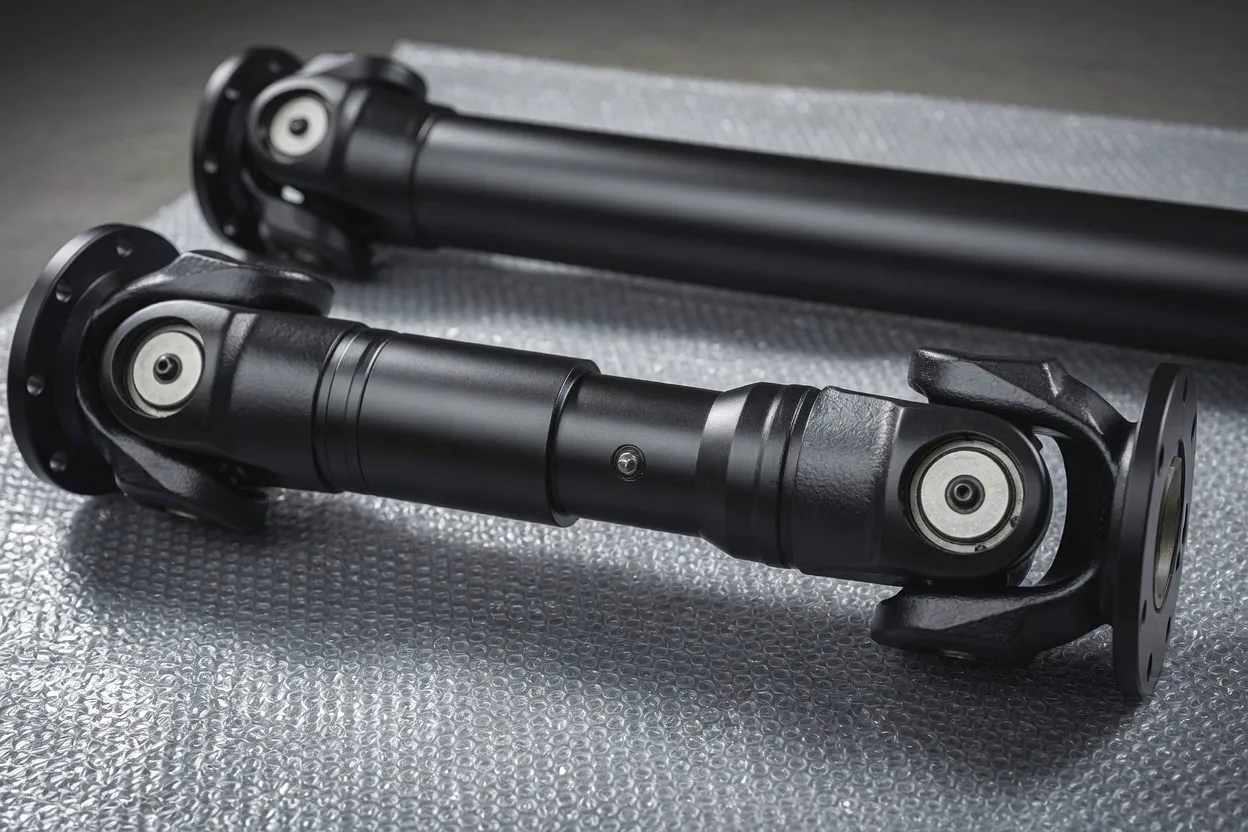
Spider Trunnion Bearings
Full-complement needle roller bearings with integrated grease reservoirs. The needle rollers are ground to h5 tolerance for minimal radial play, ensuring zero backlash in torque transmission and low-noise operation at all operating speeds.
Telescopic Sliding Spline
The sliding element in a combine header drive shaft must accommodate continuous axial movement as the header rises and falls. Ever Power telescopic tubes use involute splines to DIN 5480, hardened and ground for a zero-stick-slip sliding action even when loaded.
Safety Clutch Integration
Torque-limiting clutches can be integrated directly into the cardan shaft assembly. These slip at a pre-set torque value, protecting the gearbox during stone ingestion events. The clutch resets automatically once the blockage clears, avoiding manual intervention during harvest operations.
Detailed Application Scenarios in Combine Harvester Power Transmission
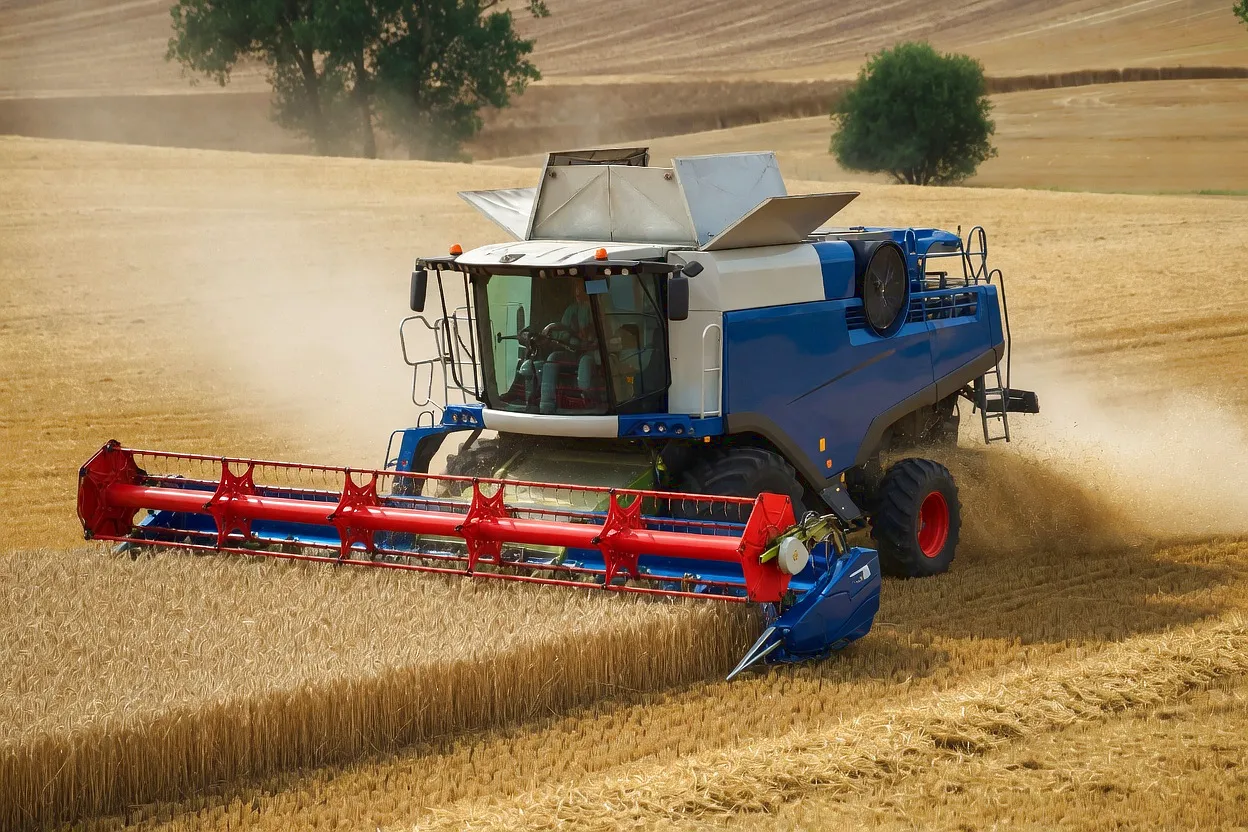
A modern self-propelled combine harvester is, in mechanical terms, a factory on wheels. The power transmission system distributes energy from a single engine to as many as fifteen separate driven assemblies, each with different speed ratios, operating angles and torque demands. Understanding exactly where cardan couplings are used — and why each location imposes different requirements — is essential for anyone specifying replacements or designing new machinery.
The header drive is the most demanding single application for a cardan coupling on a combine harvester. The cutting platform can be up to twelve metres wide on a modern grain header, and it must follow the contours of the field while operating its knife drive, auger and reel at constant speed. The drive shaft from the main machine to the header crosses the feeder house at a continuously variable angle, typically ranging from 0° to 20° depending on ground conditions. A double-cardan coupling at each end of this shaft provides a true constant-velocity output, ensuring the reciprocating knife drive mechanism receives a smooth, even torque input. If a single-cardan design is used here, the resulting velocity variation at the output causes the knife to accelerate and decelerate twice per revolution, creating a hammering effect that dramatically reduces knife bar and drive belt life.
The threshing and separation system presents a different set of challenges. The main threshing drum — or, in rotary designs, the axial rotor — spins at 800 to 1,200 rpm and must be capable of absorbing violent torque spikes. When a dense mat of tangled wheat enters the drum at full crop rate, the resistance can spike to three or four times the normal running torque in a fraction of a second. The cardan coupling in the drum drive must absorb this overload without permanent deformation, then return immediately to normal operation. This is where the material specification and overload rating become critical differentiators between an agricultural-grade and a general-purpose industrial coupling.
The grain elevator and cross conveyors use smaller cardan couplings to connect the elevator drive to the main machine frame, compensating for the angular offset between the elevator housing and the horizontal main frame. These couplings operate at lower torques but must be resistant to the fine grain dust that permeates every corner of the machine during operation. Sealed bearing caps and labyrinth seal arrangements at the trunnion journals are essential in this environment.
The straw chopper and spreader, found at the rear of most modern combines, operates at high speed (typically 2,500–3,000 rpm) and demands precision balancing of the cardan coupling assembly. An out-of-balance condition at these speeds creates significant vibration that propagates through the machine frame, accelerating wear on bearings, fasteners and electronic components. Ever Power balances all high-speed agricultural cardan shafts to ISO 21940-11 grade G6.3 or better, using dynamic balancing equipment to measure and correct the residual imbalance at operational speed.
Why Ever Power Cardan Couplings Outperform the Competition
Agricultural contractors and machinery dealers across the United Kingdom have specific performance requirements that generic off-the-shelf couplings rarely meet. The combination of unpredictable crop conditions, tight harvest windows and the high cost of machine downtime creates a demand for components that are genuinely over-engineered relative to their nominal duty. The following advantages reflect the engineering choices that differentiate Ever Power products in the agricultural market.
Superior Shock Load Capacity
Forged yokes and case-hardened spider trunnions give a 4× momentary overload rating. This is the safety margin that keeps combines working through the worst crop conditions UK harvest seasons can deliver.
Zero-Backlash Precision
Needle roller bearings ground to h5 tolerance ensure tight fits on trunnion journals, eliminating the play that causes fretting wear and audible clunking in worn couplings. Long service life with no loss of drive accuracy.
Full OEM Interchangeability
Dimensional cross-reference to John Deere, Claas, CNH and AGCO part numbers available. Drop-in replacement units with correctly sized bores and keyways — no workshop modification required during harvest season.
Fast Delivery to UK Customers
Standard range units dispatched within 5 working days. Express air freight options available for emergency harvest-season breakdowns. UK-based technical support and a full dimensional drawings library reduce specification errors.
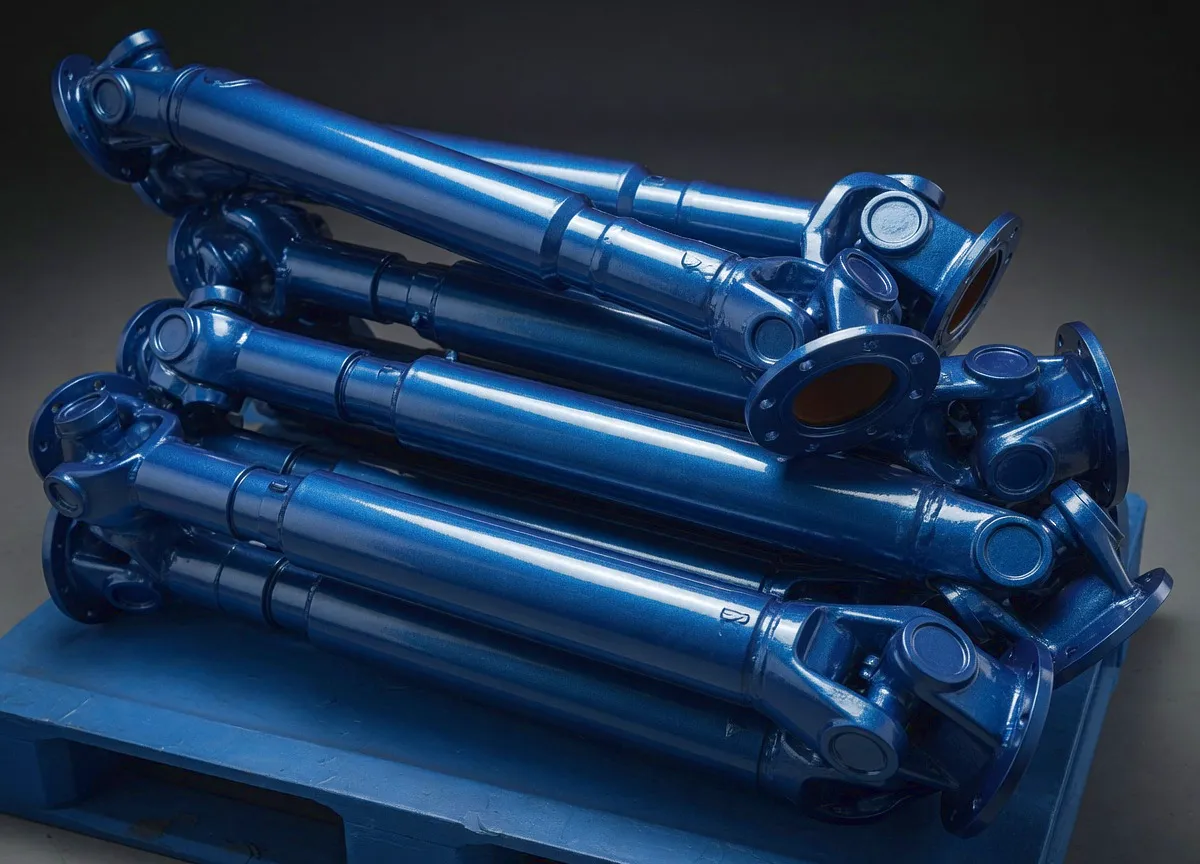
Customer Success Story: Fenland Grain Partnership, Cambridgeshire
UK Agricultural Contract Harvesting · Case Study 2024
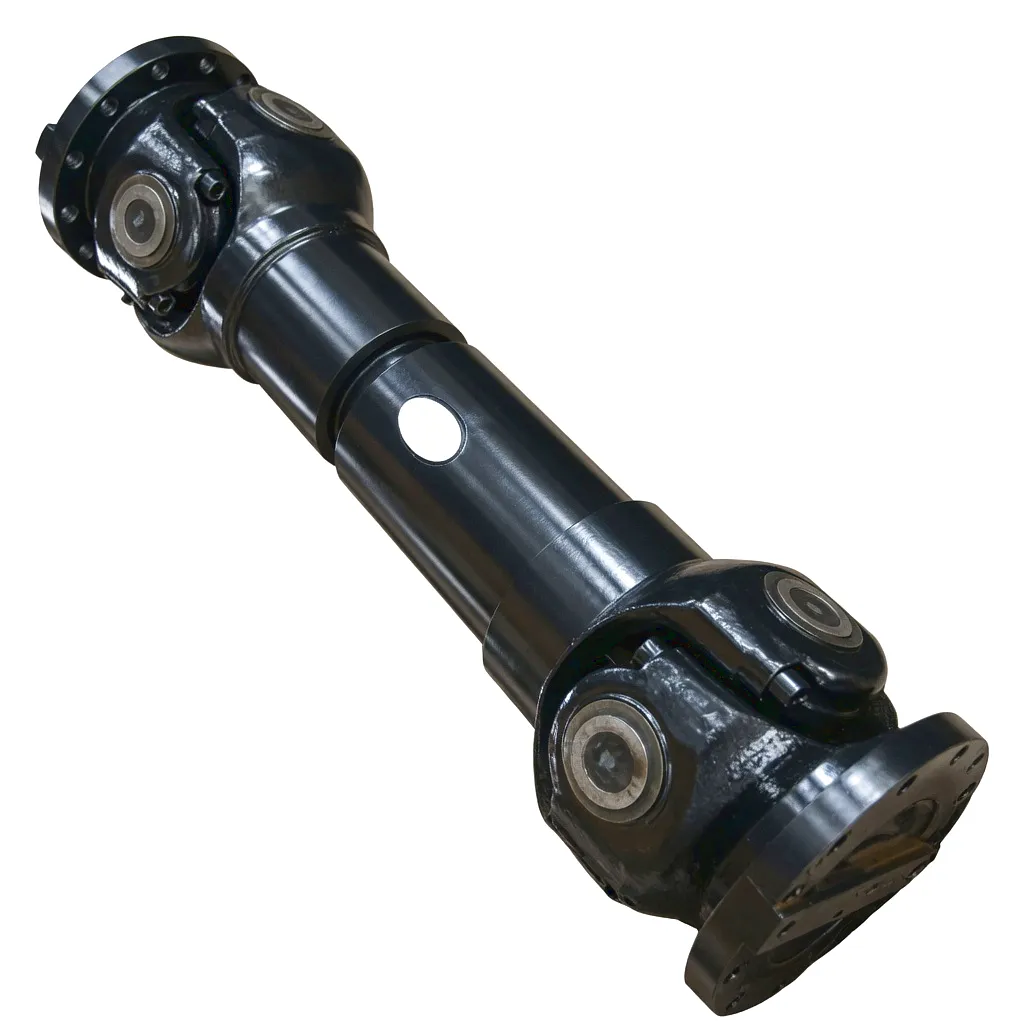 Fenland Grain Partnership operates a fleet of six self-propelled combines across approximately 4,200 hectares of cereal crop in Cambridgeshire and North Lincolnshire. In the summer of 2023, they experienced repeated cardan coupling failures on the header drive shafts of two Claas Lexion 760 machines. The OEM-supplied couplings were failing at the spider trunnions after approximately 200 hours of operation, well short of the 400-hour seasonal target. Each failure resulted in an average of six hours of machine downtime during the peak harvest window, with direct costs estimated at £1,800 per incident in lost contractor income and emergency repair labour.
The farm’s workshop manager contacted Ever Power’s technical team with full dimensional drawings and operating conditions. An analysis of the failed units identified insufficient case-hardening depth on the spider trunnions as the root cause. The OEM parts showed hardness dropping to HRC 42 below 0.4 mm of surface depth, which was inadequate for the impact loads experienced in dense barley crops. Ever Power supplied replacement cardan couplings with spiders carburised to a case depth of 0.8 mm and a hardness profile of HRC 60–62 at the surface, tapering to HRC 32 at the core. The bore and keyway dimensions were machined to match the Claas Lexion 760 shaft specification exactly.
The upgraded cardan couplings completed the entire 2024 harvest season without a single failure across both machines — a total of over 900 operational hours. The partnership calculated a direct cost saving of £21,600 compared to the previous year’s failure incidents, and have since converted their entire fleet to Ever Power coupling specifications for the header and thresher drive positions.
What Our Customers Say
“
We had been through three different coupling suppliers for our Claas combine header shaft in two years. Ever Power was the first company that actually analysed the failure mode before quoting. The replacement parts went straight in without any machining, and we have had zero issues through a full harvest season in Norfolk. I will not be going back to the OEM catalogue price for this application.
James Whitmore
Fleet Workshop Manager, Breckland Agricultural Services, Norfolk
“
The technical drawing library that Ever Power provided saved us considerable time during the pre-season preparation. We ordered cardan couplings for four different positions on our New Holland CR combine and every single unit was dimensionally correct on the first attempt. The price was genuinely competitive compared to the dealer parts counter, and the delivery arrived well within the promised window.
Alistair Graham
Procurement Manager, Graham Family Farming Partnership, Yorkshire
“
As an agricultural machinery dealer servicing farms across Lincolnshire and the East Midlands, we stock Ever Power cardan couplings as our primary aftermarket brand for combine harvesters. The combination of consistent quality, clear part references and rapid dispatch makes them our go-to recommendation. Customers who have made the switch from OEM parts almost never go back.
Sarah Tomlinson
Parts & Service Director, Midlands Agricultural Machinery Ltd, Lincolnshire
Ever Power: Manufacturing Capability & Custom Engineering Services
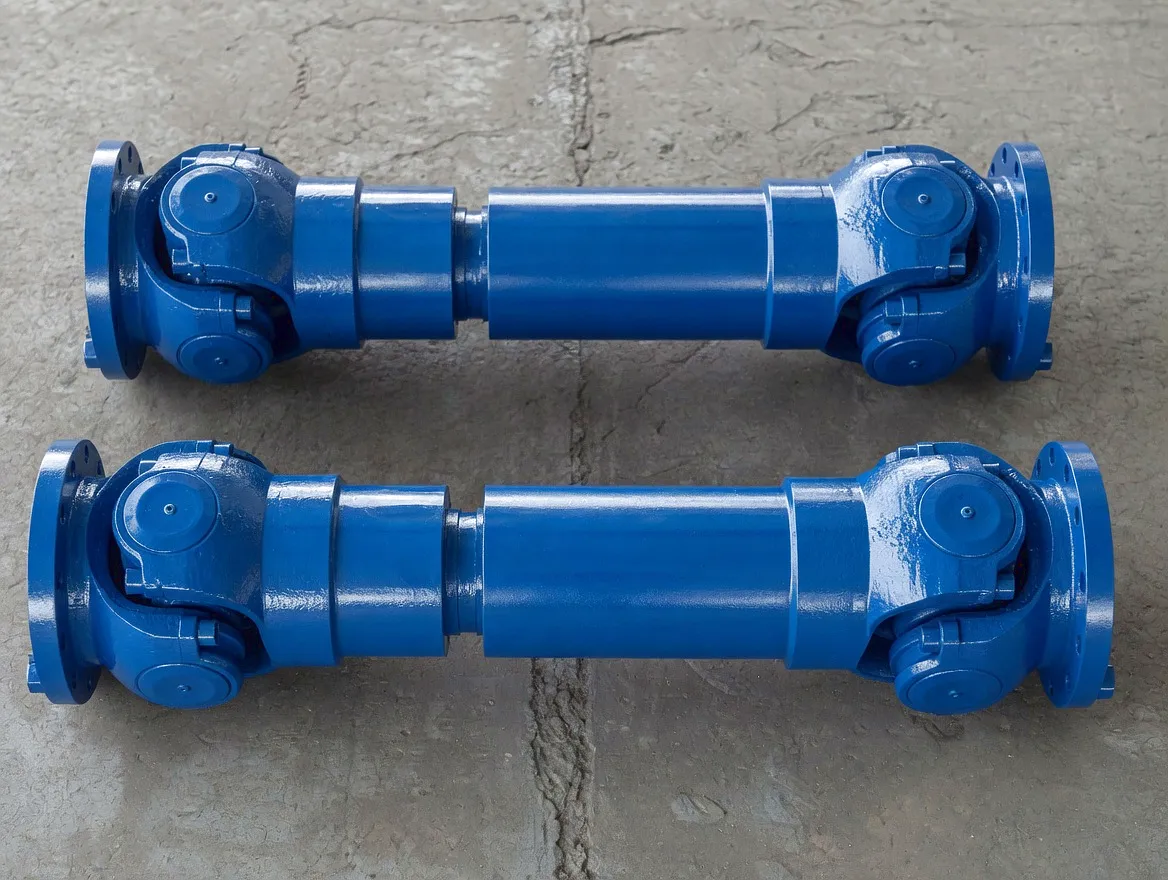
Behind every cardan coupling Ever Power supplies to the UK agricultural market is a full-service manufacturing facility with capabilities that extend well beyond standard catalogue production. The ability to deliver a custom-engineered cardan coupling — sized precisely for a specific combine model, crop type and seasonal operating profile — is what distinguishes a genuine engineering partner from a parts distributor. This customisation capability is not an add-on service; it is the foundation of how Ever Power operates.
Custom Bore & Keyway Machining
Any bore size from 20 mm to 200 mm. Parallel key, Woodruff key, DIN spline and ANSI spline options. H7/h6 tolerance fits as standard; tighter fits available on request. Every custom bore is CMM-verified before despatch.
Torque-Limiting Clutch Integration
Friction disc, cam and detent or shear bolt clutch modules assembled onto the cardan shaft as a single unit. Trip torque set and verified on calibrated test equipment. Supplied with test certificate and installation guide.
Complete Shaft Assembly Supply
Full telescopic cardan shaft assemblies including safety guard tubes. CE-marked to Machinery Directive 2006/42/EC for the UK market. Assemblies shipped with dimensional inspection report and material certification to EN 10204 3.1.
Low Minimum Order & Prototype Service
Single-unit prototypes available for field trial and approval. No minimum order quantity for standard range. Volume pricing available from 10 units. Sample and prototype lead times as short as 10 working days for new agricultural OEM customers.
Ready to discuss your combine harvester cardan coupling requirement?
Send us your existing part number, dimensional sketch or machine model. Our engineers will respond with a specification recommendation and quotation within one working day.
Cardan Couplings for UK Agricultural Machinery: The Procurement Context
The United Kingdom harvests approximately five million hectares of cereal crops each year, concentrated heavily in the eastern counties of England — Lincolnshire, East Yorkshire, Norfolk, Suffolk, Cambridgeshire and the East Midlands. These regions account for a disproportionate share of the country’s combine harvester fleet, with large-scale arable operations running machines at utilisation levels that would be considered exceptional in many European countries. A combine in the Lincolnshire fens may harvest over 600 hectares in a season, running for up to 16 hours per day during the critical two-to-three week window when crop moisture levels are ideal.
This operating intensity places cardan couplings in these machines at the upper boundary of their design life within a single season. Farm workshops in the UK typically carry out a complete pre-harvest inspection and component change programme in June, replacing wear items including cardan coupling assemblies before the machine enters its peak operational period. The ability to source correctly specified cardan couplings with short lead times and reliable delivery to UK farm addresses is therefore a genuine commercial requirement, not a logistics preference.
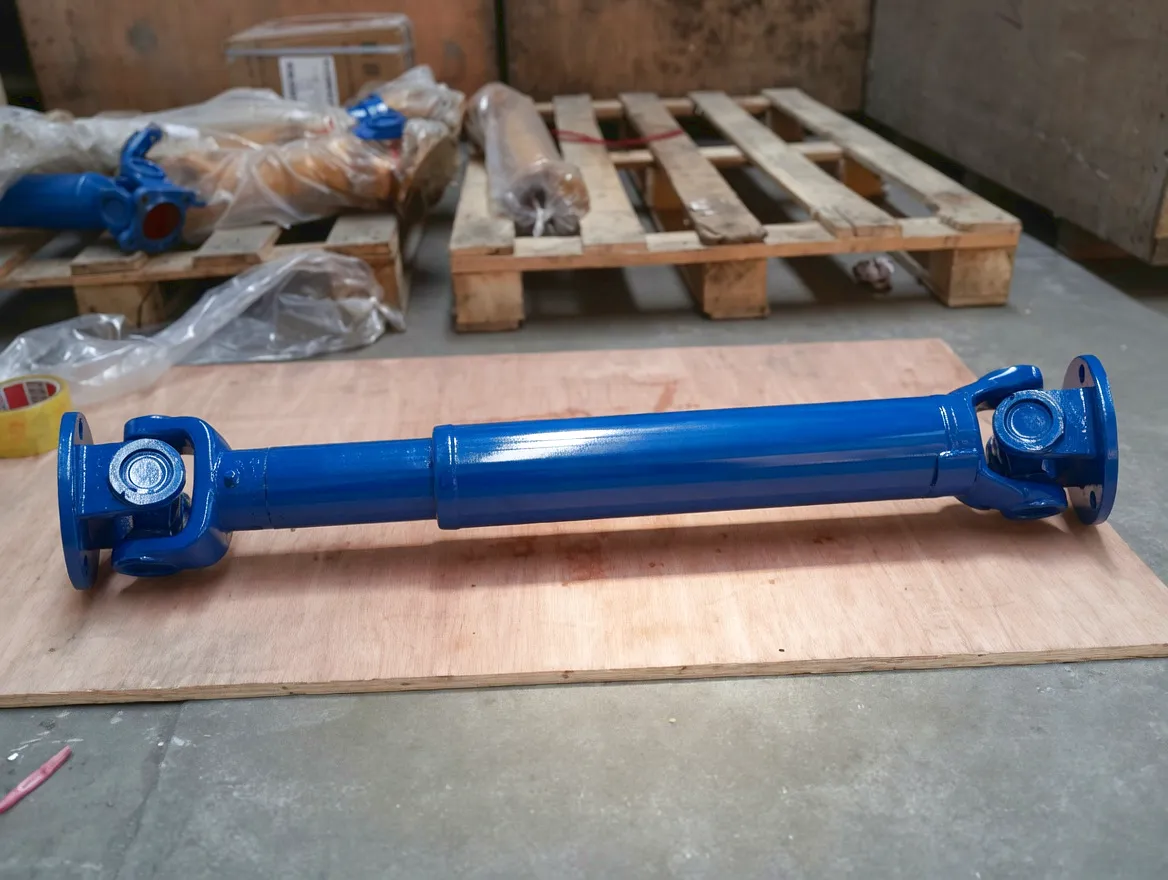
Agricultural contractors and dealers operating across Lincolnshire, Yorkshire, Norfolk, Cambridgeshire and the wider UK arable belt will find Ever Power’s cardan coupling range directly relevant to their maintenance and stocking requirements. All units are supplied with imperial and metric dimensional data, and cross-references to common combine models are available from the technical team. Documentation packages suitable for farm health and safety files — including material certificates, dimensional inspection reports and CE declarations of conformity — are supplied as standard for all shaft assembly products.
For dealers stocking parts for the UK agricultural aftermarket, Ever Power offers a structured dealer support programme with competitive volume pricing, pre-season stocking agreements and consignment stock arrangements for high-volume locations. Contact our sales team at [email protected] to discuss your dealership requirements.
Maintenance, Installation & Service Life Optimisation
A high-quality cardan coupling will only achieve its rated service life if it is installed correctly and maintained according to the appropriate schedule. In the context of combine harvester operation, where the machine may be used intensively for a short season and then stored for eight or nine months, the maintenance approach must account for both in-season demands and the effects of prolonged storage. The following guidance represents best practice developed through years of working with agricultural customers across the UK and Europe.
| Interval / Event | Action Required | Acceptance Criteria |
|---|---|---|
| Pre-season (June) | Full visual inspection, grease all nipples, check yoke bolt torques, measure angular backlash | Backlash < 0.5°; no visible cracking or pitting on trunnions; all bolts at specified torque |
| Every 50 operating hours | Re-grease all nipples with lithium complex EP2 grease until fresh grease appears at seal | Fresh, clean grease visible; no discoloured or contaminated grease purging from seals |
| After stone ingestion event | Immediate check for unusual noise, vibration or visible damage to yoke welds and spider | No abnormal noise or play; replace immediately if any cracks observed |
| Post-season (October) | Full grease purge, apply corrosion inhibitor to exposed metal, check telescopic section slides freely | No stick-slip in telescopic section; full protective coating on all exposed surfaces |
| Every 400 hours or 3 seasons | Disassemble joint, inspect needle roller bearings for spalling, measure trunnion pin diameter | Trunnion diameter within 0.03 mm of nominal; no spalling or pitting on rolling surfaces |
One aspect of cardan coupling maintenance that is frequently overlooked in the combine harvester environment is the management of the safety guard tube. The plastic or steel guard tube that encloses the rotating shaft is a legal requirement under UK PUWER regulations for any cardan shaft accessible to operators during use. Guard tubes should be inspected for cracks, missing retaining chains and damaged bearing support rings at every service interval. A failed guard tube does not affect the performance of the cardan coupling itself, but it creates a significant health and safety risk and will result in a prohibition notice from the Health and Safety Executive if observed during an inspection.
Frequently Asked Questions
Specify the Right Cardan Coupling. Keep the Harvest Moving.
Ever Power combines 18+ years of agricultural power transmission engineering with full custom manufacturing capability. Whether you need a single pre-season replacement or a complete OEM supply programme, our team is ready to support you.
edit by gzl