Industrial Drive Engineering · UK Textile Machinery · Ever Power
Cardan Coupling for Sizing Machine Drying Rollers: Constant-Velocity Drive Engineering for UK Textile Production
By Ever Power Engineering Team | Application Guide: Sizing Machine Constant-Velocity Drive Chain | Serving UK Textile Manufacturers
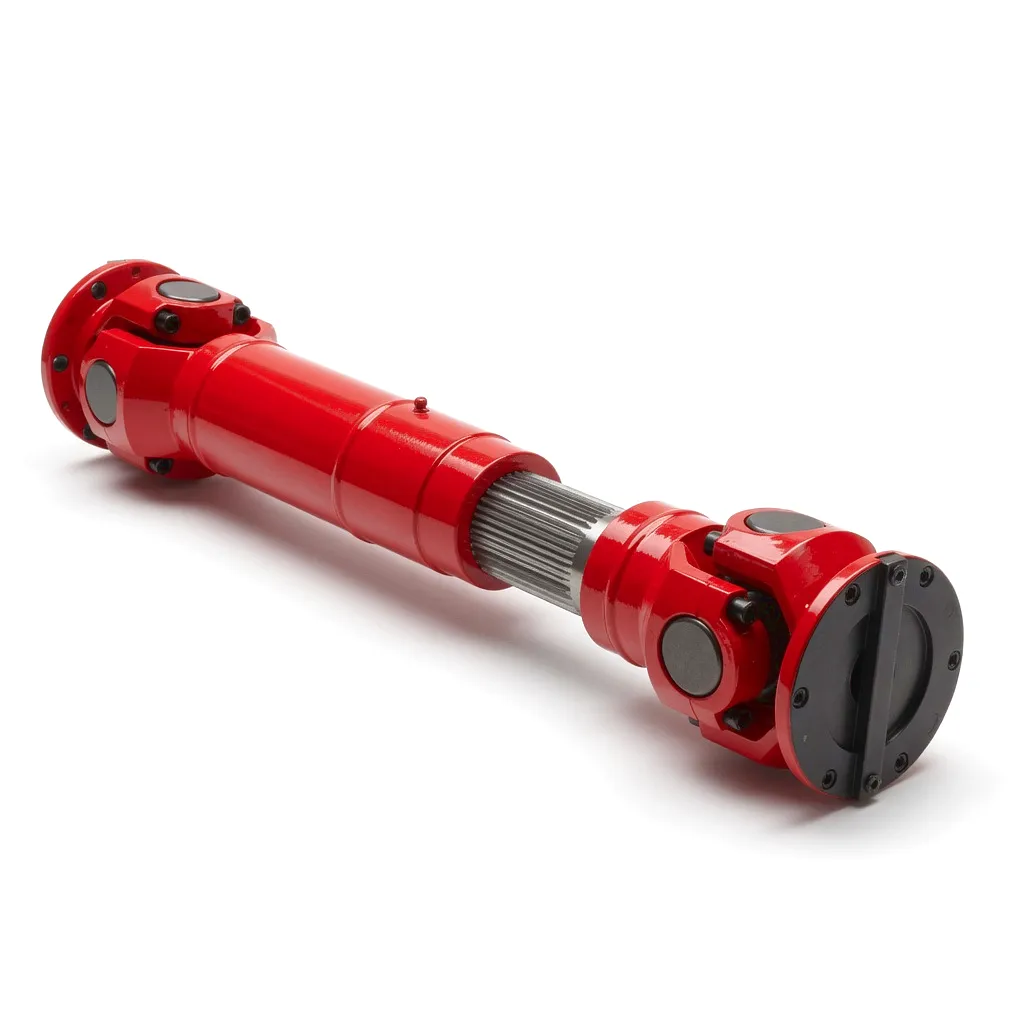 Walk the drying section of any commercial sizing machine and you feel the heat before you hear the machinery. Steam-heated cylinders stretch in a long bank — anywhere from eight to twenty of them — each one turning in tight synchrony with its neighbours, pulling warp yarn through at speeds between 40 and 120 metres per minute. The yarn sheet that passes through this section is unforgiving: a speed differential of less than one percent between adjacent cylinders is enough to introduce tension variation, cause yarn breaks, or deposit sizing compound unevenly across the sheet. When this happens, the problems don’t stop at the sizing machine. They travel forward into weaving, and show up as seconds or rejects in the final fabric roll.
📩 Get a Free Engineering Quote — Contact Ever Power
Reply within 24 hours | [email protected] | Custom sizing machine cardan couplings for UK textile industry
The Drive Engineering Challenge in Sizing Machine Drying Sections
The fundamental mechanical problem in a sizing machine drying section is connecting a series of heated cylinders so that they all rotate at exactly the same peripheral speed, while the coupling mechanism simultaneously accommodates thermal expansion of the cylinder shafts. These two requirements pull in opposite directions: thermal growth demands flexibility, while precise speed transmission demands rigidity. The cardan coupling — specifically a double-joint design with a telescoping intermediate tube — resolves this contradiction by design.
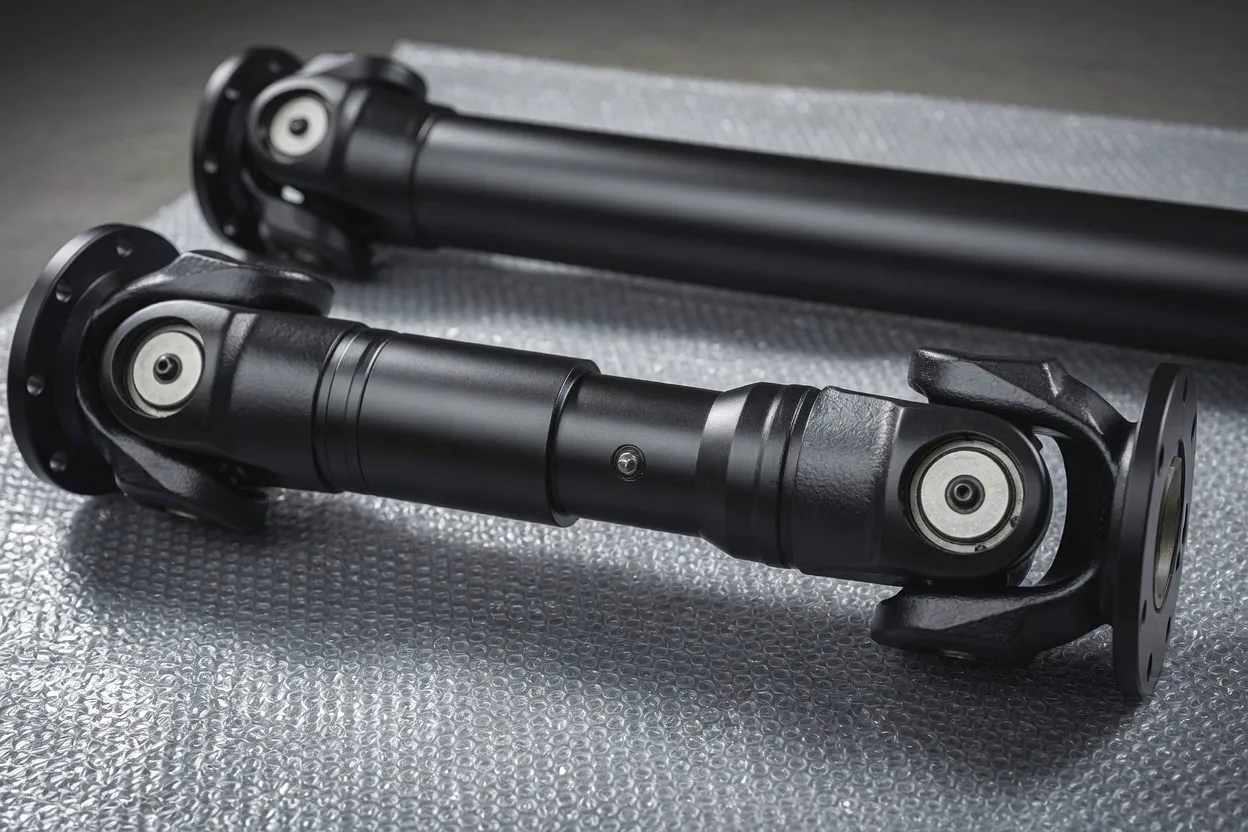
The numbers involved are worth spelling out. A typical 1.8-metre drying cylinder operating at 150°C will grow axially by 2.5–3.5mm from its cold position over the course of a production warm-up cycle. The bearings at the cylinder ends cannot absorb this growth without damage, so it must be accommodated by the coupling. At the same time, wear in the roller end housings, frame deflection under load, and small errors introduced during installation mean the shaft-to-shaft angle between adjacent cylinders is rarely zero — a misalignment of ±2° to ±5° is typical on aged machinery frames. A coupling that handles both demands without introducing velocity error is not a commodity item.
Thermal Shaft Expansion
+2.5–3.5 mm
Typical axial growth on a 1.8m heated drying cylinder from cold start to steady-state operating temperature of 140–155°C. Must be absorbed by the coupling without loading cylinder end bearings.
Angular Misalignment Range
±2° to ±5°
Typical shaft-to-shaft angle mismatch across the drying roller chain on in-service sizing machines. Arises from housing wear, frame deflection, and thermal effects during operation.
Speed Synchronisation Tolerance
< ±0.3%
Maximum acceptable speed differential across the drying roller chain for high-count cotton and technical fabric production in UK mills. Exceeded by gear couplings at operating angles; met by correctly phased cardan couplings.
Rigid gear couplings handle misalignment to some degree but introduce a cyclical velocity variation — the so-called “Hooke’s joint error” — that becomes measurable above ±1° of operating angle. Chain drives add unwanted compliance and speed fluctuation at the low-tension operating conditions typical of drying section drives. The double-joint cardan coupling is the only common power transmission component that simultaneously handles angular misalignment, axial displacement, and delivers zero velocity error at all operating angles within its rated range — which is why every well-engineered modern sizing machine specifies them for the drying section constant-velocity drive chain.
How a Cardan Coupling Achieves Constant-Velocity Output
A single Hooke’s joint — the basic building block inside every cardan coupling — does not, on its own, produce constant-velocity output when the input and output shafts are angled. During each revolution, the output shaft accelerates and decelerates twice, with the magnitude of variation proportional to the sine squared of the operating angle. At ±5°, this variation is around ±0.38% — just above the threshold that causes problems in a drying section drive chain. At ±10°, it reaches around ±1.5%, severe enough to cause warp breakage and uneven sizing in all but the coarsest yarn counts.
The double-joint cardan design solves this by the principle of cancellation. Two universal joints are connected by a short intermediate shaft, and the geometry is arranged so that both joints operate at the same angle and — critically — the yokes of the input and output joints are aligned in the same plane (a condition called “phasing”). Under this arrangement, the velocity error introduced by the first joint is exactly cancelled by the equal-and-opposite error of the second joint. The output shaft speed is identical to the input shaft speed throughout each revolution, regardless of the operating angle, as long as the joints remain within their rated range.
Key Design Requirements for Sizing Machine Applications
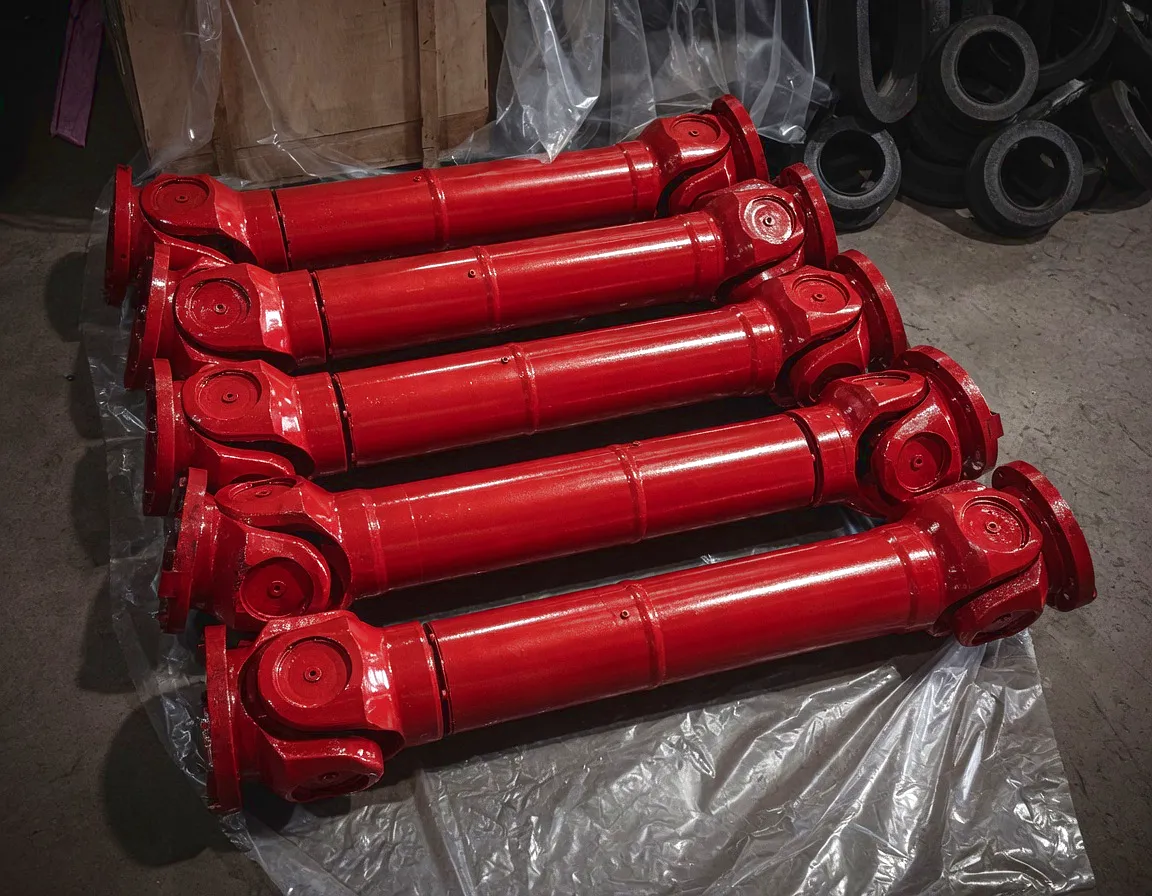
✓ Double-joint (W-type) configuration for zero velocity error
✓ Telescoping spline tube for axial thermal displacement
✓ Sealed needle bearings rated for humid environments
✓ Yoke phasing verified at assembly
✓ Balance to G2.5 for vibration-free roller drive
Technical Specifications: Cardan Couplings for Sizing Machine Drying Roller Drives
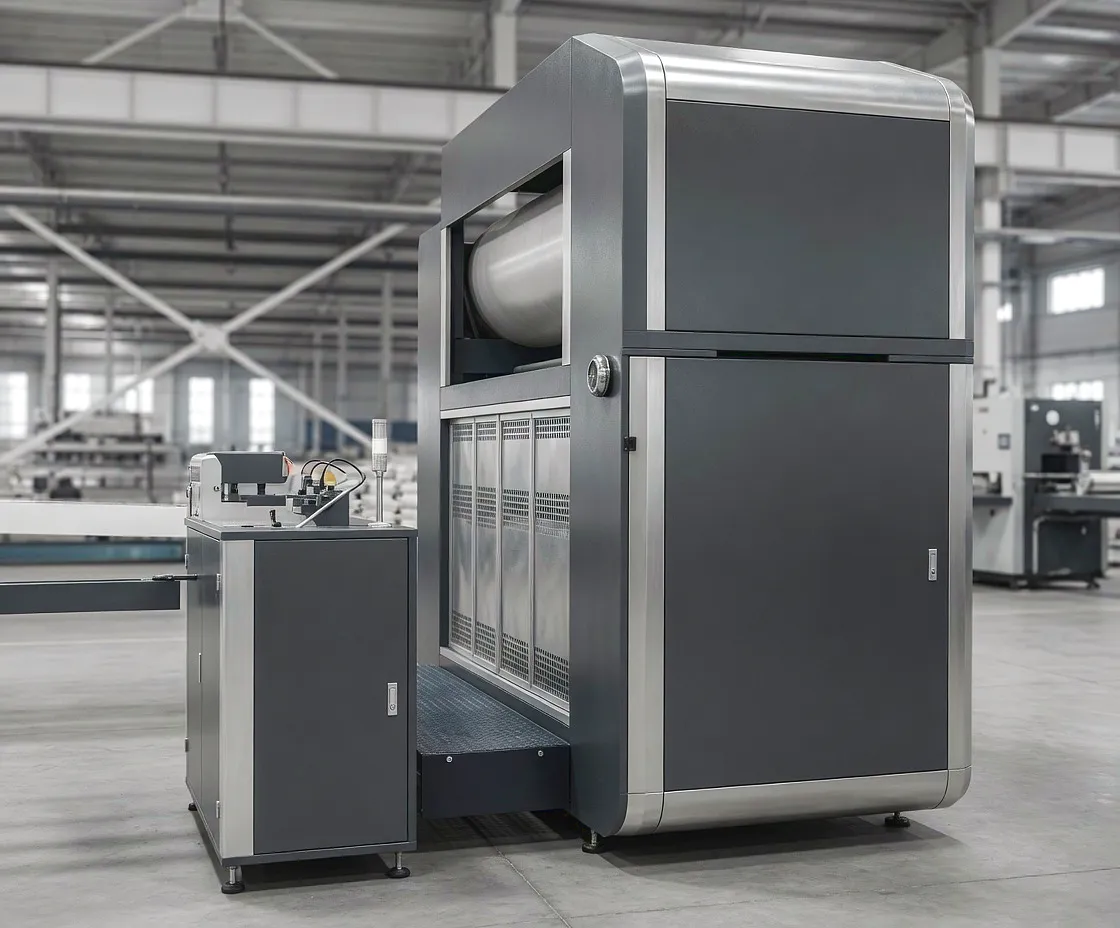
Ever Power manufactures three standard series of cardan couplings covering the full range of sizing machine drying section applications from light-duty research machines to high-speed production lines processing technical fabrics. Custom specifications beyond the ranges below are available; see the enquiry section. All figures are nominal values at 25°C operating temperature with rated lubrication intervals observed.
| Parameter | Light Series (SWC-L) | Medium Series (SWC-M) | Heavy Series (SWC-H) |
|---|---|---|---|
| Nominal Torque (Nm) | 50 – 500 | 500 – 5,000 | 5,000 – 50,000 |
| Peak Torque (Nm) | Up to 1,000 | Up to 10,000 | Up to 100,000 |
| Max. Operating Angle | ±15° | ±12° | ±10° |
| Max. Speed (rpm) | 3,000 | 2,500 | 1,500 |
| Bore Diameter Range (mm) | 16 – 50 | 50 – 120 | 120 – 300 |
| Axial Displacement (mm) | ±10 | ±20 | ±35 |
| Yoke / Body Material | 20Cr / 40Cr Steel | 42CrMo4 Alloy Steel | 42CrMo4 Forged Steel |
| Journal Cross Hardness | 58–62 HRC | 60–64 HRC | 60–64 HRC |
| Bearing Seal Rating | IP54 | IP65 | IP65 |
| Surface Treatment | Zinc plate + primer | Phosphate + epoxy | Phosphate + polyurethane |
| Salt Spray Resistance (ASTM B117) | 200 h | 500 h | 500 h |
| Operating Temperature (°C) | -30 to +120 | -30 to +150 | -30 to +150 |
| Balance Grade (ISO 21940) | G6.3 | G2.5 | G2.5 |
| Lubrication Interval (hours) | 500–800 | 1,500–2,000 | 1,500–2,000 |
* Custom bore diameters, keyway profiles (BS 4235, DIN 6885, ANSI B17.1), flanged end fittings, and splined connections are available on request. Material certificates to EN 10204 3.1 supplied as standard with all orders. Contact Ever Power for project-specific sizing and pricing.
Material Engineering for the Sizing Machine Environment
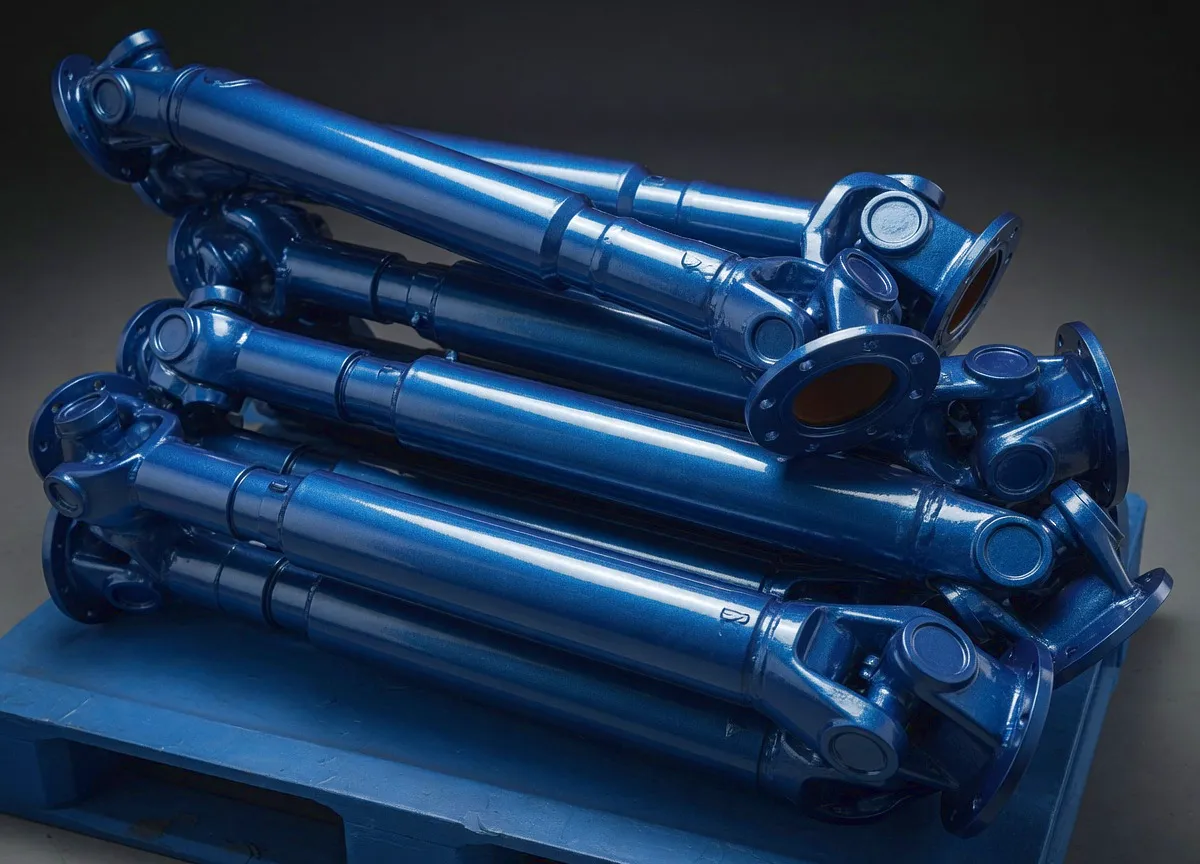
A sizing machine drying section combines three environmental stresses that most industrial coupling specifications do not anticipate together: sustained elevated temperature, airborne steam condensate, and chemical contamination from sizing agents. Standard industrial cardan couplings are designed for general manufacturing environments with incidental moisture exposure. Textile-grade units need to handle what amounts to a warm chemical spray continuously throughout the production shift.
The yoke bodies and tube sections in Ever Power’s medium and heavy series are forged from 42CrMo4 alloy steel, a chromium-molybdenum grade that provides better fatigue strength, higher surface hardness after heat treatment, and significantly better corrosion resistance in humid environments compared with the plain carbon steel yokes used in general-purpose coupling designs. The forging process closes the internal grain structure, which directly improves fatigue life under the cyclic bending loads that every drying roller coupling experiences at operating angle.
The journal cross — the most mechanically critical component in any cardan coupling — is manufactured from vacuum-degassed bearing steel, ground to h5 tolerance on the bearing journal surfaces, and case-hardened to 60–64 HRC. The full-complement needle bearing cups that surround the journal are sealed with double-lip seals rated IP65. This sealing level prevents sizing chemical penetration during the brief high-pressure wash-down cycles that many UK mills use between production runs. Surface treatment across all components follows a four-stage process: alkaline degreasing, iron phosphate conversion, epoxy primer, and a polyurethane topcoat that achieves 500-hour neutral salt spray resistance to ASTM B117.
Application Scenarios Across Textile Manufacturing
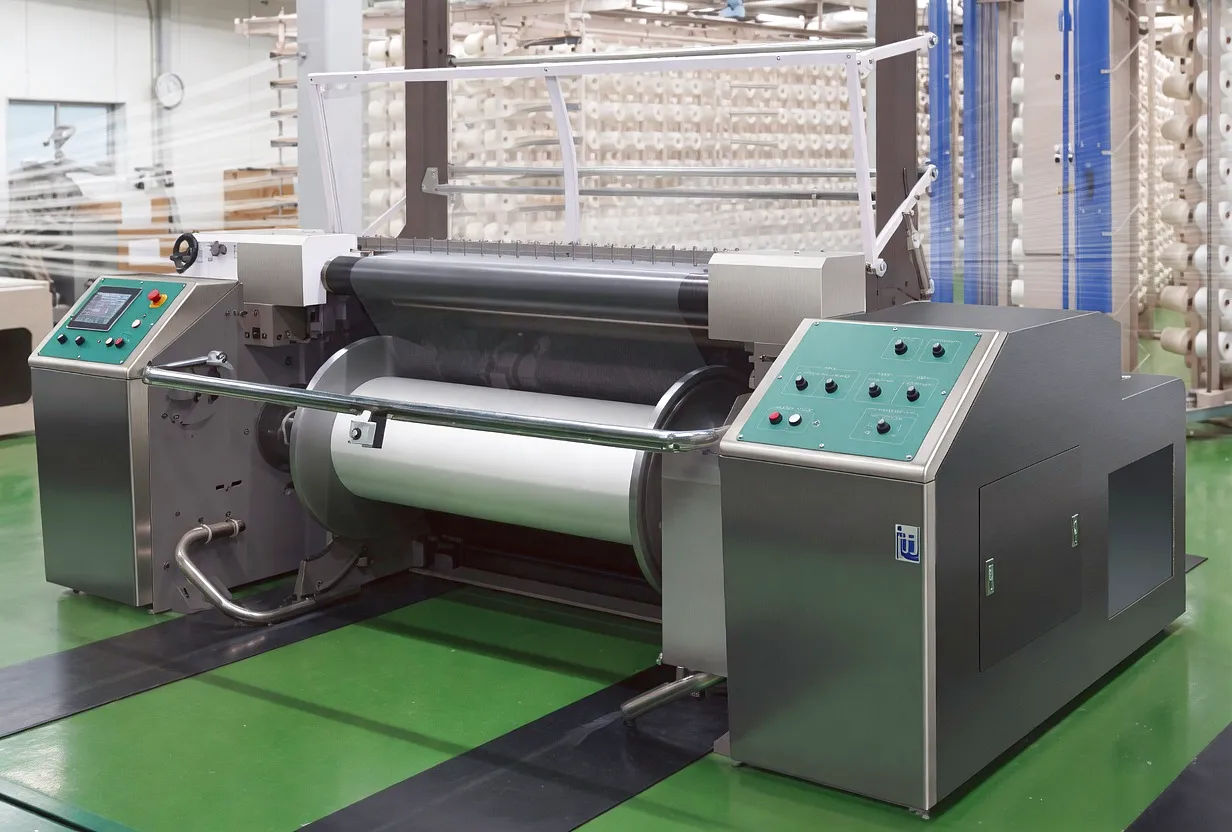
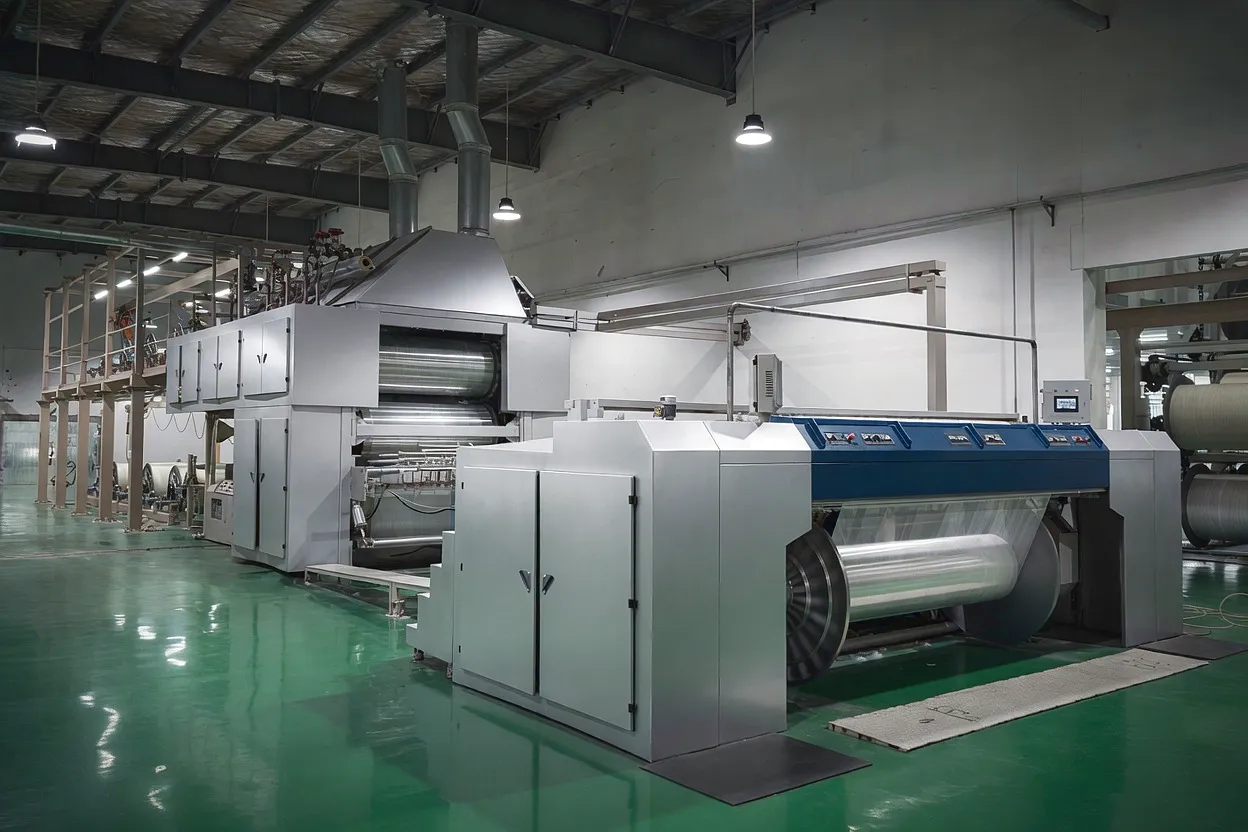
The drying roller constant-velocity drive chain is the primary and most demanding application for cardan couplings in sizing machine engineering. The same product family and engineering principles extend to several other drive positions across the sizing machine and wider textile mill floor, each presenting its own specific combination of torque, angle, and environmental requirements.
⚙ Drying Roller Constant-Velocity Chain Drive
The core application: 8–20 heated cylinders connected in series by individual cardan couplings, all required to maintain the same peripheral speed within ±0.3% throughout an 8–16 hour continuous production shift. The double-joint cardan design compensates for shaft thermal growth axially and misalignment angularly, while delivering zero velocity error at all operating angles up to the design limit. This is the application where the cardan coupling is not interchangeable with any other standard coupling type.
⚙ Squeeze Roll Nip Drive
The squeeze rolls that impregnate the yarn sheet with sizing compound apply variable pneumatic nip pressure throughout the working shift, depending on yarn count and sizing viscosity. This pressure adjustment deflects the roll shaft axis relative to the drive shaft. A cardan coupling in this position absorbs the deflection without introducing speed variation, ensuring the squeeze roll maintains proper synchronisation with the immersion cylinder regardless of nip pressure setting — a subtle advantage that shows up in consistent add-on percentage across different production recipes.
⚙ Warp Beam Let-Off Drive
The beam let-off drive must accommodate both the changing angular position of the beam shaft as the beam unwinds from full to empty, and the positional adjustment when beams of different flange diameters are loaded. A cardan coupling at this position eliminates the need for precise alignment each time a beam is changed, reducing changeover time and preventing the bearing overloads that occur when rigid couplings are used with less-than-perfect alignment on the beam drive flange.
⚙ Stenter Frame Main Drive Shaft
Stenter frames used in fabric finishing require the main drive shaft to pass through multiple sections that physically adjust to accommodate different fabric widths. Cardan couplings at each adjustment joint allow full-width rail movement without disconnecting the drive train, saving significant changeover time for UK fabric finishers who need to switch between different cloth widths during the working week. The constant-velocity characteristic ensures even clip chain speed across the full oven width regardless of rail position.
Engineering Advantages of Ever Power Cardan Couplings for Textile Drive Systems
Not every cardan coupling on the market is built to the same standard. The following performance characteristics reflect specific design and manufacturing decisions at Ever Power — choices made because they produce measurable differences in real textile production environments, based on direct feedback from mill engineers across Yorkshire, Lancashire, and continental Europe.
⚙
Verified Constant Velocity at Operating Angle
Every assembled cardan coupling undergoes yoke phasing verification before despatch. At ±3° — the typical operating angle on in-service sizing machine frames — speed variation is below 0.05%, confirmed by encoder comparison during factory acceptance testing on sampled units.
🔧
IP65 Sealed Needle Bearing Journals
Full-complement needle roller bearings in double-lip sealed cups rated IP65 extend regreasing intervals to 1,500–2,000 hours under standard textile mill conditions. Standard open-bearing cardan couplings typically require greasing every 500–800 hours in humid environments — a maintenance overhead that adds up quickly across a full drying section.
📈
Ground Spline Tube with Nylon Liner Option
The sliding spline tube uses case-hardened, ground spline flanks to minimise slip resistance and eliminate backlash in the axial direction. A nylon-lined spline option reduces the axial force transmitted to roller end bearings during thermal cycling to under 50 N — preventing the premature bearing failure seen with high-friction spline designs on long drying sections.
⚖
Dynamic Balance to G2.5 as Standard
All cardan shaft assemblies are dynamically balanced to ISO 21940-11 G2.5. At the 60–200 rpm operating speeds of sizing machine drying sections, this eliminates vibration-induced fatigue loading on roller end housings — a failure mode that creates long-lead-time spare part situations in mills with older or discontinued machine models.
🛠
Custom Bore and End Fitting — No Standard Constraints
In-house CNC turning, broaching, and gear cutting capability means Ever Power machines custom bores, keyways, spline profiles, and flanged ends to any customer drawing. Obsolete OEM sizing machine specifications are not a problem — if you have the original drawing or a set of measurements, the cardan coupling can be matched to fit without frame modification.
📄
UK-Ready Documentation Package
Every shipment to UK customers includes EN 10204 3.1 material test certificates, dimensional inspection reports, assembly drawings with metric and imperial cross-references, and a declaration of conformity meeting UKCA marking requirements for machinery directive modifications. Documentation is prepared specifically to satisfy UK engineering sign-off and quality management system requirements.
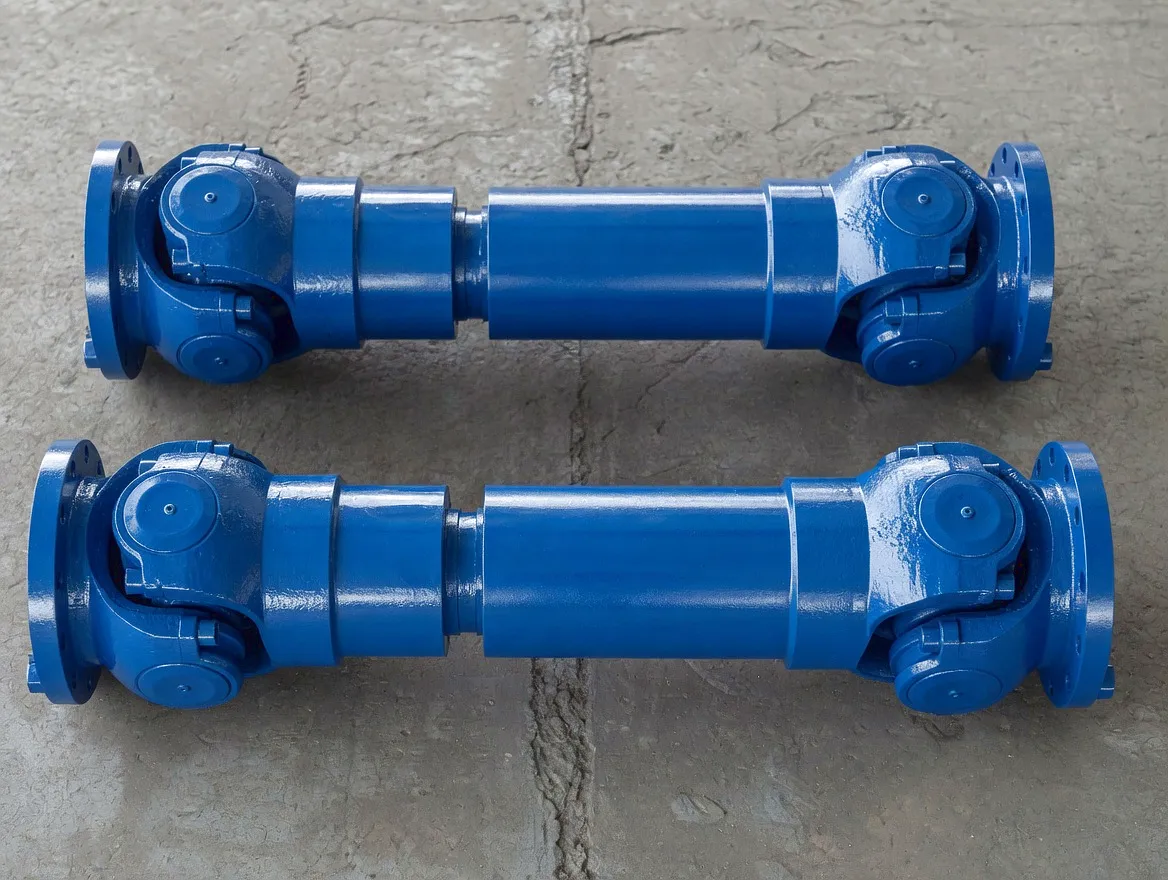
Customer Success Case: Yorkshire Weaving Mill Drying Section Retrofit
UK Textile Industry
Sizing Machine Retrofit 2023
Broadfield Textiles Ltd — West Yorkshire, England
Technical Woven Fabrics for Automotive Interior Applications
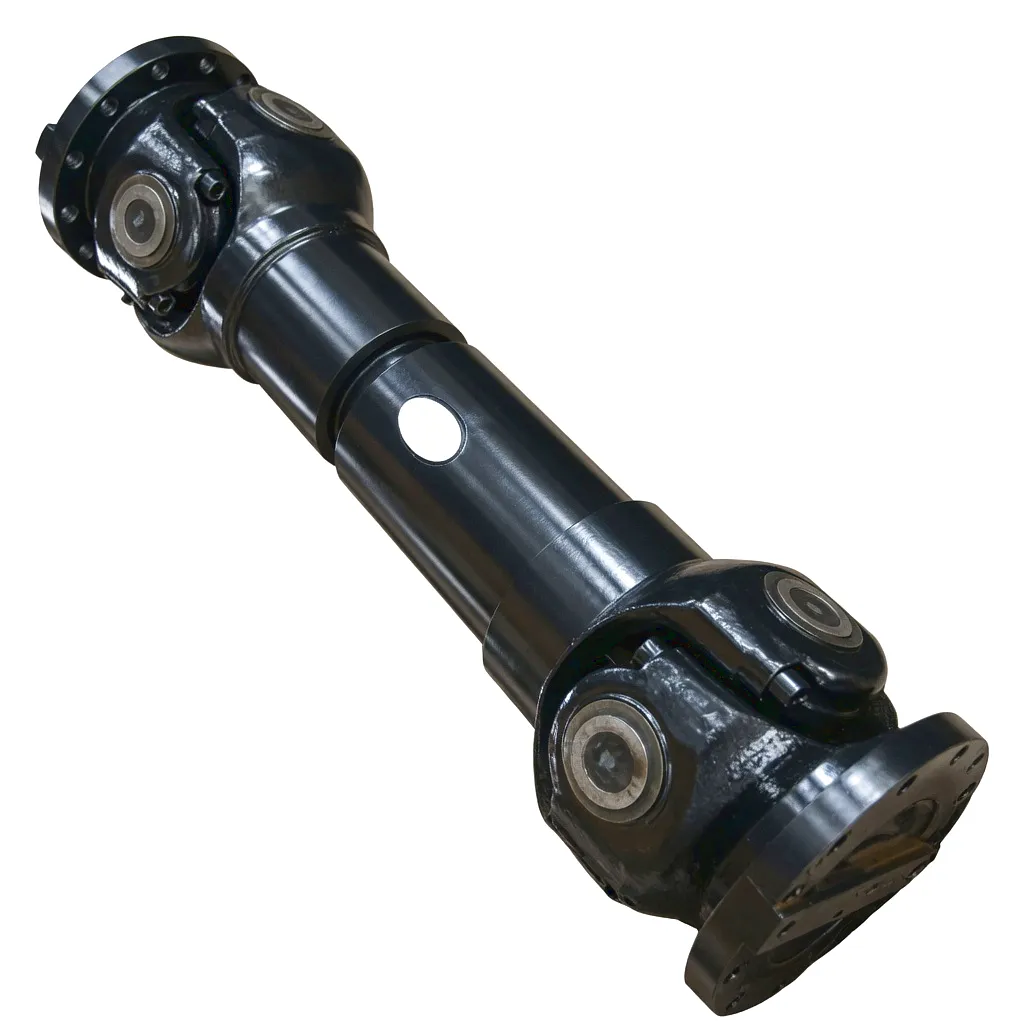 The situation: Broadfield Textiles runs two Benninger Prosize sizing machines producing technical woven fabrics for tier-one automotive interior suppliers. Both machines were originally fitted with rigid gear-type couplings in the drying section drive chain. After approximately twelve years of production, wear in the roller housing bores had introduced misalignment across the drying roller chain. The gear couplings, operating at angles beyond their designed range, began generating audible noise and measurable vibration at anything above 80 rpm. More damaging commercially: encoder monitoring revealed a speed differential of ±0.8% between adjacent drying rollers — nearly three times the ±0.3% maximum specified by Broadfield’s automotive fabric customers. Quality complaints began arriving.
Why a simple realignment wasn’t the answer: The conventional engineering response — realign and reshim the roller housings — was quoted by a local engineering contractor at £42,000 per machine, requiring a minimum five-day production shutdown each time. Given that both machines were affected, and that the root cause was cumulative housing wear that would continue regardless, Broadfield’s engineering director determined that the correct approach was a coupling solution that could permanently accommodate the existing misalignment, rather than correcting it temporarily. The replacement couplings also needed to match original bore dimensions (45mm H7, 14×9mm keyway to BS 4235 Part 1) and be delivered within six weeks to avoid disrupting a committed production schedule.
The Ever Power solution: Ever Power supplied 16 double-joint cardan shaft couplings per machine, rated 450 Nm nominal torque with ±5° operating angle capacity — sufficient to cover both the existing misalignment and anticipated further housing wear over the next ten years. Each coupling was machined to the exact Benninger bore and keyway specification. Tube length was calculated from Broadfield’s supplied roller-to-roller pitch measurements to match the frame layout without spacer pieces. All 32 assemblies were balanced to G2.5 and shipped with EN 10204 3.1 material certificates and full dimensional inspection records. Delivery was confirmed in five weeks from order.
The outcome: After a one-day installation by Broadfield’s own maintenance team — a process the engineering director described as straightforward because the cardan couplings were drop-in replacements — encoder monitoring showed speed differential across the drying roller chain had fallen to less than ±0.05%. Machine noise dropped by approximately 8 dB at operating speed. Zero speed-related fabric quality complaints were received in the first six months following installation. The total cost of 32 cardan couplings for both machines recovered its value through avoided quality claims and prevented production downtime within nine months of the changeover.
What Textile Engineers Say About Ever Power Cardan Couplings
★★★★★
“We retrofitted both sizing machines with Ever Power cardan couplings after years of fighting vibration and noise from the old gear-type drives. The improvement was immediate and dramatic — zero noise at operating speed, zero speed differential on the encoders. Our automotive fabric customers have not raised a single drying-section quality issue since we made the change.”
David Hartley
Engineering Director, Broadfield Textiles Ltd, West Yorkshire, UK
★★★★★
“Our original machine manufacturer quoted twelve weeks for OEM replacement couplings. Ever Power delivered custom-machined cardan shaft couplings to exactly the same bore specification in four weeks, at around sixty percent of the OEM price. The couplings have now accumulated over eighteen months of continuous production without a single maintenance call. Both the delivery performance and the product quality exceeded our expectations.”
Pieter van der Berg
Maintenance Manager, Textilwerk Rhein GmbH, Germany
★★★★★
“I specified Ever Power cardan couplings for the drying section of a new high-speed sizing line commissioned in 2024. Before we confirmed the order, the technical team provided torque calculations, joint angle analysis based on our frame drawings, and a full coupling assembly drawing package for our approval. That level of pre-sales engineering support from a coupling manufacturer is genuinely rare. The line has been running at 120 m/min without any drive-related issues.”
Ahmed Al-Rashid
Project Engineer, Global Textile Industries, UAE
Ever Power: Specialist Cardan Coupling Manufacturing for UK Textile Industry
Ever Power operates a dedicated cardan coupling manufacturing facility equipped with multi-axis CNC turning centres, broaching machines for internal keyway cutting, a gear hobbing section for splined connections, and a dynamic balancing facility handling assemblies up to 250 kg. The engineering team working on textile industry orders includes mechanical engineers with direct backgrounds in precision power transmission — people who understand the difference between specifying a coupling from a catalogue and engineering one for a specific production environment.
For UK textile manufacturers, this depth of in-house capability means that upgrading a sizing machine to cardan coupling drive is not a compromise between what you need and what a catalogue offers. Ever Power’s engineers review your machine layout, calculate the required torque and operating angle for each coupling position, select the appropriate series and intermediate tube length, and machine every bore and end fitting to your exact dimensional requirement. If your frame uses a non-standard flange pattern from a European OEM, it gets machined. If the clearance to the machine guard means the coupling tube diameter must be reduced, that gets done too.
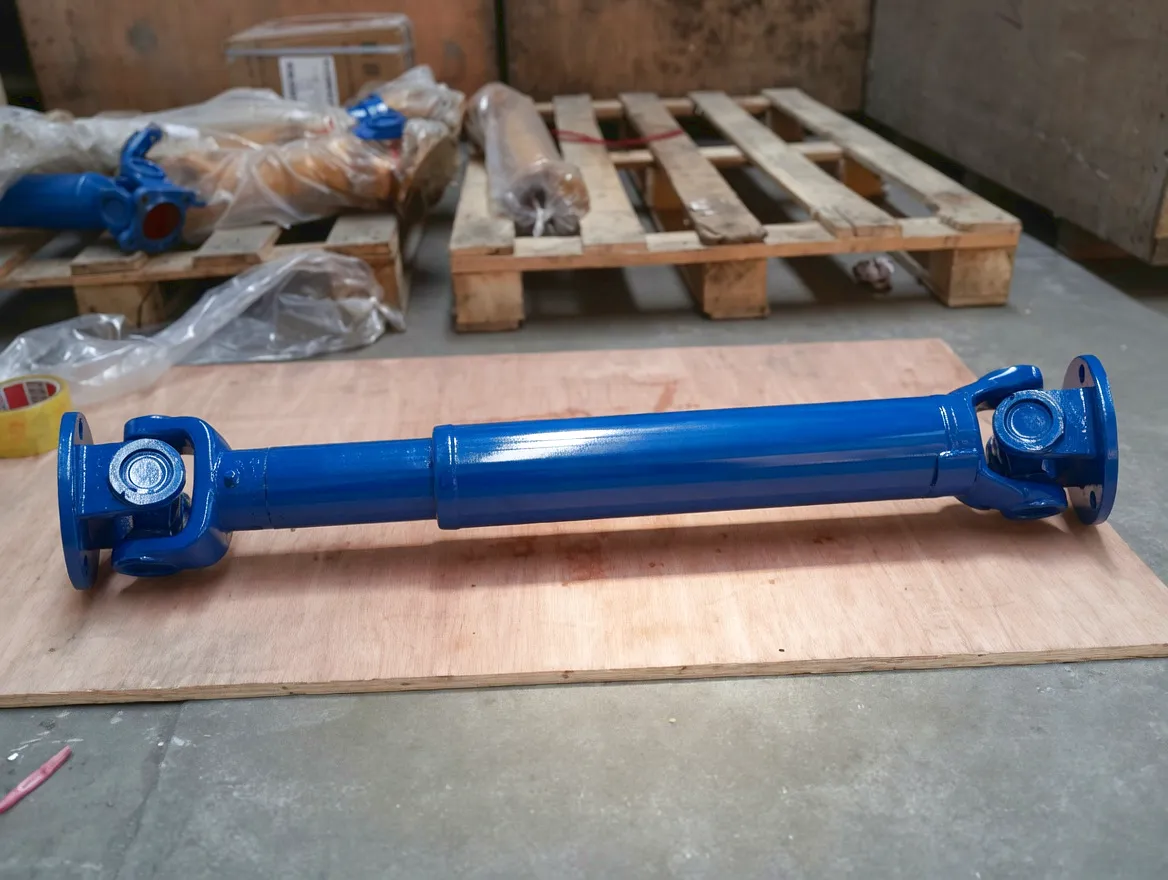
Custom Manufacturing Capabilities
✓ Bore: 16mm – 300mm, tolerance H7
✓ Keyways: BS 4235, DIN 6885, ANSI B17.1 or custom
✓ Flanged, splined, or smooth-bore end fittings
✓ Overall length: 200mm – 3,000mm
✓ Single-joint or double-joint configuration
✓ 304/316 stainless steel yoke option
✓ EN 10204 3.1 certificates included as standard
Frequently Asked Questions: Cardan Couplings for Sizing Machine Applications in the UK
Ready to Solve Your Sizing Machine Drive Challenge?
Send Ever Power’s engineering team your machine make, roller count, bore diameter, and operating speed — and receive a detailed technical proposal with pricing within 24 hours. Serving textile manufacturers across Yorkshire, Lancashire, and all regions of England, Scotland, and Wales. All enquiries handled in English, with full technical support from specification through to installation.
📩 Request Your Engineering Quote Now
[email protected] | cardancoupling.top | Cardan Coupling Engineering Specialists — UK Textile Industry | edit by gzl