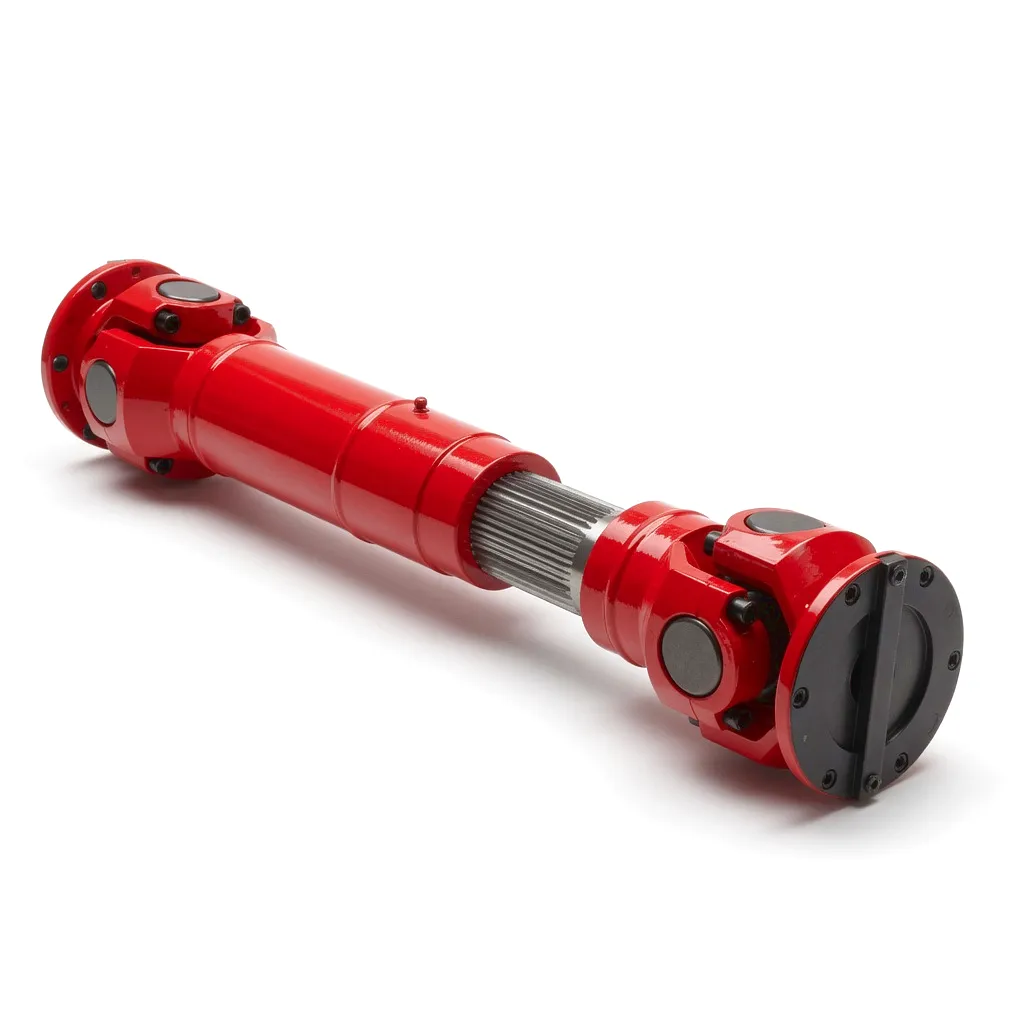
 Walk into any concentrating solar power facility — whether it’s a parabolic trough field in the Iberian Peninsula, a dish/Stirling installation in North Africa, or a research CSP test rig at a UK university — and you will find a mechanical challenge that looks deceptively simple from the outside: the sun moves, so the collector must move with it. Behind that elegant premise lies one of the most demanding drive-train engineering problems in renewable energy. The cardan coupling — also known as a universal joint coupling or Hooke’s joint — is the component that quietly makes synchronised, thermally tolerant, angularly flexible solar tracking possible at scale.
Cardan coupling technology did not begin in solar energy; it migrated into CSP from heavy industrial and automotive applications, carrying with it decades of refinement in torque capacity, angular compensation, and fatigue resistance. Today, when a parabolic trough solar collector assembly (SCA) needs to rotate its 150-metre aperture to within 0.1° of solar incidence angle, or when a dish concentrator must sweep continuously from 0° to 90° elevation while transmitting hydraulic or electric drive torque, the cardan coupling is the articulating joint that bridges the gap between fixed motor drives and rotating optical arrays.
In the United Kingdom, where the renewable energy supply chain has expanded dramatically since 2015, mechanical drive component suppliers face growing demand from CSP test installations, CSP component OEMs, and engineering procurement contractors sourcing drivetrain hardware for overseas projects. This guide covers the engineering fundamentals, material science, performance specifications, and procurement considerations that UK-based engineers and buyers need when specifying a cardan coupling for solar concentrating power applications.
Need a Cardan Coupling for Your CSP Drive System?
Tell us your torque requirements, working angle, operating environment, and quantity. Our engineering team responds within 24 hours with a technical proposal and competitive quote.
What a Cardan Coupling Actually Does in a CSP Drive Train
A cardan coupling — at its mechanical core — is a cross-shaped spider yoke assembly that connects two shafts whose centrelines are not collinear. The cross transmits rotary motion and torque across the angular misalignment between the input and output shafts, allowing both angular misalignment (up to typically 45° per joint, sometimes more with specialised double-joint designs) and axial displacement to be accommodated simultaneously. In contrast to a rigid flange coupling, which demands near-perfect shaft alignment, the cardan coupling turns misalignment from a problem into a design feature.
In CSP solar field applications, thermal expansion of the receiver tubes, structural deflection of the space frame under wind load, foundation settlement over time, and deliberate geometric misalignment between adjacent SCAs all create exactly the kind of combined axial and angular offsets that a cardan coupling handles naturally. When a 150-metre parabolic trough row heats from 15°C on a winter morning to 400°C operating temperature at the receiver, the thermal expansion difference between the steel structure and the heat-transfer-fluid pipe alone can exceed ±30 mm. A cardan coupling between adjacent SCAs absorbs that movement without transmitting destructive forces back into the drive motor gearbox or into the delicate mirror support structure.

Parabolic Trough CSP: The Tracking Drive Architecture
A parabolic trough CSP plant arranges rows of mirror concentrators — each individual SCA typically 100 to 150 metres long and around 5.8 metres wide — in a field that might cover dozens of hectares. Each row rotates continuously around a single horizontal North-South axis, following the sun’s East-West arc from dawn to dusk with tracking accuracy better than 0.1°. That seemingly simple requirement creates a formidable mechanical engineering challenge: how do you transmit synchronised rotary torque from one end of a 150-metre structure to the other, when the structure itself is not perfectly rigid, is constantly changing shape under thermal and wind loads, and needs to tolerate years of outdoor cycling without routine maintenance?
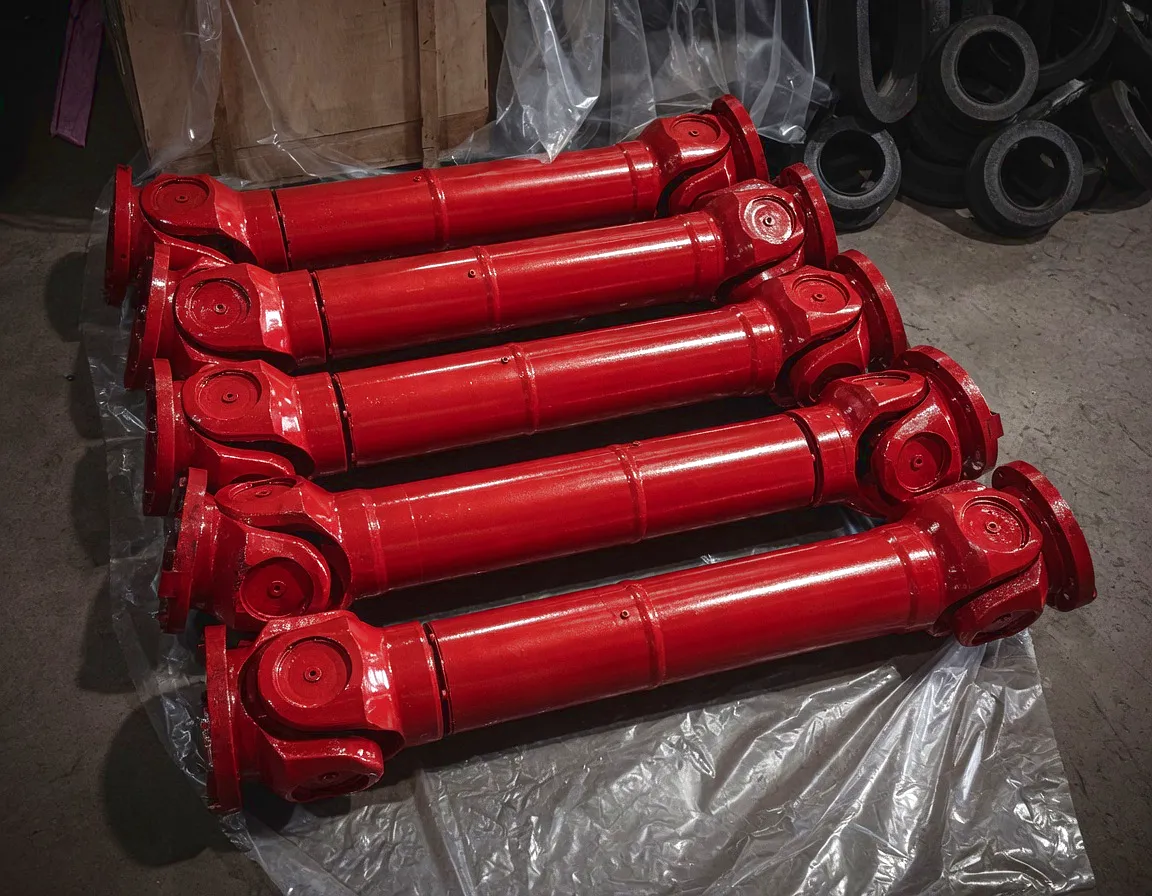
The answer adopted by virtually all commercial parabolic trough designs is a drive shaft running along the spine of each SCA, with cardan coupling joints between adjacent SCAs. The hydraulic or electric motor — typically one per SCA or one shared between two — drives a torque tube that passes through the focal line of the mirror array. Between each SCA, a double-joint cardan coupling (also called a double-Cardan or Hooke’s coupling) allows the relative rotation, axial sliding, and angular misalignment between adjacent collectors as the row tracks, as the structure thermally expands, and as inevitable foundation settlement creates small height differences between SCAs over the operational lifetime.
The cardan coupling in this application must satisfy several simultaneous requirements: it must transmit rated torque reliably across a continuous working angle that changes as the collectors rotate from the horizontal “stow” position through the full tracking arc; it must accommodate axial displacement of ±30 mm or more without generating excessive axial force on the drive shaft bearings; and it must achieve a design life of at least 30 years (matching the plant’s contractual life) under daily thermal cycling from ambient to 400°C at the receiver tube. That combination of mechanical and thermal demands makes material selection and lubrication design absolutely critical.
Dish/Stirling Concentrators: Dual-Axis Tracking and the Double-Cardan Solution
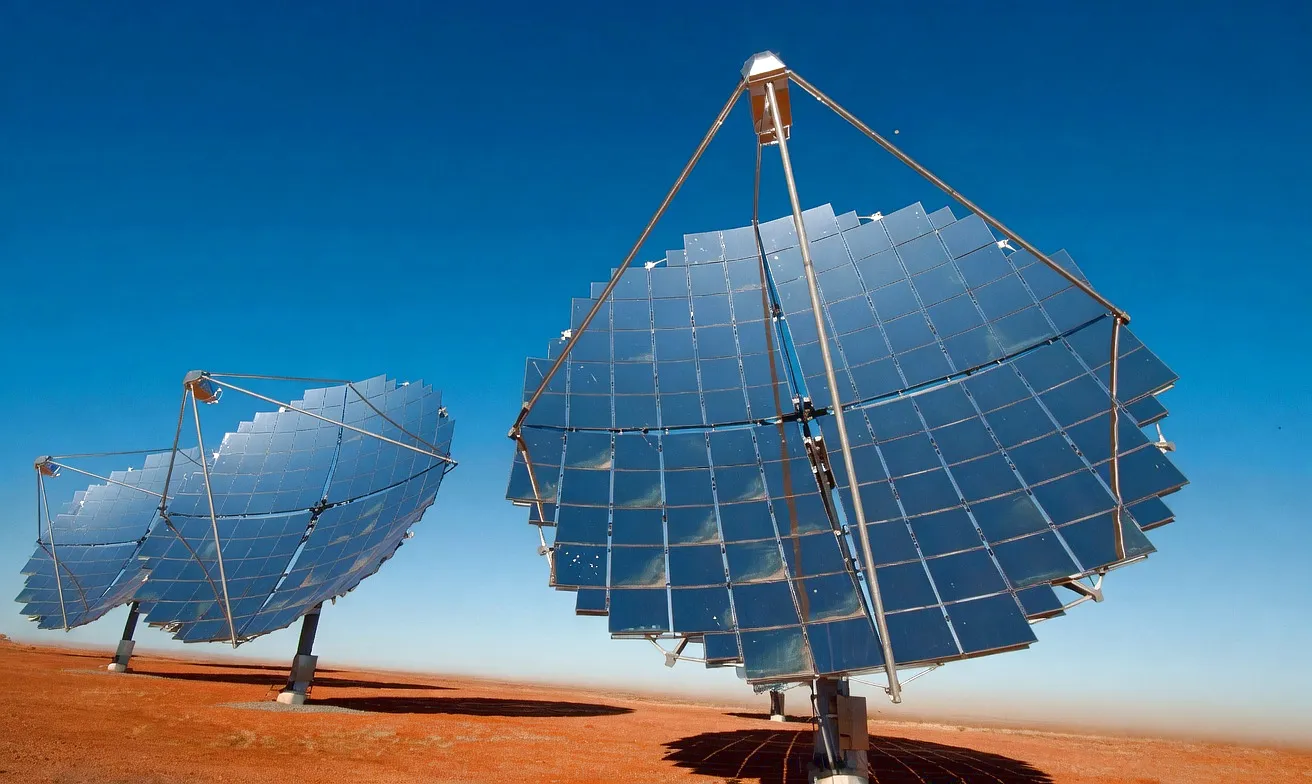
If the parabolic trough presents a challenging single-axis tracking problem, the dish/Stirling CSP concentrator raises the difficulty level considerably. A dish concentrator — typically a large parabolic dish 10 to 25 metres in diameter, supporting a Stirling engine or steam generator at its focal point — must track the sun simultaneously in two axes: azimuth (horizontal rotation, 0° to 360°) and elevation (vertical tilt, 0° to 90°). The result is a continuously changing three-dimensional geometry that places extreme demands on the mechanical drive system connecting the fixed motor housing to the rotating dish structure.
The elevation drive is where cardan coupling engineering becomes most critical. As the dish tilts from horizontal (at sunrise or sunset in some orientations) to vertical (at solar noon in summer at temperate latitudes), the angle between the fixed gear-motor output shaft and the elevation drive shaft changes continuously across the full 0° to 90° range. A single Hooke’s joint cannot transmit torque at a constant angular velocity across that range — indeed, a single cardan joint introduces a second-order velocity fluctuation that is proportional to the square of the sine of the working angle. At 30° this non-uniformity is modest; at 45° it becomes significant; at angles above 60° it would be severe enough to induce vibration and unacceptable tracking error.
The engineering solution adopted for dish/Stirling systems is the double-Cardan joint — two Hooke’s joints phased 90° apart, with a centring socket between them, so that the velocity fluctuation introduced by the first joint is exactly cancelled by the second. Provided the two working angles are equal (which the centring mechanism ensures), the output shaft rotates at exactly constant velocity regardless of the working angle across the full 0° to 90° elevation sweep. This constant velocity characteristic is not merely an academic elegance — it is a practical requirement for closed-loop tracking control systems, which depend on a consistent relationship between motor encoder pulses and dish angular position.
The double-Cardan joint for dish elevation drives must therefore combine a high working-angle range (0°–90°), constant velocity transmission, substantial torque capacity (the dish and receiver assembly may weigh several tonnes, creating large gravity-induced overturning moments at low elevation angles), corrosion resistance suitable for outdoor desert or coastal environments, and a grease-lubrication system that maintains film thickness at the needle-roller bearings inside the cross despite thermal cycling. These are not off-the-shelf requirements — they are bespoke engineering specifications that require a supplier with genuine CSP application knowledge.

Technical Performance Parameters
Representative values for Ever Power CSP-grade cardan couplings. Custom specifications available on request.
| Parameter | Parabolic Trough SCA Joint | Dish/Stirling Elevation Drive |
|---|---|---|
| Working Angle Range | 0° – 35° (single joint) | 0° – 90° (double-Cardan) |
| Rated Torque Capacity | 500 – 8,000 N·m | 800 – 12,000 N·m |
| Axial Displacement Tolerance | ±25 – ±50 mm | ±10 – ±30 mm |
| Angular Velocity Non-uniformity (single joint at 30°) | ~13% peak deviation | <0.5% (double-Cardan CV) |
| Operating Temperature Range | -30°C to +120°C (ambient drive zone) | -30°C to +80°C |
| Surface Treatment | Hot-dip galvanised / epoxy coated | Stainless steel option / Dacromet |
| Lubrication System | Grease-packed with re-lubrication nipple | Sealed-for-life or external grease line |
| Design Fatigue Life | ≥ 30 years / 100,000 operating hours | ≥ 25 years / 80,000 operating hours |
| Material (Spider Cross) | 20CrMnTi / 42CrMo4 alloy steel | 42CrMo4 / 316L SS (marine option) |
Material Science: What Goes Into a CSP-Grade Cardan Coupling
Spider Cross / Trunnion
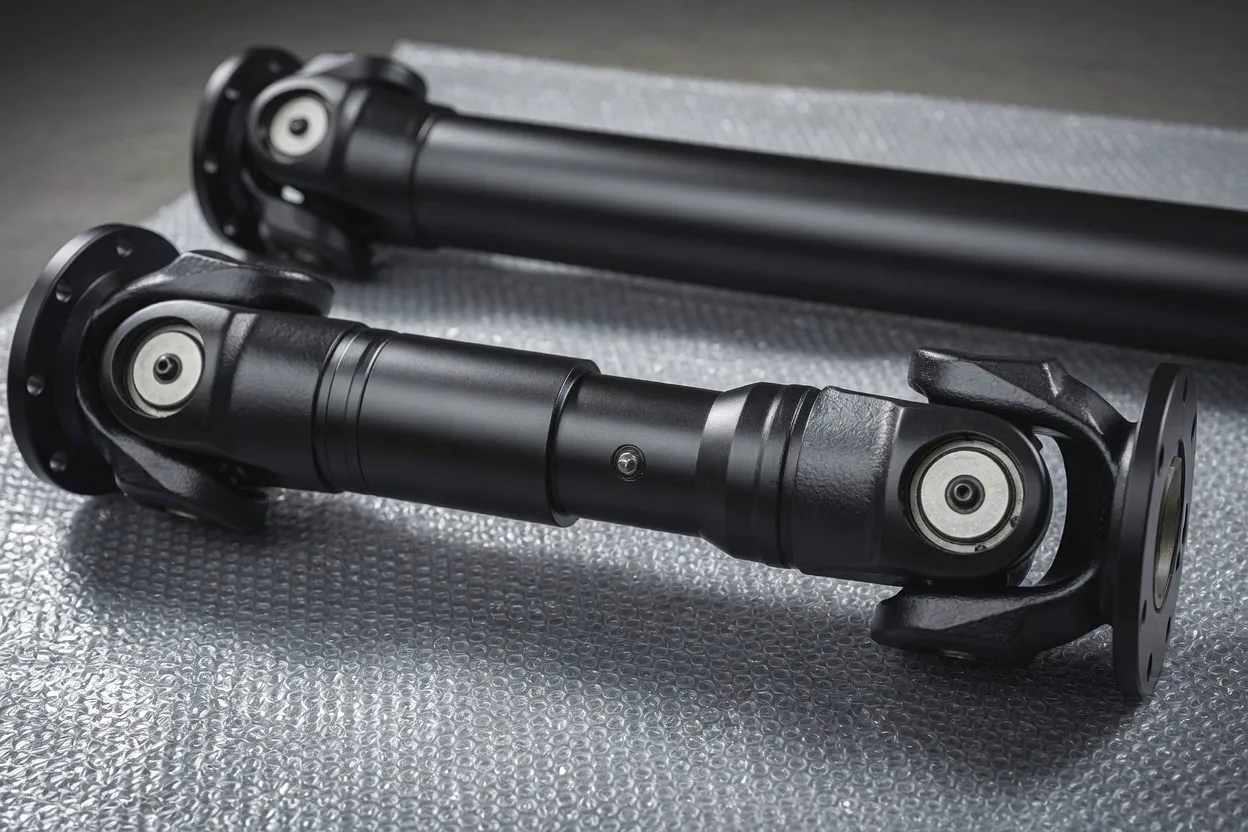
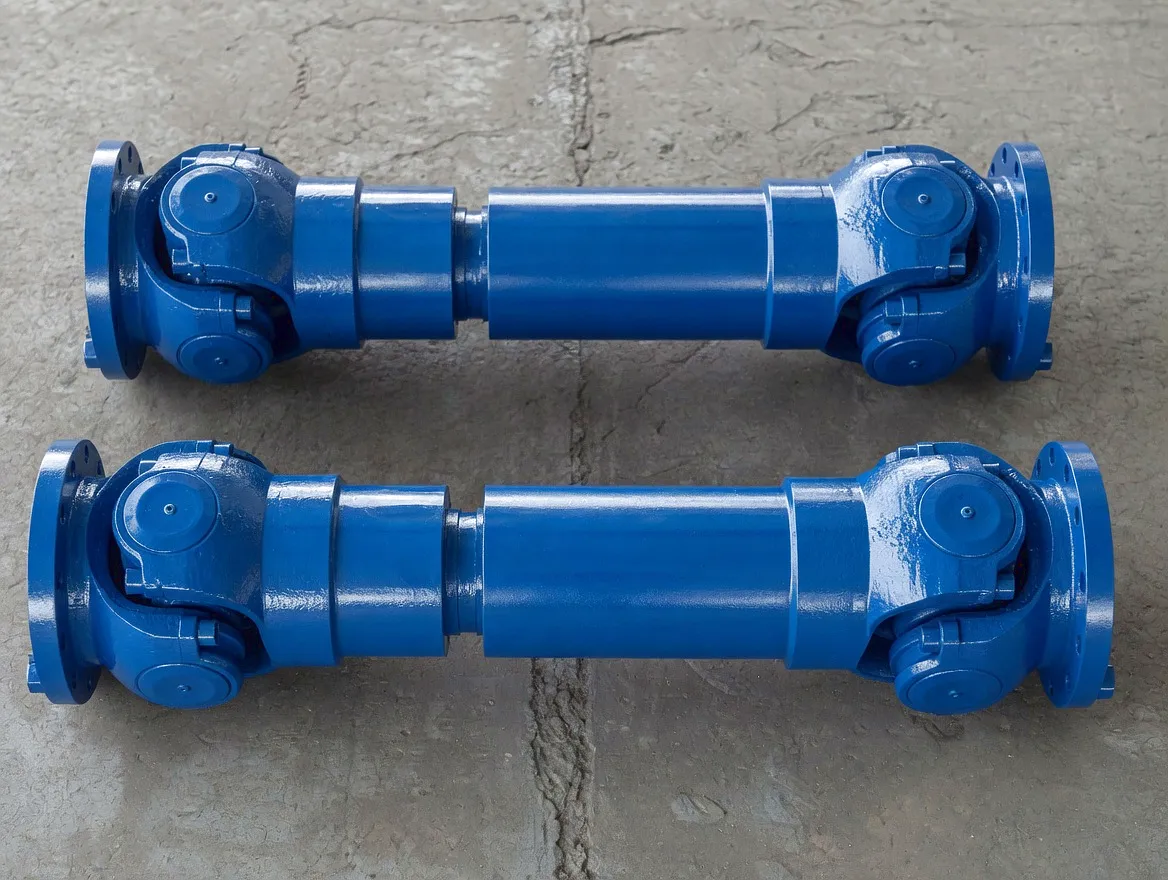
The cross is the heart of the coupling. For CSP applications, Ever Power uses 20CrMnTi or 42CrMo4 chromium-molybdenum alloy steel, case-hardened to 58–62 HRC at the needle roller surfaces while maintaining a tough, ductile core. This combination resists the rolling contact fatigue that would otherwise limit bearing life under decades of daily tracking cycles. For marine or coastal CSP installations, 316L stainless steel spiders are available with modified surface hardening schedules.
Yoke Forks
Yoke forks are precision forged from 40Cr or 42CrMo4 steel and then machined to tolerance grade IT6 on all bearing bore surfaces. Forging eliminates the internal grain discontinuities that make castings vulnerable to fatigue crack initiation under fluctuating bending loads. CSP tracking drives rarely impose high rotational speeds (typically 0.001 to 0.1 rpm during tracking, with faster slew rates during stow manoeuvres), but the oscillating bending moment imposed by gravity on a large collector panel makes fatigue resistance the governing design criterion — not shear stress at peak torque.
Seals and Lubrication
Perhaps the single most underappreciated aspect of long-life CSP cardan coupling design is the seal and lubrication architecture. Desert environments combine abrasive dust, high UV exposure, extreme diurnal temperature swings, and in some locations high humidity during seasonal rains. The needle roller bearing cups inside the cross must remain isolated from contamination and consistently lubricated for up to 30 years. Ever Power uses triple-lip FKM (Viton) shaft seals rated to 200°C, combined with NLGI Grade 2 lithium complex grease with a dropping point above 260°C, ensuring film integrity across all expected drive-zone temperatures.
Why Cardan Coupling Technology Outperforms the Alternatives in CSP
CSP engineers evaluating drive train options for SCA inter-joint connections and dish elevation drives often consider flexible beam couplings, bellows couplings, rubber jaw couplings, and hydraulic rotary joints as alternatives. Each has legitimate applications elsewhere in mechanical engineering, but none matches the cardan coupling’s combination of angular range, torque density, and axial slide freedom for CSP-specific duty cycles.
Flexible beam couplings can handle angular and axial misalignment, but their torque capacity and angular range are both relatively limited. At the torque levels encountered in multi-SCA drive shafts — potentially several kilonewton-metres — the beam coupling’s cross-section becomes impractically large. Bellows couplings offer excellent constant-velocity transmission but have very limited angular range (typically under 10°) and are vulnerable to fatigue failure if operated at angles close to their rated maximum. Rubber jaw couplings are not suitable for long-term outdoor exposure without UV degradation, and their damping characteristics change significantly across the temperature range a CSP installation experiences between cold startup and mid-summer noon operation.
The cardan coupling’s combination of all-steel construction, high torque density, large angular range, integrated axial slide capability, and established service history in demanding outdoor industrial applications — from agricultural machinery and steel rolling mills to marine propeller shafts — makes it the natural choice for CSP tracking drives. The engineering challenge is not selecting the coupling type; it is specifying the correct size, material grade, lubrication system, and surface treatment for the specific application.
Single joints up to 45°; double-Cardan CV joints to 90° continuous working angle — no other coupling type matches this range at high torque.
All-steel construction and high-temperature grease ensure reliable operation across the full diurnal temperature range from -30°C to +120°C without dimensional drift.
Properly specified and maintained cardan couplings routinely achieve 25–30 year service lives in outdoor drive applications, aligning with CSP project finance requirements.
Compact cross-section relative to torque capacity minimises weight penalty on rotating collector structures, where every kilogram of coupling mass increases drive motor sizing requirements.

Client Success Cases
“The drop-in fit was perfect — our O&M team could install the replacement cardan couplings during a planned maintenance window without any site machining. Three solar seasons later, no issues whatsoever. The grease nipple placement is actually better than the originals.”
“We were building a prototype dish/Stirling concentrator for a UK university research programme and needed a double-Cardan joint rated to 90° working angle with constant velocity output. Ever Power was the only supplier that understood the requirement immediately, quoted correctly on the first pass, and delivered in eight weeks. Exactly what a research project timeline needs.”
“We source cardan couplings for CSP equipment manufactured in the UK for export. Ever Power handles our documentation requirements — CE marking, material certs, dimensional inspection reports — without the usual supplier friction. Competitive pricing and reliable logistics to our Birmingham warehouse. A genuine long-term supply partner.”
Ever Power: Custom Cardan Coupling Manufacturing for CSP Applications
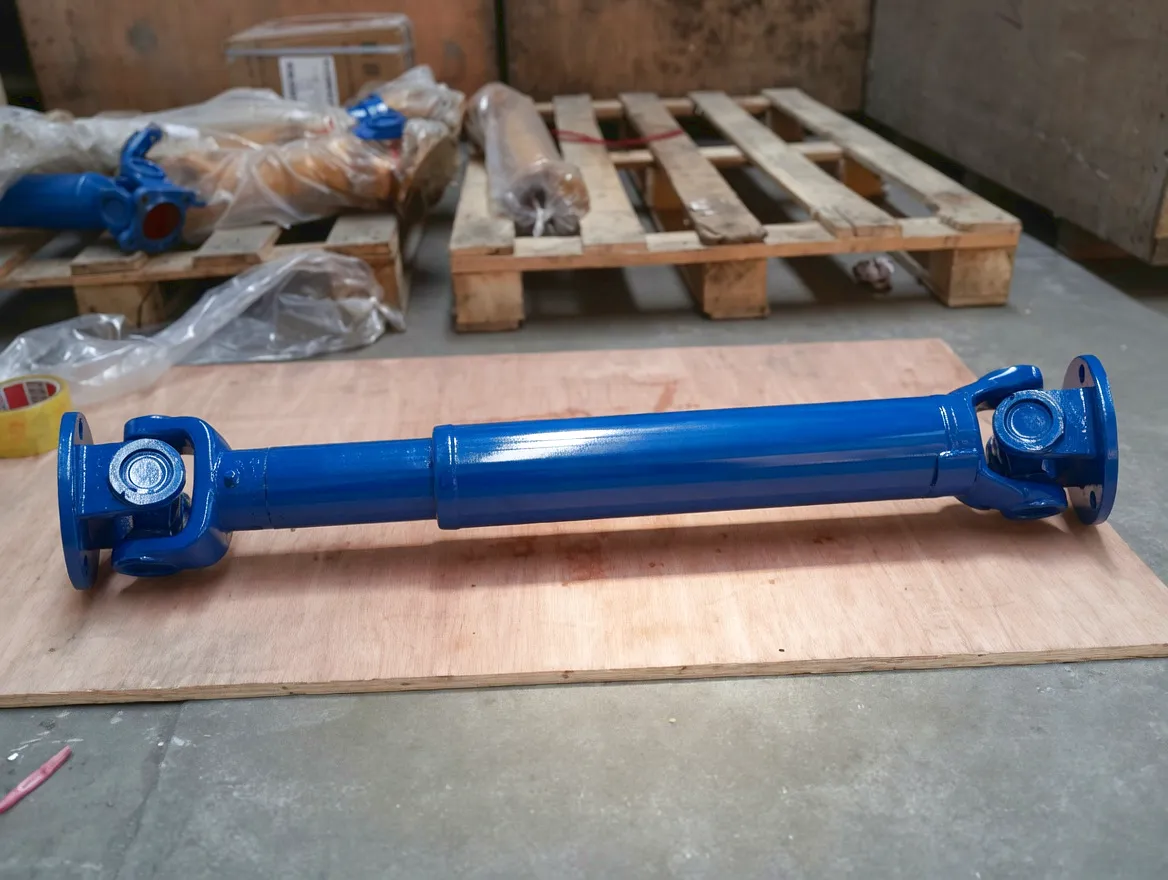
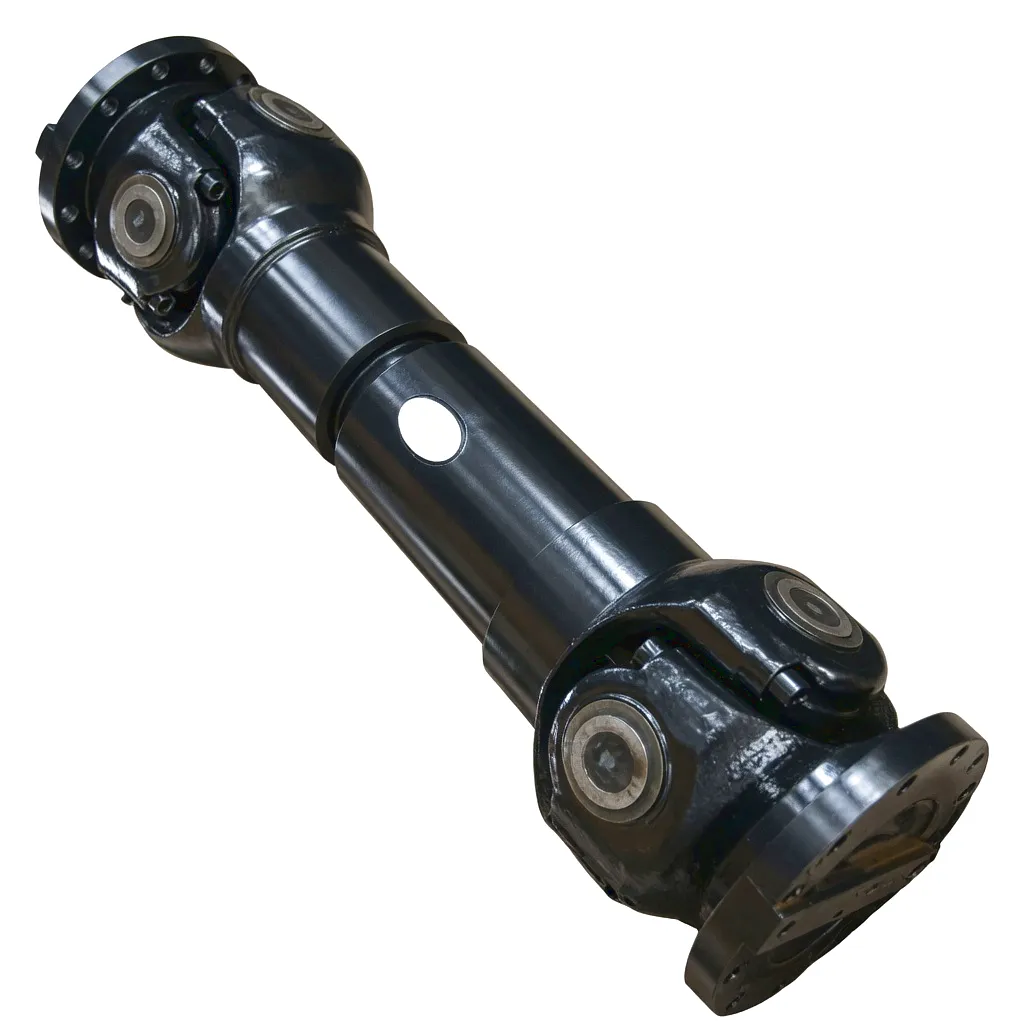 Standard catalogue couplings rarely satisfy the full specification matrix of a CSP project. Bore sizes, keyway configurations, flange bolt patterns, protective coating systems, grease port positions, and misalignment range all tend to be project-specific, determined by the collector manufacturer’s interface design and the O&M contractor’s maintenance protocol. Ever Power has built its business around this reality: the ability to engineer and manufacture bespoke cardan coupling assemblies to customer drawings, with prototype turnaround in as little as six weeks and series production lead times negotiated to match project schedules.
Our manufacturing facility operates CNC turning, CNC milling, gear cutting, and precision grinding equipment capable of machining cardan coupling components to IT5 tolerance grades. In-house heat treatment — carburising, case hardening, and tempering — is performed under controlled atmosphere to ISO 2639 standards, with hardness verification on 100% of cross spider components. Surface treatment options include hot-dip galvanising, zinc-nickel electroplating, Dacromet coating, and epoxy primer systems, selected based on the target deployment environment.
For UK clients in particular, Ever Power supports CE marking documentation, provides EN 10204 Type 3.1 material certificates as standard, and can generate dimensional inspection reports per your incoming inspection protocol. We understand that UK engineering procurement contractors sourcing hardware for export CSP projects need supplier documentation that satisfies both their own QA systems and the requirements of the project’s lender’s technical adviser. Our quality management system operates under ISO 9001 certification, with process audits conducted annually by a third-party registrar.
The customisation service extends beyond dimensional engineering. Ever Power applications engineers will review your drive-train layout, calculate the required coupling torque rating accounting for service factors, dynamic loads, and shock factors from emergency stow manoeuvres, and recommend the appropriate size from our modular series — or design a one-off solution where no standard size fits. We have handled single-unit prototype orders for research institutions and multi-hundred-unit framework agreements for O&M contractors in the same production environment, with the same quality management oversight applied to every order regardless of quantity.
Any bore diameter; DIN, JIS, or customer-defined keyway profiles
Single and double-joint designs to any specified maximum working angle
EN 10204 Type 3.1 certificates; hardness test reports on every batch
Direct shipping to UK addresses; DDP Incoterms available for hassle-free import
Send us a sample or drawing — we create a drop-in equivalent with full documentation
Serving the UK Renewable Engineering Supply Chain
The United Kingdom has built one of Europe’s most sophisticated renewable energy supply chains, with significant concentrations of engineering design offices, procurement contractors, and specialist component distributors in the South East, the Midlands, and Scotland. While the UK’s solar irradiance makes large-scale domestic CSP less economically competitive than wind or PV, UK-based engineering firms are deeply involved in the design, procurement, and commissioning of CSP projects in Spain, Morocco, South Africa, the Middle East, and India — all markets where cardan coupling reliability in extreme-temperature environments is non-negotiable.
Engineering consultancies in London and Manchester routinely specify mechanical components for CSP projects under development in Spanish Extremadura, the Moroccan Sahara, and South African Karoo. Procurement teams in Birmingham and Bristol are sourcing drivetrain hardware against project bills of materials with CE marking and ISO 9001 compliance as standard requirements. Research institutions in Loughborough, Cranfield, and Sheffield conduct CSP prototype work that requires small quantities of high-specification cardan couplings to exact dimensional tolerances with full material documentation.
Ever Power’s established logistics relationship with UK freight forwarders, combined with our capacity to provide DDP (Delivered Duty Paid) Incoterms pricing that eliminates customs clearance complexity, makes us a practical sourcing option for all of these UK-based buyers. Whether you need 1 prototype unit for a test rig in Loughborough or 500 production units for a Spanish CSP retrofit project, the procurement process is straightforward: email your specification to [email protected], receive a technical response and quotation within one business day, and proceed to order with confidence in our quality documentation and delivery reliability.
Frequently Asked Questions
Ready to Specify the Right Cardan Coupling for Your CSP Project?
Share your technical requirements with our engineering team. We provide a technical proposal and quotation within one business day — no obligation, no sales pressure.