Calculating Torque Capacity and Rated Load for Cardan Couplings
A comprehensive engineering reference for mechanical designers, procurement engineers, and maintenance professionals across UK heavy industry and precision manufacturing sectors.
⚙ Industrial Power Transmission
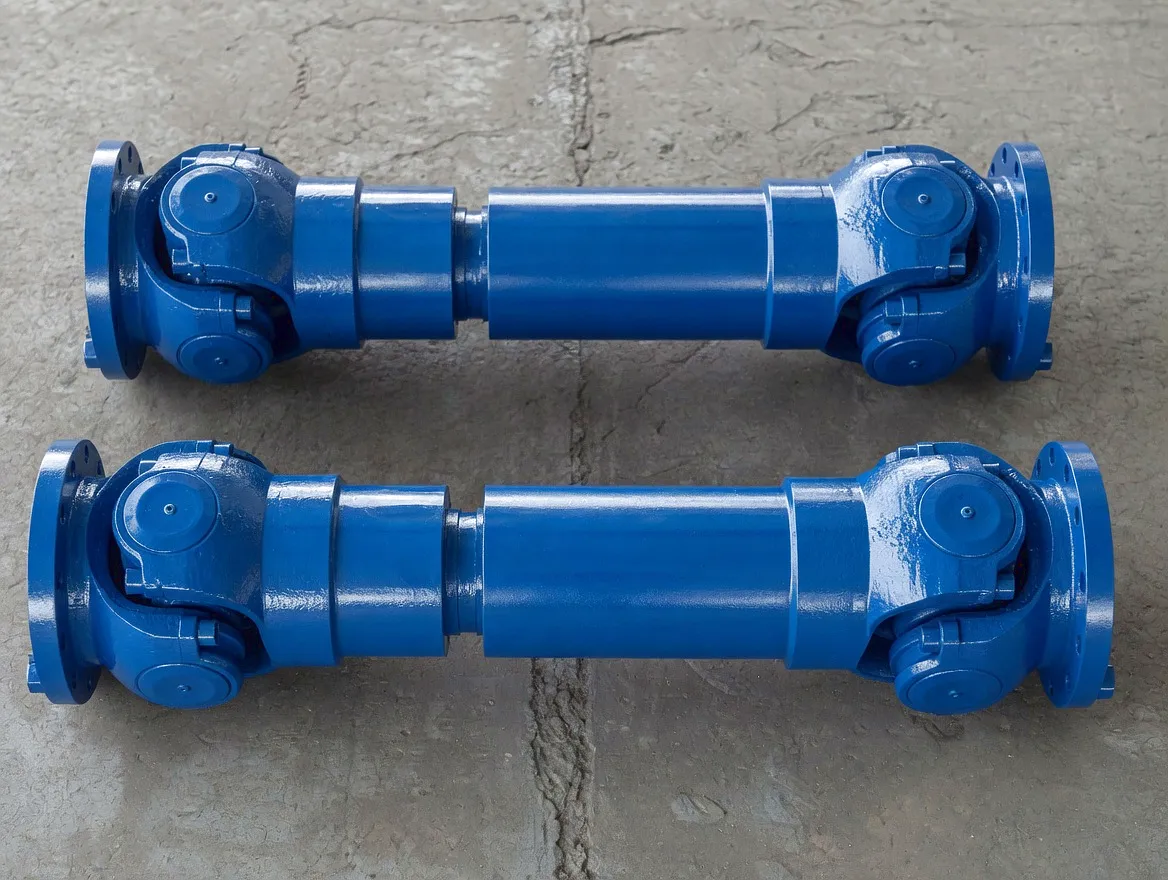
When engineers specify a cardan coupling for a new drive system, the most critical calculation they face is determining whether that coupling can safely handle the torque demand of the application. Get this wrong, and the consequences range from accelerated wear and unexpected downtime to catastrophic shaft failure — outcomes that carry serious cost implications across industries from steel rolling mills in Sheffield to paper processing plants in the Midlands. Understanding how torque capacity and rated load interact within the design envelope of a cardan coupling is not simply an academic exercise; it is the difference between a reliable, long-service drivetrain and a recurring maintenance headache that drains operational budgets quarter after quarter.
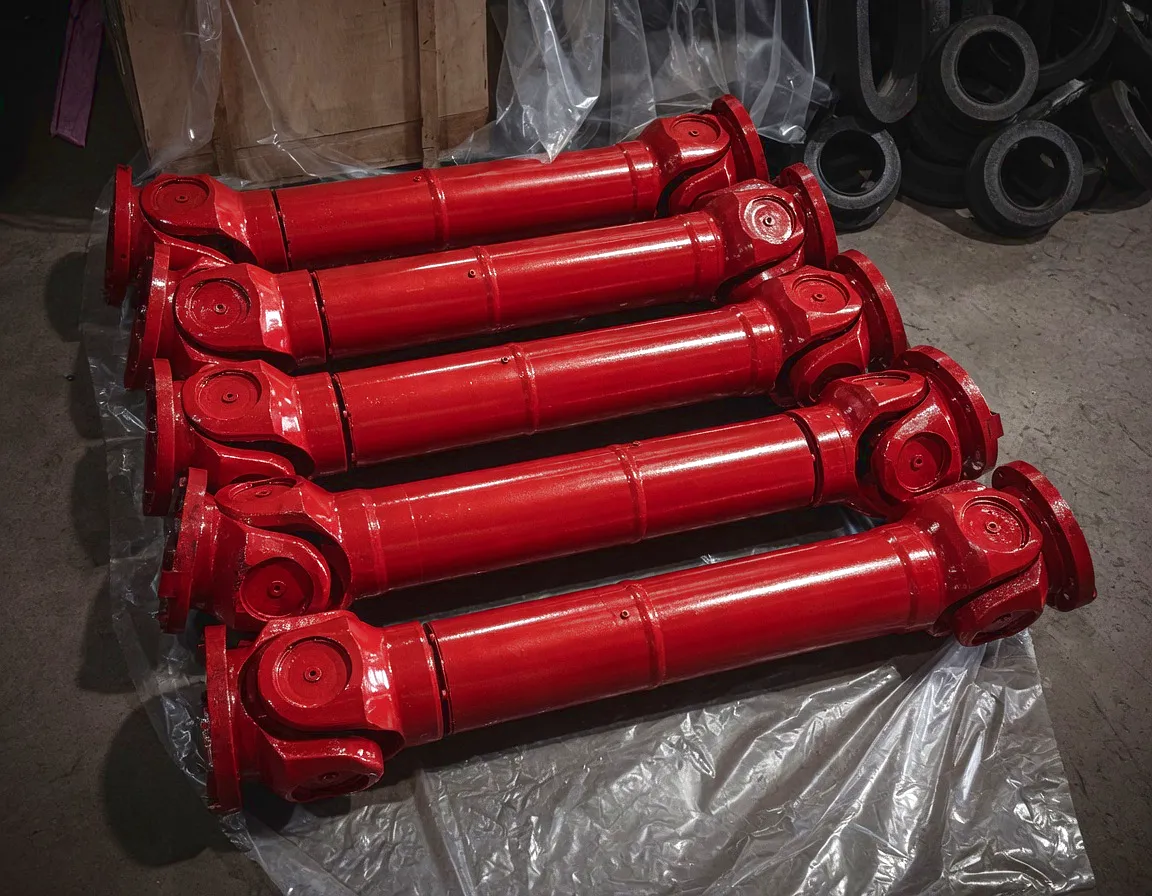
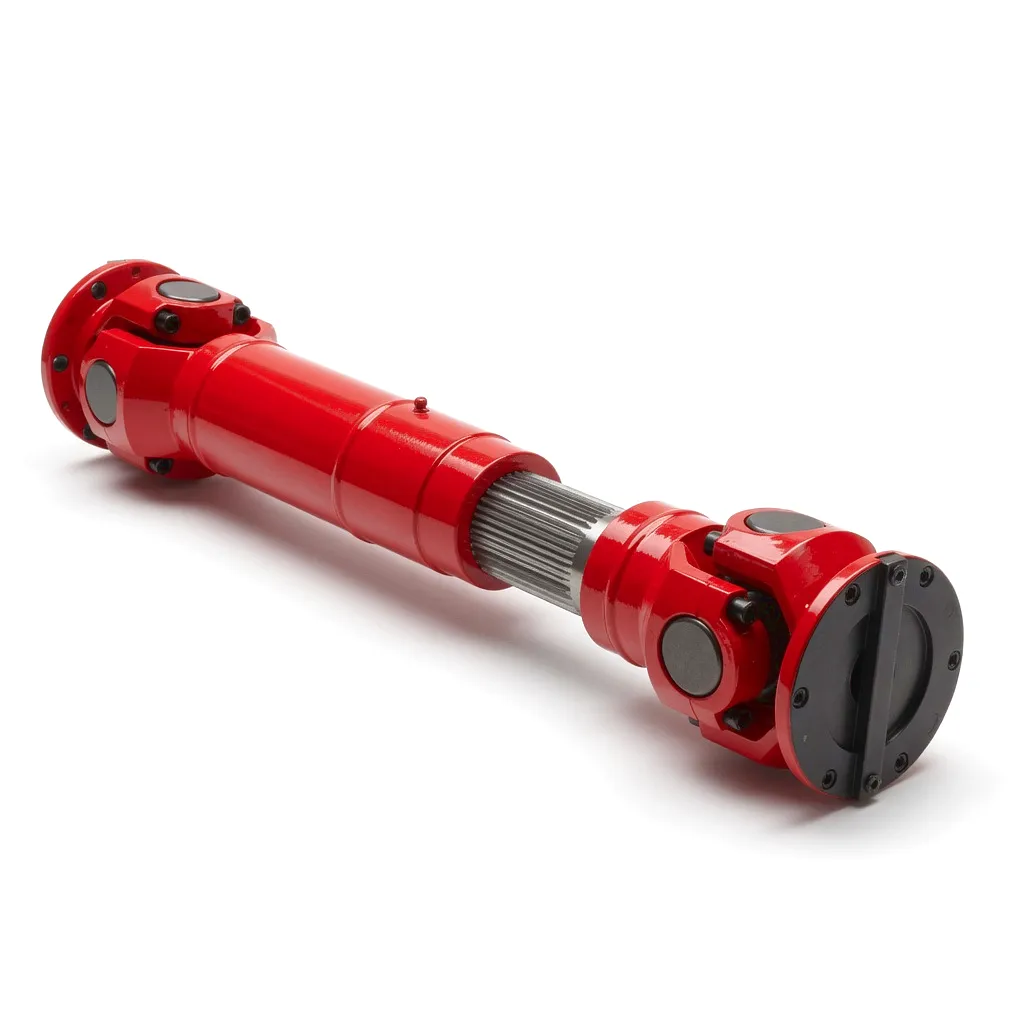
Cardan couplings — also widely referred to as universal joints or universal couplings — transmit rotational torque between two shafts that are not collinear, allowing for angular misalignment that would destroy a rigid coupling in minutes. The operating principle relies on a cross-shaped journal bearing assembly seated between two yoke forks. As the input shaft rotates, the cross transmits torque to the output shaft through the journal trunnions, accommodating angular offsets that commonly range from a fraction of a degree up to 45° depending on the coupling series. The genius of this geometry, developed from Girolamo Cardano’s sixteenth-century conceptual work and refined over centuries of industrial engineering, is that it remains mechanically elegant while supporting enormous torque loads when properly sized. This article walks through every calculation step a competent engineer needs, from identifying the rated torque value on a manufacturer’s datasheet to accounting for dynamic service factors and temperature corrections.
⚙
How the Torque Transmission Principle Actually Works
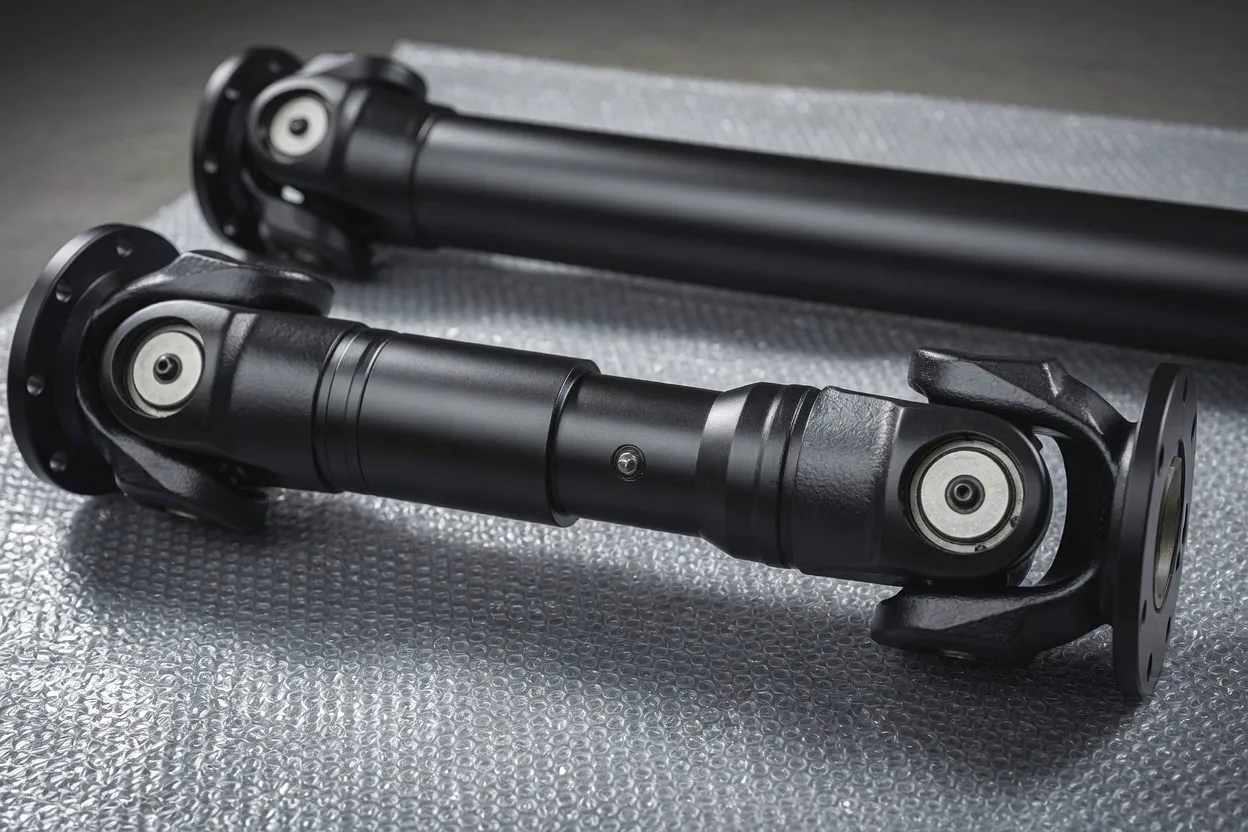
The fundamental operating principle of a cardan coupling rests on the geometry of two yoke forks connected by a spider cross. The input yoke is fixed to the driving shaft, and the output yoke is fixed to the driven shaft. Both yokes grip two opposing trunnions of the spider cross using needle roller or journal bearings. When the input shaft applies a torque, that load is transferred through the cross to the output yoke via a lever arm defined by the distance between trunnion centrelines — a dimension engineers call the trunnion circle radius. The torque transmitted at any instant equals the tangential force at the trunnion multiplied by this radius, following the straightforward mechanical relationship: T = F × r. This simplicity, however, conceals a critically important characteristic: because the spider cross rotates about two axes simultaneously during angular operation, the velocity ratio between input and output shafts is not constant across a single revolution. It fluctuates in a sinusoidal pattern related to the operating angle, a phenomenon known as the second-order velocity variation or Cardan error. Two cardan couplings arranged in a double-joint configuration with equal and opposed operating angles cancel out this velocity fluctuation, producing a constant velocity output — a fundamental design requirement for precision drive systems in automotive propshafts and precision machine tools alike.
The torque capacity of any cardan coupling is ultimately governed by the bearing contact stress at the trunnion journal surfaces. As torque increases, so does the force pressing the trunnion against its needle bearing complement. Exceeding the rated torque leads to accelerated surface fatigue, pitting, and eventual bearing seizure. Engineers must therefore identify not only the nominal transmitted torque but also the peak torque under transient conditions — motor start-up, jam protection trips, or gear-shifting loads — which can briefly exceed the nominal value by factors of two to five. Manufacturer datasheets typically express three distinct torque ratings: the rated torque Tn representing continuous-duty capacity, the maximum dynamic torque Tmax representing acceptable peak loads, and the static breaking torque Ts representing the absolute destruction boundary. All sizing calculations must be anchored to these three reference figures.
Core Materials and Their Role in Torque Rating
The yoke bodies and shaft flanges of heavy-duty cardan couplings are almost universally machined from chromium-molybdenum alloy steel grades such as 42CrMo4 or equivalent AISI 4140. After forging, these components undergo quench-and-temper heat treatment to achieve tensile strengths in the range of 900 to 1100 MPa. The high toughness of this material class provides excellent resistance to fatigue crack initiation under fluctuating bending loads — a constant reality in angulated drive arrangements. The chromium content elevates hardness and wear resistance at journal contact zones, while molybdenum contributes to retained strength at elevated operating temperatures common in foundry and rolling mill environments around Sheffield and the West Midlands.
The spider cross — the heart of the cardan coupling — faces the most severe contact stresses in the assembly. It is typically forged from 20CrMnTi or 20MnCr5 case-hardening steel, then carburised to produce a surface hardness of 58–62 HRC on the trunnion journals. This combination of a hard, wear-resistant skin over a tough, ductile core is precisely what’s needed to resist the Hertzian contact fatigue that limits bearing life. The trunnion surface finish is ground to Ra 0.4 µm or better, ensuring optimal oil film formation across the needle bearing elements during both low-speed high-torque conditions and high-speed light-load operation. Precision grinding also minimises dimensional variance, which directly translates to more predictable dynamic balance characteristics at high rotational speeds.
Modern cardan couplings use full-complement or caged needle roller bearing sets at each trunnion position. Needle rollers provide a very high load-carrying capacity relative to their radial envelope, making them ideal in the confined geometry of the joint. Bearing steel (100Cr6 / AISI 52100) is standard for the rollers and cups, through-hardened to 61–65 HRC. The bearing dynamic load rating C is one of the primary inputs to torque capacity calculation: by working backward from the bearing’s basic dynamic load rating through contact angle, operating angle, and desired life hours, the designer arrives at the maximum permissible radial force on the trunnion — and from that, the maximum transmittable torque. This linkage between bearing specification and coupling torque rating is why cardan coupling manufacturers publish torque figures that are fundamentally bearing-life-limited rather than material-strength-limited in normal industrial size ranges.
Material selection for sealing elements significantly affects the maximum rated torque under sustained operation. Heavy-duty cardan couplings employ lip seals or labyrinth seals manufactured from fluoroelastomer (FKM) or HNBR compounds that retain flexibility and sealing integrity across the full operating temperature range of -40°C to +150°C. Failed seals allow lubricant loss and contamination ingress, rapidly degrading bearing film strength and reducing effective torque capacity in service. Grease specification is equally critical: lithium-complex or polyurea greases with EP (extreme pressure) additives are specified for most industrial cardan coupling applications, with NLGI Grade 2 being the standard for most UK industrial temperature environments. Some very-high-load applications in steel plants near Birmingham employ oil-bath lubrication to ensure adequate film thickness at the maximum operating torque.
The Step-by-Step Torque Calculation Methodology
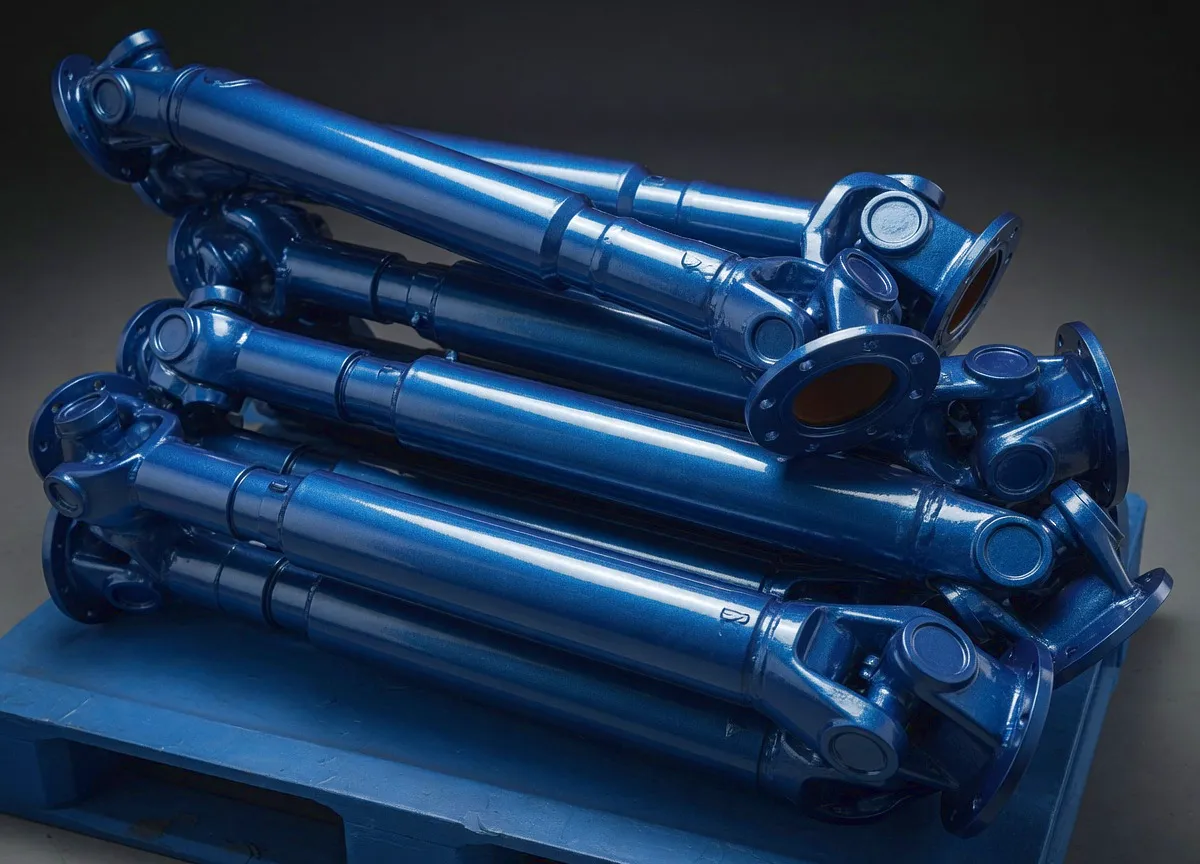
Sizing a cardan coupling correctly requires a structured calculation sequence that builds from motor nameplate data through to the final safety margin check. Engineers who skip steps in this process — particularly the service factor and angle correction stages — frequently end up with under-rated or heavily over-rated couplings, both of which carry cost and performance penalties. The approach presented here reflects established practice in UK engineering, consistent with guidance from the British Standard BS 3550 covering universal joints, and aligns with European load rating methodologies widely adopted since harmonisation of CE machinery standards. The starting point is always the nominal power transmitted, from which the nominal torque is derived before any adjustment factors are applied.
Step 1 — Nominal Torque from Power: The nominal transmitted torque Tn is calculated from the drive motor’s rated power P (in watts) and the shaft rotational speed n (in rpm) using the relationship: Tn = (P × 9550) / n, where the result is in Newton-metres. For example, a 75 kW motor running at 960 rpm produces a nominal shaft torque of (75,000 × 9.549) / 960 = approximately 745 N·m. This figure represents the average torque under full-load, steady-state operating conditions and forms the baseline from which all subsequent calculations proceed. Engineers should use the actual operating speed at the coupling rather than motor synchronous speed to account for slip in induction motor drives.
Step 2 — Apply the Service Factor (Ks): The nominal torque must be multiplied by a service factor Ks that accounts for the dynamic loading character of the application. This factor captures start-stop frequency, shock loading, and load uniformity. For conveyors and fans with smooth, uniform load profiles, Ks typically ranges from 1.0 to 1.25. For crane drives, metal rolling mills, or mining equipment with frequent heavy shock loads — conditions common in plants across Sheffield’s Don Valley — Ks values of 2.0 to 3.5 are standard. The design torque Td = Tn × Ks must be within the coupling’s published rated torque Tr at the stated operating angle. Failure to apply an appropriate Ks is the single most common cause of premature cardan coupling failure in field installations, regardless of industry sector.
Step 3 — Angle Correction Factor (Ka): A cardan coupling’s rated torque decreases as the operating angle increases. Published torque ratings typically refer to a reference angle (often 3° or 5° depending on manufacturer convention). For angles above this reference, the capacity is reduced according to the angle correction formula: Tr(actual) = Tr(ref) × cos²(beta), where beta is the operating angle. At 10°, for instance, the available torque is approximately 96.6% of the reference-angle value. At 20°, this drops to about 88.3%, and at 30° it falls to 75%. Engineers operating cardan couplings at large angles must apply this correction rigorously; many datasheets include angle correction charts, but verification by formula is good practice when operating near the rated limit of any coupling series.
Step 4 — Speed Correction and Bearing Life Verification: Cardan coupling datasheets generally publish rated torque at a reference speed. When the operating speed differs significantly from this reference, a speed correction factor applies because bearing fatigue life is strongly speed-dependent (bearing L10 life is inversely proportional to speed raised to the power of the load-life exponent). For applications running well above the reference speed, the permissible torque decreases. Conversely, very low-speed high-torque applications may be able to operate above the catalogue torque if a shortened bearing life target is acceptable and confirmed by calculation. Always verify that the calculated bearing L10 life at the actual design torque and speed meets the minimum acceptable value for the installation — typically 10,000 to 30,000 hours for industrial plant in the UK manufacturing sector.
Engineering Advantages That Define Cardan Coupling Performance
The cardan coupling’s enduring dominance in heavy industrial drive systems is not the result of tradition alone. Its combination of mechanical properties delivers a performance profile that no other coupling type matches across the full range of demanding power transmission requirements. Understanding these advantages helps design engineers make informed coupling selection decisions and helps procurement teams evaluate competing supplier proposals against meaningful technical criteria rather than catalogue weight alone.
Unlike disc or jaw flexible couplings that tolerate only fractional-degree offsets, a well-designed cardan coupling accepts operating angles from 1° to 45° depending on the series. This makes it uniquely suited to drive arrangements where geometric constraints prevent perfect shaft alignment — common in mobile equipment, articulated machinery, and retrofitted drive systems in older industrial buildings across Birmingham’s manufacturing belt.
Alloy steel construction combined with optimised forged geometry allows cardan couplings to transmit very large torques — reaching into the millions of Newton-metres for rolling mill drives — while keeping rotating mass to the minimum needed to meet the design life target. Lower rotating inertia reduces start-up motor current demand and improves system response time, delivering measurable energy efficiency gains in drive systems that cycle frequently through the working shift.
Modern sealed and pre-greased cardan coupling assemblies can achieve continuous service intervals exceeding 5,000 hours between planned lubrication events in clean environments. In continuous process industries like paper, film, and chemical manufacturing — sectors with significant operations in northern England — this reduced maintenance frequency directly translates into higher line availability and lower planned-maintenance labour costs over the asset lifecycle.
Certain cardan coupling configurations incorporate a sliding splined connection between the two joint halves, allowing the effective drive shaft length to vary by tens of millimetres under thermal expansion or load-induced shaft movement. This axial float capability prevents the generation of destructive compressive or tensile forces in the drivetrain — a particularly valuable feature in very long drive arrangements such as rolling mill table drives where thermal expansion of the mill housing generates significant axial displacement.
Cardan couplings are available in configurations proven for rotational speeds from near-zero (heavy torque, slow-moving roll drives) up to 10,000 rpm in balanced precision versions for high-speed machinery. Operating temperatures from -40°C in outdoor applications to sustained +200°C in heat-treat furnace drive systems can be handled through appropriate material and lubricant selection. This versatility means a single coupling design family can address a manufacturing plant’s entire drive inventory.
Product Technical and Performance Parameters Table
The reference data below covers the standard performance envelope for industrial cardan coupling series from light-duty machine tool applications through to heavy-duty rolling mill configurations. Values represent typical design-centre figures; actual ratings for specific Ever Power models are confirmed through individual product datasheets available on request.
| Parameter | Light Duty | Medium Duty | Heavy Duty | Super Heavy |
|---|---|---|---|---|
| Rated Torque Tn (N·m) | 50 – 500 | 500 – 10,000 | 10,000 – 200,000 | 200,000 – 4,000,000 |
| Max Operating Angle (°) | up to 45° | up to 35° | up to 25° | up to 15° |
| Max Speed (rpm) | up to 10,000 | up to 3,000 | up to 1,500 | up to 500 |
| Yoke Body Material | Cast iron / 40Cr | 42CrMo4 | 42CrMo4 Forged | 34CrNiMo6 Forged |
| Spider Cross Material | 20Cr2Ni4A | 20CrMnTi | 20MnCr5 | 18CrNiMo7-6 |
| Trunnion Surface Hardness | 56–60 HRC | 58–62 HRC | 60–64 HRC | 60–64 HRC |
| Service Temperature Range | -20°C to +100°C | -30°C to +120°C | -40°C to +150°C | -40°C to +200°C |
| Design Life (L10, hours) | 5,000 – 8,000 | 8,000 – 15,000 | 15,000 – 30,000 | 30,000 – 80,000 |
| Lubrication Type | Grease NLGI 2 | Grease NLGI 2 EP | Grease NLGI 1–2 EP | Oil bath / EP grease |
| Typical Service Factor Range | 1.0 – 1.5 | 1.25 – 2.0 | 2.0 – 3.0 | 2.5 – 4.0 |
| Balancing Grade | G16 – G6.3 | G6.3 – G2.5 | G2.5 – G1.0 | G1.0 – G0.4 |
Industrial Application Scenarios Across UK Manufacturing
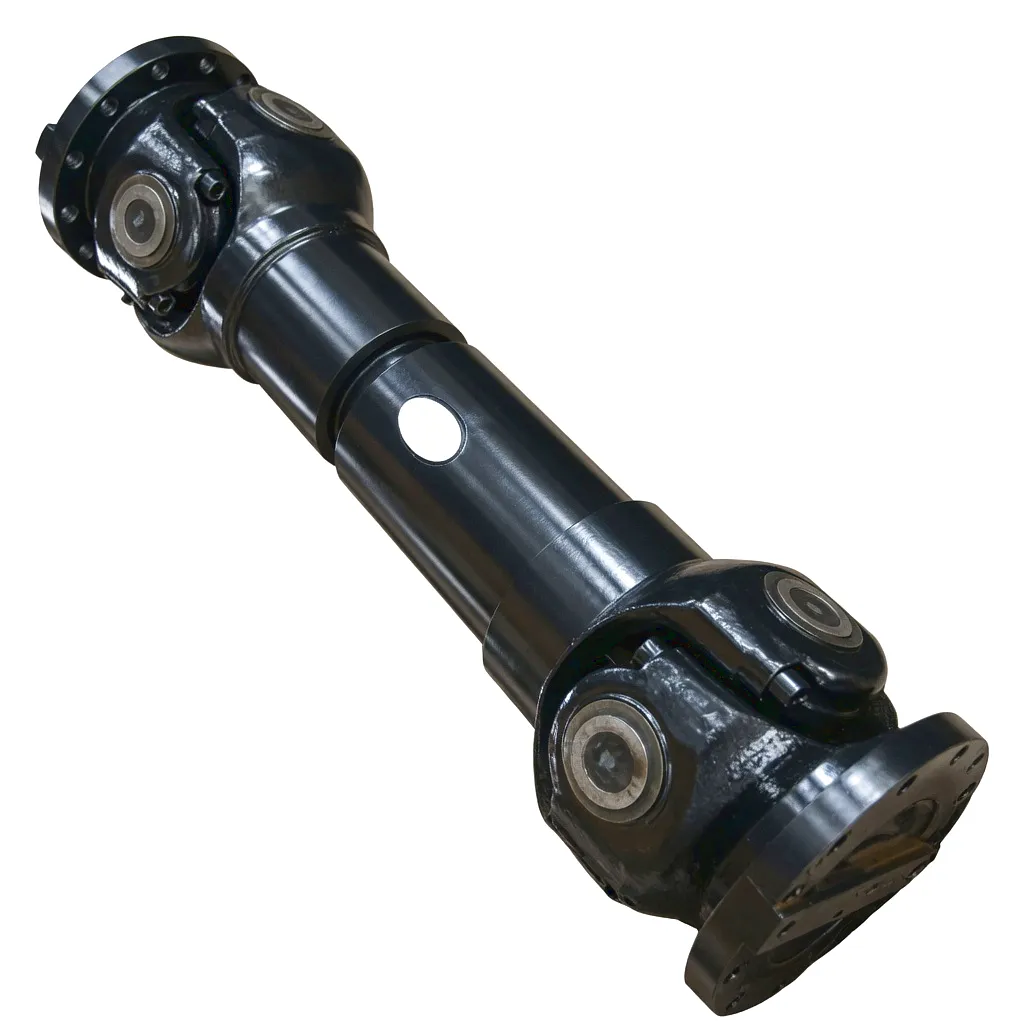
Across the breadth of UK manufacturing and heavy industry, cardan couplings appear wherever a drive system must transmit substantial torque across misaligned shaft axes. The following application areas represent the dominant industrial uses, each with its own demanding combination of torque, angle, and environmental requirements that has made the cardan coupling the coupling of choice for generations of British mechanical engineers.
Steel rolling mills remain the most demanding application for heavy-duty cardan couplings anywhere in industry. In plants around Sheffield’s advanced manufacturing corridor, rolling mill cardan couplings must transmit torques exceeding 500,000 N·m through continuous reversing cycles under extreme shock loads as billets enter the roll gap. Precise torque rating is critical; under-rating causes rapid cross bearing failure, while over-rating results in unnecessarily high coupling mass that strains the roll drive spindle bearings.
In aggregate quarrying operations across Wales and northern England, cardan couplings power conveyor drives, crusher mainshafts, and screen vibrators in some of the harshest duty environments imaginable. Constant abrasive dust, heavy shock loading from oversized material, and frequent reversals under load demand couplings rated to service factors as high as 3.5. The ability to absorb angular misalignment also compensates for foundation settling in older quarry infrastructure where base frame alignment drifts over time.
The automotive manufacturing cluster around Birmingham and Coventry relies on cardan couplings in vehicle propshafts and in the machine tools used to produce automotive components. Press drives, transfer line spindle drives, and roll-forming machinery all employ cardan couplings precisely sized to handle the defined torque duty cycle. In vehicle propshafts, double-Cardan constant-velocity joint configurations eliminate the velocity fluctuation that would otherwise produce driveline shudder perceptible to vehicle occupants at low speed.
Paper machines and large-format printing press drives across Lancashire require cardan couplings that offer low-angle operation (typically below 5°) at very precise torque ratings to maintain consistent roll pressure and web tension. Even minor variations in transmitted torque cause visible print quality defects or web breaks that can cost tens of thousands of pounds per incident in waste and downtime. Cardan couplings in these applications are balanced to G1.0 or better and undergo factory torque verification against certified load cells before delivery.
Scotland’s offshore supply chain and marine engineering yards around Glasgow, Aberdeen, and Dundee have historically relied on heavy-duty cardan couplings in deck machinery, winch drives, and propulsion shafting. Marine applications demand couplings with enhanced corrosion protection — zinc-rich primer, epoxy topcoat, and stainless steel fasteners as minimum — and material certification to Lloyd’s, DNV, or equivalent classification society standards. The rated torque calculation for marine applications incorporates dynamic load factors for vessel pitch and roll movements that amplify the torque peaks well beyond steady propulsion demand.
Cardan couplings appear throughout the drivelines of excavators, road planers, tunnel boring machines, and pile driving rigs deployed on construction sites across the UK from the HS2 corridor works to infrastructure projects in London and the South East. These mobile applications subject the coupling to compound misalignment from both angular offset and lateral machine movement simultaneously. The torque rating must account for very high starting torques as the work attachment bites into the substrate, often reaching five times the running torque, reinforcing the importance of the service factor calculation in any correct coupling selection process.
Ever Power — Precision Manufacturing and Customisation Capability
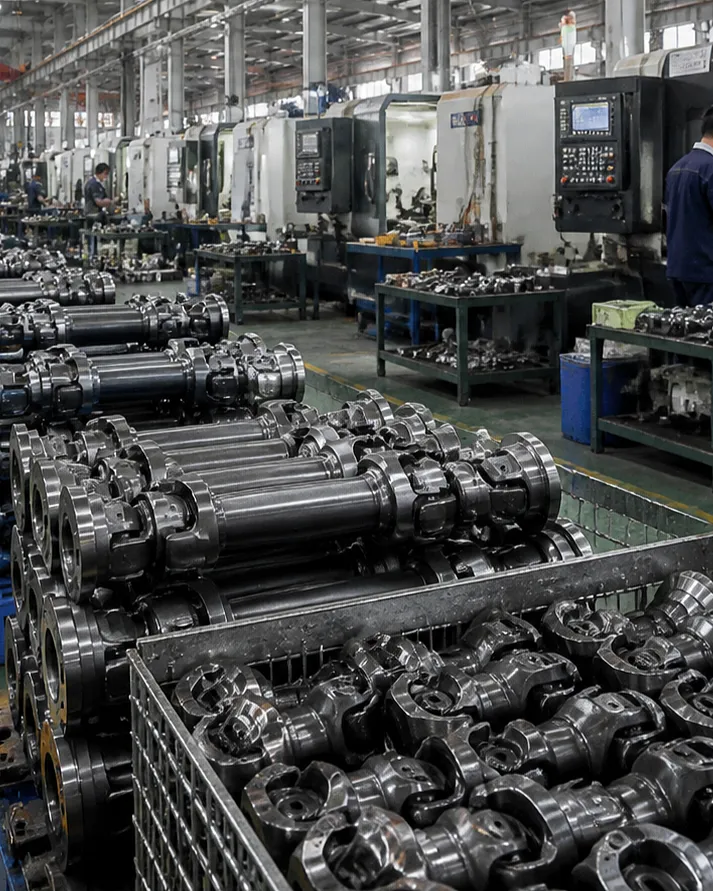
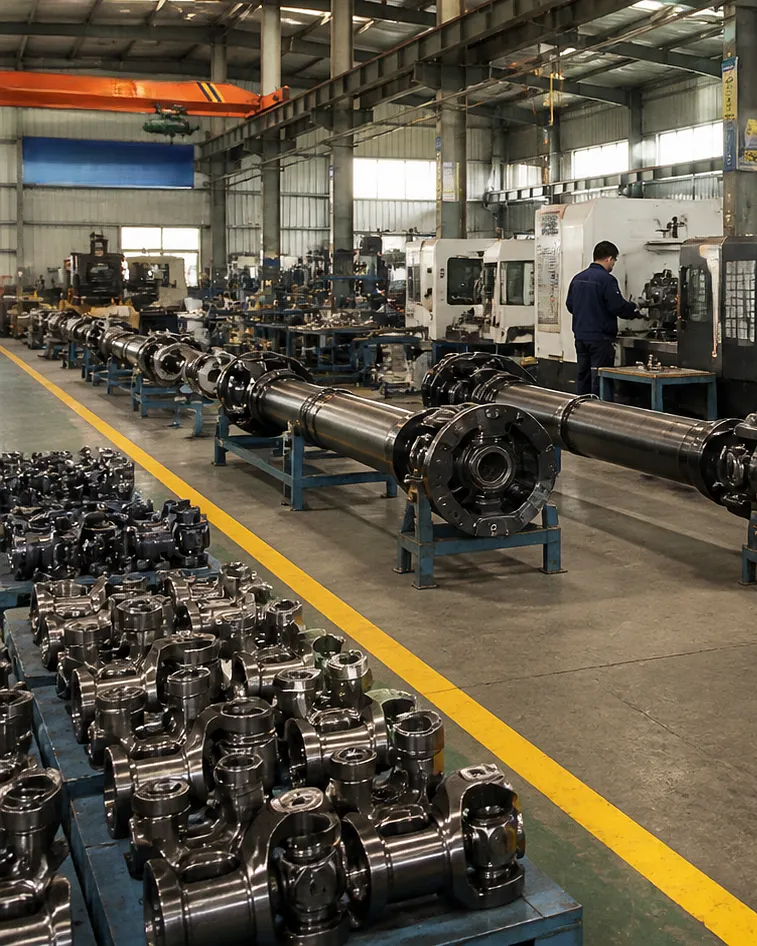
Ever Power has built its reputation over more than two decades as a precision manufacturer of cardan couplings and related power transmission products, serving demanding industrial customers across Europe, North America, and the Asia-Pacific region including the UK market. The manufacturing campus encompasses 28,000 square metres of production floor space equipped with CNC forging presses, four-axis CNC machining centres, and dedicated heat treatment lines capable of processing alloy steel forgings from 5 kg to 8,000 kg in a single heat. All heat treatment cycles are computer-monitored with automatic atmosphere control, ensuring the case depth, core hardness, and microstructure of every spider cross and yoke forging meet specification before proceeding to grinding. Every step in the manufacturing sequence is documented under ISO 9001 quality management, with full material traceability from raw forging to finished assembly.
What genuinely separates Ever Power from catalogue coupling suppliers is the depth of its customisation engineering capability. The technical team includes graduate mechanical and metallurgical engineers who routinely take a customer’s drive system specification — power, speed, operating angle, torque peaks, duty cycle, environmental conditions, interface geometry, and design life target — and translate that into a custom cardan coupling design optimised for the application rather than selected by catalogue size interpolation. This matters most in high-value installations where catalogue over-sizing would result in an unacceptably heavy, costly coupling, or where a non-standard flange pattern, shaft bore, keyway, or surface finish is needed to interface with existing plant. Recent bespoke projects have included coupling series for wave energy converters, special-purpose test rigs for aerospace component qualification, and replacement rolling mill spindle couplings engineered to exact dimensional interchange with legacy equipment from now-discontinued manufacturer ranges — a service of particular value to plant engineers working with ageing infrastructure in UK industry.
Rotherham Steel: Resolving Repeated Spindle Coupling Failures on a Bloom Mill Drive
A mid-sized steel producer operating a bloom rolling mill in Rotherham, South Yorkshire, approached Ever Power following a persistent pattern of cardan coupling failures on the mill’s main drive spindle. The mill had been running on a catalogue-selected coupling from a European supplier that was initially sized based on motor nameplate torque alone — without application of the correct service factor for heavy bloom rolling. Cross bearing failures were occurring on average every 2,800 operating hours, generating unplanned downtime costs that the plant’s maintenance manager estimated at £34,000 per incident including lost production, crane time, and engineering labour. The coupling’s design life was supposed to be 15,000 hours.
Ever Power’s technical team conducted a full torque audit of the drive train, deploying shaft torque telemetry over a 72-hour rolling campaign to capture actual peak torque values during billet entry events. The data revealed that instantaneous peak torques were reaching 3.4 times the motor nameplate torque during billet engagement — substantially higher than the 2.5 service factor used for the original selection. The existing coupling’s rated torque, already marginal at a 2.5 service factor, was being regularly exceeded by 36% on peak events. Ever Power designed a replacement coupling using a 34CrNiMo6 yoke forging and 18CrNiMo7-6 cross specification, sized to a 3.6 service factor against the measured nominal torque and verified to a 30,000-hour L10 bearing life at the actual operating angle of 8.5°. The new couplings were machined to exact dimensional interchange with the mill’s existing yoke-to-roll spindle interface, allowing installation on the next scheduled maintenance window without modification to surrounding plant.
Operating 18 months after installation, the replacement cardan couplings had accumulated over 14,200 hours without a single unplanned maintenance event related to coupling failure. The plant’s engineering team reports vibration signature data showing the coupling assemblies remain well within specification, and end-of-life is now projected to align with the next planned full mill overhaul — eliminating mid-campaign emergency shutdowns entirely from the coupling’s contribution to the maintenance schedule. The measurable saving against the previous failure rate, calculated across two coupling positions on the main mill drive, amounts to approximately £238,000 over the 18-month comparison period, representing a return on the coupling investment of over 11 times in direct cost avoidance.
Customer Reviews
“We specified three custom cardan couplings for our new slab mill investment in Sheffield. Ever Power’s engineering team ran a full bearing life calculation against our actual measured torque data before proposing a size — not just running through a catalogue chart. The couplings have now completed 22,000 hours in continuous rolling service with no indication of bearing wear beyond very early scuffing on the least-stressed position. The torque rating accuracy has been vindicated entirely in service.”
“The customisation service at Ever Power is what sets them apart. We needed a heavy-duty cardan coupling with a non-standard bore and keyway configuration to match legacy equipment in our Midlands facility. They produced certified drawings within five working days of receiving our specification and delivered finished couplings that fitted first time without any modification. Getting accurate torque ratings with the custom geometry documented properly was essential for our insurance compliance, and Ever Power delivered that without question.”
“We had been using a UK-stocked catalogue cardan coupling that worked satisfactorily for most of our mining conveyor drives in Wales, but a new tunnel boring assignment required a bespoke rated torque calculation at a steep 22° operating angle with a high service factor for very frequent reversals. Ever Power’s team built the full angle-correction and bearing life model for us, proposed a coupling series with documented margin, and delivered on a six-week lead time with full material certificates. Impressed by the technical rigour compared to what we’d received from previous suppliers.”
Frequently Asked Questions
To correctly calculate the rated torque for a rolling mill cardan coupling, start by computing the nominal torque from the drive motor’s rated power and operating speed using Tn = (P × 9550) / n. For rolling mill drives in Sheffield or similar heavy steel processing environments, apply a service factor between 2.5 and 3.5 to account for billet entry shock loads and reversals. Then apply the angular correction factor cos²(beta) for your actual operating angle. The resulting design torque must fall within the catalogue rated torque for your chosen coupling series. Bearing life verification at that design torque and operating speed should then confirm a minimum L10 life of 20,000 to 30,000 hours for continuous industrial plant. Ever Power’s engineering team can assist with this calculation — contact [email protected] for technical support and competitive pricing.
The cost of a custom heavy-duty cardan coupling in the UK market varies enormously depending on torque rating, operating angle, materials specified, and any non-standard features such as special bores, flanges, or surface treatments. Light to medium-duty industrial couplings typically start from a few hundred pounds; large, fully custom rolling mill spindle couplings can run to tens of thousands of pounds per unit when material certification, precision balancing, and engineering documentation are included. To get an accurate quote, provide your required torque, speed, operating angle, interface dimensions, and service environment details. You can contact Ever Power directly at [email protected] for a prompt technical and commercial response to UK-based enquiries, with most standard quotations returned within two working days.
Cardan couplings are used extensively across the UK in steel and metals processing (Sheffield, Scunthorpe), mining and aggregates (Wales, Yorkshire), automotive manufacturing (Midlands), paper and printing (Lancashire), marine and offshore (Scotland), and construction equipment nationwide. Torque requirements vary from around 100 N·m for small machine tool drives up to several million N·m for rolling mill main drives. Automotive propshafts typically operate in the 150 to 2,500 N·m range; mining conveyor drives commonly work between 5,000 and 80,000 N·m; rolling mill spindle couplings regularly exceed 500,000 N·m in large section mills. Each application demands a separately calculated service factor, operating angle correction, and bearing life verification.
The operating angle reduces the available torque capacity according to the relationship Tr(actual) = Tr(ref) × cos²(beta). At angles below 3°–5° (the typical manufacturer reference angle), the correction is negligible. Above 10°, the reduction becomes meaningful: at 15° you have approximately 93% of reference torque; at 20° around 88%; at 30° around 75%. Most catalogue ratings assume operation at or below the reference angle. If your application operates above 5°–7° at or near the rated torque, apply the correction before selection. For continuous heavy-duty operation, many engineers limit the operating angle to 15° or below as a practical design rule to maintain adequate torque margin without requiring a disproportionately large coupling series.
For UK engineering and procurement teams requiring custom cardan couplings with material certification, Ever Power operates a dedicated UK supply channel accessible directly at [email protected]. The company provides full EN 10204 3.1 material certificates, dimensional inspection reports, and dynamic balance certificates as standard on custom orders, with additional DNV, Lloyd’s, or CE machine directive documentation available for specific sectors. Standard custom orders are typically delivered within six to eight weeks from order confirmation, with expedited production available for urgent plant breakdowns. All couplings are shipped with protective packaging suitable for long-distance freight under the terms and Incoterms agreed at quotation stage, with UK customs clearance documentation prepared for duty-free import under the relevant tariff classifications.
For an automotive press drive with high inertia and frequent start-stop cycles, a service factor in the range of 1.75 to 2.5 is typically appropriate. The lower end applies if the drive includes a torque-limiting clutch that caps the peak torque transmitted to the coupling; the higher end applies if the coupling is the last protection element before the press mechanism, receiving the full inertia-dominated start-up torque directly. If the press performs any significant reversing under load — blanking or forming tools that create back-torque on the drive — add an additional 0.25 to 0.5 to the service factor. The specific value should be confirmed by comparing with the drive motor’s starting torque multiplier or, ideally, by direct torque measurement on a representative production cycle before finalising the coupling specification.
Choose a double-Cardan constant velocity configuration whenever the second-order velocity fluctuation inherent in a single cardan coupling would cause unacceptable output speed variation at the operating angle. The velocity fluctuation amplitude is approximately 2 × tan²(beta/2), expressed as a fraction of mean speed. At 3° this is negligible in most industrial drives; at 10° it reaches roughly 1.5%, which is unacceptable in precision grinding spindle drives or CNC machining table drives where angular velocity variation translates directly to surface finish errors or dimensional inaccuracy. Double-Cardan joints, or alternative constant velocity joints like tripode or ball-type units, eliminate this variation at the cost of greater length and usually lower maximum torque rating per unit of external diameter. UK machine tool builders typically specify them for any drive operating above 5° where spindle accuracy is a performance requirement.
Need a Cardan Coupling Sized to Your Exact Application?
Ever Power’s engineering team handles custom torque calculations, material selection, and precision manufacturing for demanding industrial applications across the UK and worldwide. Send your specification and receive a full technical and commercial response within two working days.
📧 Get a Quote: [email protected]
edit by gzl